My trip from Goreme, Capadoccia, to Adiyaman, Southeastern Anatolia, was always going to be challenging (isn’t that one lovely word?) as I wanted to travel in daytime – the night bus (arriving c 5-6 am!) could have got me there in one go…
Took some last photos of the balloons in flight at dawn – it’s hard not to, just like the bazaar spice stalls – and got onto my first dolmus at 9 am, heading for the centre of Nevshehir, a bigger town nearby; the kind driver told me which dolmus I needed to get from the centre to the Otogar (the etymology is easy to work out: Auto+ Gare, i.e. a bus terminal; there are other French words in use in Turkish , such as ‘Kuafur’ .
The bus to Kayseri (a yet bigger place and a travel hub) was easy, then a bit of a wait (an hour and a half) for the 13:00 to Malatya. The coach terminal is vast, more like an airport one, and the middle is a circle of agents’ kiosks shouting out their company’s destinations and hoping to attract customers. (I got my ticket online, and a nice seat at the front.) The busbud.com website (useful in many ways) said the arrival time in Malatya was 16:10, which would give me plenty of time to get the dolmus for Adiyaman (a 2 hour trip)…
The distance from Kayseri to Malatya is 360km; the speed limit is 90km/hour and there are parts where one cannot drive at speed, even if the roads are empty (and for the most part, they are – though the towns are dreadfully congested). We stopped for a half an hour break at 15:30 (very welcome) and it was clear we could not arrive at the destination before 1800. (It was 18:20, and the sun had set.)
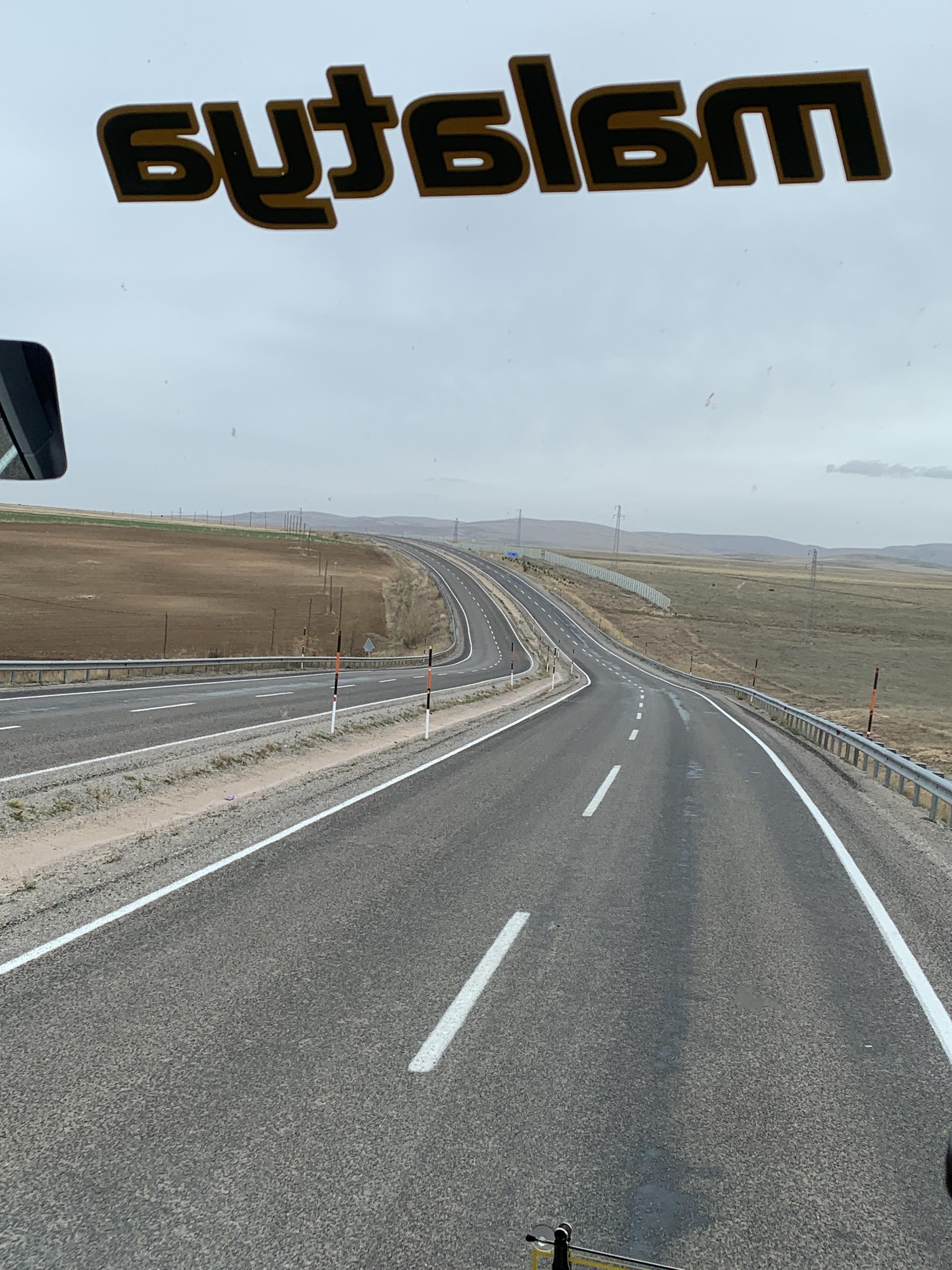
As we approached the Malatya bus terminal, I asked where to get the dolmus to Adiyaman. Some discussion took place (in Turkish), and the next thing I knew, as the coach stopped at the Otogar, the driver sprang up and indicated I should follow. He picked up my rucksack (much more easily than I do) and moved quickly through the terminal to the main road outside: rush our in full spate, trolleybuses, dolmuses, buses, cars, lights, beeping…
The coach driver, whose name is Celal, made phone calls, and explained that the dolmus to Adiyaman should arrive in about half an hour at that spot. He then stayed with me for the full hour – the dolmus was late – heavy traffic, who knows. We had a conversation, sort of: he spoke a couple of words of English, same on my side with Turkish. (My eSim had expired that morning – as days tend to blend on a journey like this, I had not realised the eSim month was up: it meant I had no Google translate, or maps.) Celal made sure both my luggage and me were safely on the dolmus before he left for home.
Dolmus is a small minibus: rows of 4 x two seats on one side, singles on the other and 4 at the back. The convention is that women and men who are not related do not sit together – when booking a seat on the coach, one is asked for the gender. The moment I sat down (next to a woman), a little boy (around 3 years old) found his way onto my lap. His mother was sitting in a single seat with another child, a girl of about 18 months in her lap; it was going to be an interesting journey. The chatting was a bit difficult, and as I explained where I was going, I had a sense that they were trying to tell me something important.
As we approached Adiyaman, the dolmus slowly emptied and the only passengers left on it when we reached the Adiyaman Otogar were the woman with the two children and me. She was being picked up, and while we were waiting (the children were asleep on the seats), the driver used his Google translate to tell me that the hotel I had booked through Expedia did not exist any more – it had been destroyed by the earthquake in February this year (it struck at 04:17 am, as the Clocktower still shows) .
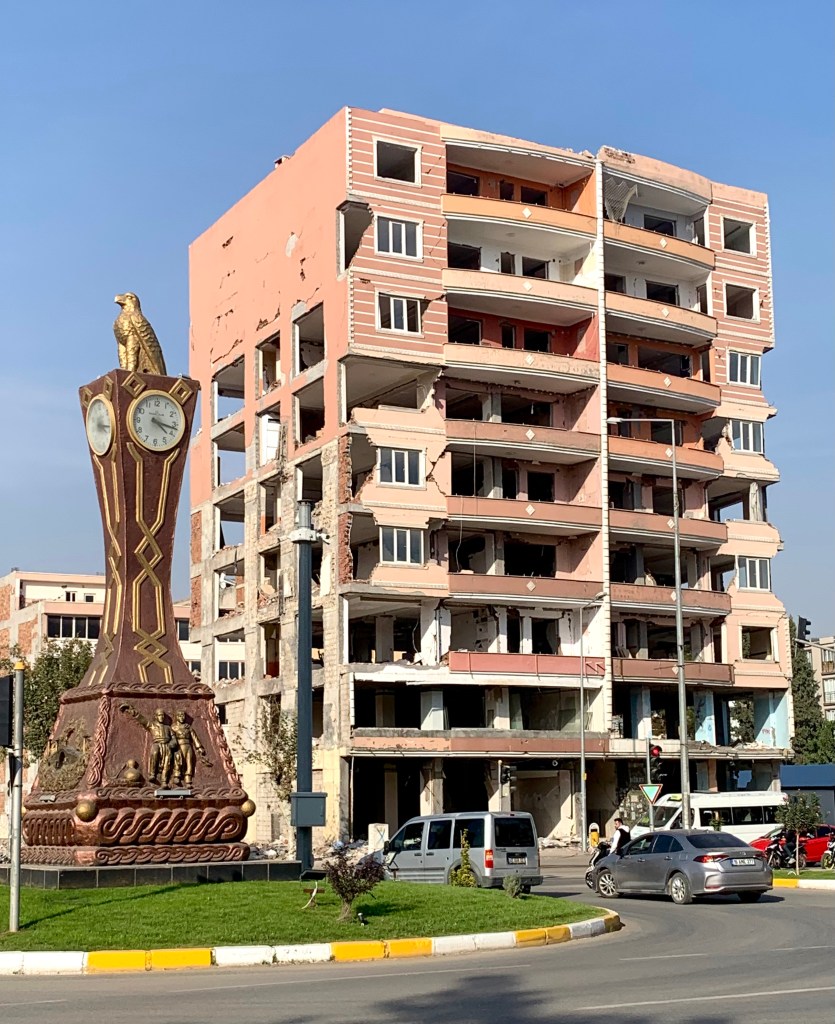
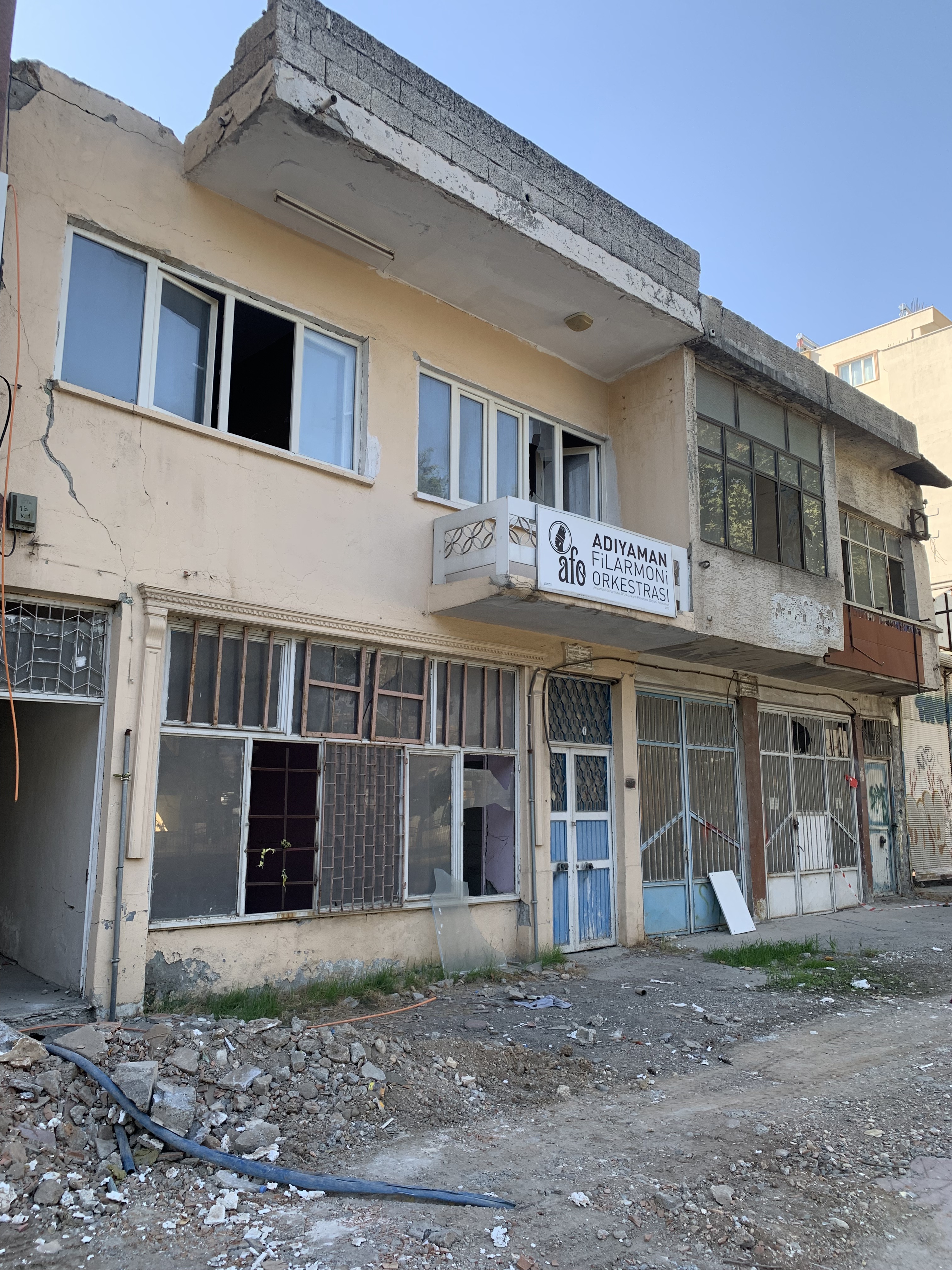
The Otogar was empty, it was 10:30pm and it all looked a bit desolate – even before I had seen the state of the town in which over 8000 people had died. (The building below was the home of the Adiyaman Phil Orchestra)
The dolmus driver and his boss (I suppose, no introductions were made) transferred my rucksack and me to a car and drove me to the nearest hotel – the Park Dedeman (which, I think, has Hilton aspirations in their pricing, but has a way to go in service).
The next morning I needed to get some Turkish lire but the nearest cashpoint wanted to charge 8%. Asked a man who was working nearby where I could find the one I knew didn’t charge such exorbitant amount; he called another man, gave him the car keys and said to take me to the cashpoint I wanted! (It turned out to be a longer trip then intended as the first place we went to had very long queues. But my young driver enjoyed driving the Audi 🙂 so we drove till we found the right one.
And all this before I even found out if and when I could get to Nemrut Dagi, my reason for being in Adiyaman (the Nemrut peak is c 70K from here, in the middle of the Taurus mountains).
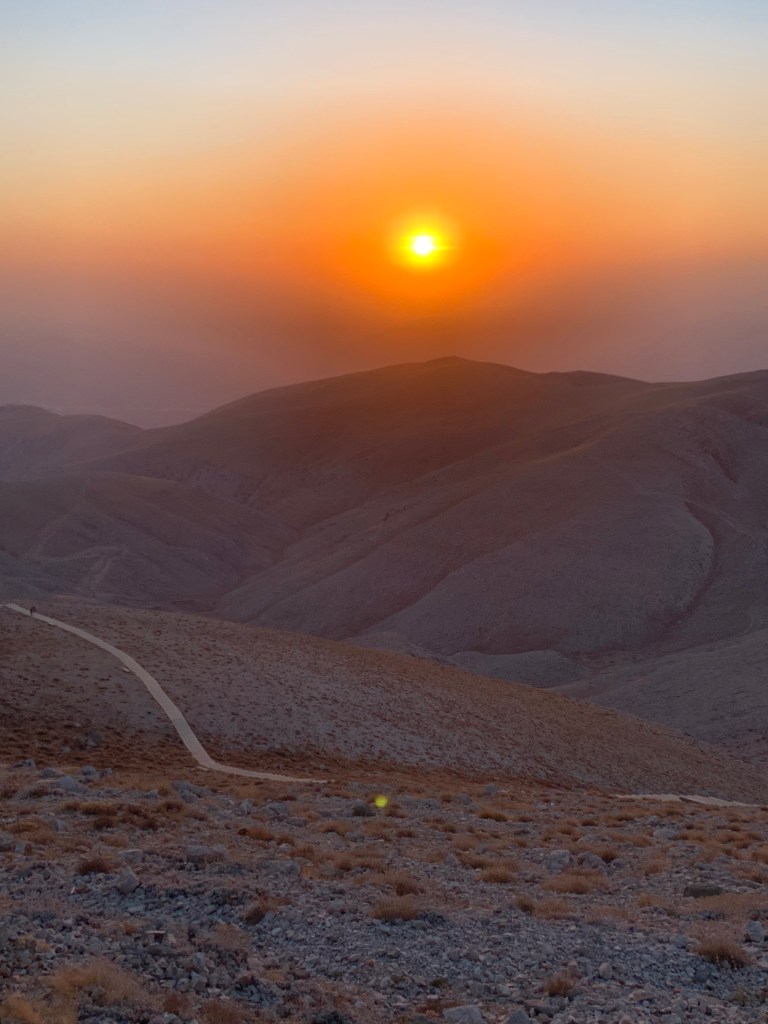
The first agency I looked for (from my Lonely Planet guide) was not there – another victim of the quake – but I was pointed in the direction of one that existed, VEKA Tours. Arrangements were made for “the sunset tour”, starting at 1 pm. (The other option is “the sunrise one” – which would have meant getting up at 4 am…) A private tour again, but there was other option.
It turned out I was honoured in that my driver was Vassail, the owner himself. That he spoke as much English as I do Turkish is beside the point. There are 5 places visited on this tour – some Comaggene (such as the Nemrut Dagi), some Roman, but at least two are currently out of bounds as the earthquake made them unsafe.
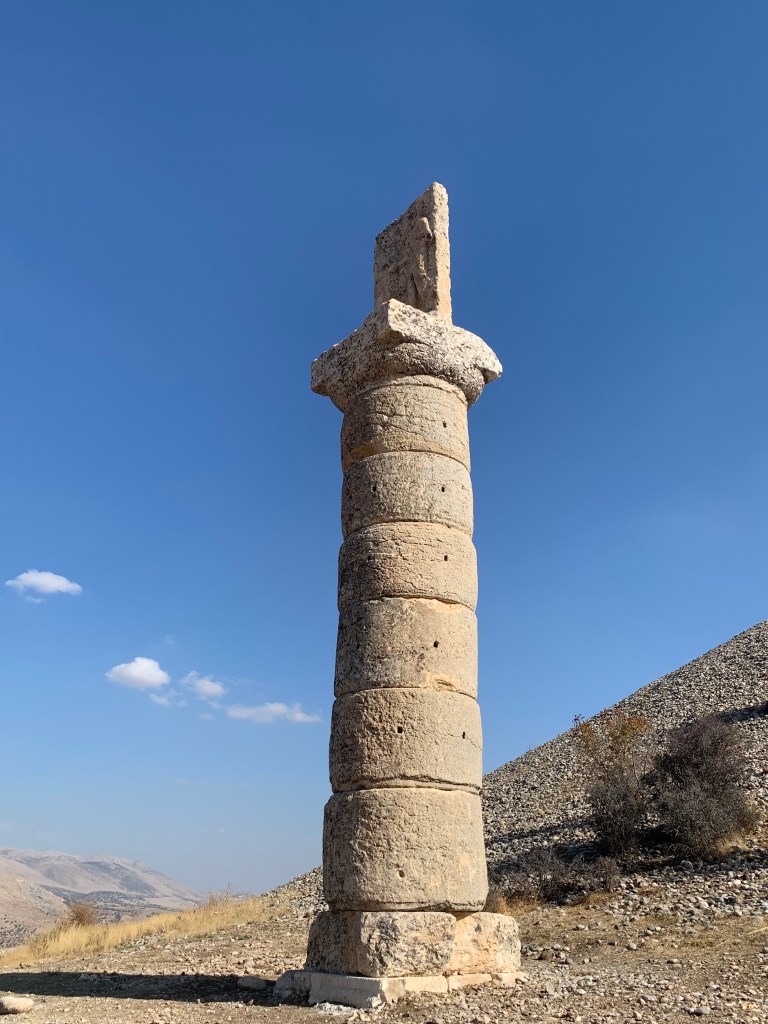
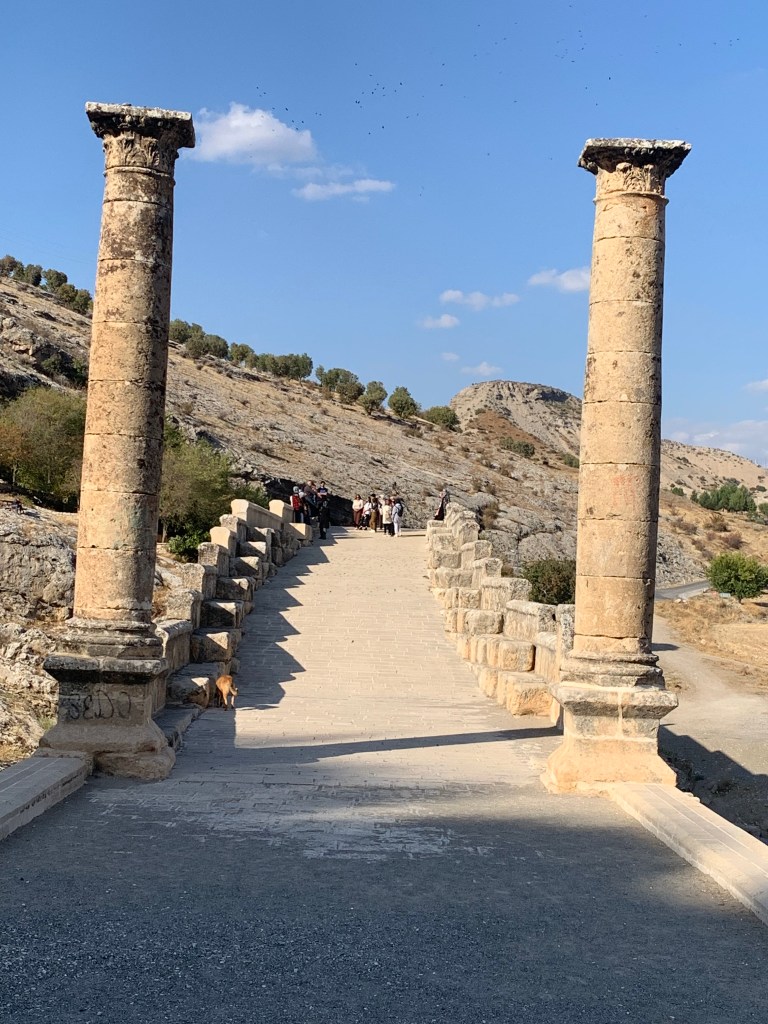
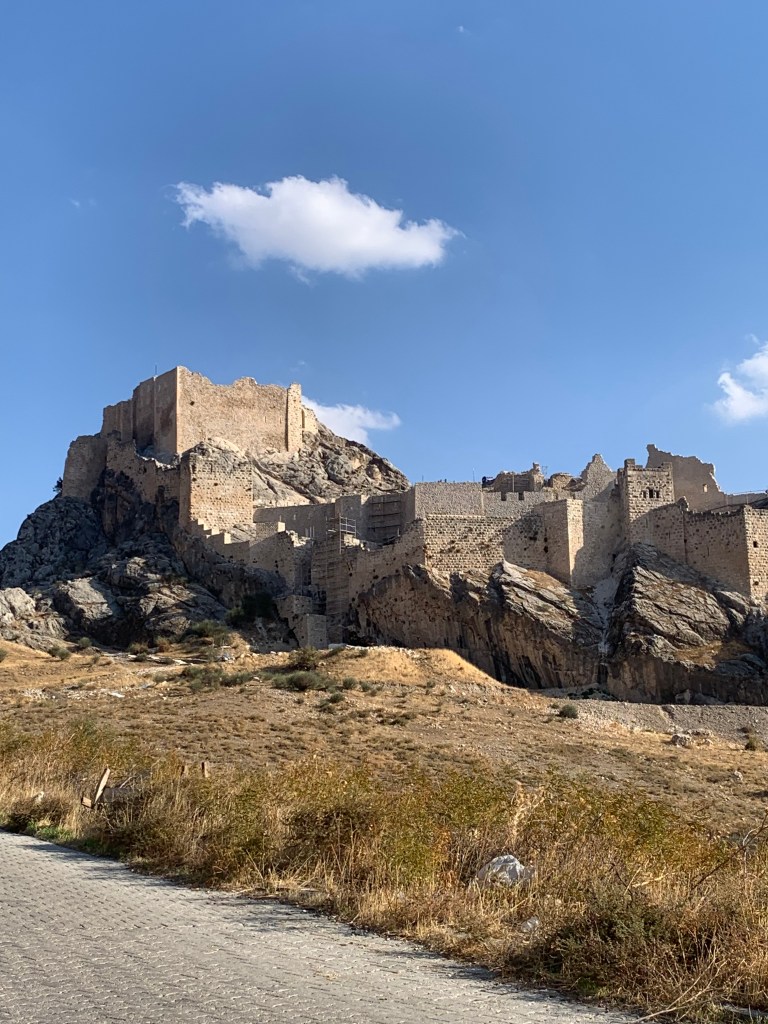
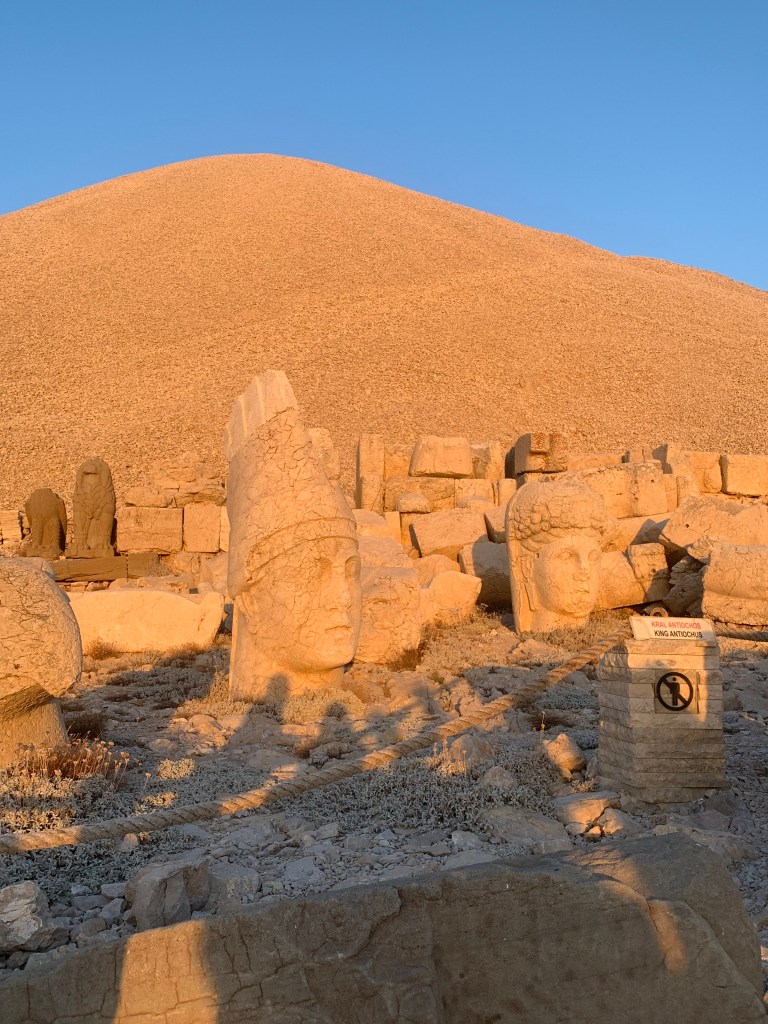
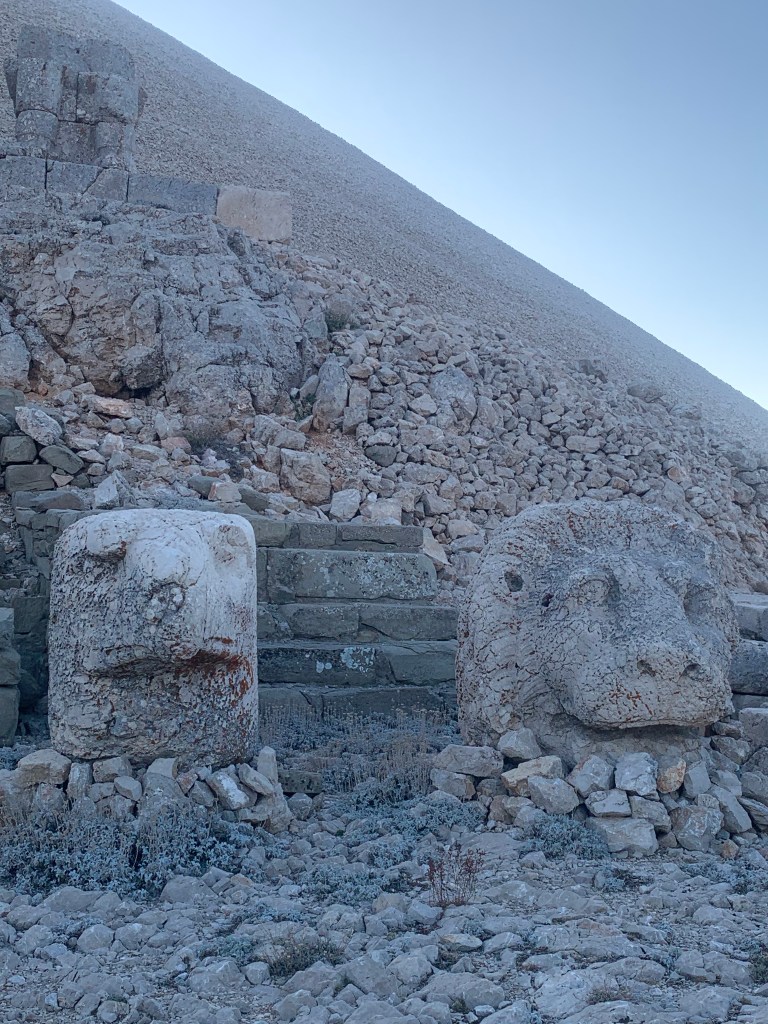
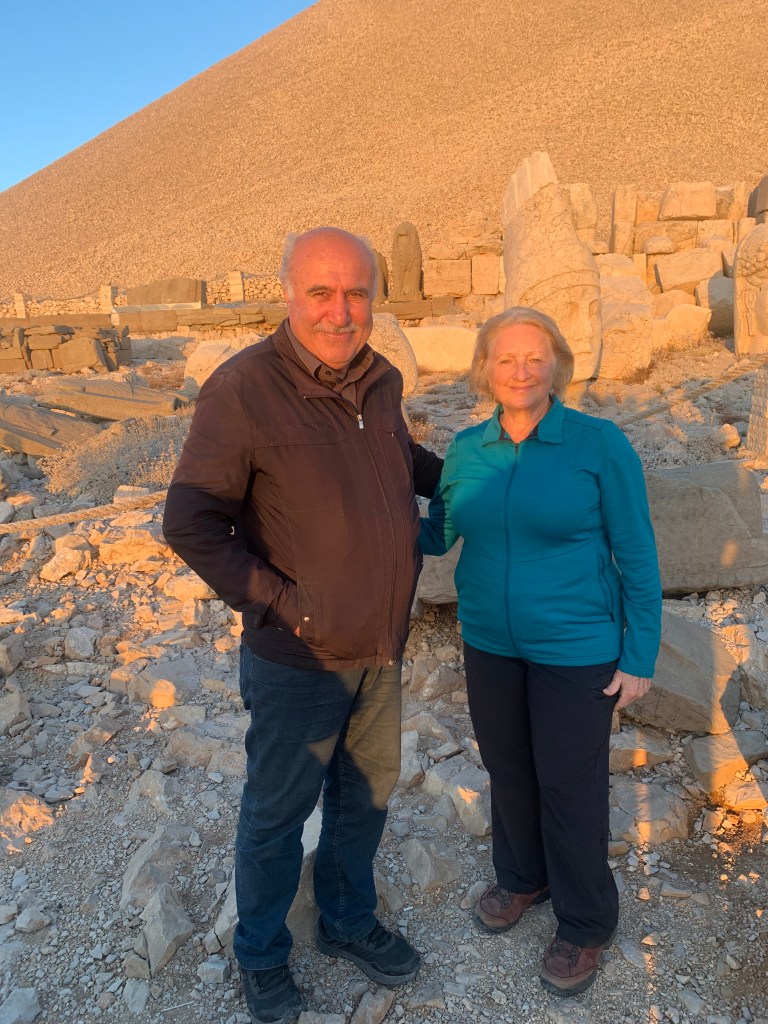
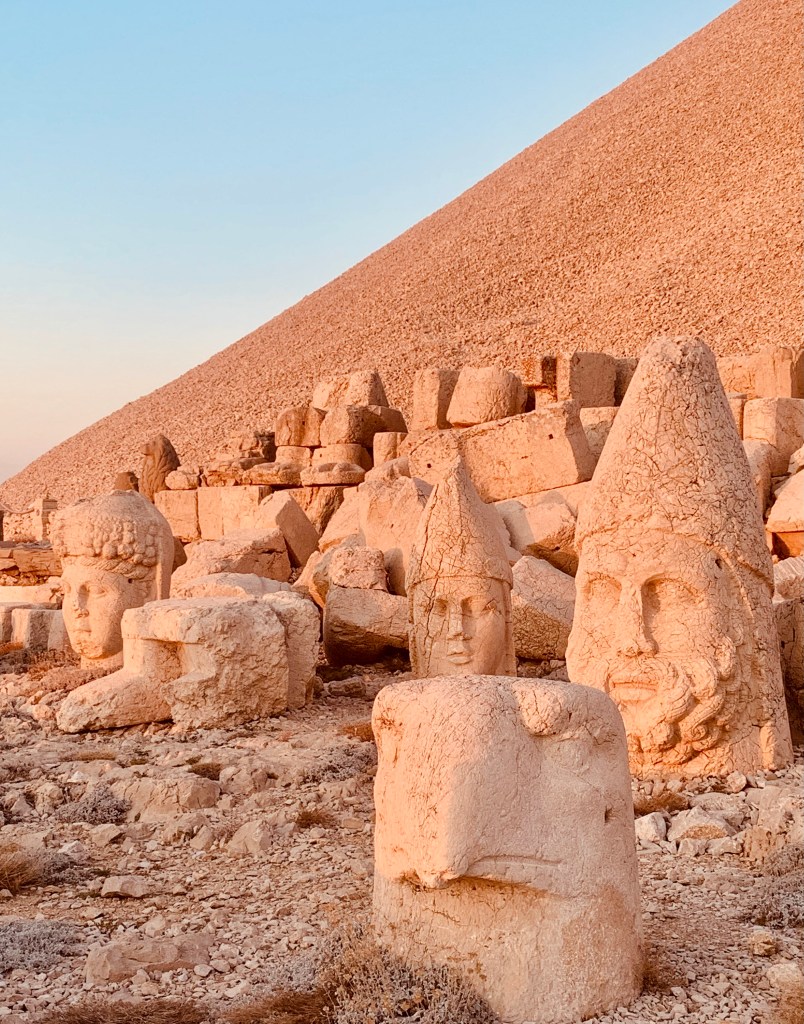
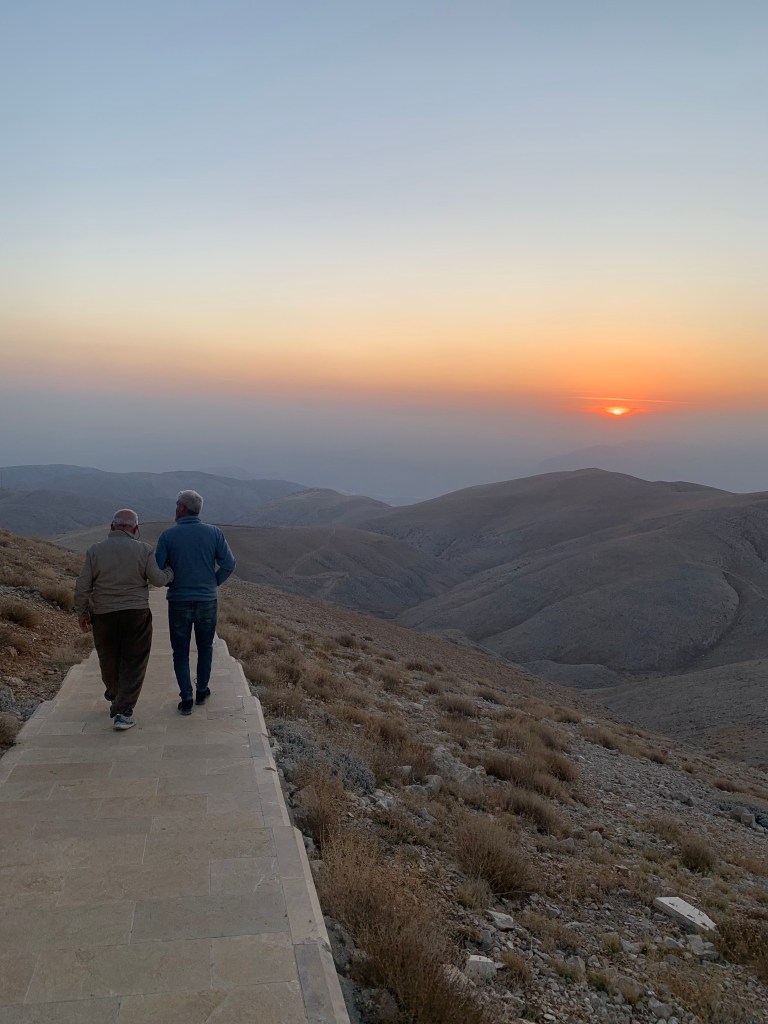
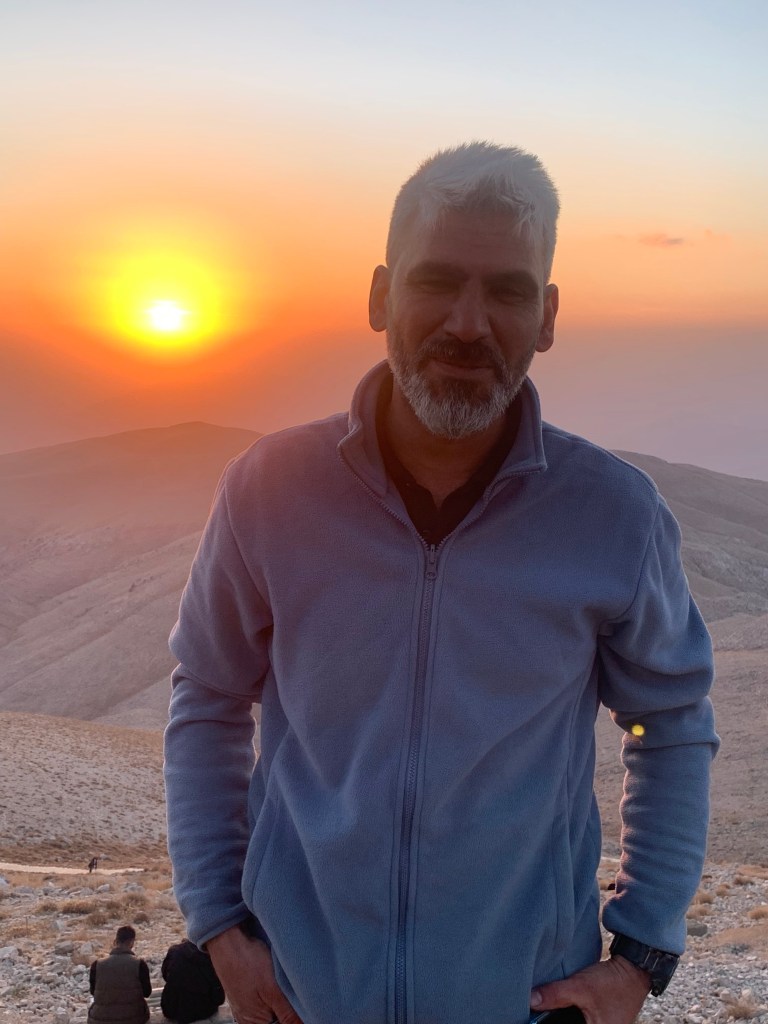
Vassail produced Yunus (grey hair in the sunset) half way through the trip – Yunus spoke English – who was a good companion for going up the mountain. He lives near one of the sites, Arsameia, which had been the Comaggene and Roaman summer palace, and has shown me some coins he occasionally finds (and sells – he said it was legal as long as they are not gold or precious stones). Yunus’s knowledge of Nemrut and King Antiochs’s reign was minimal, but, serendipitously, a friend of Yunus’s, the former Adiyaman Minister for Tourism and a history professor with some students was also visiting (we were playing catch up over the 5 sites) and Yunus introduced us – Mustafa willingly explained the site and the history in good English.
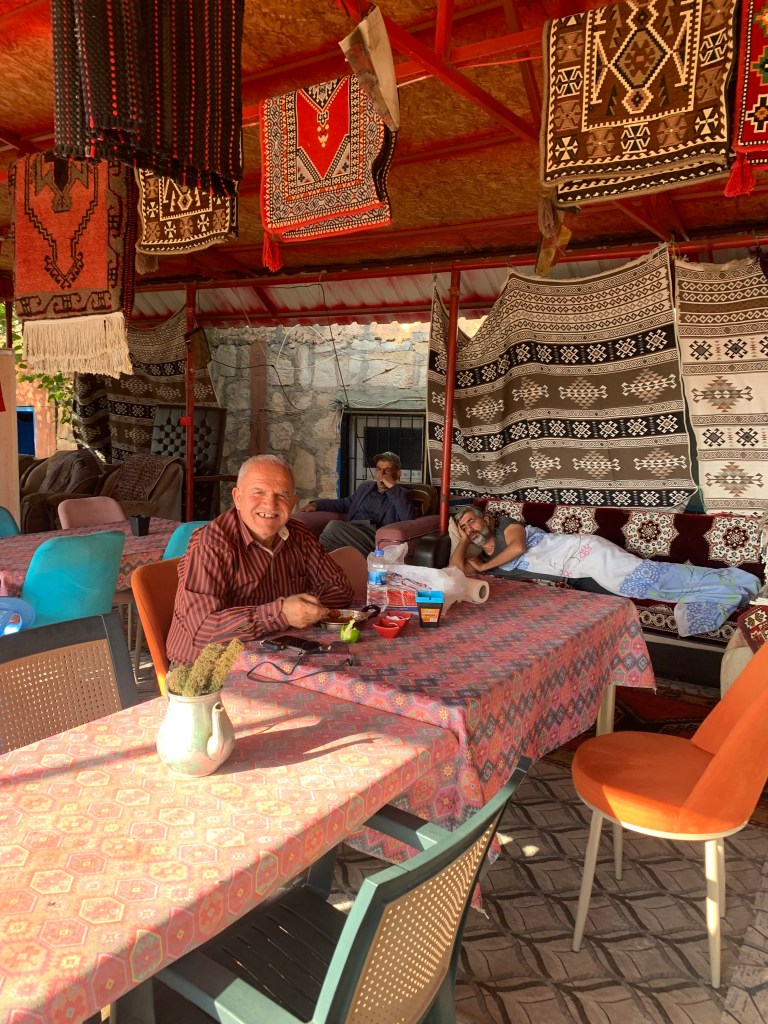
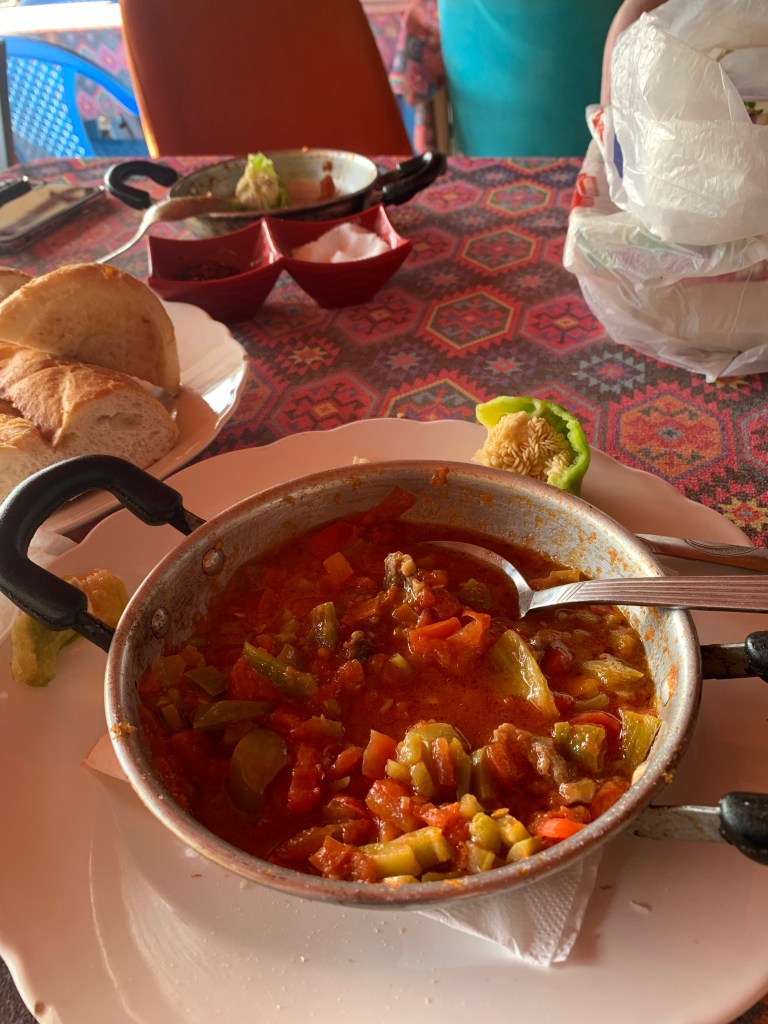
Vassail and I had a very nice home cooked lunch by the enormous fort/castle: gjuvech (meat and veg stew) followed by freshly picked figs from the tree in the back. No wine though…
 Maribibi_travels