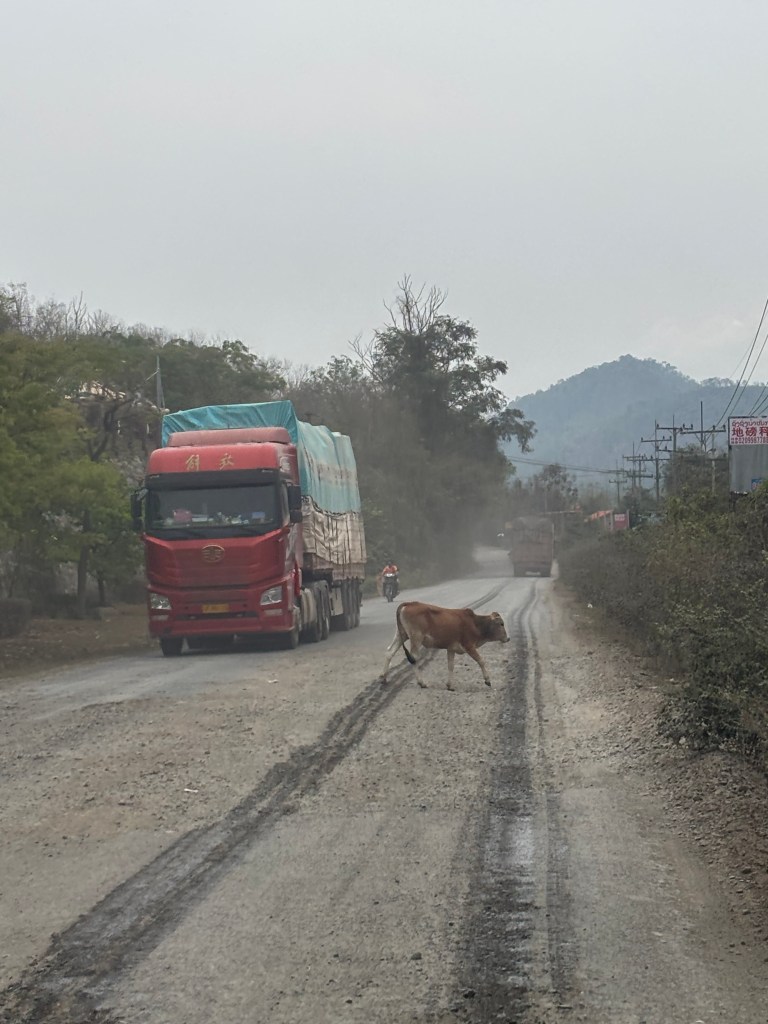
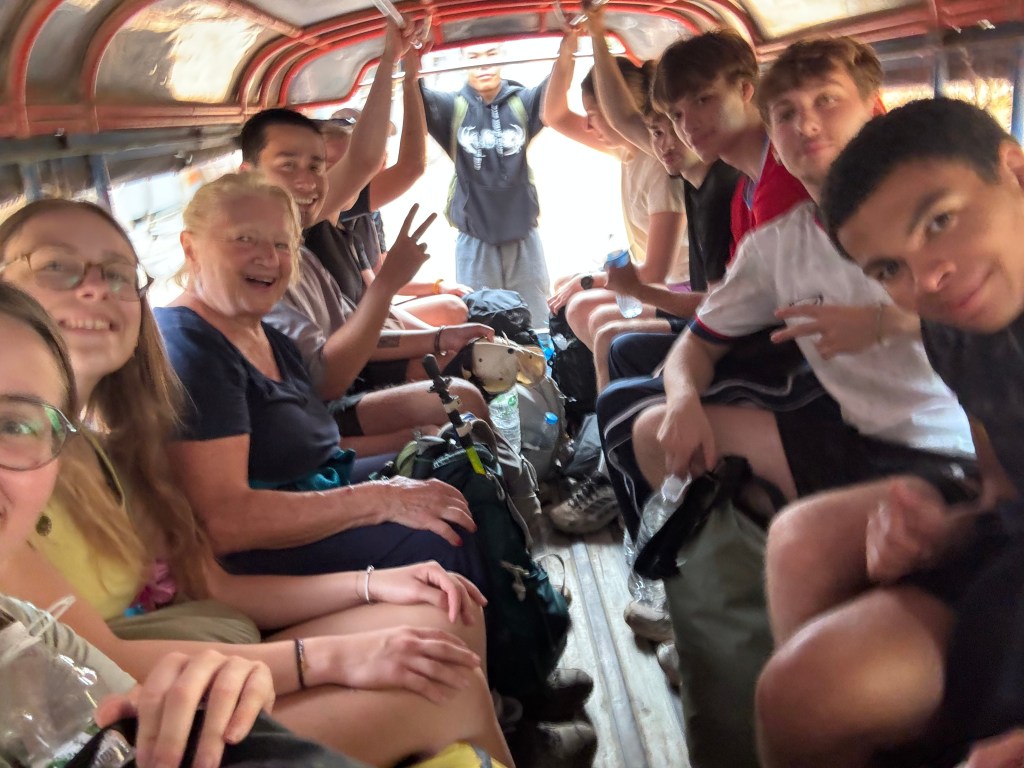
Luang Prabang is a take off point for some interesting trekking in the hills east. I booked a trip to Nong Khiaw to “camp above the clouds”. The minibus from Luang Prabang to the village below the hill takes 4.5 hours – it is all of 85 miles (140 km) but the road is so awful that the vehicles often drive off road or on the wrong side of the road. (Roads are noticeably bad – no investment there.) To maximise the number of passengers in the minivan, little footstools are placed in the spaces between the seats. If you are unlucky to end in one of those, it’s a long time bumping on a hard seat and no back support.
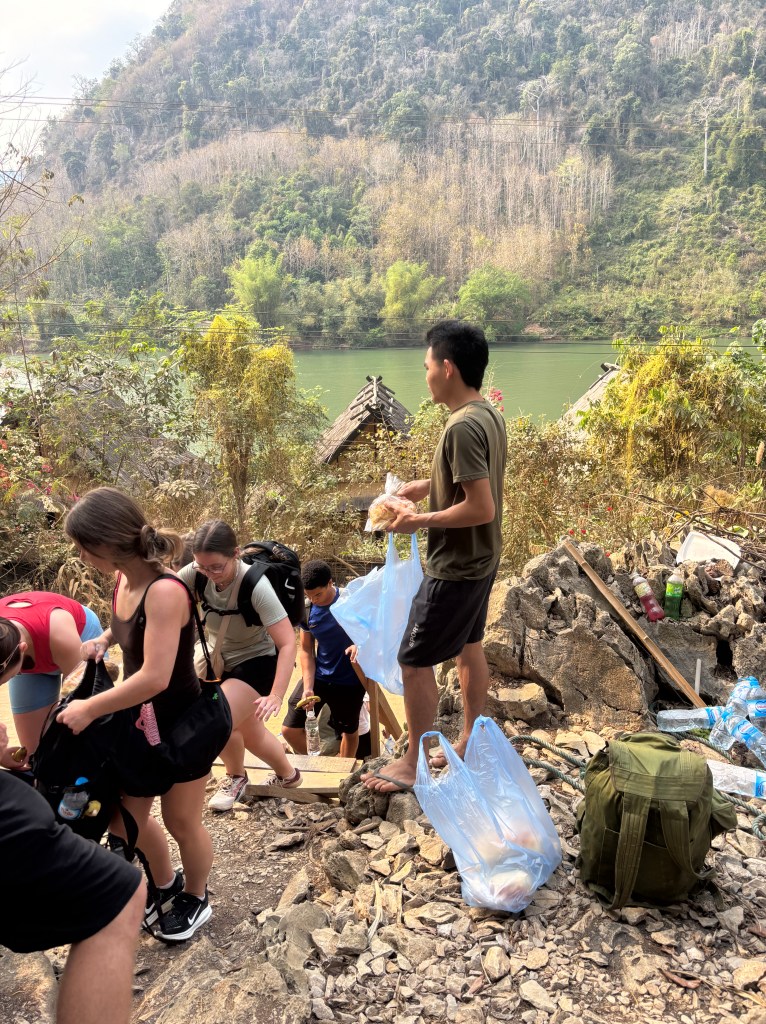
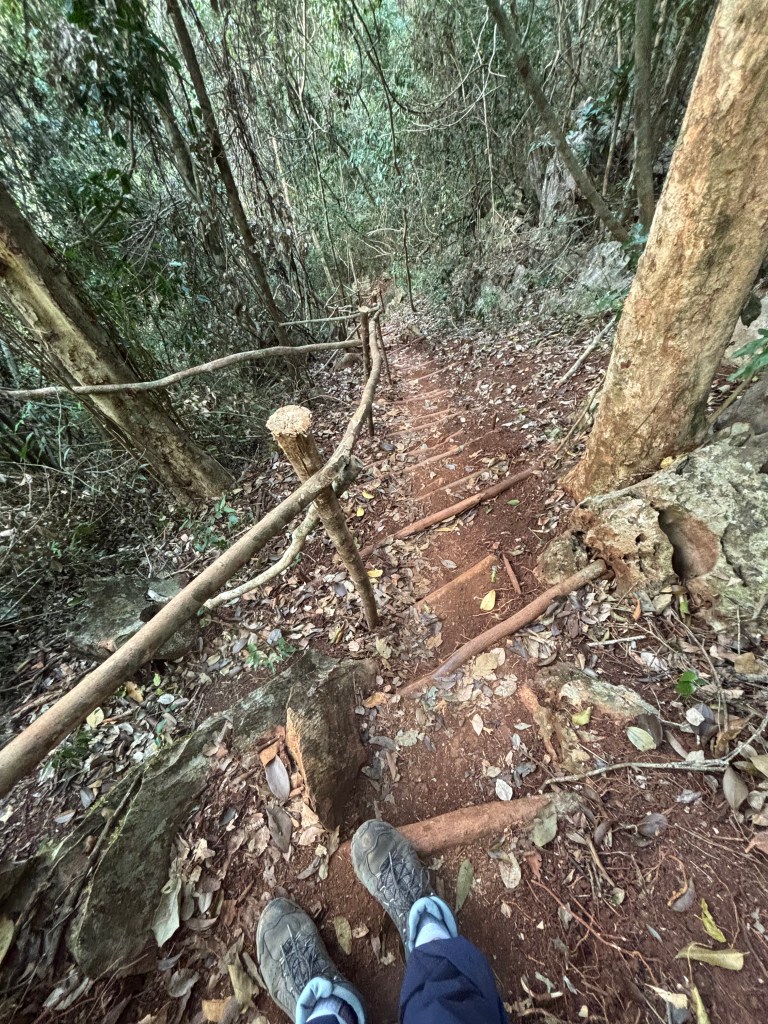
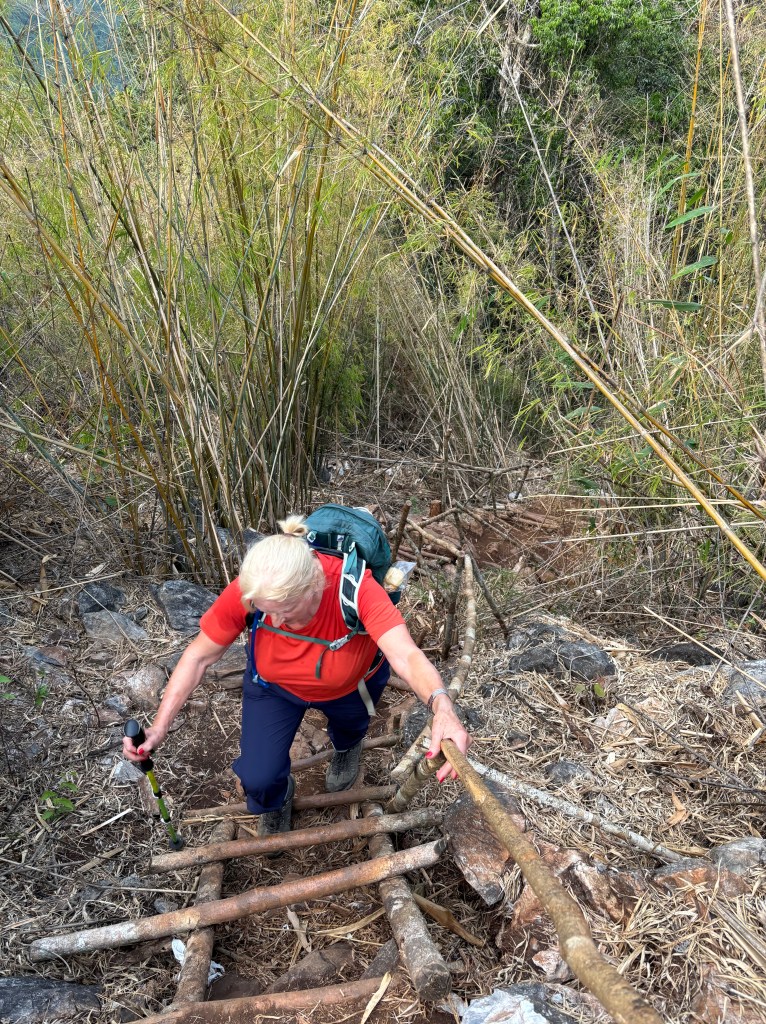
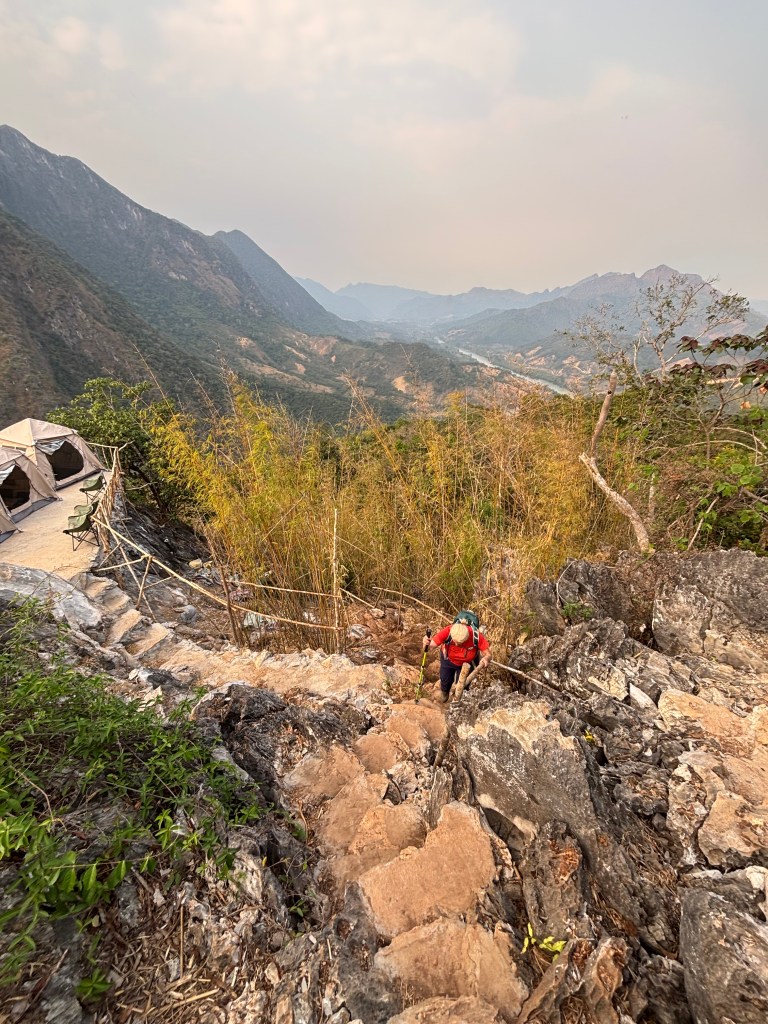
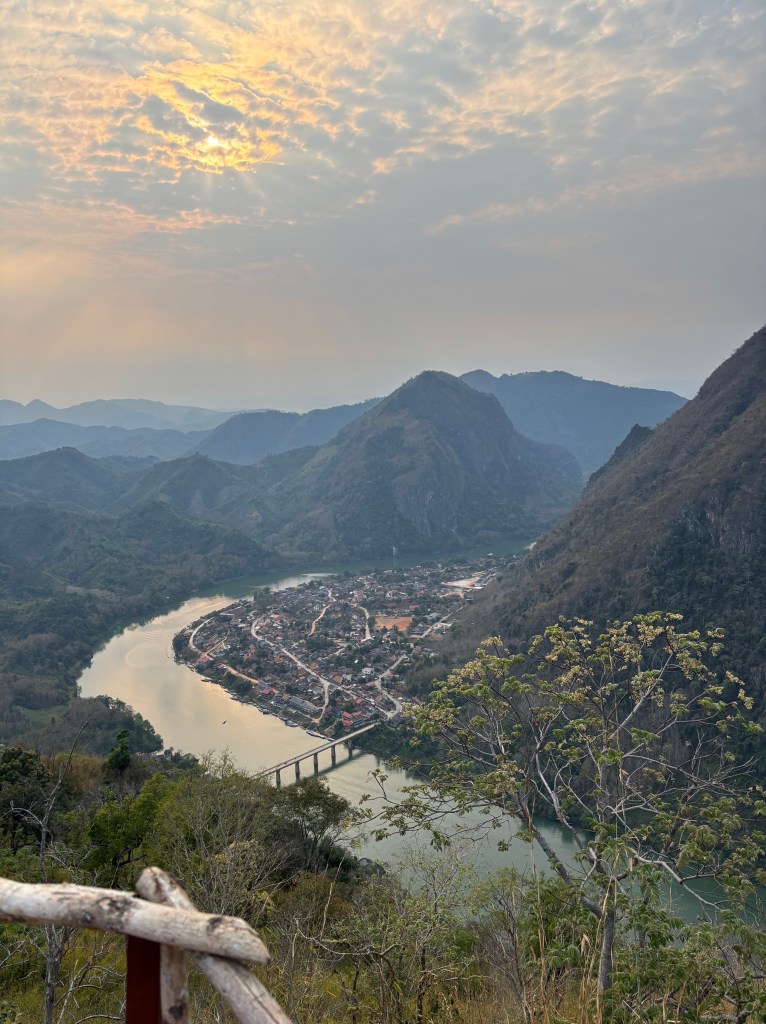
The climb to the top was, for me, really hard. The path is steep, with steps cut into the soil (and worn thin and smooth – hate to think what it i like in the rainy season ) or ladder-like steps made with local wood with knobby handrails. The group made it in 2 hours (the guide wore flip flops…); I took a bit longer and found the heat hard too. Having two walking poles was a hindrance, but one helped. (A group of four young men from South London stuck by me so I wouldn’t walk alone, and they carried the other pole.) But the views were gorgeous and a beer (one could not begrudge paying double the normal price – someone had to carry the stuff up!) delicious. Sleeping in a tent was ok, despite the air mattress being less than fully inflated. I dreaded the thought of having to go to the loo in the night – the volcanic rock path was vicious and jagged.
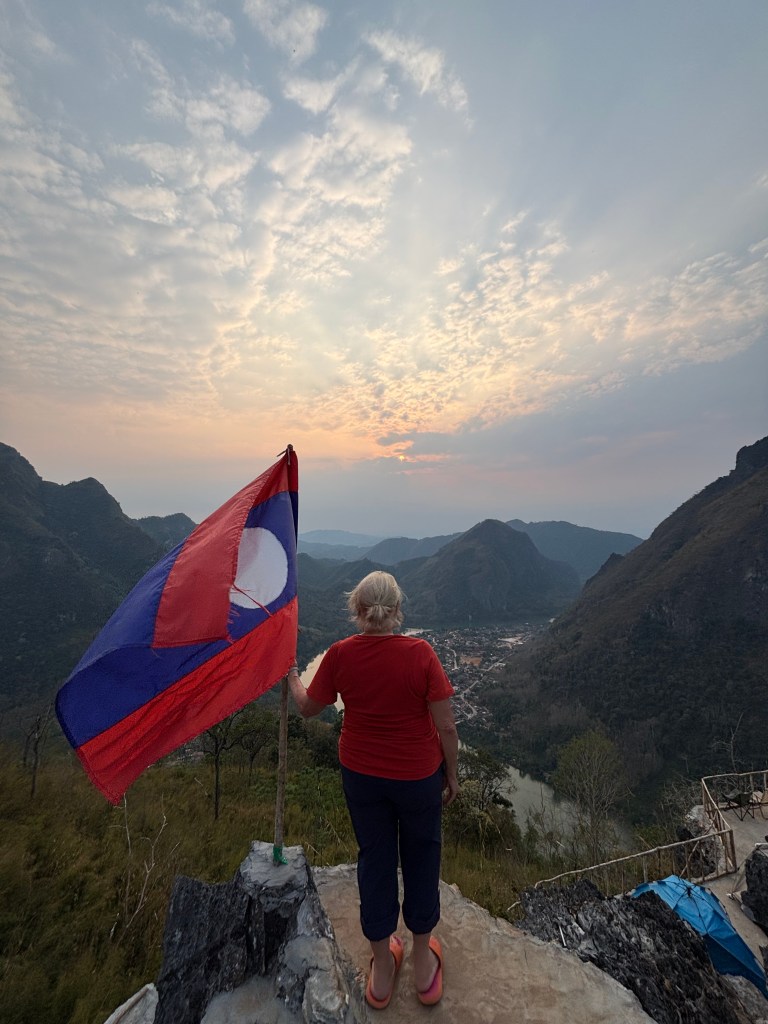
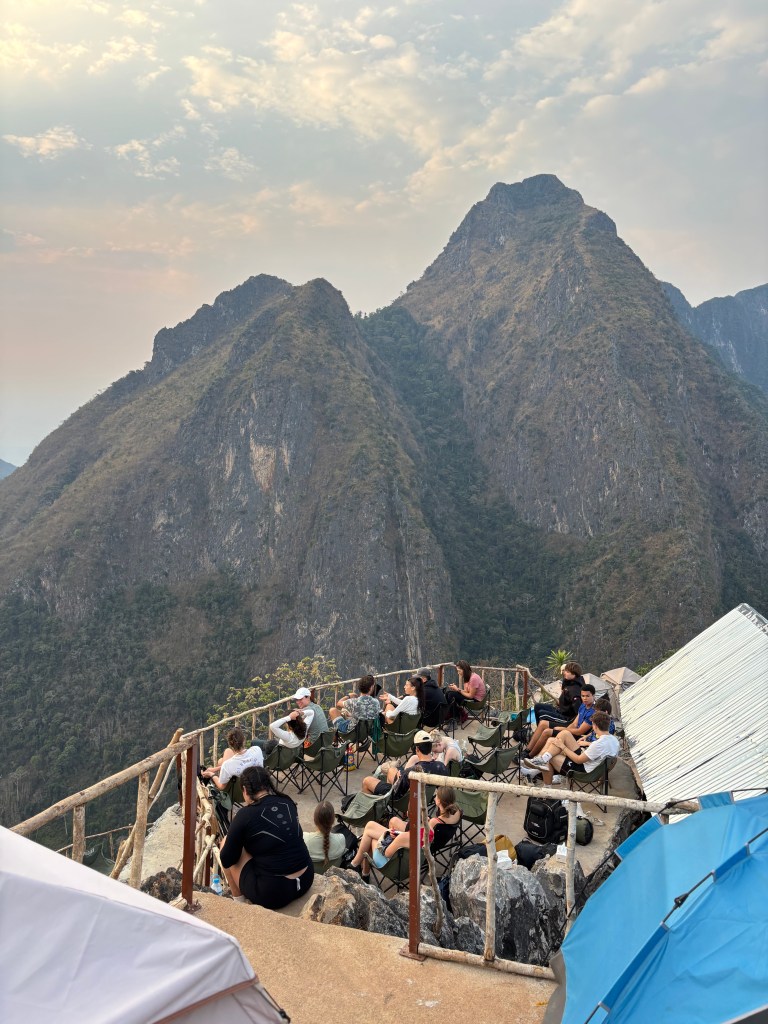
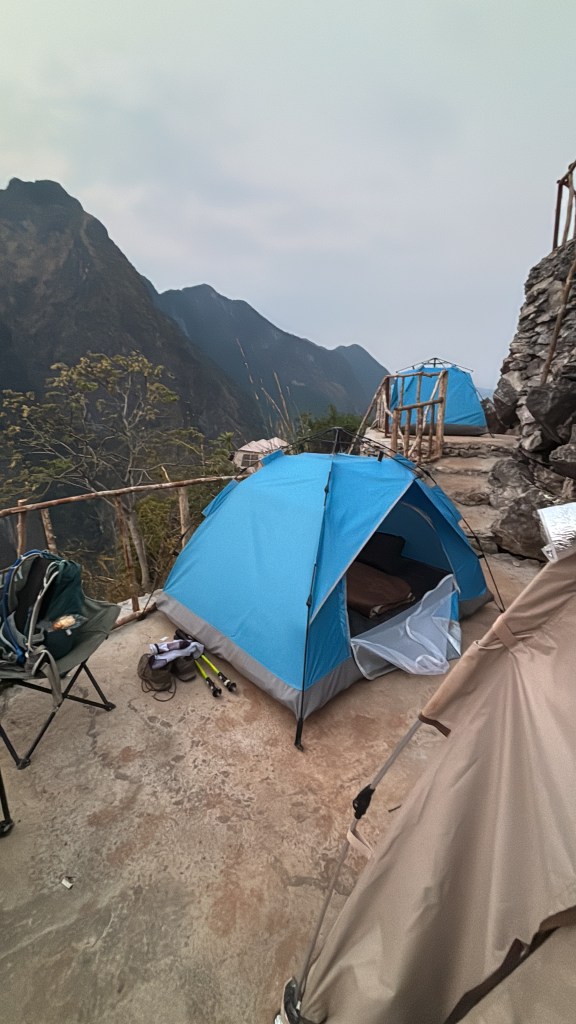
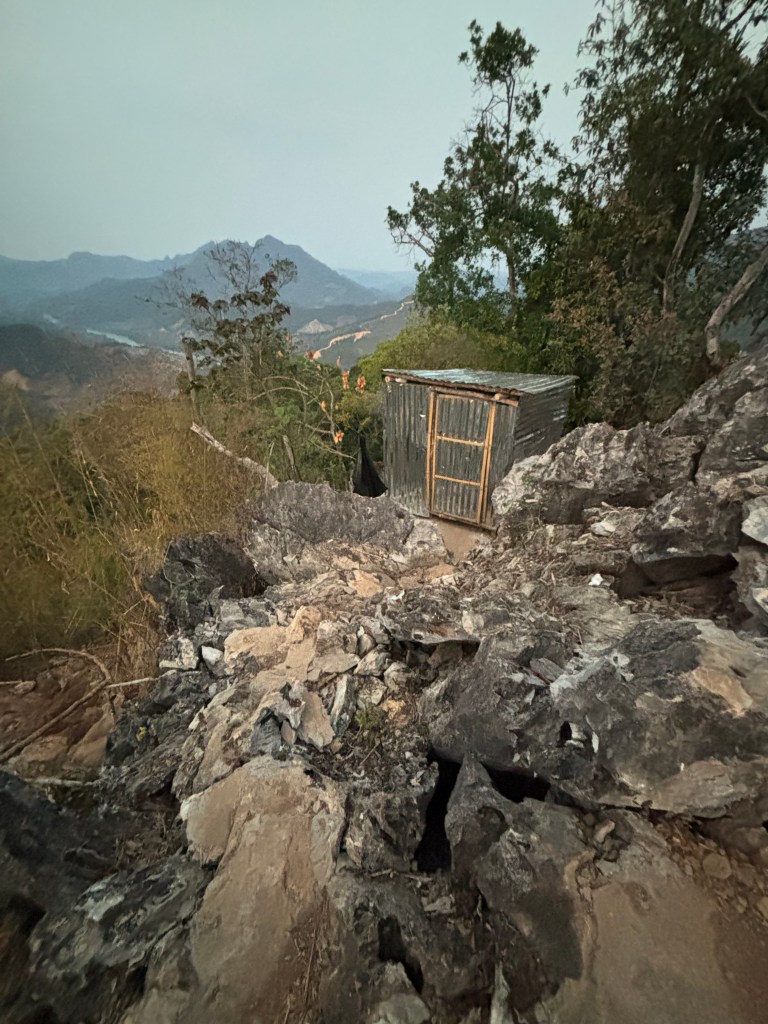
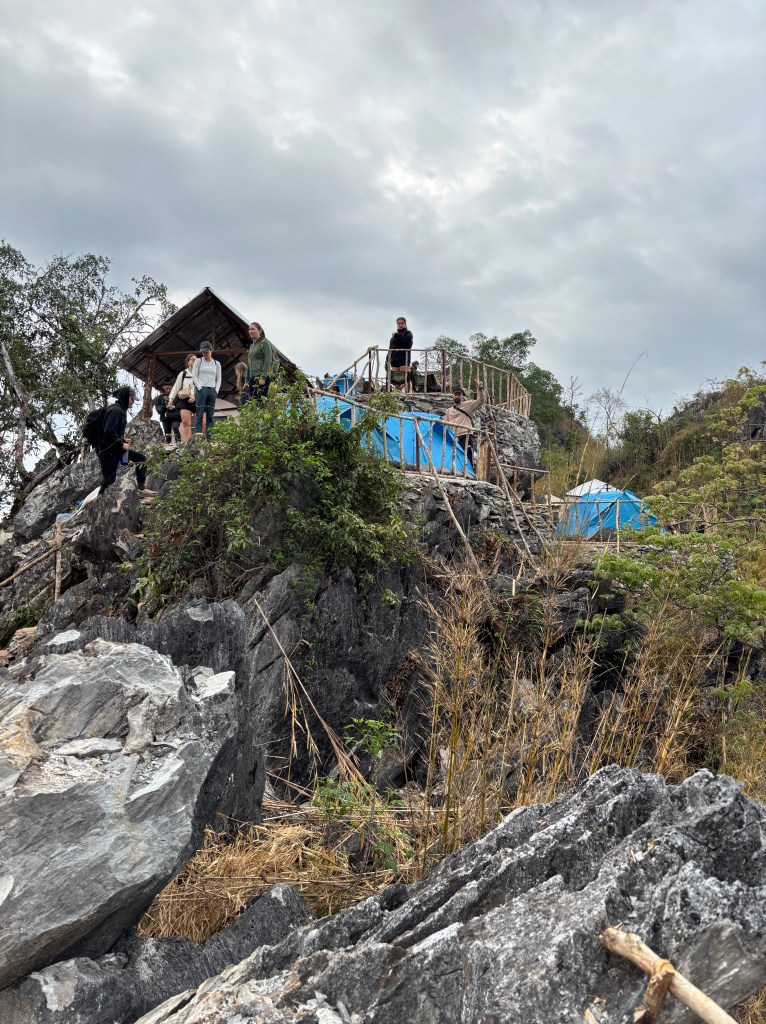
Getting down the mountain was easier (but not easy). And then the long, bumpy, dusty road back to Luang Prabang and the train south. The road reminded me of Turkmenistan – it could definitely give the bad roads a proper run for the money.
The Chinese have built a very nice high speed rail link between China and the Laos capital, Vientiane. The stations in Laos are all outside towns, some 8-10K, and there’s an airport feel to them. The one in Luang Prabang has no disabled access that I could see – steps and steep inclines (for luggage?), a hanger-like waiting room, announcements first in Chinese then in Lao…
The Chinese are everywhere in Laos. There are many Chinese businesses, every other bank seems to be Chinese and the number of cheap package tourists pouring in is staggering.
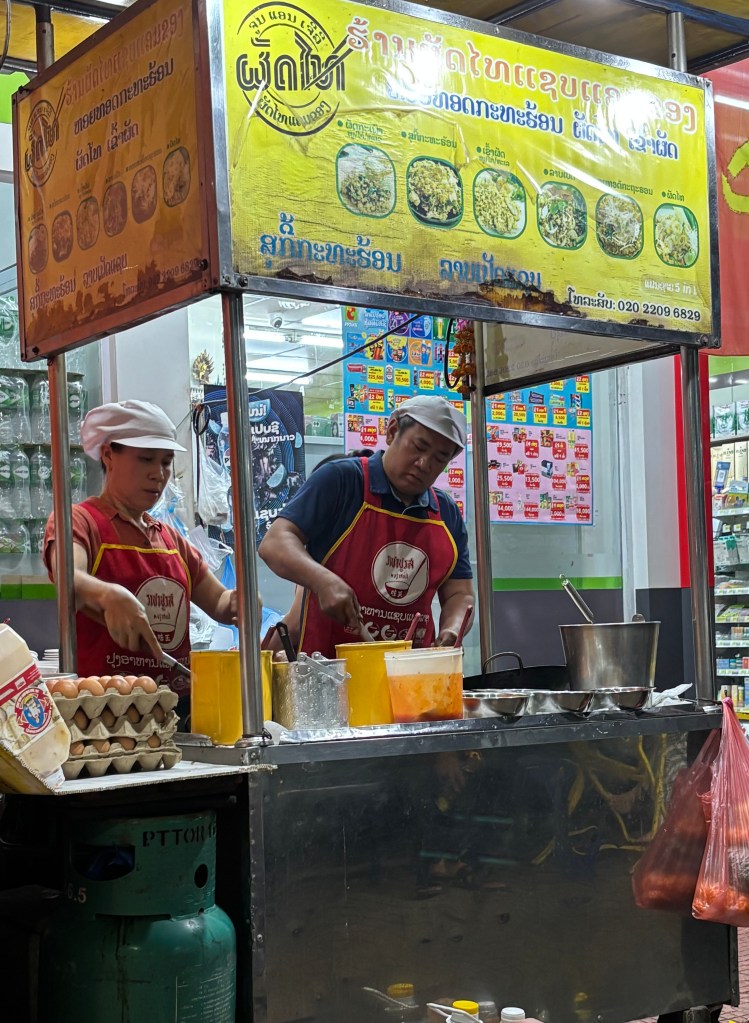
I decided to skip Vang Vieng, “the adventure capital of SE Asia” – maybe leave it for the next time? and carried on to the capital Vientiane. On reflection, it was probably a wrong decision. Vientiane is small and fairly boring. There are a few interesting wats and the old town is attractive of an evening. There’s some nice street food to be had but for the most part, the tourist bits are the same as ever = the night market is full of hundreds of stalls selling the same things (clothes and tat), and the Starbucks, Cafe Amazon, the Hard Rock Cafe, all present. I was glad when I found The Tipsy Elephant – a high rise hotel bar with the views of the Mekong at sunset and the happy hour between 5-7pm.
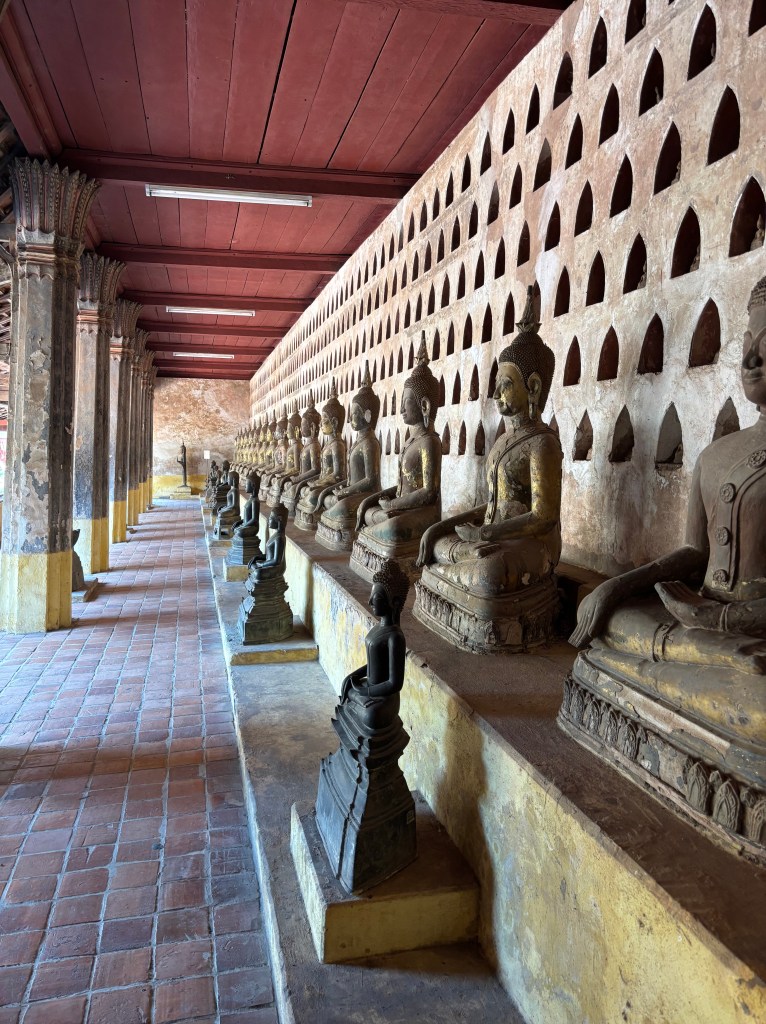
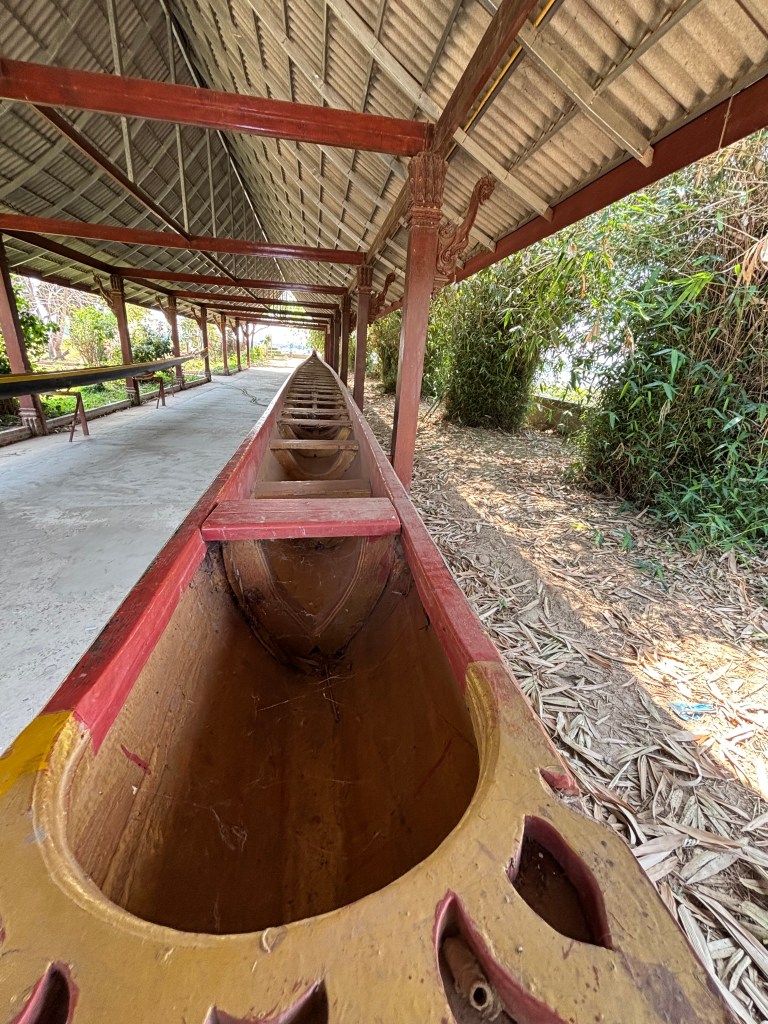
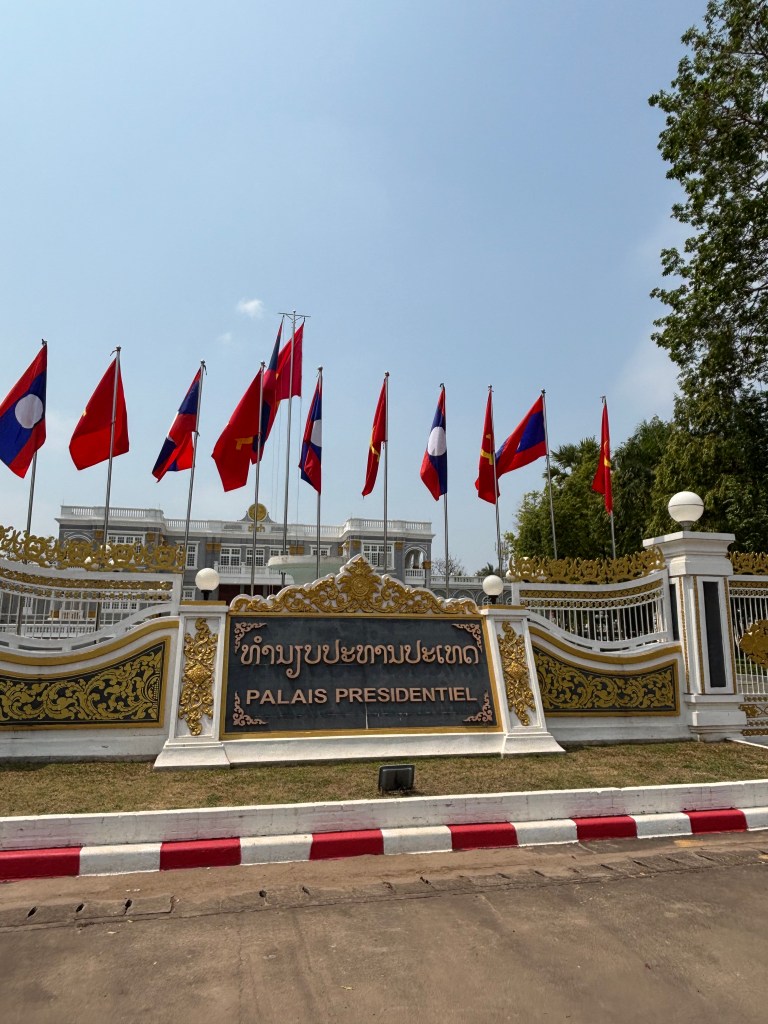
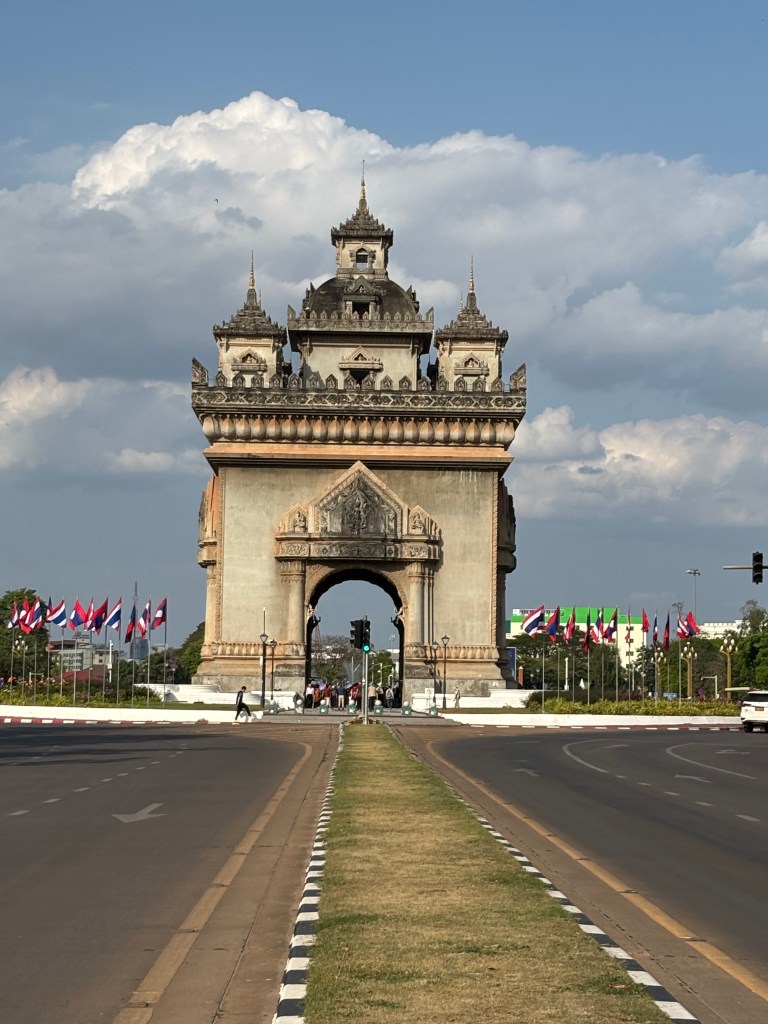
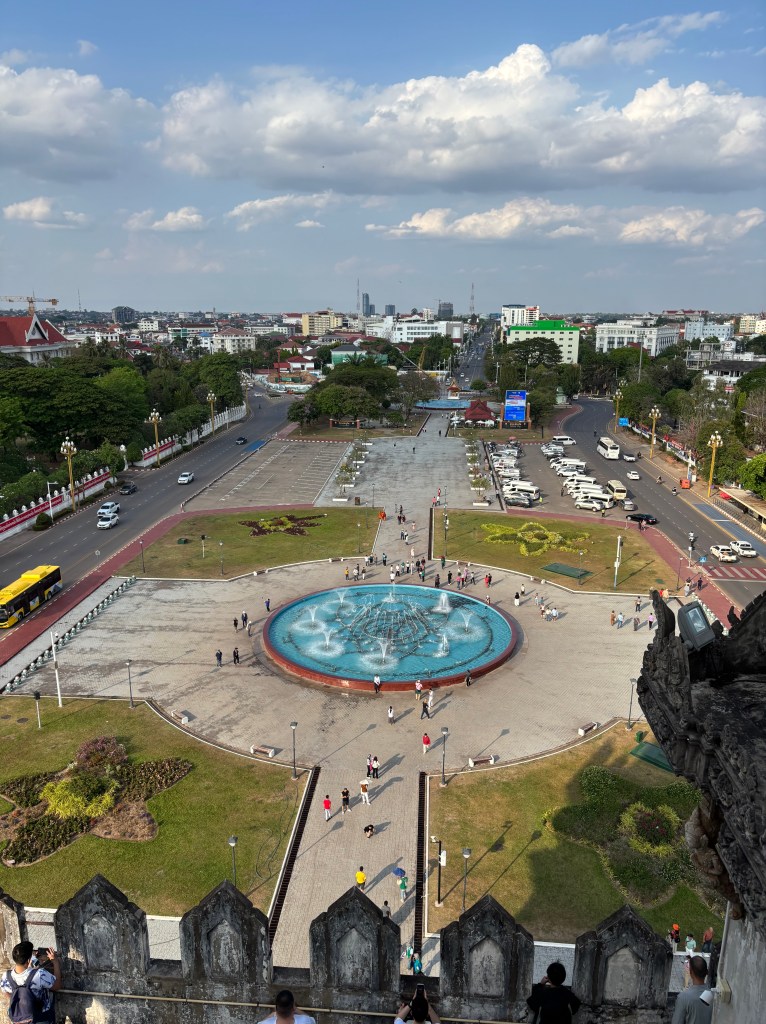
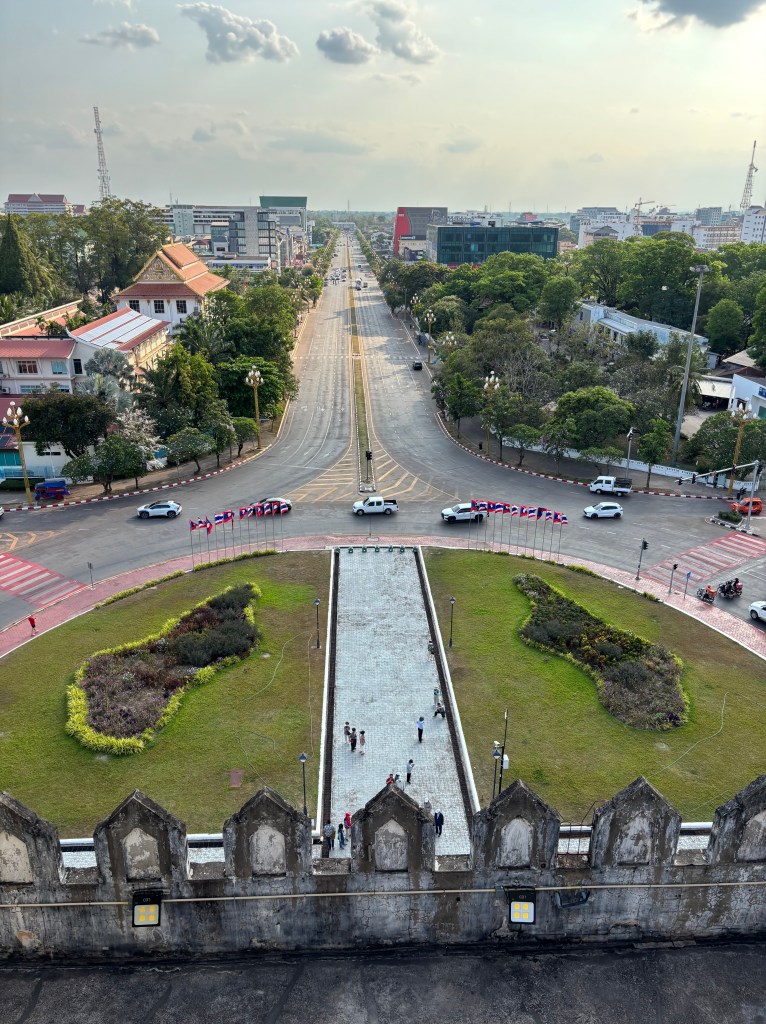
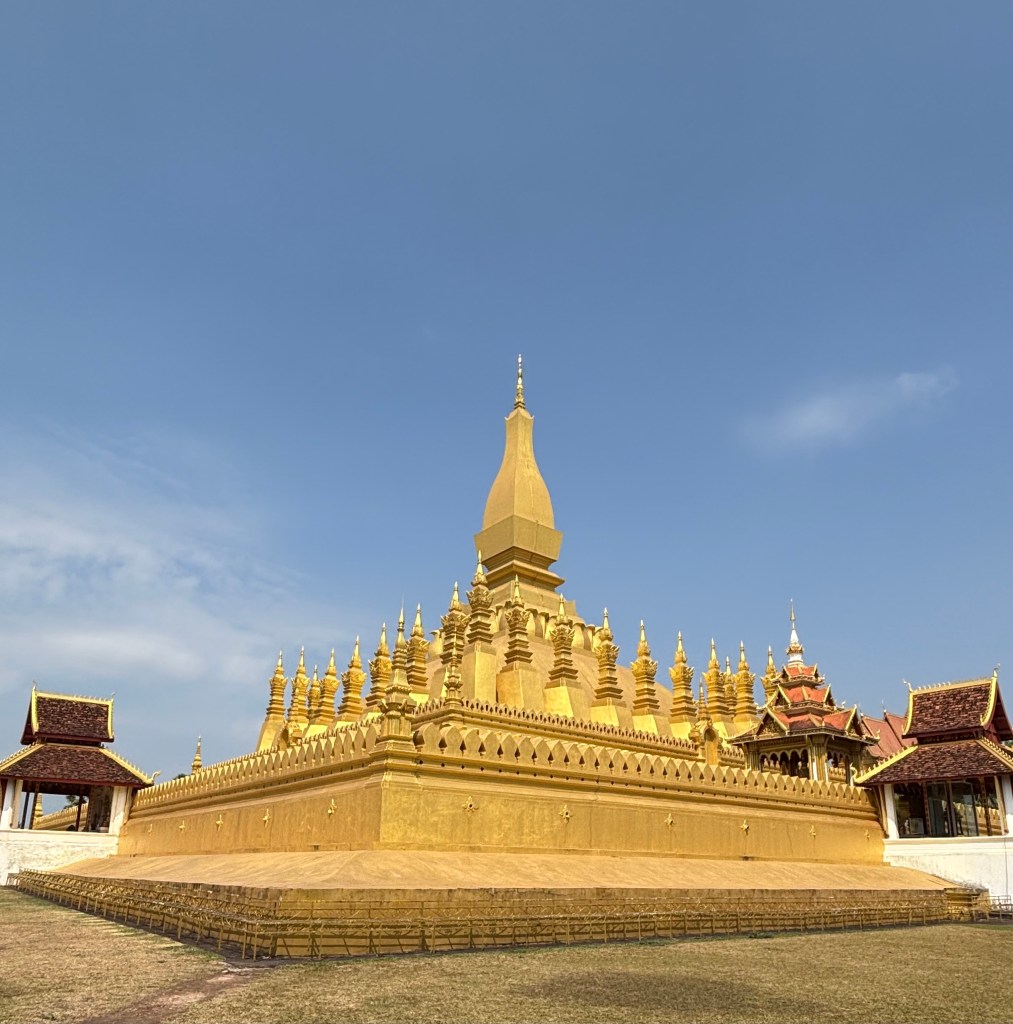
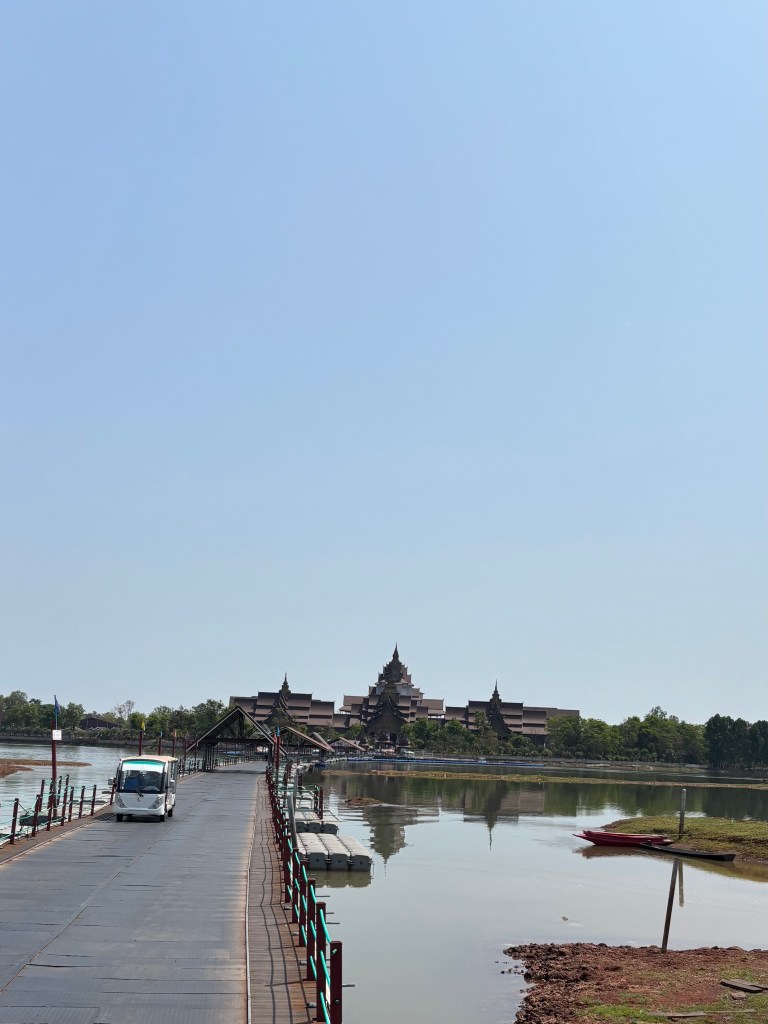
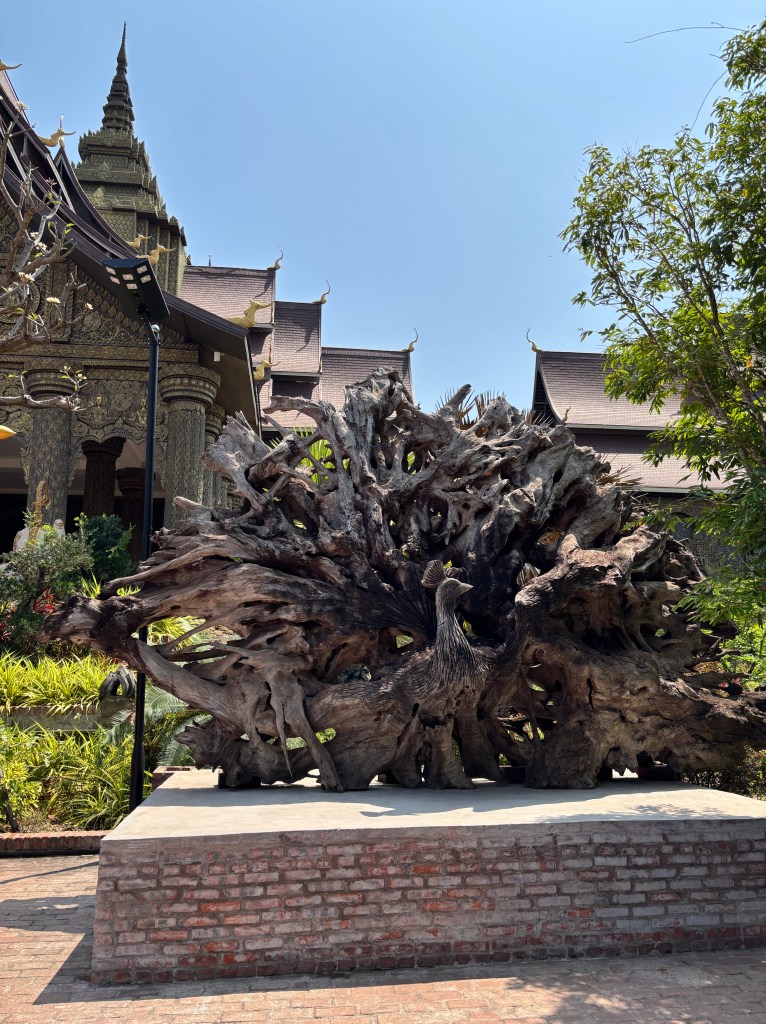
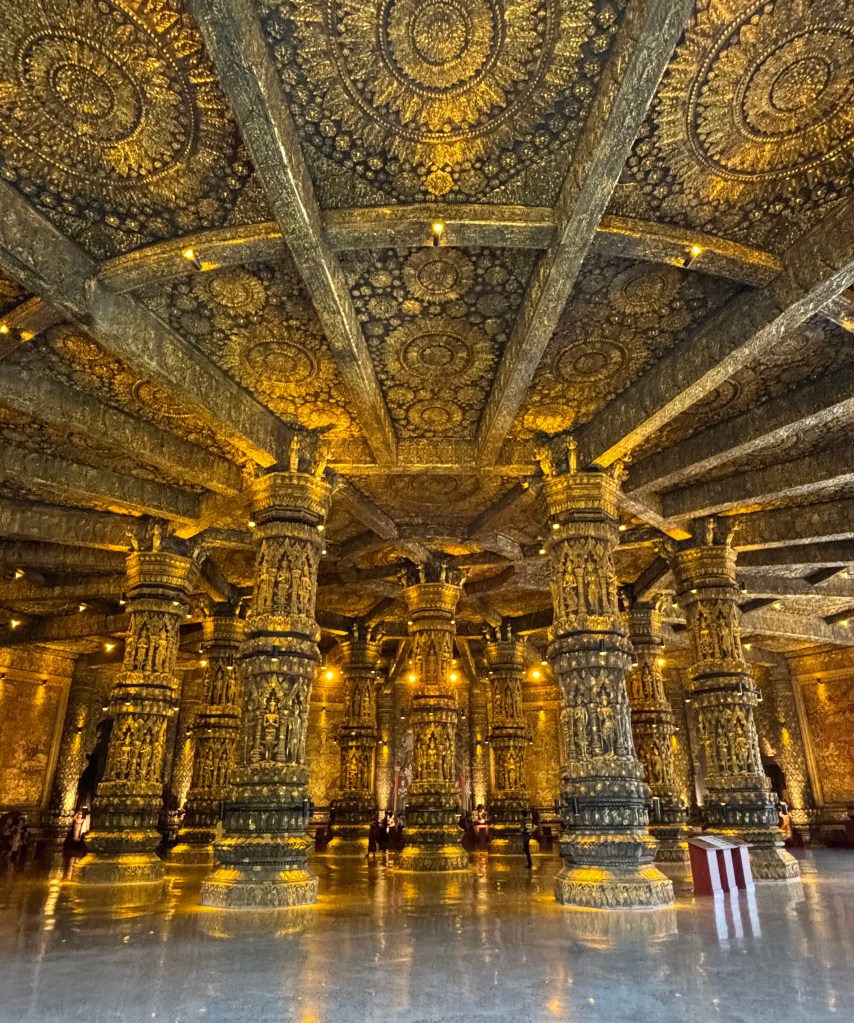
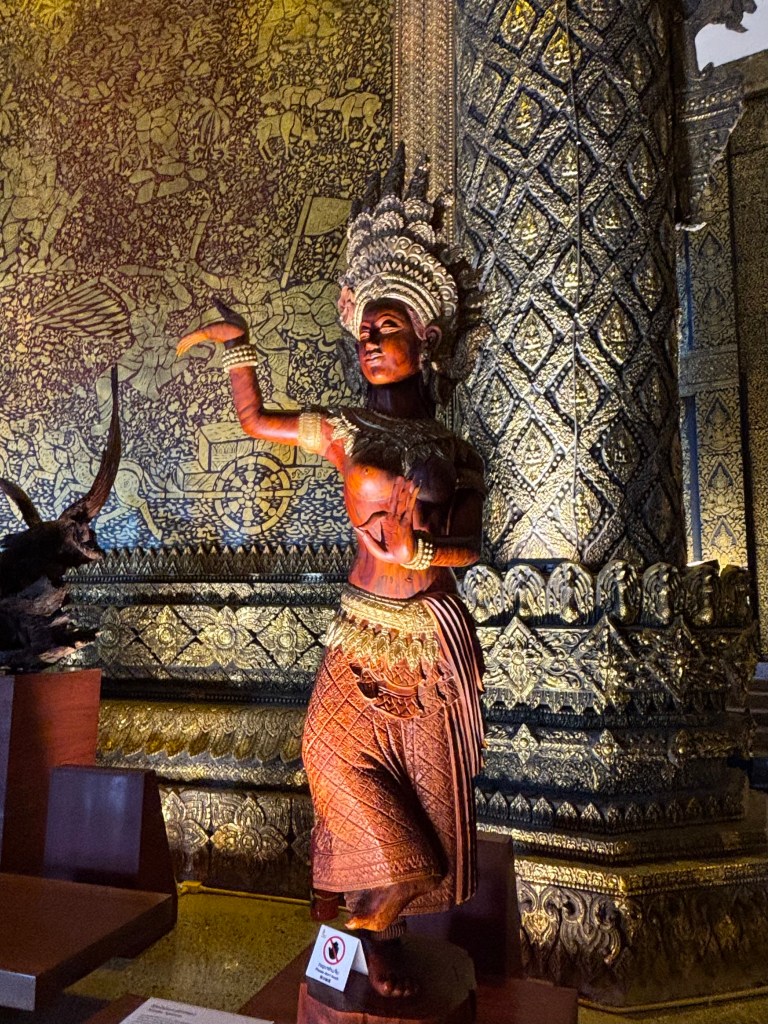
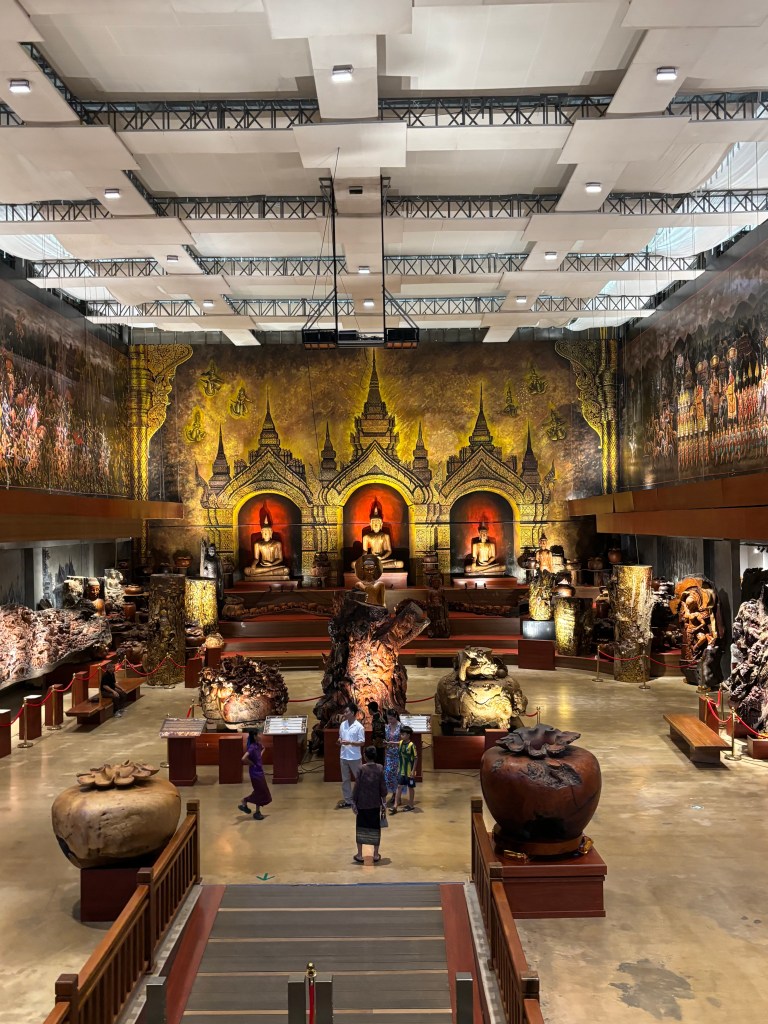
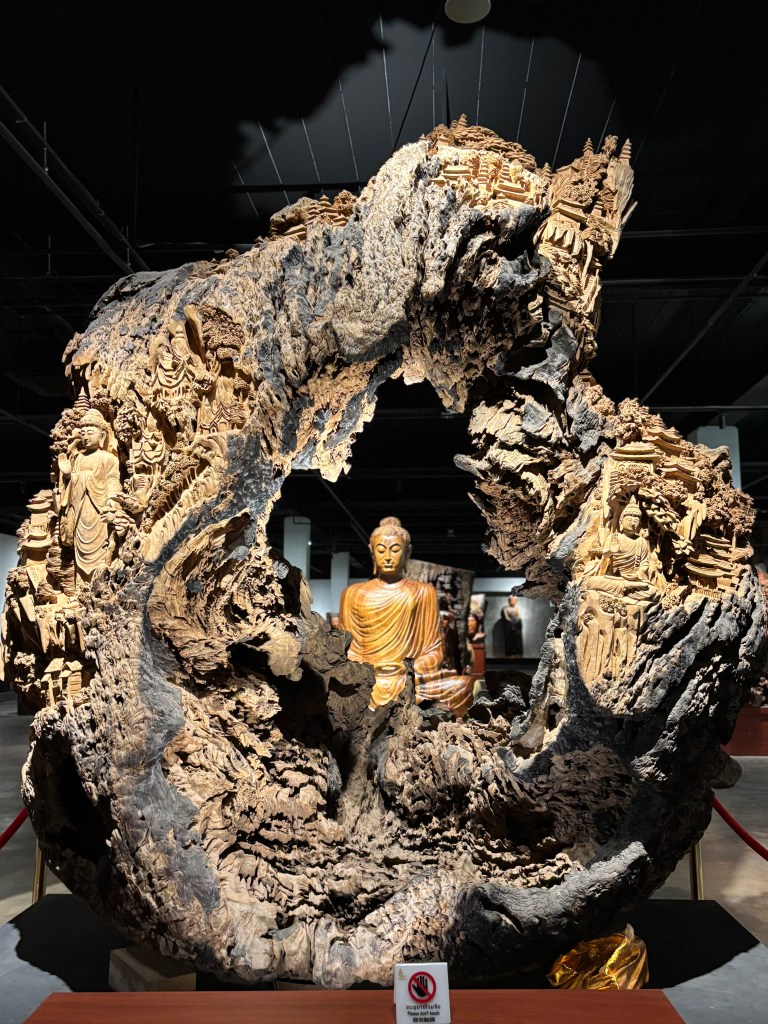
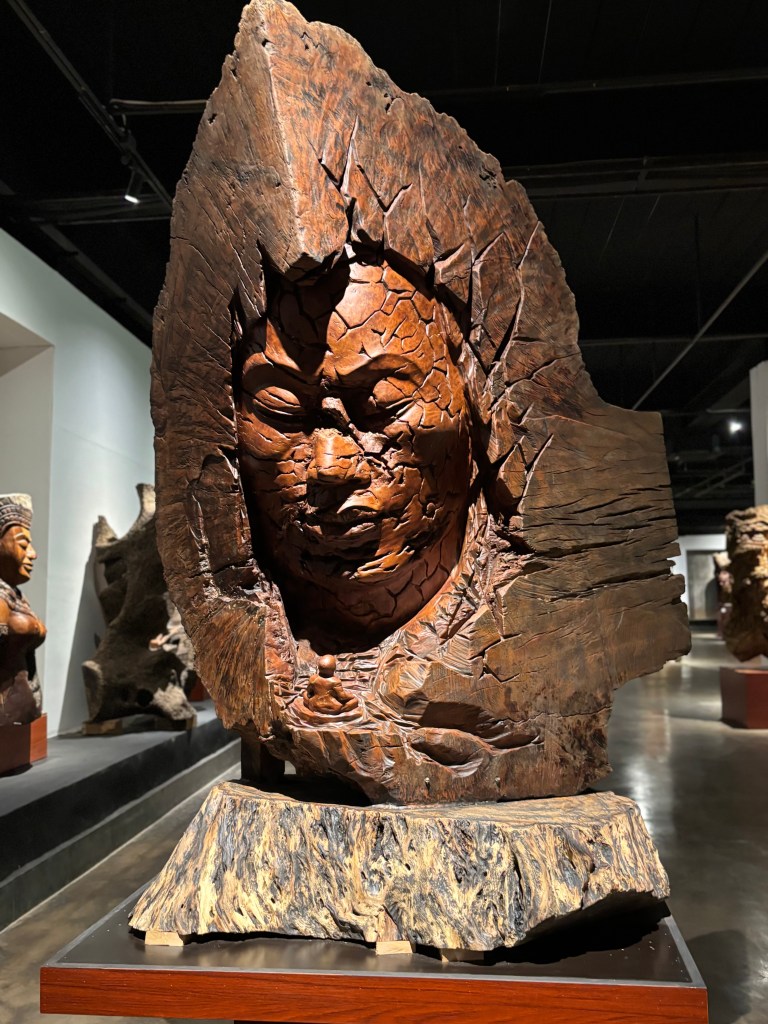
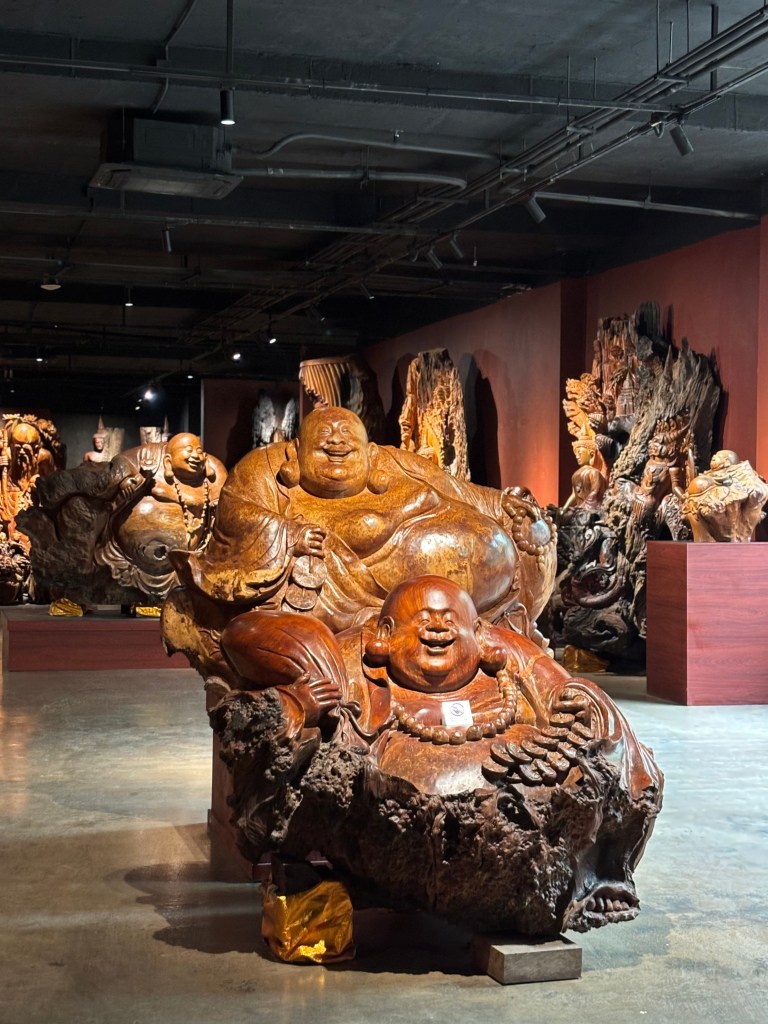
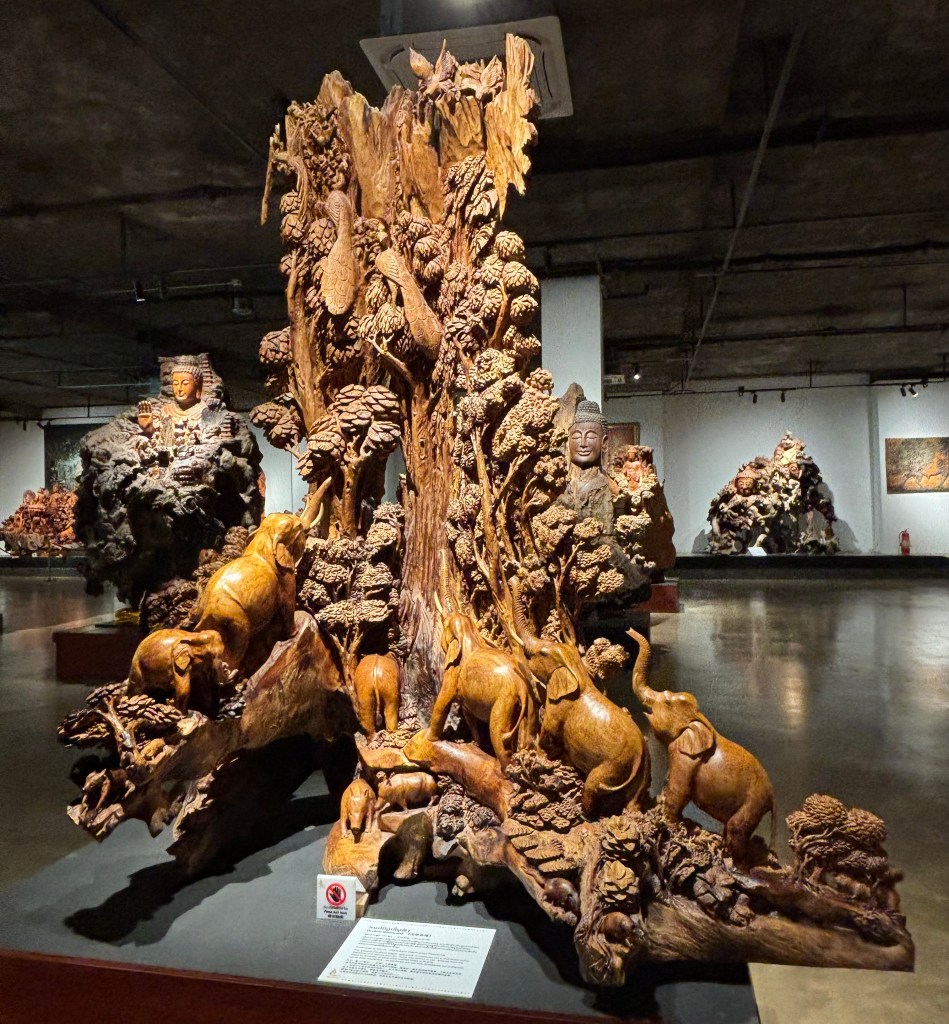
The Vientiane Art Museum is way out of town – the official 10K seems to be a lot more on the motorbike (riding pillion). There is no public transport to it – tours only, or private arrangements. The museum building is on an island, and visitors are ferried there across a pontoon bridge in golf carts. Inside is the Aladin’s cave of fine Laos wood carvings, mainly devotional but also some secular. (The Lonely Planet also mentions the Laos Museum on the same road but that is now “exclusively for the Chinese” where they can purchase things.)
The 24 hour bus from Vientiane to Siem Reap turned out to be 1 night bus (box beds shared by 2 people) and then a series of 4 minivans, ending with a tuk tuk (included in the price) to take you to the hotel. Border crossing was easy (had an electronic visa, which I should have printed off in duplicate….) The nice Cambodian woman officer did it for me with a smile. It was a bit hot, walking the 300+ meters across the no man’s land.
The Onederz (hate the spelling! – thought when I first saw it that it was Dutch…) hostel in Siem Reap is very popular with backpackers . There are private rooms. And 4 pools, bars, activities (e.g. a pub crawl, bracelet making, cocktail making, pub quiz, yoga…) It is central, all front facing staff speak English and are very helpful. The hostel was full, though the guide told us that the war between Thailand and Cambodia early in the year has caused a drop of 80% in the tourist arrivals. (Thailand won.) As Siem Reap is all about tourism, this has caused some serious hardship to people.
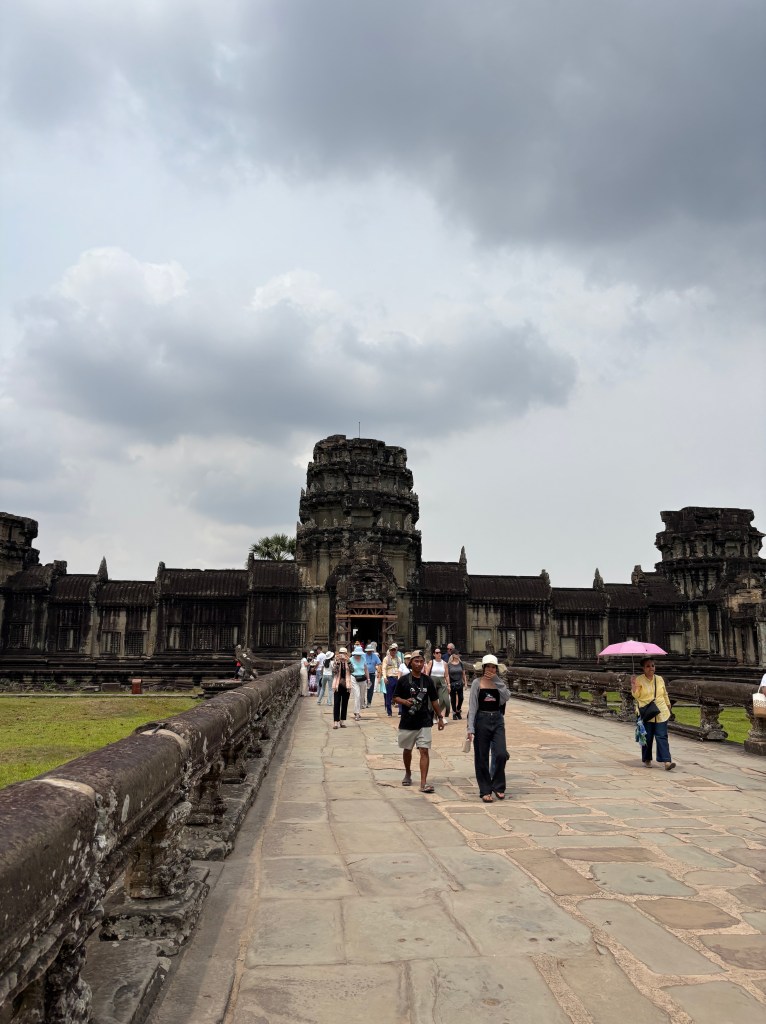
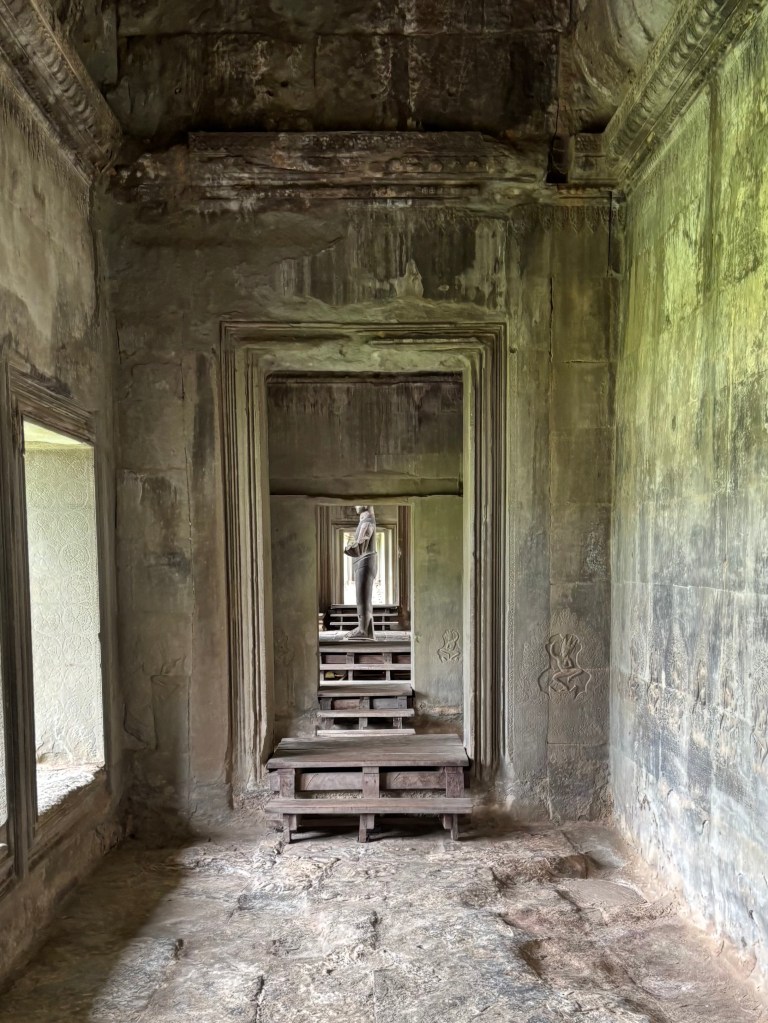
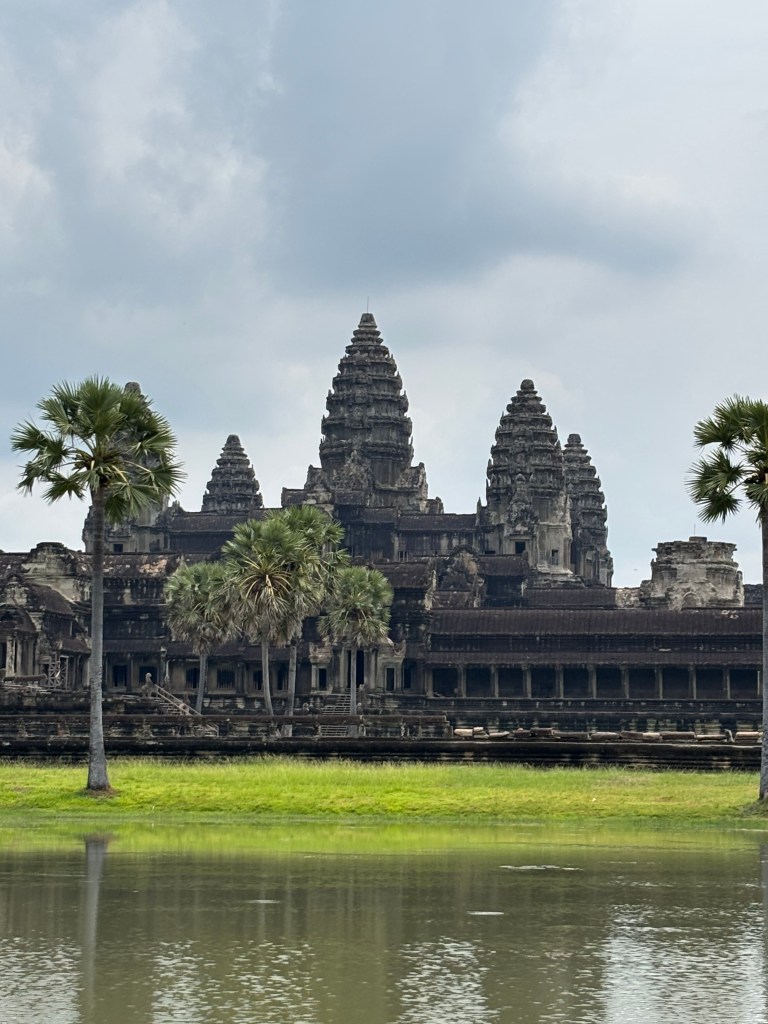
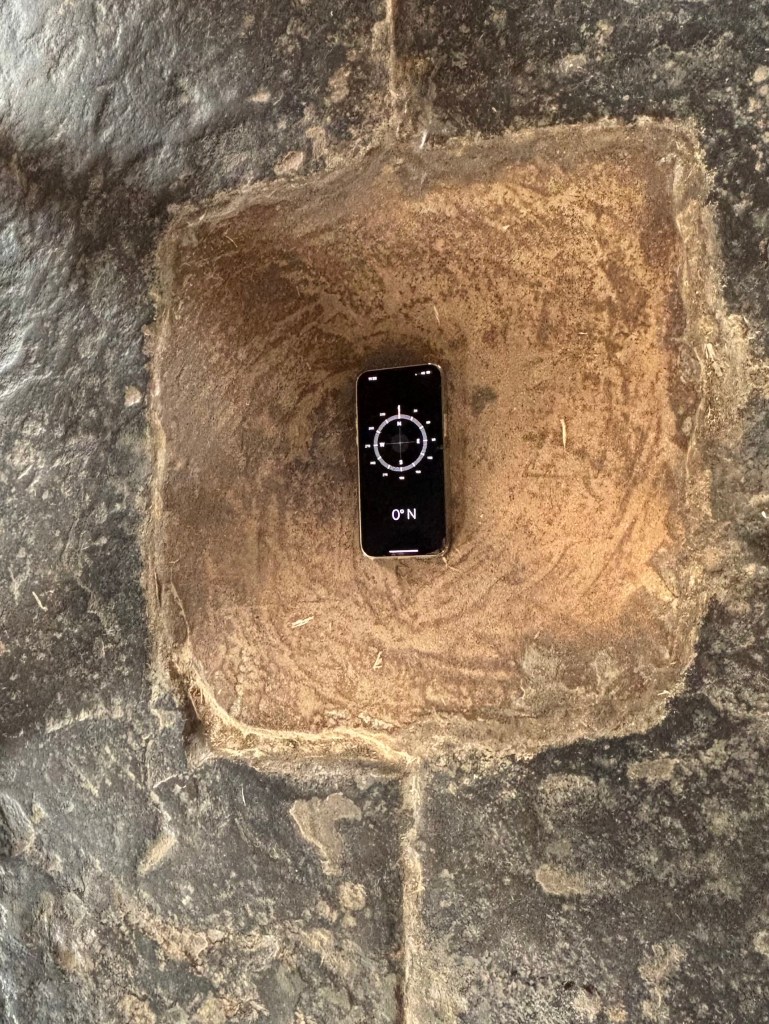
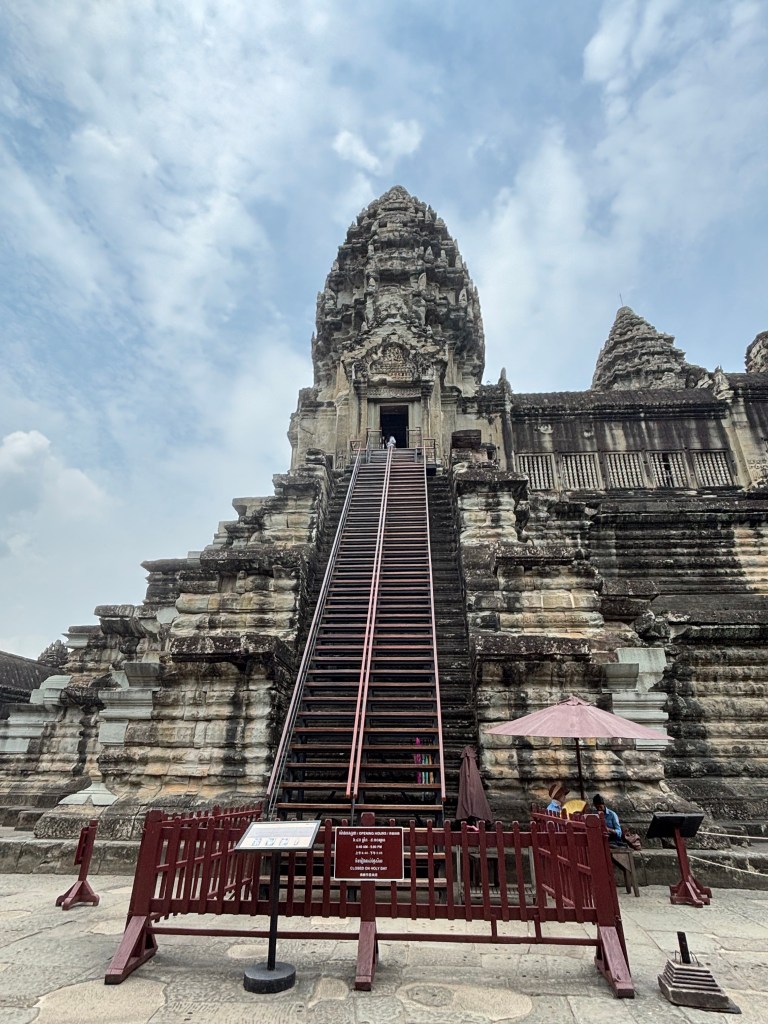
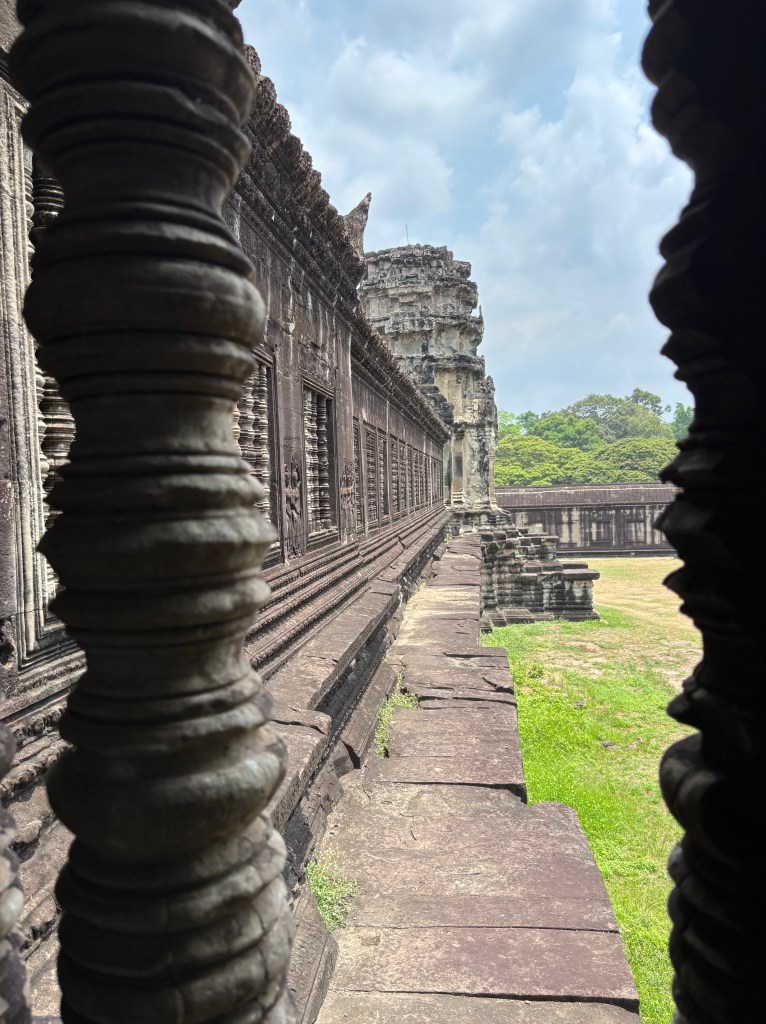
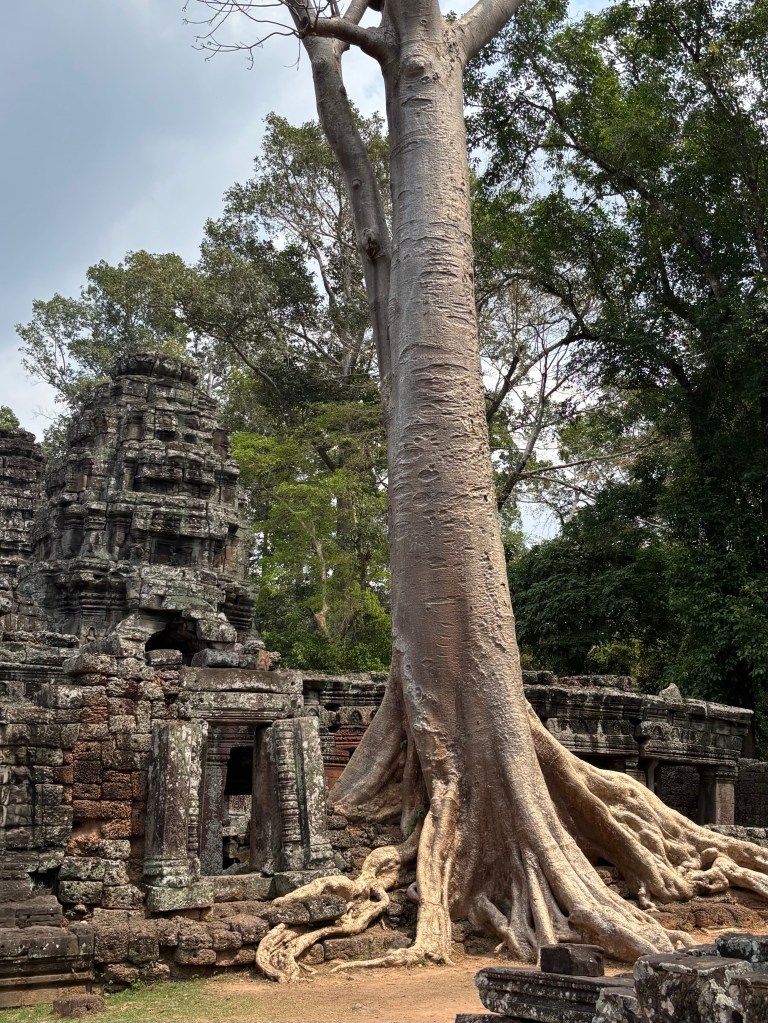
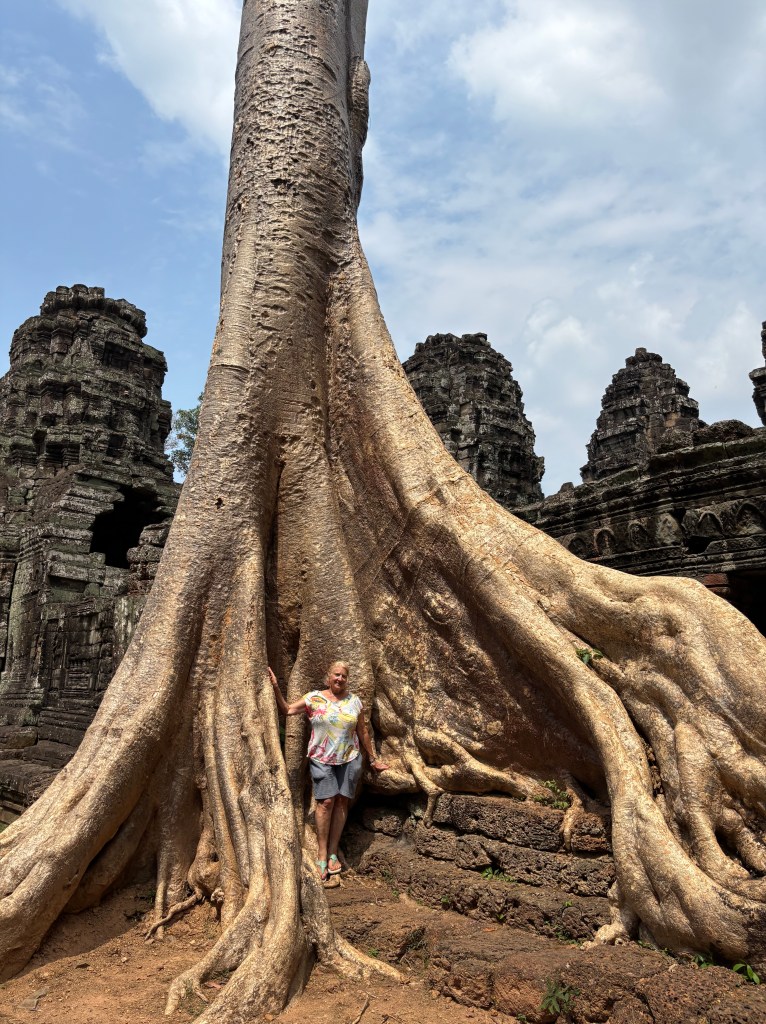
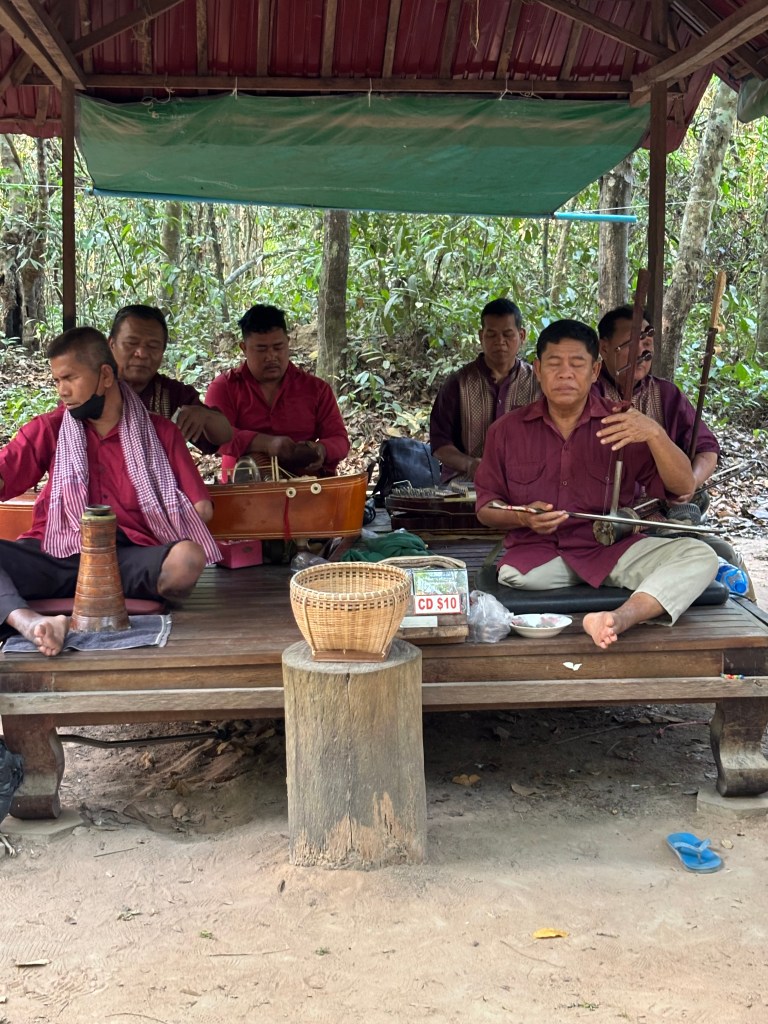
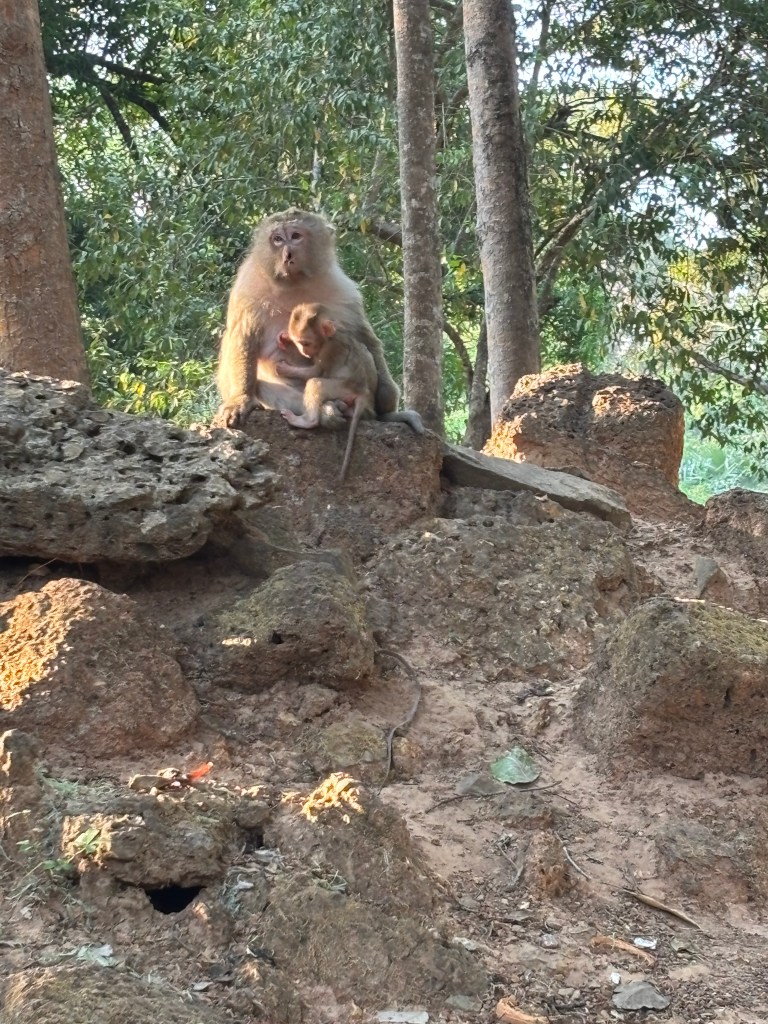
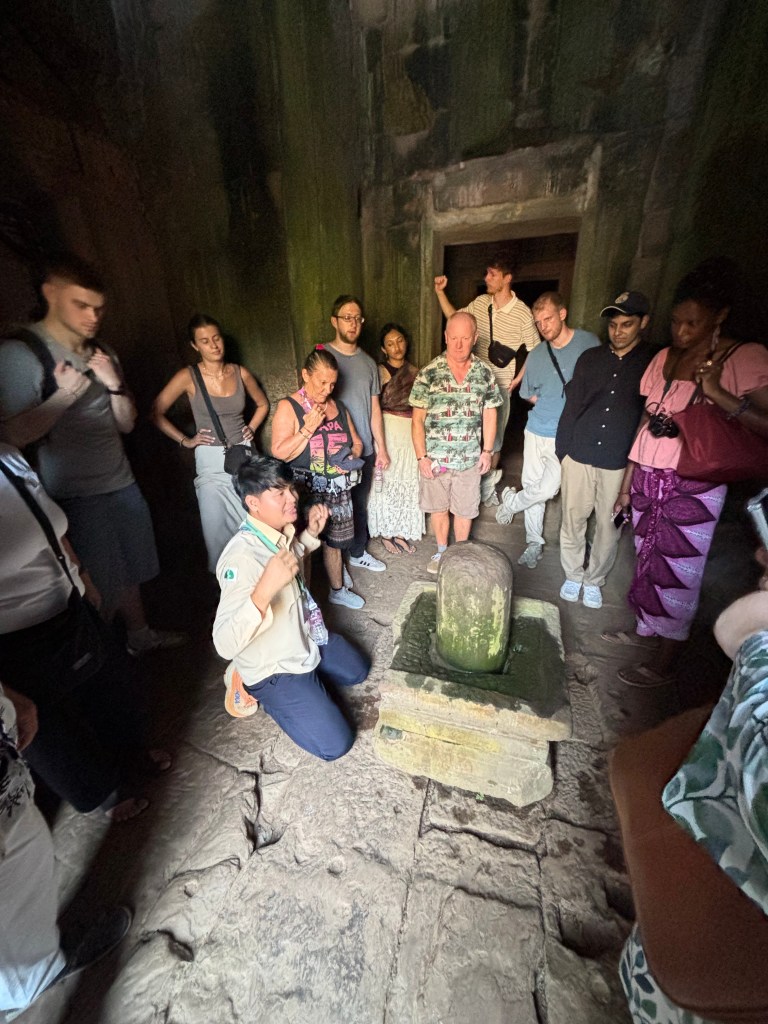
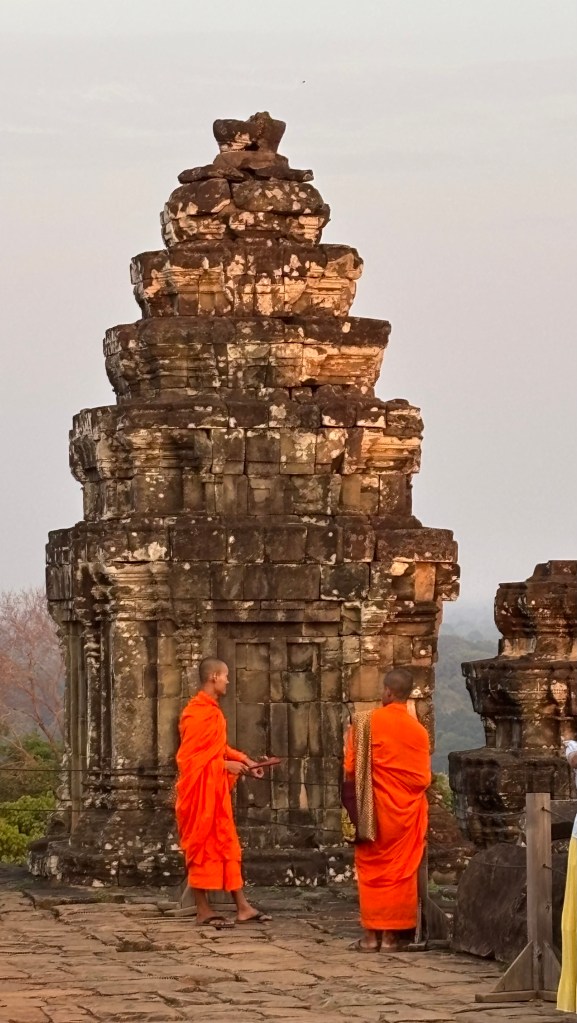
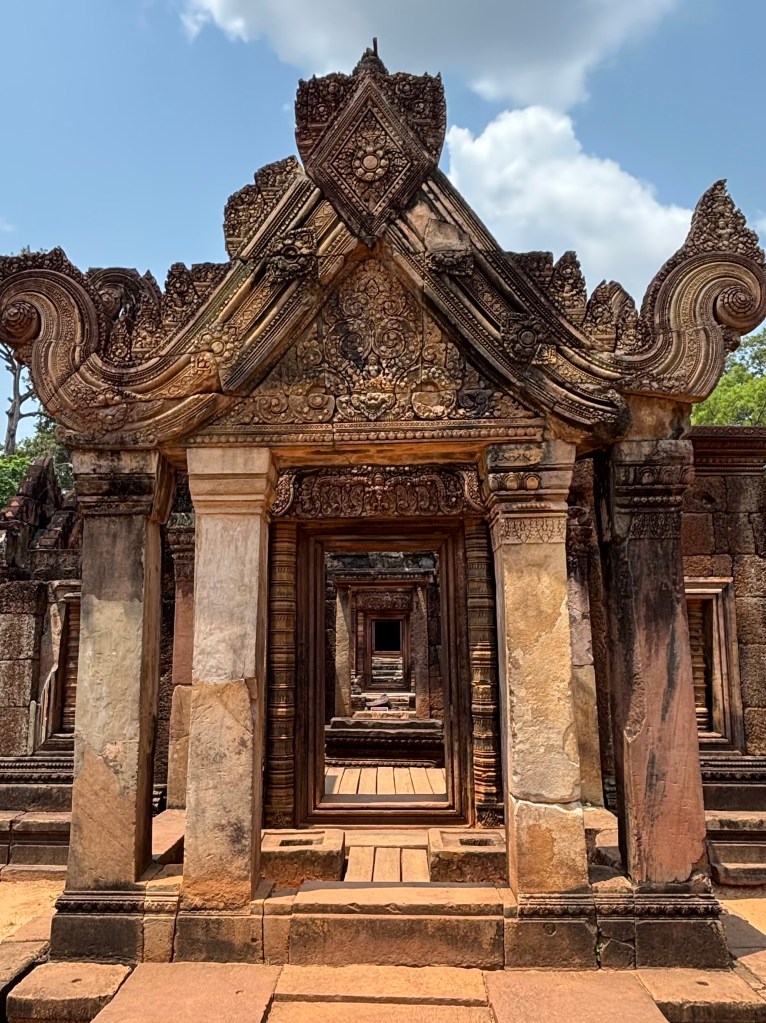
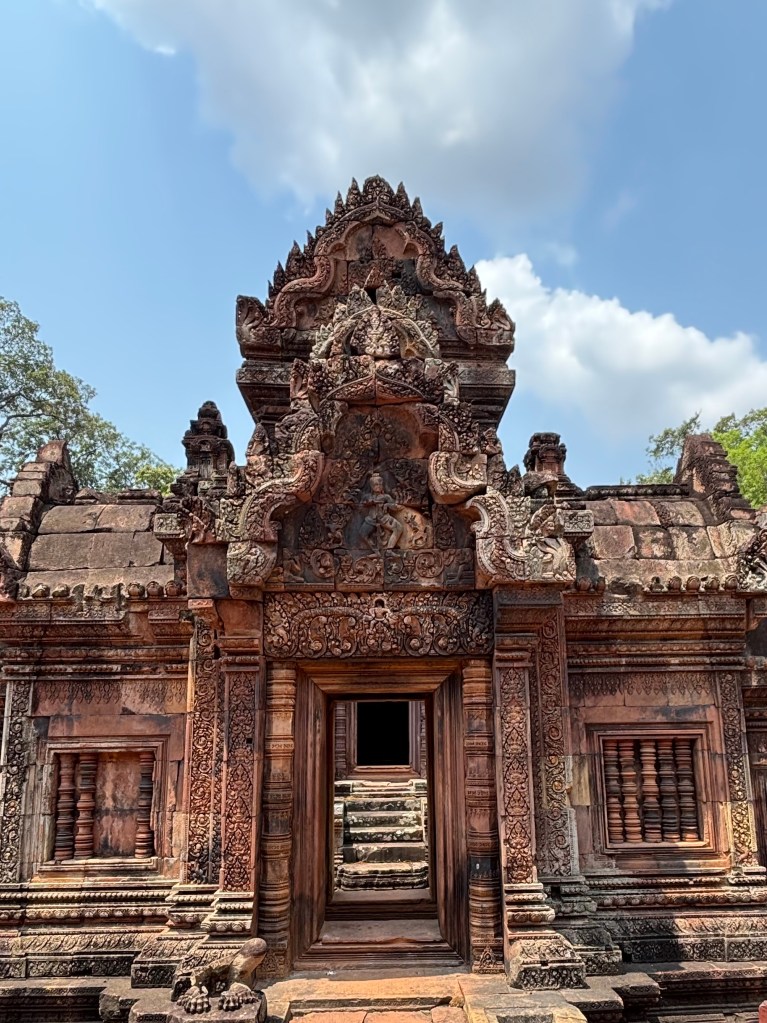
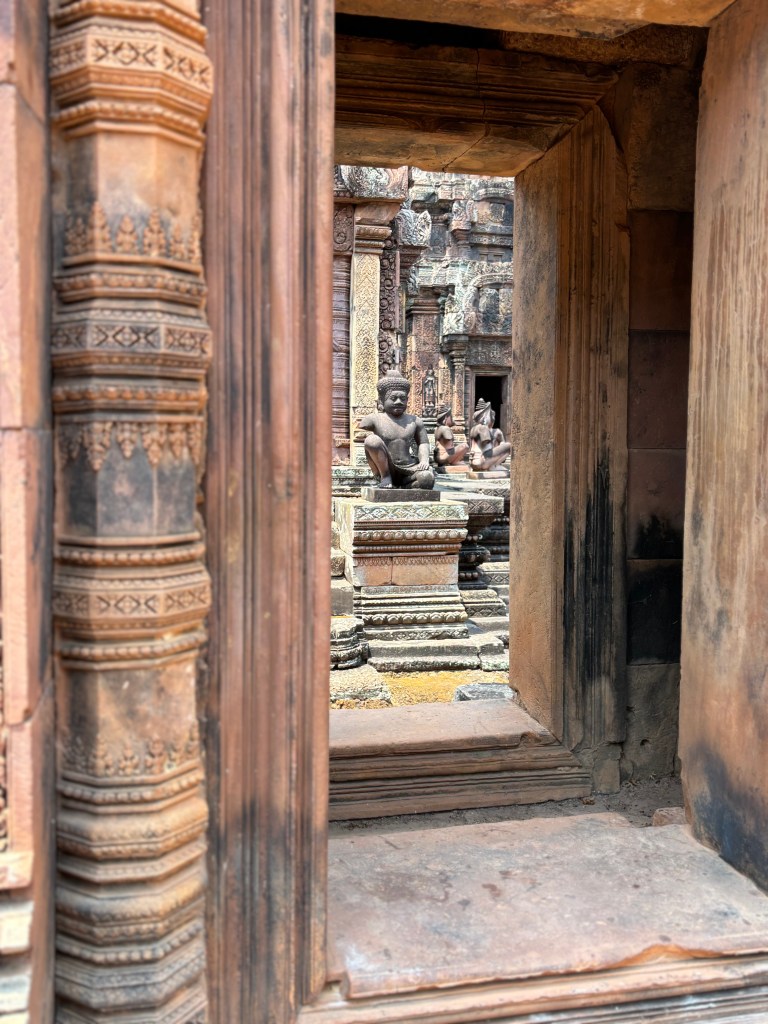
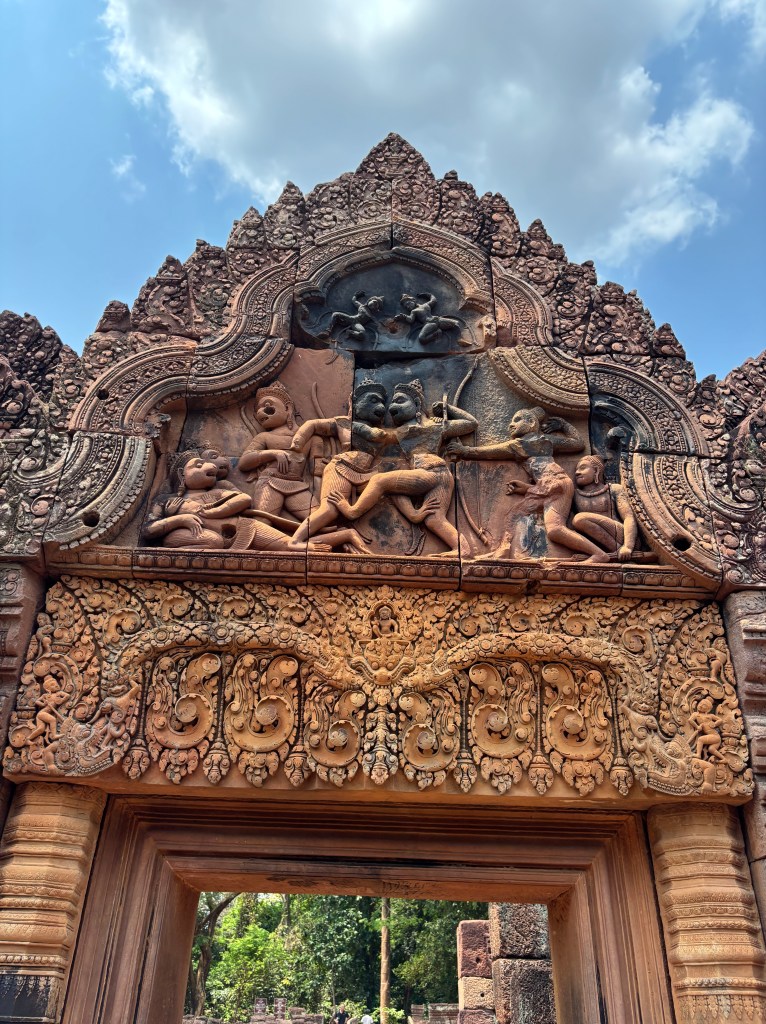
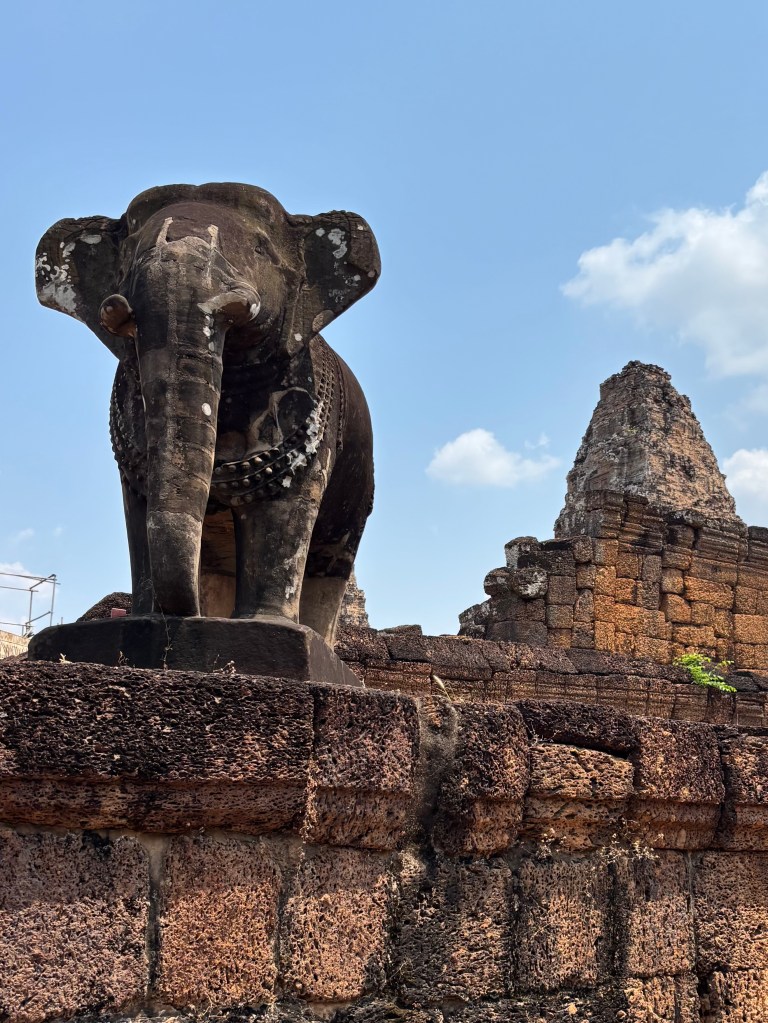
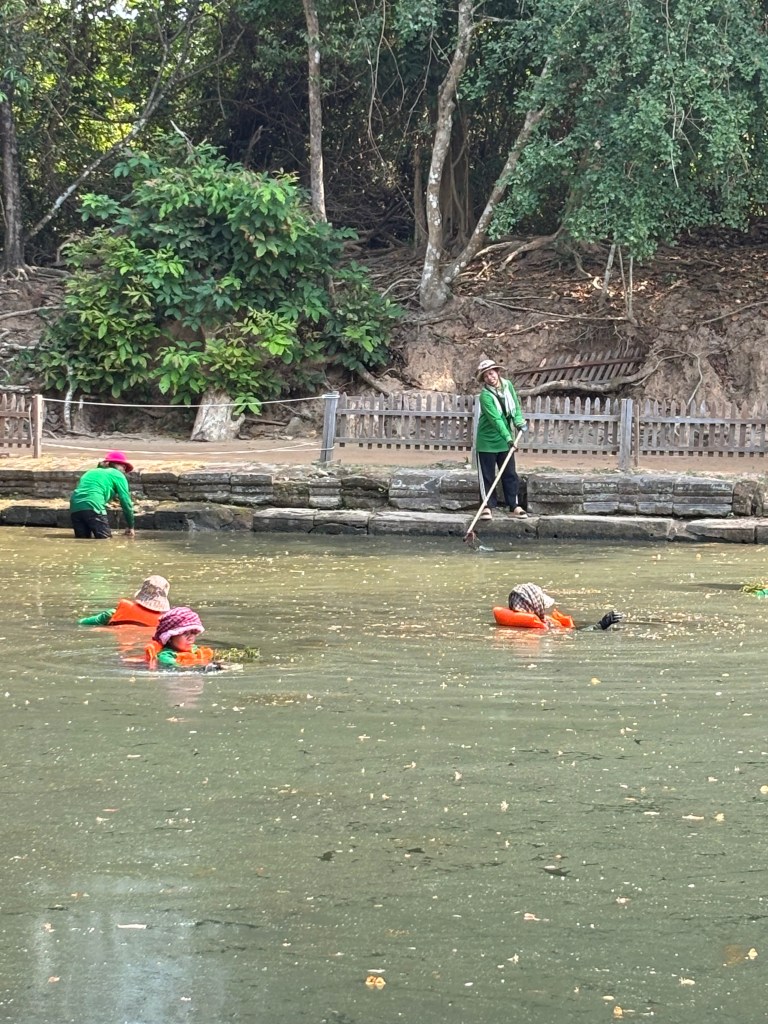
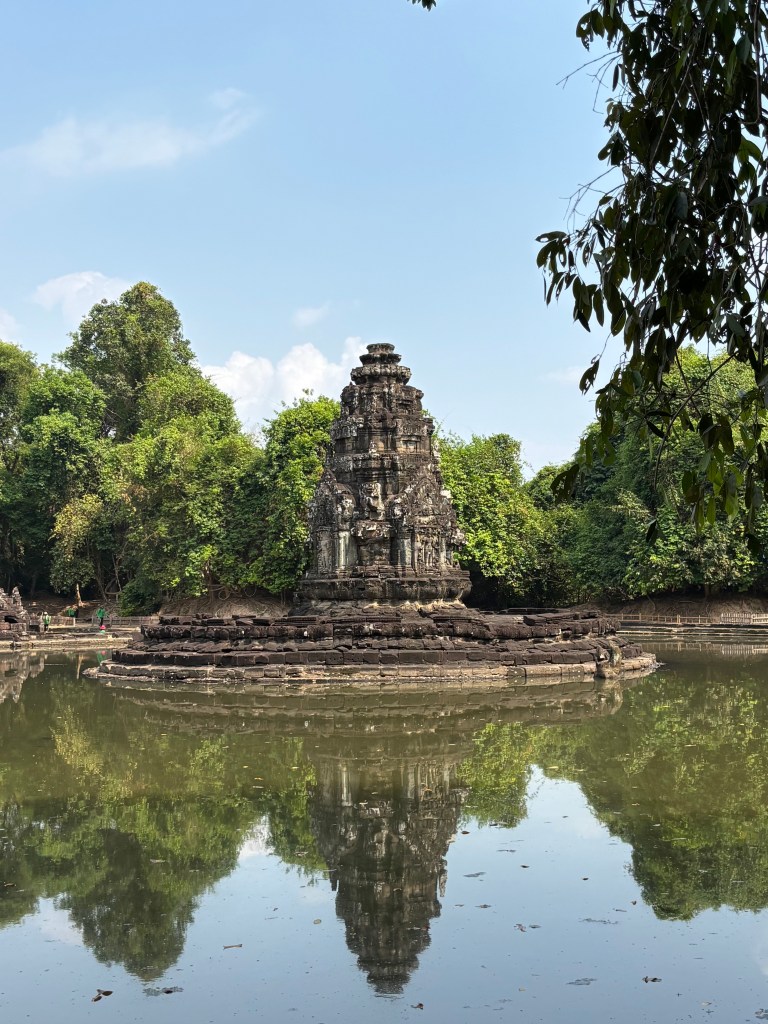
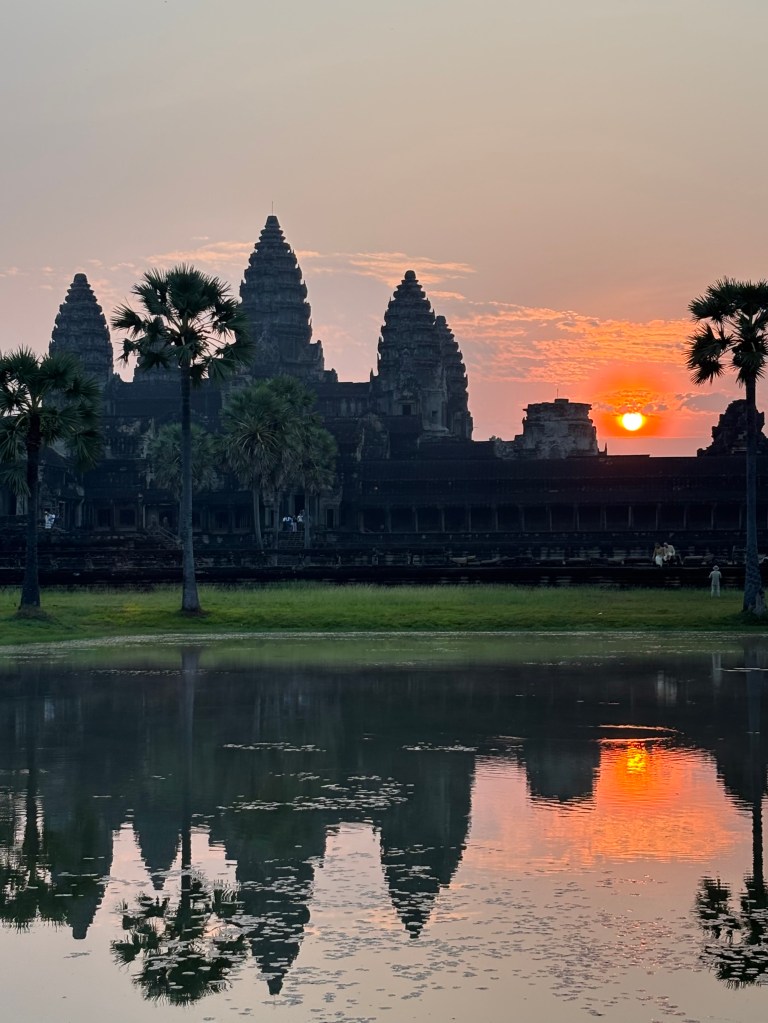
Angkor Wat. Took the Sunset tour with a very good, knowledgeable and informative guide, “David”, so that when I went on my own (hired a tuk tuk for the day) to the outlying temples, it all still made sense. The place is staggeringly large – the furthest temple was 37 K from Angkor Wat. Siem Reap had been the capital of the Khmer empire and every ruler built the temples to his religion or “adjusted” what was there . (It was Hindu, and Buddhist, and some Brahma and animist, but mainly the first two. ) To round it all off, also got up early for the sunrise over Angkor Wat. By a fluke, I was there on the 21 March, the day of the spring equinox, an important date in the Angkor culture calendar.
 Maribibi_travels