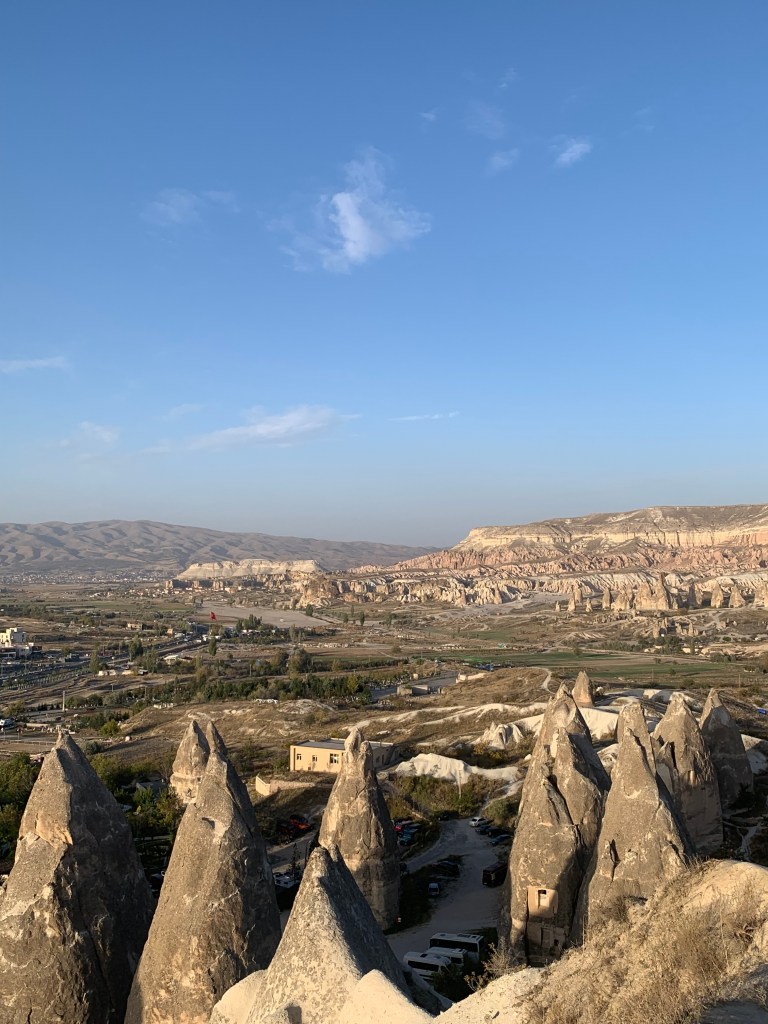
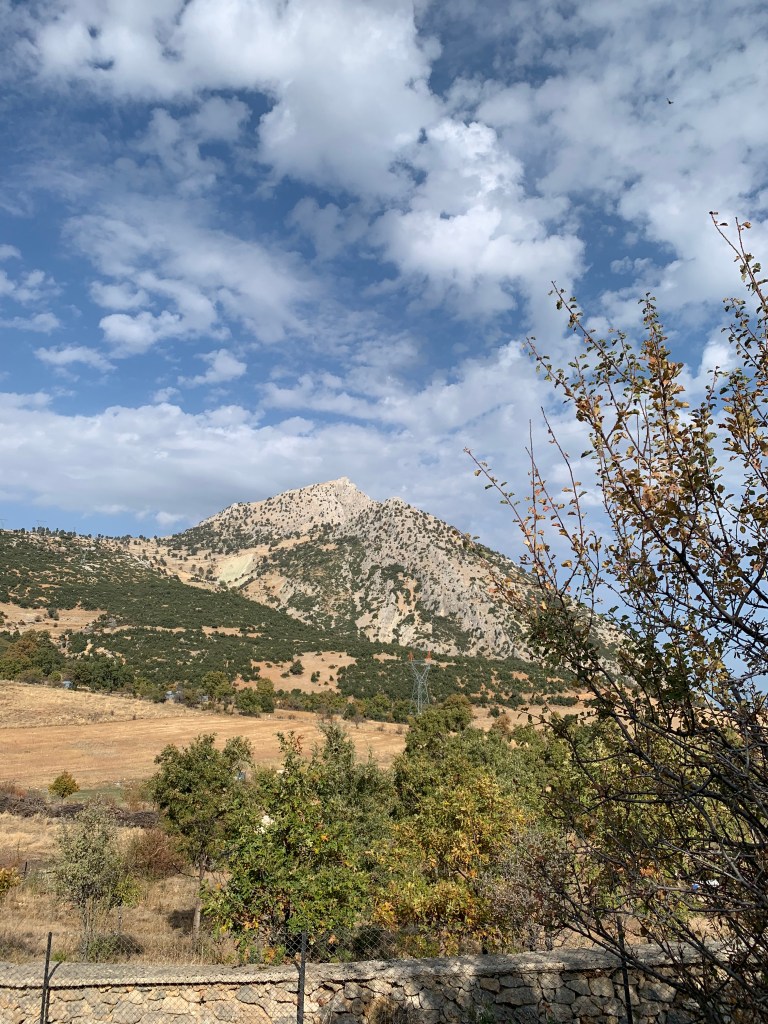
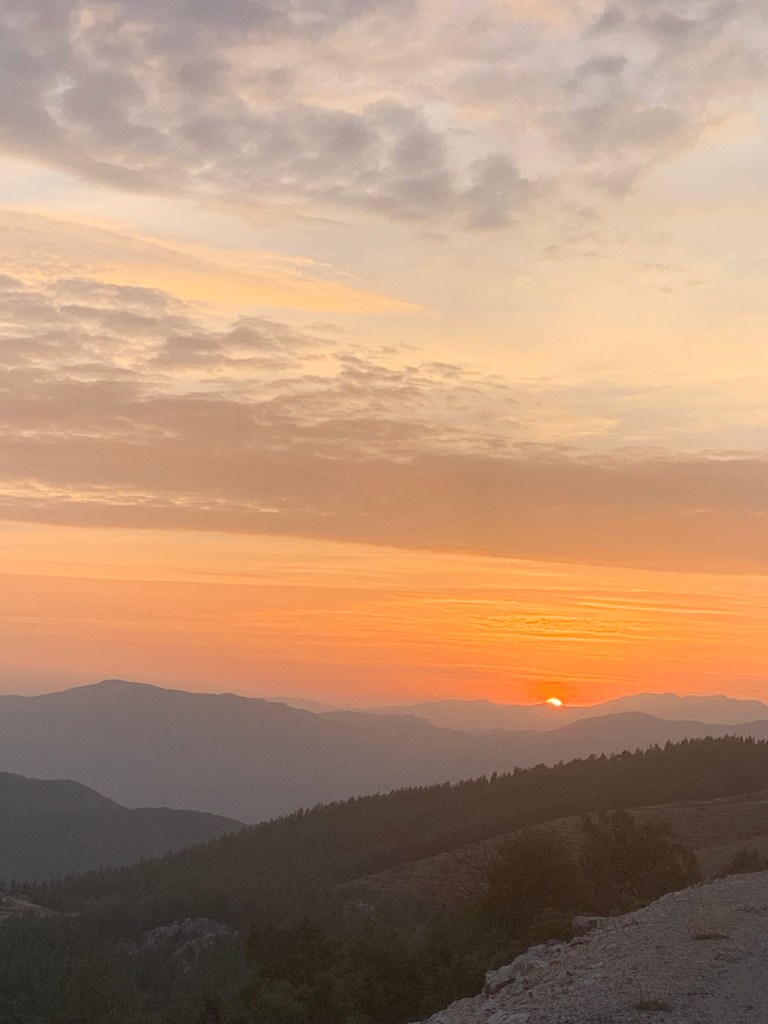
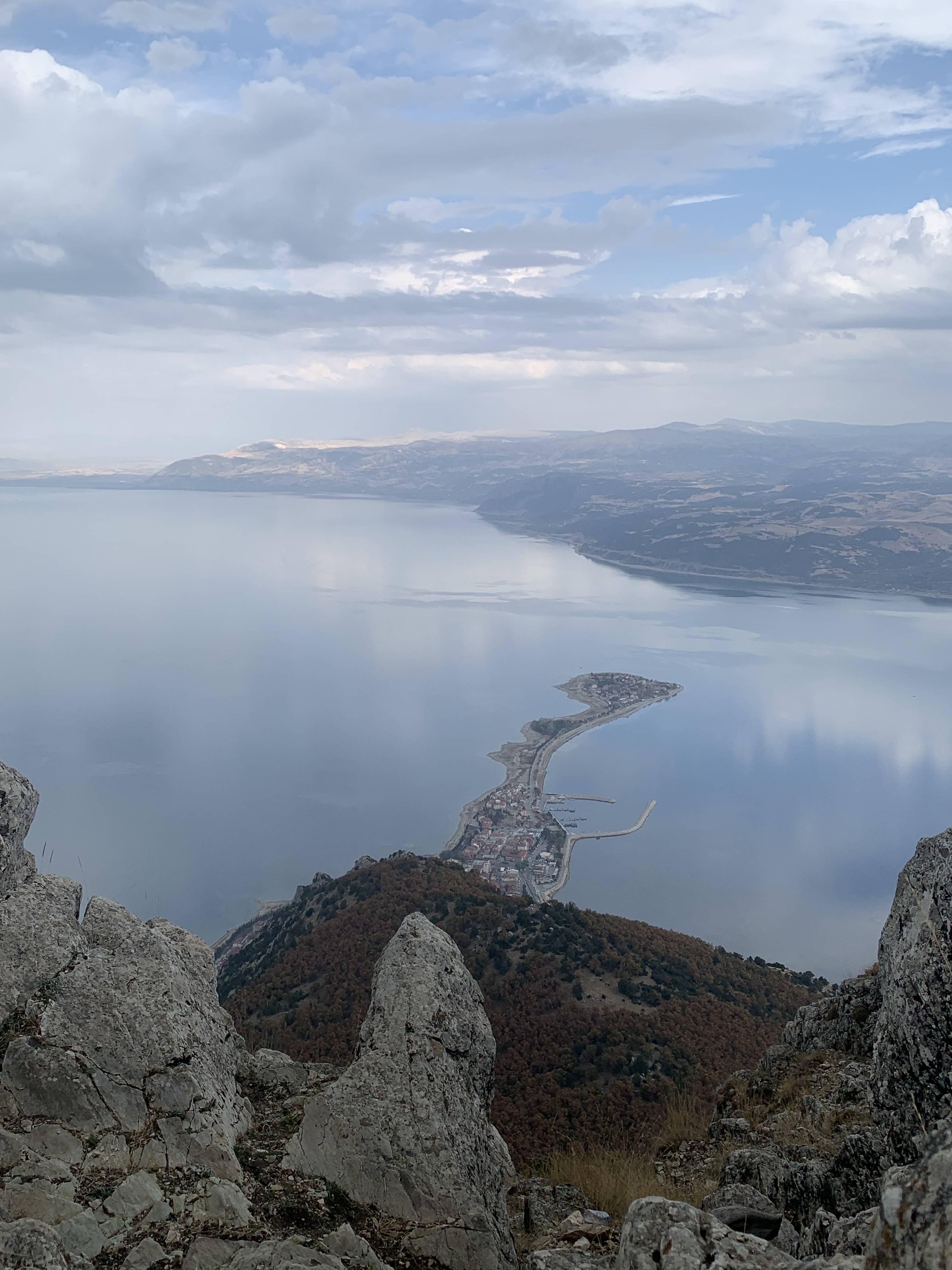
I got to Egirdir on the 30th of October. It is a lovely spot in the Taurus mountains at an altitude of 930m (3000ft): the scenery is breathtaking, the lake wide and (not only in November) cold.
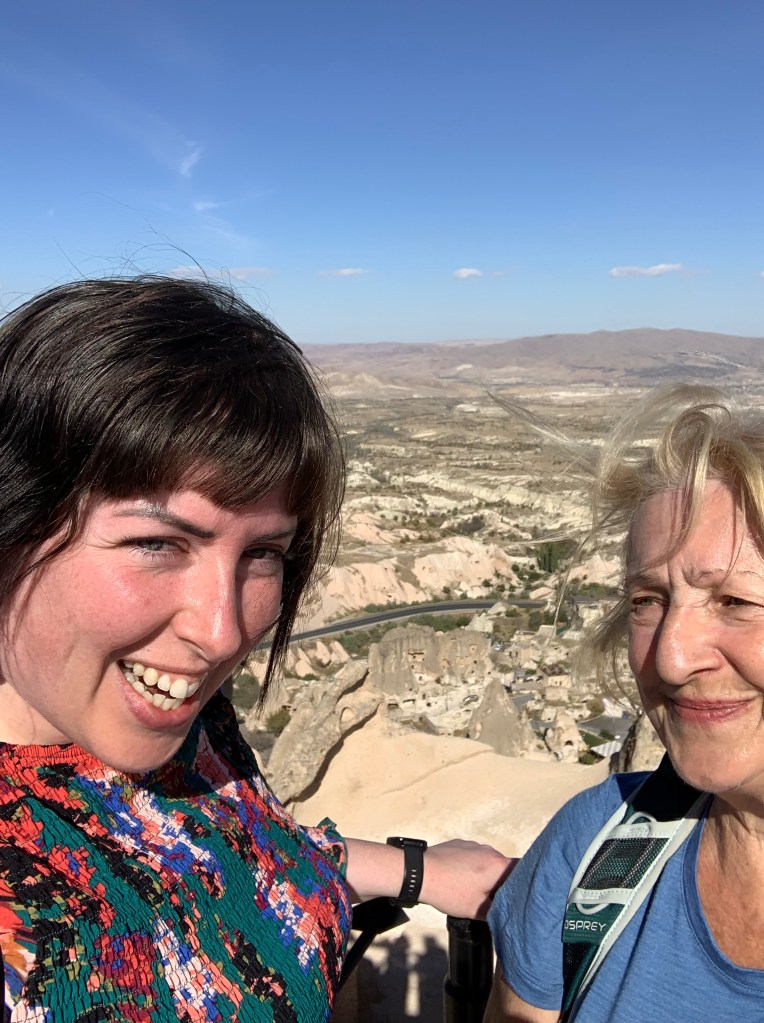
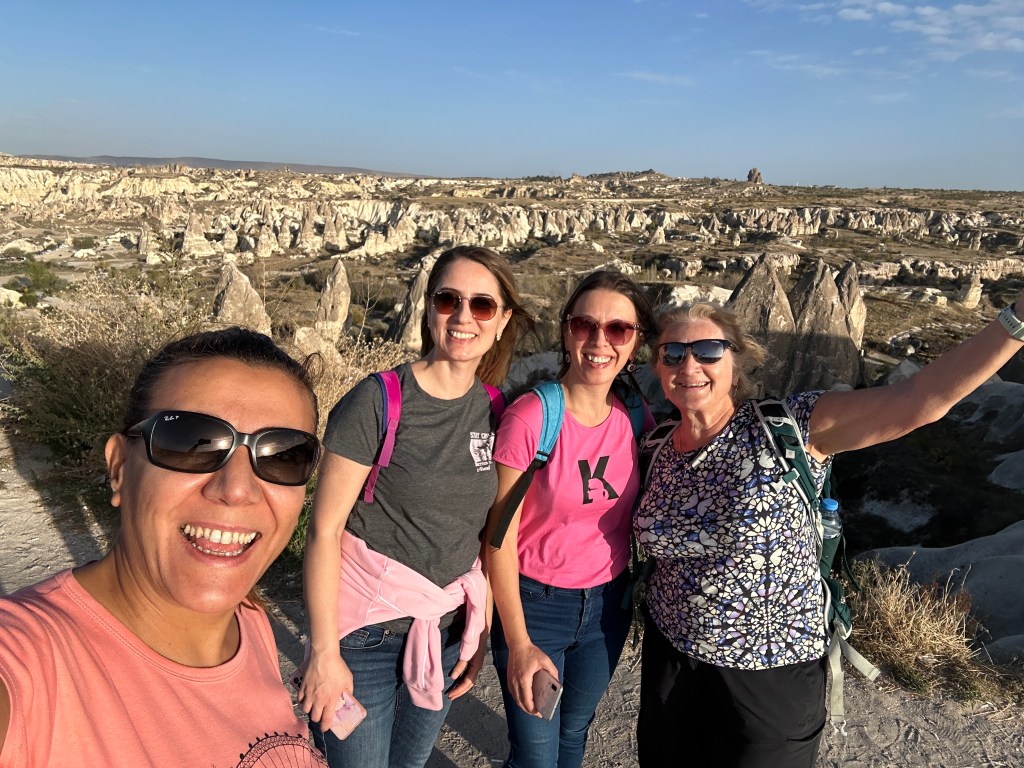
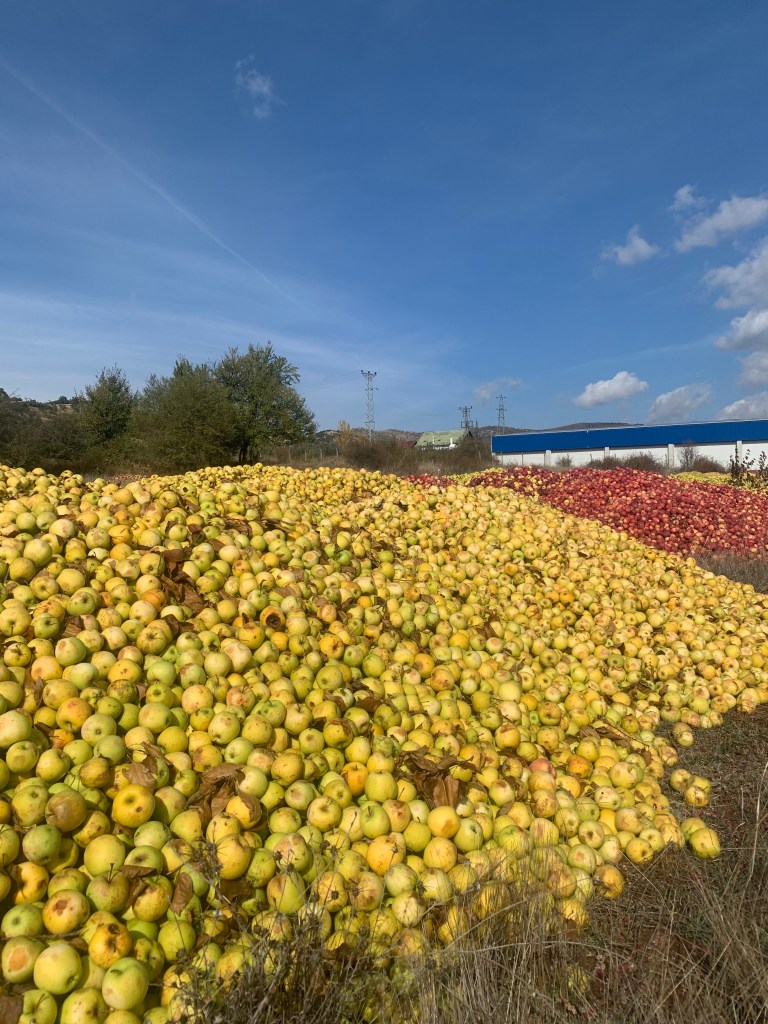
The one hike I did, to the top of The Needle, was challenging – and rewarding. Stunning views, despite the rain and the wind. A bit of a slide coming down the steep screes, where walking poles would have been very welcome. Hired a taxi (no car rental in town) the next day and enjoyed visiting the Zidan Cave (there is, of course, a Hellenistic dwelling in front, and a Roman bridge nearby) and the Yazili canyon. It was a real pleasure to have Dominika, a 21 year old Cambridge Classics graduate, as a companion. And, of course, Jenghis (“like Khan”) the taxi driver, a local man, a bit of a maverick who’s been places and who spoke English. The haggling settled the cost of the trip at 2350TL – c £80, and though it’s a fortune in Turkey (the monthly mortgage is c 3000) I thought it worth it. Jenghis stopped whenever we wanted to take a photo (such as of mounds of apples along the road, waiting to be processed into juice or freeze dried… this is THE apple province and the scent of apples is everywhere.
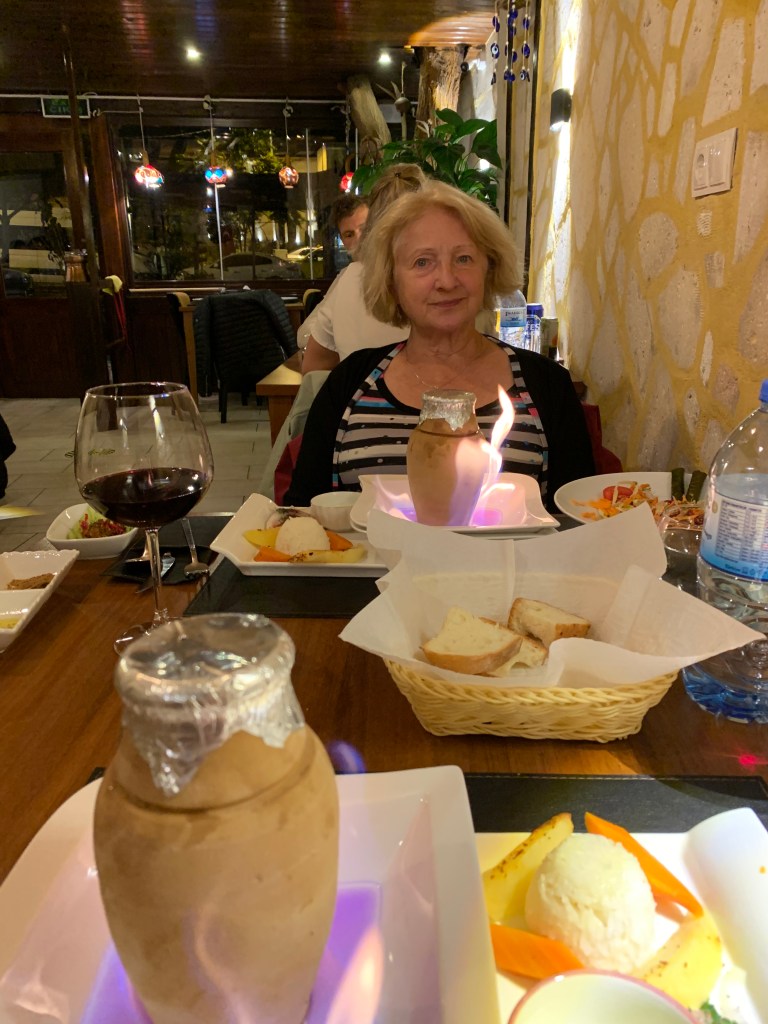
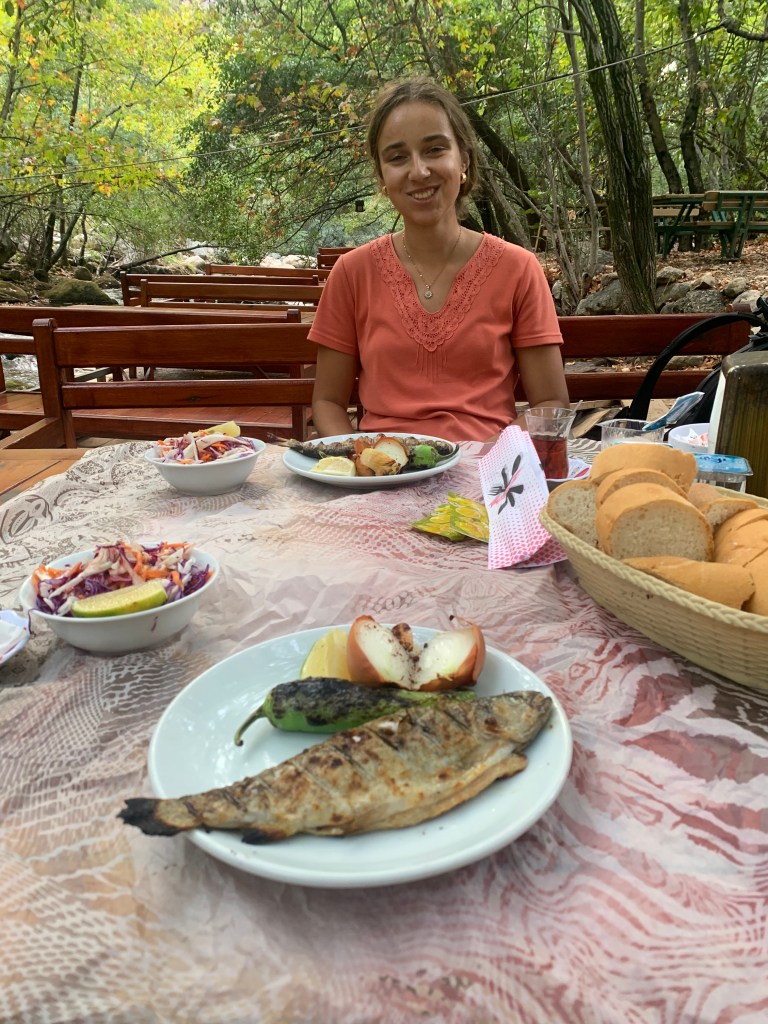
He persuaded us to have the freshly caught trout for lunch after our canyon walk, and it was delightful. Especially as we had it at the table set on the river, with water murmuring underneath. (This did not deter the cats; they are well versed in how to get whatever is left of the fish.)
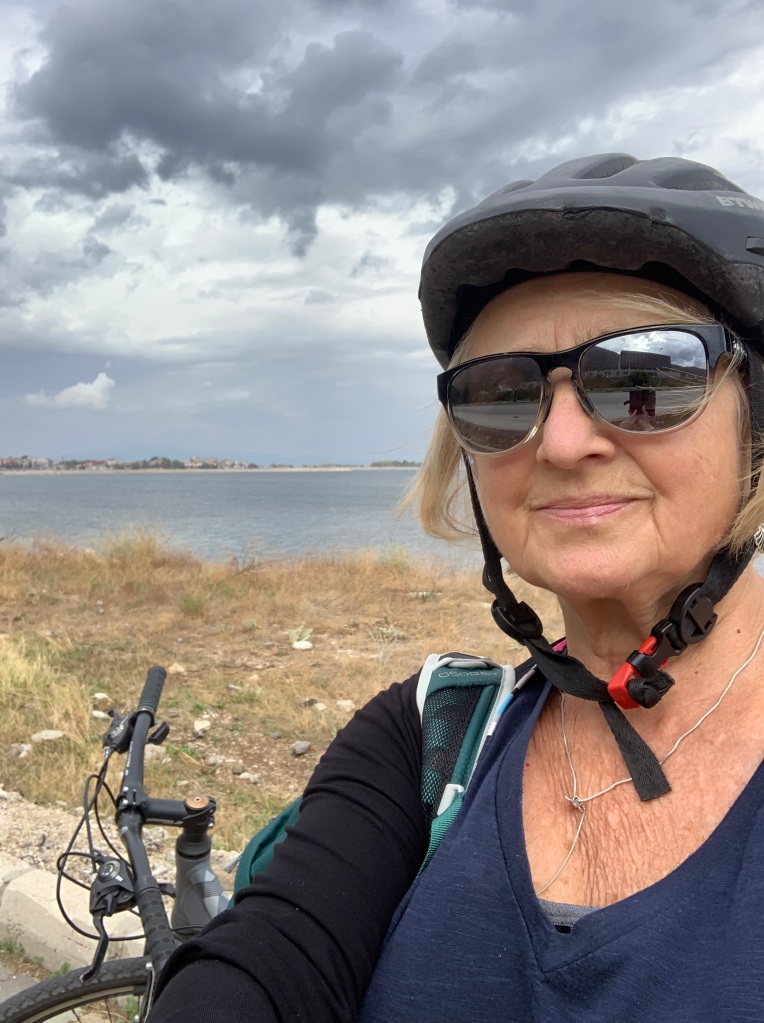
I took a bike ride around part of the lake (where there are bike paths – the main roads are a bit chaotic and feel unsafe for a lonely cyclist (even with a helmet on – a rare sight); a lot of beeping goes on. Late autumn is probably not the best time to come here: the visitors are few and far between, which means all sightseeing is costlier as not shared. But, and it is a big but: it is beautiful and very picturesque. I hear the wind soughing down the steep mountain slopes to the water as I write. And the autumn colours are putting an impressionistic palette on everything.
Most hotels are shuttered now, the locals (some 16000) are selling/buying fruit and vegetables to pickle and preserve for winter. The olives, apples, nuts, spices, beans, pomegranates, aubergines, gherkins, okra, potatoes, peppers, all waiting for buyers. And there are nice, large, shiny pots, just waiting to be used.
The train journey from Seljuk presented a nice learning curve:
If you buy the ticket from the station ticket office, you don’t get a reservation – that is only available for online purchases (don’t think the price varies much – and it is definitely the cheapest form of traveling long distance in Turkey. I just couldn’t get onto the website -wifi issues.) So you will be in unassigned seat coaches (in my case, coaches 1 and 4, (1-4 written on the ticket – you interpret it differently at your peril).
When the door of the train opened, and I was right by it, waiting for the passengers to alight, several homely looking grannies in scarves and voluminous skirts barged past me (and the descending passengers) and scrambled up, salmon running upstream – and with an amazing alacrity shifted to “coach 1 (or 4)”. When I eventually settled in in coach 2 or 3 (which are 90% empty), all was well… until a conductor arrived.
The conductor did not speak a word of English but clearly, if amiably and patiently, insisted me and my chattels move to 1-4. At that point I had no idea why.
Google translate (…and several Turks using it) helped an Australian couple and me understand the need for relocation (officially; in reality, there was no need for it – the coaches 2-3 remained mostly empty throughout the train’s milk run.
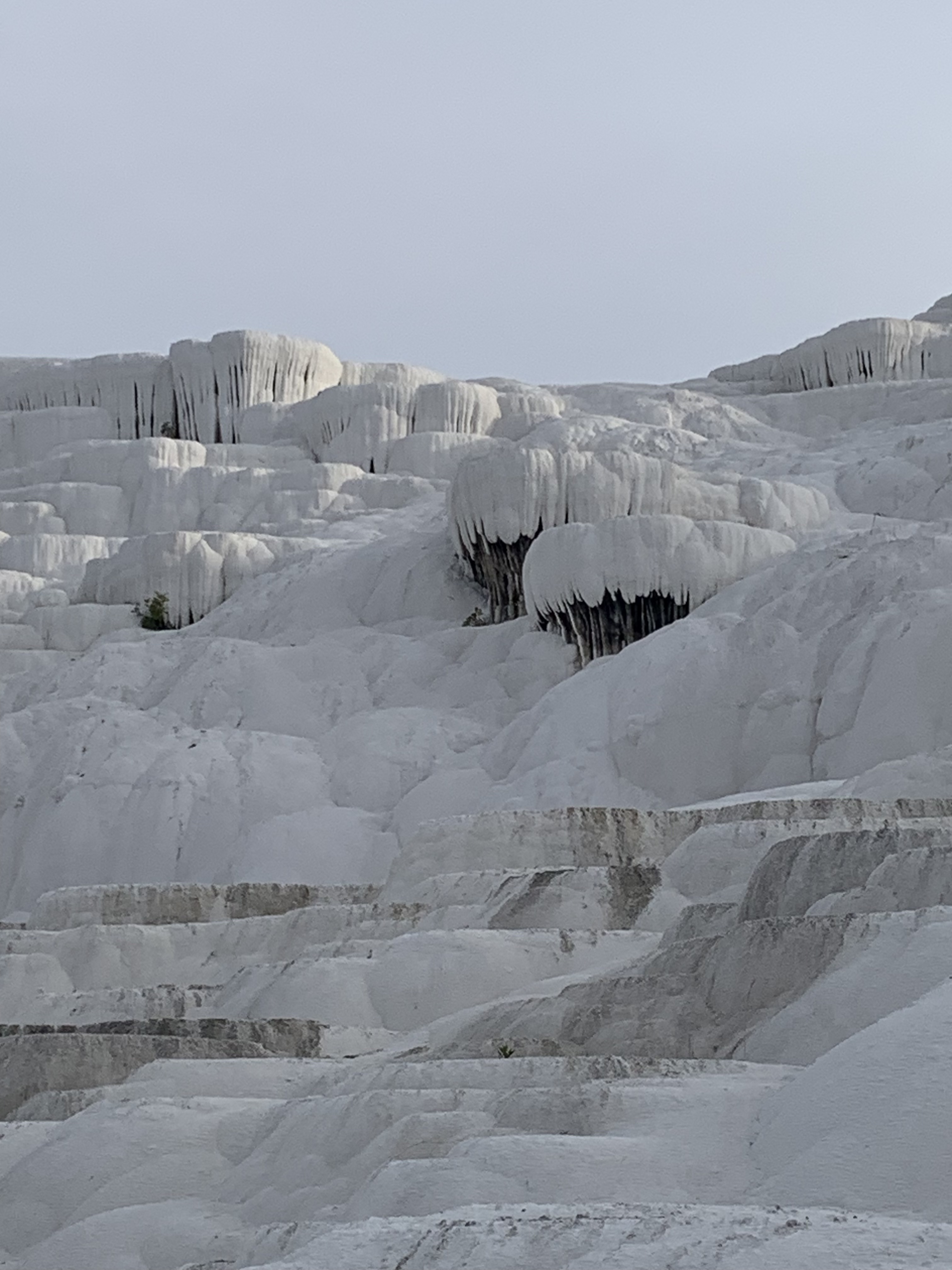
Must say, did not think much of the White Slopes at first, but!
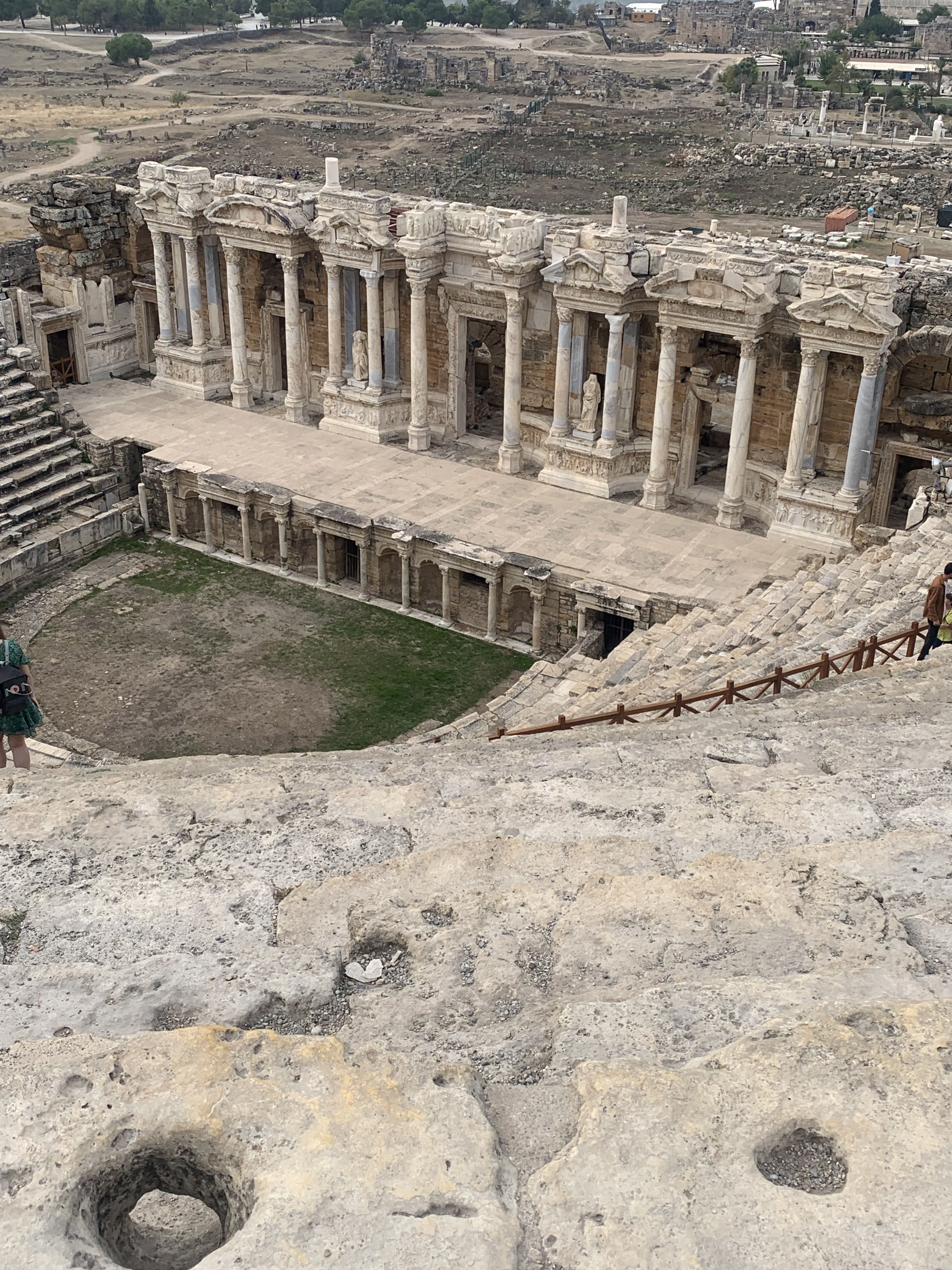
There was a small misunderstanding (my landlady’s English and my meagre Turkish missed each other on how best to approach the Pamukkale/Hieropolis site by walking. Suffice it to say, I ended up taking a beeline type of shortcut (up the side of the travertines) to what I thought would be the North Gate; it wasn’t, but I bypassed the ticket booth…
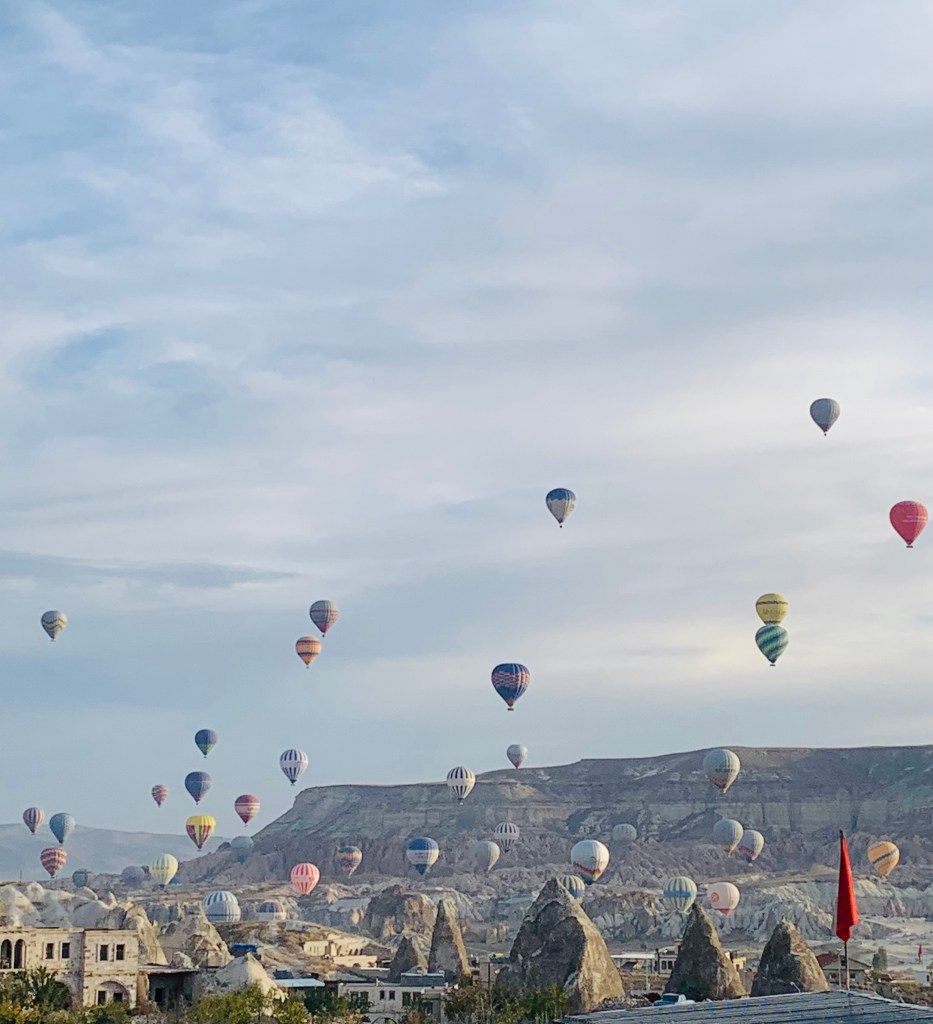
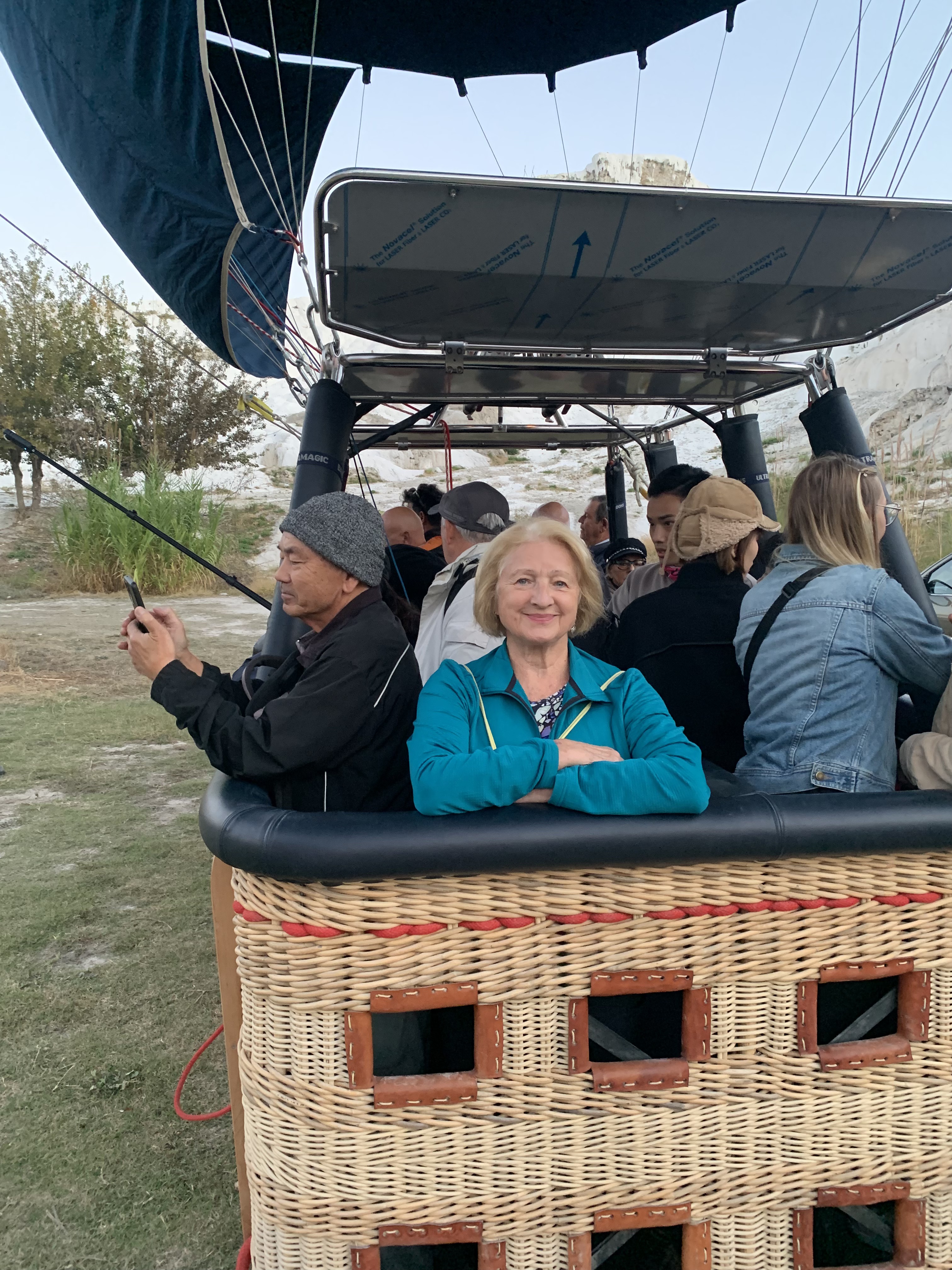
The baloon flight was interesting, if not breathtaking – Pamukkale learnt from Capadoccia to offer it – there are now a number of companies doing it. I liked that we had a female pilot. A bit disappointing we did not go over the ancient city of Hieropolis, but that could have been for various reasons – the air currents, or government regs.
I chose to go to Isparta next as it’s the town closest to Sagalassos. The fact that it was a Sunday when I wanted to visit, was not a problem; nor that 29 October 2023 was the 100th anniversary of the Turkish Republic and there were parades, speeches, marches and patriotic singing everywhere; there simply was no feasible way to get up the mountain using public transport – I even considered a tour, but none were available. Tried to hire a car: the chap said it can be a real problem not speaking the same language in case of an accident…
In the end, negotiated a taxi ( £50 for 3 hours, probably paid a bit over the odds) but I was quite happy with that. I could enjoy the view while Umur negotiated the hairpin bends.
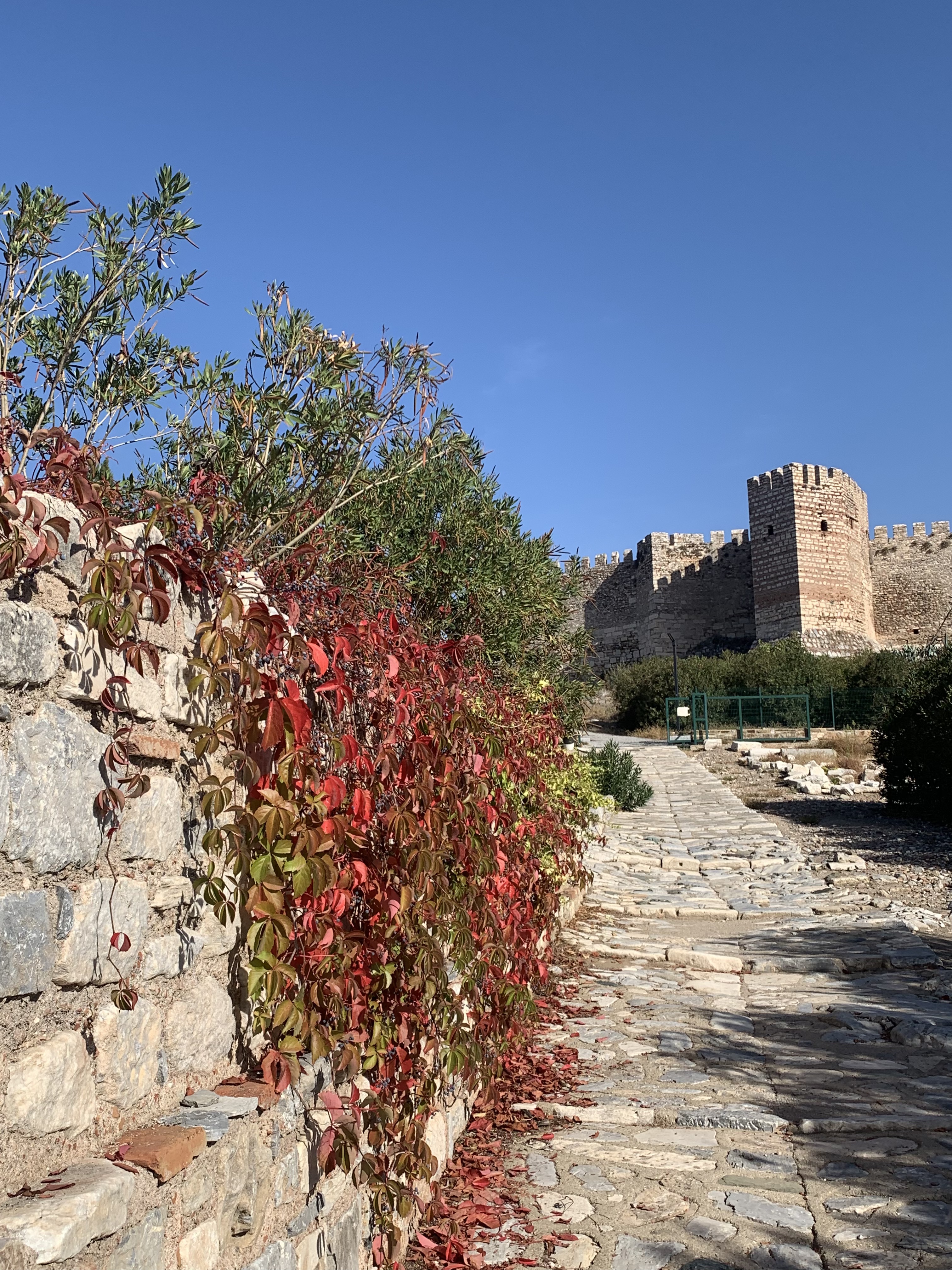
Sagalassos is definitely worth a visit. It was built on terraces at an altitude of between 1400-1700 metres, with superb views over the countryside. The terraces below the city were cultivated, including the olive groves. Because of the altitude, the city was not looted or pillaged. The earthquakes damaged it, but it was rebuilt several times. The archeologists were able to reconstruct the Antonine Nympheum (a beautiful, giant fountain) fairly easily as the earthquake had made the stone structure fold like dominoes. The water gushing again through is cold and fresh and the one in the fountain below the Neon Library is said to be the best and the purest water anywhere.
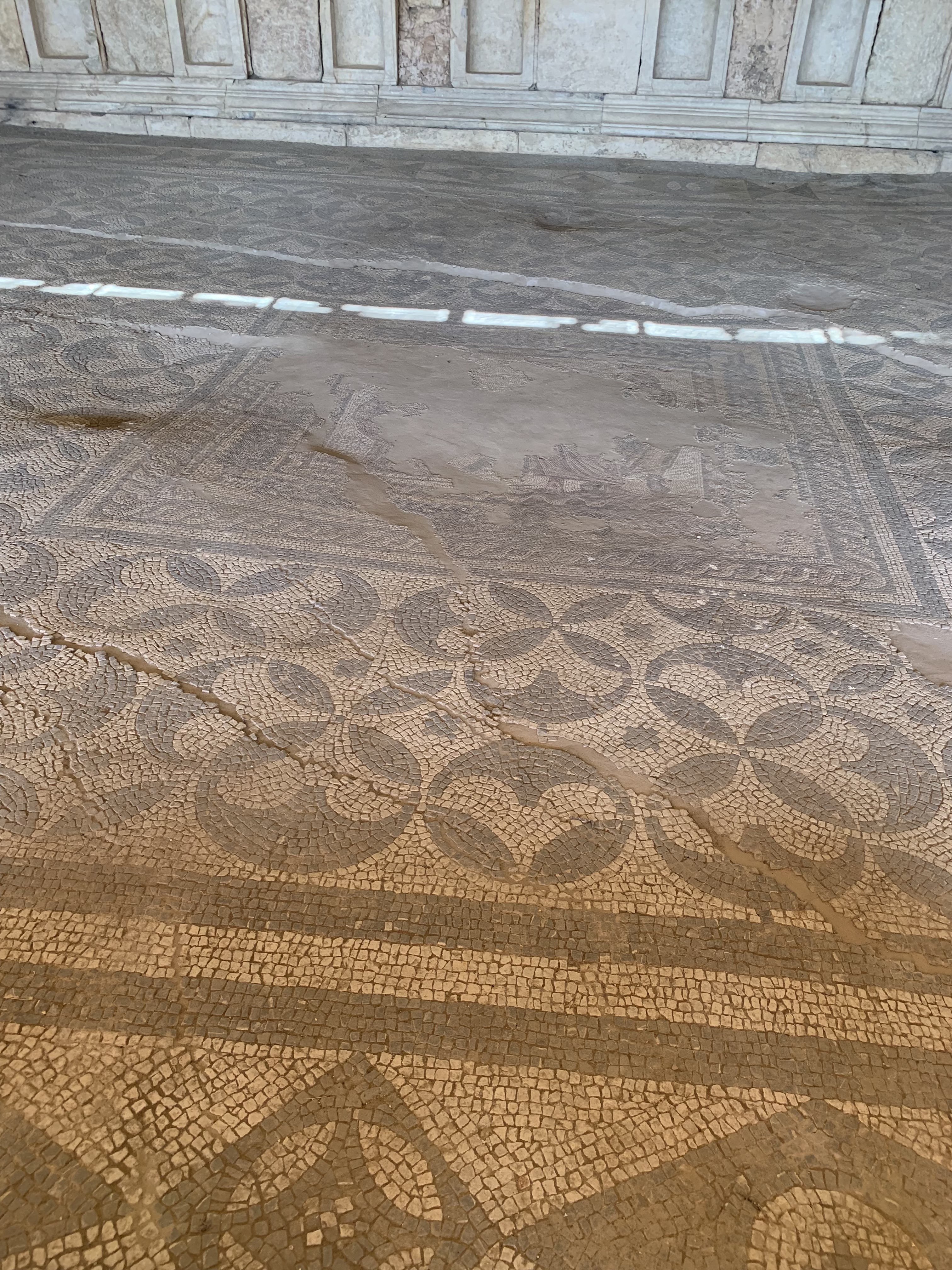
Met Wilem and Denise from Belgium in the Agora, and he, being a former professor of ancient history and a professional history guide (after he retired from Uni), was able to throw a proper light on the place. He knew that the central image of the mosaic “carpet” (damaged by Theodosian Christians in the 5th ct) had been of Achilles saying farewell to his mother; and that the lines carved onto the stone seats of the amphitheatre by the Romans marked how far you could put your feet if you sat above.
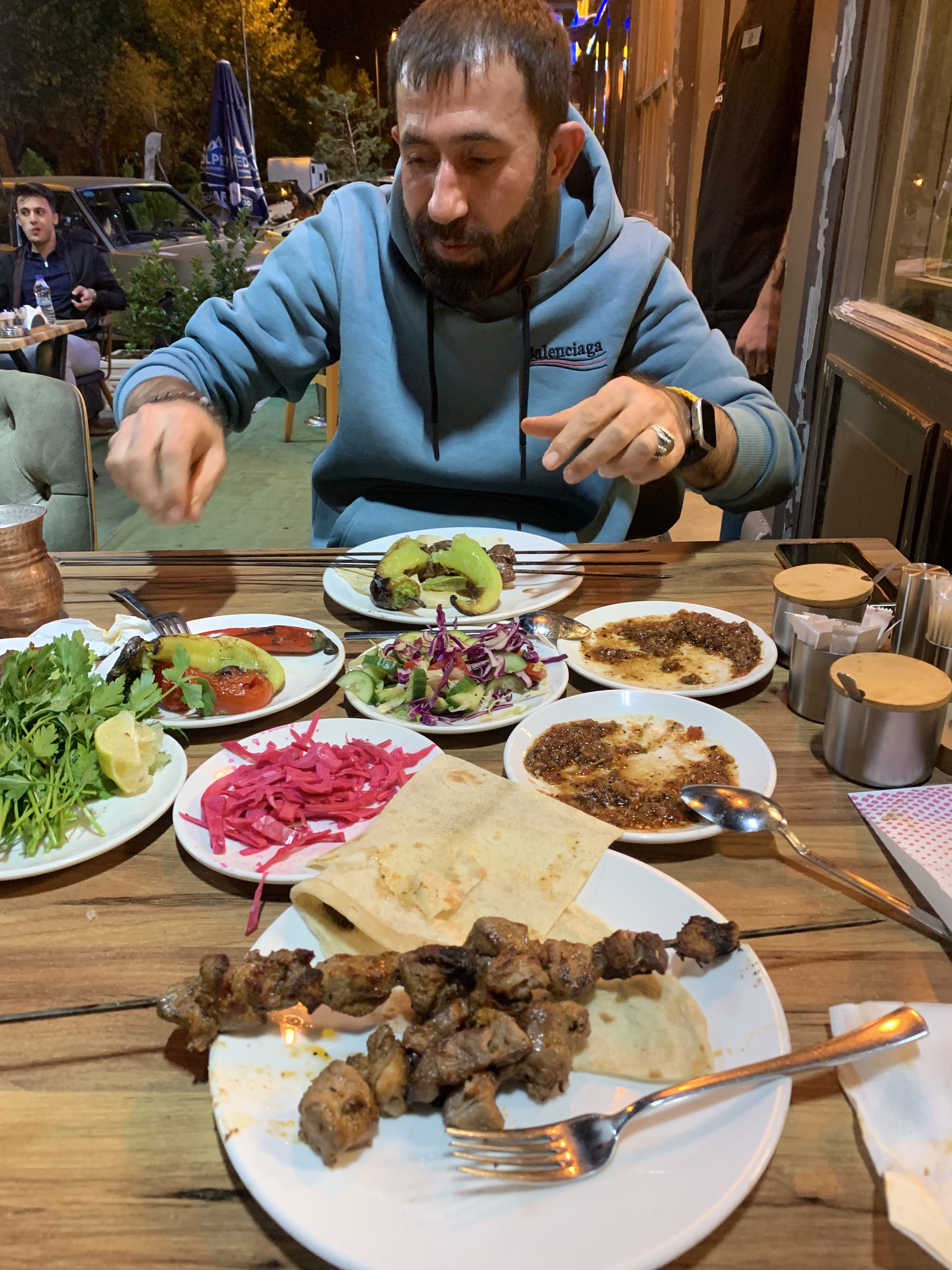
Mehmet, the Kurdish owner of a caffe (good, proper coffee!) was a serendipitous find: he speaks English (years of working in the Bodrum tourist area), has a stash of good red wine from Eastern Turkey, has a large family spread all over, and has volunteered them if I needed help (pinch of salt here), and, of course, knows good local restaurants.
Egirdir was easy to get to on the dolmus – only 45 minutes from Isparta. The pension has a lovely terrace with beautiful views of the lake and the surrounding mountains. Some very good hikes and walks around here, and bike rides.
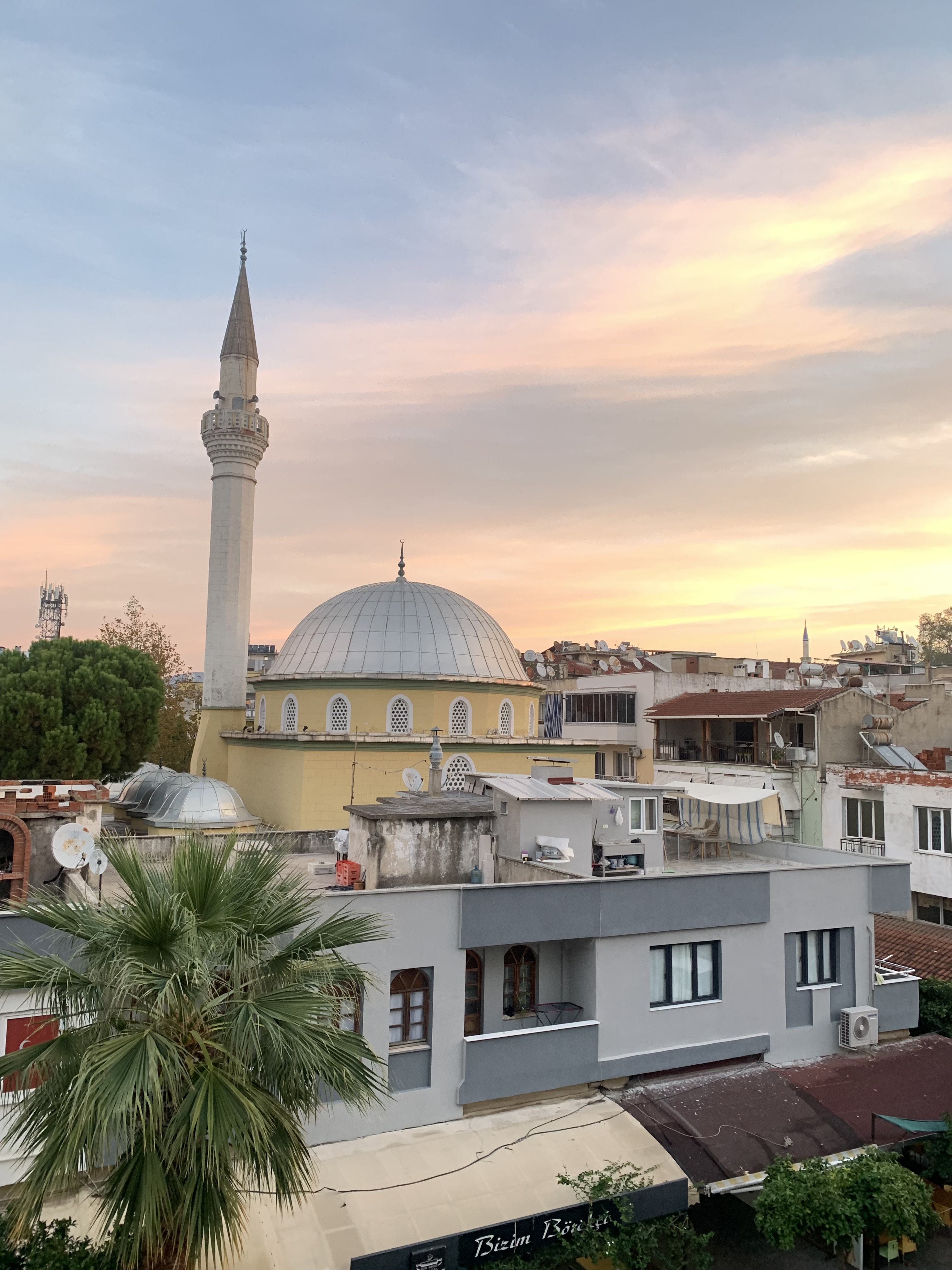
The day starts at 06:18, very loudly, as the muezzin calls the faithful to prayer from the mosque opposite the hotel. There is no snooze button – the wake up call is full five minutes long, and the sound of others can be heard further along. It drowns the barking of street dogs and the quarrelling of urban birds. The sunrise is not for an hour…
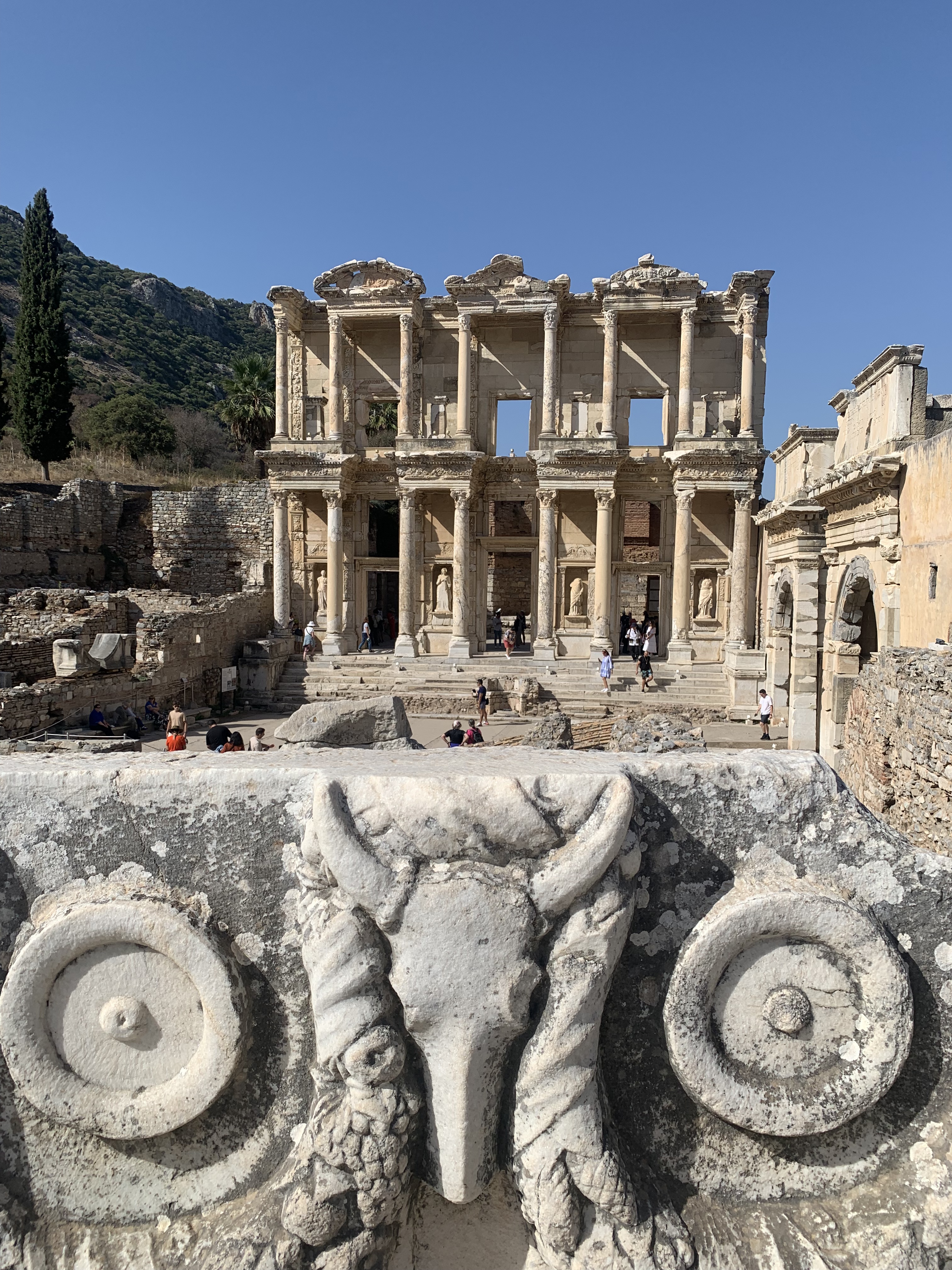
I knew Turkey was full of antiquities and history lurks everywhere, but Ephesus is truly impressive and overwhelming, as well as sad. A quarter of a million people lived here. The temple of Artemis, one of the Seven Wonders of the Ancient World, was here. (The story of how it got burned down, by a man who wanted to be famous/notorious, has loud echoes today: Herostratus, the arsonist, was condemned to NOT have anyone mention his name (damnatio memoriae), in any way. Obviously, the law didn’t work. Oh, and Artemis was away from home on that day in July 356 BC, helping with the birth of Alexander the Great, which is why the arsonist succeeded.)
The busy port of Ephesus is no more, the silt has settled and the sea is several miles away.
The beach at Pamucak, a small seaside resort a few minutes’ ride further on the same Ephesus dolmus, was empty, sandy, the sea comfortable (probably c 25 degrees, though the locals would not dream of swimming at this time of year).
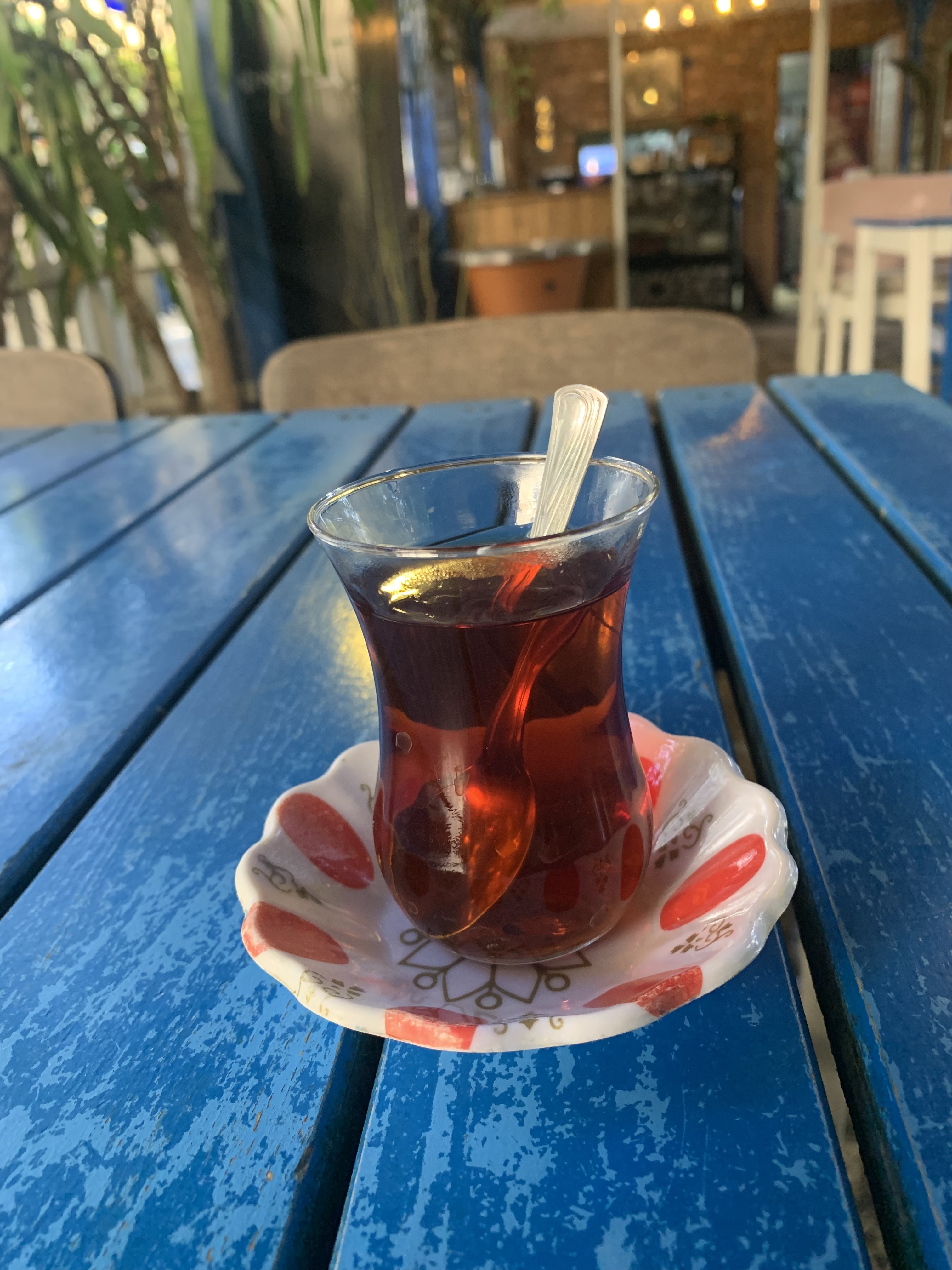
Chai is the ubiquitous drink. The stewed tea is kept warm in a pot on top of the urn of hot water, the two mixed in a waisted glass and served with sugar. The idea of milk in the tea produces the look of horror. Or you can have coffee – proper Turkish or Nescaffe. Breakfast can be a borek – cheese or minced-meat filled filo roll, your choice of size weighed and chopped up – or a setin, a large bread-roll ring covered in sesame seeds.
This area, around Izmir, is good farming country, best known for its olive groves, but there are also walnuts, pomegranates, figs, and tomatoes, zucchini, cabbages. My Turkish is non-existent, but the Ottomans in the Balkans left strong traces in the language (a bit bastardised and warped in Bosnian, but still understandable), so I know that zeytin is olive oil, that patlidjan is an aubergine, that turshe is a pickle, that charsi is a market… Baklava, of course, needs no translation.
Alejandro, who I met on my first evening in Seljuk, is a fellow traveller in more ways than one. A man in his thirties (I’d say), following his dream: he saved for ten years for this voyage from Colombia, South America, to Europe and Asia – India is a goal, where he intends to spend some time in an ashram, before returning home to his job as a mechanical engineer. I was pleasantly surprised with a thoughtful gift of a poem he sent me the day after.
Rebecca, with a website Oldbirdtravelssolo.com, is in the process of buying a place in the hills nearby, in Tire, where she hopes to “do my ceramics and sculpt in limestone”. There’s a chequered story and history, probably novel material, and I have not learnt a reason for wanting to stop here. Of course, the process of getting a residents’ permit and the bureaucracy of buying property in Turkey is fraught with pitfalls and problems, especially when you don’t speak the language, but she is still optimistic and smiling. Does not look like she wants to go back to Soho…
I’ll be trying train travel next, rather than bus – though there is little difference in the time it will take to get to Pamukkale.
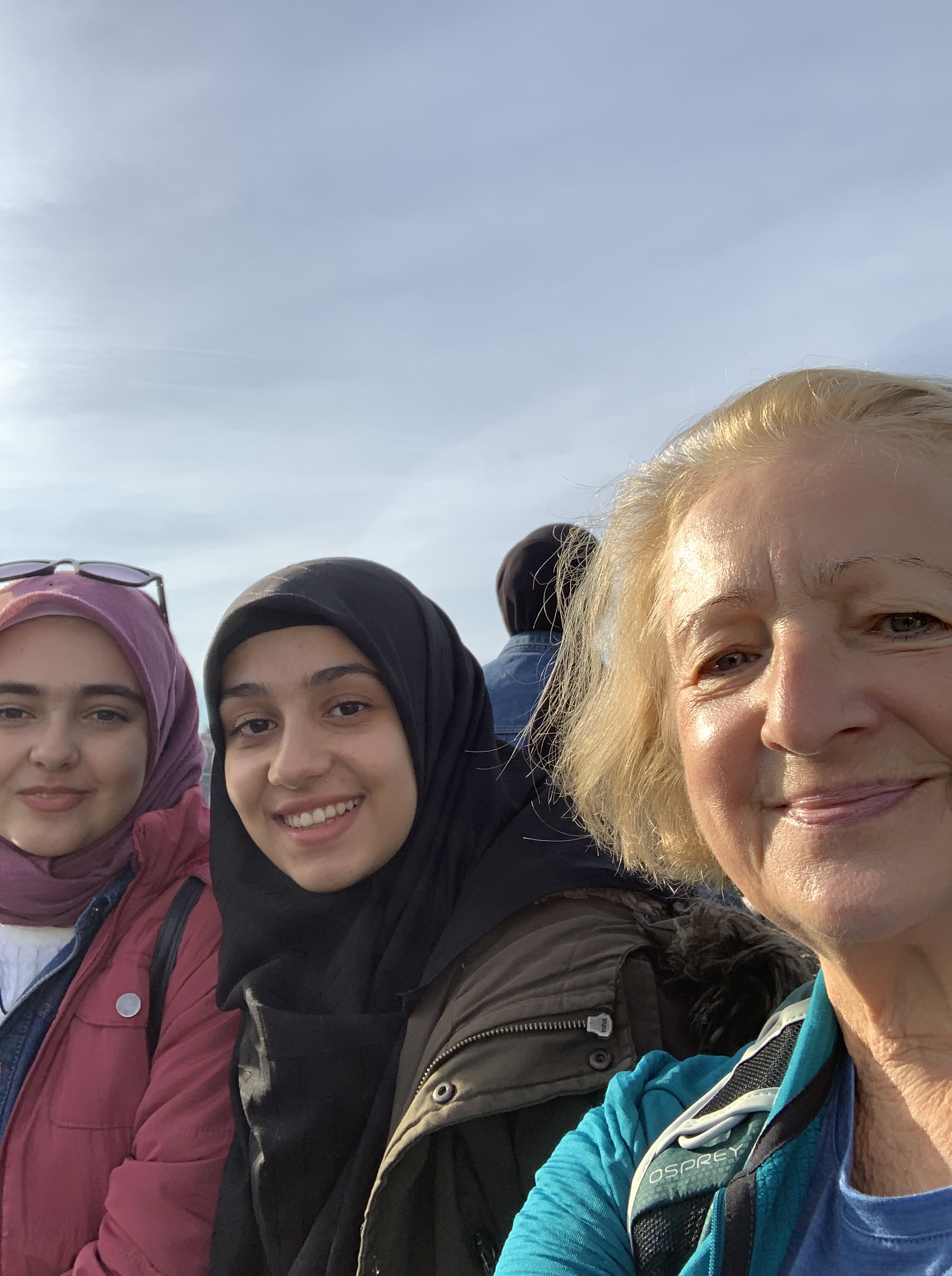
Canakkale, where I stayed to visit the Galipolli Peninsula and the ruins of Troy, is a very lively student town – there is drumming and whooping going on outside right now, , midnight (the hotel is sandwiched between the seaside promenade/port and the main drag). Had a chat with a medical student in the fish restaurant (VERY nice food, and good Suvla wine); spent a couple of hours with a young chap learning English; met an Erasmus student from Germany, taking her mum around the sites; and on the ferry to Eceabat, the Galipolli side of the Dardanelles, a flattering chat (they liked my fair looks – this was the third time someone spontaneously commented on it, which takes getting used to) with a bunch of high school girls on a school trip.
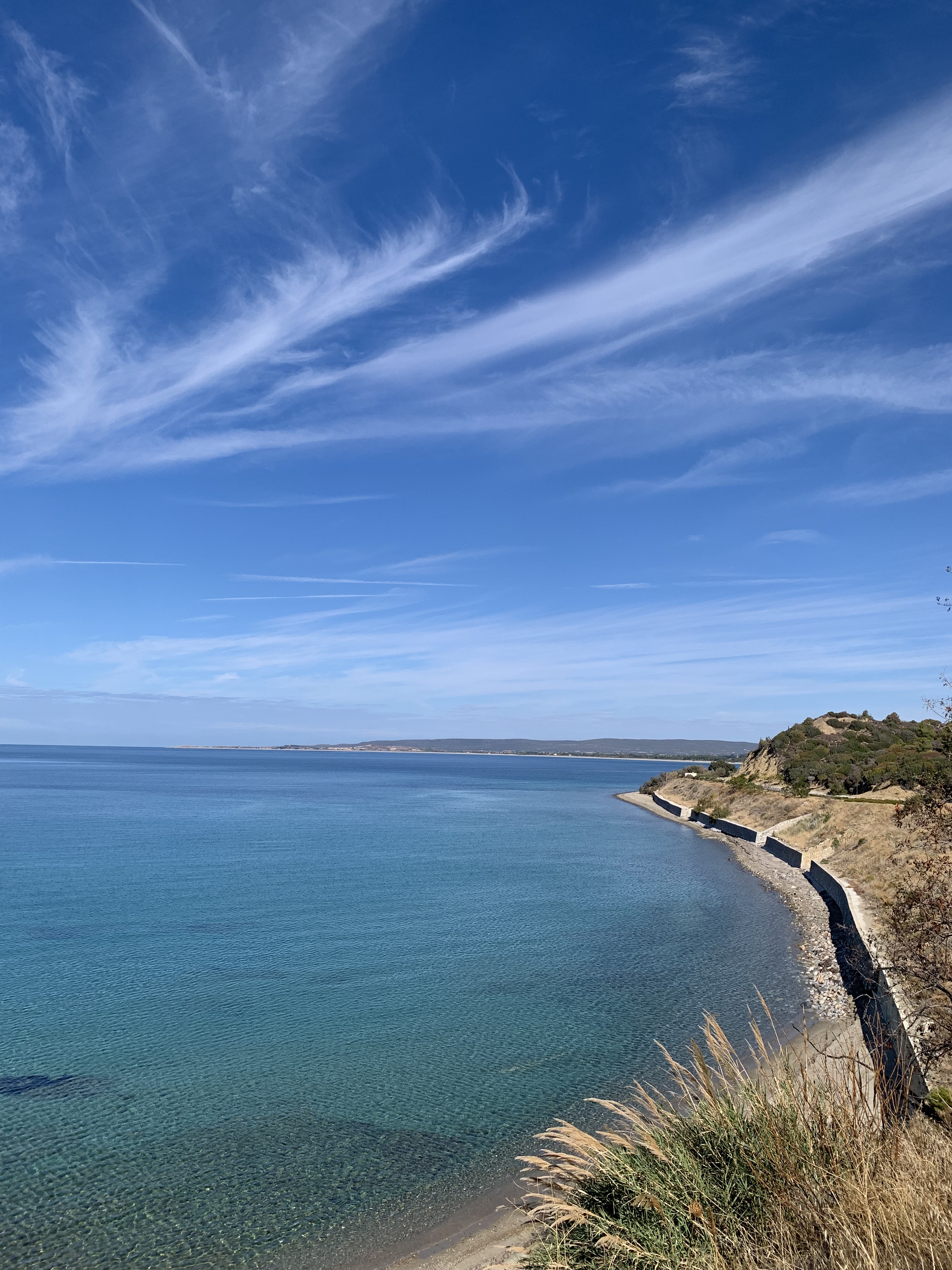
The only available trip to the killing fields was to the Anzac area, joining a group of 3 Aussies. The guide (from TJ travel, a sort of Aussie outfit) was excellent, and presented what was an enormous amount of facts, data and detail in a clear and engaging way – having just the four of us to talk to made it a lot easier, and he could answer all questions.
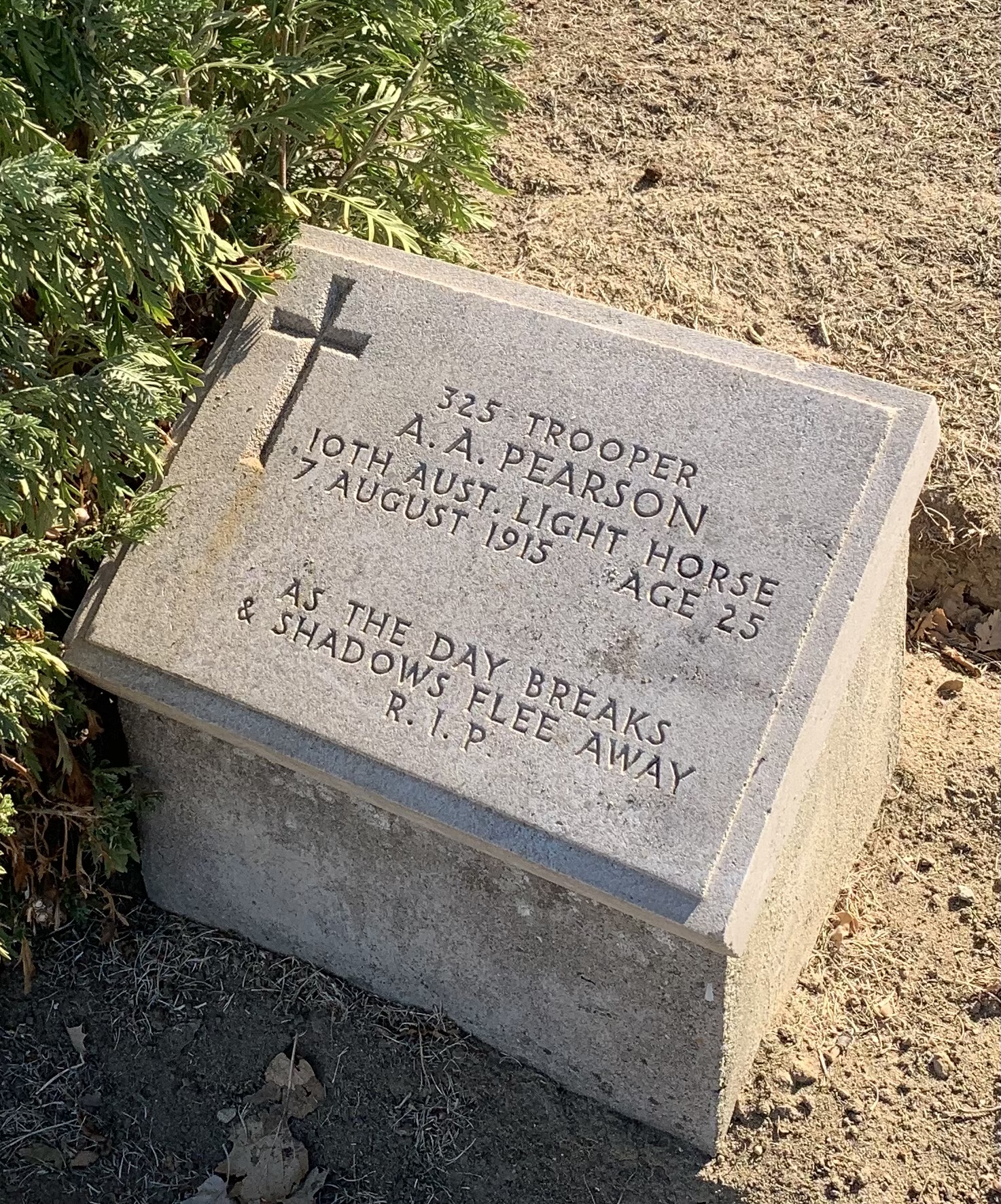
Almost 200.000 men lost their lives here. The poignancy of those small grave stones denoting lost lives, the futility of the war, the arrogance of those sitting in the capitals of Europe carving the Ottoman empire on their maps while sipping port or cognac.
The Allies were much quicker in honouring their dead here than the Turks, putting up memorials and gravestones – that has been reme. But this was where Mehmet Kemal aka Ataturk (‘the father of Turks’) made his name. His photos and sculptures are everywhere – the Turks truly honour and love him – he created the new, secular, democratic Turkey and one of the keystones of his programme was the change in the Turkish script (which had been a confusing mixture) to a simple 26 letter alphabet, which helped grow literacy (I read this) from 2% in the 30’s, to 98% + now. I’m not going to comment on the current political trend.
We had such a beautiful, sunny day; so sad thinking of those young men ordered to get over the parapet and die, for a couple of yards which were lost the next day
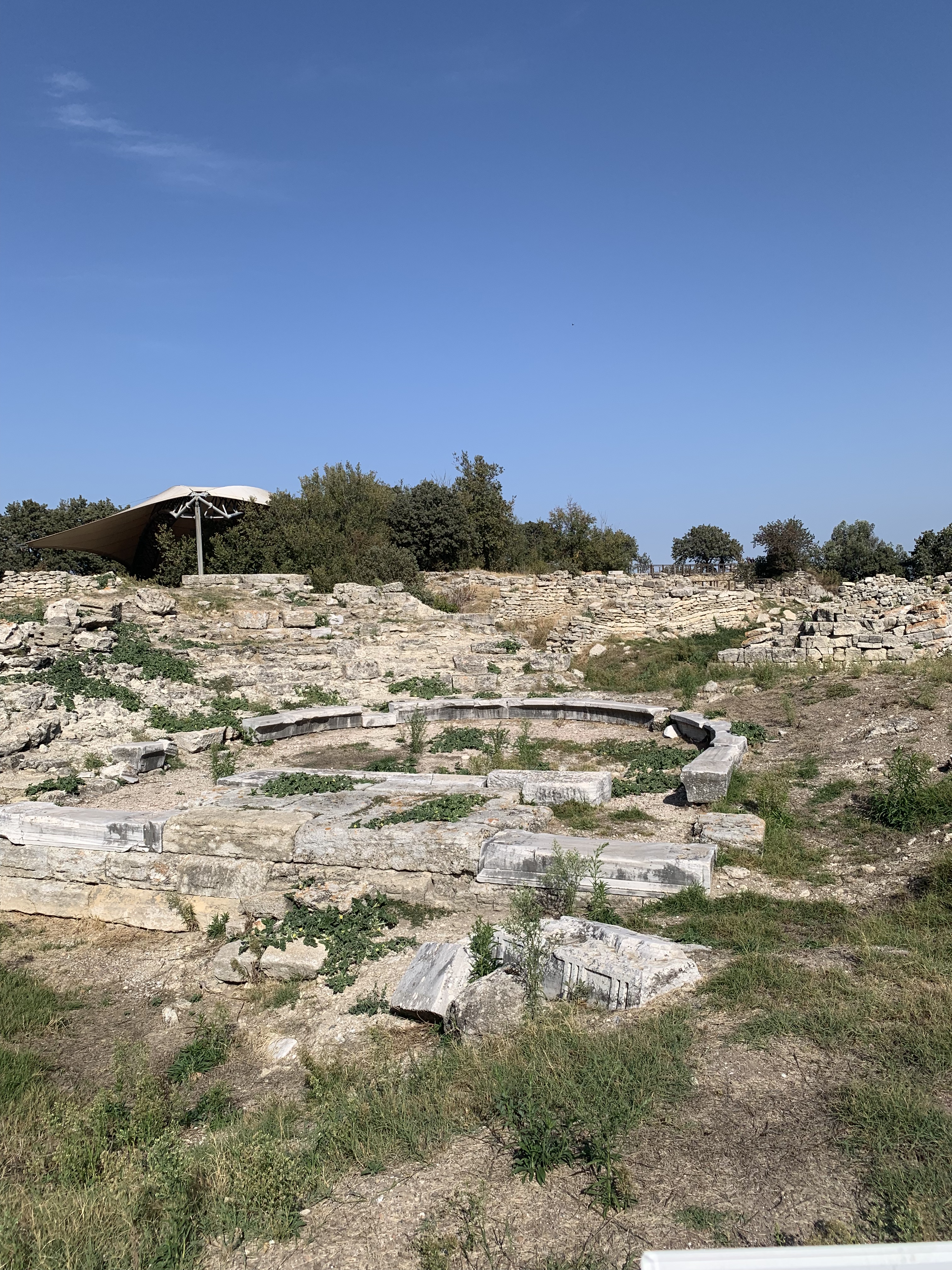
Troy is now a site a long way inland, showing 9 layers of various civilisations over some 5000 – 6000 years, from Stone Age to the Romans. Wars, fires, earthquakes, more wars.
One man is still very much a thorn in the side of the Turkish Ministry of Antiquities: Mr Schliemann, a late 19 ct German treasure hunter (definitely not an archeologist) seems to have been given a permission to dig here and he found gold and jewellery – he thought it was “Priam’s Treasure” (it wasn’t) and took it to Germany (they say he stole it); it disappeared after the WW2, only to reappear in the Pushkin Museum in Moscow some time later… and they are not giving it back.
Very slowly, getting to grips with Turkish – thank goodness for Google translate! (Hello from Istanbul)
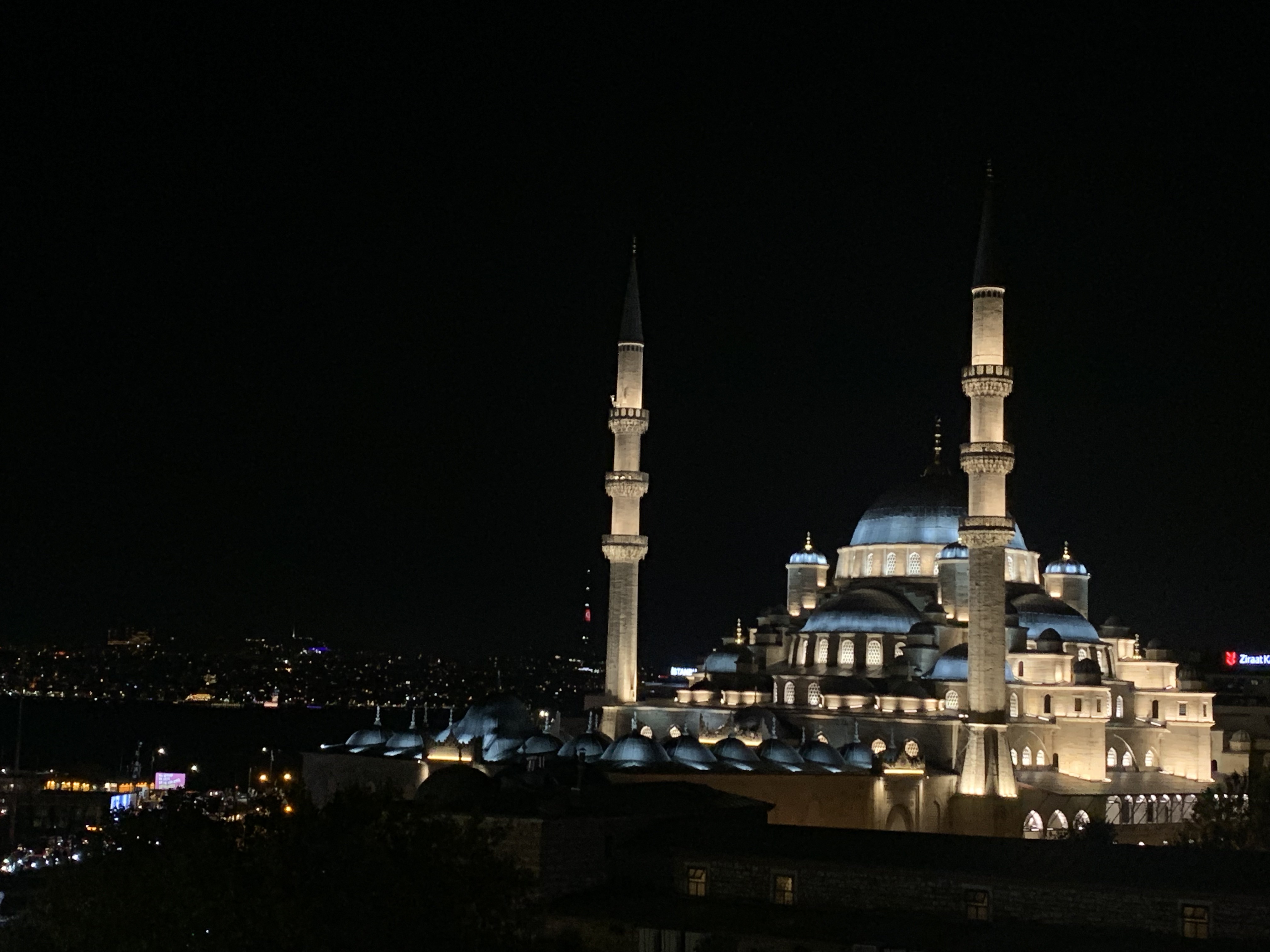
The New Mosque (only c 500 years…), Eminonu
I shan’t go into the BA flight to Istanbul fun (total delay some 3 hours…), though having to change the nose wheel on the plane while all the passengers are on board made me wonder about their maintenance schedule… So we hit the rush hour in a city of 20 million: sure, it is messy everywhere, but I’ve not seen the kind of squeezing into spaces that cars do in Istanbul since Colombia. (And yes, the cars are all scratched :))
Staying in the old part of town on the European side – in Balat, full of colourful houses (both in the way they are painted and in the state of dilapidation), all hills and cobbles, cats and sea views. The guides tell you that Istanbul, like Rome, was built on seven hills. It feels like many more, and steep they are too.
Done the must-do visits: the Aya Sofia, the Blue Mosque, Suleymania Mosque, the Basilica Cistern, Topkapi Palace. The cistern was impressive, eerie and beautiful, timeless, humid (doh!), artfully lit, used also to display modern sculpture. A few duds on the Istanbul Tourist Pass (covers all top sites plus others) was helpful to bypass a couple of queues, and I did things I normally wouldn’t to get my money’s worth, but would not do it again (such as the dinner cruise – the dancers made the most of the small space, jostling with waiters carrying trays; the belly dancer REALLY worked the crowd, until her bra had enough lire notes tucked in to stop).
Went to the Mihrimah Sultan Hamam, recommended by my hosts and clearly not a touristy one – no-one spoke English, it was not busy and I got steamed, saunaed, massaged and coffee grounds covered (yes!), scrubbed and lathered, for c £20. The entrance to the ladies’ part was tucked at the back, next to a petrol station, like a fire exit, and I almost missed it – the men’s entrance is the grand one at the front. It is a 16th century hamam, all marble and wood.
The weekend (I only know what day it is because of the bookings I made) was very much a game of two halves. Thoroughly enjoyed the ferry trip up and down the Golden Horn, starting from Fener, as nearest to the homestay, and going all the way across the Bosphorus to Kadikoy on the Asian side. Had to get off and re-board to go back, but at 23 Turkish lire (c 80p) a pop, it’s a bargain. And the views are great from the water.
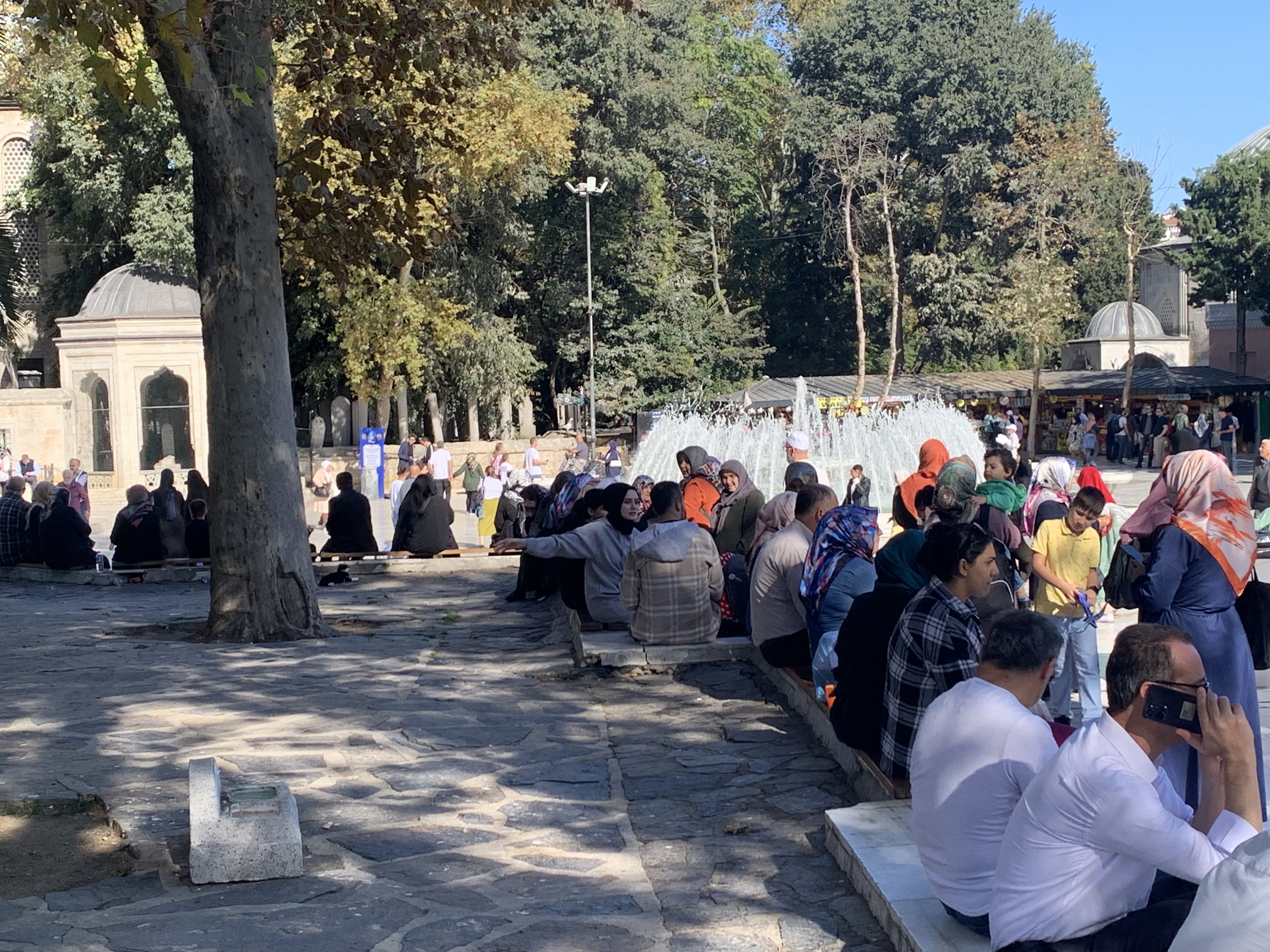
The end of the line, at Eyup Sultan (sounds like a Yorkshireman on a horse), was a nice discovery – local people enjoying the sunshine, eating, playing, praying (the mosque is a very popular one), shopping.
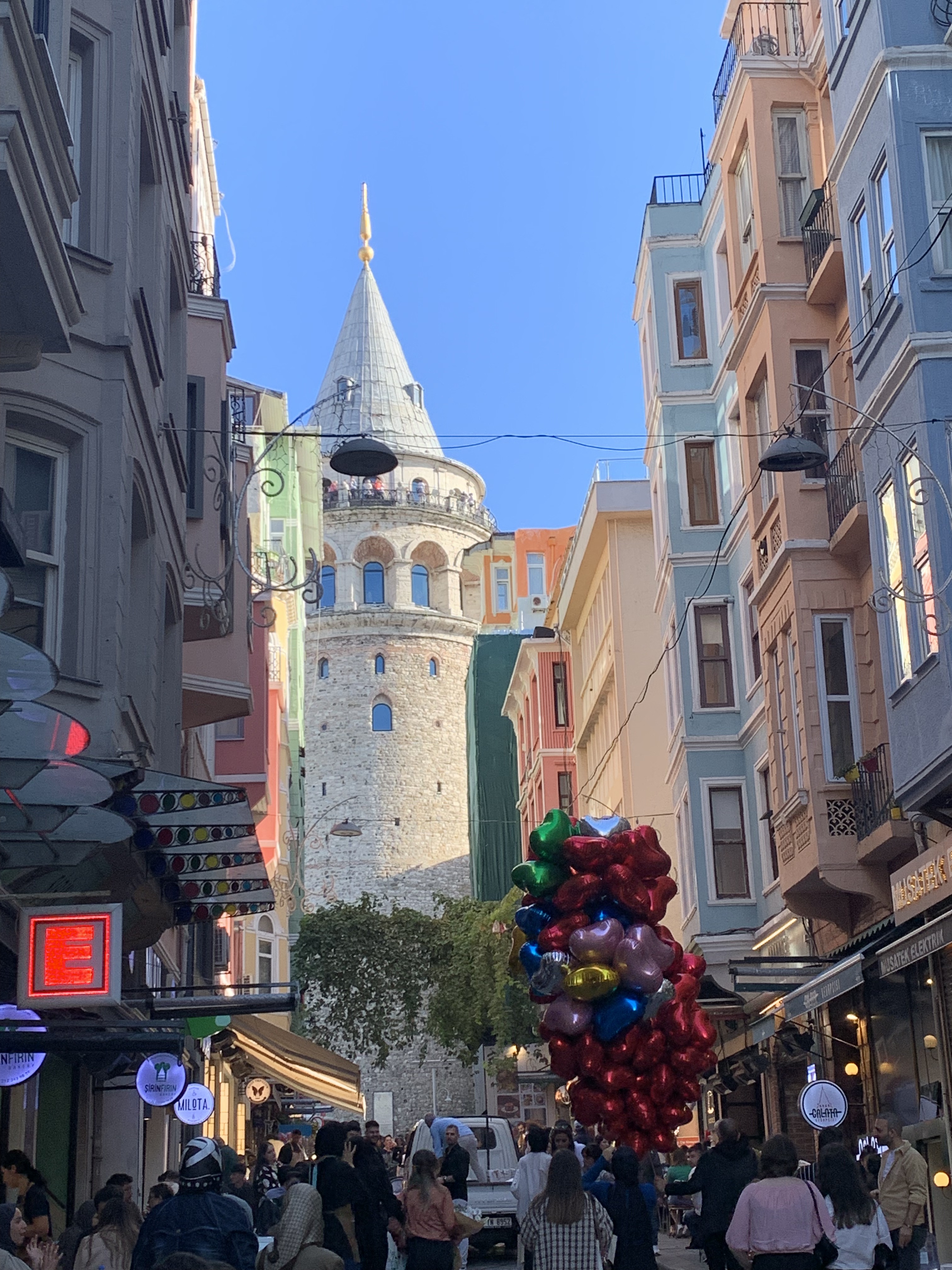
The other side of the Golden Horn, Beyoglu (the West End of Istanbul), is a completely different kettle of fish – vibrant, overcrowded, jostling, expensive, exciting, tourist-full, colourful, messy.
There was a bike ride taking place on Saturday and Sunday, ending near the Aya Sofia in Sultanahmet Square, so roads were closed and public transport, such as trams and buses, stopped short – there was chaos and mayhem around, lots of sirens going off, cars at a standstill, pedestrians everywhere, and yet everyone seemed fairly calm and patient.
(The roads are really bumpy, cobblestones and potholes, hills and unevenness everywhere – I wonder how the cyclists faired). This is not a wheelchair/pushchair friendly city. Must try and get a photo of a motorised wheelchair – not a mobility scooter.)
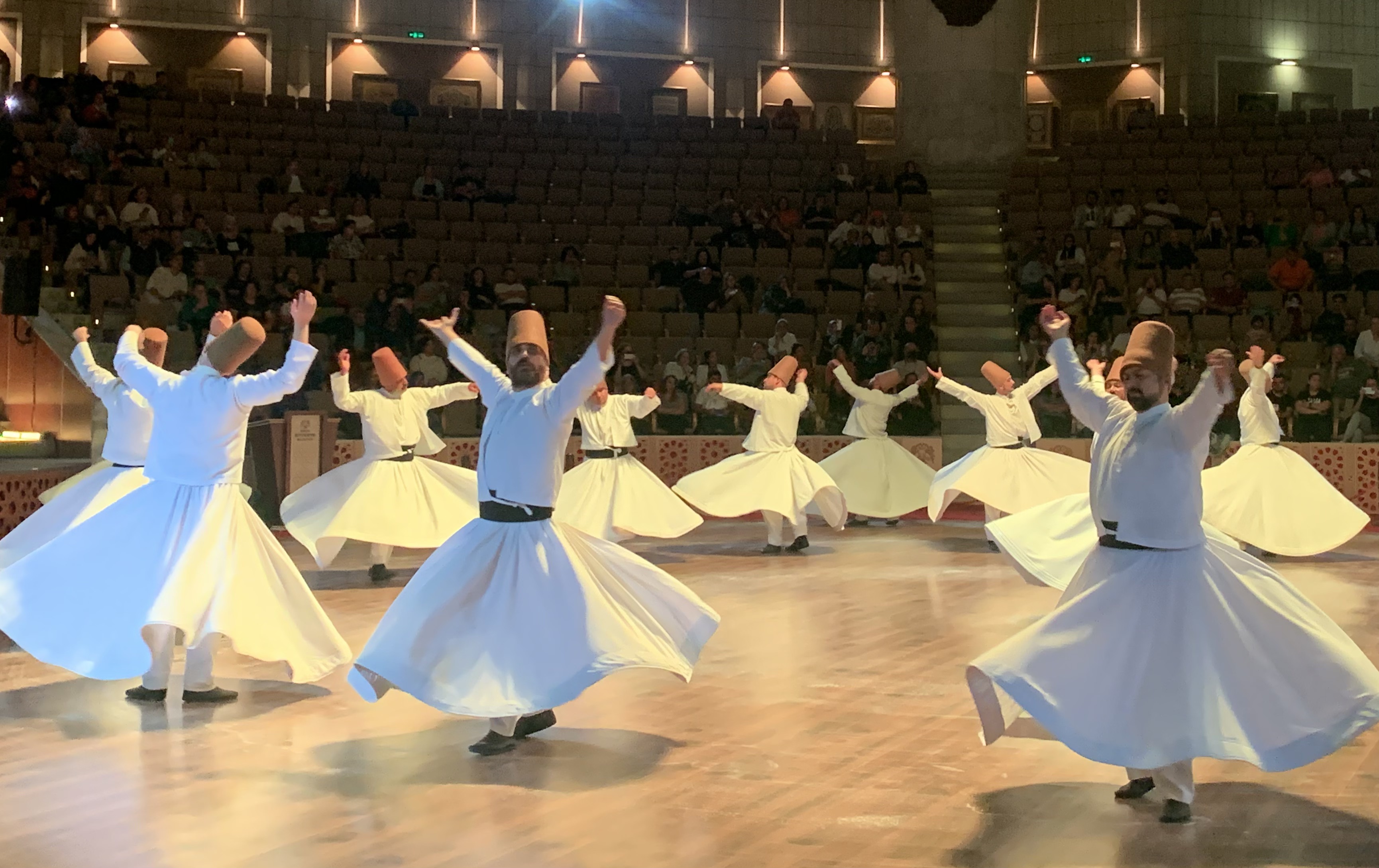
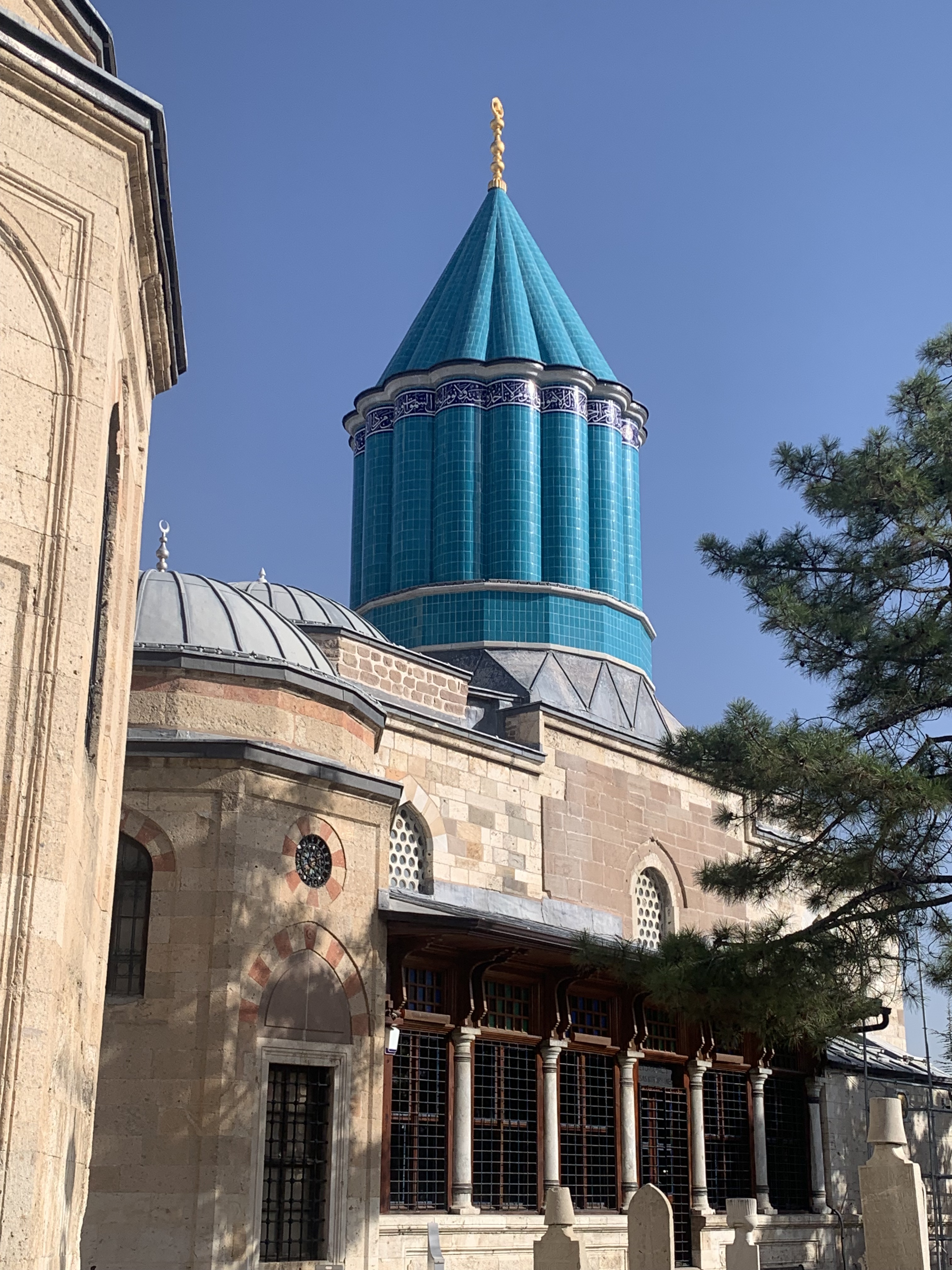
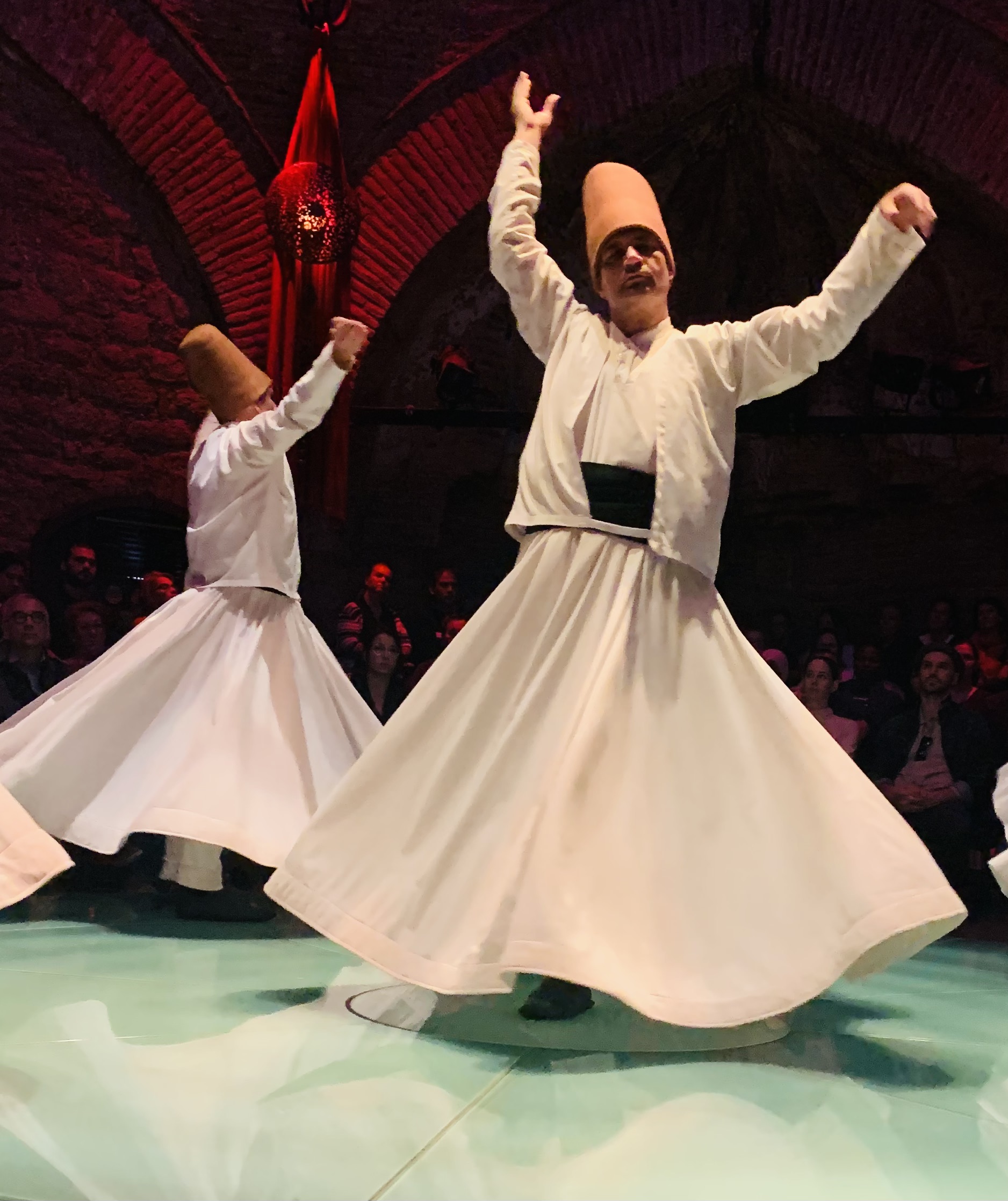
The dervish dance in the evening was a stately, slow ceremony – despite it being condensed into an hour, the 5 participants whirling, the two singers and the four musicians playing made it look serious and real. May have another look in Konya, the Sufi holy place.
And Sunday, I got slightly fleeced: my Istanbulkart (the Oyster equivalent, except that it’s cheaper at 15 lire a ride, even if you have to pay for each section of the journey if transfers/changes are needed) would not accept a top-up, the machines were all in Turkish only (tried several) and I was stumped. A young man came to my aid: put in my 100 lire, pressed various buttons, said, here you are, how about some baksheesh, sorry, don’t have any… when I got to tap the card, it showed the same (insufficient) amount as before : the weasely thieving magician had helped himself to my 100 lire (it’s only about £3.20, I know but I simply did not see how he did it), melted into the crowd and I was still none the wiser. Turned out I had to buy another plastic card to use – though logic escapes me.
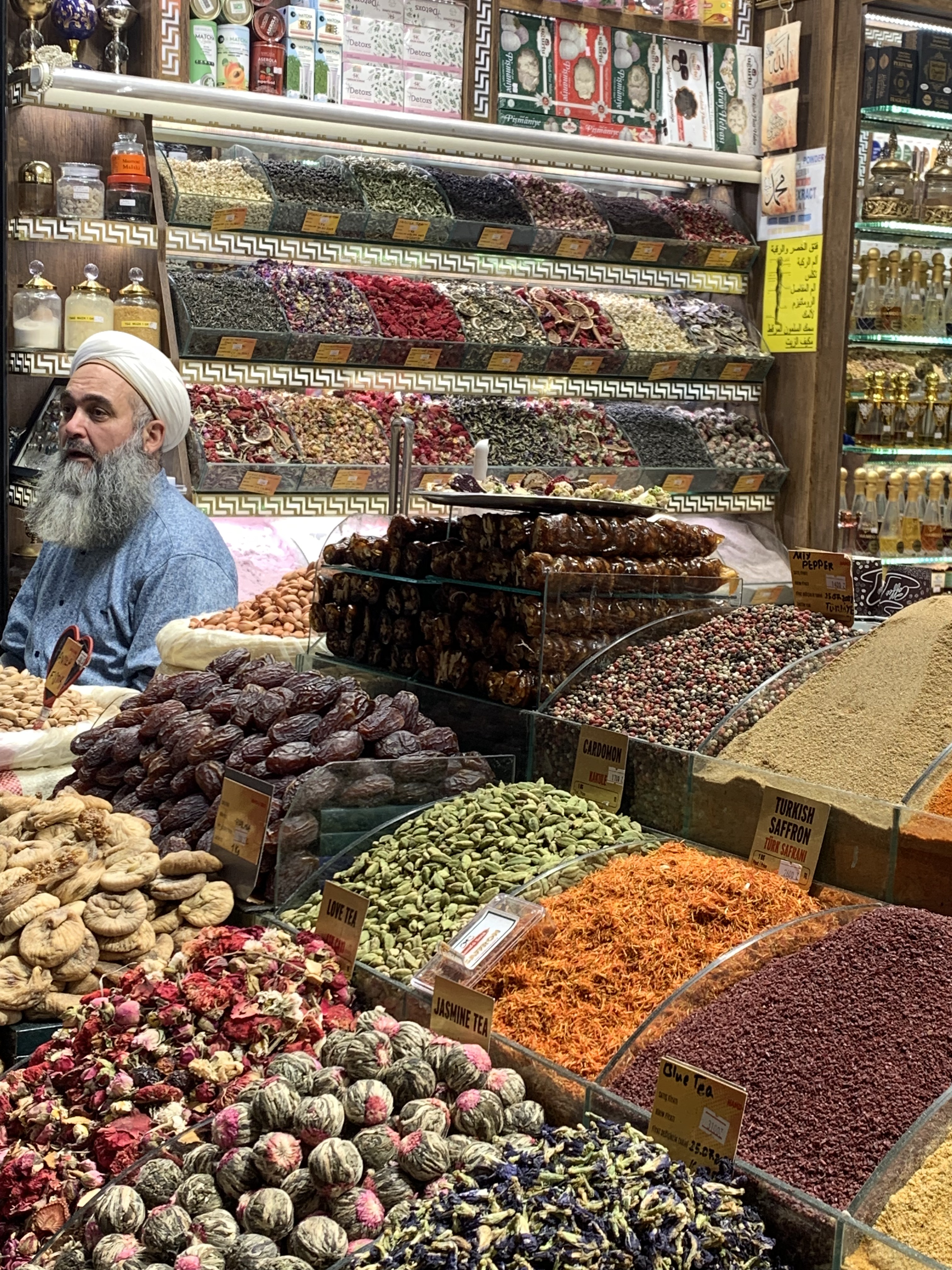
The Egyptian Spice market may be a tourist trap, but it is pungent, colourful, inviting and exciting. Wish I could put the scent of it on the page.
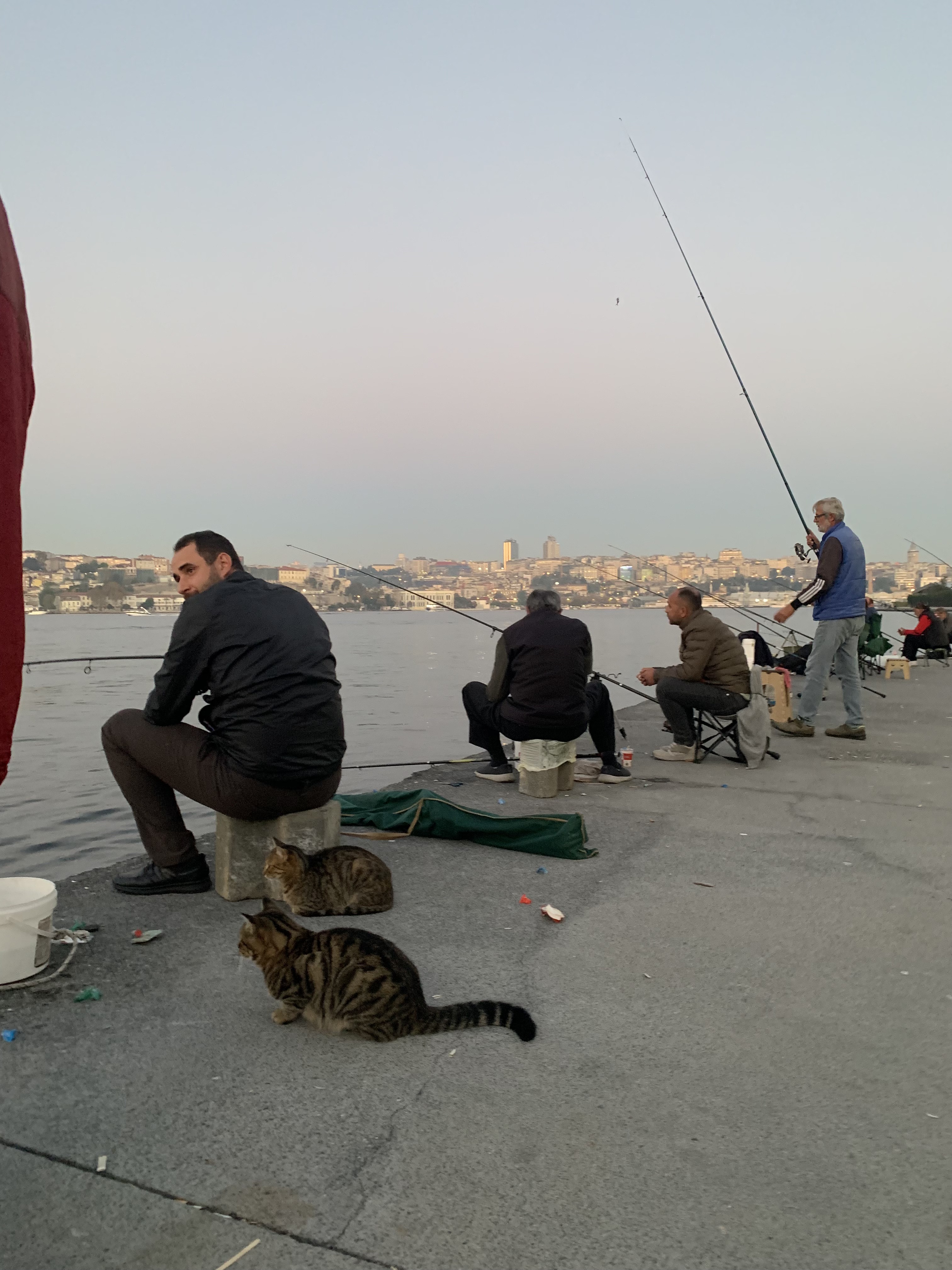
Walking back to my room in the dusk, the fishermen strung along the shore like beads, patiently waiting – this is the anchovy season, and they keep the catch in plastic pails). And cats. looking as if they didn’t really care.
As ever: so much to do, so little time. Anxiety levels on the rise (waking up – and getting up! – at night, believing I’d forgotten to do something vital, or take pills (and I’m not on any medication…). Packing done – slowly – much more should have been got rid off, but it has stayed for sentimental reasons, yet again left to be unwrapped at some point and wondered at. The diary was full, and days flew by.
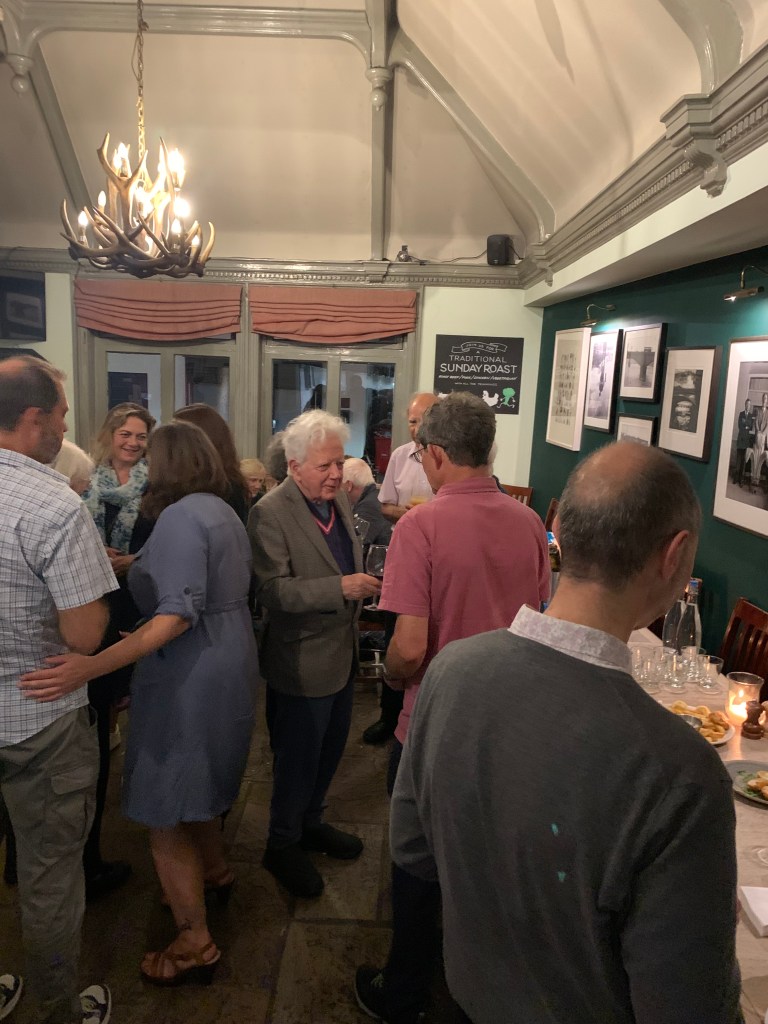
The farewell party was wonderful, despite being blighted by train strikes and Covid. Thank you to those who came, and sorry to those who couldn’t make it: there are virtually no photos as we were all busy chatting and having a good time.
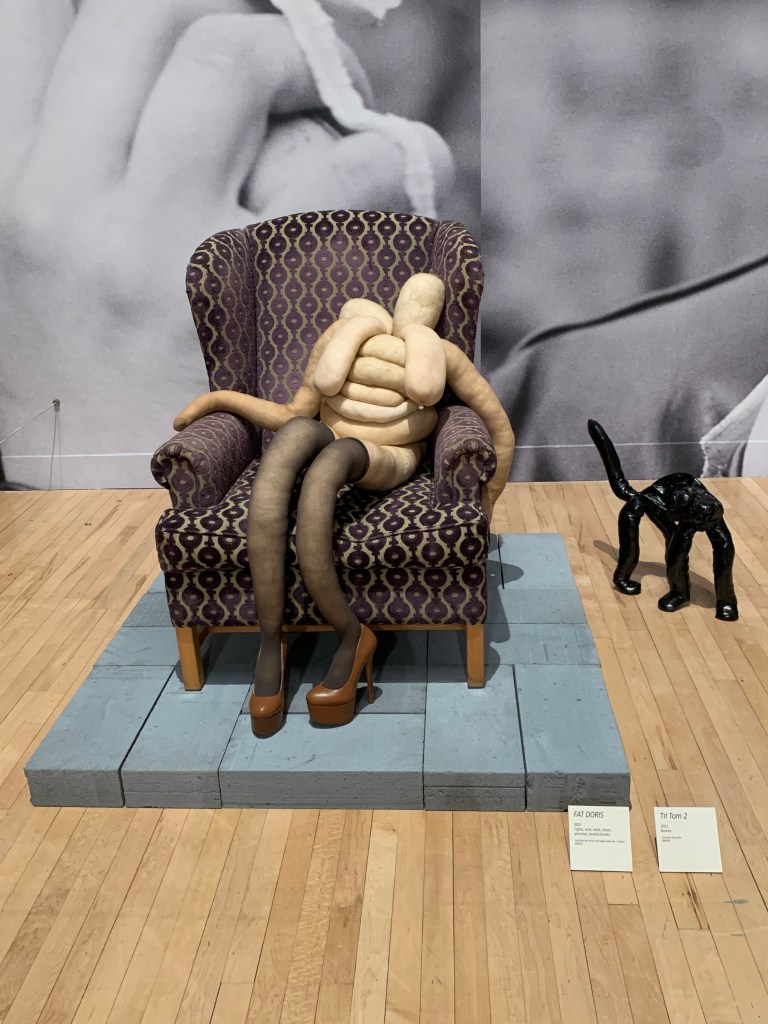
Have also managed a bit of culture in the midst of it all – forgive the bragging: Das Rheingold at the ROH (terrific production, unlike the one at Bayreuth, with no ring, no fire, no horse…), Sarah LUCAS’s exhibition at the Tate B, The Threepenny Opera at the Cockpit theatre (reimagined, interesting :)).
The flat is ready for Charlotte to move in (thank you Ana and Gloria for your help), the backpack packed, the boarding pass to hand, the Uber booked for an ungodly 0430 hour.