The only thing (besides passport and money) needed to enter Thailand is the Thai entry card, FREE of charge and easily filled. (Unlike the Thai visa, which requires a variety of documents in JPG format, and is only needed if one is staying for more than a month.) A small snag in the system is that the card will allow you to put in an entry date only 3 days before the date of arrival, so if done earlier, it will need to be corrected. (The passport officer did not even look at the card. But fingerprints and photo were taken.)
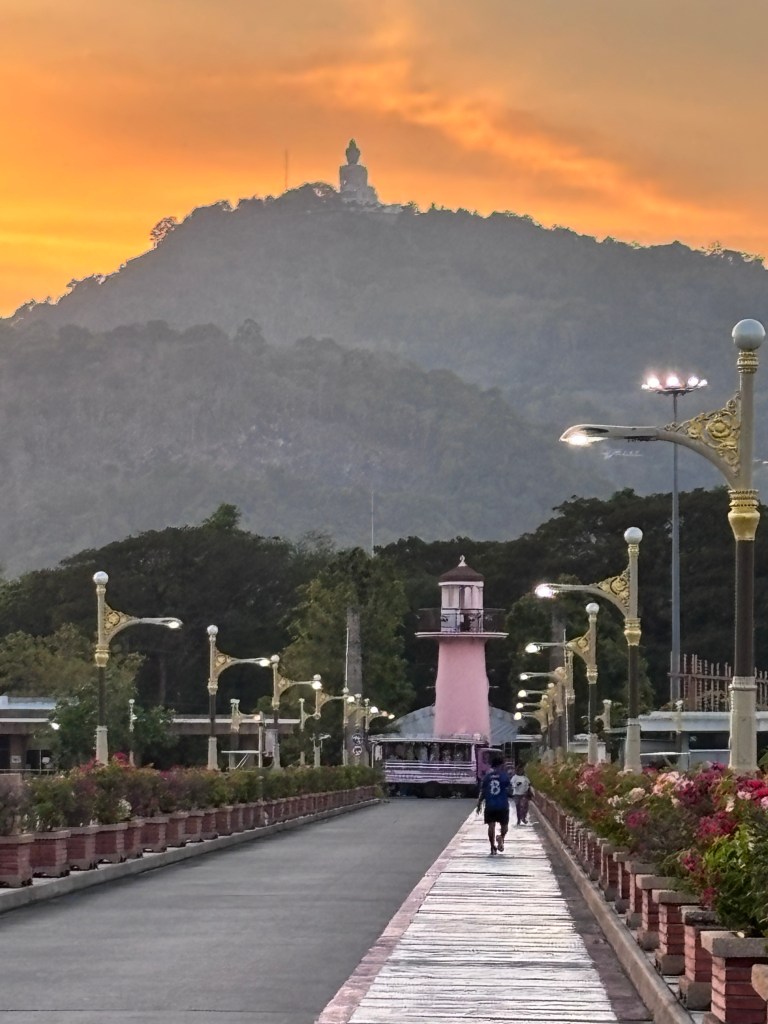
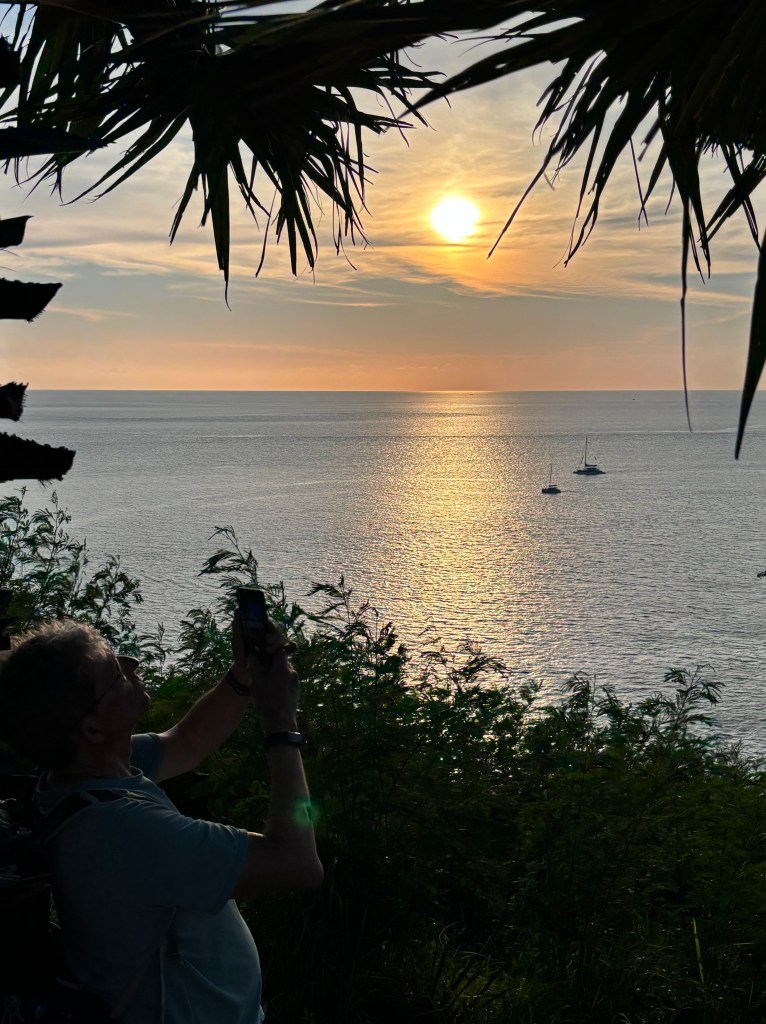
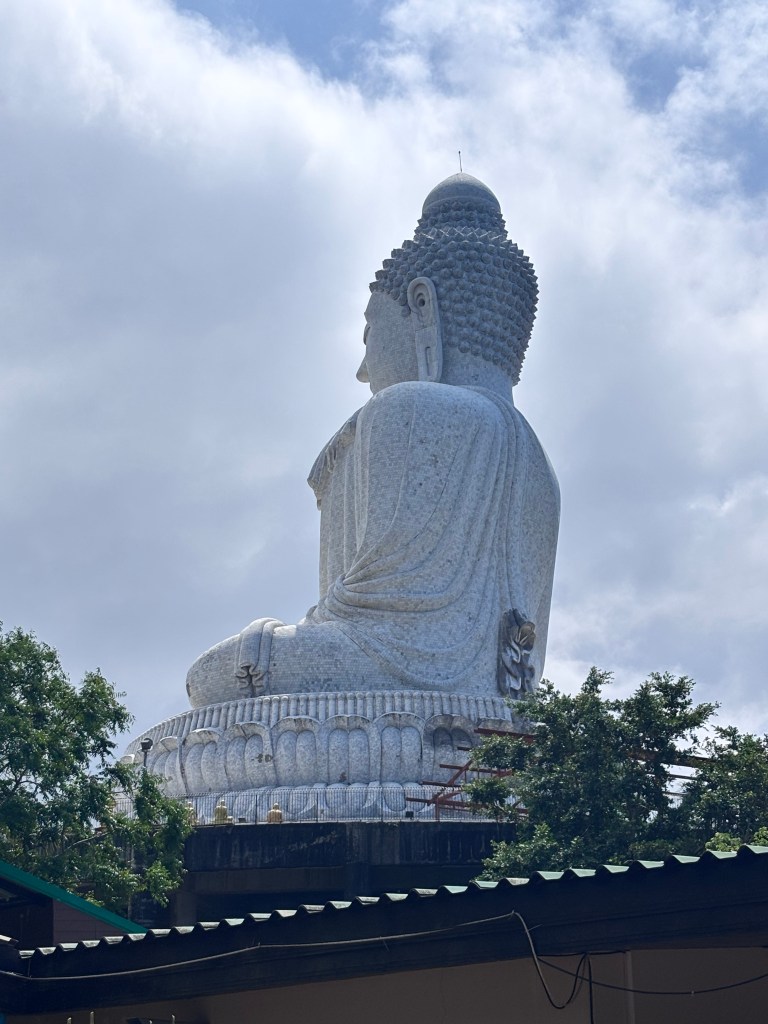
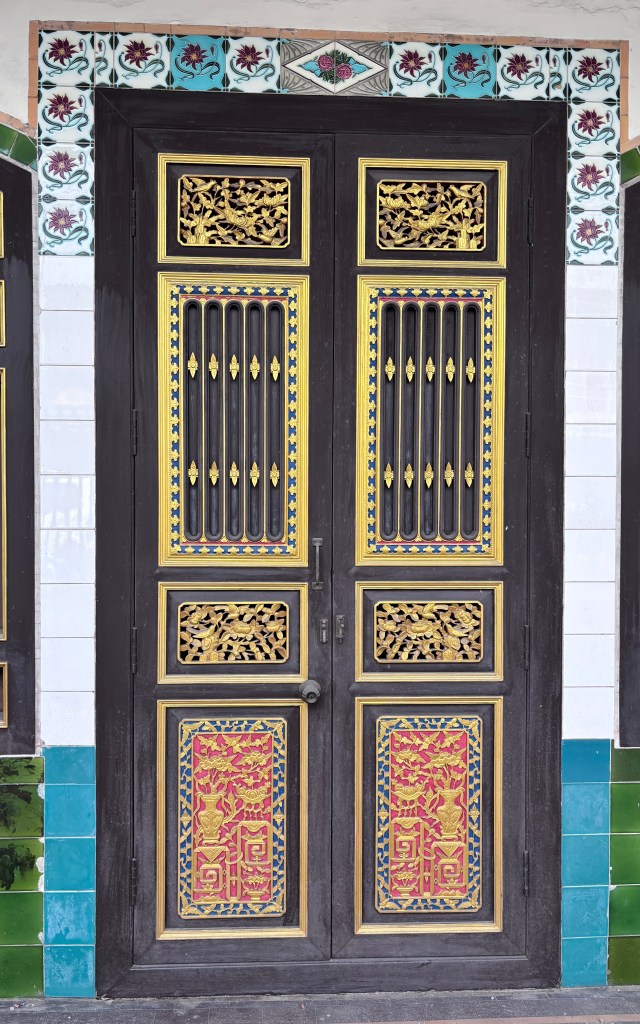
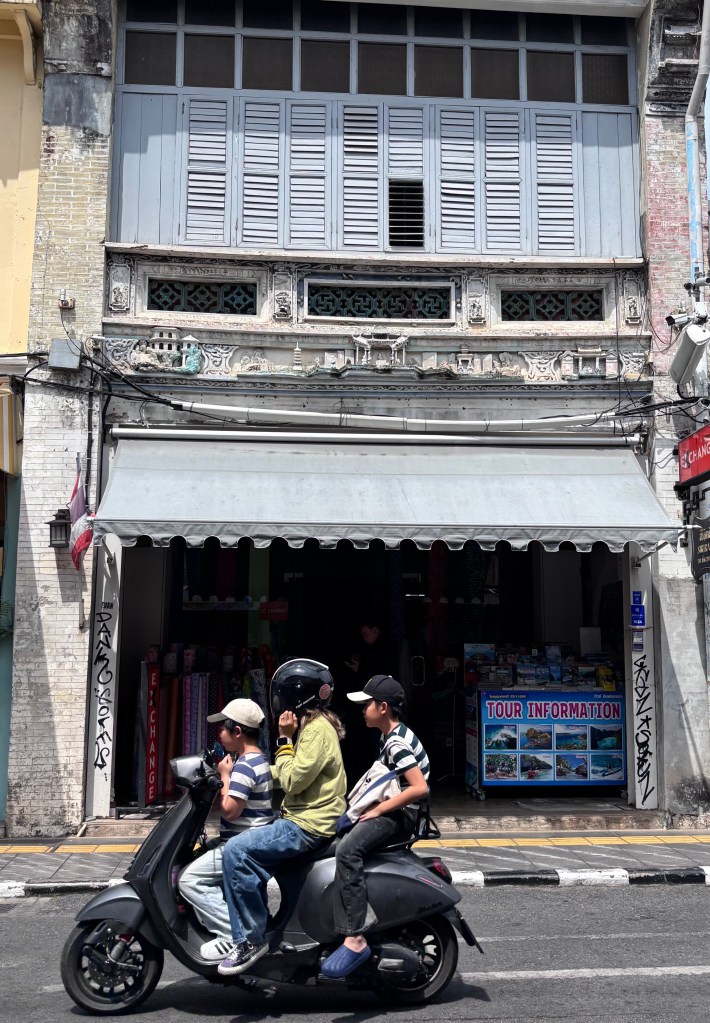
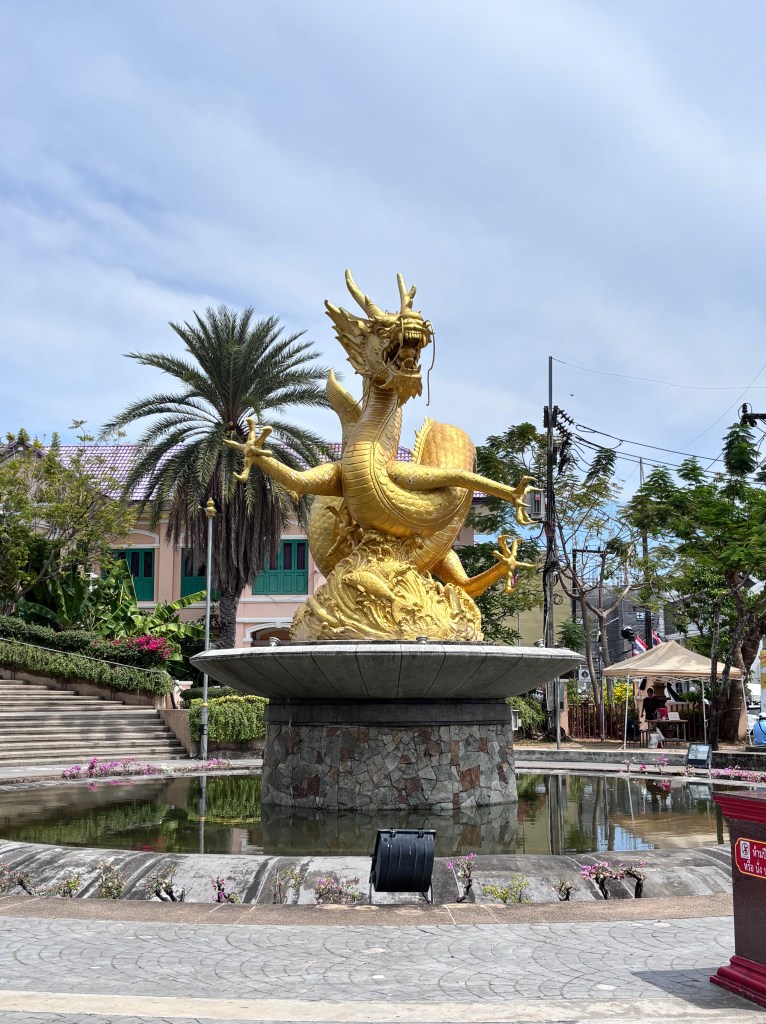
Chalong pier, PhuketA Phuket sunsetTh Giant BuddhaChinese style door in Old PhuketI like the Chinese freeze on the house A dragon to protect the place
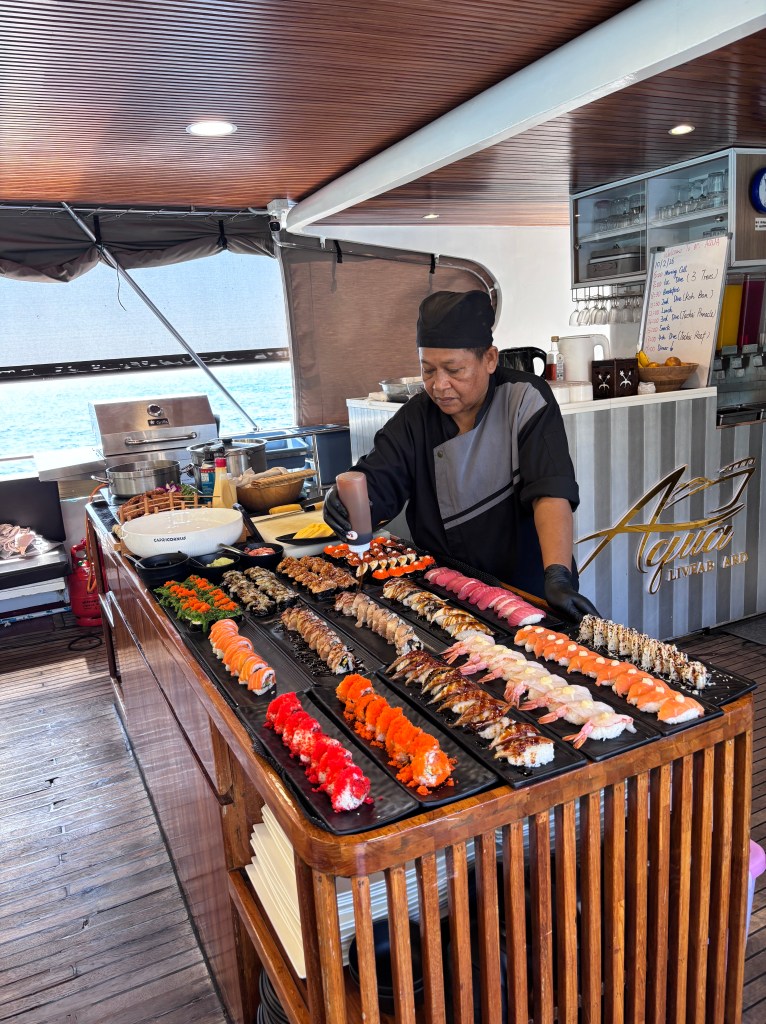
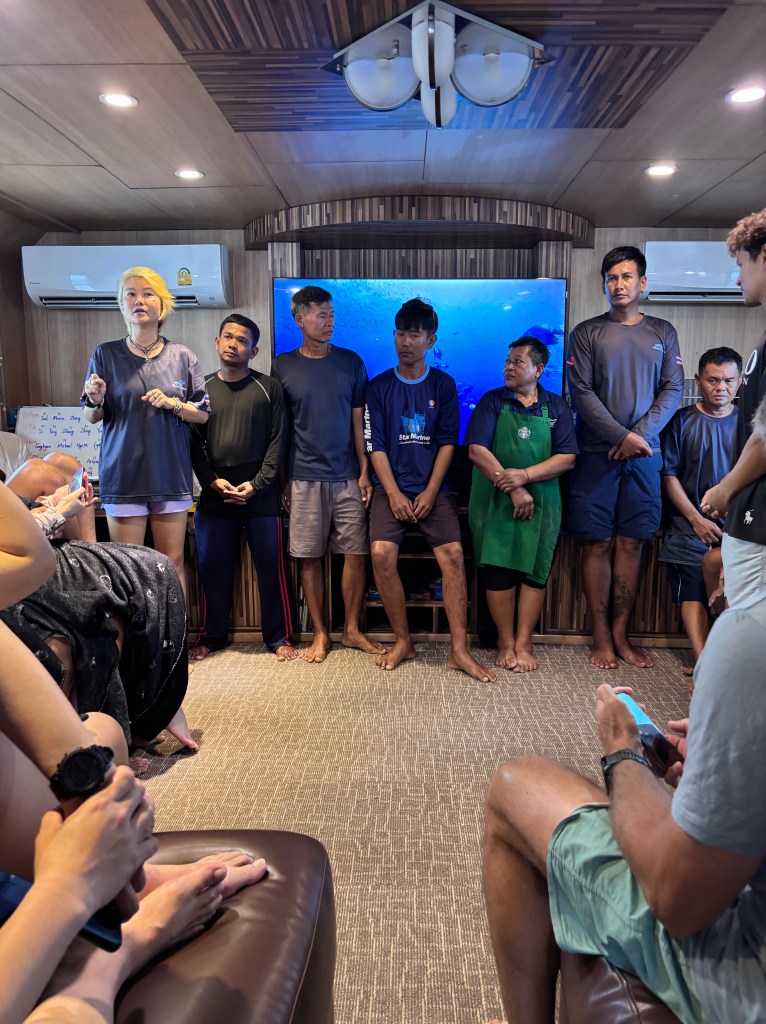
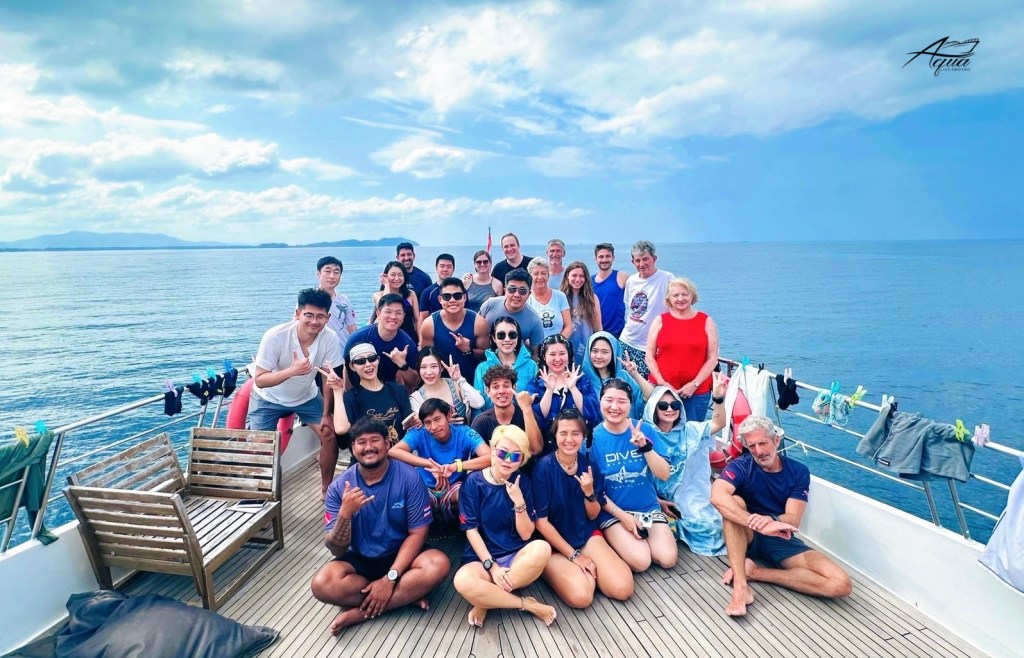
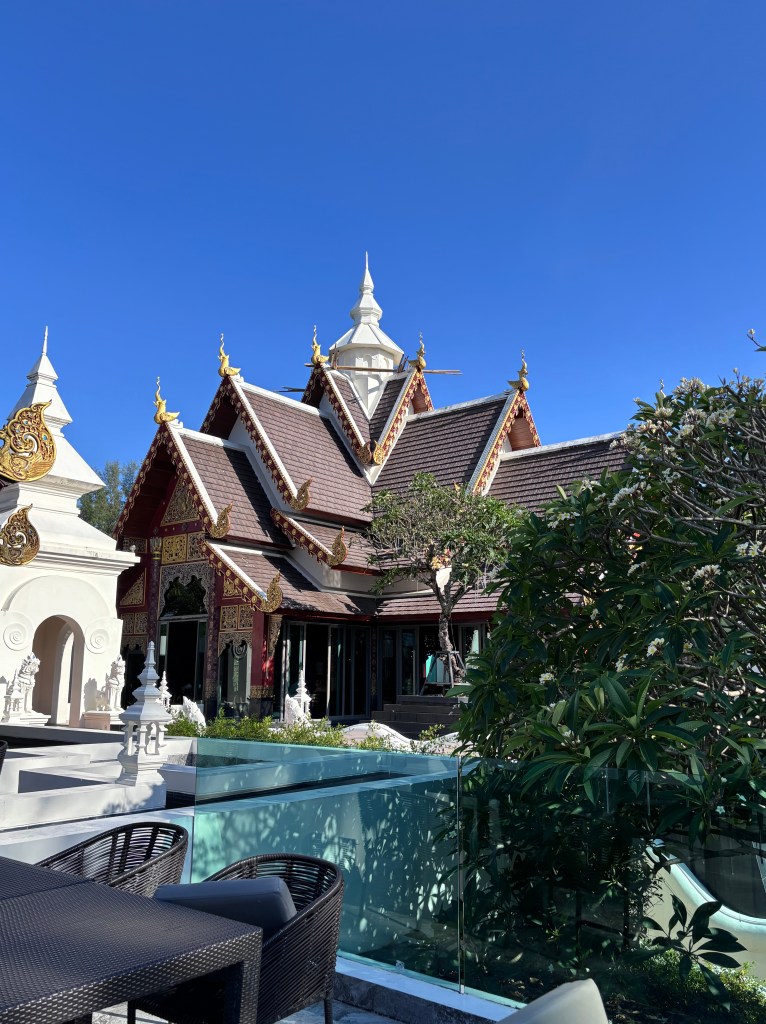
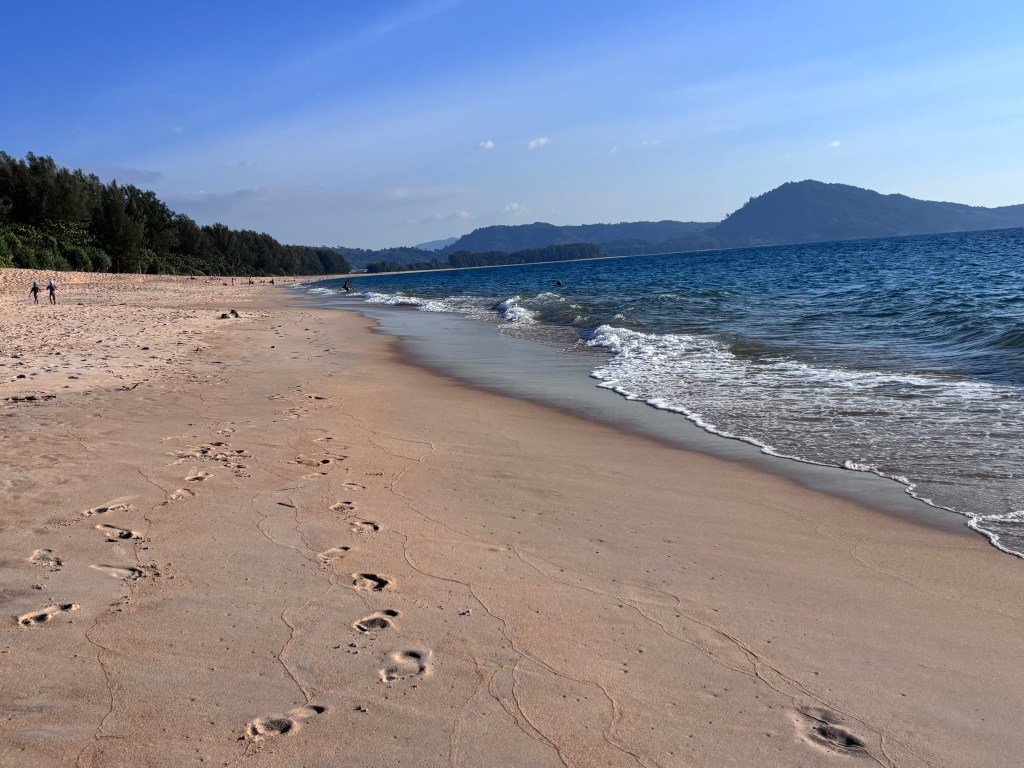
Phuket was chosen as we planned to do a few days liveaboard diving trip in the Andaman Sea. A December ski trip put paid to that for me – a broken collarbone was not ready for the full weight of the diving kit. But I did snorkel. And saw the photos of what I was missing. A definite highlight was the food produced by Pom, a marvellous chef who created miracles in that tiny galley. And she always had a smile for us. The crew of the Aqua (Smile Dolphin company) and the dive masters were top notch. Had a pleasant stay in the Mai Khao Palm Beach resort after the diving. A tropical sandy beach that stretches for miles along the bay, warm sea, gorgeous sunsets.
Phuket itself was a bit of a disappointment. The giant Buddha (we walked up! 7 K in the heat – and gave in for the last K and took a cab…) could only be seen from the back – there had been a landslide in the front and the area around the giant statue was completely blocked off.
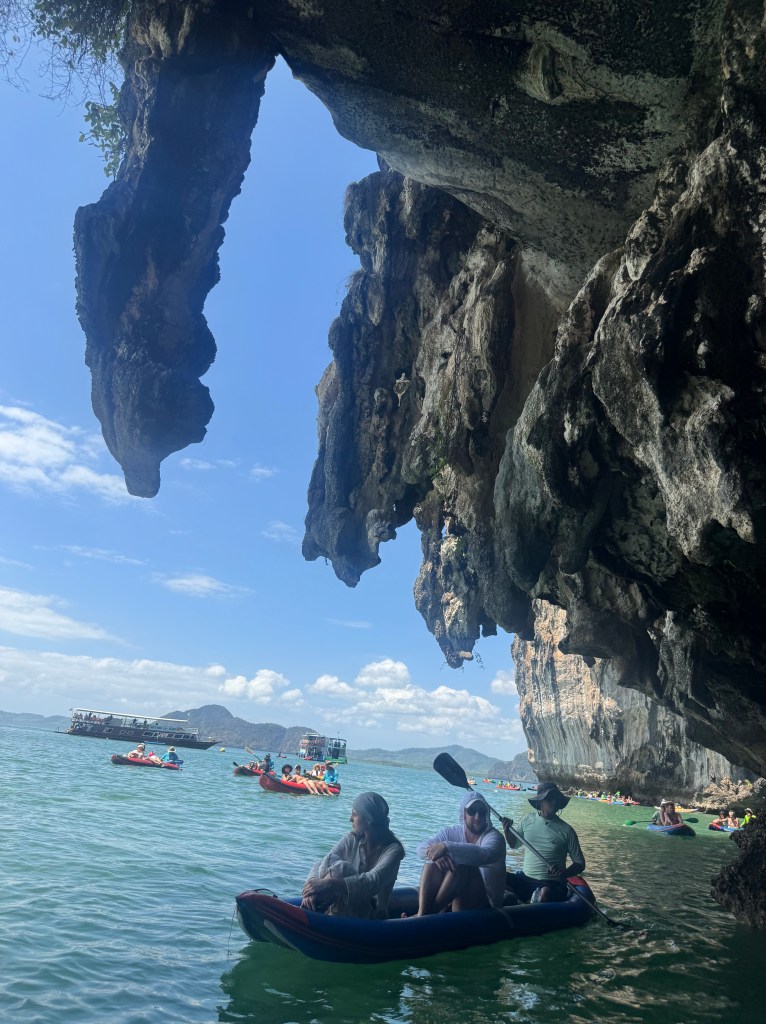
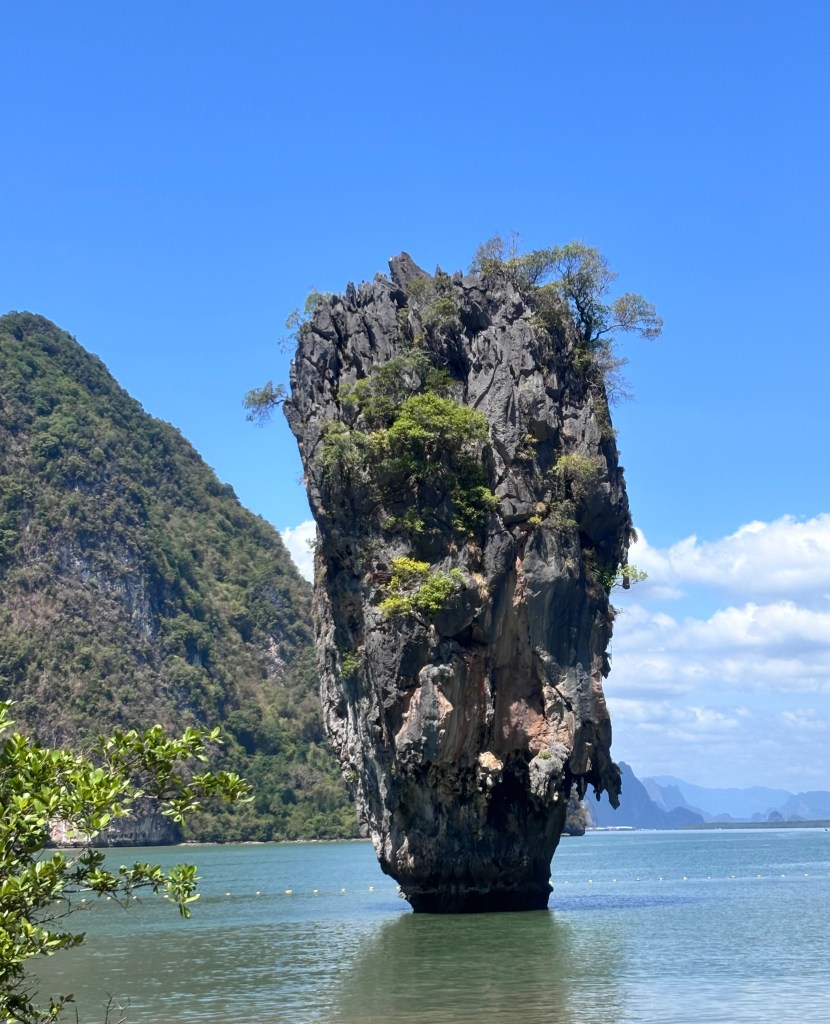
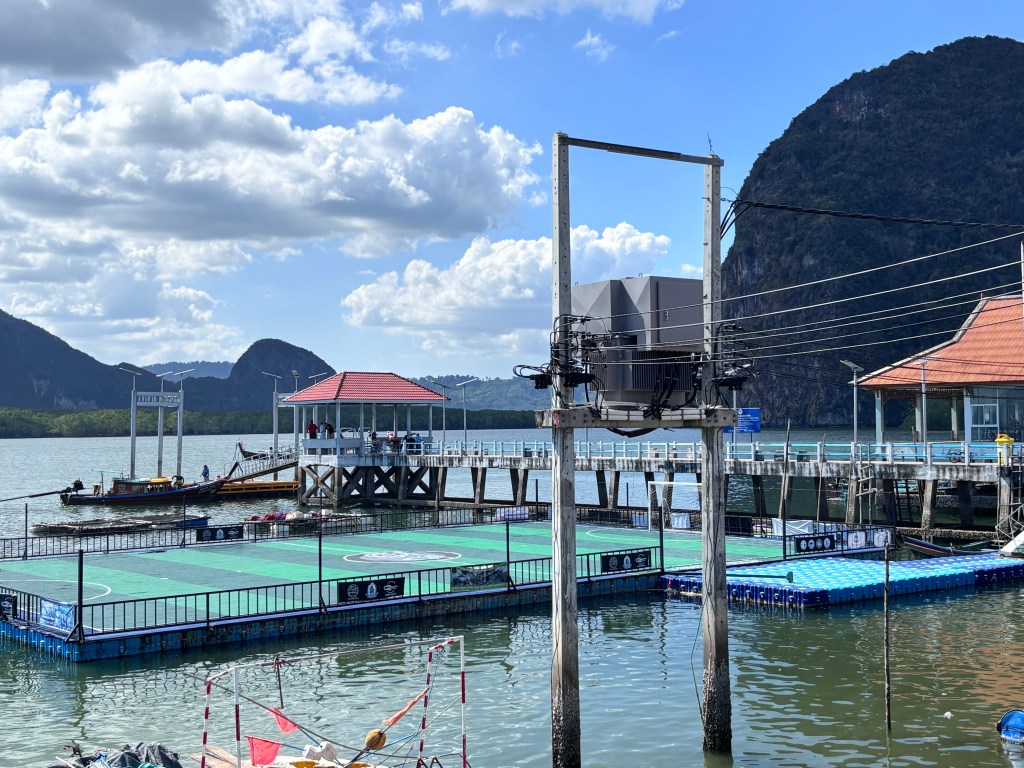
The Old town (reached by a local bus – a few pence) is full of shops and tourist tat. We did enjoy the trip to the James Bond island – a full day out on the speed boat, visiting those intriguing looking pinnacle-like islands, a cave, a Muslim community with a floating football pitch…
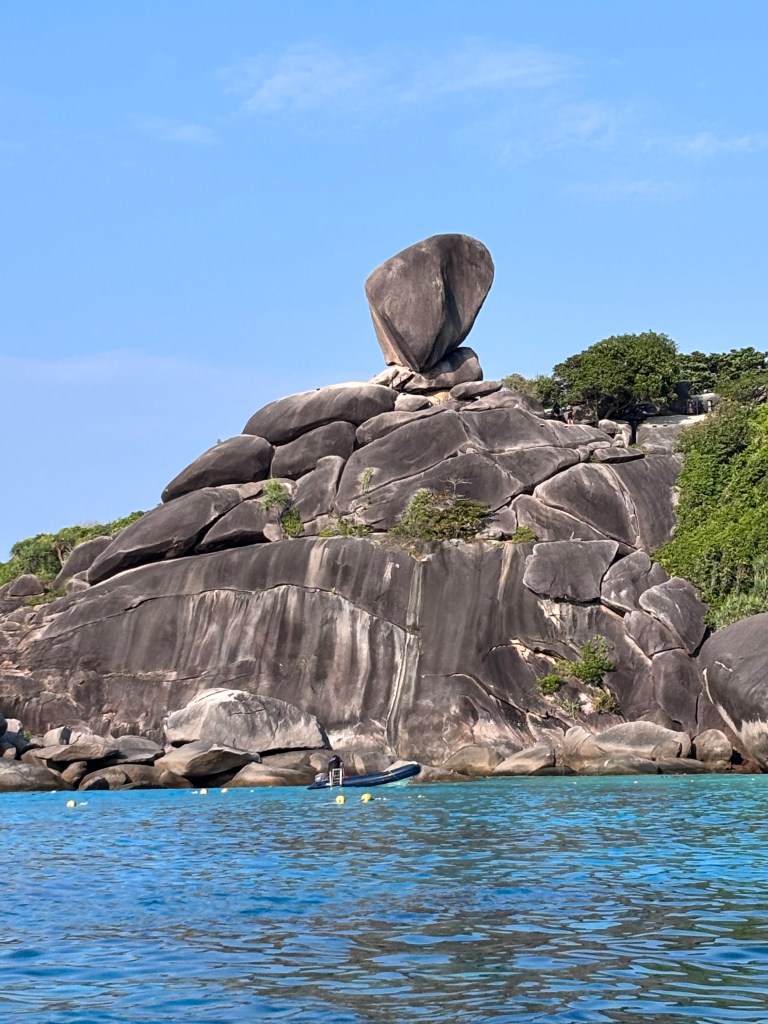
The Sail rock in the Andaman seaChef Pom with the sushi lunchThe Aqua boat crewThe divers – and mePalm Beach Mai Khao hotel pool – lovelyThebeach at Mai Khao Canoing around the islands in Phang Nga BayThe James Bond island (Khao Phang Kan, really)The floating football pitch
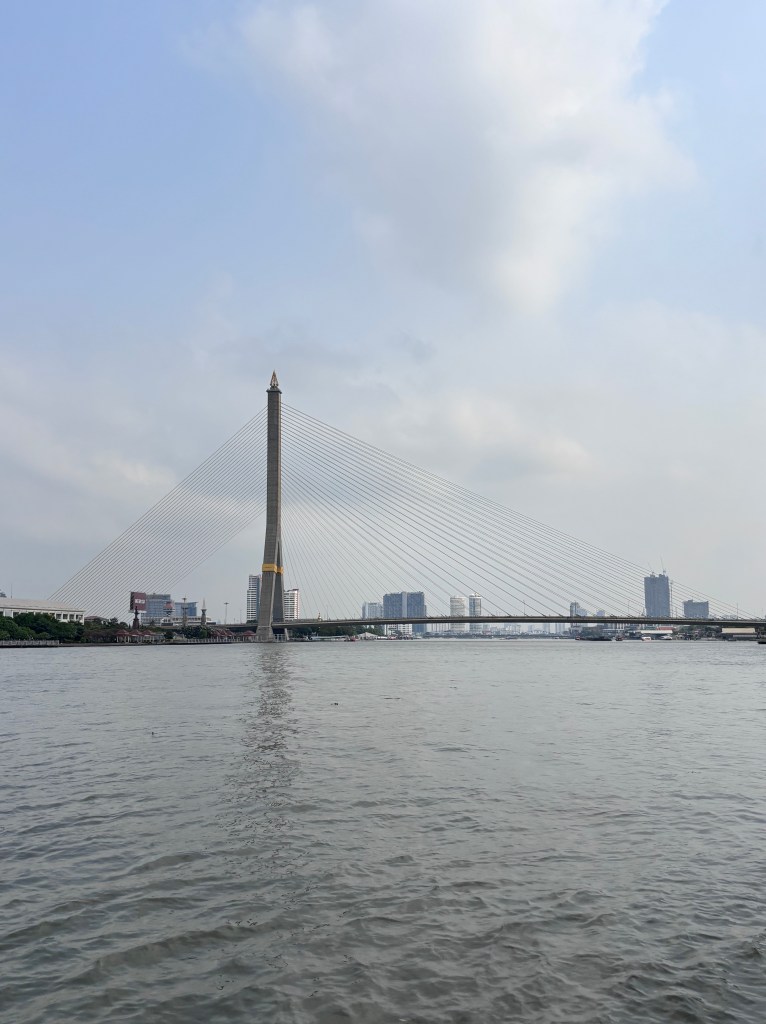
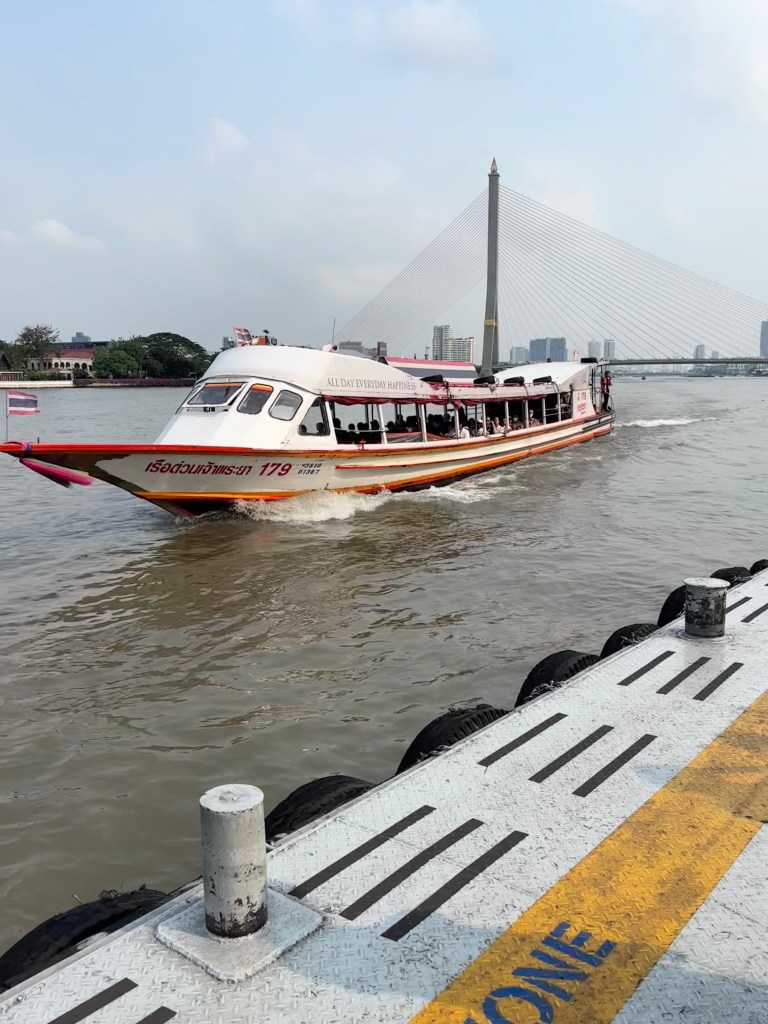
My friend headed back to the UK and I to Bangkok. The two very useful apps for travelling in Asia are Bolt and Grab – like Uber, prices are set when you book. (I’ve used Bolt in Central Asia and in South America). If you are brave (or foolish, or need to get somewhere on time, all of which I seem to have been) you can get a motorbike ride too. I stayed in a hostel near Pier 13 on the Chao Phra river. Lots of accommodation, restaurants and Thai massages available in the area – and the river boat beats the road traffic every time. The boat to take is the Orange flag one – 16 Baht per trip. It covers all the important parts of Bangkok and has good links with the MTR (metro) and the sky train. There are other river boats and staff tend to push tourists to the more expensive ones. (A 150 baht hop on-hop off day ticket may be useful to some tourists.)
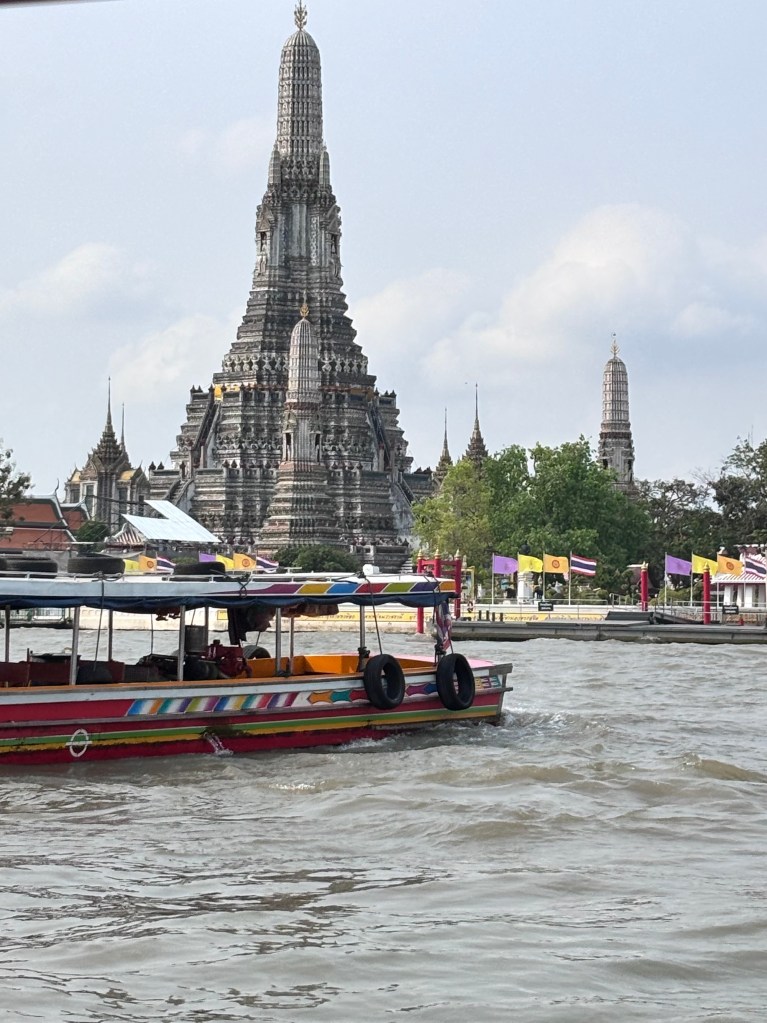
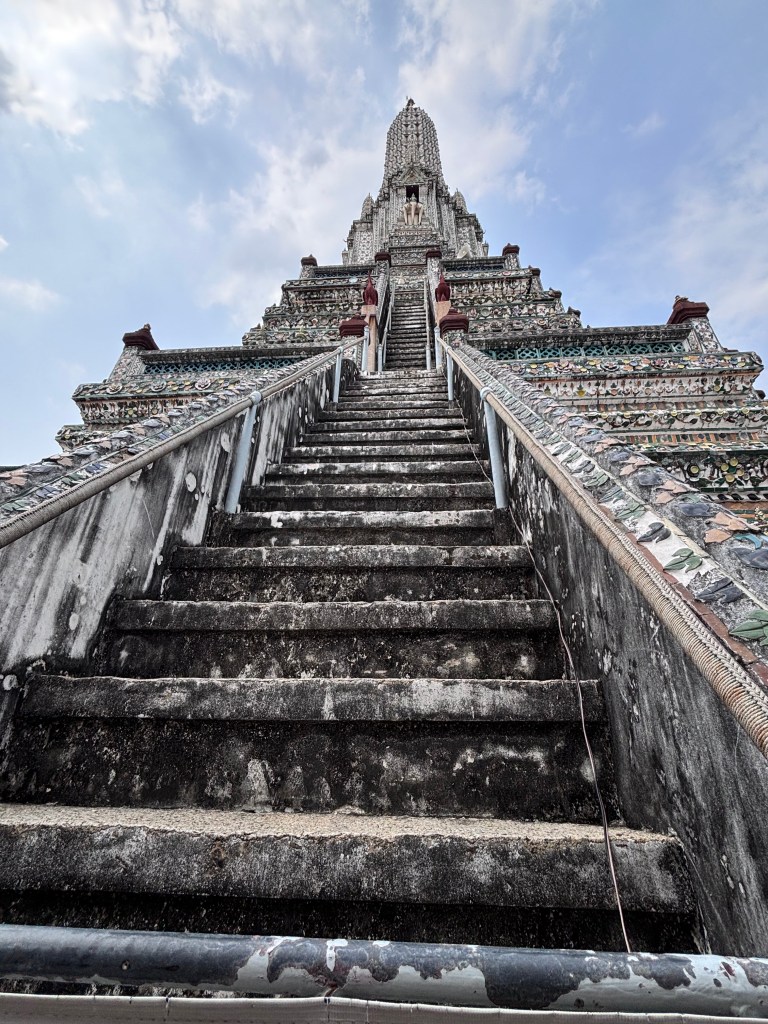
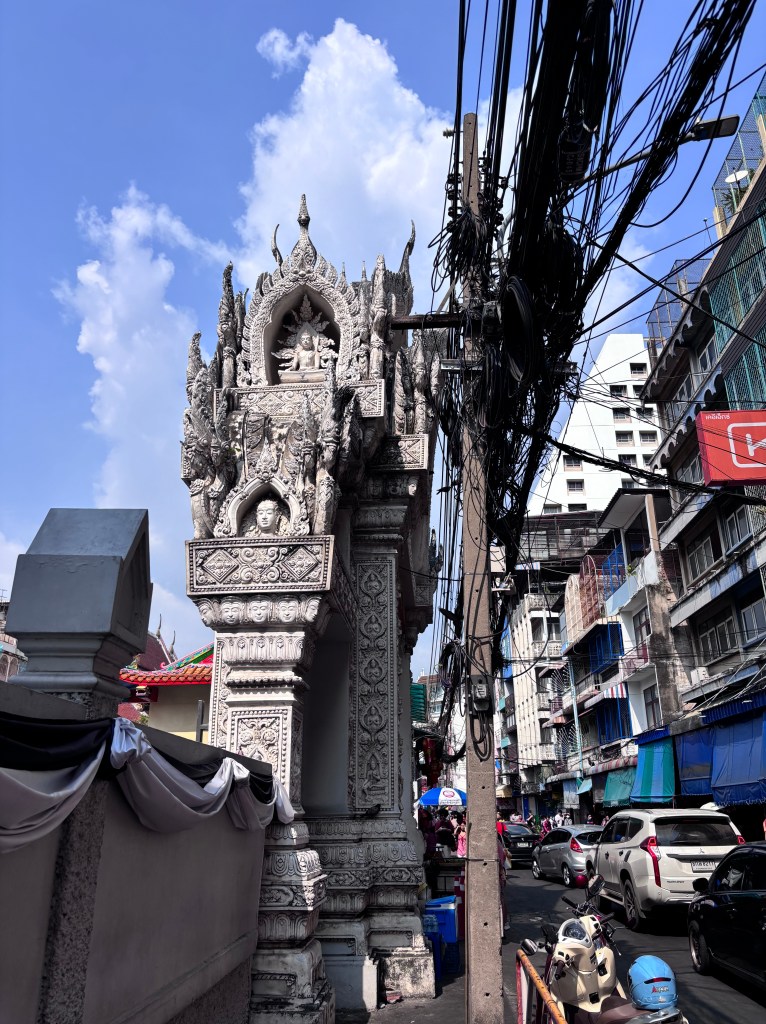
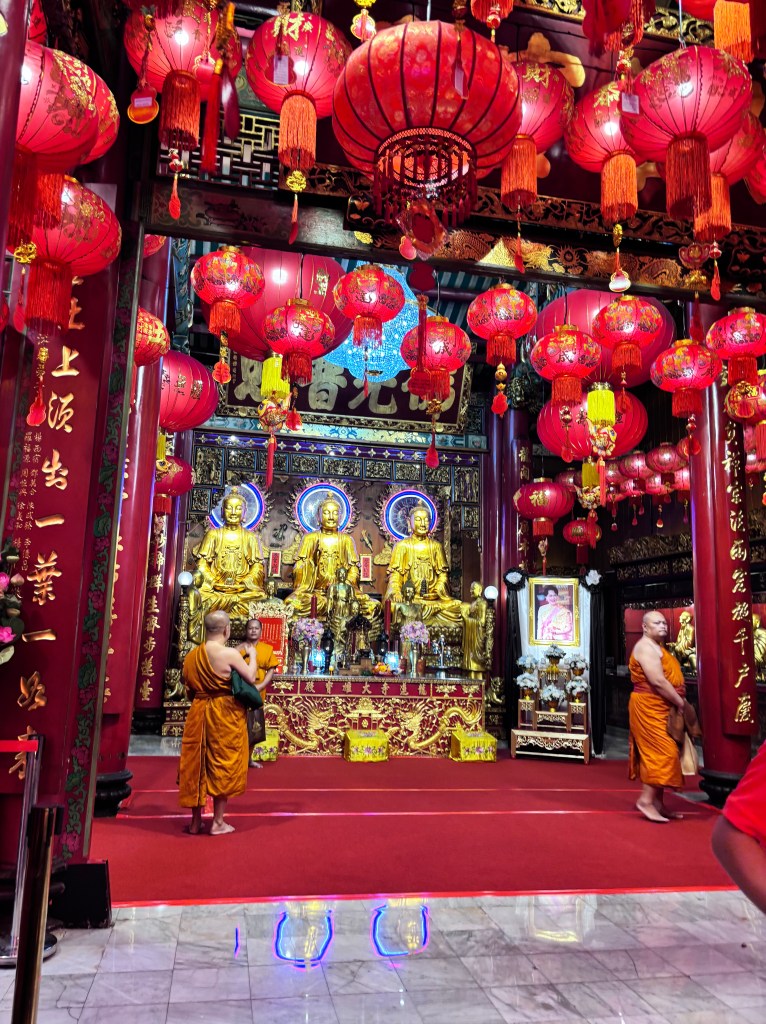
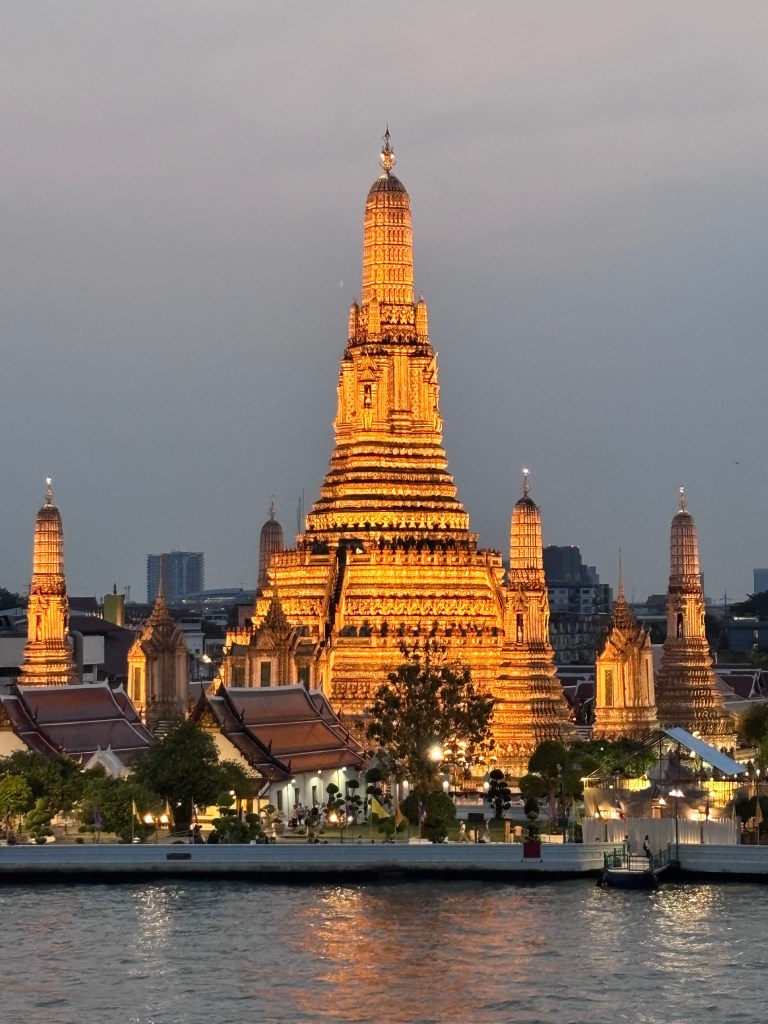
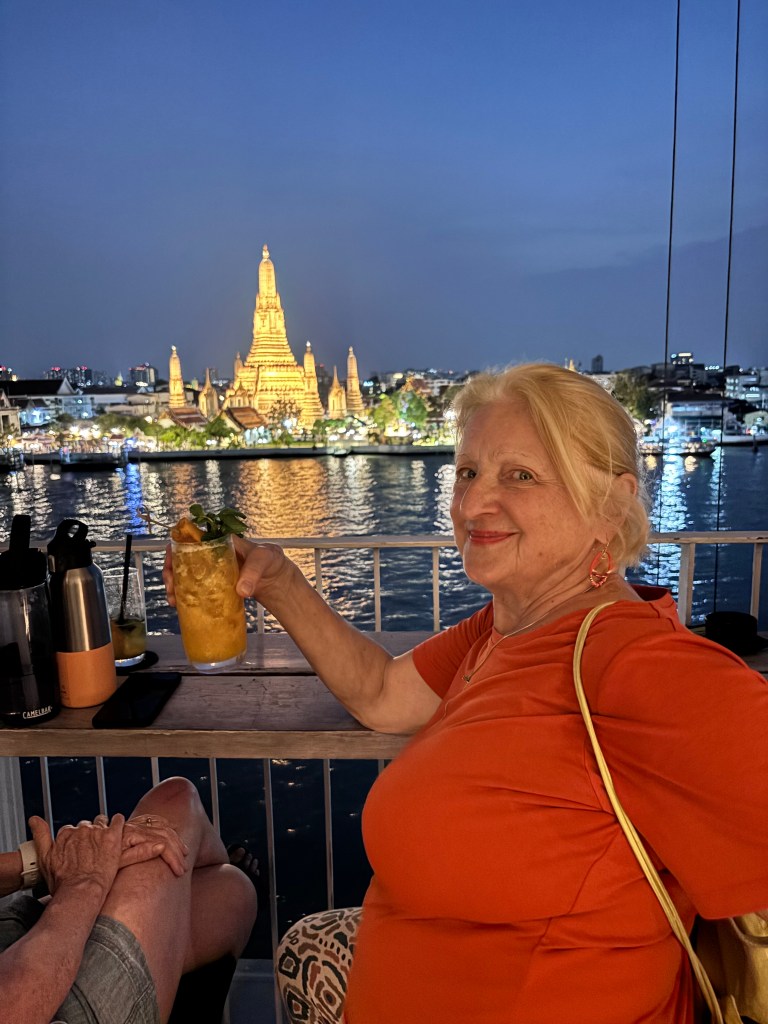
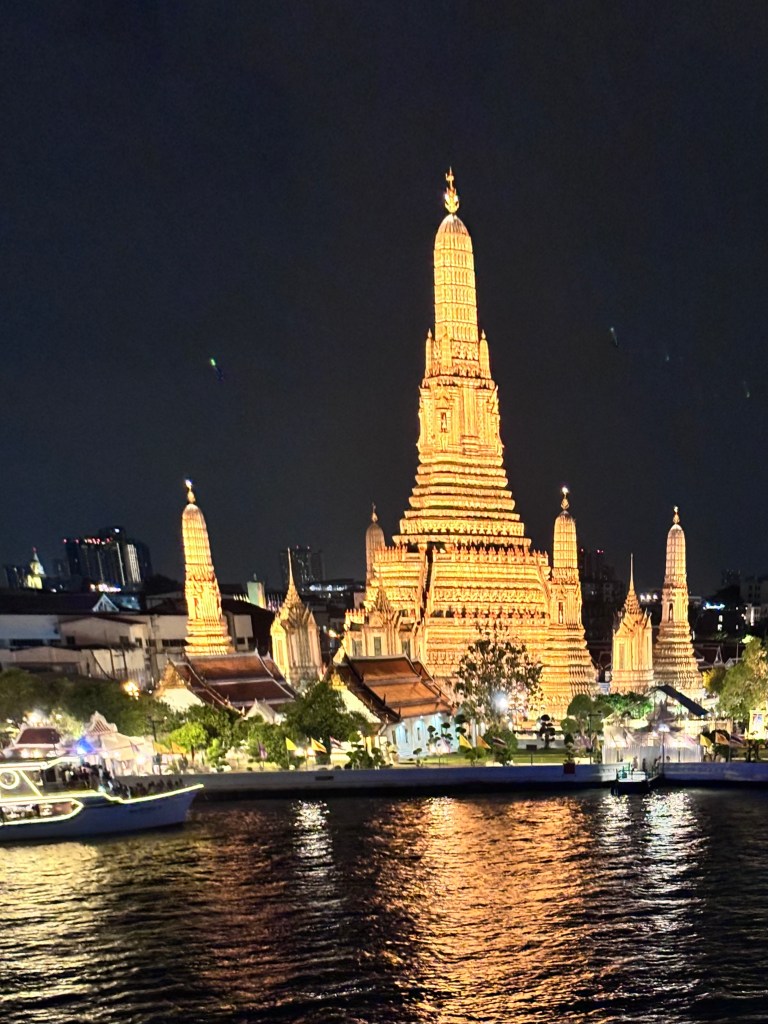
Chao Phraya river in BangkokThe Orange flag boatWat ArunThe steps to Prang are STEEP and hard as it is not easy to reach the godsChinatown Wat entranceChinese New Year Wat Arun beautifully lit up at sunsetA Maitai to enjoy at sunsetWAt Arun
The Grand Palace, the Reclining Buddha, the Wat Arun…all a must. The book says to get there early and beat the crowds… I didn’t.
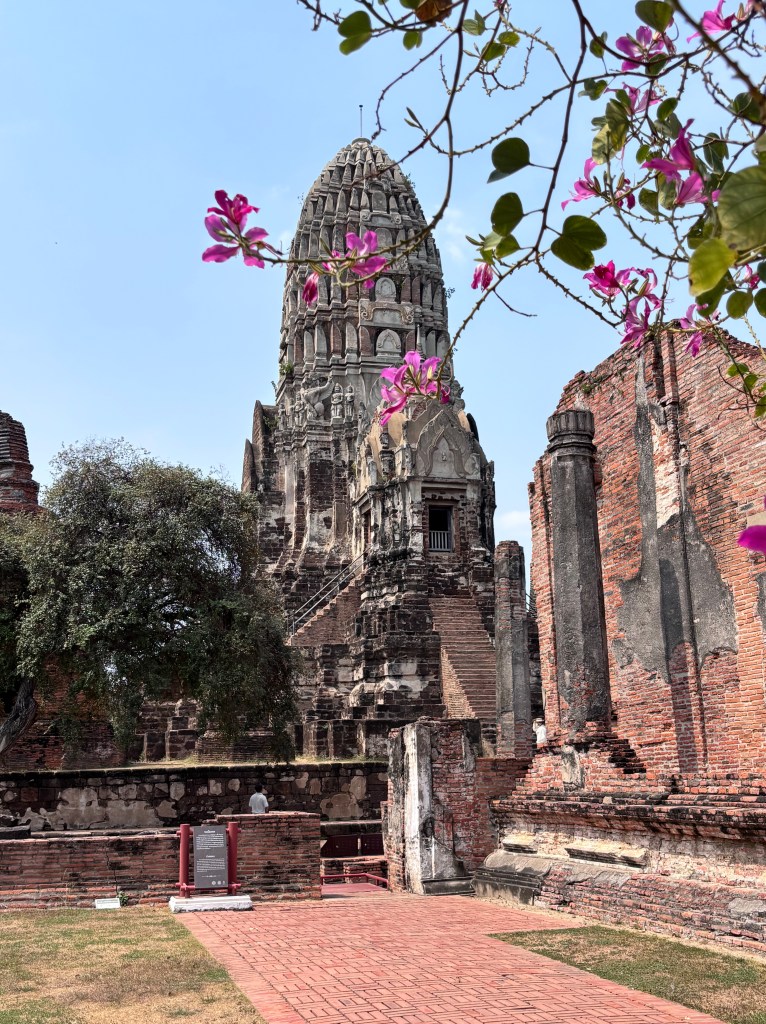
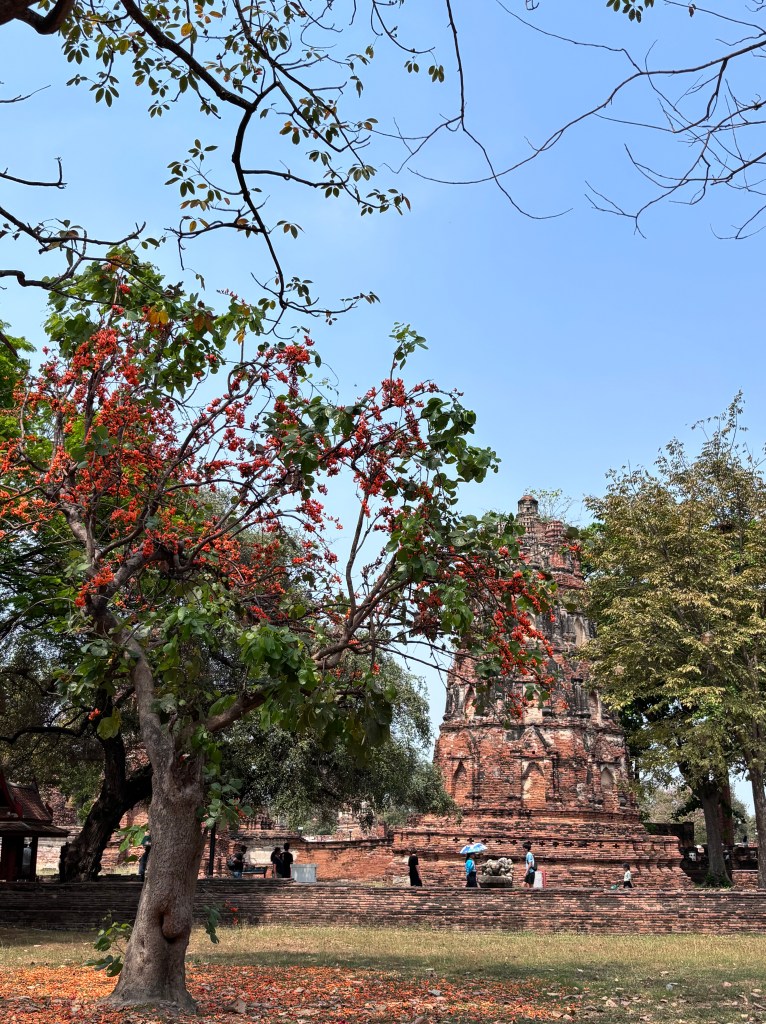
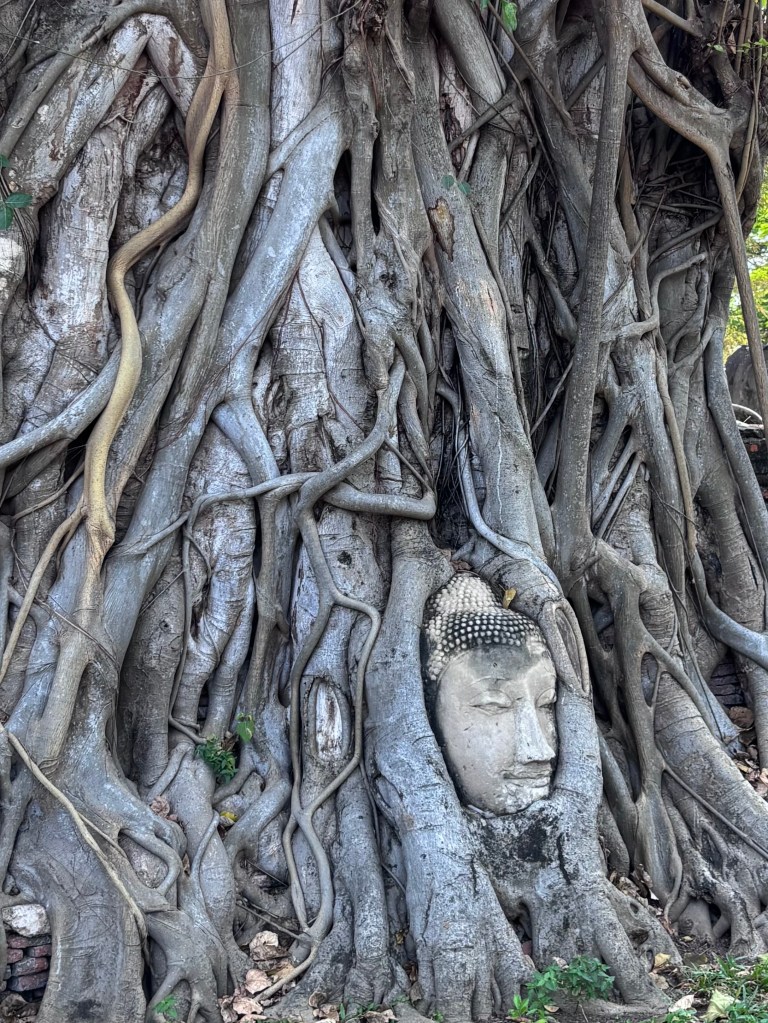
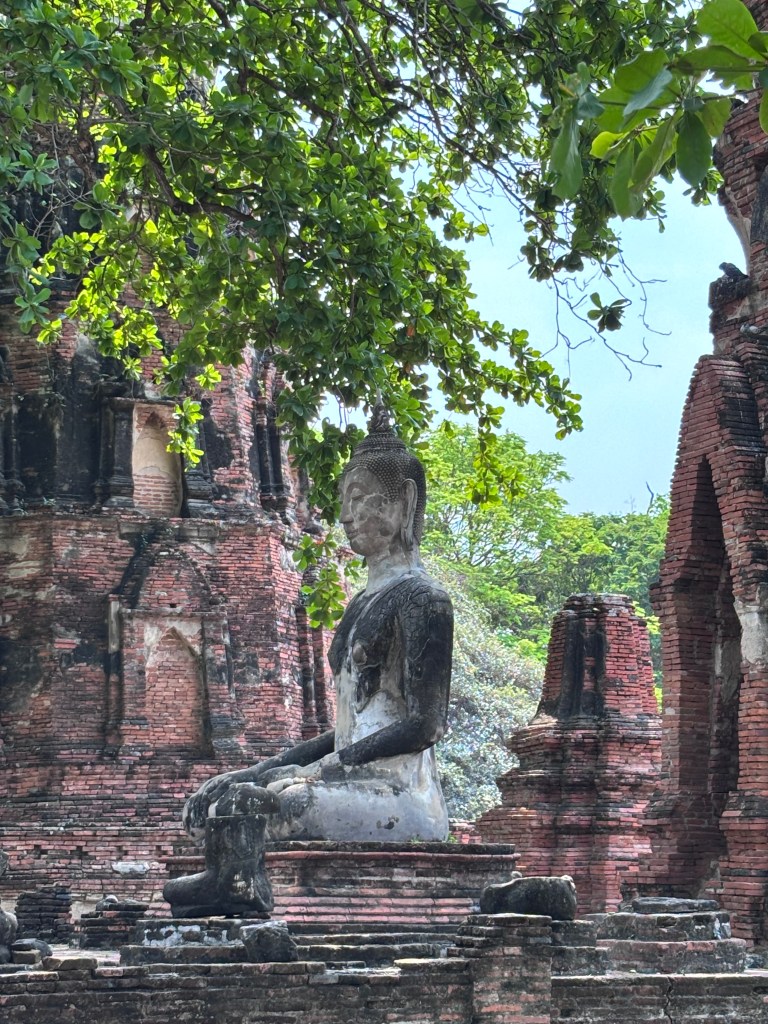
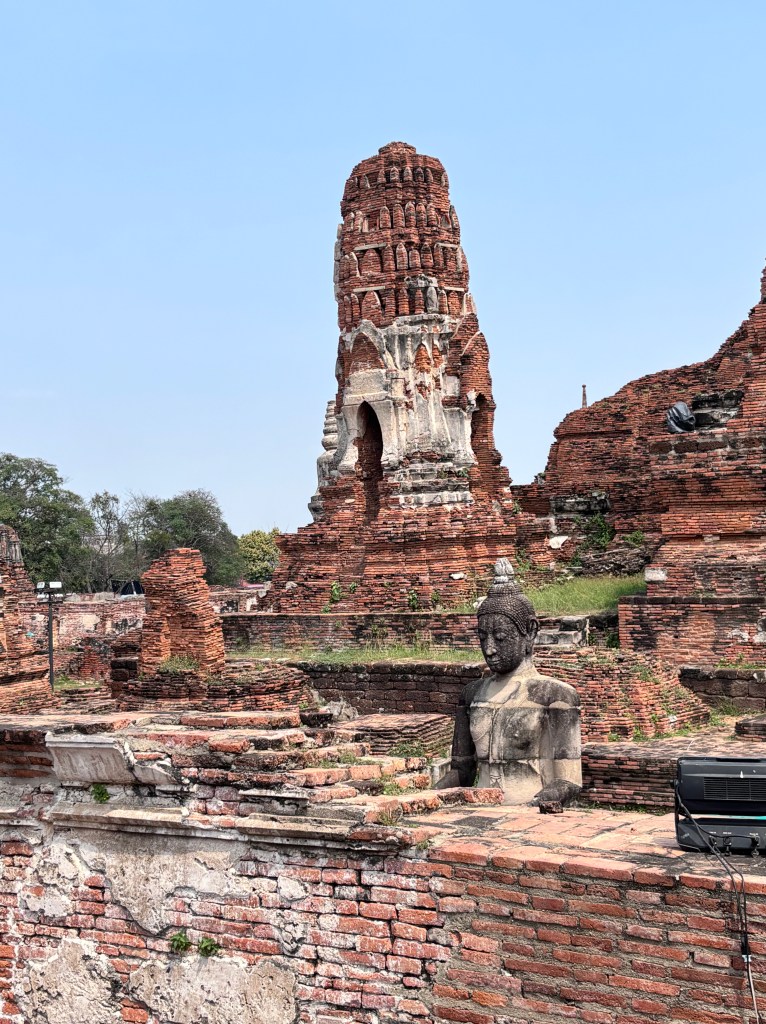
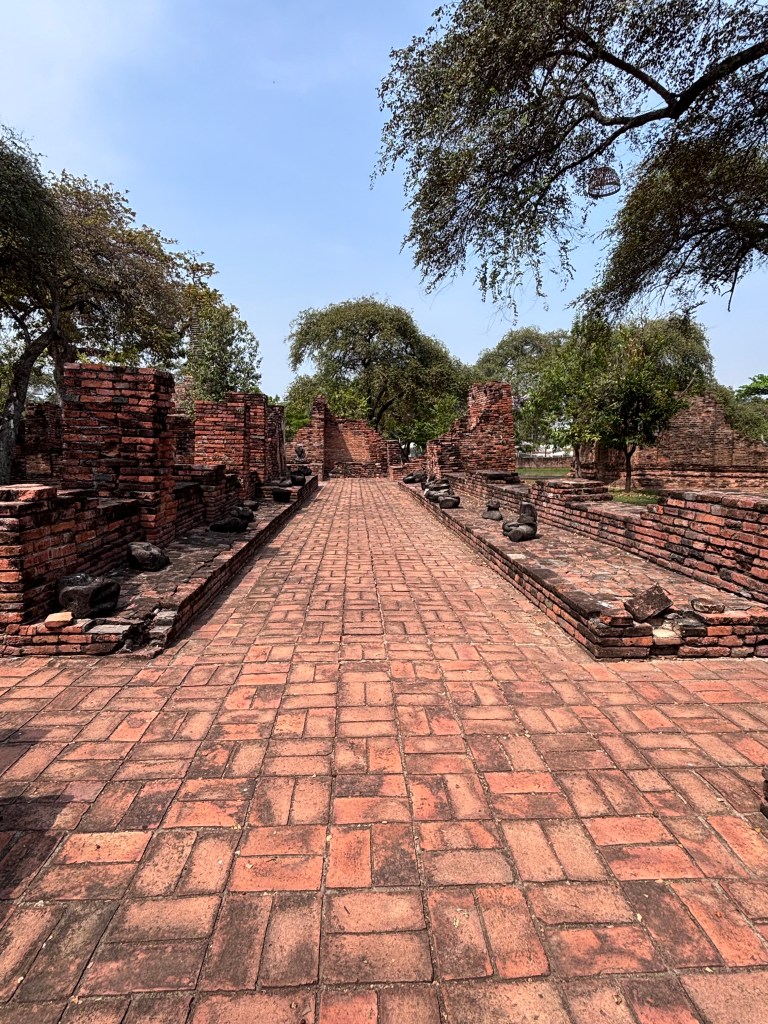
Went to see the old capital, Ayutthaya, on the train (20 Baht o/w) from the new Central station – an enormous place, echoing and strangely empty. (The MTR metro ticket to get to the station was 45 baht!) The Wats (temples) and the Buddhas are spread over a wide area. (I was glad of the hired bicycle – 60 baht for the day). All crumbling brick and stone and with all the Buddha’s heads lopped off by looters looking for gold. And yet, they had all once been just as dazzling and shiny, glittery and golden like the ones now in Bangkok. Much gold has been stolen – though not the one in the Wat Traimit in Chinatown – 5.5 tonnes of 18 karat gold, which has escaped thieves, had been covered with plaster and glass mosaic and only “rediscovered” as solid gold in the 1950s. It’s in the Guinnes Book.
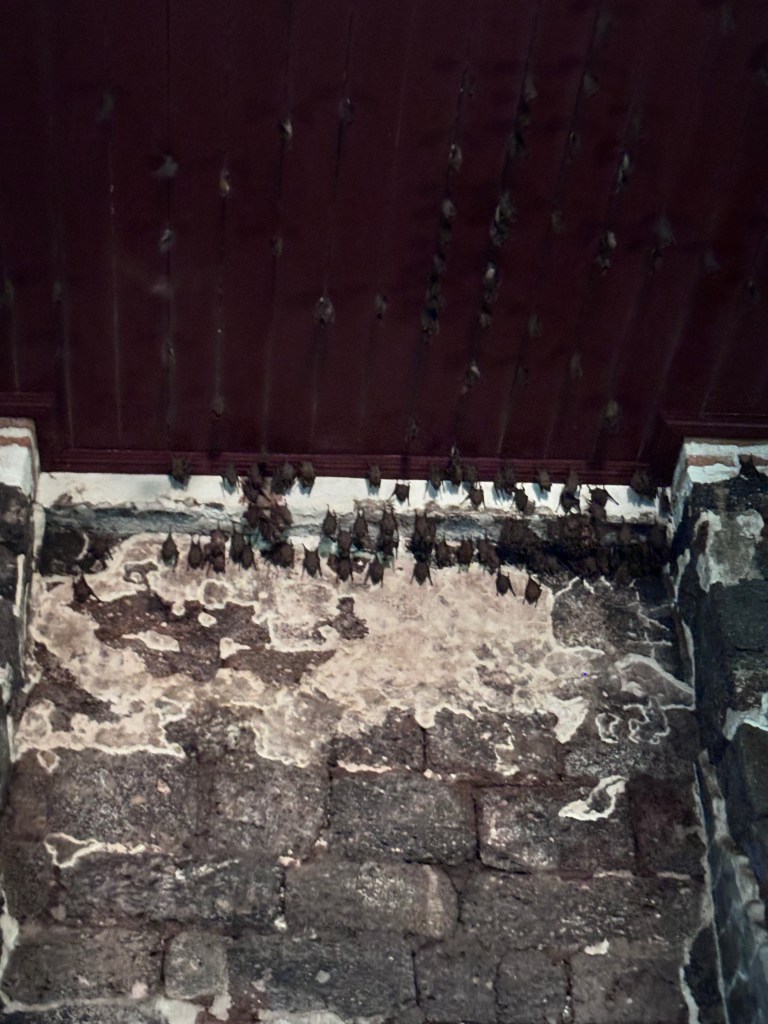
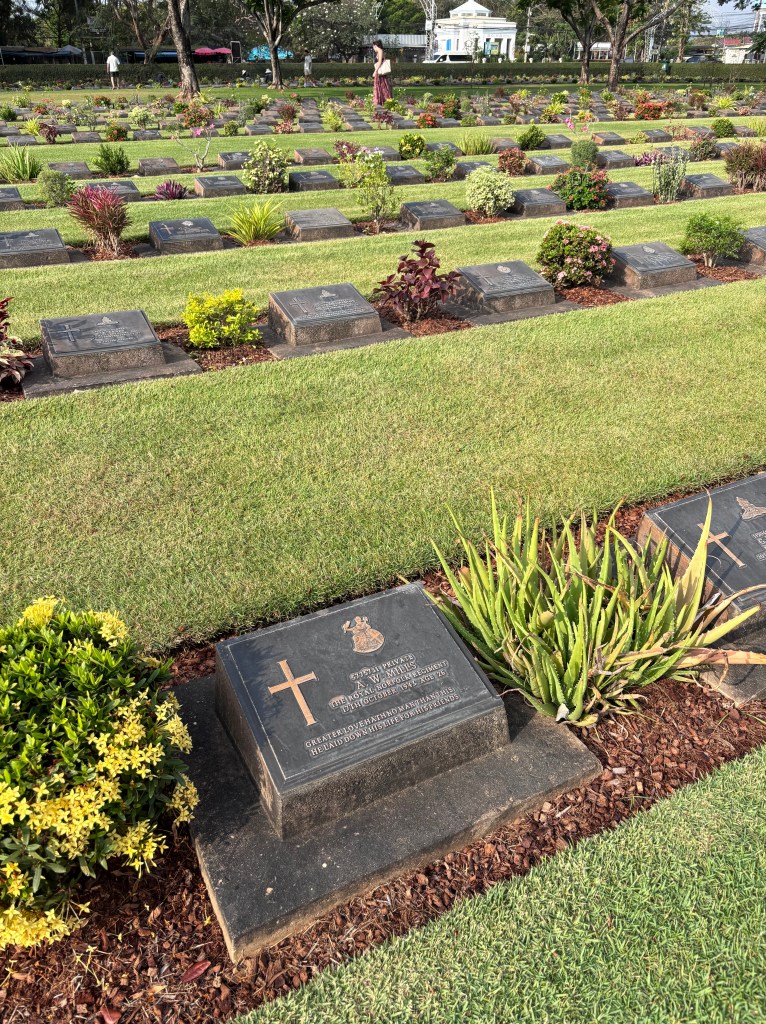
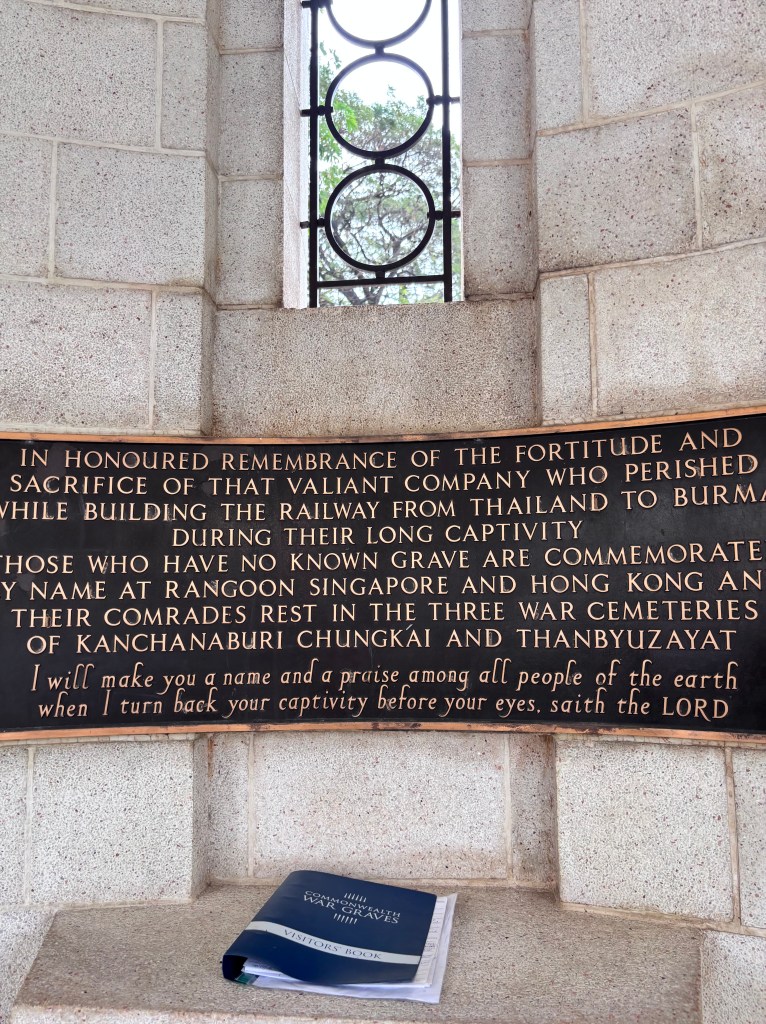
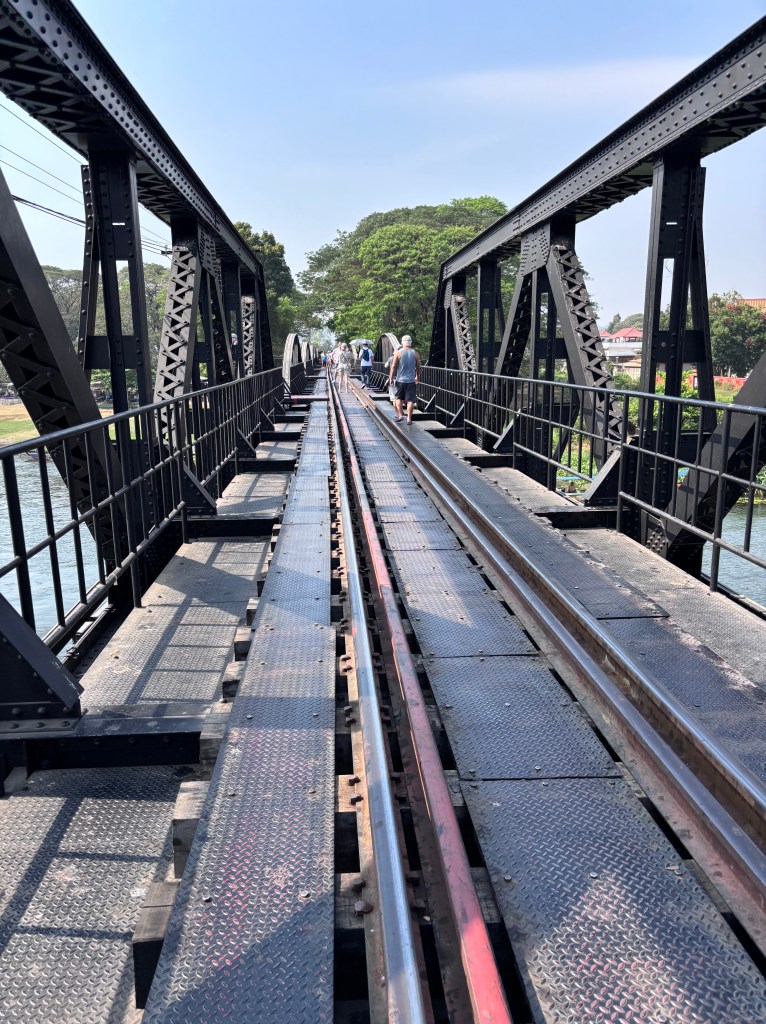
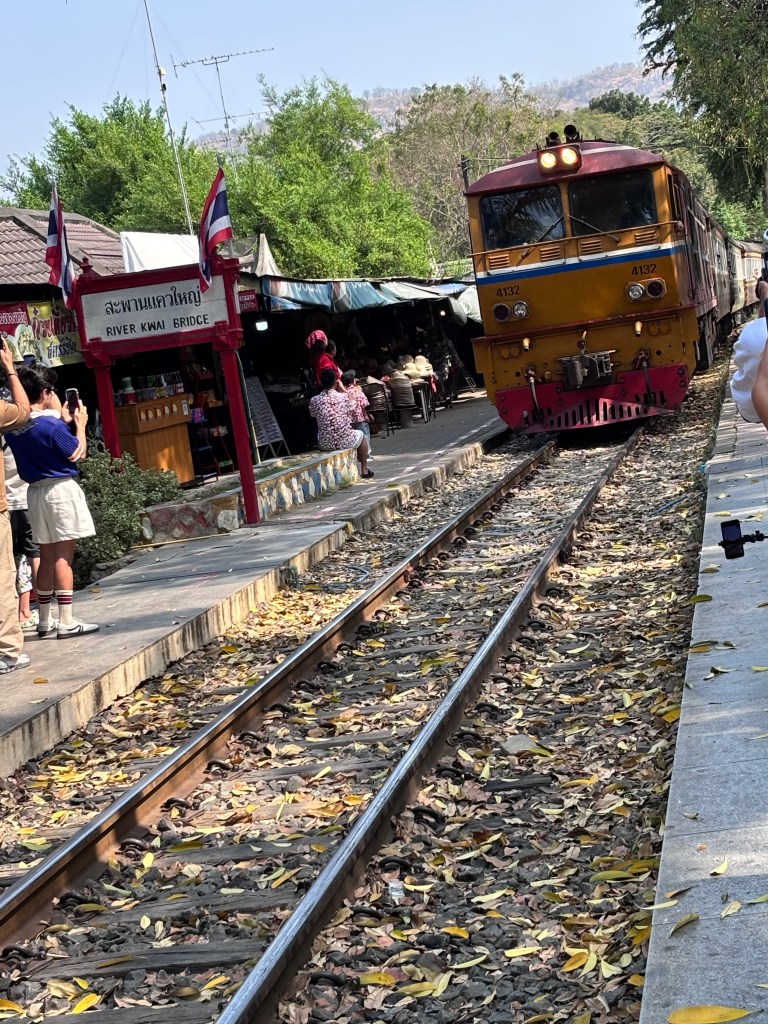
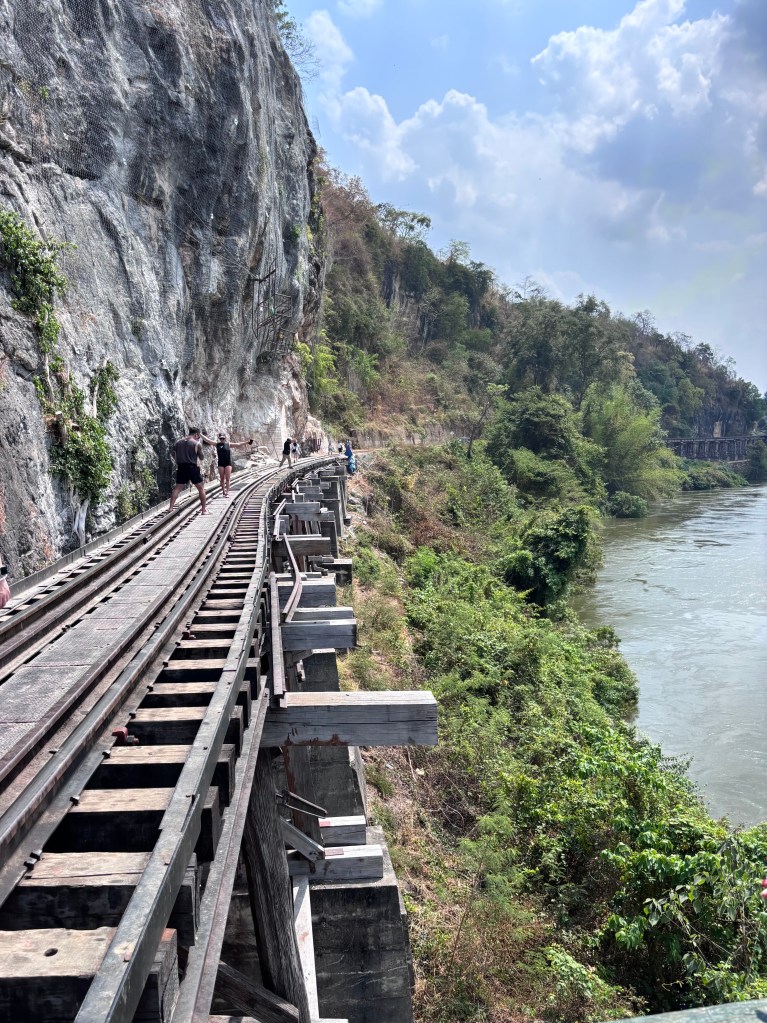
Ayutthaya (old capital, till 1700s) Wat ruinsBats in the Prang in AyutthayaSo many Wats!Buddha in the Bodhi treeAyutthayaAll the Buddha’s with heads removed- no gold…The Kanchanabury Allied War gravesA poignant placeThe bridge over the river KwaehThe train we took to cross the river KwaehThe railway line looks difficult even now
The Kanchanaburi Death Railway cemetery and museum were poignant. The Bridge has been rebuilt and trains serve the local community.
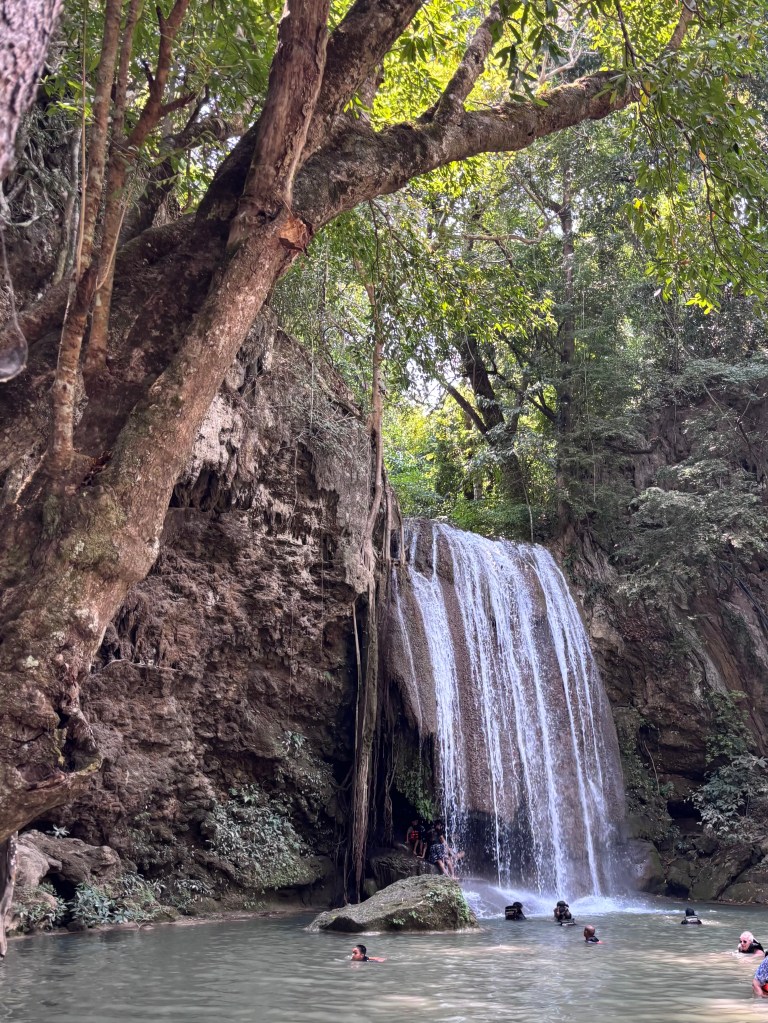
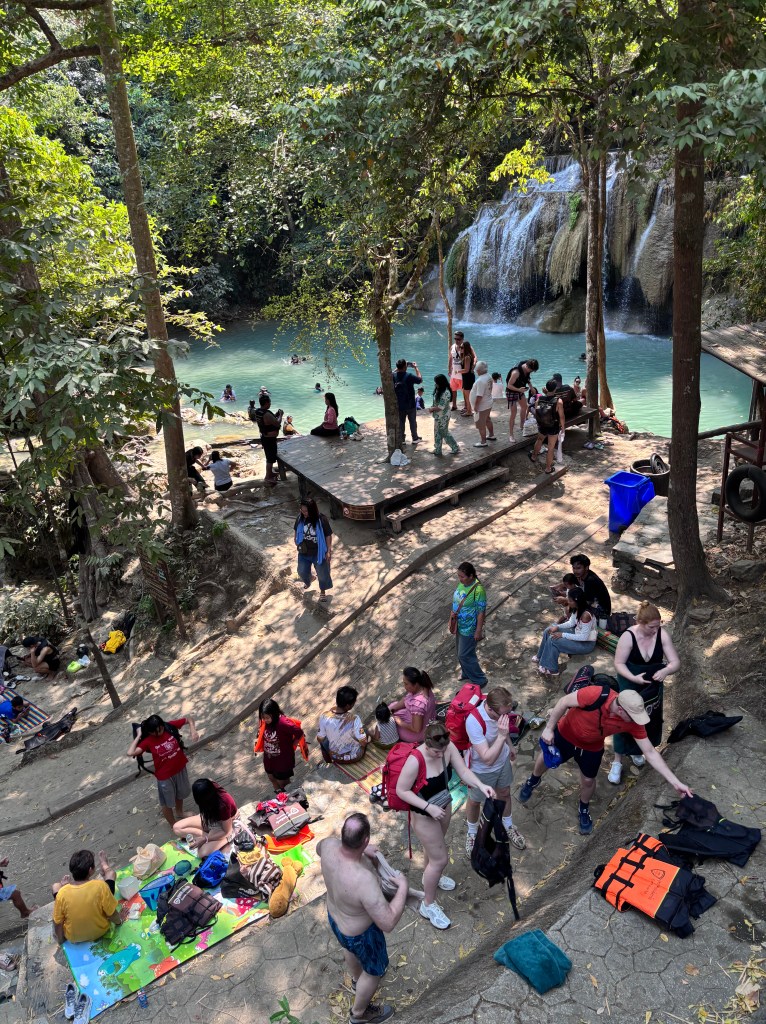
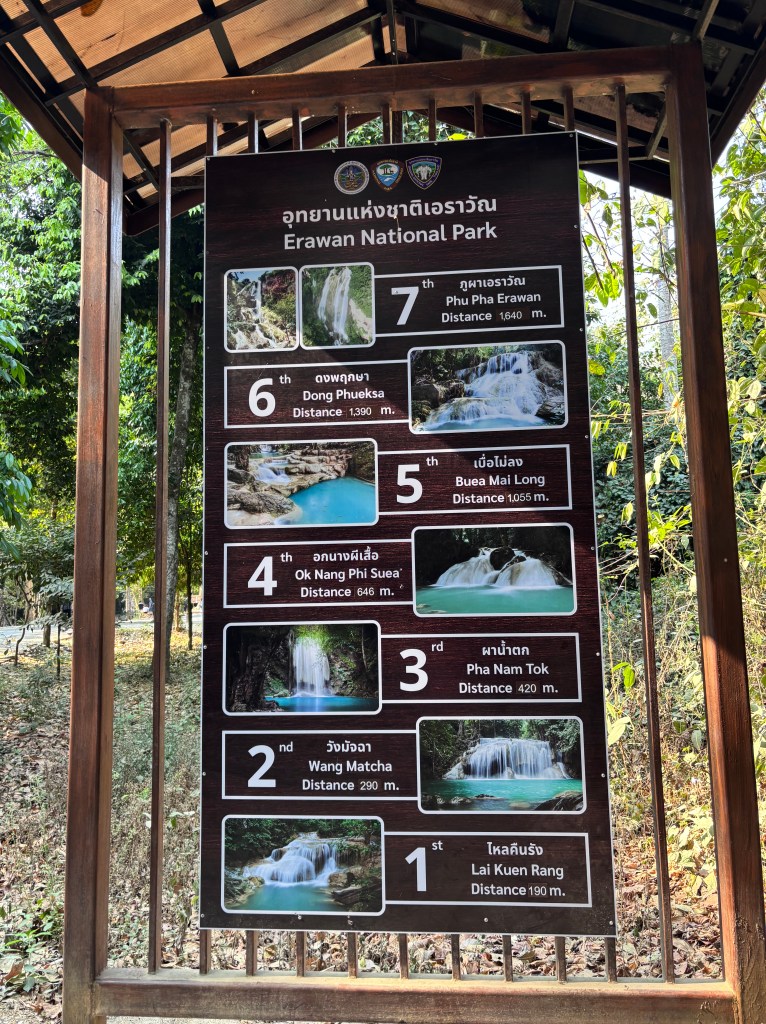
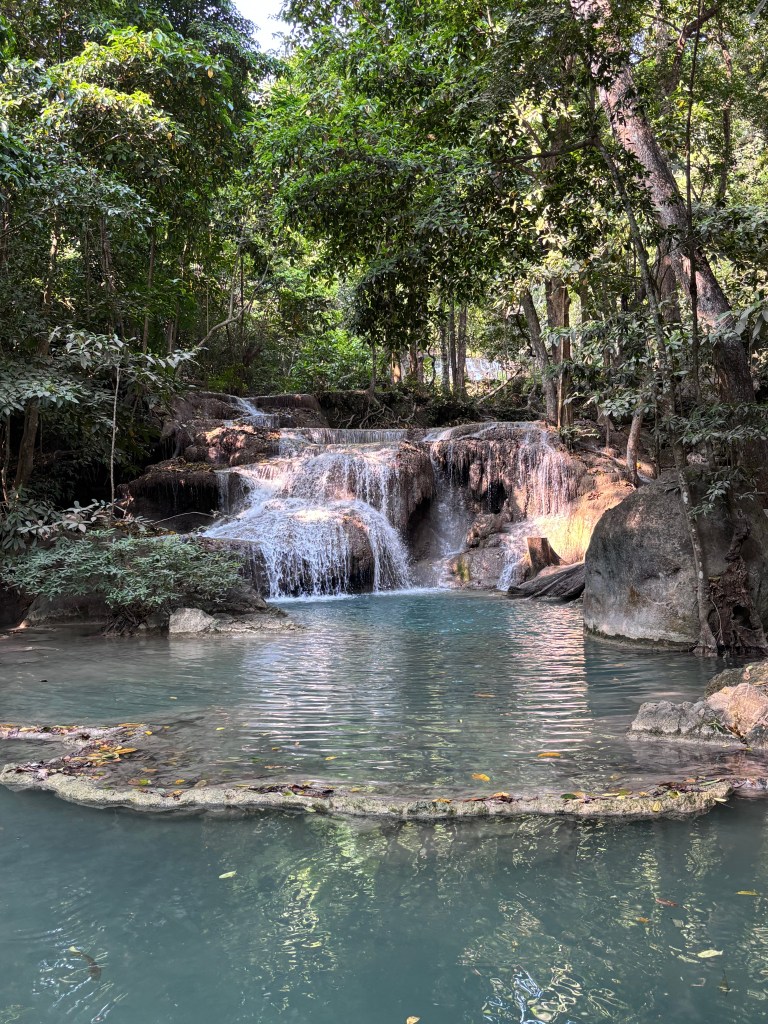
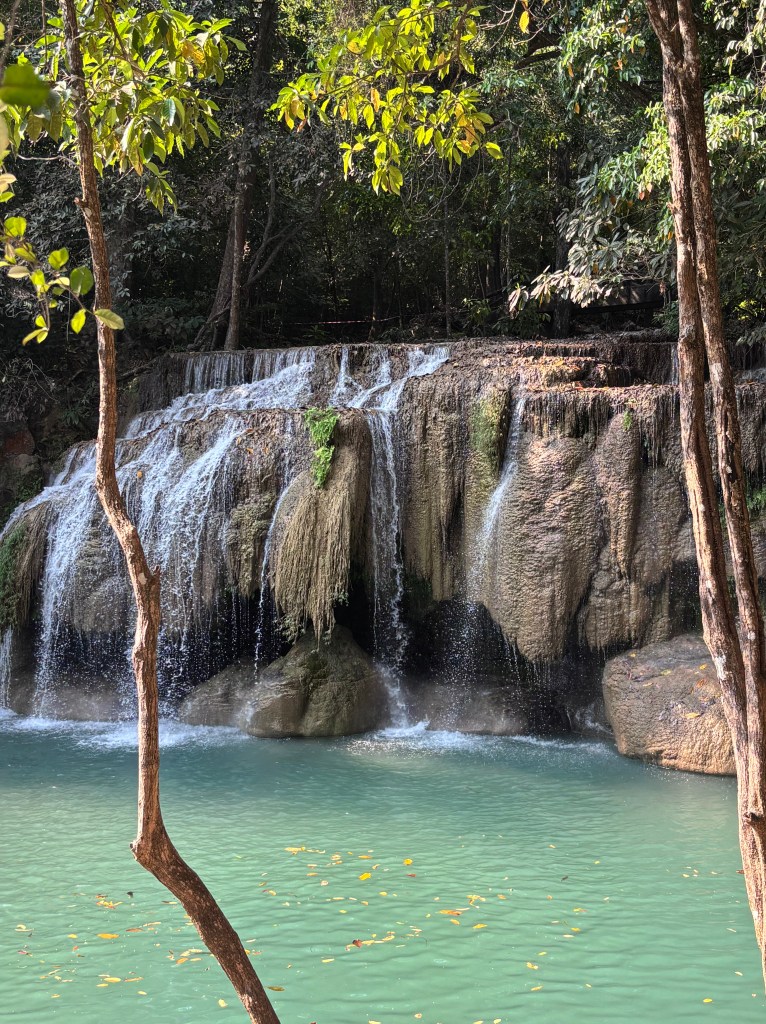
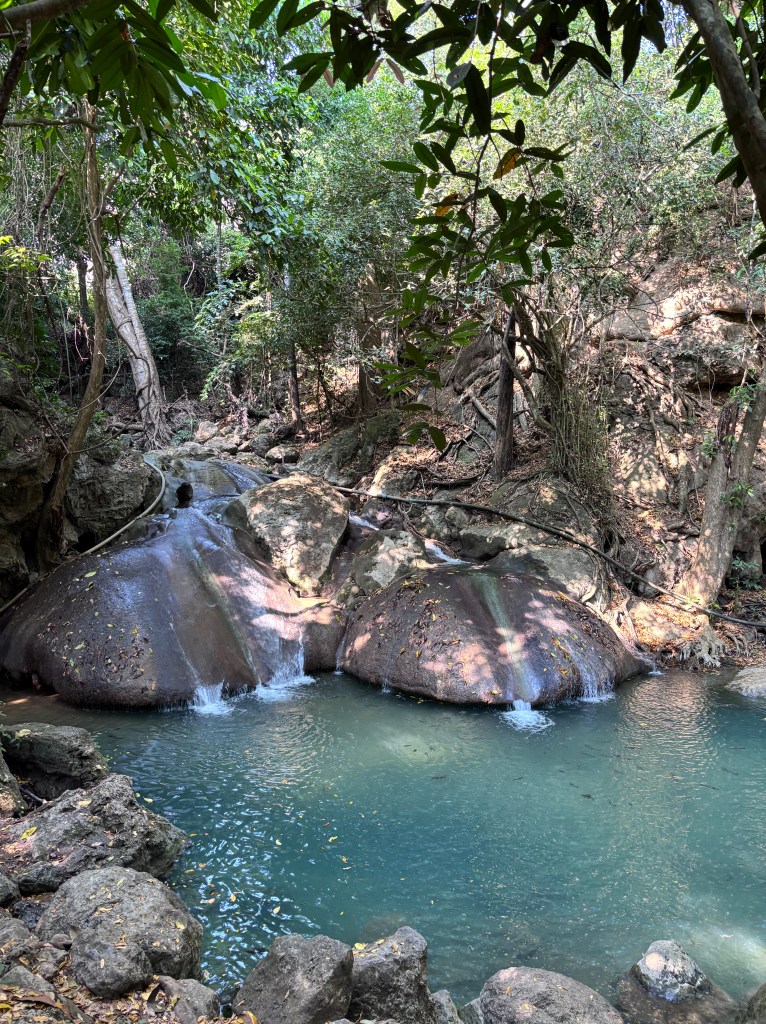
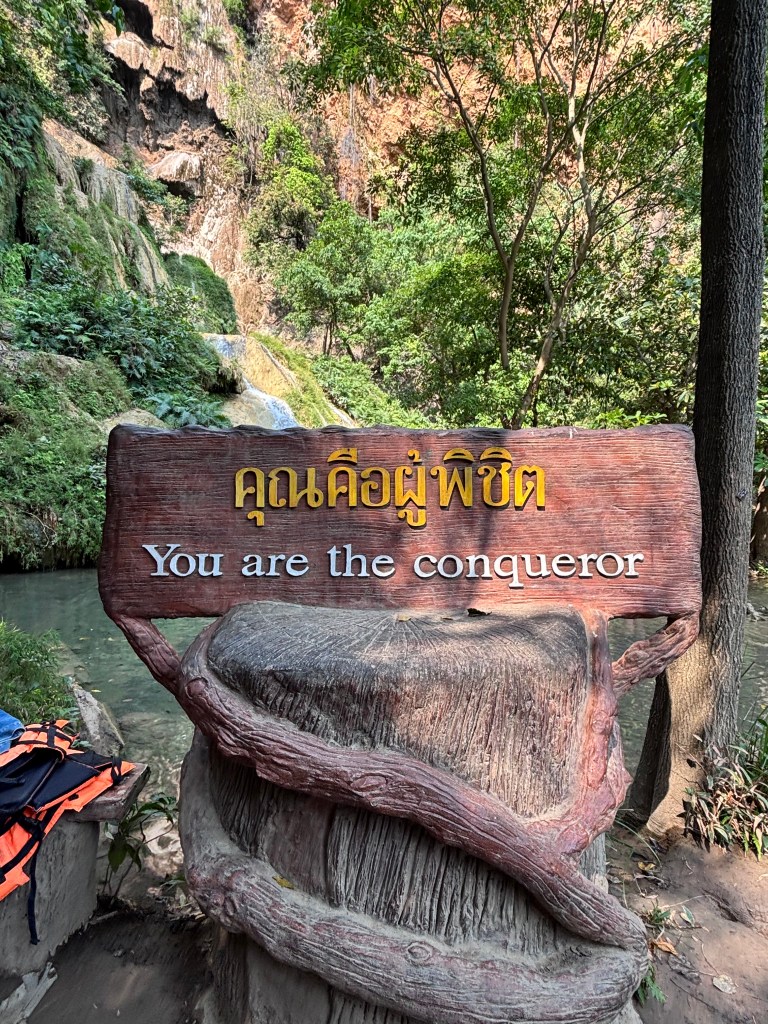
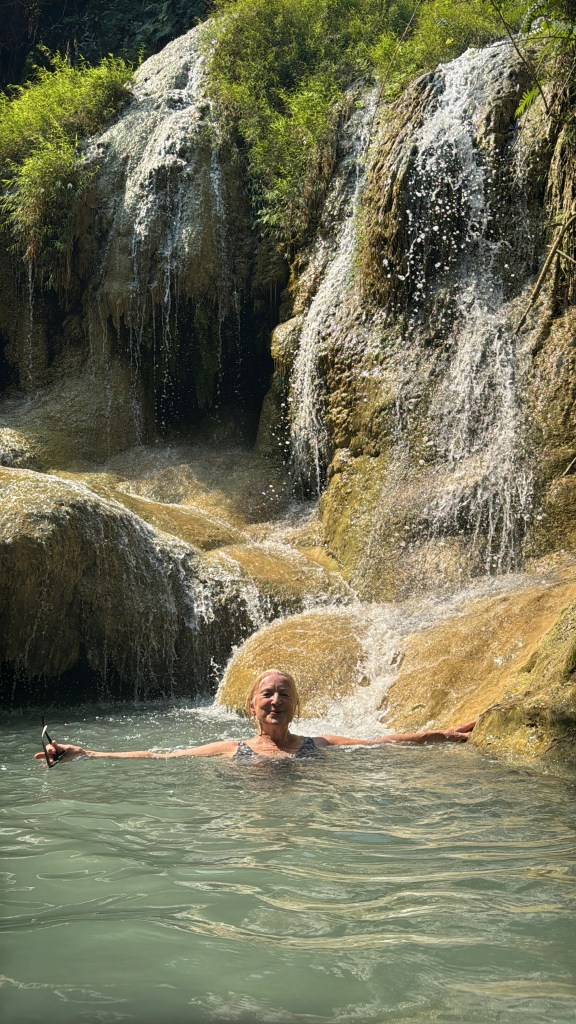
Thailand has so many national parks that choosing which to visit is hard. The Erawan Waterfalls are accessible from Bangkok – and beautiful even when there is less water than usual (it is still dry season). The hike up to the 7th level is challenging but not impossible. A well deserved swim helps to ease the heated and tired muscles.
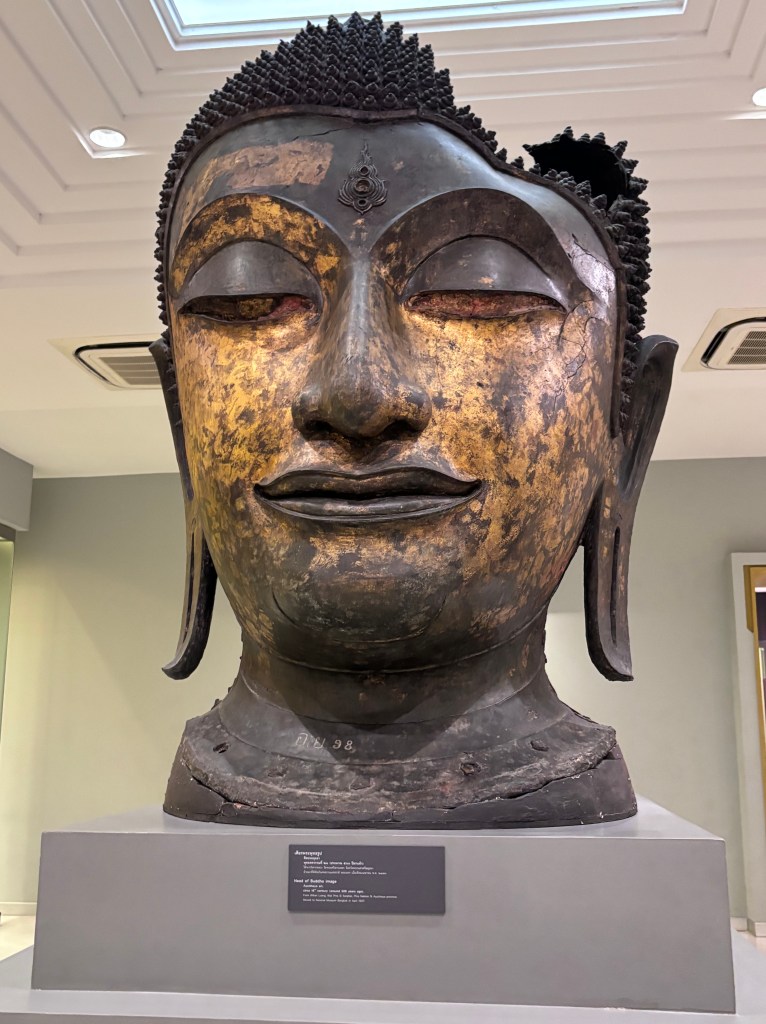
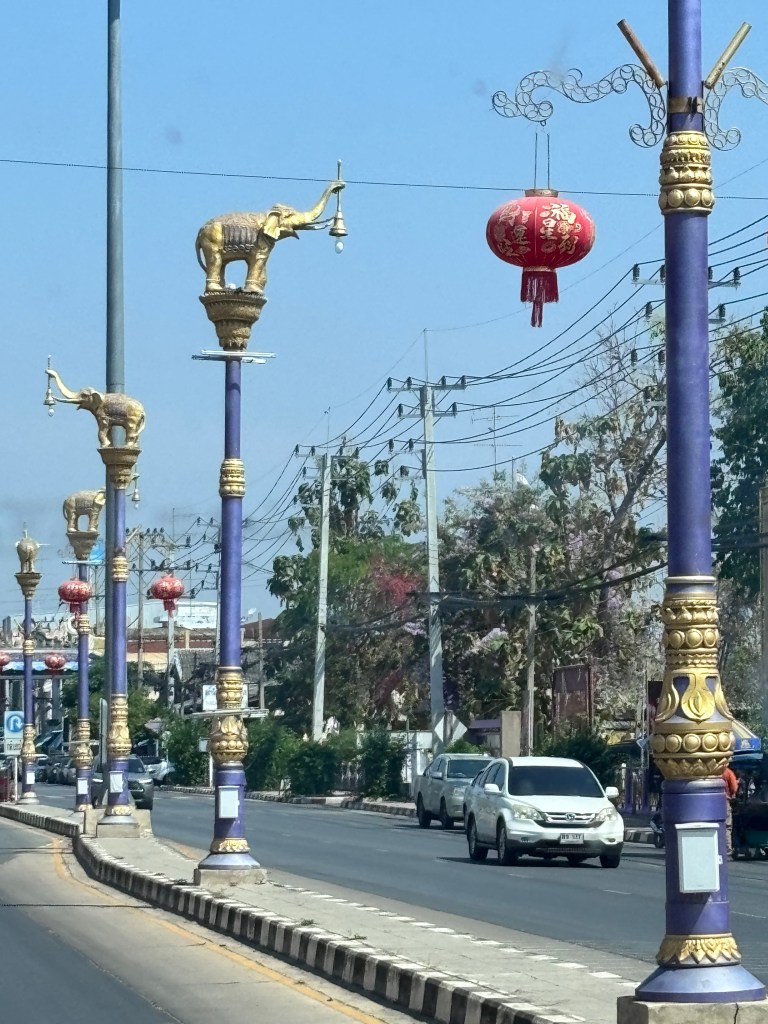
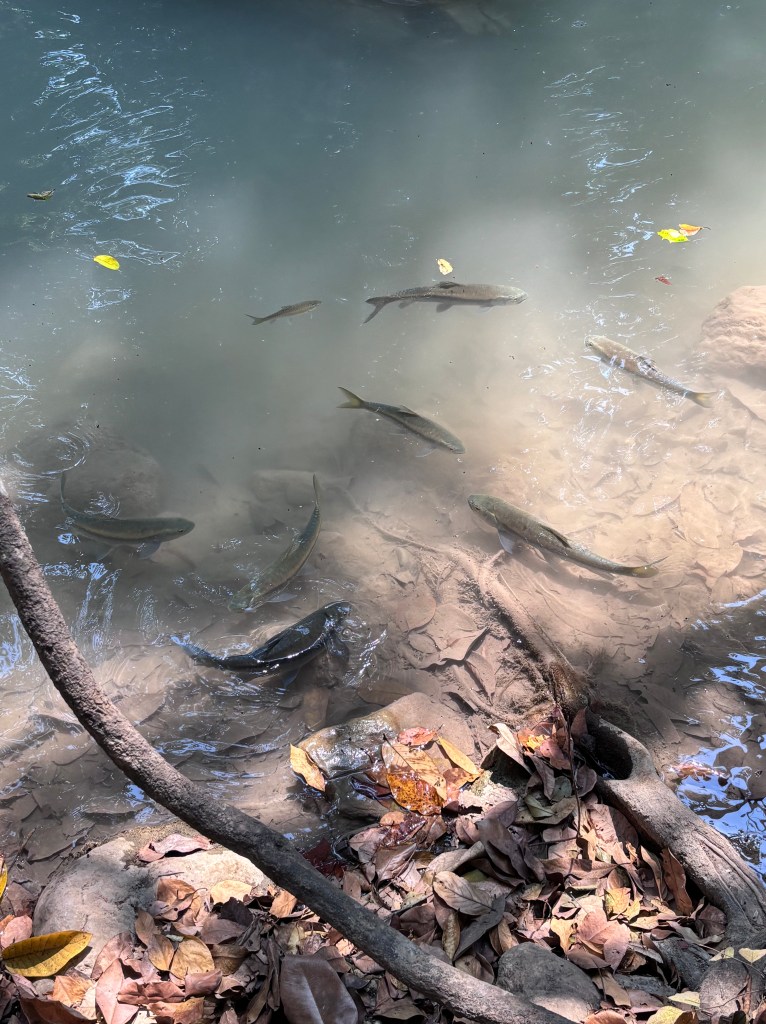
Buddha’s head in the National MuseumOn the way to Erawan – street lights look goodWaterfall 3Very popular at weekends – better to visit in the weekThe carp are everywhere – and the small ones provide a bit of a foot spa treatment The 7 FallsCoolAaaah!Named “The Breasts” and you can slide down themThat is – made it to number 7!Wonderful to cool down in the waterfall 7 waters
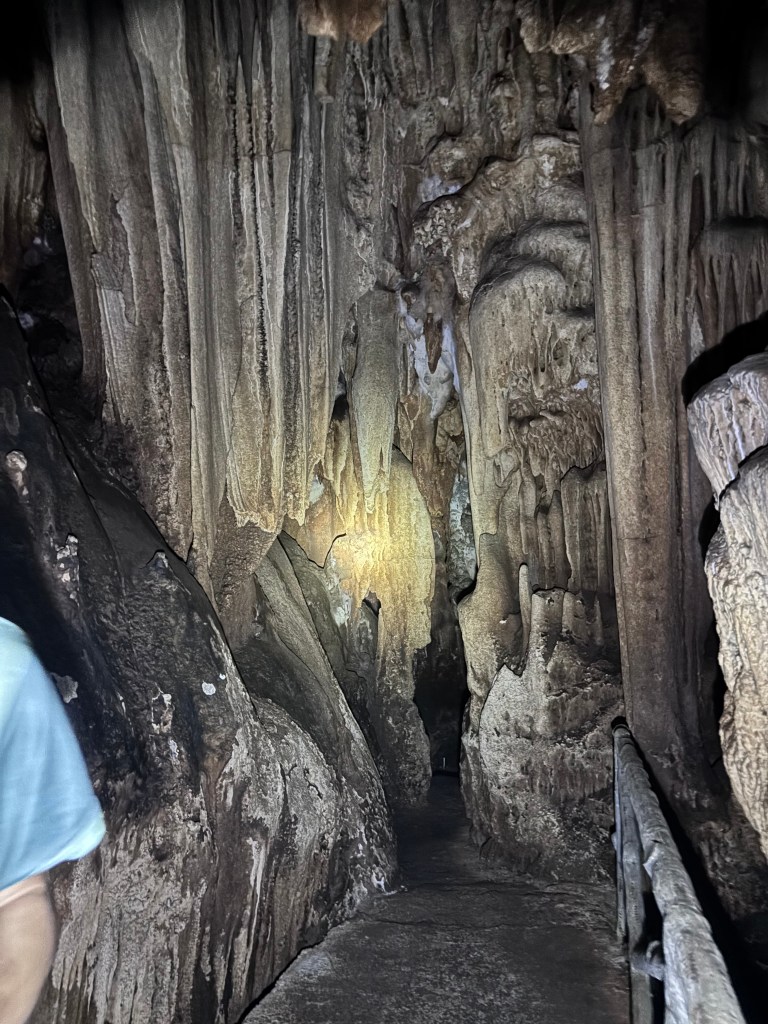
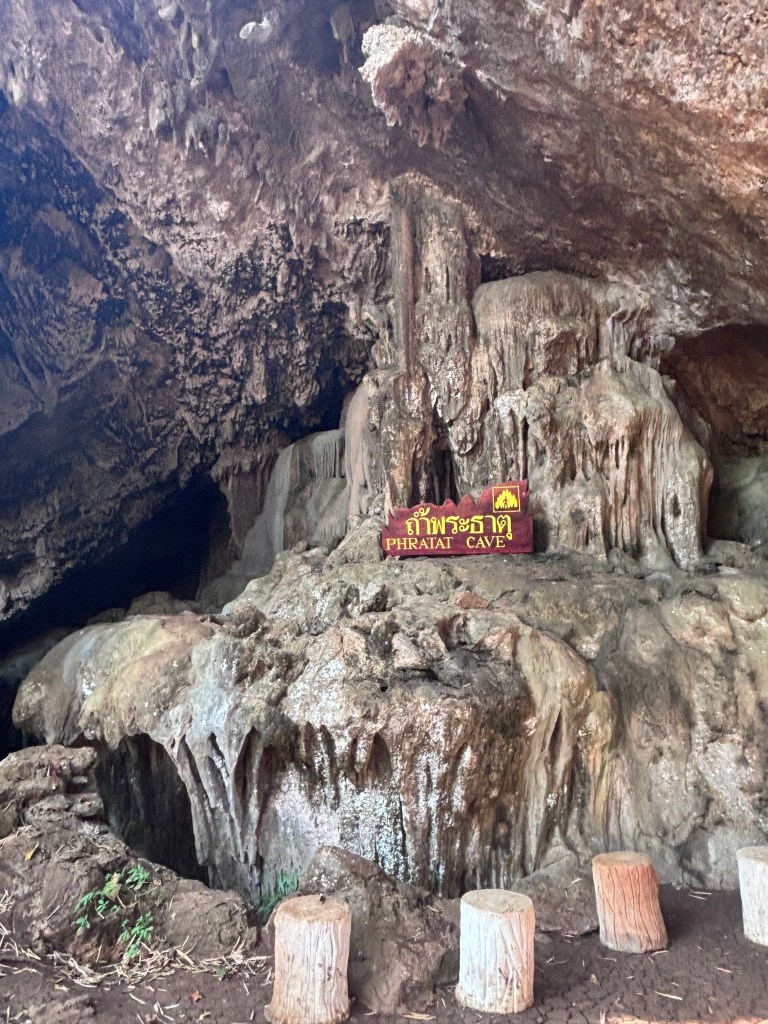
There is a cave nearby, Tam Phra That (about 12K uphill from the Falls, so own transport needed). I did it on two separate days, having hired a moped at the hotel (350 baht/day, exorbitant!). My moped riding skills are still forming, but there is little traffic here and it is manageable. Exhilarating too, when all goes well. :)) And the petrol I used for the two days was all of 40 Baht (£1)
The entrance fee to the Falls (and the cave) is 60 Baht for the locals and 300 Baht for foreigners. The same ticket is valid for both places if done on the same day…
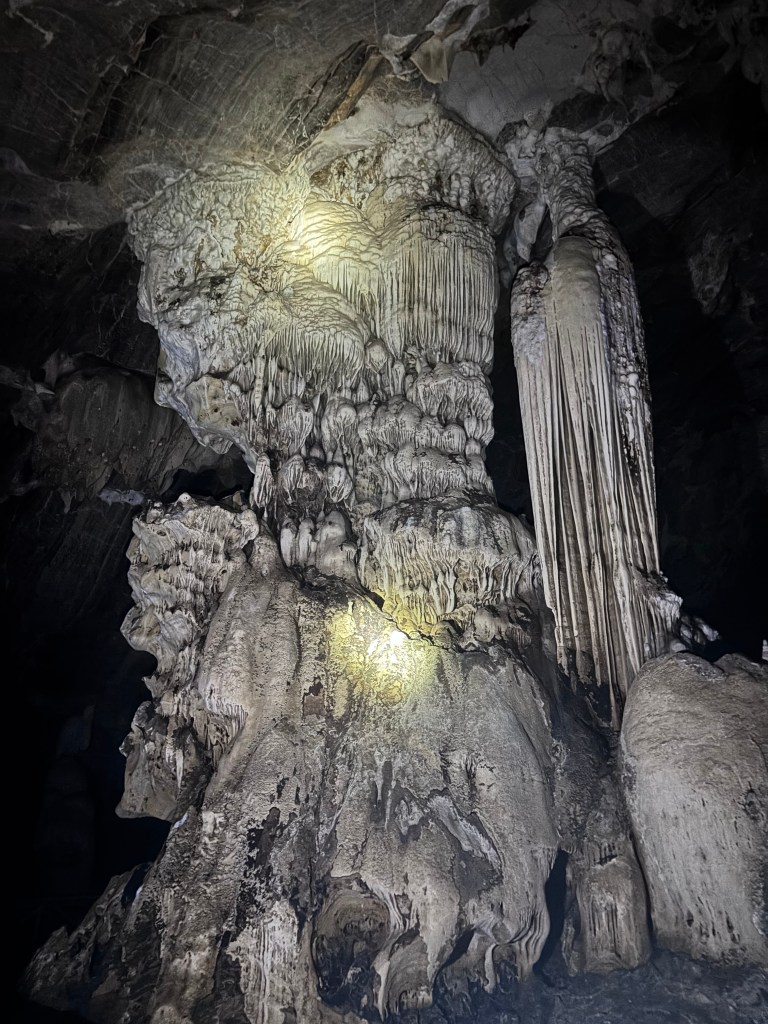
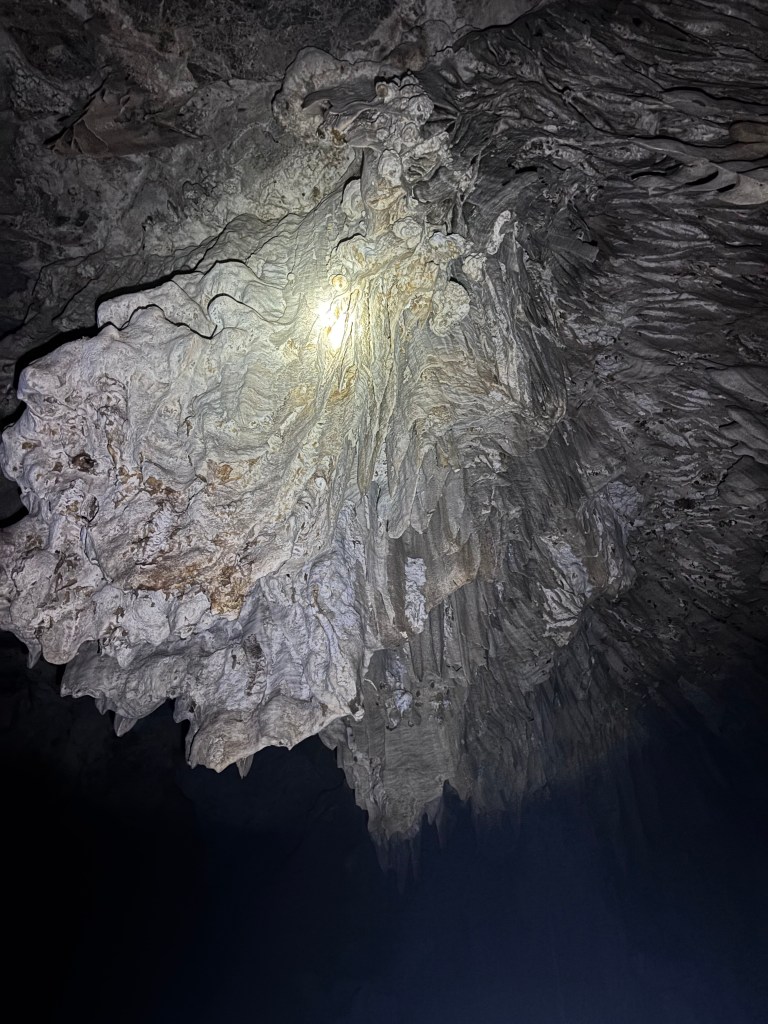
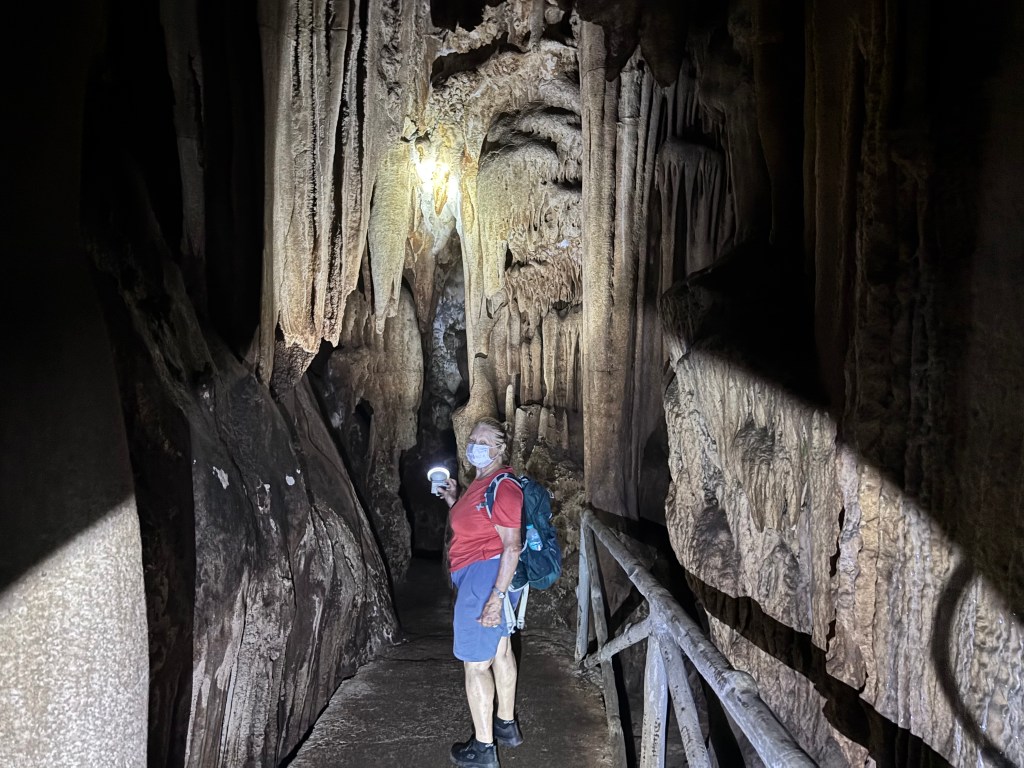
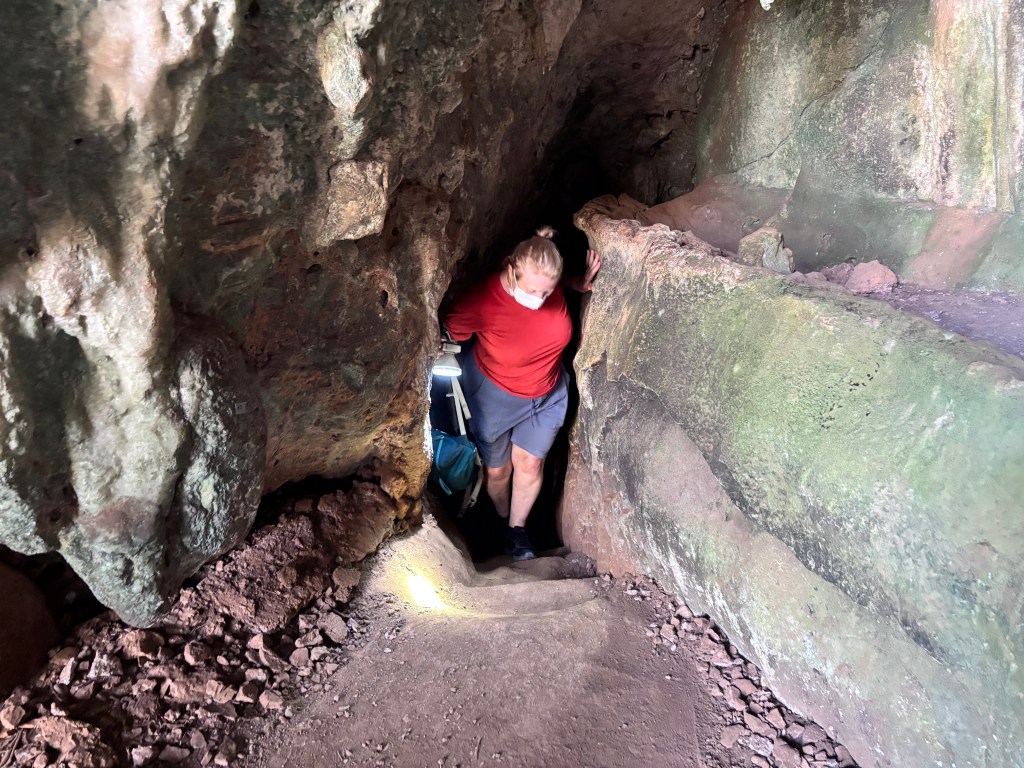
I was the only visitor there on a Monday morning. The cave is 748m uphill – most of it steps (600+). My guide spoke little (0!), but he had two torches, a first aid kit and extra water. I had to put on a face mask for my protection as there are bats in the cave. We crawled in through a very narrow entrance. It was eery.
I flew into Ushuaia from Buenos Aires, with a vague idea of doing a cruise in the Antarctic, “as I was already in the area”. Naively, I thought I would walk up the plank onto whatever ship was in the harbour, have a chat with a purser and get a berth… Not so – for security reasons, only ticketed or authorised people can access the port. So I took advice from the Lonely Planet and visited a couple of agencies in town.
The USHUAIA is one of the smallest ships that cross the Drake’s Passage; it has room for 90 passengers (and 40 crew). The Freestyle Agency got me a twin cabin for $6680 for a 10 day cruise and lent me the ski pants, jacket and gloves free of charge, as well as a gifted me a beanie and a muffler. I learnt later from other passengers that the Wayfinders agency gave a few more freebies, such as a book on birds, some postcards, a notebook – and a free haircut in the salon next door.
The Ushuaia in the port of UshuaiaPenguins on Dinke IslandFirst outing on the ZodiacThe whale factory shipwreckOn the BridgeNot all icebergs are the sameHumpbacks
The floating hotels are much more expensive (especially if you have to pay the single supplement) and as they carry more passengers, their offers of daily outings for everyone are fewer; the Ushuaia provided 2 trips a day for all (81 of us), once we were past the heaving Drake’s Passage. It takes 48 hours to get through the Passage; on the way to Antarctica we had 5m waves and 40 knot winds. On the way back, it was 7-8m waves and 65 knot winds. Lots of rocking and rolling, pitching and tossing, all at the same time. We were like a pancake mixture being swirled in a pan. The seasickness pills were available on the bar to take like sweets (one every 12 hours)… Keeping your balance is a challenge and you have to time getting out of the berth, going to the loo or opening the doors to coincide with the movements of the bucking ship. Still, most of us had our meals in the dining room – and we were all full of admiration for the staff who manage to keep their verticality in all conditions. I would not like to be chopping fruit and vegetables or baking when every surface is leaning; or pouring coffee at 45 degrees. Nevertheless, we had freshly baked rolls every day, chopped fruit; three course meals… (That also means putting weight on, as there isn’t that much exercise. We lounged a lot, listened to lectures, watched films (The BBC ‘Frozen Planet’ is a staple, as is ‘Shackleton’), went out in Zodiacs, went on the Bridge for a great view (theUshuaia has an open bridge policy), went on short trips ashore.
The Gento penguinsRed is from eating krill, green is from fish, white is when there’s nothing leftThe colours above and below water varyWhen the ship was NOT rolling Breathtaking viewsLeopard sealFur seals
The cold is penetrating. The temperature is well below freezing – we are the penultimate cruise, the winter is coming to Antarctica. Nevertheless, when Martin, the expedition leader, said that on the first day of autumn (or spring), 21/03, we could do “the Polar Plunge” on Brown Station, quite a few of us decided to have a go. Total madness – the water was 0 degrees, it was snowing… My legs were frozen halfway to my knees, so I didn’t feel the stones when skipping into the Antarctic, or when I shot out of the water in 5 seconds flat. We were bundled off as quickly as possible onto the Zodiac and the ship. A hot shower was never so welcome (though I had to defrost my feet in cool water first).
The polar plunge!My fellow “plungers” heading back to hot showersStrange forms everywhereThe crew were fantastic
The two kinds of penguins that stick around, the Gentoo and the Chinstrap, were great to see. Most penguins had left to feed until the next breeding season. Still, the fur seals, the leopard seal and the elephant seal also made appearances. And mot impressive, the humpback whales. The albatross, the Antarctic cormorant and the skua are usually around, especially in high winds.
Deception IslandElephant sealDeception Island So graceful, floating alongside shipThe Antarctic albatross has a wingspan of 3m!Back in the port of Ushuaia
Whaling has left many traces in Antartica in its long history, from shipwrecks of whalers and factory ships to various buildings on the islands. Whale oil was used for lighting, lubrication, in cosmetics, for making explosives, soap… The 1959 Atlantic Treaty recognised is as a unique place that should not be pillaged or used for nuclear testing or radioactive waste dumping. It was the beginning of keeping Antarctica as a neutral, uninhabited territory, to be visited carefully and used for scientific research. There are now 54 countries that have signed the treaty.
It is an otherworldly place, beautiful and eery, and surprisingly full of life.
Some years back I met a couple of Spanish travellers who ‘have been everywhere’; when I asked if there was one place they would want to revisit, they both replied “Iguazu”.
The Falls are a 1/2 hour bus ride away from the Brazilian town of Foz do Iguaçu (local buses at local prices, leaving every 20′). The Bird Sanctuary, a few hundred meters before the entrance to the (Brazilian side) Falls is very much worth a visit – the aviaries are some 8m high and a lot of conservation and species protection work goes on here.
The Harpy Eagle – fewer than 5 pairs left in the wildAn owl…
And the Falls. Despite the crowds (I’d hit the holiday season in Brazil, and the weekend to boot, so everywhere was heaving) and the heat (34-36 degrees), this was one place where “awesome, incredible, wonderful, breathtaking, superb” all fit.
There are various walks and hikes one can do around the river and the Falls – I did the Trilha Ytepopo (on the Brazilian side) – 5K through the woods (am reluctant to call it the “jungle” though you are asked to register your walk at the beginning and one of the employees warned me there may be jaguars…). An easy walk (bar the heat) all along the Iguazu river, with monkeys moving in the canopy, butterflies flitting and birds calling (no jaguars!).
The coatì are running around unconcerned. A member of the racoon family, and quite photogenic. As are the tapirs, birds and butterflies.
The coatìCrowds on the Garganta del Diablo viewing bridgeIt stayed for a bit, probingThe tapirs cooling in the IguazuMore coatis
The 07:15 bus from Foz do Iguaçu, Brazil, to Puerto Iguazu, Argentina, was quite full – a lot of day trippers, going to see the Falls on the Argentine side. The border crossing/ passport control was busy and the Brazilian bus driver does not wait – he gave us a voucher for the next bus (by the same company only). I stayed the night in Puerto Iguazu as did not wish to rush. My hotel (Lilian) was only 2 blocks from the bus terminal – very handy. I’d read about the Casa de Botella and went to see it (an Uber motorbike is a lot less scary here than in Buenos Aires or Rio). Sr Alfredo Santa Cruz first built a playhouse for his daughter from discarded plastic bottles and other recyclable materials in 2000 (to buy one was prohibitively expensive). This was the beginning of his ecological journey (he calls himself “el soldado ecologico”). The materials are all recyclables – the wood is from pallets; the ‘string’ to tie things with is plastic, using a little home made Sten knife tool to cut the bottles to a precise narrow width, like peeling an apple; cans are used to make toys; ring pulls to make fly curtains, rubber tyres to make chairs; tetrapack to insulate roofs…
Quite comfortableFreddy, Alfredo Santa Cruz’s sonThe plastic lasts a 100 years… and the bed is quite firm but comfortableToy kitchen
The copyright for the construction of such dwellings is free to all who wish to use it and there are houses in South Africa, Costa Rica, Colombia and others that have taken it up.
The night bus from Puerto Iguazu to Buenos Aires takes 17 hours (or more). I booked a ‘coche cama’ – the equivalent of business class on the plane. And getting on the bus felt like going left when you get on the plane! Comfortable, almost flat seat, a blanket and a few snacks provided. The cost was 84000 Ar pesos (cash) or $84 (cash) or 119000 pesos if paying by card – 30% more. Argentina is economically in a very bad way and everyone I spoke to complained – the recession has hit hard. For me a as a tourist, it is just as bad (I did not bring enough dollars to be able to exchange them at the “blue” rate, i.e., the ‘illegal’ exchange rate that is 20% above the official bank rate). Getting the cash out of the cashpoint is easy, BUT (and it is a big but) the banks charge 13400 Ar pesos for EVERY withdrawal, however small, and often do not allow more than Ar pesos 30000 (less than $30) to be withdrawn. Purchasing things with a credit card always carries a ‘penalty’ – e.g. the shuttle to the Tierra del Fuego national park is 28000 cash and 30000 if paid by cc. But BA has charm and good things aplenty.
Plaza Dorrego tanguerosThe pink drawing room in the Congress, as designed by Evita PeronSan Telmo street statueThe House of CongressMafalda – a wise cartoon character famous in S.A.Sunday San Telmo marketMatė drinking is everywhereA Paris feel to BAThe (in)famous trio in El Caminito: Maradona, Evita, Peron
I flew into Ushuaia on the 10th of March, late morning, intending to seek a last minute berth on one of the Antarctica cruise ships – they all stop here on the way south. The assumption I could go aboard a cruiser and speak to the purser was quickly found to be naïve and false: all bookings are done online; the ship’s owners decide on the prices of the last minute berths; for security reasons no-one can go aboard a ship unless on business or with a ticket.
The Lonely Planet recommended Freestyle Adventures agency in Ushuaia (English is spoken by several members of staff). They were indeed helpful and found me a berth on the MS Ushuaia, sailing out on the 17th of March on a 10 day cruise – Classic Antarctica. They also lend ski pants, parkas and gloves free of charge (and gift you the hat and the muffler).
There are a number of trips one can do from Ushuaia. I filled my days with them – a boat trip to the ‘lighthouse at the end of the world’ (it used to be, and the name’s stuck, though there is a lighthouse further south now), and a ‘pingüinera’ (penguin breeding area); a shuttle to Lago Esmeralda trail; another to the Tierra del Fuego National Park with various trails; a hike up the El Martial glacier above the town… ( One small gripe: the restaurants in Ushuaia will not give you tap water as it’s “not drinkable”; when you go up to El Martial glacier, the source of the town’s water, you are told that the water is pure and drinkable… 🙂
There are always cruise ships in the Ushuaia harbourThe St Christopher wreck – a memorial to all the shipwrecks in the areaTowards the Beagle ChannelThe Eclaireur – the lighthouse at the end of the worldHumpbacksEl Martial glacierJust under the glacier with Ushuaia behindWalkway over the bog towards Laguna EsmeraldaTierra del Fuego National Park – the view of Lago Roca from half way up Cerro GuanacoA chimango caracara falcon (says Tony, who knows)
Rio welcomed me with clear skies, 34 degrees, and traffic that looks like a permanent rush hour.
Going up to the SugarloafA very French looking theatreThe Carioca clock -a good meeting point downtownThe oldest Coffee house in Rio – a proper tourist meccaEscadaria Steps – full of messages in tiles. Take your pick of the Mona LisaMusic is everywhereThe Museum of tomorrow – terrific building Inside the museum of tomorrow Sunset at IpanemaJC above the crowds
Everything was preparing for the carnival. The tickets are expensive and the Cariocas take advantage of the free technical rehearsals (all the moves, but no glitter, elaborate costumes or floats) that start in January and carry on until a few days before the real thing starts. I managed to catch the very last day of the rehearsals, Sunday, as well as the first day of the real carnival on Ash Wednesday. Itala, who I met at the Technical, explained that each samba school enacts a story (with a religious content) and each group of dancers and players within tells a part of the story. The procession takes between 45′ and 1 hour to traverse the Sambodromo (which, for the rest of the year, is a normal street full of traffic). The one advice I was given about joining in the fun was “mas brillo, menos ropa!”(more glitter, less clothes).
It was good to cool down in the Atlantic; the beaches are full all the time and all life is here: food and goods hawkers, caipirinha makers, fun seekers, hairdressing appointments…
Beach wraps for saleShort back and sidesMassage, anyone?Going blond
When going on a “free” (pay what you think it’s worth, but it is suggested you pay at least 100 reales) walking tour of Rio, learnt I could use public transport for free as I was over 65 – it works for everyone, as long as you show a document proving your age. On the buses, the driver would wave my driving license at a camera and then ask me to get on through the exit door to avoid the turnstile. Uber is inexpensive too, especially the motorbikes, which weave through the traffic at a fair (and very scary) clip…
Trip to the favelaFavela electricians must be specialFavelas are on steep hills – motors take you up
I wanted to travel down to Iguazu Falls by coach; to buy a ticket online, the Brazilian websites ask for the CPF (cepeefe – the tax number). They show the option for a passport number but then ignore that you may be foreign and not have a Cpf. It was only after I bought the flight (no issues with Cpf there) that I found out the ways around it: try 11 zeros, it sometimes works; go to the post office and buy a tax number (the legal option); ask Google to generate a fake CPF number (it does, and is useable).
A party round the corner from the hotelThe Petrobras (oil co) HQ – voted one of the ugliest buildings in RioThe cannonball tree (Rio’s tree) – beautiful flowers, deadly fruit – it is very heavy, like a bowling ball.
Leticia is where a wedge of Colombia pokes at the mighty Amazon, a shaft between Peru and Brazil – a tripartite border. Having consulted various sources (Rome2Rio, Lonely Planet, a few others), thought it a good idea to catch a slowish boat (4 days) from Leticia to Manaus. The flight from Bogota at 6 am meant being up at 03:30. The sunrise over the clouds was worth it.
Leticia – boat trip to the monkey sanctuary (this is the guide’s son, come for the ride)Fresh fish and chicken at the marketMy lunch being made
Should someone wish to do it, here are a few things you need to know: everyone (local and visitors) who doesn’t just transit Leticia (to go to Brazil or Peru) must pay a 50000 Col peso tourist tax. You also need a stamp in the passport from the Colombian immigration authorities, but it can only be acquired 24 hours or less before leaving Colombia… As I was staying in Leticia for 2 night (the boat timetable is a bit erratic) the stamp required another trip to the airport immigration office. There is no physical border between Colombia and Brazil at this point, so one needs to take the exit stamp to the Brazilian authorities in Tabatinga, who acknowledge that you are entering Brazil by stamping your passport…which is needed to buy the ticket for the boat. As this was going on, took a boat trip to a monkey sanctuary…
Leticia and Tabatinga flow seamlessly one into the other and the only visible difference is the shop signs – changing from Spanish to Portuguese (and vv). The no man’s land is abstract, but the bureaucracy is very real (“tramites” – paperwork – is the dreaded word in Spanish). The boat timings are vague. The boat I took was scheduled at noon; officially delayed till 1500; we actually sailed at 1700. I had my hammock, and my plate, cup and spoon. (The four days’ trip, with 3 meals a day, was c £40; for that I could wash my utensils.)
Waiting for the boatThe hammocks are upLoading and unloading is all done manually
There was an added bit of excitement on day 3: we were stopped by the river police at 4:30 and made to dock next to their boat. Everyone had to get off while they searched the boat – turns out they’d had a tip off that drugs were on board. The bush telephone said later that one of the boat cleaners had stowed the drugs in the bilge of the boat. Several arrests were made. Breakfast was very late… (complaints were made when the crew went to eat first, disregarding the queue).
4:30 am. Everyone off the boatSniffer dog was usedQueueing for breakfast (though the little one couldn’t wait)
We arrived in Manaus on Sunday morning at 5, 12 hours later than scheduled. The town, over 2 million people, is now an industrial hub for a number of industries – motorbikes, electronics – a far cry from the rubber baron times which started it. The opera house still looks grand and thoroughly European.
My jungle trip (booked through the Amazon Antonio Jungle Tour) started early the next day, going first by car, then by boat: a few days on the Urubu (Vulture) river (acidic, clear brown water) then two days on the Amazon (alkaline, muddy). The acidic environment means there are fewer mosquitoes and other insects, and therefore fewer other animals up the chain. Maybe we’ve been spoilt with the wonderful Attenborough documentaries; it definitely was not easy to spot wildlife, even with the expert help of the guide.
Cooling downMangrove woodsAntonio Amazon jungle lodgesThe Urubu river is sometimes like glass
A couple of hours’ trek through the rainforest and a night in the jungle were the highlight. We were only 4 – Alvaro (the guide), Sabine and Chris from Vienna and I. We were full of admiration for Alvaro’s ability to get the fire going from (what looked like) very wet wood. There was a little caiman in the stream we used for cooking and washing…. Of course, it rained torrentially in the night.
Our camp in the rainforest – we were grateful for the tarpaulin!Chris, Sabine and AlvaroGetting the wood for the fireChicken cooking!There was rice with vegetables, fruit…Only about 2 ftDinner by candlelightA wild hen got spooked – they don’t return to sit on the eggs (Alvaro took them to his mum to hatch)Alvaro’s father – they live locallyLeaf cutting antsAlvaro started the fire and made coffee Bananas, pineapple, papaya – breakfast
There were more animals on the Amazon part of the trip – Jose, our guide, certainly knew where to find them. Sloths, monkeys, birds… Francesco, my new companion, and I were thoroughly impressed. We even managed to catch a piranha (thrown back as too tiddly, but hey!)
A slothHoatzin birdsHanging nestsFrancesco, and Jose the guide steering Our hostess (and cook) in the indigenous villageGleaming utensils in the kitchenThe chief of the village Lovely poseMy piranha – in close up
The planning for this South America trip has been very much of the same ilk as the previous one up the Silk Road – scant. A flight to Bogotá, (a known entity – or so I thought) and a fair idea of the places I’d like to see in South America in the 3 months I have.
Bogota has grown a bit in the 35 years since we lived here. The buses look modern, unlike the ones that seemed to have been held together by tarpaulin and string. Motorbike riders wear helmets as protective devices and not as a fashion accessory. But traffic is heavy and one still wonders why there are not more accidents – the rule, if you don’t look you don’t see, still applies when joining a lane.
I have been lucky that a friend has welcomed me in her home in Chapinero, a nice residential area in the north of the city. All the things one wants to see are downtown – the streets and squares of the old town, the museums, but easily reached – buses are frequent (one needs to buy a card – no cash) and taxis cheap.
La CANDELARIA streetThe church of San Francisco, the oldest in BtáThe chess players near the Gold museumRecycling Bogota style
The gold museum is stunning. Well displayed by regions and with sufficient information in Spanish and English. The intricacy, beauty and care invested in each piece brings home the difference in how the indigenous peoples viewed the value of gold – as offerings to gods, and what the Spanish did with it – melting it into money.
The conch inside the gold cover is crumbling, but the gold remainsRemember seeing this on display in the British Museum.
The Cerro Monserrate is 1968 ft (600m) above Bogota (which is at 8666 ft (2600m). The church at the top is a place of pilgrimage and many will walk the 1500 uneven, very steep steps up as penitents and supplicants (and nowadays, as an exercise). The bronze sculptures of the Stations of the Cross are displayed surrounded by greenery. The views over Bogota (on a clear day) are superb and far reaching. I took the funicular up, but did walk down – hard enough, with the addition of the stones being slippery, polished from many feet. It took me 40 minutes to get down – it can take 2 hours to get up – and my legs were jelly.
A few minutes in the funicularVeronica wipes J’s faceThe view!Shops and stands of all kinds line the steps The toilet along the steps
On Sunday I took a bus to Zipaquira, a town 50 K north of Bogotá, known for its Salt Cathedral. The Muisca people mined the salt here long before the Spanish arrived. The original Salt Cathedral, which we visited on school trips in the late 1980’s, closed in 1995. This new one is a whole “experience”, a major tourist attraction. As it was Sunday, it was very busy. The queues were well regulated and a lot of young people (they looked like high-school children) were there to answer questions and point the way – once you got near. (No signs from the main road towards the Cathedral – I asked a policewoman.)
Follow the white lineThe monument to minersA snazzy tunnel leading down to the Stations of the Cross and the main chambersSalt tunnelsThe sculptures of the Calvary are abstract and garishly litThis Michelangelo copy is in the well shaped space in the main naveThe nave is enormous – 18m high Way outZipaquira streetThe main square, Zipaquira
It was lovely to spend time in Bogotá, but it was also time to move on. The flight to Leticia is under two hours, but it will all be new to me.
When Mike first suggested it, back in the summer of 2023, the idea of doing the Coast to Coast (C2C) walk sounded good. We (Mike, Richard, Jack the dog and I) had done the St Cuthbert’s walk in July ’23 – a week’s walking from Melrose to Lindisfarne) – and hadn’t fallen out.
The C2C walk was devised in 1971 by Alfred Wainwright, of the Lake District fame, as ‘an encouragement and inspiration’ to all walking enthusiasts to create (“with the aid of maps”) their own long distance trails. The length of a daily trek is dictated by available accommodation along the route (unless you camp, and I’d rather not).
Mike organised the logistics over the months while I was traipsing around the ‘Stans’ of Central Asia: route, maps, train tickets, accommodation that will accept Jack… We agreed on the use of a Sherpa company to carry some of the weight and lighten our backpacks. The charge of £15/per person/per bag /per day was prohibitive and we compromised: each of us put in a third of the 18 kilo allowance, thus lightening the daily carrying load.
The Seacote Hotel in St Bees is busy from May to October – it is the base for the C2C-ers and bird watchers. The beach is shingle, and above it is St Bees Head, the start of the C2C.
We took a small pebble from the beach at St Bees (as do all C2C walkers), and each of us carried it for a day, passing it to the next person at breakfast. The idea is to then throw it into the North Sea at Robin Hood’s Bay, thus linking the Irish and the North Seas (and, as someone said, confusing any future geologists). I couldn’t throw it away – it is pretty, and a wonderful memento. I did deposit it on the wet sand at Robin Hood’s Bay for a moment; it is now on my dresser :))
The first day’s walk: St Bees Head to Ennerdale Bridge, 17 miles. It started well, even if the path did take us north-west (not east!) to start with, up from the beach to high on the cliffs, with views of St Bees behind, the sound of the sea below and the cries of guillemots, kittiwakes, gulls, above. Soon after the St Bees lighthouse (the light of which is visible at sea for 25 miles) we turned south-east, and then properly eastwards to Dent, the hill that “offers an excellent viewpoint” of the Cumberland plain and the Isle ofMan… The day was intermittently wet, the path overgrown and all the greenery dripping with rainwater. We did manage to look up occasionally: seeing the Fells in the distance is always a wonderful sight. The hawthorn was still in full bloom here, bridal white and smelling sweet.
Despite a couple of guide books and the downloaded OS maps, the path is not always easy or obvious to follow. Signposting is of the ‘feast or famine’ variety: too many or none. We made mistakes, but we got to where we needed to be in the end.
Crossing the gills time and again
Ennerdale Water is beautiful, long, peaceful, surrounded by Fells and Crags, a Lakeland joy. We stayed at the Wild Wool Barn (basic but better than camping) on the north shore, which made our next day’s tranche to Rosthwaite easier – there is a proper road track, rather then a rocky, slippery-in-the-rain path that is on the south side. We stopped for lunch (a protein bar, some nuts and fruit, a cup of tea) at the Black Sail, England’s oldest and remotest hostel. It is a former shepherd’s bothy, that, like some stone age Tardis, can sleep and feed 16 people.
Black Sail
The five days of the C2C spent walking in the Lake District were wonderful, tough, exhilarating, blister-inducing, wet, spectacular, challenging, breathtaking, tiring but thrilling. I remember the Honister Pass from other times (when “doing the Wainwright”); the steep, steep ascent, the slate mine, the good feeling when you are past the worst bit.
Ennerdale WaterHelm CragFlaming June????
Patterdale to Shap was a tough 18 mile stretch, mainly because the weather turned poor soon after we left Patterdale. We did have beautiful views of sunlit Ullswater while climbing up towards Angle Tarn, and we turned to look often. Just as well, as once on the ridge, the wind blew a gale – strong enough to blow me off the path every now and then. The rain was just an additional meanness, stinging the face. Jack did not like it one bit; neither did we.
Angle TarnEnd of Haweswater reservoir
Haweswater reservoir is very long, and after the scramble down the steep, wet and windy Kidsty Pike, the last of the Fells east, it felt even longer. The view of Shap Abbey was most welcome. Though we still had a few miles to go, the toughest bit was behind us. (And, arguably, the most beautiful, rugged and thrilling part of the C2C. )
Shap AbbeyCows are very curiousBridge near Shap Abbey
We stayed in a very nice, warm and dry Airbnb house in Shap, right opposite the Coop supermarket; that was fortunate as the local pub laughed in our faces when we asked if we could have a meal – it was after 9 pm. Pasta and wine from the Coop were wonderful, and our clothes and shoes slowly steamed away and dried.
M6Limestone pavementA Mexican stand off (Jack not happy with bolshy sheep)Looks ready for a wedding
The longest stint – 20,25 miles on paper – is from Shap to Kirkby Stephen. The path crosses the M6 motorway via a pedestrian bridge (unlike later on, going to Ingleby, when you have to take your life in your hands and run across the busy dual carriageway of the A19 – the safe crossing exists, but it is a couple of miles away…) The annual Appleby Horse Fair was coming to an end (we arrived on a Sunday evening) and all the pubs in Kirkby Stephen were closed to avoid any brawling. But the horses and caravans we saw on the move the next morning were beautifully kept and attractive.
KeldBlind Gill and the Blakeswathe Smelt MillWain Wath Force on the SwaleLichen on ruins of the Smelting Mill
There are two ways to get from Keld to Reeth along the Swaledale, and thence to Richmond: the easier one, along the picturesque river Swale, with watermills and photogenic cattle, or the high, scrambly one, passing the abandoned mines, the hushes and ruins of smelting mills. No prizes for guessing which we took.
Old Gang Mill
Richmond has a lovely position on the Swale. A pretty, prosperous, charming town, with enough history to warrant a several days’ visit.
There were times when tiredness and slogging made us all a little short tempered and tetchy; it certainly got the better of me when we arrived at the village of Danby Wiske (14+miles – an “easy” day) and it became clear our accommodation was still 2,5 miles away… Directions for a shortcut path to Lovesome Hill Farm were obtained; shame on the farmer who not only has not cut the nettles, brambles and chickweed on the path, but has also placed barbed wire fence really close to it. Then the path completely disappeared -just acres of green wheat fields. This was day 11, and fatigue, weather, painful blisters and achy back took their toll. When we finally made it to our destination, we were all relieved – including Mary, our hostess. My “being awkward” prompted a suggestion that the next day I might be better off taking a taxi to Osmotherly, our next destination… This, of course, was never going to happen. We set ourselves a challenge, and WE would complete it. Not least because I was hoping to raise £1000 for the NSPCC charity (link at the bottom :))
The path (with Richard in it!)Always fun to watchMary, Lovesome Hill FarmVery randomThe sea – and our goal – in the distance
The Yorkshire Dales and Moors have a beauty of their own. Wide, open, mysterious, perilous, inviting, undulating towards the sea. The path along the disused Rosedale Ironstone Railway Iron works seemed interminable. Even when we could see the Lion Inn, alone on the High Blakey Moor, it looked unreachable… One of the longest 21 mile days. Not to mention the hail, which made Jack hide under the heather canopy, looking up at us perplexed, wondering why we were not doing the same. Jack is lovely and lively, enjoying the countryside and rolling in the heather. He has been a real helpmate when going uphill (he pulls), though less so if there are sheep to stalk, or holes to stick his head in, or water to bark at…
Our path Colour and beauty on the MoorsThe Lion Inn on Blakey RidgeOn the MoorsC2C eleganceRabbits? Badgers?
Rather than stay in Grosmont (limited accommodation), we took the evening train to Whitby and made our way back on Sunday morning to complete the walk to Robin Hood’s Bay. Those last 15 miles are very varied: a long haul of more than a mile uphill from Grosmont, then through dreamy looking woodlands, past a Hermitage, along the Little Beck and the fairytale gorgeous Falling Foss waterfall. More forest trails (and muddy, muddy paths) until the road is crossed, then heather and bog. Even the guide book says it is ‘boggy, then very boggy and it gets boggier still’. For 3 miles. And of course it rained. But as we approached the Coastal Path at Hawsker that eventually took us to Robin Hood’s Bay, the sun came out. The sea was blue, the views marvellous.
BoggyVery boggyBoggier stillRain stopped and we had lunch at HawskerOn the way to the Coastal PathNot far nowRobin Hood’s BayAaahWe did it!
The fish-and-chips supper at Whitby, some bubbly and the prospect of no more than a mild sightseeing of the Whitby Abbey the next day before travelling south. What a journey; we shall not repeat it, but I’m glad to have done it. The countryside is beautiful, even in the rain and hail; the physical challenge is fairly major, and completing it gives a great sense of achievement. We met interesting people on the way – Dane, who was doing the walk for 2 charities and had only brought with him shorts (‘I’m from Exeter!’), while the weather barely reached 15 degrees on most days; Mark, who had to take his walking boots off every 3 miles or so and air his feet, else he had real trouble; Nicole, who was doing it on her own, as her 40th birthday treat (!!! – and I dislike the excess of exclamation marks)…
Whitby AbbeyWhitby harbour
On the trains back, we talked about what could we do next. The West Highland Way was mentioned. It is only 96 miles…
Above is the link to my Just Giving page for the NSPCC (National Society for the Prevention of Cruelty to Children), should you feel able to contribute. I am immensely grateful to all who have supported me with good wishes and the charity with donations.
Osh was the place I headed towards from Andijan, Uzbekistan. (Andijan is the home to the Chrysler car plant in Uzbekistan – no wonder everyone drives a Chrysler.) The large group of Bokhara men who had arrived on the same train was going through Kyrgyzstan to Irkutsk, Russia, to work for Gazprom. It was going to be a busy border crossing. =
Osh is in the foothills of the Tian Shen mountain range: an ancient town that marked the halfway point between Europe and Asia on the Silk Road. It must have been a relief to come safely through the high passes into the Fergana Valley, one of the most fertile places on earth. The Suleyman (Solomon) Mountain above the town is a series of crags rising steeply from the floor of the valley. The story is that the Muslim prophet Suleyman’s grave is here; there is a small mosque and many Muslims make a pilgrimage to it. It is also a beautiful spot from which to view the the town and the valley beyond.
A woman overtook me, smiling, on the climb up to the top of the Suleyman Mountain; there she was again, lying on the stone which is said to have magical qualities and certain wishes to come true if you slide down it. I was not going to miss that, so I asked if I could have a go – and it was the beginning of a new friendship. Akkuu (it means White Swan in Kyrgyz) lives in Bishkek but was in Osh visiting her husband’s family. We spent the rest of the day together, had dinner in an Italian restaurant and got to see a comedy show with music in the Grand Theatre (half of it, my Kyrgyz being nil). The next day, with the help of her aunt-by-marriage, Chalpon (of whom more later), we took a trip out to a beautiful waterfall, Abshyr Ata – another place of pilgrimage.
Auntie Chalpon, AkkuuThe cave opposite the waterfallThe climb up to the waterfall – icy and prettyThe canyon into the tian-Shen mountains
Rasul, the owner of the Eco House hotel where I stayed, came up trumps: I’d asked if he knew where I might be able to see KOK BORU, also known as ULAK, the horse-mounted sport (the forefather of polo) played in several Central Asian countries.(I had tried to find a game before, all without success. It looks like you need to know someone who knows someone who is in the game, either as a participant or a sponsor. (Considering how many people were at the game, and many coming from a long way off – we saw a number of lorries transporting horses on the road – the word of mouth is strong.) Nookat is a provincial, agricultural town, some 50 miles from Osh. Winter is the time when KOK BORU is played in villages, when there isn’t much work to be done in the fields. Having only read about the game in the guide book, I wasn’t sure what to expect. My guide, (also Rasul) was a former policeman, a former customs officer and a current teacher of Russian; also a farmer, a former KOK BORU player (and probably a few other things he had not mentioned). We were driven by Temir, Rasul’s friend, in a Lexus (higher off the ground then the Lada we started off in, needed on the country roads).
uGoing to take part in the kok boruA prize Rasul, my guide
The first view of what I had come to see was a far-off long, dark, shifting stain on the white snow of the wide plain. As we got closer, the movement became clearer and then one could see individual riders within the melee. The whole moved like a swarm, the riders (both players and spectators) following the key man, the one with the goat’s carcass tucked on his saddle. His aim was to get the goat to the truck which served as a goal, a royal box, a commentary box and a drone control centre. (I had been hoisted onto the truck pretty fast as the space in front of it was suddenly overrun by horses – Rasul took his responsibility for looking after me very seriously, and I was glad to be out of the way.)
The game in progressOne of the spare goat carcasesThe compere – a local manOne of the winners – just delivered the carcass
The Kyrgyz say they are “born in the saddle” – they virtually learn to ride before they can walk. Looking at the way horses and riders seemed to be one here proved the point. The game has been used to train the horses (and riders) to be fearless in battle. Women are not present (I was the only female there). Between each bout there were dedications, prayers, a bit of entertainment in the form of a dombra player and singer; when he played a well-known humorous song, money was tucked under his hat. The game keeps on being played until all the prizes have been given out. (Any rich person can sponsor a game and provide the prizes. Players will come.) On this occasion, there were some 30-40 colts, several camels, money, a car.
The dombra player, wearing a kalpak (Kyrgyz felt hat)
Took a taxi from Samarkand, Uzbekistan to the Tajikistan border – an easy, straightforward crossing. Panjakent, Tajikistan, is a provincial town that would be no different to any other, were it not for two important archeological sites: the ancient Panjakent that was a flourishing Sogdian town (by now, the names of various khanates, emirates, empires and kingdoms do roll off the tongue) in V-VIII centuries (until the Arab invasion); and Sarezm, which “dates back to the 4th millennium BC and is today a UNESCOWorld Heritage Site“. Ancient Panjakent was abandoned suddenly (in the face of fierce attacks) and never rebuilt – some therefore call it the Pompeii of Central Asia. (Most of the best preserved and important items have been taken to the Hermitage by the Soviet archeologists who worked the site in the 60’s andd70s. A few items are in the Dushanbe National Museum.) I climbed the two hills old Panjakent was built on and even my imagination had difficulty seeing it in its heyday. Sarezm is “of great interest for archaeologists as it constitutes the first proto-historical agricultural society in this region of Central Asia” (Wiki).
A few reconstructed walls at Panjakent ancient siteAncient PanjakentSarezm -5000 years of historyThe most intriguing space in SarezmZoroastrian followers – a fire in the middle of every area
But the trip to the Seven Lakes (HAFT KUL in Tajik) in the foothills of the Pamir range was terrific (and terrifying): Rohim, the taxi driver, owns a Mercedes automatic (with summer tyres) just fine for dry, asphalt roads. The road to the lakes is a narrow, rough, unpaved snake, strewn with stones fallen from the sheer mountain sides, riddled with potholes and having bite-shaped chinks missing on the steep slope to the lake side. There was also snow, and on one hairpin bend Rohim had five goes before making it over the icy bit. The road goes along the canyon of the river Shing. There is a gold mine and an ore processing plant a third of the way up – there was a lot of dust on the way – and silt and waste from the processing go into the river. Higher up though, the water is pristinely clean. (We took with us a dozen or so plastic gallon containers to bring back fresh water from the top lake for Hajji, my host.)
The gold mine nearbyGoing homeCliffs to one side, drop the other
The first lake is called Eyelash, because of its shape; the second is Soja – Shady; the third is Gusher – Nimble; the forth is Nofin – belly button; the fifth is Churdak – Small; the sixth is Marguzor – Blossoming Place; the seventh is Hazorchasma – a 1000 springs.
Life in the mountains has a different, much slower pace. Yes, there are satellite dishes and mobile phones, but laundry is still done by the lake, the most reliable transport is by donkey, and visitors are still interesting enough for the children to gather and watch.
I took the shared taxi to Dushanbe – a little more expensive than the marshrutka minibus but much more comfortable. Hajji, the owner of the hotel where I stayed, organised for the taxi to pick me up at the hotel and Hajji made sure I got the front seat, so no squeezing in the back (and it was a squeeze: 3 people and a baby.) It is a 3,5 hour journey on a good road through spectacular mountain and canyon scenery along the Zarafshan river.
Dushanbe is a young capital. There is little to see from before the beginning of the 1930’s – the town is all Soviet central planning snd building – and nowadays they are getting rid of some of the heavy Soviet constructions. There are many parks, squares and fountains (though all water features were wrapped up against the frost). And plenty of sculptures and monuments: every town has the statue of Ismaili Somoni, the 10th century emir, seen as the father of the Tajik nation; and the poet Rudaki is honoured in statue and park and street names.
The forever president of Tadjikistan on every buildingIsmaili SomoniThe president and the future president (his son, currently the mayor of Dushanbe)Rudaki
The electronic display outside the Ayni Opera House advertised Tchaikovsky’s Idomeneo among other things and I thought, yippee! The lady in the booking office was very sorry, but the opera had been cancelled (no reason given). But I could go and see a musical drama for children the next morning… so I did. The Rabbit with His Nose in the Air (in Russian) was a (cautionary?) tale of the downtrodden and frightened animals who manage to outwit the ruler Lion (who wants to eat one of them). Thought there may have been a subtle lesson in it to teach the children how to get rid of dictators… The music ranged from Enio Moricone’s The Good, the Bad and the Ugly to the Sugar Plum Fairy. The theatre is a nice neoclassical building from the 1940s. Not far from the Ayni Opera House is the National Museum of Antiquities where the pride of place goes to the Sleeping Buddha, at 16m the largest statue of him in the world (since the destruction of the Bamiyan Buddhas in 2001). Lots of other interesting exhibits, but not many of them have an explanation in English (and even Russian was scant). I found the polystyrene pieces holding parts of antiquities up odd – as if temporary has become permanent.
The foyer of the Ayni OperaThe primary school children seemed to enjoy the showIt rained incessantly for two days in DushanbeNOT a gym weight but a grain grounderThink they are grave stone inscriptions – in Kufi, Arabic, PersianA X ct reconstructed piece of ornamental decor
Left Dushanbe in the rain to fly to Khujand (near the Uzbekistan border, as I needed to dip into Uzbekistan to get to Kyrgyzstan – the land border crossings between Tajikistan and Kyrgyzstan are not open to foreigners as yet). Khujand welcomed us with snow – though the locals kept saying “it never snows here”… The bazaar is, as always, a place of colour and movement, hawking and fascination.
Arbob Cultural palace is a wonderful oxymoron: built in the early 1950s, to be used by the workers of the kolkhoz/sovhoz as a place for meetings and entertainment, it is based on the tsarist Winter Palace in St Petersburg. The driving force behind the construction was a local Tajik, Urukhoajev, the leader of the collective farm and a member of the Soviet leadership in the area (it seems even Stalin respected him – when the order had been given that everyone had to wear a military uniform to Soviet meetings, Urukhoajev was permitted to wear the traditional Tajik clothes). The palace has been built with local labour and local artisans did all the decorating – from woodcarving to painting intricate designs on ceiling panels, to stone and plasterwork statuary. It is now a museum, but also used for special state occasions – and for wedding photos.
I spent a day in Margilan, Fergana Valley, THE silk town in Uzbekistan. The town is synonymous with silk production – the Yodgorlik silk factory still uses traditional hand-weaving method for some of its products, and it is fascinating to watch the women work (women weave, men dye the silk thread). The Institute for the Research of Natural Fibres showed me around too – they investigate and test which mulberry trees (and there are quite a few varieties) produce the best leaves-food for the silkworm, and through selection and feeding of worms work out which produce the best and longest thread – some cocoons will have more than 2000m of silk thread.
The feet dance the pattern, the hands firm the weaveThe various cocoons from various mulberry treesRaw silk
Getting the ticket for the train from Margilan to Andijan (a 45 min journey), close to the Kyrgyzstan border, was a lesson in patience. I inadvertently got to the ticket office at 13:40, so it was closed for lunch (a lot of public service places close for lunch between 13:00-14:00 in these parts). Went and had a cup of tea and got there soon after 14:00. The queue (a loose term) seemed long and it was a nice day, so I went for a walk. By 14:30 the queue had not changed much (still the same 5 people) but I thought I’d give it a go. By 15:00 I could ask for a ticket, only to be told that it was a local train, leaving at 07:00 and to come buy the ticket in the morning before I got on… Managed to persuade him that he could issue me a ticket as I was there.
The Margilan railway ticket officeThe ceiling at the train stationsThe bread all looks lovely – and like the ceilingThe tourist office in the railway station – not sure when it was last openThe overnight train from Bokhara to AndijanThe wagon was full of men from Bokhara going to work for Gazprom in Irkutsk
(The process to enter Turkmenistan started well before I left the UK – one cannot visit the country without a Letter of Invitation (LOI), usually provided by a travel agency which then also organises the visit in full. The letter is valid for a month and the transit visa gives you 6 days within that month. The trip is not cheap, especially if it is for one person, as in my case. Owadan Travel is a government approved agency and Saray, the lady with whom I dealt online, has kept me informed throughout. I was initially taken aback when I was told that they would only accept cash payment (in crisp $ notes) . Carrying $2500 – $3000 in cash around Central Asia for months was not an option. On arrival in Ashgabat, my guide took me to the Central Bank to get the cash. I visited their offices and met the owner and members of staff, was shown their little ethnographic museum and given a small present.)
There are no direct flights from Baku, Azerbaijan, to Ashgabat and the Caspian sea port at Turkmenbashi is closed to tourists. Thus, a change of plan and “doing” Uzbekistan first, so I could use the land border crossings. The crossing at Shavat (Uzbekistan side, not far from Khiva) wasn’t very busy at 09:30 am (it is open from 09:00 – 17:00). Just a dozen of us, with me the only non-local – and once the passport was stamped and the luggage put through the scanner, I could walk towards the no man’s land. Beyond the Uzbekistan border fence there was an old commuter type bus, battered, mauled and scarred, likely from the Soviet times, but I was truly grateful that I wouldn’t have to walk the mile or so to the Turkmenistan border fence with my luggage on my back.
The very young Turkmen soldier (military service is obligatory for men at 18; they can defer it if they go to university but need to do it after) took my passport and the LOI and passed it on to someone else… It took about an hour, some 8 people, including my guide (who was called by one of the 8), a doctor (to do a $33 PCR test), various small window counters, old technology, various bits of paperwork, the payment… and I could finally put my luggage on the scanner. Having read about people’s bags being searched to the last pocket and seam, it was a pleasant surprise when the officer said “welcome to Turkmenistan” and asked, smiling, if I smoked, had any codeine based drugs or heroin.
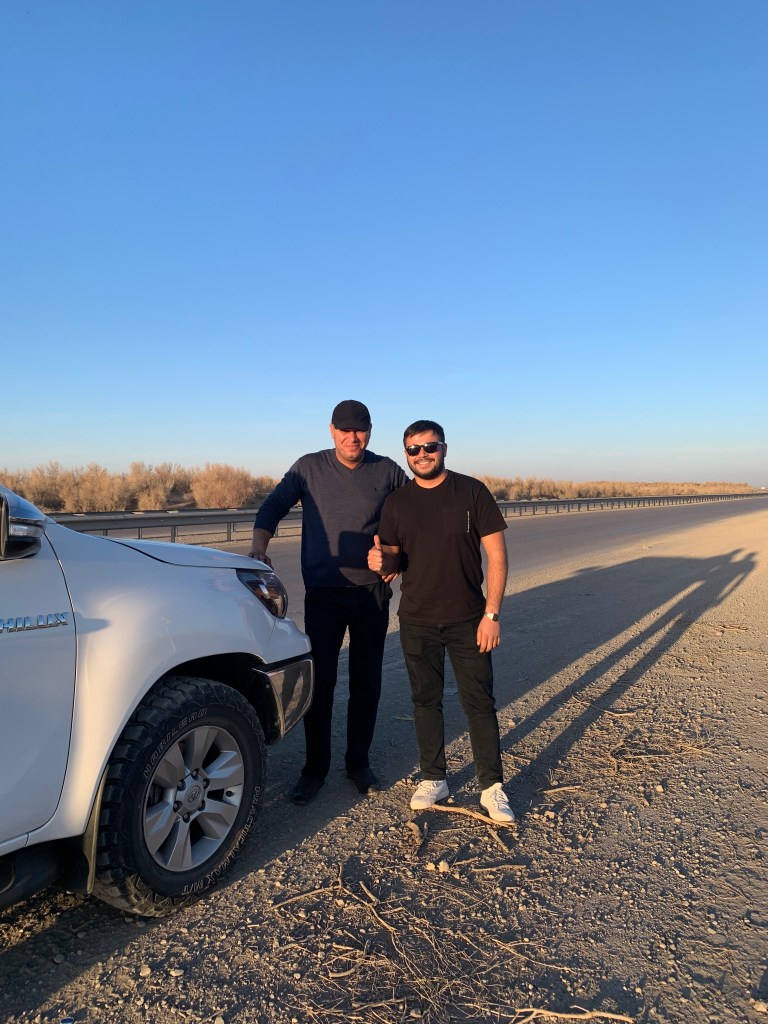
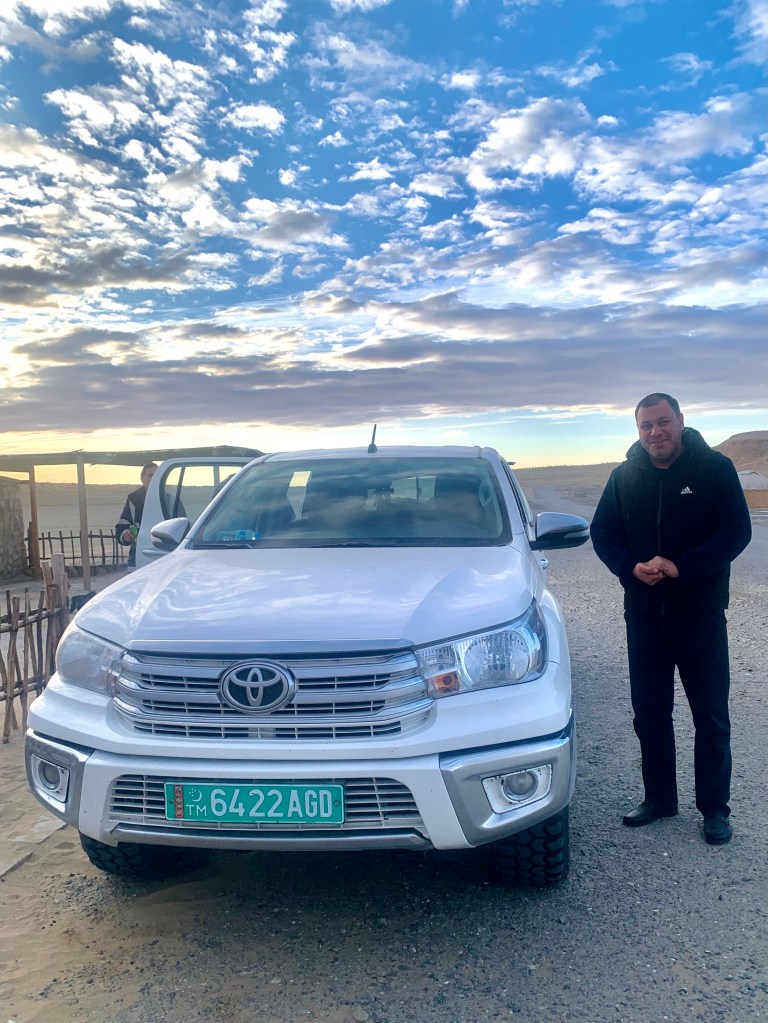
Mekan, the Owadan Travel guide, is a 25 year old English language and literature graduate (studied in Turkey) who can guide in English, Russian and Turkish. Guwanch, the driver of the gleaming white Toyota Hilux, looked a little apprehensive when I usurped the front seat – until he realised I spoke Russian – he then visibly relaxed. He is a good and conscientious driver (seatbelt on at all times!) and we got on very well. (I called him “my hero”, after a particularly scary road bit was negotiated with panache, and he remained “Мой герой” (Russian for ‘my hero’) throughout. I was presented with a lovely box of chocolates by him – he did say this was the first time he ever bought anything for a tourist.
Guwanch and Mekan and the trusty Hilux
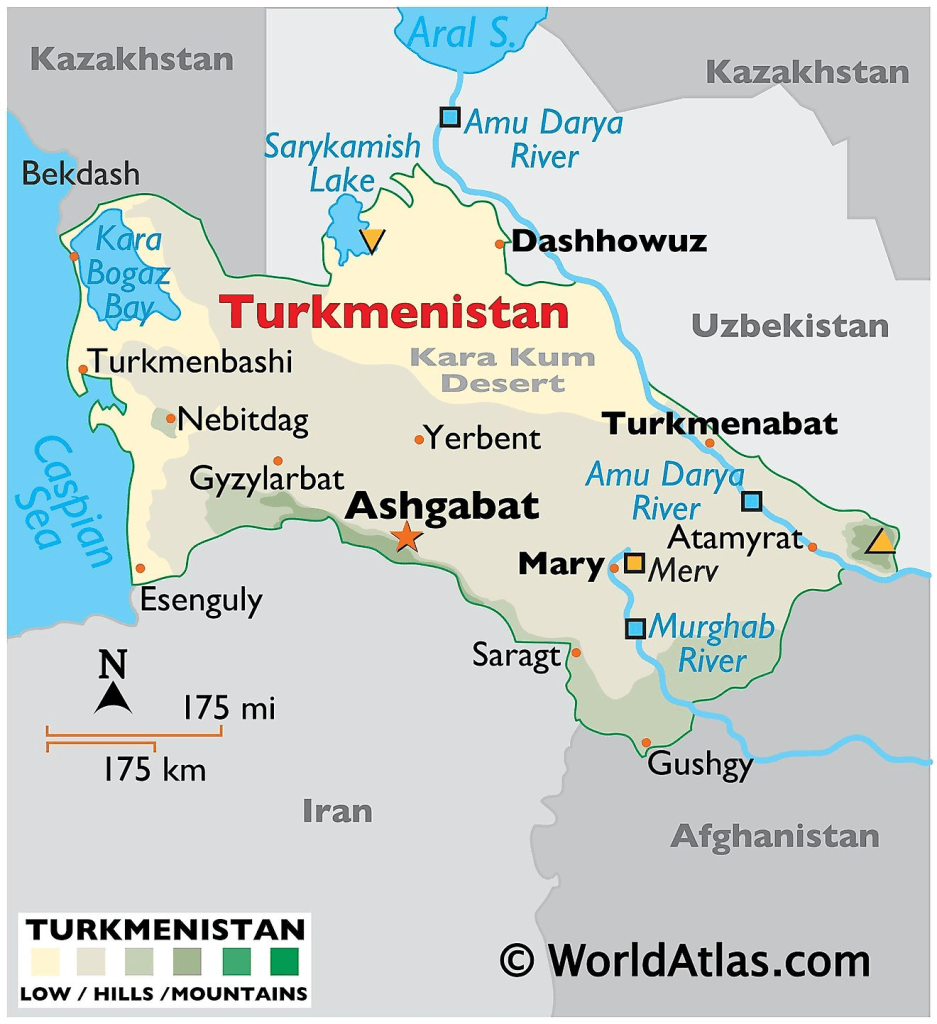
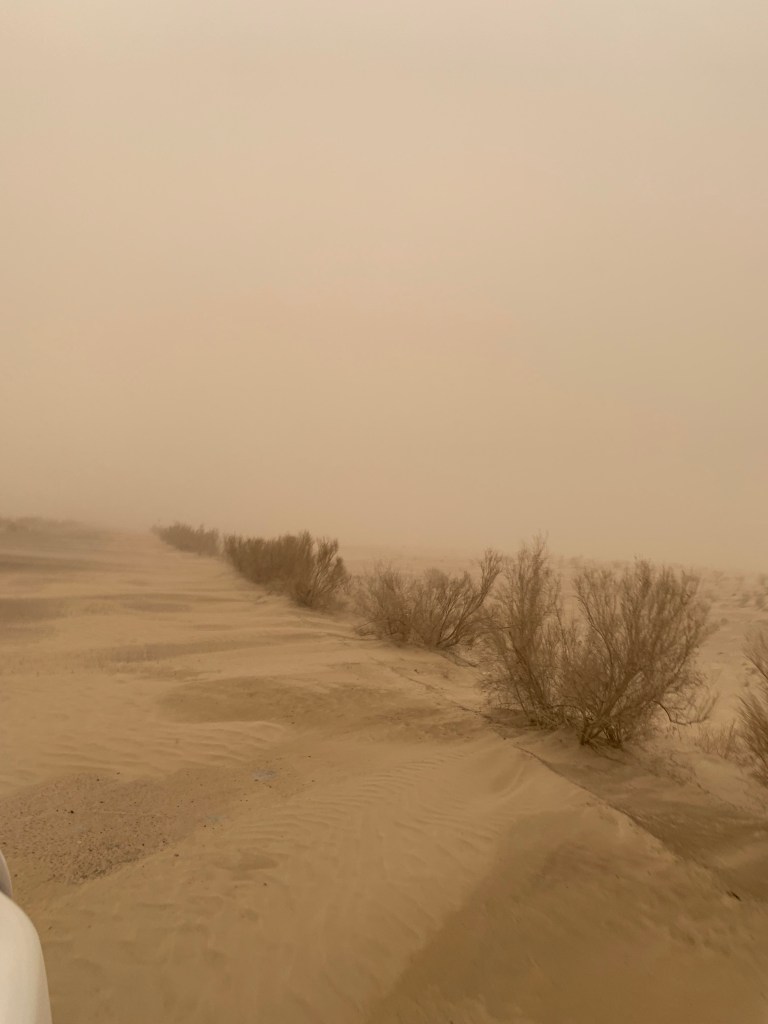
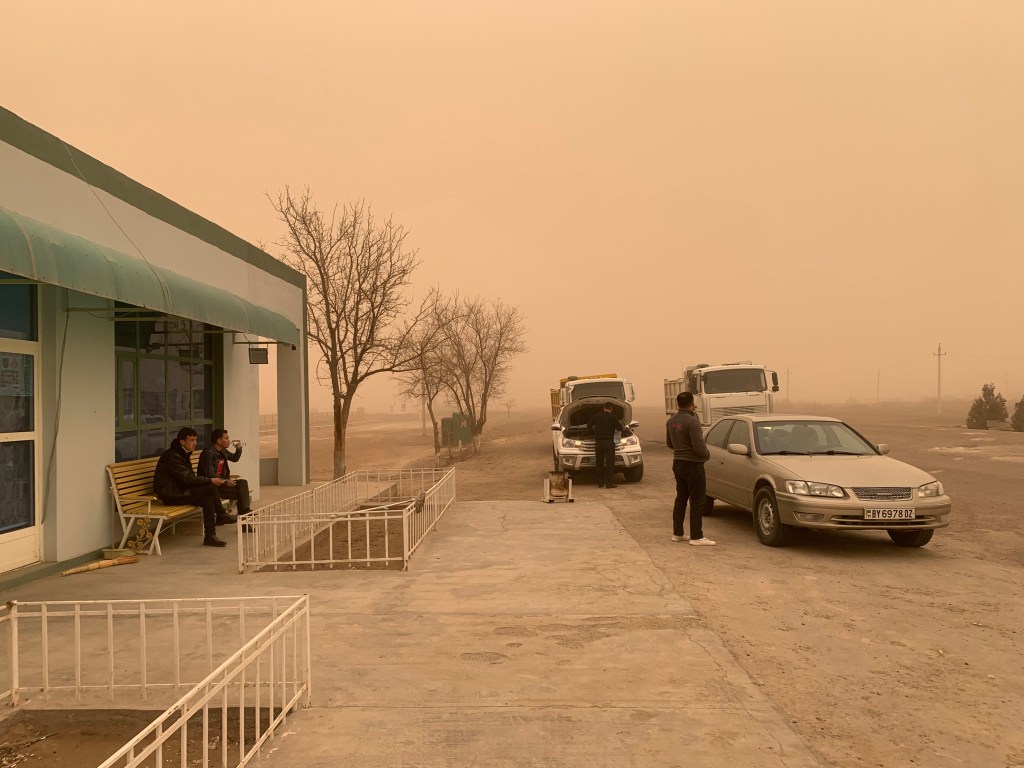
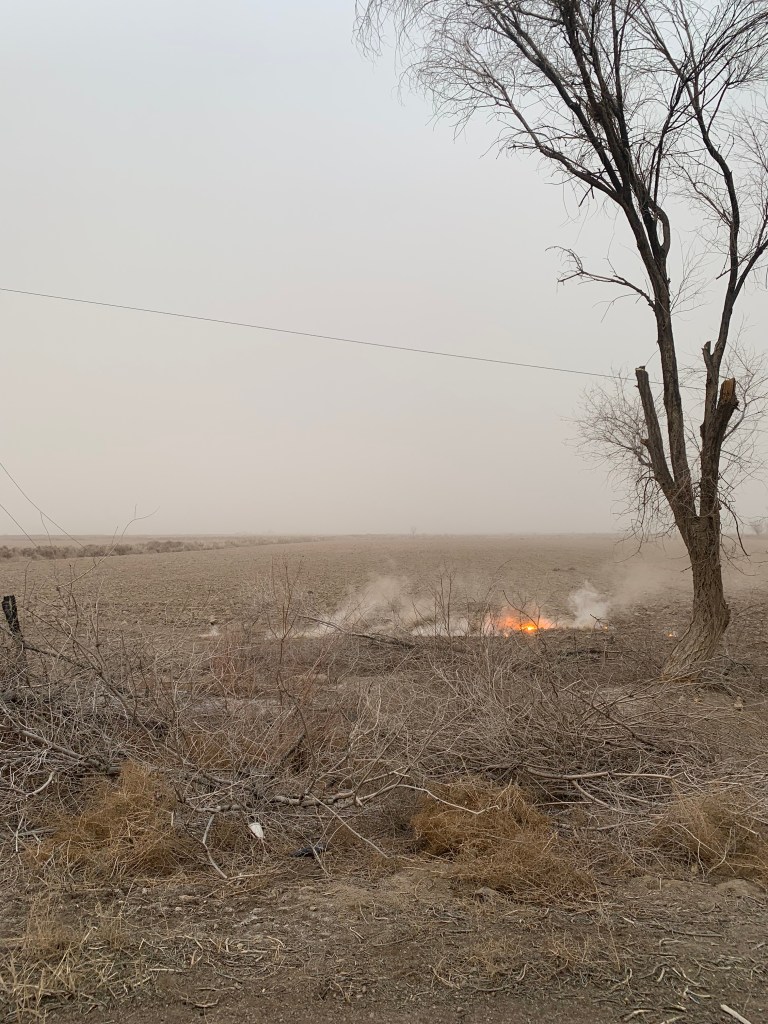
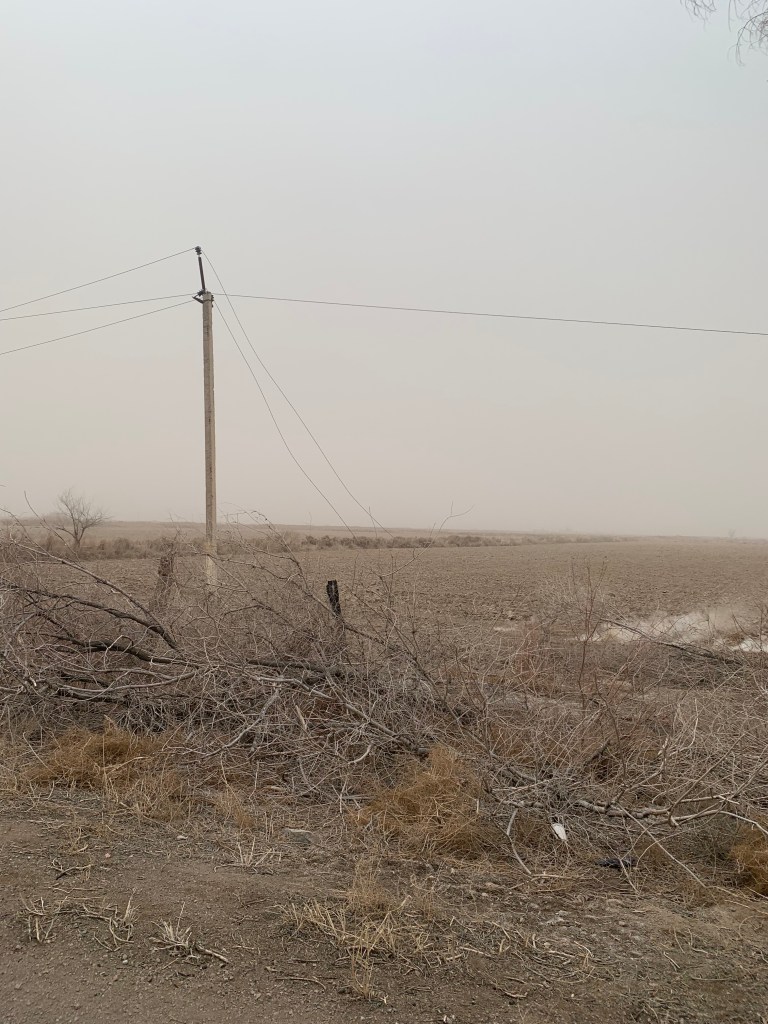
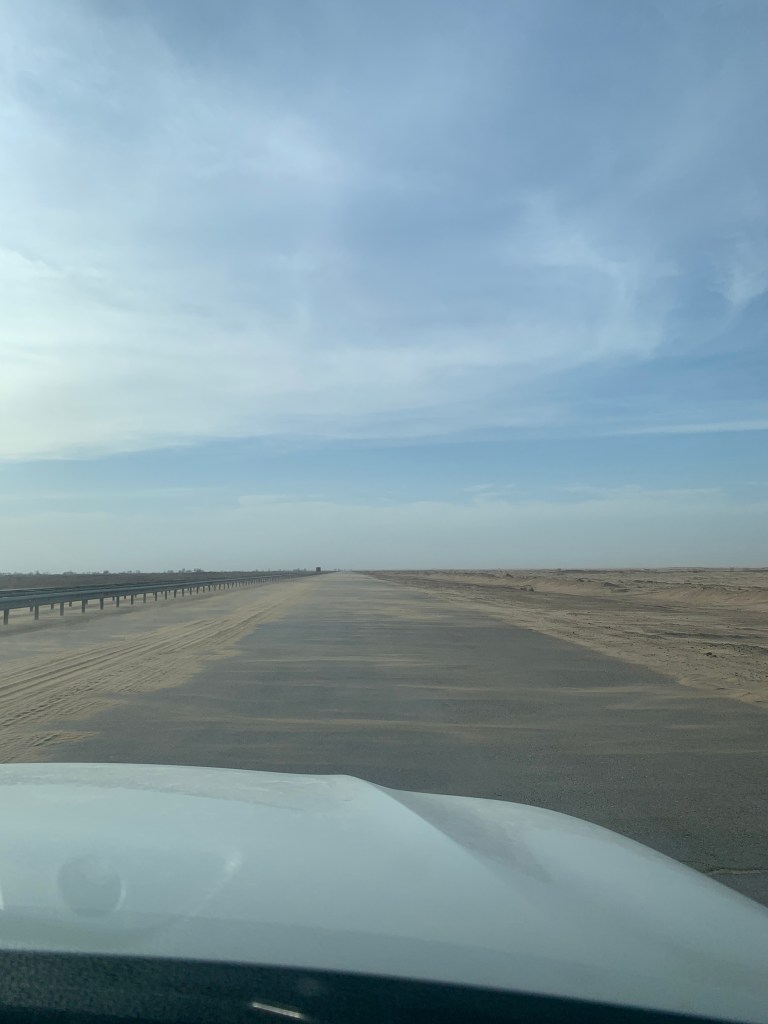
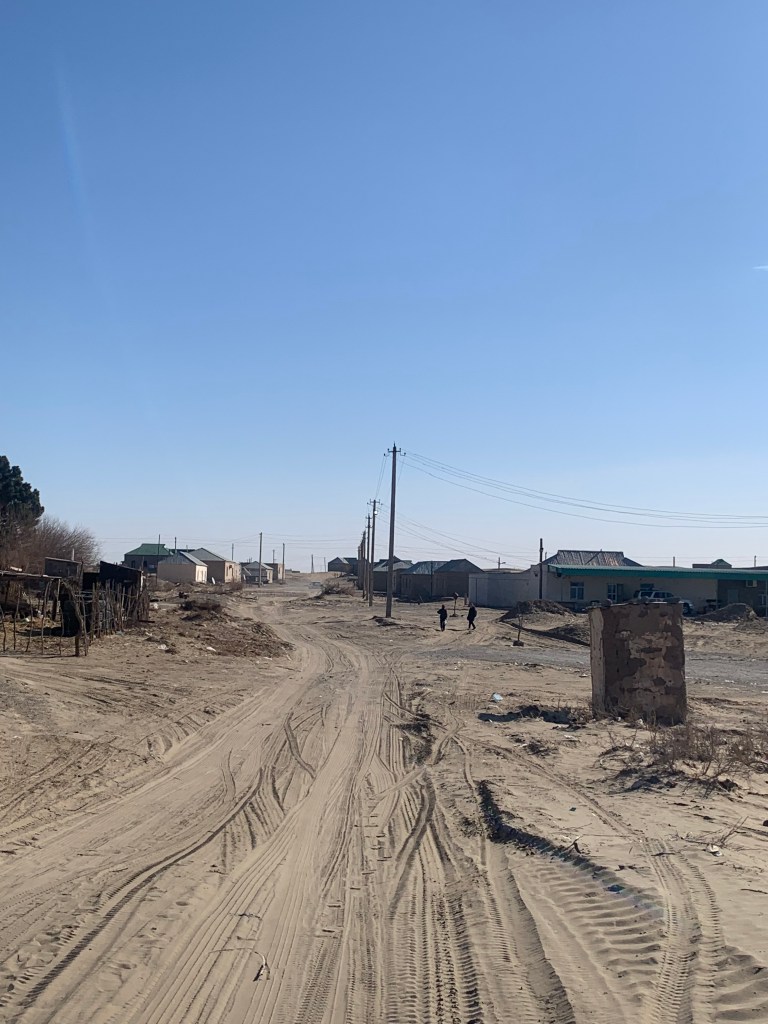
The roads are abysmal. Rutted, potholed, scraped, ploughed, furrowed, scarred, disappeared. The dual carriageway (not always dual) was used on both sides in both directions as each driver tried to find the least damaged bit to drive over. We drove on the right and on the left, overtook on any side, went off road when that was the least awful part. Guwanch manoeuvred the 4-wheel drive Toyota Hilux with (new) heavy duty winter tyres with skill and panache – he had a schedule to keep (to get me to all the places on the programme – we did 310 km on the first day). That day, the wind was up, the sand carried across the road in gusts as blinding as a sudden fog. We saw a tree brought down by the wind that crashed onto the electric wires and broke them – it looked like the ground was burning and Mekan called the provincial fire brigade to tell them about it.
My hero – Guwanch and his HiluxThe last supply shop and loo for 100+km across the desert
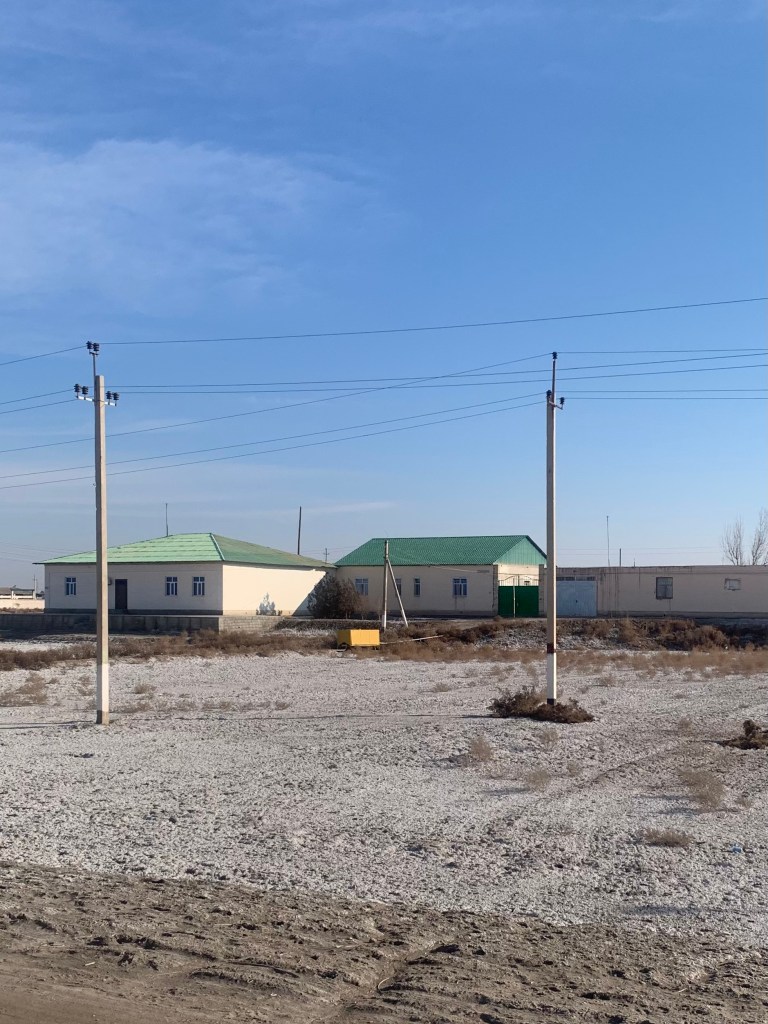
Turkmenistan is 80% desert; its riches, the natural gas, the minerals, ore, are all underground. The soil is salty. I thought at first it was hoarfrost on the ground (also in Uzbekistan) – it is salt. They do grow excellent fruit and vegetables in the areas near the water – melons and cantaloupes are especially highly rated.
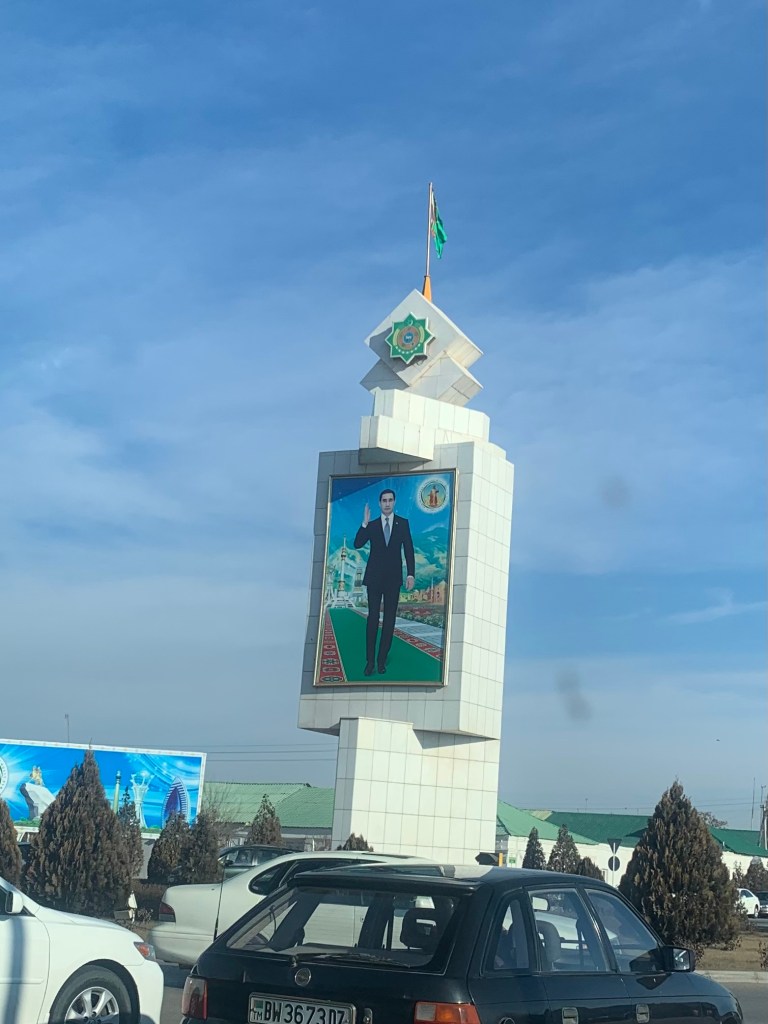
Salt appears as water evaporatesWelcome by the President in Dashoguz
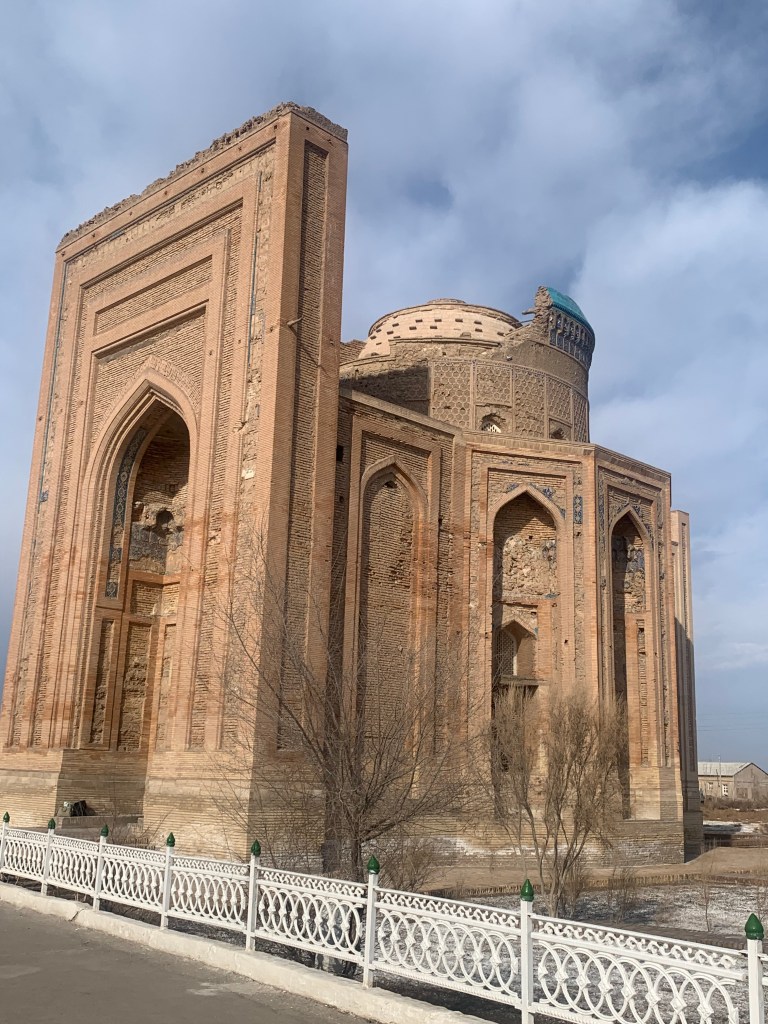
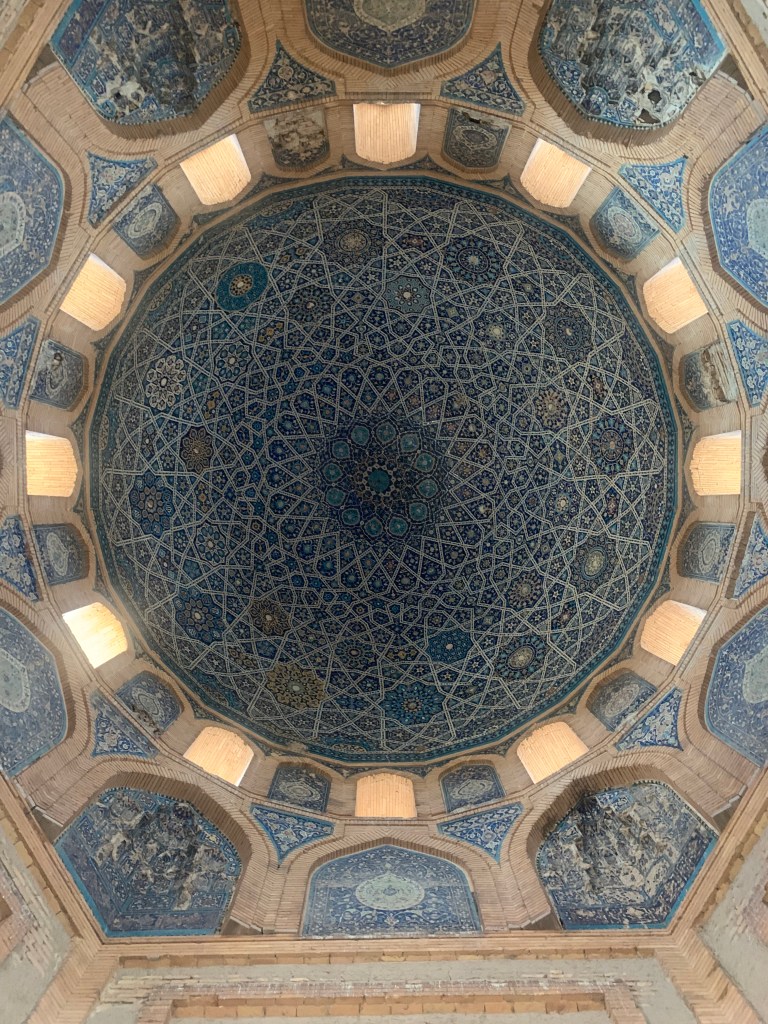
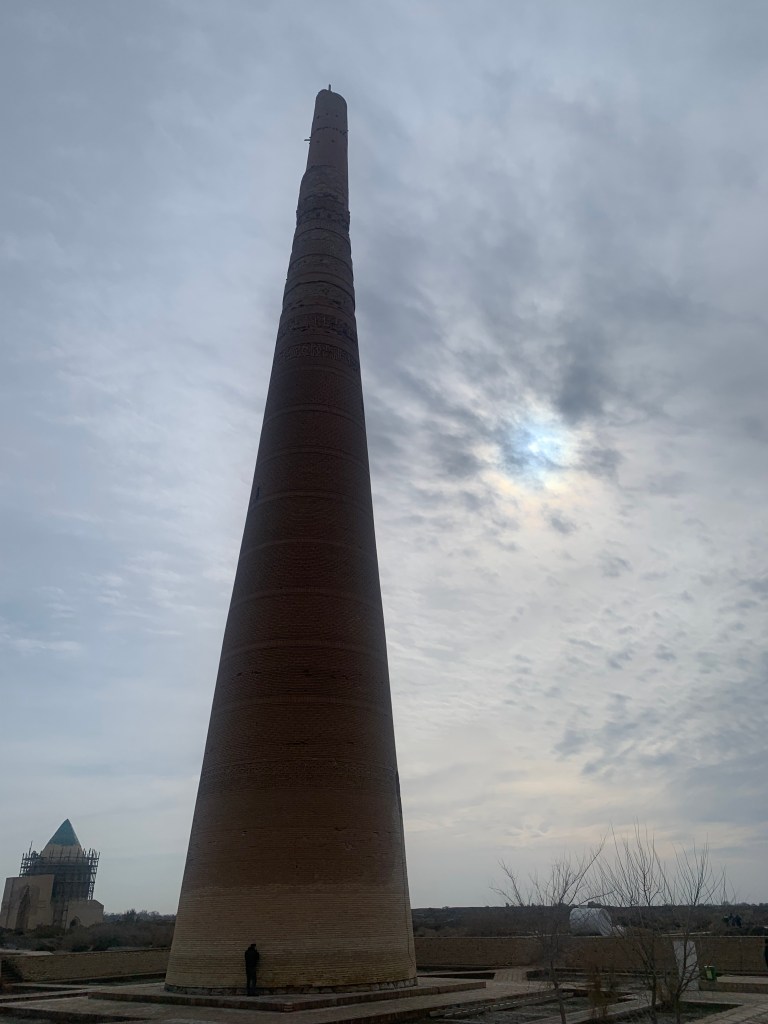
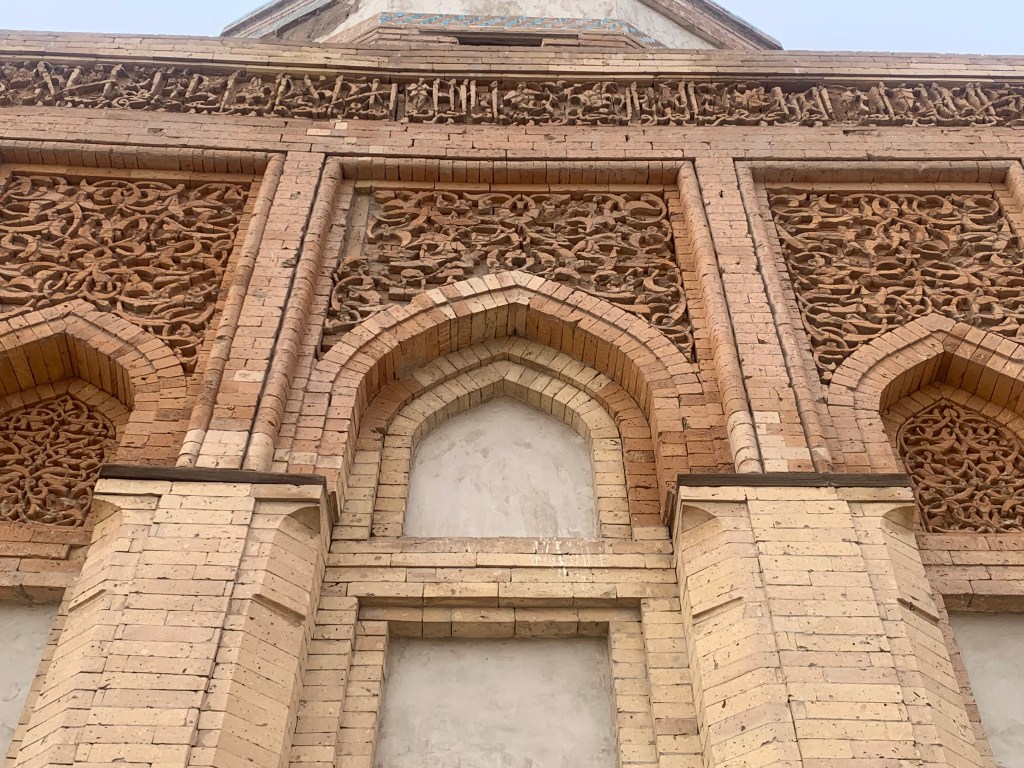
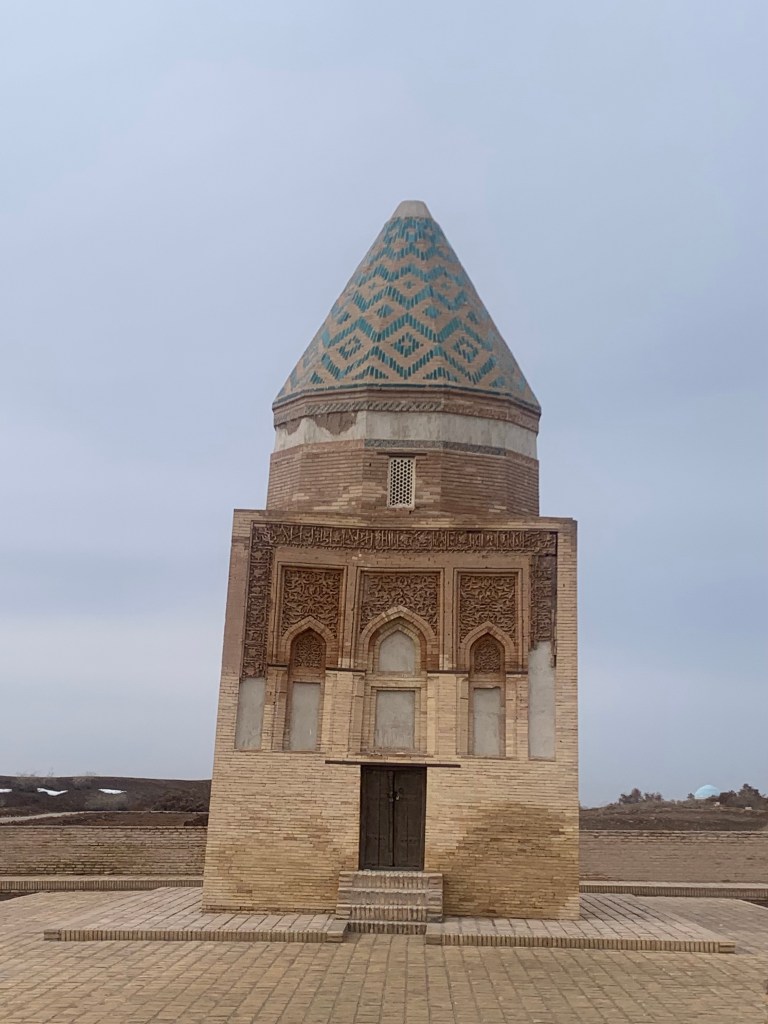
We headed to the first historic place on our sightseeing tour - Konyeurgench. It has a long history, starting in the 5 ct BC, but its heyday was between 11-14 ct when it was the capital of the Kwarezm empire and an important, rich, well developed town on the Silk Road. (Of course, it got raided and sacked and rebuilt several times.) It is now a UNESCO site.
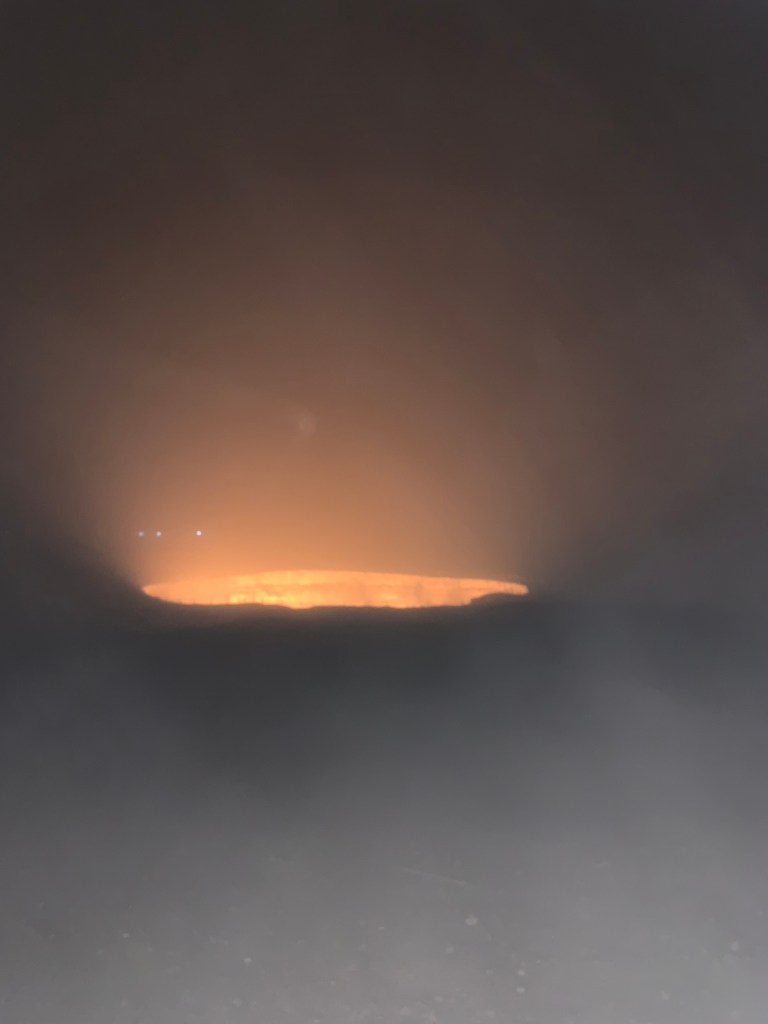
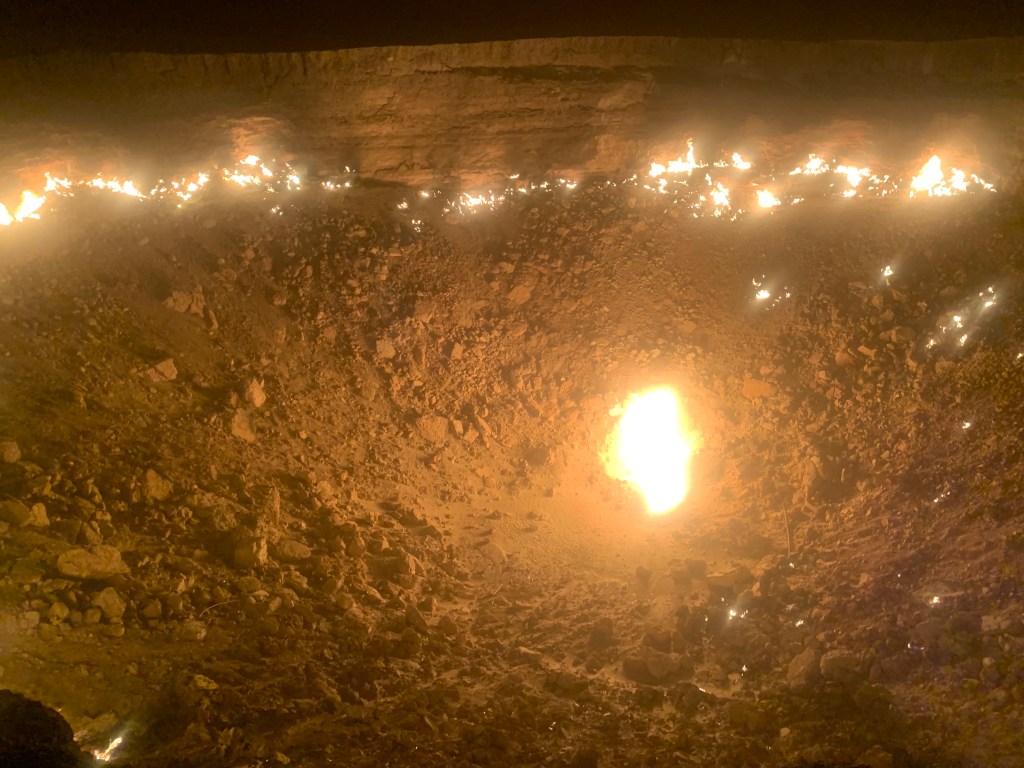
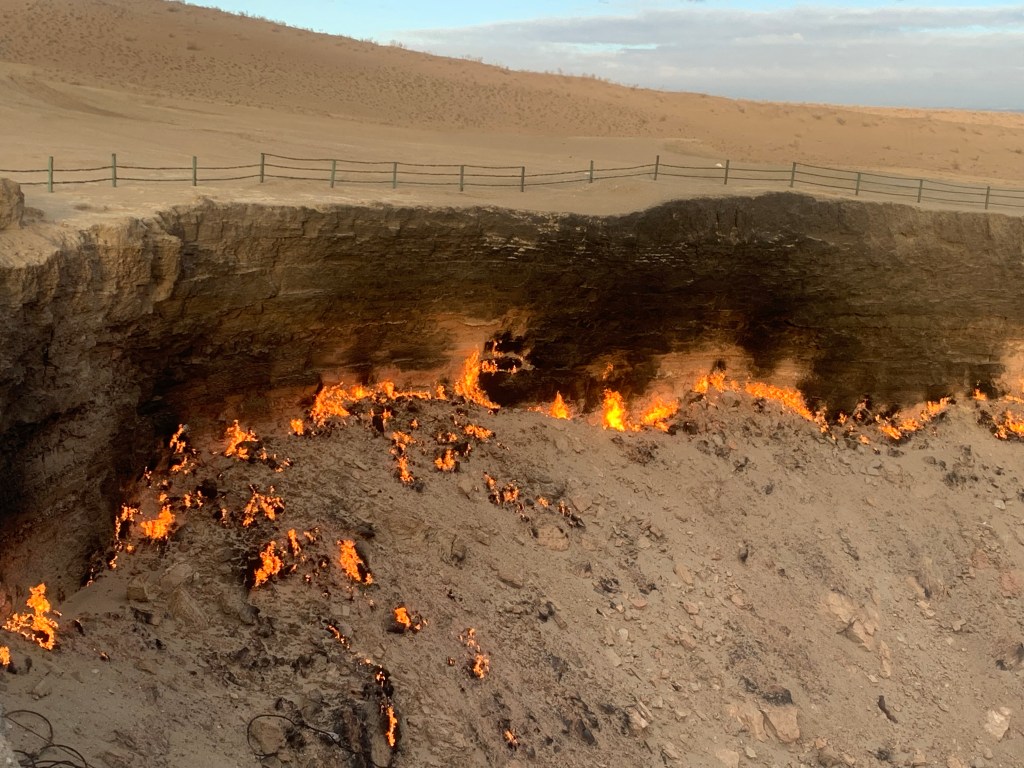
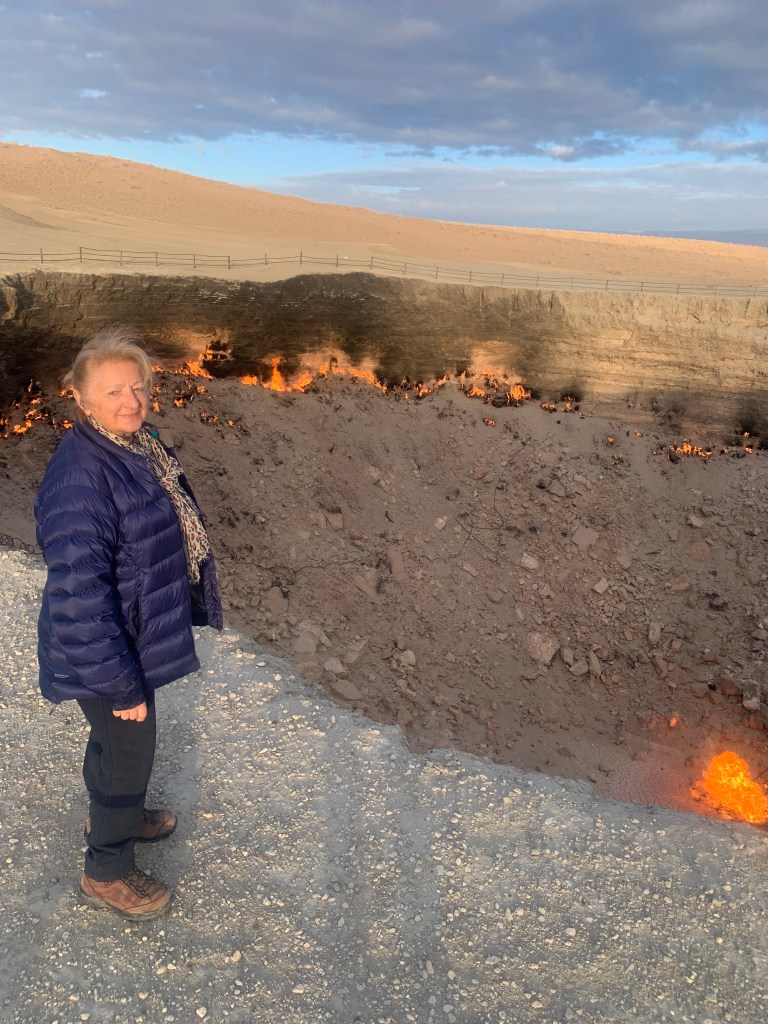
Then a long drive to Darwaza, in the middle of the Karakum desert, where The Gates of Hell gas crater has been burning since the 1970’s when the Soviet experts were prospecting for natural resources (Kara-kum means ‘black sand’, as there is a lot of shale underneath). I was told there had been a lot of heavy equipment in the area at the time and a spark may have caused an explosion that created the crater – there are metal bits and pipes visible at the bottom. The natural gas has been burning since. (It made me smile, thinking of the Azerbaijan’s “Fire Mountain”, which is but a smidgeon compared to the hundreds of clean, smokeless flames around the giant crater.
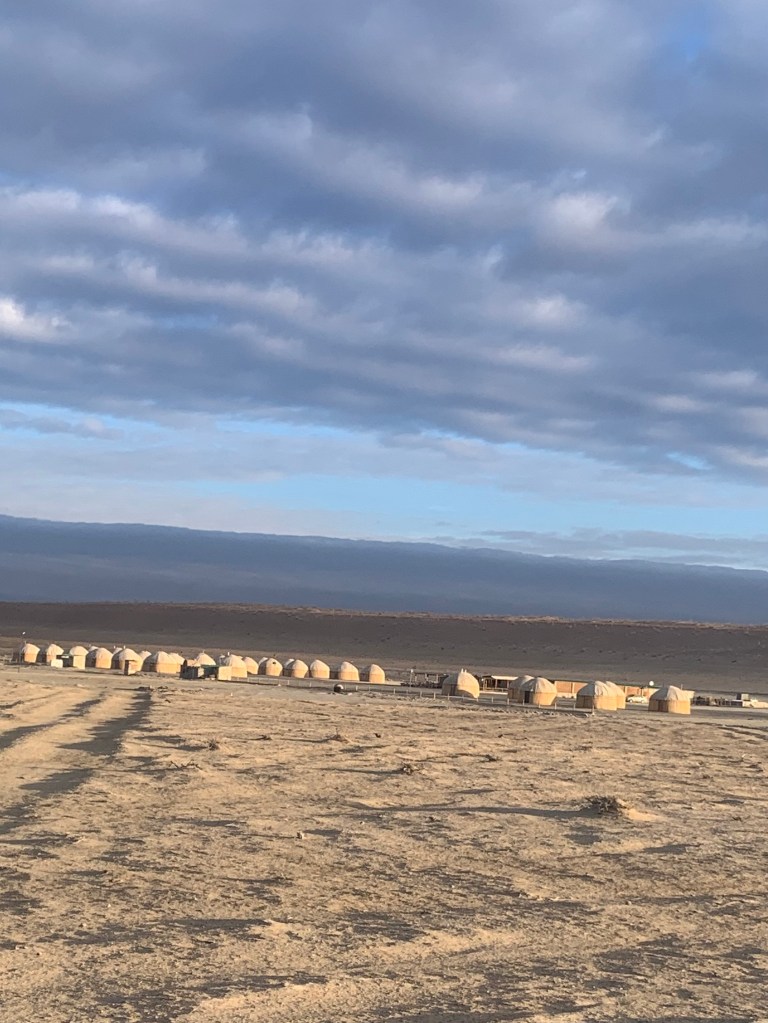
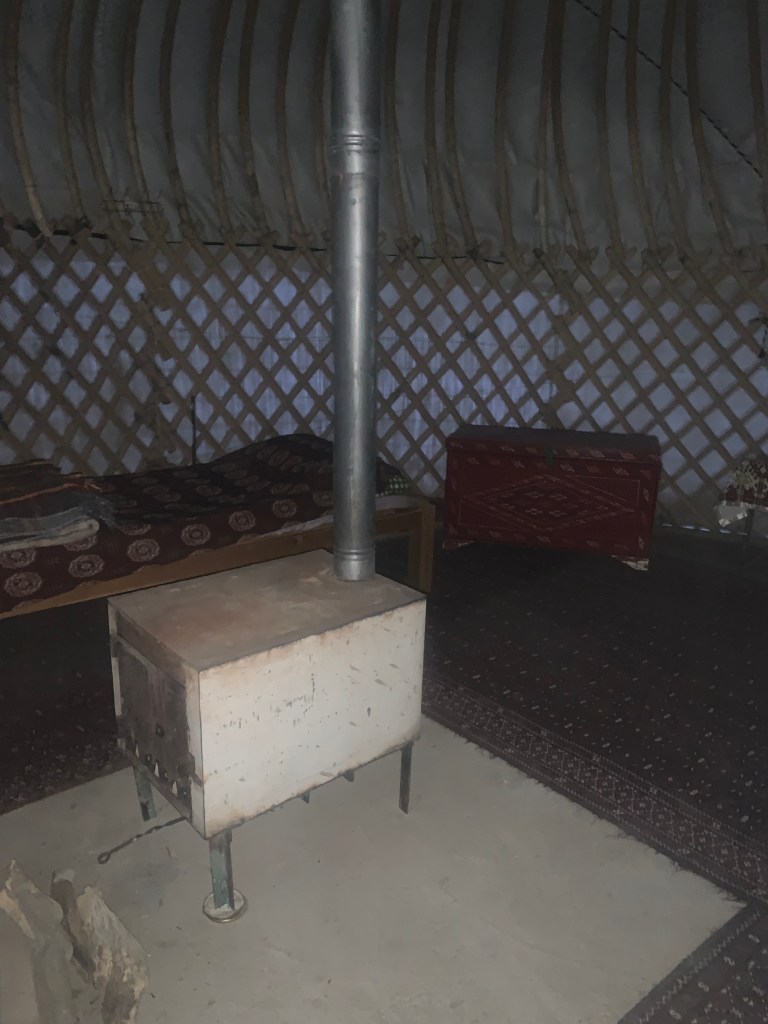
The yurt villageThe looThe Turkmenistan massage roadMy yurt stove
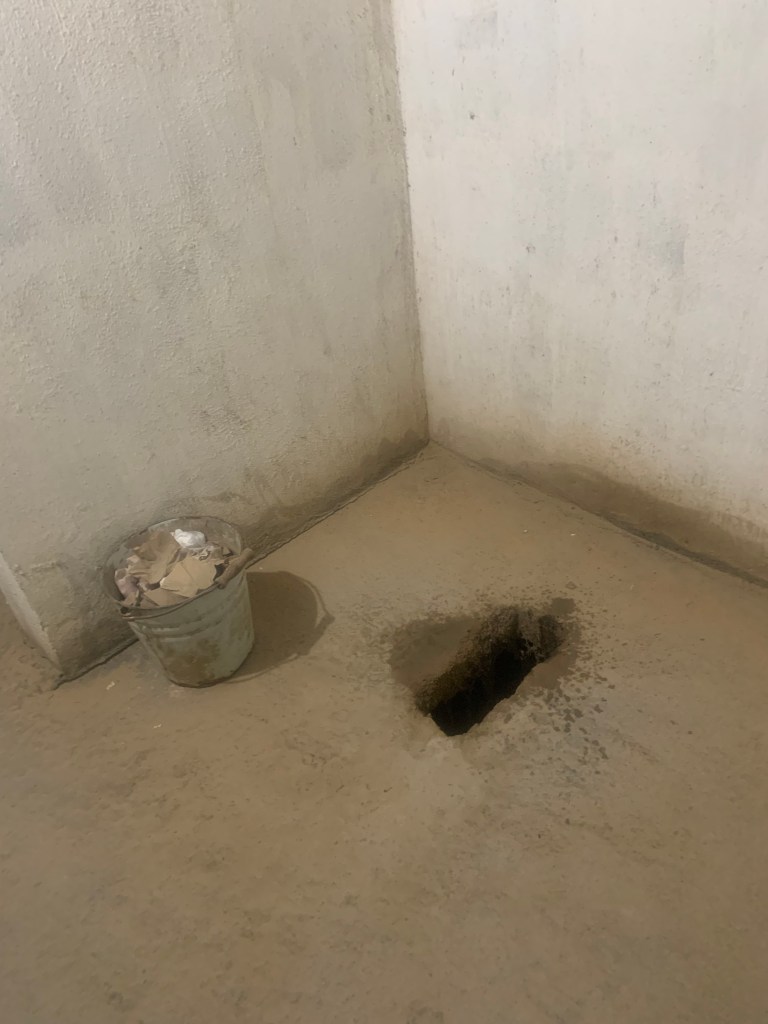
Owadan travel built and owns the yurts here and this is where I slept. This being February, I was, yet again, the only visitor. But I was well looked after, and there was a fire in the little stove in the yurt. (The loo, though, could not be put closer – at 50m, it is a trek.)
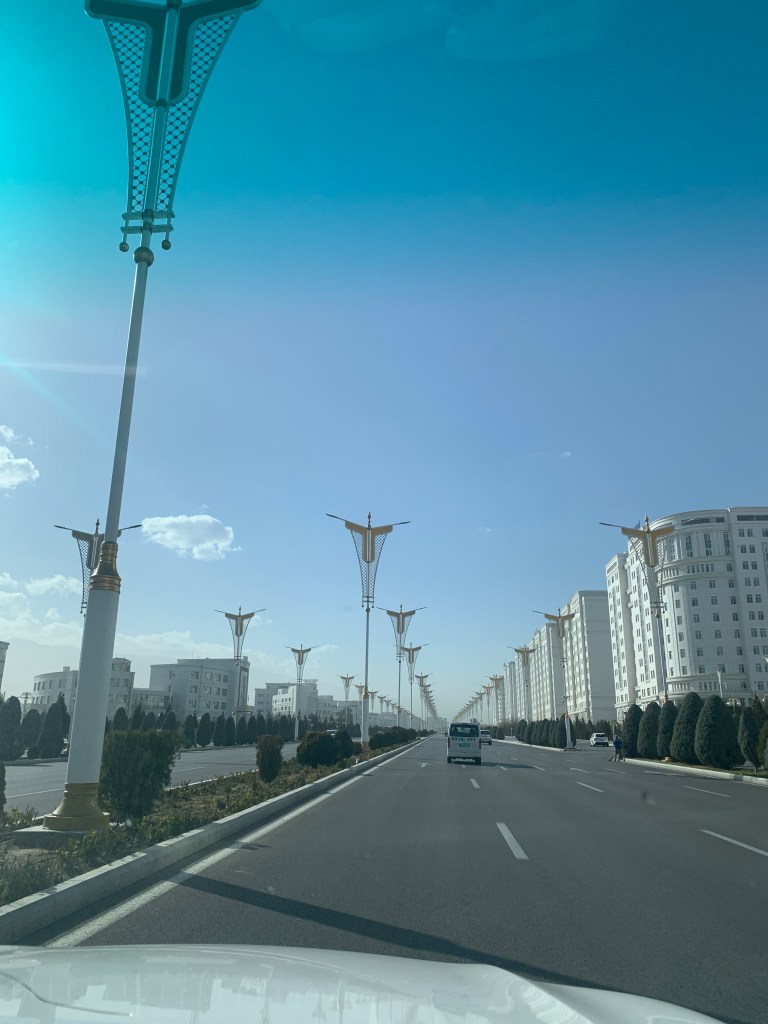
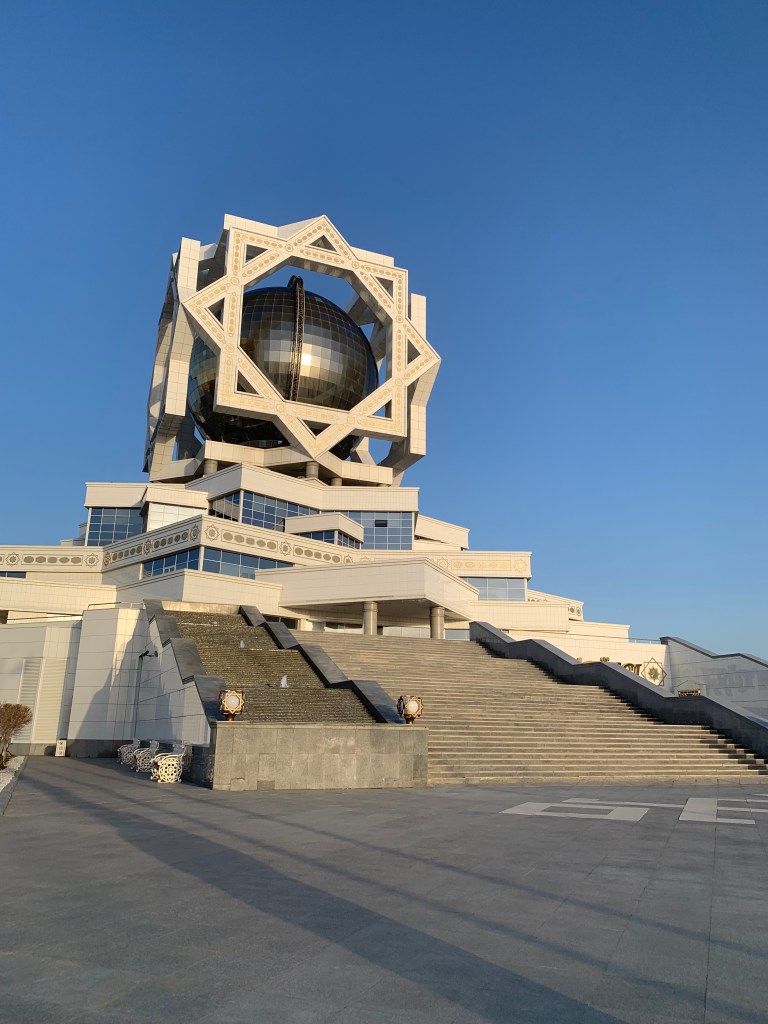
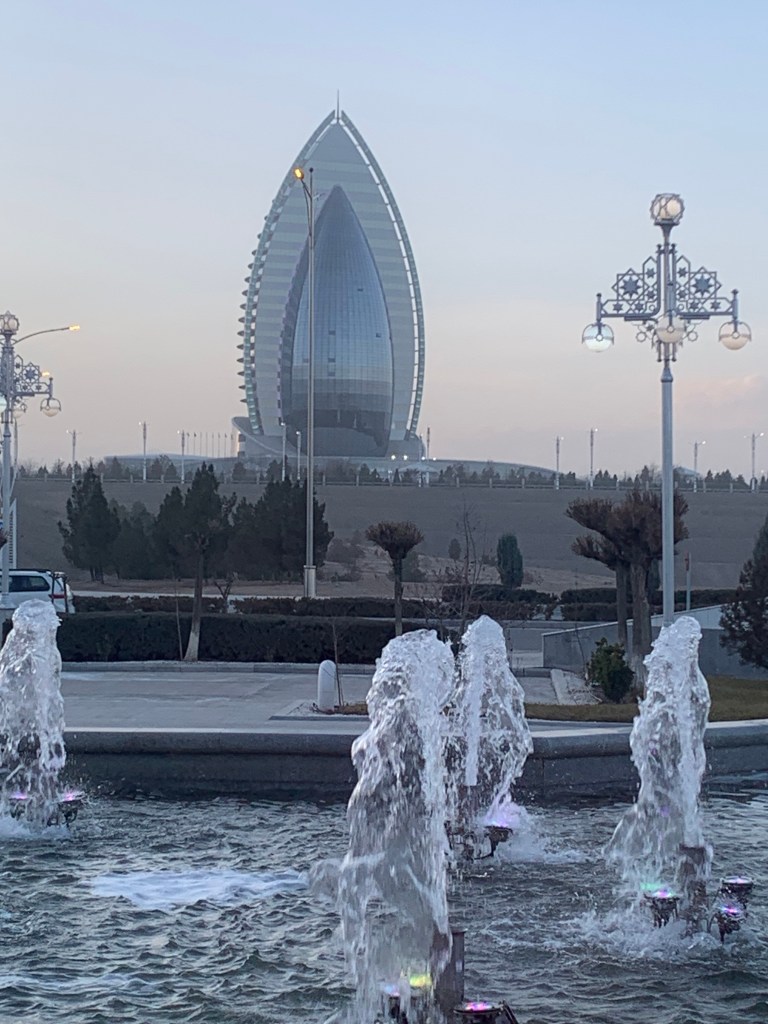
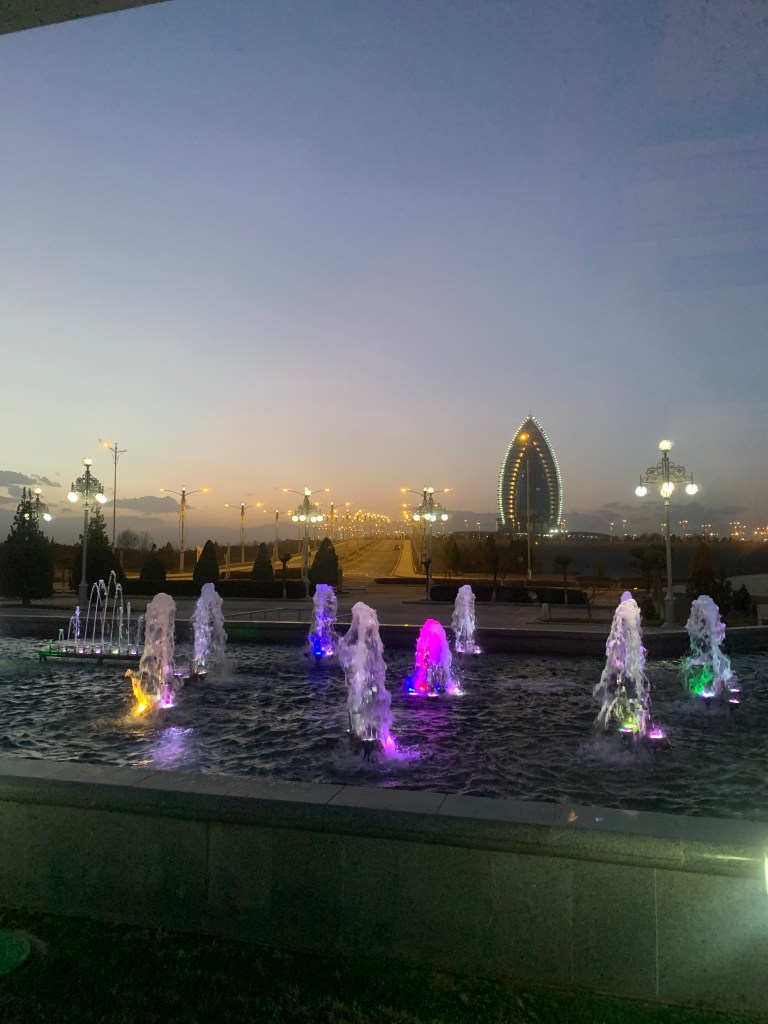
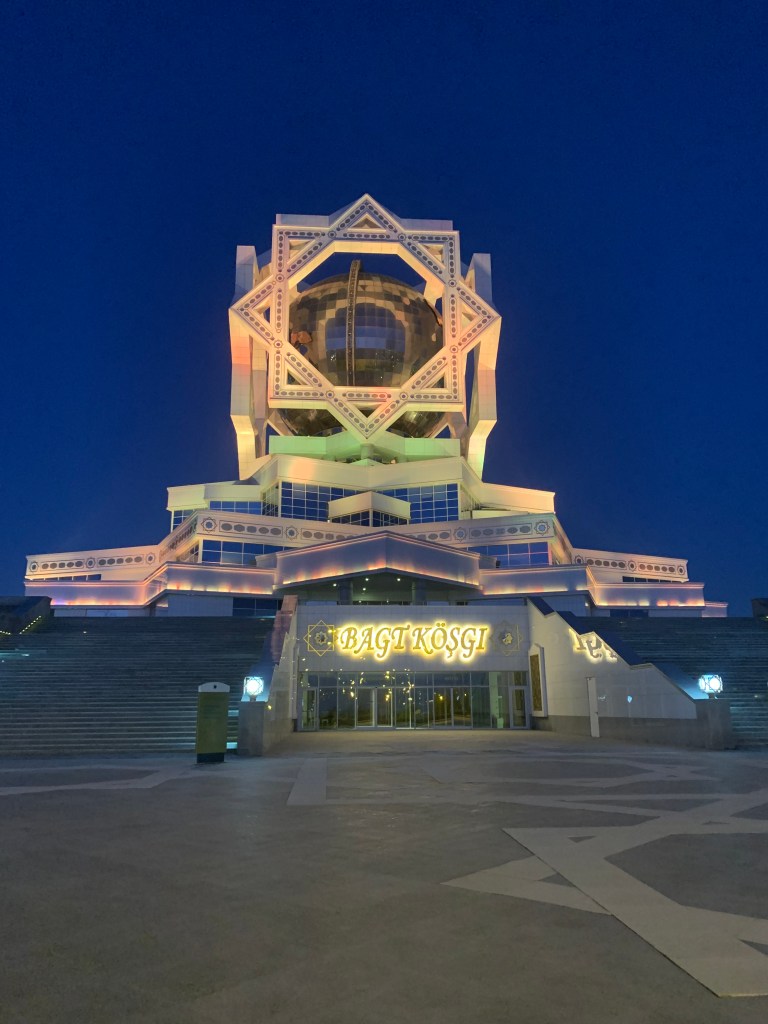
Ashgabat is officially “the whitest city in the world”. The buildings cannot be painted anything but white; the only cars allowed inside the city limits must be white, silver or gold; the street lights (and there are, for once, plenty) are all on white or silver posts. The cars must be clean – else they will get stopped by the traffic police and fined. This has occasioned a very brisk business in car washes in the environs of the city (The Toyota was washed 3 times in the 6 days I was there.) Out of the 5 provinces, cars registered in 2 (Dashoguz and Mary) cannot enter Ashgabat, whatever their colour and state of cleanliness – they must be left on the outskirts. The city roads are in perfect condition, wide and spotlessly clean. Very few people outside, except for the street cleaners (mainly women with brooms). No traffic jams. There is a sterile and sterilised feel to the town, as after an apocalypse. However, when the night falls, the psychedelic multicoloured lights play on every building, including the high rise apartment blocks.
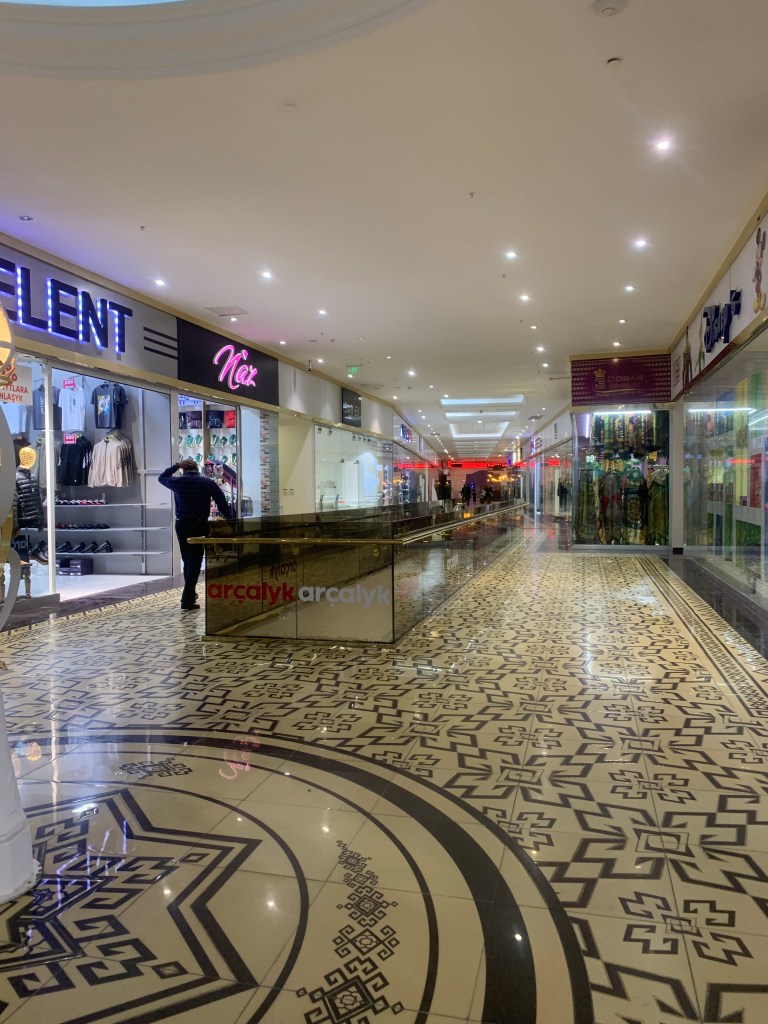
Arriving in AshgabadThe Wedding Palace – the hotel I stayed inMy view from the room towards another hotel – only parks in betweenThe evening falls and lights start playingMy hotel at night – colours changeThe shopping mall
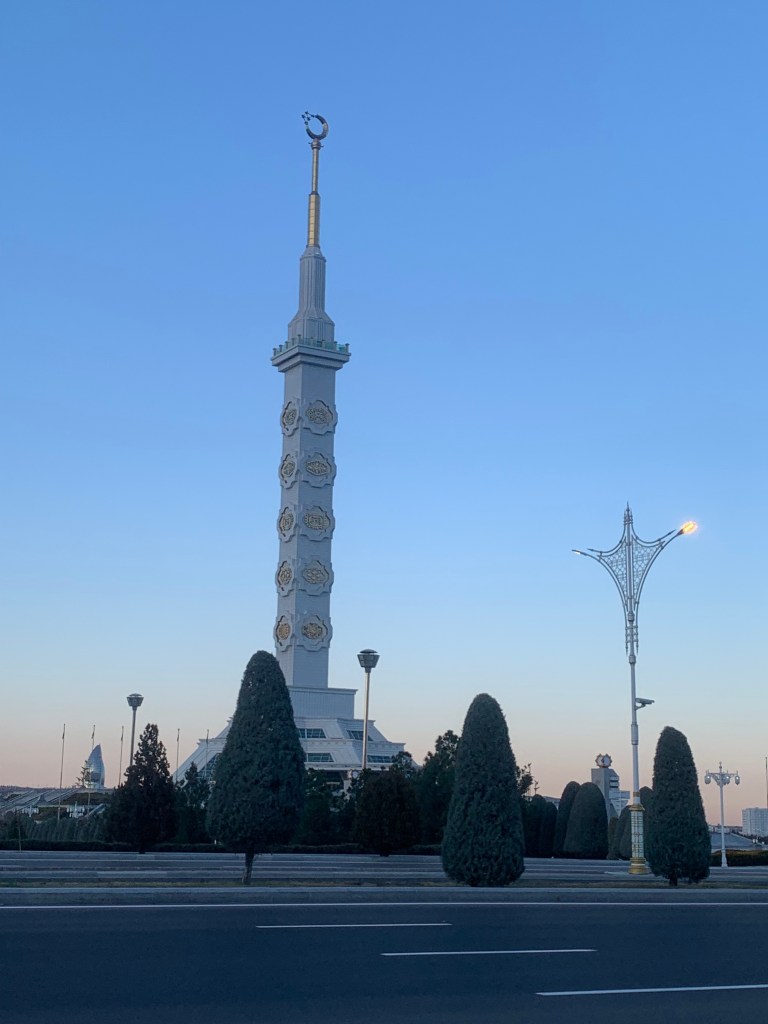
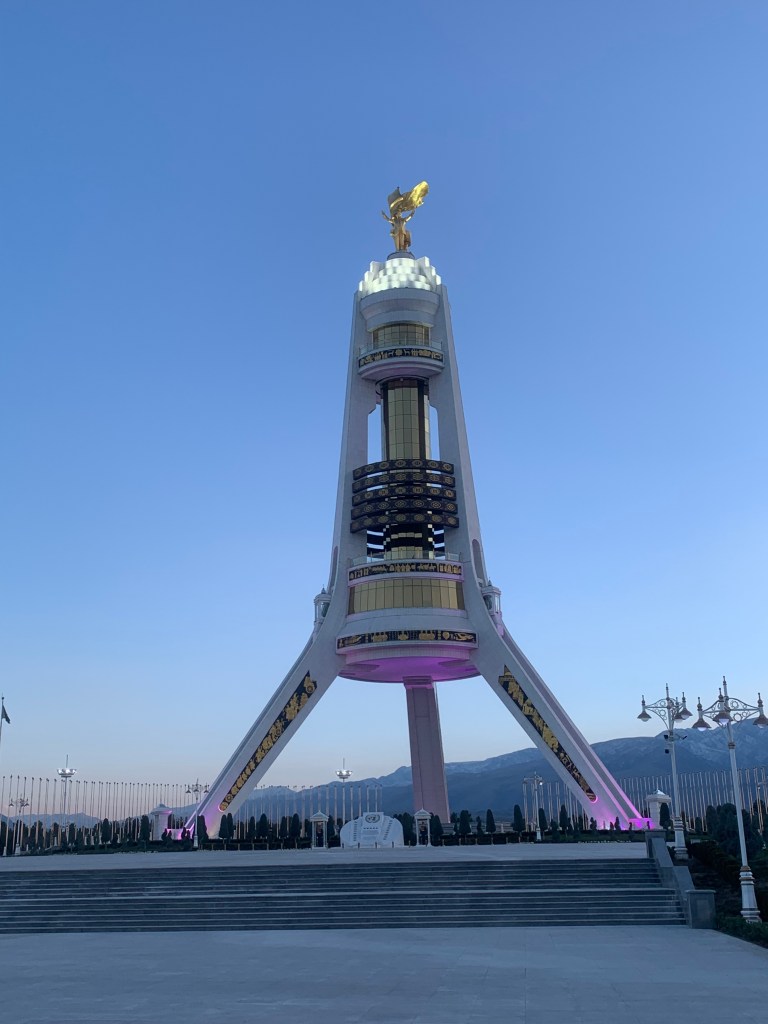
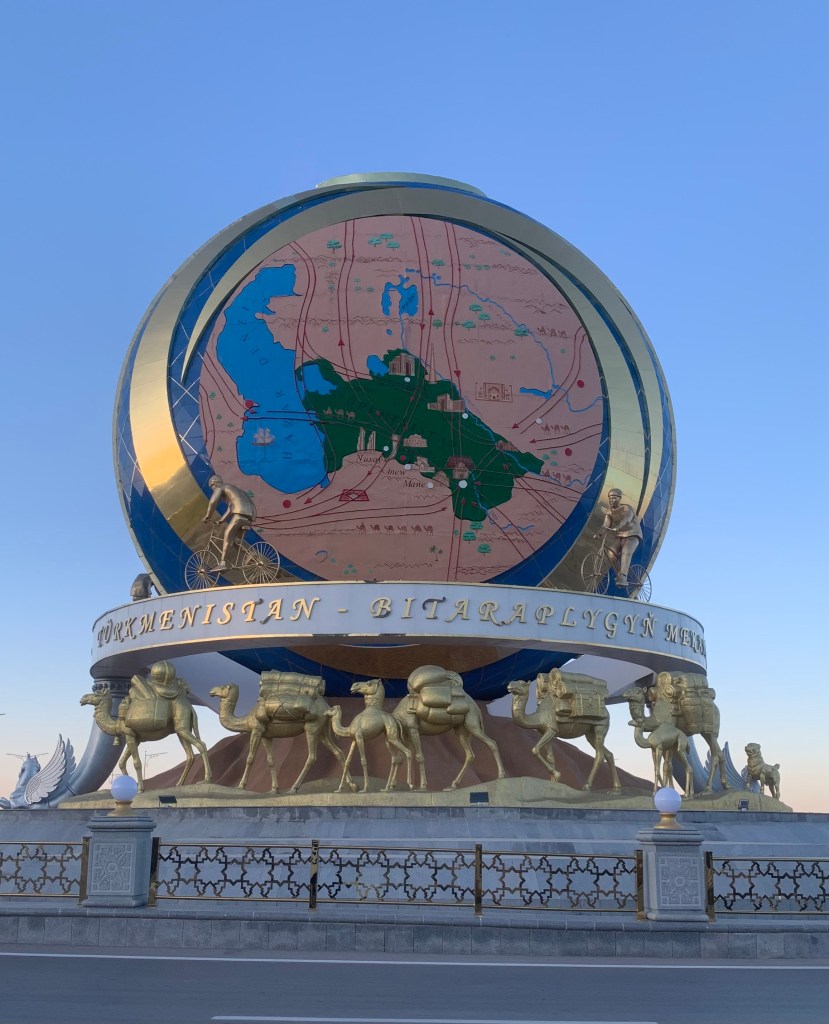
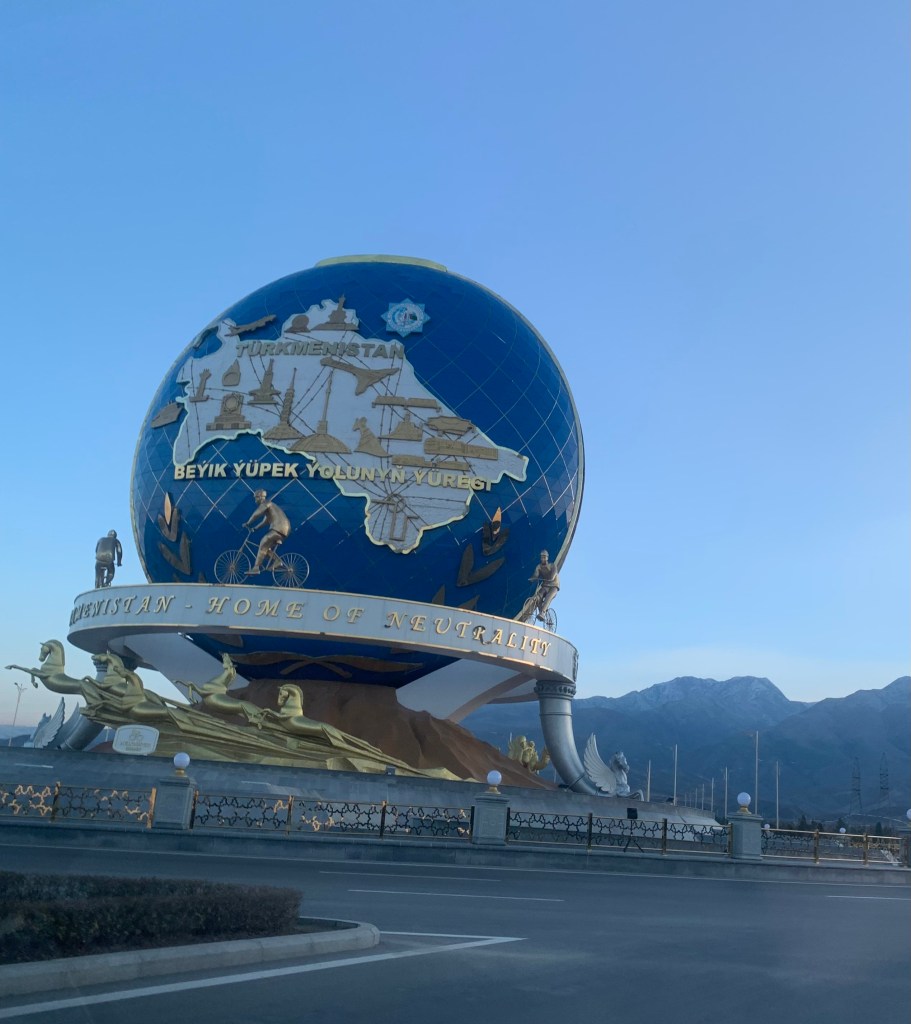
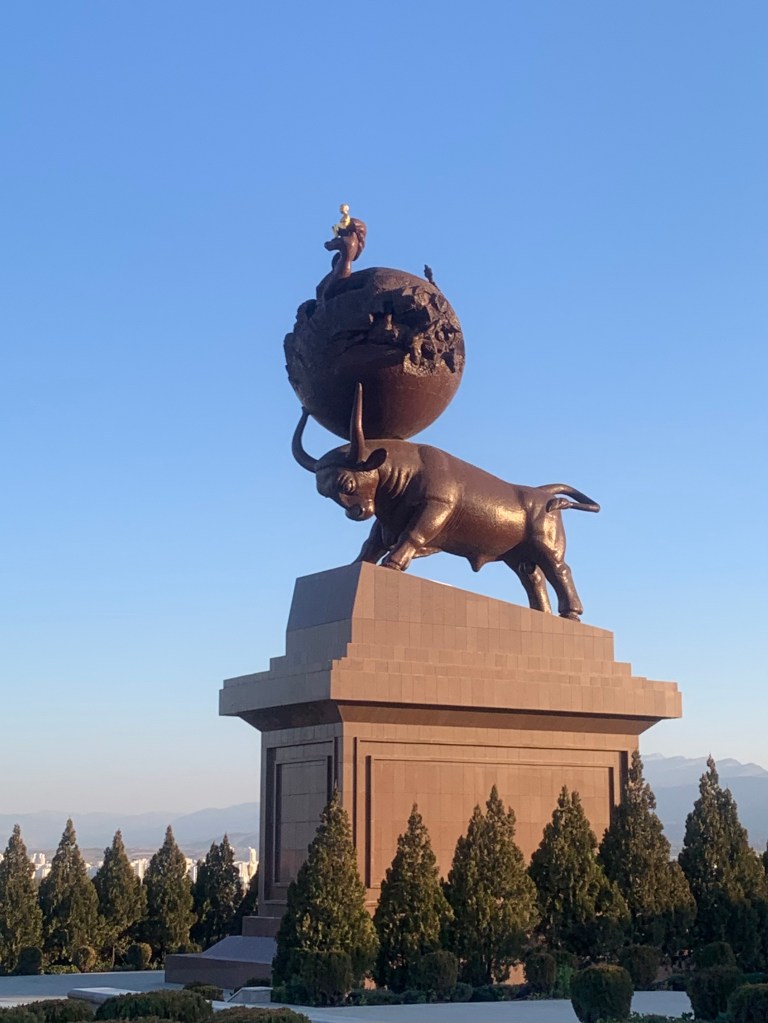
The monuments are highly visible, grand and quite literal: the monument to Independence is 91 metres tall as the event happened in 1991; the monument to Neutrality is 95 metres tall (1995). Every roundabout has a monument as a centrepiece.
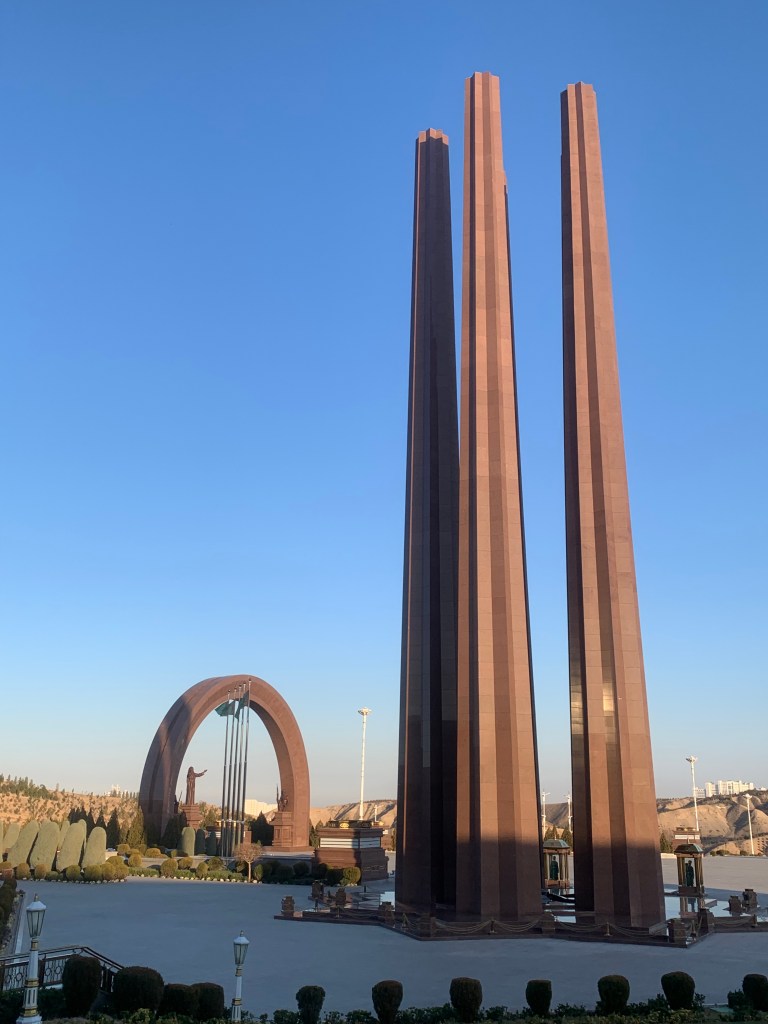
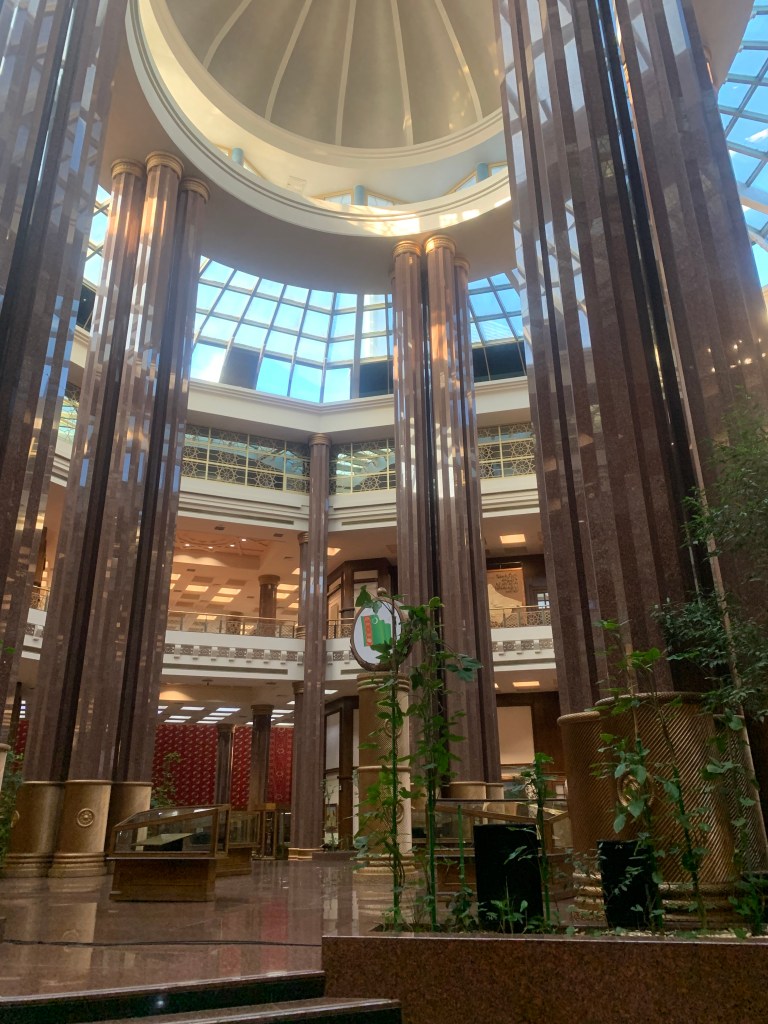
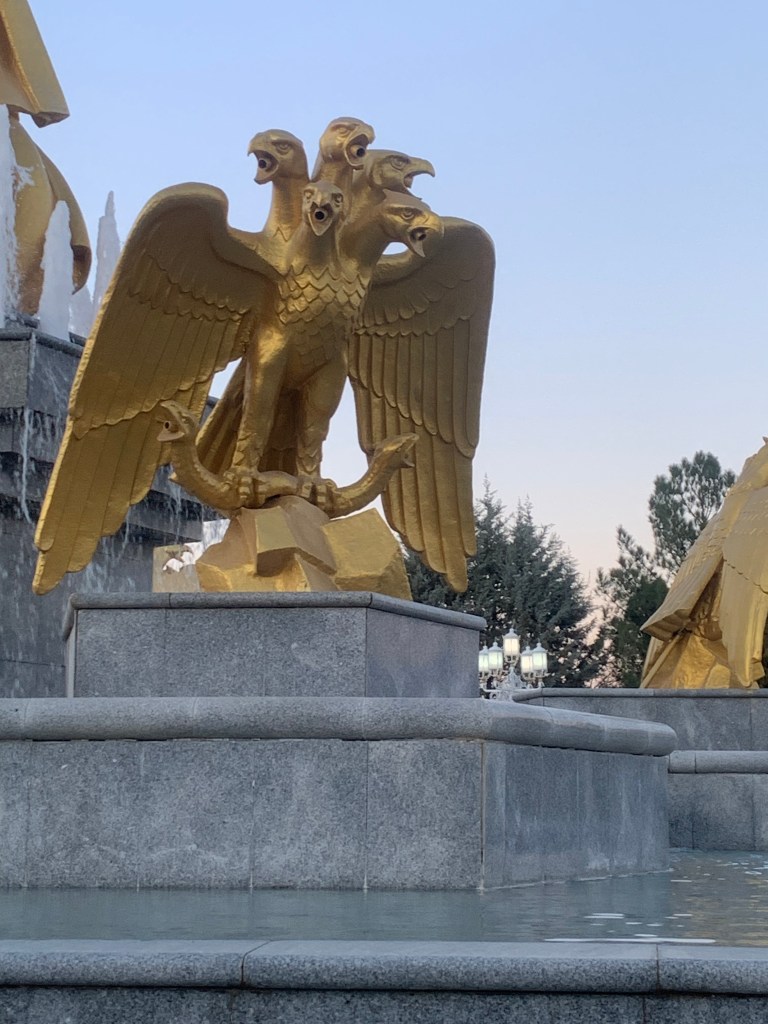
There are some odd things – such as the largest (and only) Ferris wheel inside a building (I did ask, why?). The national flag pole may not be the tallest but is the only one in the world with a jet engine installed to ensure steady fluttering. The five tribes that make up Turkmenistan are represented on the flag with the ancient symbols often seen in their carpets; the National Museum of Turkmenistan incorporates the five pillars inside its architecture, the Memorial complex has five pillars to commemorate the loss of life in the war, there is a 5-headed eagle…
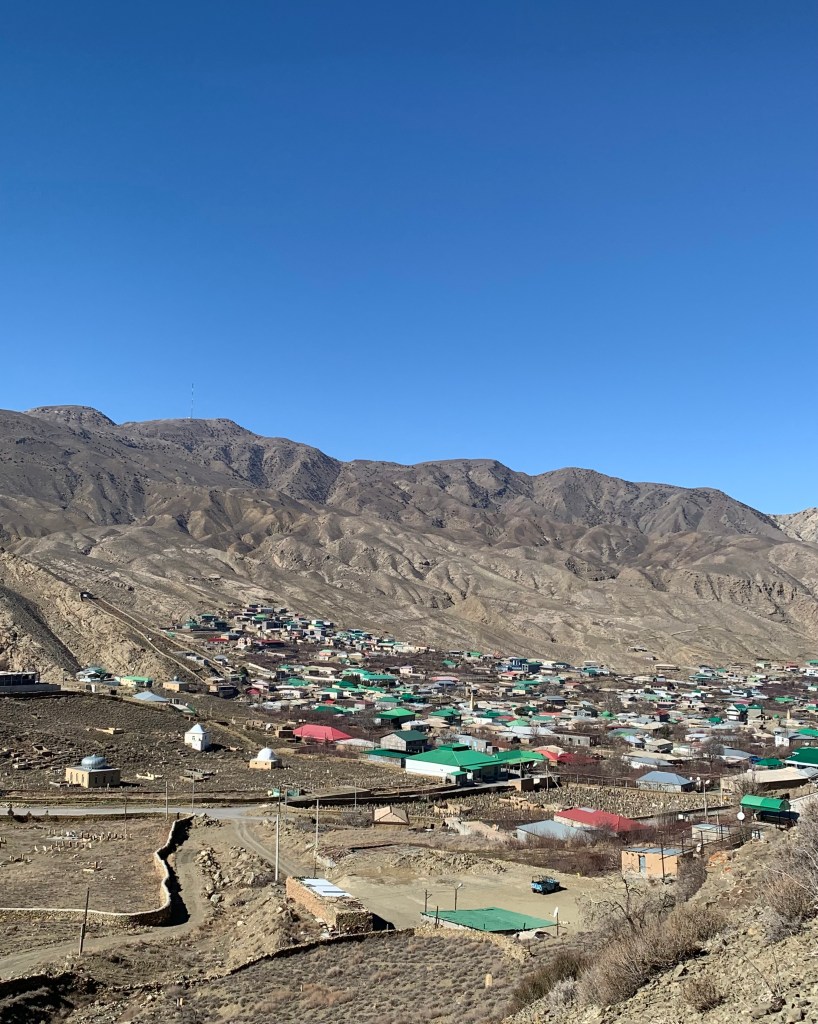
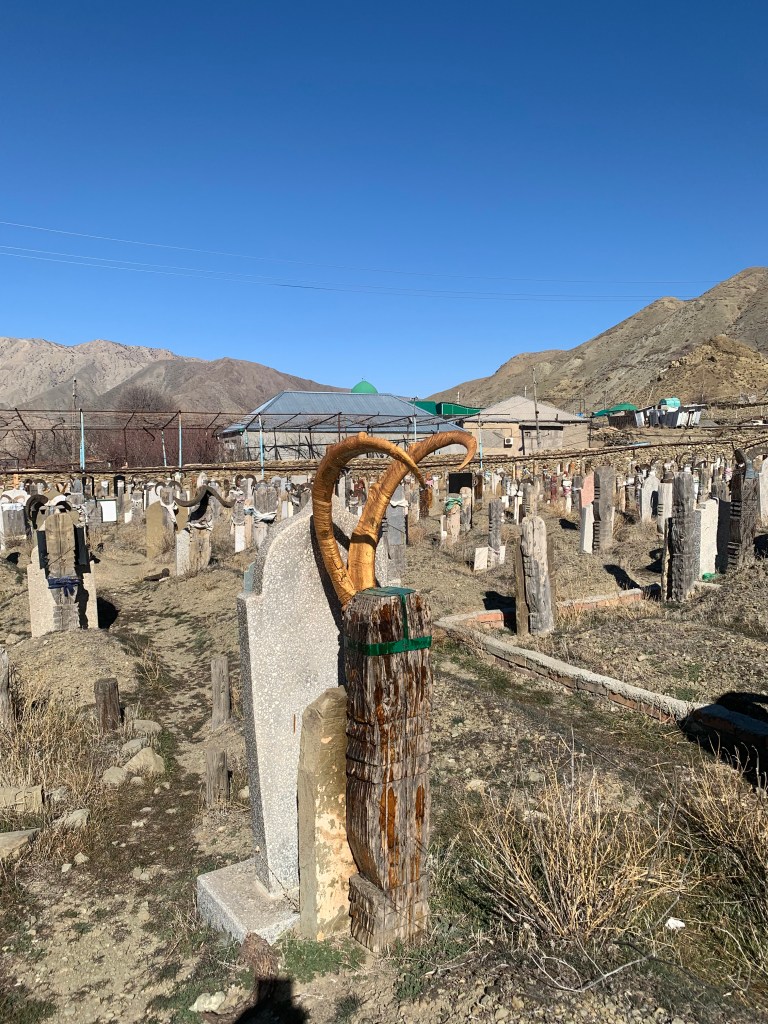
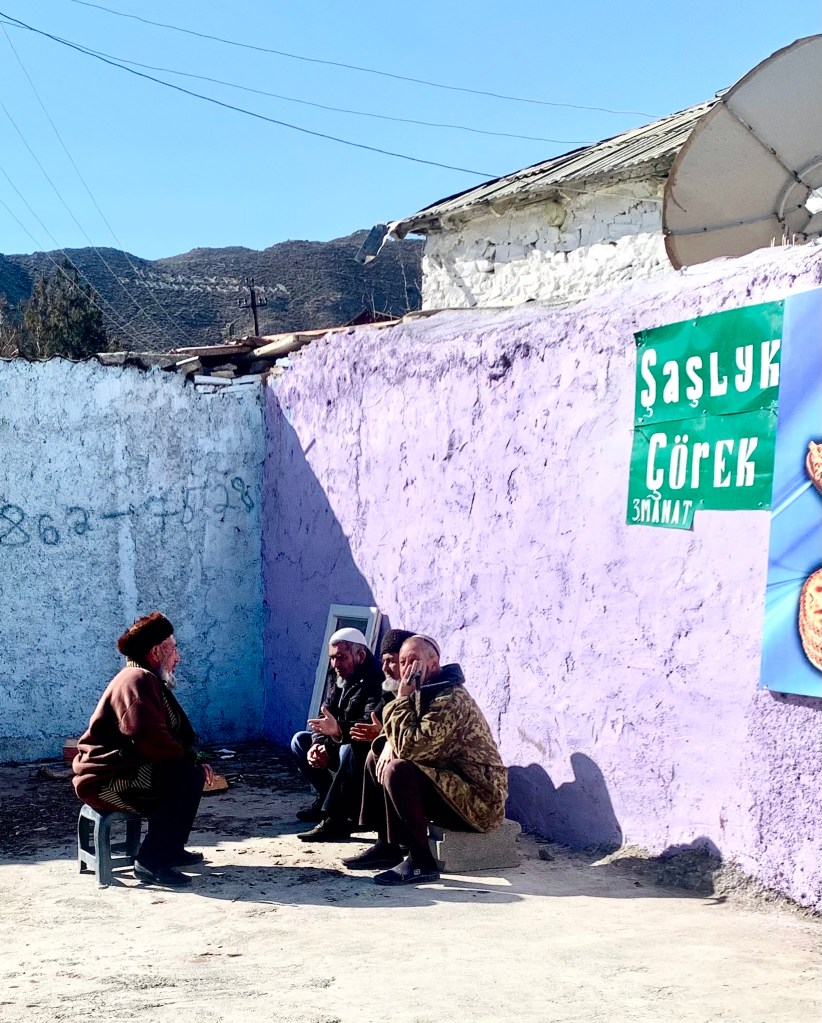
The visit to Nokhur village (where people put ram’s horns on the graves – one story is that it’s to ward off evil spirits, the other that it is just a decoration) finally gave me an opportunity to see how ordinary people live.
Nokhur from aboveHorns on graves in NokhurSchool uniform Good spot for a chatThis lovely lady with a golden smile gave me some home made breadBought some tea by the old china tree
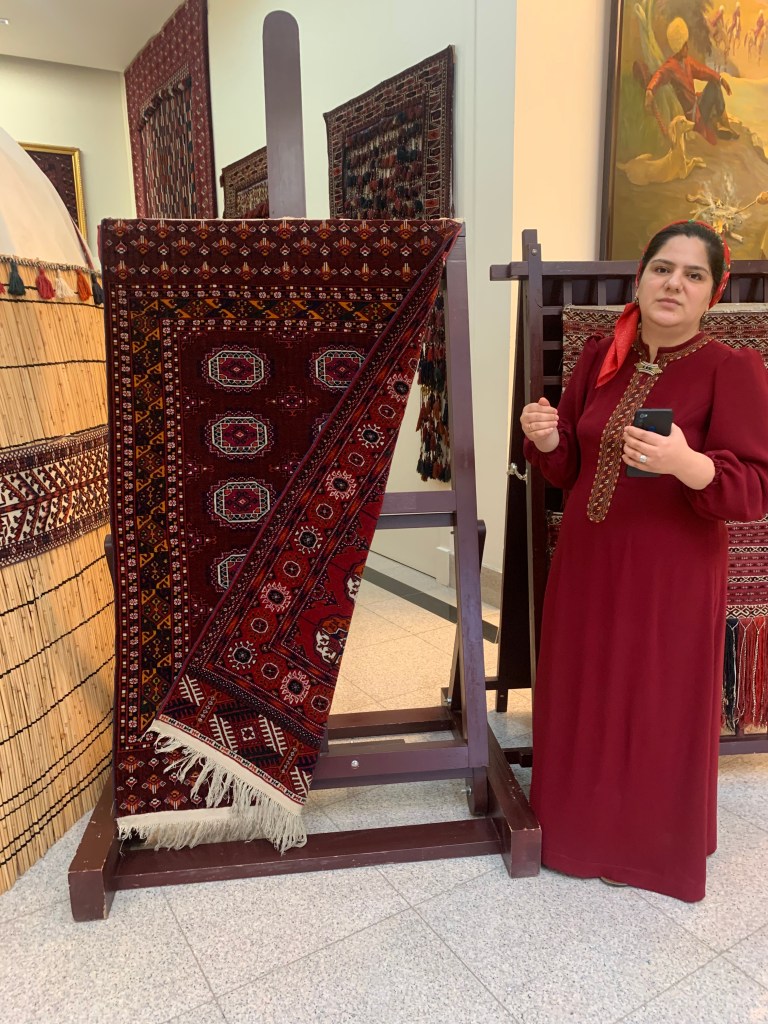
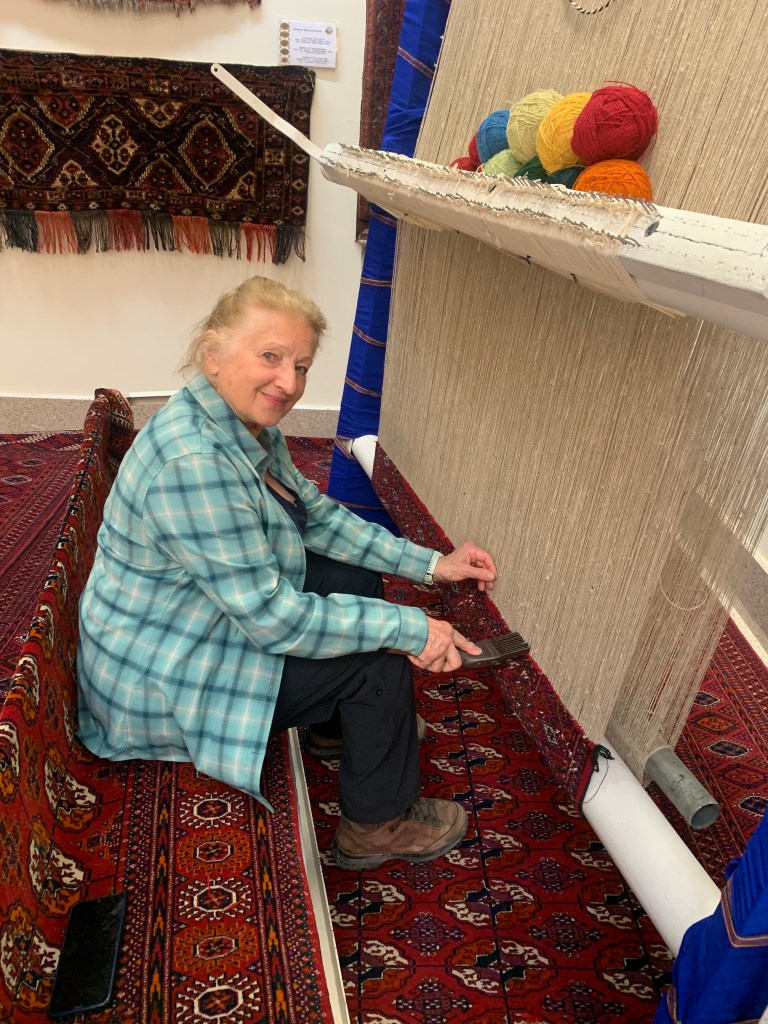
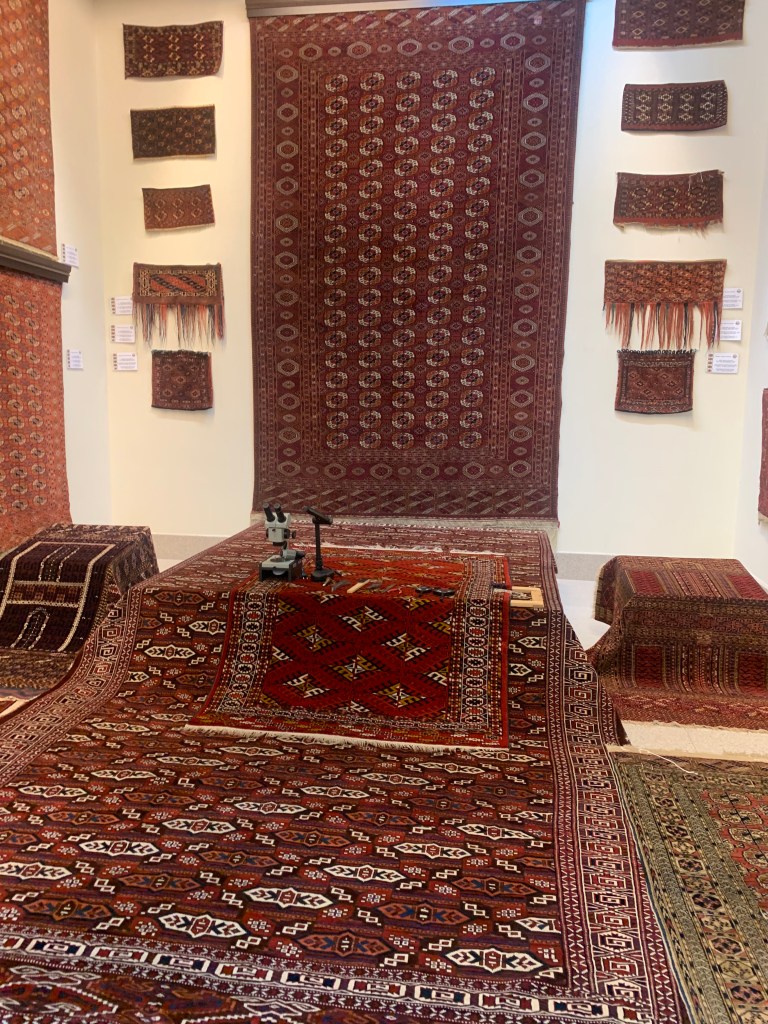
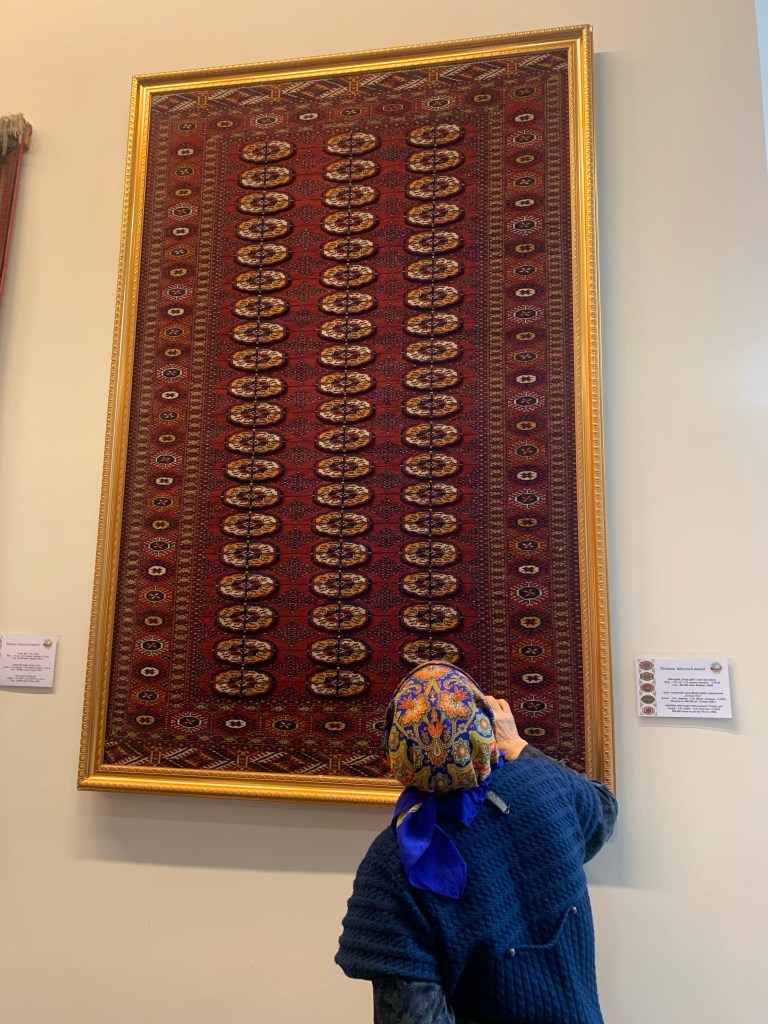
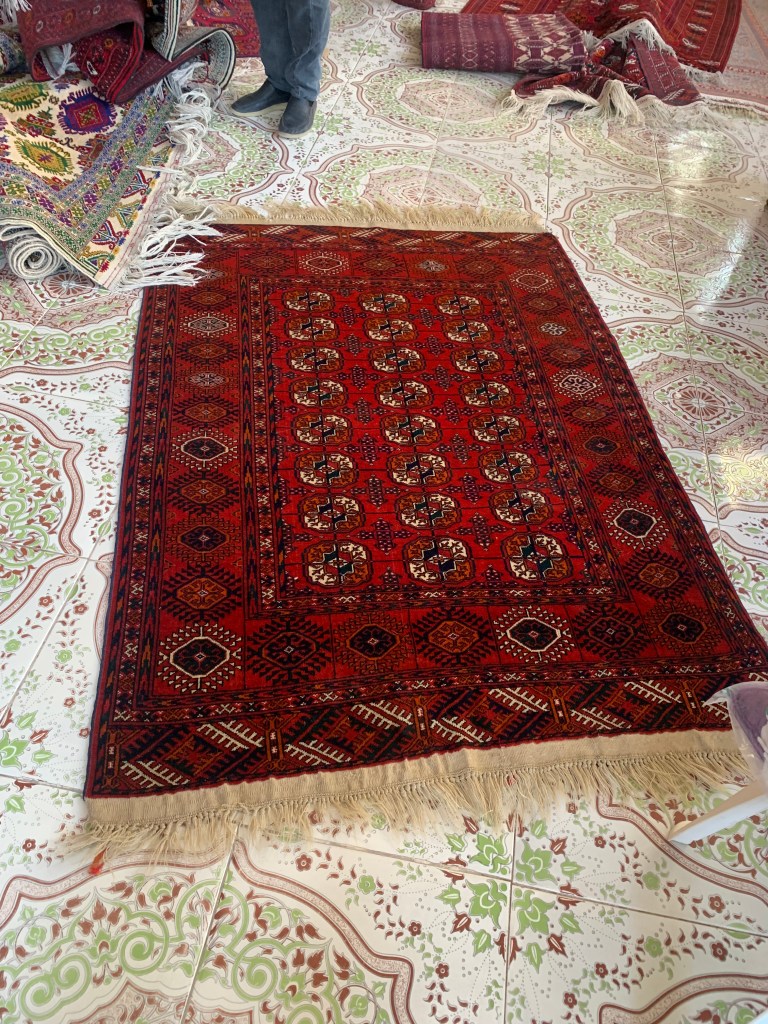
I enjoyed the visit to the Carpet Museum. We all know of the “Bokhara” carpets as the best quality hand-knotted ones. But they were only SOLD in Bokhara and have always been made by the Turkmen people. I did drool over a couple of them. Later I really wanted to buy one (in the shop in Mary) – but I would not have been given an export license as it was over 60 years old.
A 3-D carpet – the light ovals are raisedA 60-year old beauty I wanted
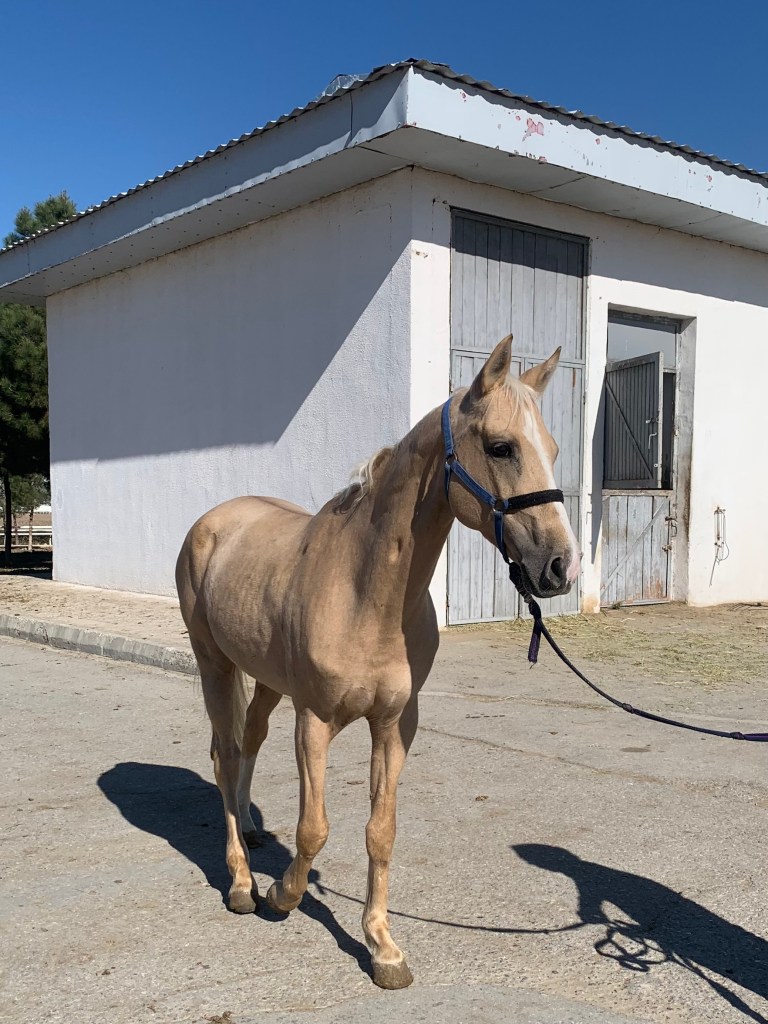
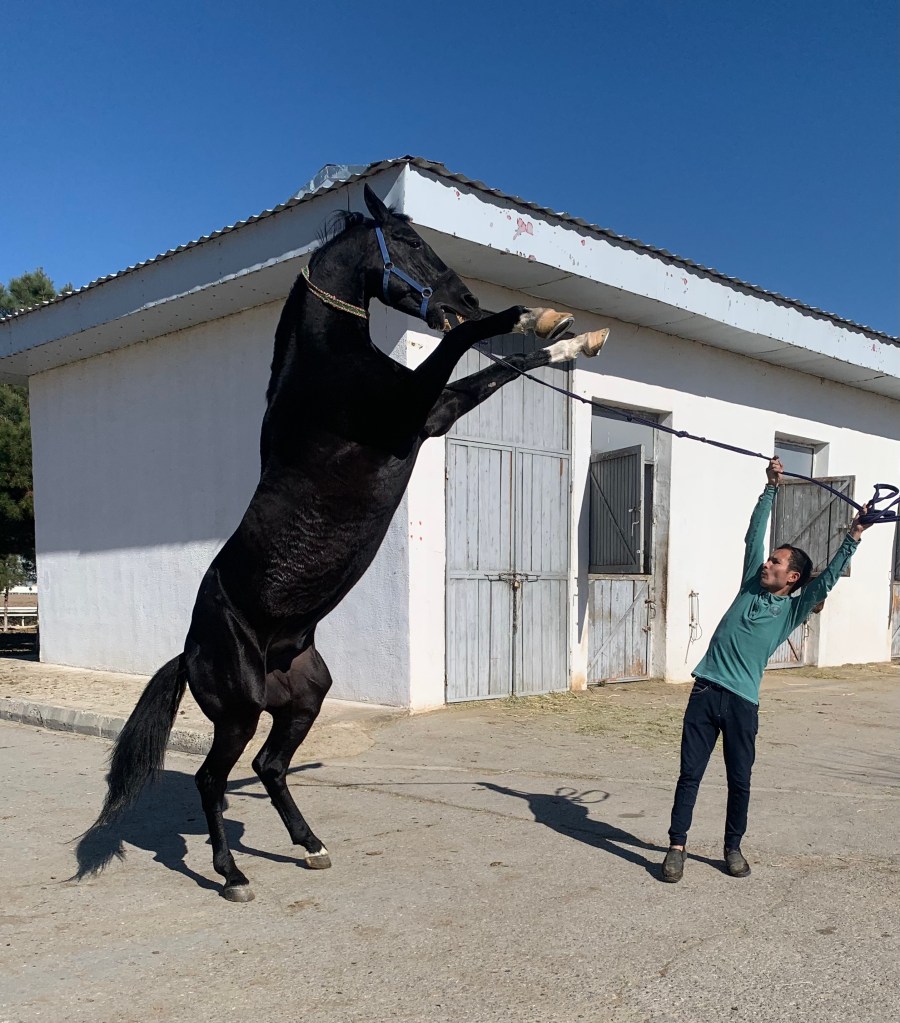
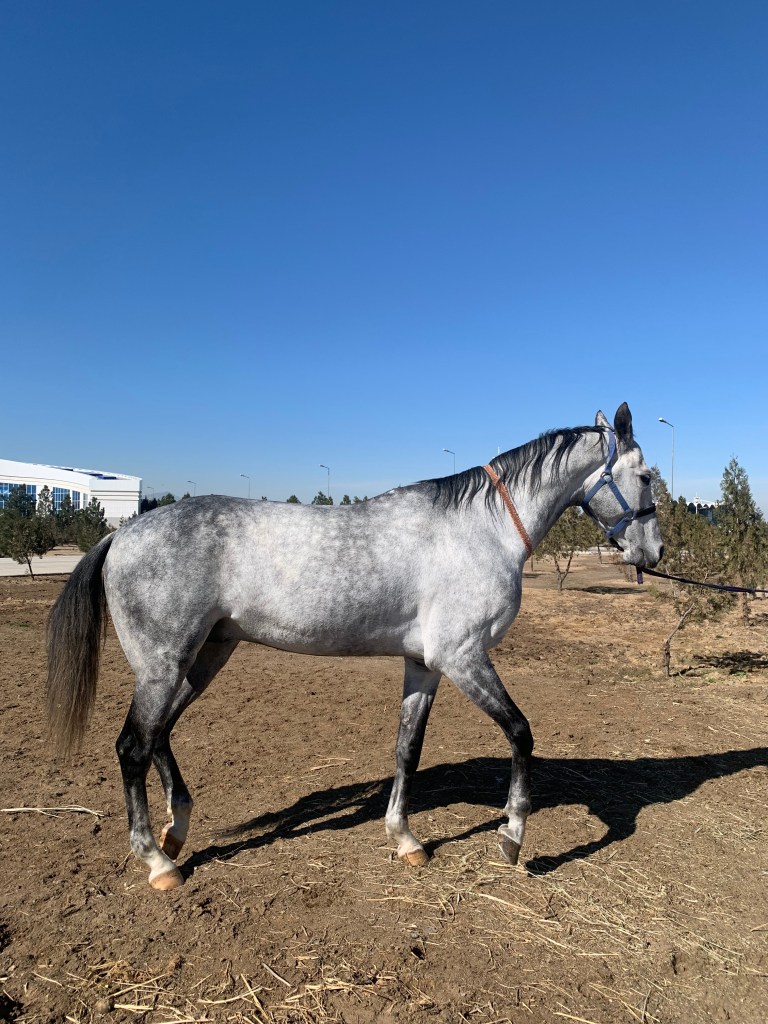
Turkmen are well known for their horsemanship and I was looking forward to seeing the “golden horses”. The Stables near the race course is a home to 600 horses, the Akhal-Teke among them. (I was told that the late Queen was gifted an Akhal-Teke horse by Turkmenistan and the grooms were convinced that the horse had been painted gold and tried to wash it off.) I could have had a ride ($10). Were I a better horsewoman, I might have had a go. They all looked well looked after, if a little frisky (the black stallion is known for being headstrong).
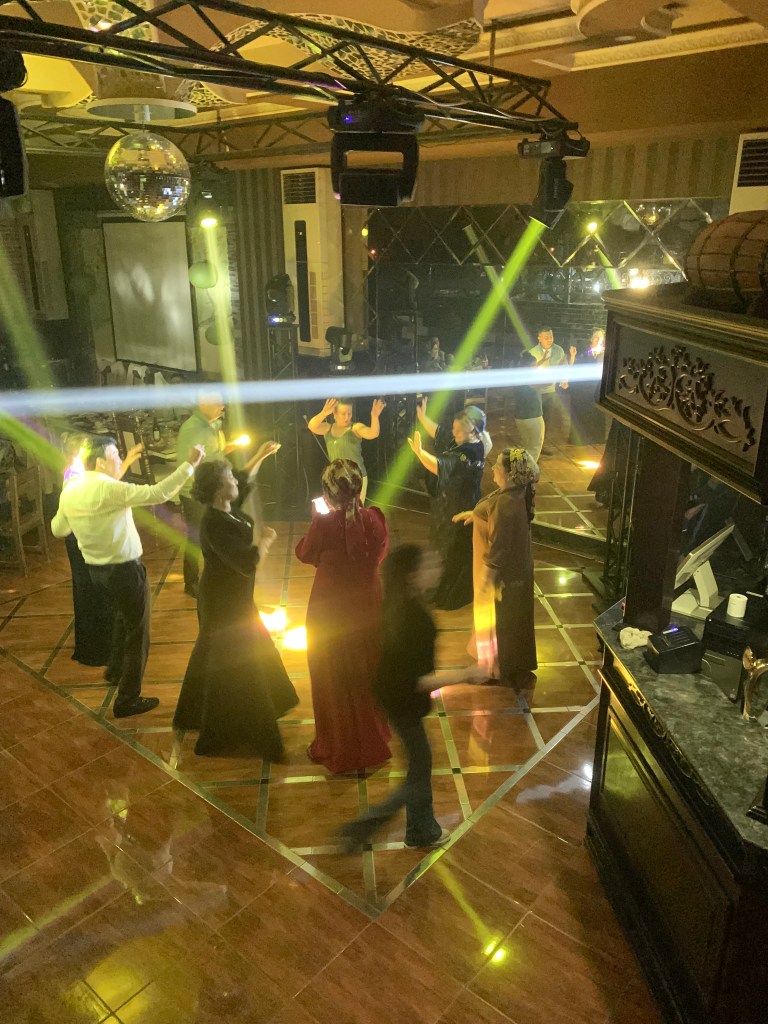
The original programme had me staying in Ashgabat for 3 days, with a couple of trips out. As we more than covered Ashgabat in 2 days, we headed to Mary – the old Merw of the Silk Road (the new town is some 45 km southwest from the ancient city – the river Murgab changed course. Merw is 350 km away from Ashgabat on the road that could be better. There are a number of checkpoints where everyone must slow down; there are also random stops and car document checks along the road. Having the green license plates (a government vehicle) helps but is not a guarantee. (The foreign business partners/investors have yellow plates; the diplomats have blue; folk have white.) One is not allowed to take photos of the checkpoint or police in action. It was good to get to Mary a day early – poor Guwanch would otherwise have had to drive some 800km in one day on those awful roads. It also gave us a nice evening out – dinner and disco!
Approaching a police checkpoint
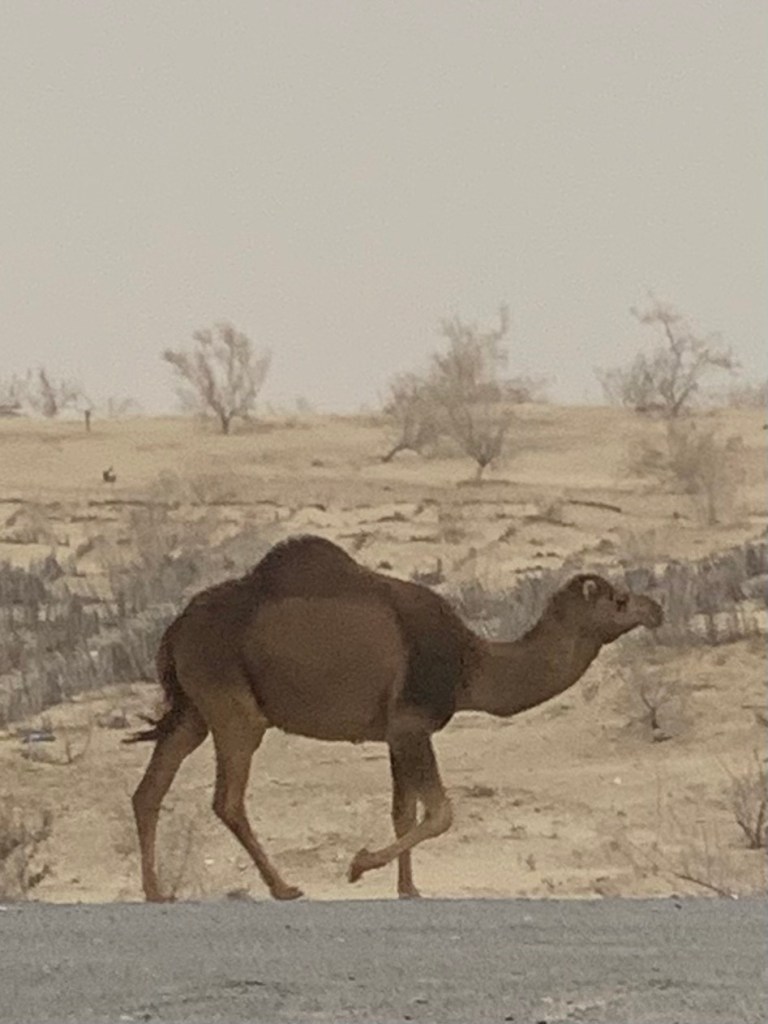
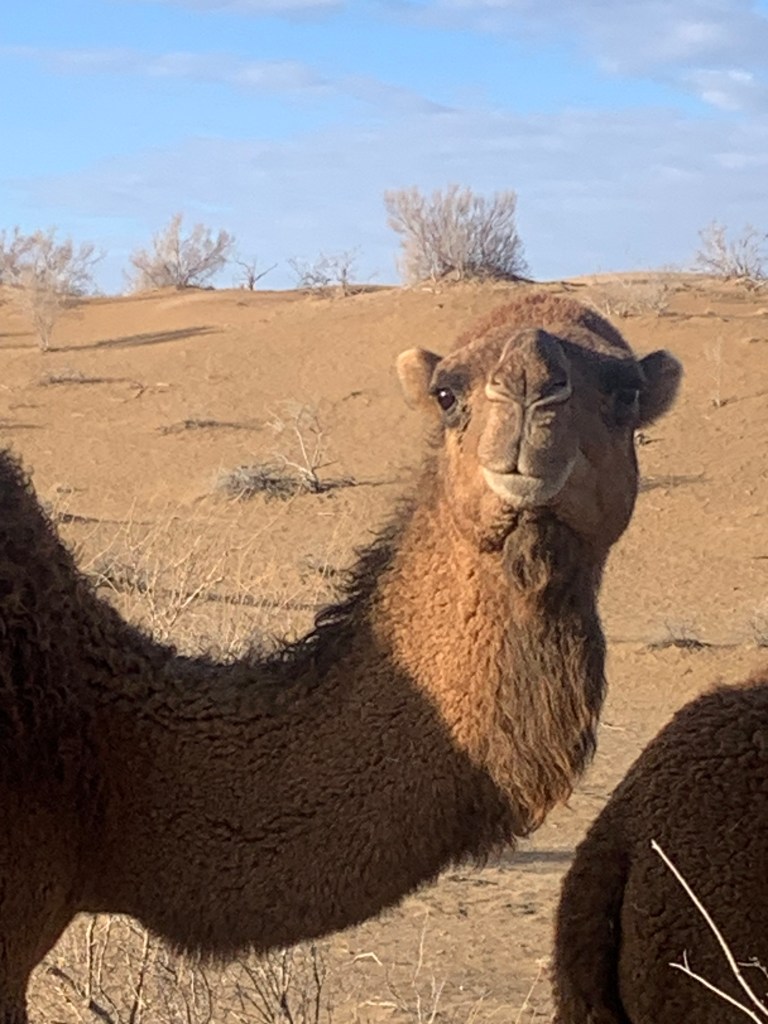
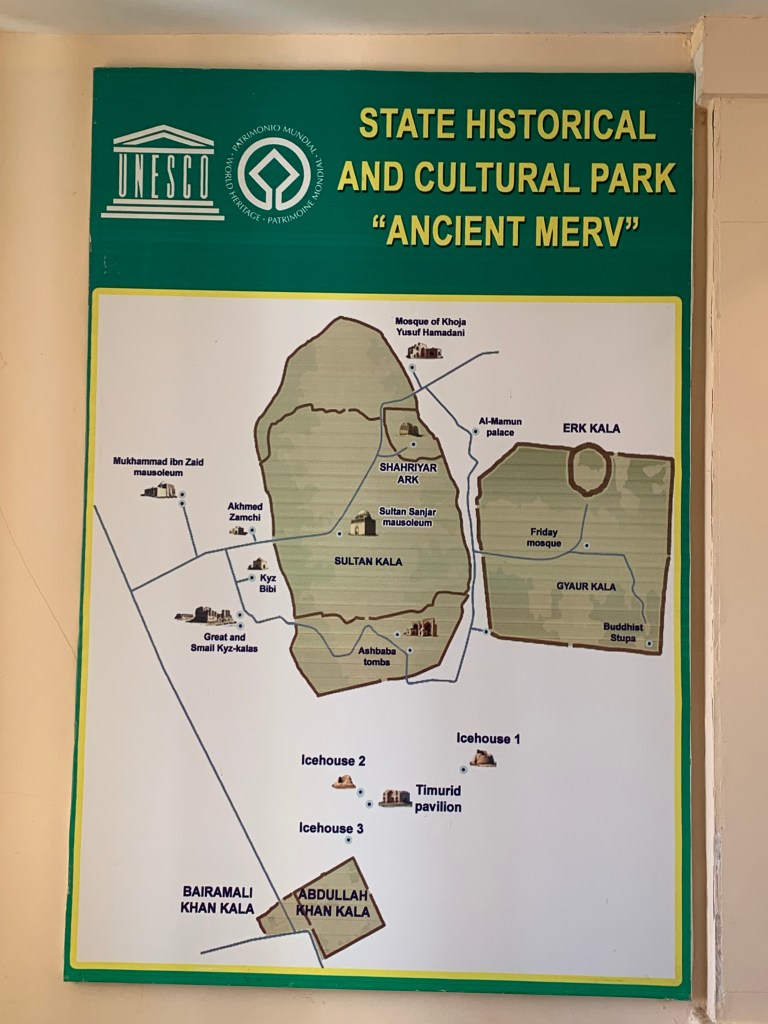
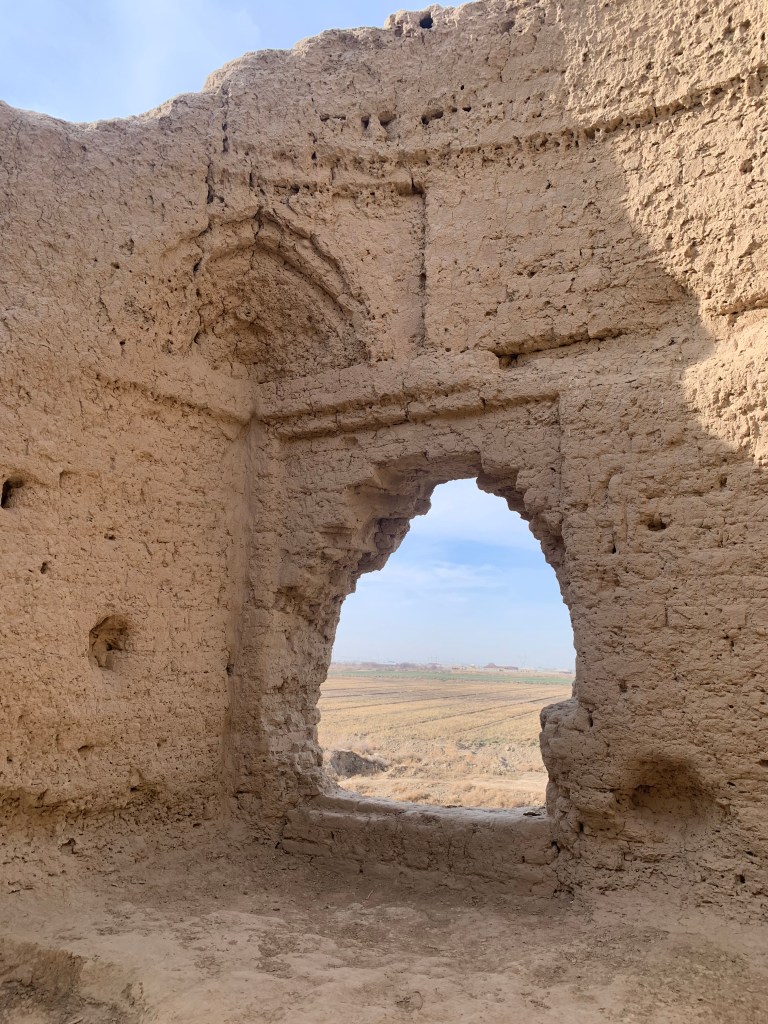
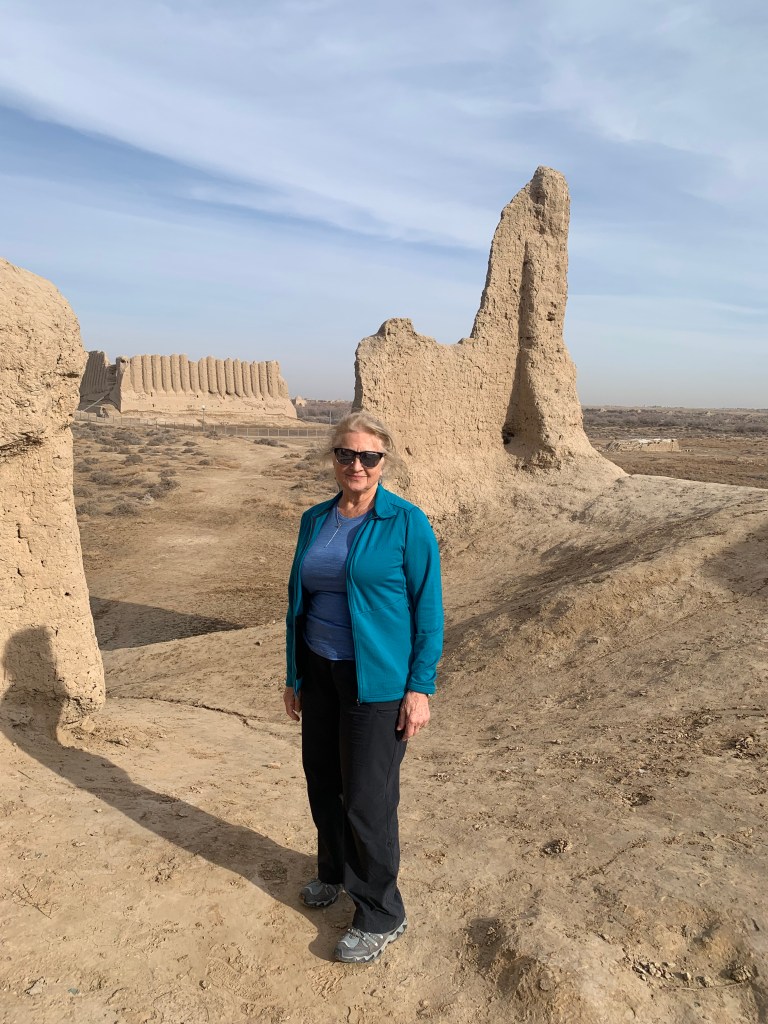
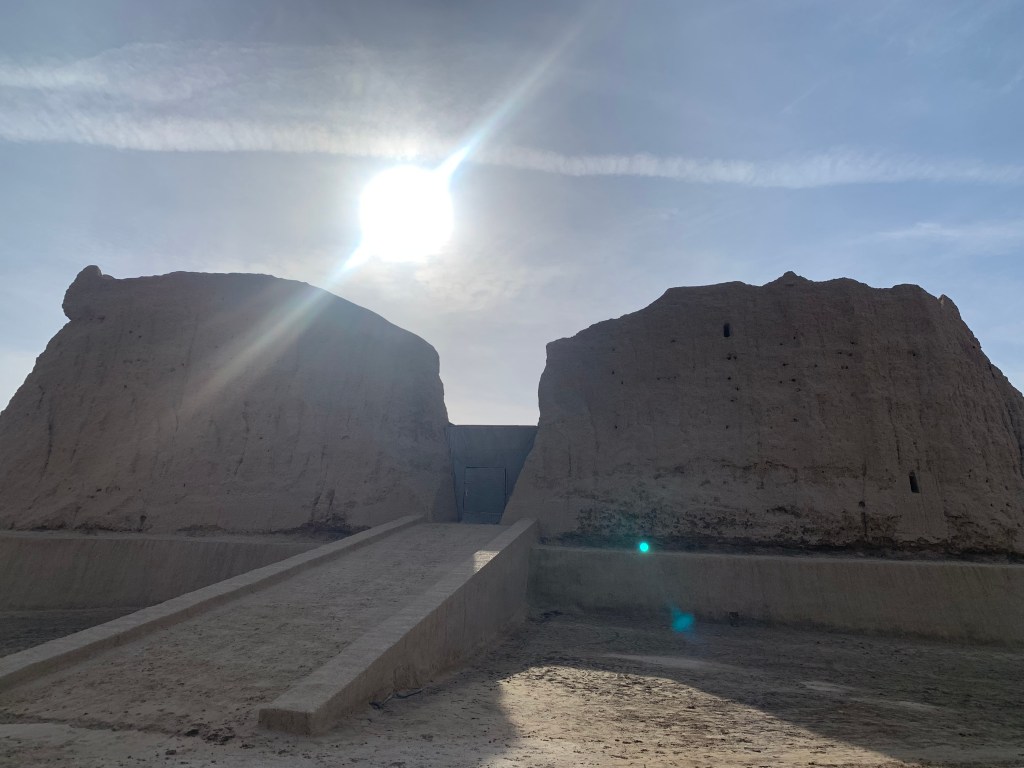
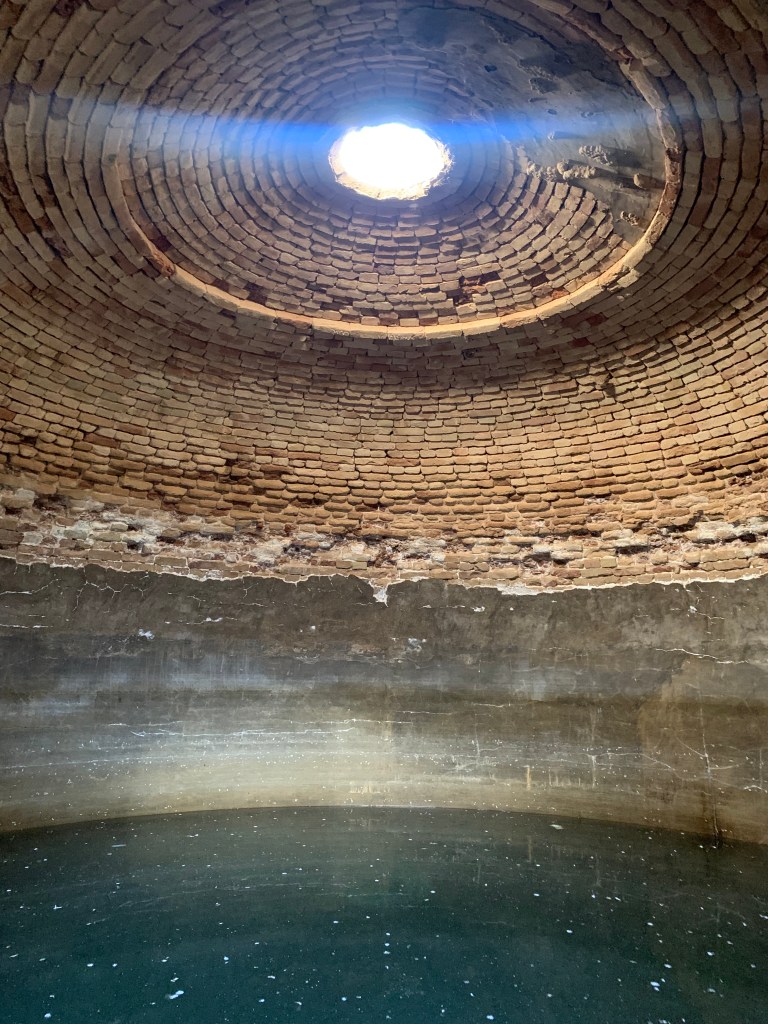
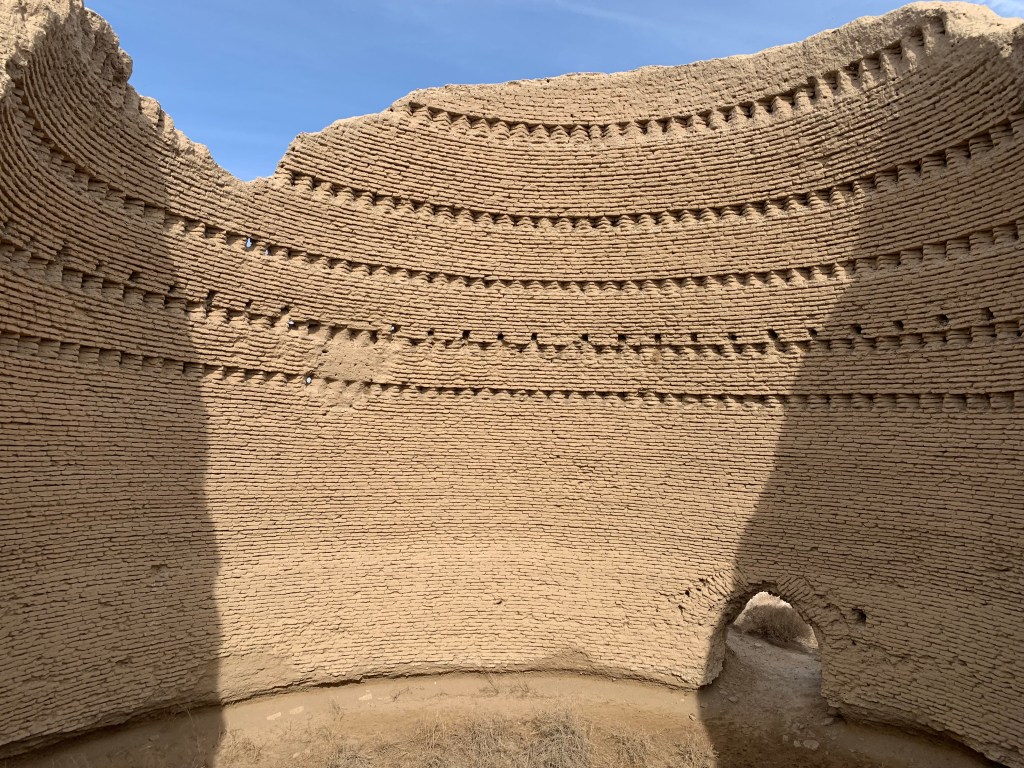
The ancient Merw did not disappoint. It used to cover some 1000 hectares and was the largest city in the world at its peak – 1/2 million people lived there. The conquerors and emperors came and took and destroyed and rebuilt. The far stretching walls, some fortresses and Ice houses still stand. And the camels graze where the merchants traded and the caravanserais stood.






 Maribibi_travels