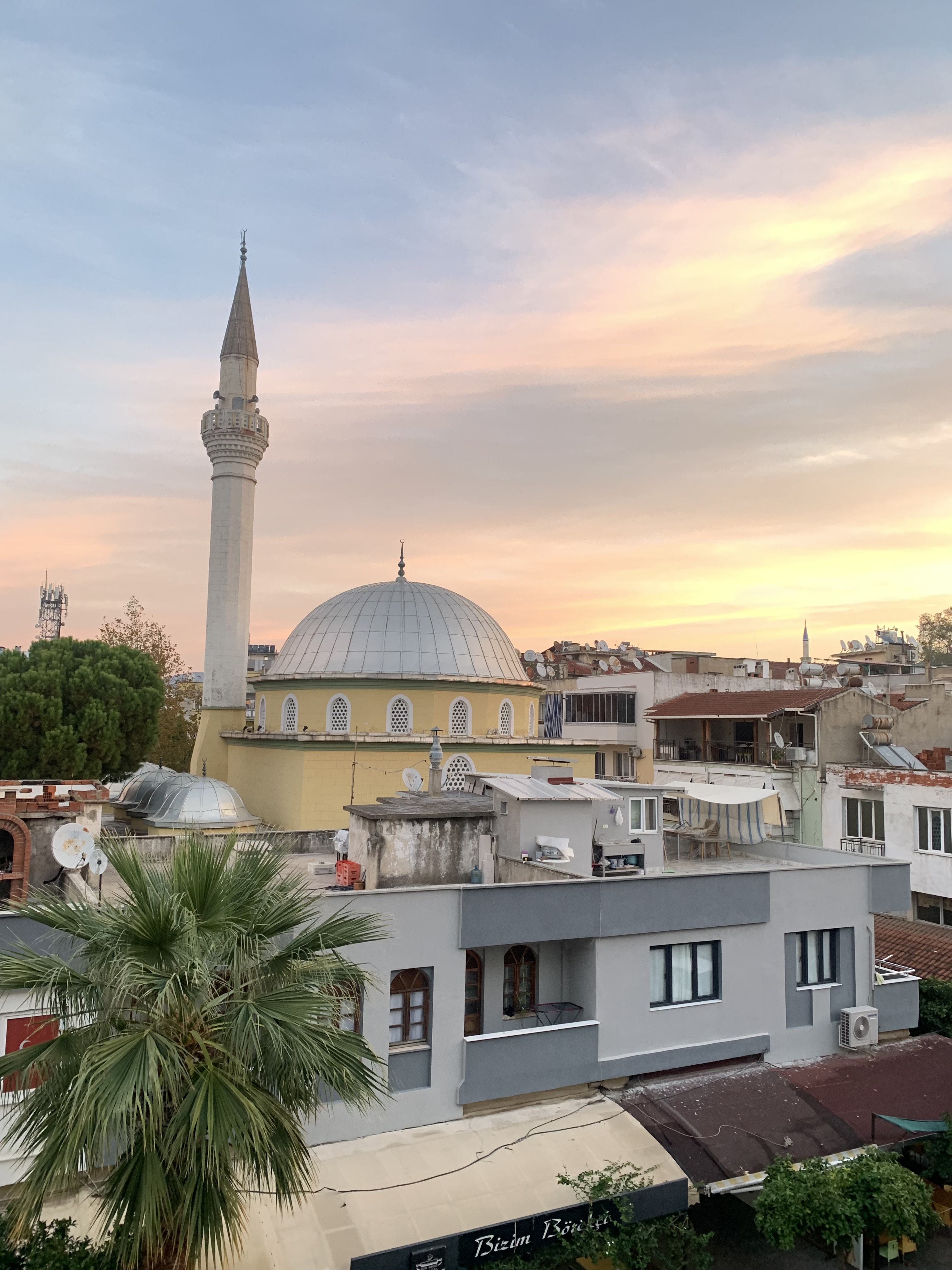
The day starts at 06:18, very loudly, as the muezzin calls the faithful to prayer from the mosque opposite the hotel. There is no snooze button – the wake up call is full five minutes long, and the sound of others can be heard further along. It drowns the barking of street dogs and the quarrelling of urban birds. The sunrise is not for an hour…
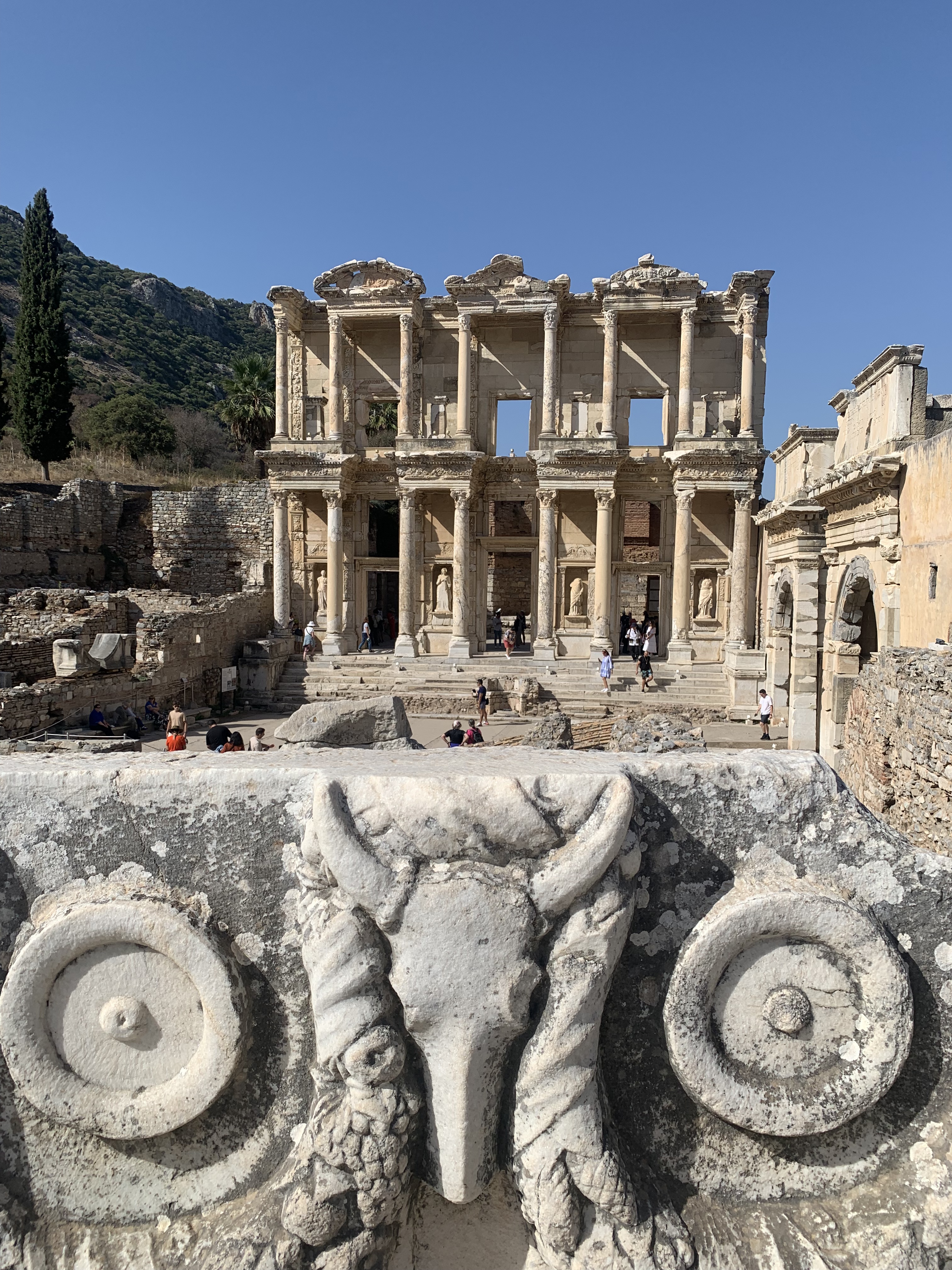
I knew Turkey was full of antiquities and history lurks everywhere, but Ephesus is truly impressive and overwhelming, as well as sad. A quarter of a million people lived here. The temple of Artemis, one of the Seven Wonders of the Ancient World, was here. (The story of how it got burned down, by a man who wanted to be famous/notorious, has loud echoes today: Herostratus, the arsonist, was condemned to NOT have anyone mention his name (damnatio memoriae), in any way. Obviously, the law didn’t work. Oh, and Artemis was away from home on that day in July 356 BC, helping with the birth of Alexander the Great, which is why the arsonist succeeded.)
The busy port of Ephesus is no more, the silt has settled and the sea is several miles away.
The beach at Pamucak, a small seaside resort a few minutes’ ride further on the same Ephesus dolmus, was empty, sandy, the sea comfortable (probably c 25 degrees, though the locals would not dream of swimming at this time of year).
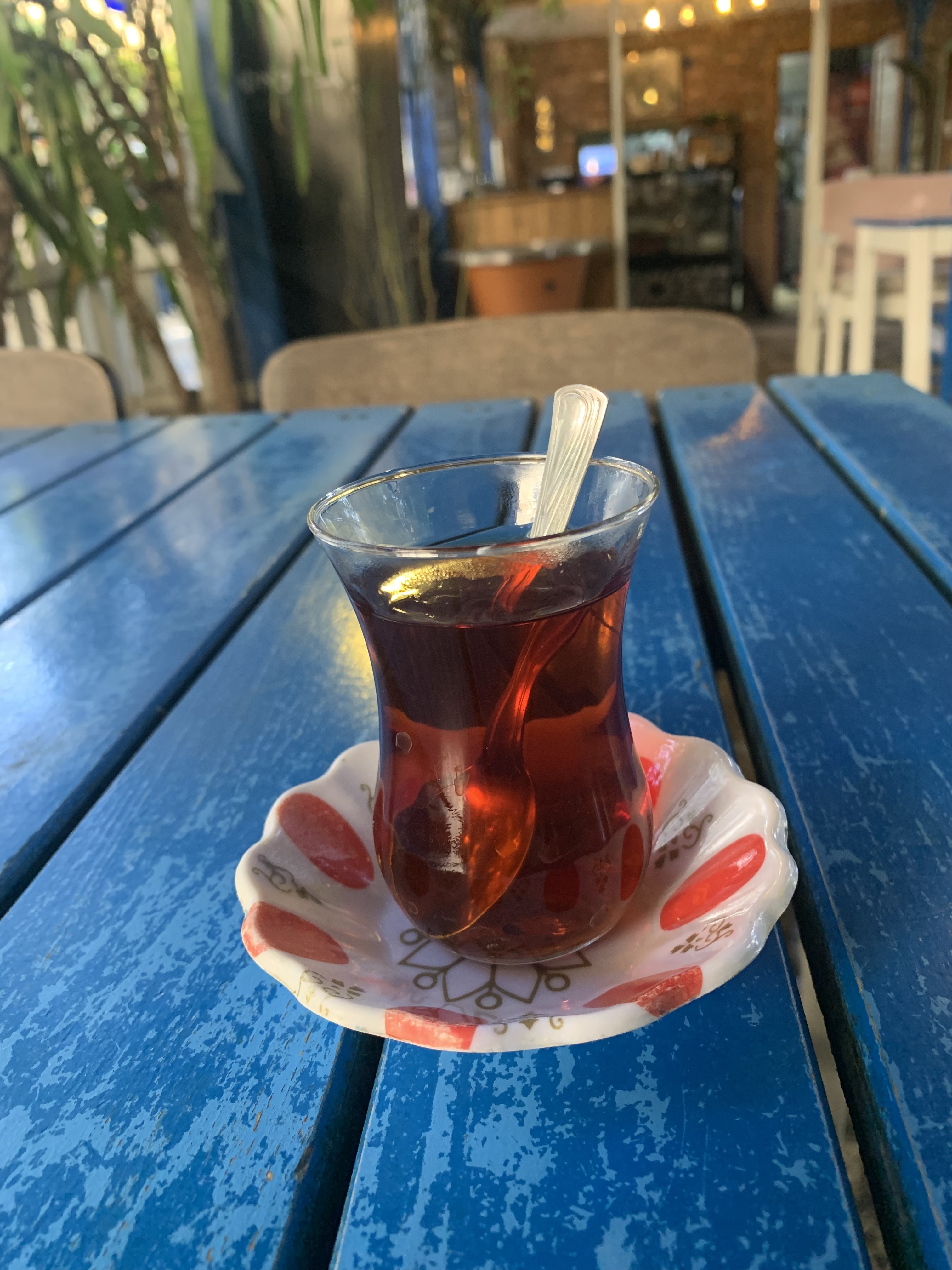
Chai is the ubiquitous drink. The stewed tea is kept warm in a pot on top of the urn of hot water, the two mixed in a waisted glass and served with sugar. The idea of milk in the tea produces the look of horror. Or you can have coffee – proper Turkish or Nescaffe. Breakfast can be a borek – cheese or minced-meat filled filo roll, your choice of size weighed and chopped up – or a setin, a large bread-roll ring covered in sesame seeds.
This area, around Izmir, is good farming country, best known for its olive groves, but there are also walnuts, pomegranates, figs, and tomatoes, zucchini, cabbages. My Turkish is non-existent, but the Ottomans in the Balkans left strong traces in the language (a bit bastardised and warped in Bosnian, but still understandable), so I know that zeytin is olive oil, that patlidjan is an aubergine, that turshe is a pickle, that charsi is a market… Baklava, of course, needs no translation.
Alejandro, who I met on my first evening in Seljuk, is a fellow traveller in more ways than one. A man in his thirties (I’d say), following his dream: he saved for ten years for this voyage from Colombia, South America, to Europe and Asia – India is a goal, where he intends to spend some time in an ashram, before returning home to his job as a mechanical engineer. I was pleasantly surprised with a thoughtful gift of a poem he sent me the day after.
Rebecca, with a website Oldbirdtravelssolo.com, is in the process of buying a place in the hills nearby, in Tire, where she hopes to “do my ceramics and sculpt in limestone”. There’s a chequered story and history, probably novel material, and I have not learnt a reason for wanting to stop here. Of course, the process of getting a residents’ permit and the bureaucracy of buying property in Turkey is fraught with pitfalls and problems, especially when you don’t speak the language, but she is still optimistic and smiling. Does not look like she wants to go back to Soho…
I’ll be trying train travel next, rather than bus – though there is little difference in the time it will take to get to Pamukkale.
 Maribibi_travels
4 responses to “Settling in, moving on”
The moral is, avoid hotels within sight of a minaret!
LikeLike
<
div dir=”ltr”>It brings back gre
LikeLiked by 1 person
Beautifully presented. It feels as If I am there – love the photos too. Richard A xx
LikeLiked by 1 person
It’s a little overwhelming, but my, are there things to see!
LikeLike