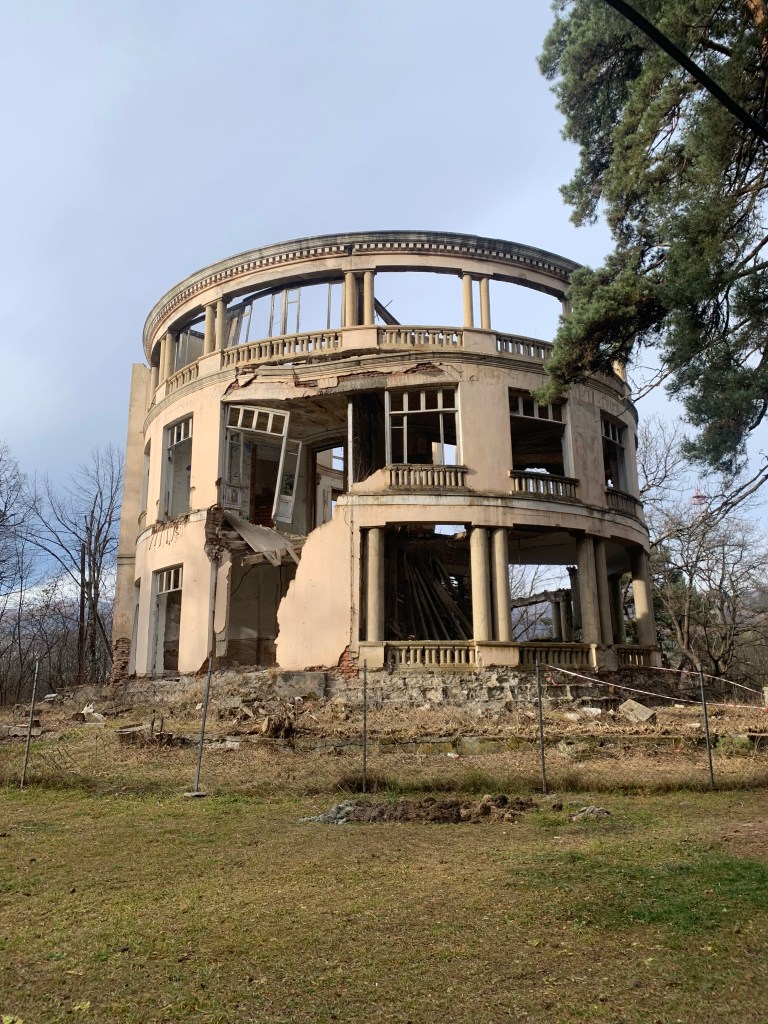
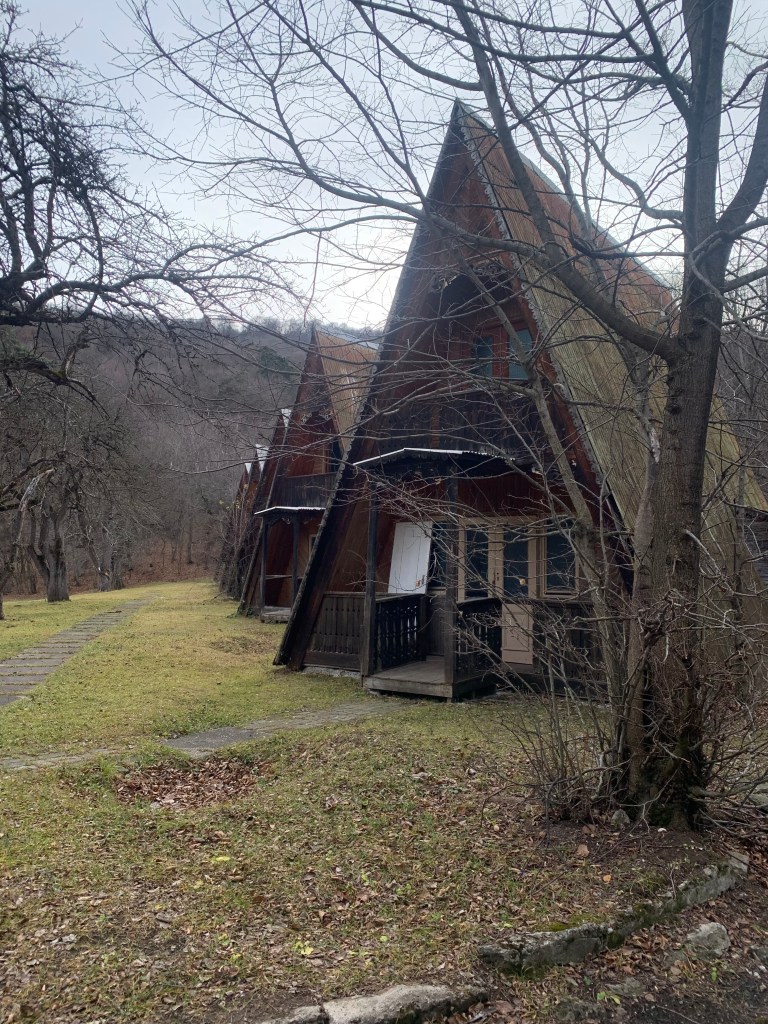
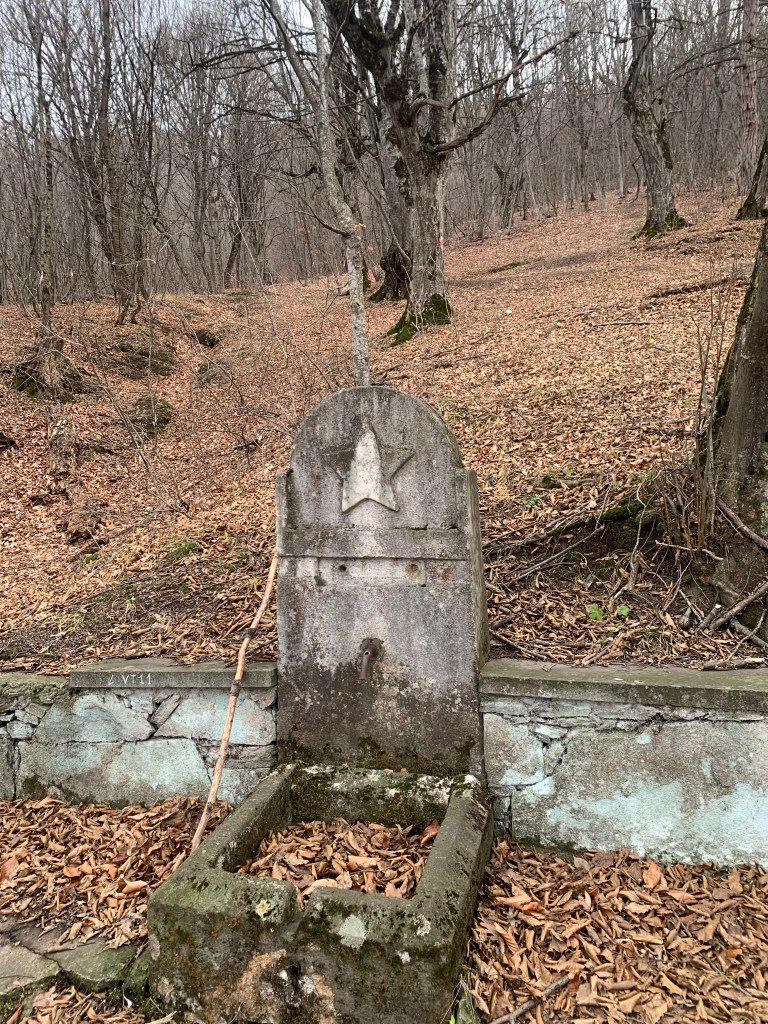
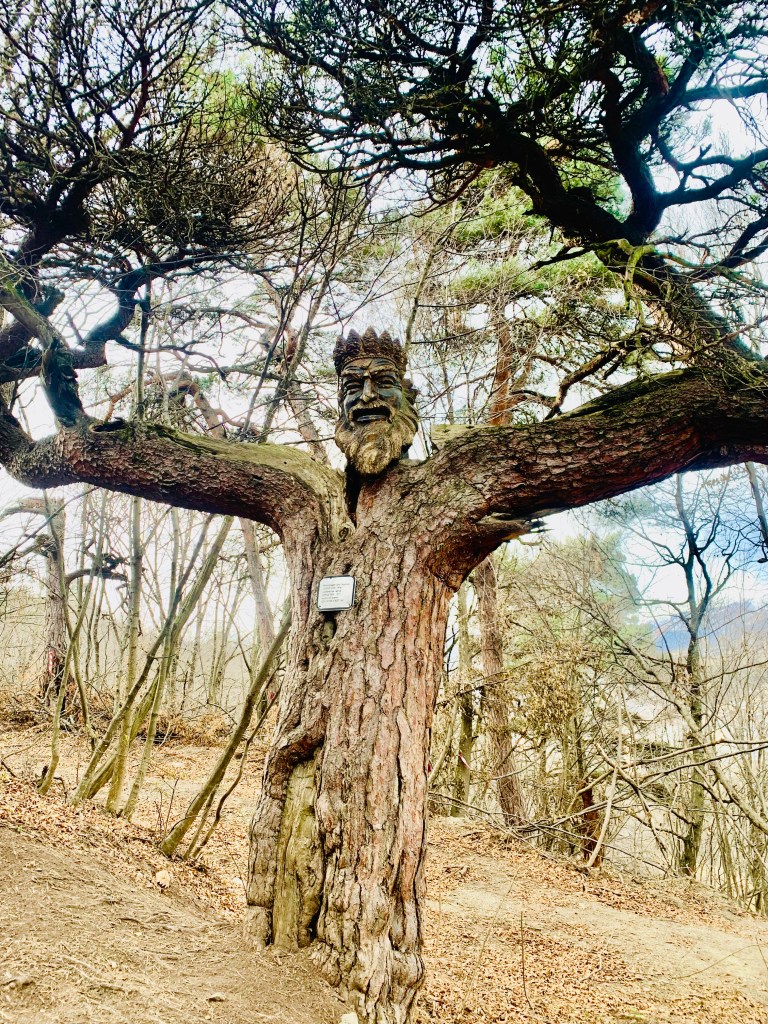
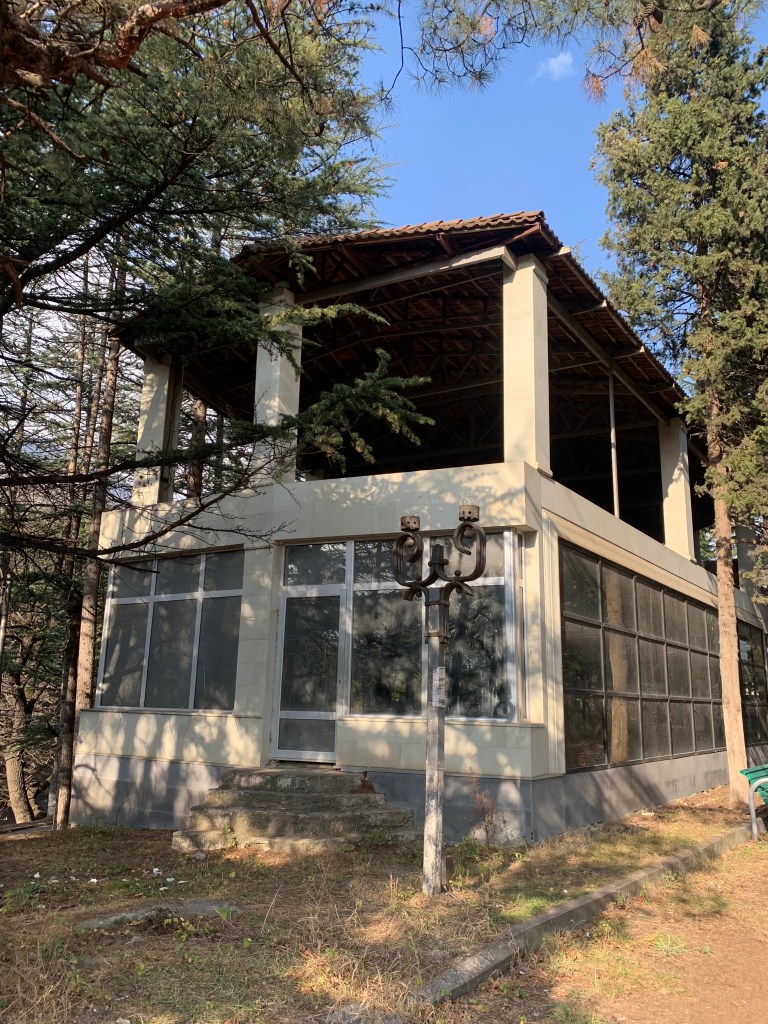
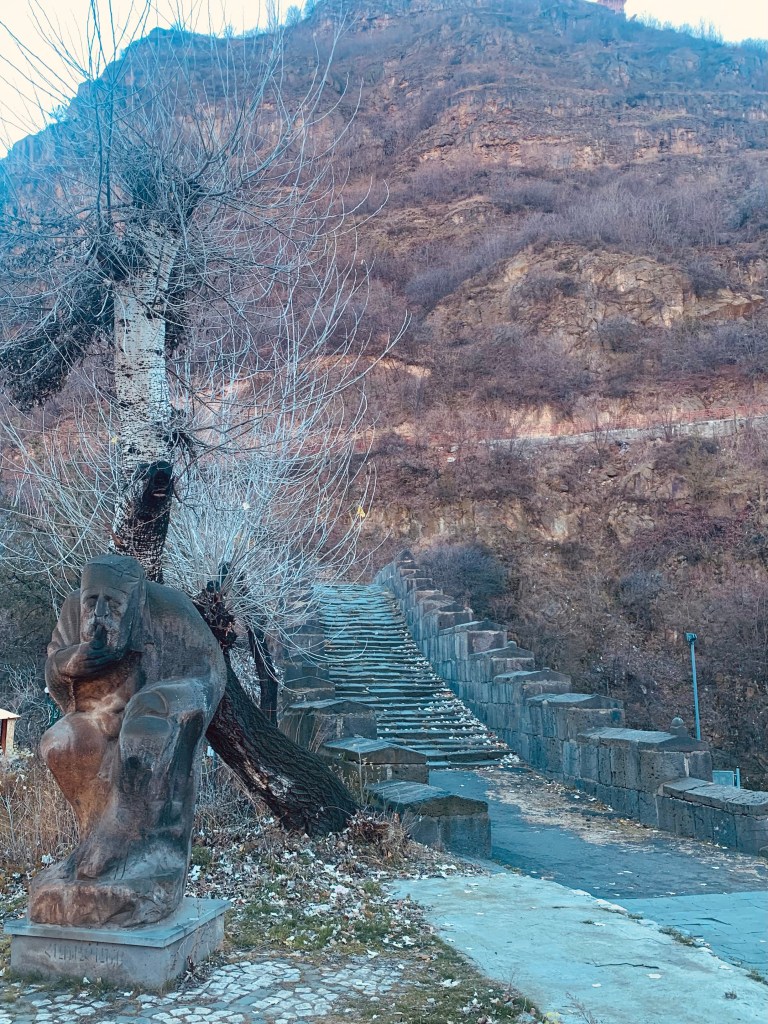
Dilijan, a lovely mountain town (I’ve been told more than once that the area was “the Switzerland of Armenia”) not that far from the capital Yerevan, has its fair share of dilapidated Soviet architecture. One of the most notable ruins is the circular villa built in 1936 for Aghasi Khanjian, the first secretary of the Communist Party of Armenia who held the post for six years. This was his summer residence. It has a neo-classical feel, but I’m told it was built in “Armenian modernist style”. It is on a prominent site above the town, and must have been a sight to behold (though not many would have been allowed near, from what I can see – fences are still there). The views over the river Aghstev and the mountains are lovely. I also liked the live sculpture of the King of the Forest. There were lots of supporting buildings, some in a Swiss chalet style, some clearly utilitarian. There is a basketball court (overgrown).
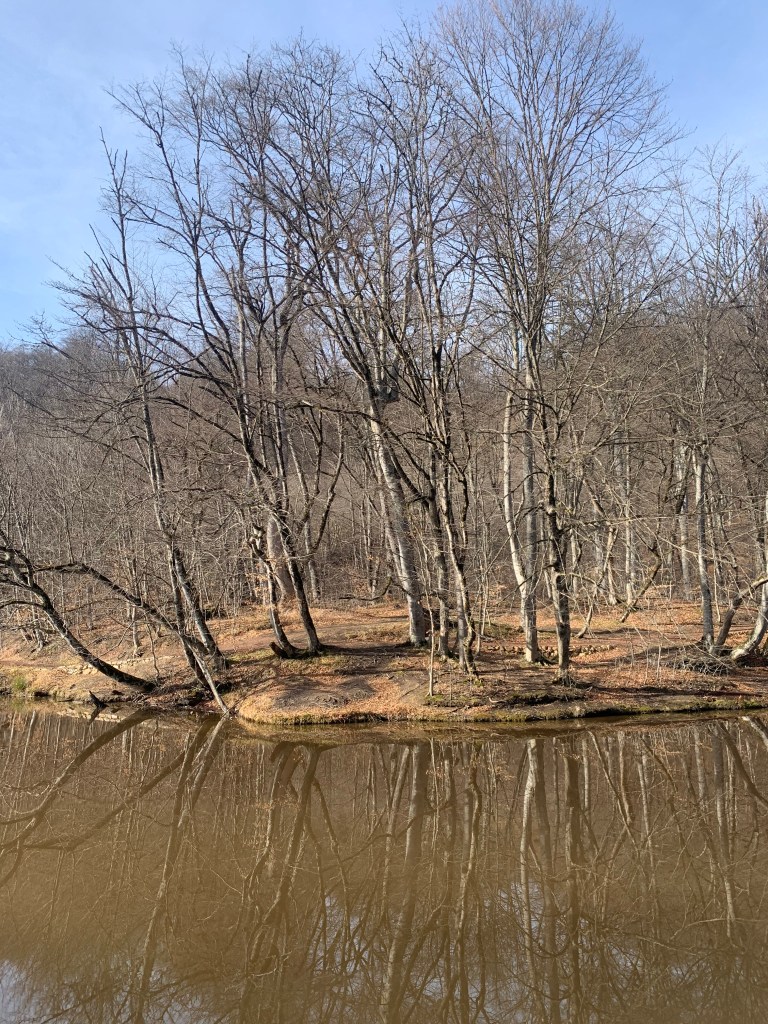
I recall our student visit to Russia in the early 70’s (Kiev, Moscow, Leningrad, by train). Tennis was considered “a capitalist game” and not played or encouraged, but badminton and basketball were seen as suitable for socialist youth.
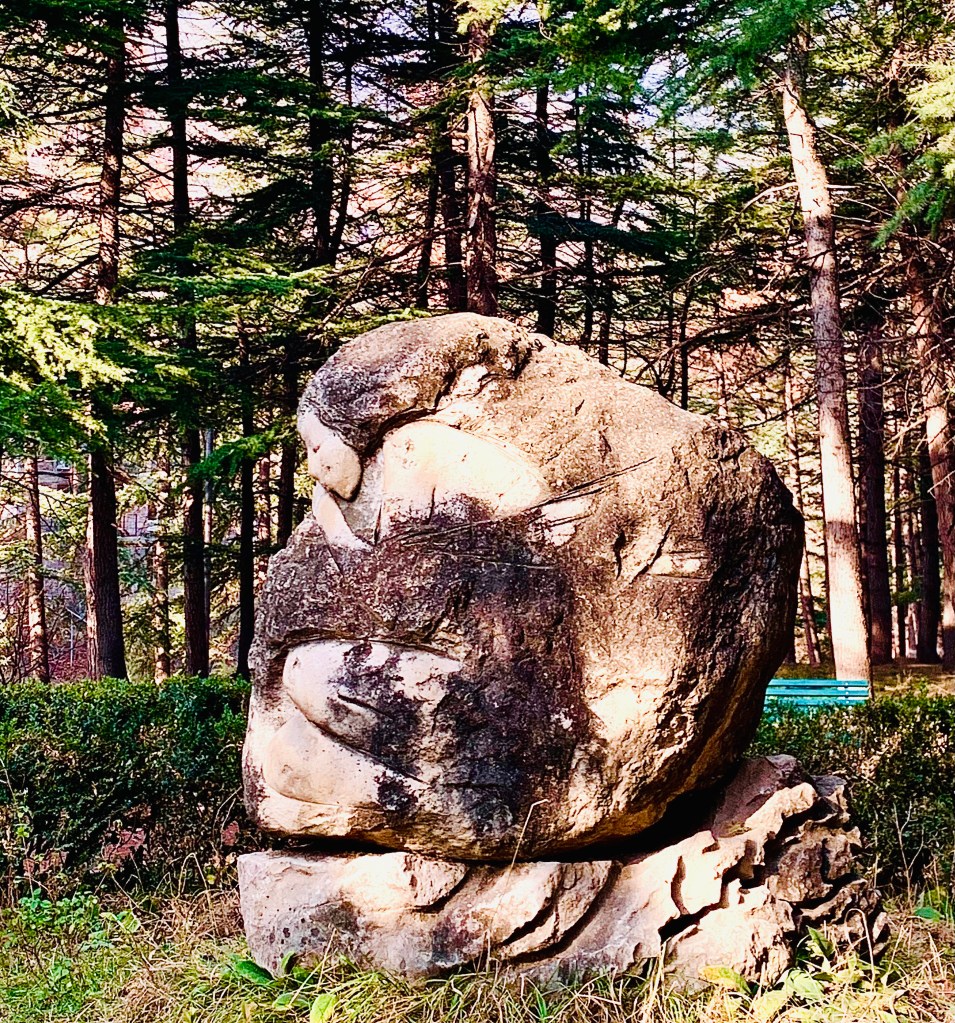
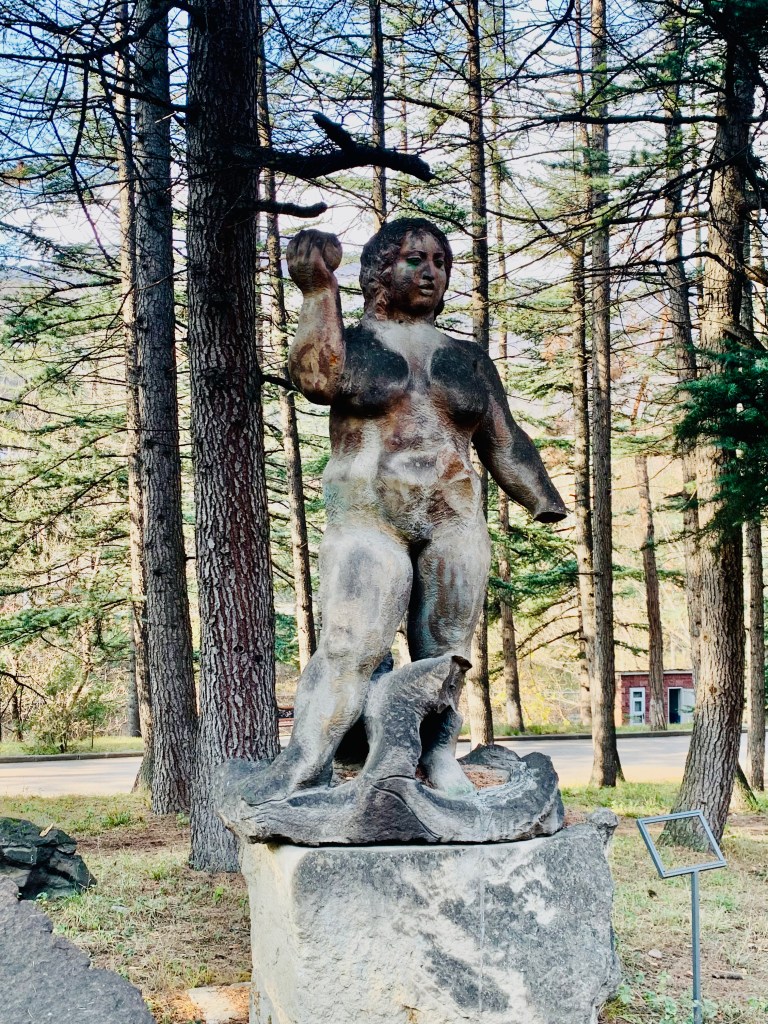
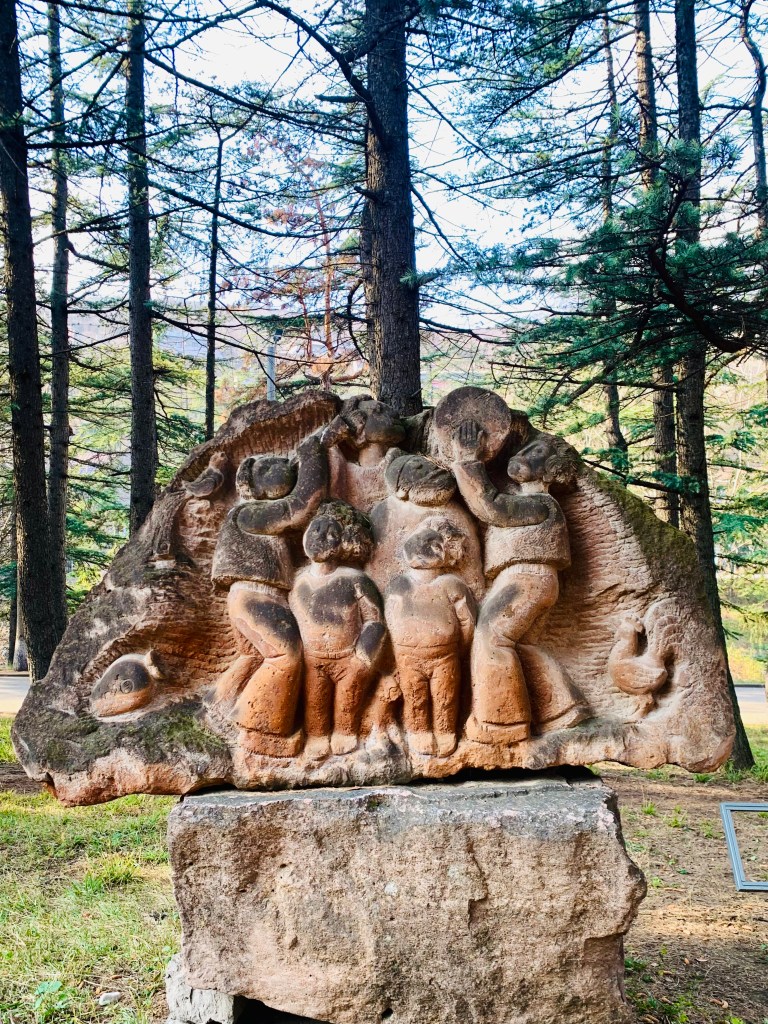
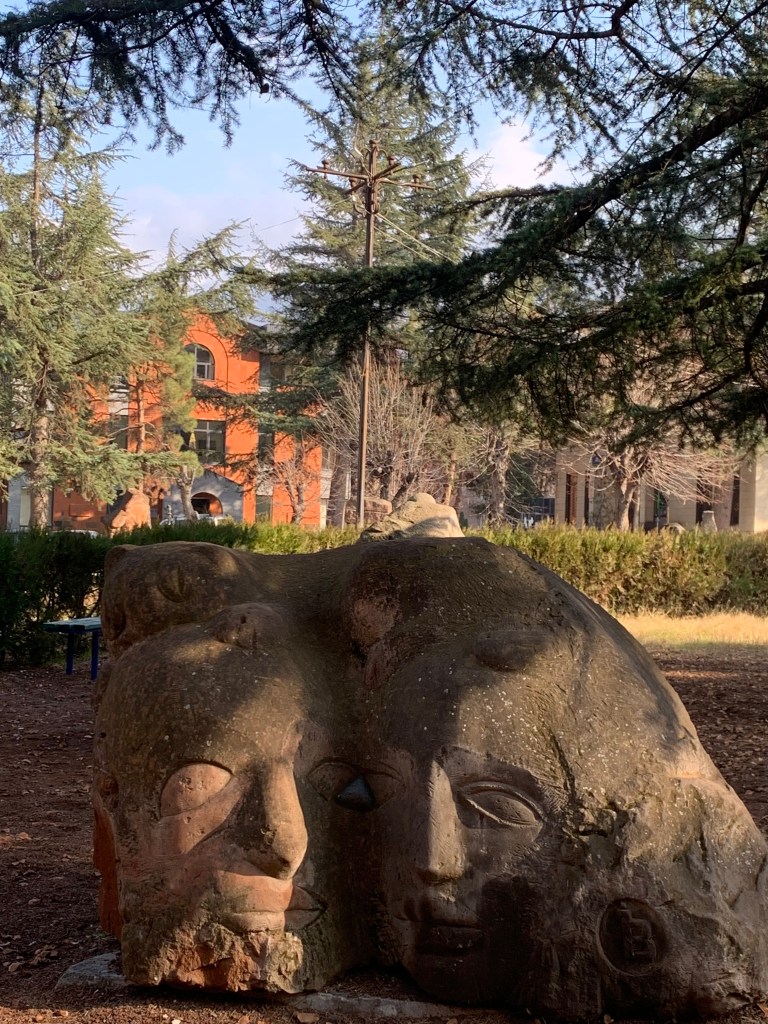
Ijevan, up the road from Dilijan, is in a lovely spot on the river Aghstev, with a long park on one side it, filled with sculptures. Ijevan means caravanserai in Armenian and it was a major Silk Road trading post . It is also a wine and cognac producing area – have been drinking Ijevan reds for a while now.

Getting back to Dilijan (on public transport) proved to be difficult. It was bitterly cold and windy. Normally, there are a number of marshrutkas on the road but on that Sunday none turned up. I started to walk back to the town (the winery is c 2km out) and also put my thumb out; after a while, a Toyota RAV stopped. Said I wanted to go to Dilijan and the chap said ok, he had time… It turned out he was a refugee from Nagorno-Kharabakh, a former soldier (he was in his forties, and had lost his right arm below the elbow) who told me he had arrived in Ijevan about three months ago, with little more than his car – there had been no warning from the Armenian government about the Azerbaijani takeover . He thought the Armenian government had made a deal, as otherwise the people leaving would have destroyed property and made places uninhabitable. He was understandably bitter. He drove me the 40 K to Dilijan and would not accept anything for it – he said to think of it as a kindness from an Armenian; he then went round the roundabout back to Ijevan. I also found out why there were no marshrutkas – there had been an accident with a marshrutka, which we saw overturned on the road.
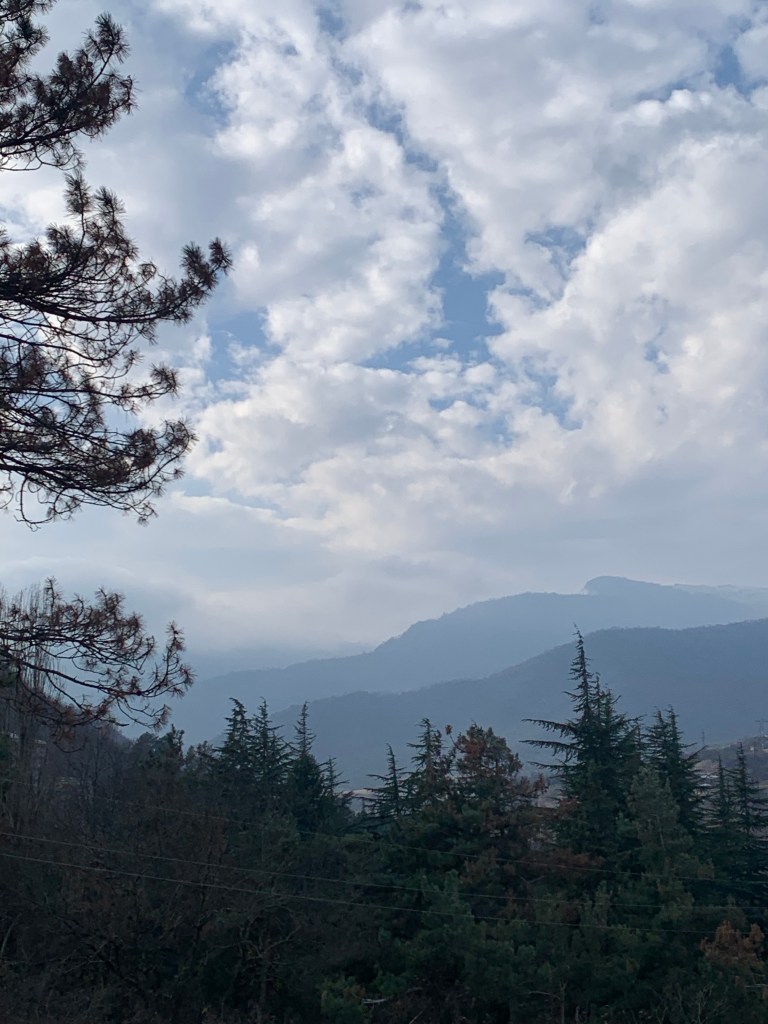
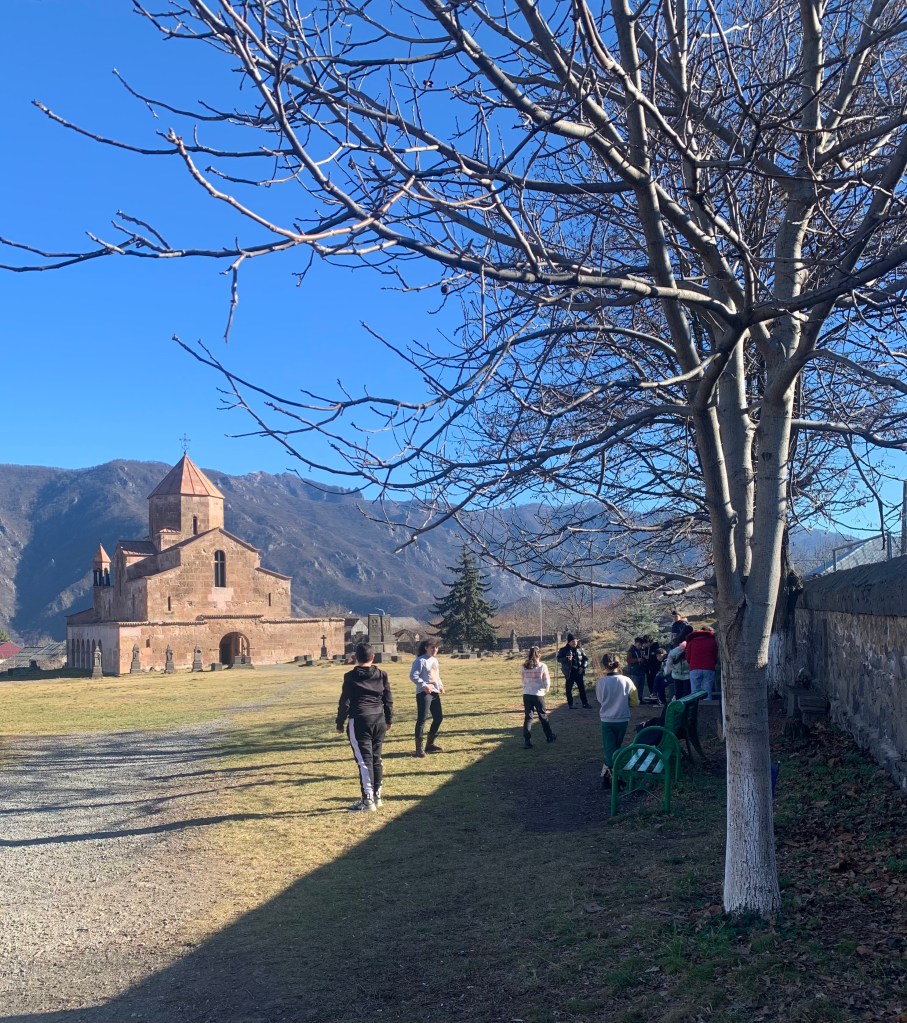
The trip to the monasteries up in the mountains is lovely – It must be a joy to hike around here. It is sufficiently high here for the temperature to be comfortable, even when Yerevan is boiling. The Hagahartsin Monastery, up a hairpin road through the forest of the National Park, has been restored with an UAE Sheik’s money and looks good – the enormous Refectory especially.
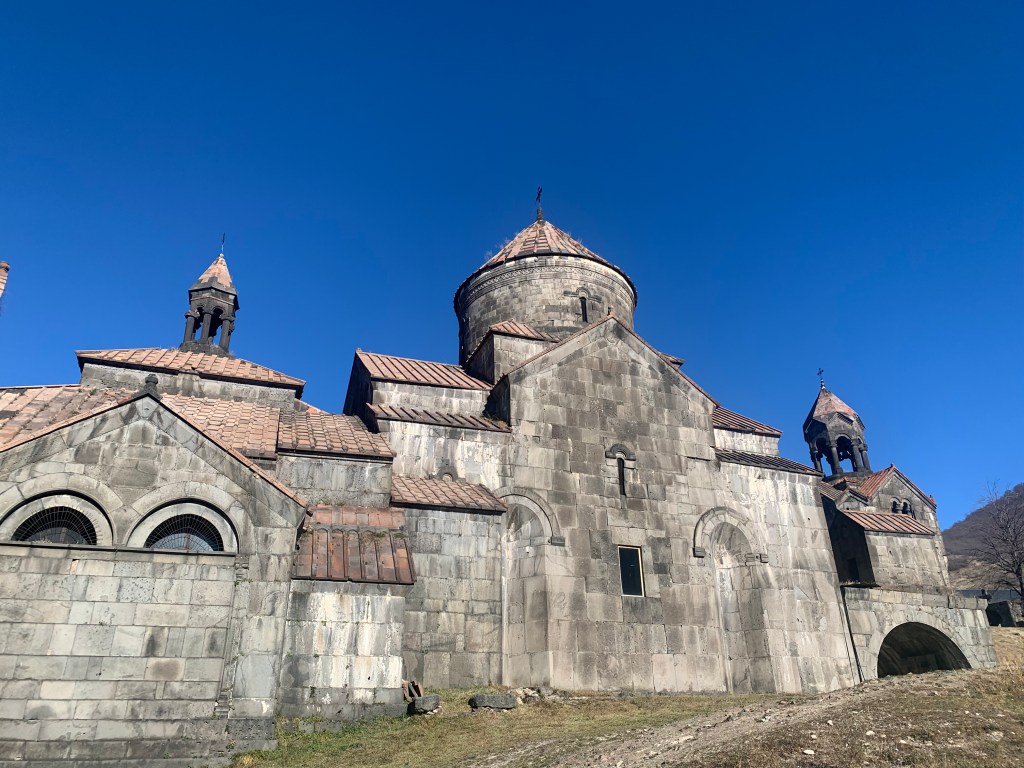
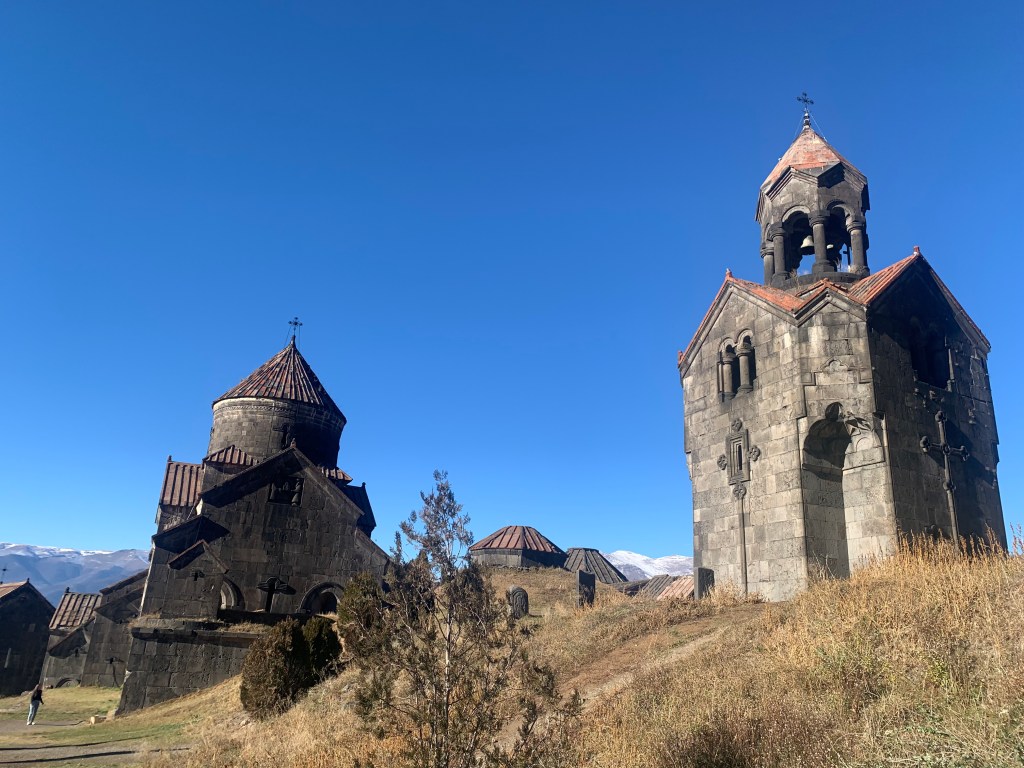
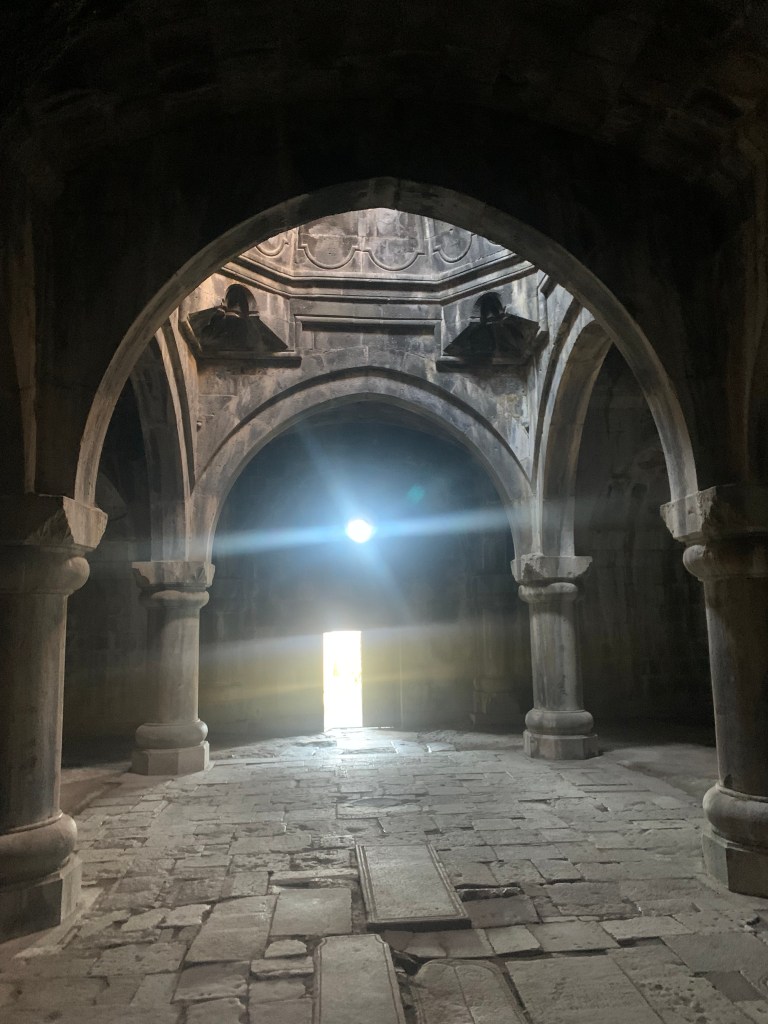
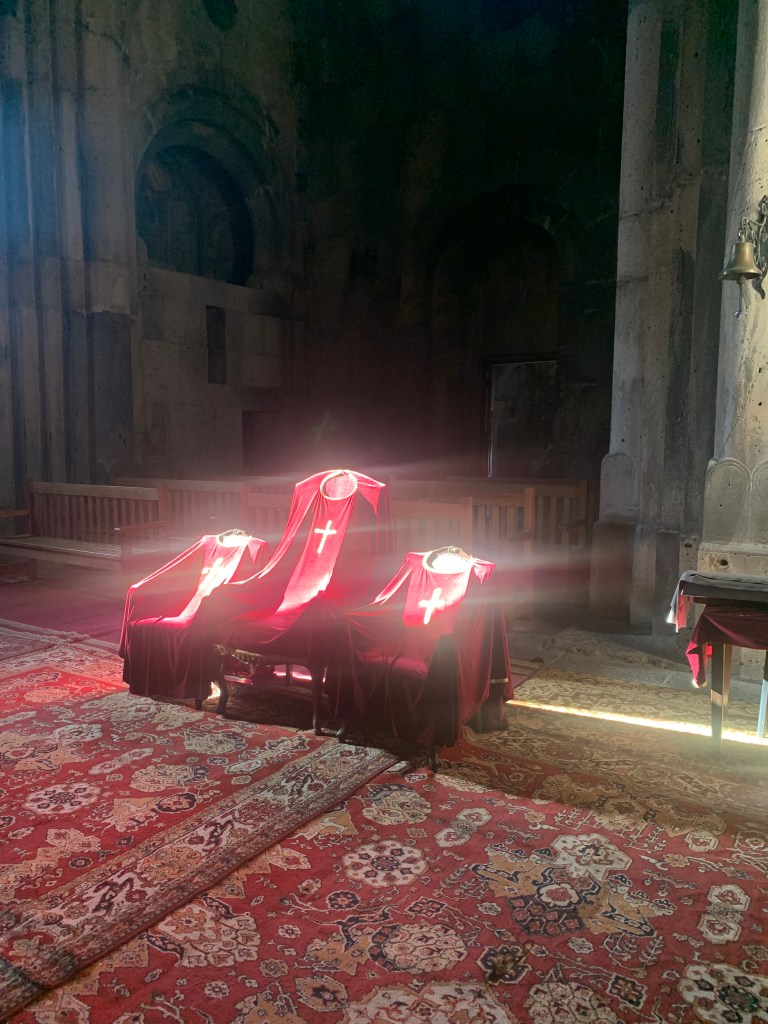
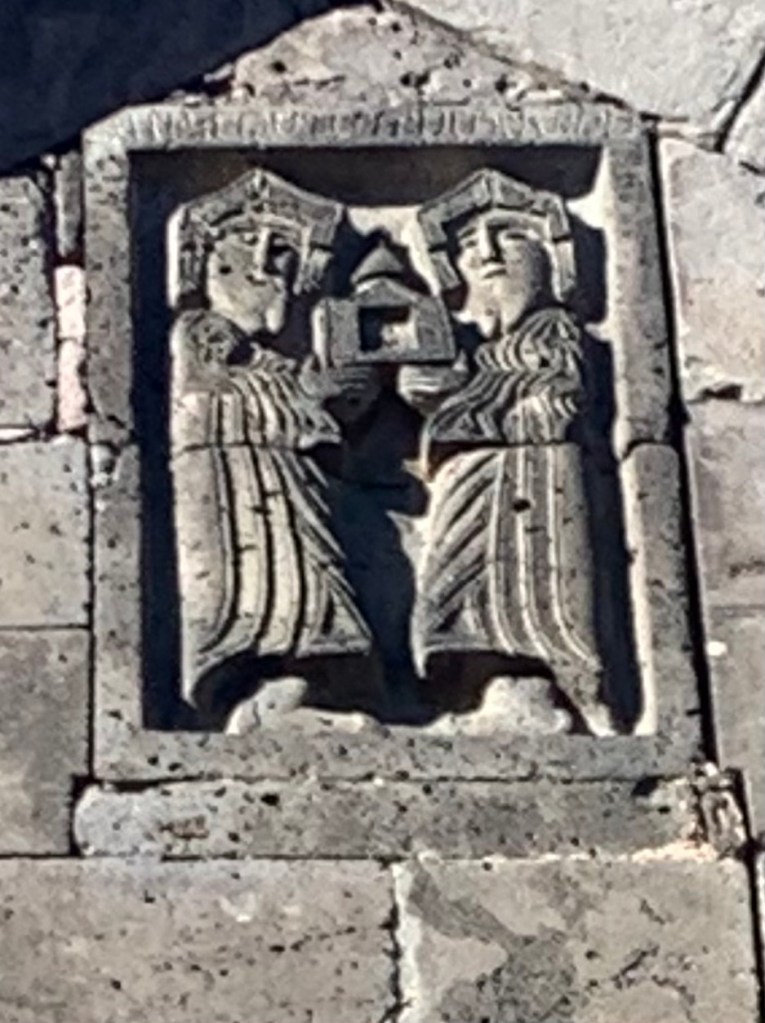
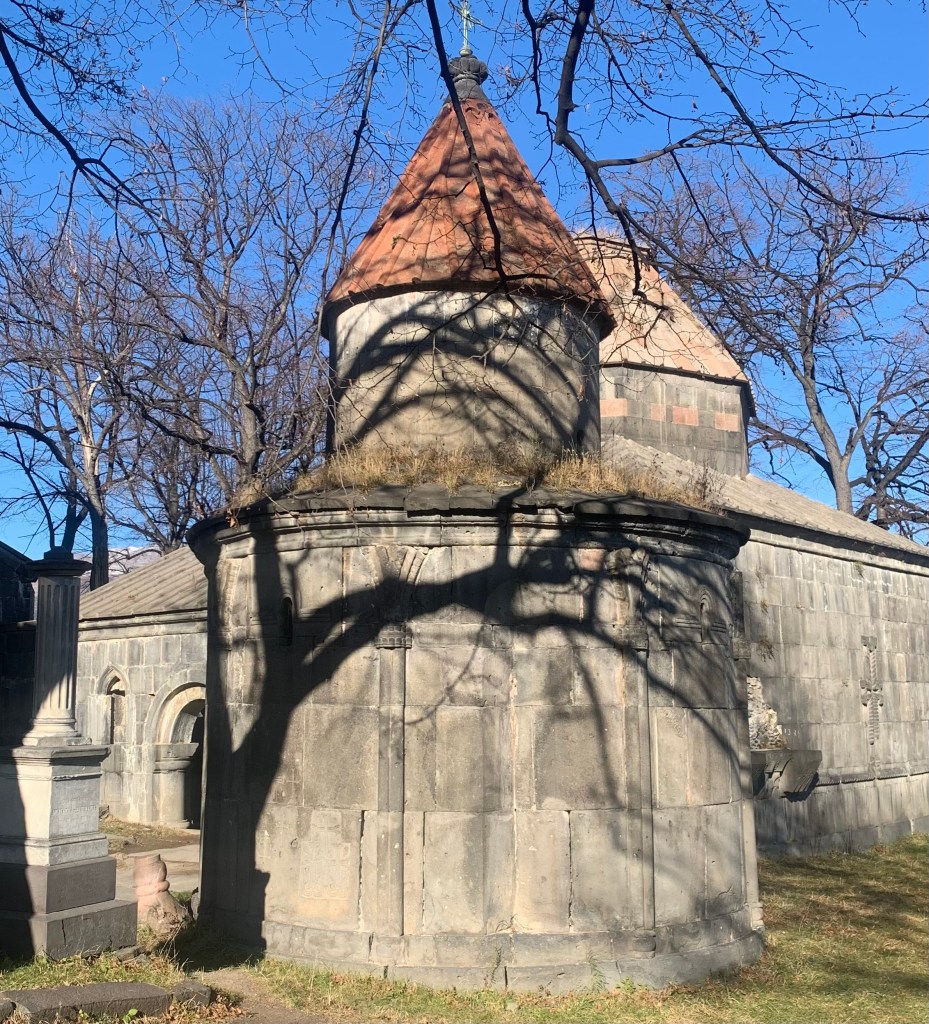
The Ghoshavank is in a gorgeous spot (but then, they all are!) and all monasteries had libraries, manuscript copying schools and universities. It is not surprising the Armenians are so proud of their literary heritage – Mesrop Mashtots alphabet, created in 405, was well received and the first Bible in new Armenian script came out the same year (they used cuneiform before).
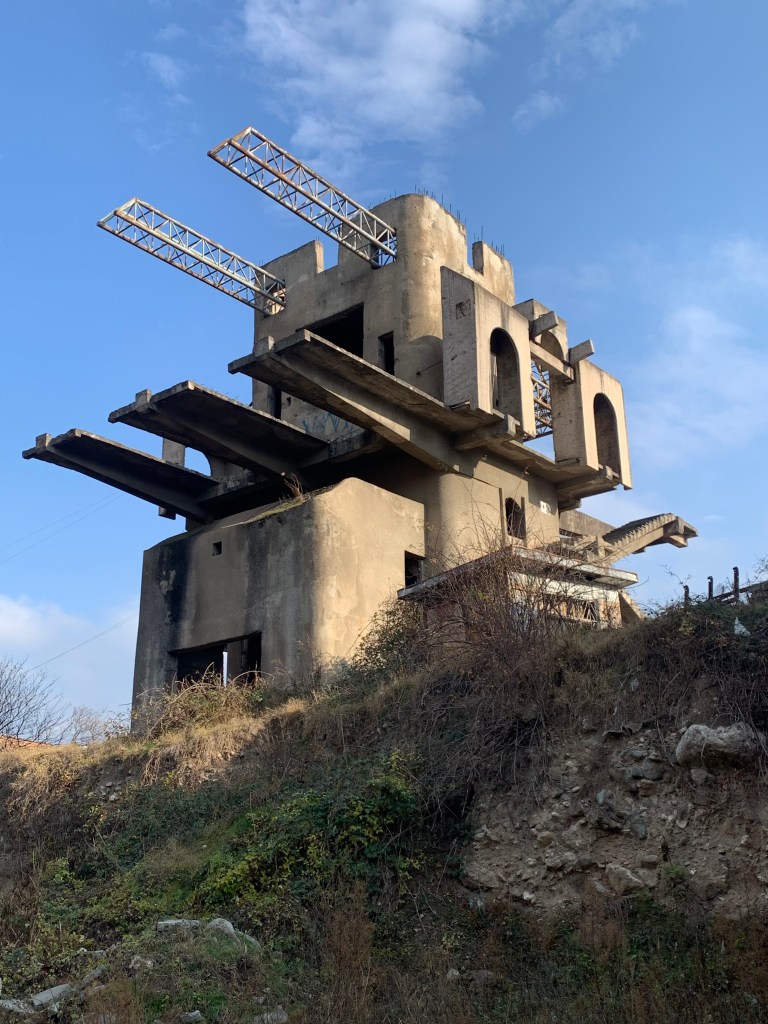
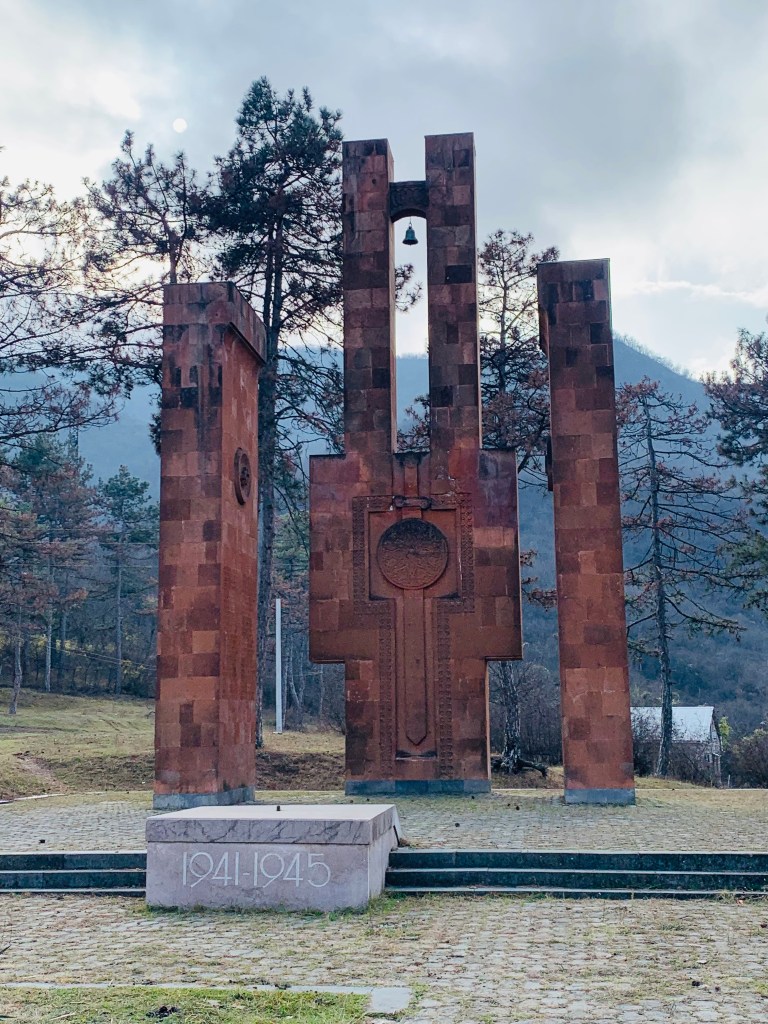
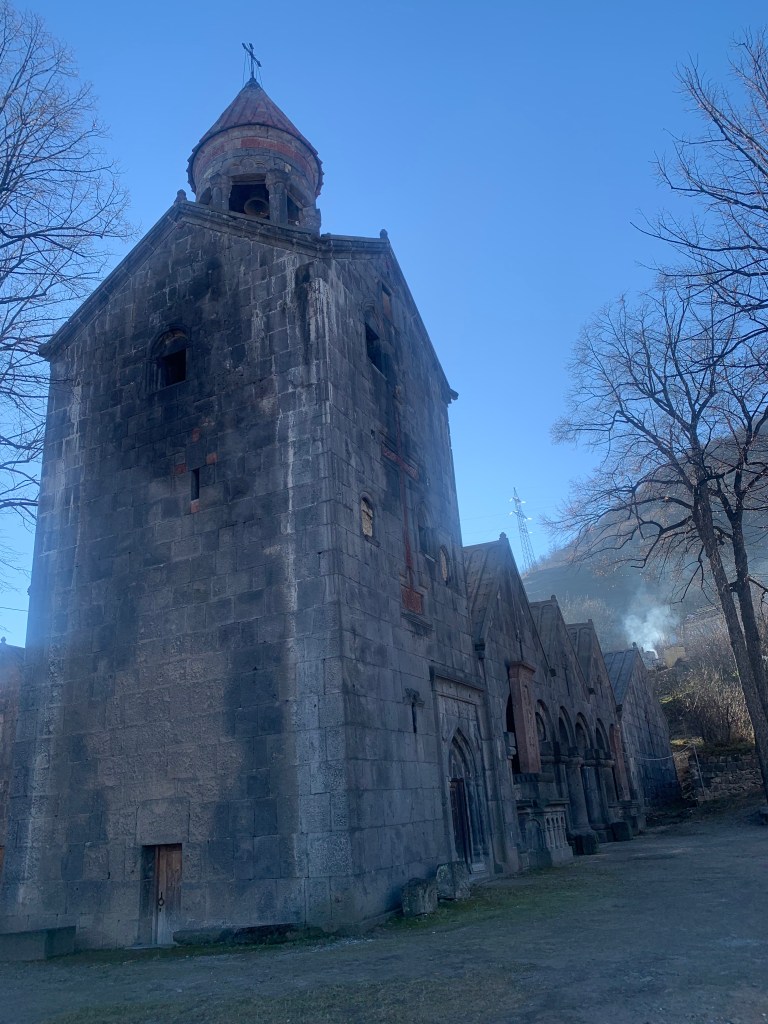
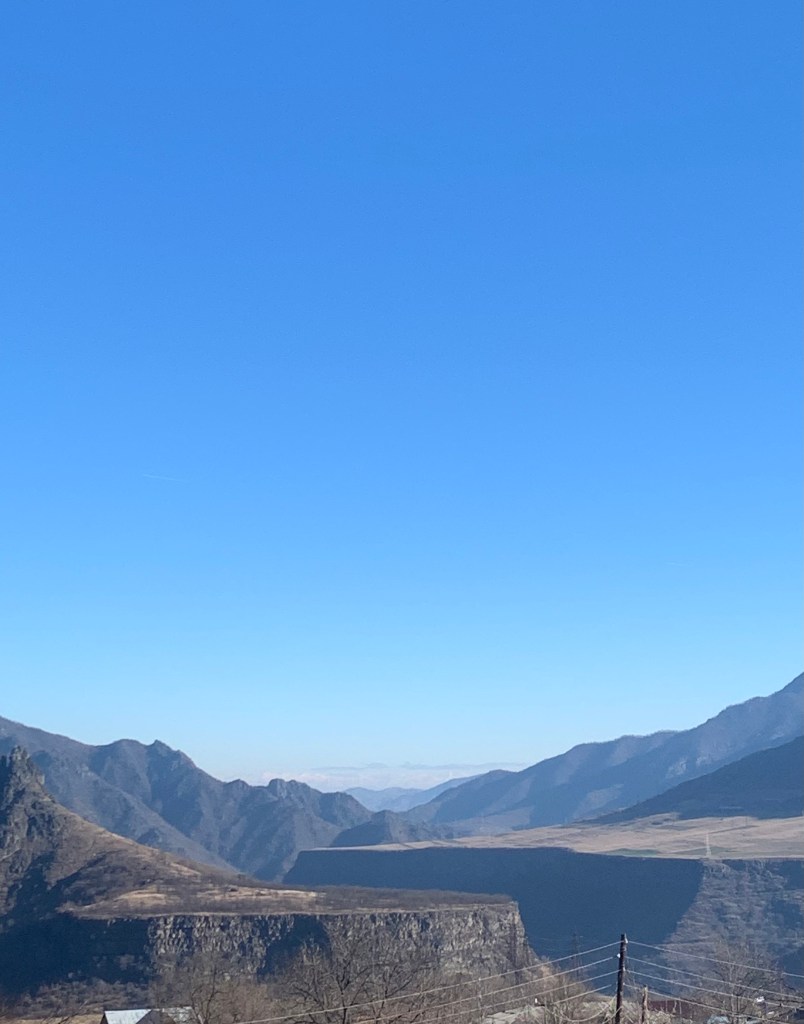
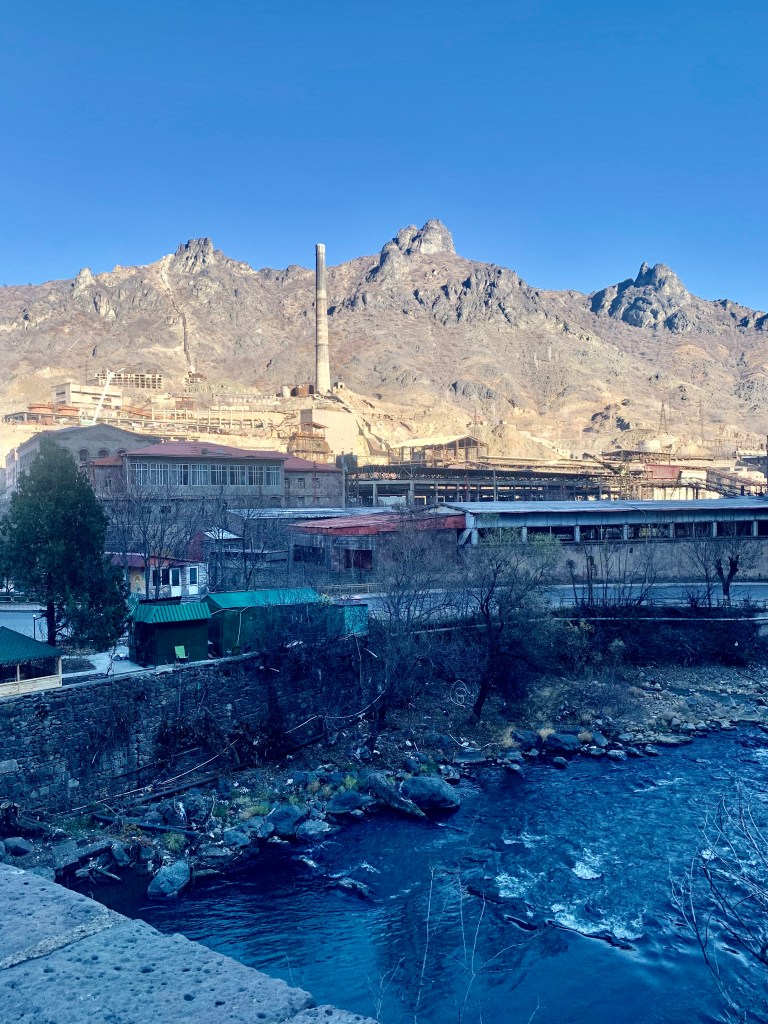
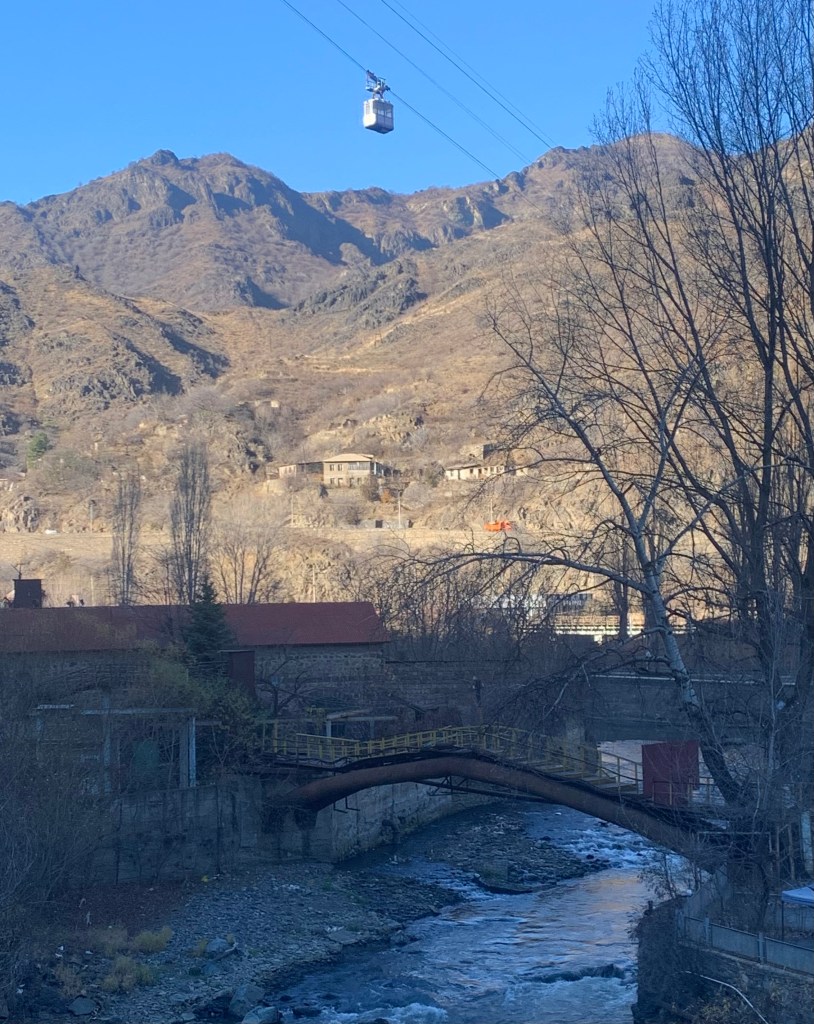
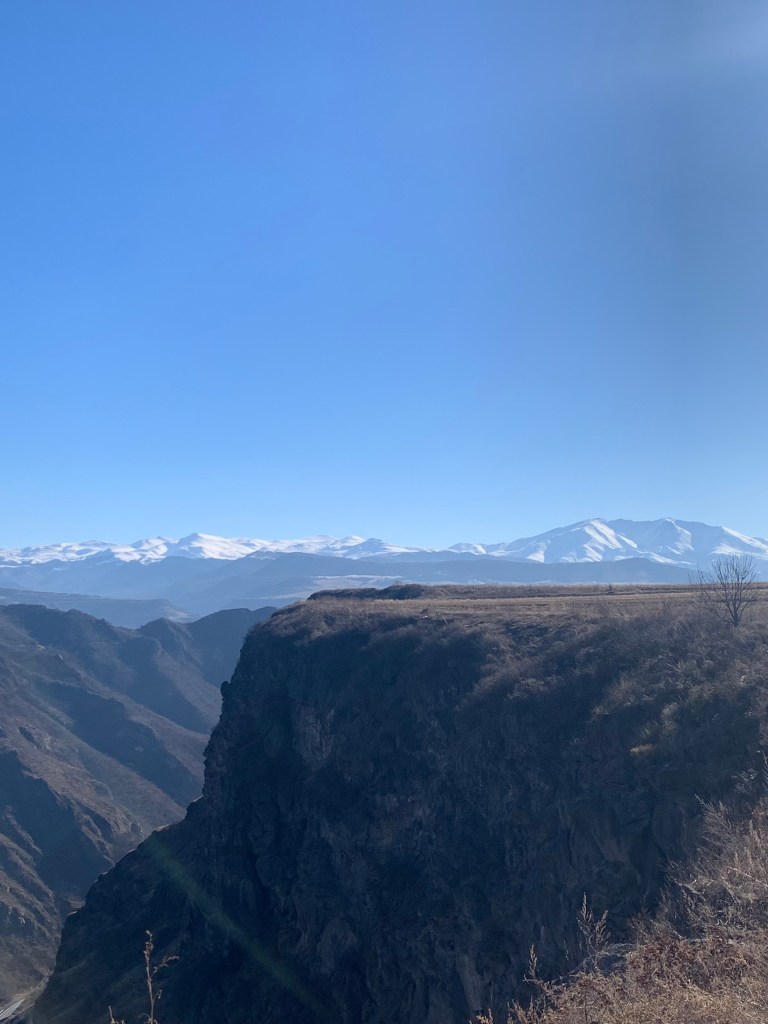
Debed Canyon is full of things to explore – from, yes, monasteries and churches, but also breathtaking scenery and some abandoned and half-destroyed Soviet-era industrial buildings. There is also a monument and museum to the Mikoyan brothers – one of whom was the chief designer of the MIG 21 fighter plane, and the other was a member of the Soviet Presidium during the Cuban crisis.
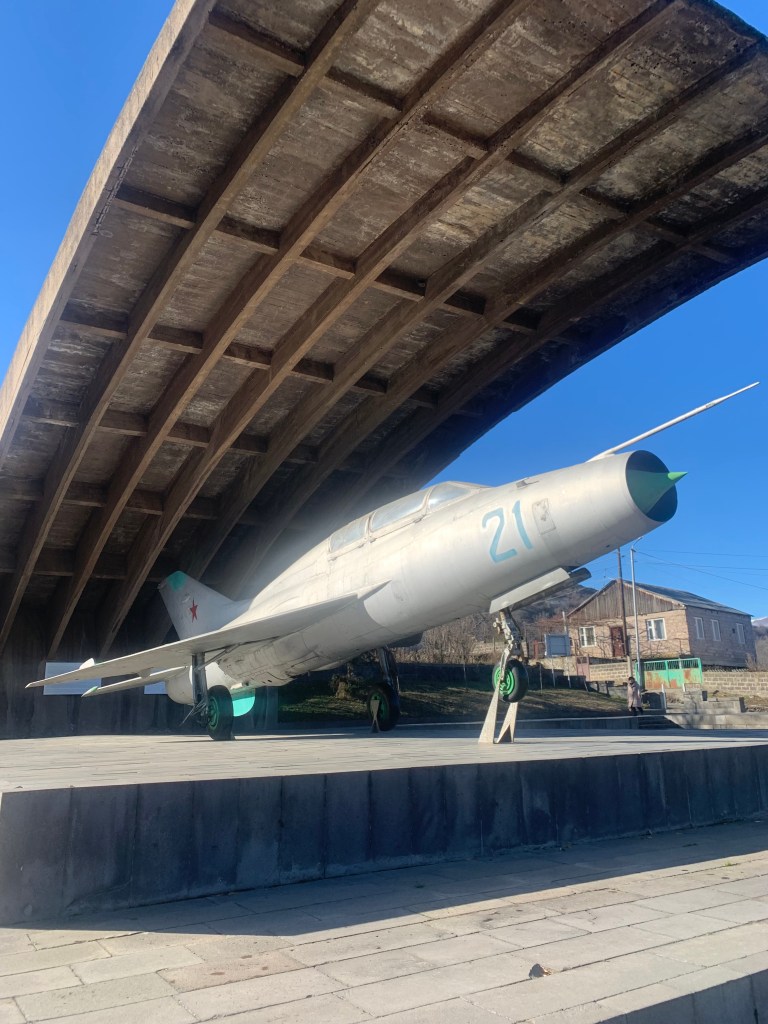
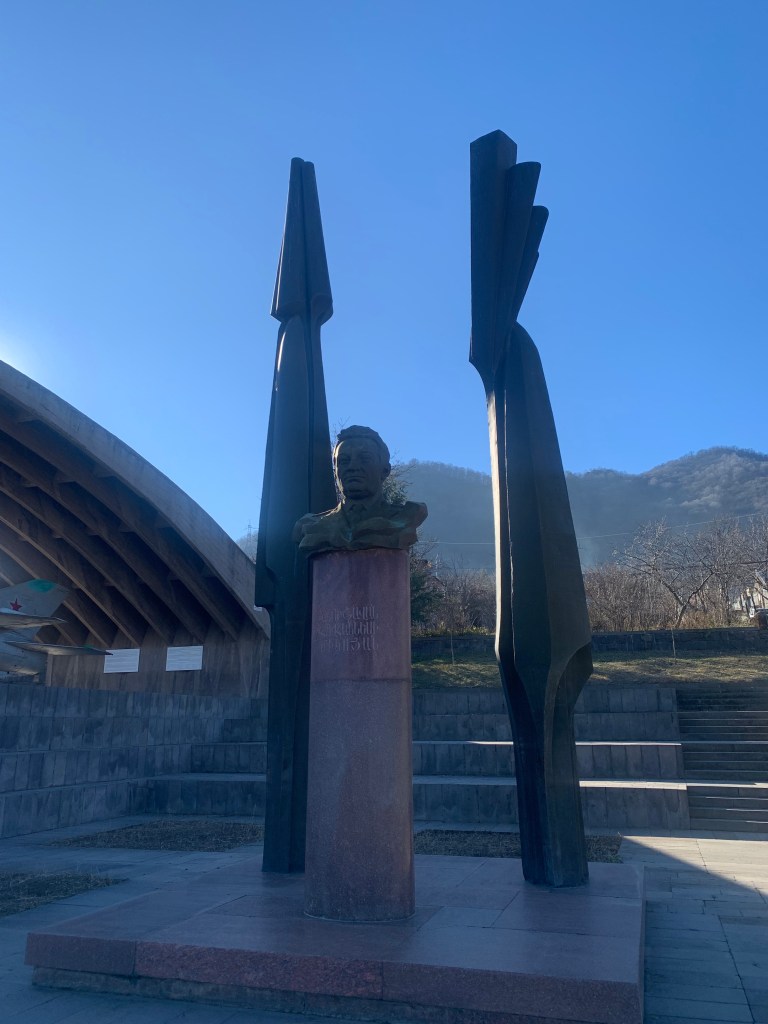
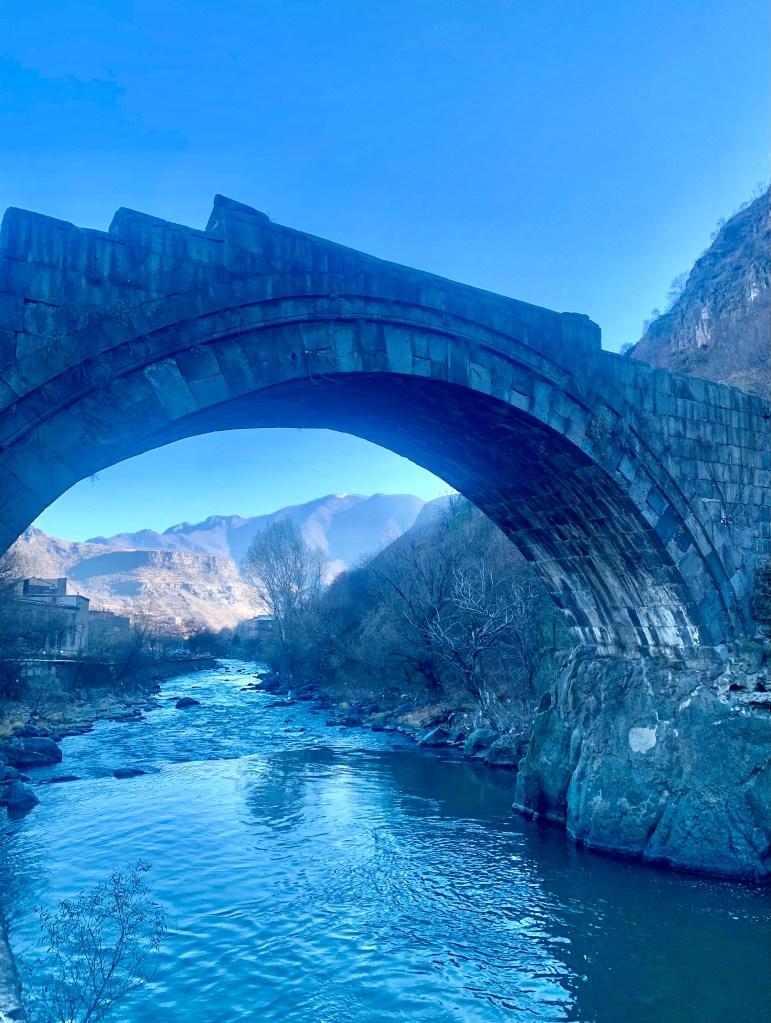
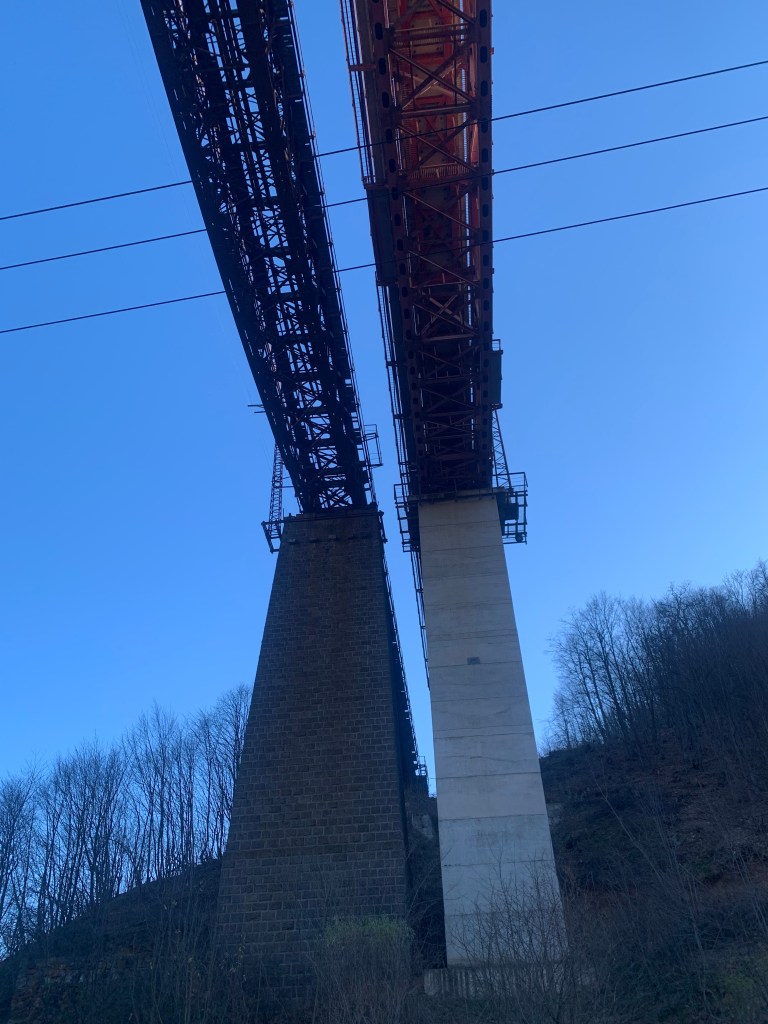
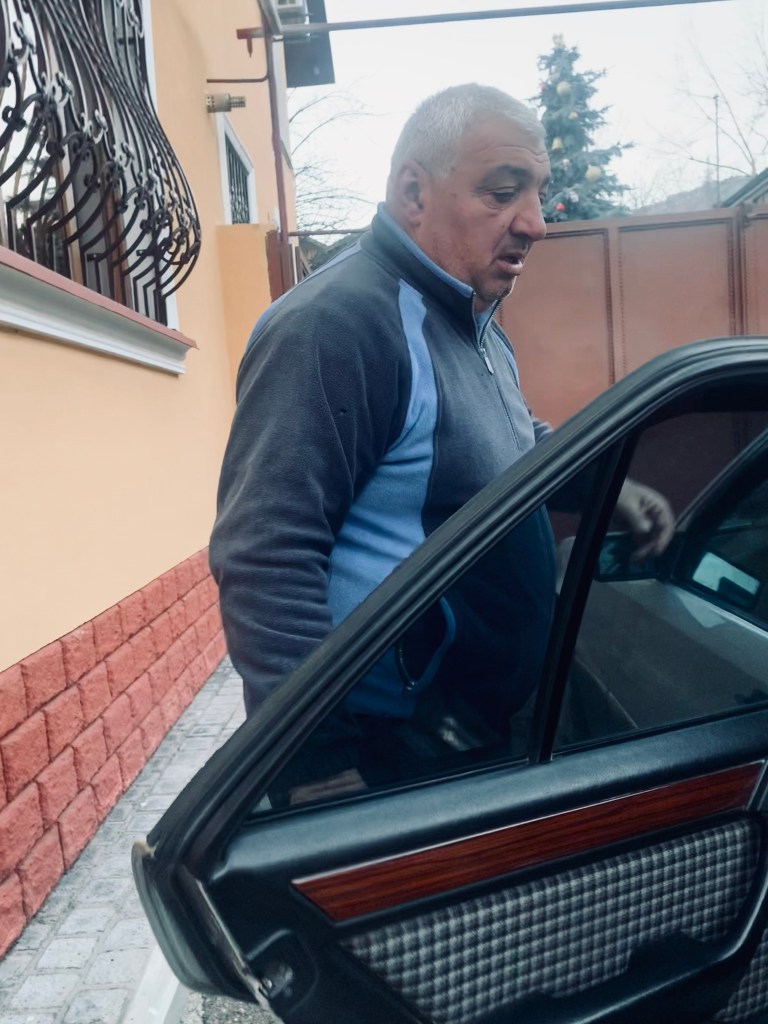
Taxi drivers are opinionated everywhere. Ashat, who had been a USSR judo champion in his youth (he is 55), now drove a Mercedes taxi and took me around the Debed Canyon (and to Tbilisi the next day). He felt very strongly that things were NOT all better since the dissolution of the USSR. As he put it, before the dissolution, people had jobs, could buy their homes, a car, go on a holiday… He pointed to the abandoned gold refinery in the canyon – 7000 people had worked there. There is no work now. The railways ran throughout the country – now there is only one line working between Yerevan and Tbilisi, and one between Yerevan and Gyumri, Armenia’s 2nd city. (The photo of the twin rail bridges: one built by the Russian tzar in the late 19th ct, using no welding, just bolts; the other a new one, built recently. Ashat said the Imperial one is now “the reserve”.) The stone bridge is the Queen Tamar one, 7ct.
He had little love of Georgians, who were “arrogant and self-serving, egotistic and unpleasant”. He even had an opinion on their language and writing, saying their script was like spaghetti and they spoke as if they had a hot potato in their mouth. Nevertheless, he gave a lift to a Georgian police officer from the border to Tbilisi and they had a really nice chat in Russian.
Tbilisi next – and Christmas with Gloria.


One response to “Farewell to Armenia”
The sculptures and buildings are amazing. In some ways, I think I like the way they are gently decaying.
LikeLike