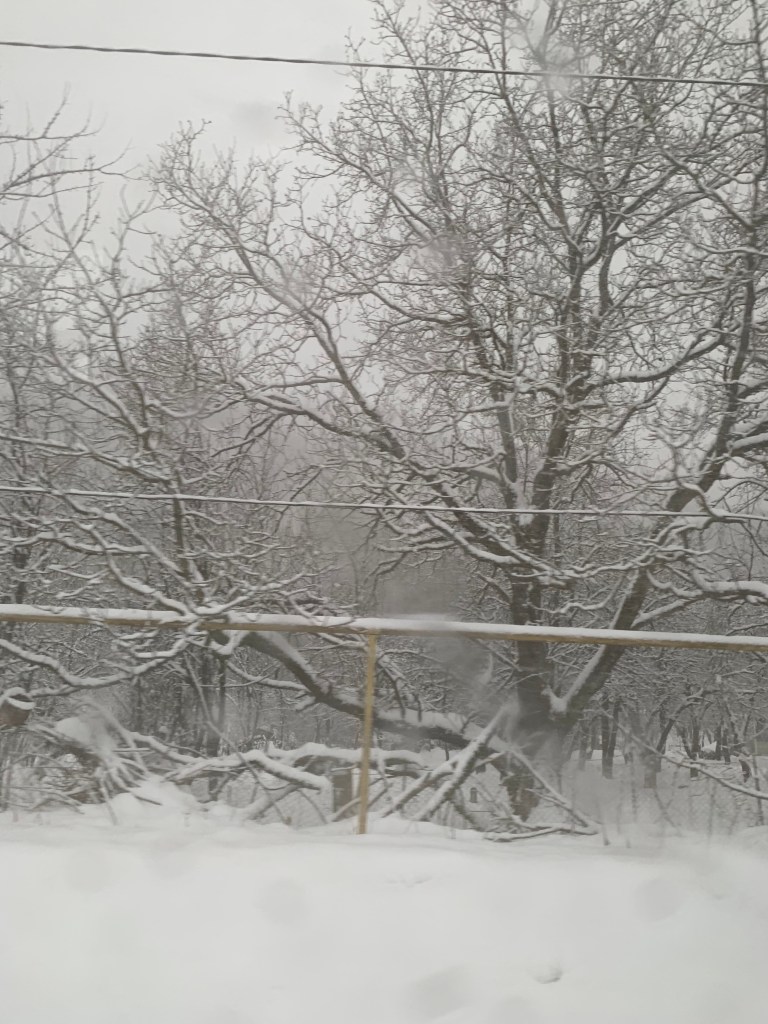
I left Gudauri (Georgia) ski resort (with some difficulty) on the 4th of January, in a snow storm. The two marshrutkas I tried to hail would not stop (full, presumably, and seeing me there with my giant backpack, was too much). The car wheels were spinning, the cars sliding, snow chains being bought (the bus stop was next to the petrol station and shop). Interesting to watch, though less so when you are trying to get somewhere.
Negotiated a taxi ride to Tbilisi (120Km) and persuaded Christoph, a German Erasmus student who was also waiting for a marshrutka, to contribute what he could. We were both glad to get in (the snowman look had started to pale long before – the hour spent outside was plenty). The ride down the snowy mountain road was slow and slippy, unsurprisingly, though there were those who tried to overtake the queue, unsurprisingly. Once out of the mountains, a complete change: dry roads and some vague sunshine.
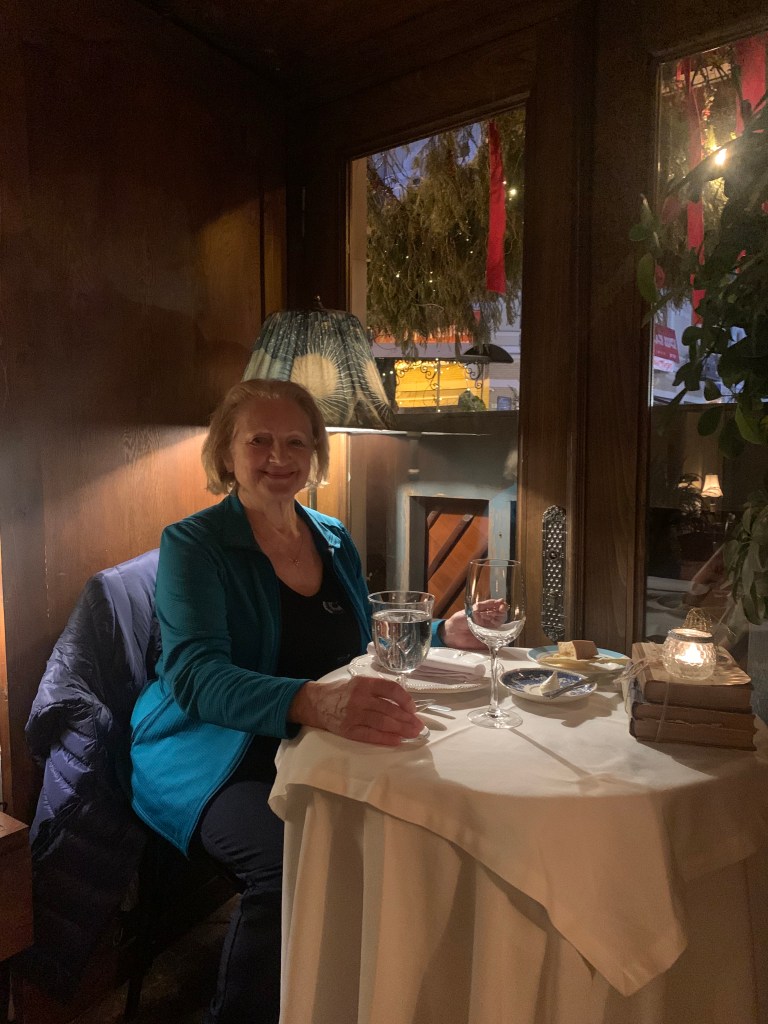
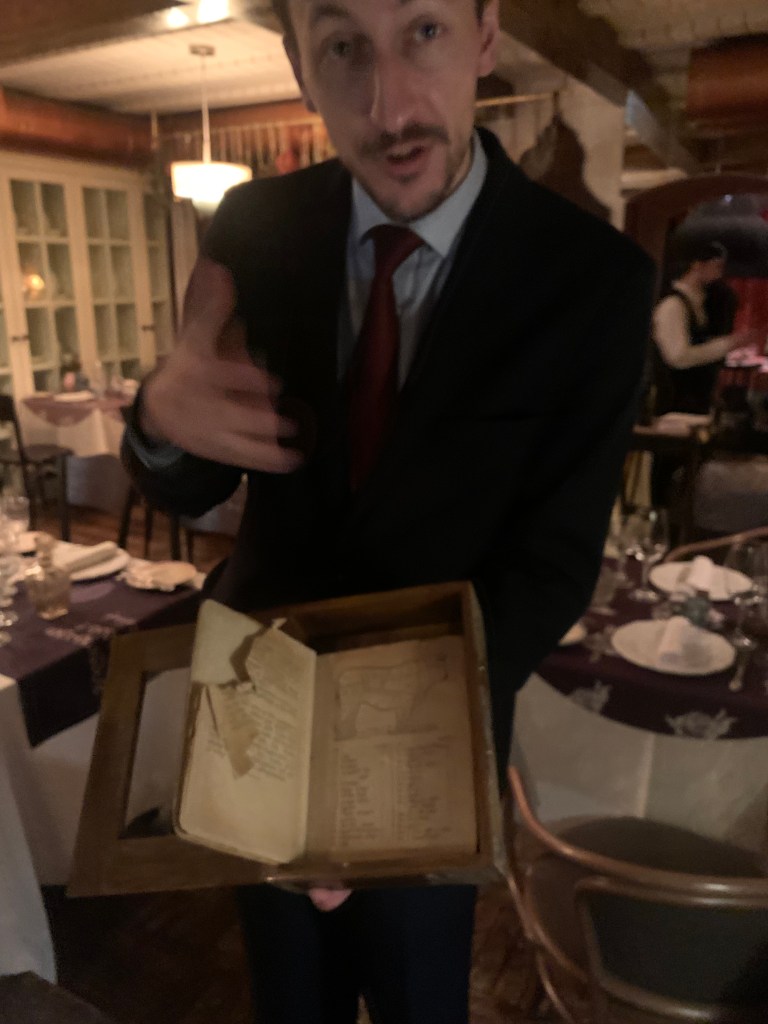
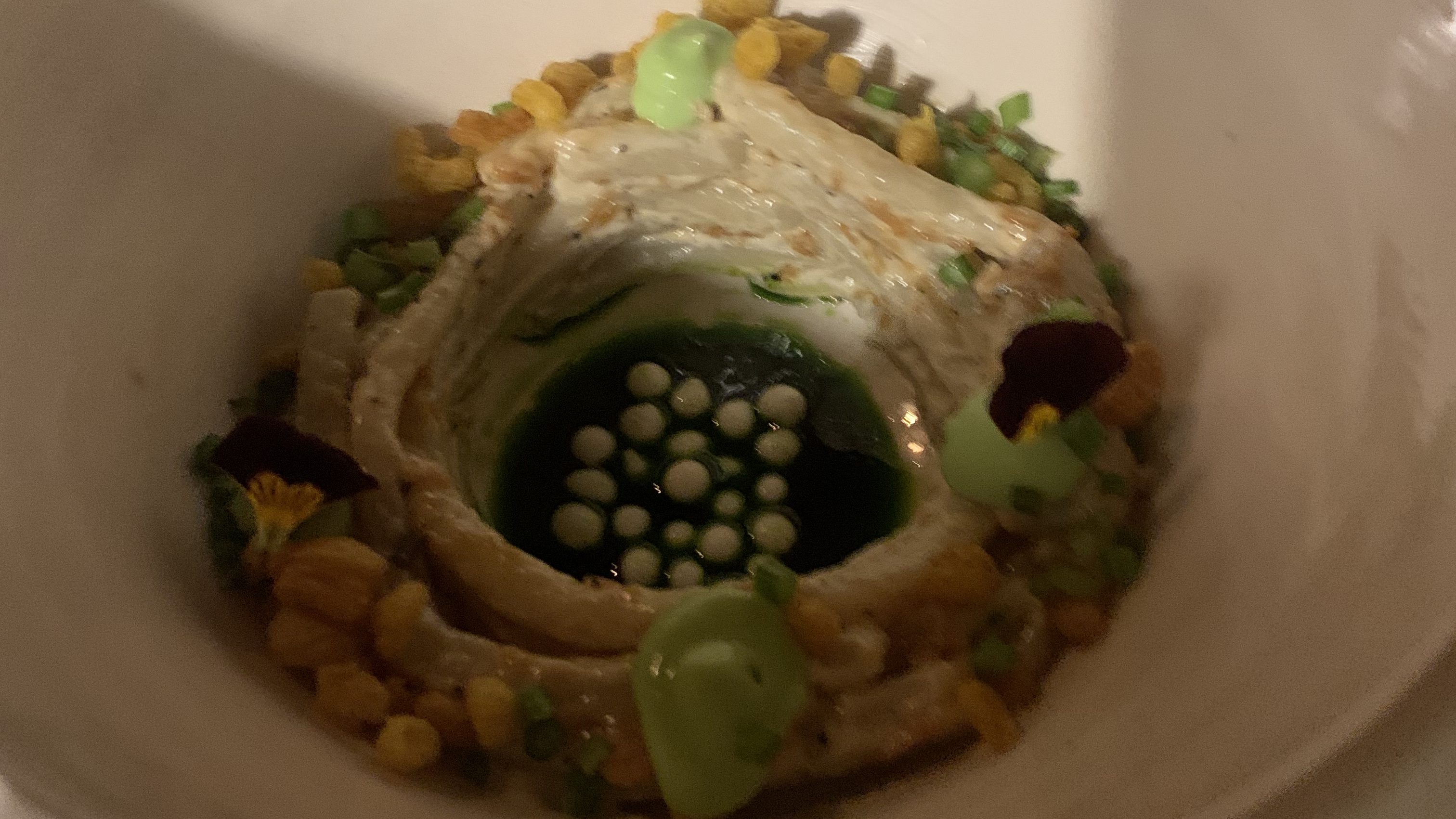
Should you happen to be in Tbilisi, the Barbarestan restaurant on the Left Bank is worth a visit – the food is good, but it’s the story, the presentation and the ambience that make it so. The menu is based on a cookery book found at the Tbilisi Dry Bridge flea market a few years ago. It is a collection of Georgian recipes by a lady cold Barbara, written c. 1874 and published by her daughter – the book they got was printed in 1940. It is reverently kept in a box with a glass lid and shown with pride (though I may have been lucky that it was shown me very unctuously by a Uriah Heap namesake…) . The restaurant is slowly and diligently going through the recipes, using seasonal ingredients.
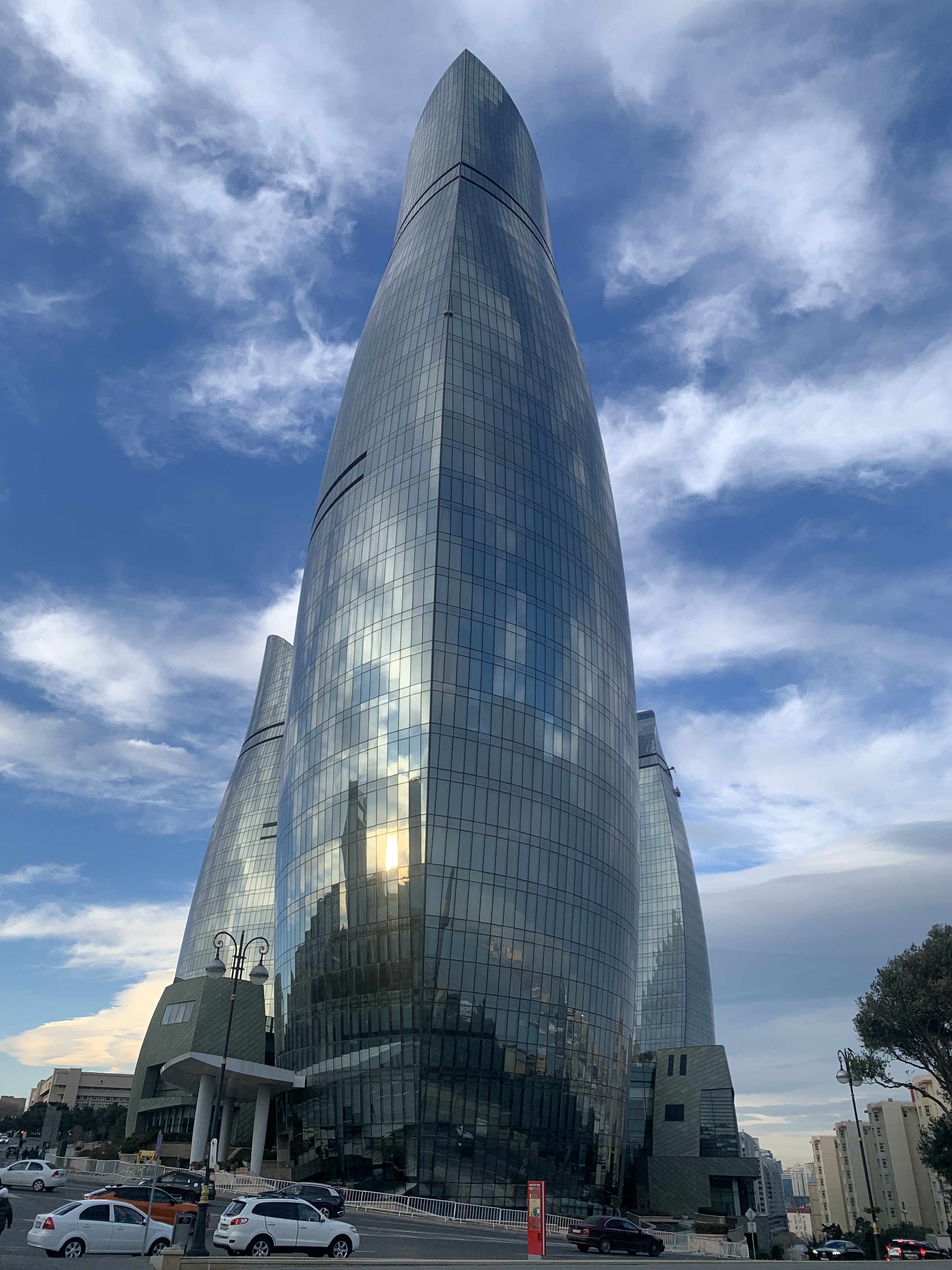
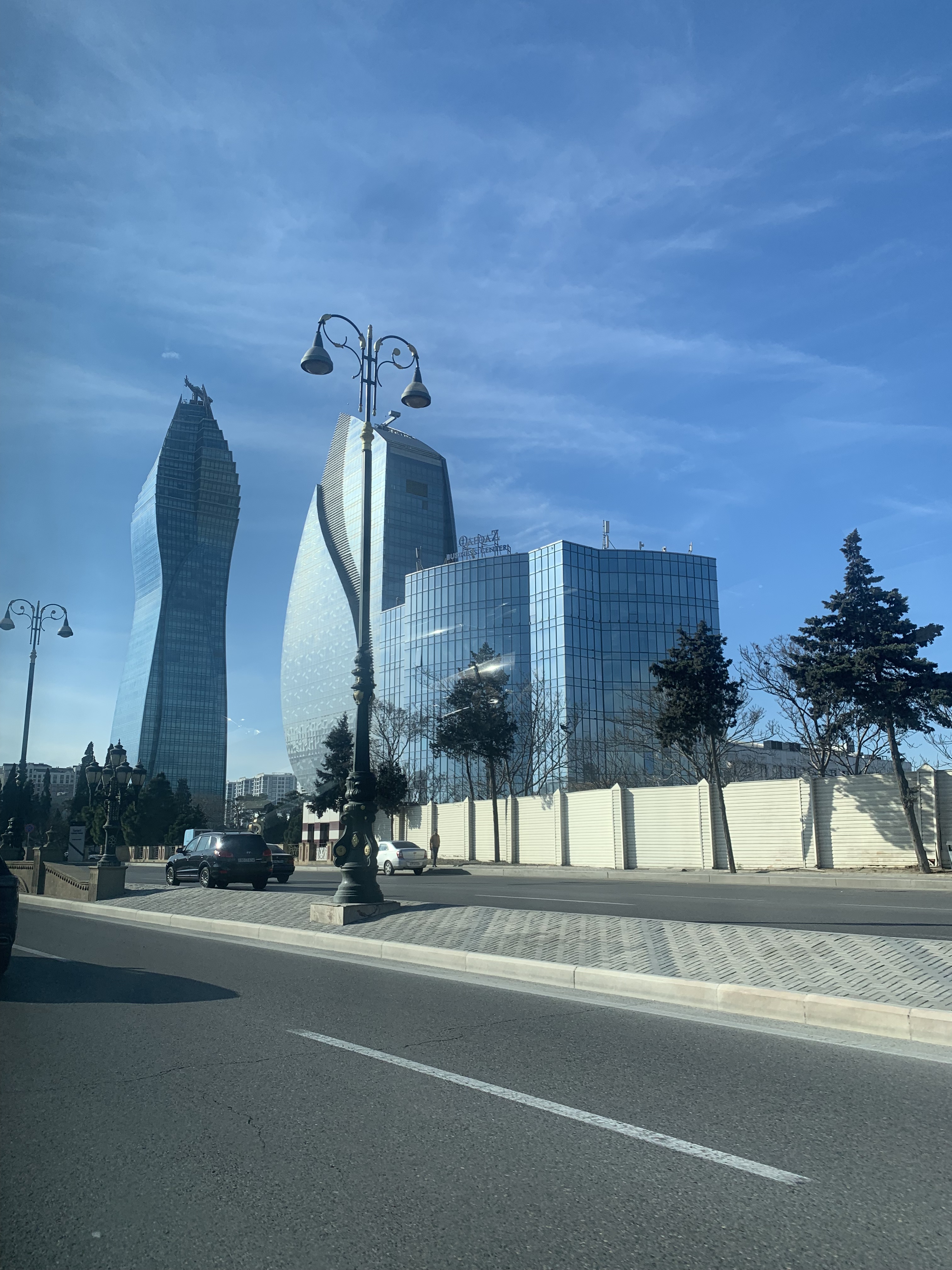
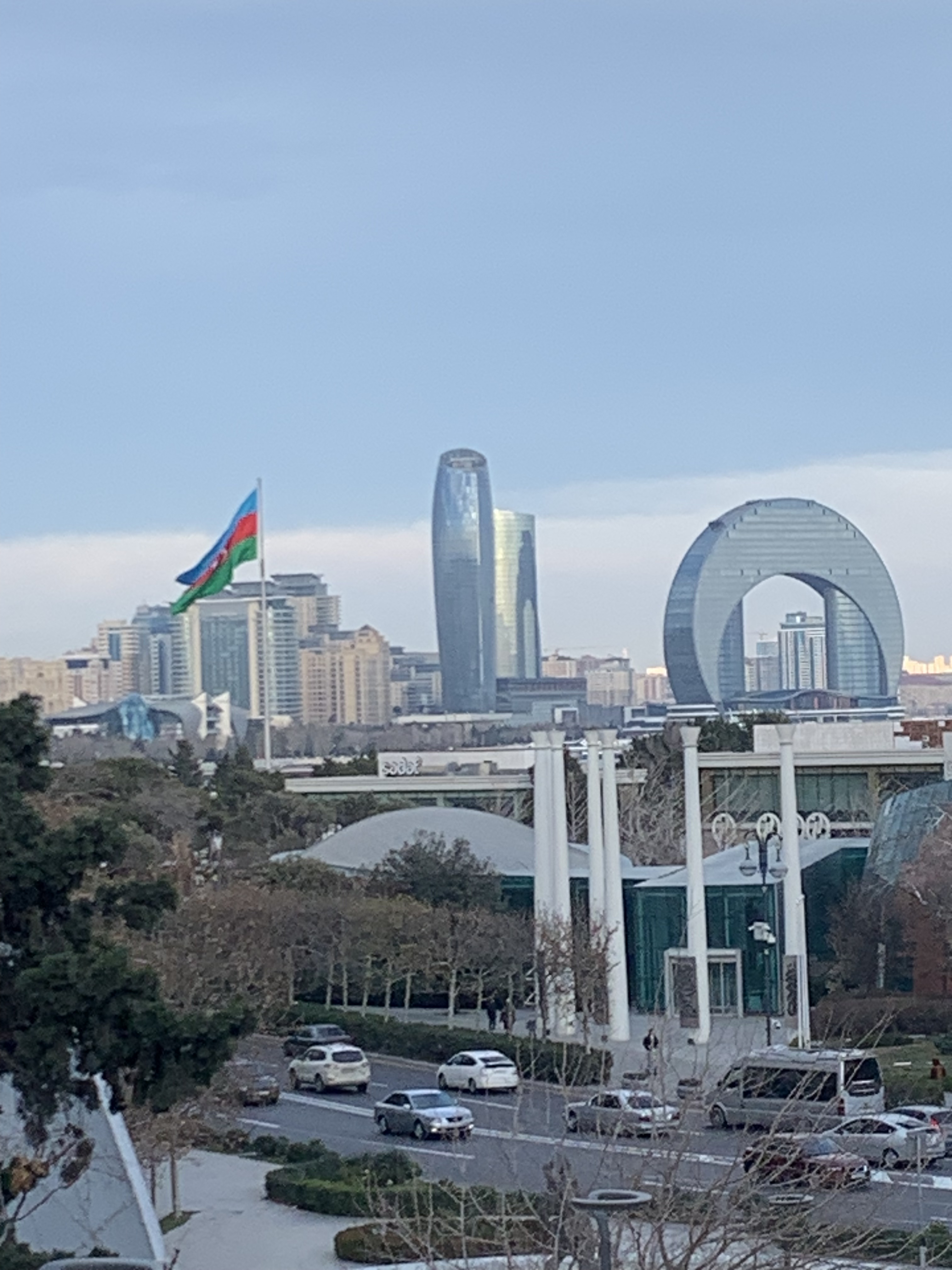
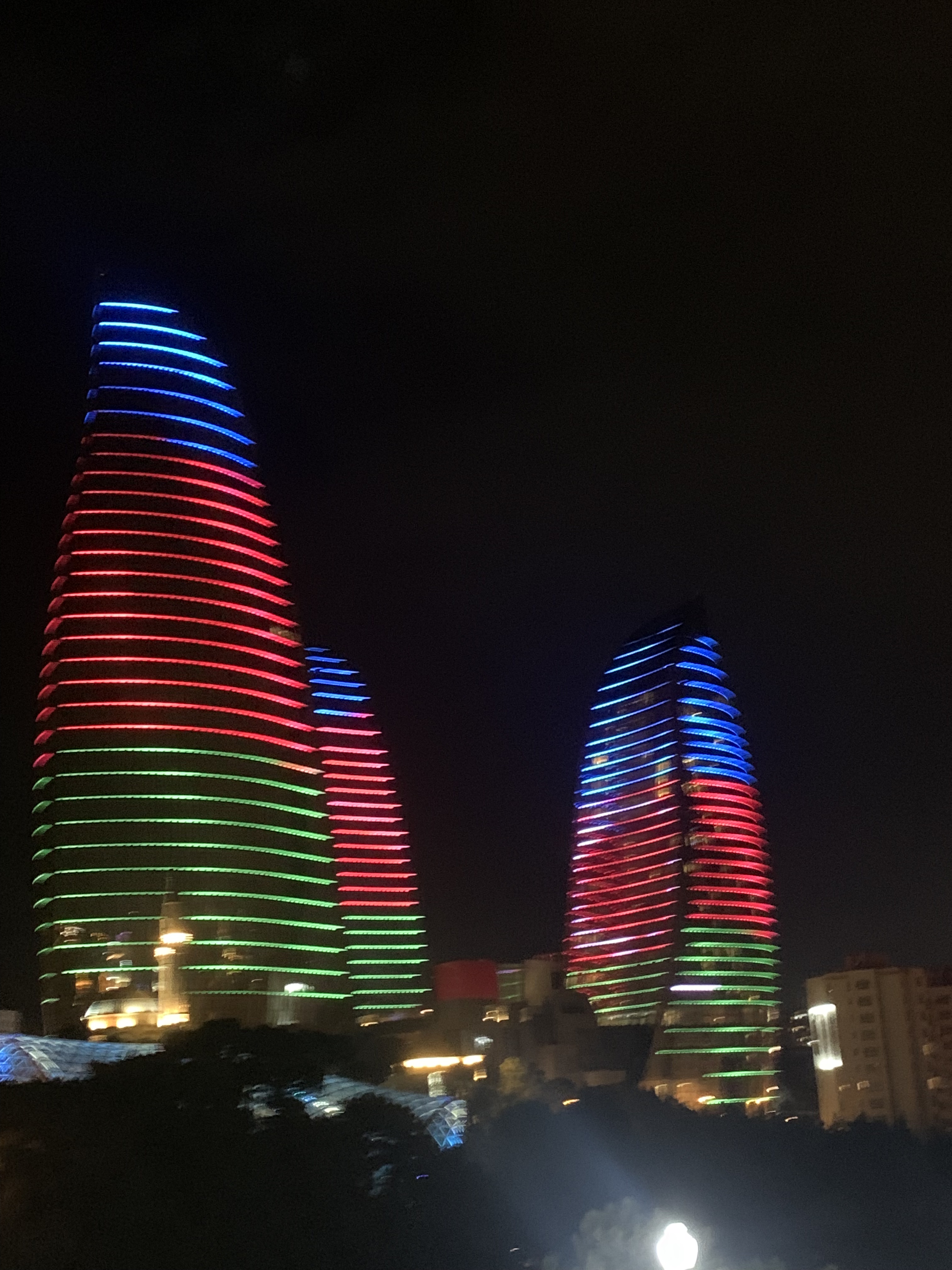
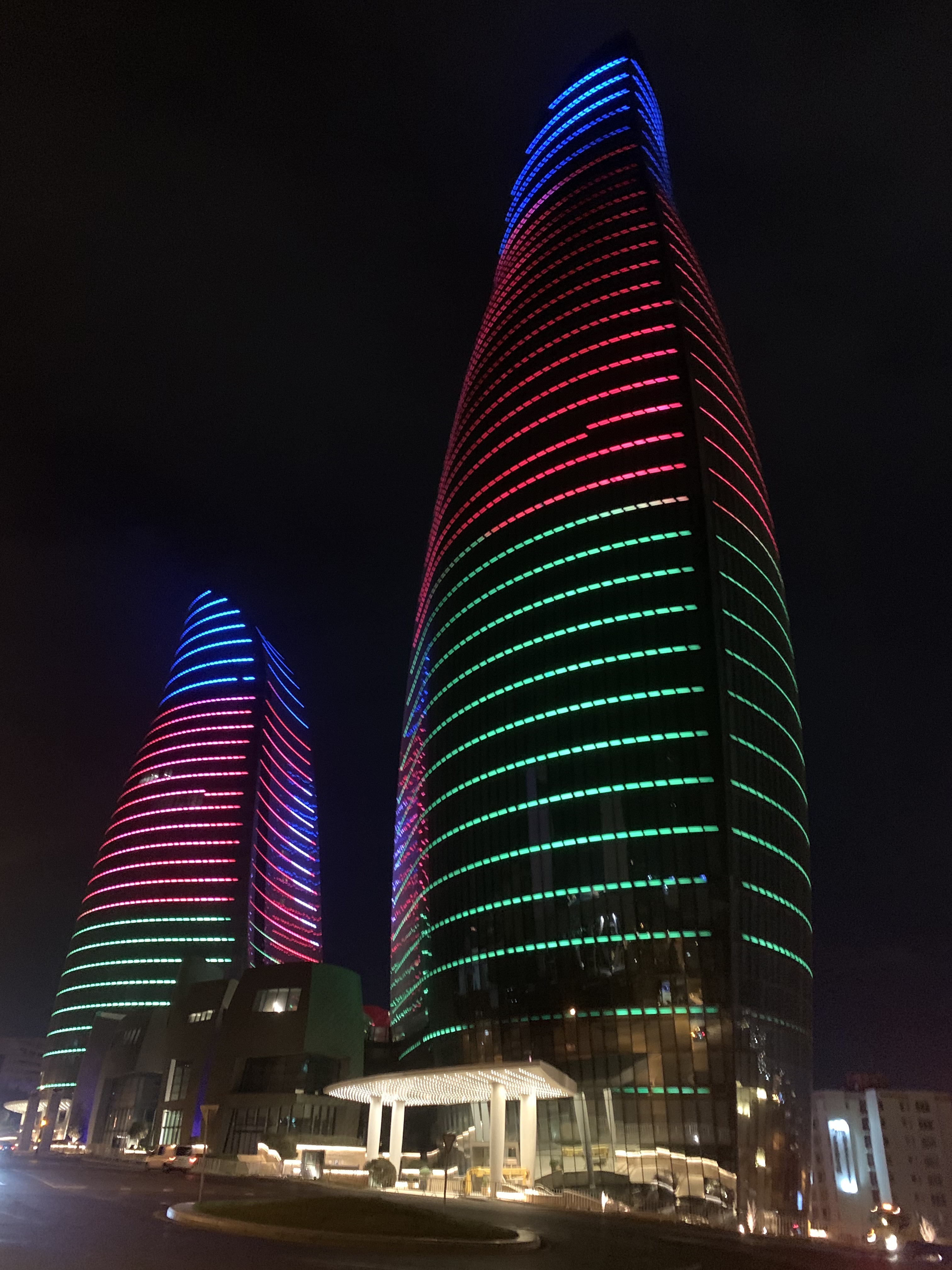
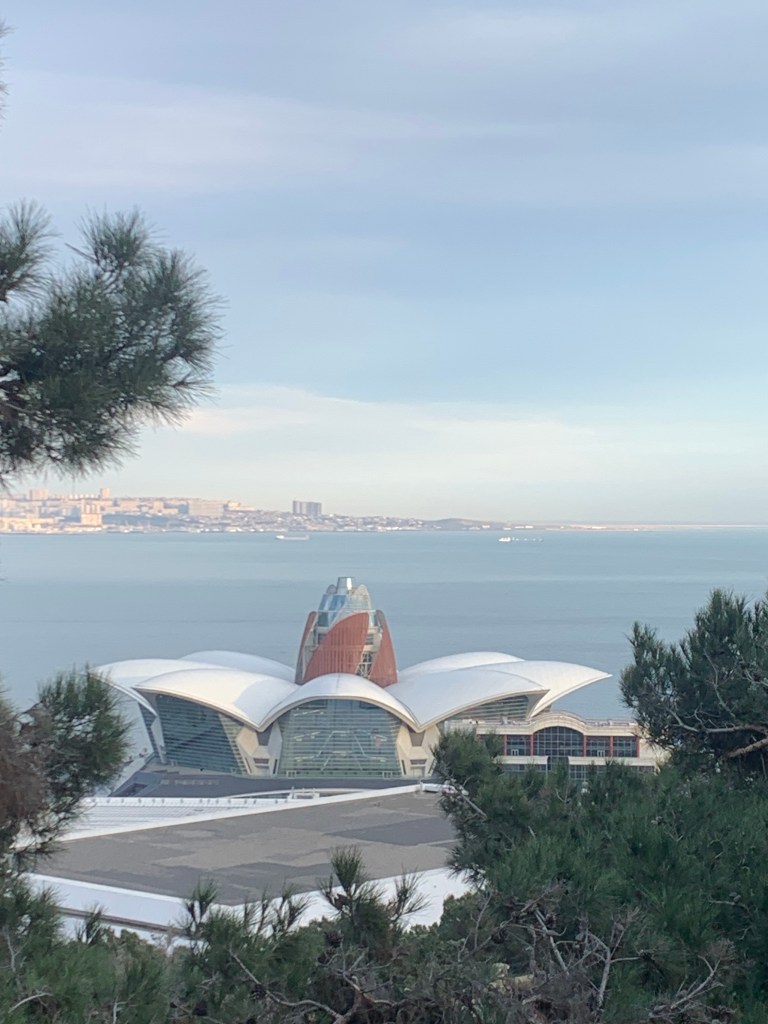
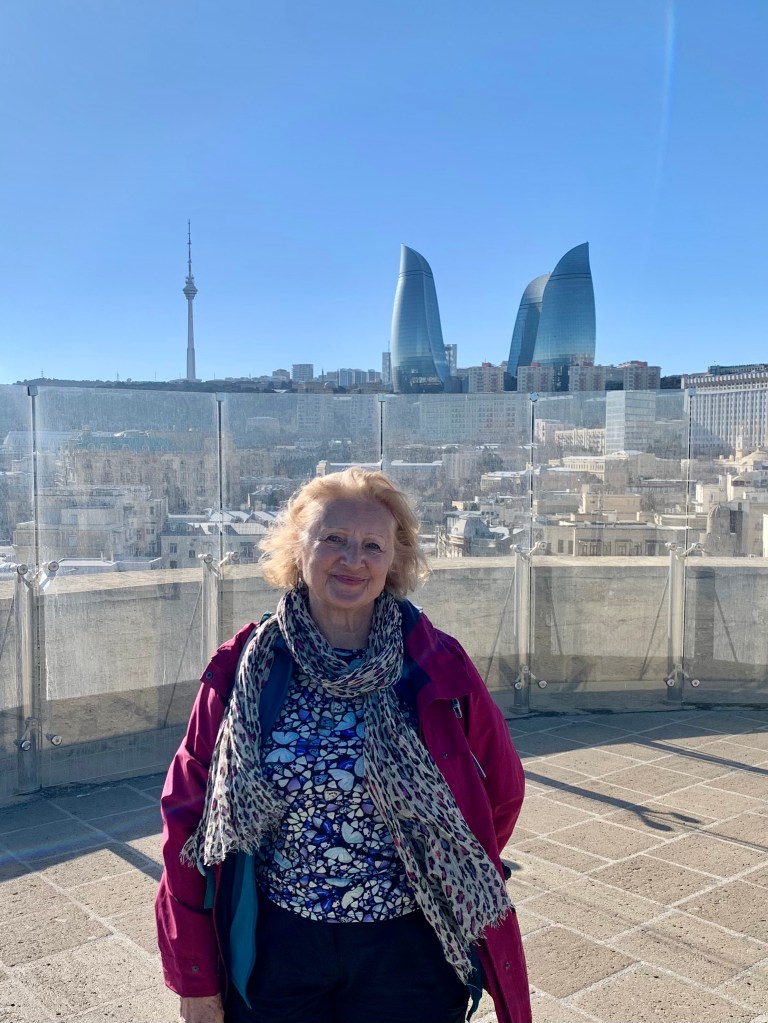
Baku is quite a city. The Flaming Towers (for once, “iconic” seems the right word ) are but one of many architectural wonders. I did have a drink n the Fairmont Hotel but did not book into the $5000 suite…
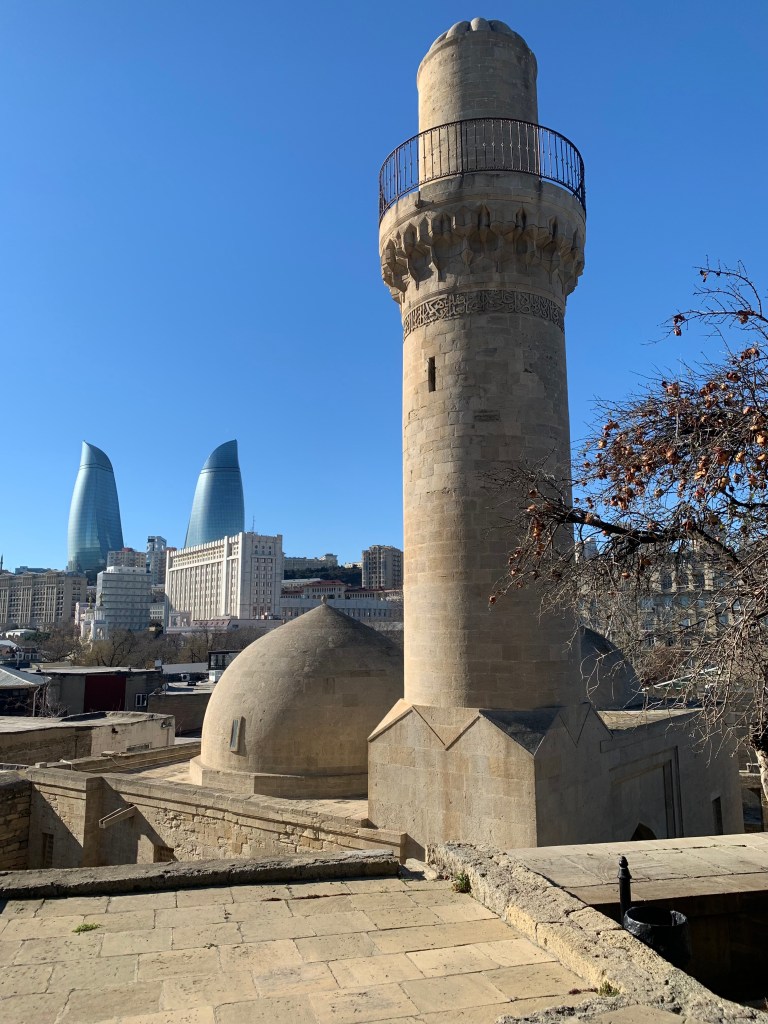
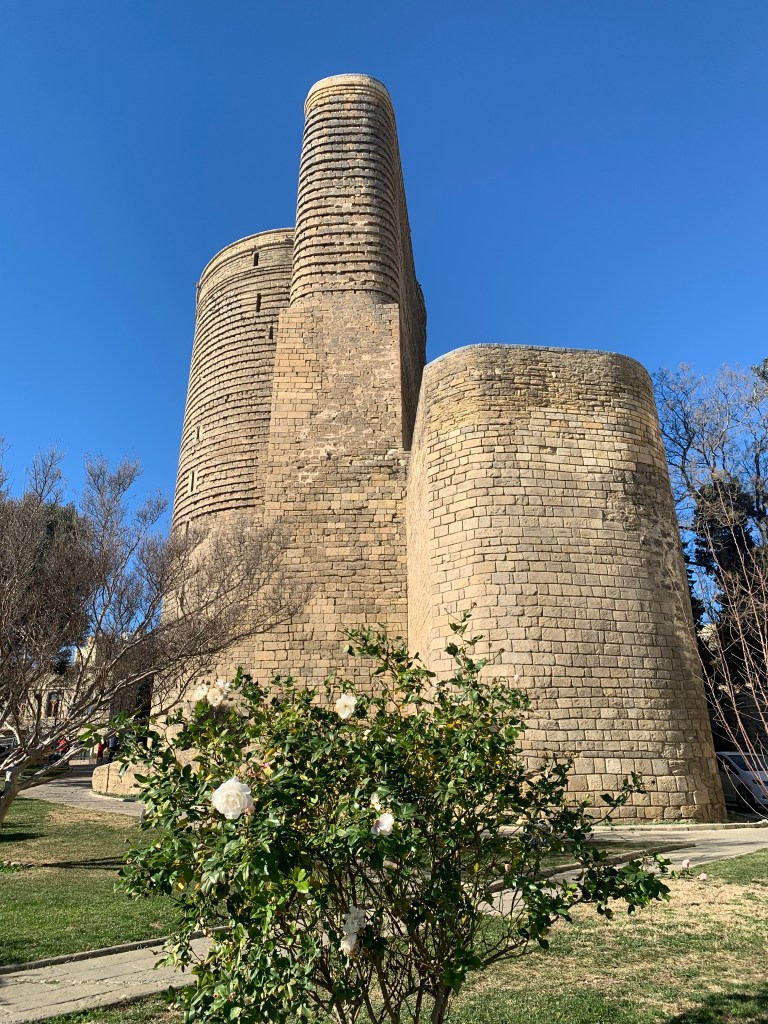
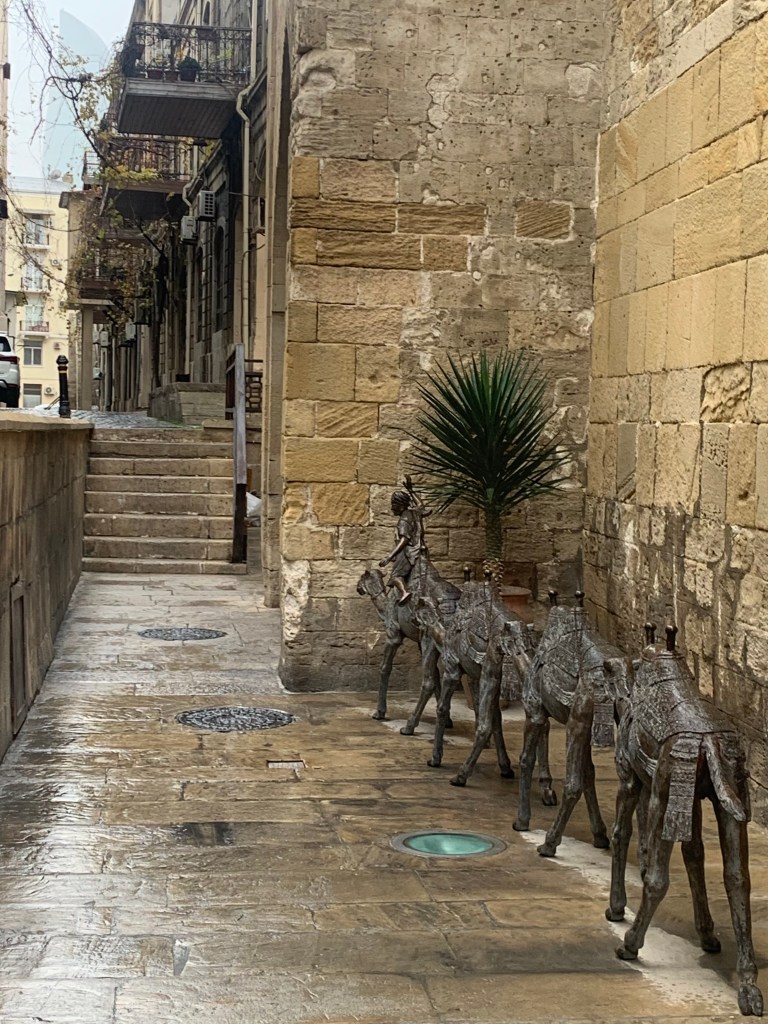
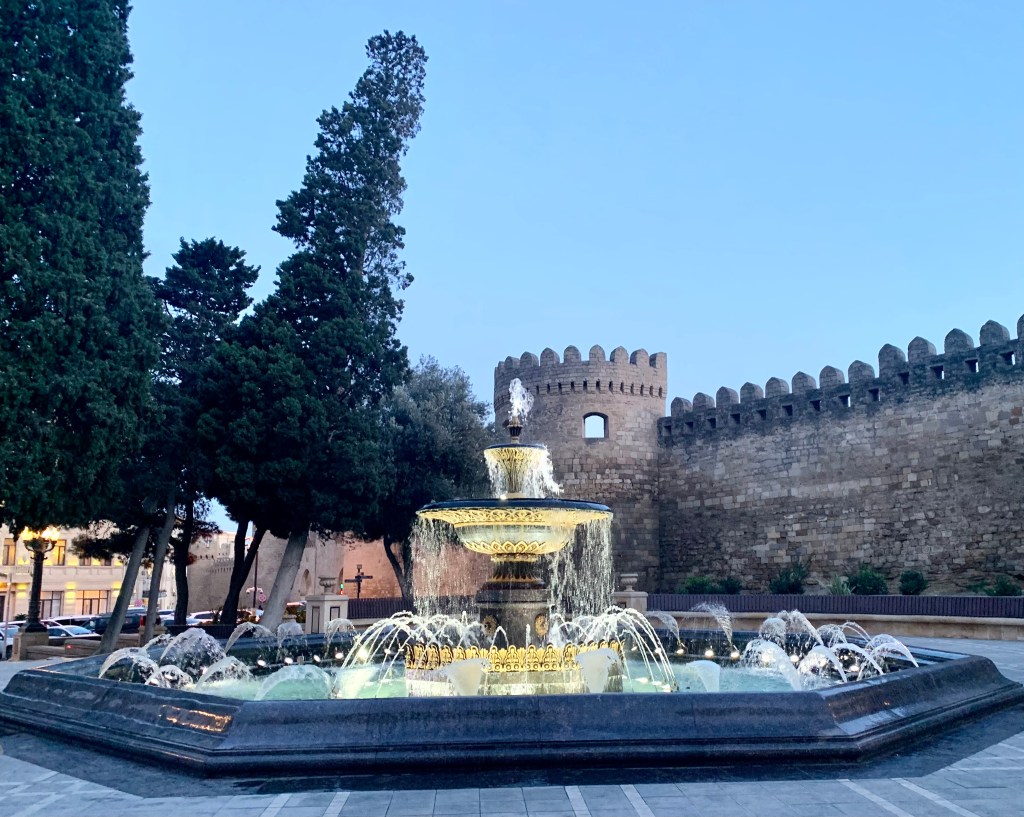
The Old Town, nicely preserved, is a joy (and can be a frustration, as it is a bit of a labyrinth) to walk around. It is pedestrianised (though there seem to be plenty of cars within – a way for the Old Town to make money).
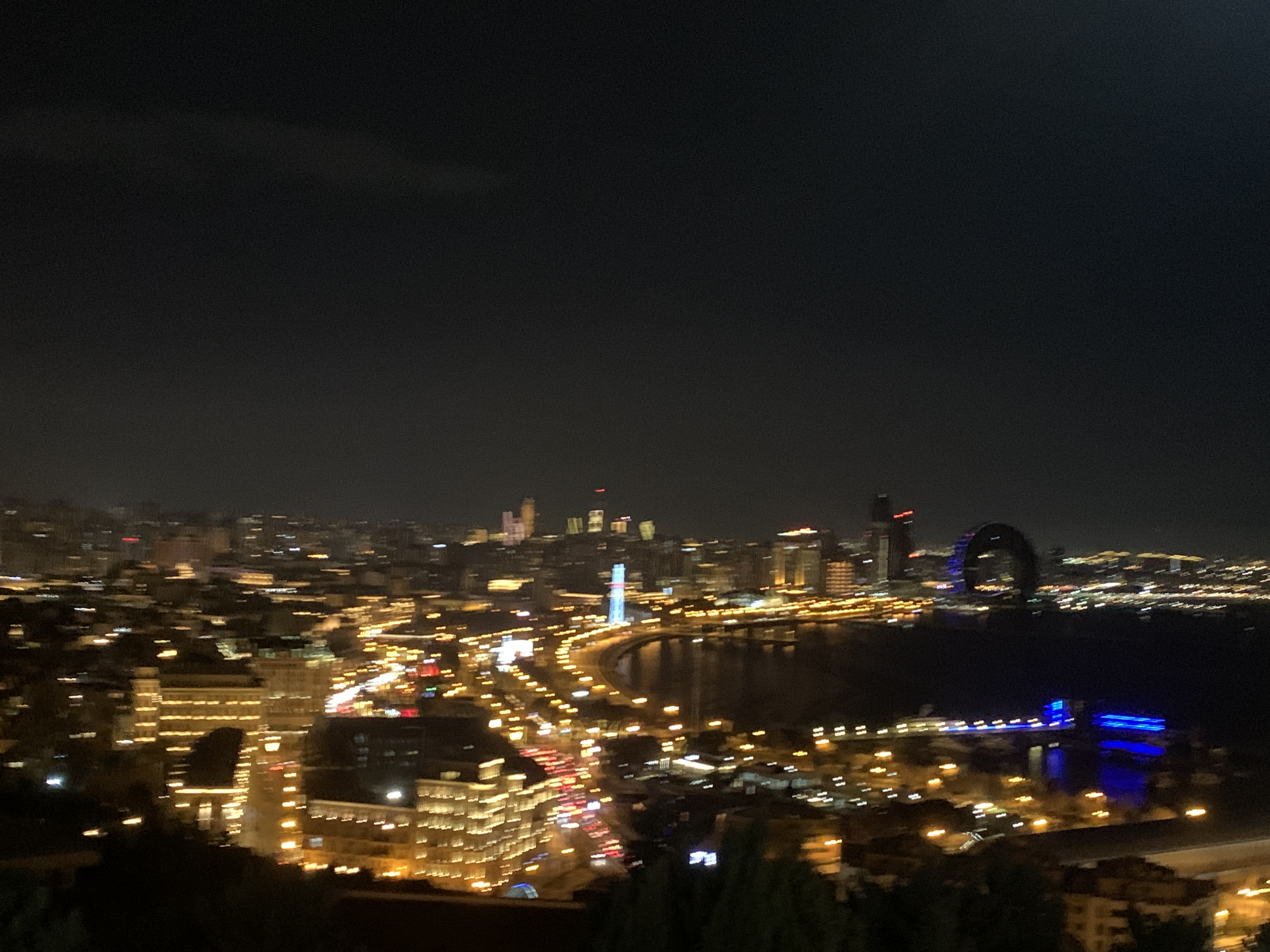
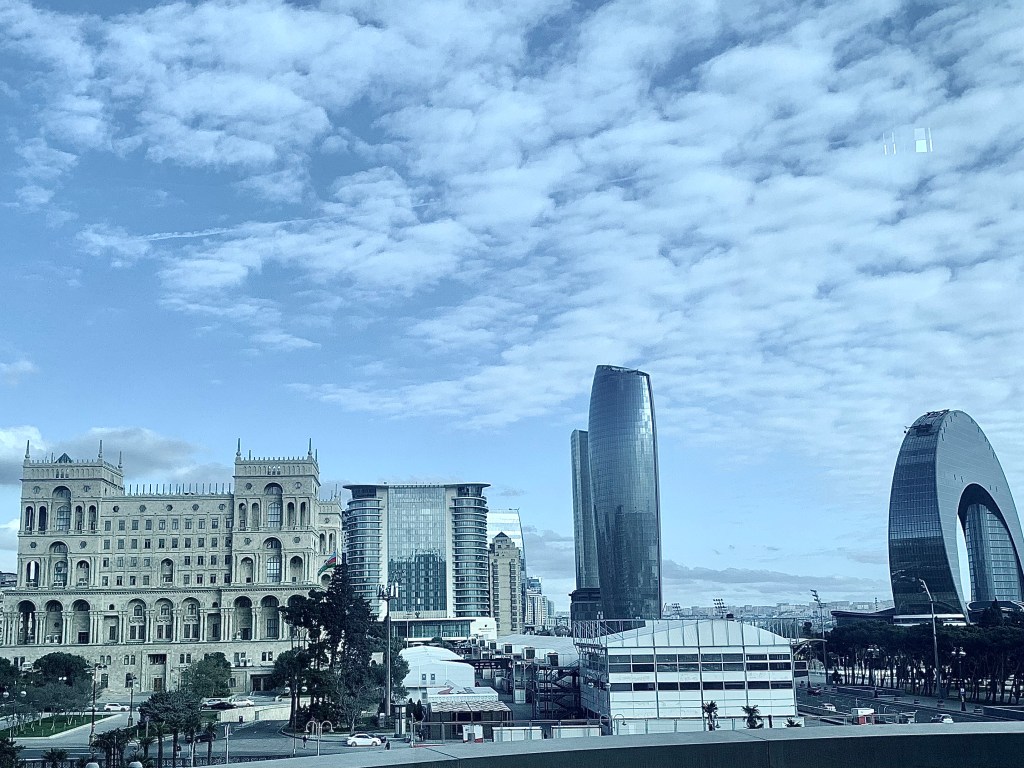
There are many Soviet style buildings – the best known one is the Dom Soviet, then as now, a government building, but also recognised around the world as Formula 1 pitstops are right in front of it.
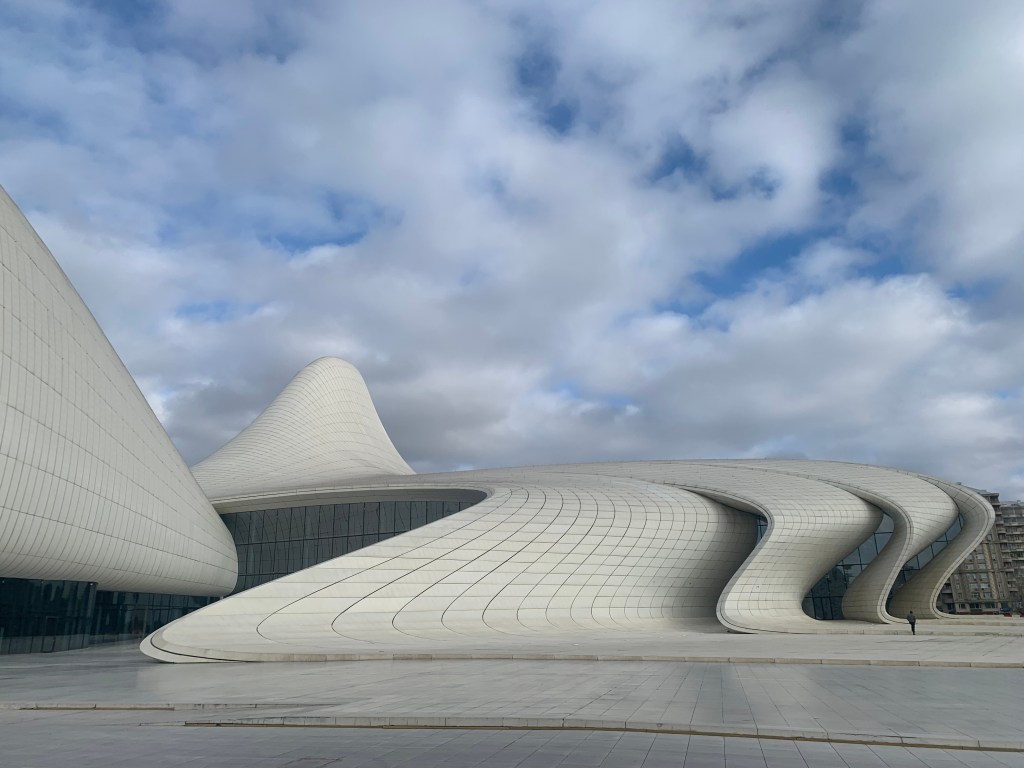
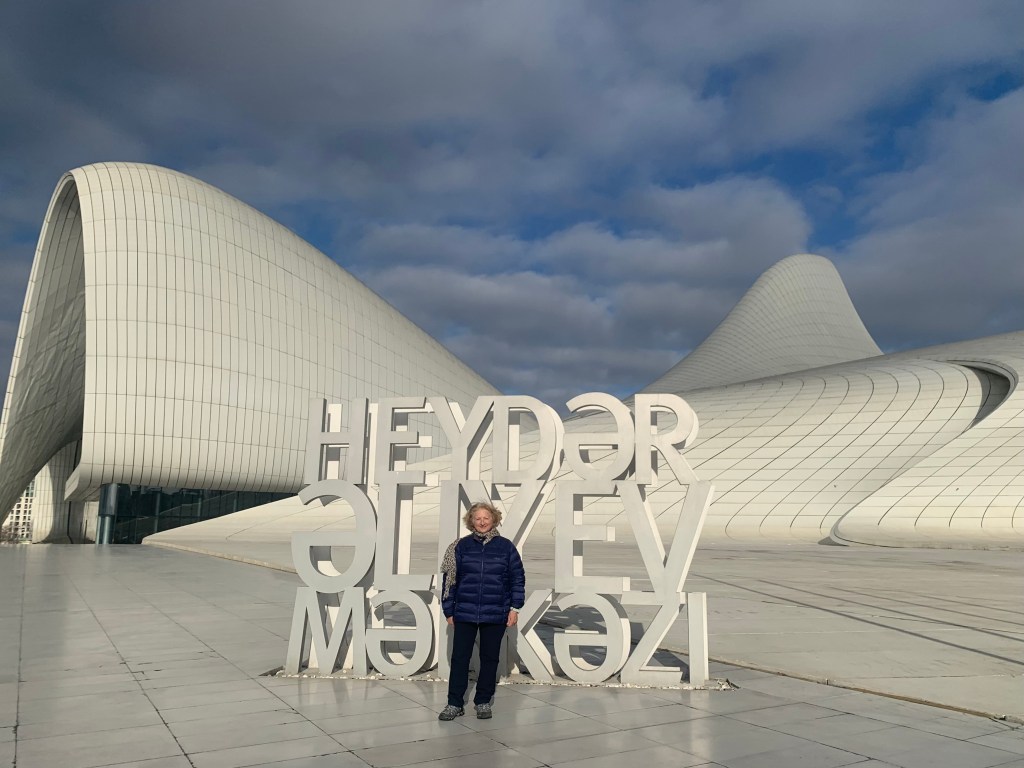
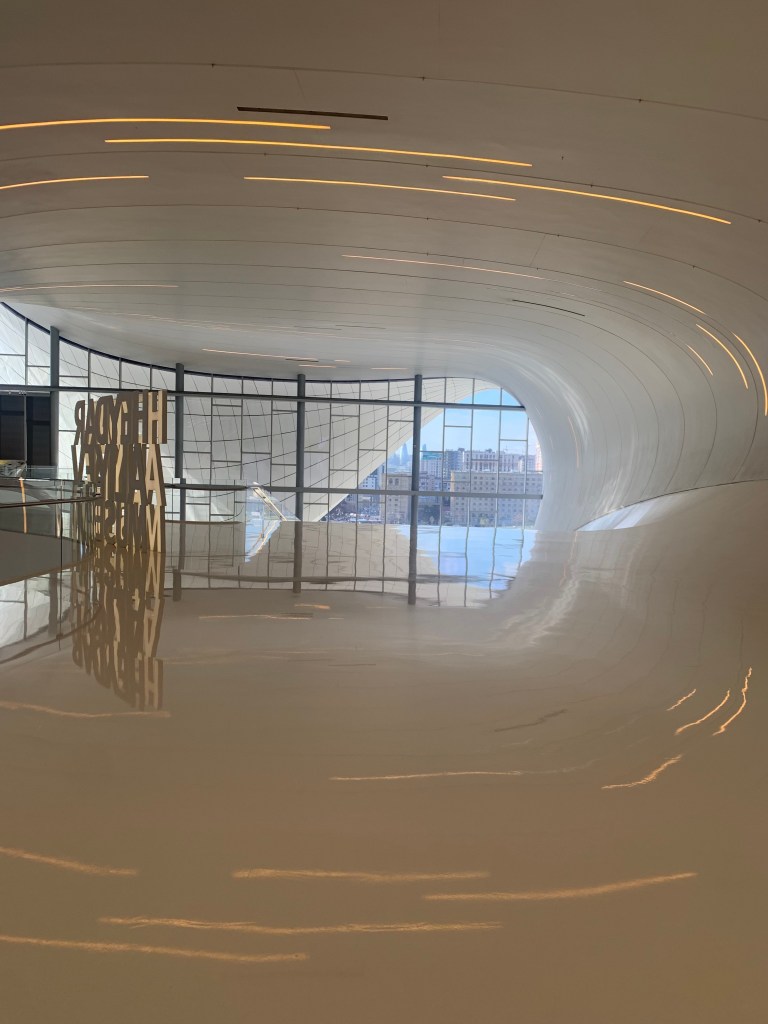
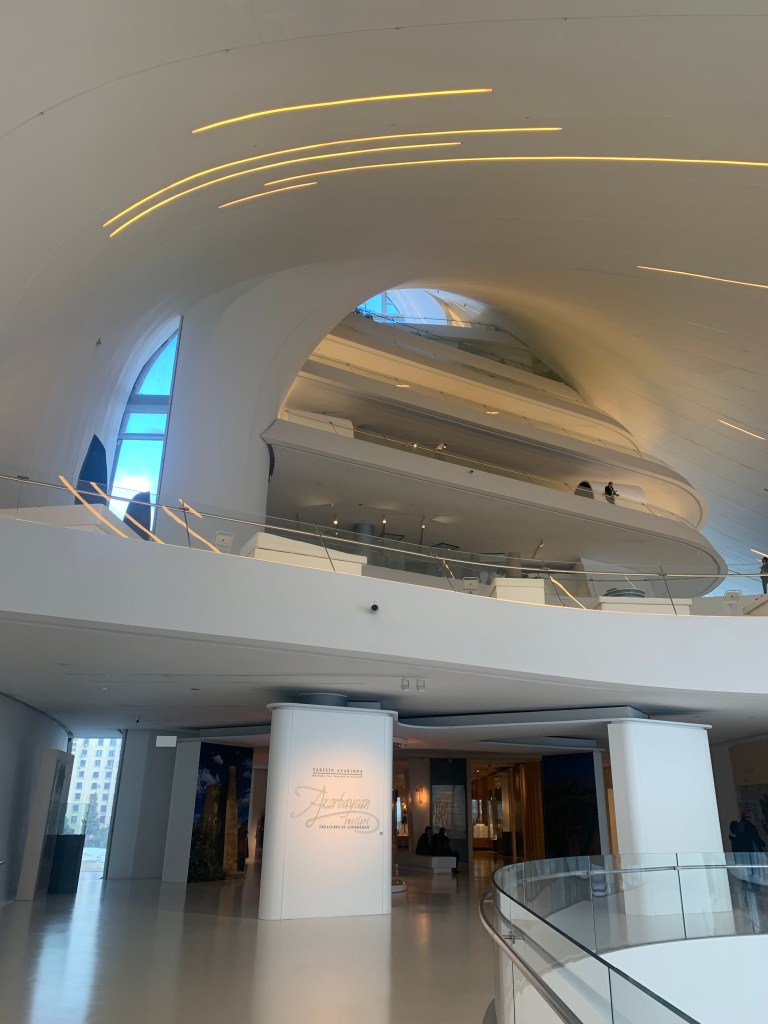
I was mesmerised by the Heydar Aliyev centre, designed by Zaha Hadid, all sinuous lines, curves and soft meldings, both inside and out. It is all white and the walls curve into floors – it feels giddy and like walking on water. There are several exhibitions - art, musical instruments, history of carpet making in Azerbaijan, cars (temporary) and a detailed and reverent one on Heydar Aliyev’s life.
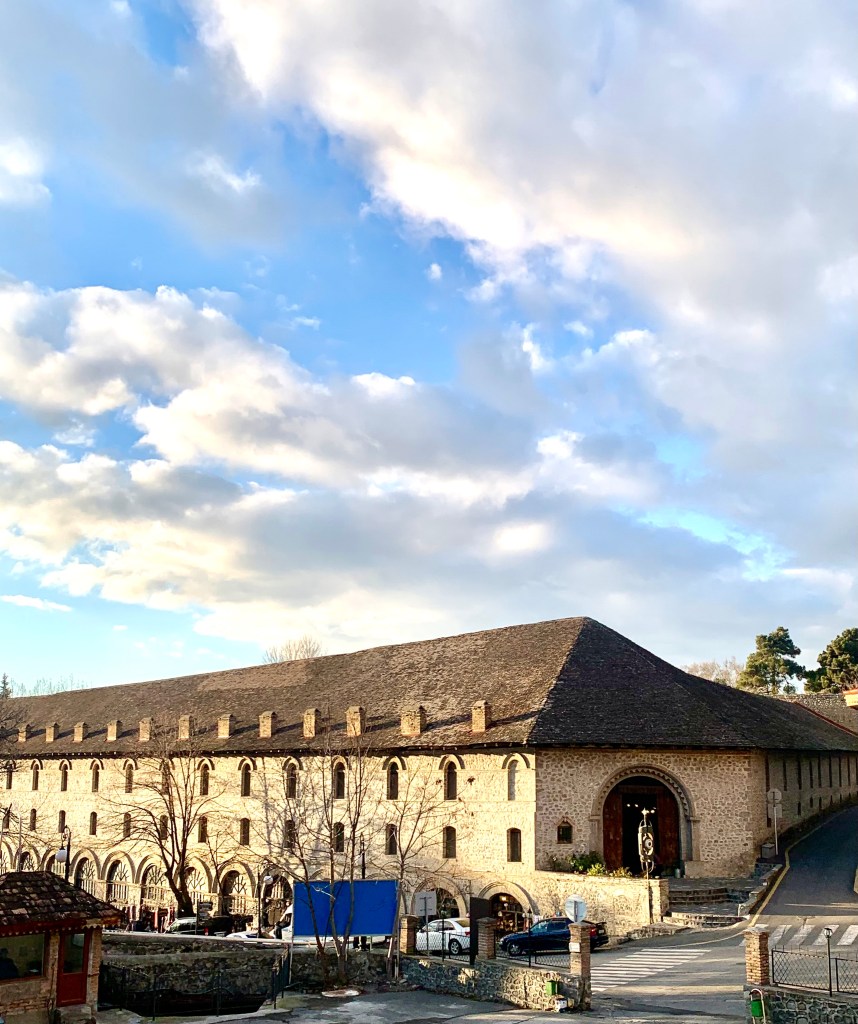
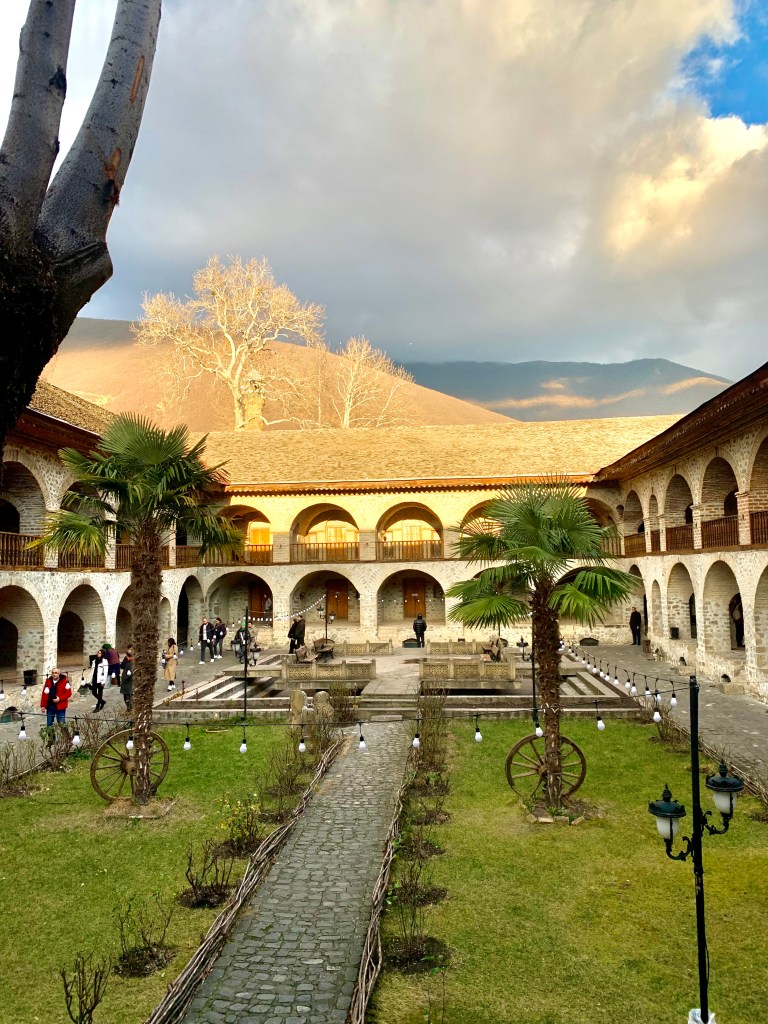
The trip “4 regions in 1 day” was quite a marathon – we covered some 800km – it started at 0800 and finished at c 2230. The most impressive place for me was Sheki – a Silk Road town that I would happily have spent a day or two roaming around. The Khan’s summer palace is a beautifully painted and ornamented place, both inside and out, with intricate stained glass windows that throw shimmering, kaleidoscopic colours on the floor (photos NOT allowed, though I can’t see why). The Caravanserai down the road has been in use for centuries, though the current building is from the 18th ct. And it is still used as a hotel. Sheki is known for its silk making and carpet weaving. There is a winery (we did get a wine tasting, and very nice it was too).
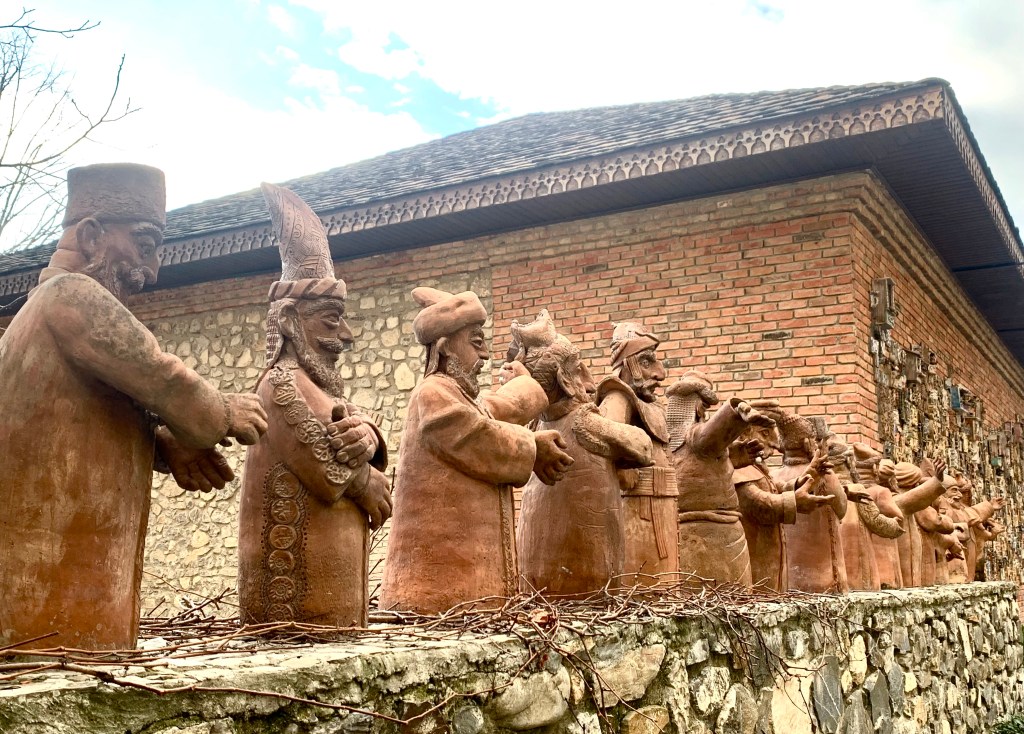
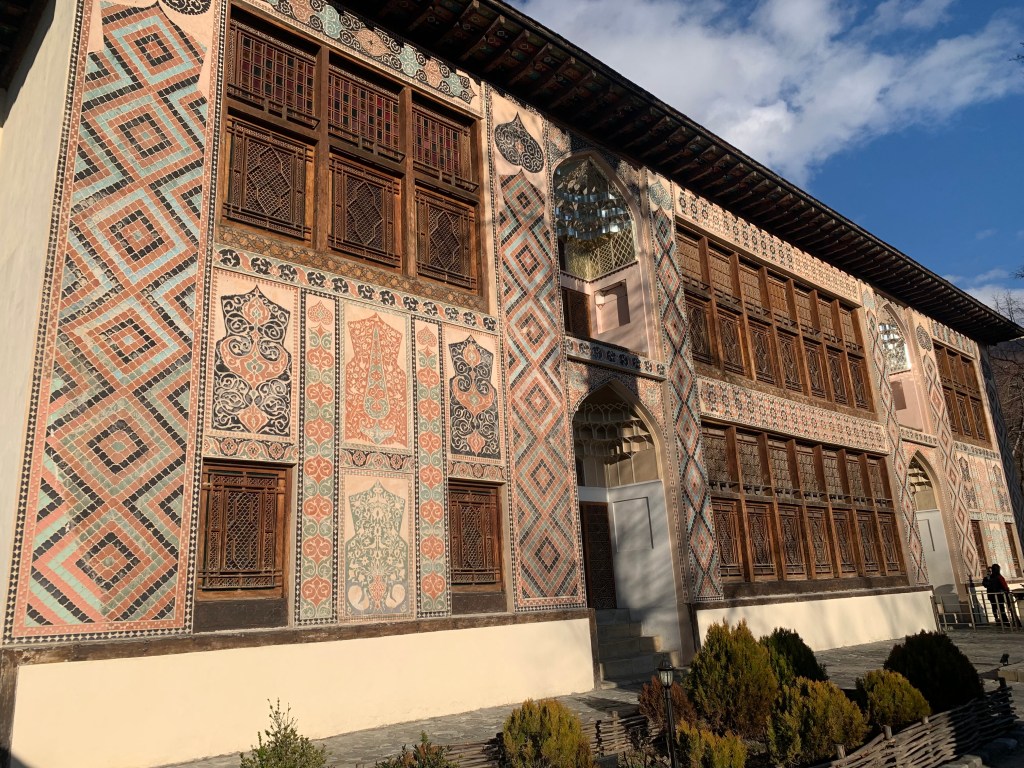
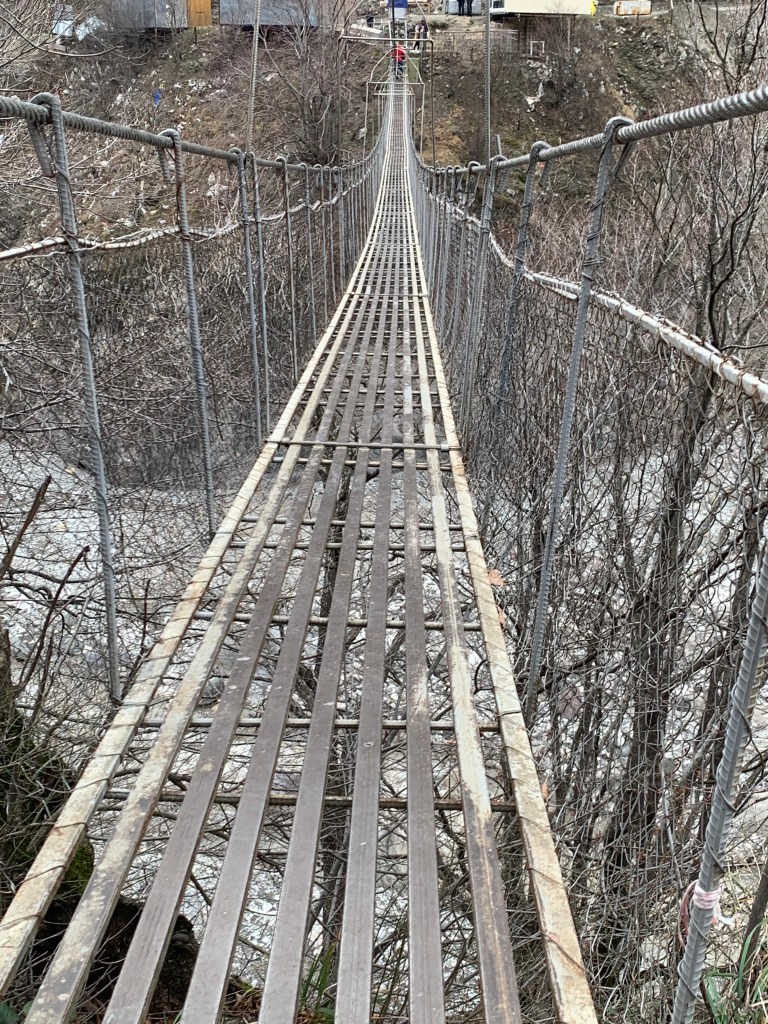
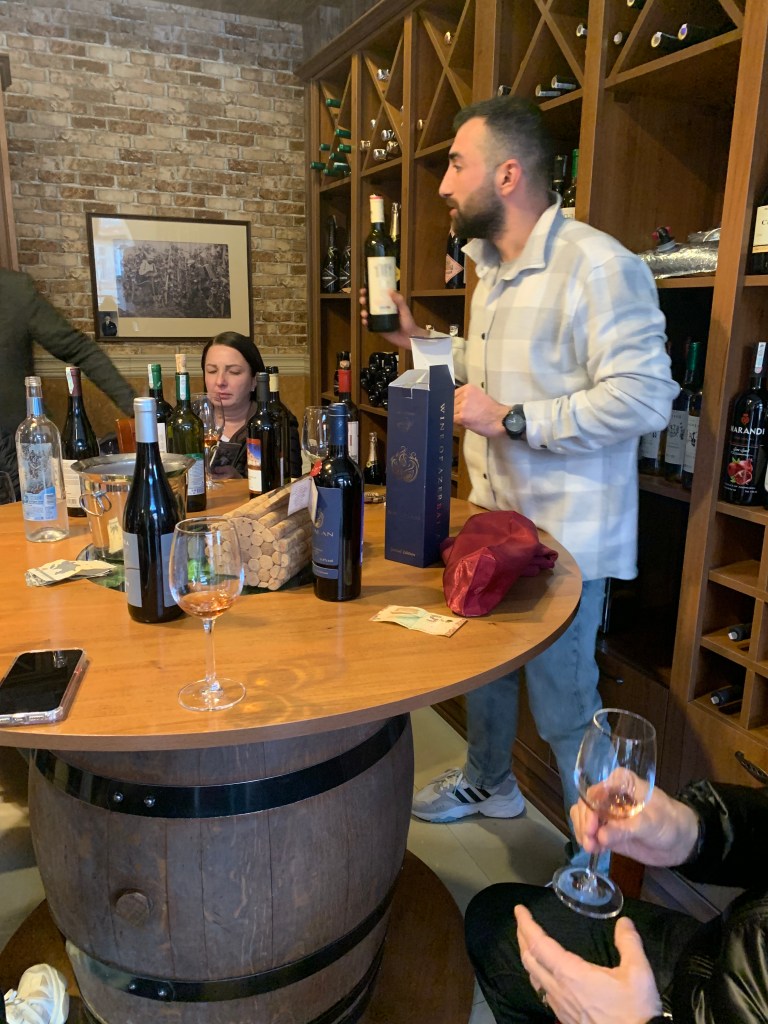
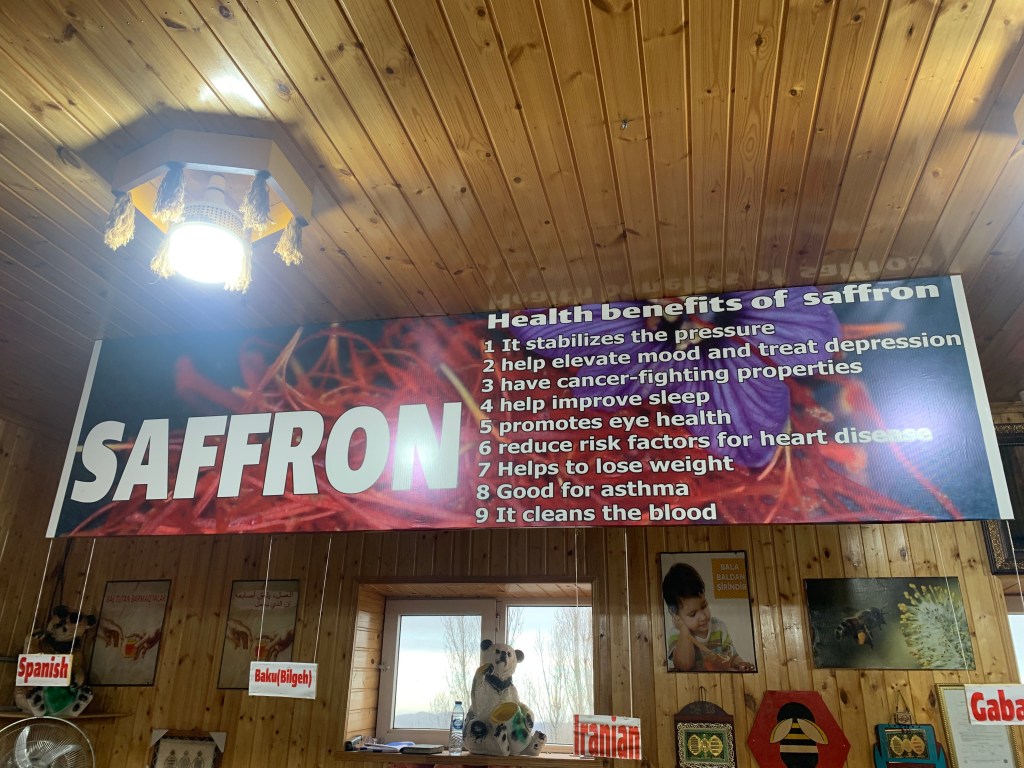
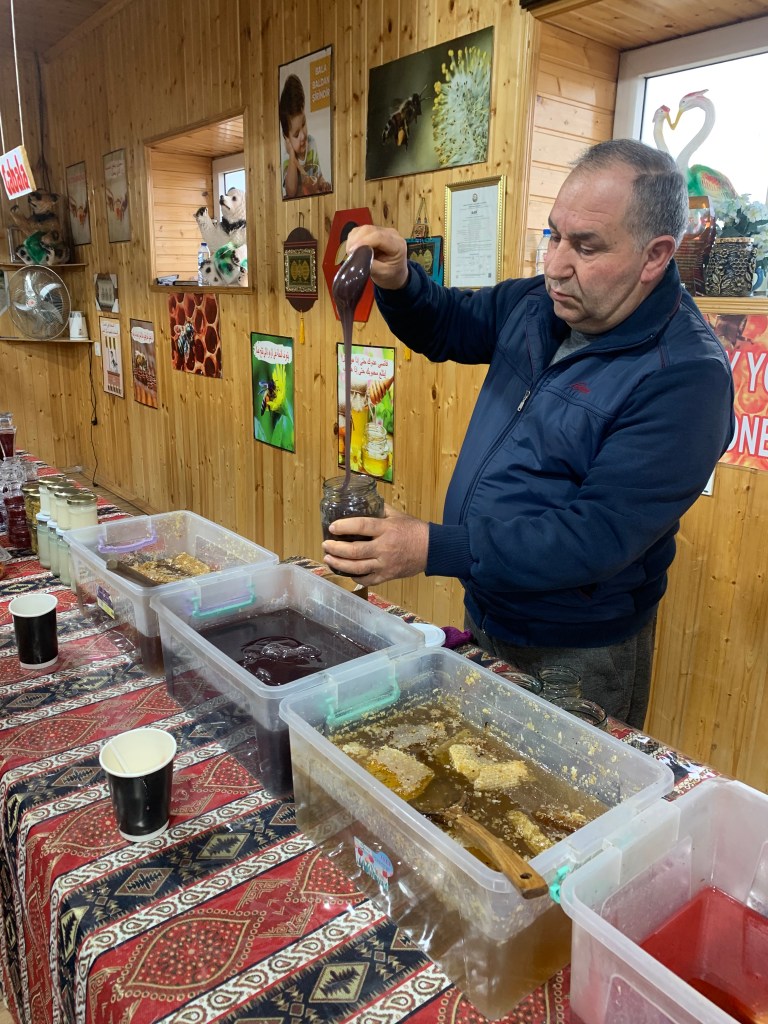
The hanging bridge was fun and wobbly, the honey tasting generous, the views over the bare mountains spectacular. But the trip is far too long and uncomfortable in a cramped minibus space. Just as well the wine tasting was the last thing we did before starting back (and were allowed to pour ourselves a bit more…)
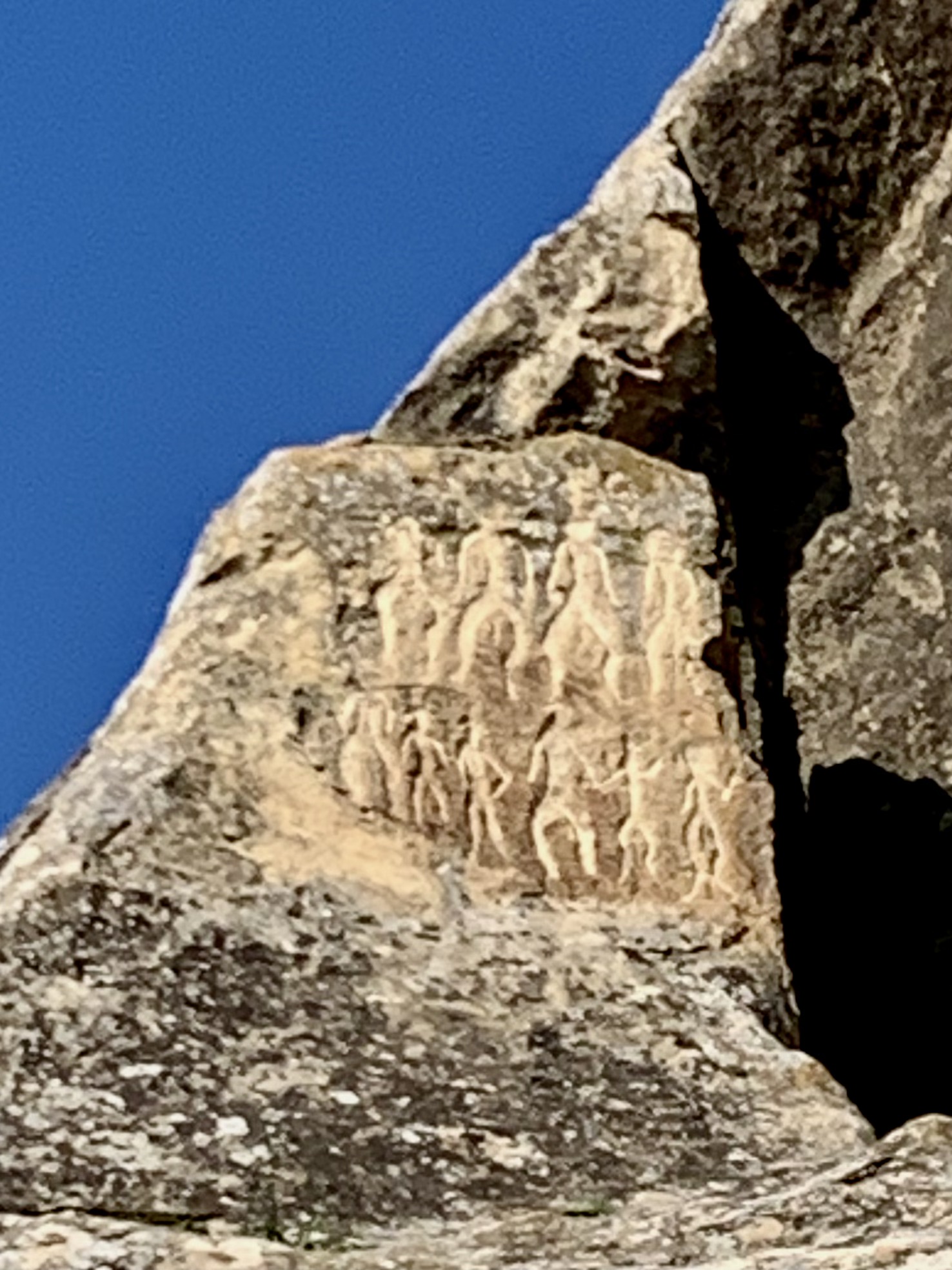
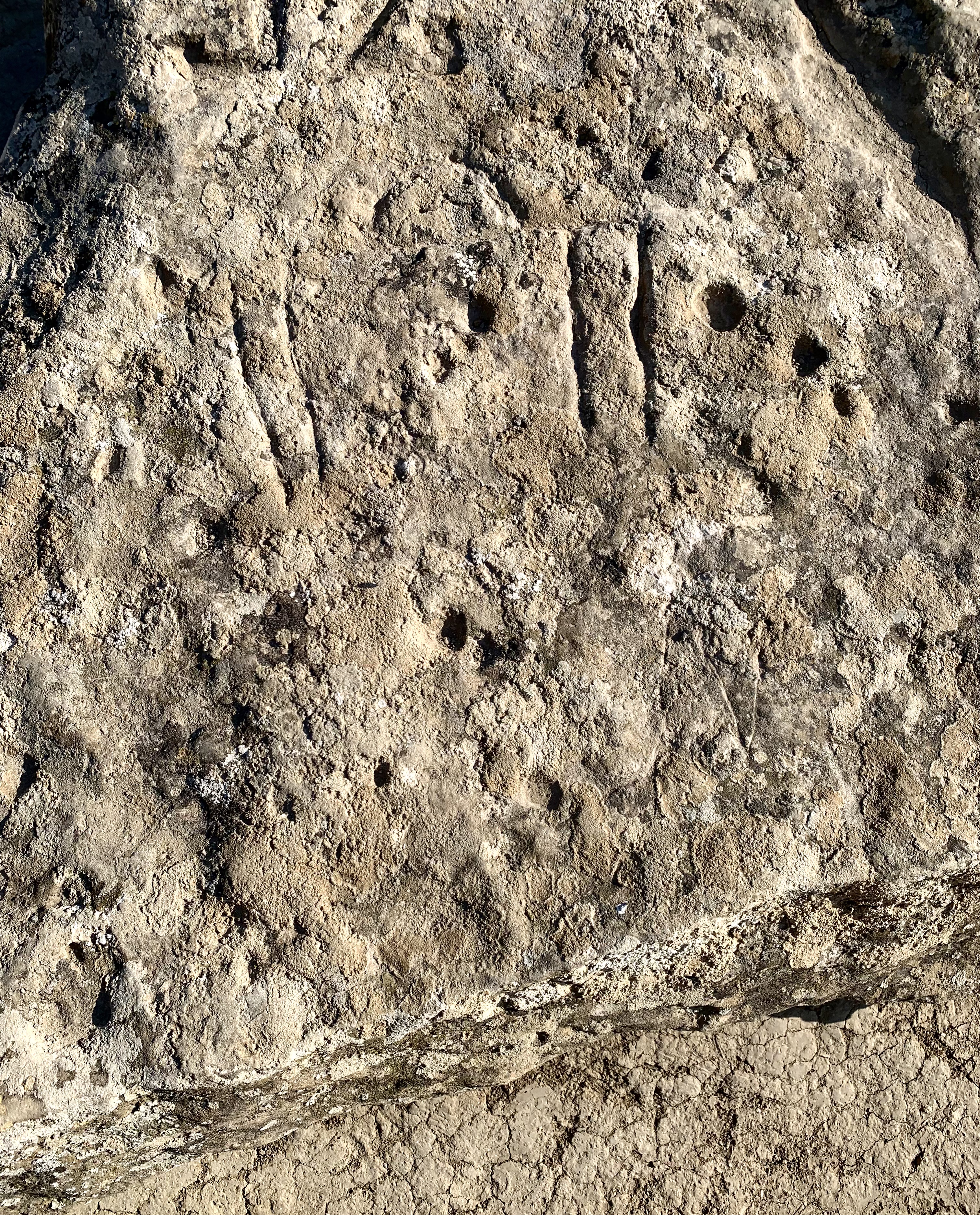
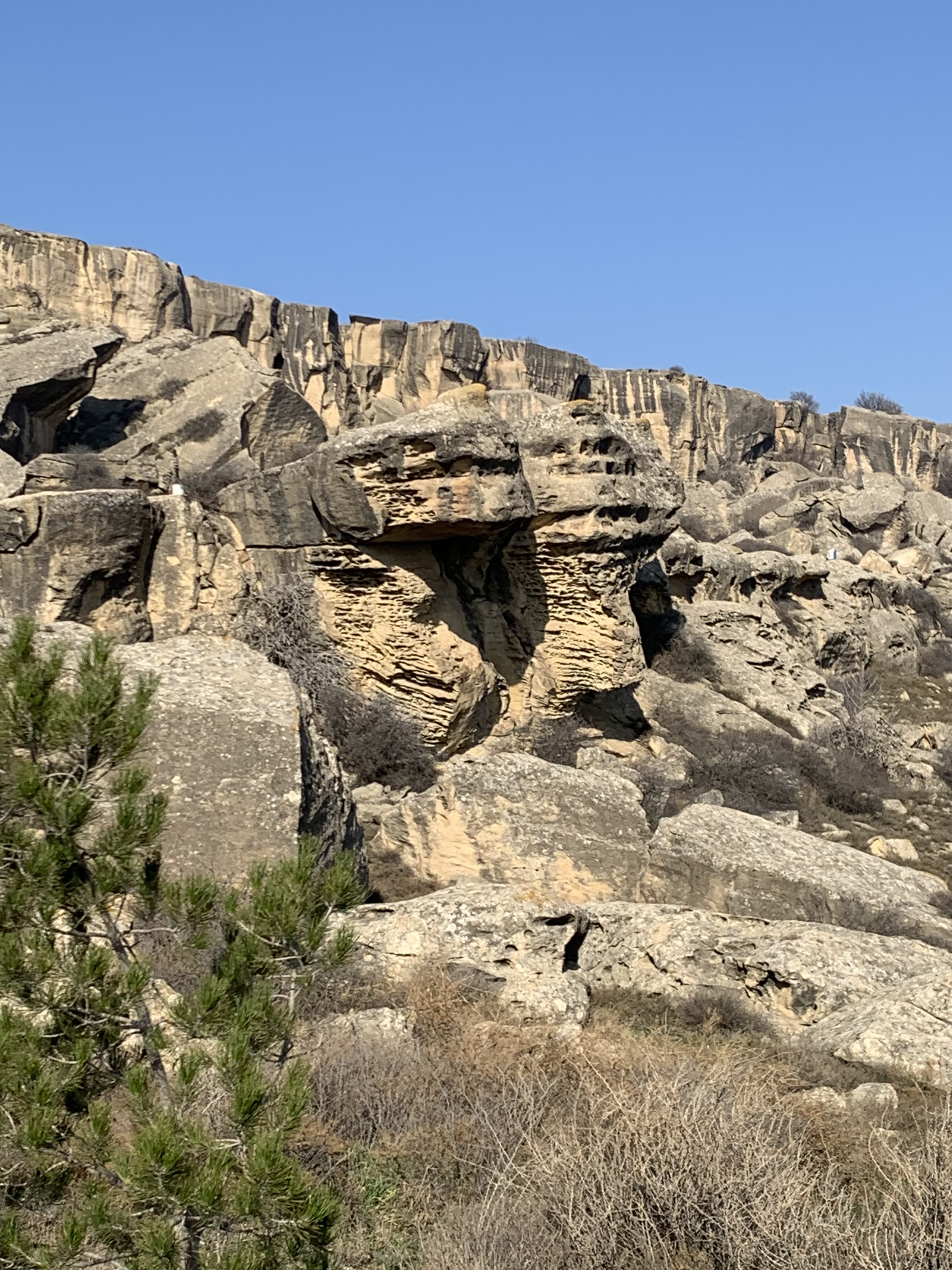
The petroglyphs of Gobustan, a UNESCO site, are a strange pile of scattered giant sandstone boulders with scratchings on them. The earliest ones are from c. 40000BC, the newest ones from c 15000 BC. It is thought that they were originally drawn inside caves, but earthquakes, falls etc have moved the rocks and exposed them. Some smaller stones with drawings are now in museums.
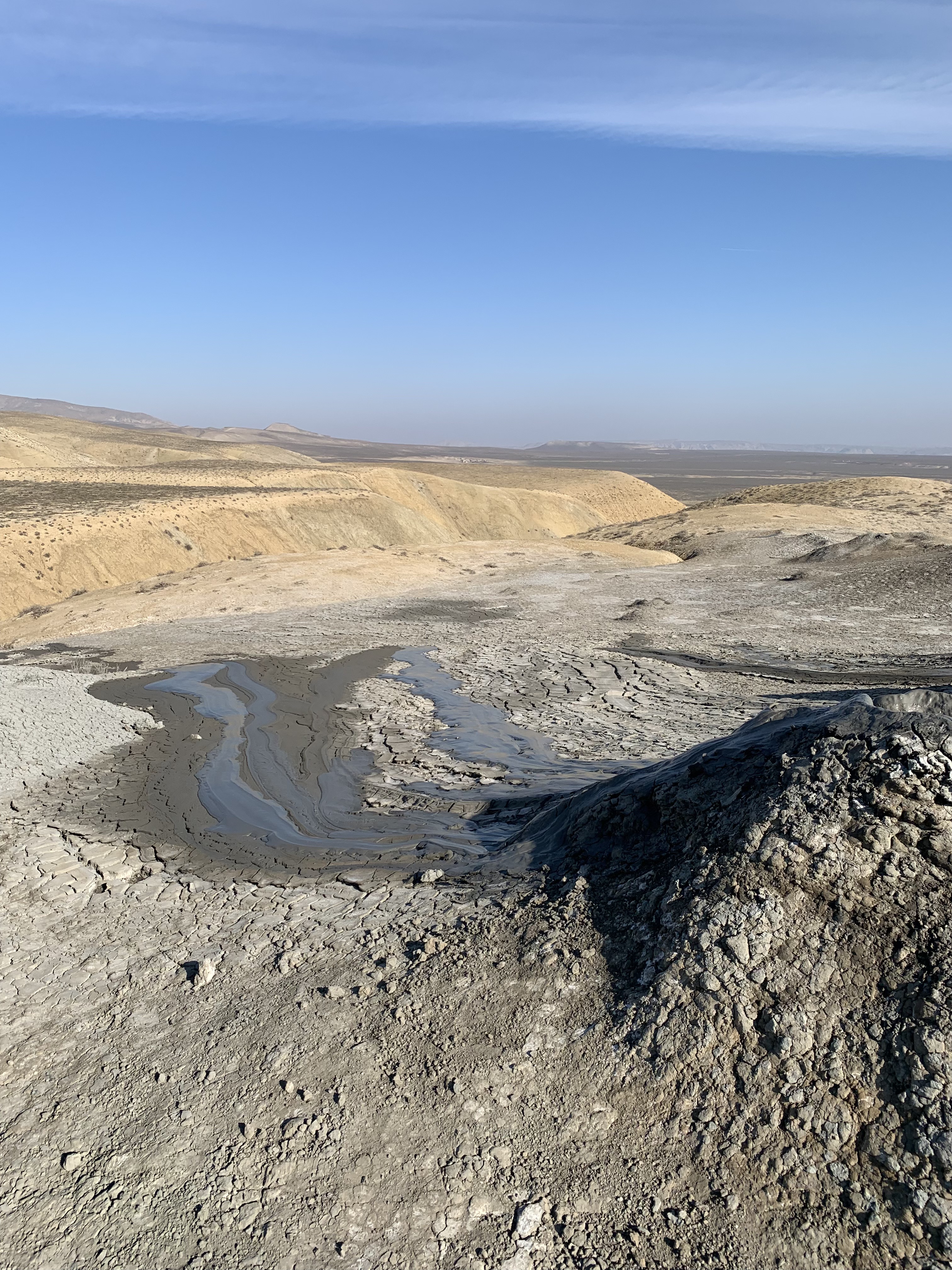
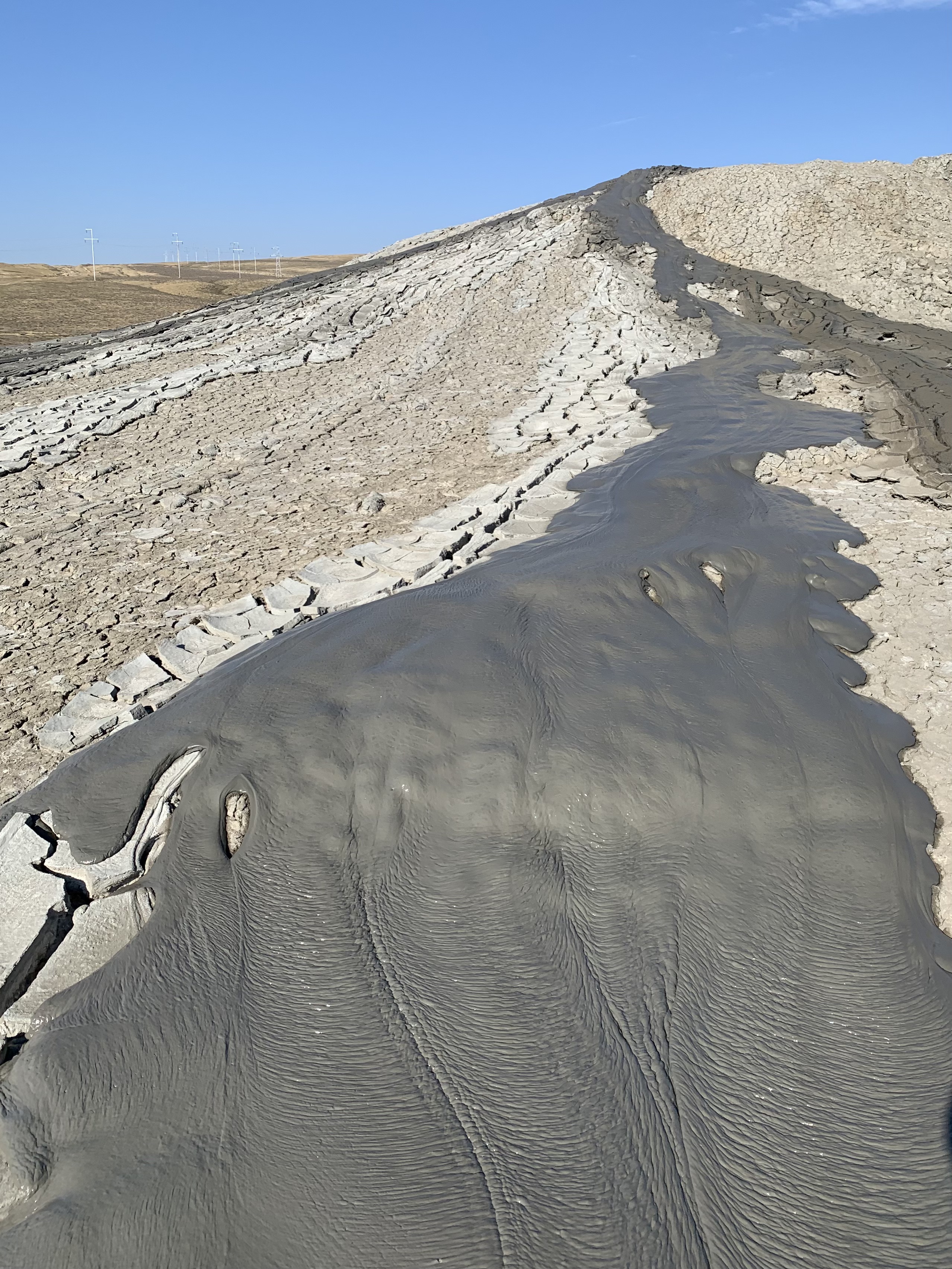
The mud volcanoes are strange (and a little underwhelming): they pop and plop at random, flatulating gently one day, oozing cold mud, only to die down and then another one starts elsewhere. The guide, Gushlana, was a bit disappointed that things were becoming very sanitised (the workers were busy finishing the tourist buildings, which also meant they would start charging entry fees). The newly built wooden walkways take you around the site without stepping on the mud; Gushlana used to take a small lump home about once a year and dilute it with water, to use as a face mask (there are over 30 minerals in the mud). Not any more.
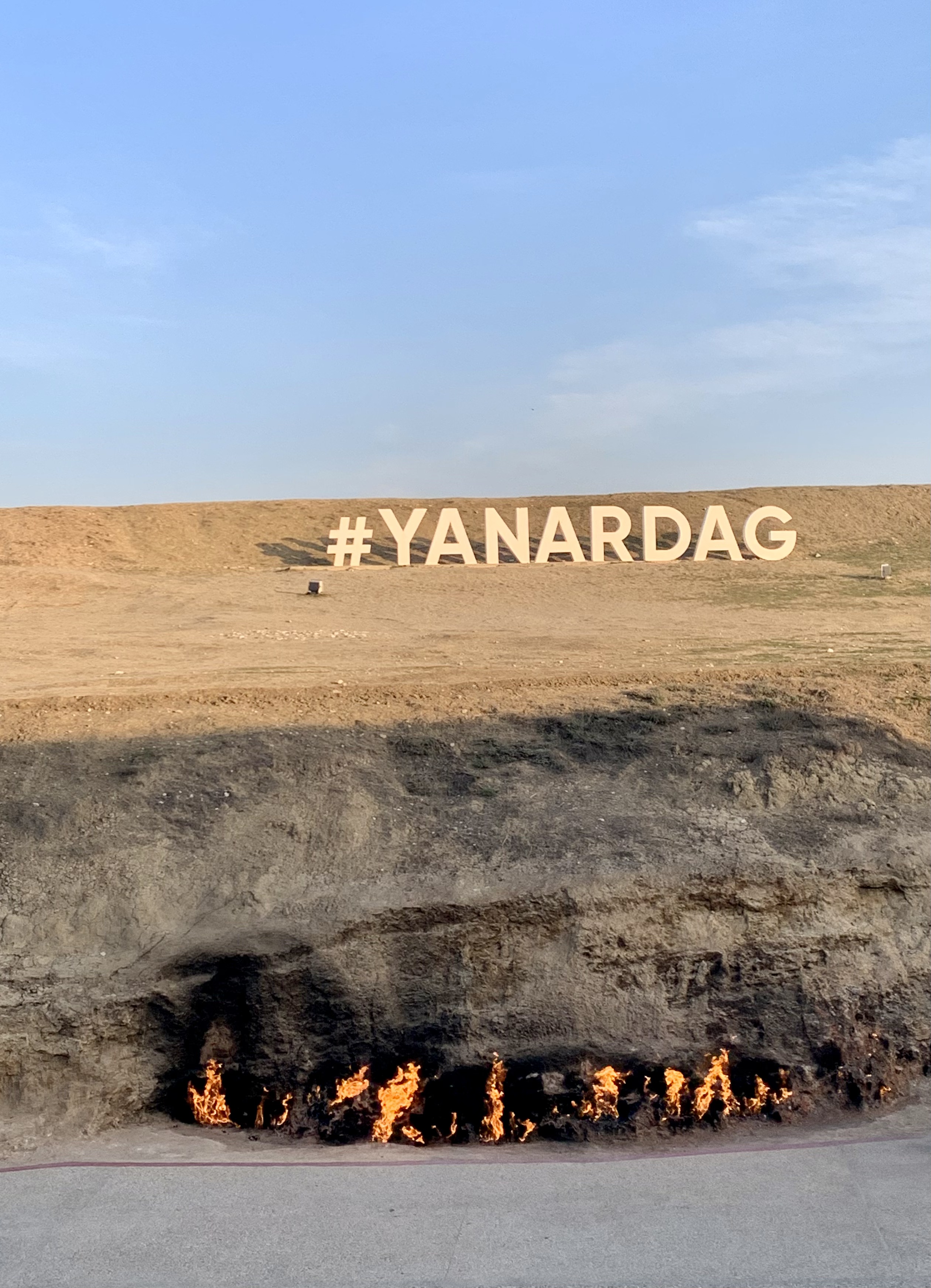
Azerbaijan is “the land of fire”. The Zoroastrian temples have been built at the sites where fires have been burning. Natural gas and oil abound. The “fire mountain’, Yagerdag, is more of a hillock, but the fire still looks impressive.
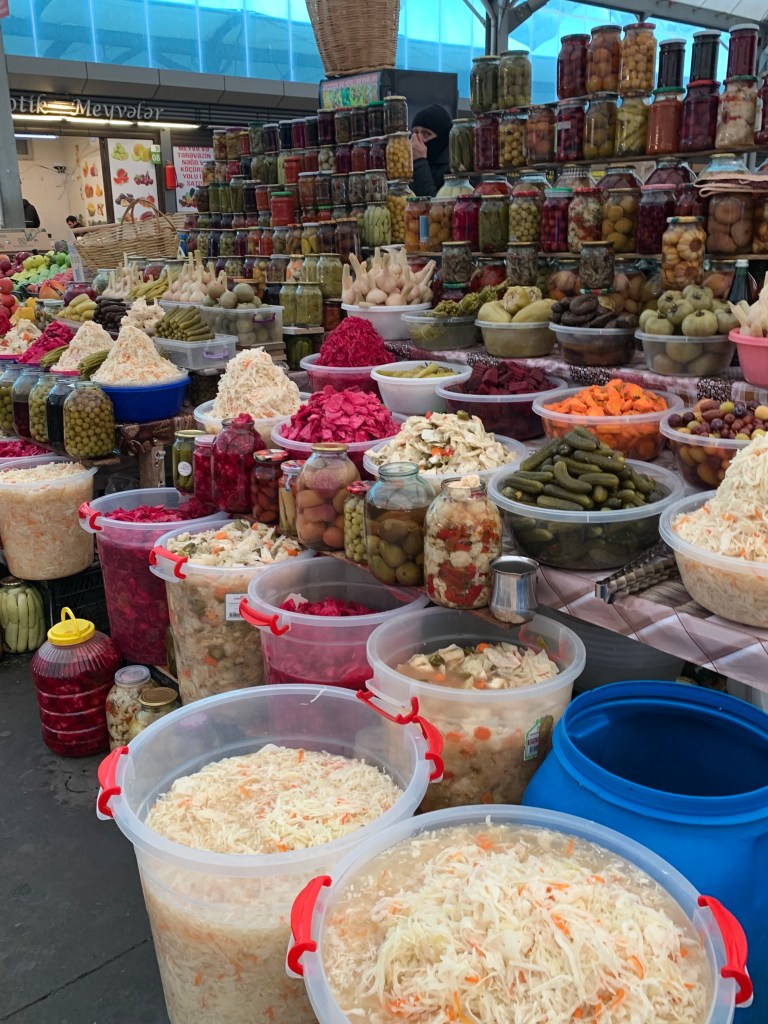
What I enjoyed the most was walking around Baku. Taking the tube out a few stops and walking back – glimpses of the Caspian on one side and the city sprawl on the other. All the big shop names are here, though I haven’t seen too many people in them. Walked through the jewellery district yesterday – besides the Jewellery Centre (very blingy!) there is a street full of little gold/silver/jewellery shops. And in all of them men were looking at their phones…
Car is king (though there is some respect for the pedestrian crossing), which isn’t surprising in a country were petrol costs under 50p a litre and diesel less than 40p. One of the tour guides said that Azerbaijan was “diversifying and investing in wind and solar power”. Not much evidence of that. But the derricks keep on nodding and the off shore rigs are visible on the horizon.


One response to “Azerbaijan”
Its great to see how the old and the new co-exist. I didn’t know Hadid worked there- she was a genius!
LikeLike