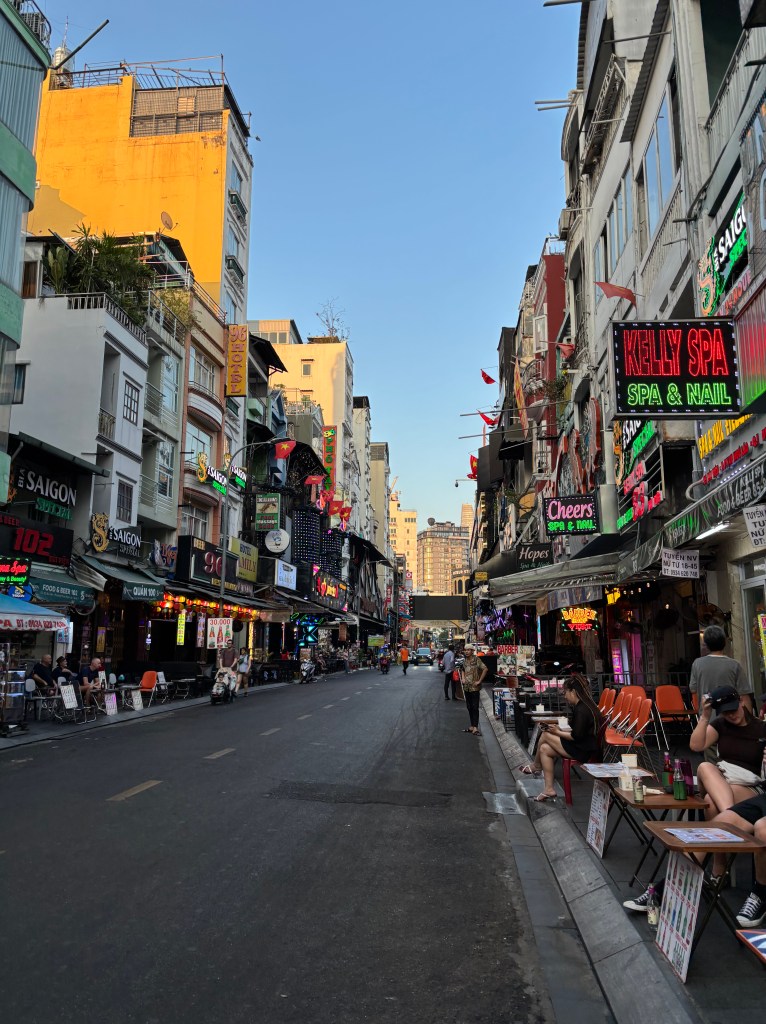
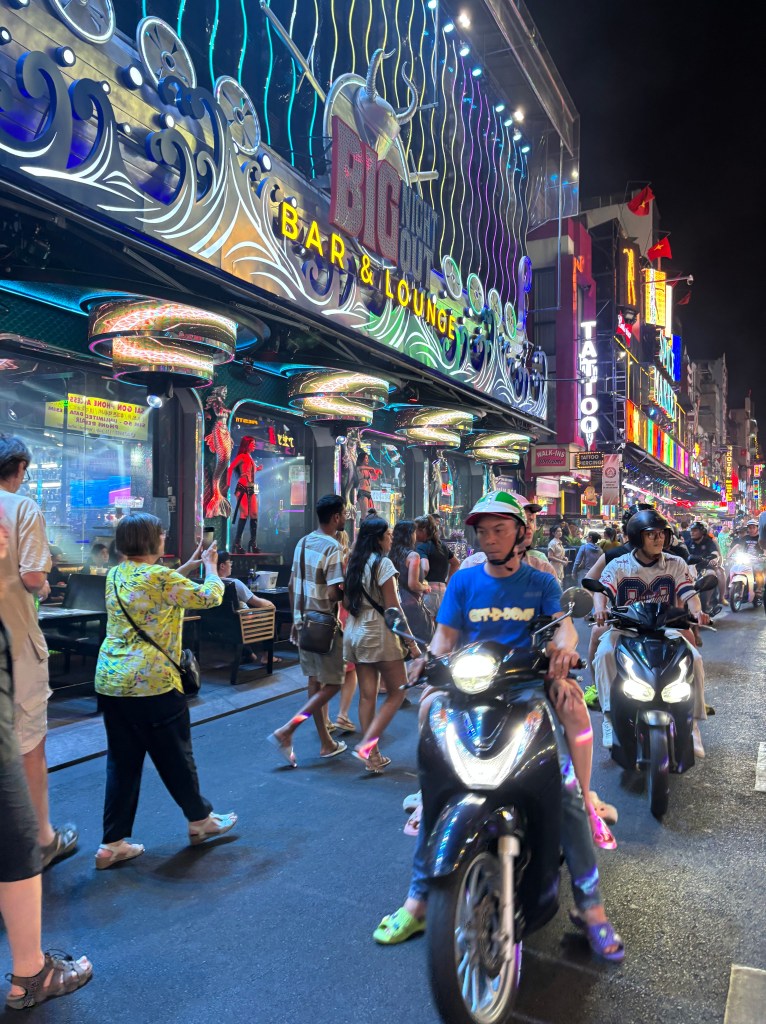
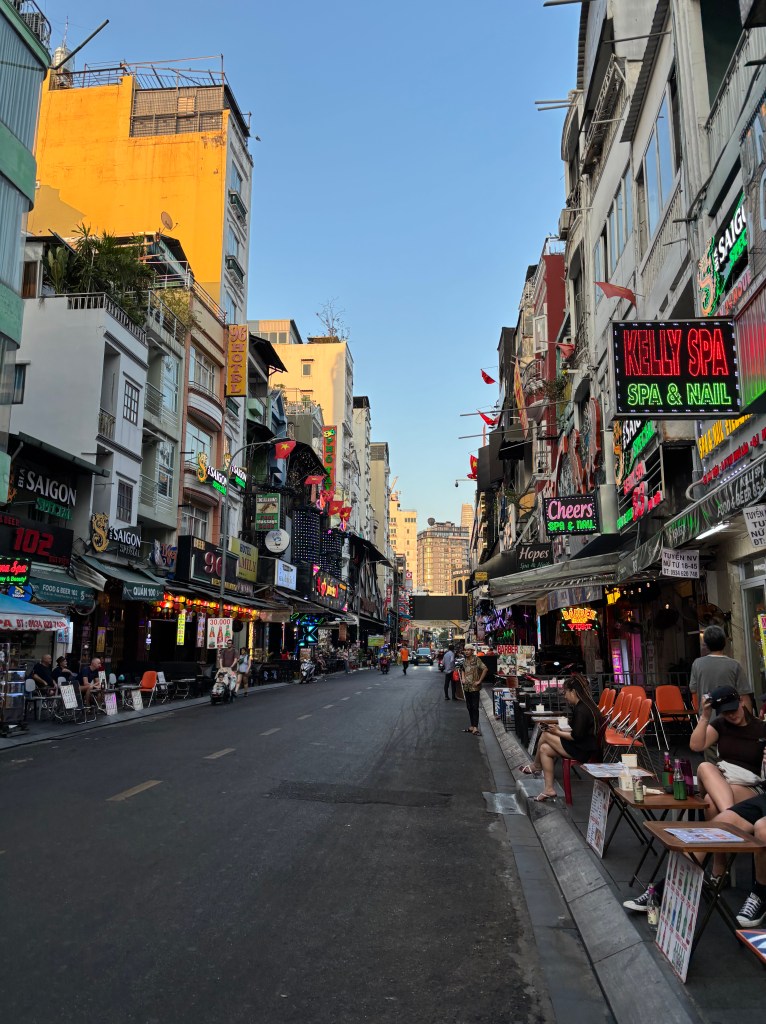
Having been told that one should stay in District 1 in Ho Chi Minh City (Saigon), I unknowingly plonked for a place (99 Hotel) on the Walking Street – i.e., the bar central. Definitely in the middle of things: come night, loud music, girls dancing on platforms, hawkers, beer, pedestrians and more clashing loud music, stools on the pavement, scooters everywhere, more loud music… If you fancy sleeping before 03:30 am, don’t stay here. My room was at the back, but my sternum reverberated with the woofer. Mornings were blissfully quiet.
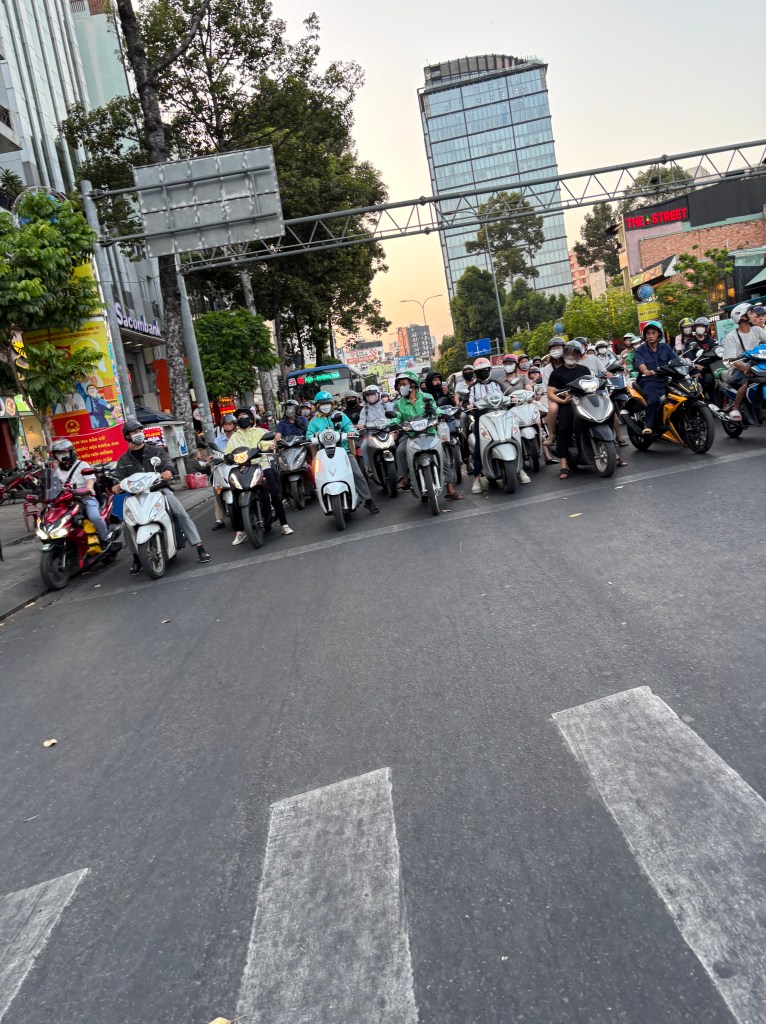
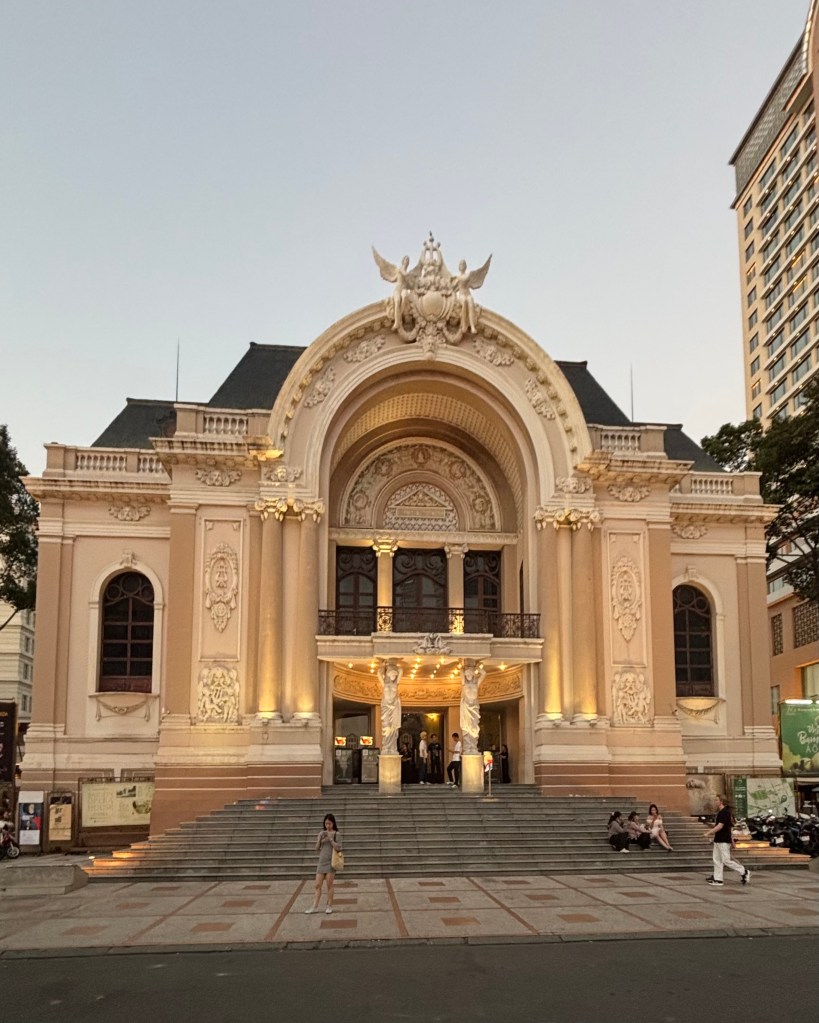
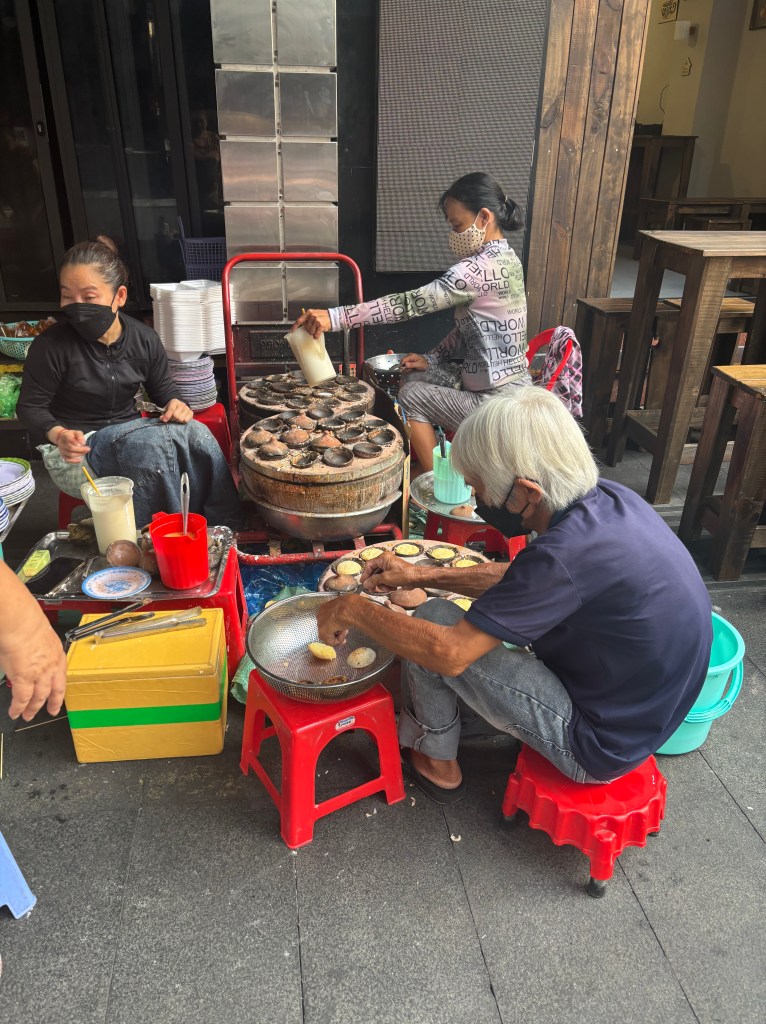
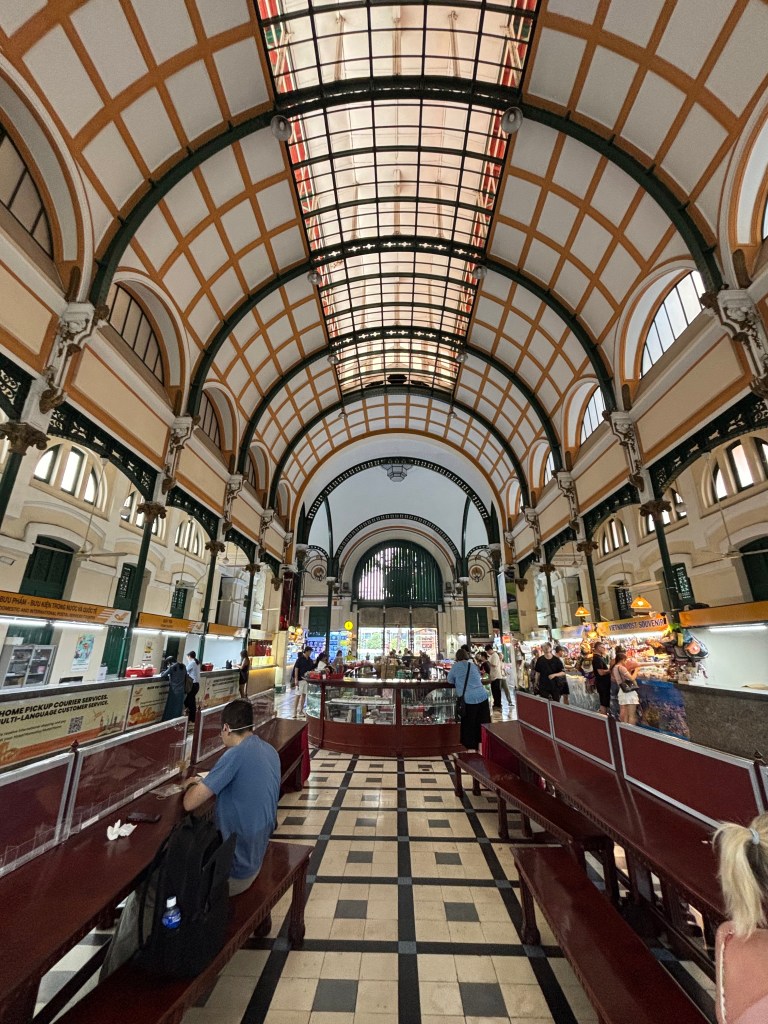
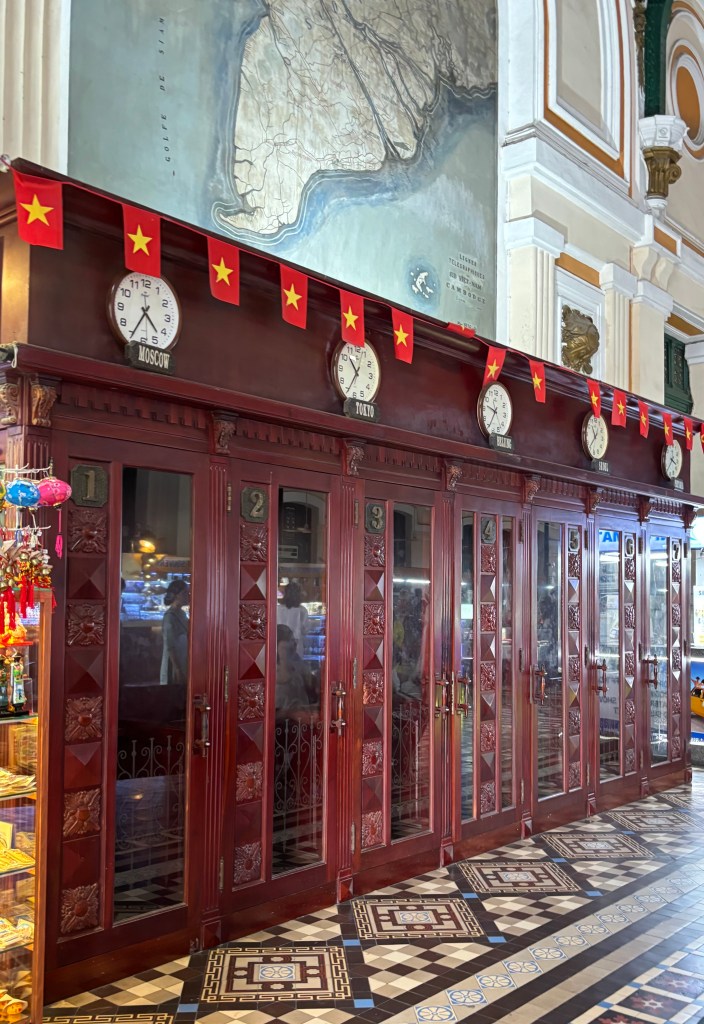
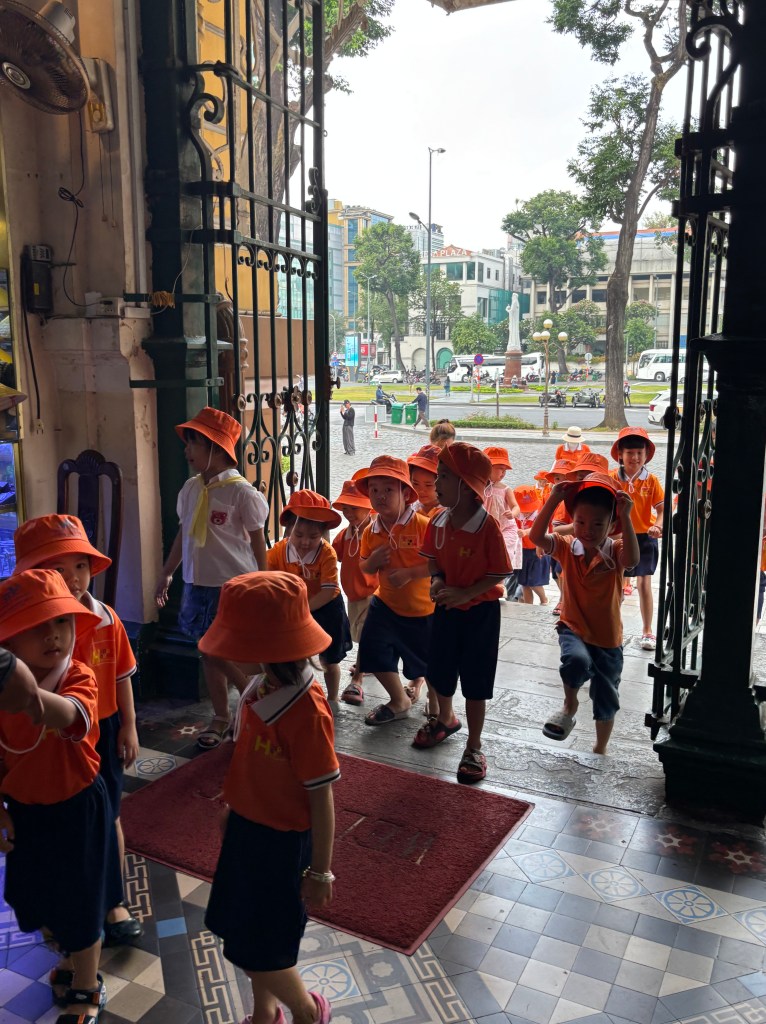
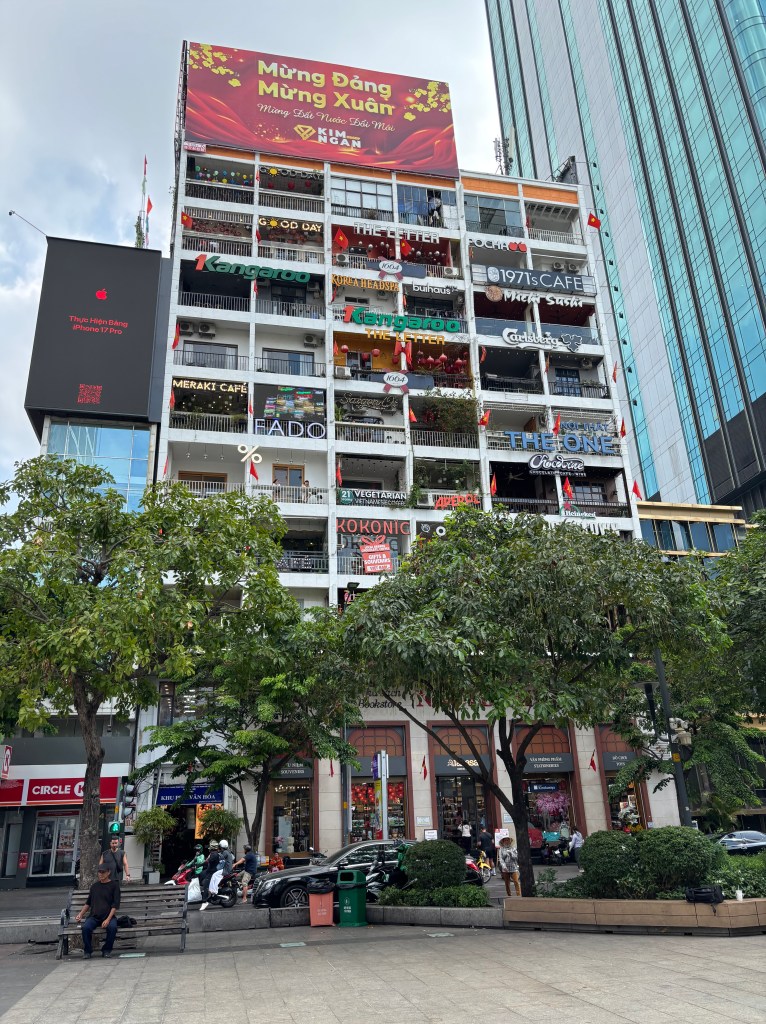
Bui Vien street – Walking St.in the morningWalking Street in the eveningWaiting at the lights: Charge!The HCMC opera houseMaking breakfast patties to eat with a soupThe old Post Office (French built)The thelephone booths…remember those?Local school children on a visit to the POALL of these shops are coffee shops – 60?
The half day scooter tour (riding pillion) was fun – good for orientation and easy to absorb information as it’s 1:1. (I had done the CBT (Compulsory Basic Training) in the UK, but would not wish to ride a scooter on a busy road in SE Asia. I’m told by an impeccable source – my medically trained daughter – that SE Asia is THE place for trauma training, thanks to the number of traffic accidents…)
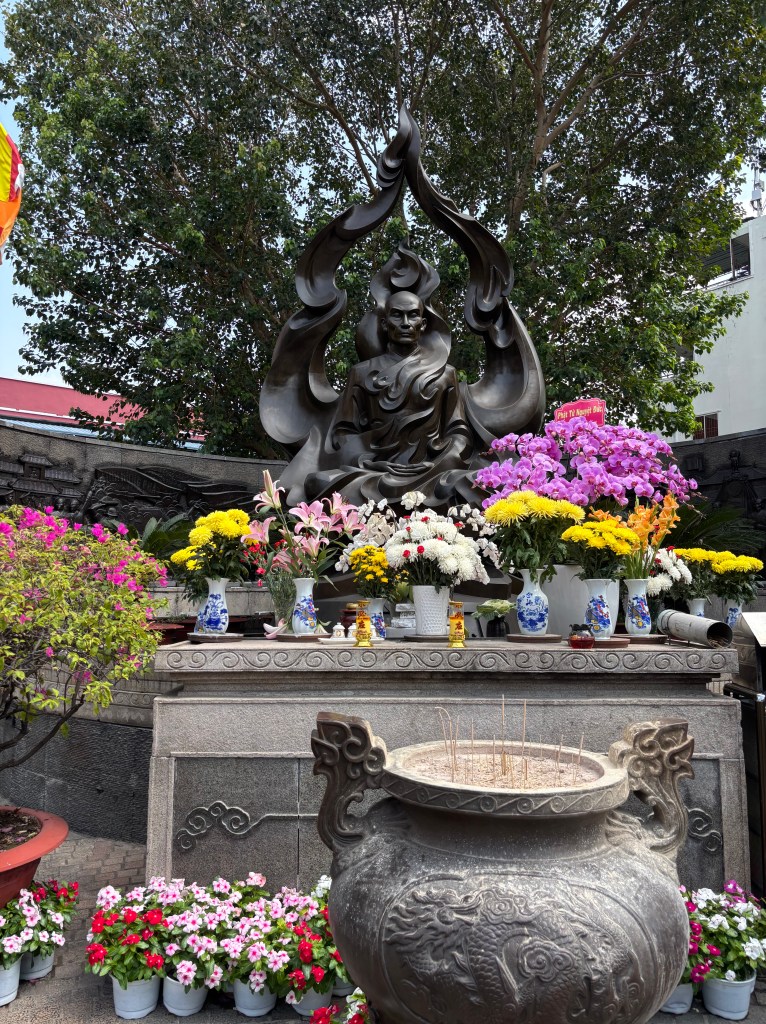
I remember reading about the self-immolation of the Buddhist monk, Thich Luang Duc, (1963) in protest at the persecution of Buddhists by the then (Catholic) Vietnamese president. There is a poignant monument to him at the Saigon crossroad where it took place.
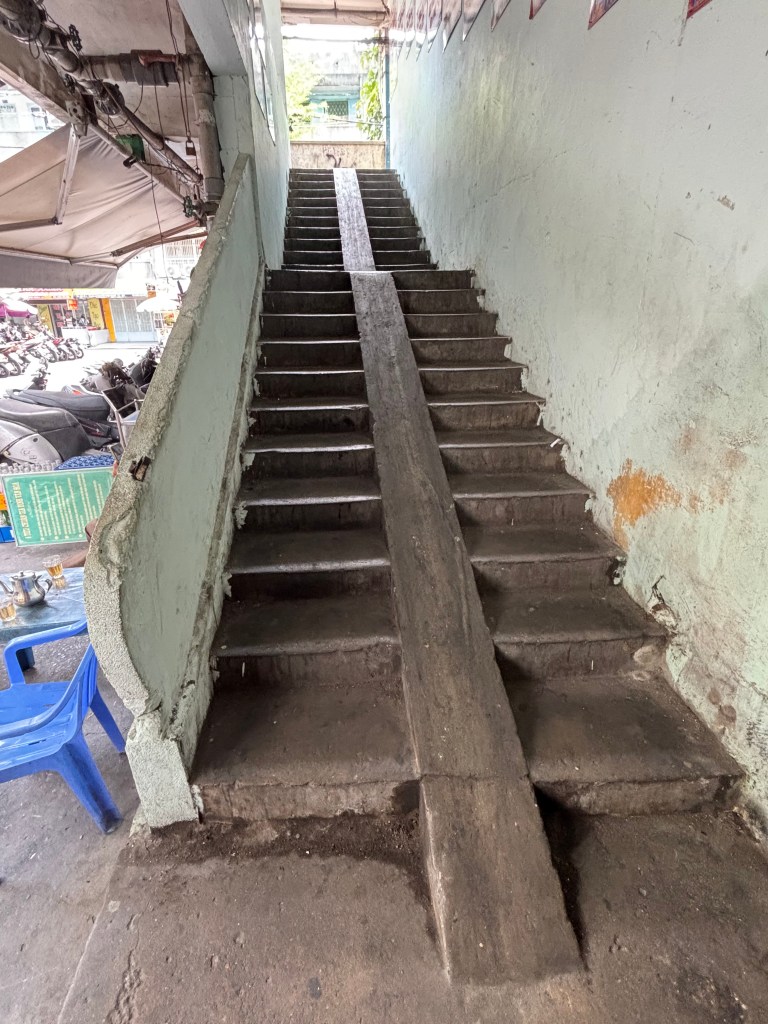
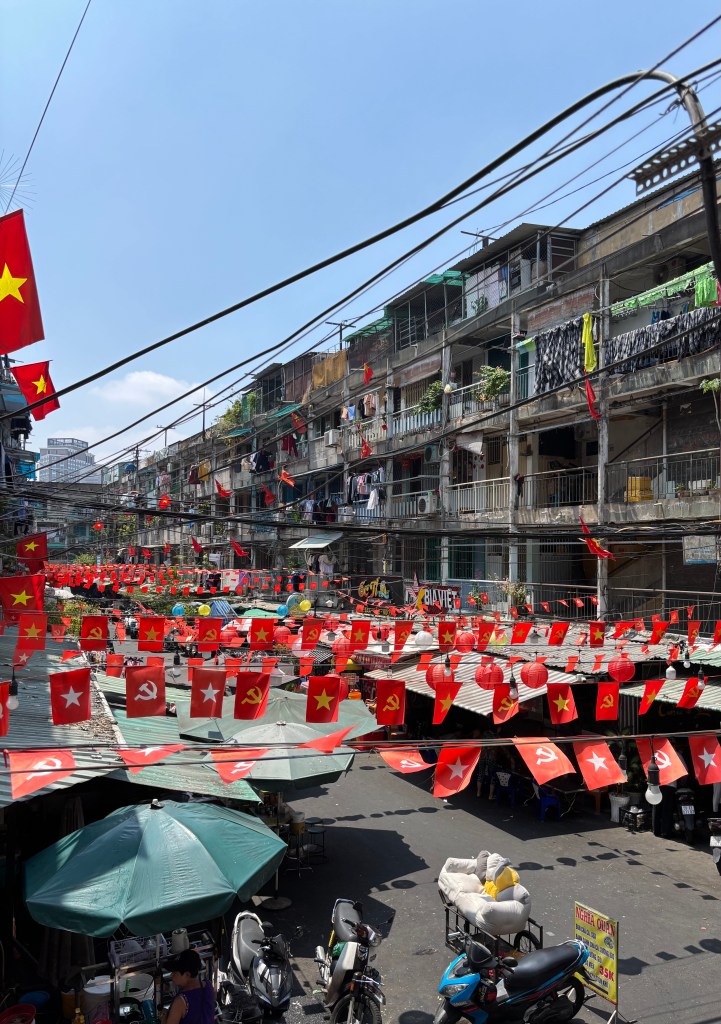
Thích Quang Đức monumentStaircase in social housing, allowing people to ride their scooters to their floor Social housing (tenements) built in the 70’s
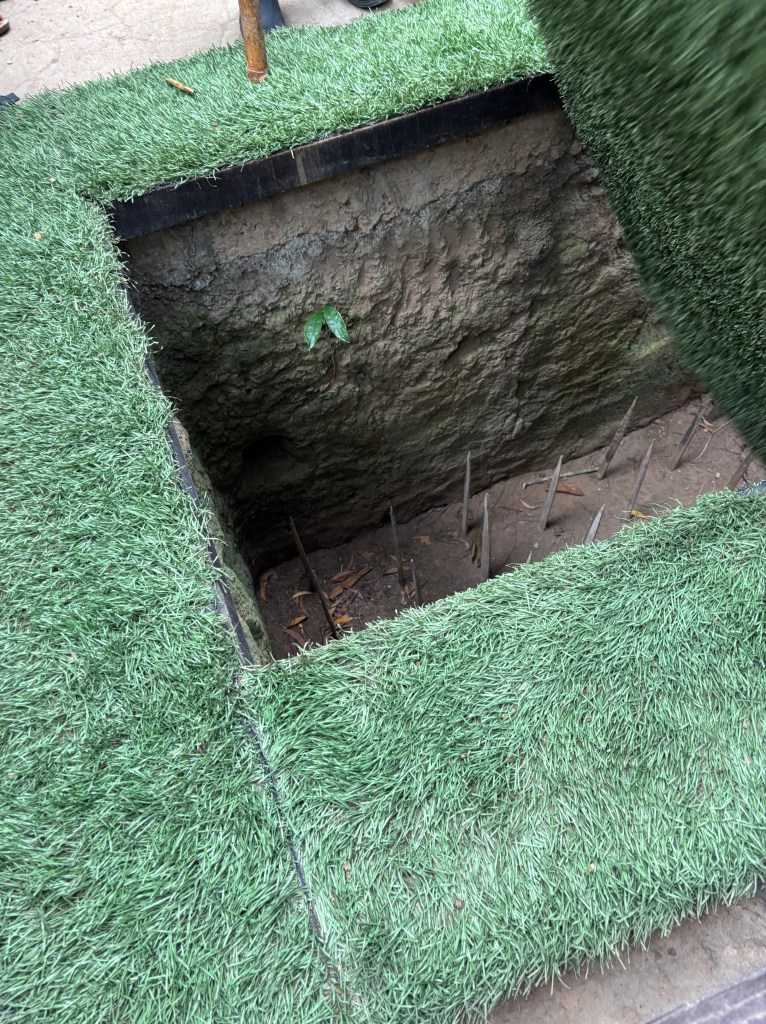
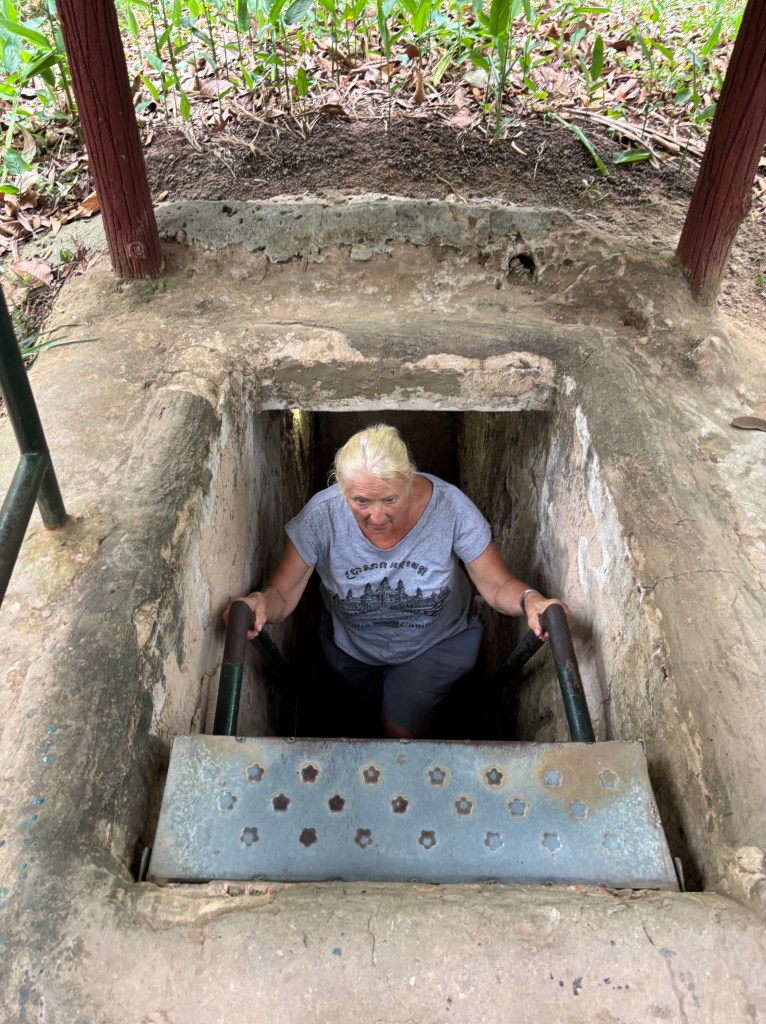
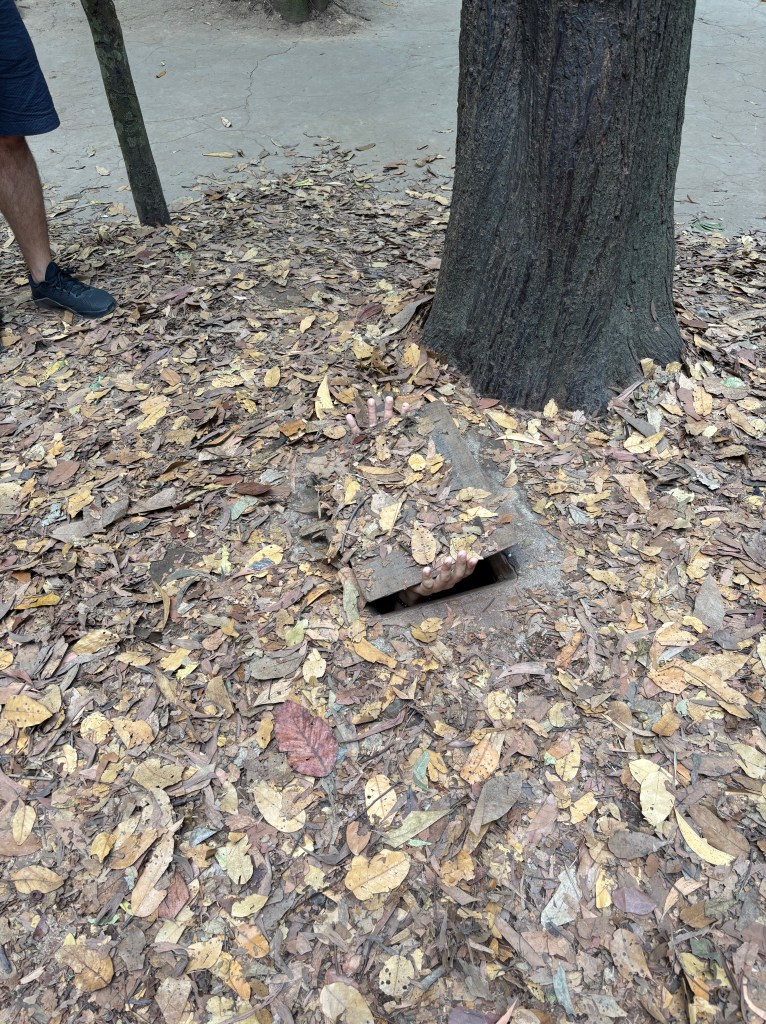
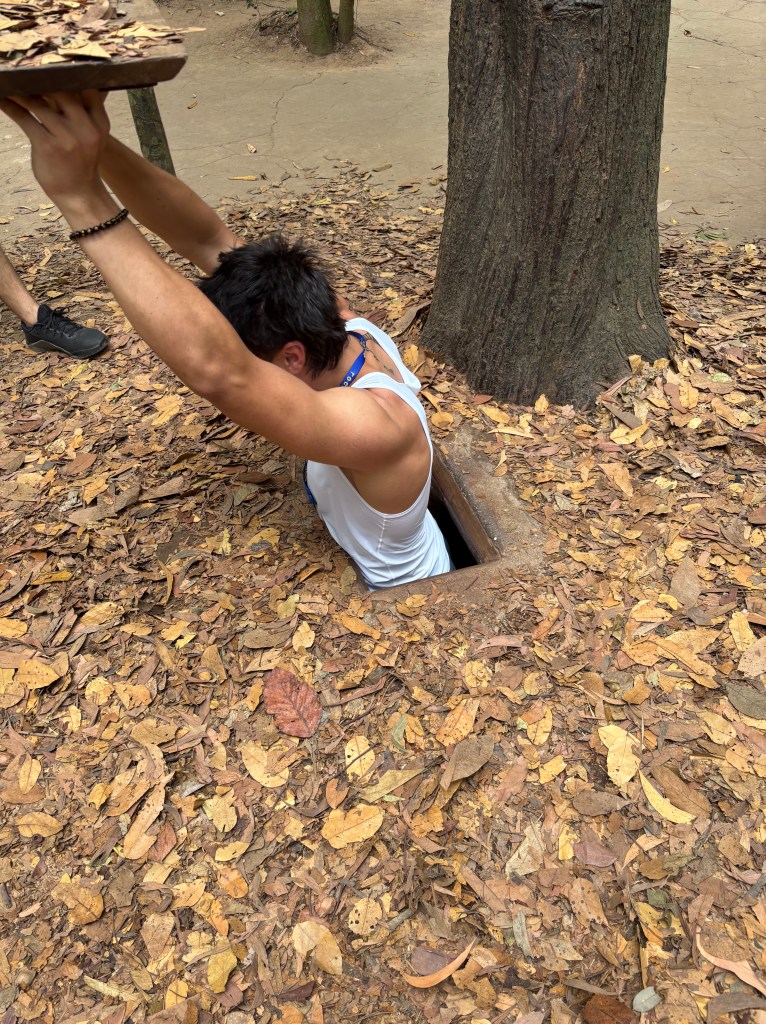
The Viet Kong tunnels are enlarged and sanitised for the tourists but still sufficiently narrow and tight to make one realise both how awful it all was and how ingenious and inventive the Vietnamese were. Ho Chi Minh’s leadership is celebrated everywhere and the cult of his personality continues.
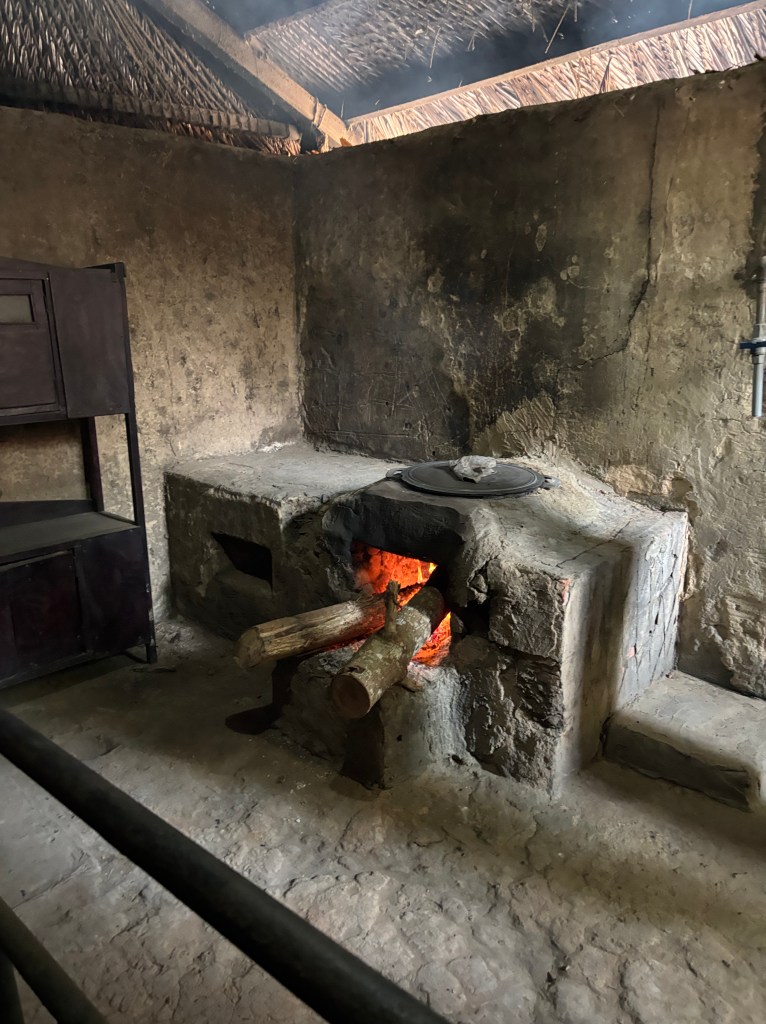
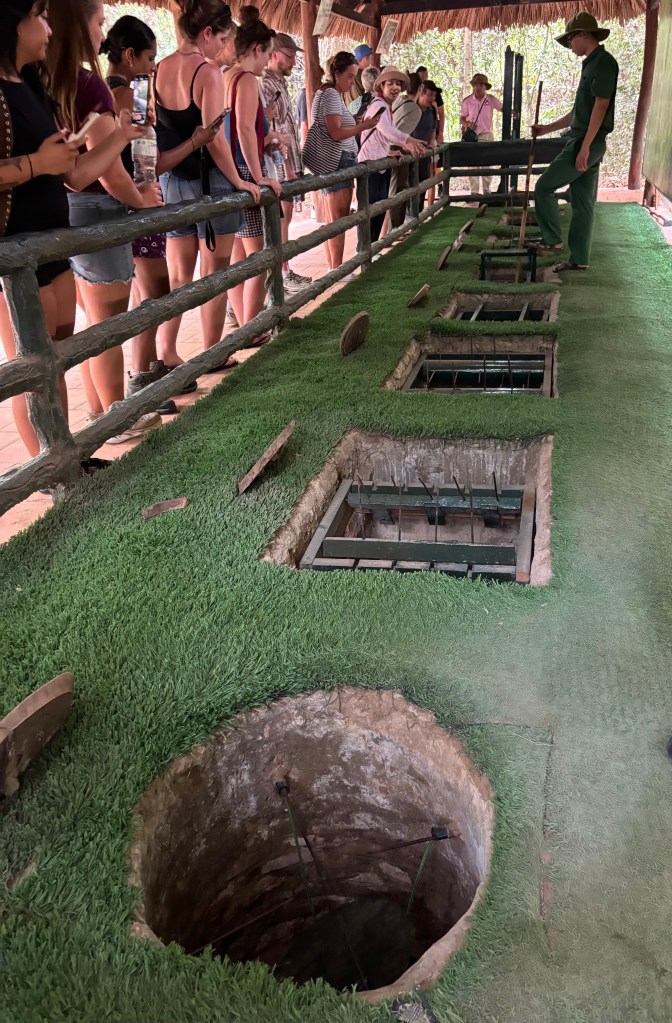
A trap for the unwaryThe tunnel kitchen had ingenious ways for dealing with the smokeModels of various traps used in the tunnels – all spiked and medieval The tunnels make you double up and crawlA secret entryVery narrow and tight
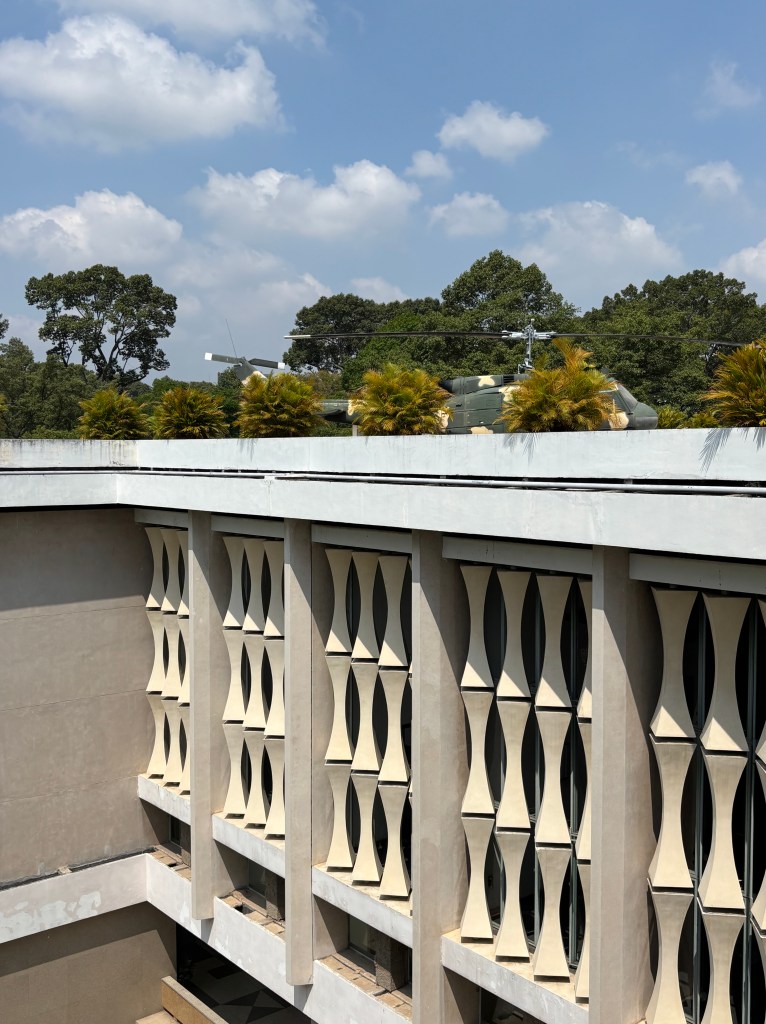
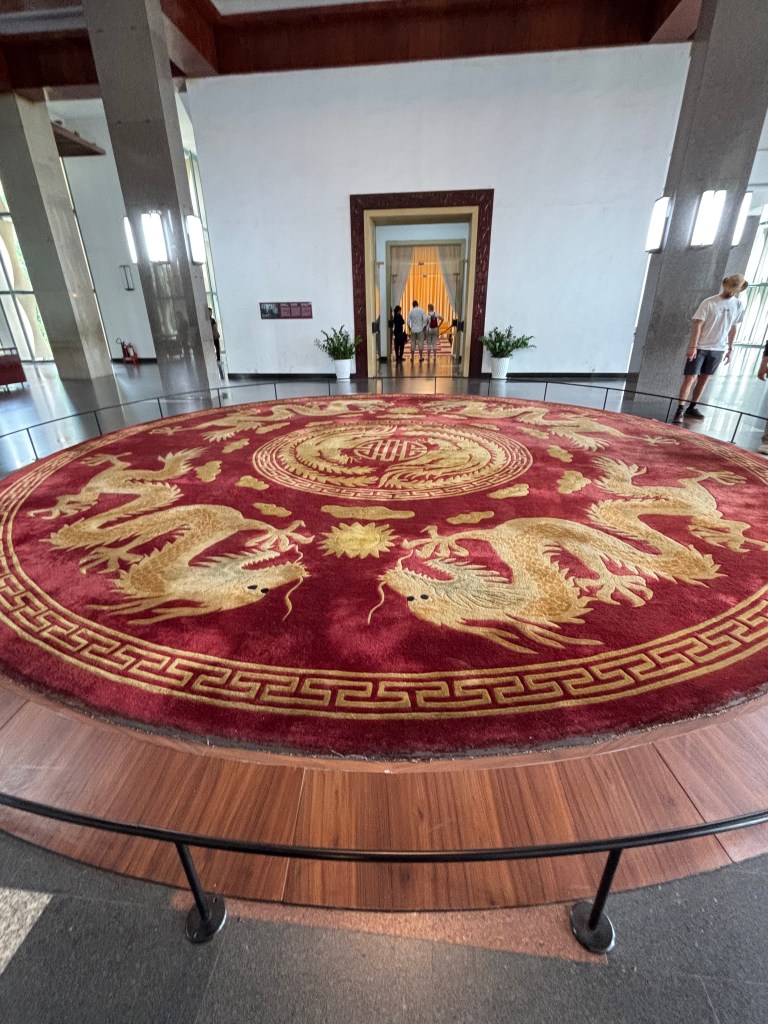
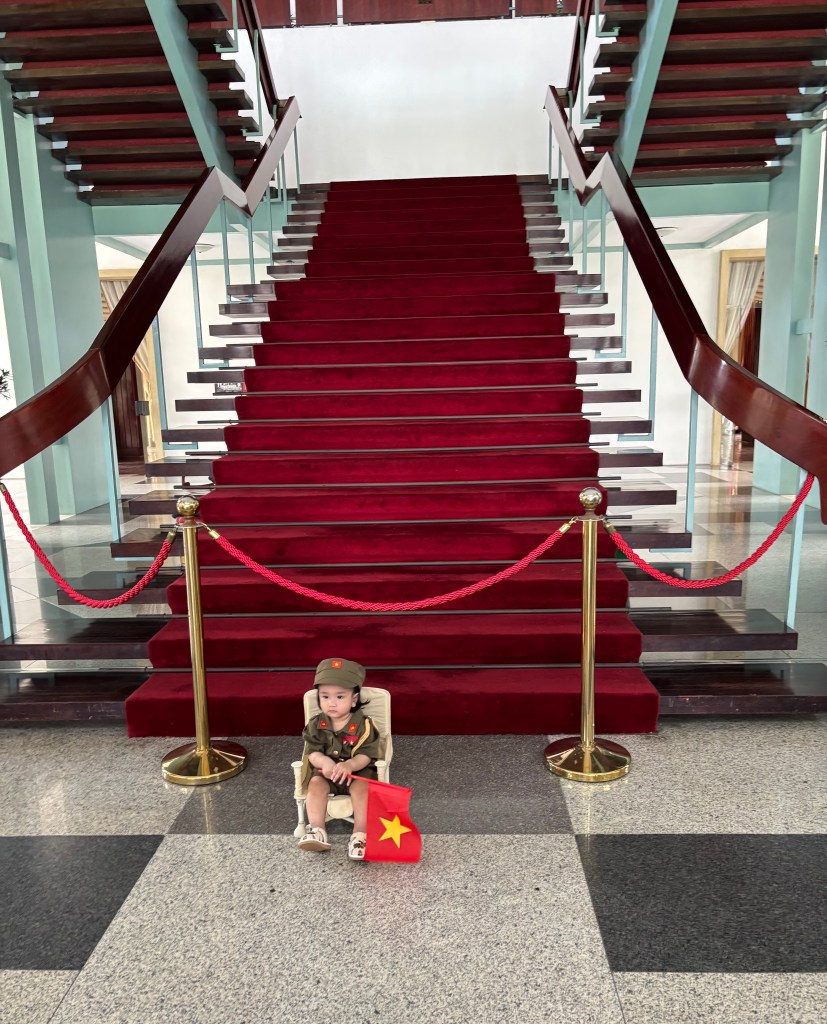
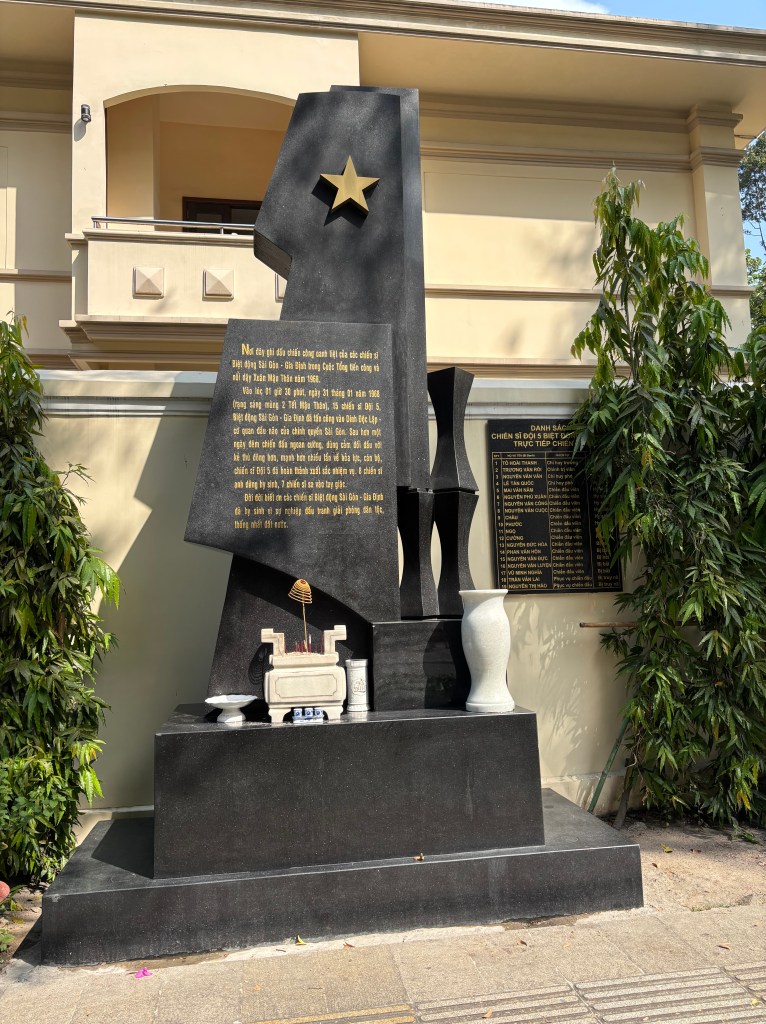
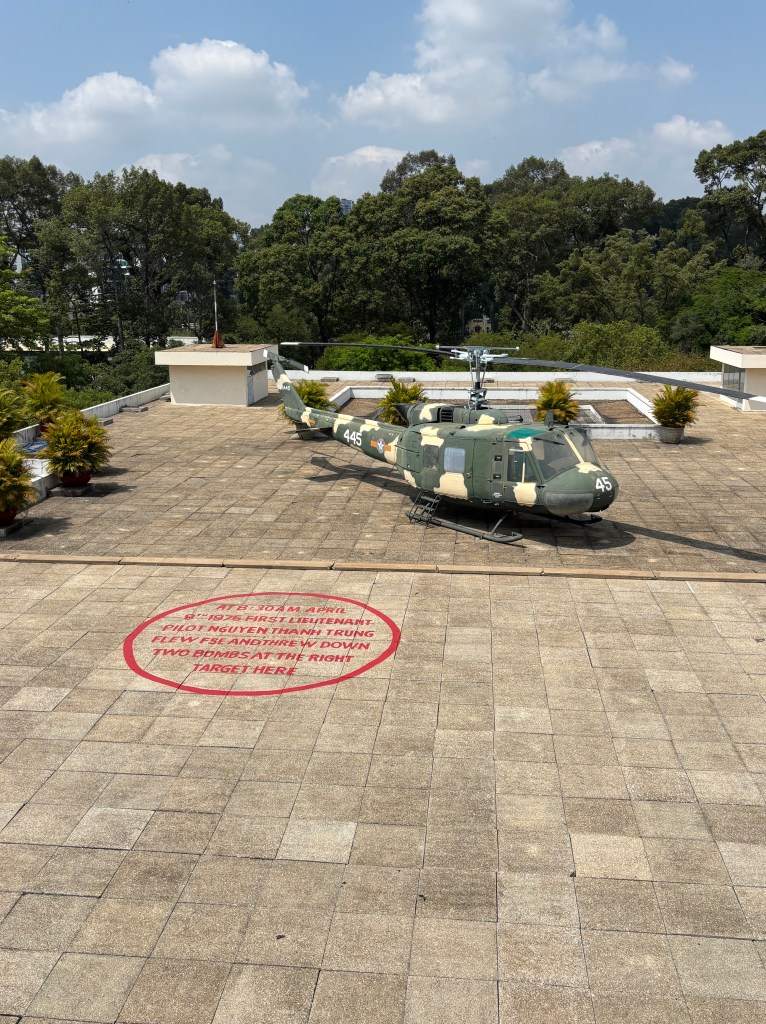
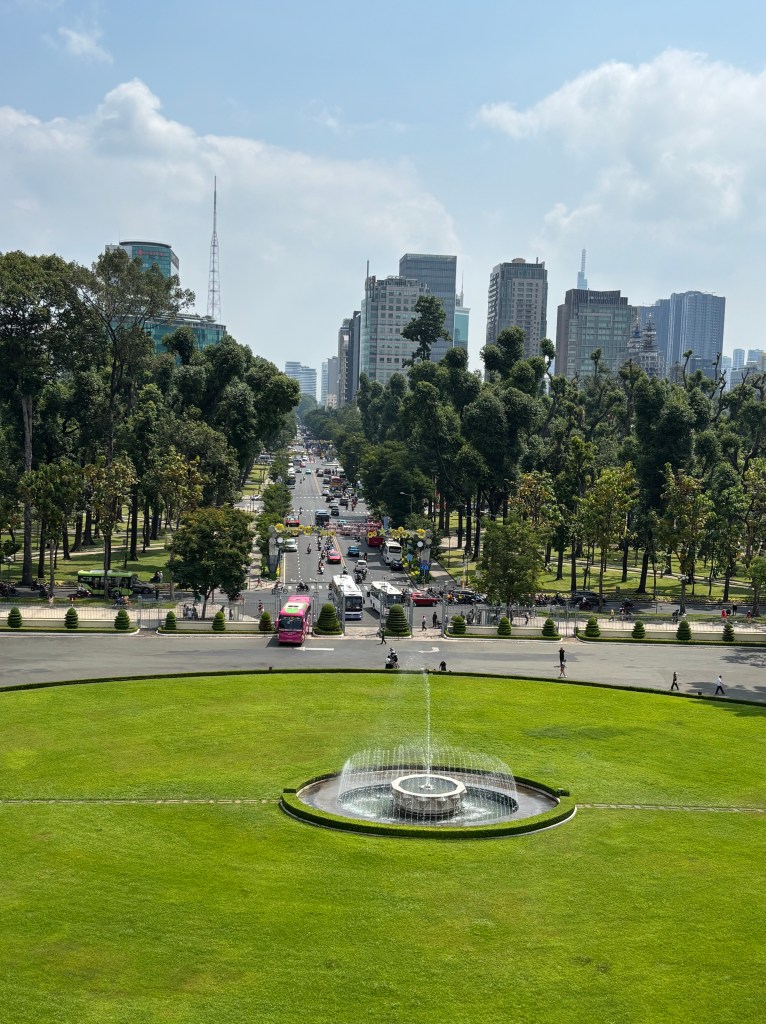
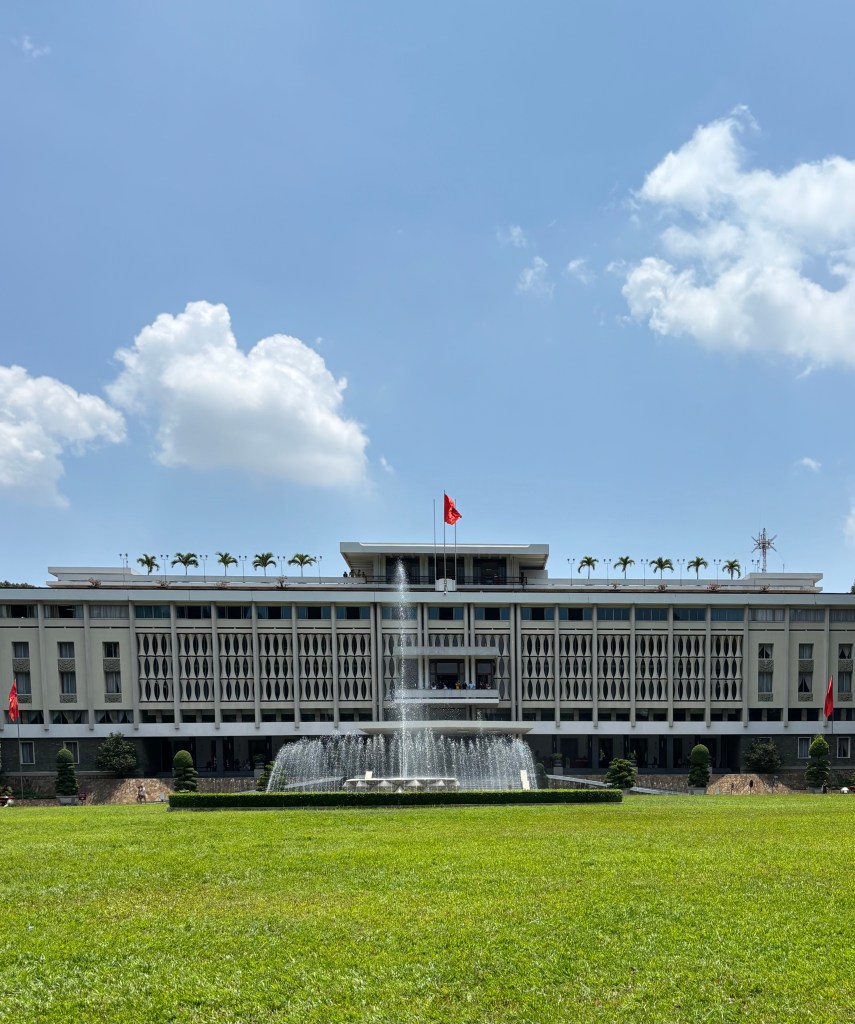
Vietnam is a “socialist” country with a religious Buddhist population. There are interesting compromises and tolerances, such as communist monuments with religious offerings. The Independence Palace, a 60’s architectural gem, is a place of pilgrimage and reverence, as is the Ho Chi Minh mausoleum.
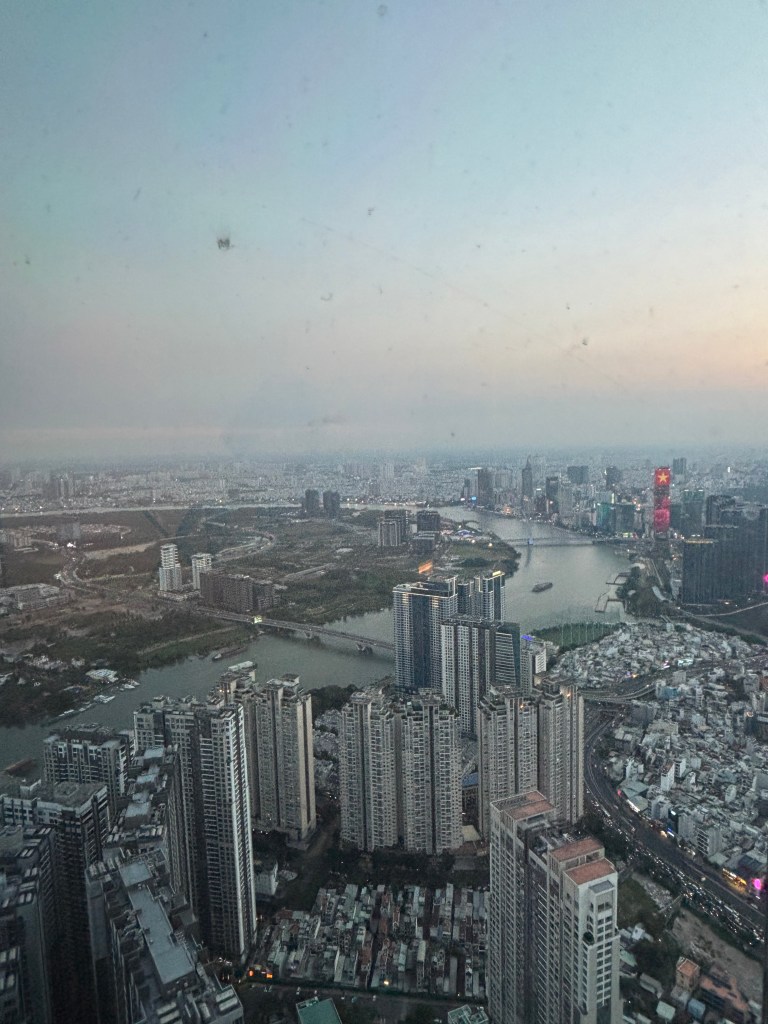
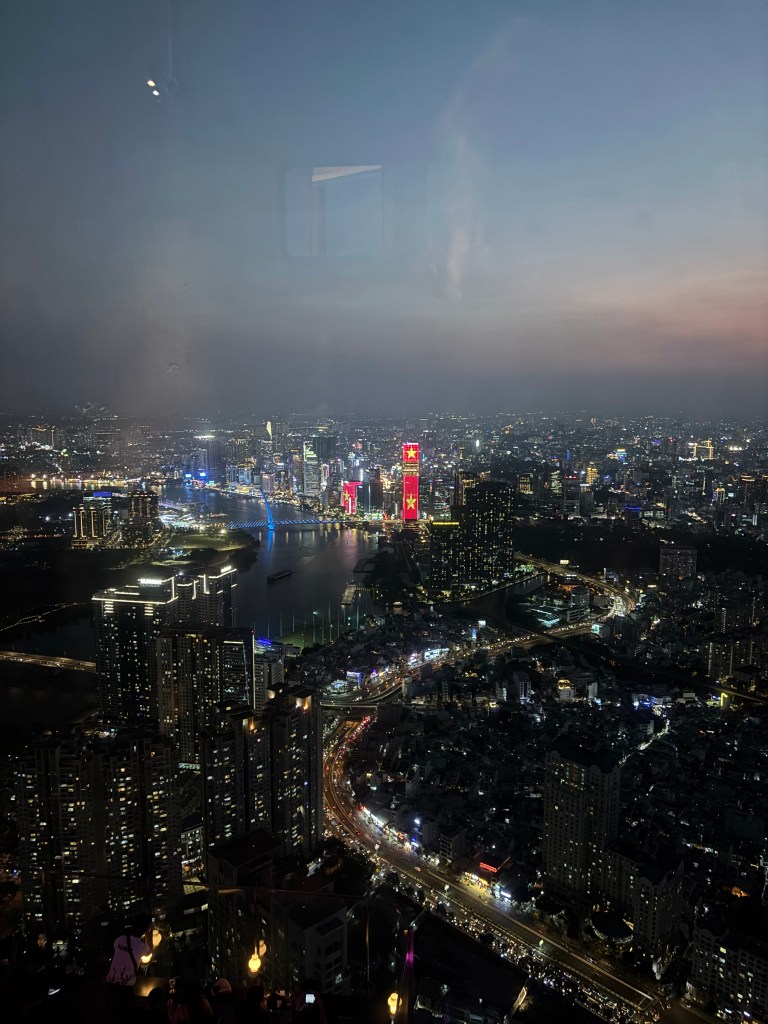
The bamboo shaped pillars that help reflect lightThe Vietnamese emblem tapestry in the Independence PalaceCute or sinister?Socialist and buddhistThe Palace roof View of HCMC thoroughfare from the PalaceThe Independence PalaceThe Mekong from the tallest building in HCMCAnd the night view
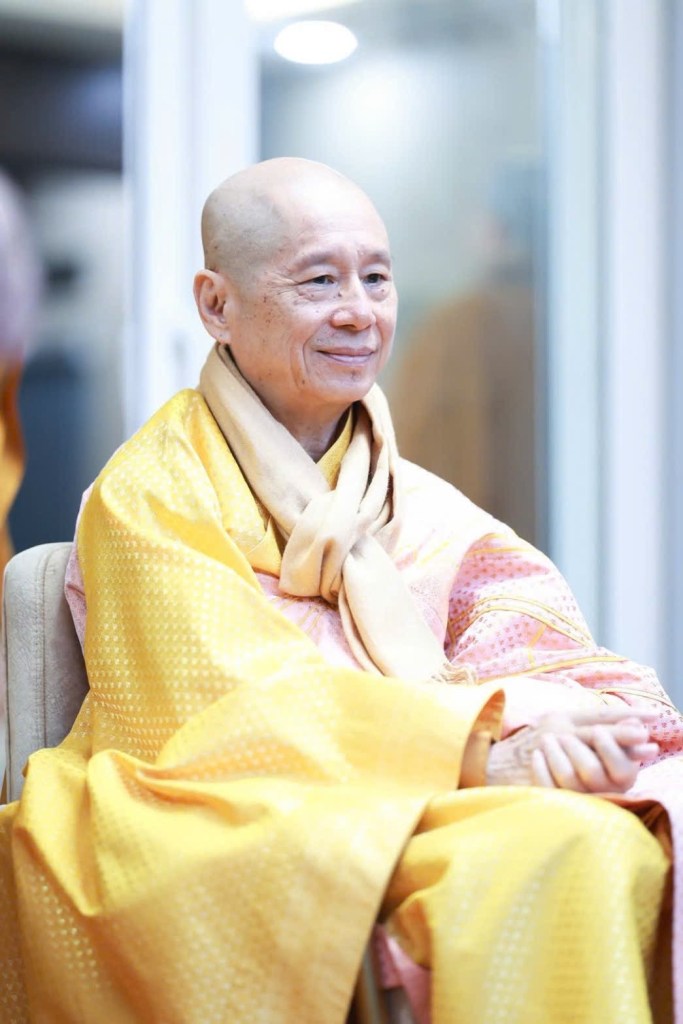
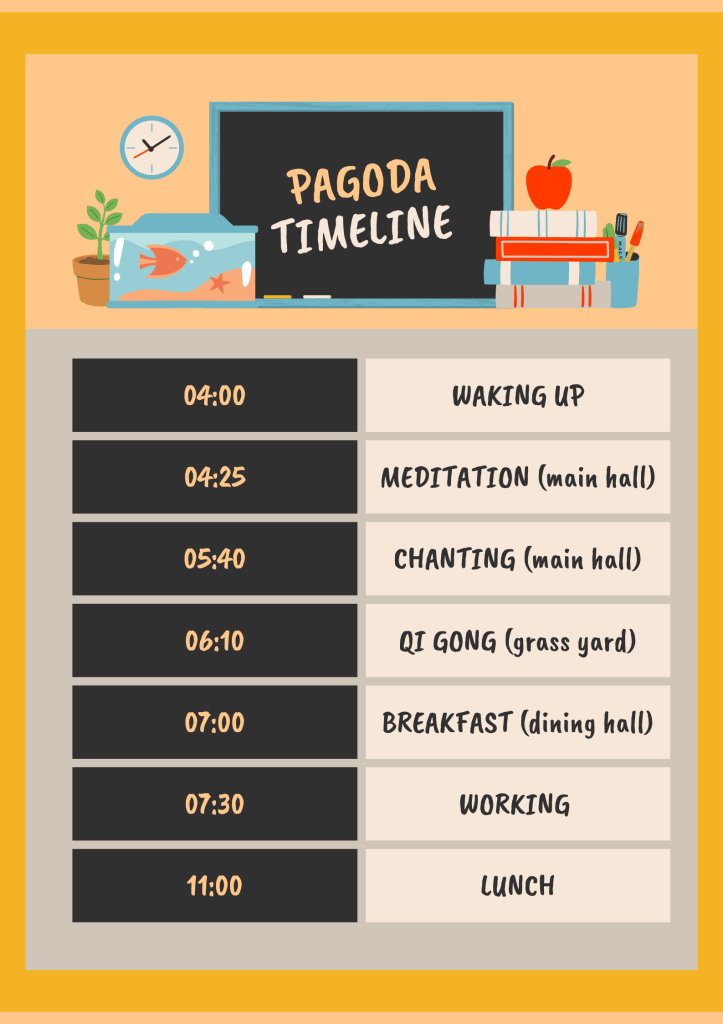
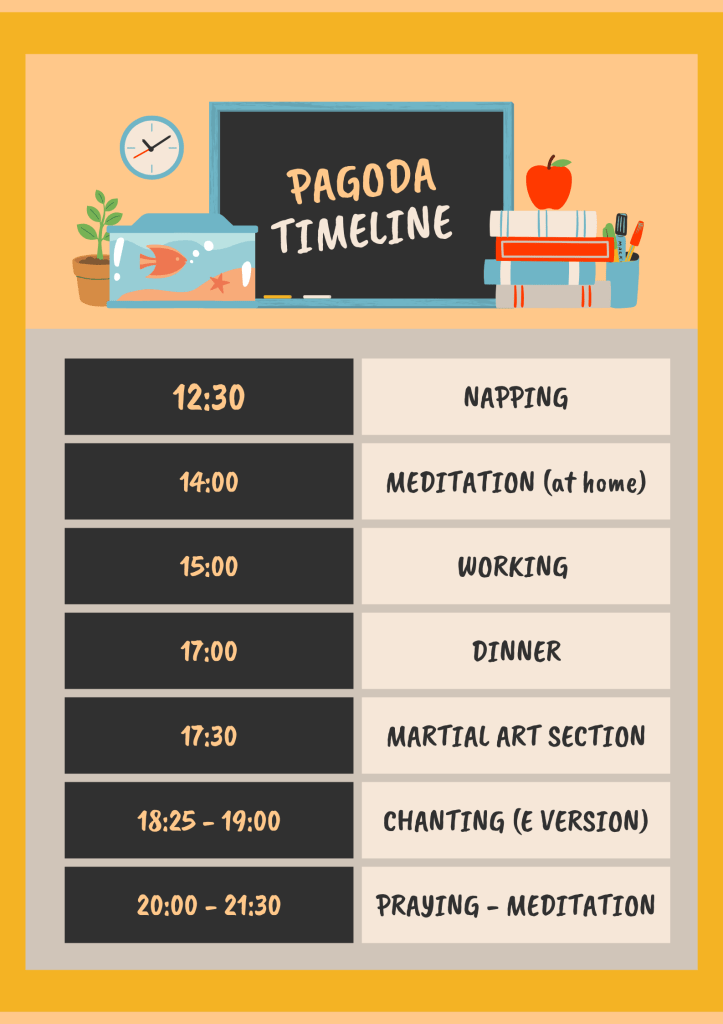
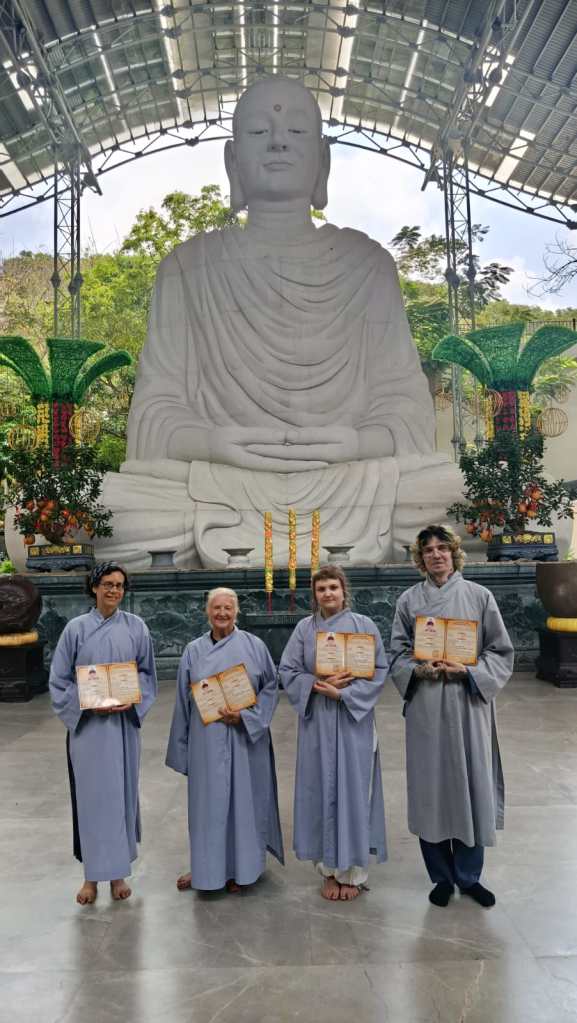
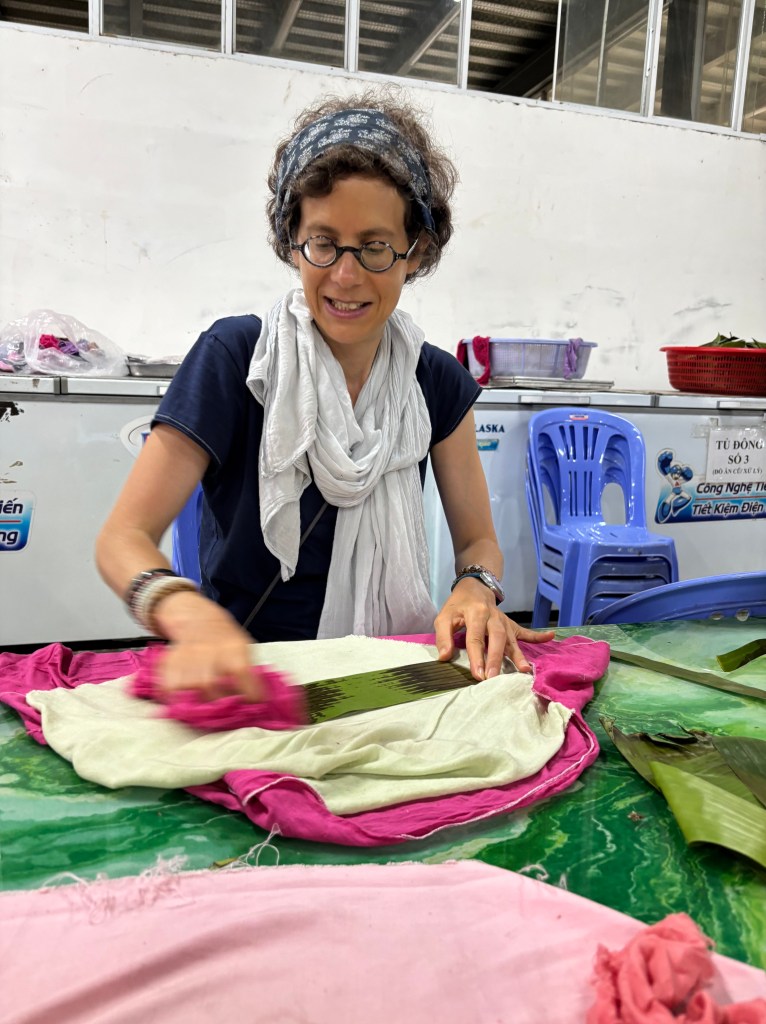
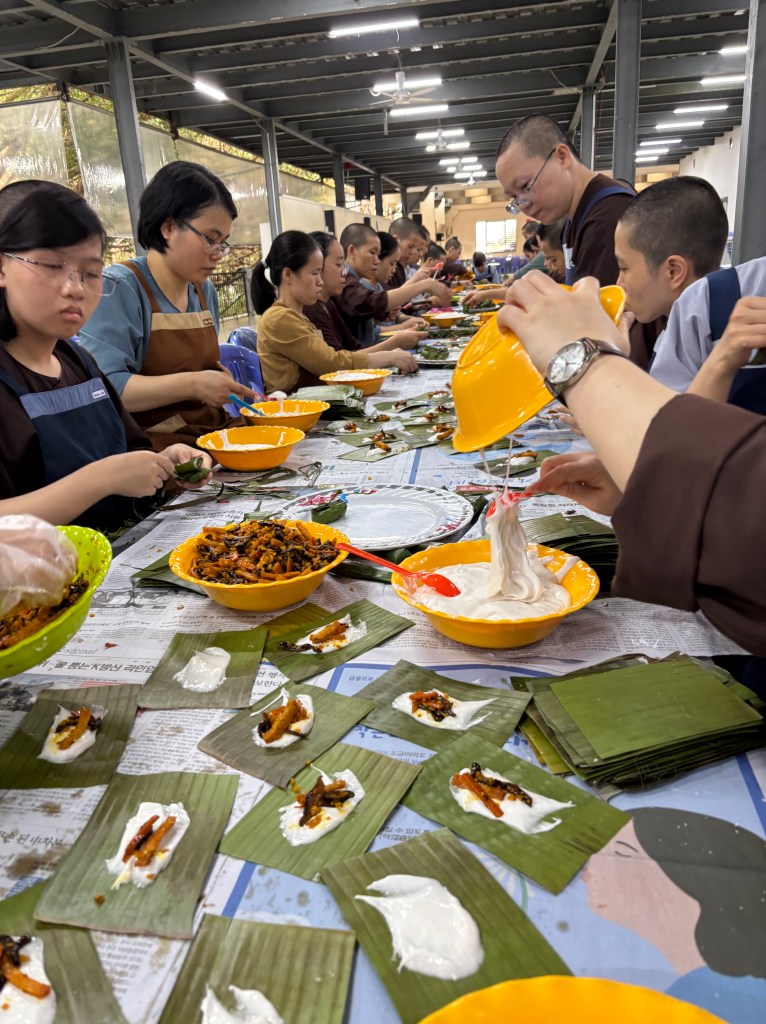
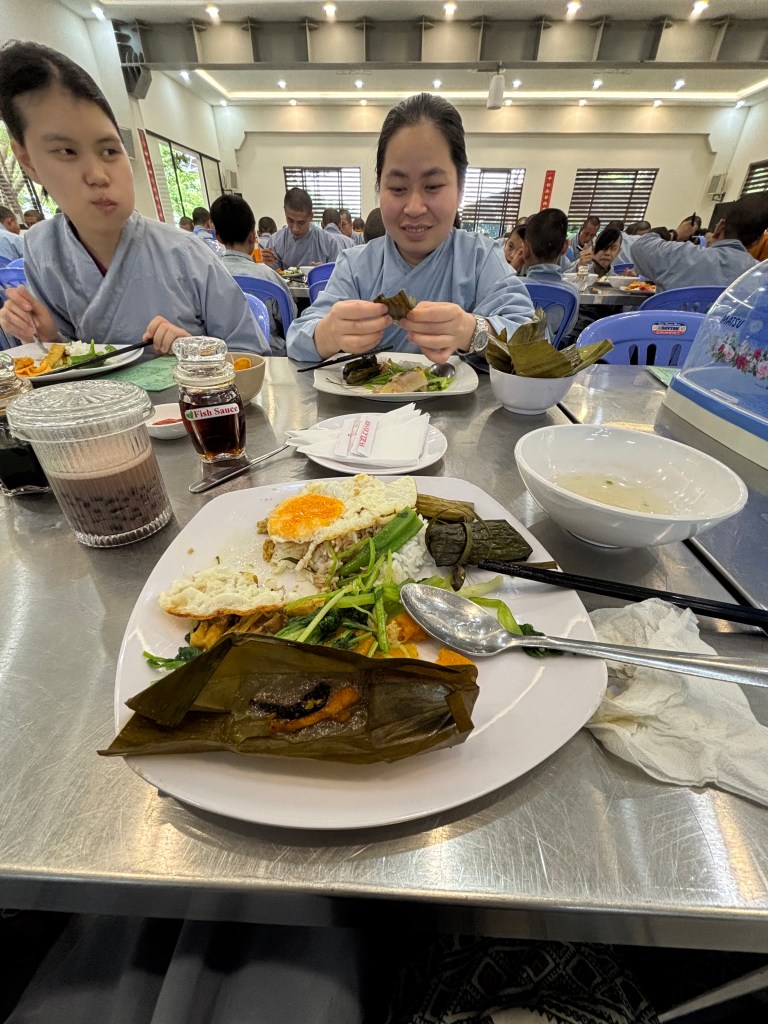
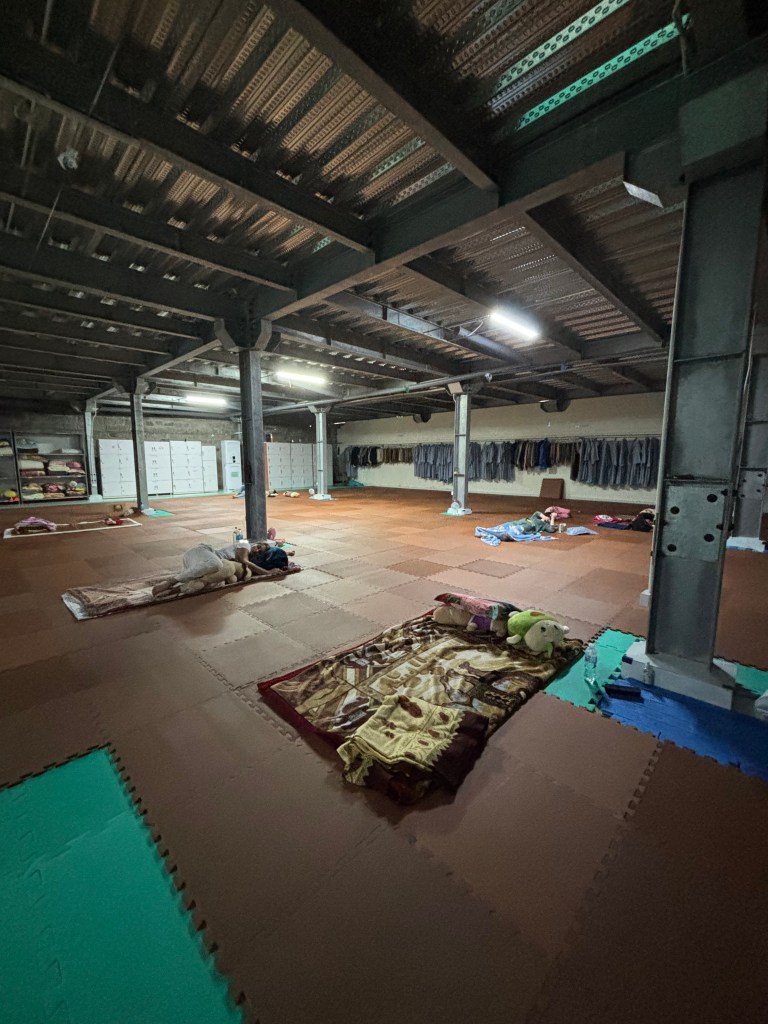
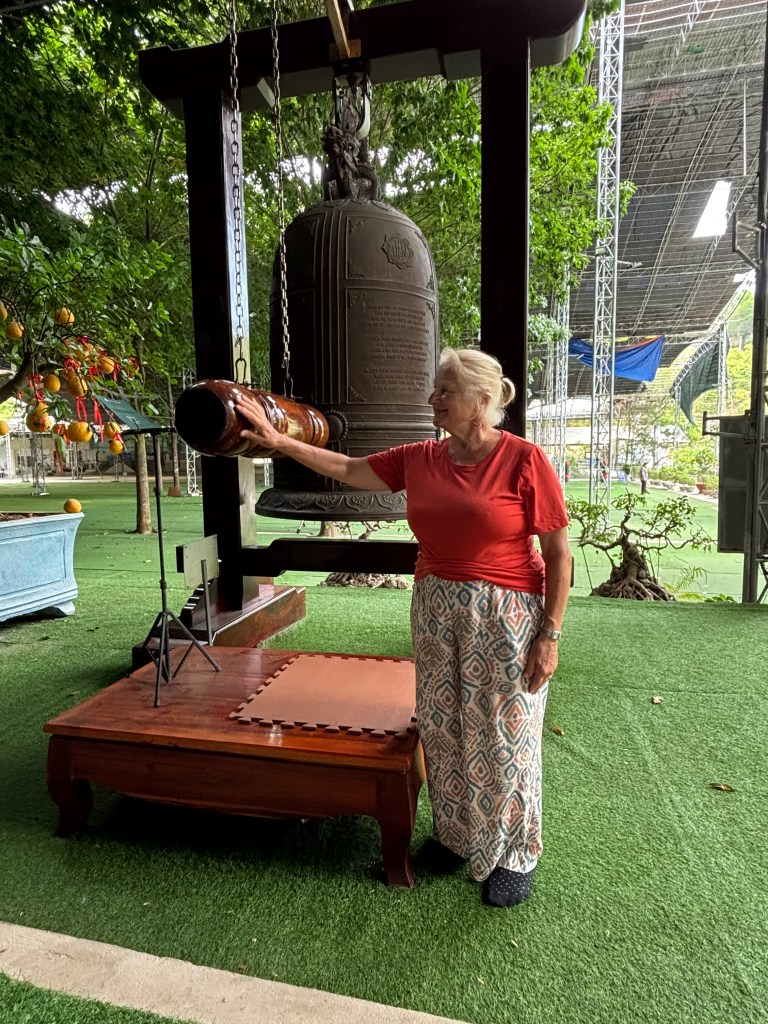
I’ve used all sort of public transport on this trip – trains, coaches, buses, motorbikes, taxis (Grab and Bolt are the apps to have) and electric cars (Vie app in Vietnam). This last one took me to the Buddhist retreat in Ba Ria. I’d learnt about it from Patricia, a fellow traveller who I met in Kampot, Cambodia – she was travelling from Vietnam, the country that had impressed her very much. She had done a lot of research (I benefitted) and found one could stay at the pagoda for free; there is also a paying stay, sold by travel agencies. The Thien Ton Phat Quang monastery was founded by the Venerable Master Thich Chan Quang. The monastery is a living, working place, with some 300+ monks, nuns and novices. The day begins at 4 am, when the giant gong is sounded, calling all to meditation and prayer. Some of the chanting was in English, and several novices and nuns came to speak to me, wishing to improve their English. Within a day I was known as “Teacher”. We helped in the kitchen, exercised, read books on Buddhism (printed in Vietnamese and English), meditate and rested, following the timeline. It was a pleasant, illuminating break in the journey.
Tich Chan QuangThe 13m Buddha n the grounds – and the 4 of us who have been instructed in the essentials of BuddhismMarie Anne, a midwife, making tofu at the monasteryMaking spring rolls for dinnerDelightful vegetarian foodOur sleeping area at the monastery The giant gong -quite mellifluous
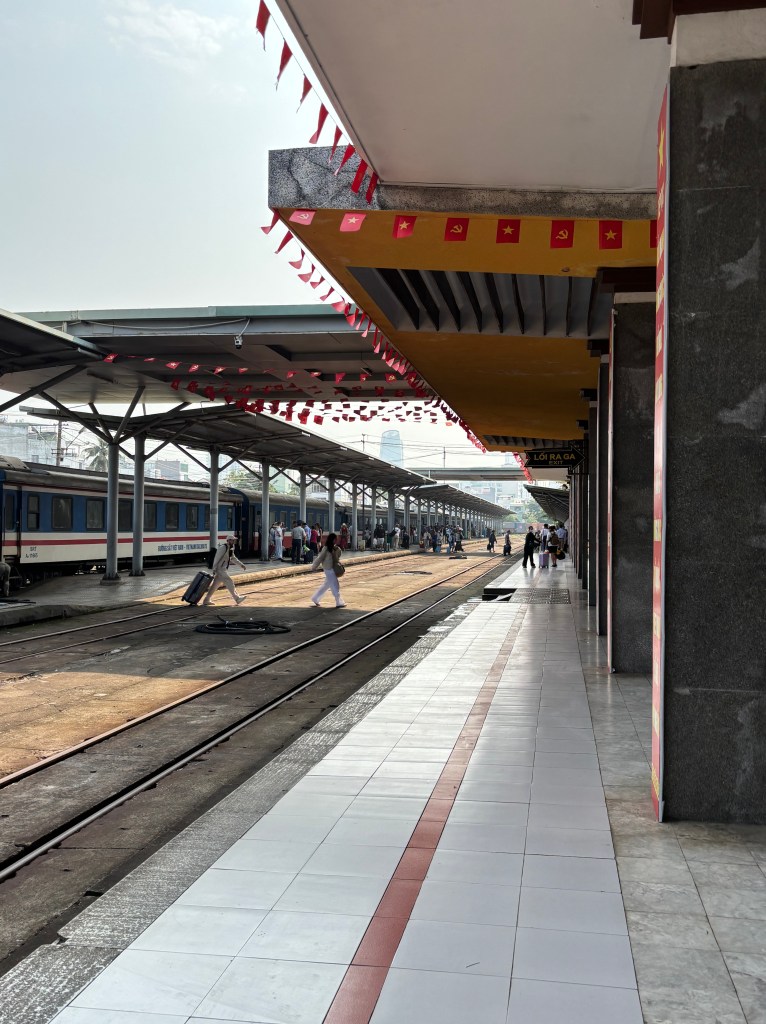
My guide, Mia, and a few others, came to see me off at the end of my stay – they’d prepared a packed lunch for me and organised the taxi to the train station in Long Khanh where I picked up the 15+ hour train to Danang. The couchette was comfortable – it is important to book the lower bunk or you might end up not seeing much from the upper bunk. (It is a great train journey along the Vietnamese coast.)
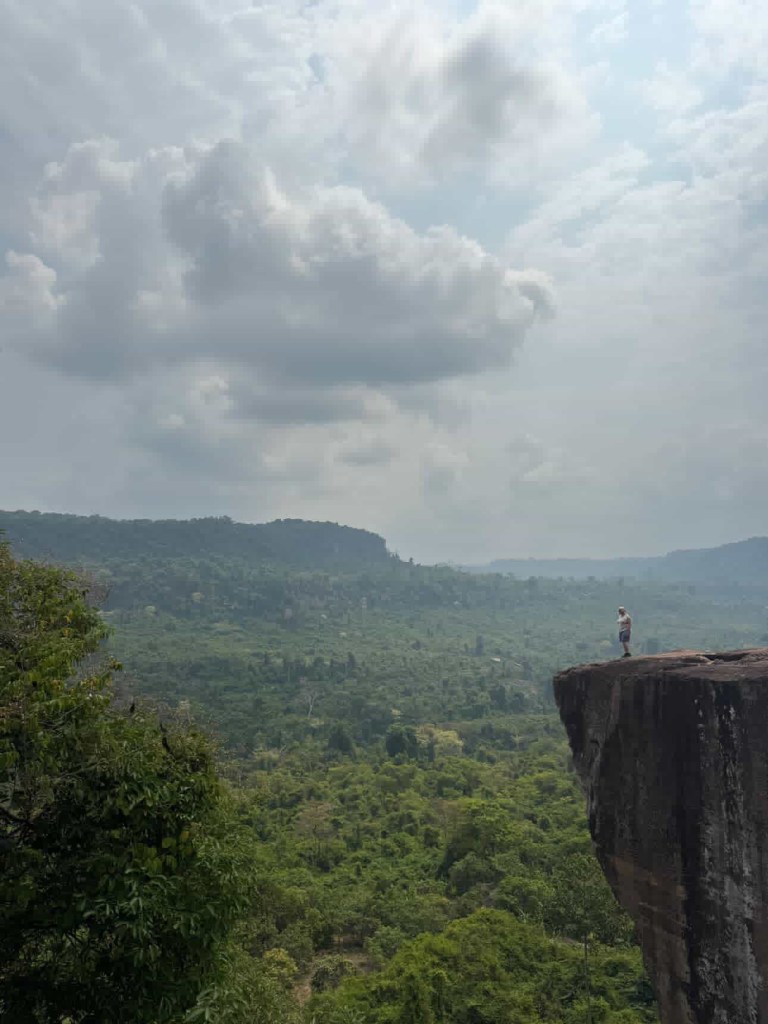
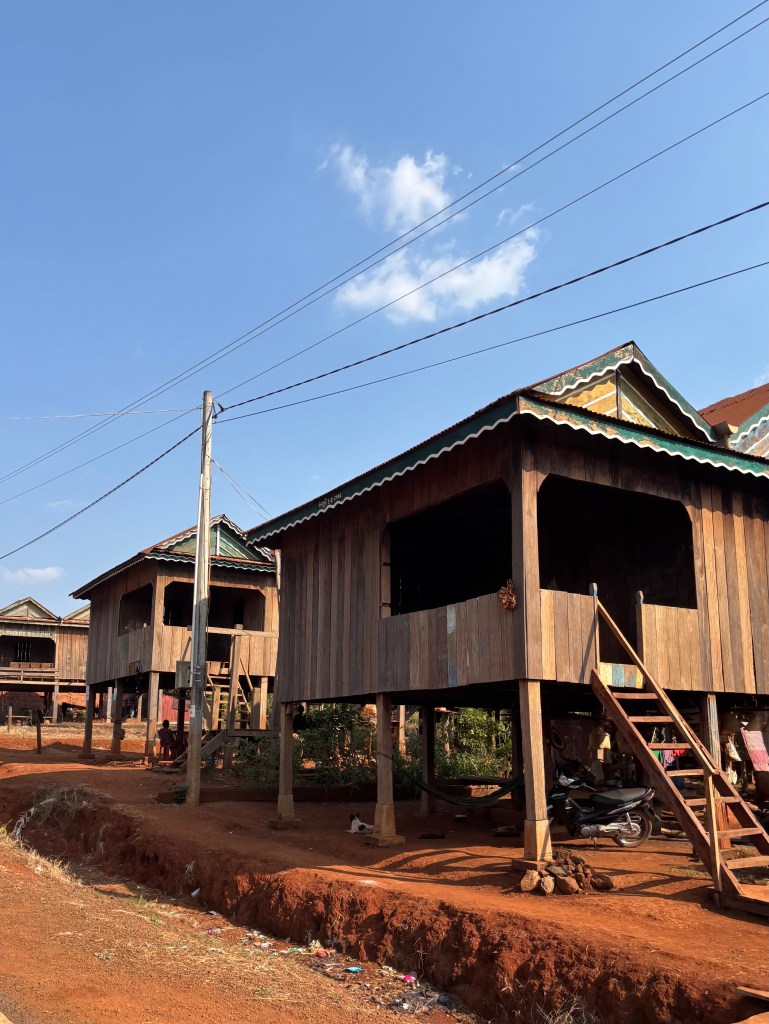
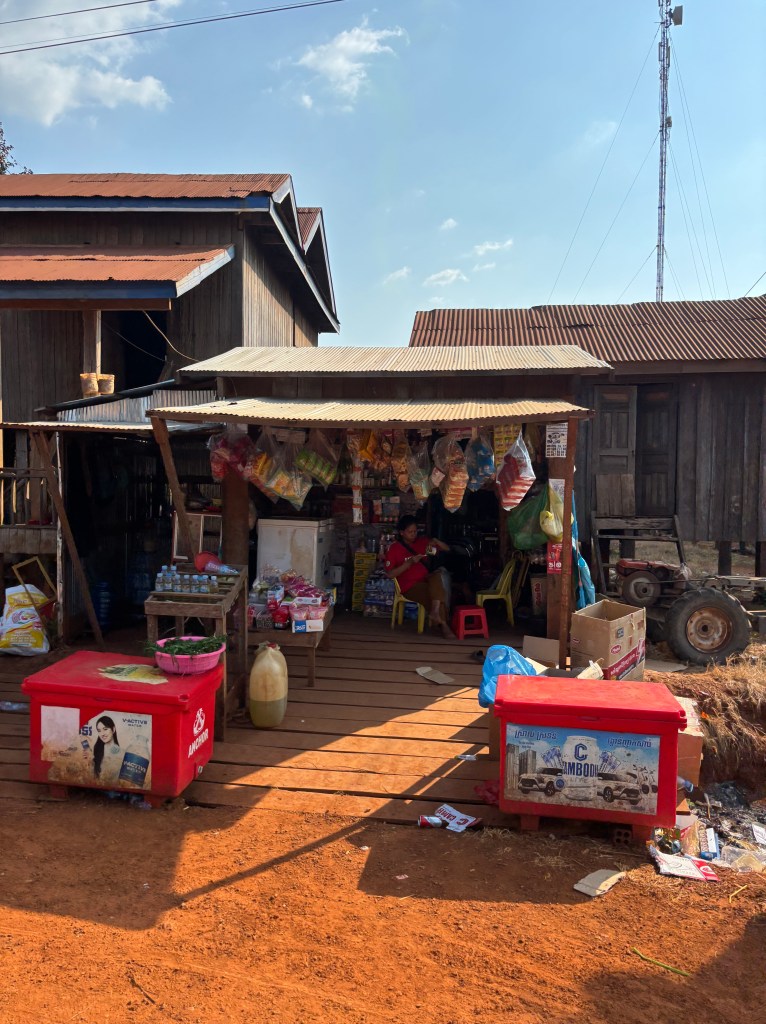
Took the bus from Siem Reap to Ban Lung, near the Virachey National Park, Cambodia, looking to do a 3-day trek in the jungle with an opportunity to hear (if not see) the gibbons call at dawn. Parrot Tours offered what I wanted and were very prompt in replying. They also offered their Ban Lung Hilltop house homestay, which seemed reasonable at $7/night. While waiting for “others” to arrive (one person, in the end!), took a couple of trips in the area (one in a tuk tuk). Pretty scenery – mountains, waterfalls, lakes. The village houses in this part of the world are built on stilts: the area under is shaded all day and that’s where people spend there time. In the past it was also where animals were kept – anything from chickens to elephants. The upstairs is for keeping things safe and for sleeping. The window openings often don’t have glass panes, just shutters for when the rains come. Most homes seem to have a little stall in the front – selling food, fresh produce, household items, drinks…
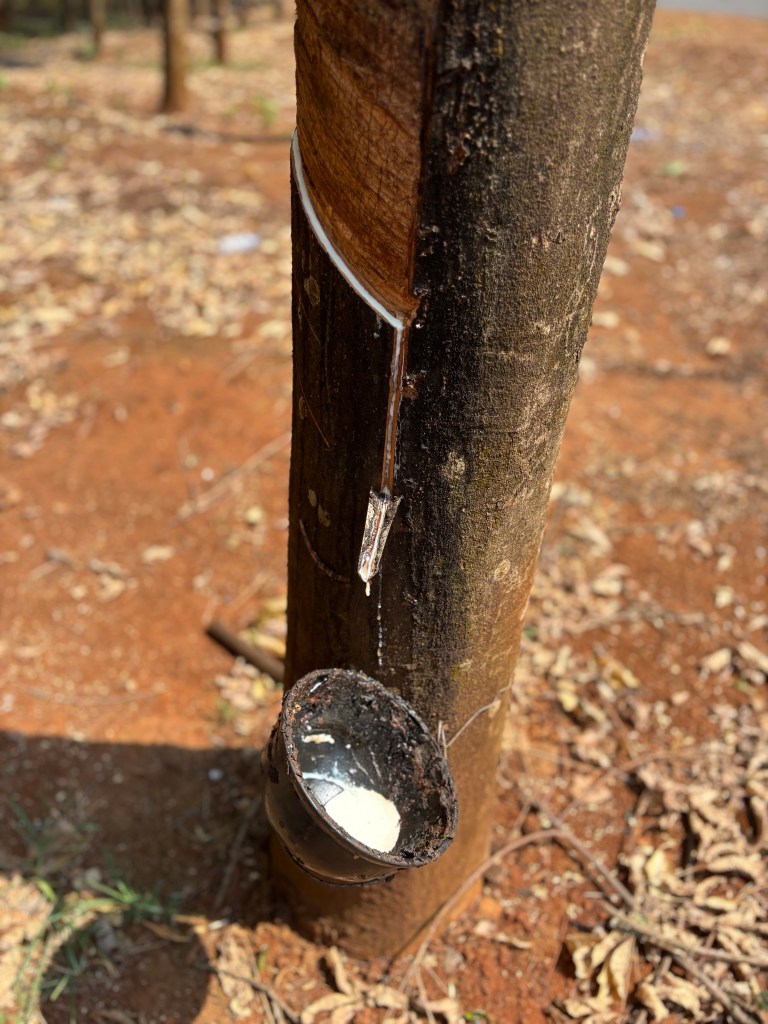
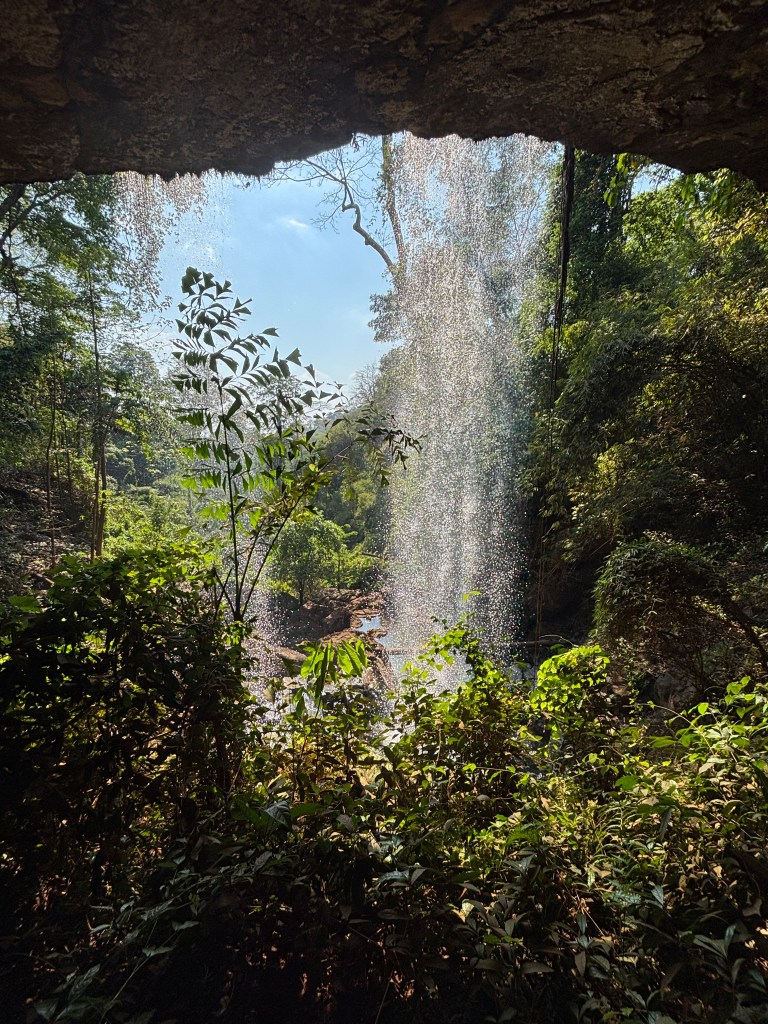
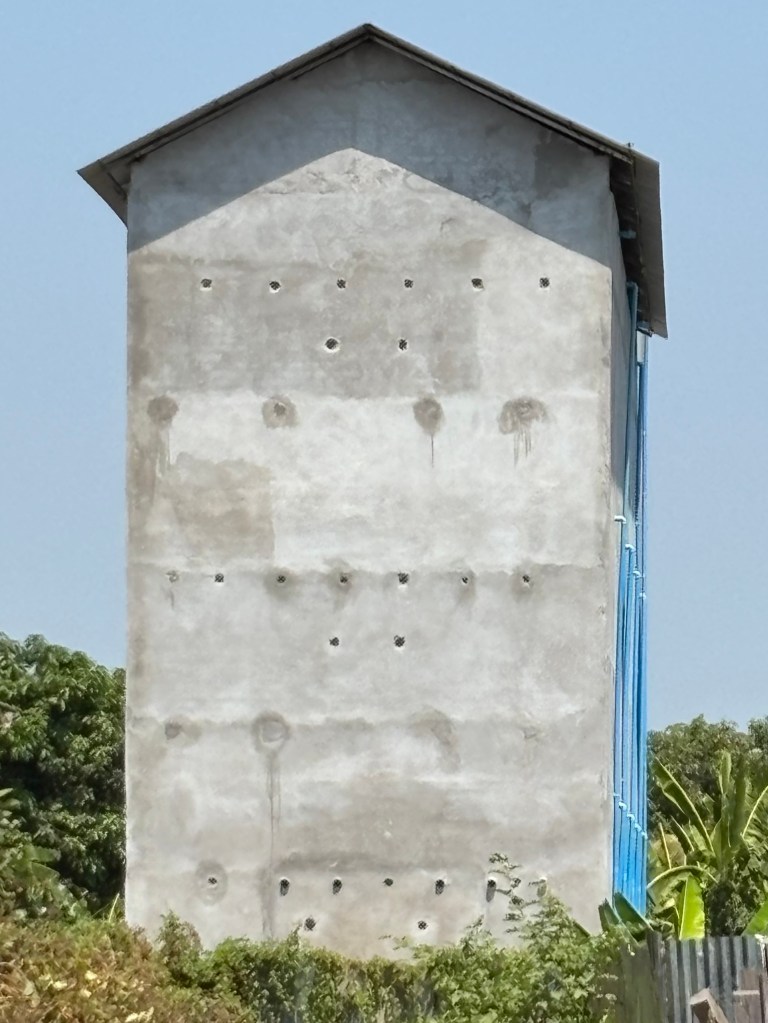
Even in dry season, it looks goodThe upper fallsAt the weekend, families come for a picnic and a cool downHe was such a poseur!We were an all girls’ group – with two female guidesSuper viewsRatanakiri province has large rubber tree plantations – that’s how they tap itBehind the waterfallCambodian village housesFront of house store – back of house – homeSwallow house: to entice the birds to make the nests inside which are later collected (for soup). Needs to be done in a careful, sterile manner or birds will not come back.
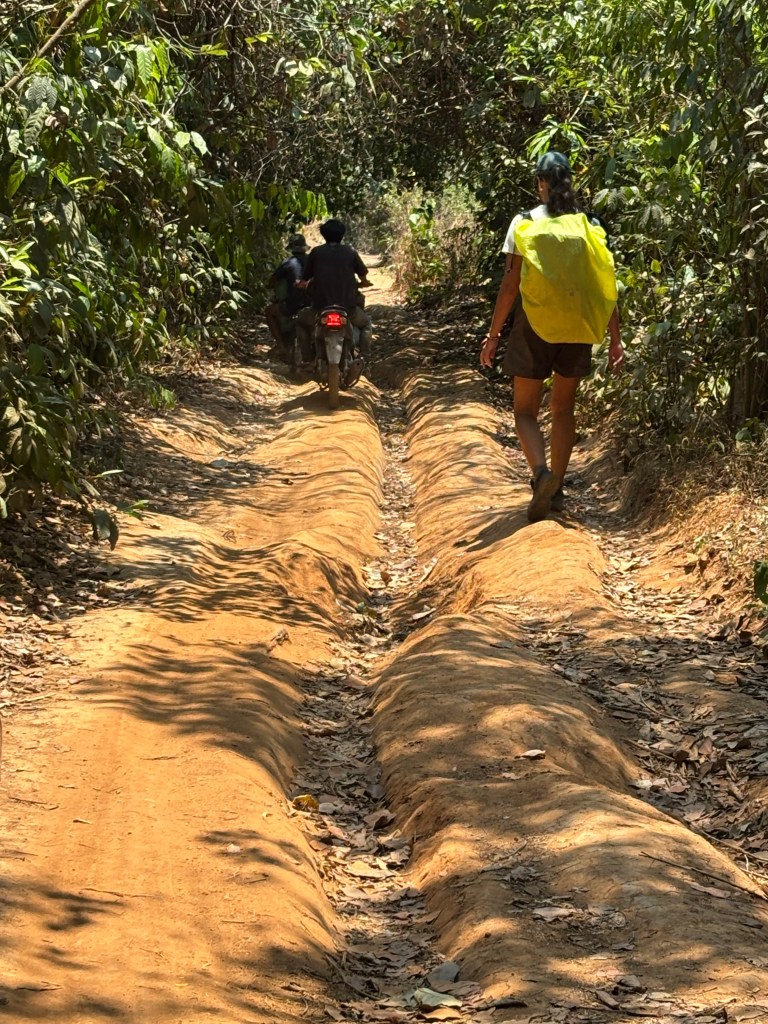
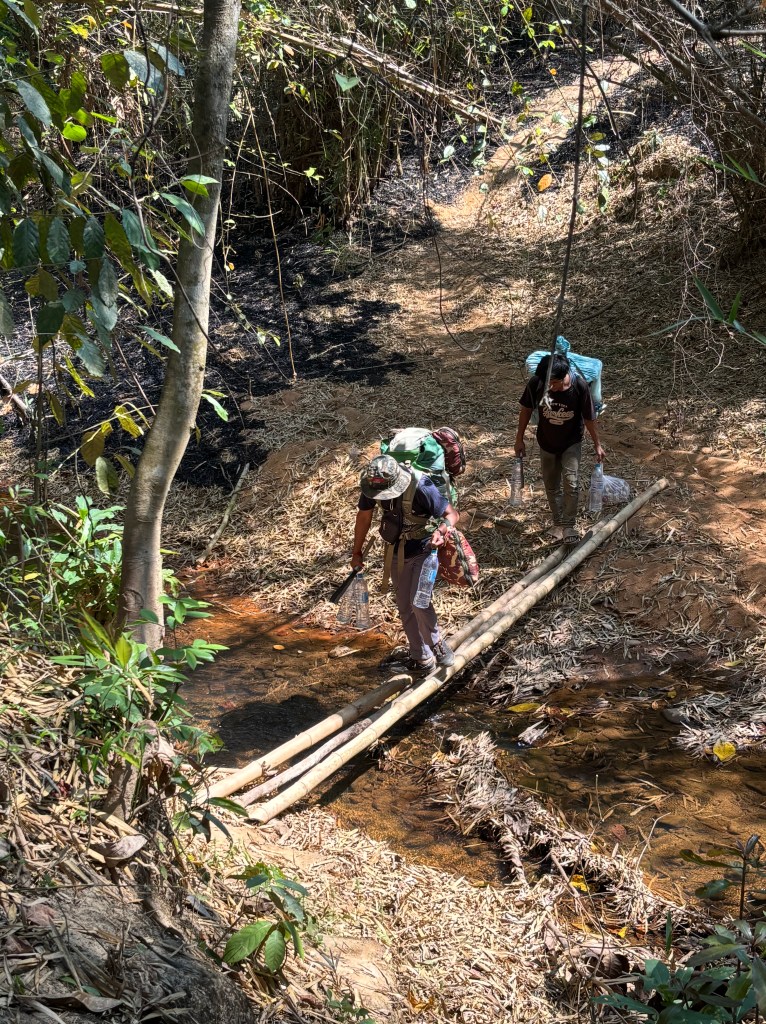
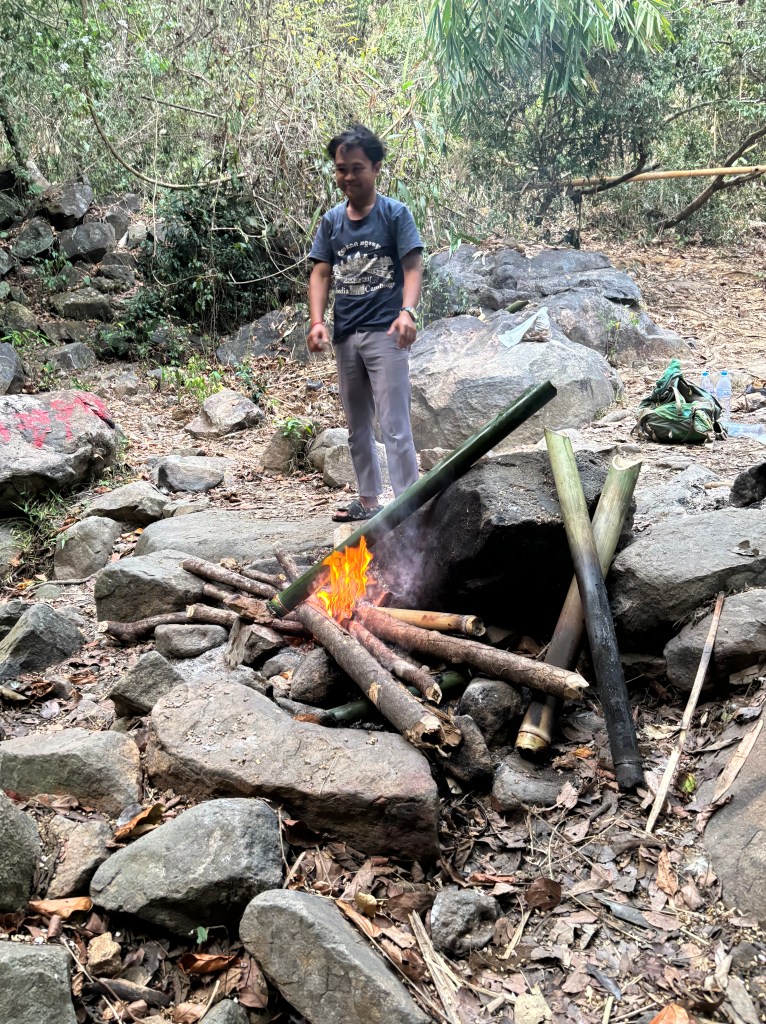
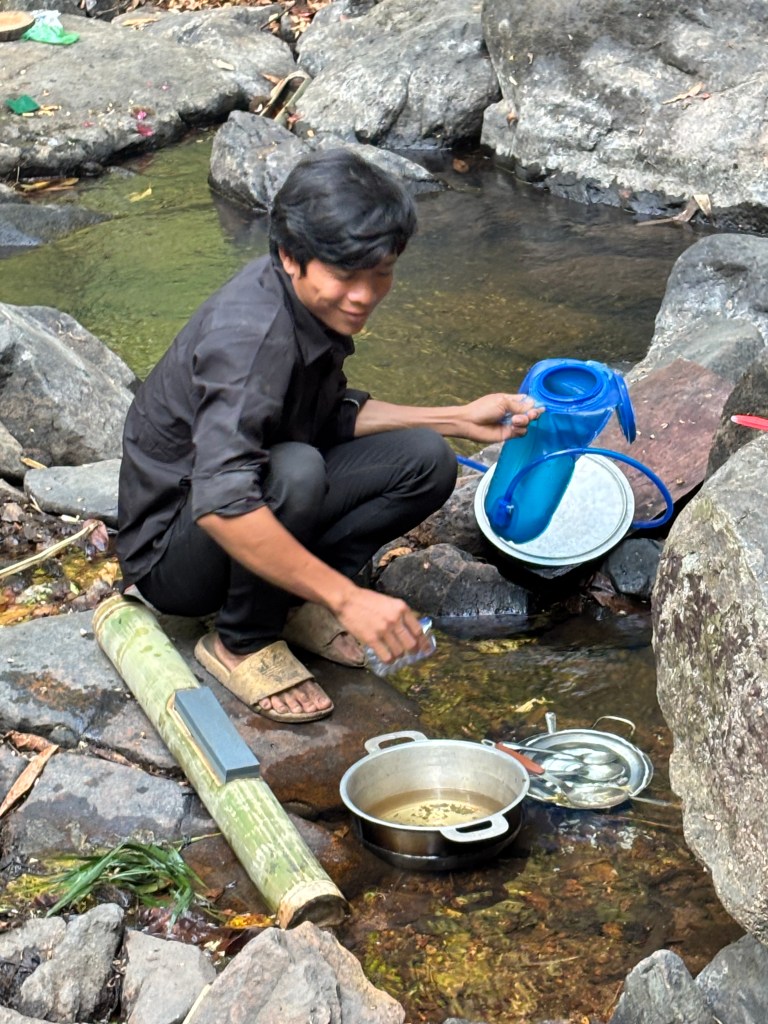
The 3-day trek in the jungle that Camille and I finally went on was interesting but not as advertised. The hardest were the heat and the humidity. Both Camille and I “enjoyed” the 1 hour + wild pillion ride on the rutted village paths before starting the trek. Our guide, Sakal, was helpful and knowledgeable but it was Roum, the 30 year old local man, who was totally impressive. Small and wiry, he carried some 25-30 kilos of kit; he made the fire, prepared the meals, washed up, helped put up the hammocks, all with a smile and an occasional break for a ciggie.
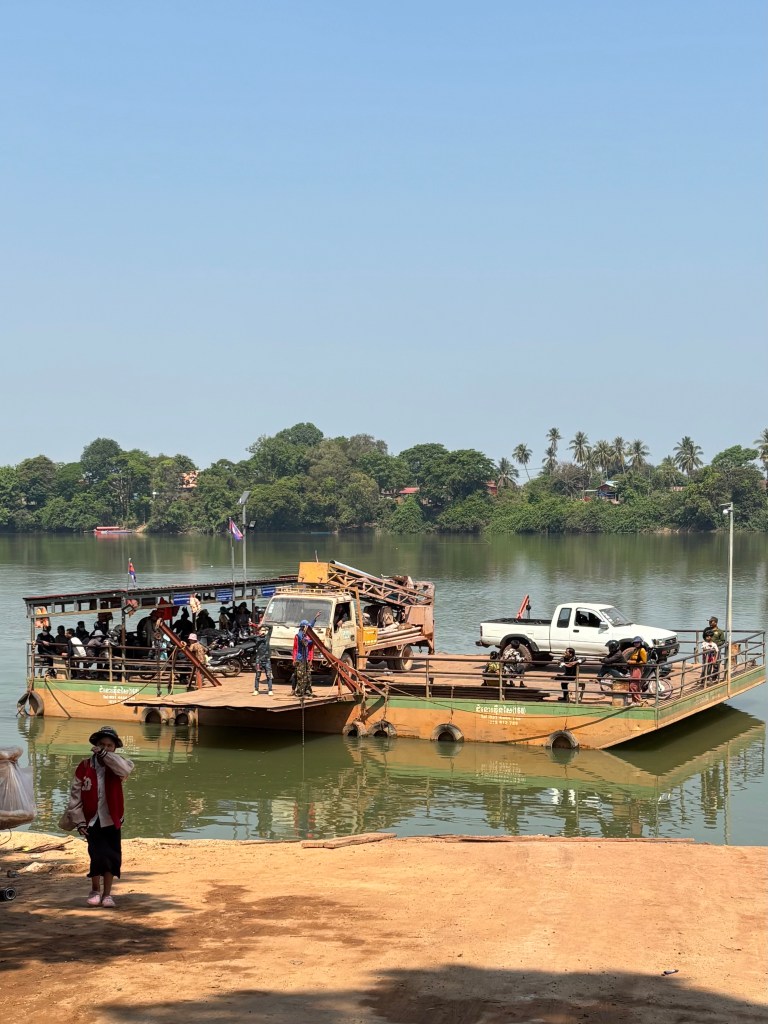
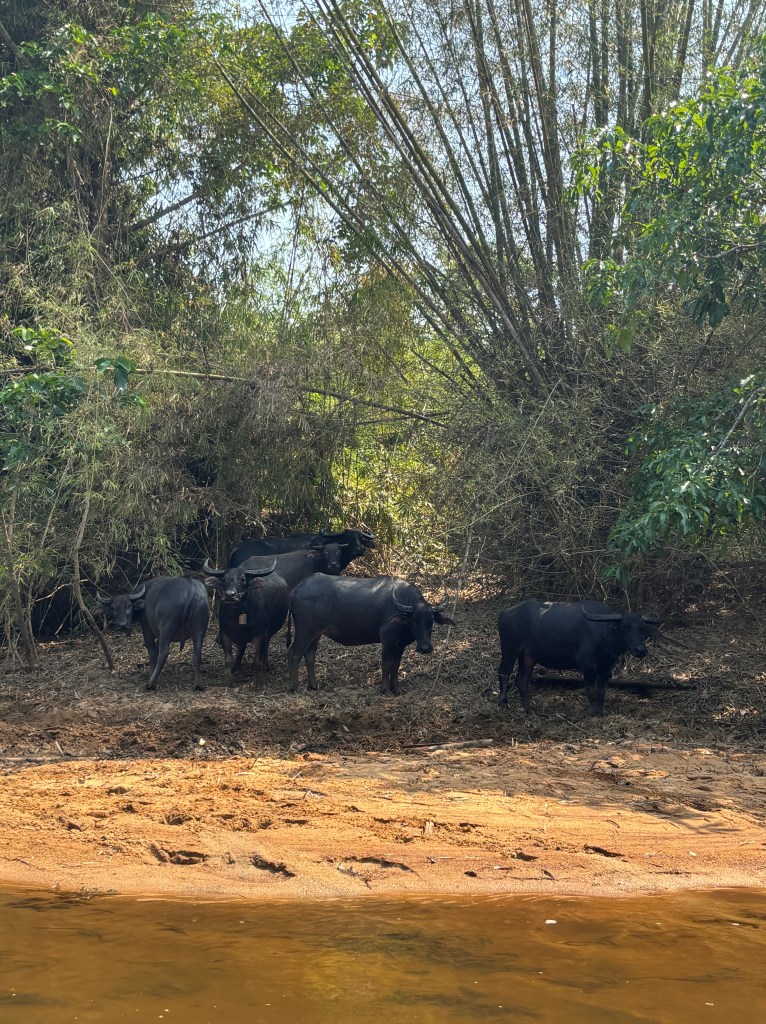
FerryWater buffaloRoum at workParts of the path were not good for riding pillion
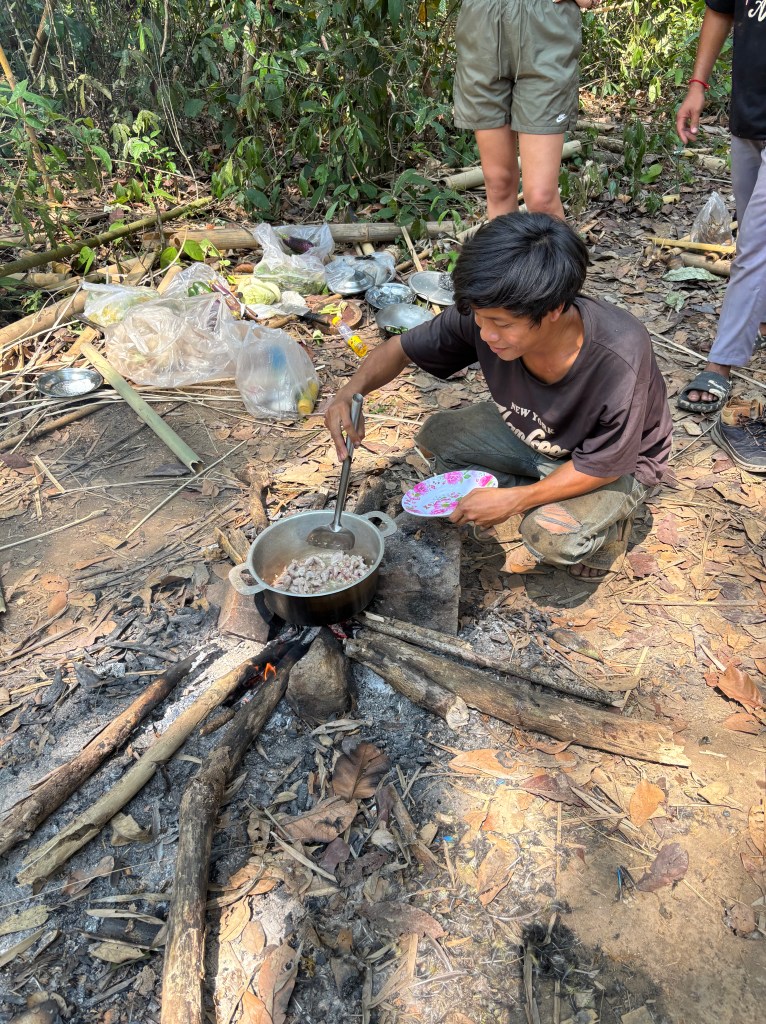
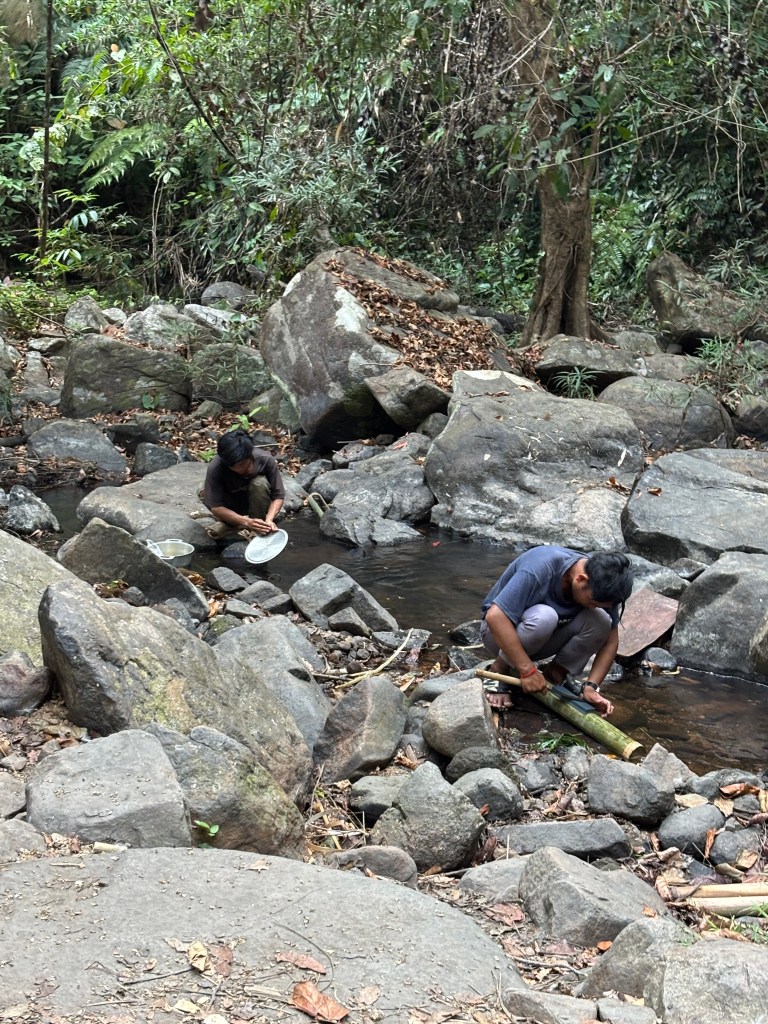
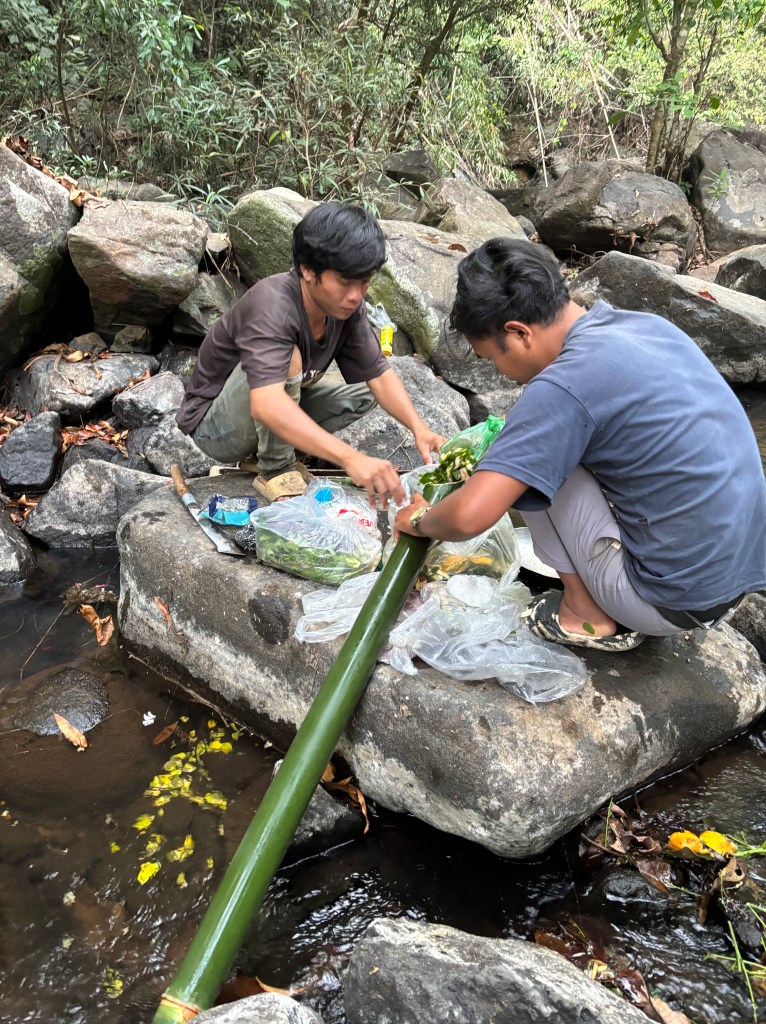
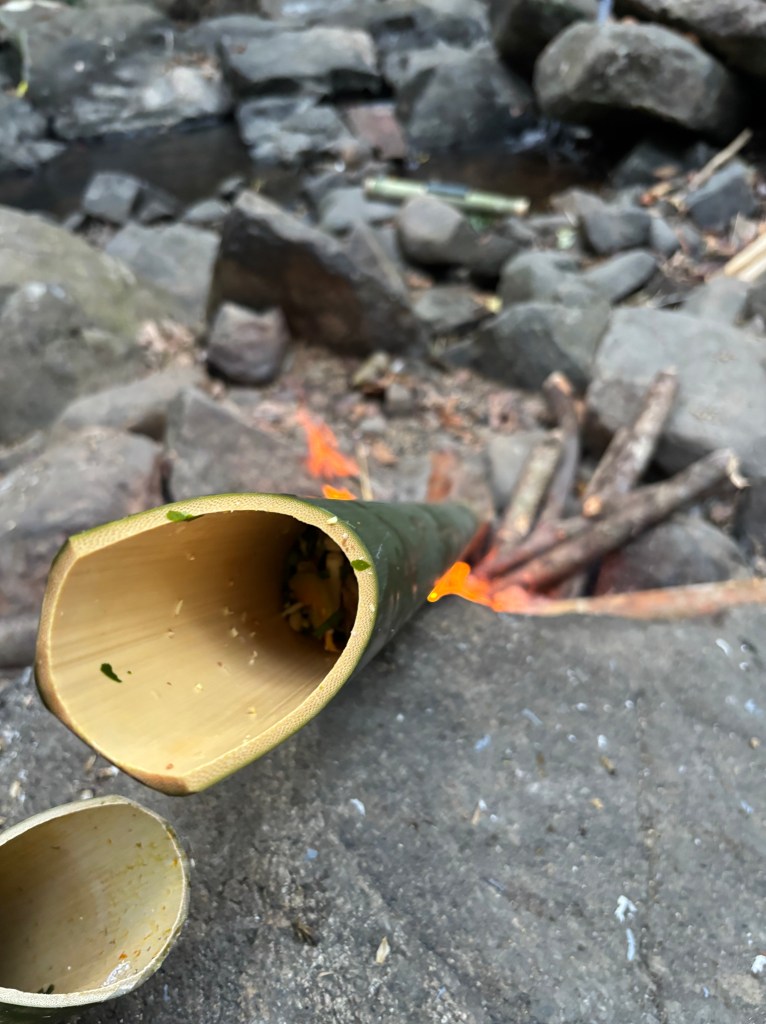
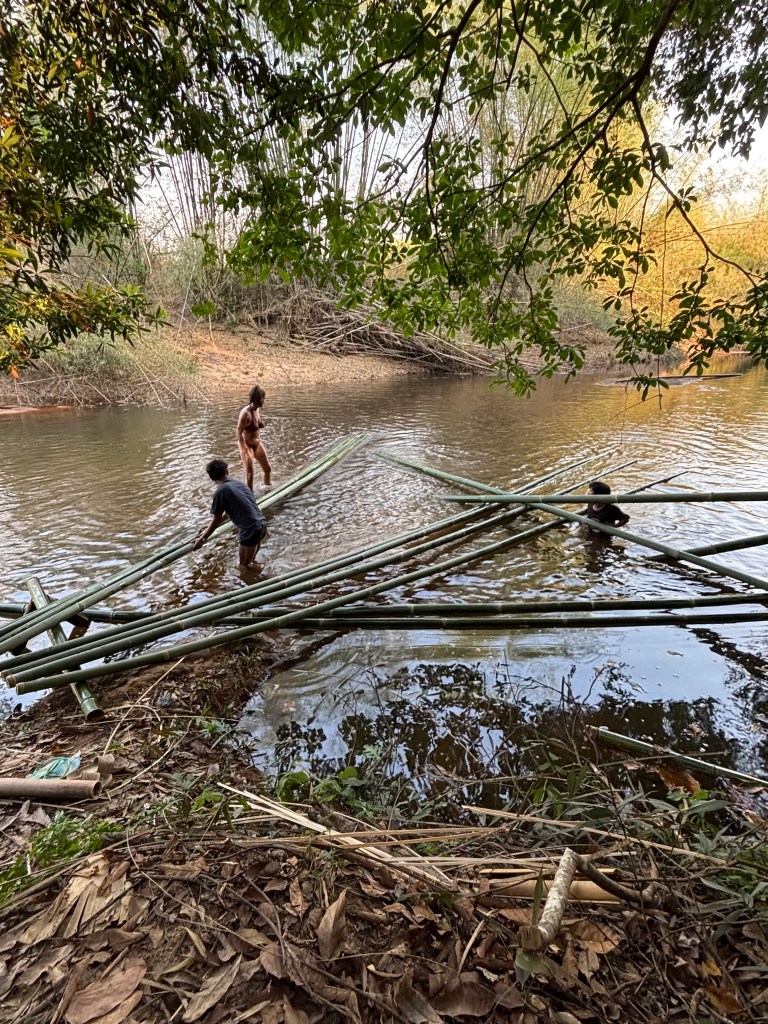
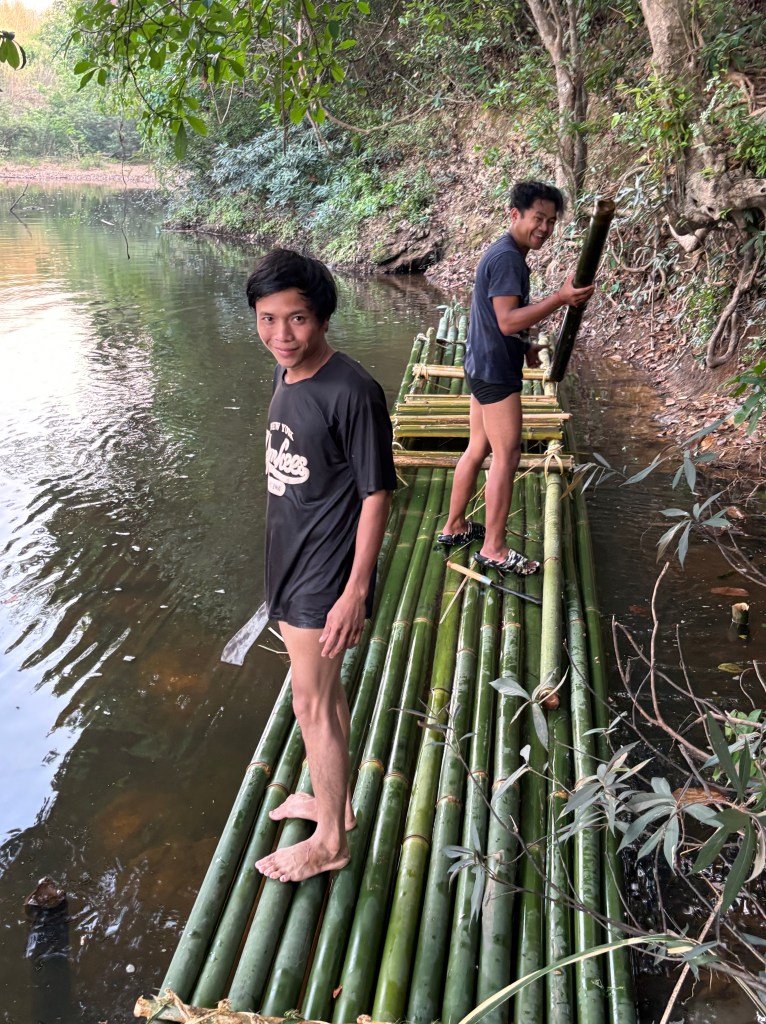
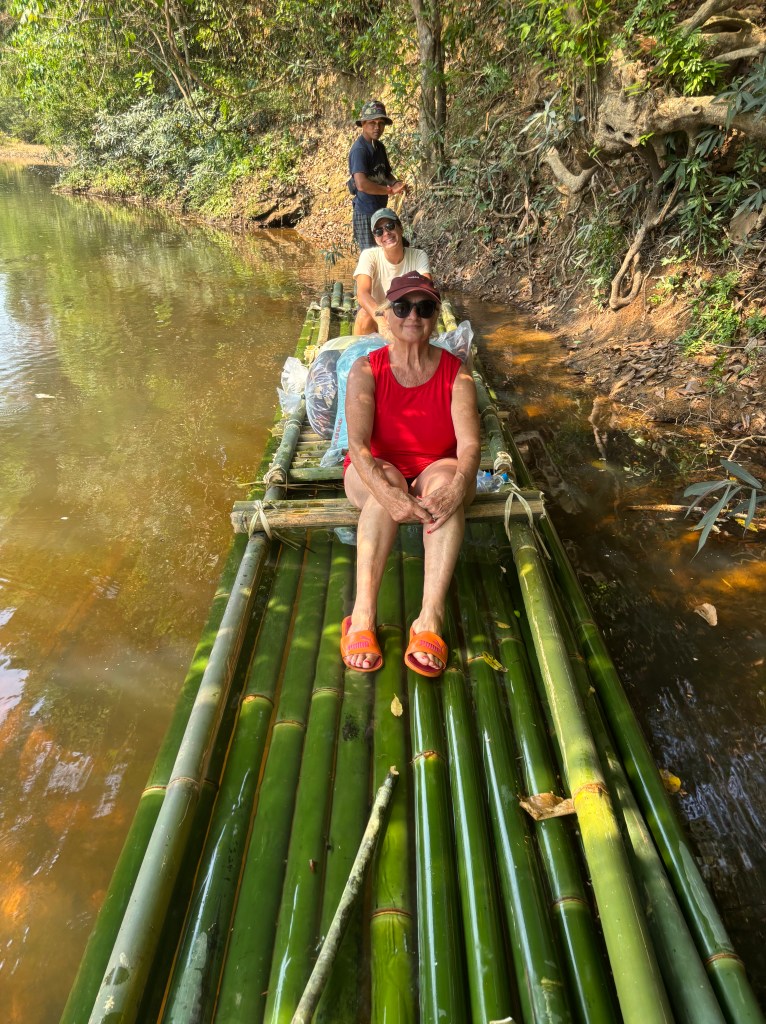
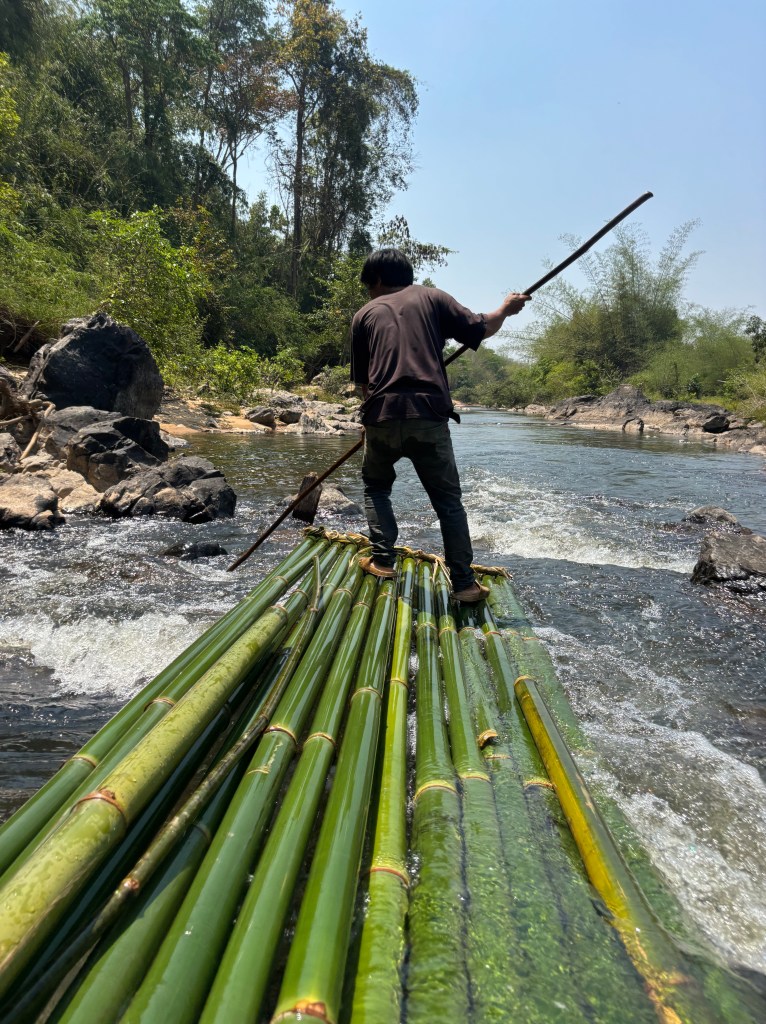
What impressed me the most was how useful and versatile bamboo was. Roum cut a 4′ length of a bamboo – a container for “bamboo soup”: a mixture of meat, vegetables and spices, stuffed into the bamboo pipe and slowly rotated (so it wouldn’t burn through) in the fire until the “soup” is done – some 30′-40′ (a pot of rice had been cooked first). Roum made us bamboo cups for coffee. Several 4′ lengths were used to carry the water from the river to the camp (c 10m up a steep slope above the river) for cooking and washing. He fixed a bamboo bench that was falling apart by cutting another length of bamboo and tying it all together. And on the last day, Sakal and Roum cut (with a machete) 14 bamboo trunks x 8m long to make a raft that would carry us downriver to the village; they prepared bamboo rope from the bamboo bark to tie the raft together. And made seats for Camille and me and even put a small raised area, like a table, for all our gear, so it wouldn’t get wet. It was a lesson in survival I could only admire. And a long bamboo pole and a small bamboo paddle for steering and propelling. Sakal finally admitted there were no gibbons in that part of the jungle. Disappointing.
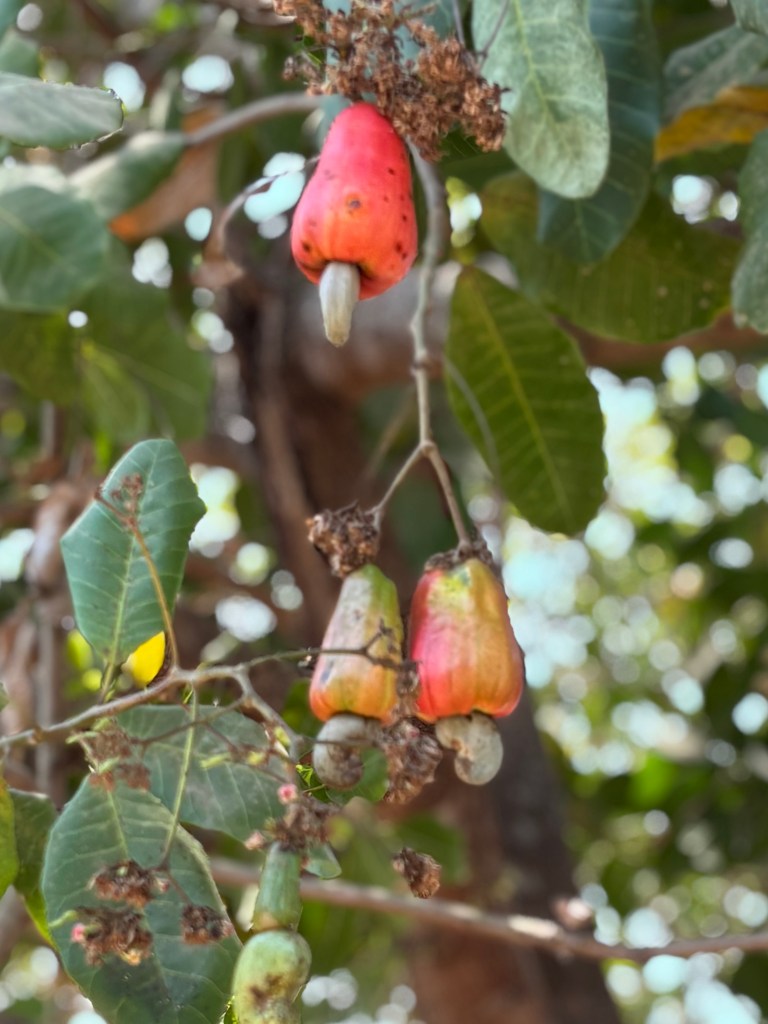
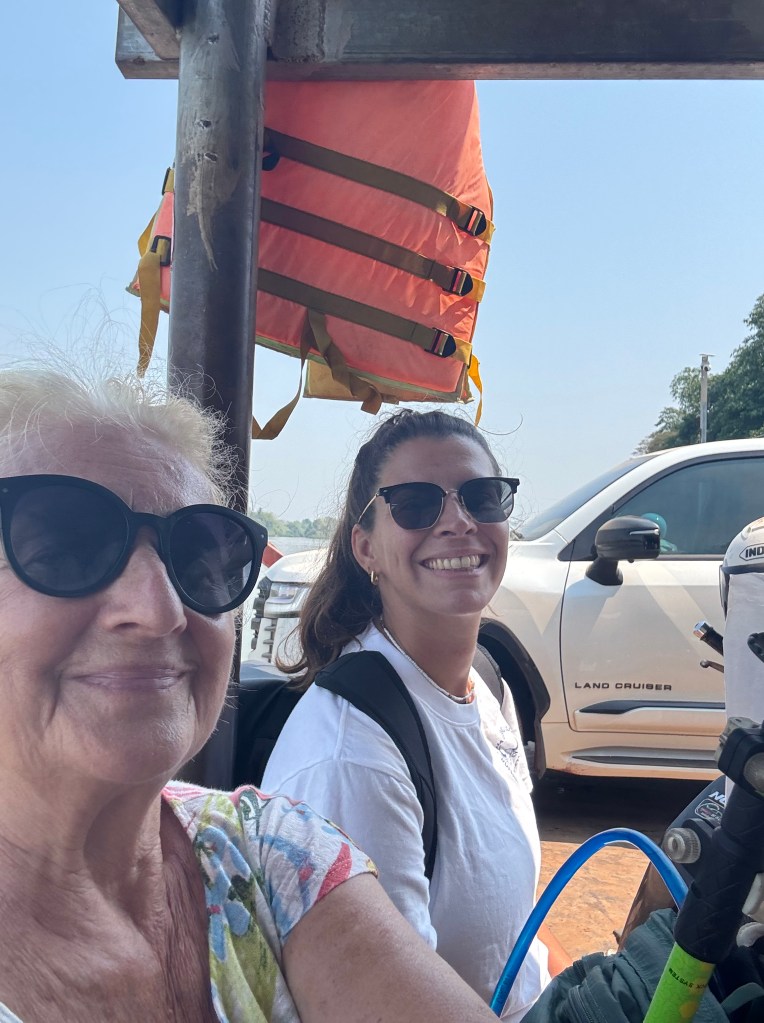
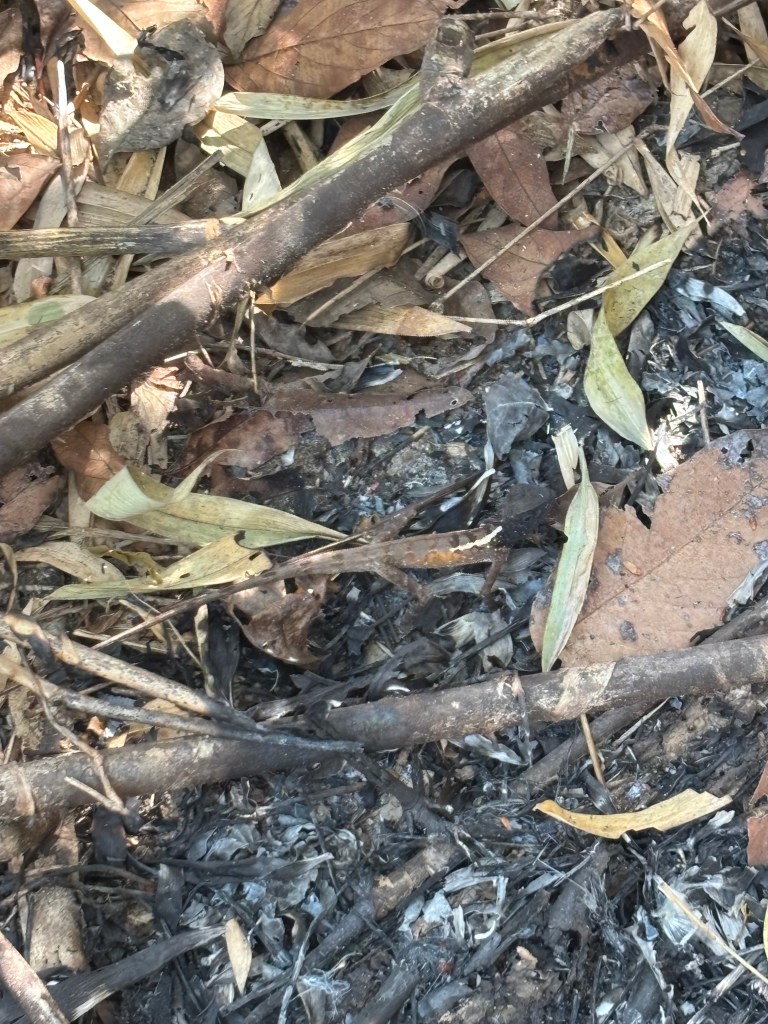
Cashew nuts!Camille and I on the ferrySakal and Roum Spot the lizard!Sakal sharpening his new machete while Roum did the domestic choresStuffing the mixture of meat and veg into a bamboo pipe for “bamboo soup”“Bamboo soup” in the fireSakalRoumGathering the 14 lengths they dropped from the jungle into the waterAlmost doneReady to raftRoum steering us through the rapids
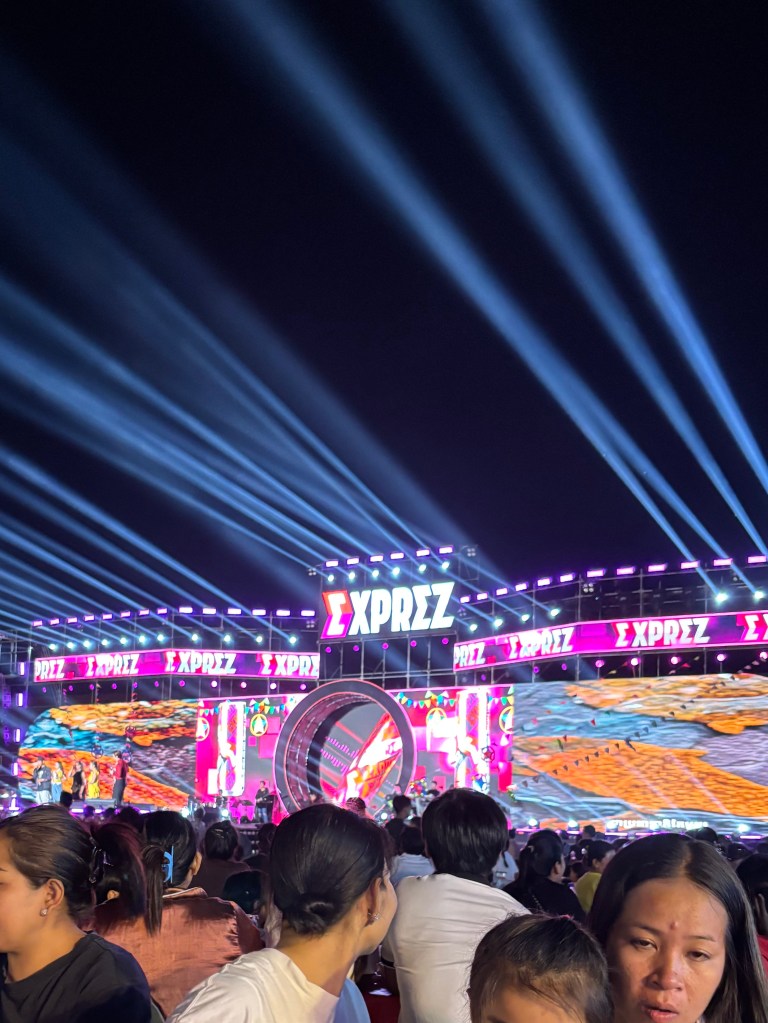
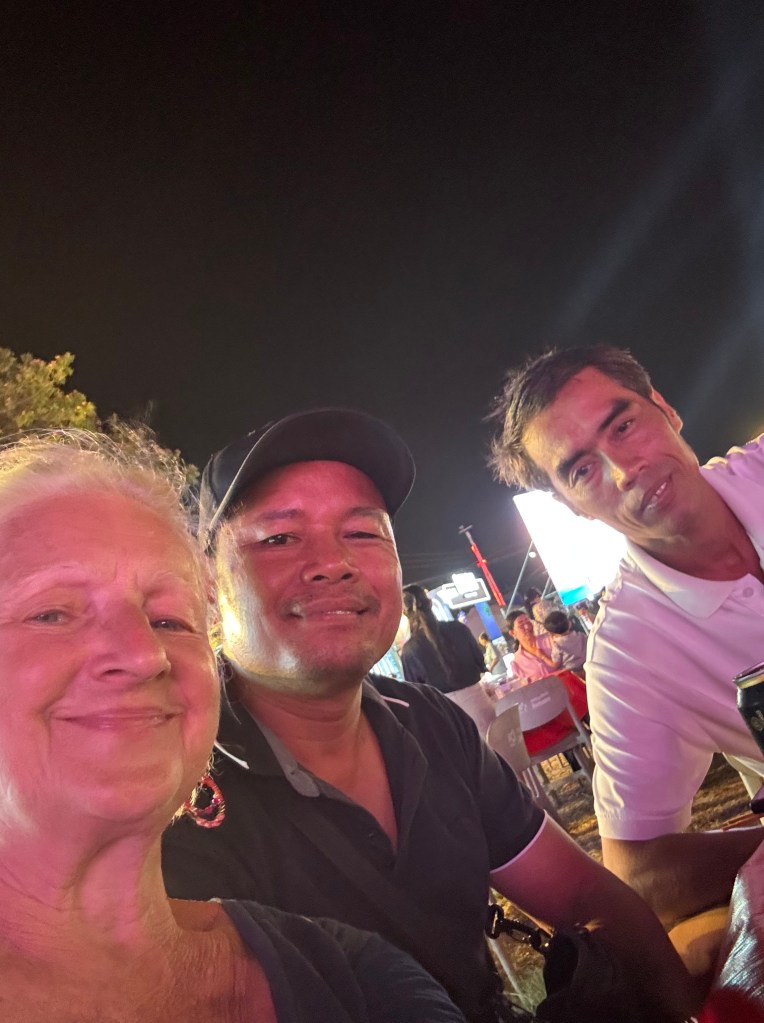
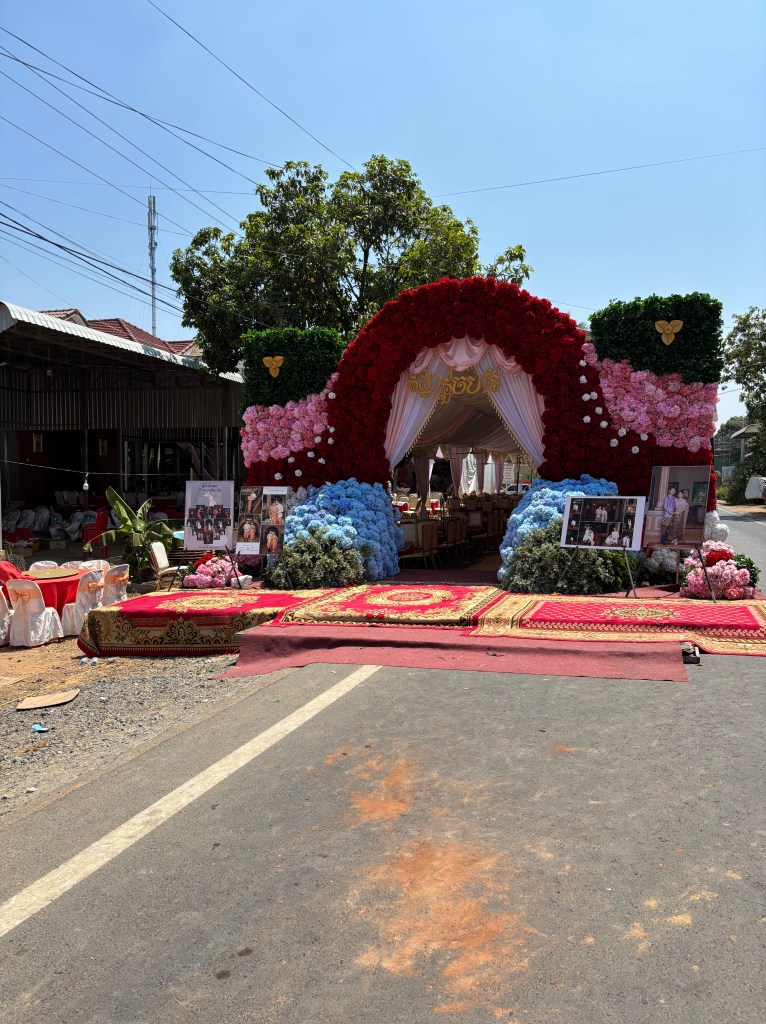
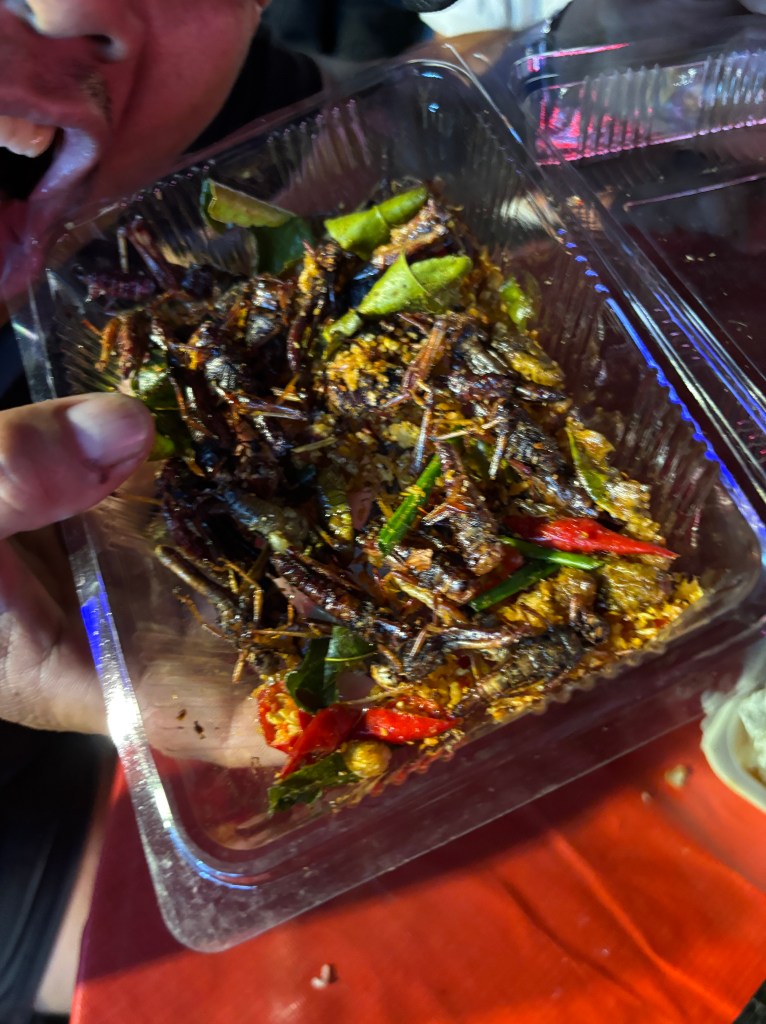
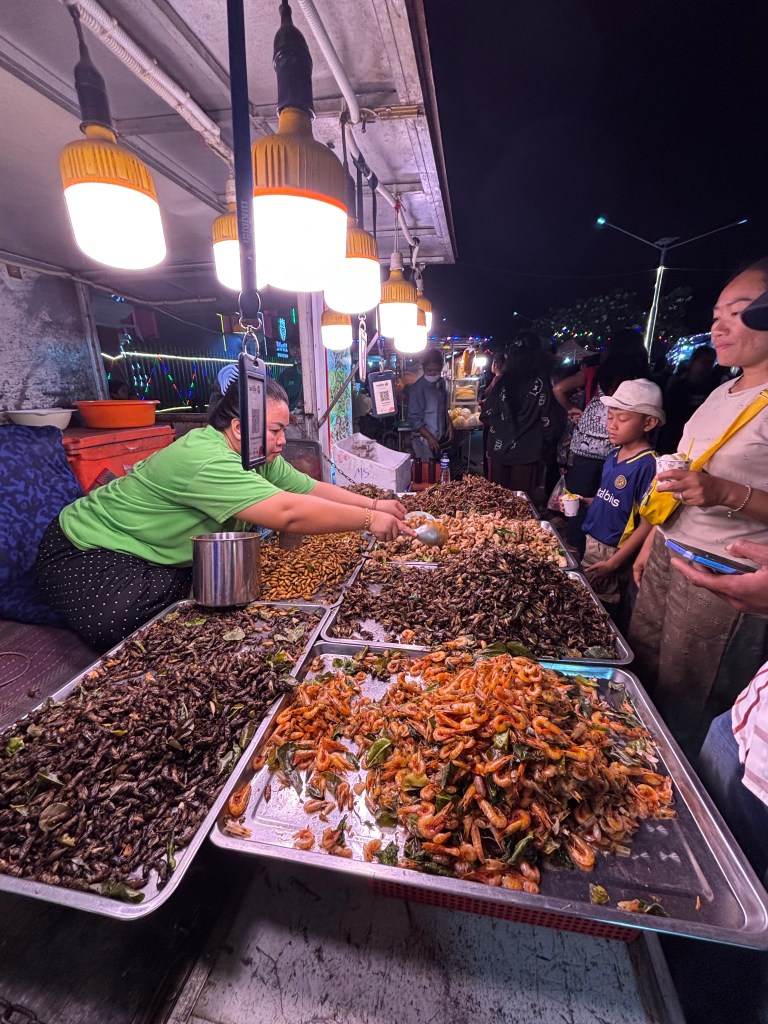
As gibbons proved elusive, thought I’d have a go at trying to see the Irrawaddy dolphins. Kratie is the spot on the Mekong where there’s a pod of some 60 dolphins. And though but fleetingly, I did see them (though was too slow to snap a photo). An added bonus was that Kratie was in a serous party mode – the first Mekong party here in 10 years – so the place was heaving. There was a concert in the evening, and my host invited me along with his friends: a lot of beer was drunk, various snacks eaten (including fried crickets and larvae and boiled peanuts) and good times were had. As it was the weekend, there were a number of weddings going on, and it is customary here to fence off half the road for the celebrations…
My boatman, who found me some dolphinsVery loud musicMy host (hatted) and a friendWedding timeCrickets, anyone?Various fried spiced grubs and insects
The shared taxi took me to Phnom Penh. As often happens, the advertised departure time is only a guideline – the car goes when it has enough passengers (11 in this case, in a Toyota estate). Stayed in a hostel called, for obscure reasons, Bliss and Beats; fairly central for several sights.
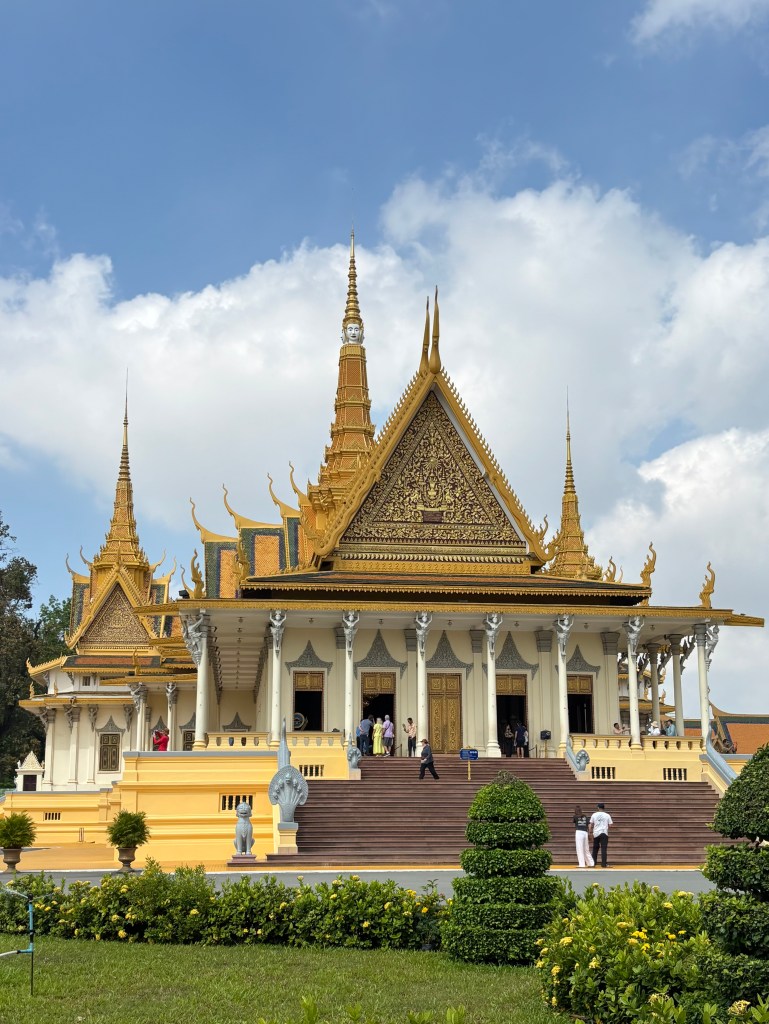
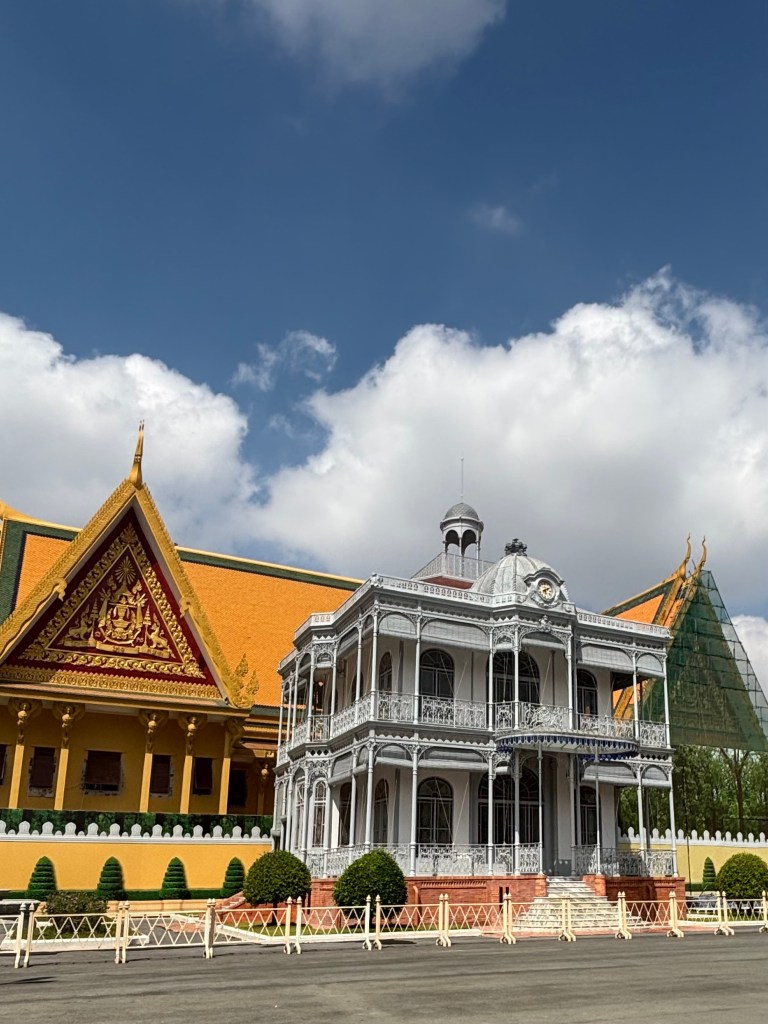
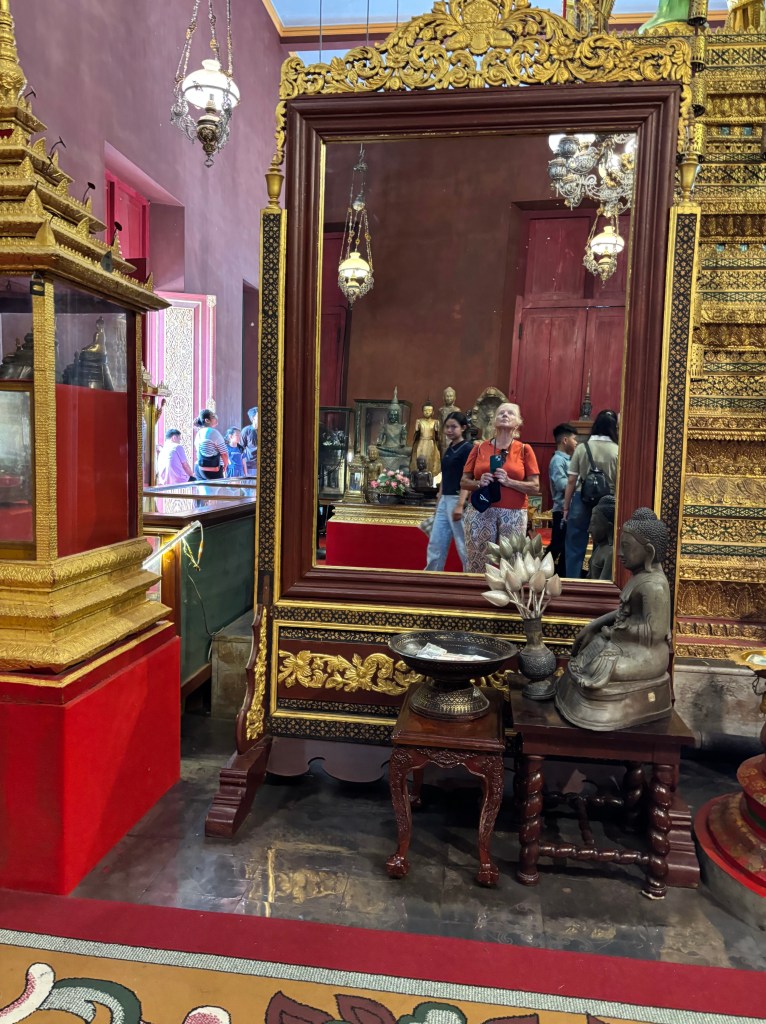
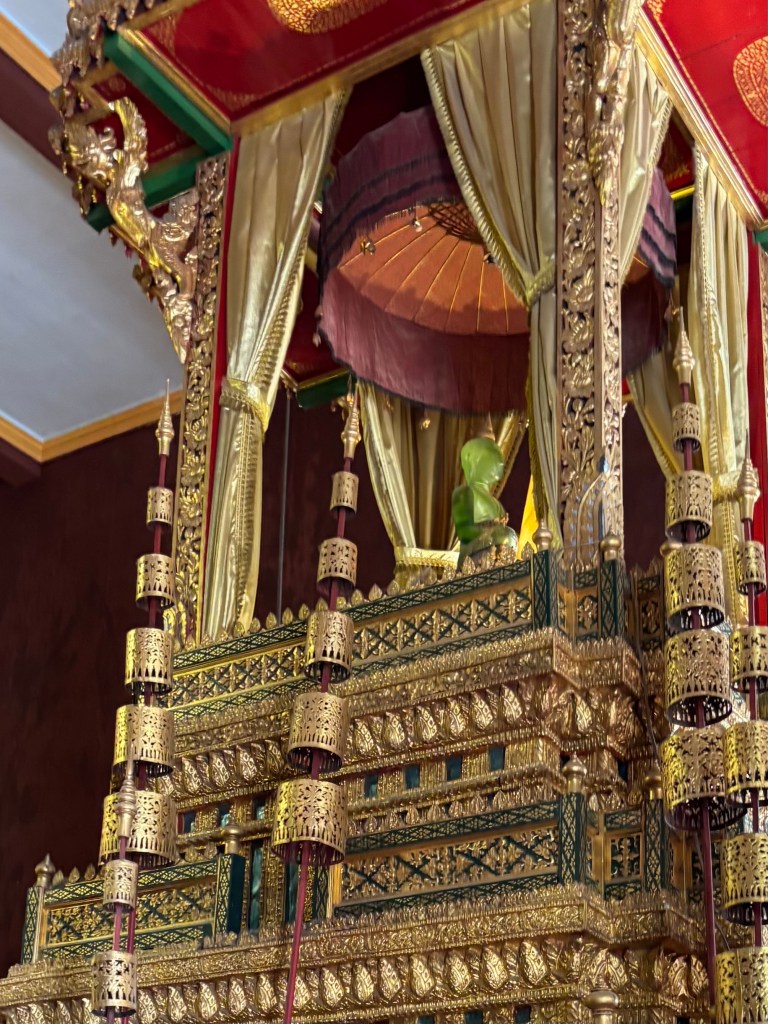
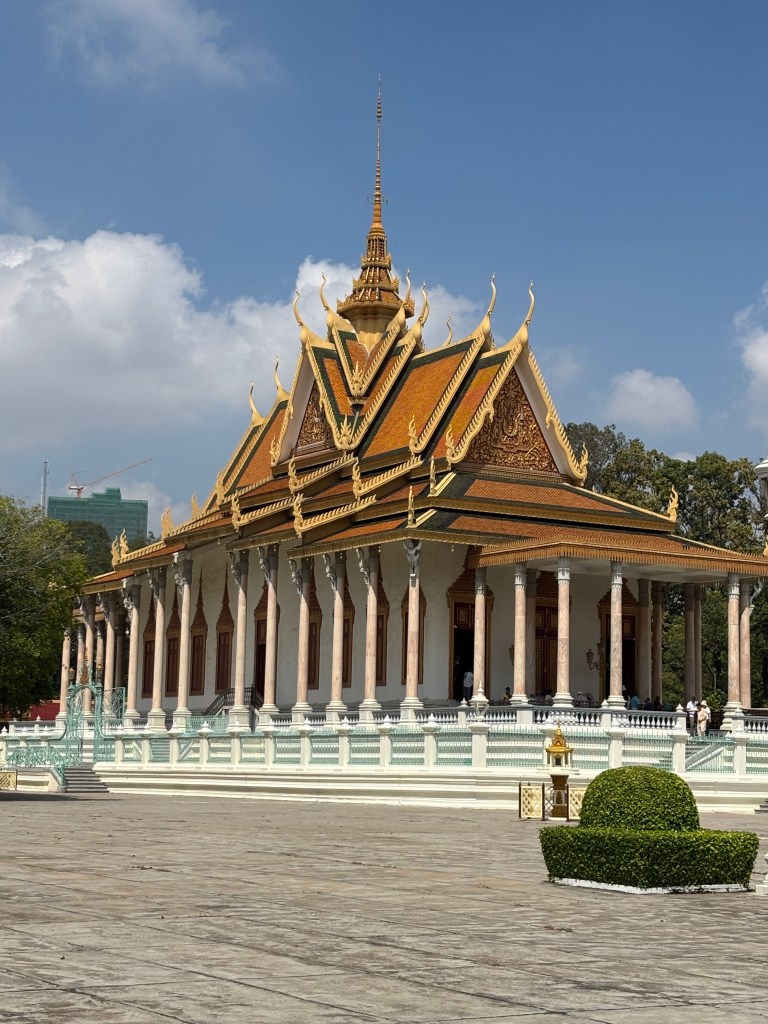
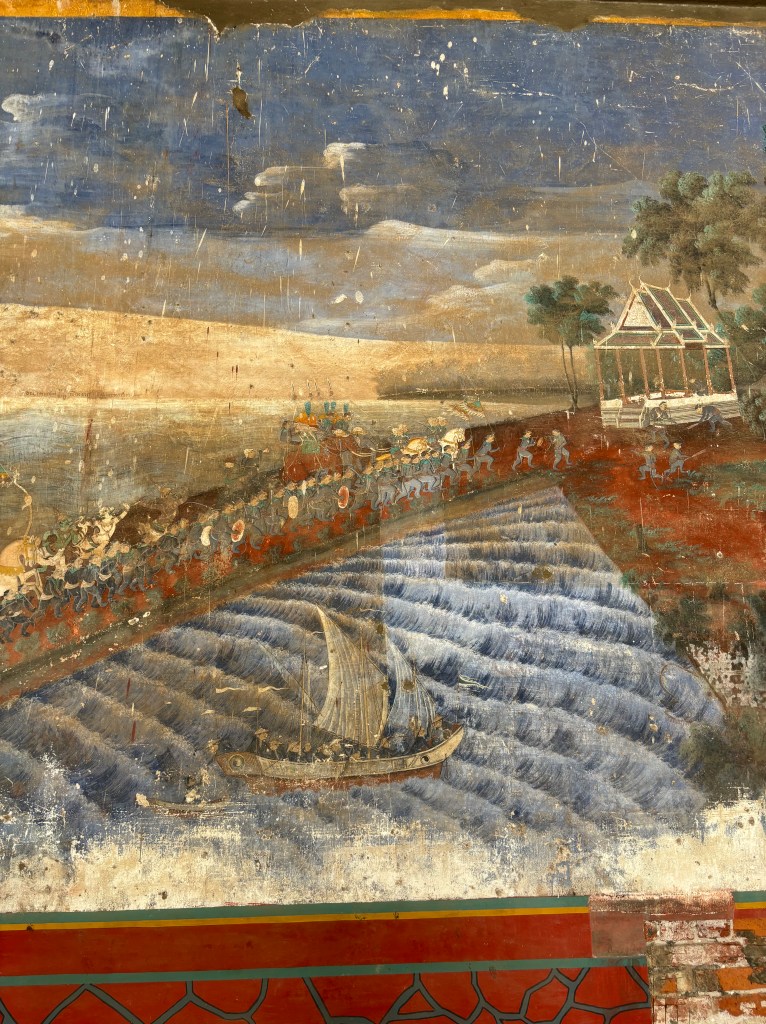
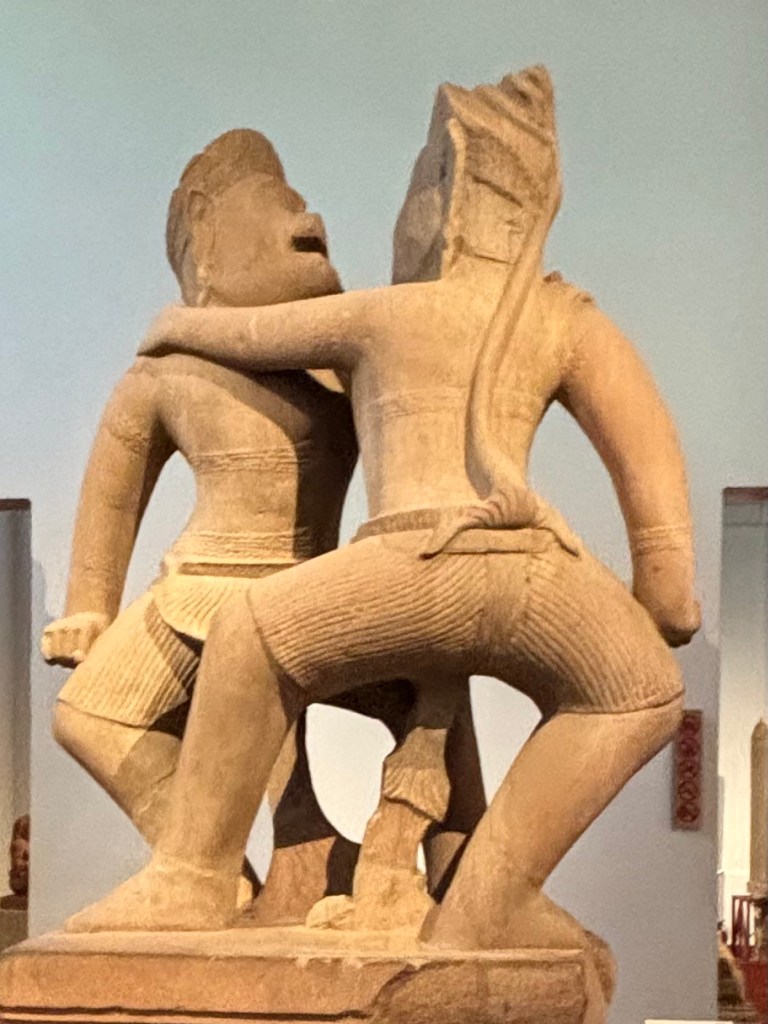
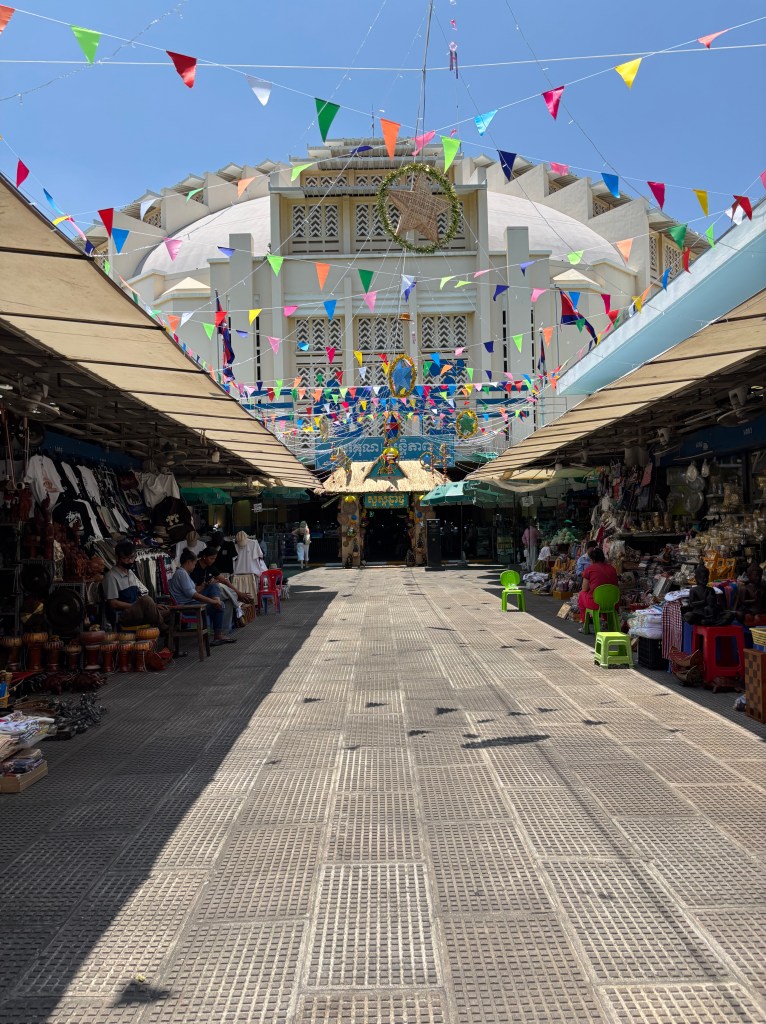
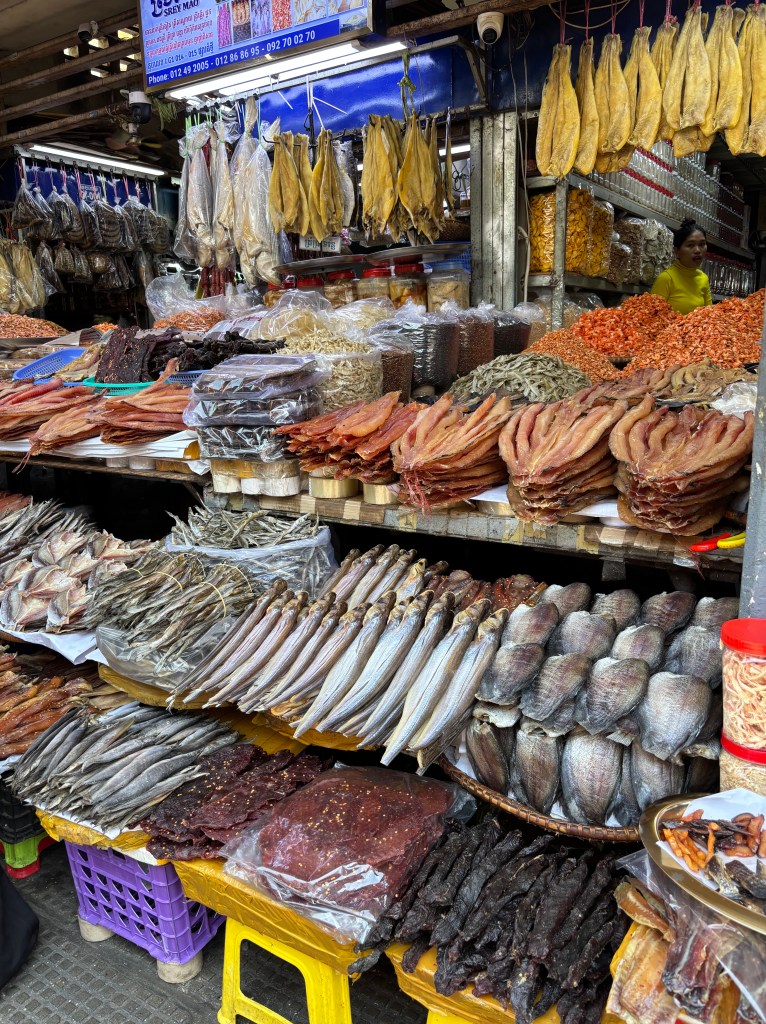
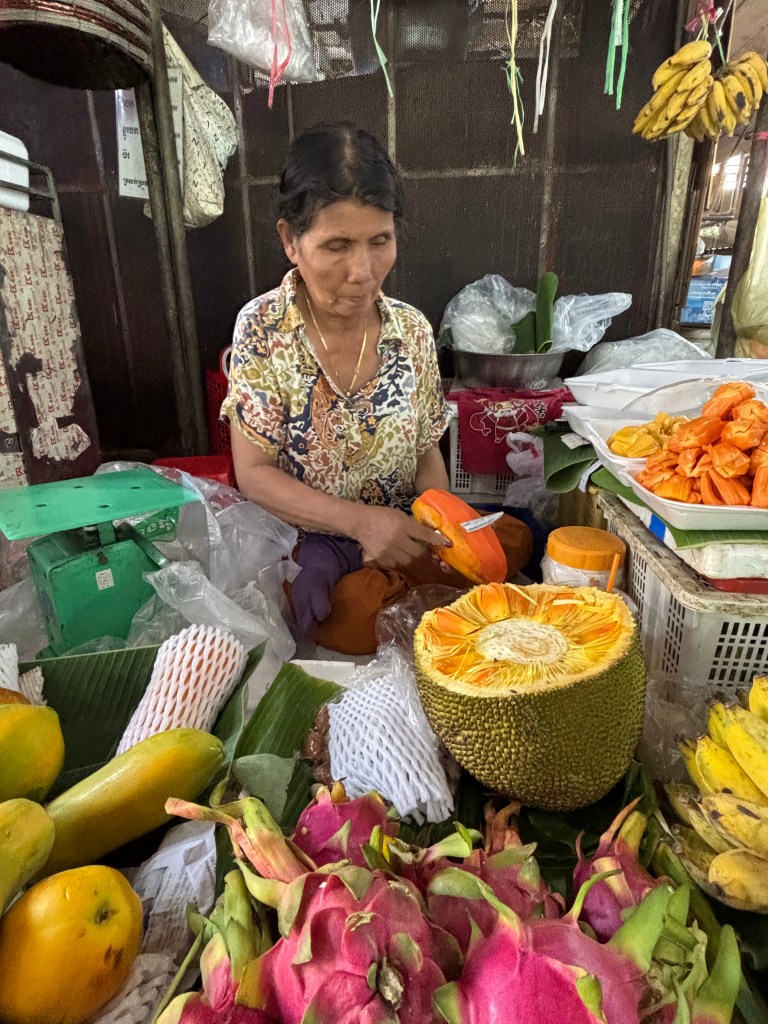
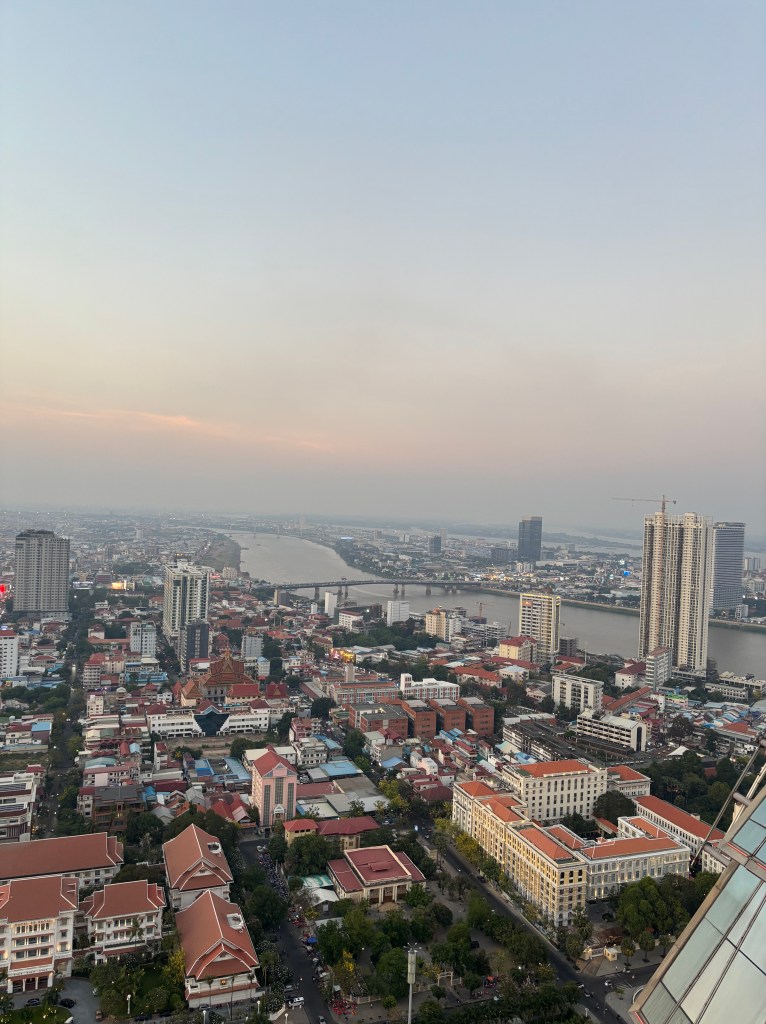
Royal palace, Pnomh PenhFrench gingerbread within the palace grounds not open to publicSurreptitious photo in the Silver pagoda The Jade Buddha in the Silver pagoda (floor covered in 5 tonnes of silver- not visible as carpetedGraceful columns of the templeFrescoes telling various stories from Buddha’s journeyAn 8th ct sculpture of fighters – little different to what I saw at a live fight in KampotCentral marketCentral market buildngAll kinds of dry fishMy papaya being preparedView of PP from the rooftop bar
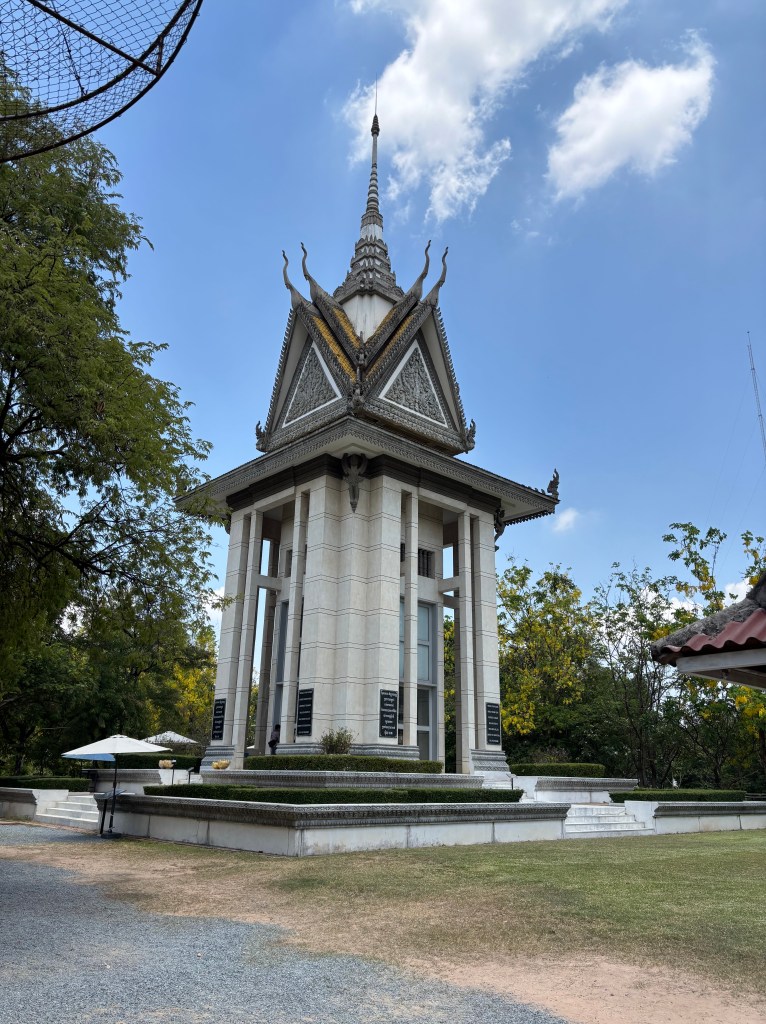
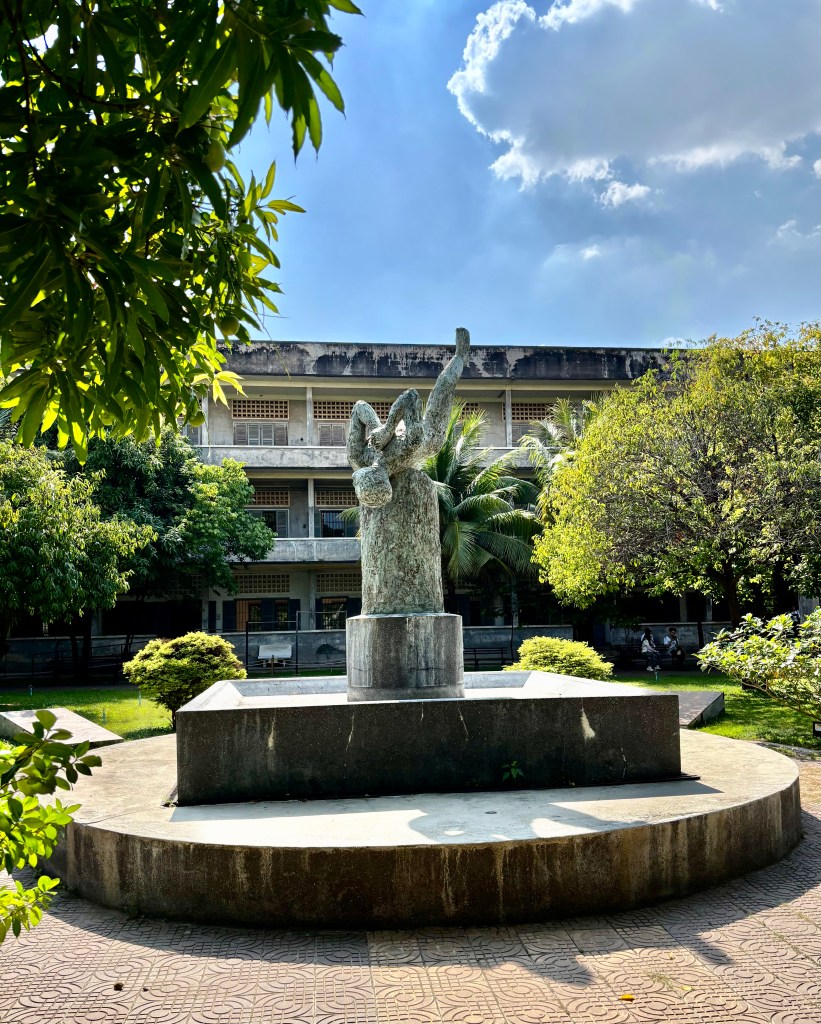
Visited the Khmer Rouge memorial and the torture centre; so much killing.
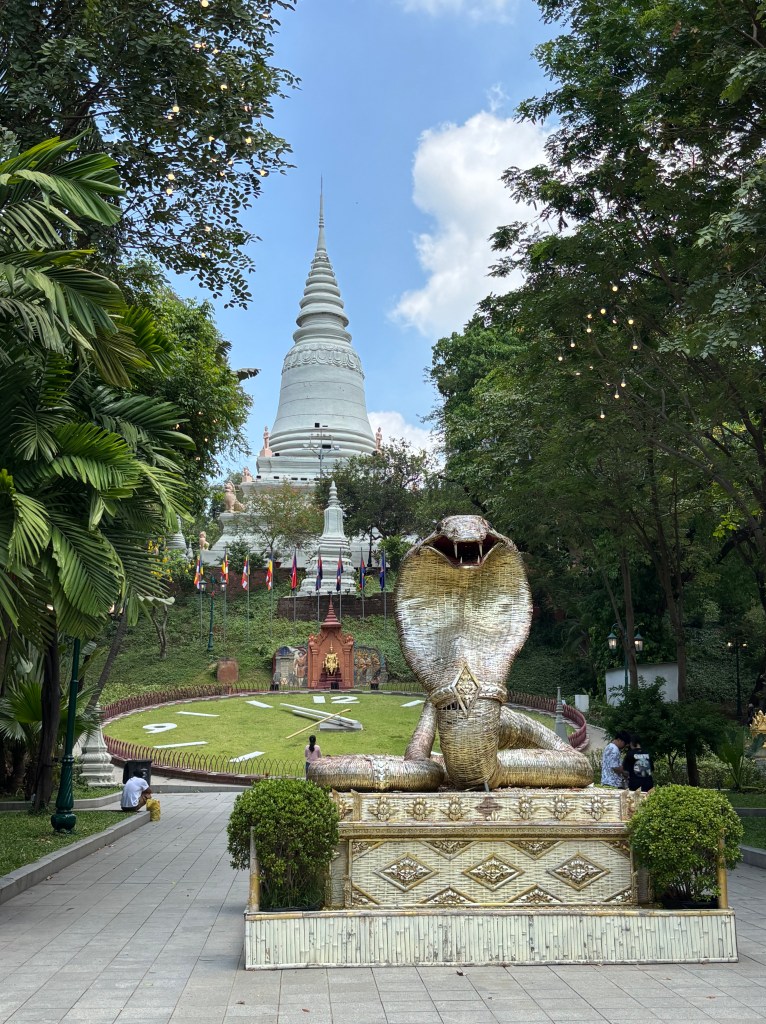
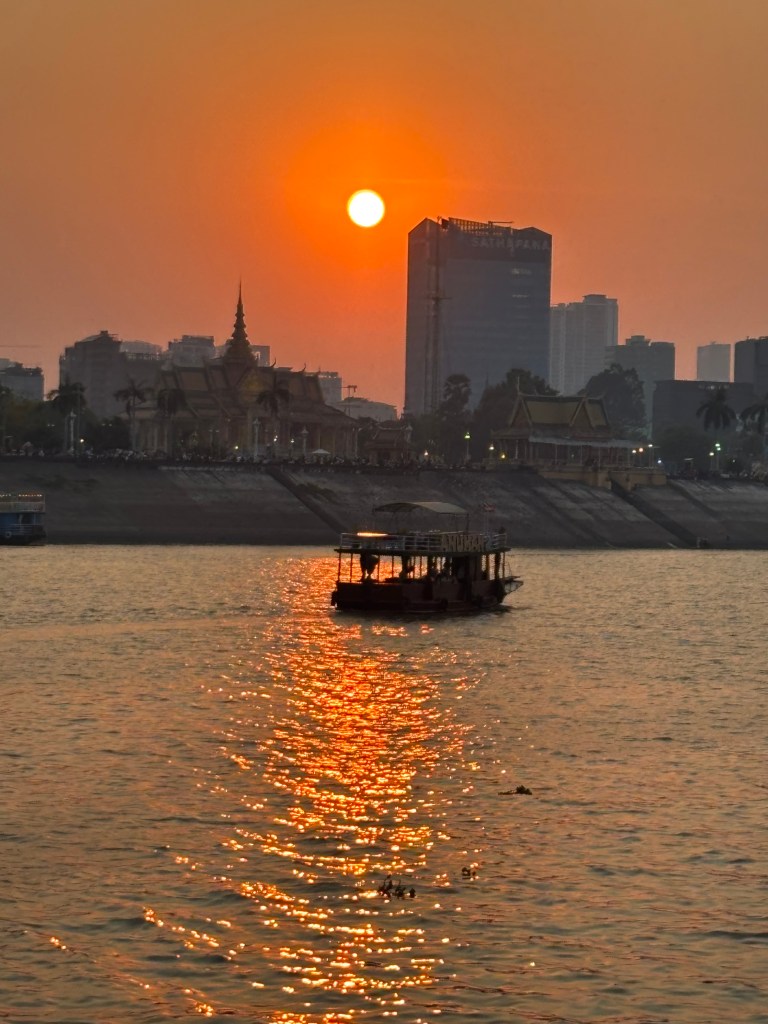
The oldest pagoda in PP, with the sacred cobraMemorial to the victims of Khmer Rouge genocideSculpture commemorating the victims of torturePP sunset from the Mekong
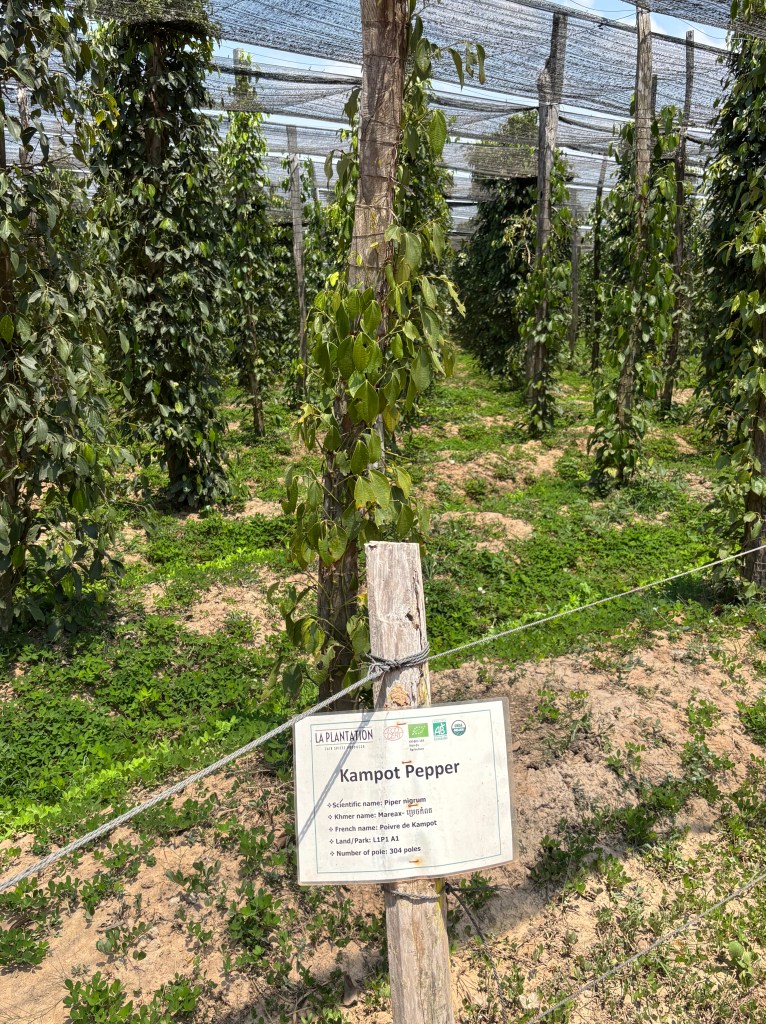
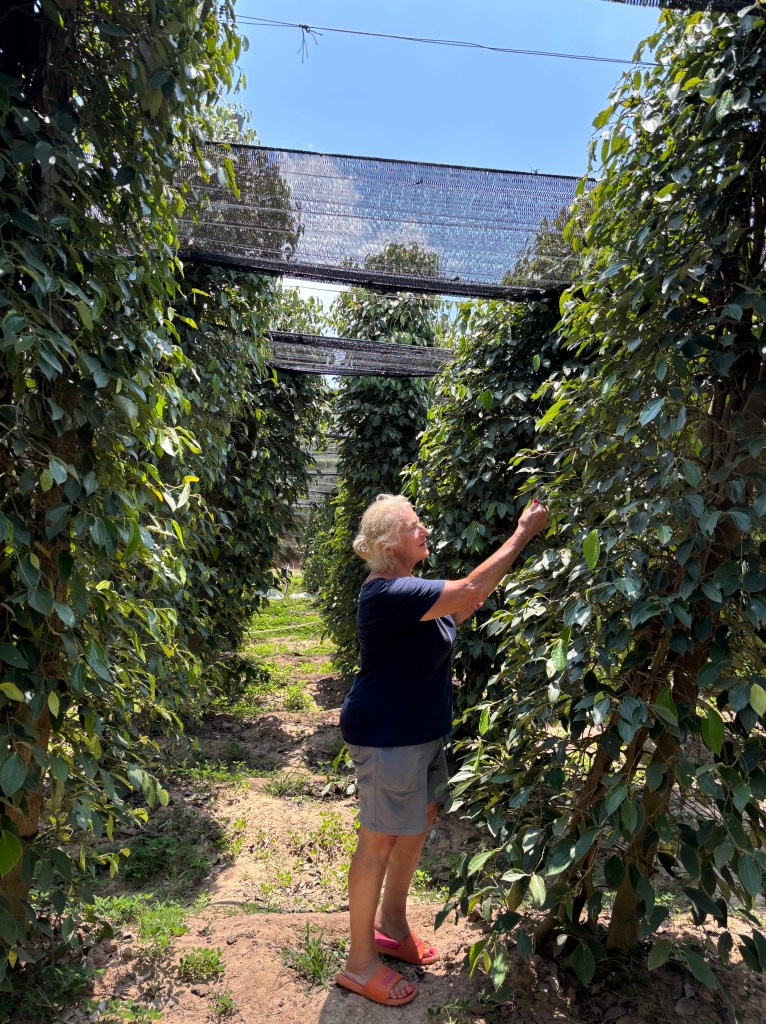
Kampot, southern Cambodia, is known for its pepper plantations and salt fields. It’s a pretty place by the river and gaudily lit at night.
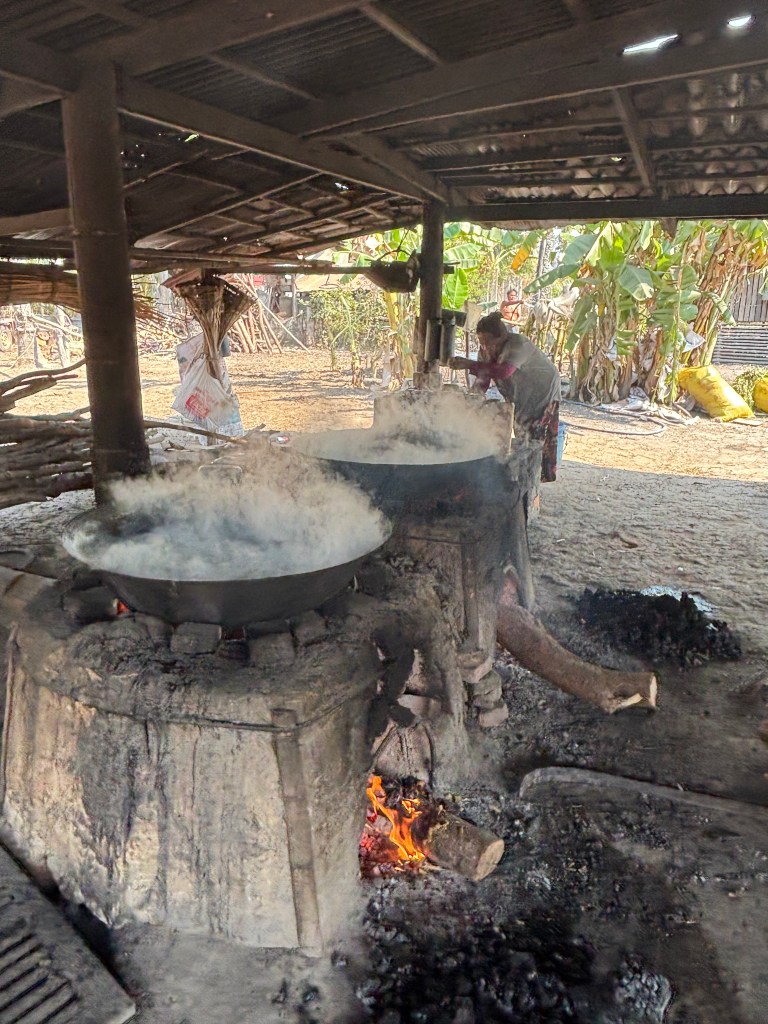
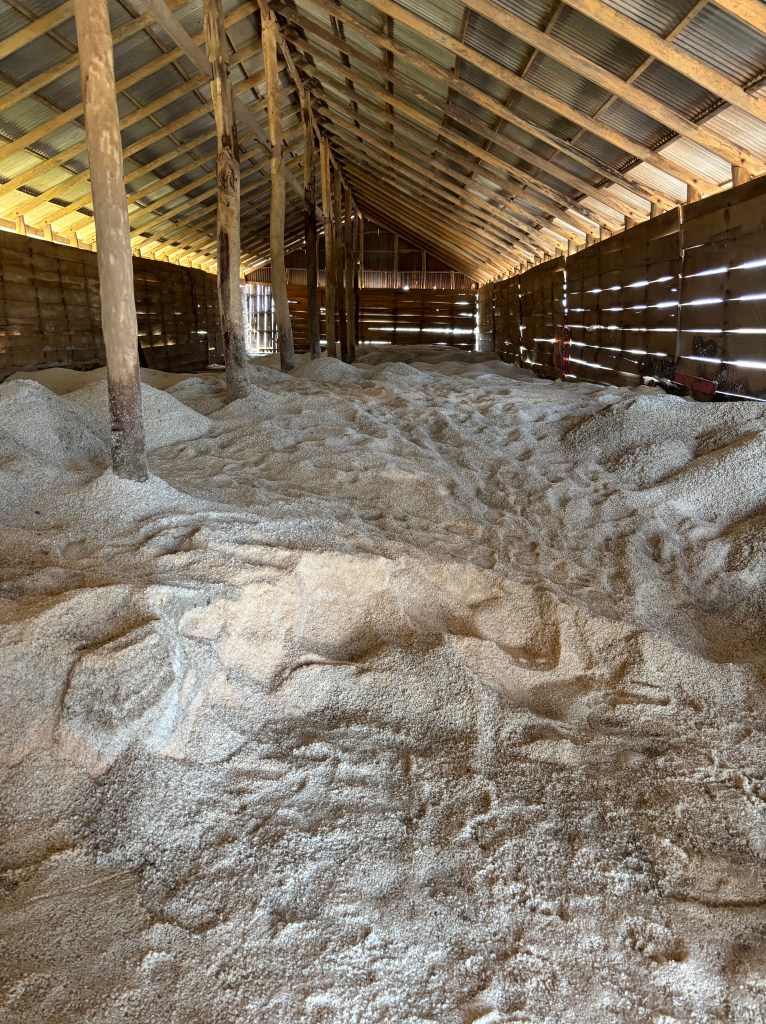
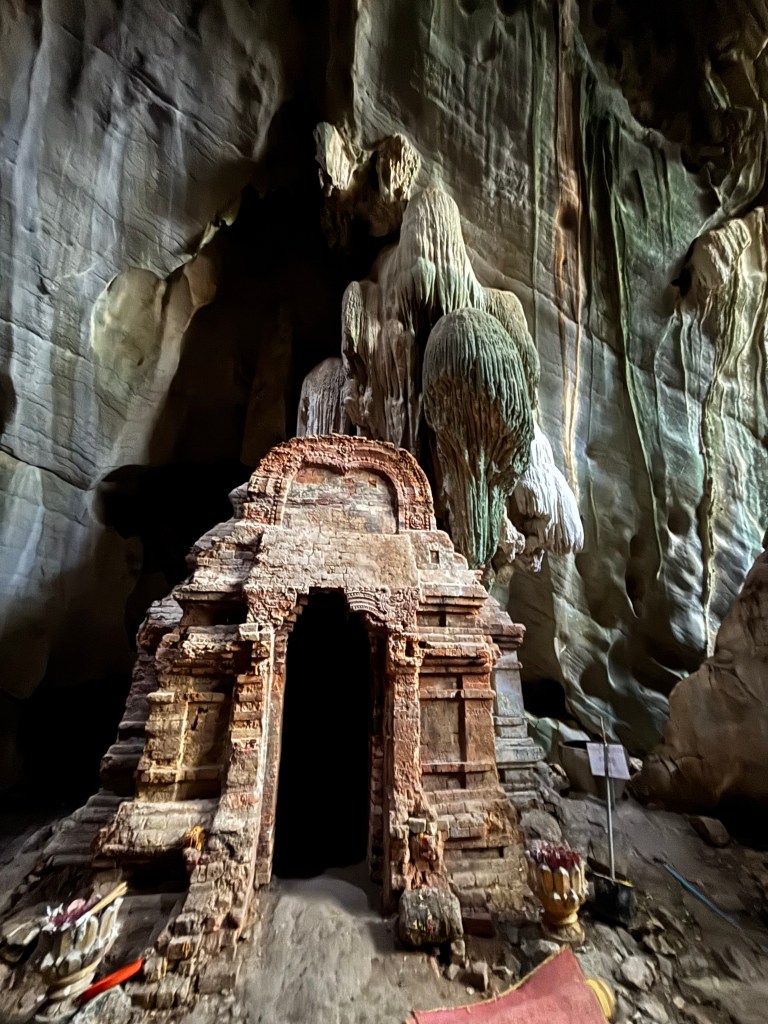
Cooking sugar from sugar palm Salt storageCave temple near KampotSo many varieties of pepper!
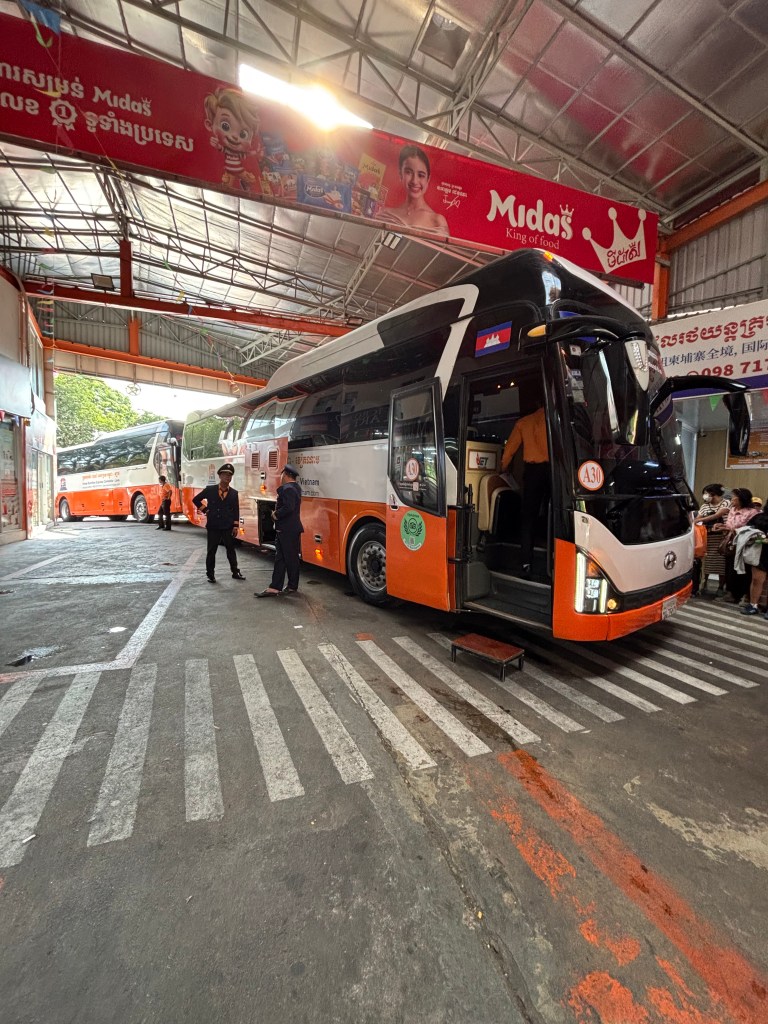
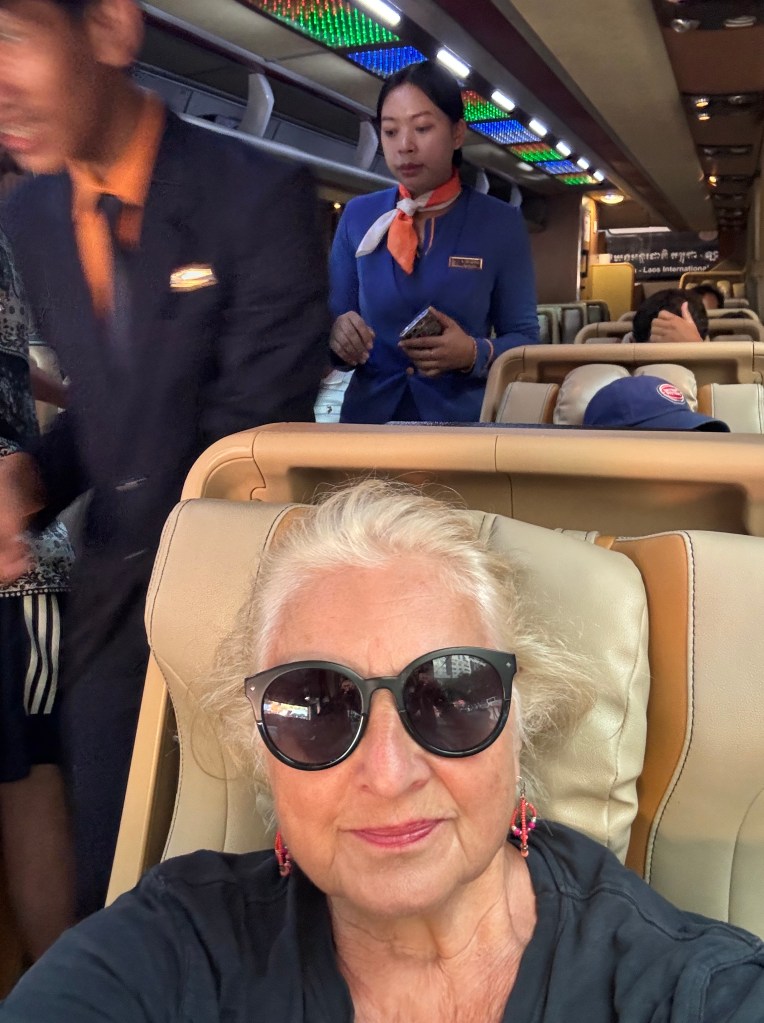
Took a posh bus to Ho Chi Minh City – imitating airline ways, all gold braid and stewardess scarfs. But, on time, efficient and helpful with a stress free border crossing.
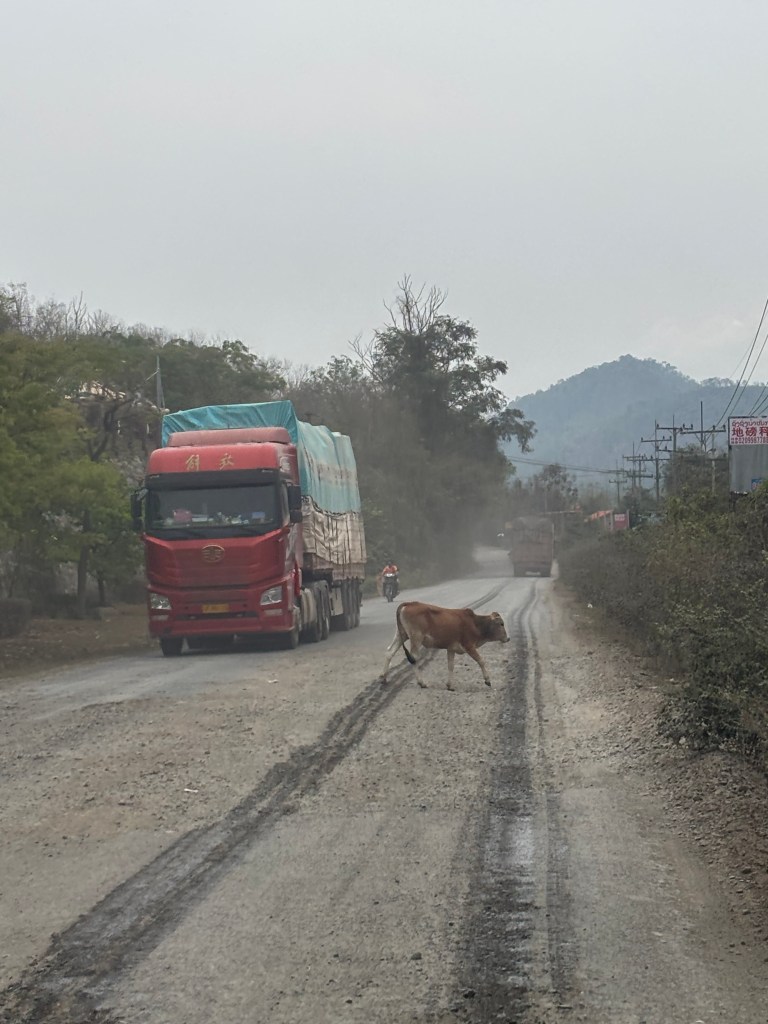
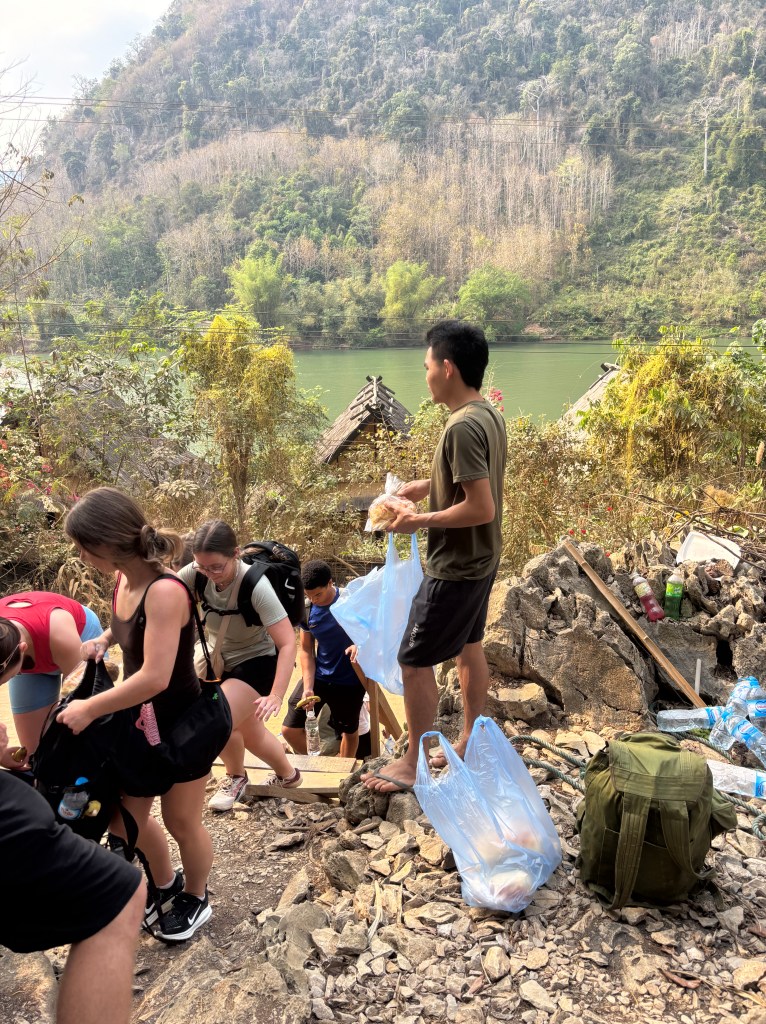
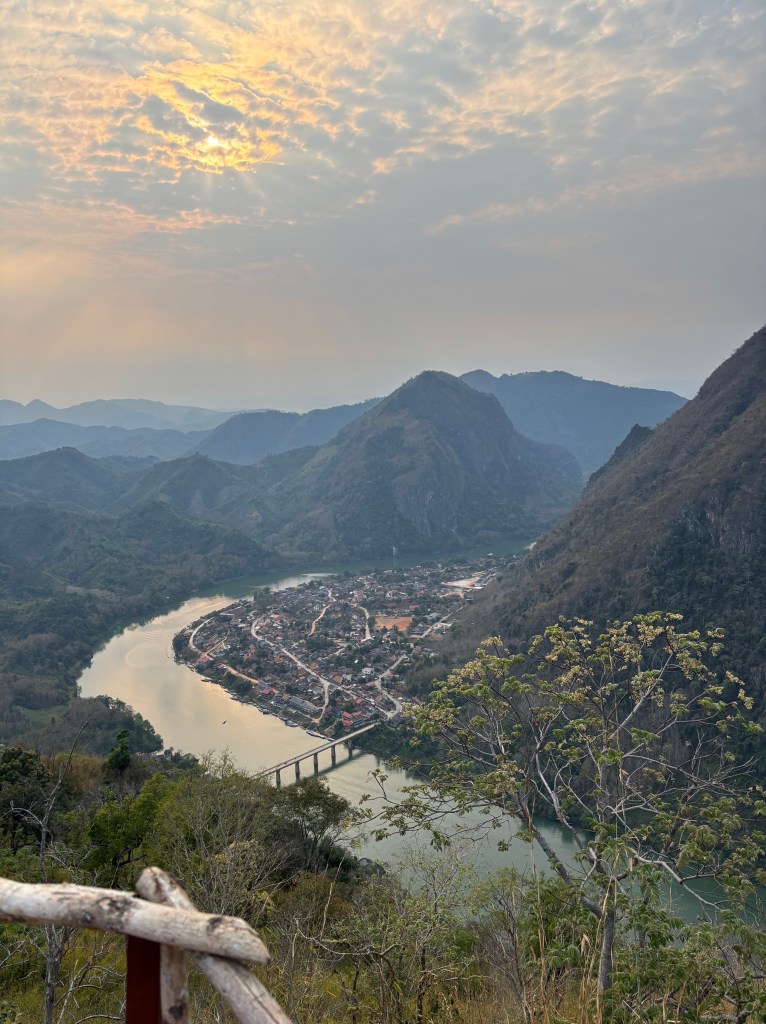
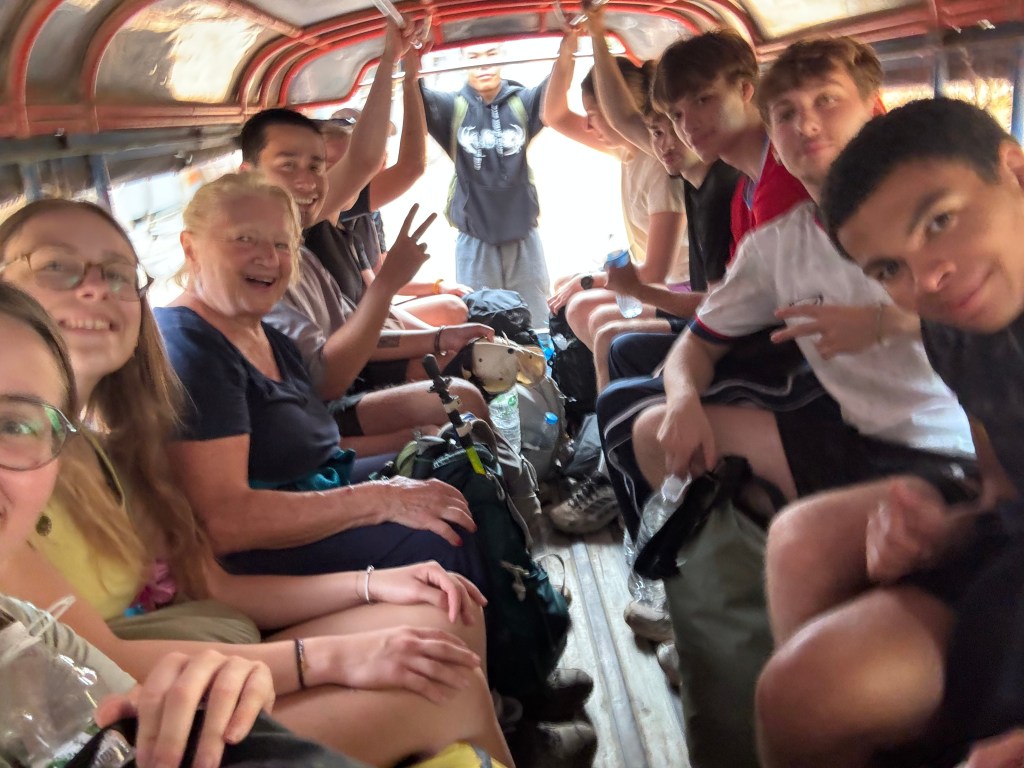
Luang Prabang is a take off point for some interesting trekking in the hills east. I booked a trip to Nong Khiaw to “camp above the clouds”. The minibus from Luang Prabang to the village below the hill takes 4.5 hours – it is all of 85 miles (140 km) but the road is so awful that the vehicles often drive off road or on the wrong side of the road. (Roads are noticeably bad – no investment there.) To maximise the number of passengers in the minivan, little footstools are placed in the spaces between the seats. If you are unlucky to end in one of those, it’s a long time bumping on a hard seat and no back support.
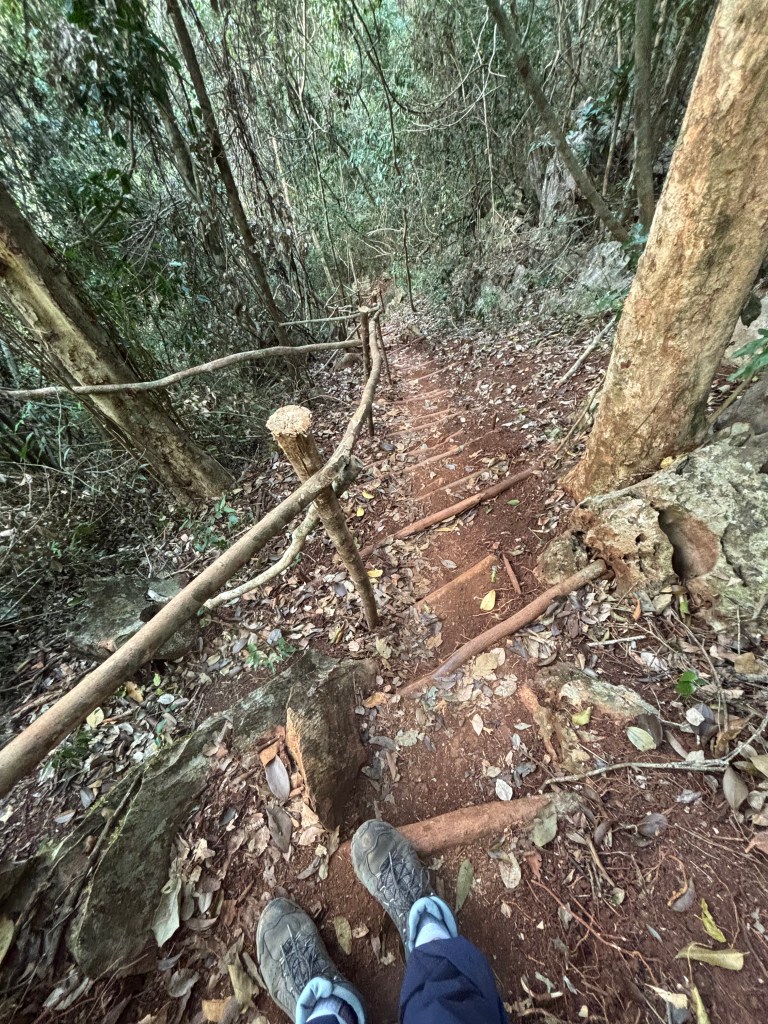
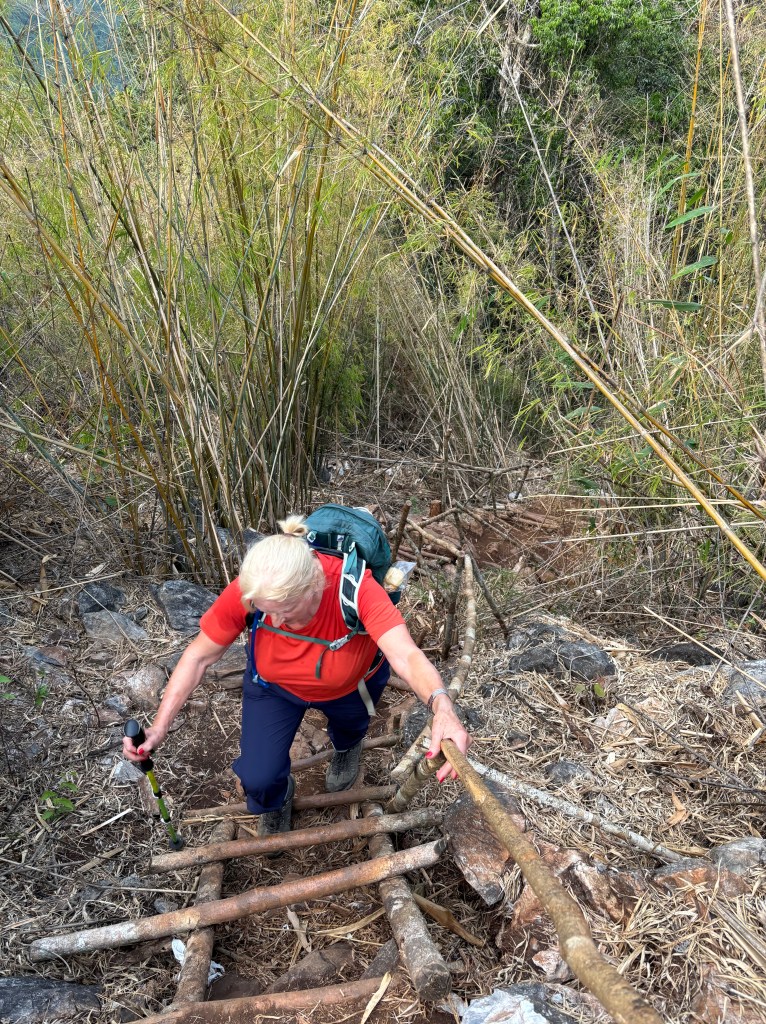
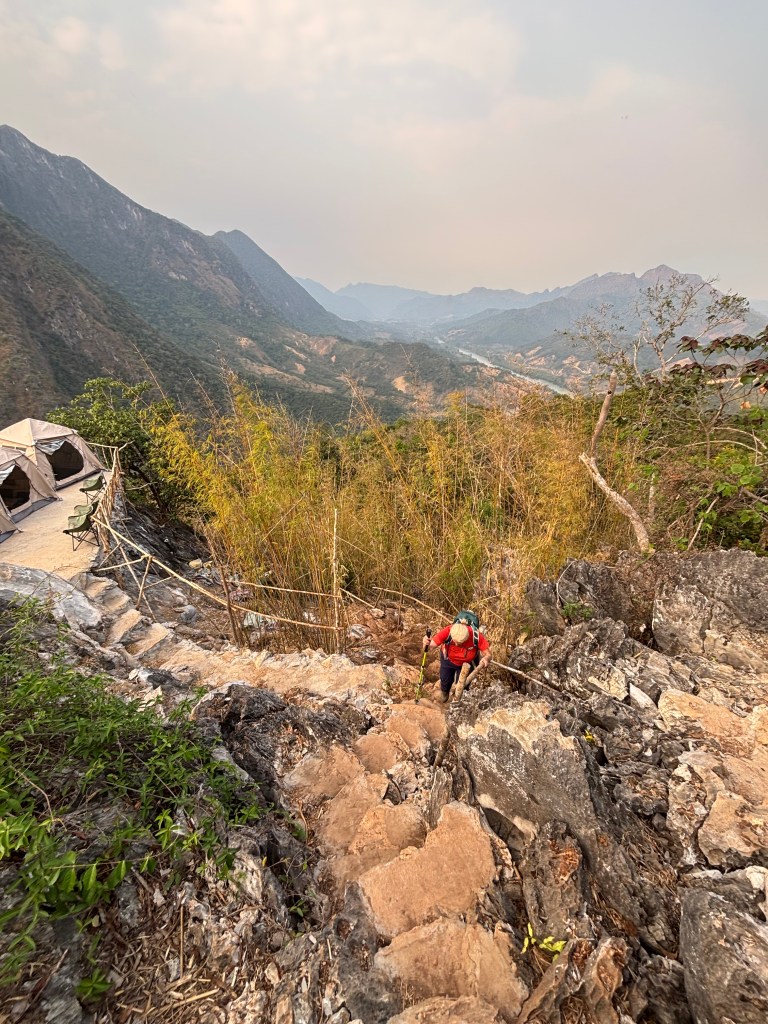
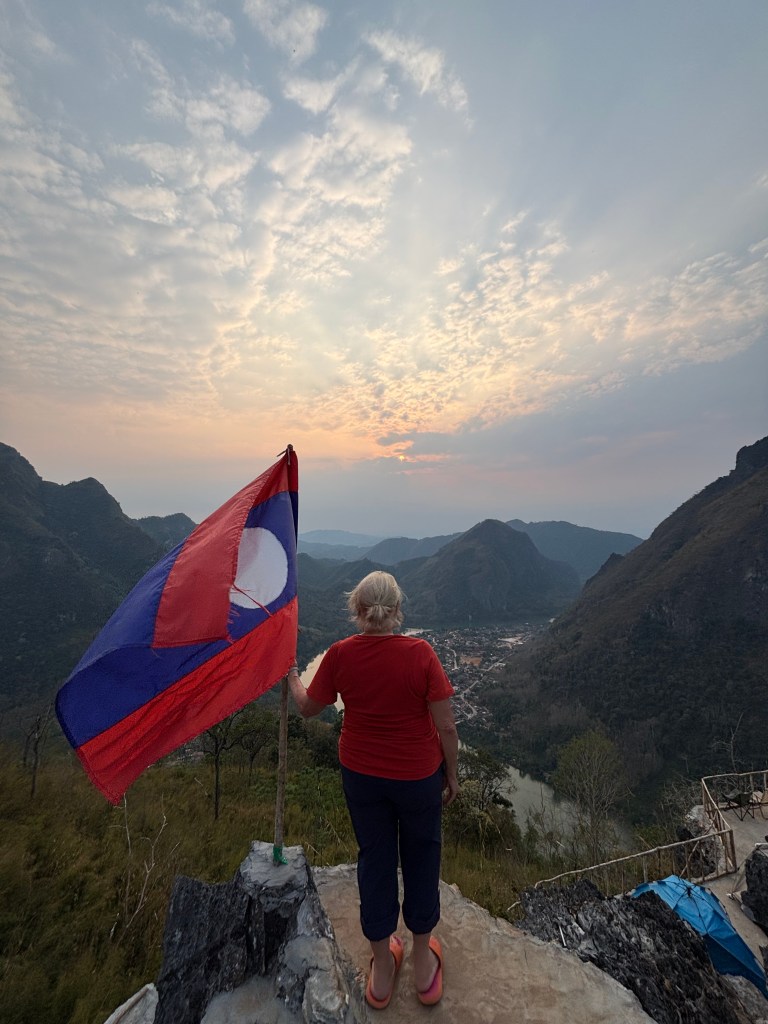
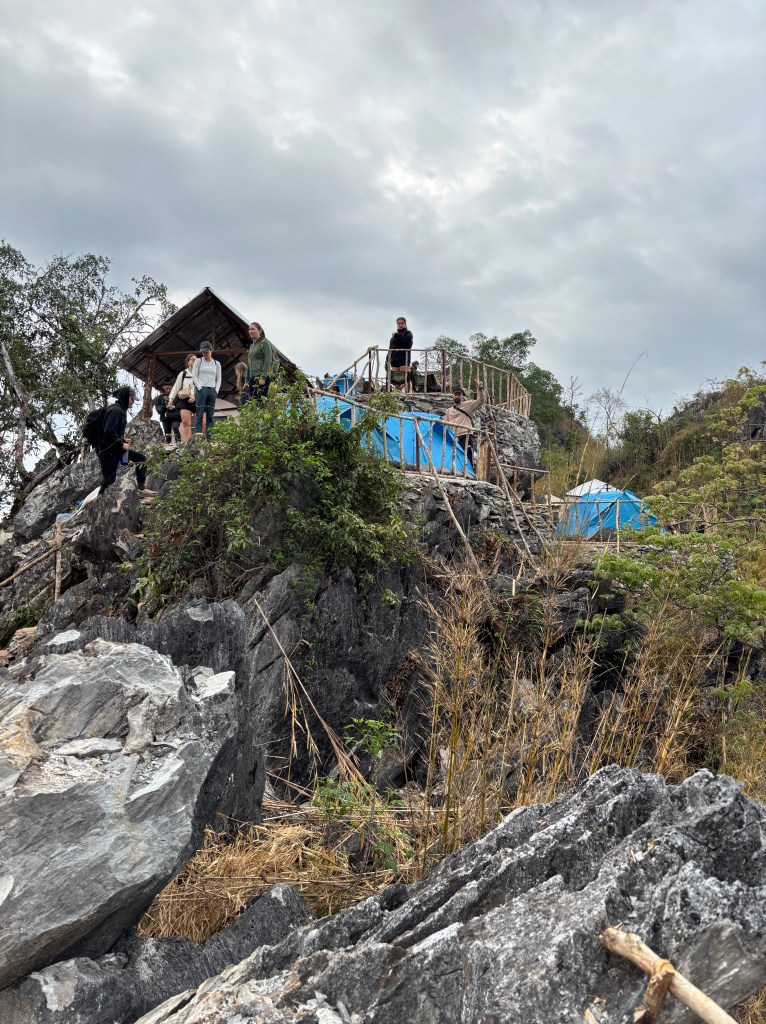
Luang Prabang to Nong Khiá roadGetting ready to climbSteep!Path? Ladder? Almost there!The view
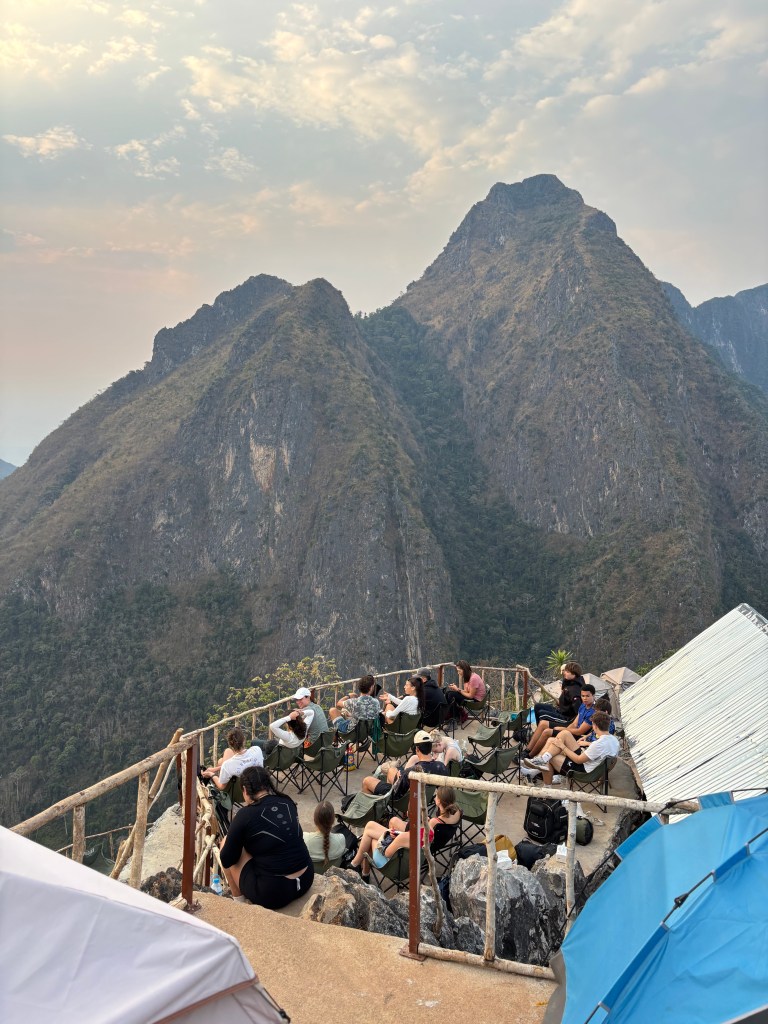
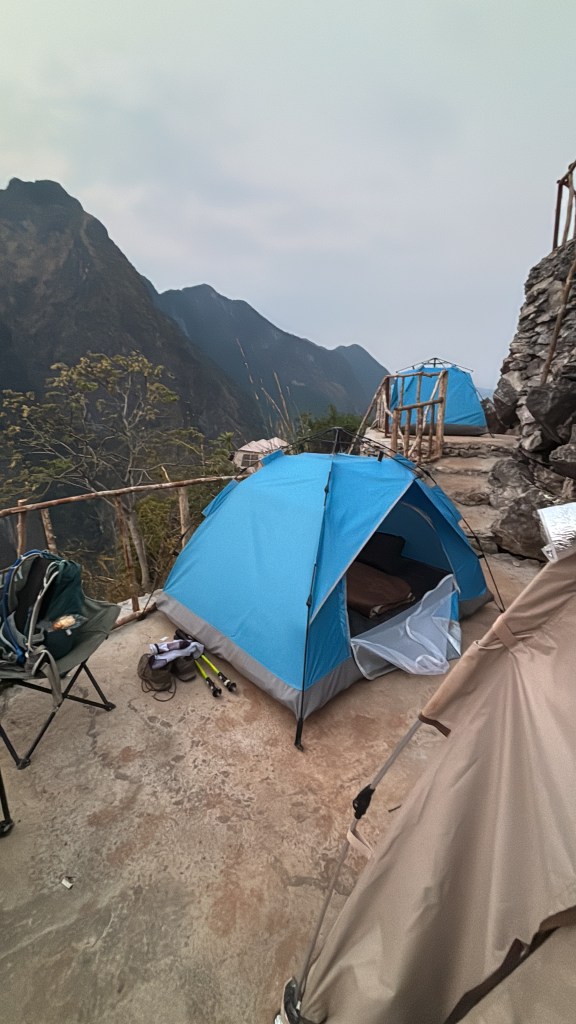
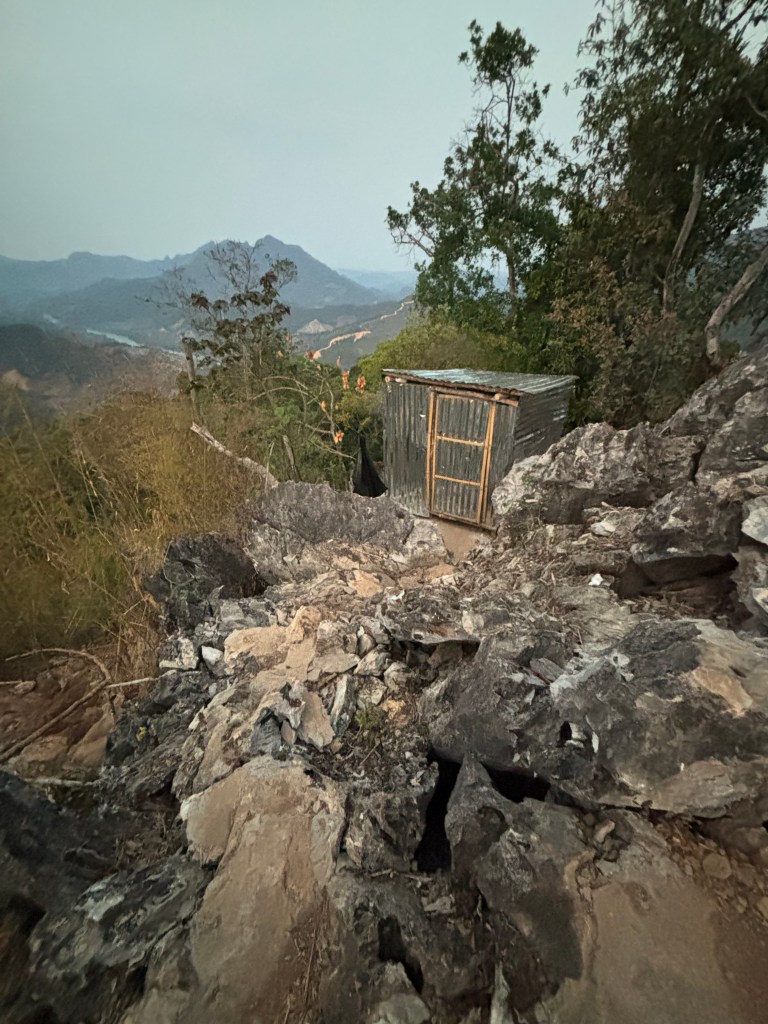
The climb to the top was, for me, really hard. The path is steep, with steps cut into the soil (and worn thin and smooth – hate to think what it is like in the rainy season ) or ladder-like steps made with local wood with knobby handrails. The group made it in 2 hours (the guide wore flip flops…); I took a bit longer and found the heat hard too. Having two walking poles was a hindrance, but one helped. (A group of four young men from South London stuck by me so I wouldn’t walk alone, and they carried the other pole.) But the views were gorgeous and a beer (one could not begrudge paying double the normal price – someone had to carry the stuff up!) delicious. Sleeping in a tent was ok, despite the air mattress being less than fully inflated. I dreaded the thought of having to go to the loo in the night – the volcanic rock path was vicious and jagged.
Nice feeling, at the topJust chillingMy tentThe looAll a bit rough, but ok in the endThe truck back from the trek
Getting down the mountain was easier (but not easy). And then the long, bumpy, dusty road back to Luang Prabang and the train south. The road reminded me of Turkmenistan – it could definitely give the bad roads a proper run for the money.
The Chinese have built a very nice high speed rail link between China and the Laos capital, Vientiane. The stations in Laos are all outside towns, some 8-10K, and there’s an airport feel to them. The one in Luang Prabang has no disabled access that I could see – steps and steep inclines (for luggage?), a hanger-like waiting room, announcements first in Chinese then in Lao…
The Chinese are everywhere in Laos. There are many Chinese businesses, every other bank seems to be Chinese and the number of cheap package tourists pouring in is staggering.
I decided to skip Vang Vieng, “the adventure capital of SE Asia” – maybe leave it for the next time? and carried on to the capital Vientiane. On reflection, it was probably a wrong decision. Vientiane is small and fairly boring. There are a few interesting wats and the old town is attractive of an evening. There’s some nice street food to be had but for the most part, the tourist bits are the same as ever = the night market is full of hundreds of stalls selling the same things (clothes and tat), and the Starbucks, Cafe Amazon, the Hard Rock Cafe, all present. I was glad when I found The Tipsy Elephant – a high rise hotel bar with the views of the Mekong at sunset and the happy hour between 5-7pm.
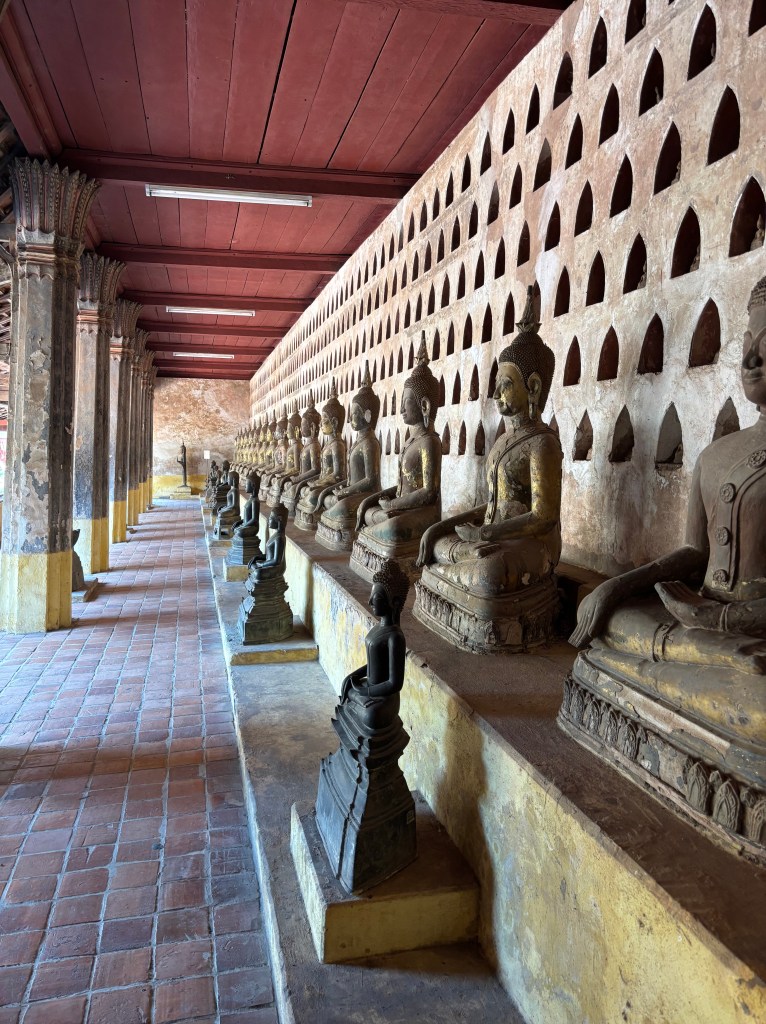
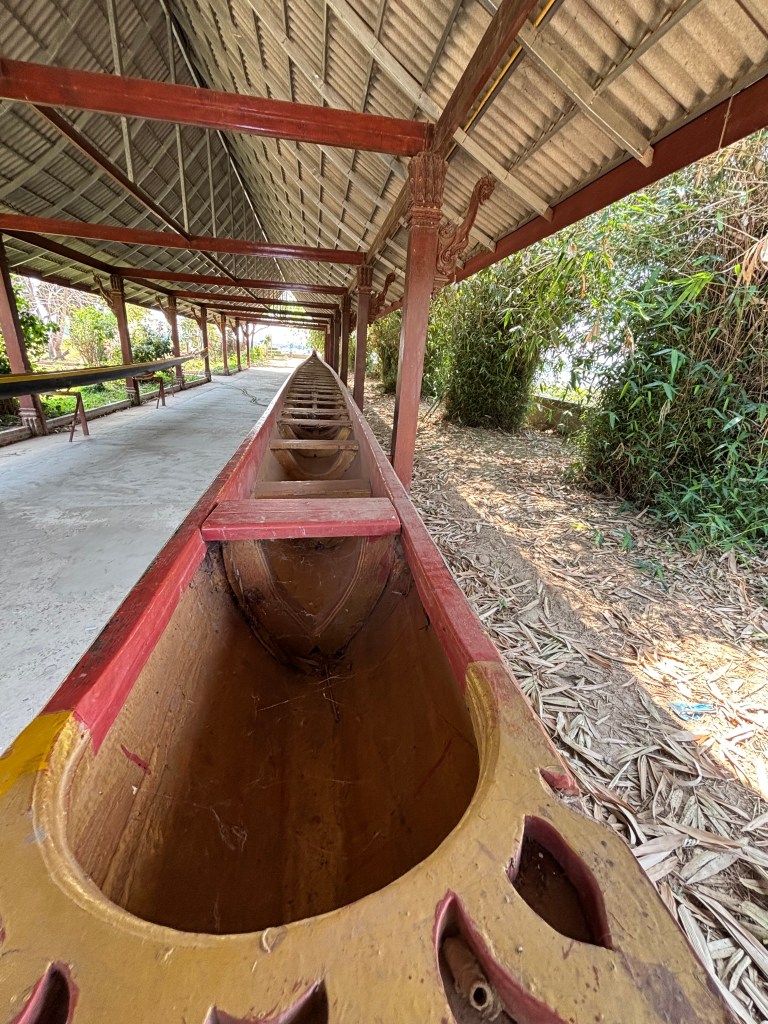
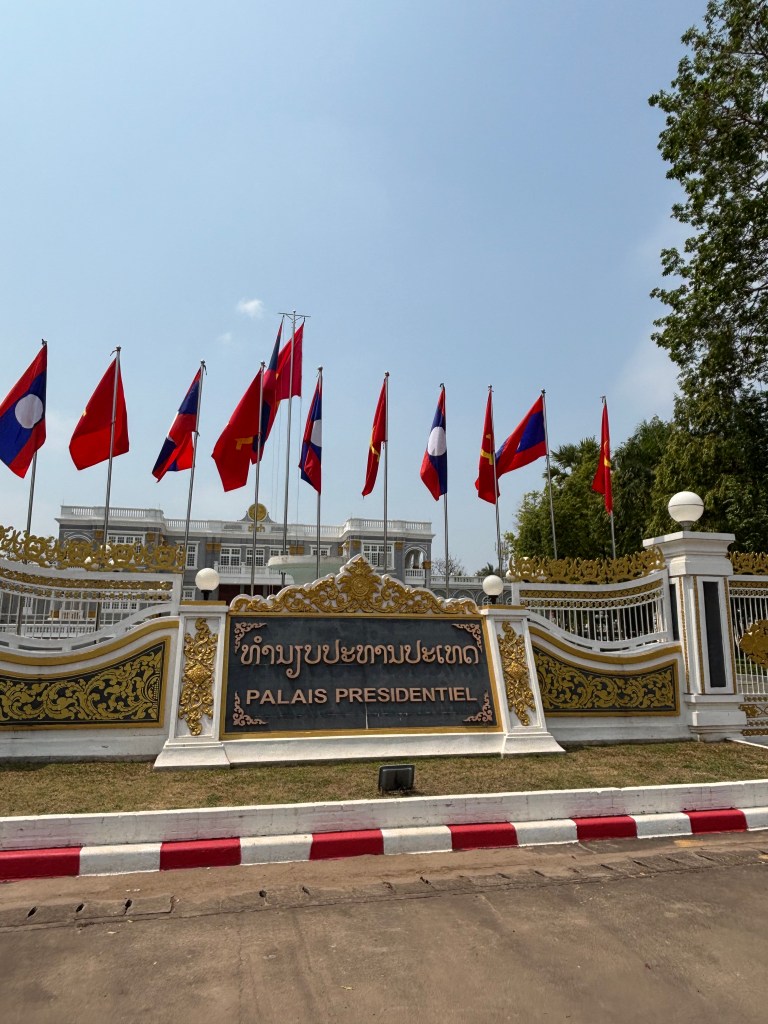
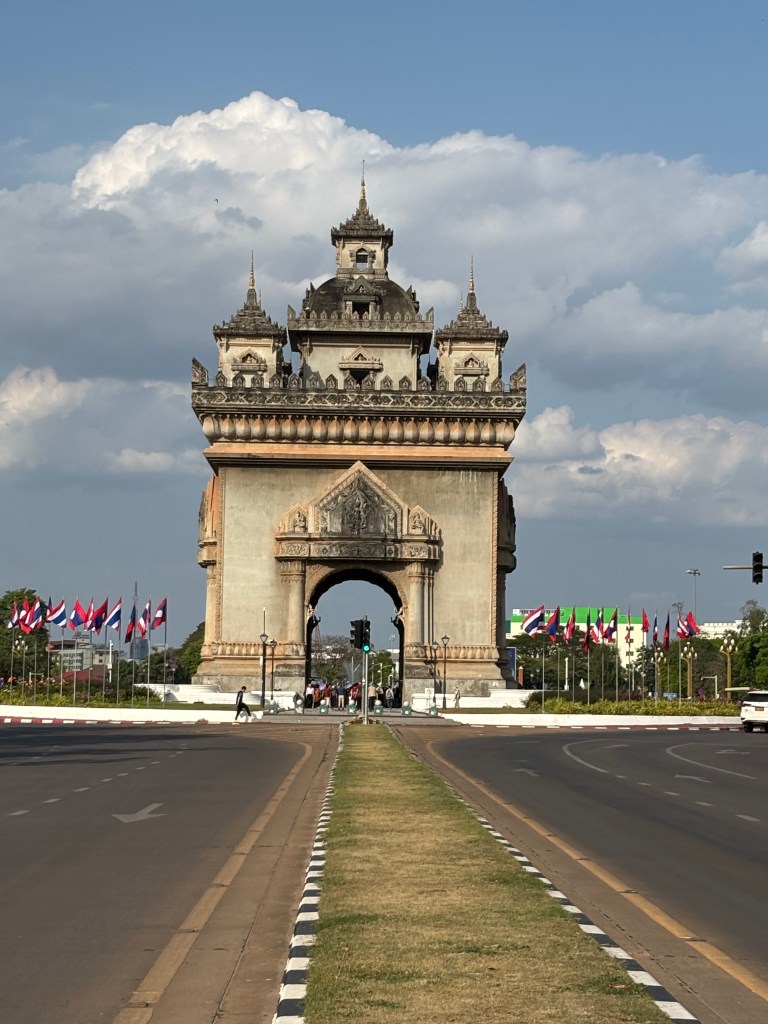
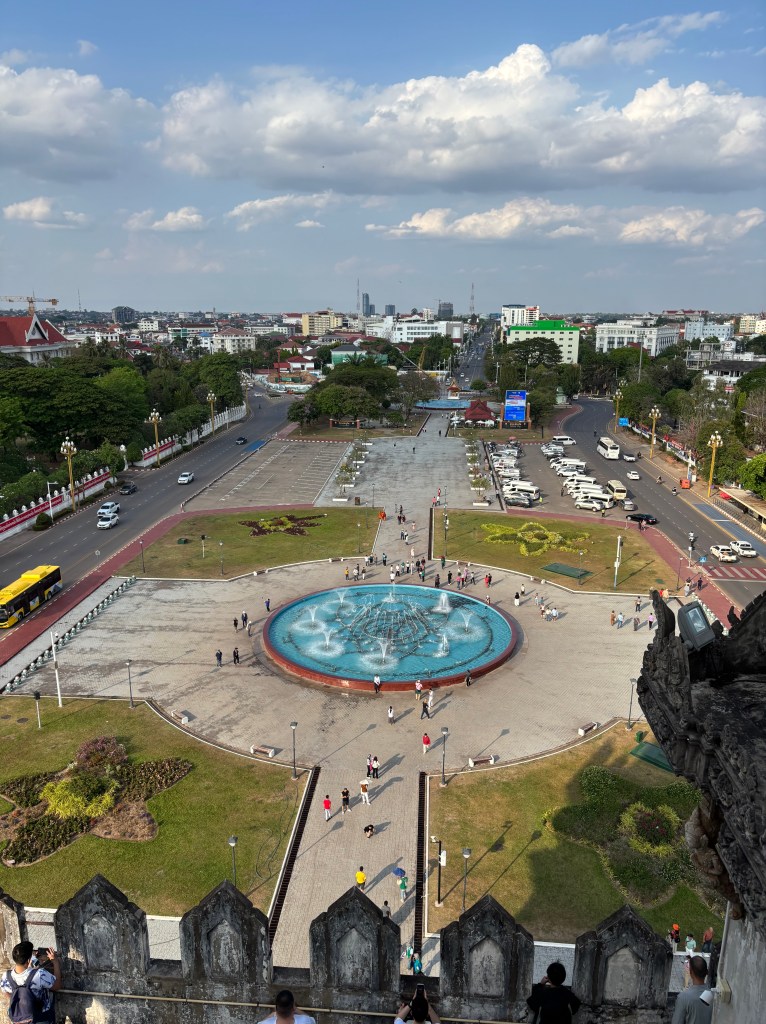
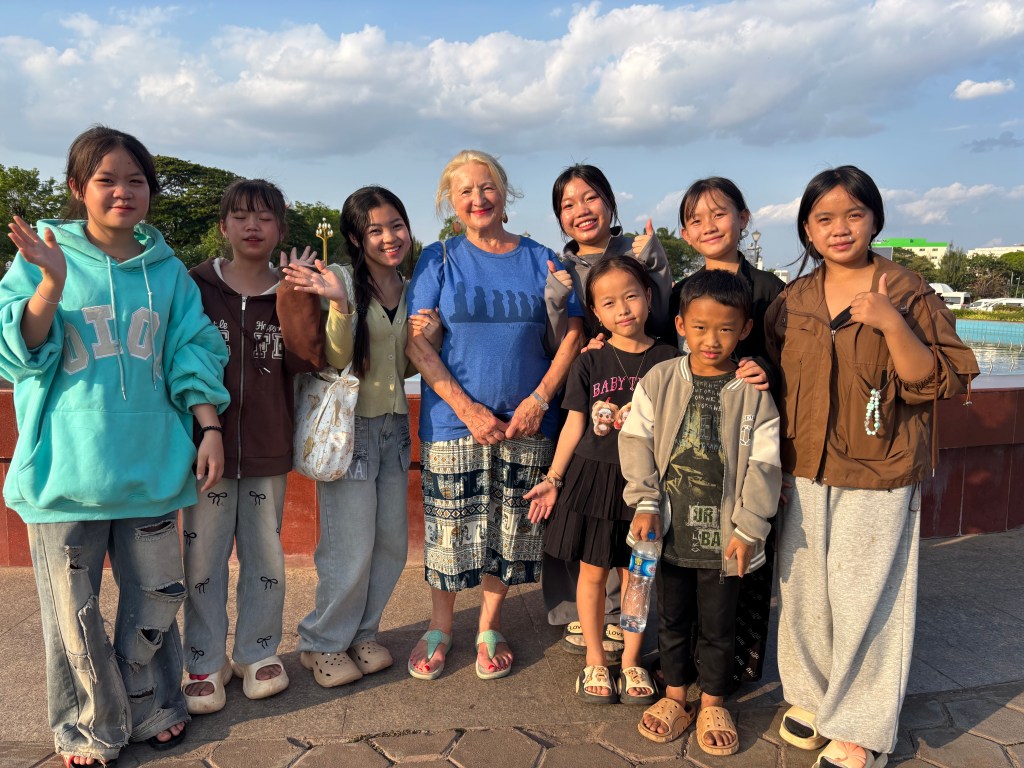
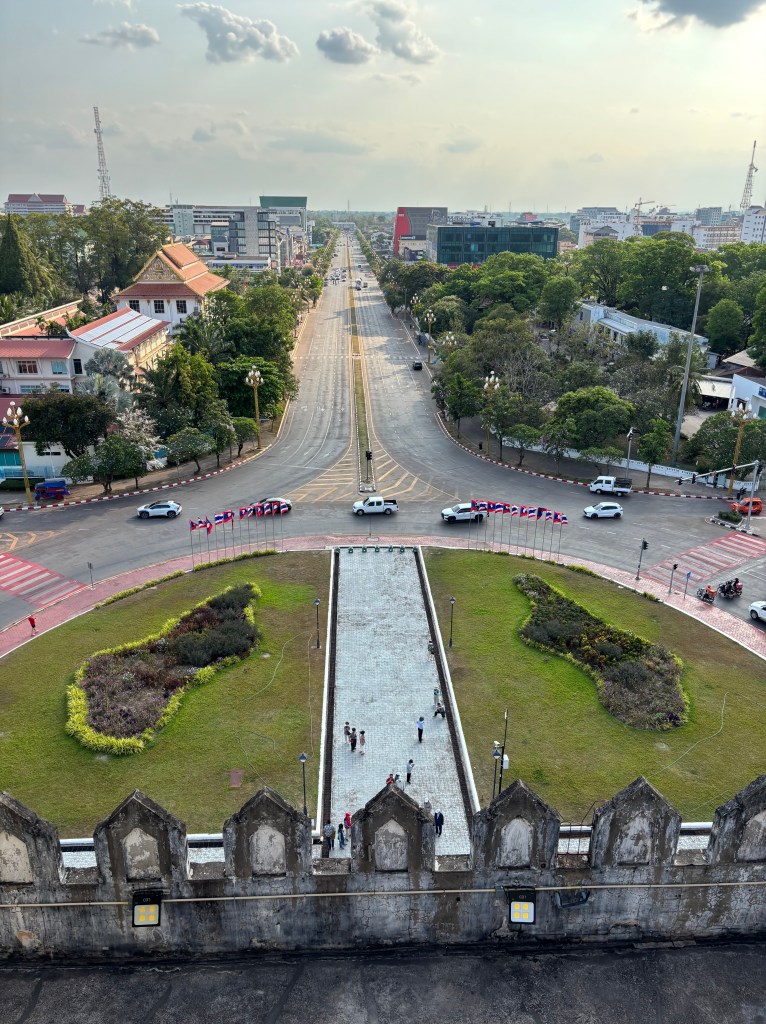
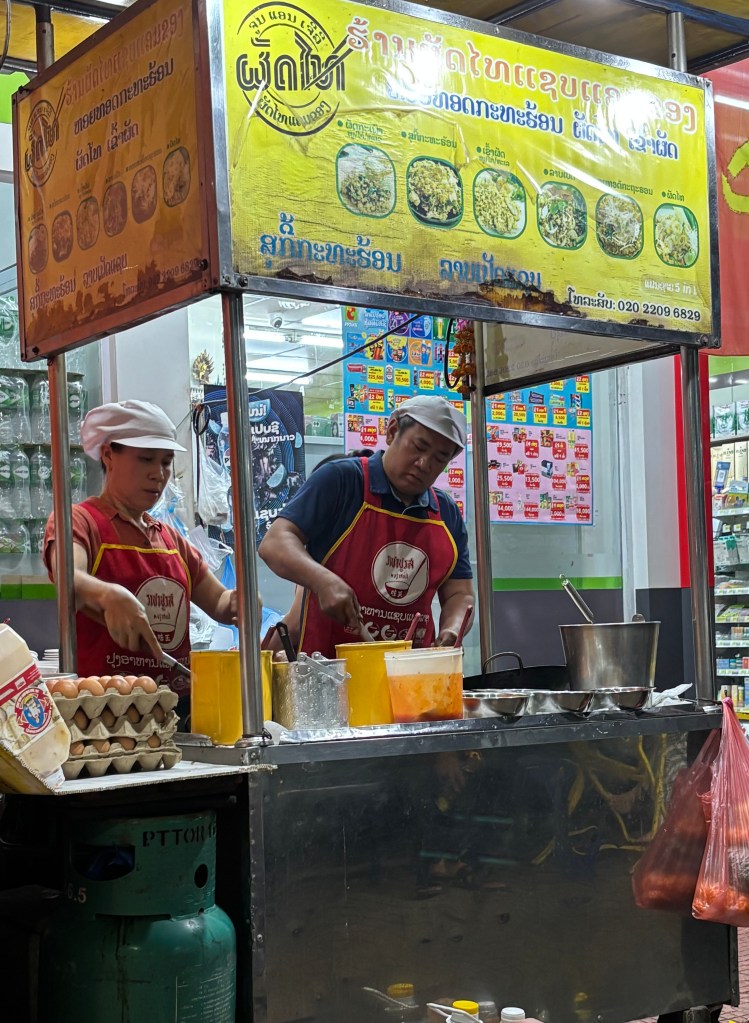
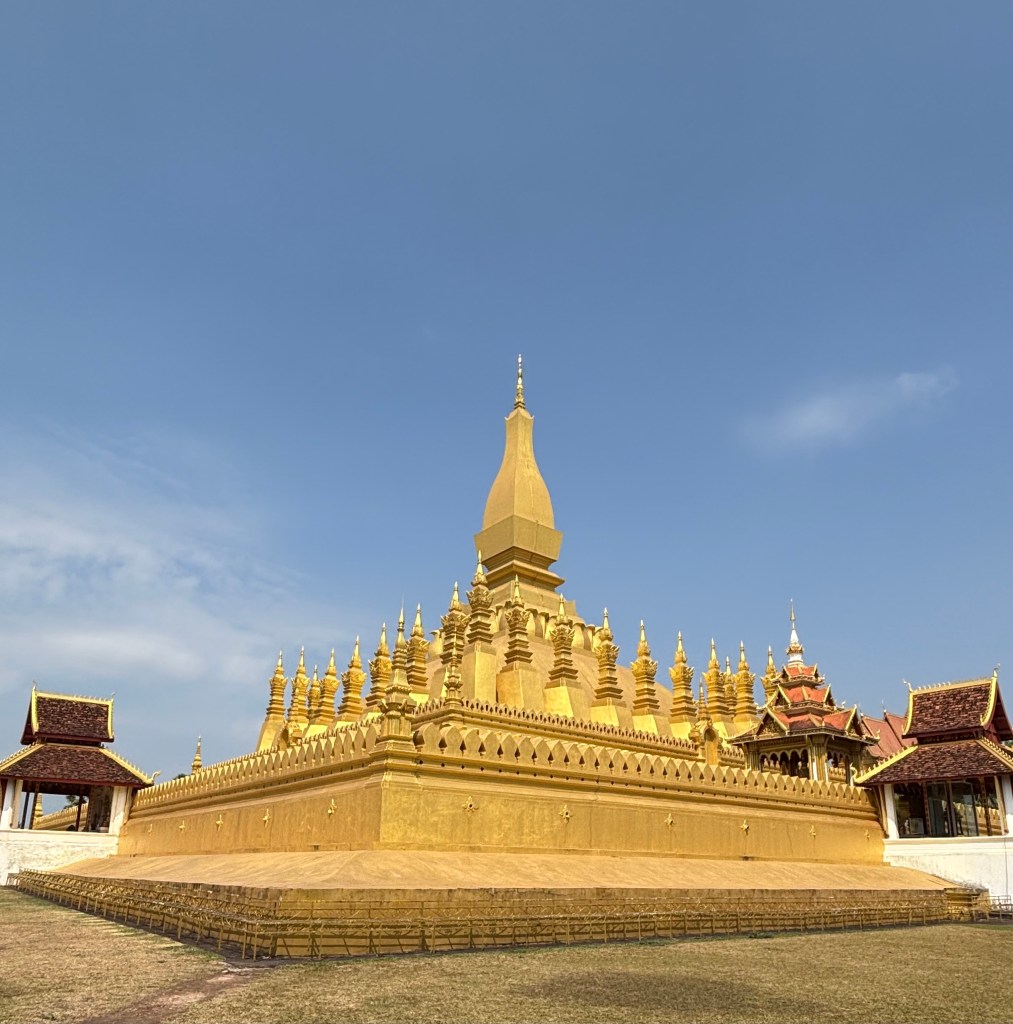
The 10000 Buddhas wat (really only 6548 have been counted)The racing boat that won many priesVientiane presidential palaceView from the top of the ArchThey came to talk to me in EnglishViuew the other wayVery tasty pad thai and other street food – very busyPhra That Luang – the Vientiane holy of holies
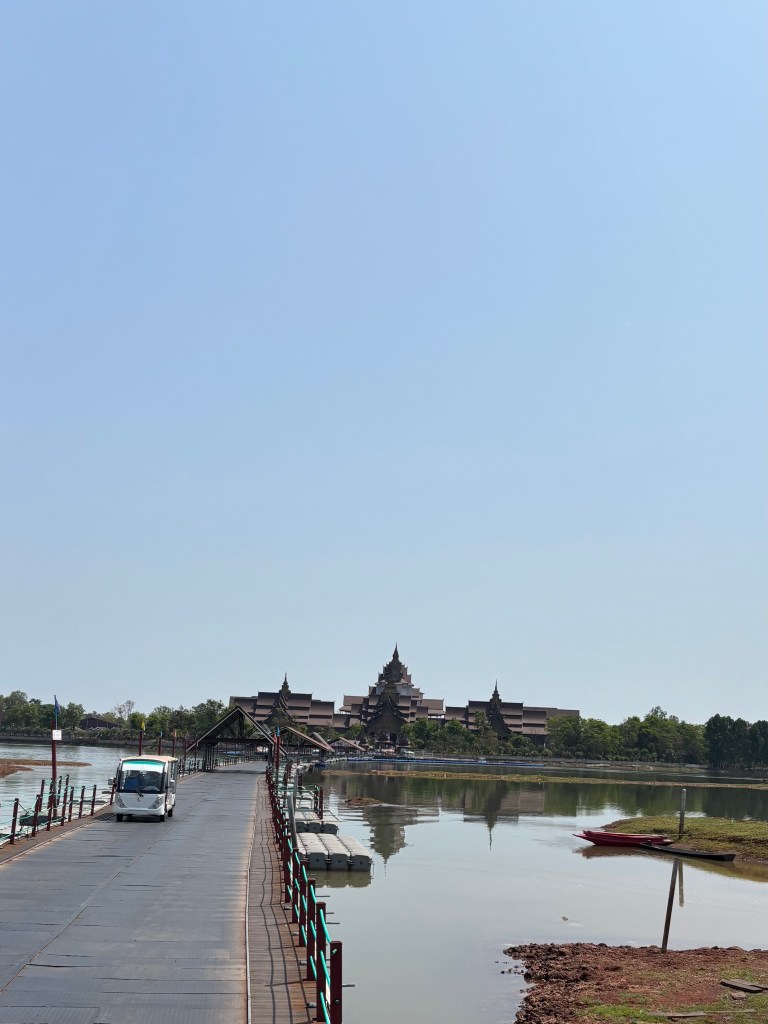
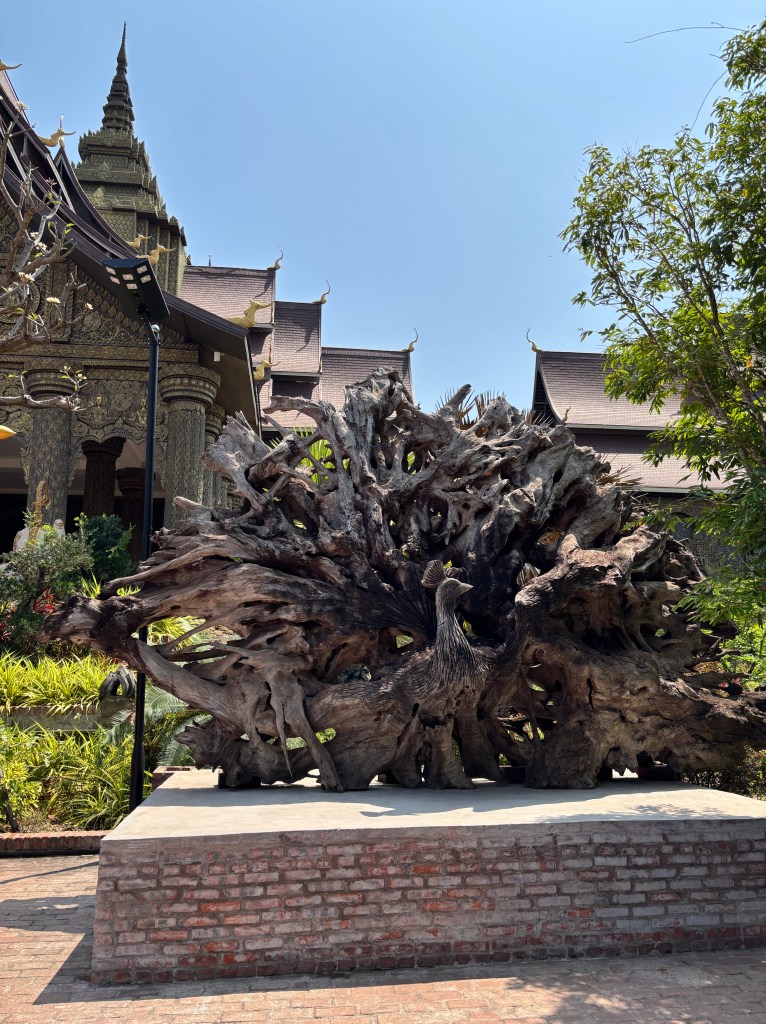
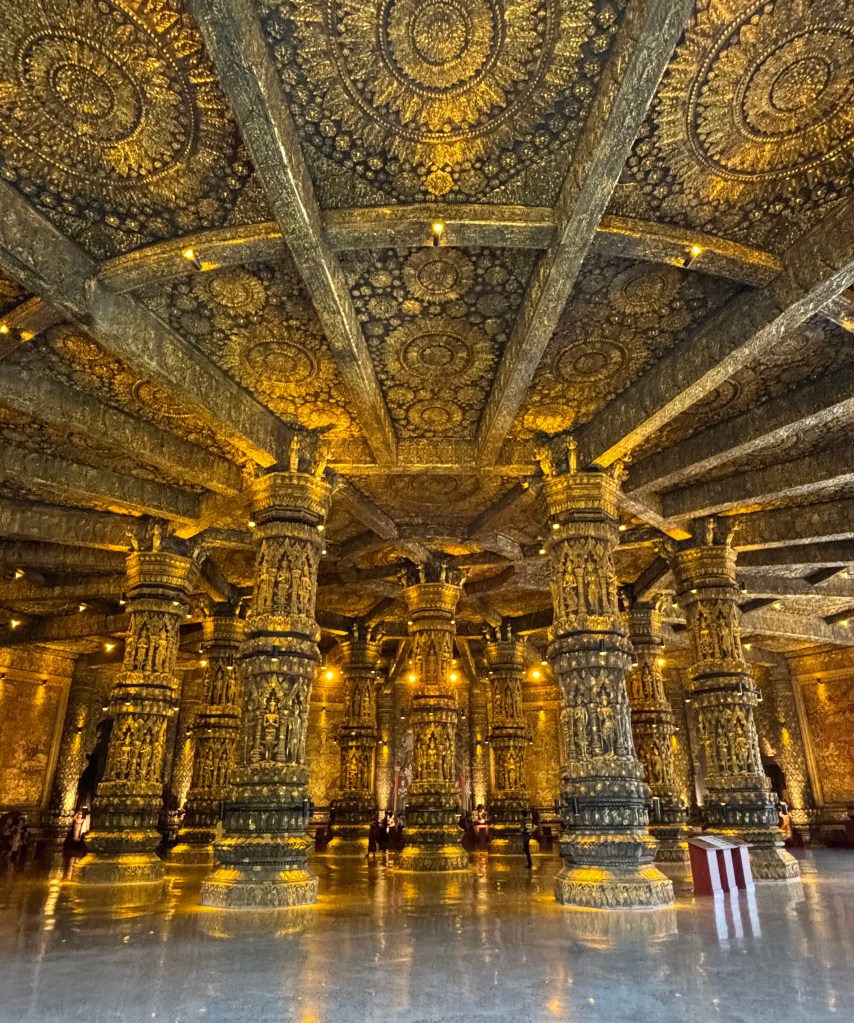
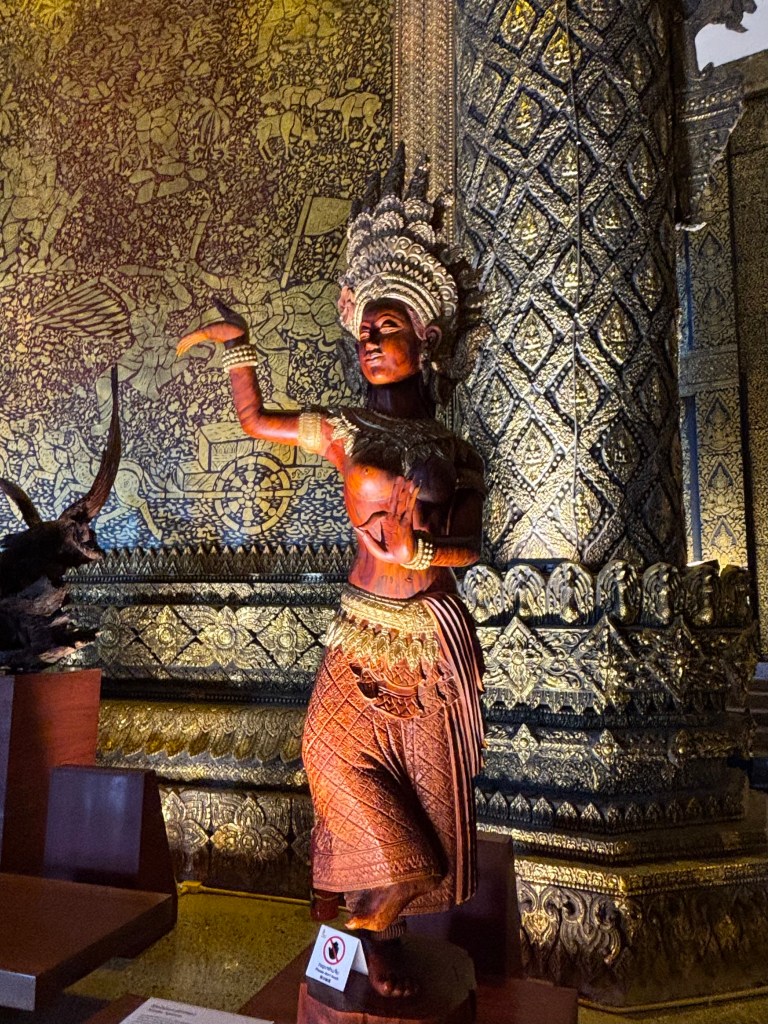
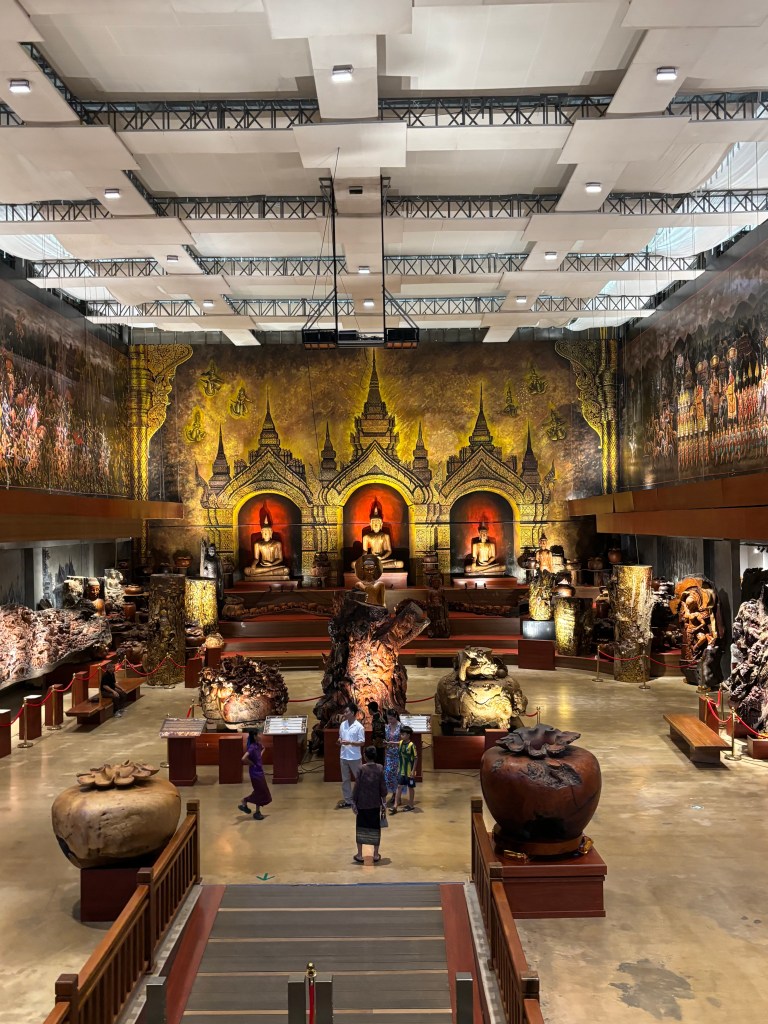
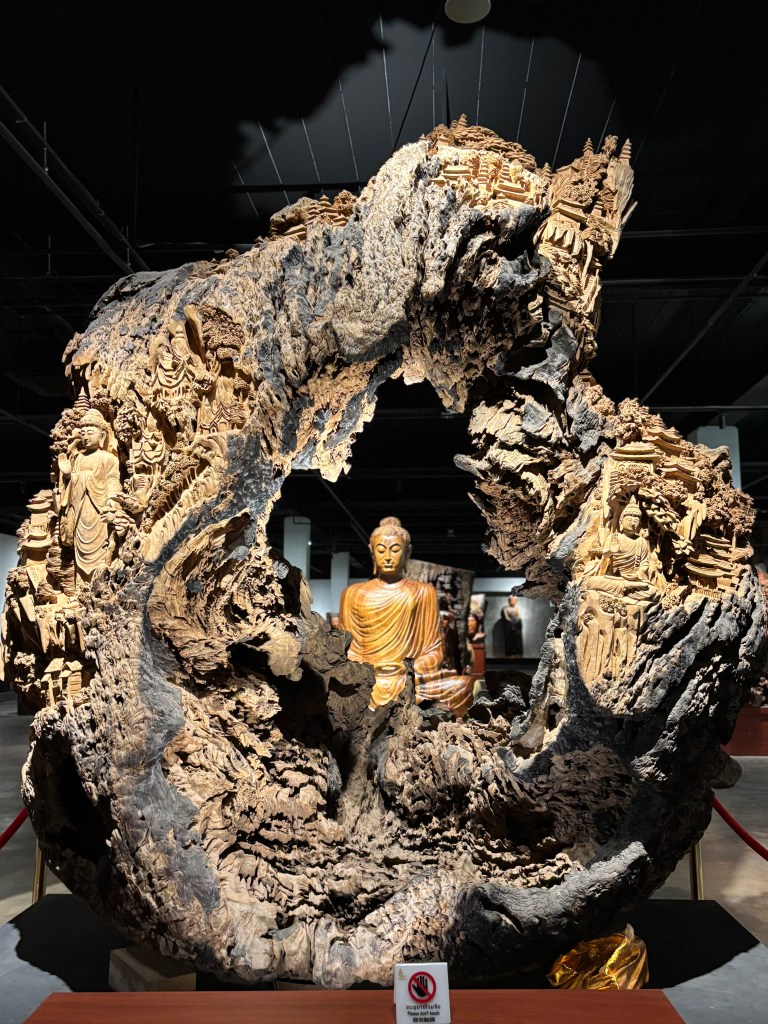
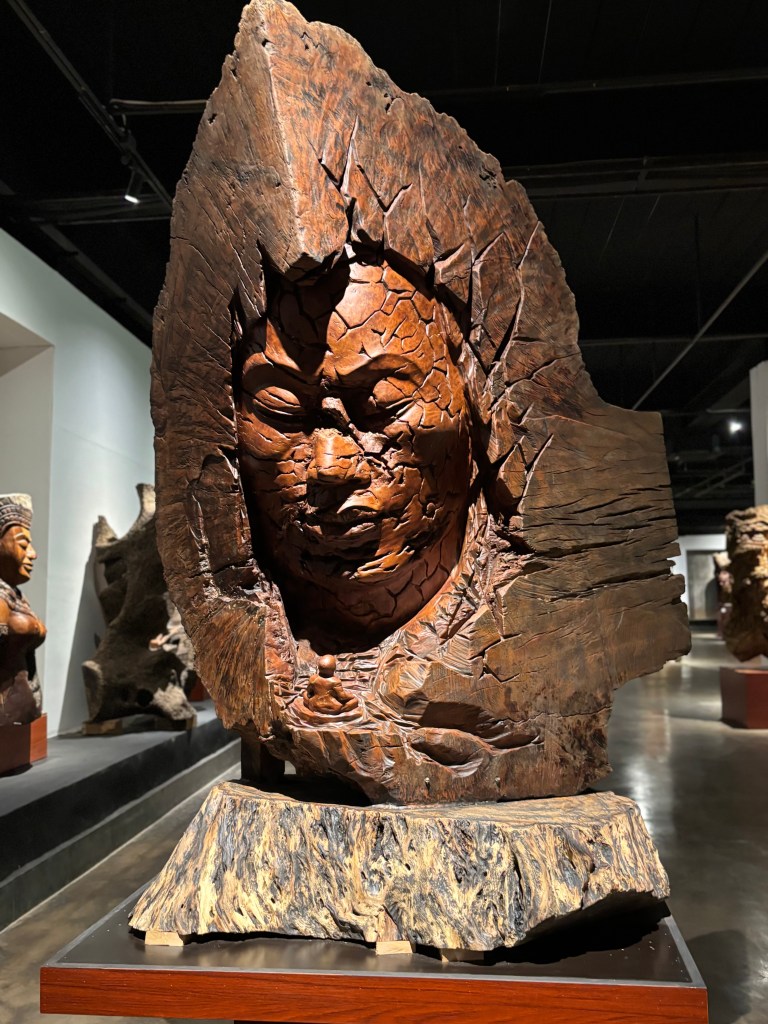
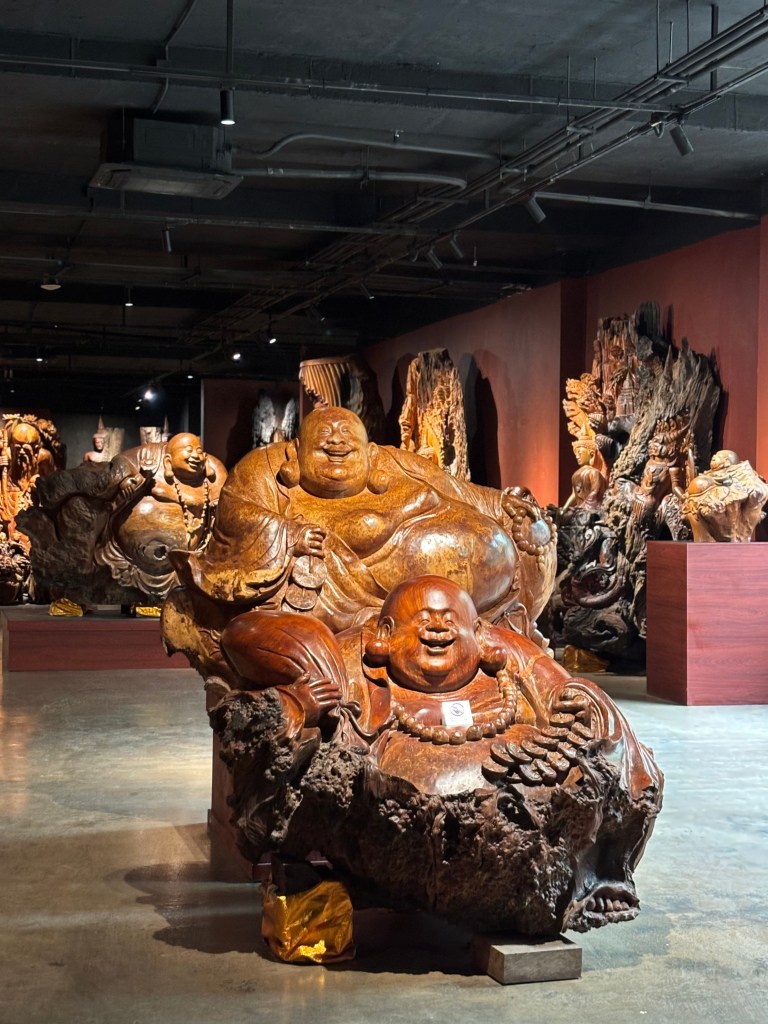
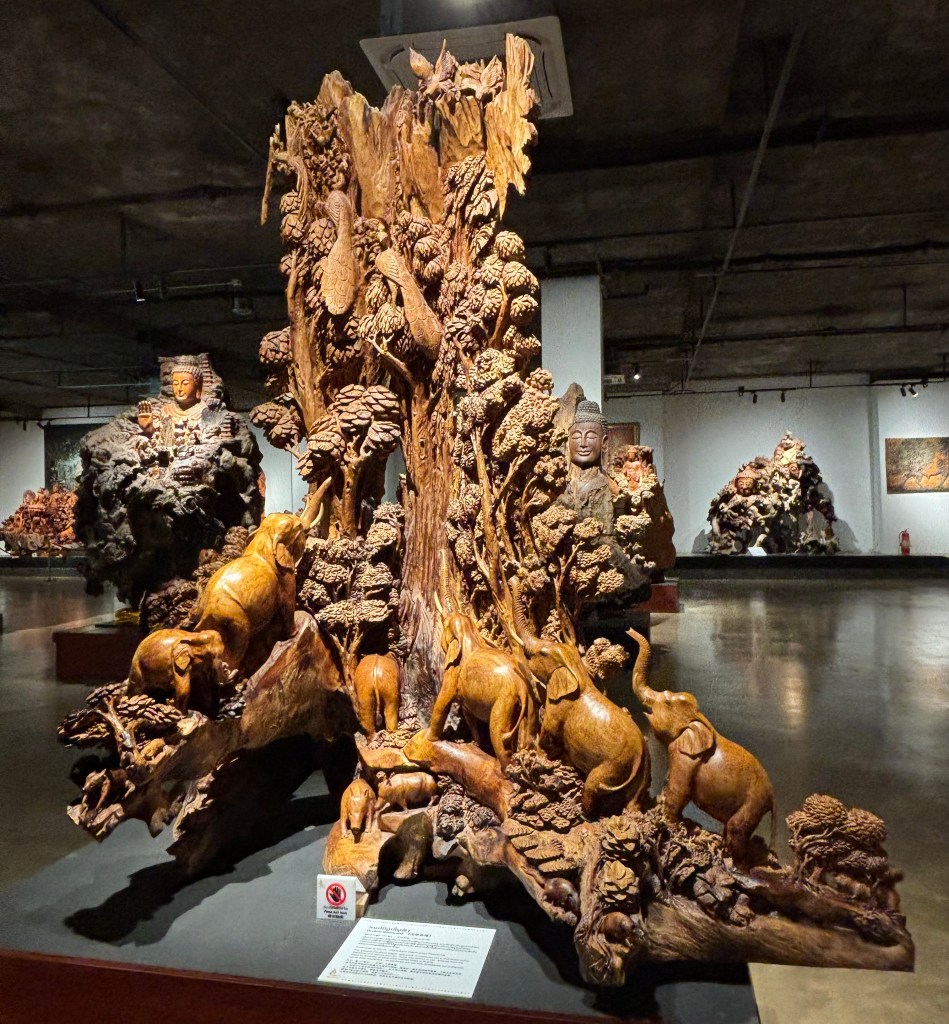
The Vientiane Art Museum is way out of town – the official 10K seems to be a lot more on the motorbike (riding pillion). There is no public transport to it – tours only, or private arrangements. The museum building is on an island, and visitors are ferried there across a pontoon bridge in golf carts. Inside is the Aladin’s cave of fine Laos wood carvings, mainly devotional but also some secular. (The Lonely Planet also mentions the Laos Museum on the same road but that is now “exclusively for the Chinese” where they can purchase things.)
The museum across the waterRoot sculptureThe main hall – symbolic number of pillars
The 24 hour bus from Vientiane to Siem Reap turned out to be 1 night bus (box beds shared by 2 people) and then a series of 4 minivans, ending with a tuk tuk (included in the price) to take you to the hotel. Border crossing was easy (had an electronic visa, which I should have printed off in duplicate….) The nice Cambodian woman officer did it for me with a smile. It was a bit hot, walking the 300+ meters across the no man’s land.
The Onederz (hate the spelling! – thought when I first saw it that it was Dutch…) hostel in Siem Reap is very popular with backpackers . There are private rooms. And 4 pools, bars, activities (e.g. a pub crawl, bracelet making, cocktail making, pub quiz, yoga…) It is central, all front facing staff speak English and are very helpful. The hostel was full, though the guide told us that the war between Thailand and Cambodia early in the year has caused a drop of 80% in the tourist arrivals. (Thailand won.) As Siem Reap is all about tourism, this has caused some serious hardship to people.
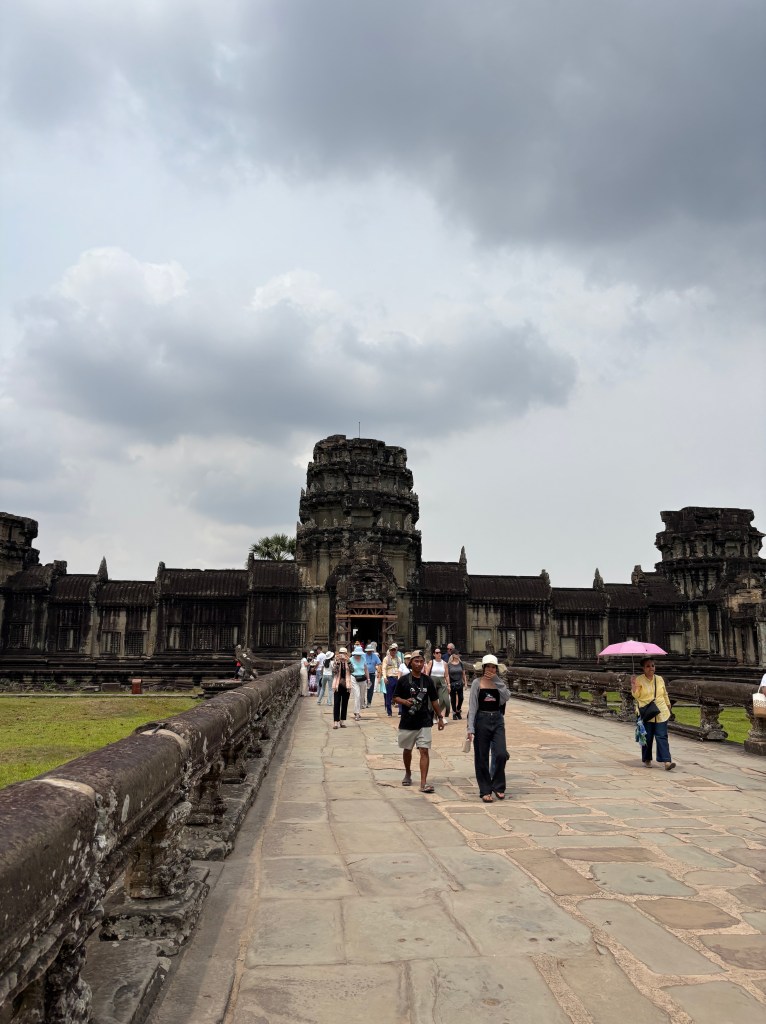
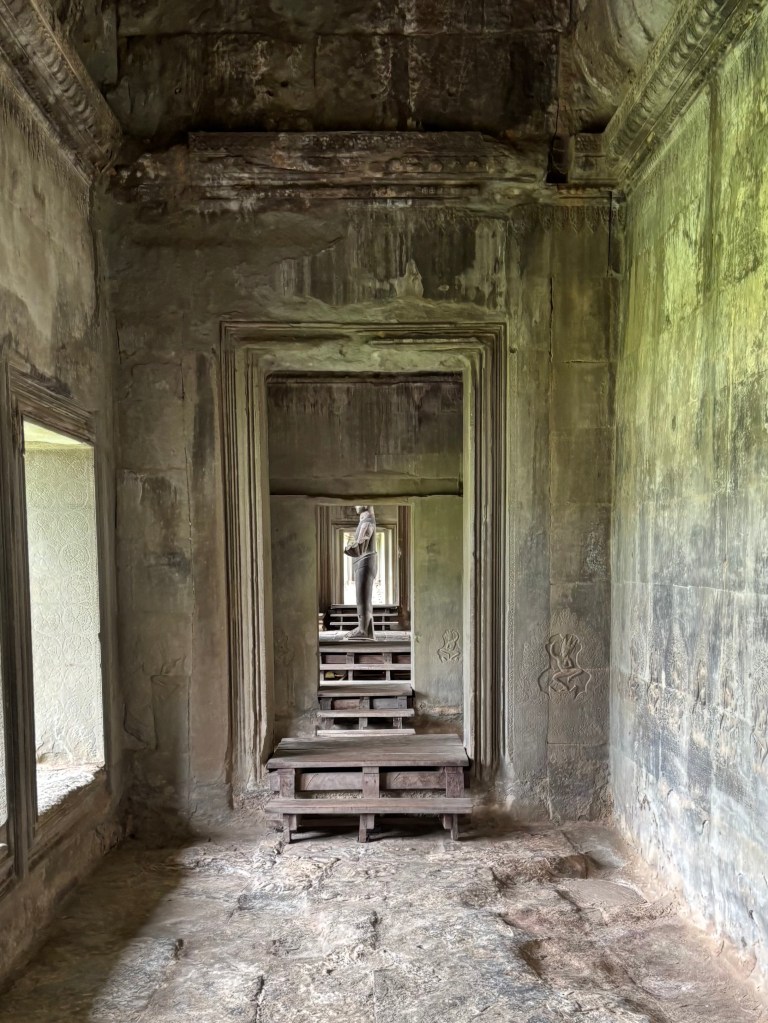
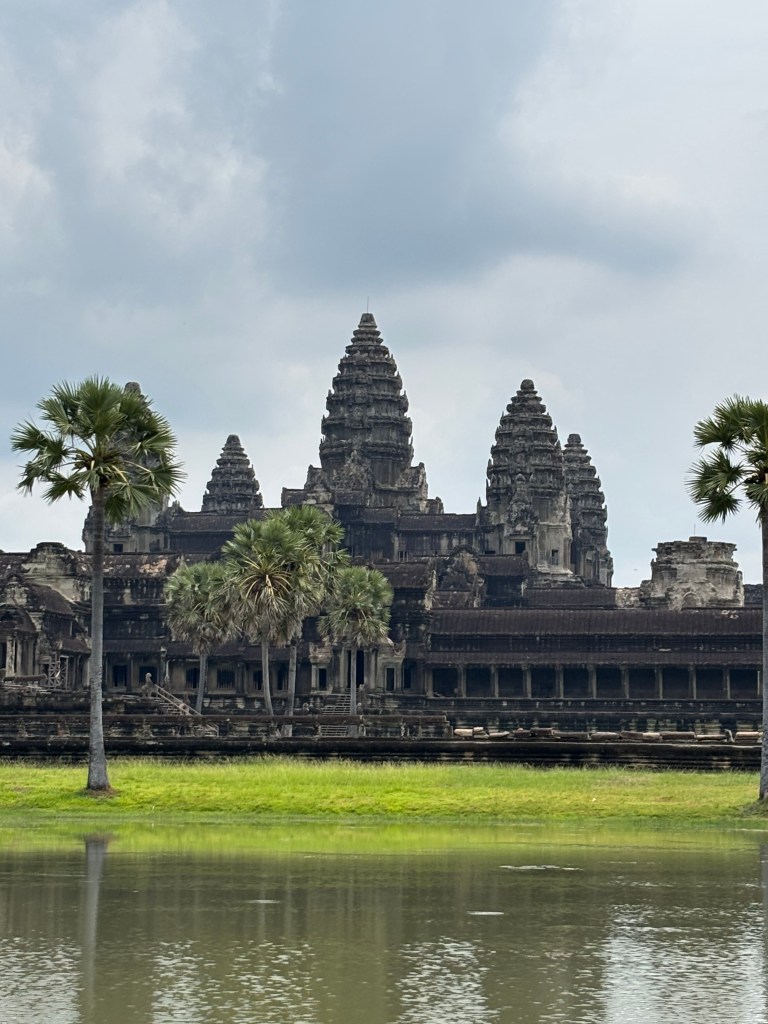
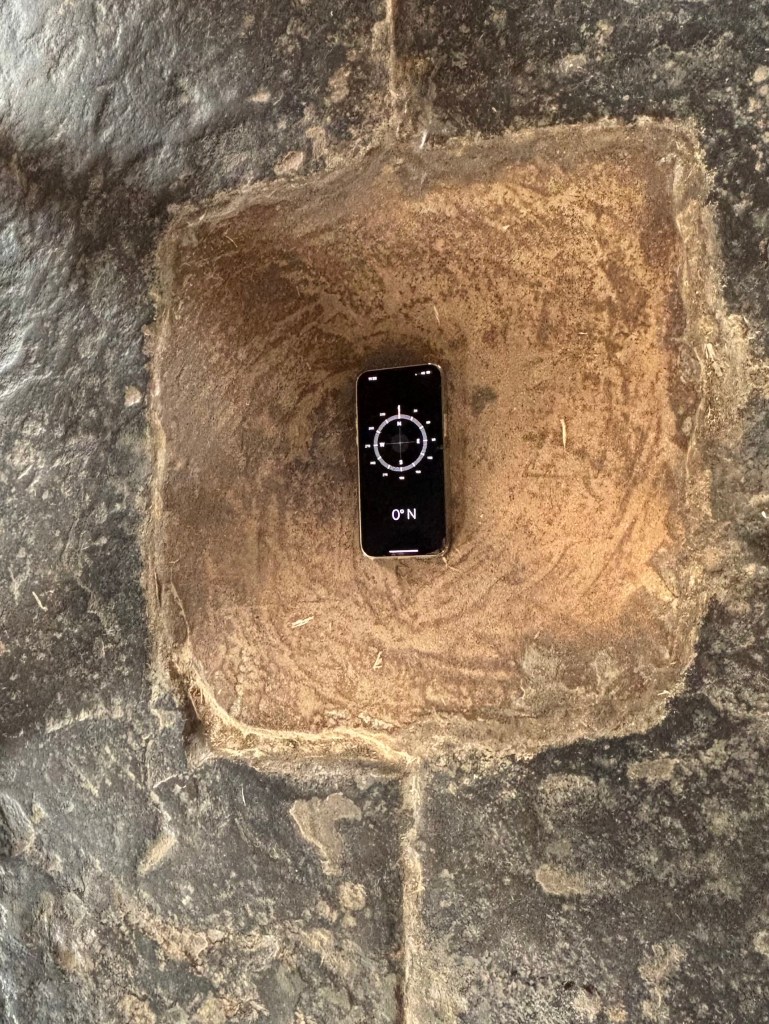
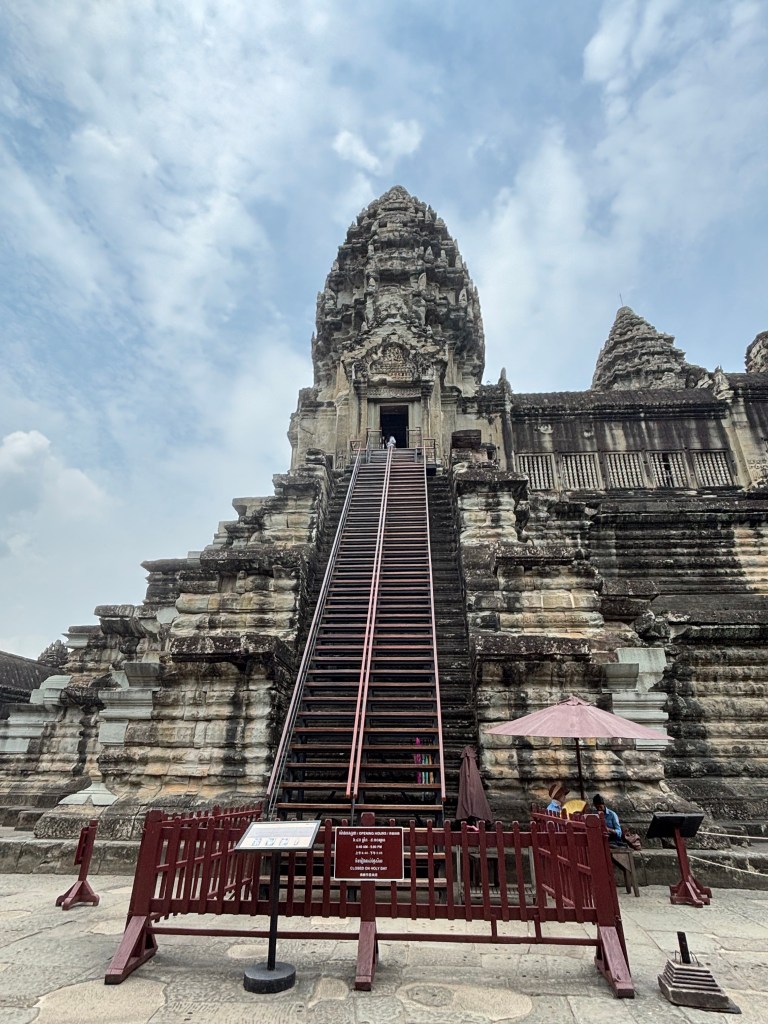
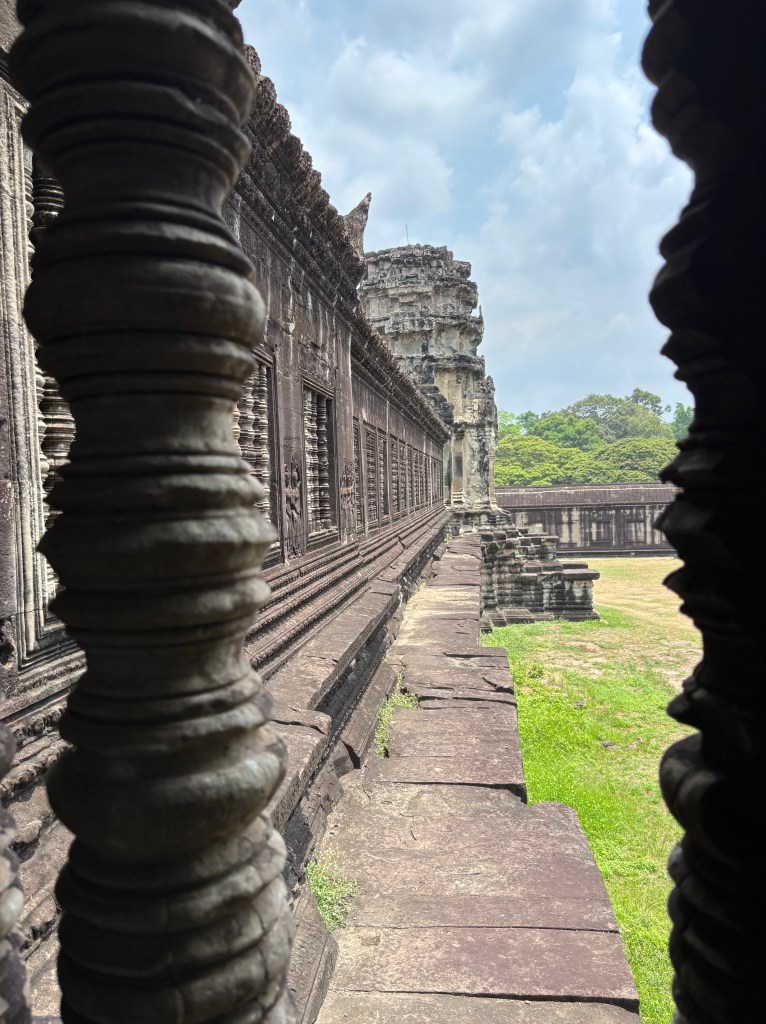
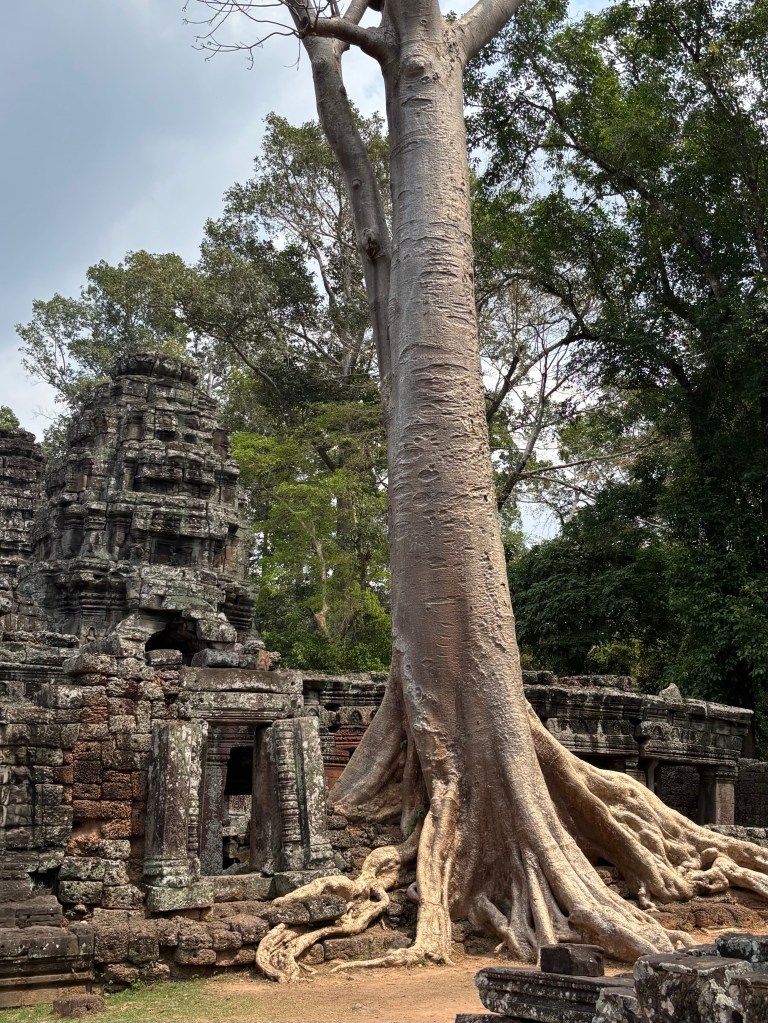
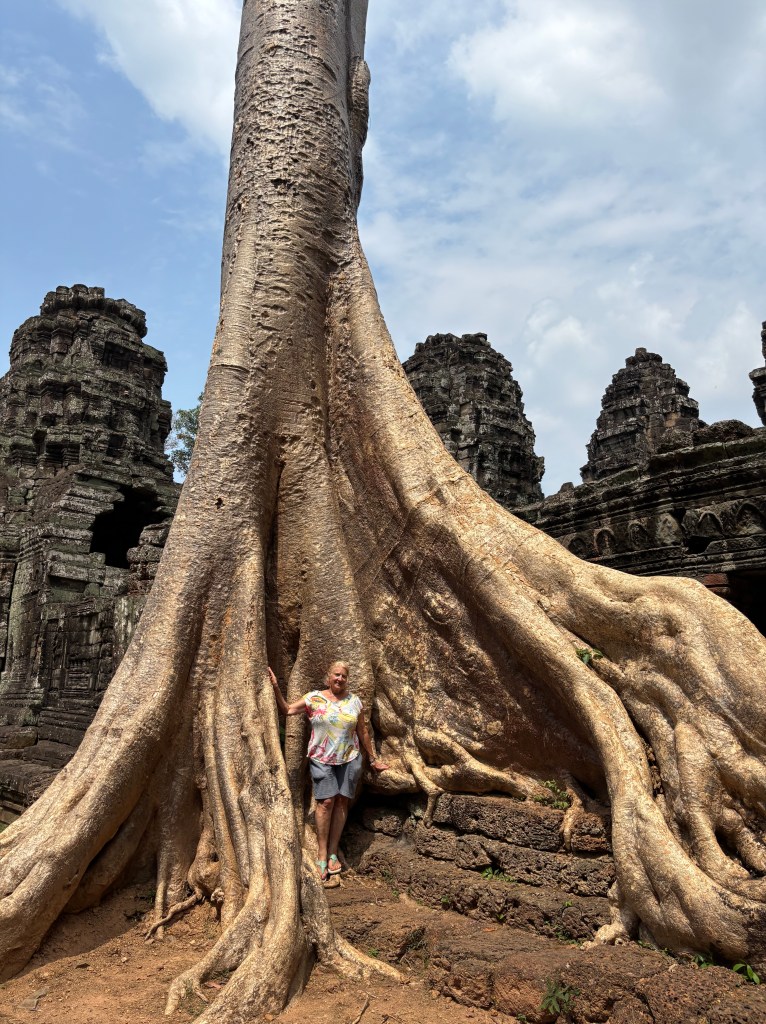
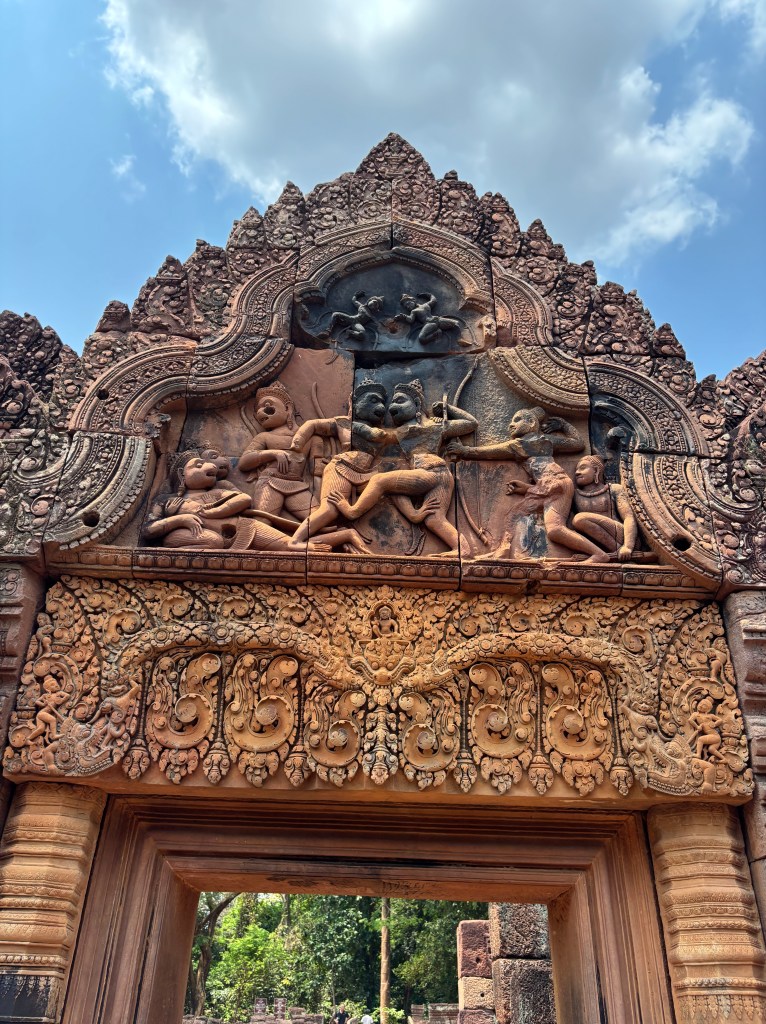
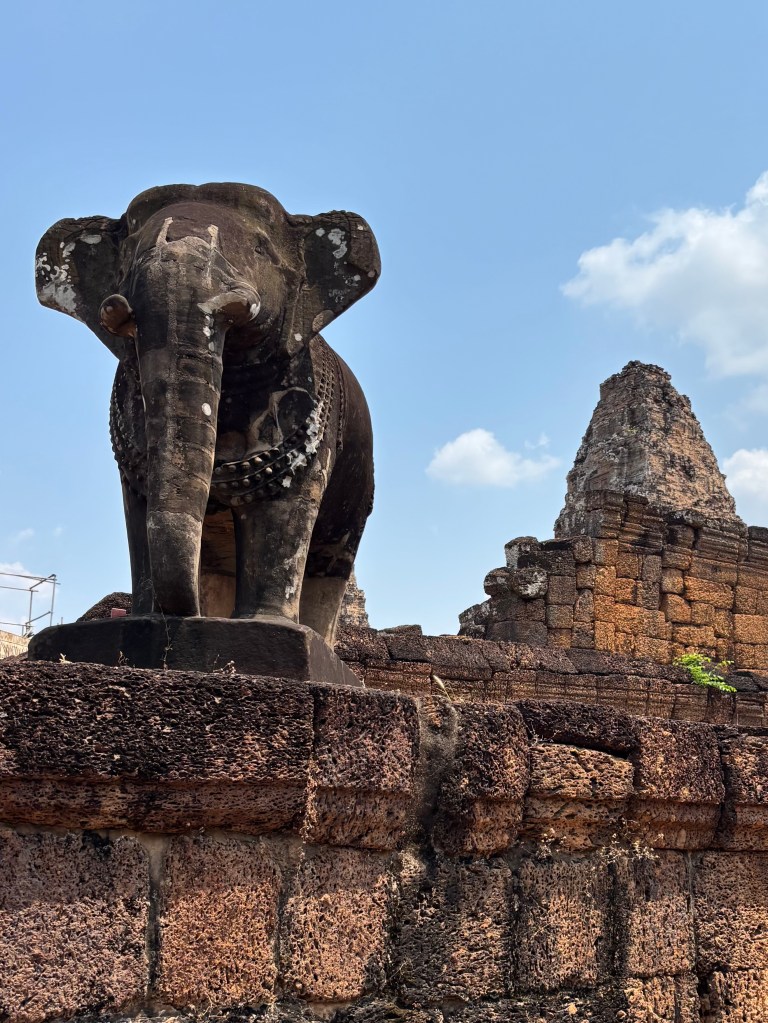
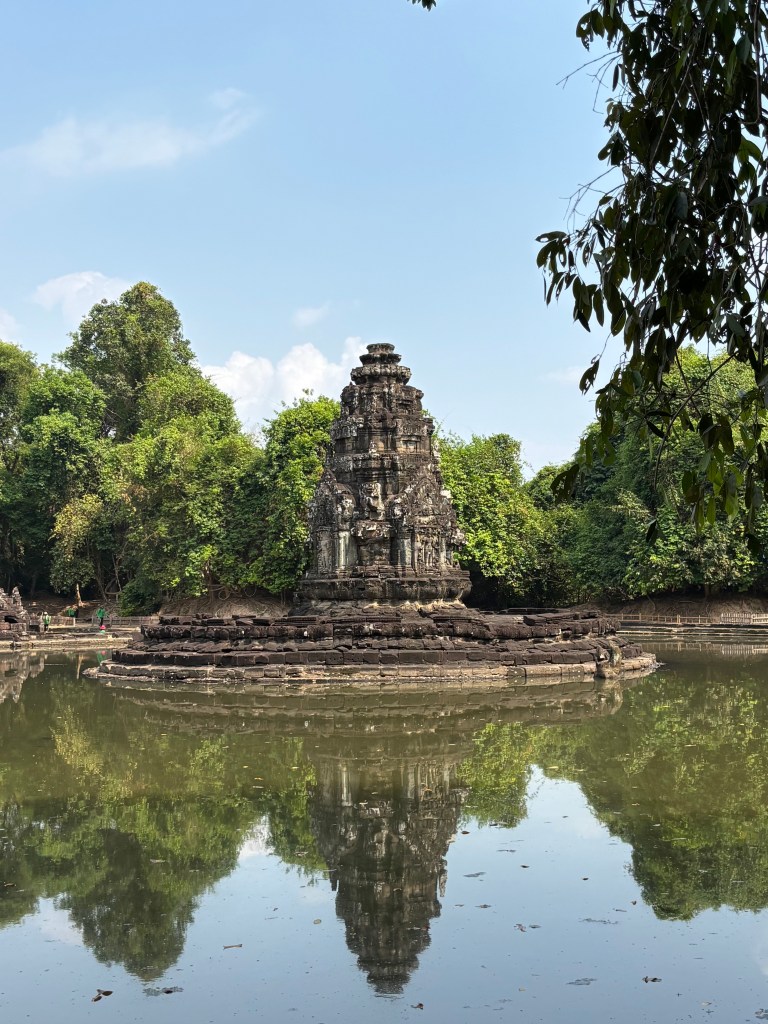
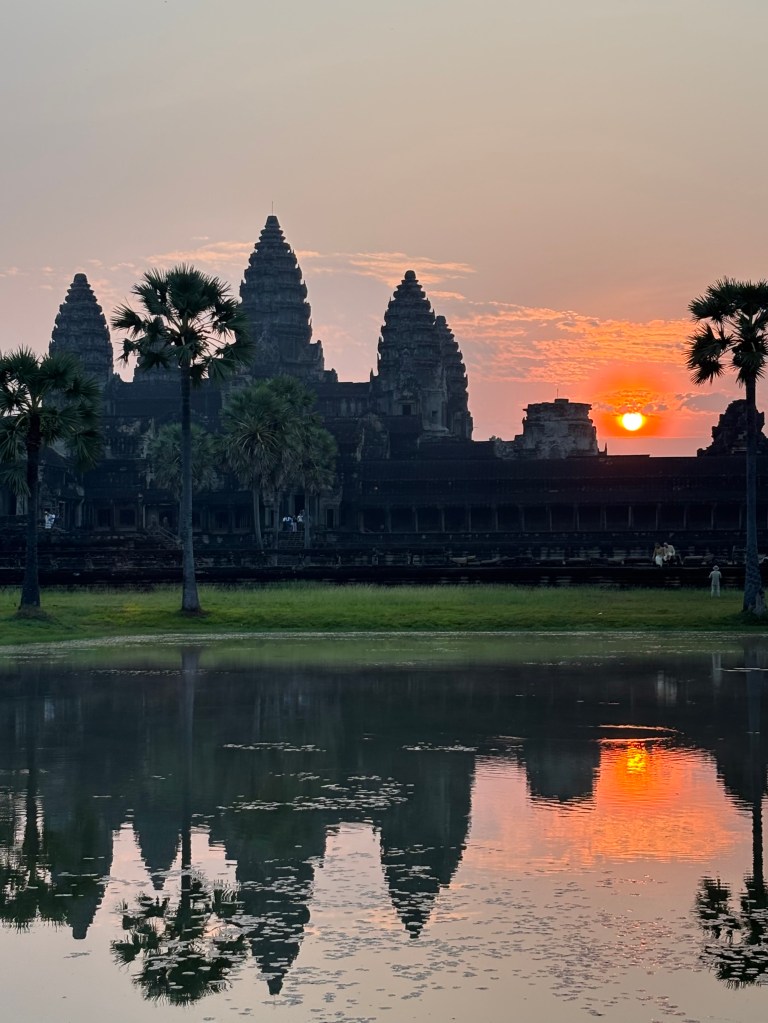
Angkor Wat. Took the Sunset tour with a very good, knowledgeable and informative guide, “David”, so that when I went on my own (hired a tuk tuk for the day) to the outlying temples, it all still made sense. The place is staggeringly large – the furthest temple was 37 K from Angkor Wat. Siem Reap had been the capital of the Khmer empire and every ruler built the temples to his religion or “adjusted” what was there . (It was Hindu, and Buddhist, and some Brahma and animist, but mainly the first two. ) To round it all off, also got up early for the sunrise over Angkor Wat. By a fluke, I was there on the 21 March, the day of the spring equinox, an important date in the Angkor culture calendar.
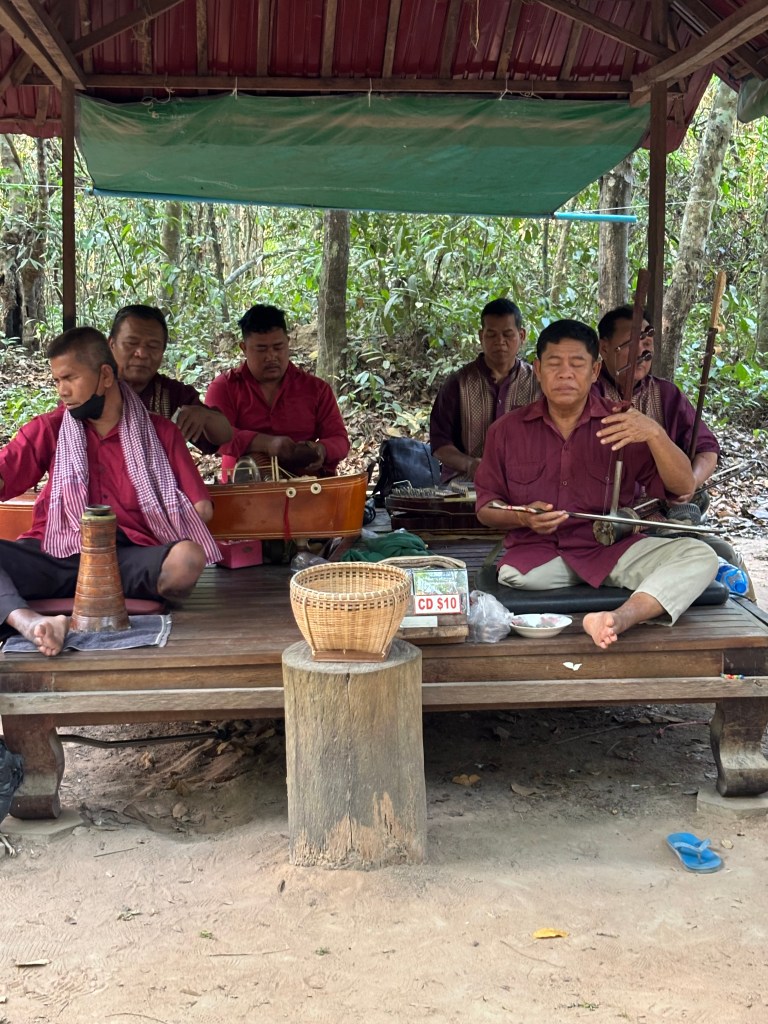
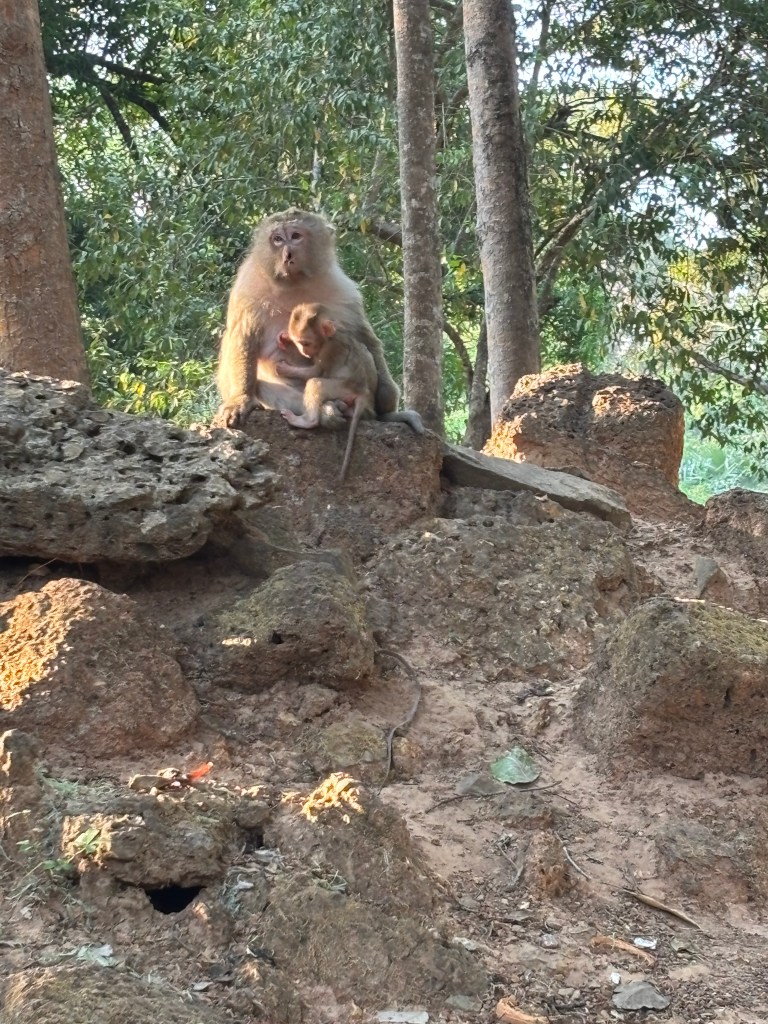
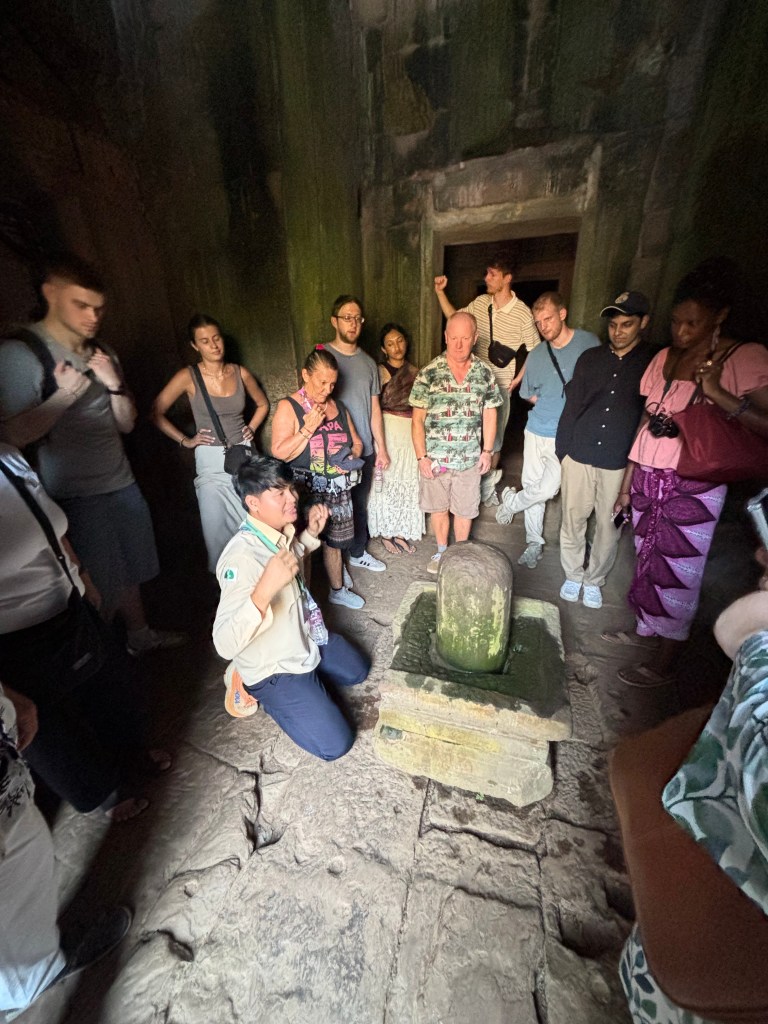
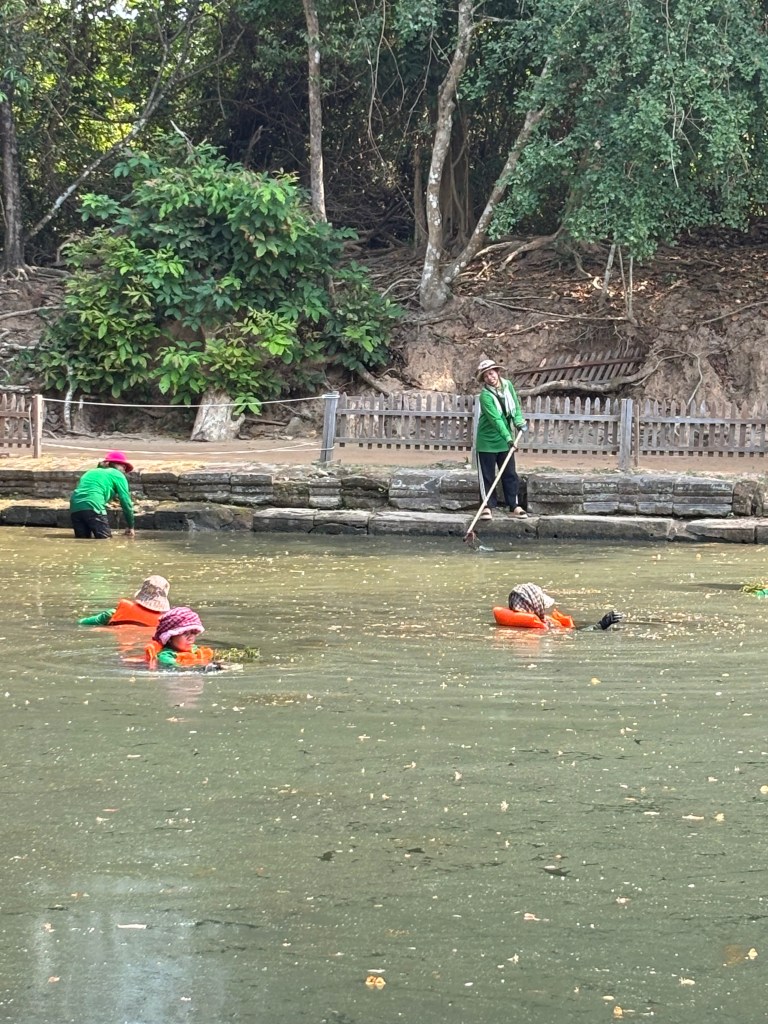
The bridge to the main areaCorridors everywhereThe view we all knowThe true centre of Angkor Wat correctly astronomically – positionedThe steps to the pagoda are steep narrow and deep so you must bend and humble yourselfThe trees that support structures are now left in place – after some walls collapsed when the tree was cut downMusician disabled by landmines busk in various placesMonkeys at the templeOur guide showing devotion to the symbol of VishnuThere are some beautiful stone carings to be seenWomen cweeding the pond around the temple A small temple on an island surrounded by an irrigation dyke (XII ct)Sunrise at Angkor Wat
The overnight bus from Kanchanabury to Chiang Mai made very good time (a bit too good…) – it arrived at 5 am, an hour earlier than advertised. The seats recline, a blanket is provided (the a/c is ferocious), a snack and a drink given. However, the hostel doors do not open till c 7 am and there was a huddle of us (and our backpacks) waiting for dawn at the bus terminal. The little hotel I was staying at (The Pai Residence – small hotels are often cheaper than the private rooms at a hostel, and it had a pool) had no-one at the reception till 9:30. But I was able to squirrel away my case safely and go for a breakfast.
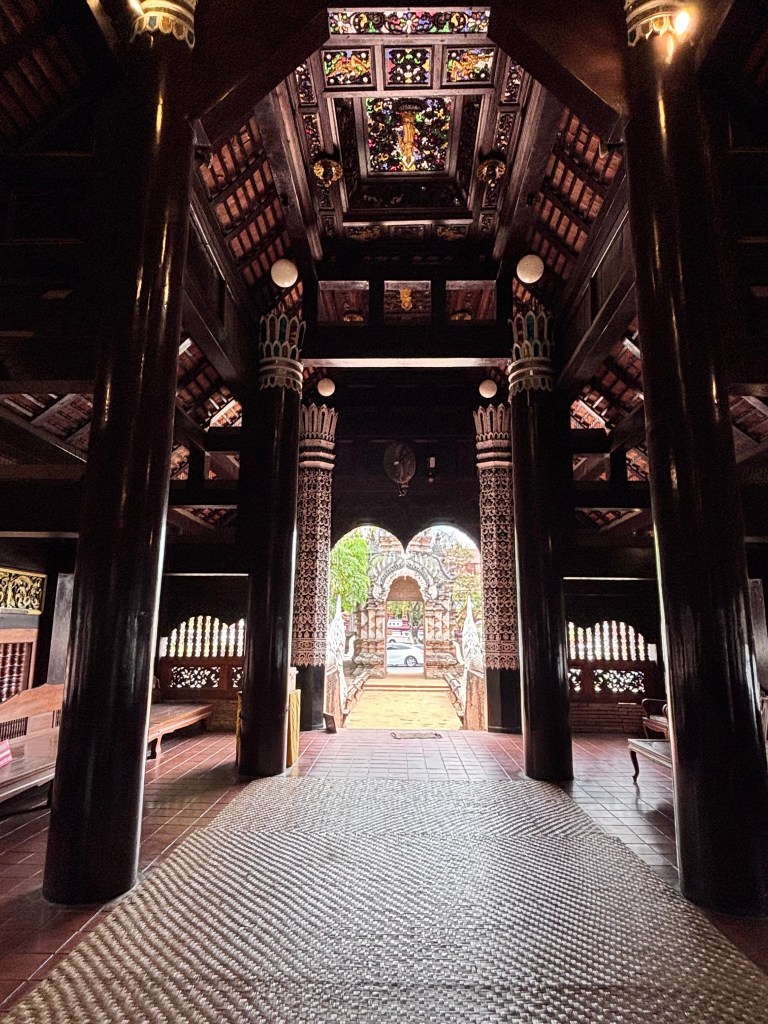
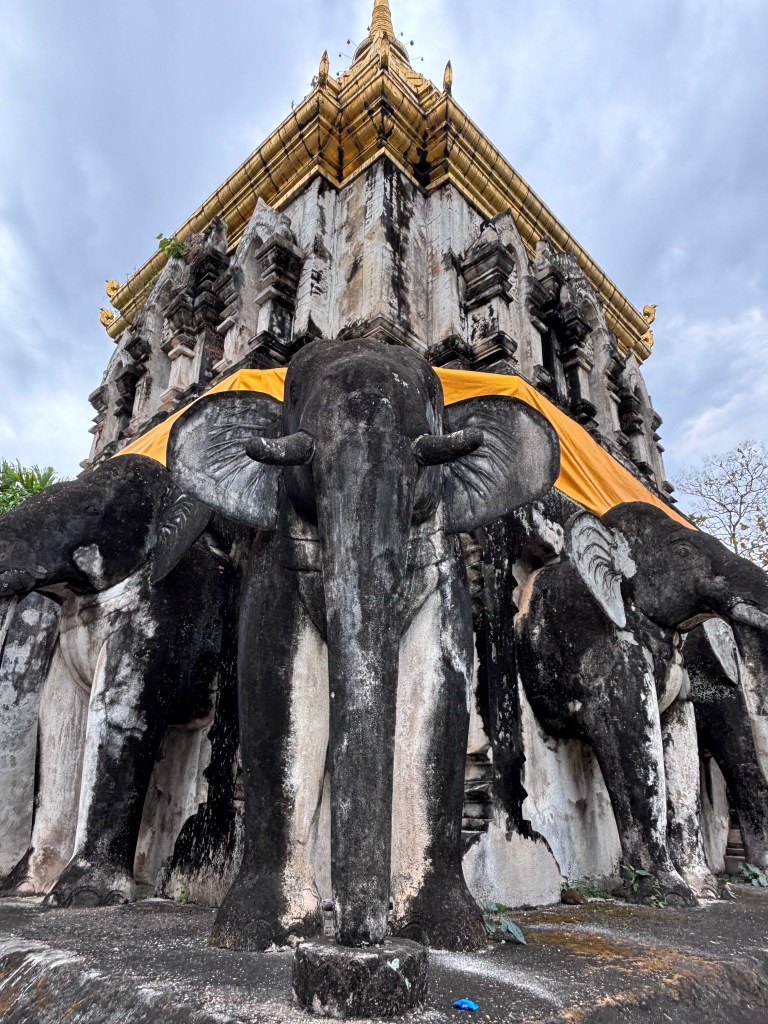
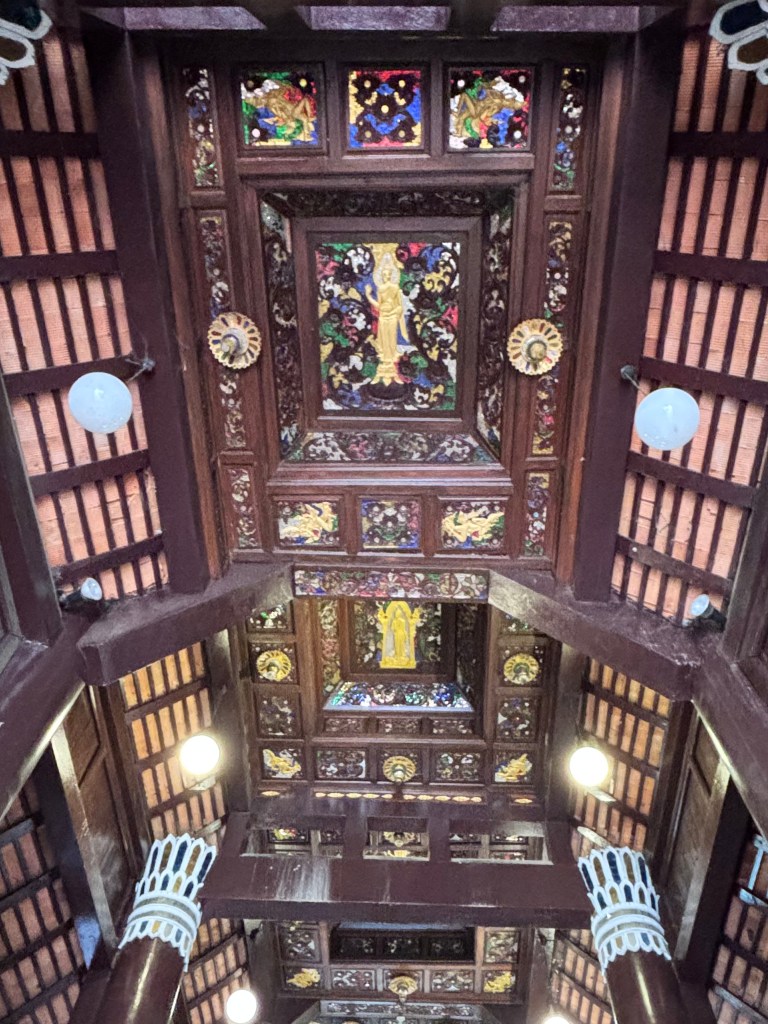
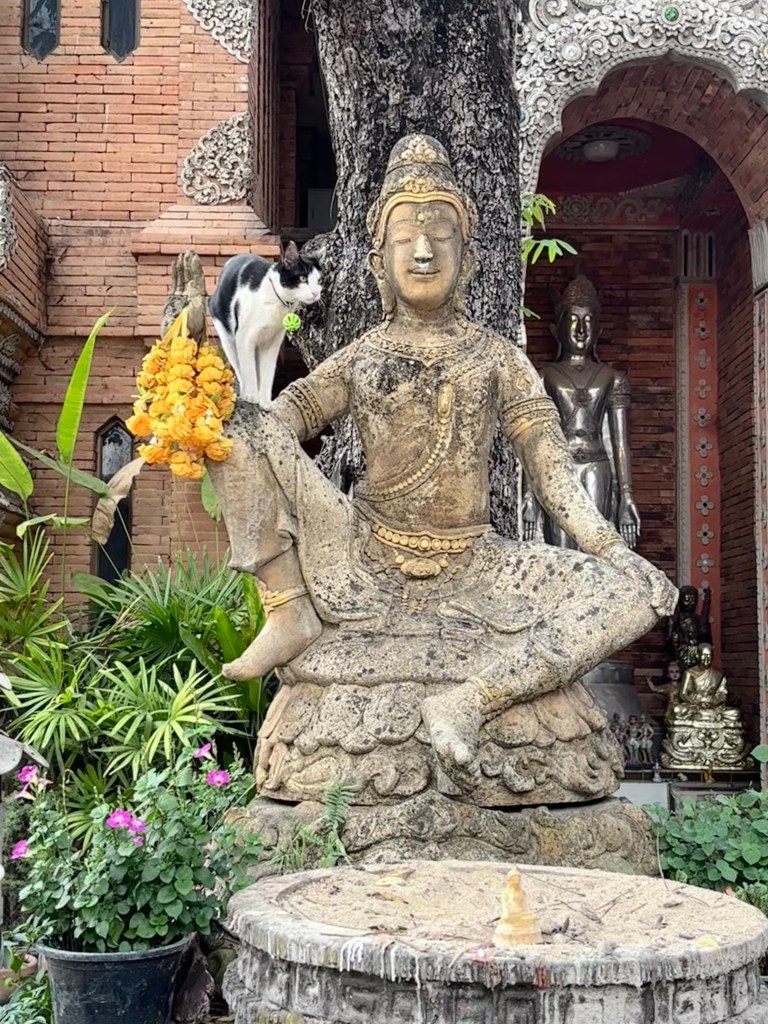
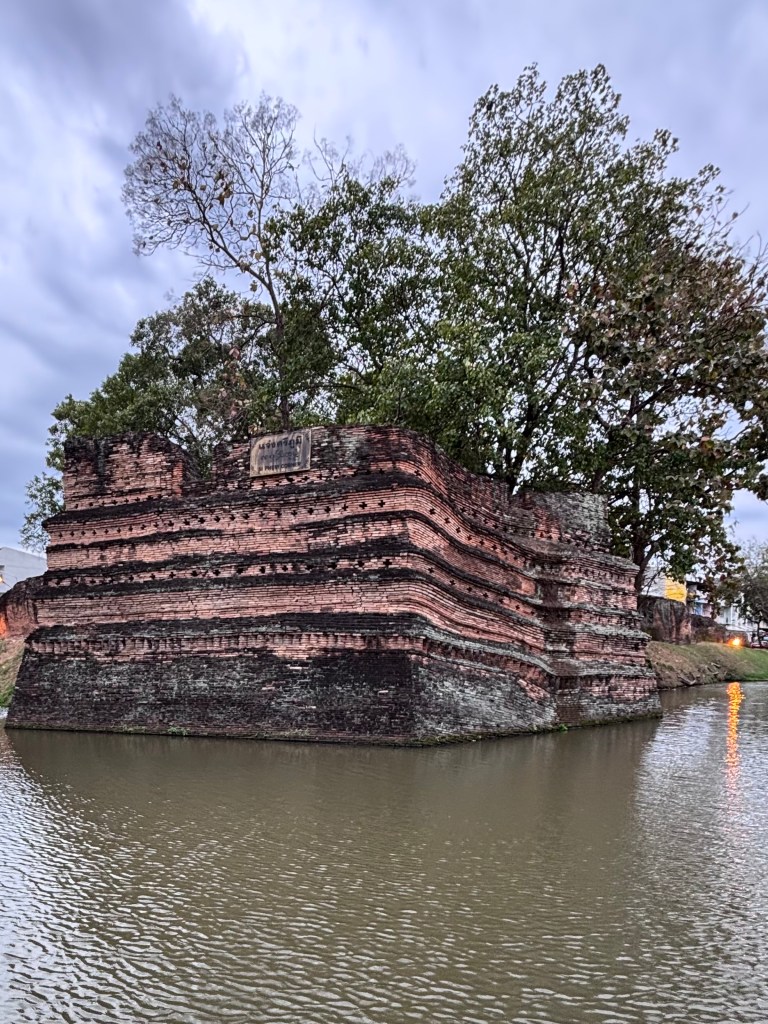
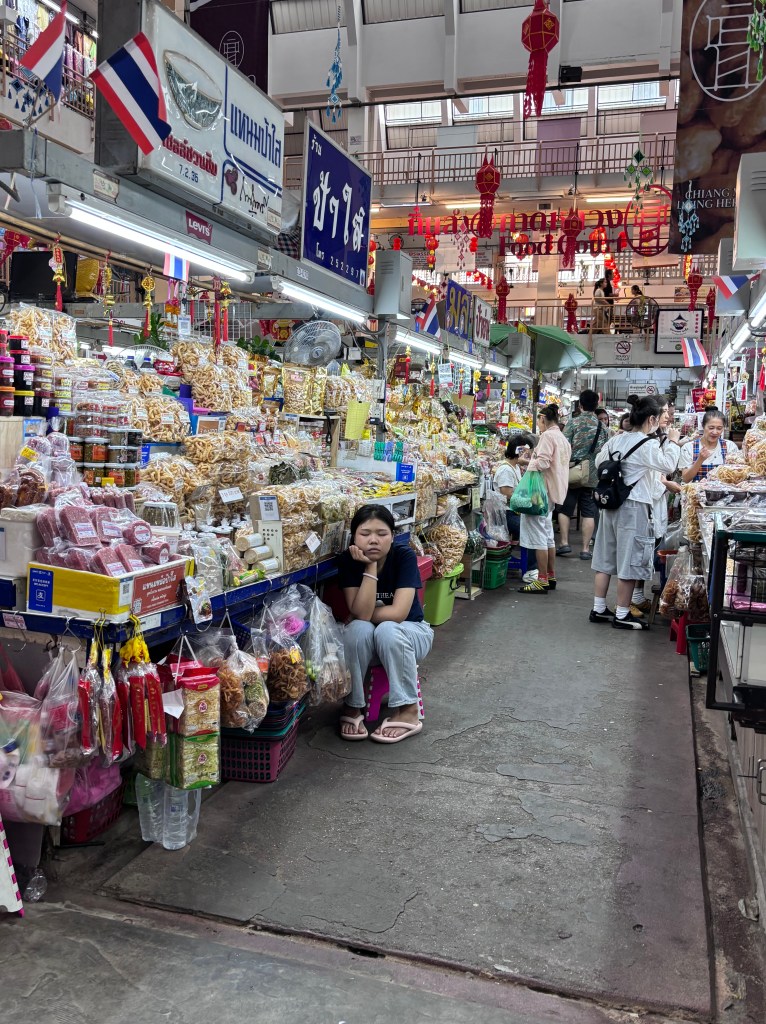
Chiang Mai oldest watElephants are enormously important in BuddhismSuch intricate workLooked familiarThe moat fort at Chiang MaiChiang Mai market
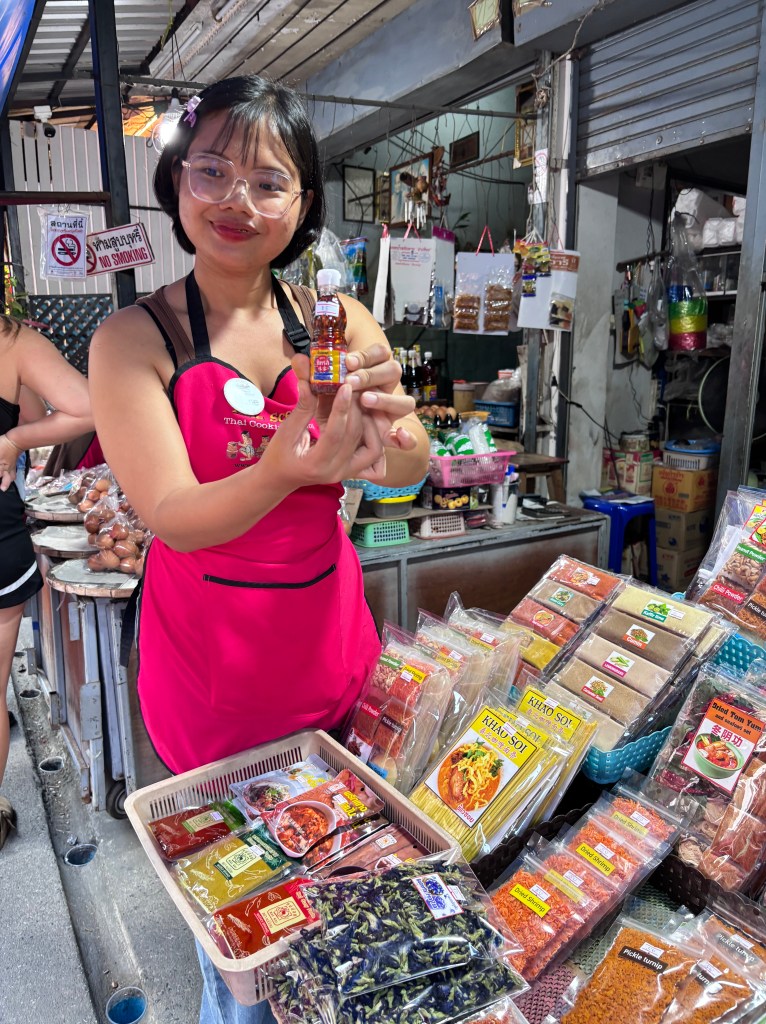
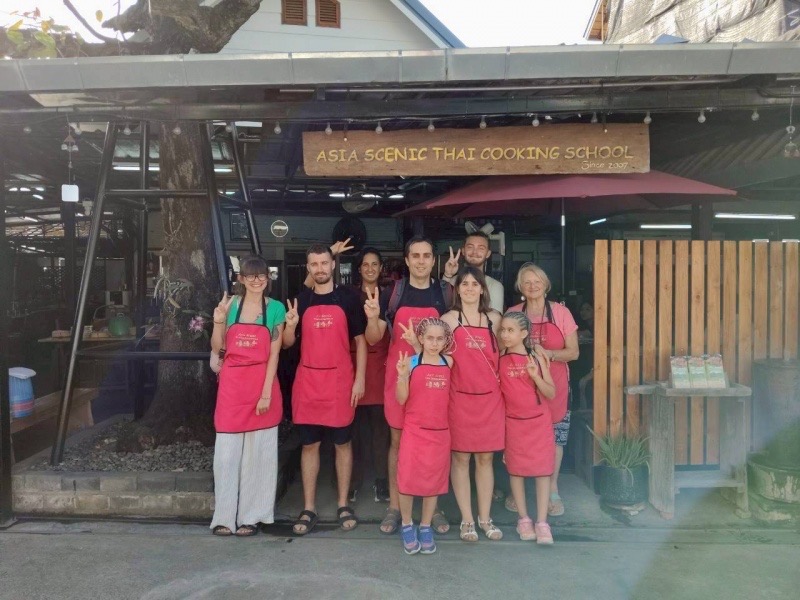
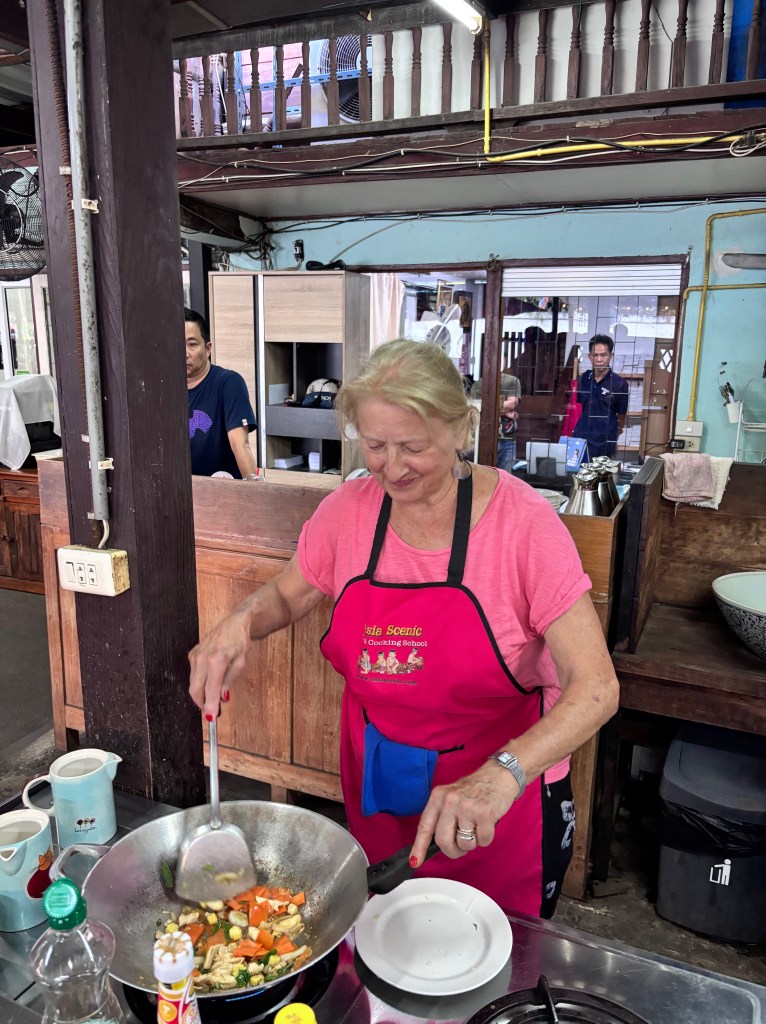
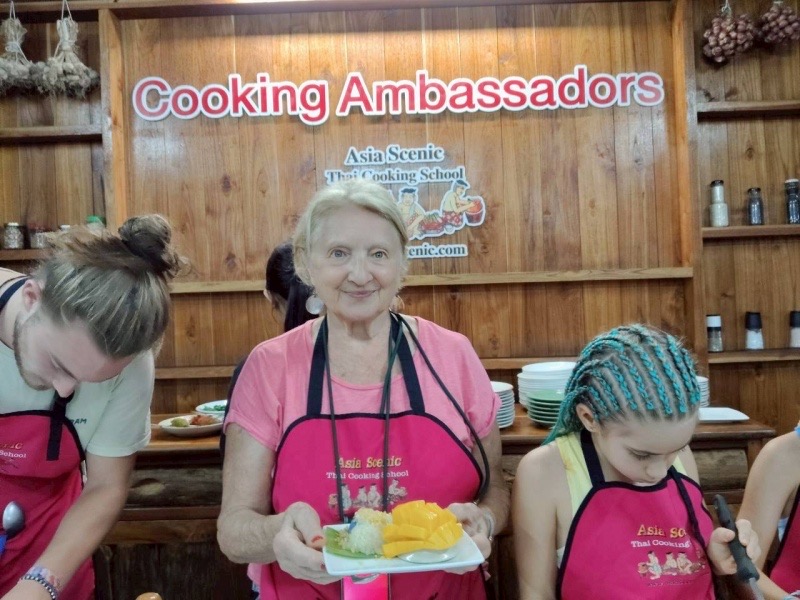
Chiang Mai old town is surrounded by a square moat. Wonderful wats, lots of history. Fun night market with terrific street food ( had grilled fish – delicious – and a green papaya salad, washed down with cool beer, all for about £4). Enjoyed a 1/2 day cooking class, well presented, fun (Nune, our Thai chef at Asia Scenic cookery school, was impressive) and tasty.
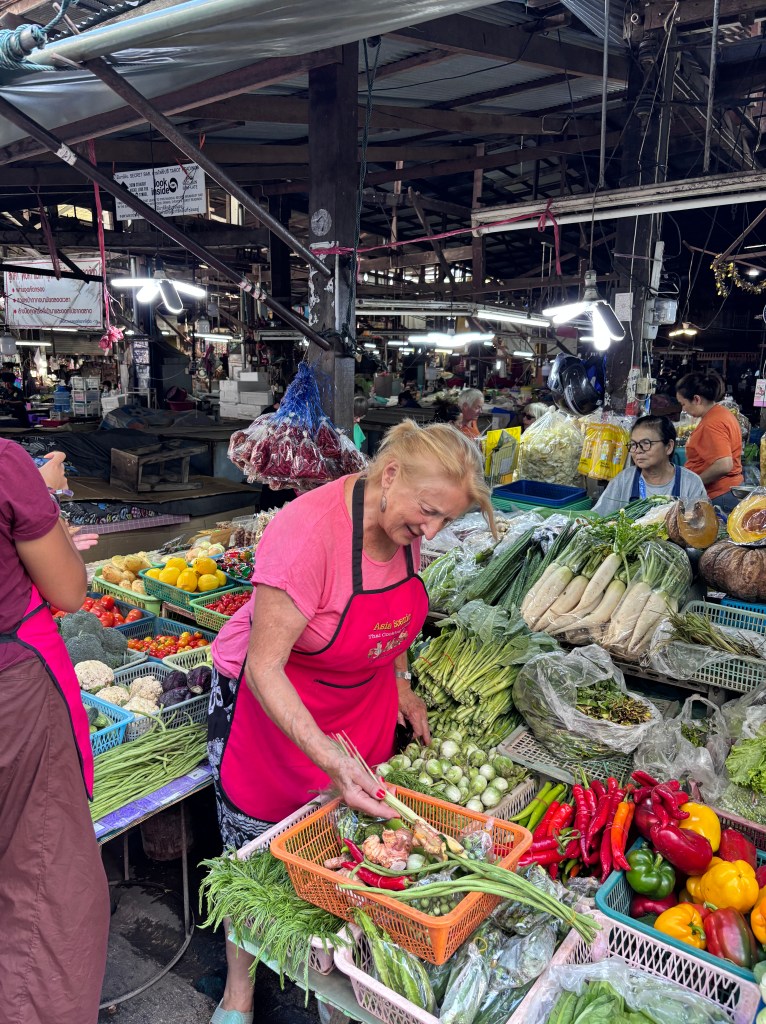
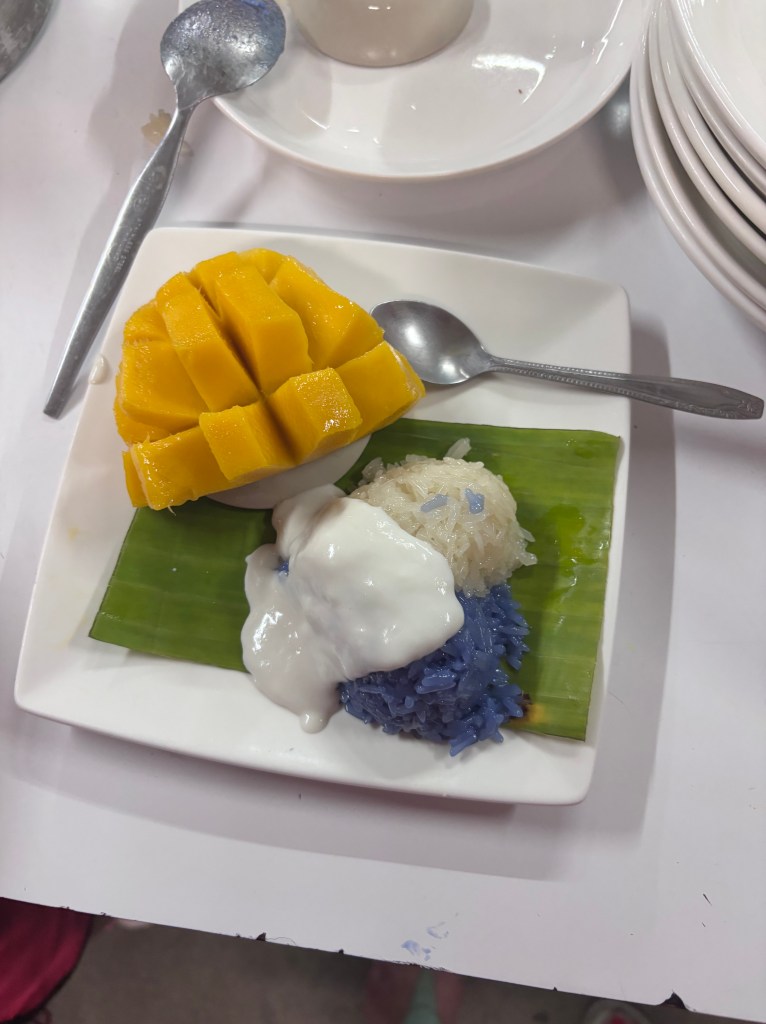
Thai cooking classWent to the market to get ingredientsMade 5 dishes!My sticky rice with mango
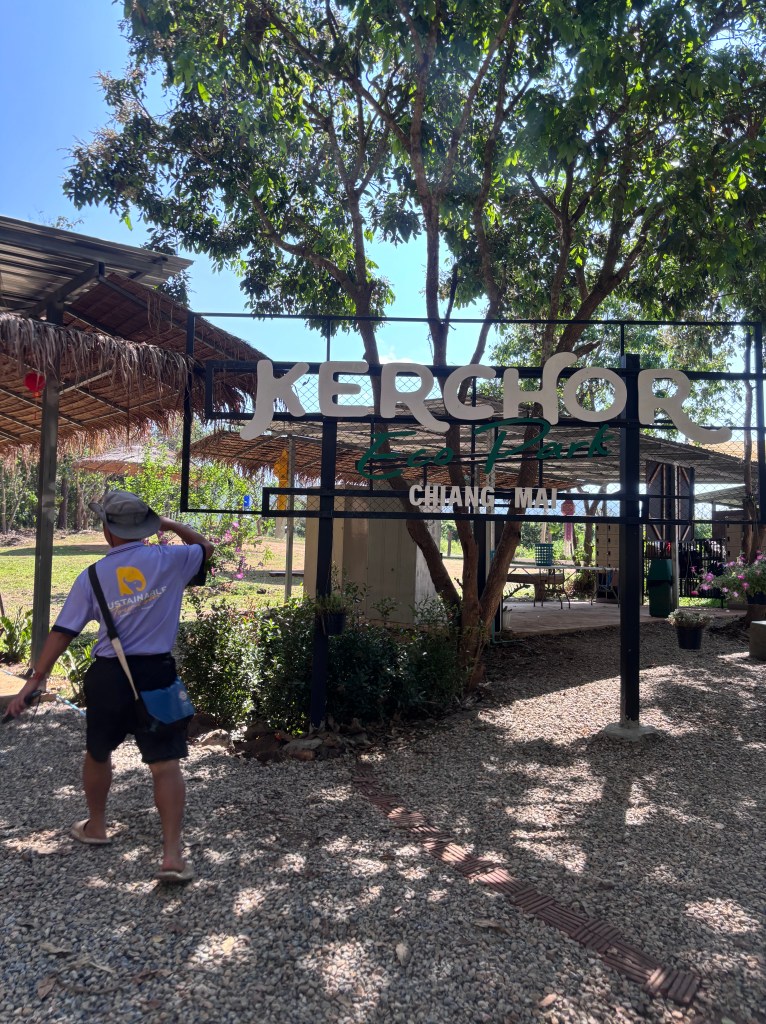
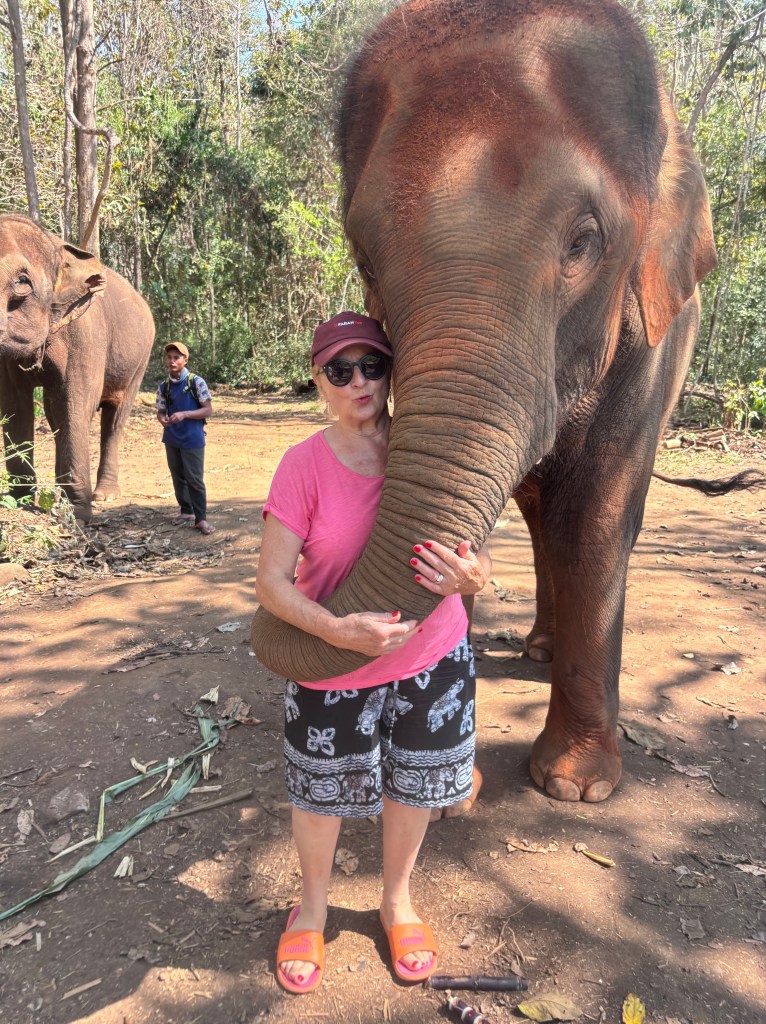
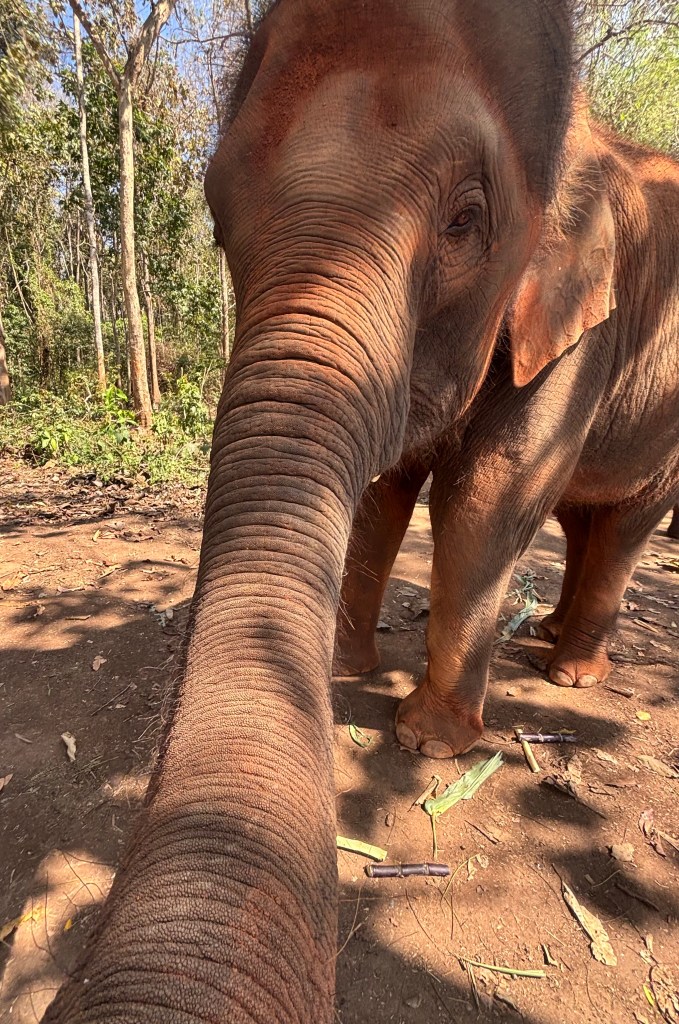
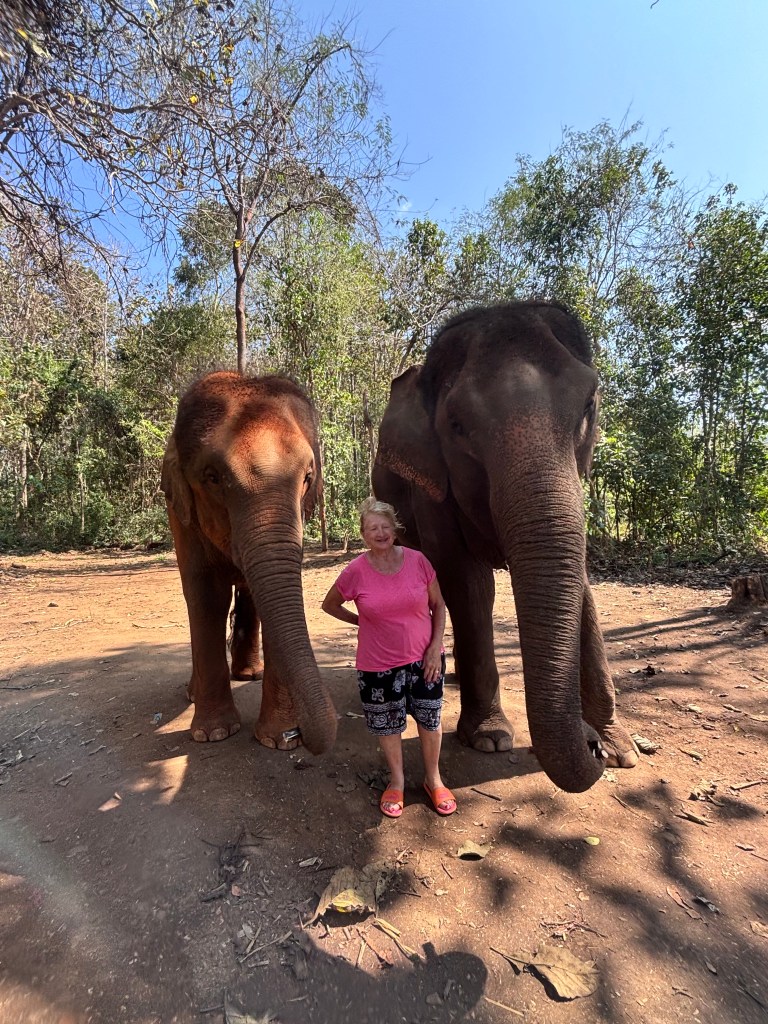
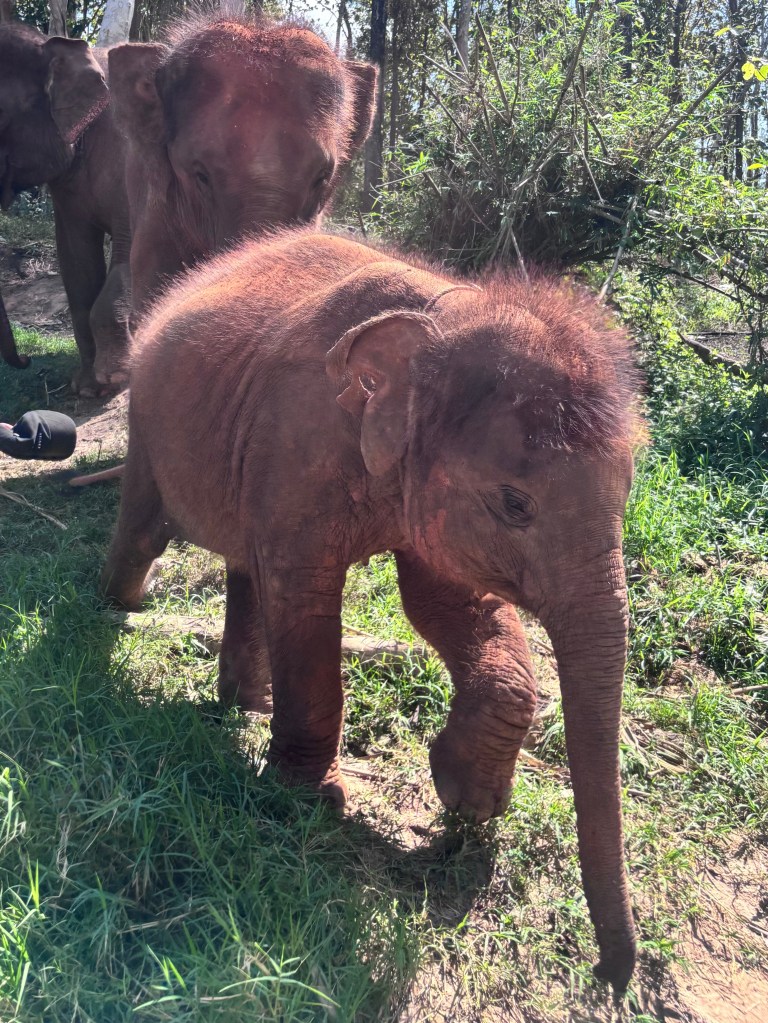
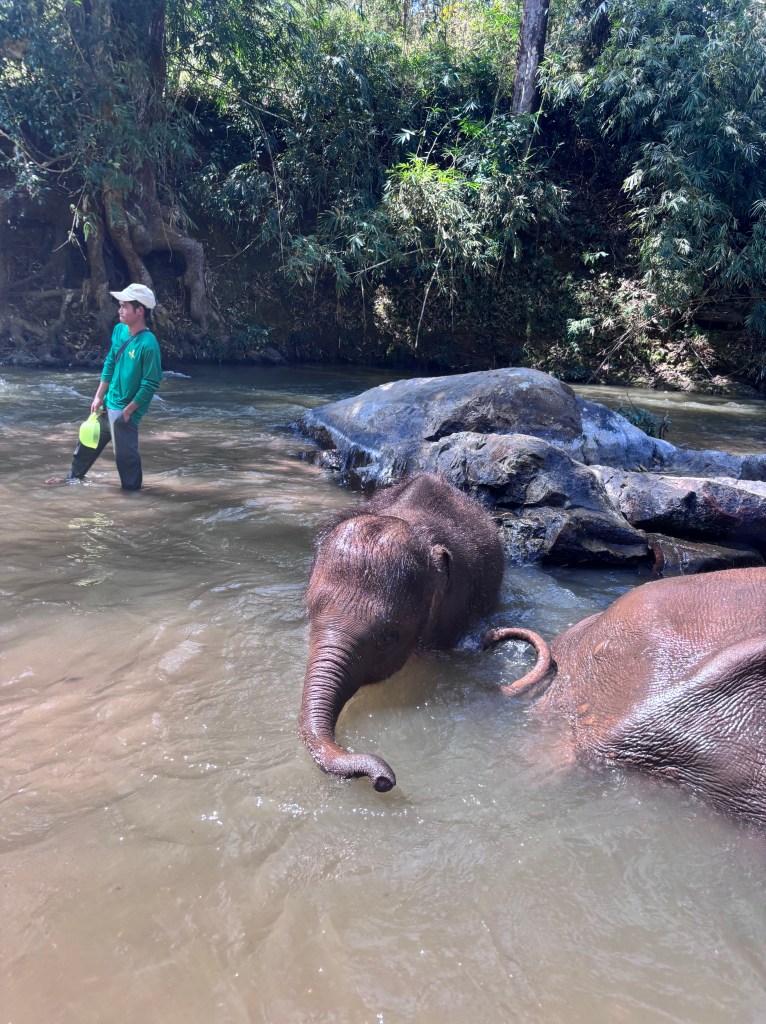
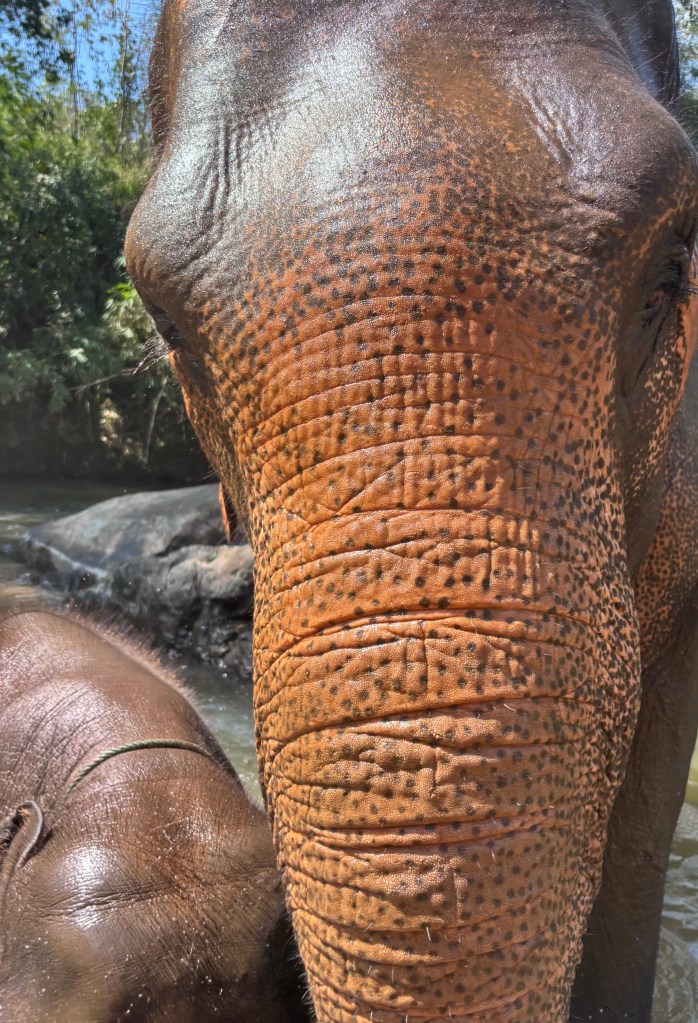
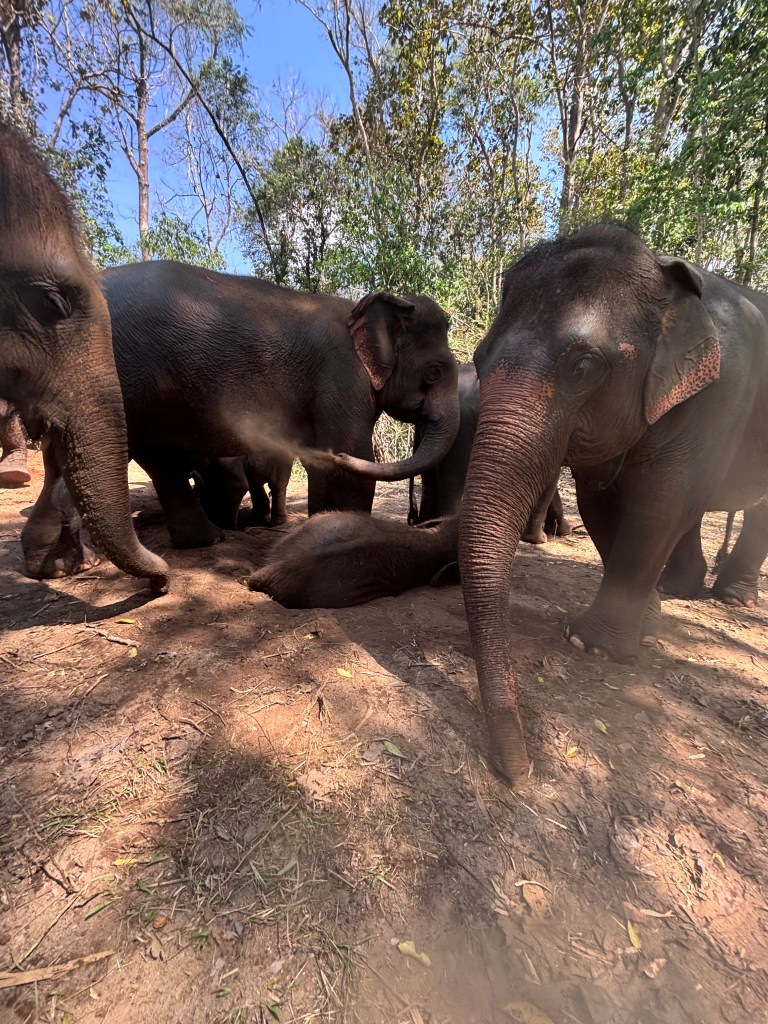
Took a day trip to an elephant sanctuary (Kerchor) that advertises its ethical approach. There are some 30-40 places around the Chiang Mai area that have elephants. When the government banned the use of elephants for logging (2018), many elephants were “redirected to tourism or sold”. Some places still offer rides, though not many, thank goodness. Kerchor, which has 8 adult elephants and 2 babies) gave us the opportunity to feed the elephants, walk with them to the river, observe them. The elephants are still being trained to “perform” – to interact with tourists – though the mahouts (all from Karen tribe, traditionally mahouts) do not use hooks and pikes but food.) I liked that I could be so close to them but also felt uncomfortable when they “posed” for photos. One could say that they contribute to their keep – conservation is not cheap. But will not be visiting another.
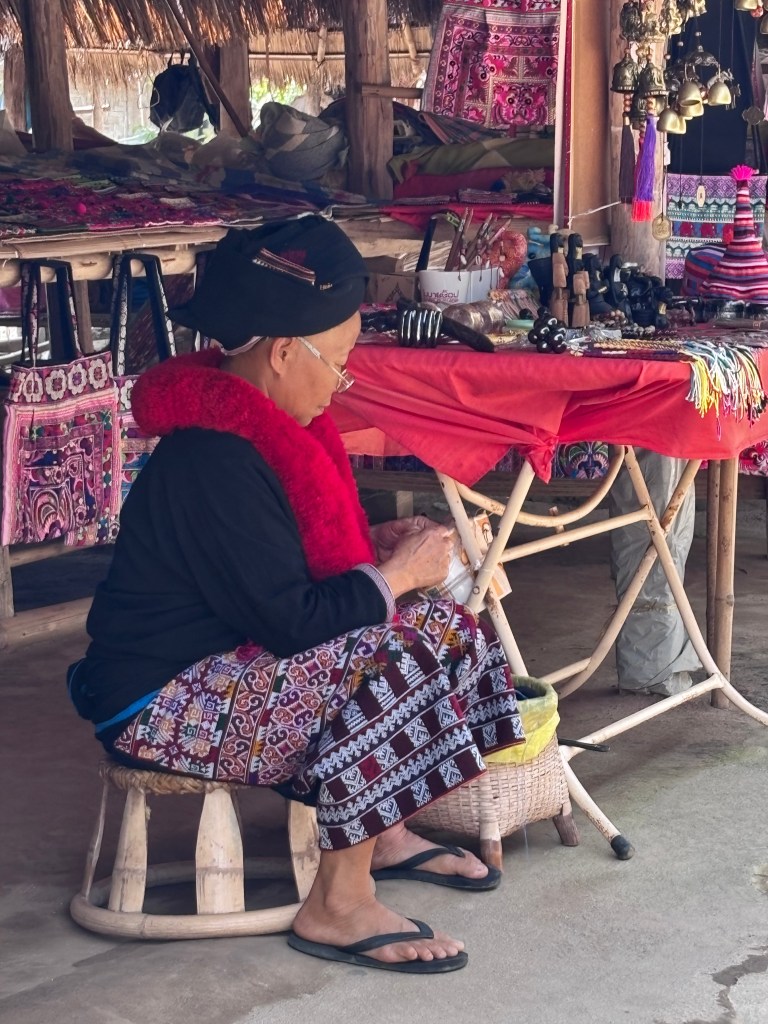
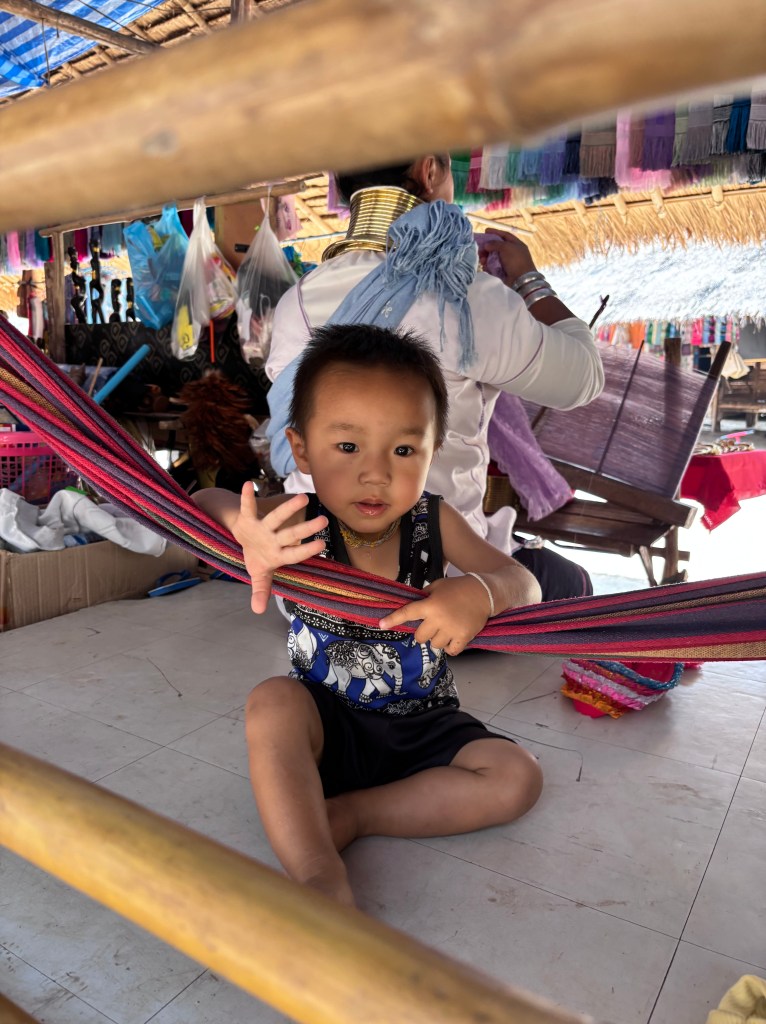
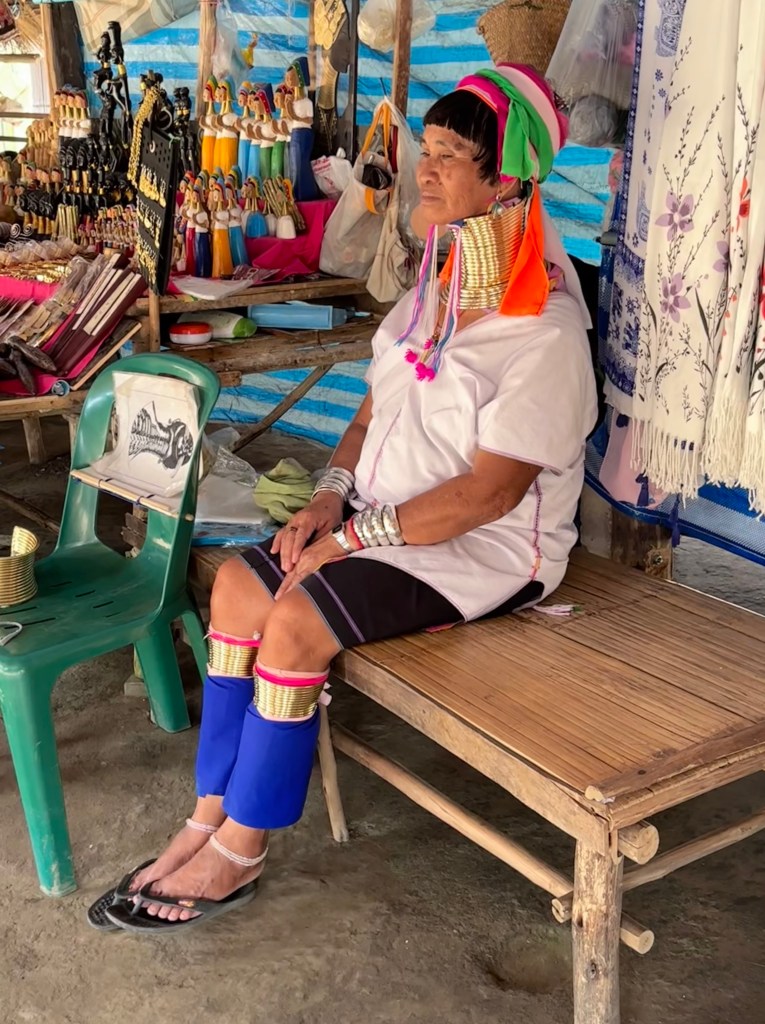
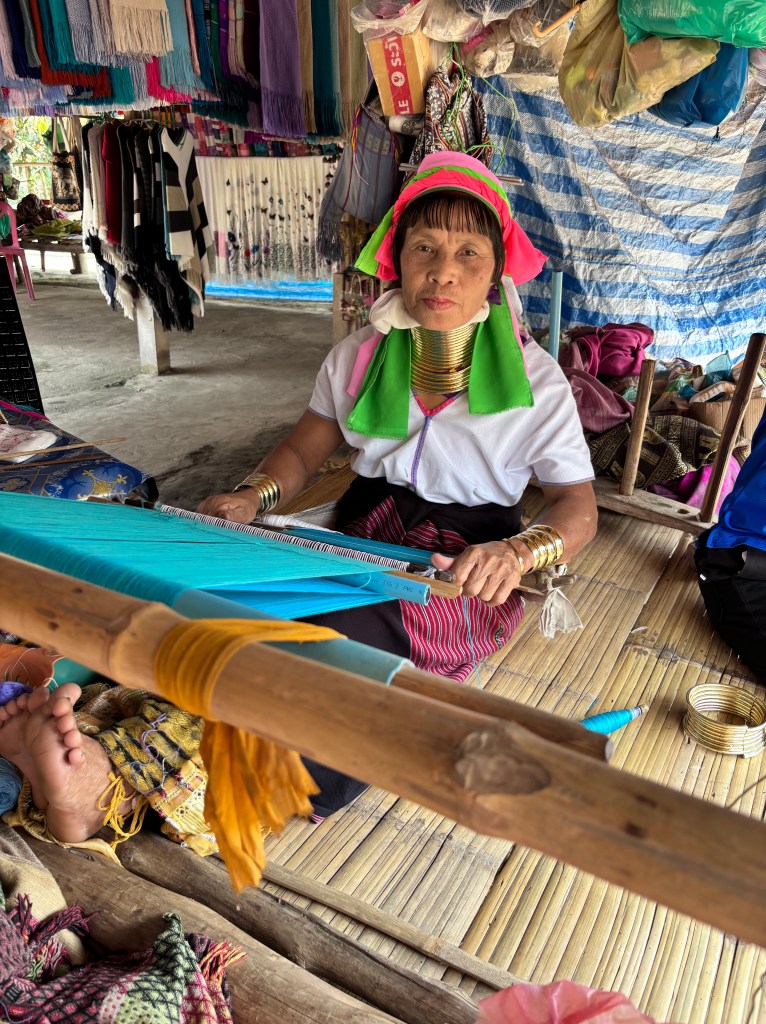
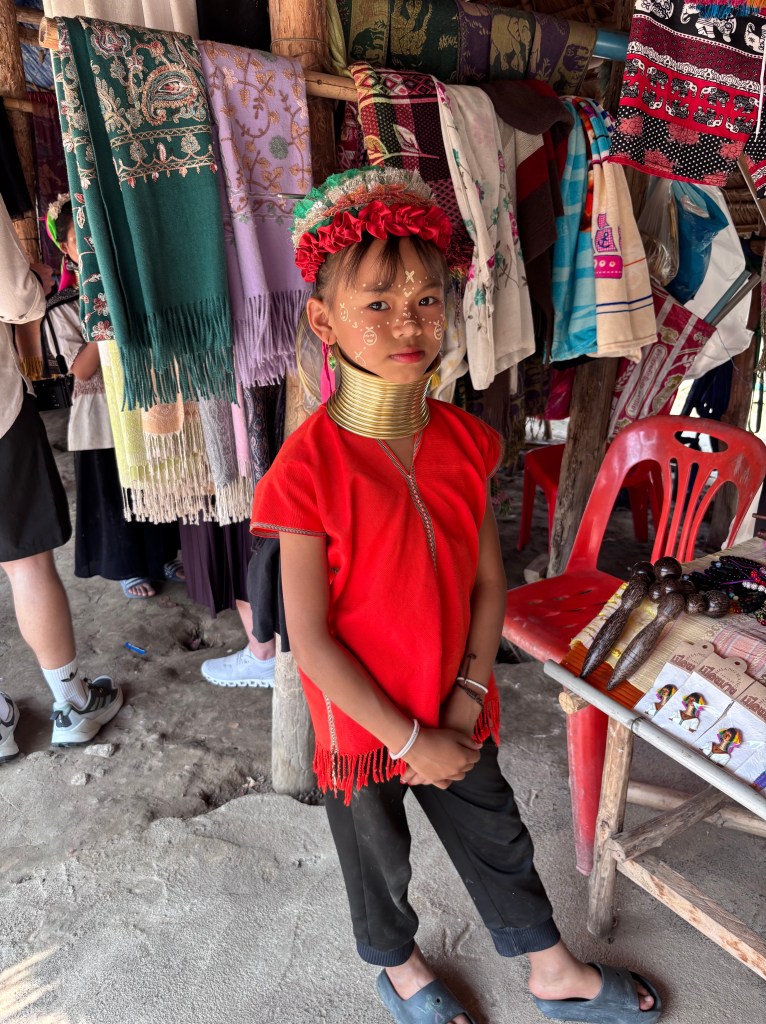
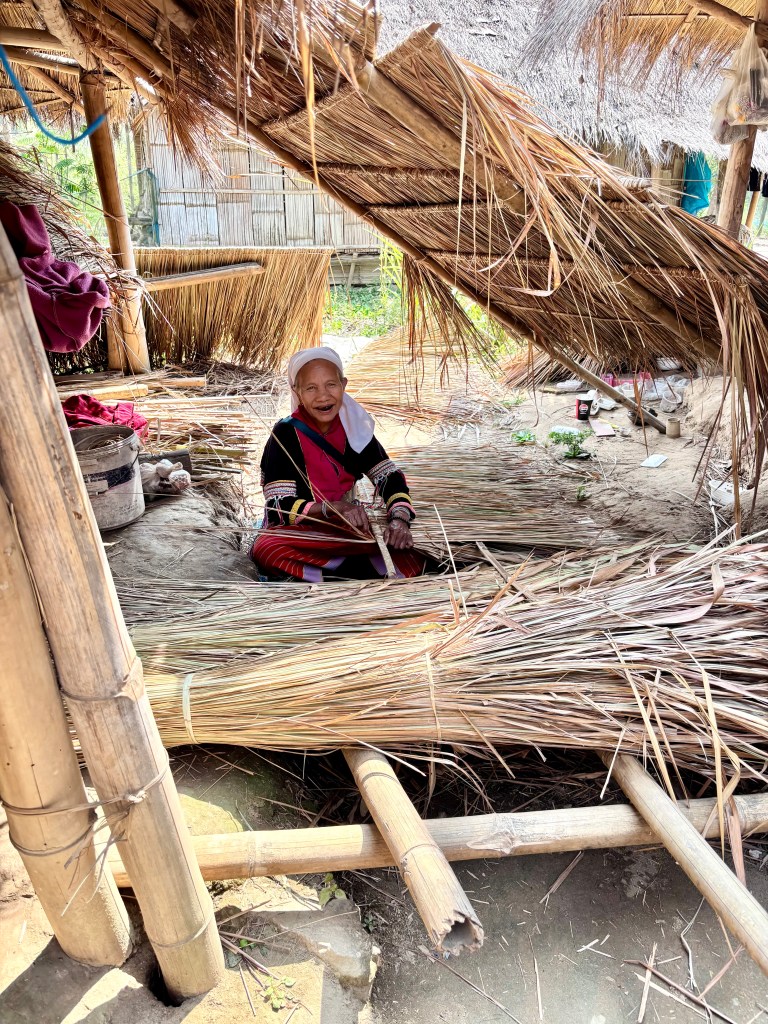
Also visited the Long Neck Women (Kayane Karen tribe, refugees from Myanmar). Horrible practice, placing (eventually) 4 kilos of brass on the neck – the weight pushes down on the shoulders, which gives the appearance of the neck length. There are still some who do this to their female children now, but most don’t – children who attend local schools cannot have the rings. Though some use removable ones (the classic ones are wound onto the neck and only removable by unwinding…)
This woman is 62 – hr rings are not easily removableHer rings can be taken off daily
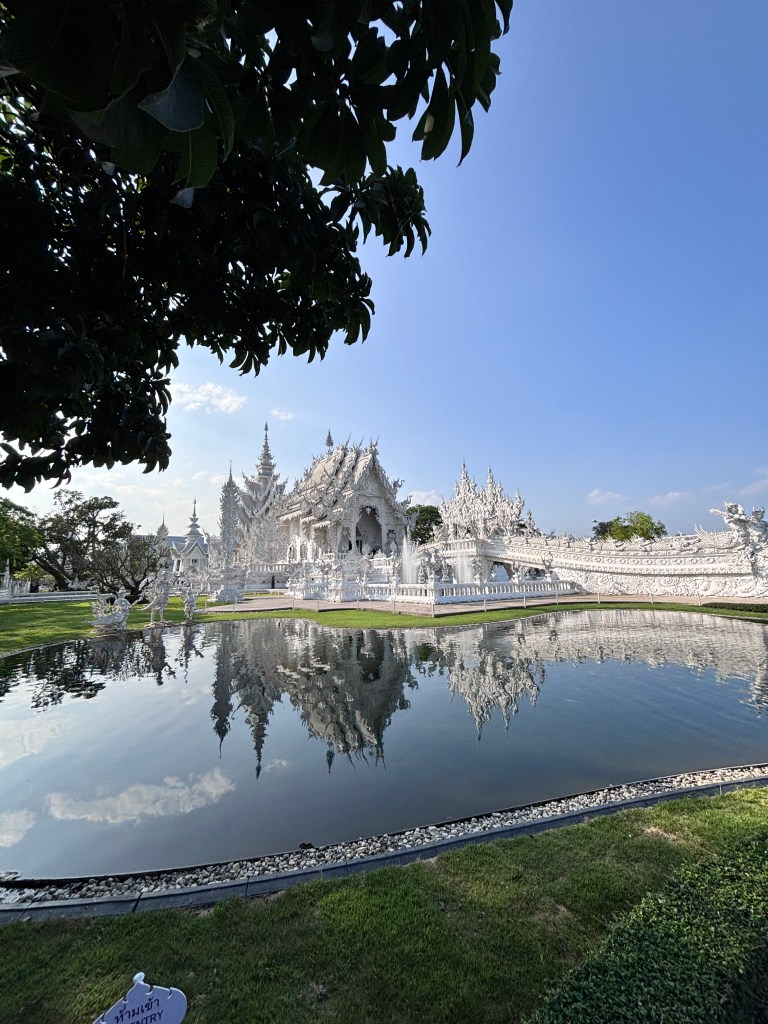
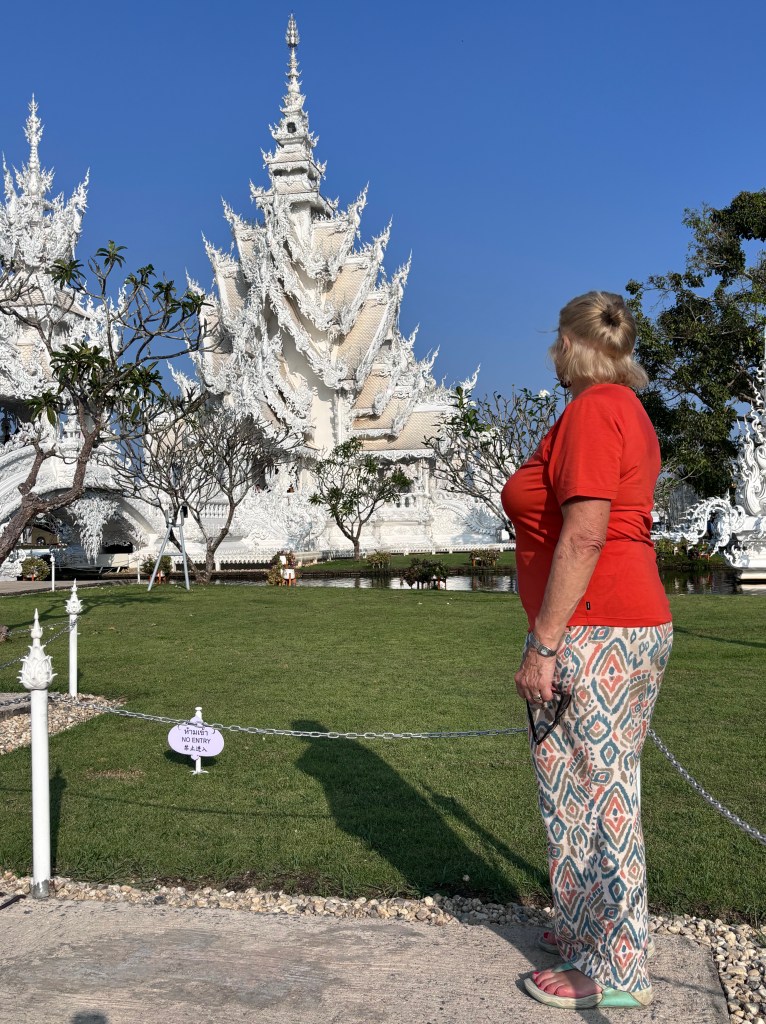
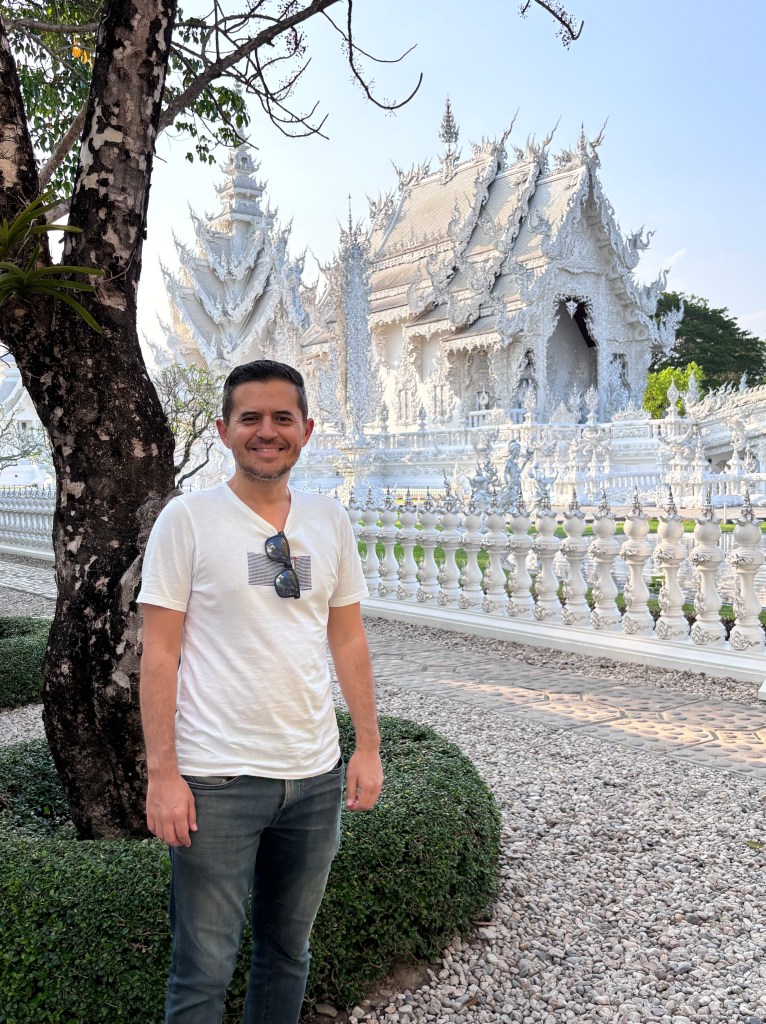
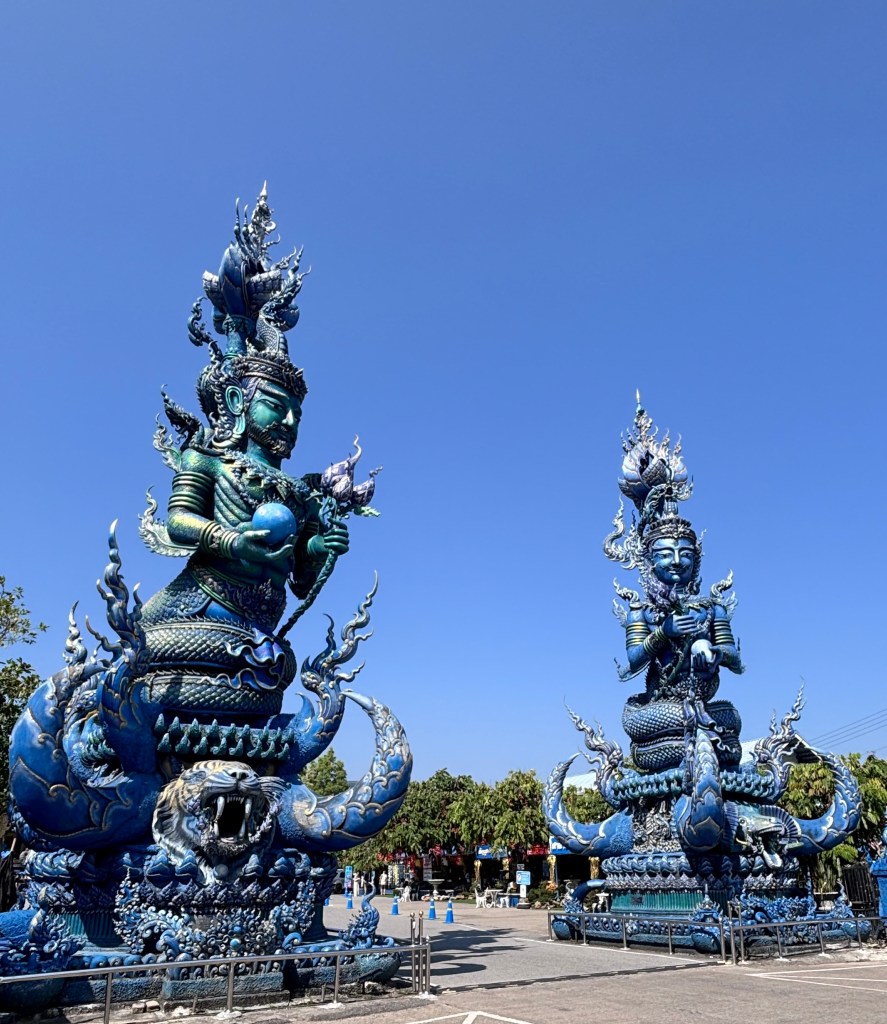
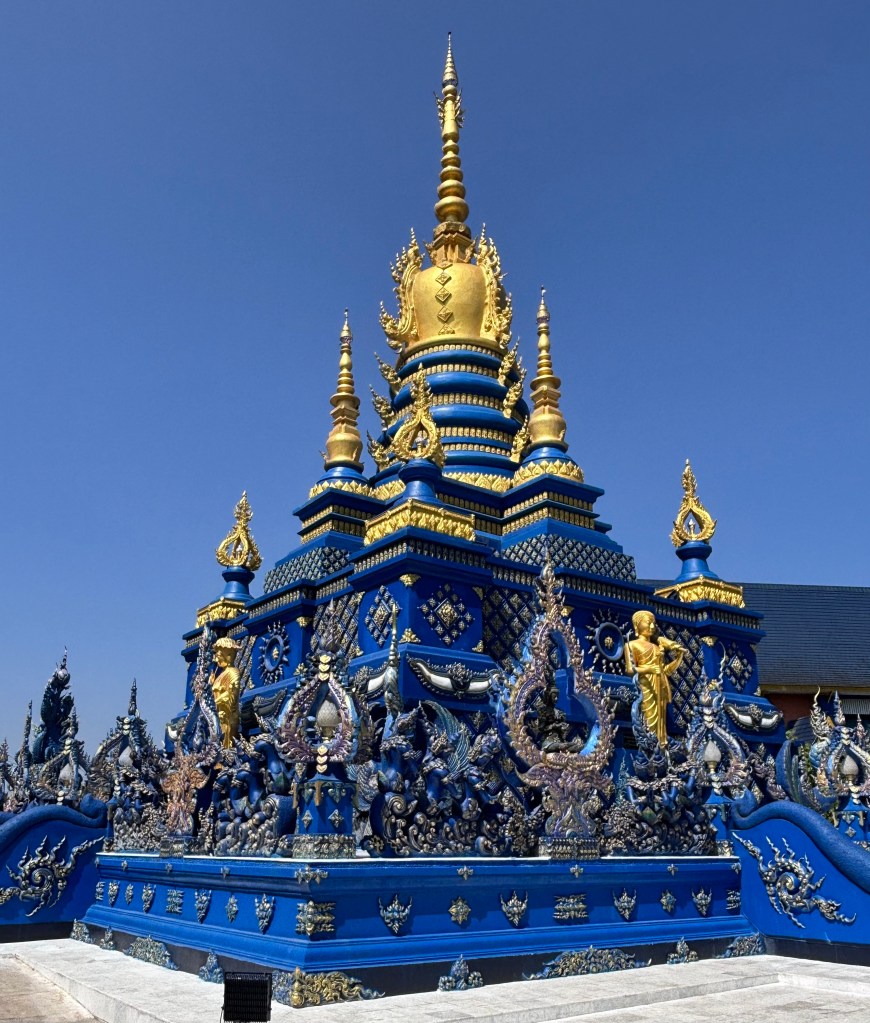
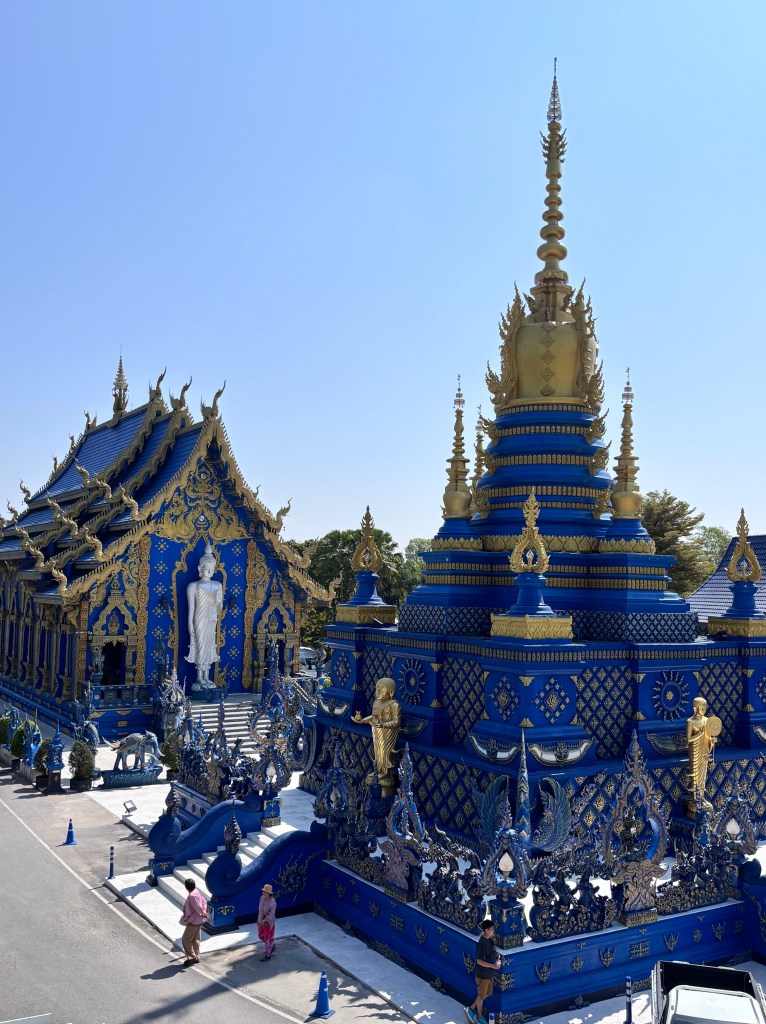
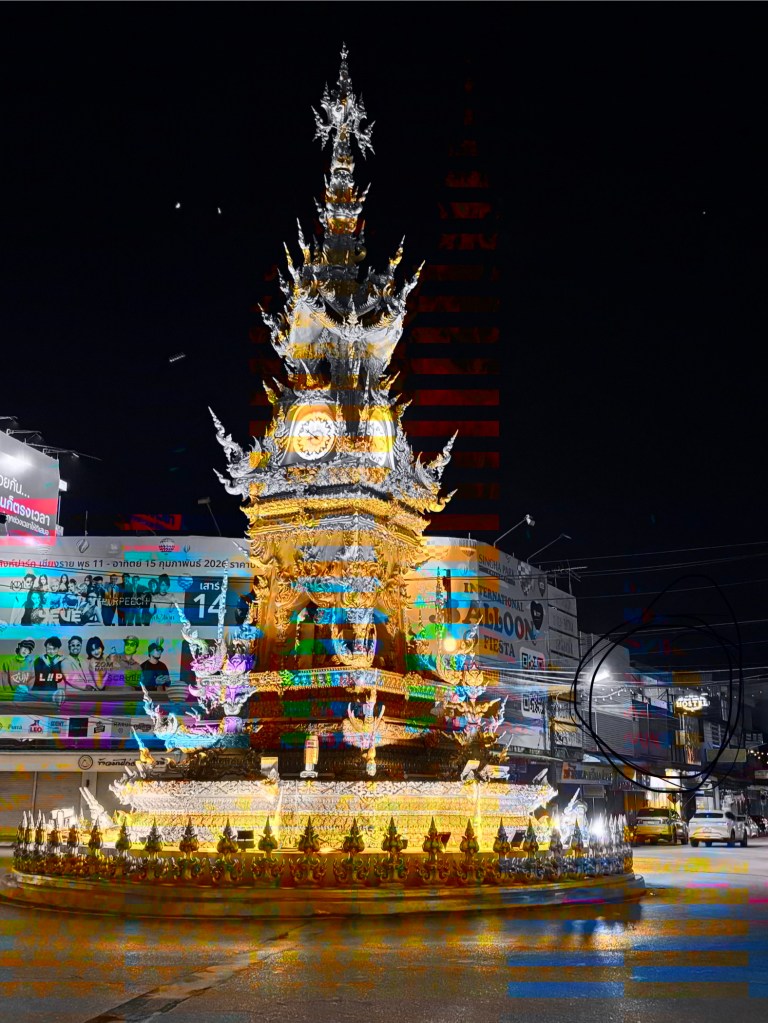
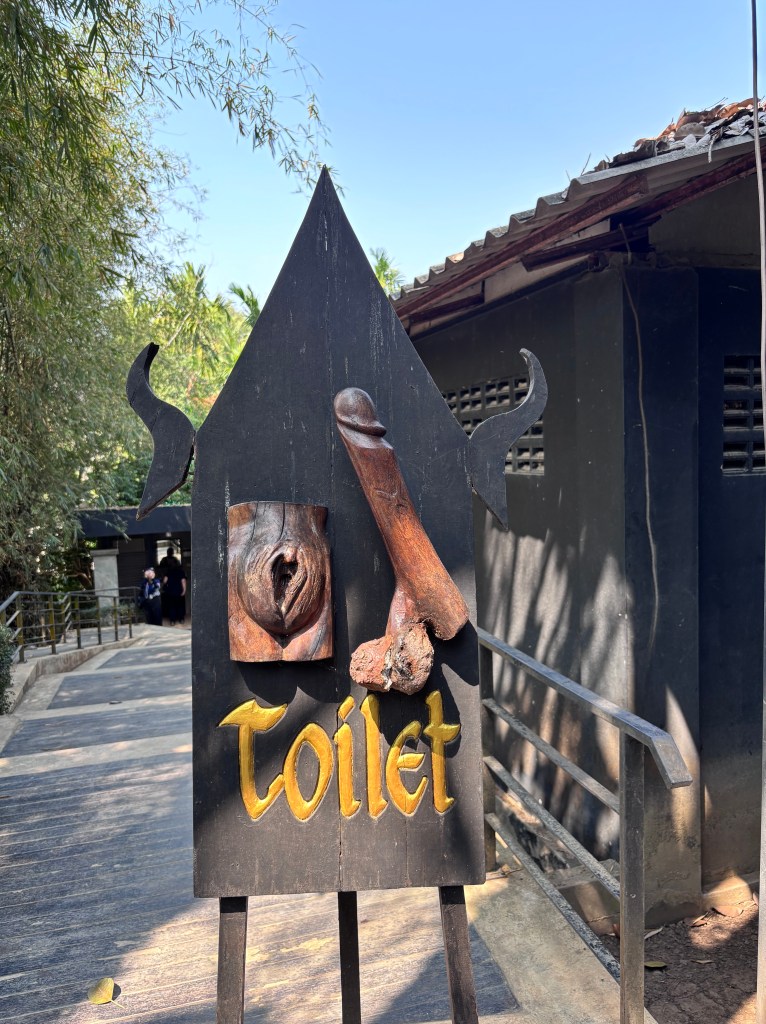
The bus from Chiang Mai to Chiang Rai takes about 4 hours. Met a nice Turkish chap, Sarkan, who helped me drag my backpack/case to the Chiang Rai Clock Tower hostel. We visited the White Wat together before he caught his flight to Cambodia (cheaper from Chiang Rai than from Chiang Mai!). Chiang Rai is advertised as a culture town. Various Lao artists have contributed to this reputation – the White, Blue and Black wats are the main ones.
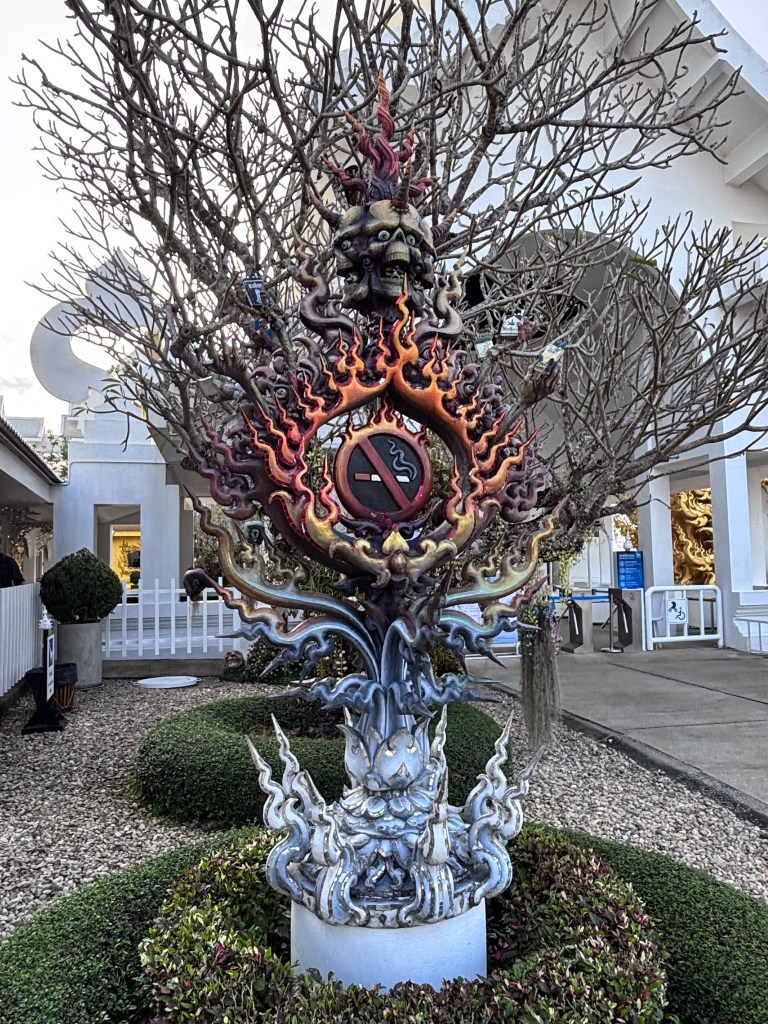
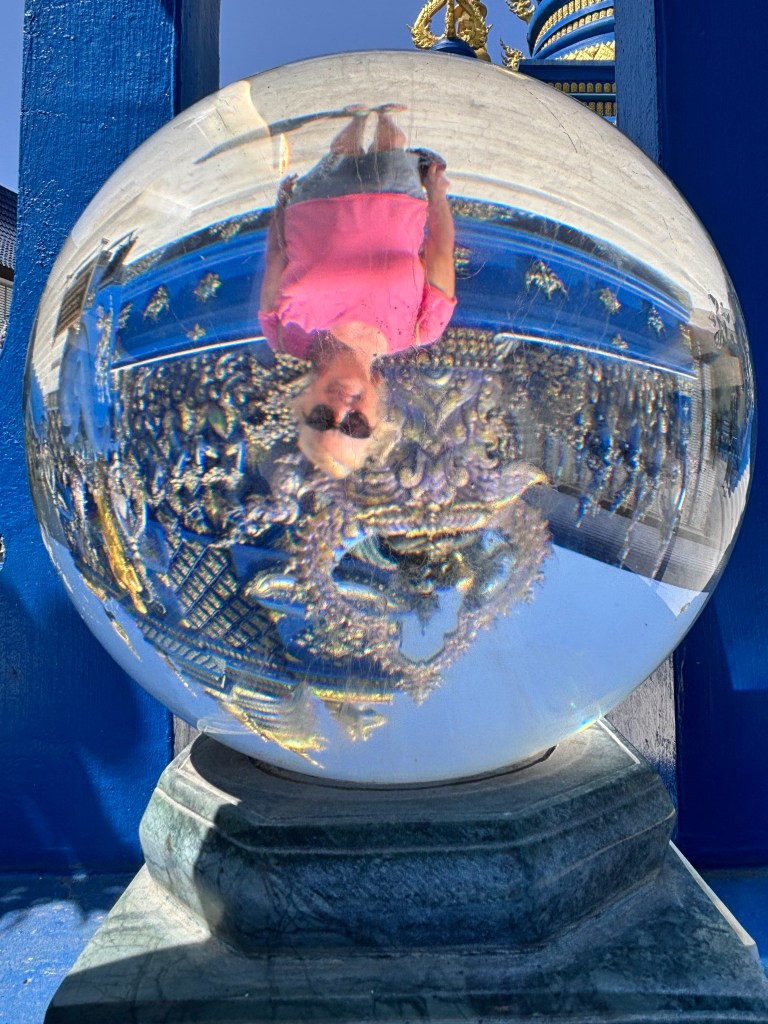
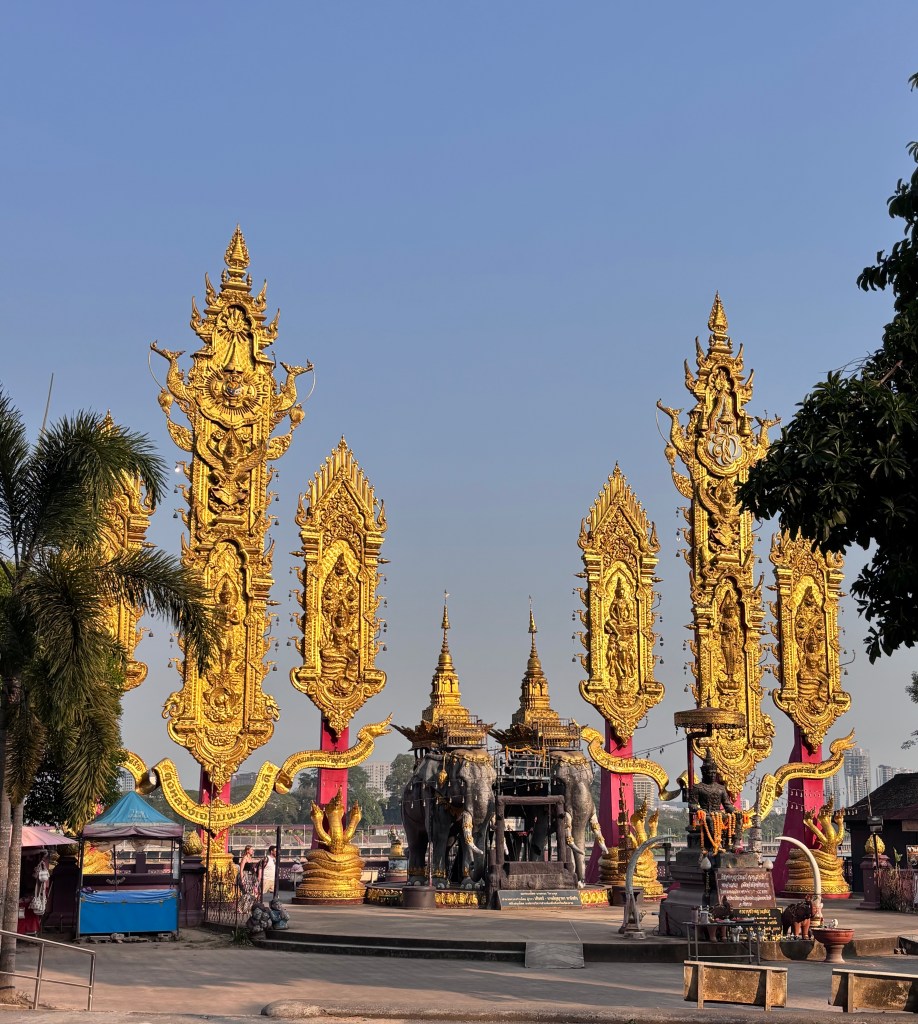
The white wat – as Buddha is pureSarkan, a Turkish fellow travellerGood NO Smoking warningThe blue temple – for sky – the artist had worked on the White one…The globes were in a couple of places, providing a different imageThe Black – really a collection of Thai living The Clock Tower
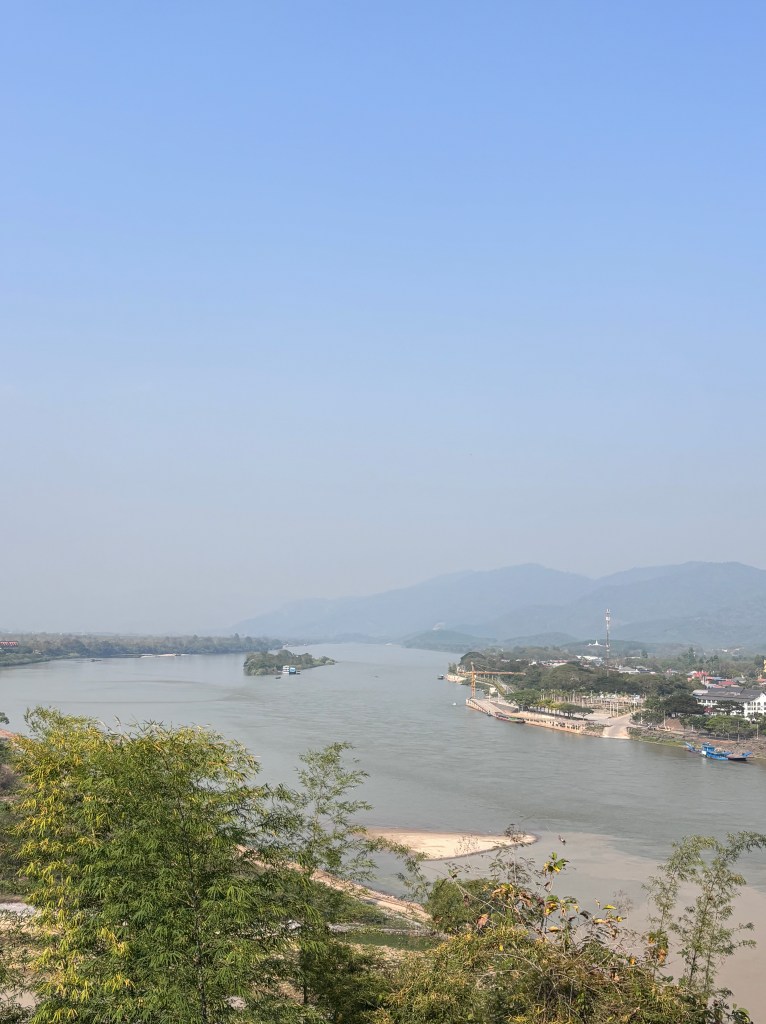
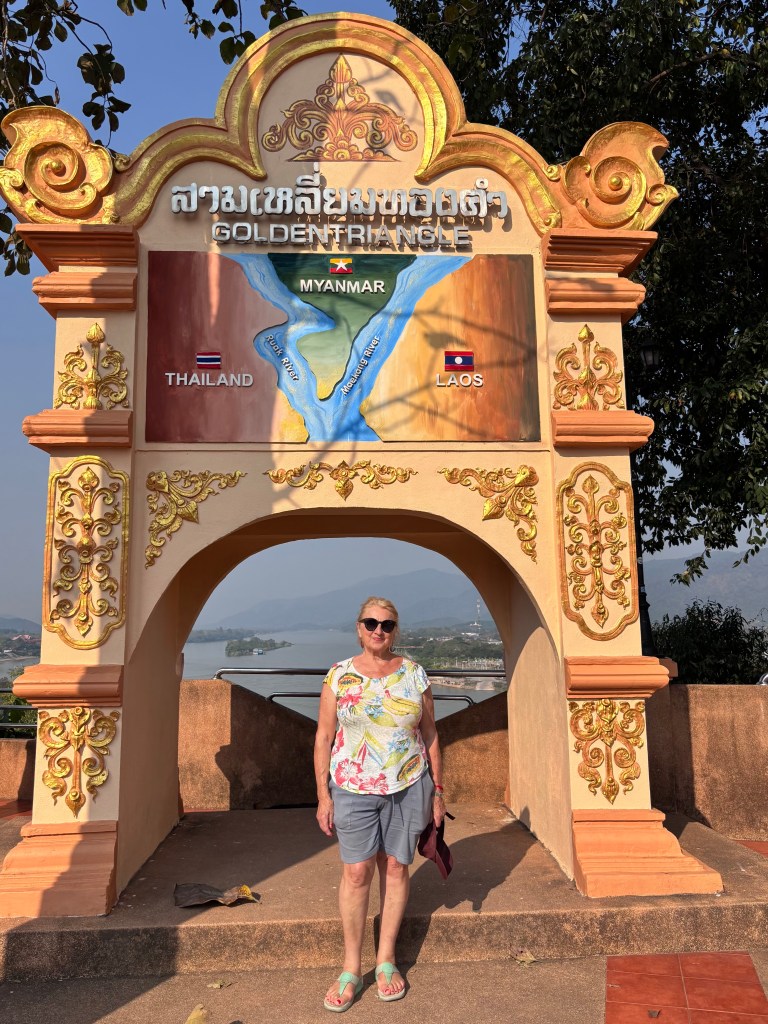
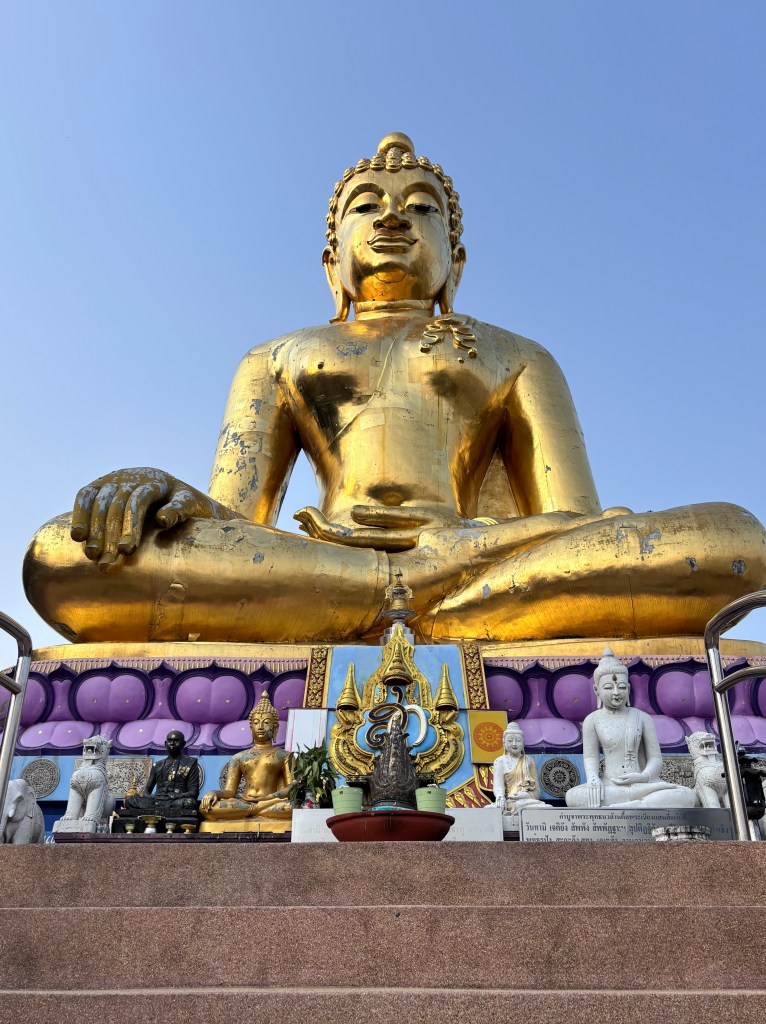
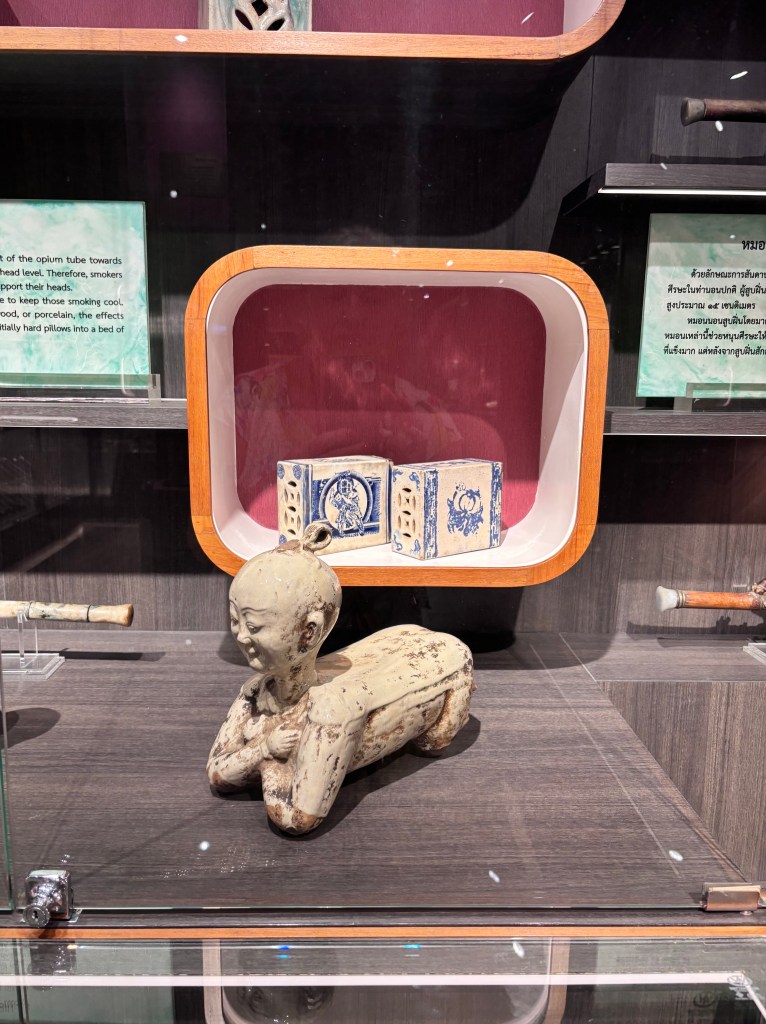
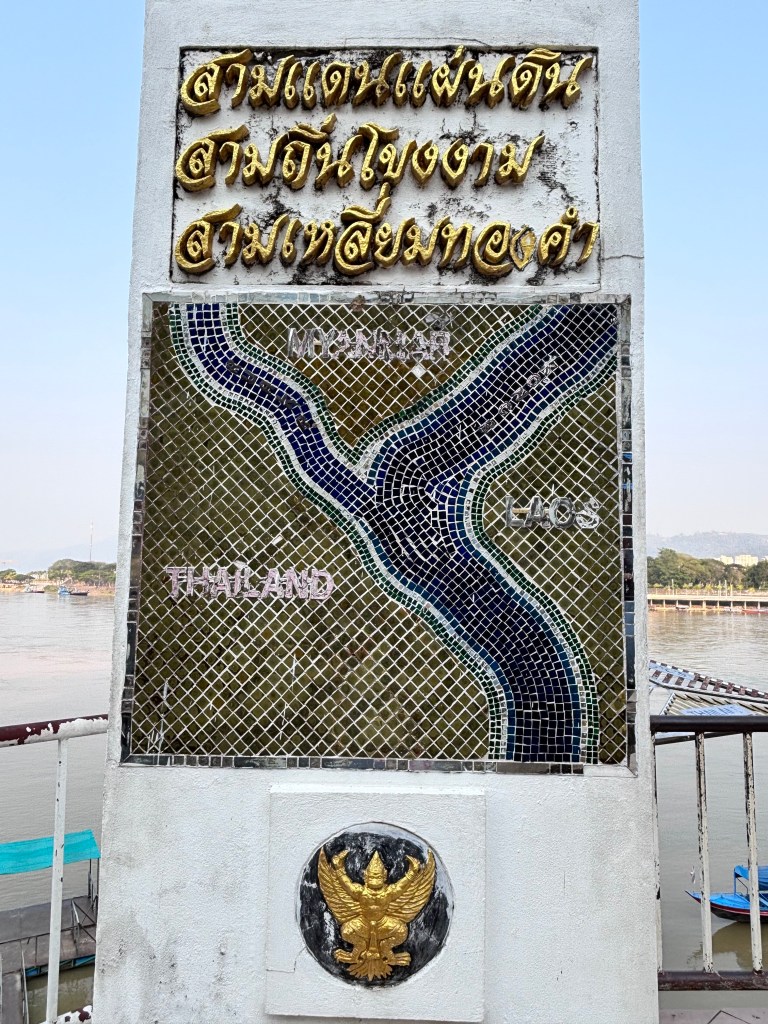
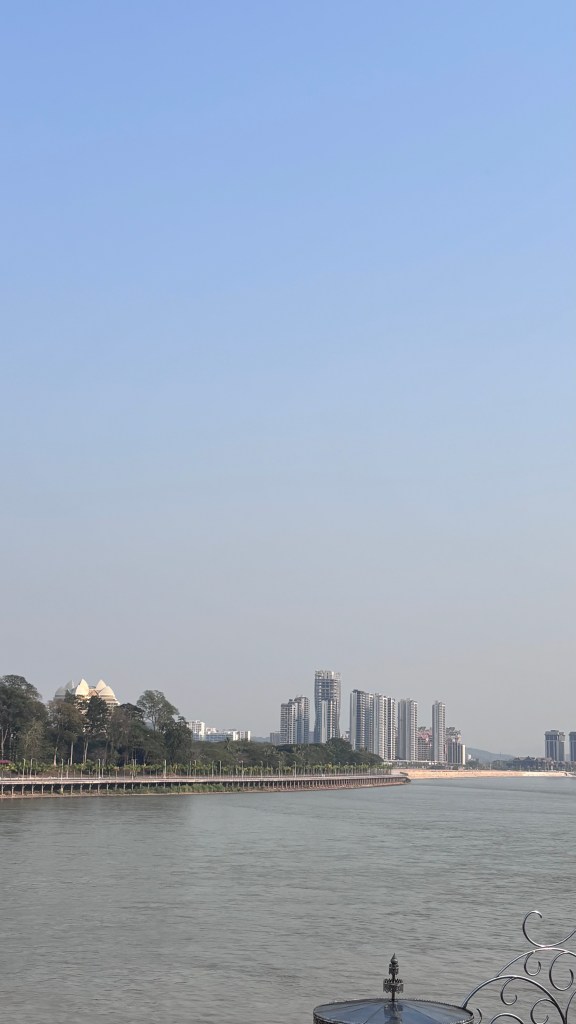
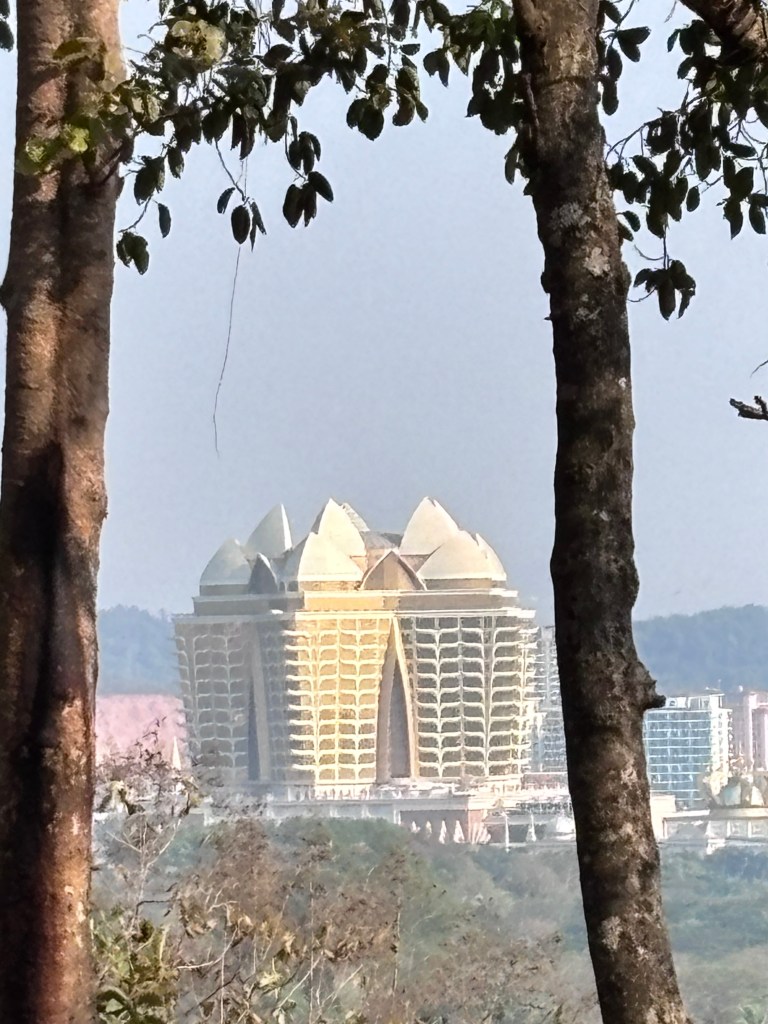
The Golden Triangle – the tripartite border between Thailand, Laos and Myanmar, famous because of the Opium trade (when opium was weighed in gold) and all the criminal activity that went with it – is now a tourist spot. The small Opium museum is good – interesting shape weights. Nice views from the peak above where the Ruak river flows from Myanmar into the Mekong over the landscape. Interestingly, the Chinese have taken a 99-year lease on a large chunk of land on the Laos side and have built a casino city there for the Chinese to visit (no gambling allowed in China…), with an airport and loads of skyscraper hotels. Looks totally out of place.
The new from the hill at the Golden triangleWe are all tourist sometimeThe opium smoker’s “pillow”The Chinese casino town across the river in LaosA casino/hotel…
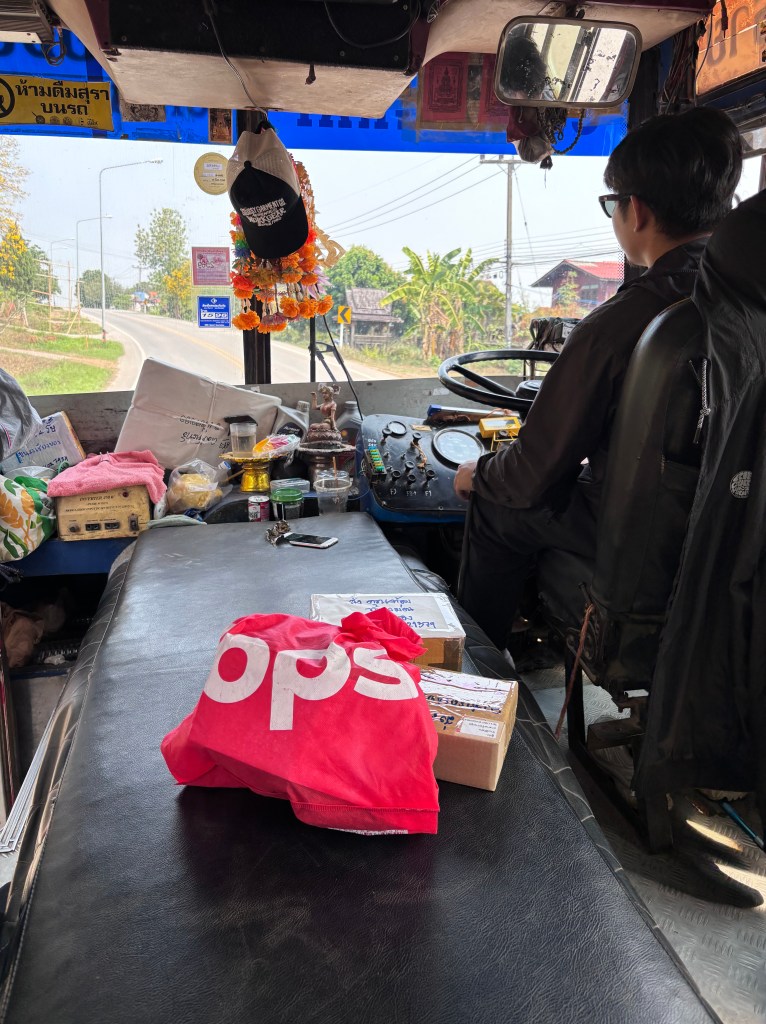
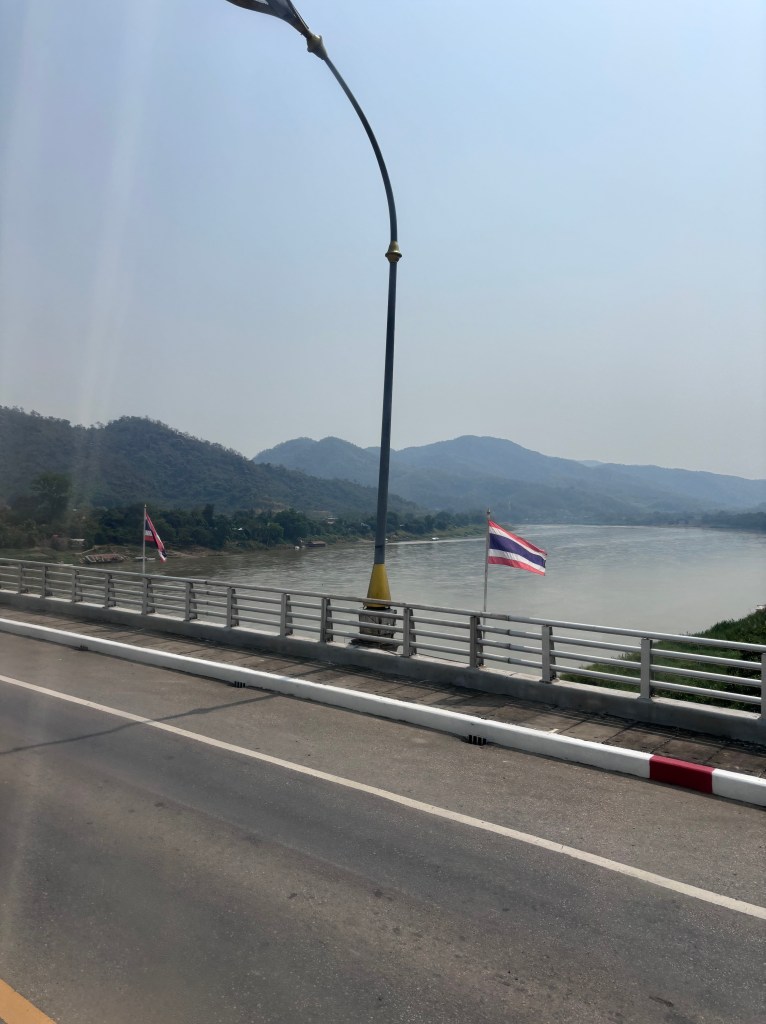
Took the local bus from Chiang Rai to the Friendship Bridge border crossing. The bus station timetable said 09:30 departure, but it only got going when it was full – over an hour later. Cost 140 Baht. The bus has seen better times. Everyone must take the shuttle across the bridge – no walking. (The cost is minimal. )
TheThai bus to the border with LaosFriendship BridgeTuk tuk from the Bridge into Huayxai
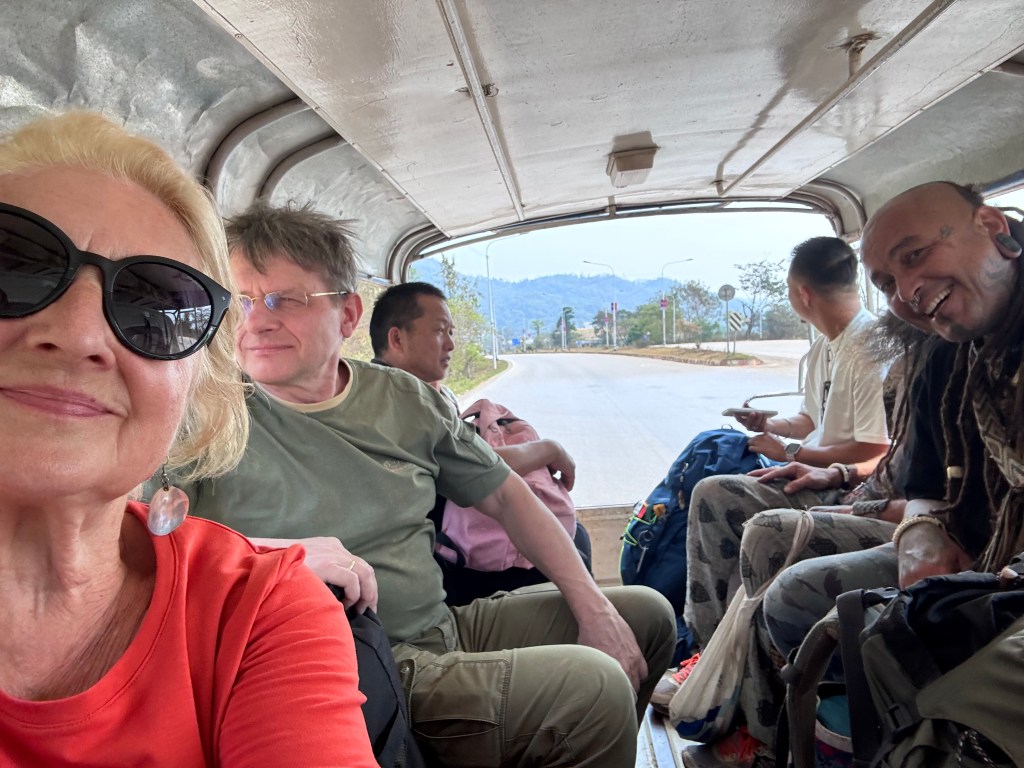
The Lao visa on arrival requires $40 in crisp, unfolded notes, a photograph and a couple of forms. The shuttle bus into Huayxay had to be negotiated though the drivers know they’ve got you – there is no other way to get into town. We paid 100K kip each. The Lao kip is fairly worthless – £200 got me some 5,5 million kip.
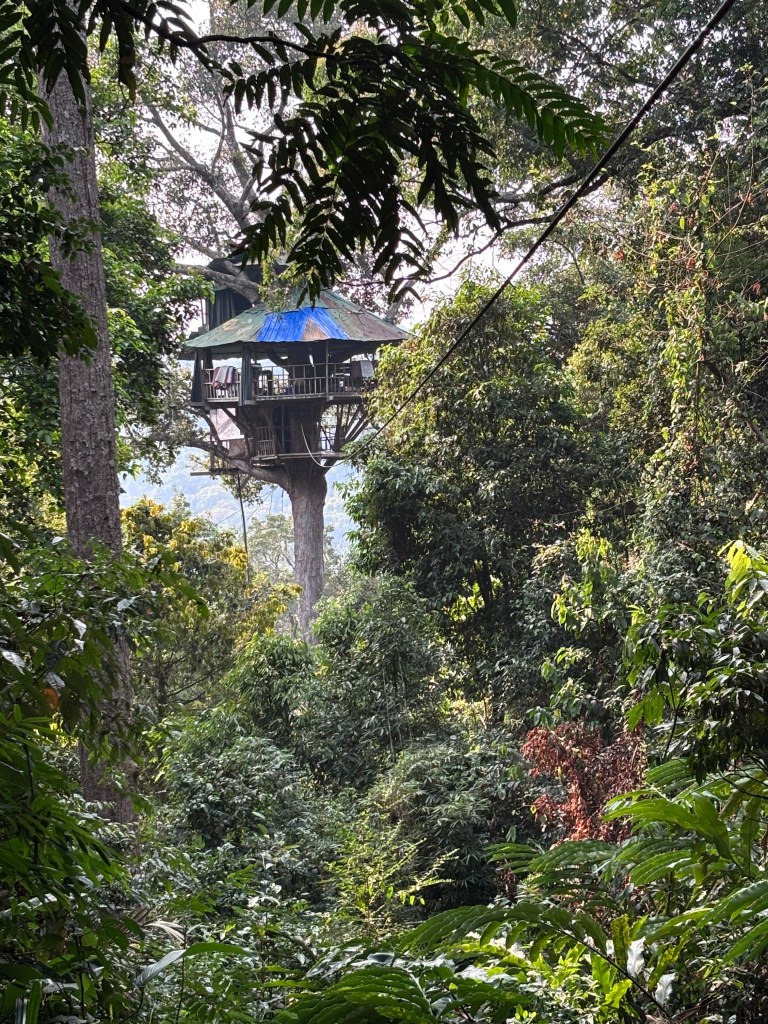
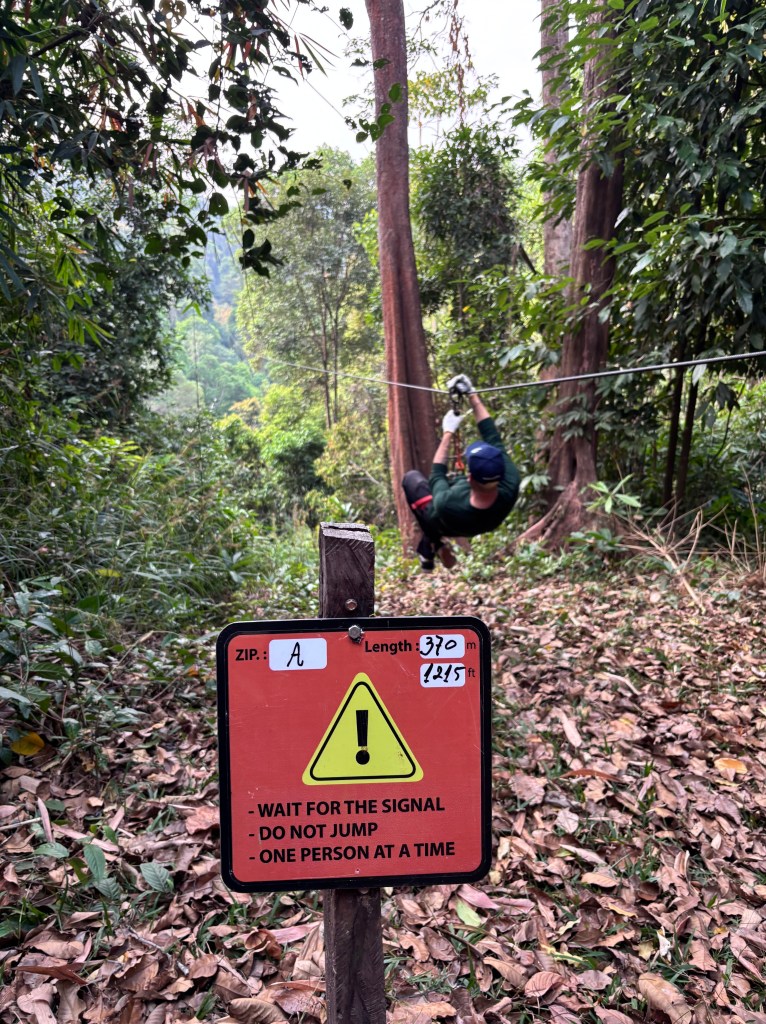
Huayxay is a small riverside village, distinguished by two things: it is the home of The Gibbon Experience, a conservation project combined with zip-lining and staying in tree houses, and it is from where the slow boat goes down the Mekong to Luang Prabang, a two day journey.
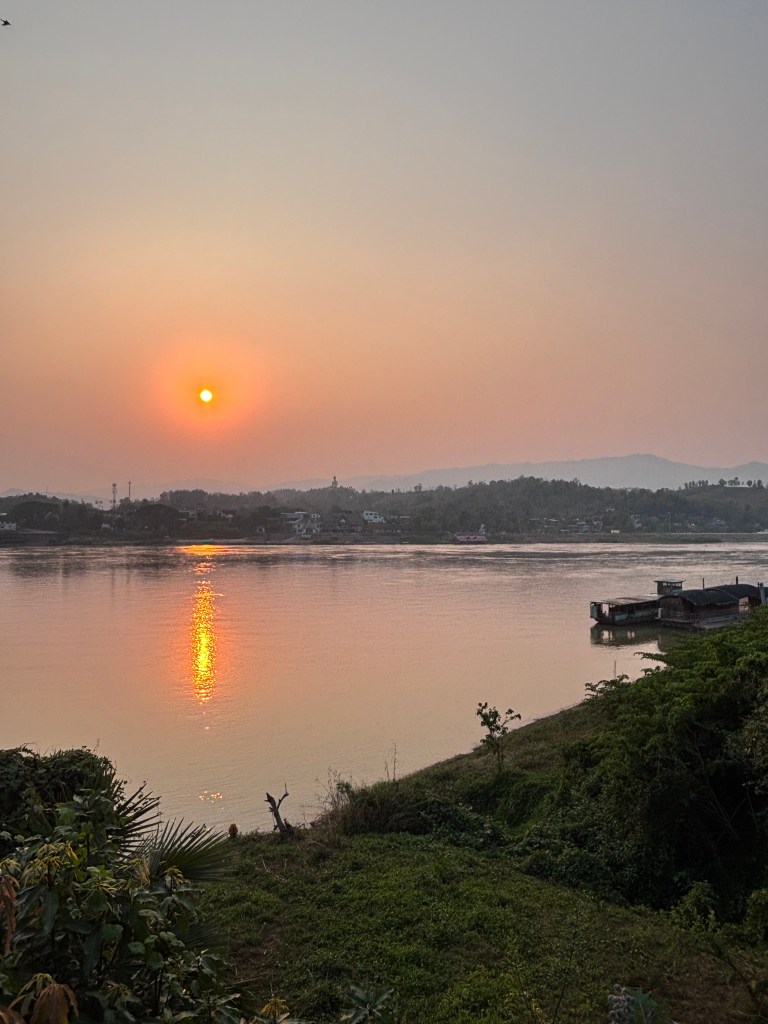
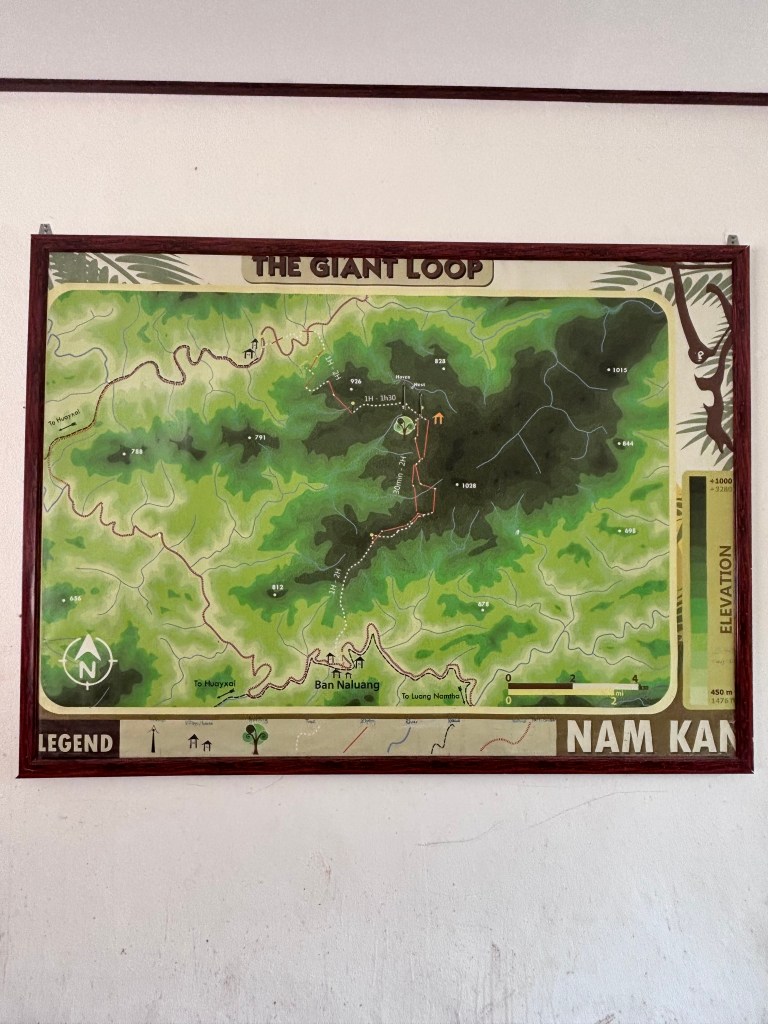
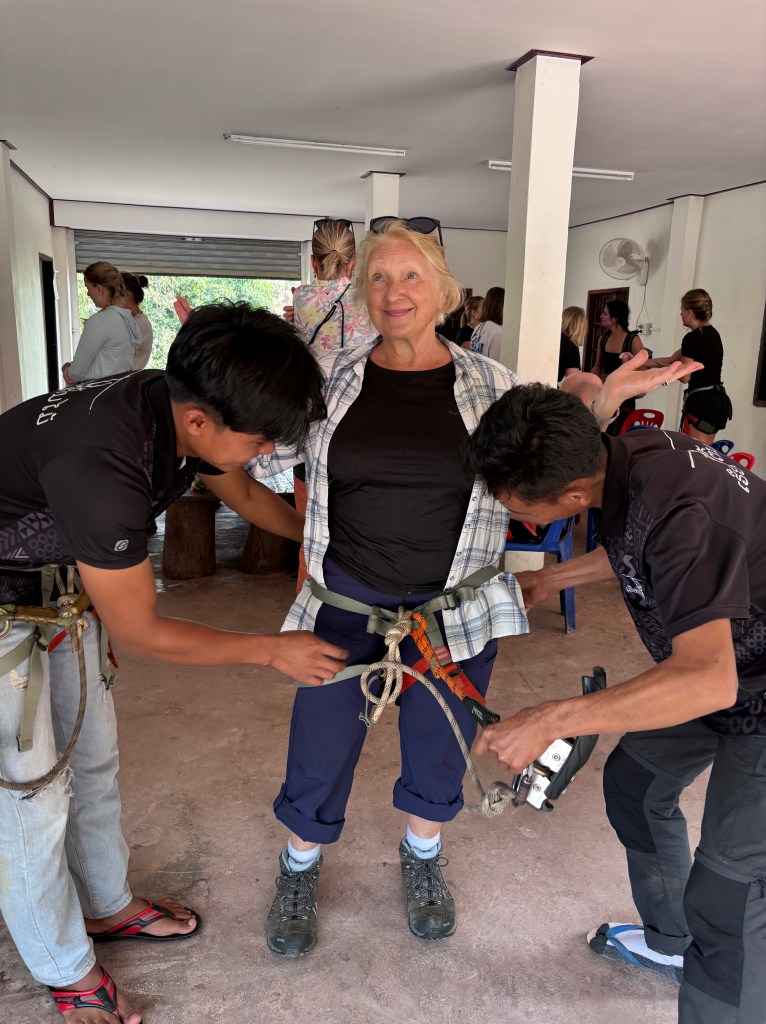
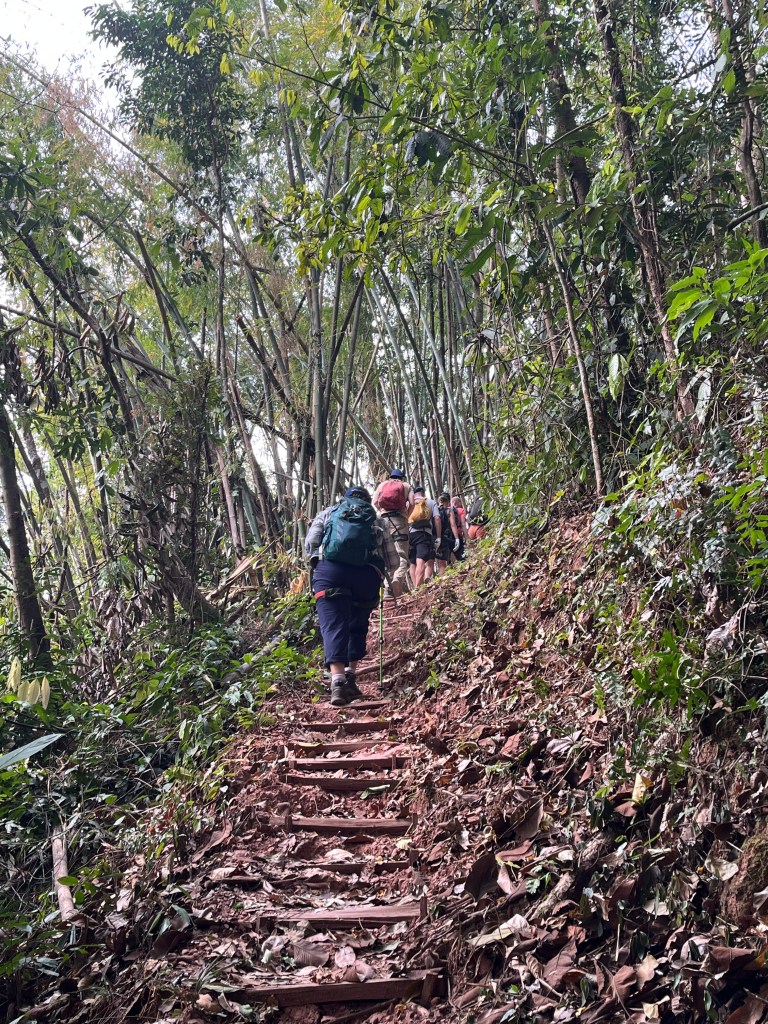
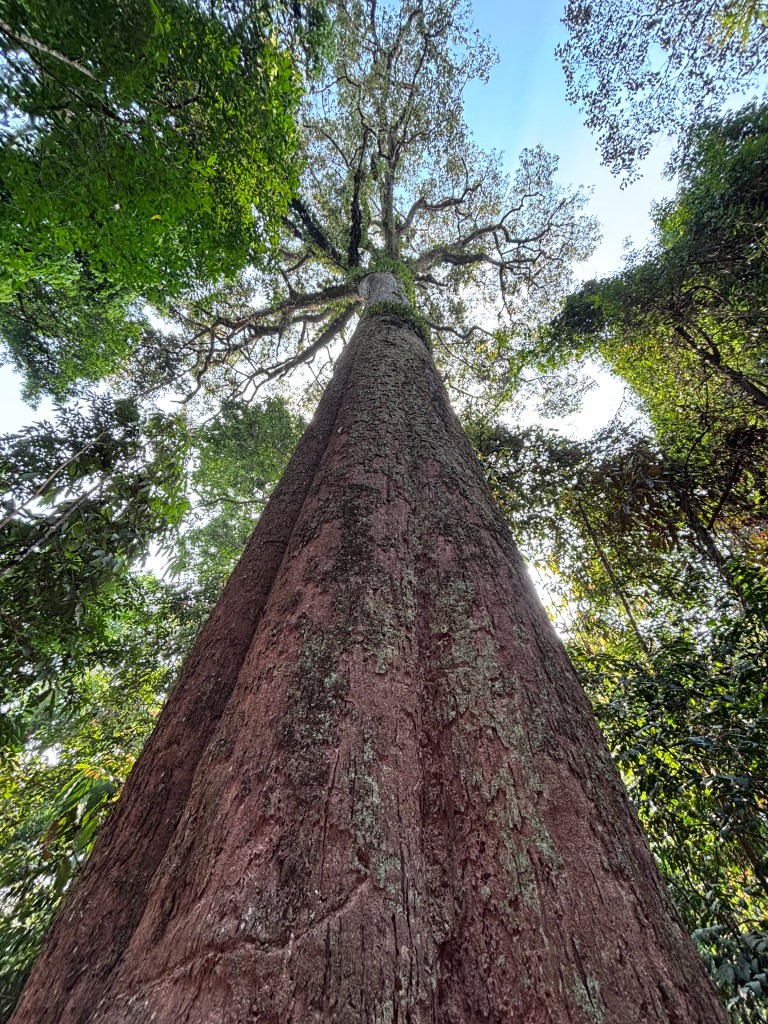
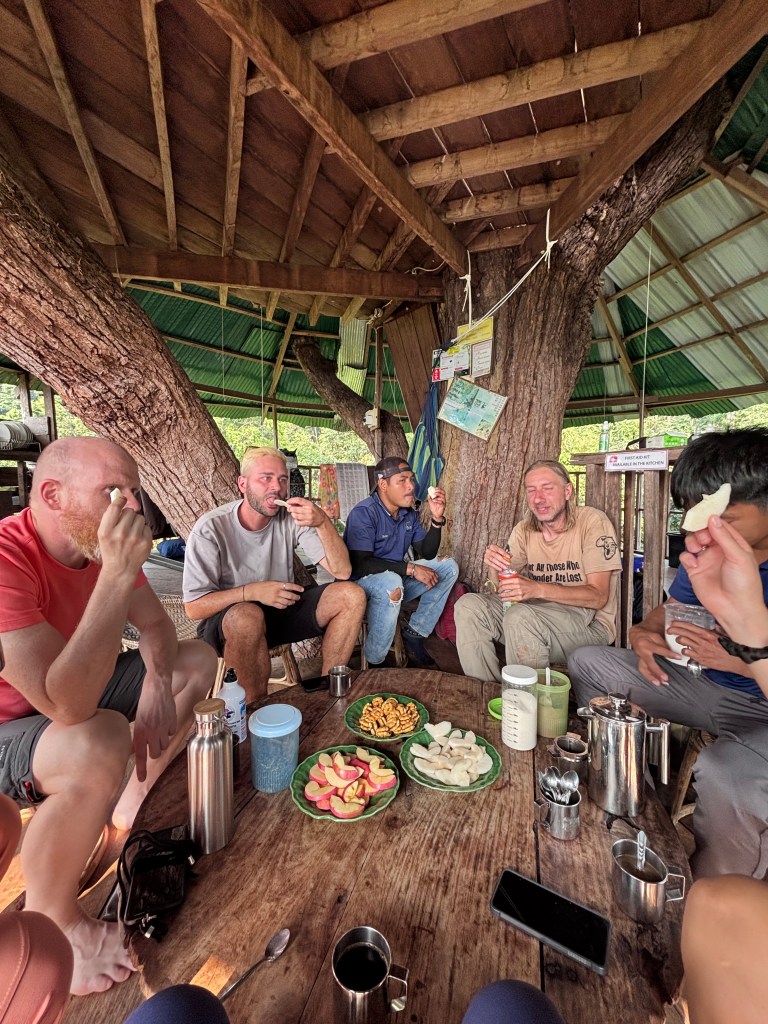
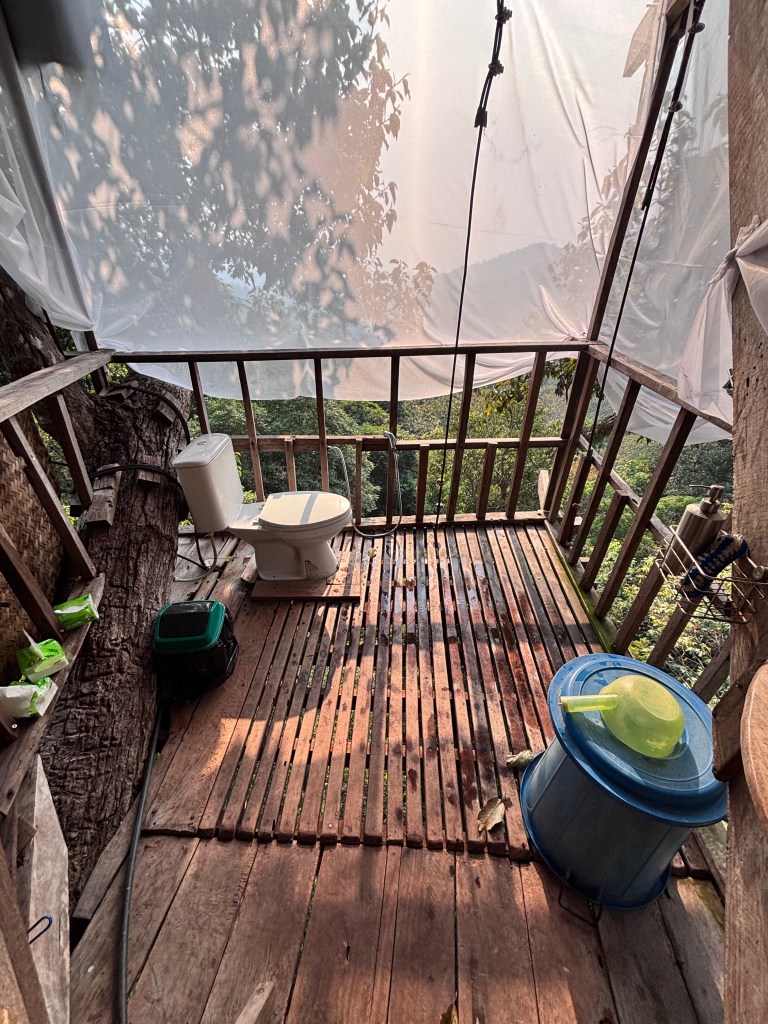
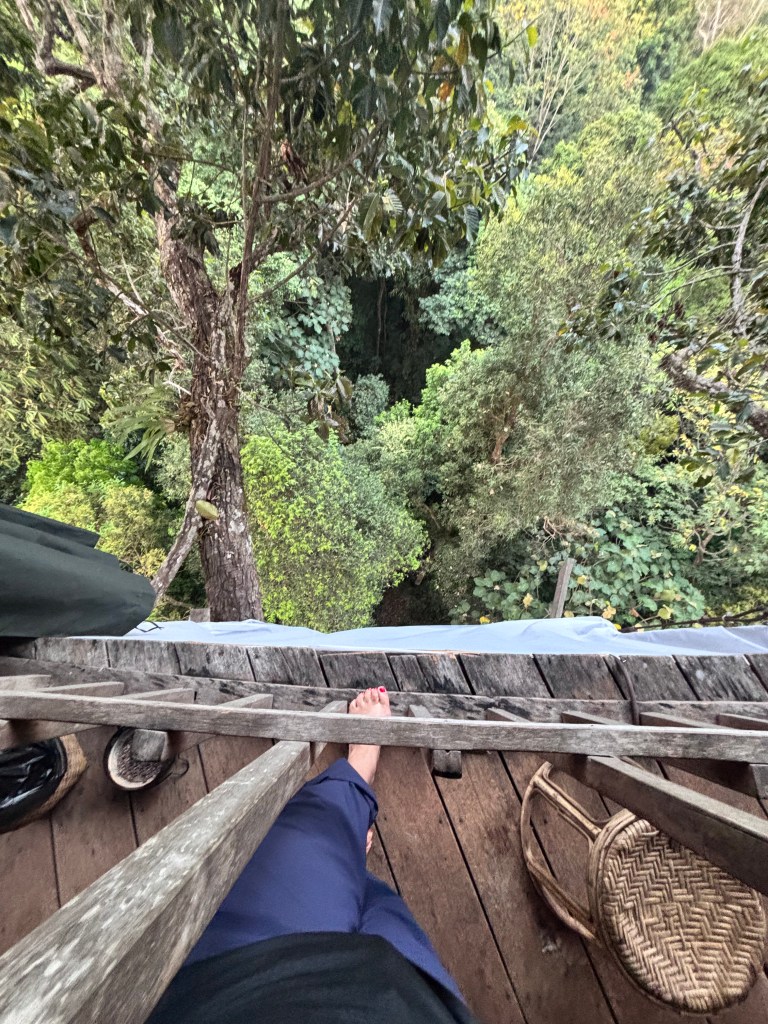
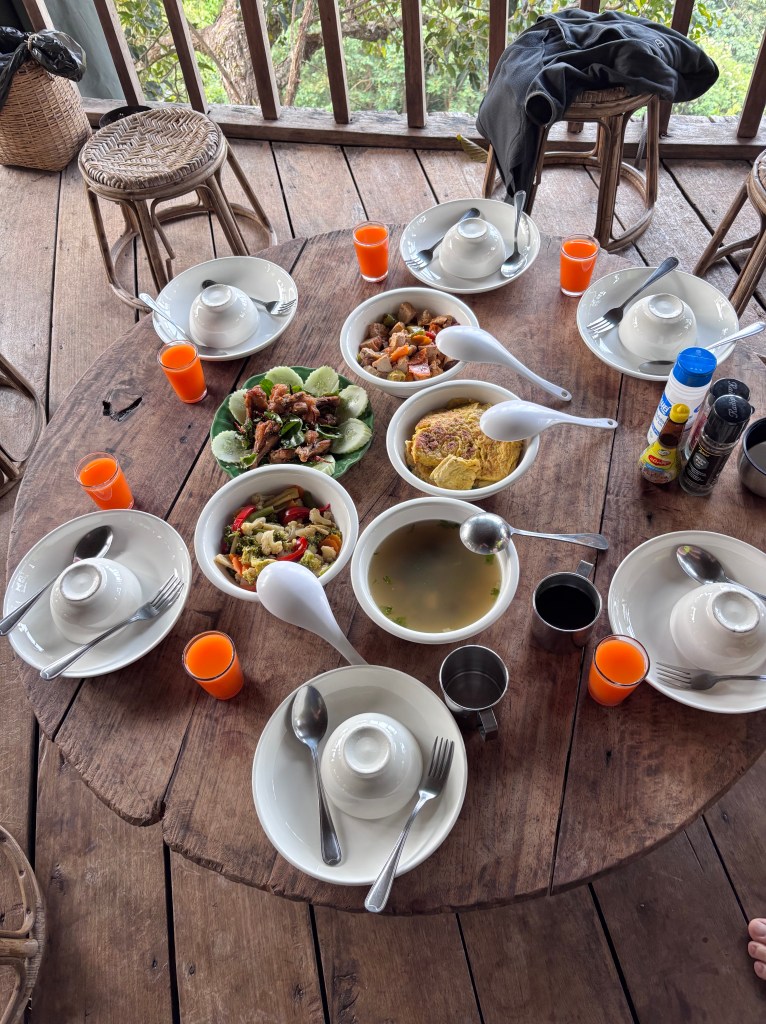
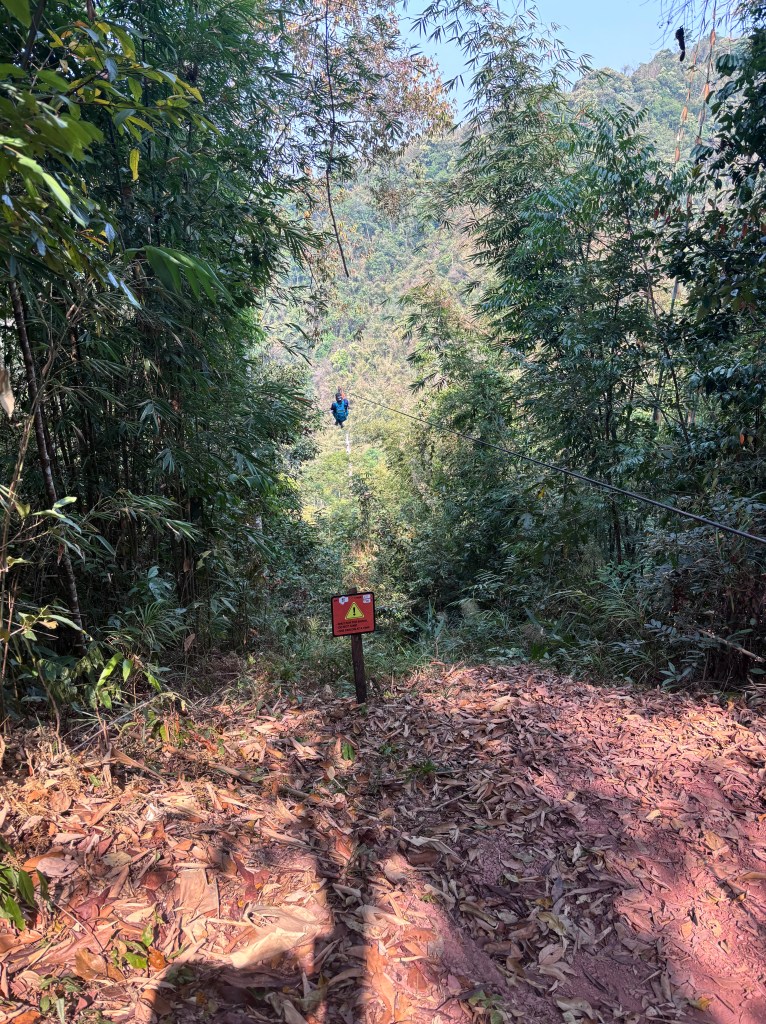
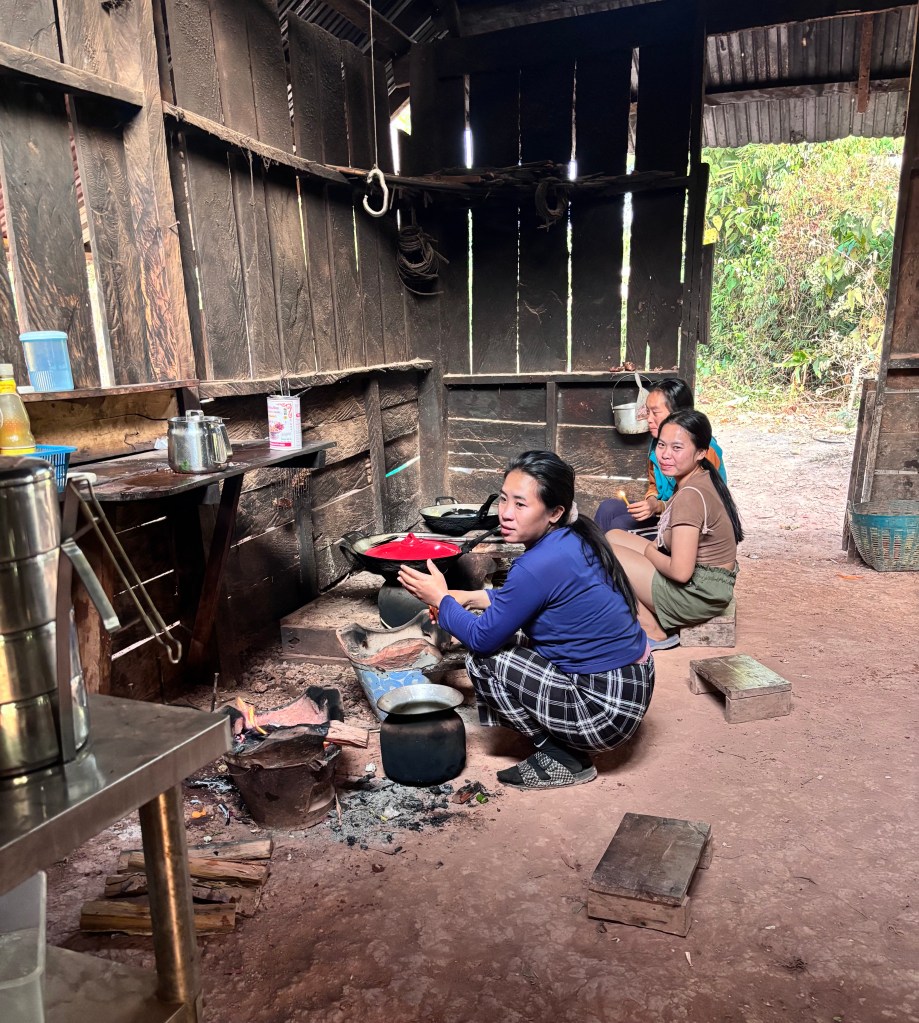
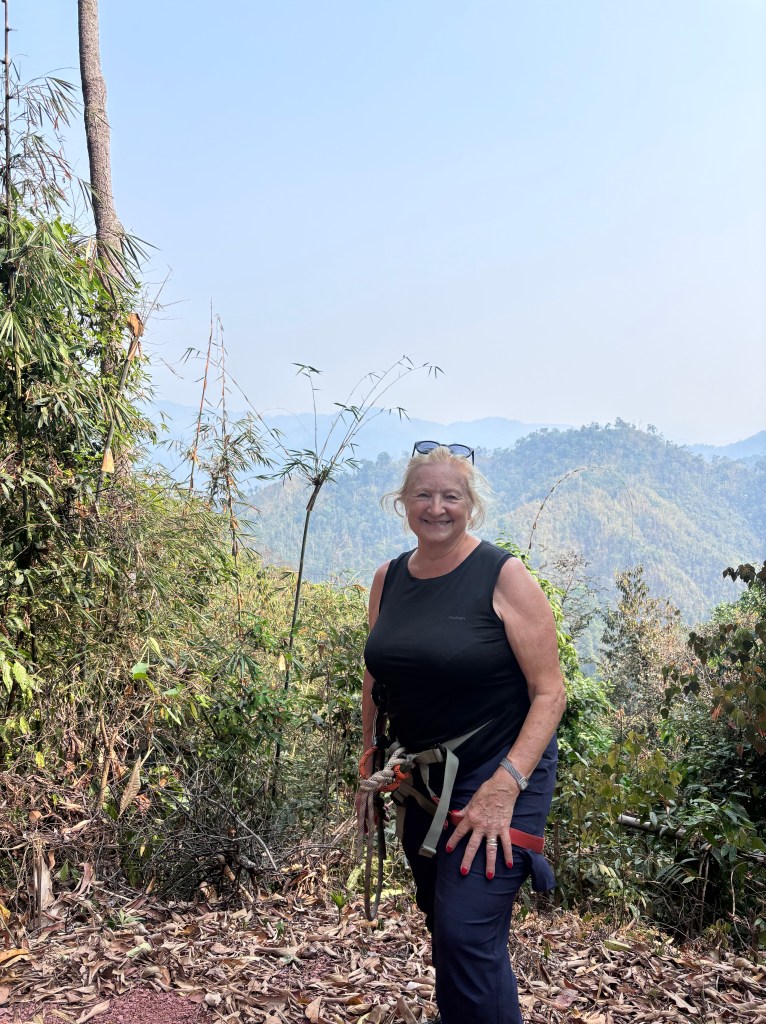
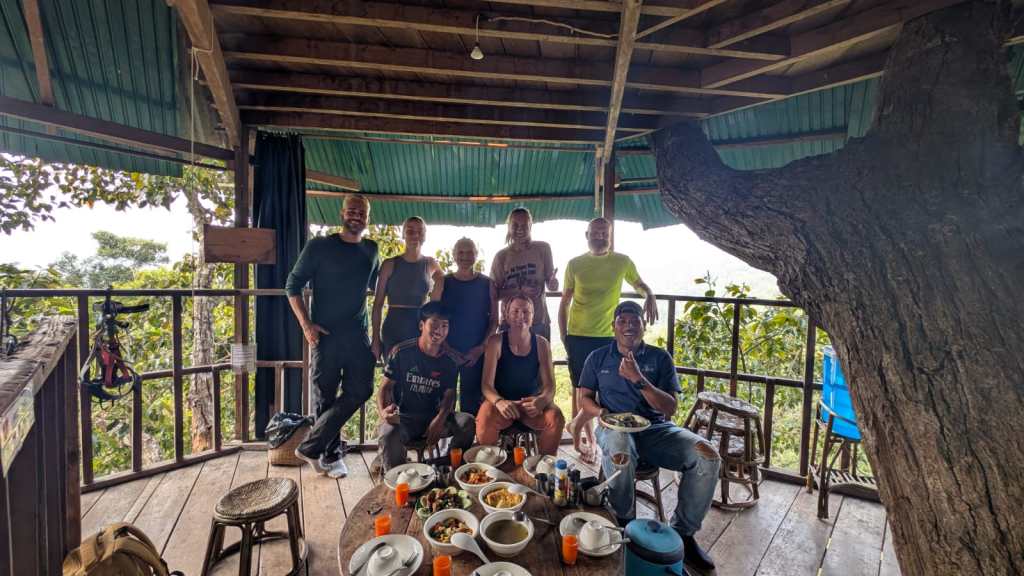
Sunset over the MekongThe Gibbon Experience mapGetting harnessedIt was VERY HOT walking up a VERY STEEP hill…“The biggest tree in Laos” said the guideOur accommodation for the night – 40 metres up and only accessible via a ziplineWe were a nice group of 6Toilet and showerGreat views everywhereWe travelled some 13 K on 25 zip lines…Wonderful breakfastThe women in the mountain kitchen who cooked out meals – and zipped them to us!
The gibbons we did not see – they have moved further into the jungle – there have been forest fires and the area is too busy with humans.
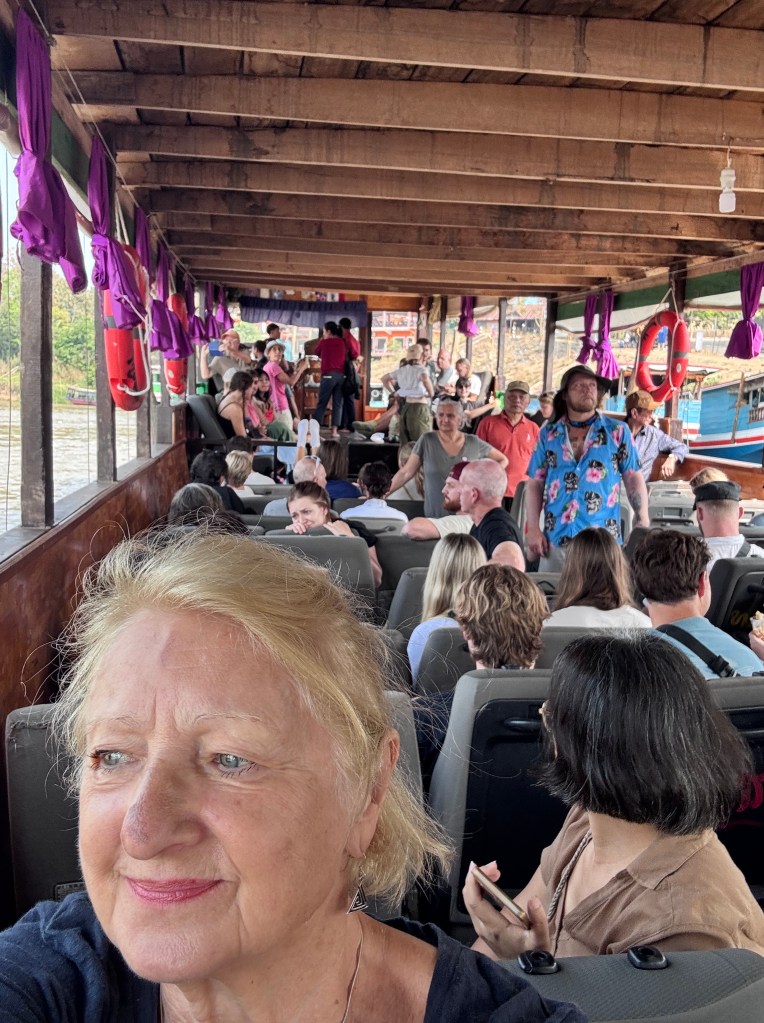
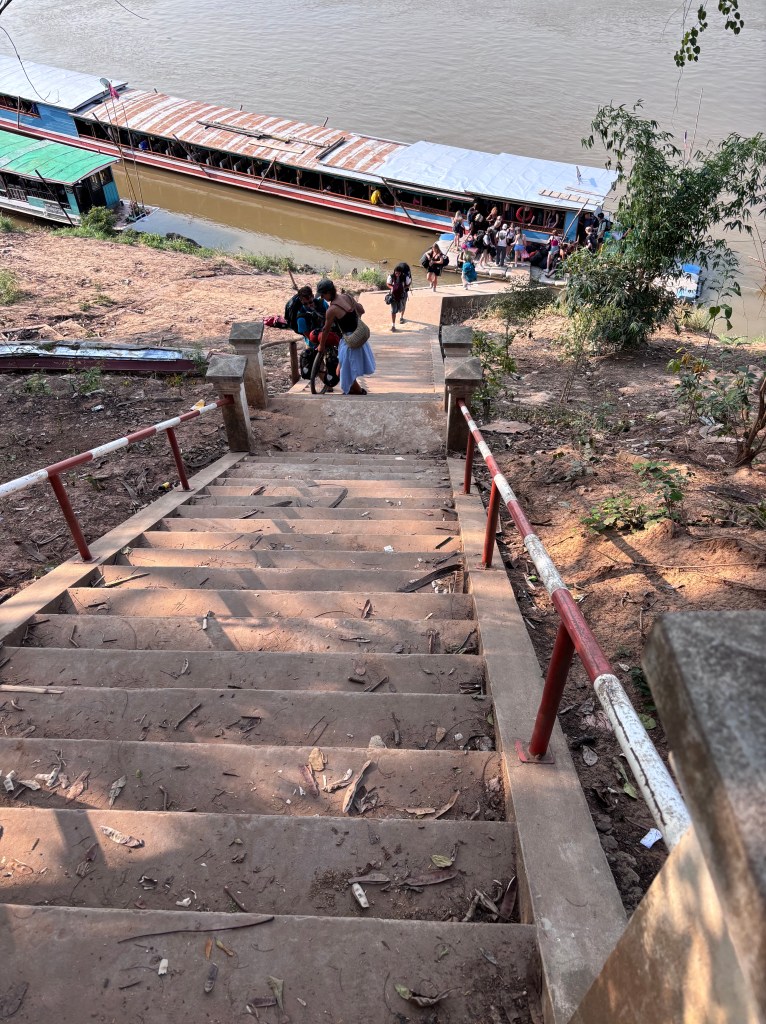
Huayxay is now a thriving tourist spot and though the slow boat still sees a local person coming on and off, 98% is tourists. The cost of the boat trip is 400,000 kip (and 50,000 for the tuk tuk to take you to the landing). The boat stops for the night about half way, in Ban Pakbeng, and everyone must get off. A lot of hostels, restaurants and guesthouses have sprung in this hamlet on the steep side of the Mekong. The next day, we were on different boat – it looks like they are sharing the burden and the income.
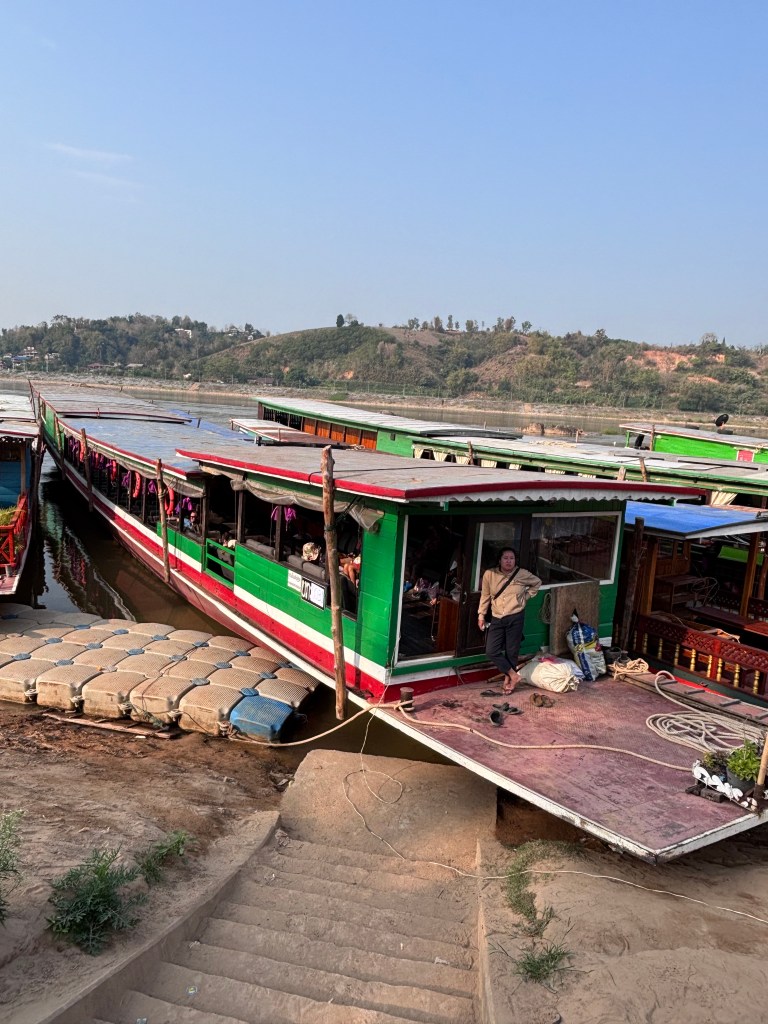
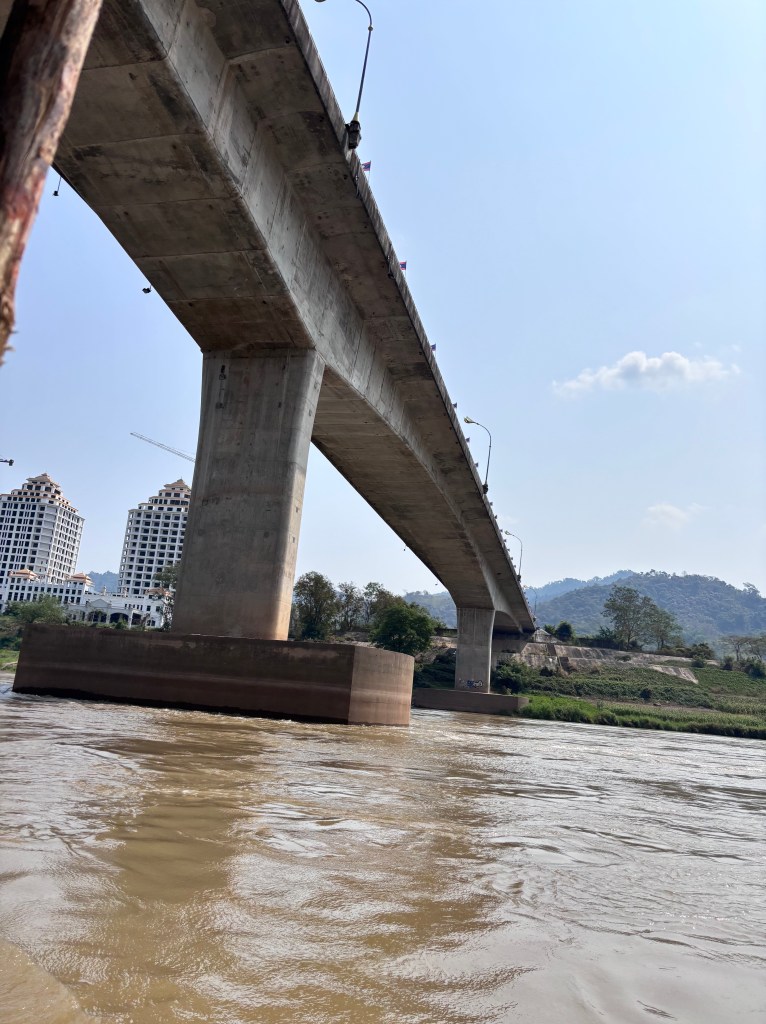
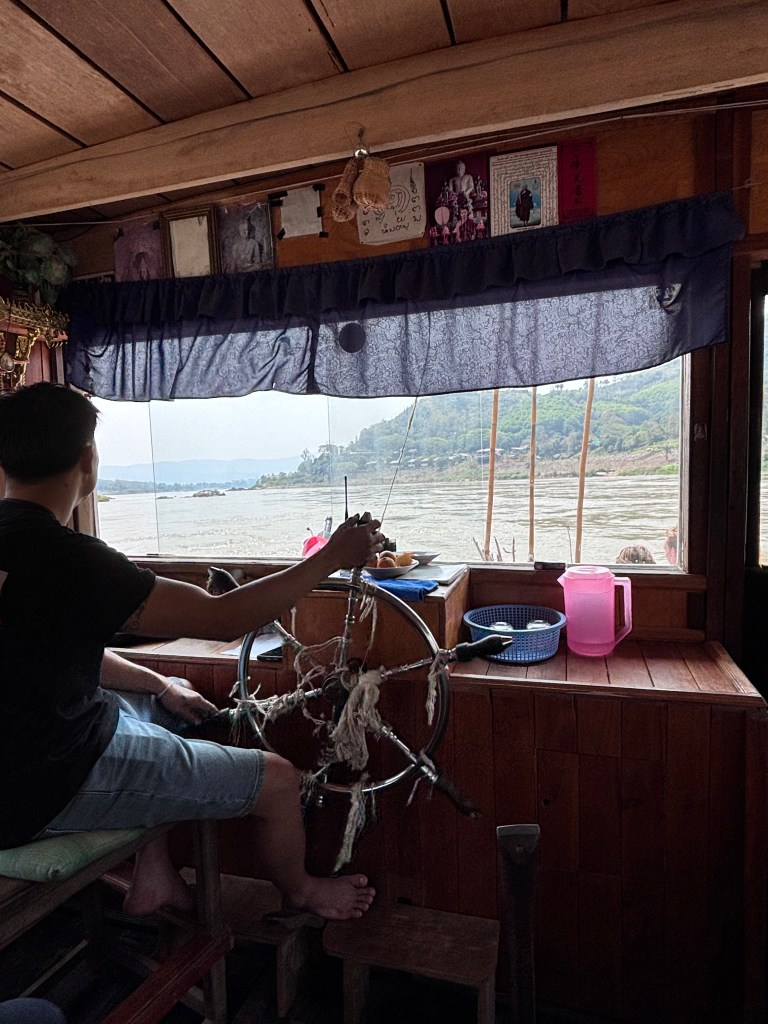
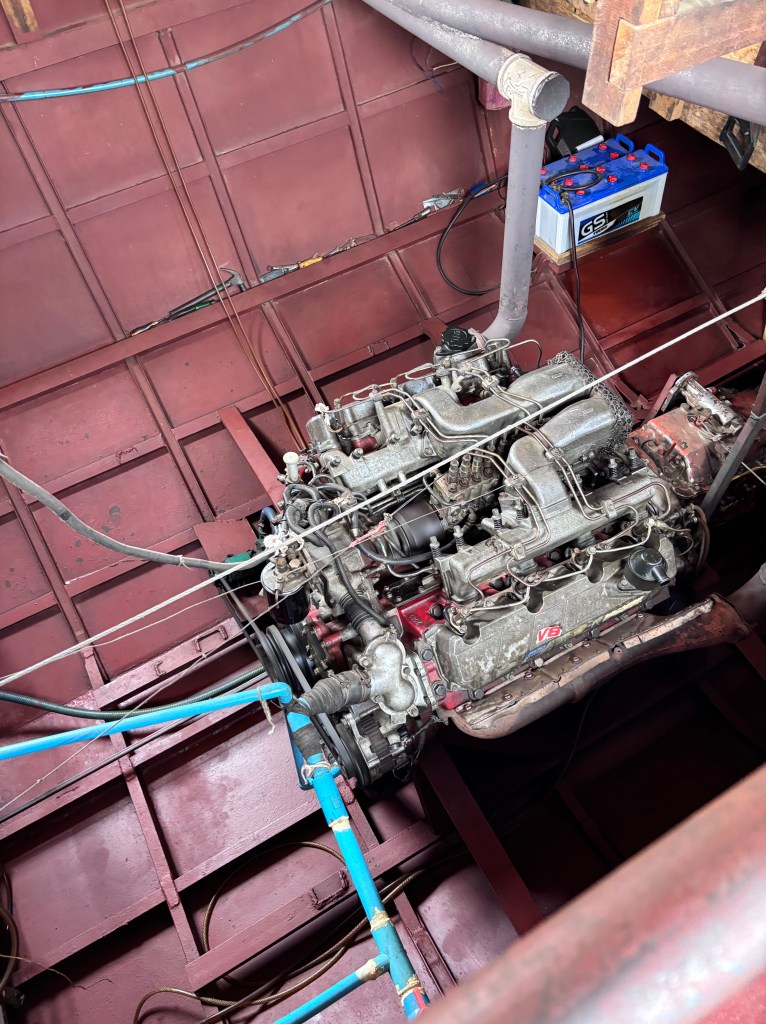
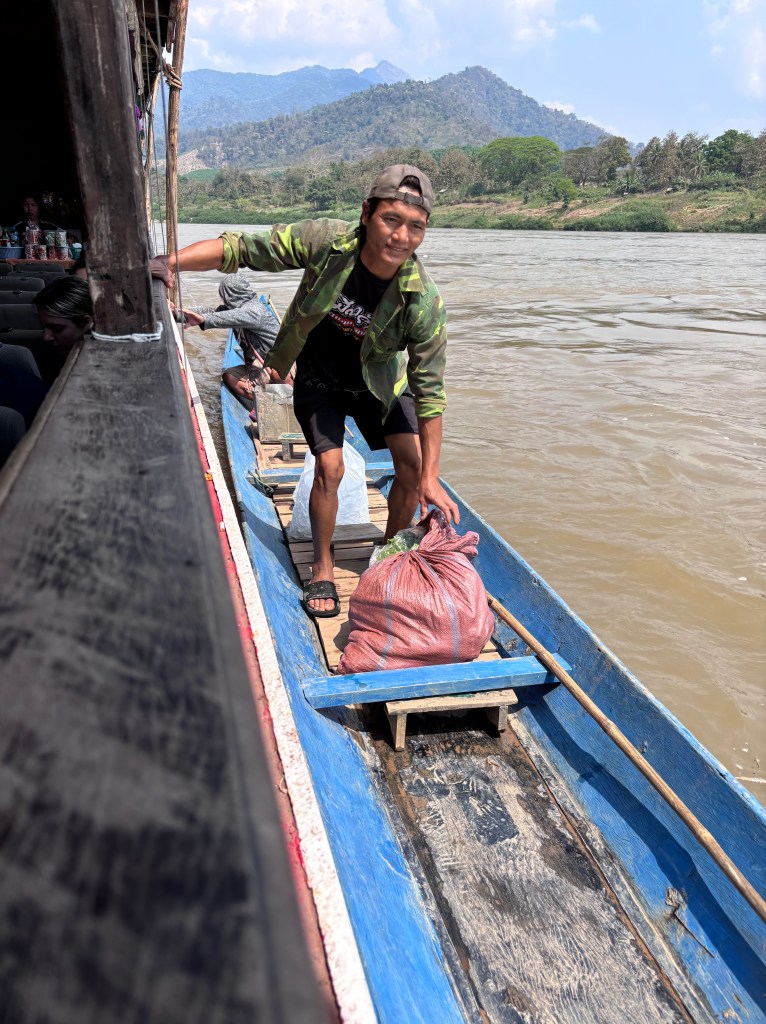
The slow boat – it can take some 100+ peopleFriendship bridge from belowThe captain at work – lots of treacherous rocks aboutThrumming engineLocal delivery – on the move
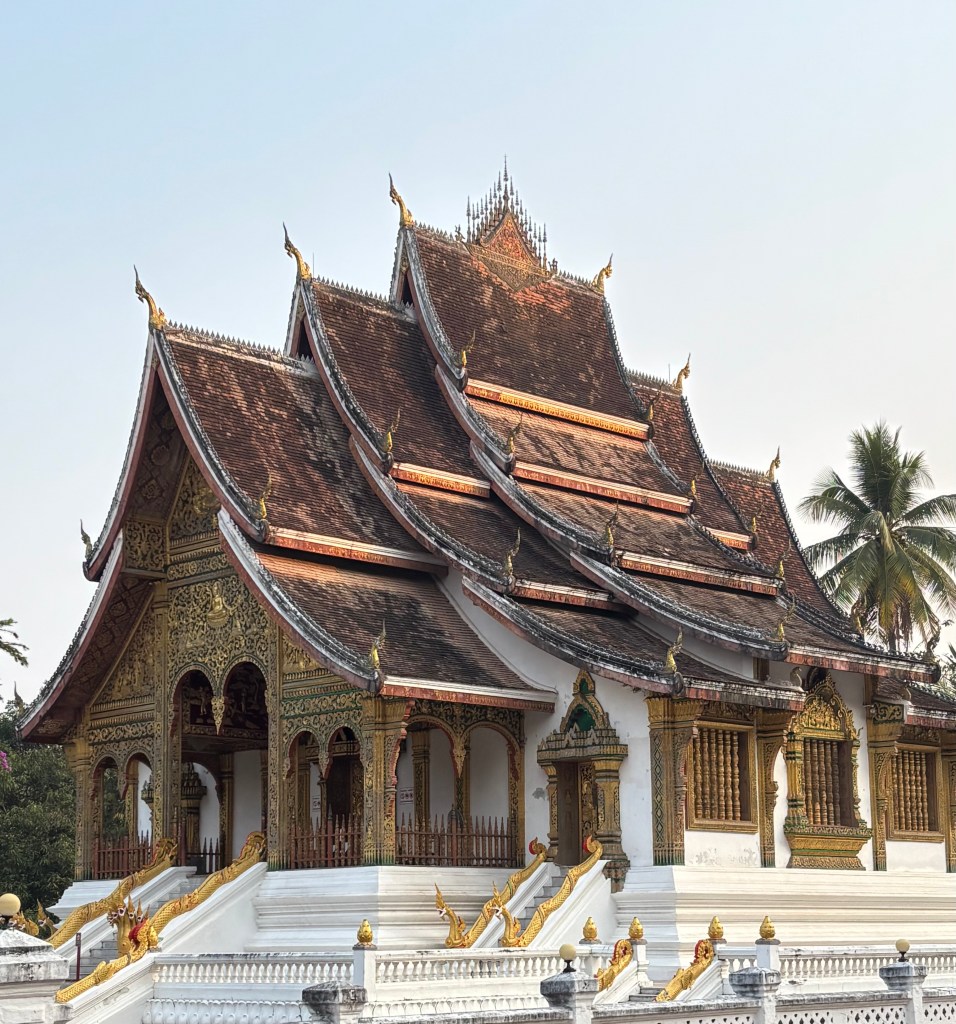
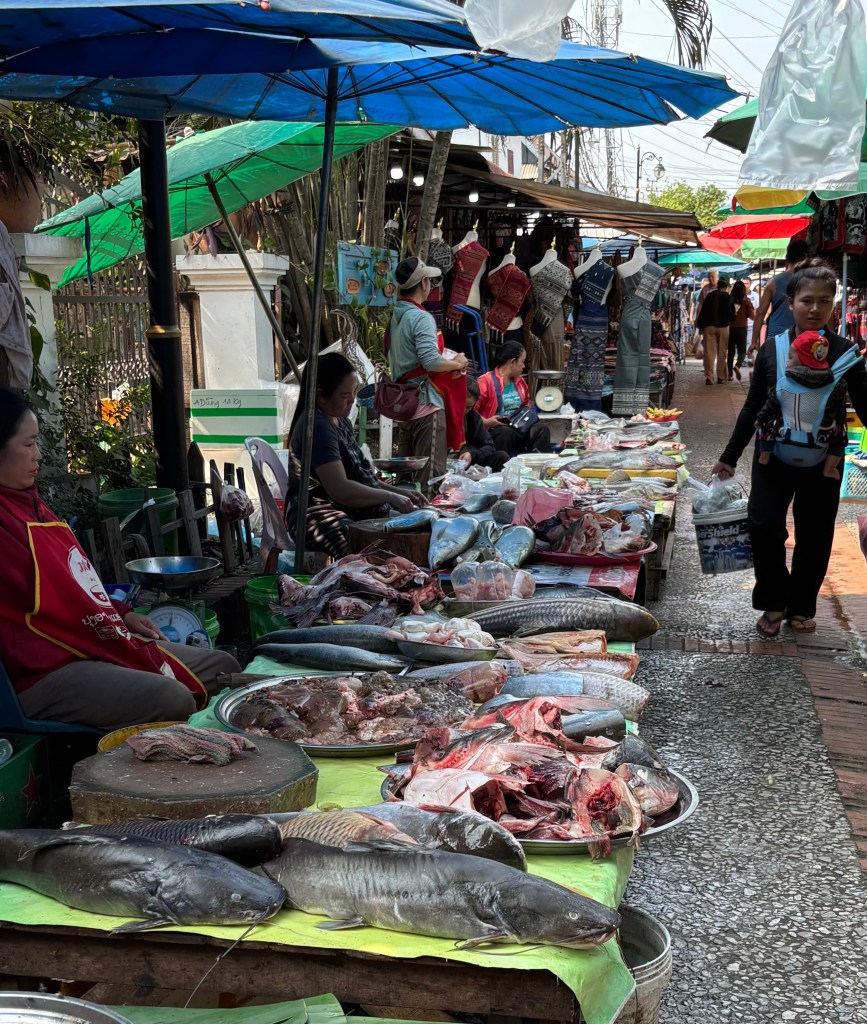
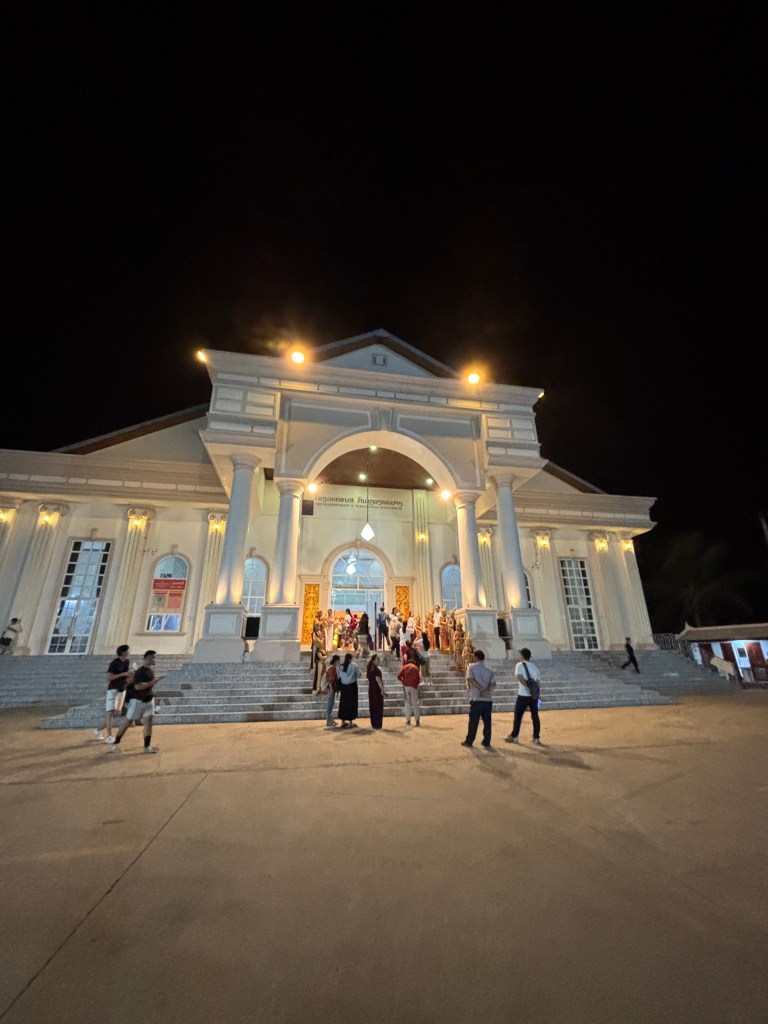
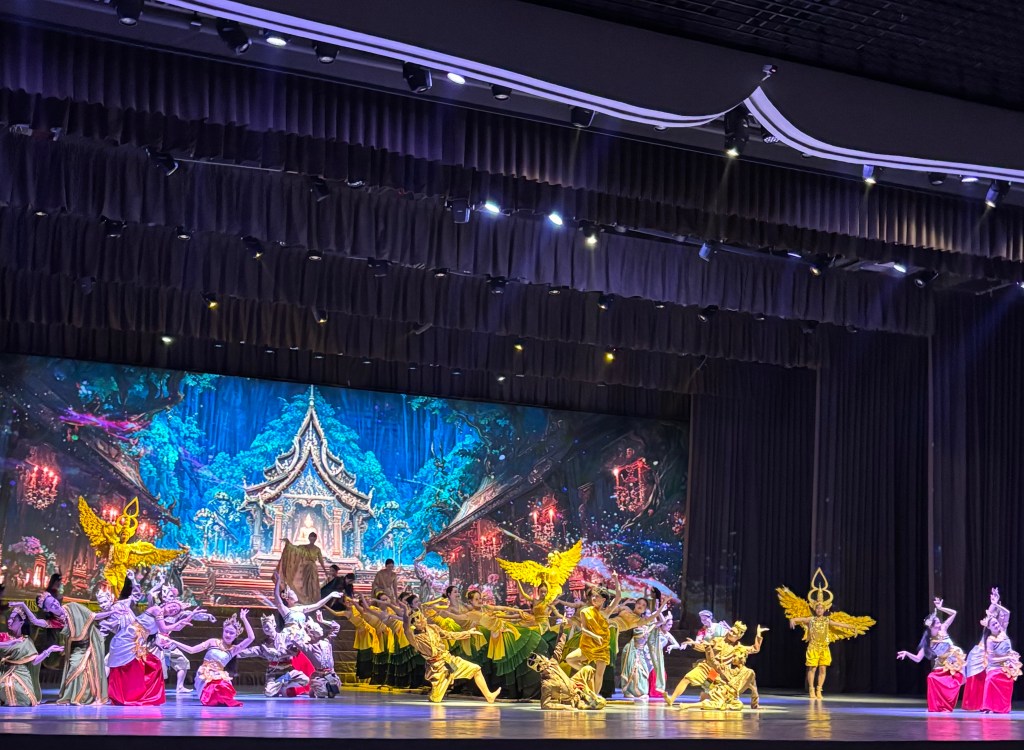
The Slow boat pier at Luang Prabang is some distance from the town and the tuk tuks charge 100,000 kip pp – and no negotiating gets it down as they know they’ve got us. Luang Prabang is pretty, packed with ancient wats, Buddhist seminaries, markets and night markets, nice views of the Mekong, restaurants offering local and western food. There’s even an International Opera house, a grandiose, socialist style columned edifice where I saw the Buddhist Light, a dance performance combining stories from the life of Buddha with stories of Lao life.
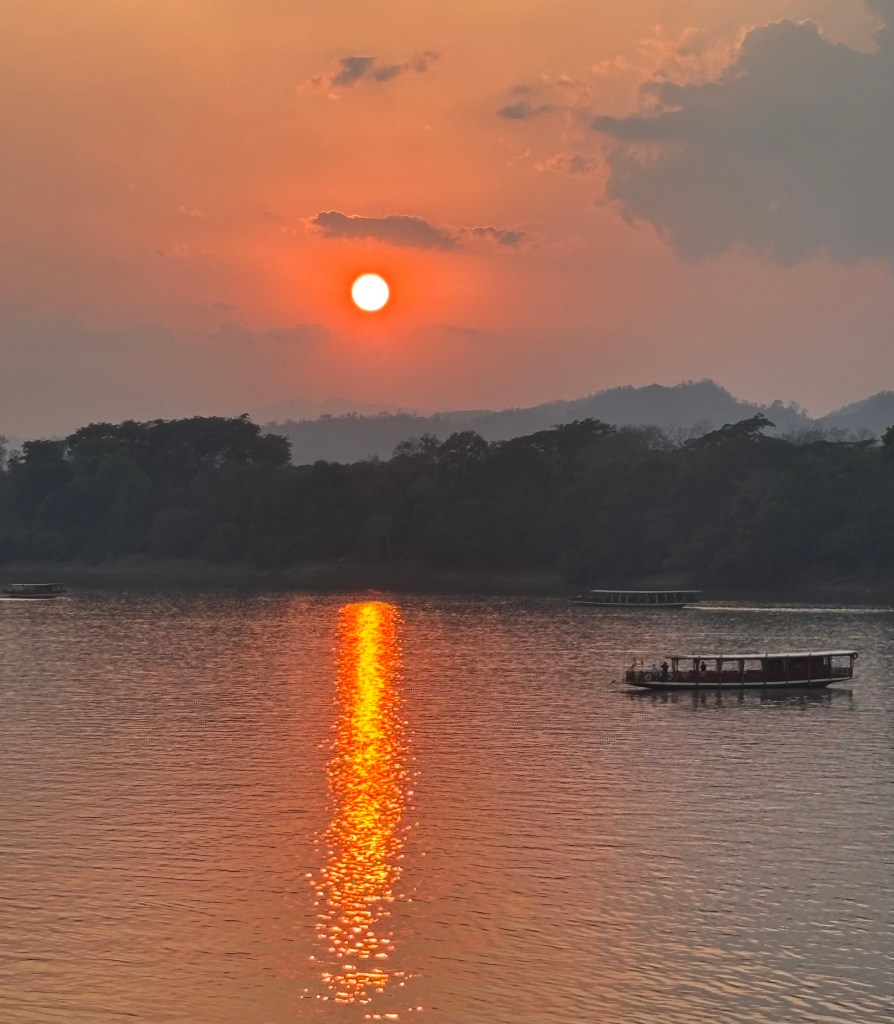
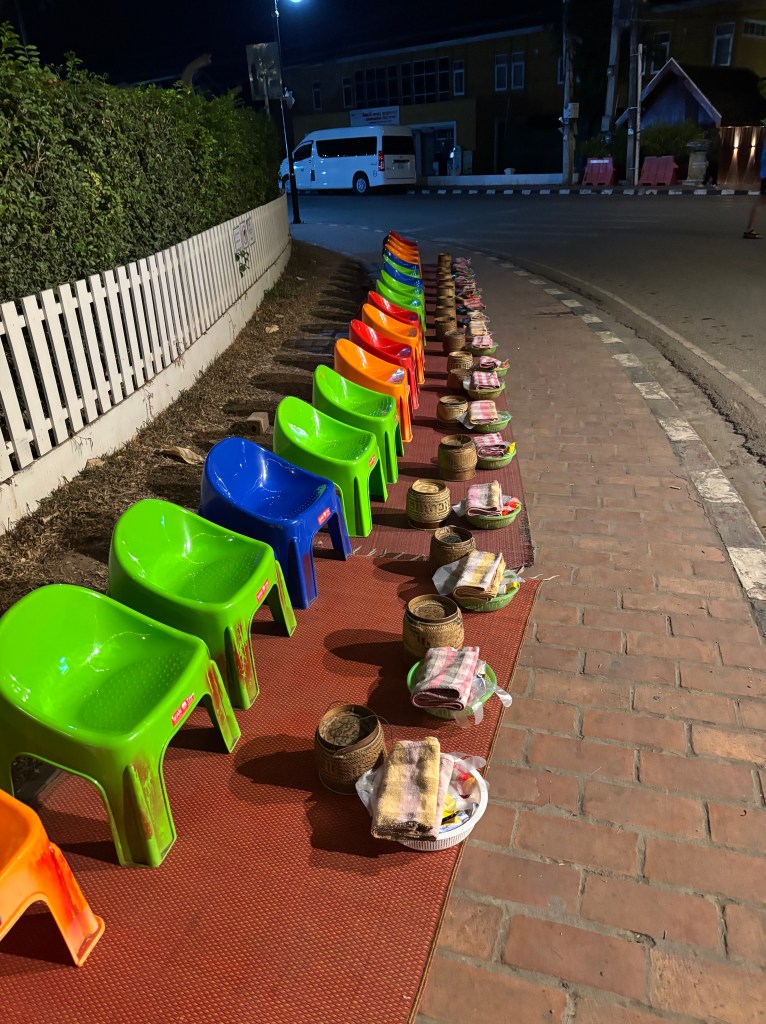
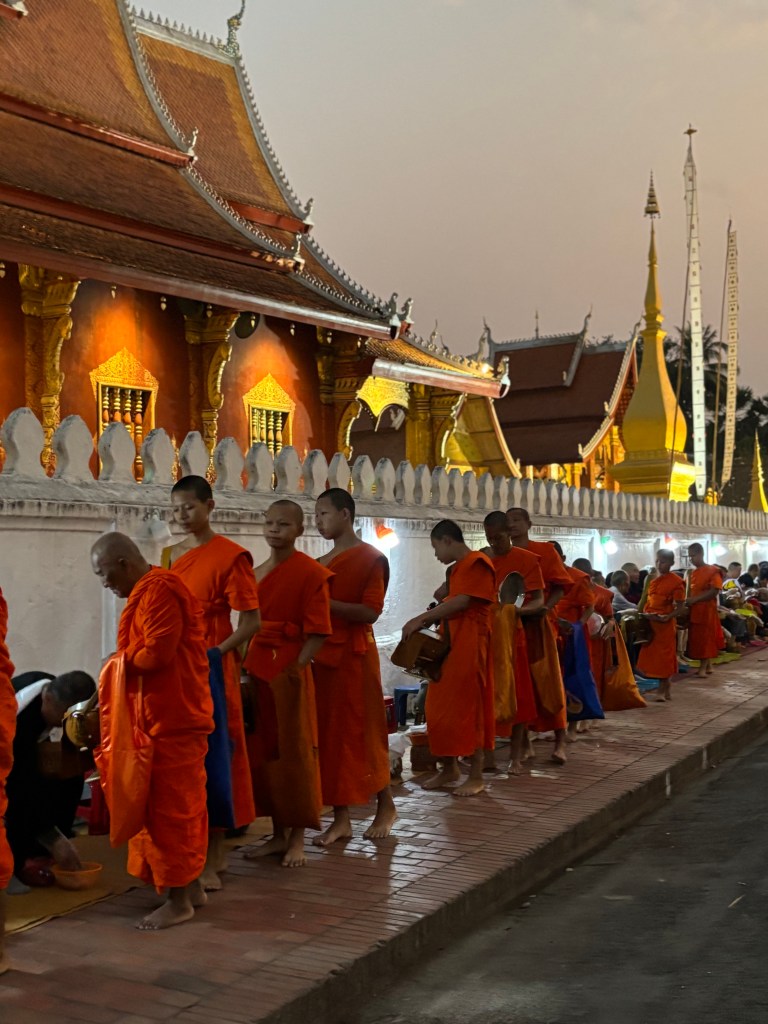
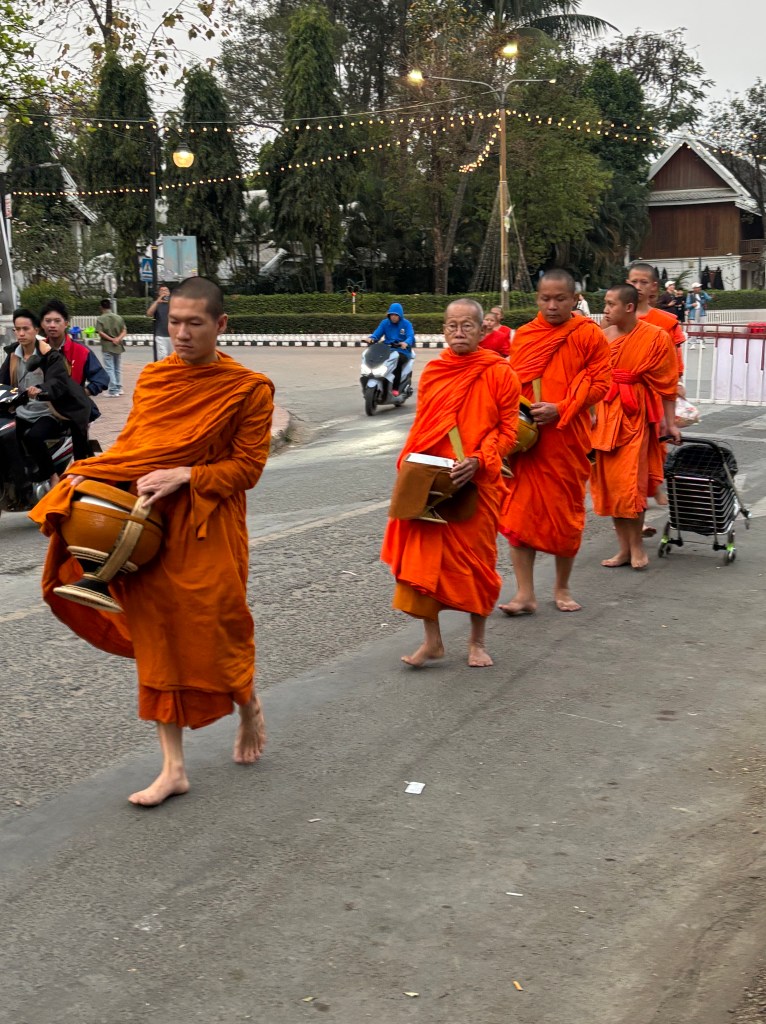
The Slow Boat pier outside Luang PrabangA Mekong sunsetOne of Luang Prabang’s many watsLocal fish at the local marketThe Luang Prabang International Opera HouseThe Buddhist Light performance05:30 am – Awaiting hundreds of tourists (Chinese all) who will be giving alms to the Buddhist monks for the photo oppMany more tourists than monks….Taking home the booty
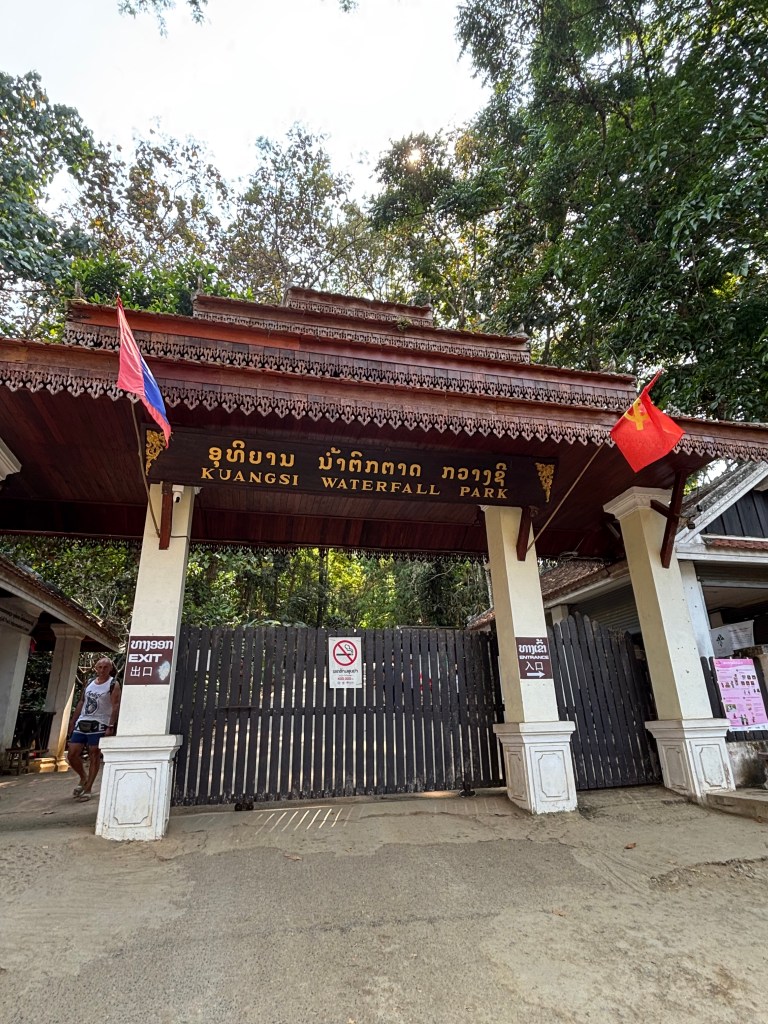
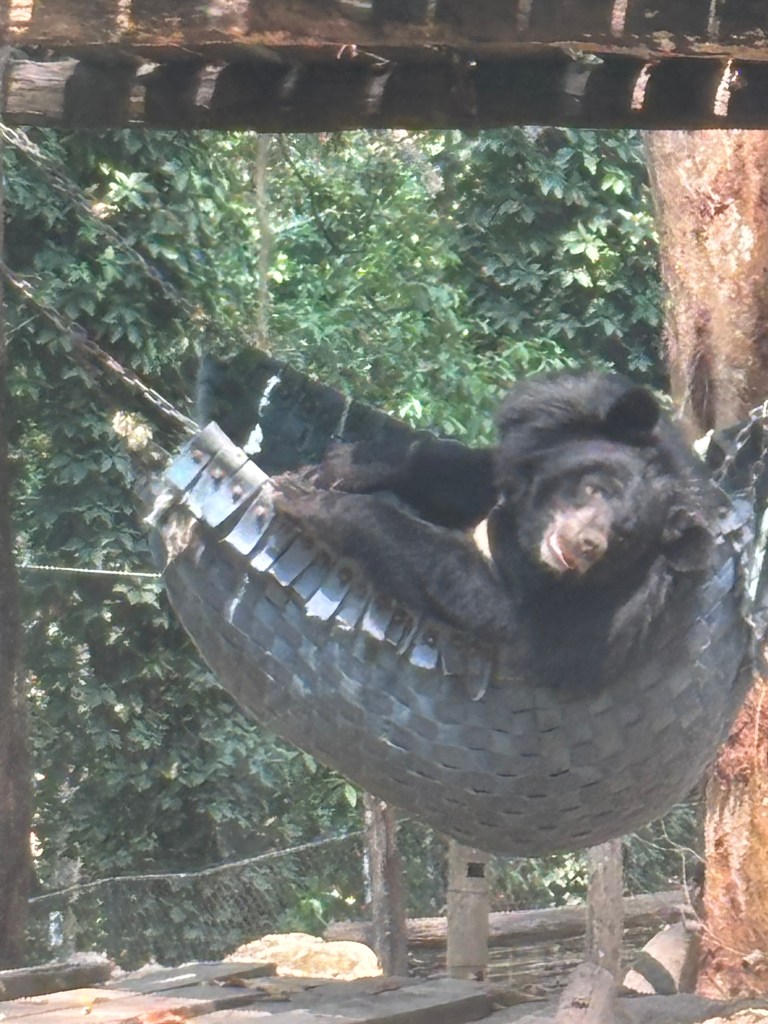
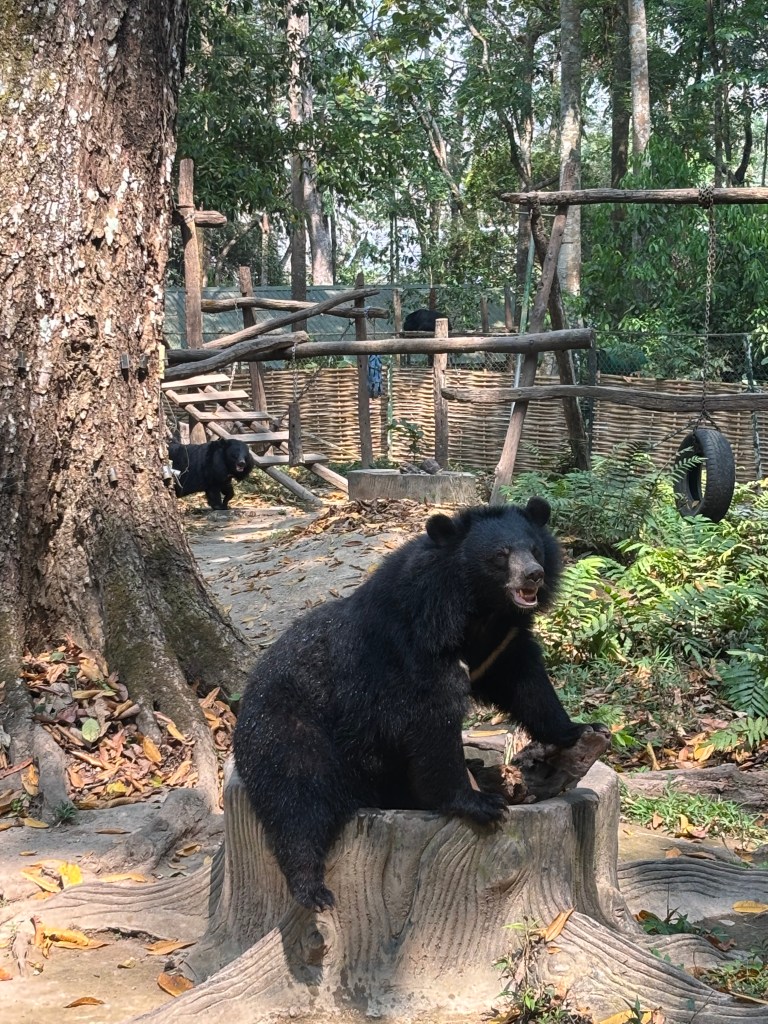
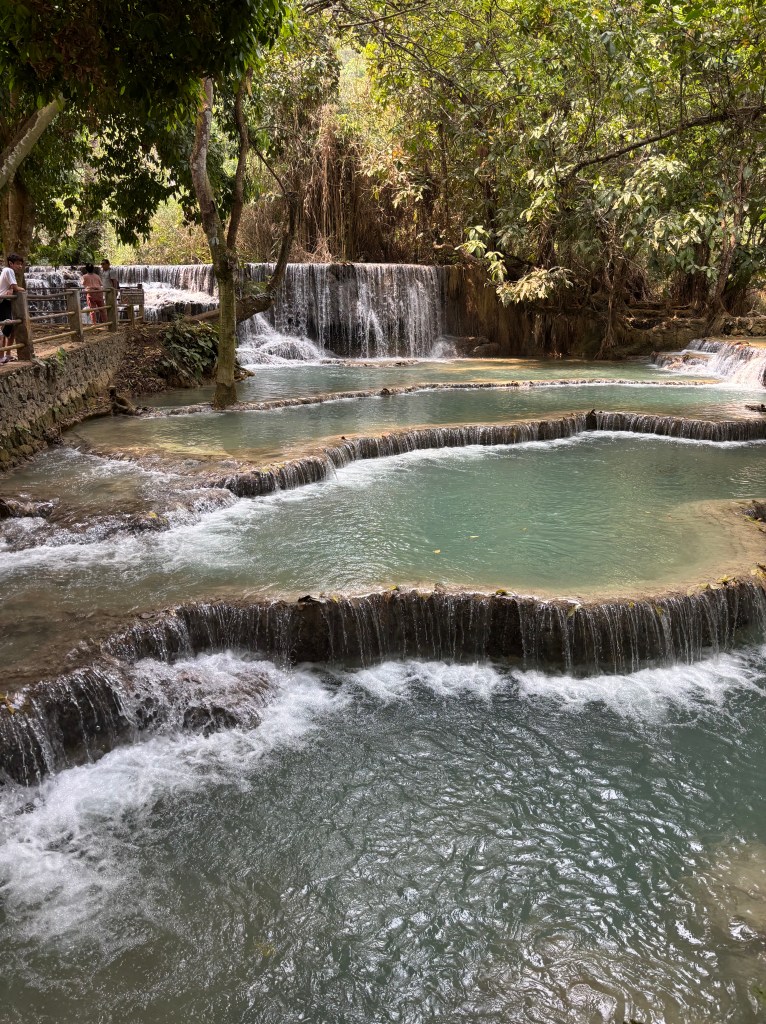
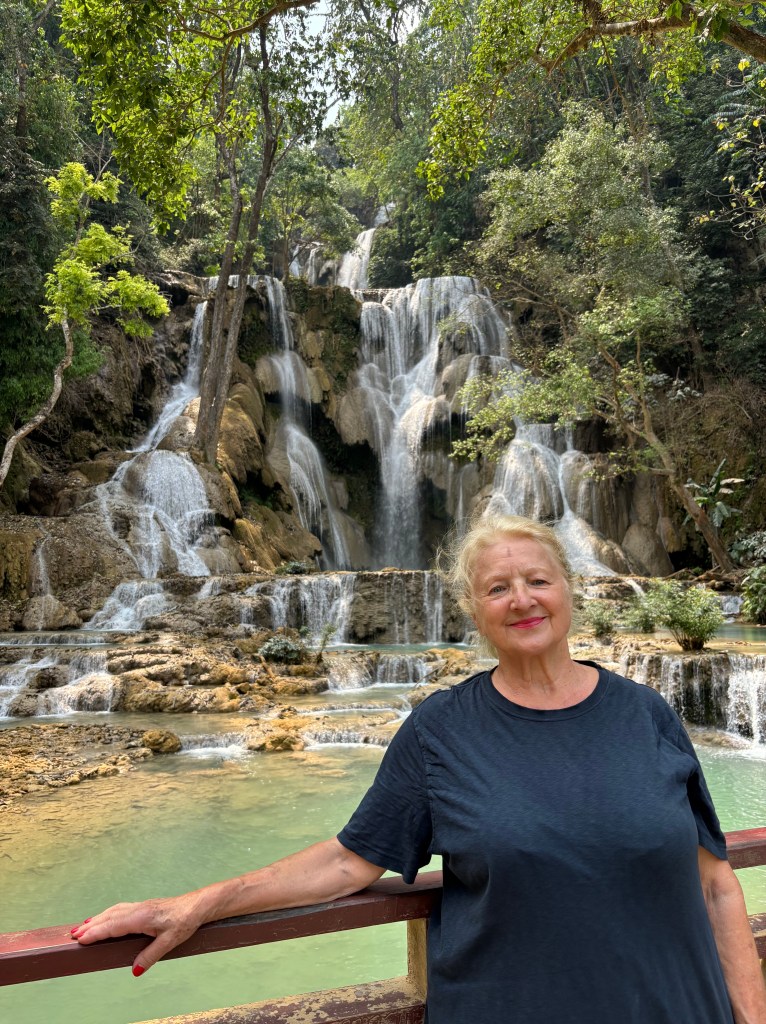
Enjoyed a visit to the Kuangsi Falls (despite the fact the foreigners have to pay 3x the local entry fee, the usual practice in Laos), especially the Free the Bears black bear sanctuary near the entrance of the national park. (The bear’s have been hunted to extract their bile – part of the Chinese medicine….) The water is refreshing, especially after a hot, winding, dusty, uncomfortable road.
The Kuangsi waterfallsFree the bears sanctuaryThe Falls
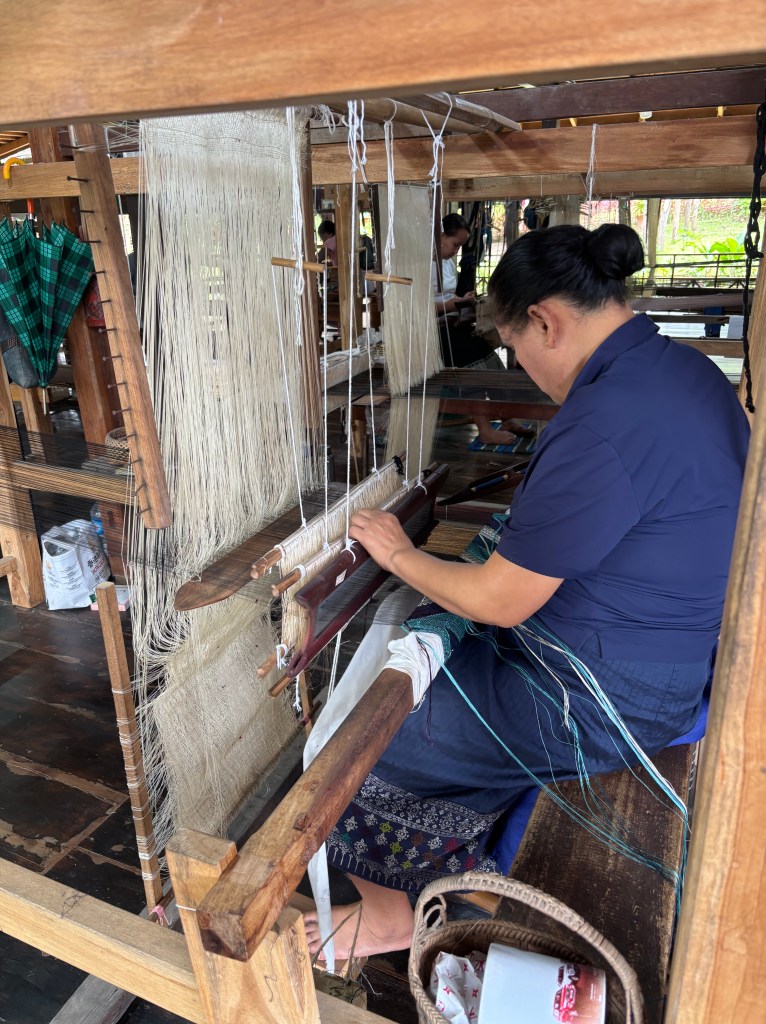
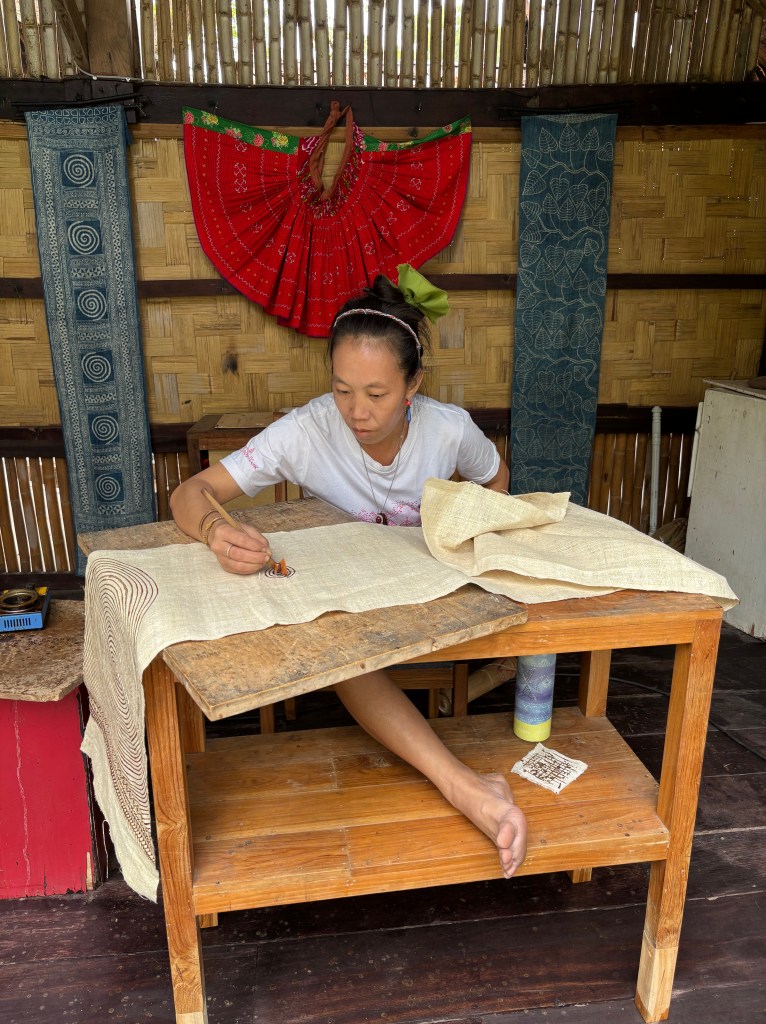
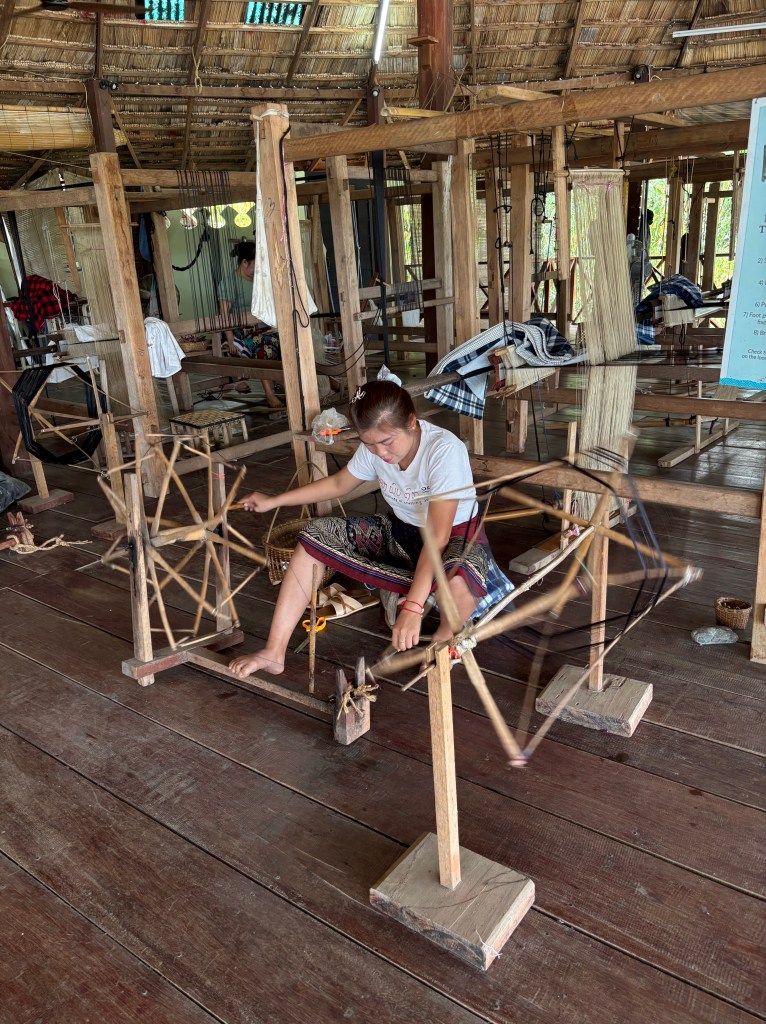
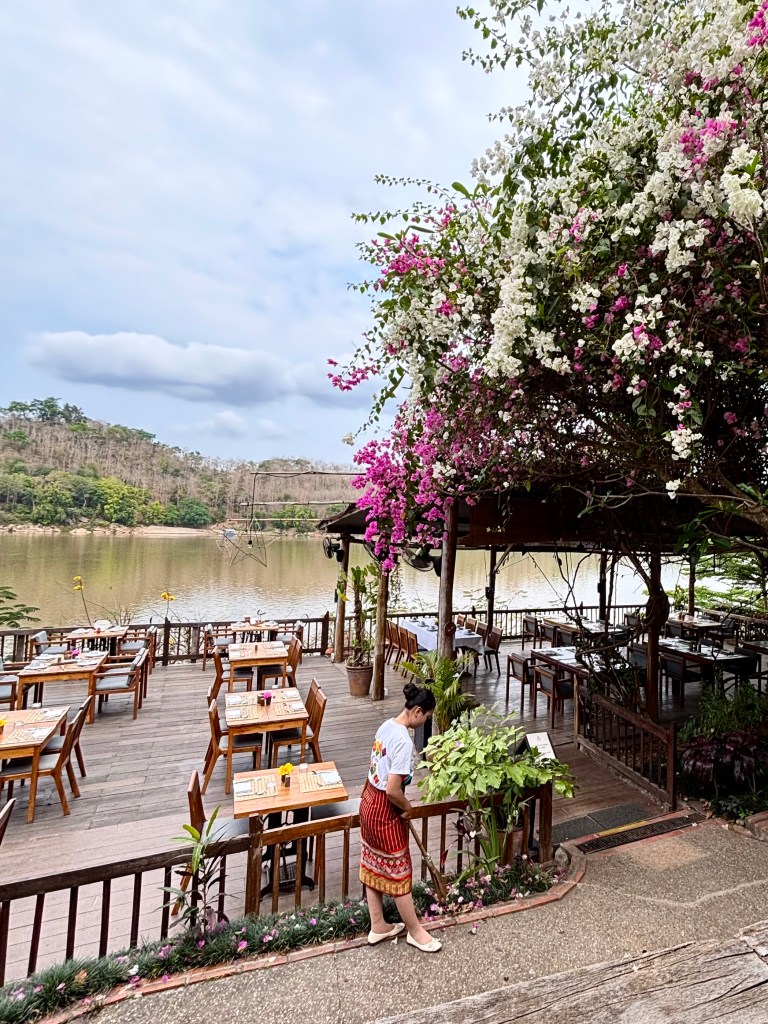
A daughter of a Prom friend lives in Luang Prabang. The Ock Tok Pok (East meets West) cooperative works with local women on traditional crafts – silk and cotton dying and weaving, and much more, at their place by the Mekong. A great initiative and thriving. (And excellent coffee.)
The only thing (besides passport and money) needed to enter Thailand is the Thai entry card, FREE of charge and easily filled. (Unlike the Thai visa, which requires a variety of documents in JPG format, and is only needed if one is staying for more than a month.) A small snag in the system is that the card will allow you to put in an entry date only 3 days before the date of arrival, so if done earlier, it will need to be corrected. (The passport officer did not even look at the card. But fingerprints and photo were taken.)
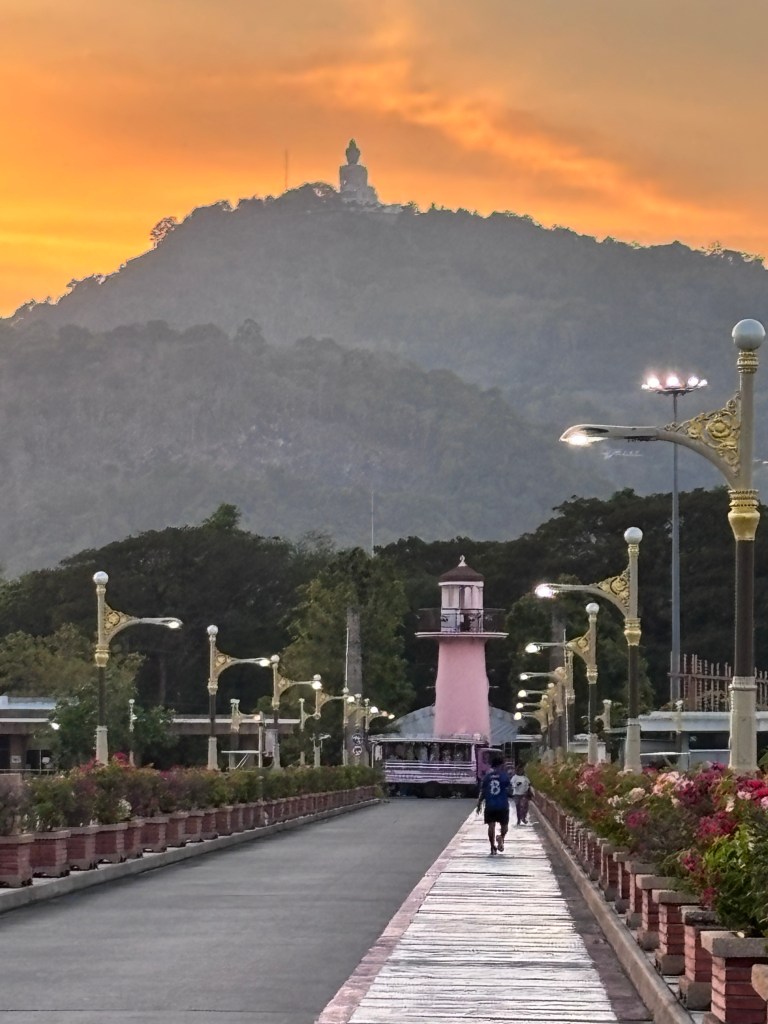
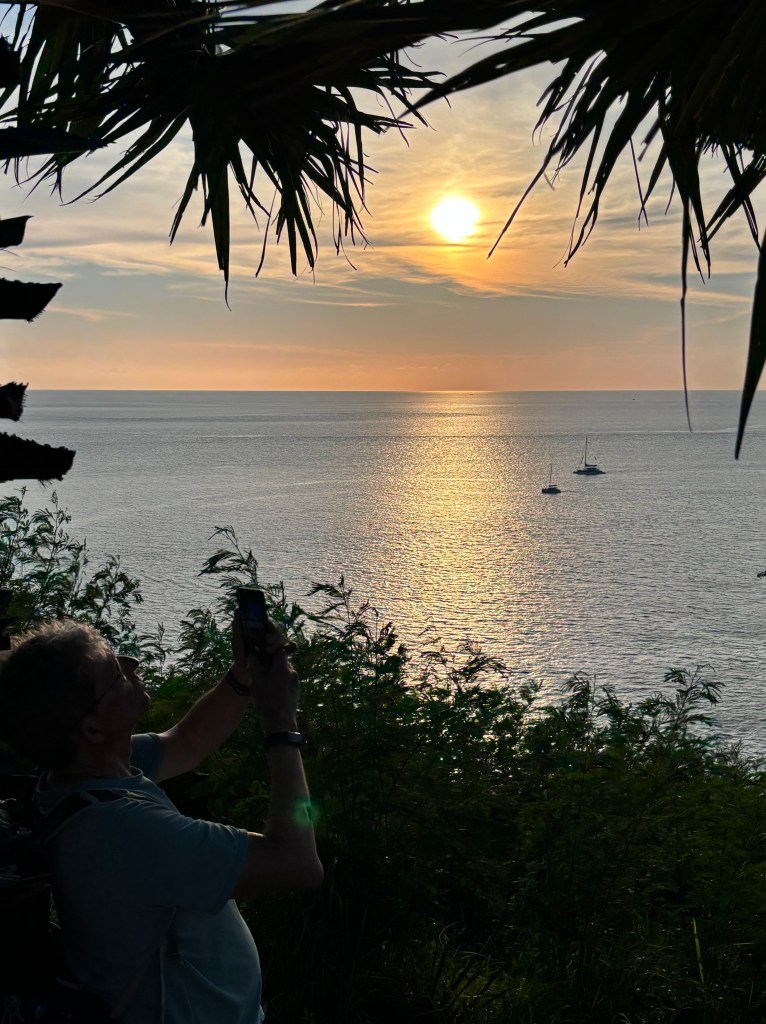
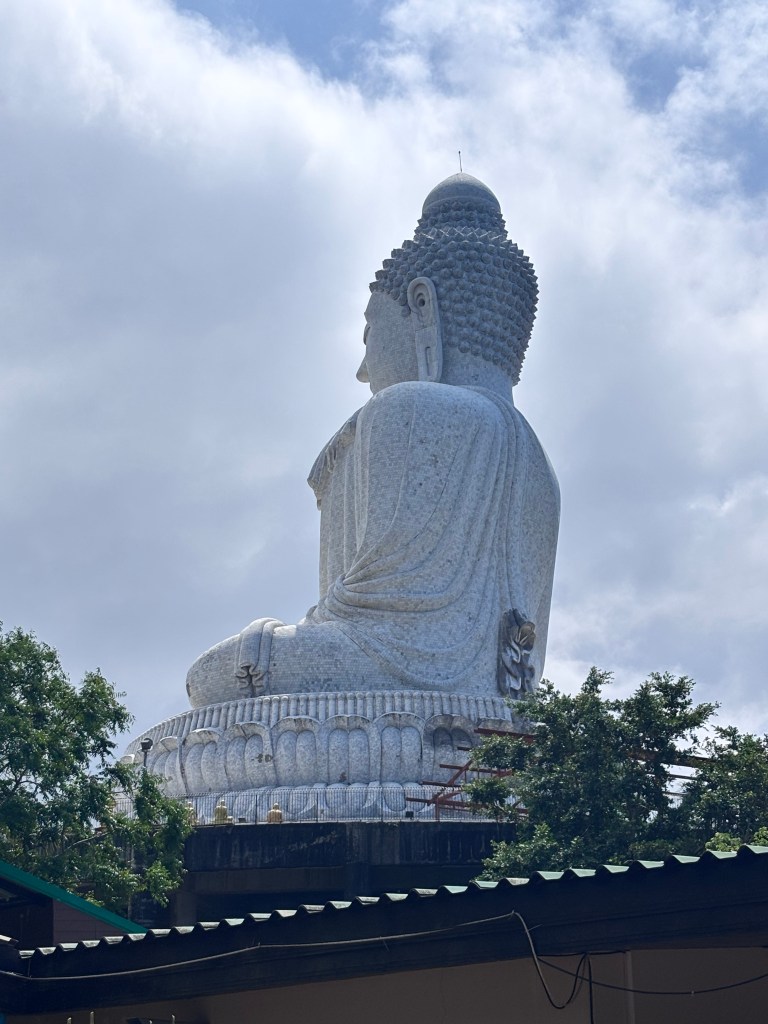
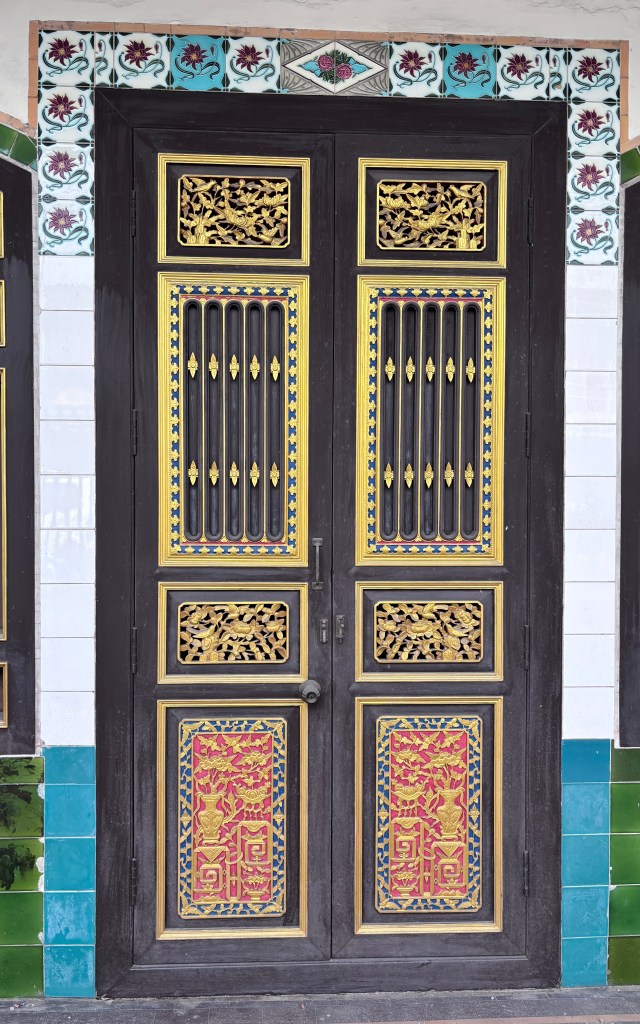
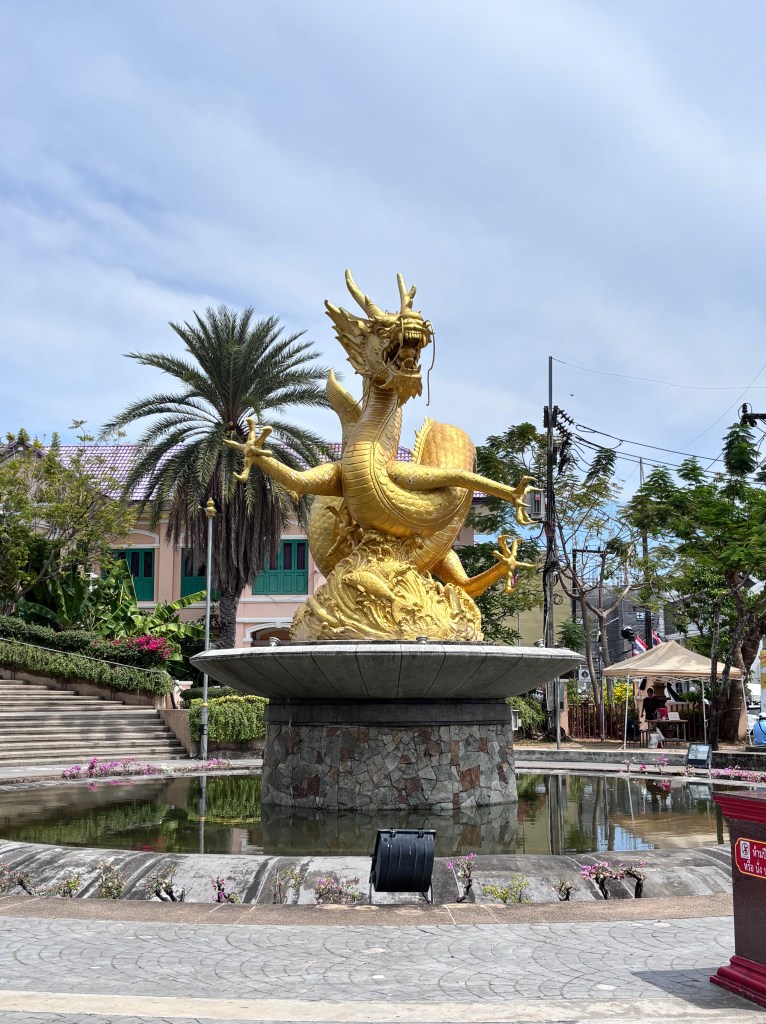
Chalong pier, PhuketA Phuket sunsetTh Giant BuddhaChinese style door in Old PhuketI like the Chinese freeze on the house A dragon to protect the place
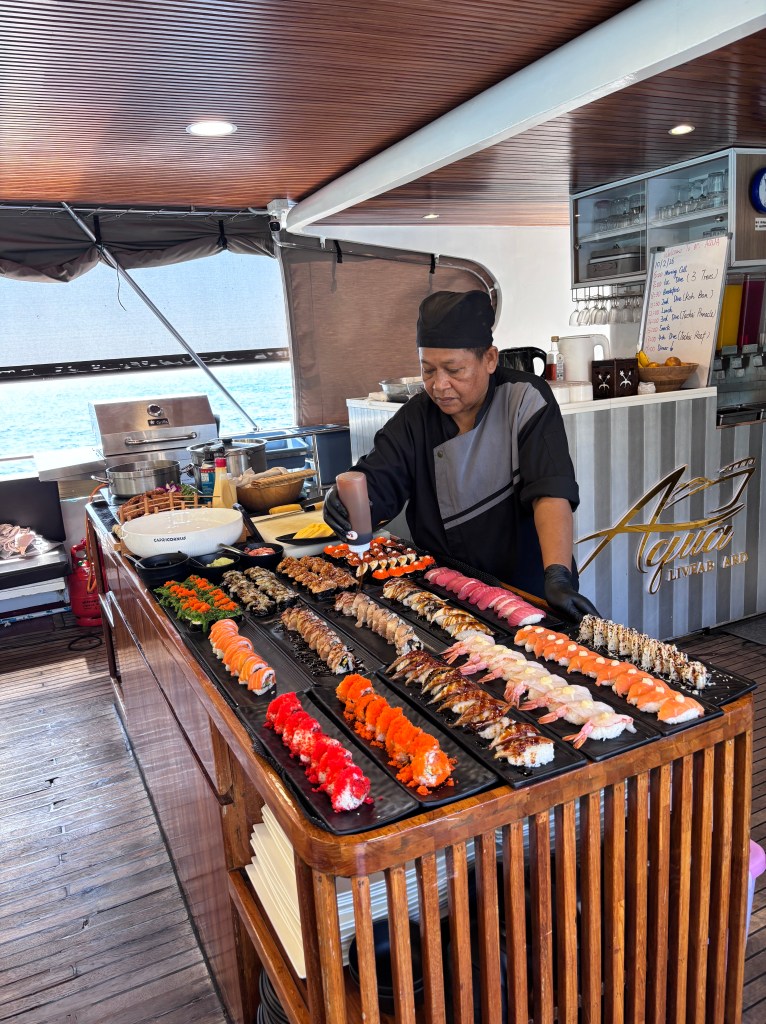
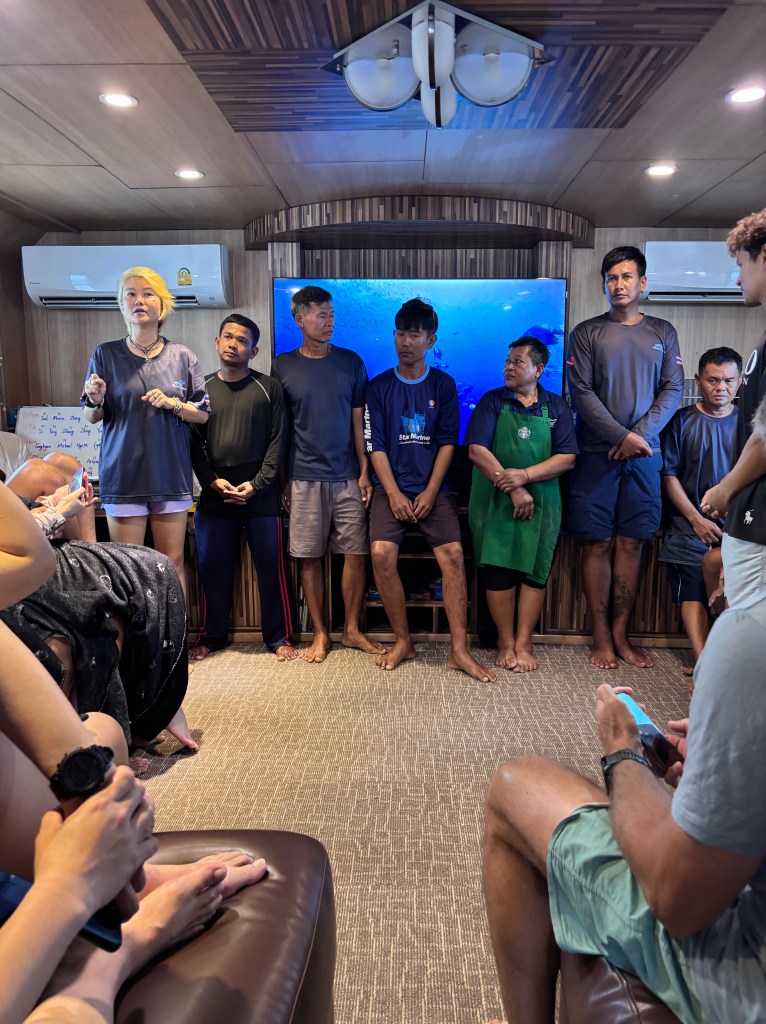
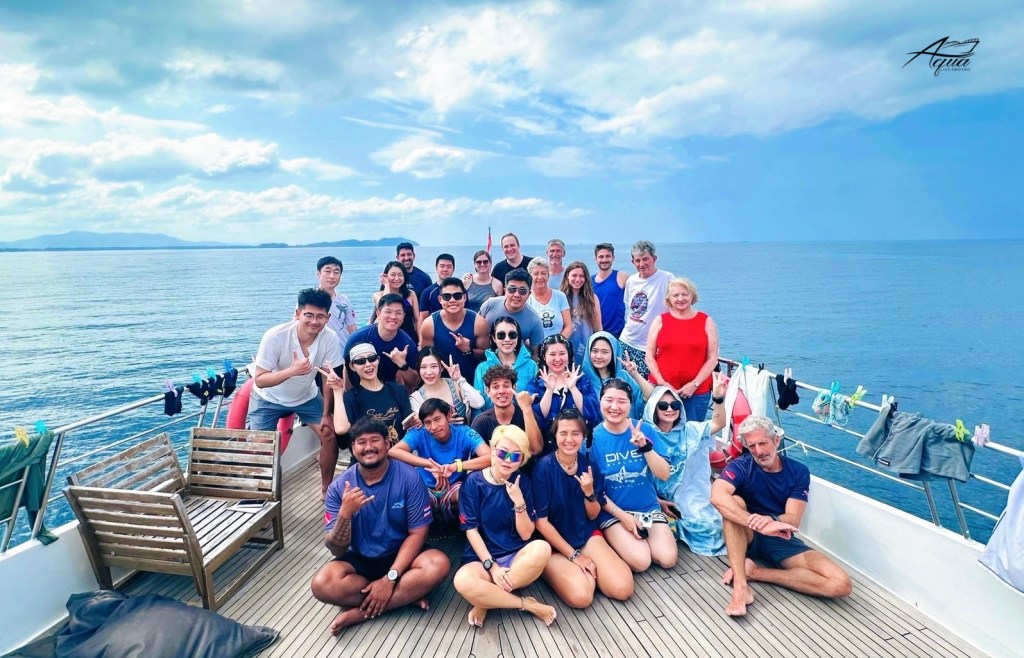
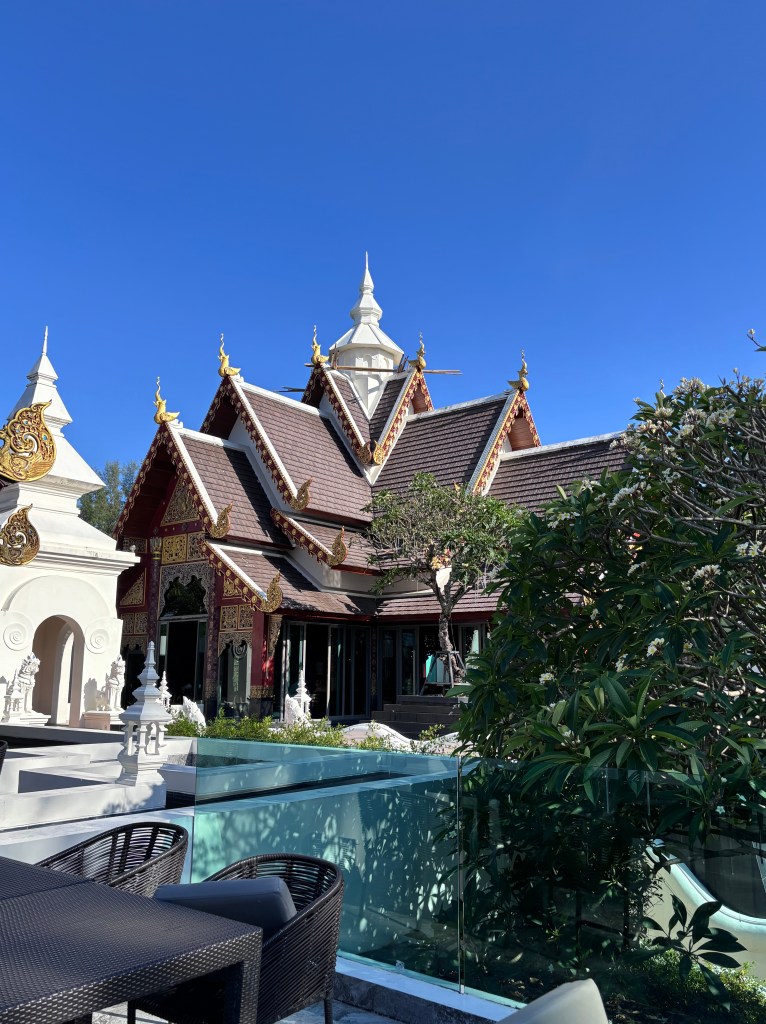
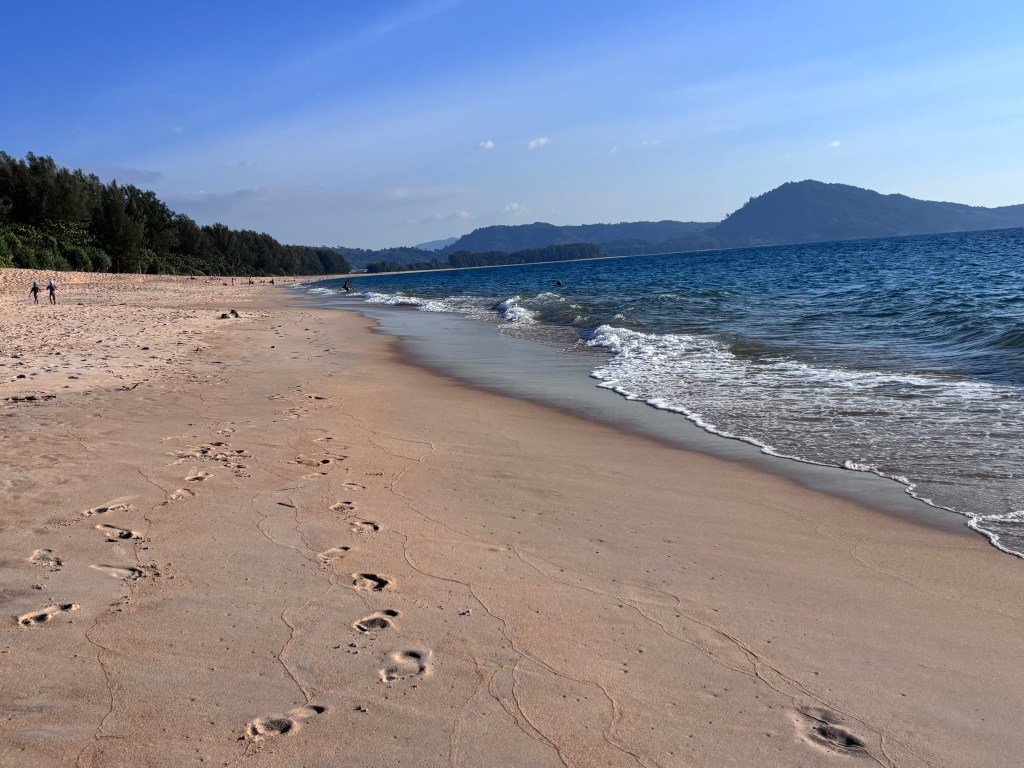
Phuket was chosen as we planned to do a few days liveaboard diving trip in the Andaman Sea. A December ski trip put paid to that for me – a broken collarbone was not ready for the full weight of the diving kit. But I did snorkel. And saw the photos of what I was missing. A definite highlight was the food produced by Pom, a marvellous chef who created miracles in that tiny galley. And she always had a smile for us. The crew of the Aqua (Smile Dolphin company) and the dive masters were top notch. Had a pleasant stay in the Mai Khao Palm Beach resort after the diving. A tropical sandy beach that stretches for miles along the bay, warm sea, gorgeous sunsets.
Phuket itself was a bit of a disappointment. The giant Buddha (we walked up! 7 K in the heat – and gave in for the last K and took a cab…) could only be seen from the back – there had been a landslide in the front and the area around the giant statue was completely blocked off.
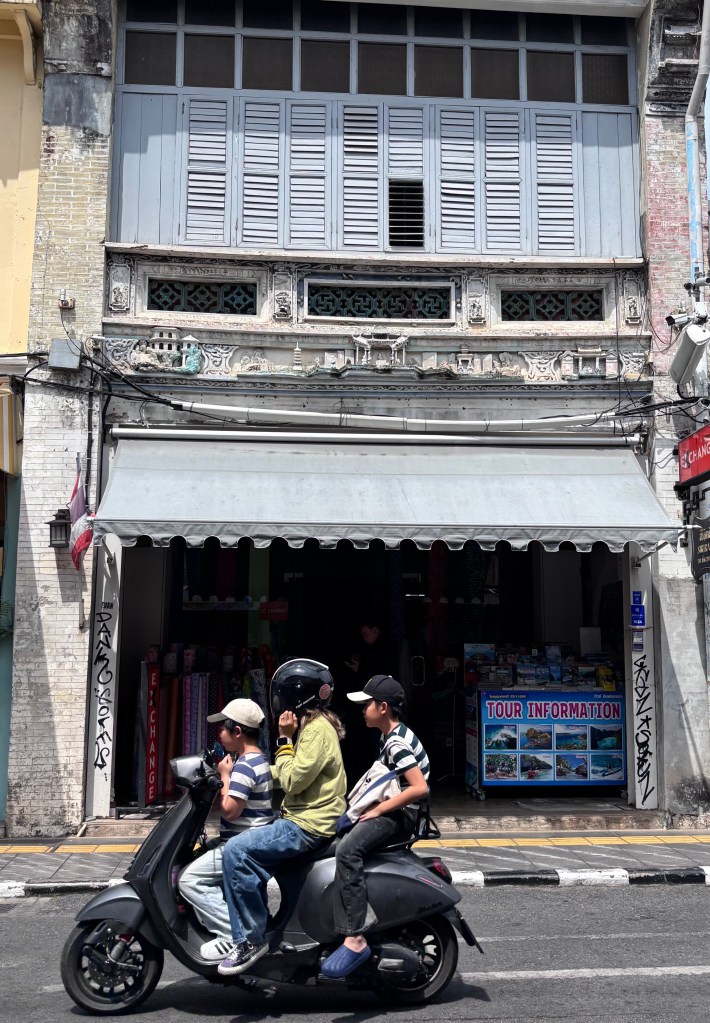
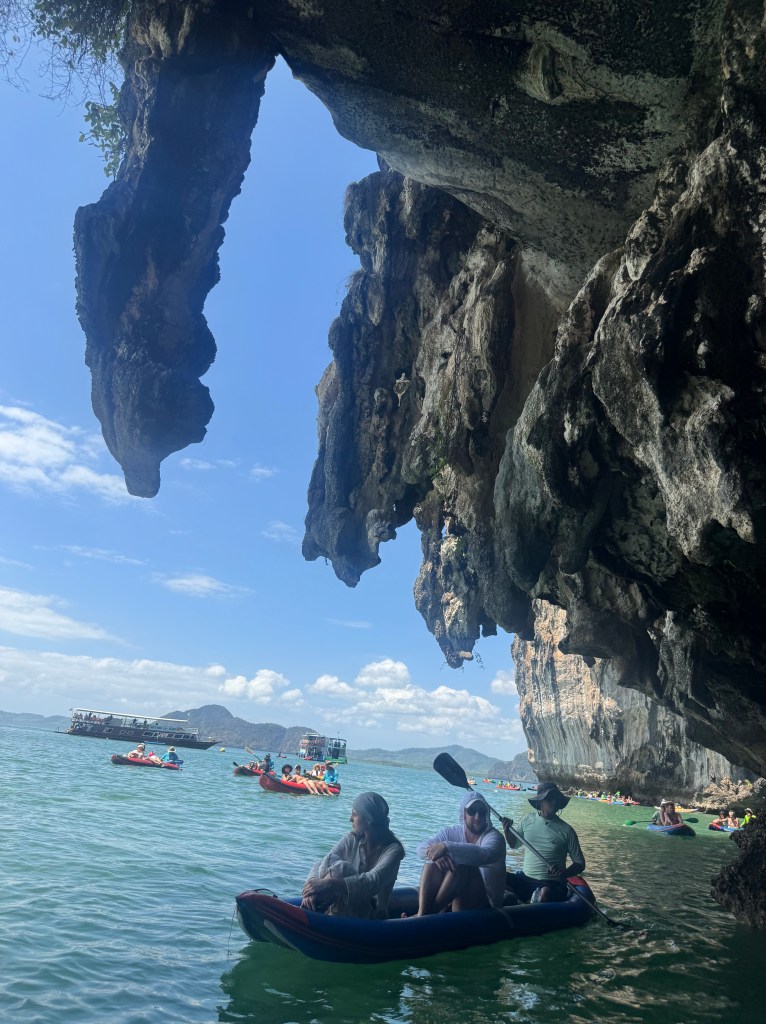
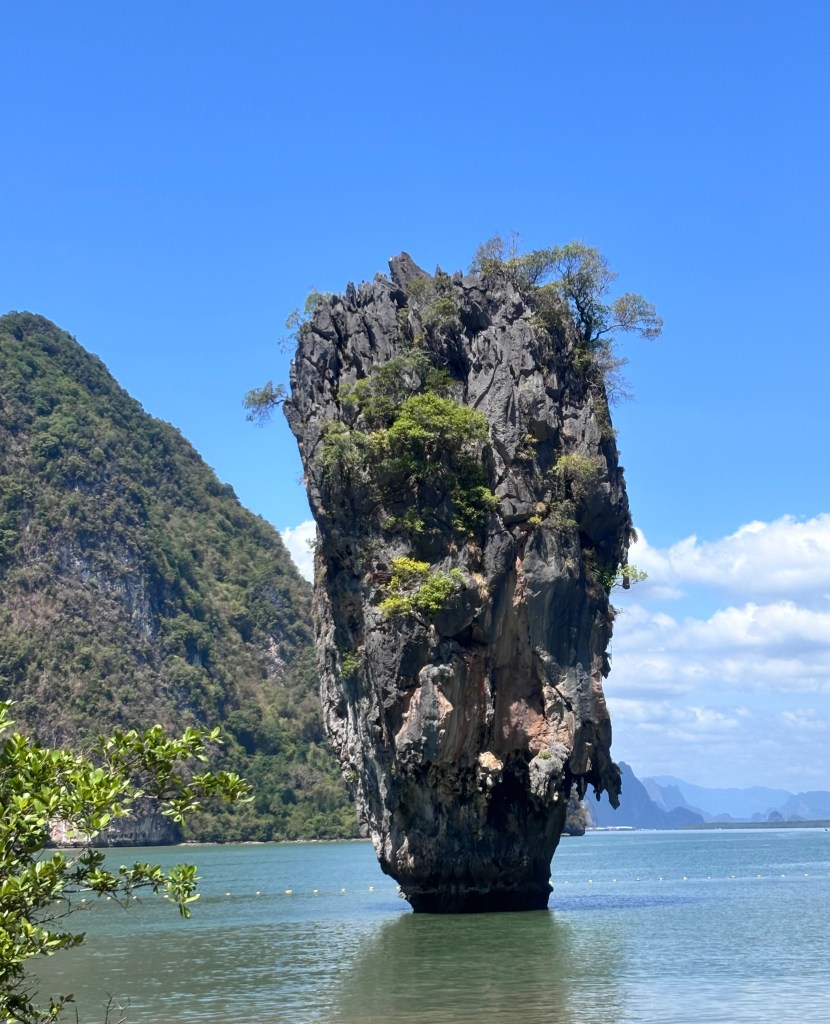
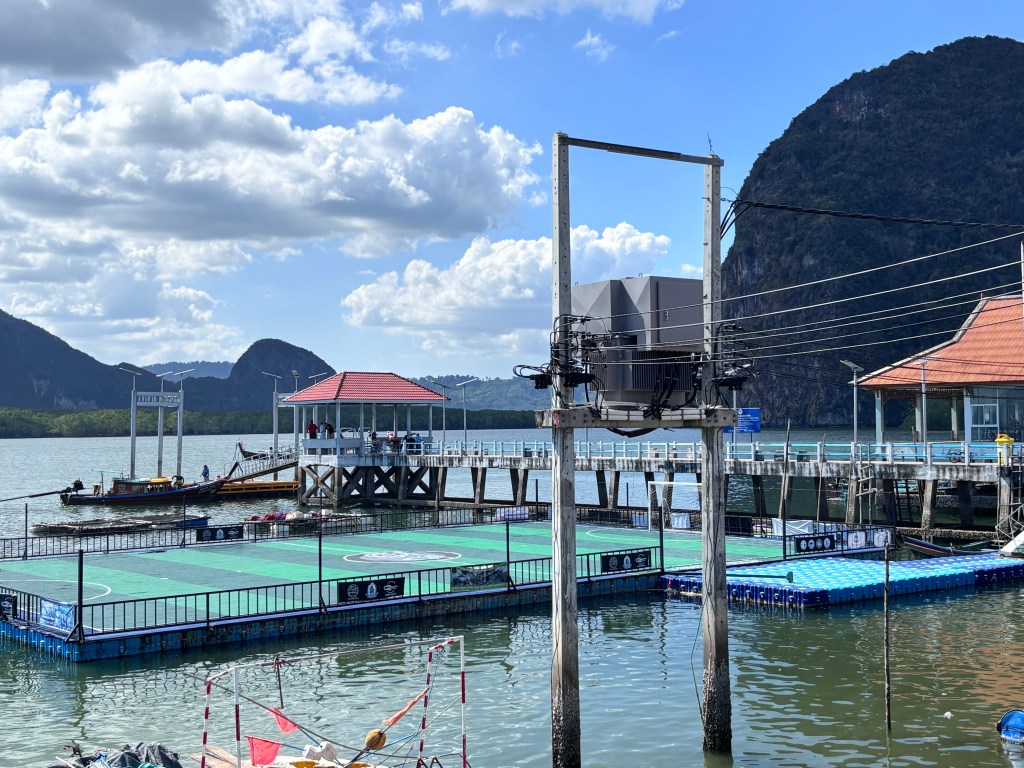
The Old town (reached by a local bus – a few pence) is full of shops and tourist tat. We did enjoy the trip to the James Bond island – a full day out on the speed boat, visiting those intriguing looking pinnacle-like islands, a cave, a Muslim community with a floating football pitch…
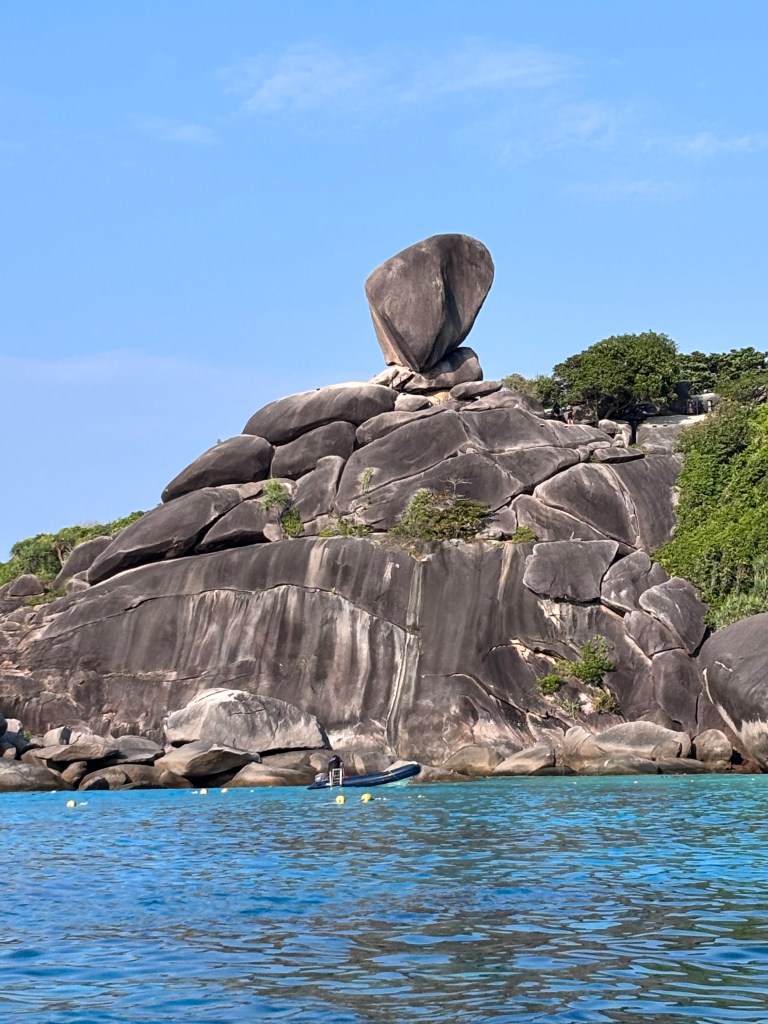
The Sail rock in the Andaman seaChef Pom with the sushi lunchThe Aqua boat crewThe divers – and mePalm Beach Mai Khao hotel pool – lovelyThebeach at Mai Khao Canoing around the islands in Phang Nga BayThe James Bond island (Khao Phang Kan, really)The floating football pitch
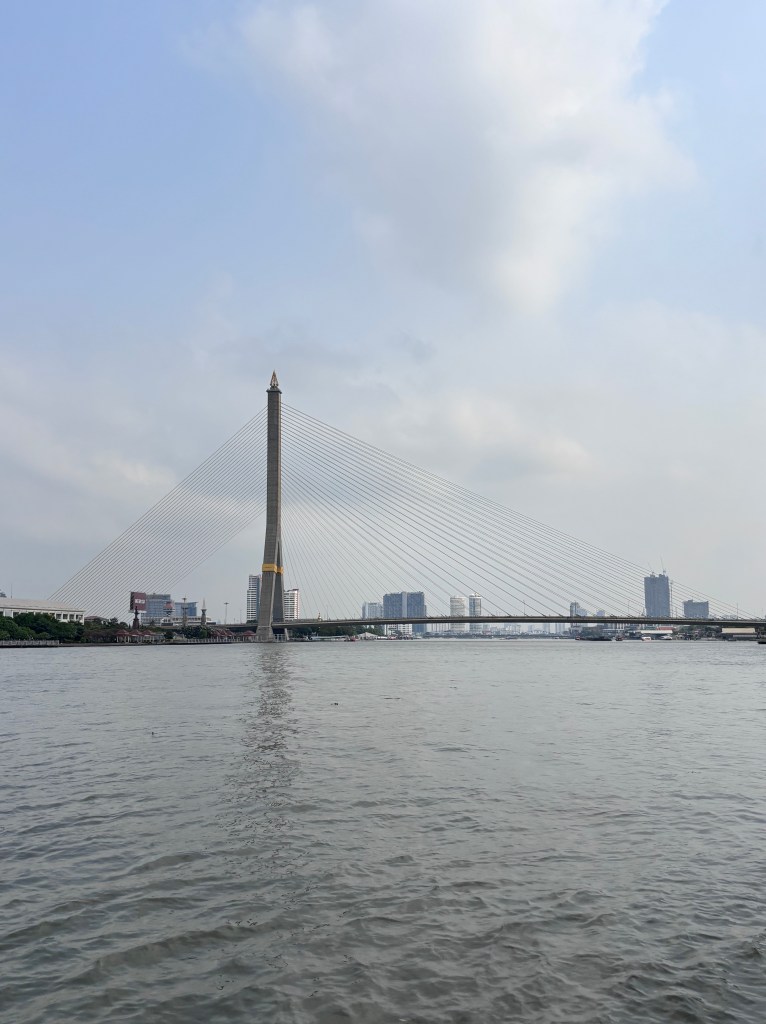
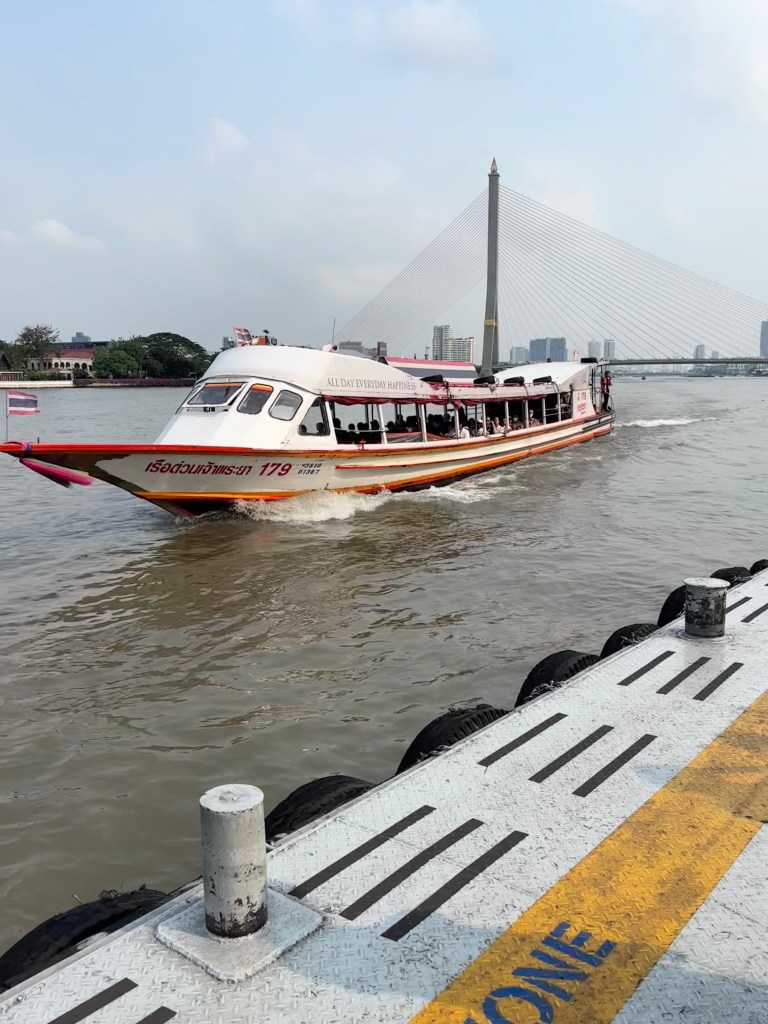
My friend headed back to the UK and I to Bangkok. The two very useful apps for travelling in Asia are Bolt and Grab – like Uber, prices are set when you book. (I’ve used Bolt in Central Asia and in South America). If you are brave (or foolish, or need to get somewhere on time, all of which I seem to have been) you can get a motorbike ride too. I stayed in a hostel near Pier 13 on the Chao Phra river. Lots of accommodation, restaurants and Thai massages available in the area – and the river boat beats the road traffic every time. The boat to take is the Orange flag one – 16 Baht per trip. It covers all the important parts of Bangkok and has good links with the MTR (metro) and the sky train. There are other river boats and staff tend to push tourists to the more expensive ones. (A 150 baht hop on-hop off day ticket may be useful to some tourists.)
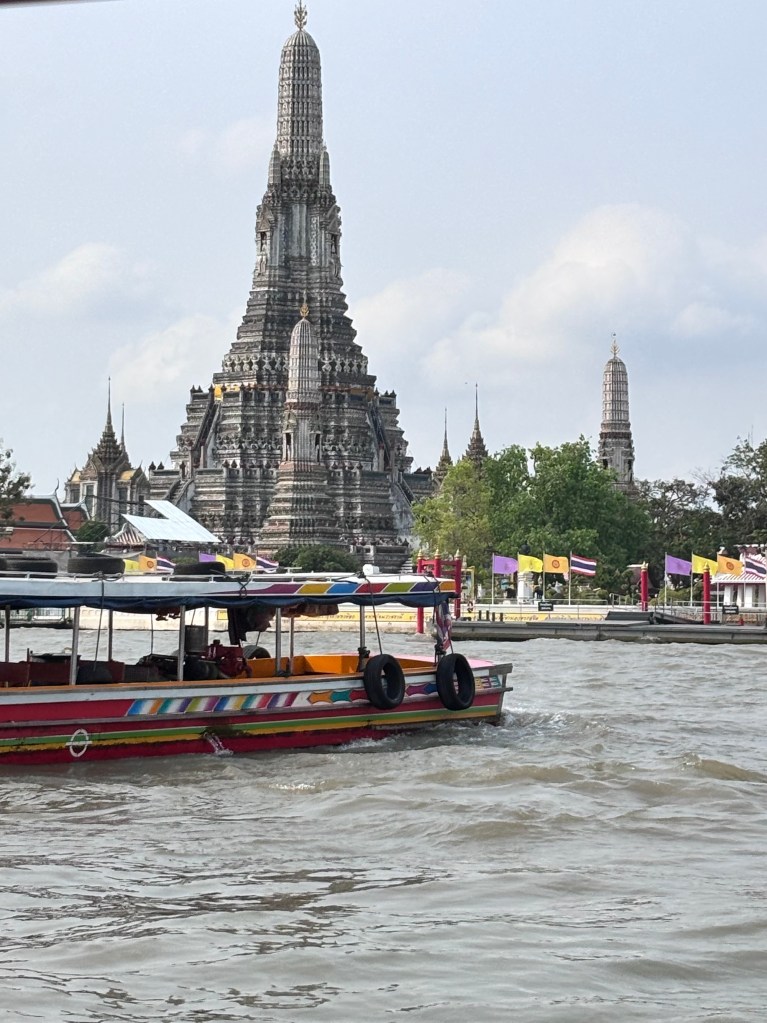
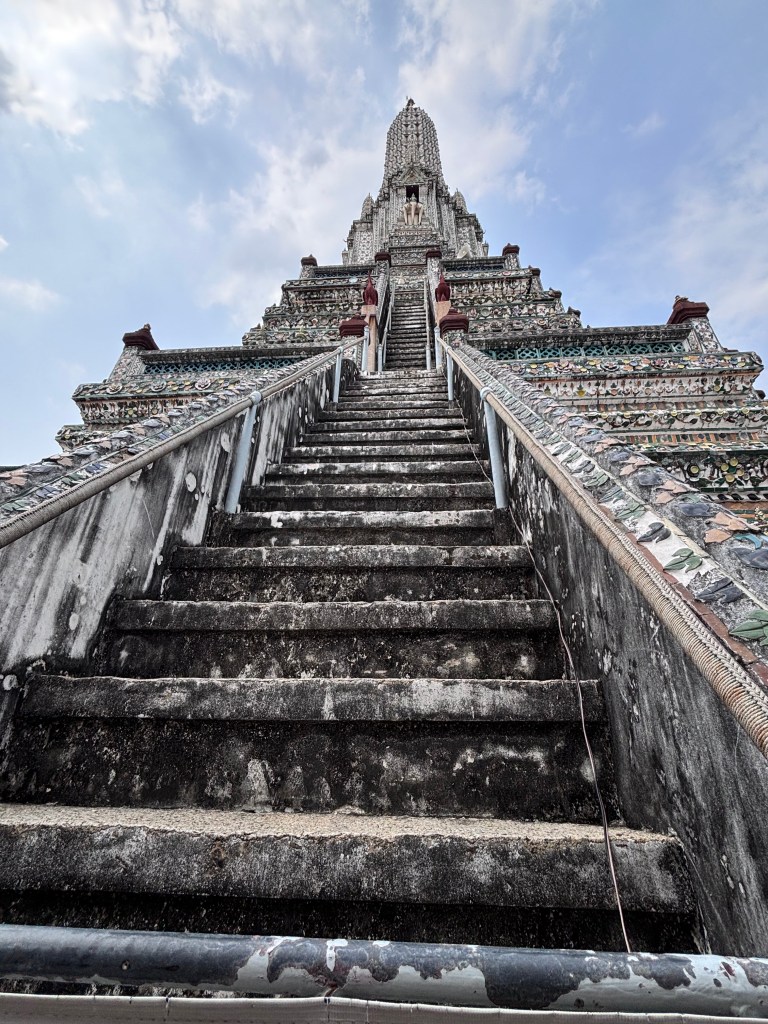
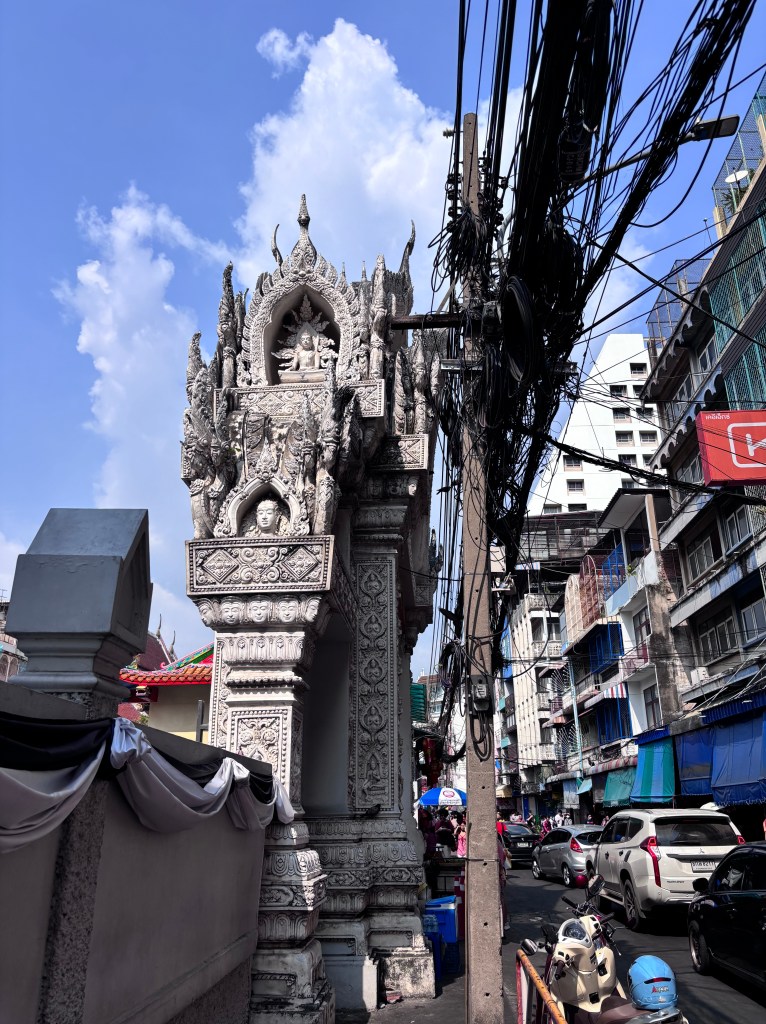
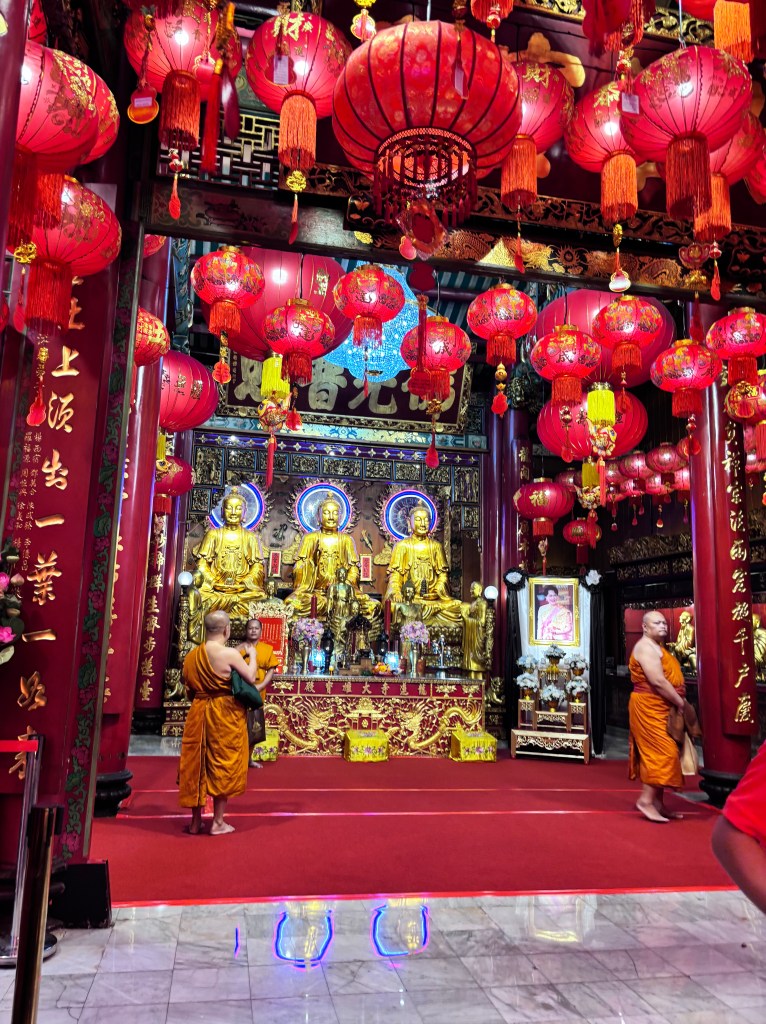
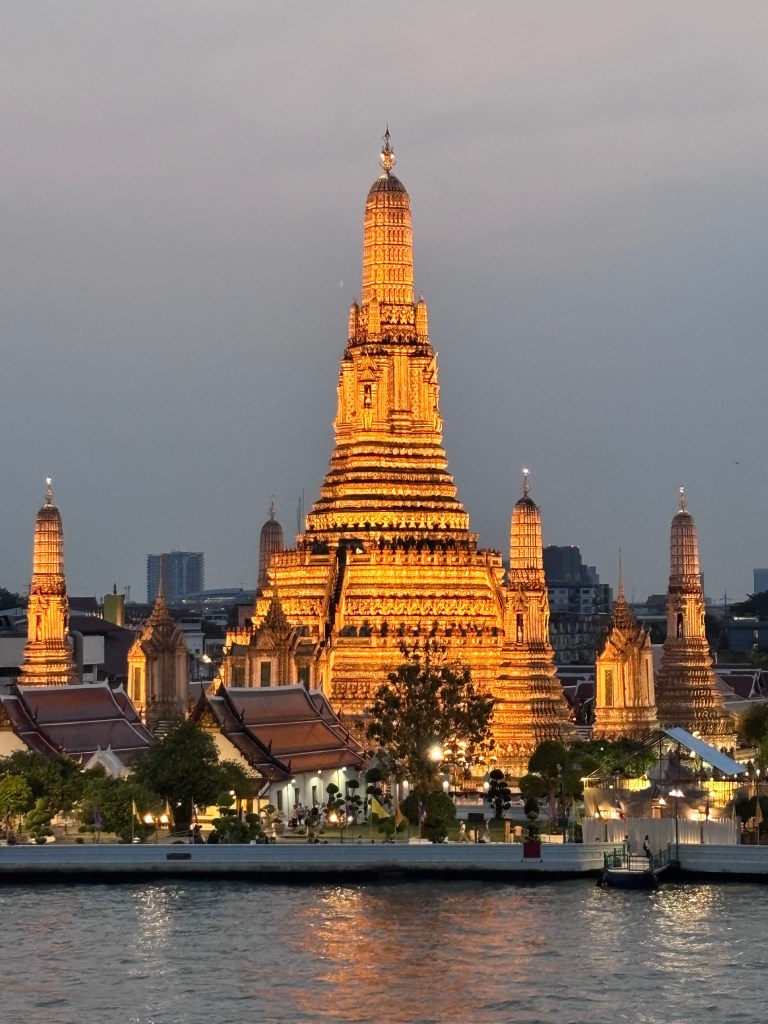
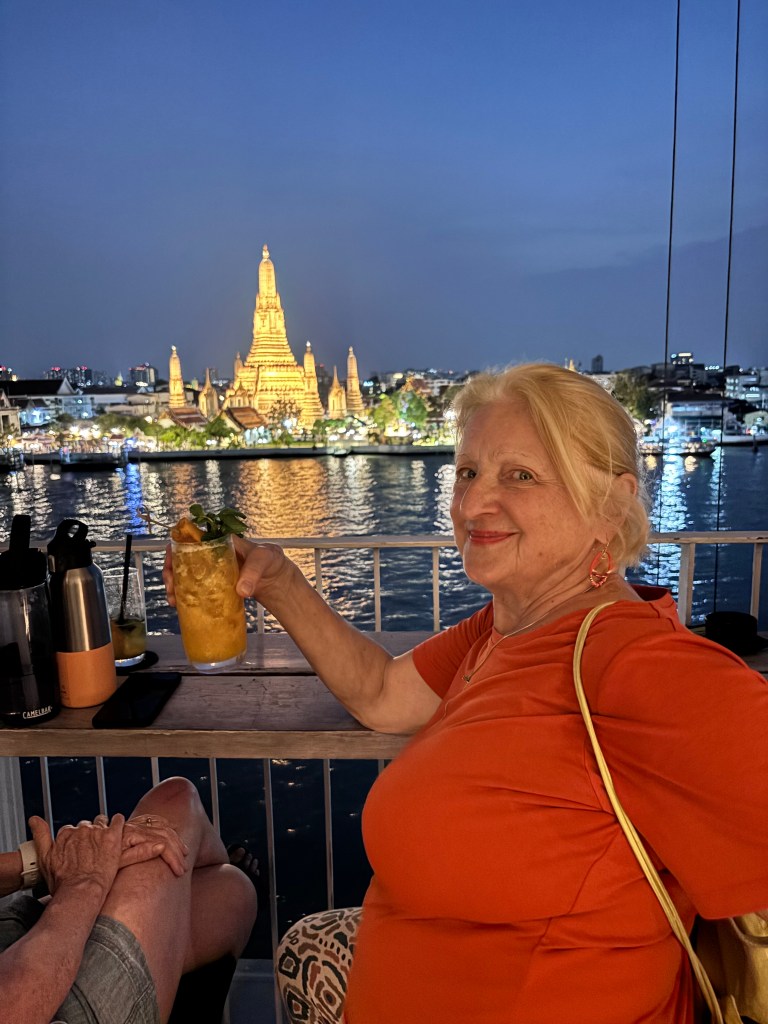
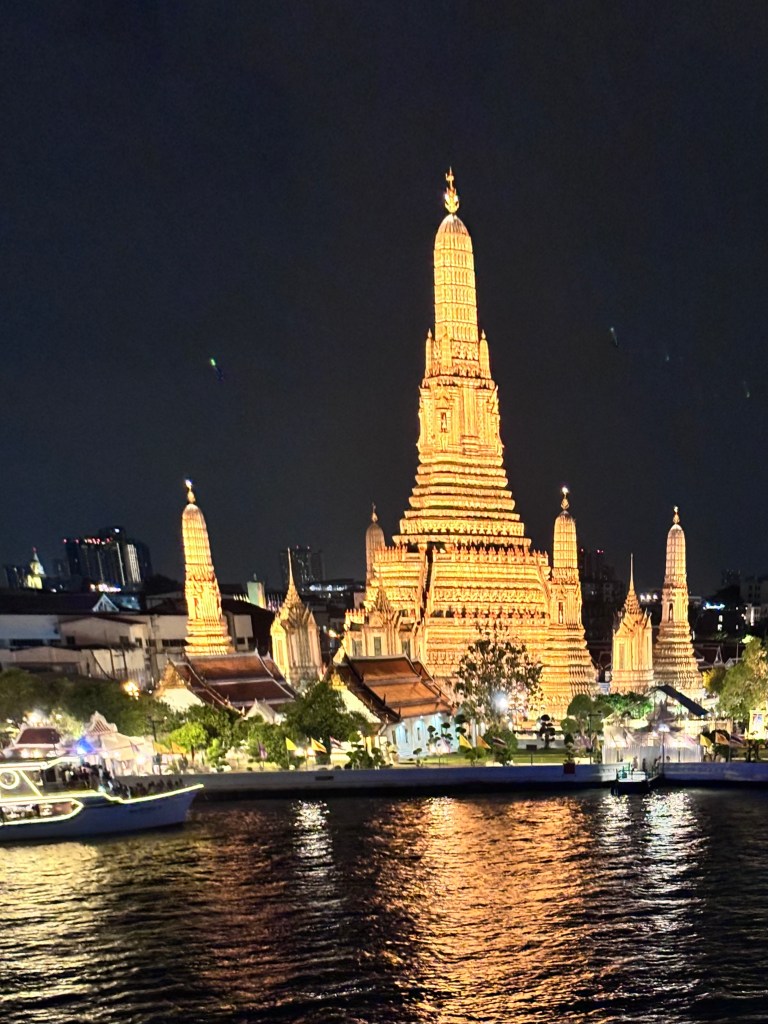
Chao Phraya river in BangkokThe Orange flag boatWat ArunThe steps to Prang are STEEP and hard as it is not easy to reach the godsChinatown Wat entranceChinese New Year Wat Arun beautifully lit up at sunsetA Maitai to enjoy at sunsetWAt Arun
The Grand Palace, the Reclining Buddha, the Wat Arun…all a must. The book says to get there early and beat the crowds… I didn’t.
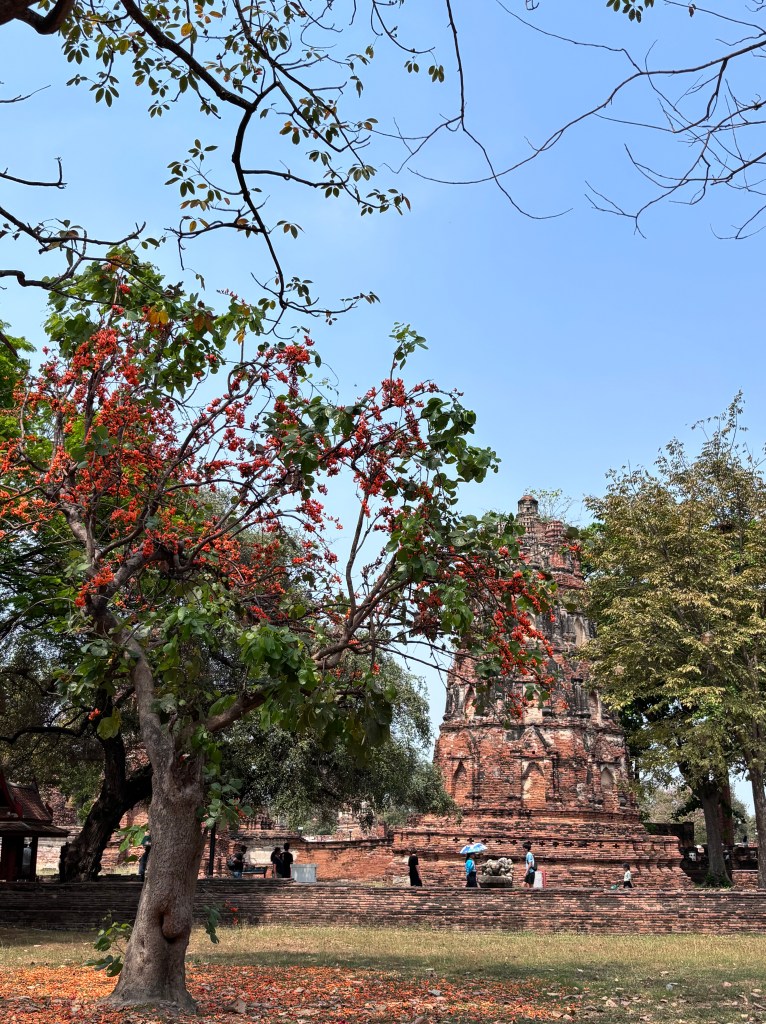
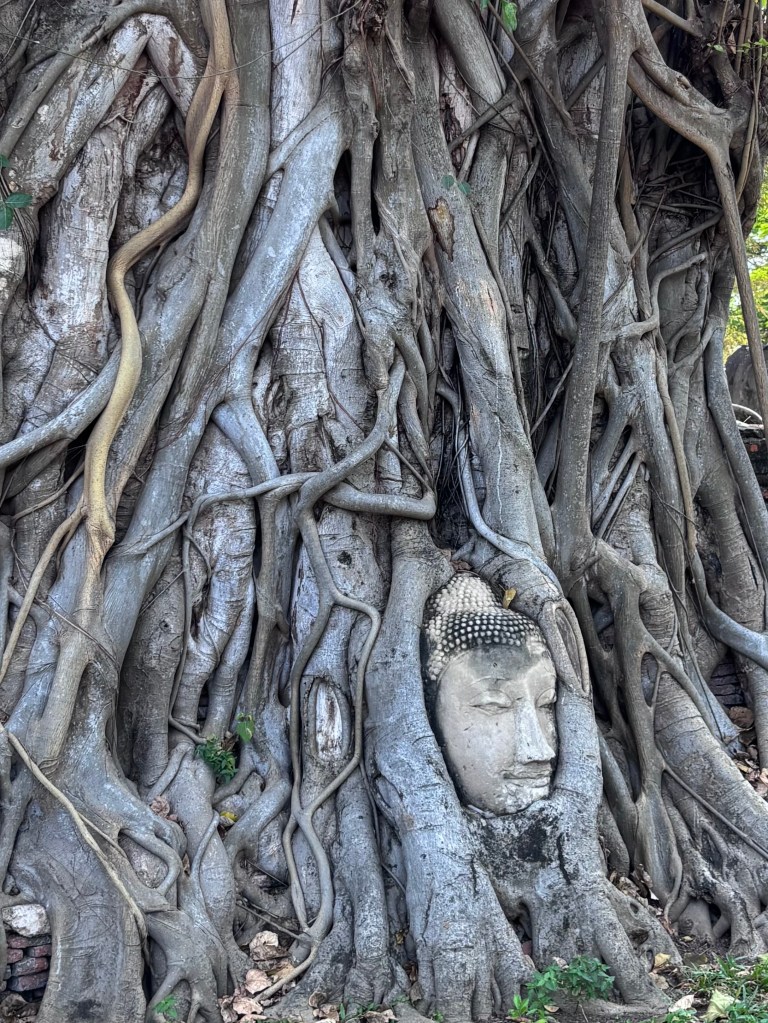
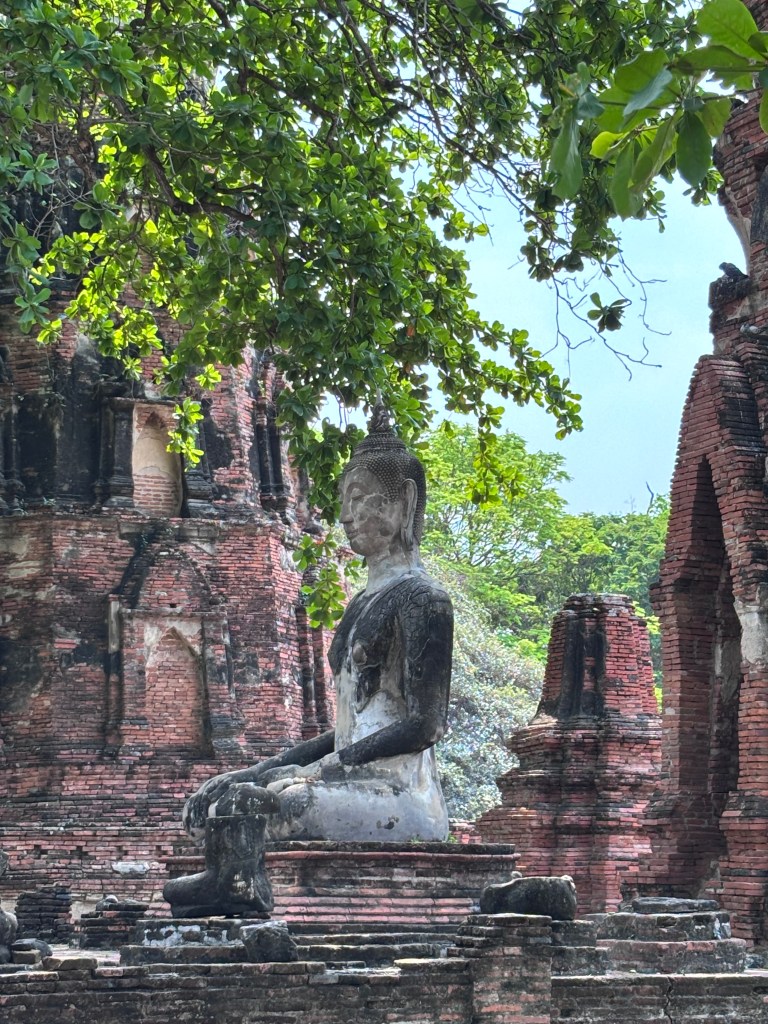
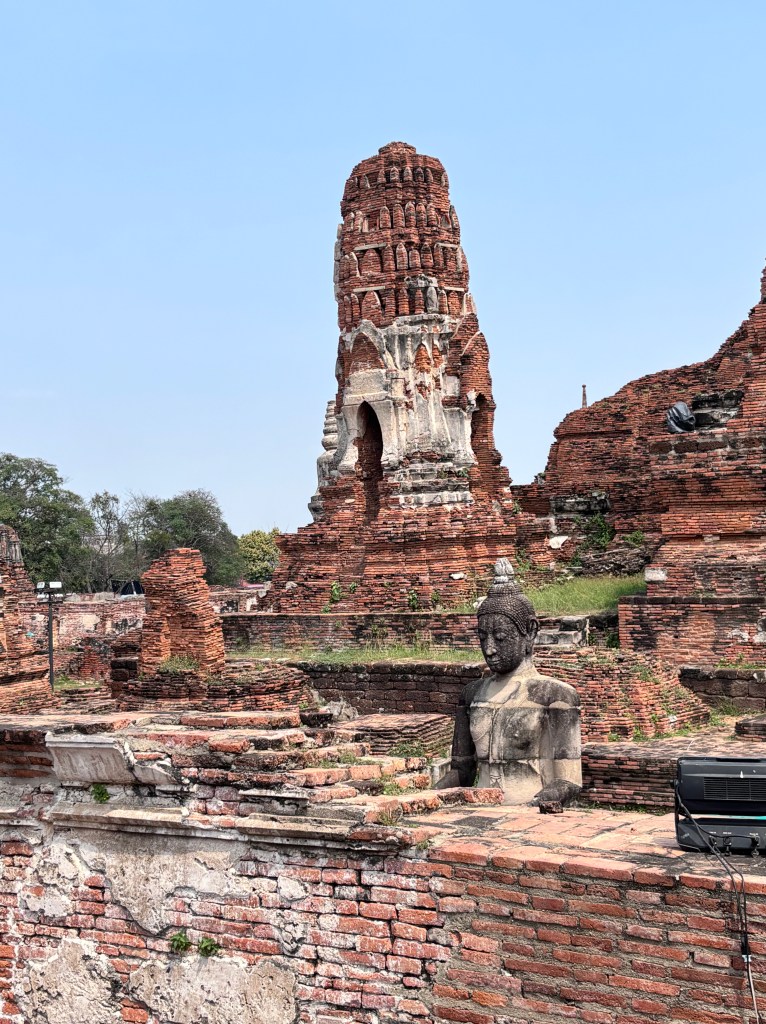
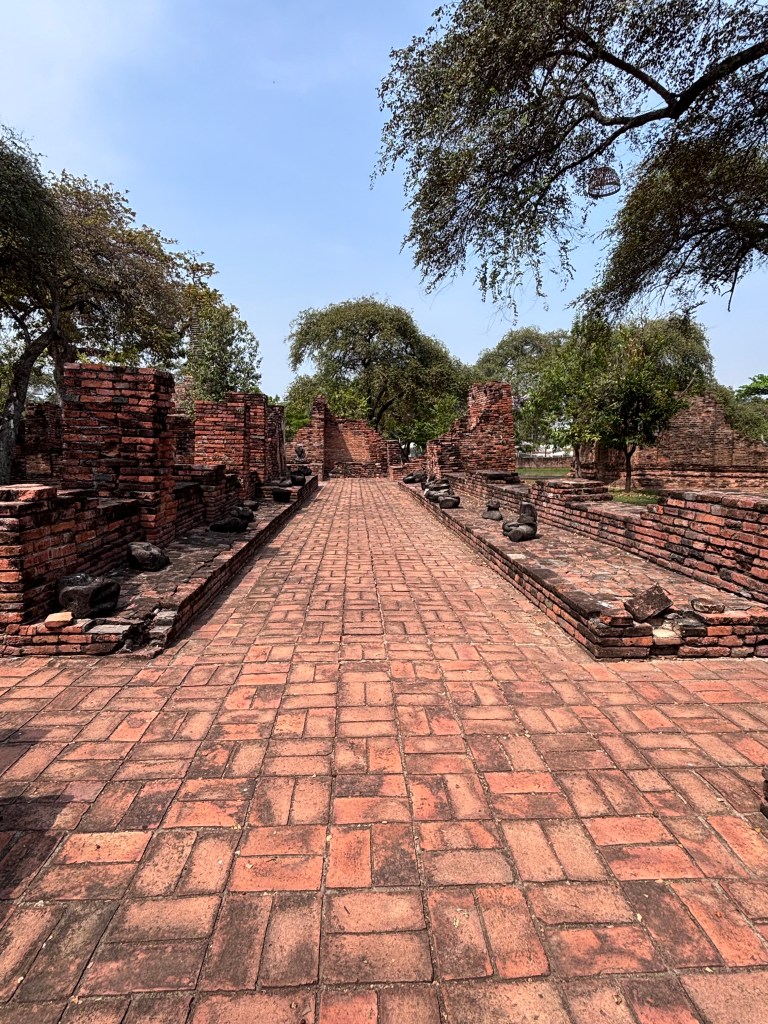
Went to see the old capital, Ayutthaya, on the train (20 Baht o/w) from the new Central station – an enormous place, echoing and strangely empty. (The MTR metro ticket to get to the station was 45 baht!) The Wats (temples) and the Buddhas are spread over a wide area. (I was glad of the hired bicycle – 60 baht for the day). All crumbling brick and stone and with all the Buddha’s heads lopped off by looters looking for gold. And yet, they had all once been just as dazzling and shiny, glittery and golden like the ones now in Bangkok. Much gold has been stolen – though not the one in the Wat Traimit in Chinatown – 5.5 tonnes of 18 karat gold, which has escaped thieves, had been covered with plaster and glass mosaic and only “rediscovered” as solid gold in the 1950s. It’s in the Guinnes Book.
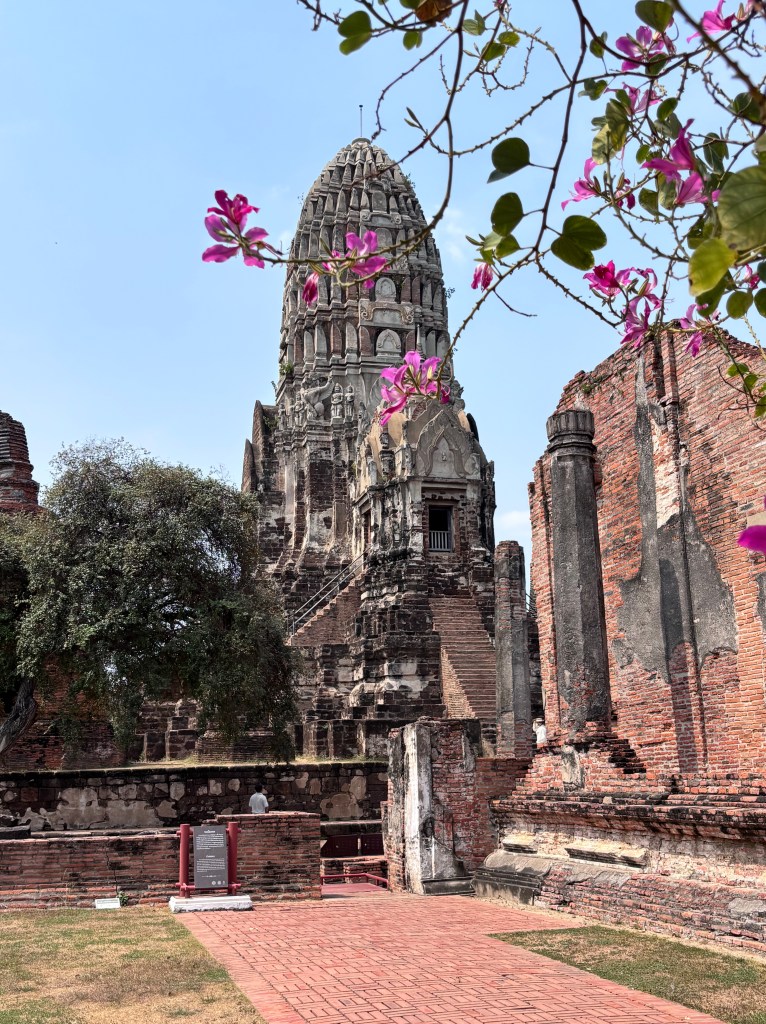
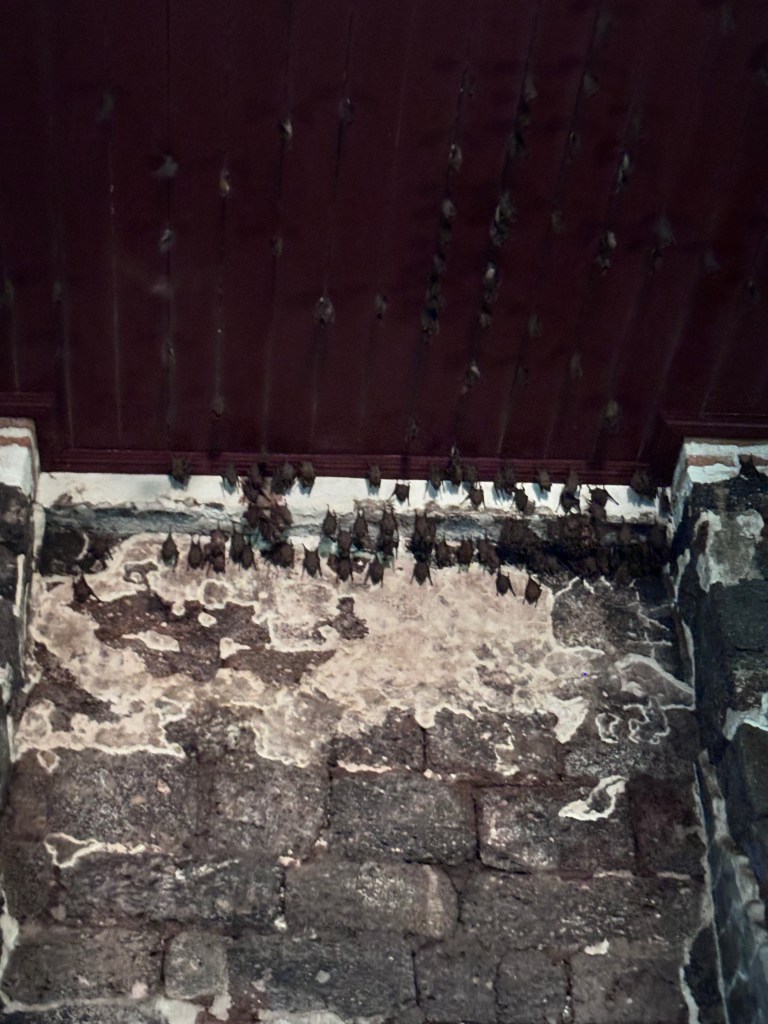
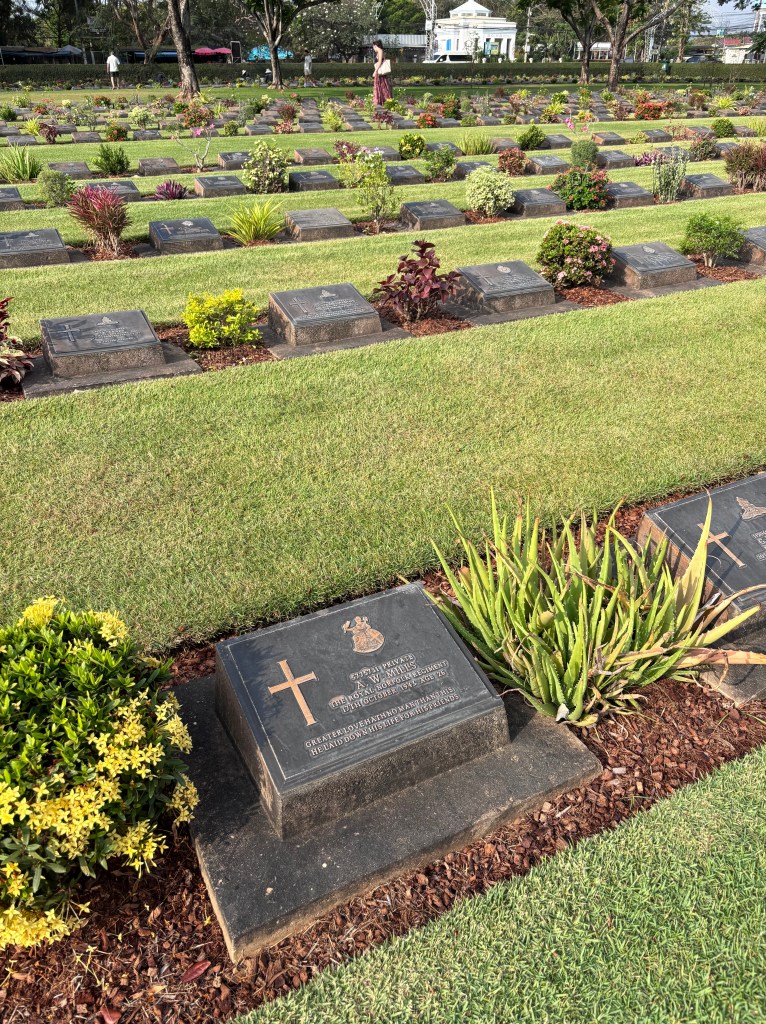
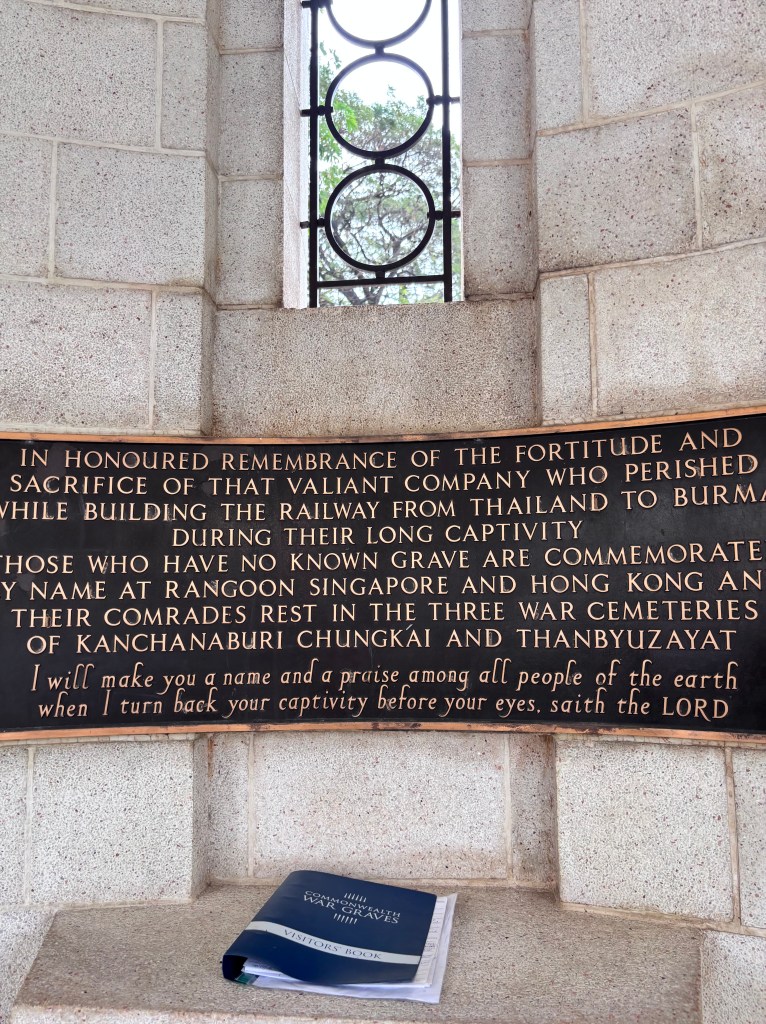
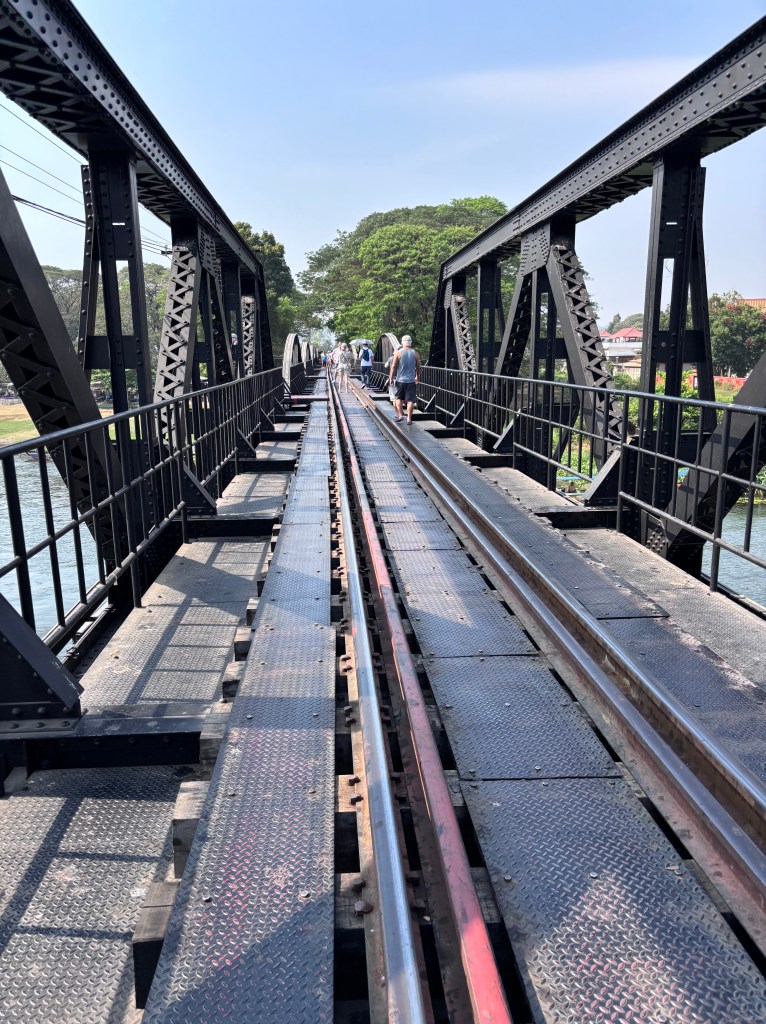
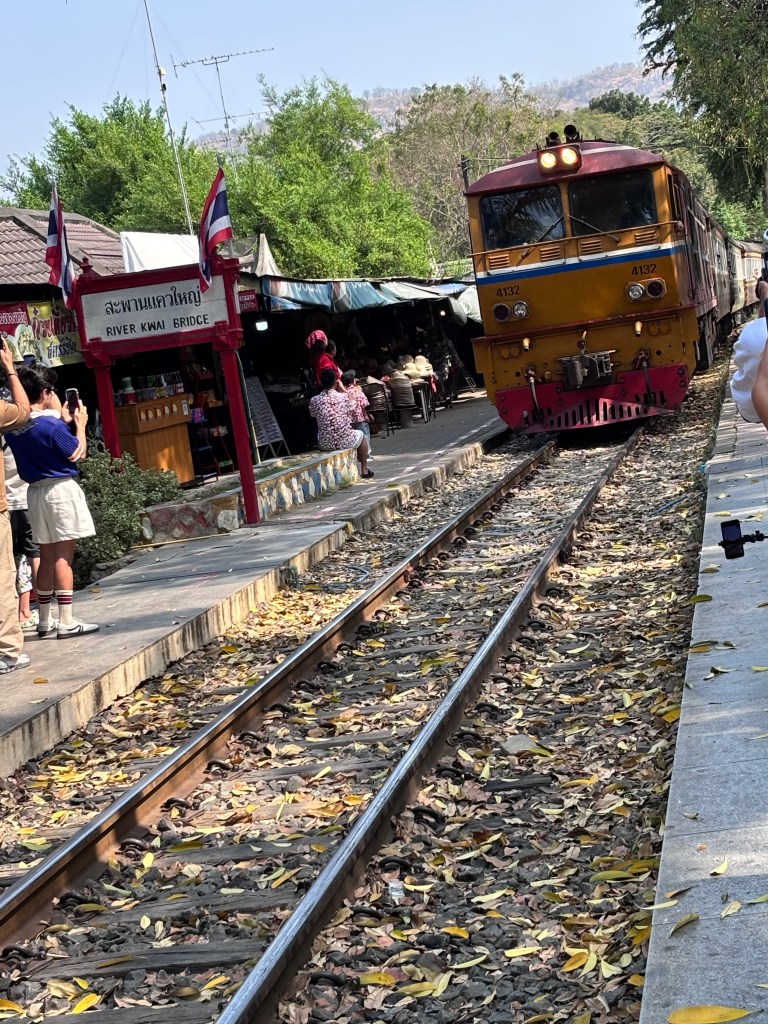
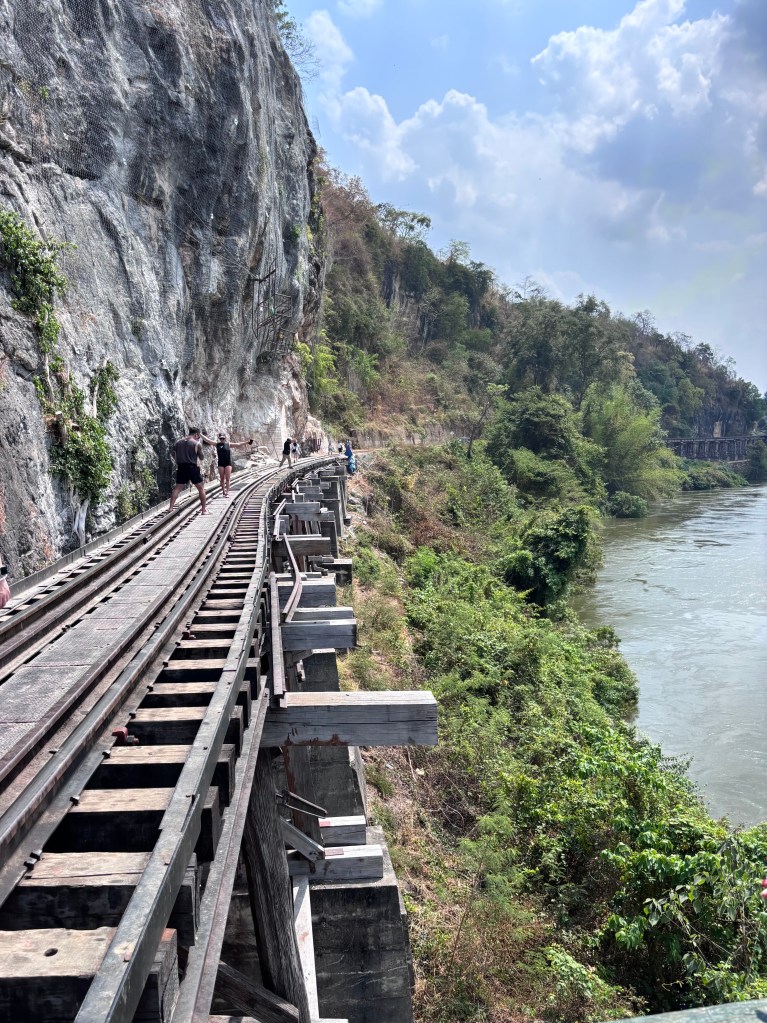
Ayutthaya (old capital, till 1700s) Wat ruinsBats in the Prang in AyutthayaSo many Wats!Buddha in the Bodhi treeAyutthayaAll the Buddha’s with heads removed- no gold…The Kanchanabury Allied War gravesA poignant placeThe bridge over the river KwaehThe train we took to cross the river KwaehThe railway line looks difficult even now
The Kanchanaburi Death Railway cemetery and museum were poignant. The Bridge has been rebuilt and trains serve the local community.
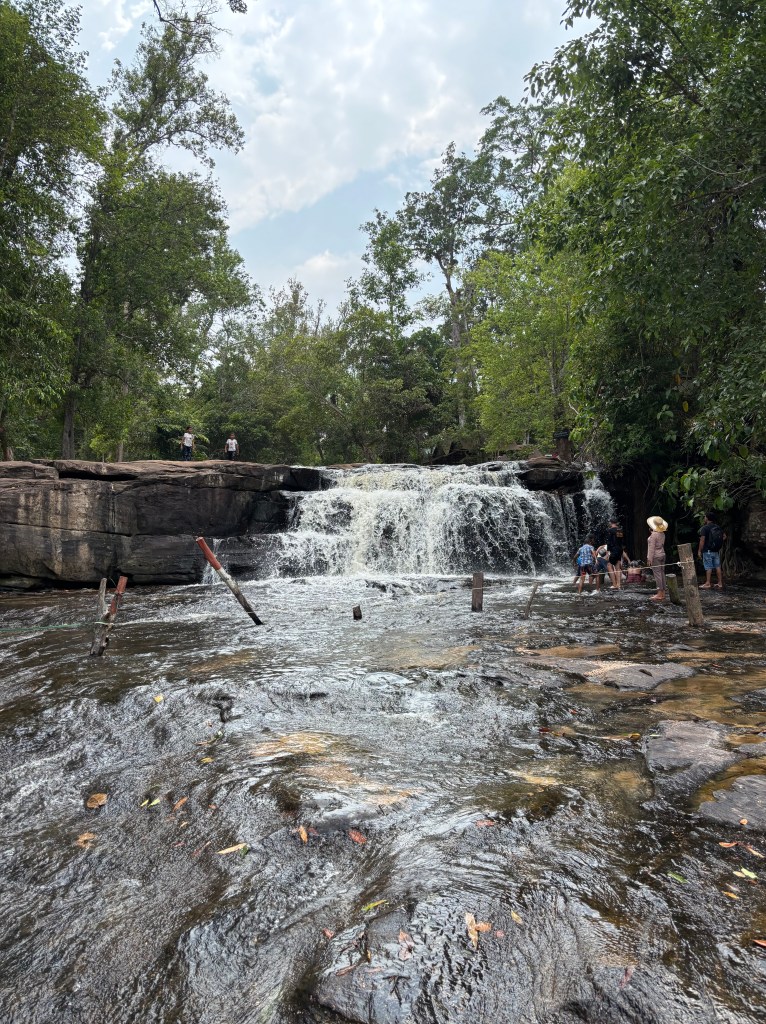
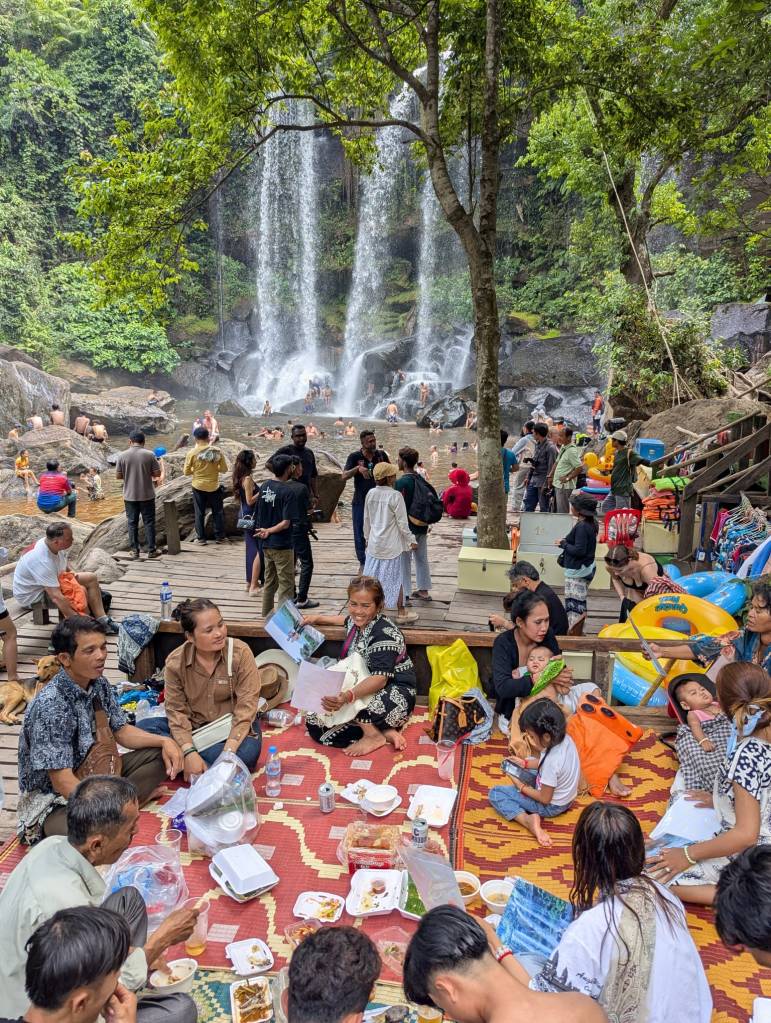
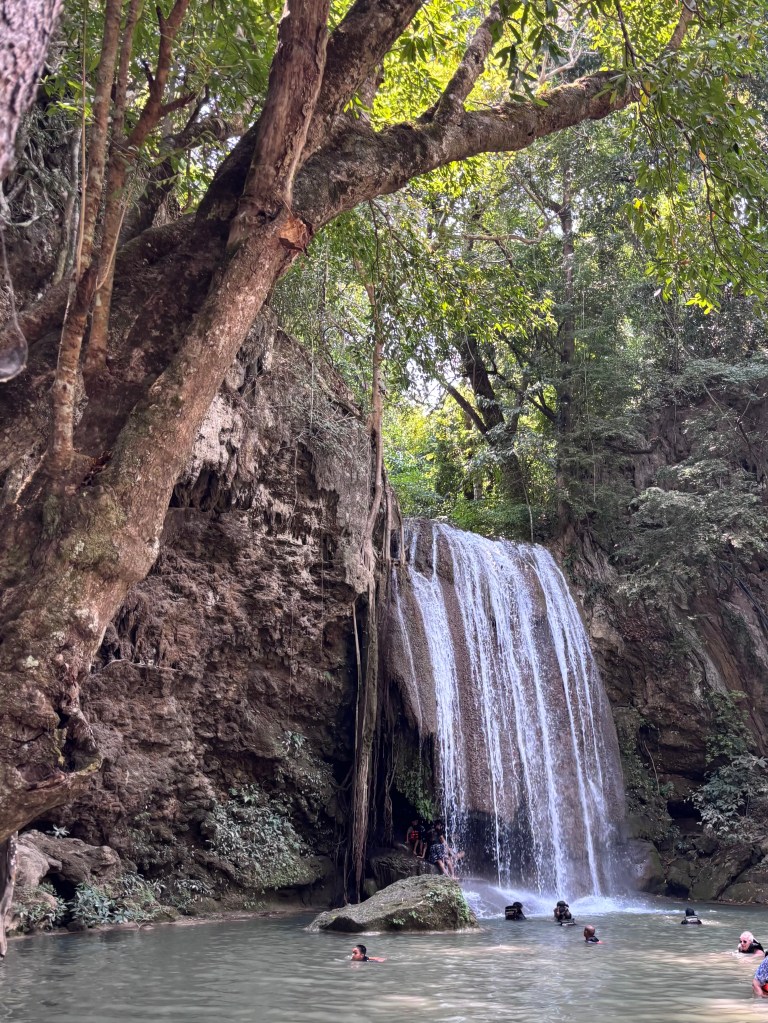
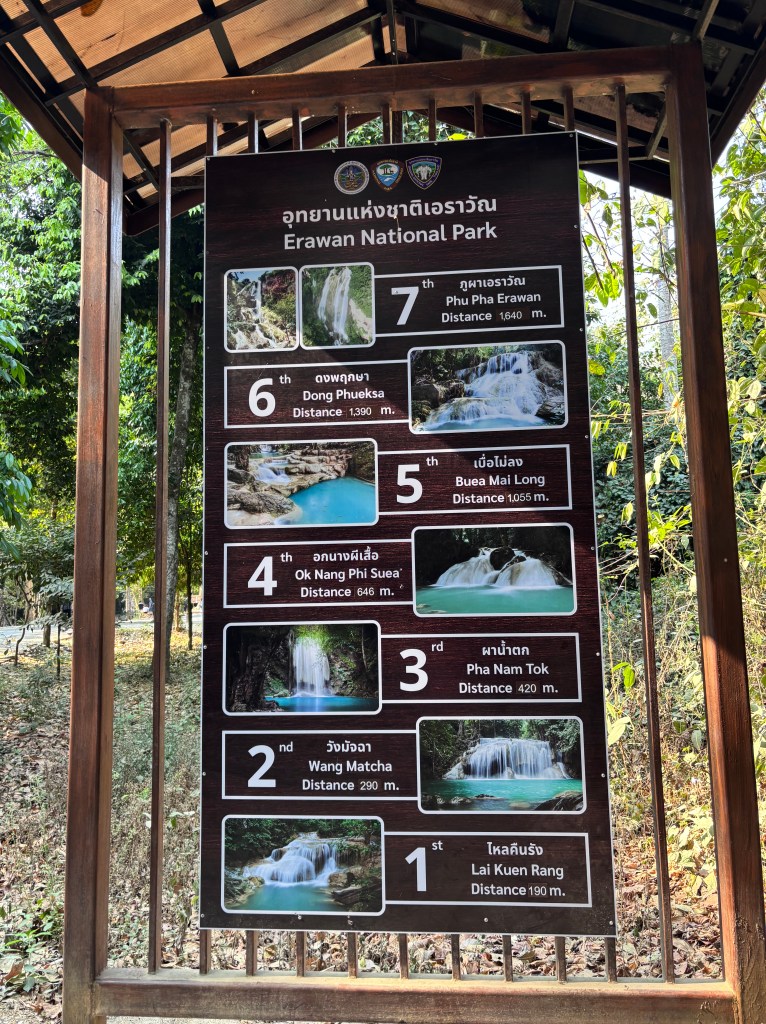
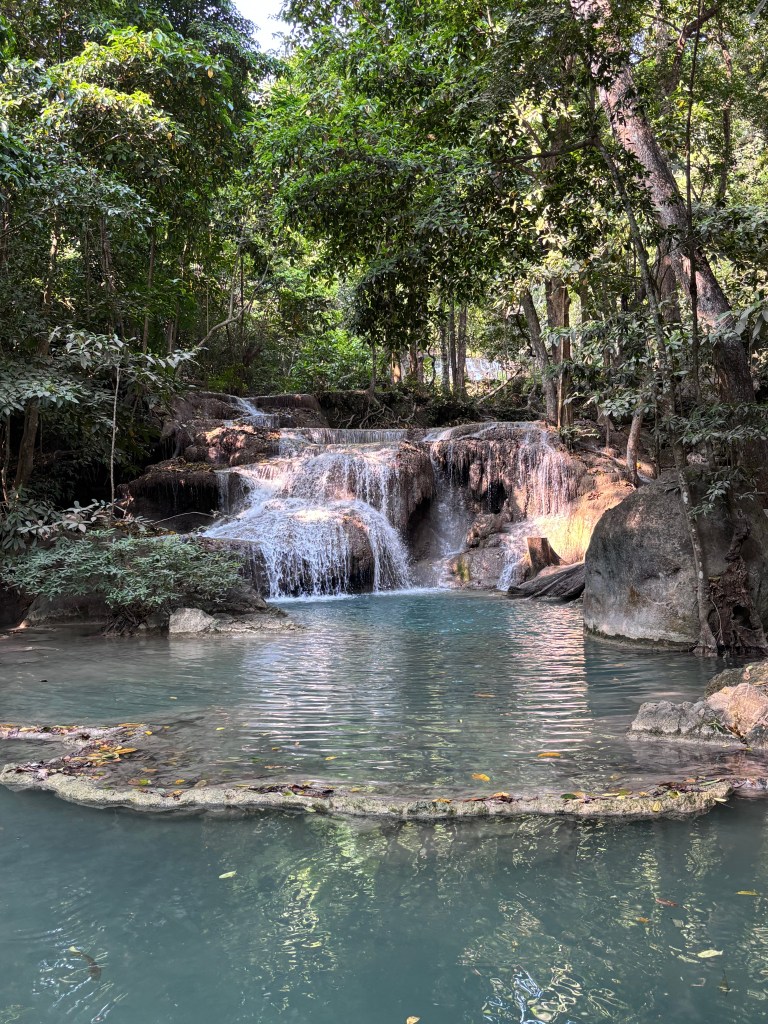
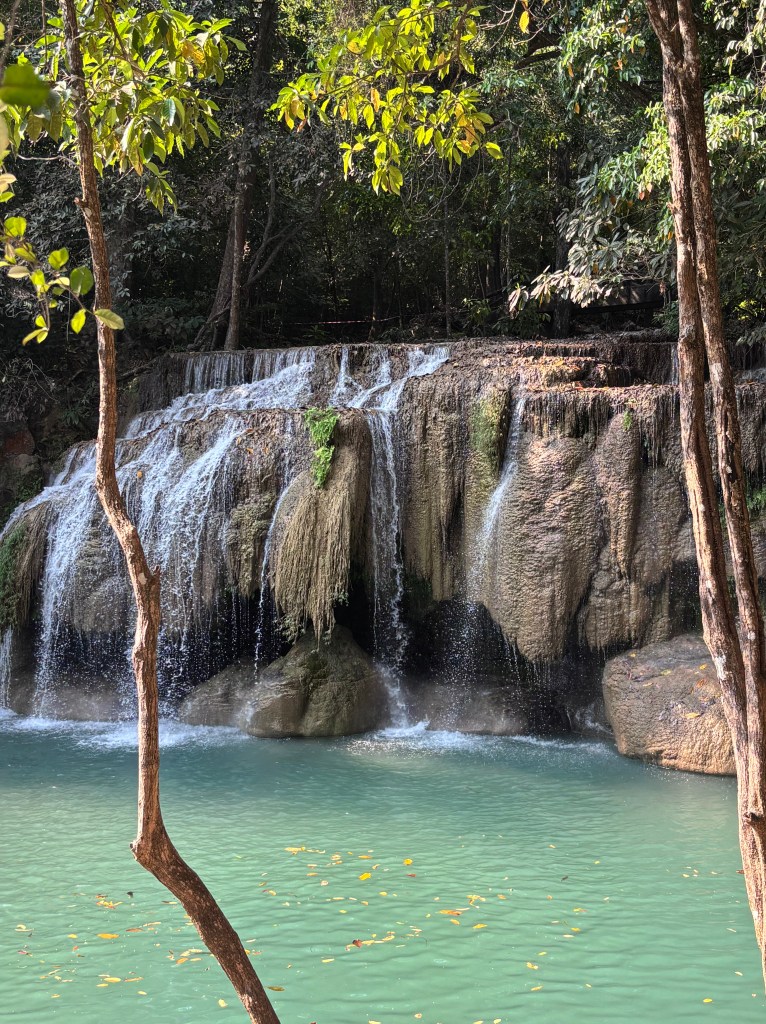
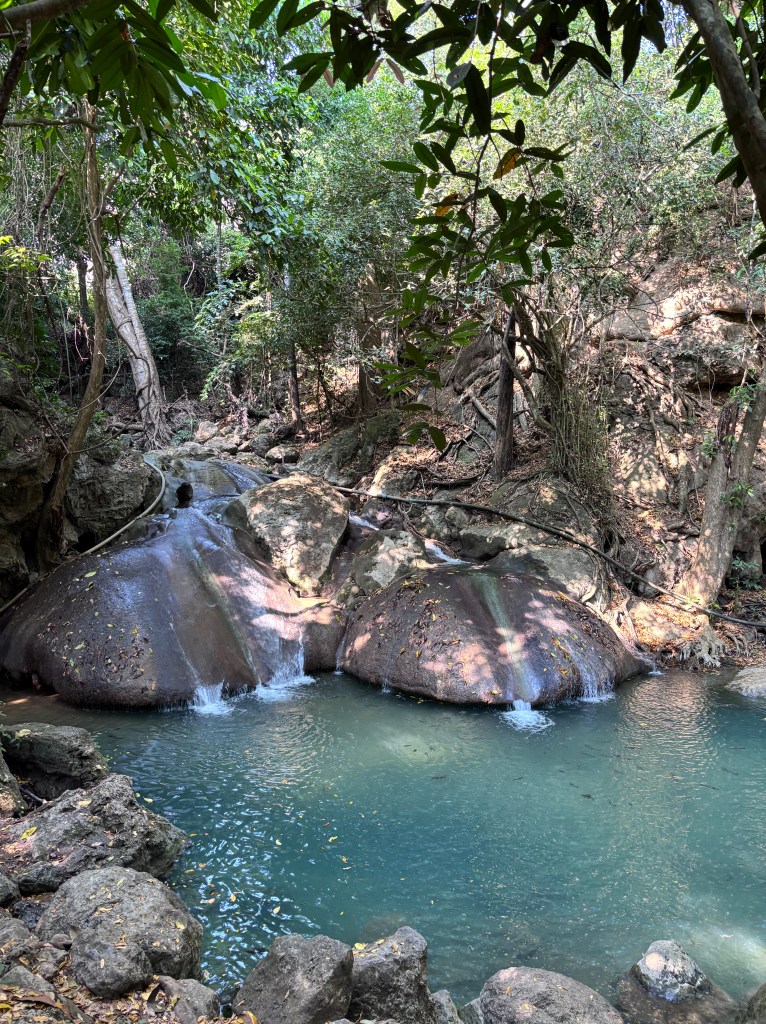
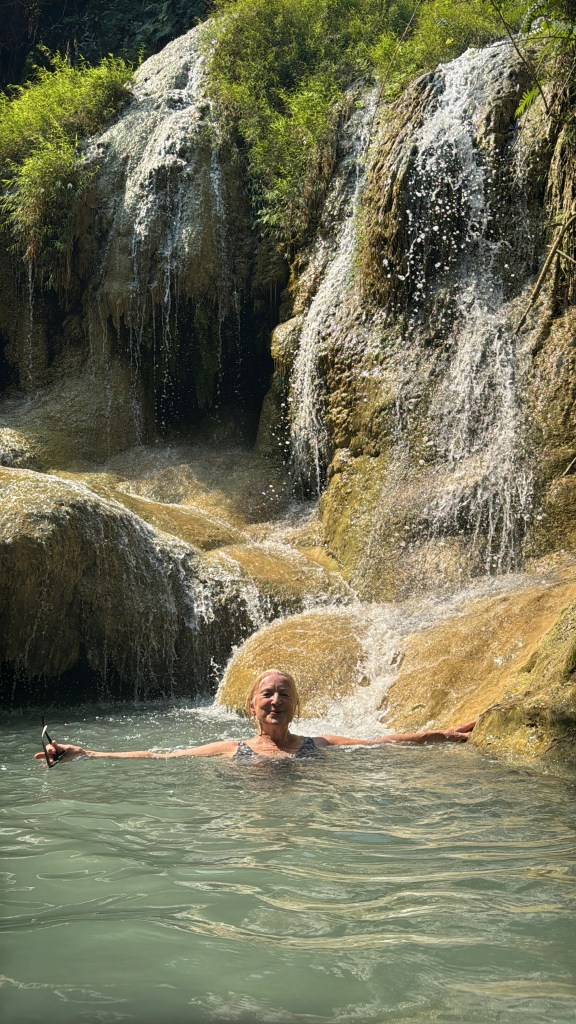
Thailand has so many national parks that choosing which to visit is hard. The Erawan Waterfalls are accessible from Bangkok – and beautiful even when there is less water than usual (it is still dry season). The hike up to the 7th level is challenging but not impossible. A well deserved swim helps to ease the heated and tired muscles.
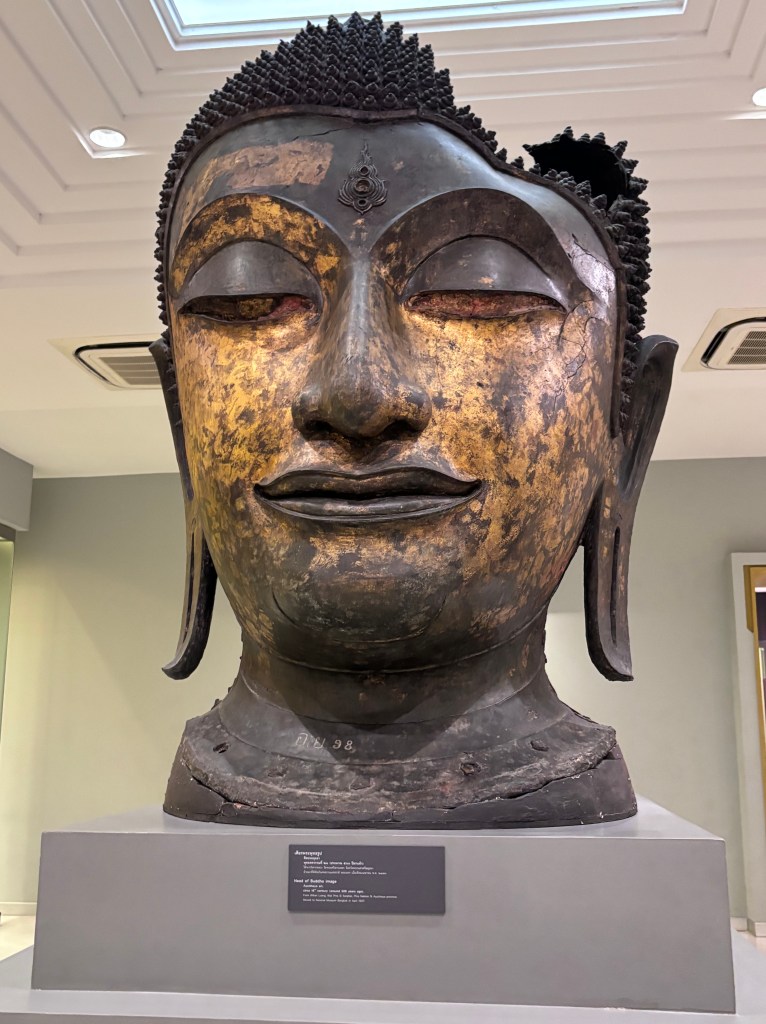
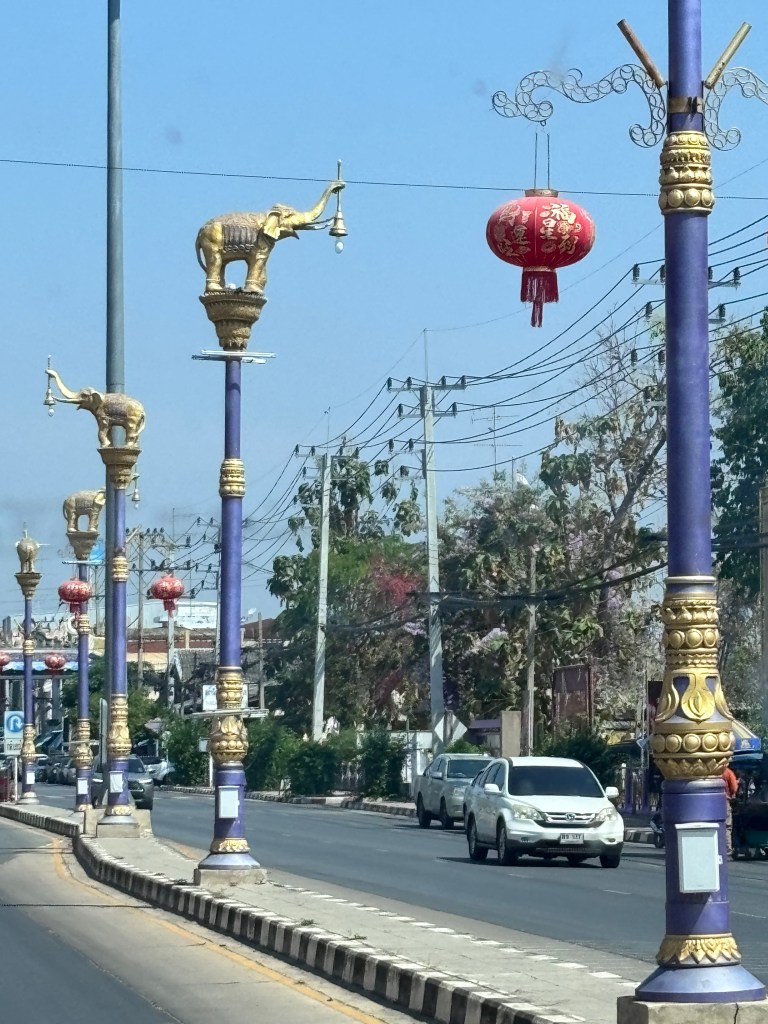
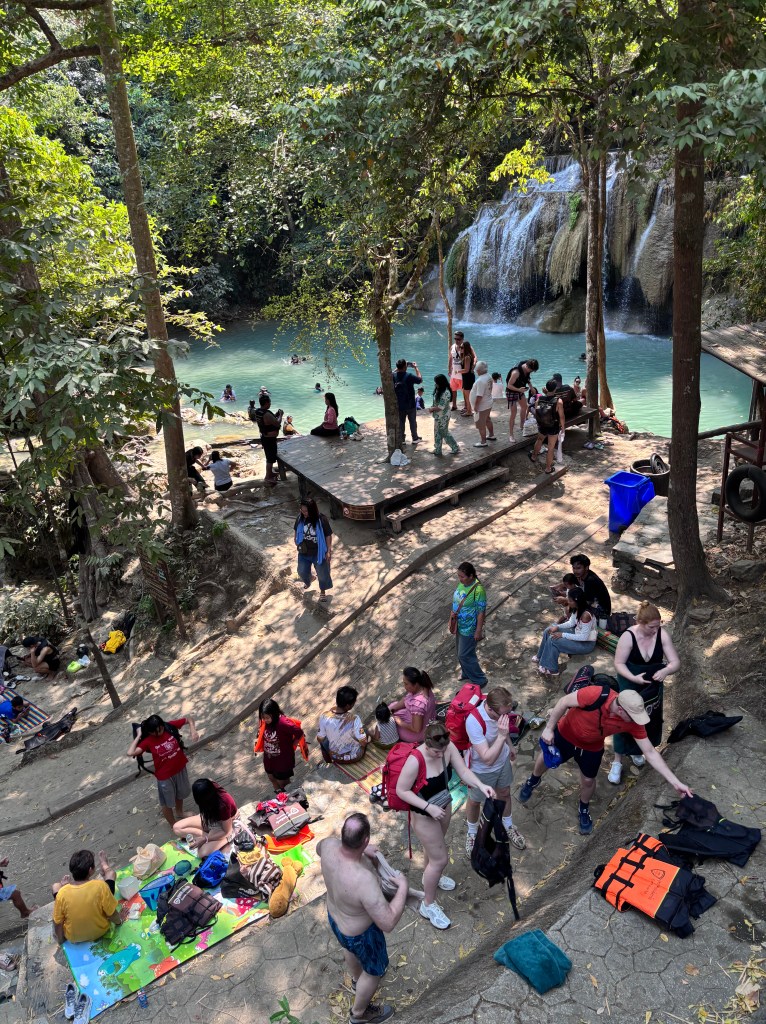
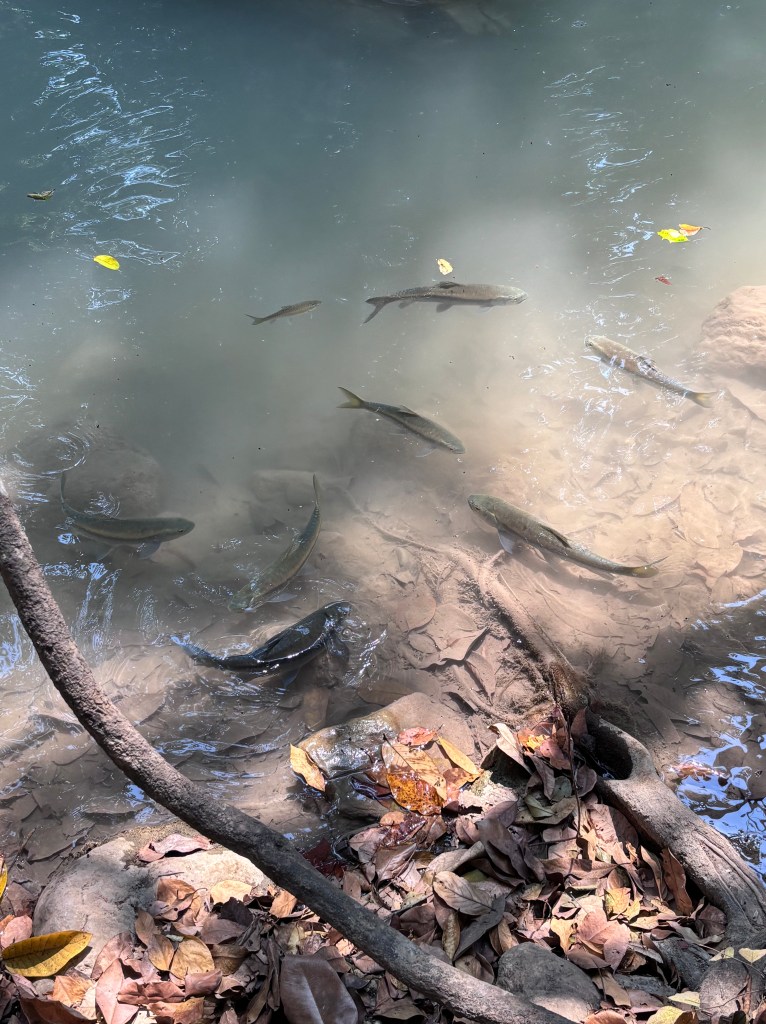
Buddha’s head in the National MuseumOn the way to Erawan – street lights look goodWaterfall 3Very popular at weekends – better to visit in the weekThe carp are everywhere – and the small ones provide a bit of a foot spa treatment The 7 FallsCoolAaaah!Named “The Breasts” and you can slide down themThat is – made it to number 7!Wonderful to cool down in the waterfall 7 waters
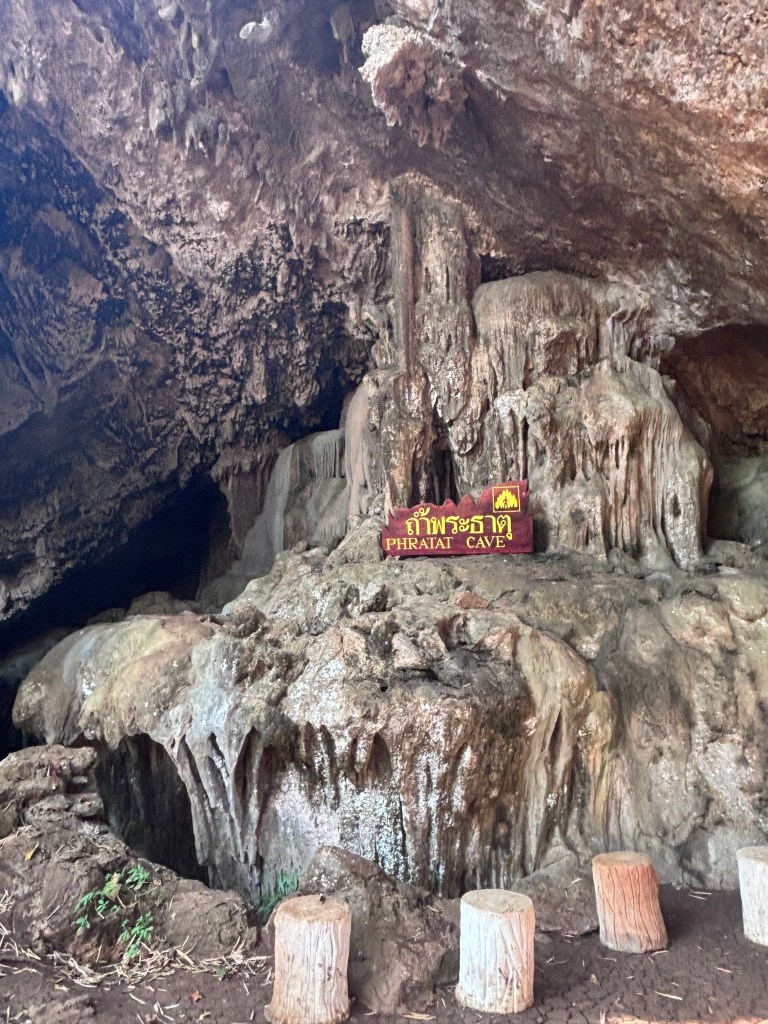
There is a cave nearby, Tam Phra That (about 12K uphill from the Falls, so own transport needed). I did it on two separate days, having hired a moped at the hotel (350 baht/day, exorbitant!). My moped riding skills are still forming, but there is little traffic here and it is manageable. Exhilarating too, when all goes well. :)) And the petrol I used for the two days was all of 40 Baht (£1)
The entrance fee to the Falls (and the cave) is 60 Baht for the locals and 300 Baht for foreigners. The same ticket is valid for both places if done on the same day…
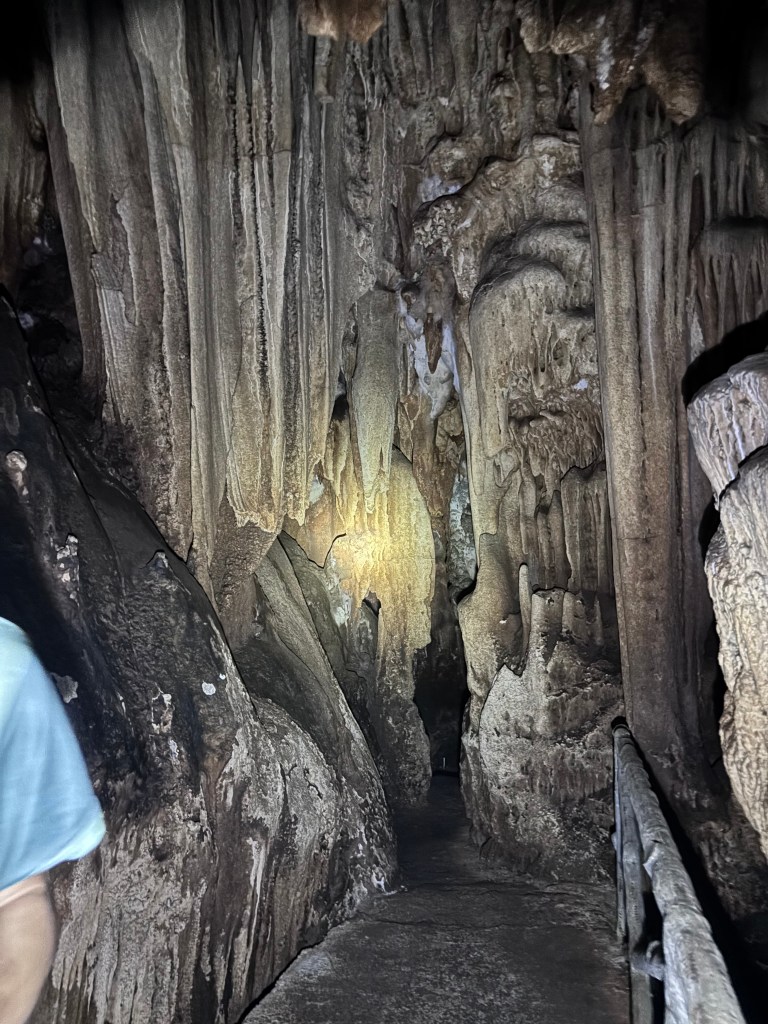
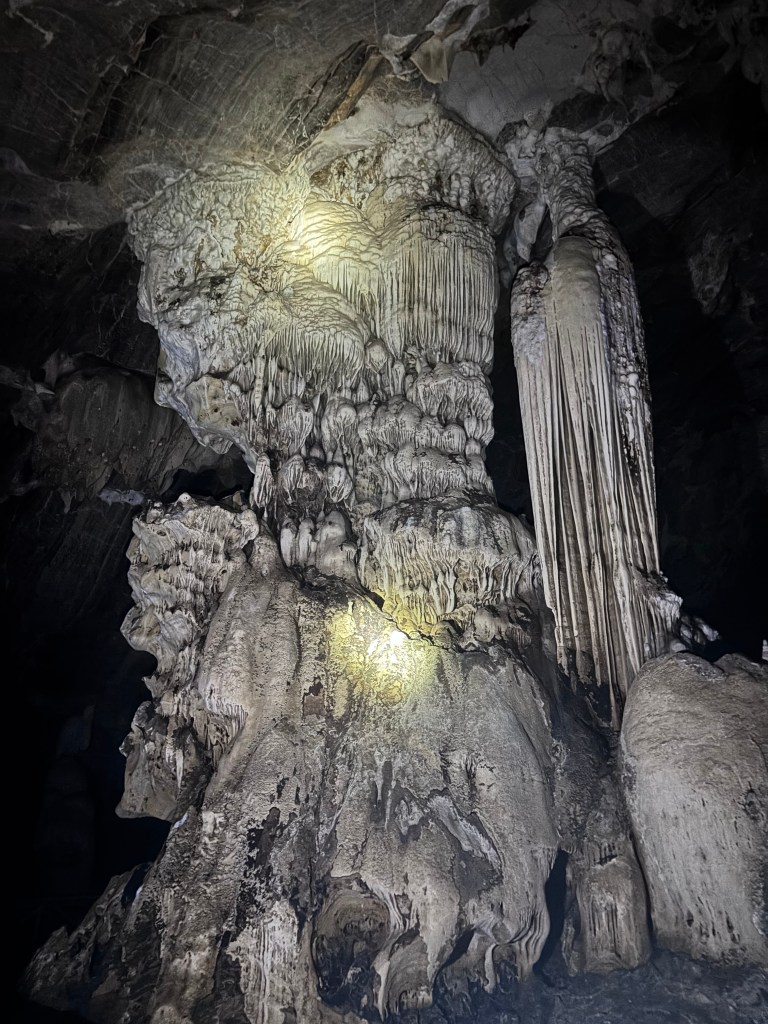
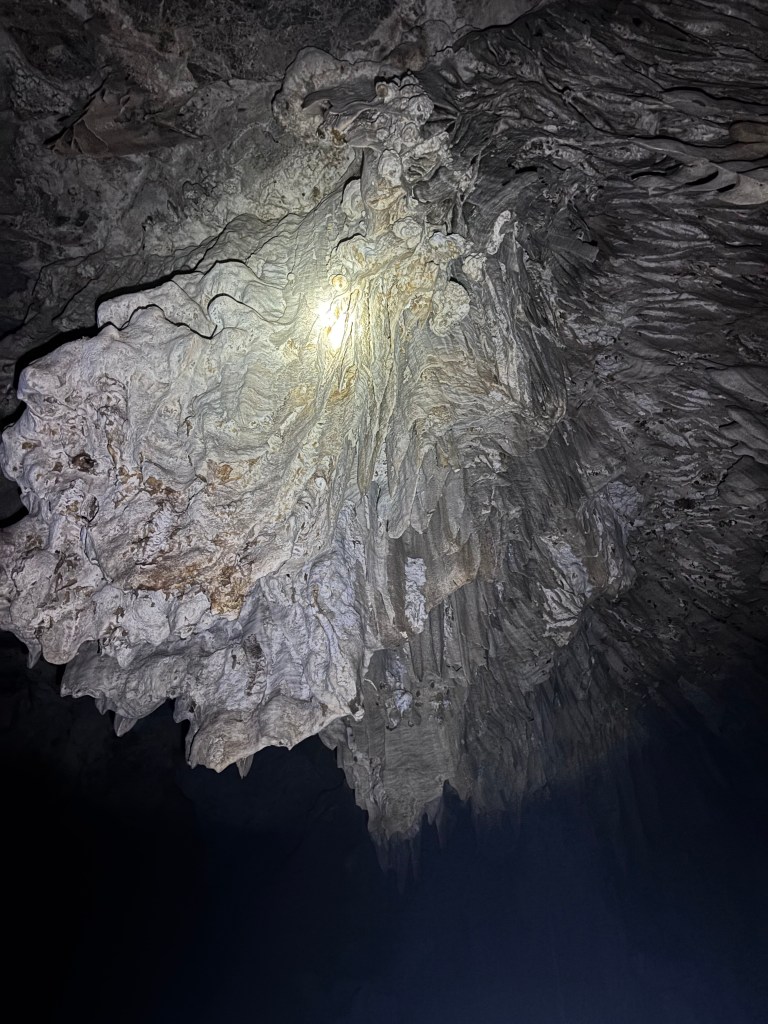
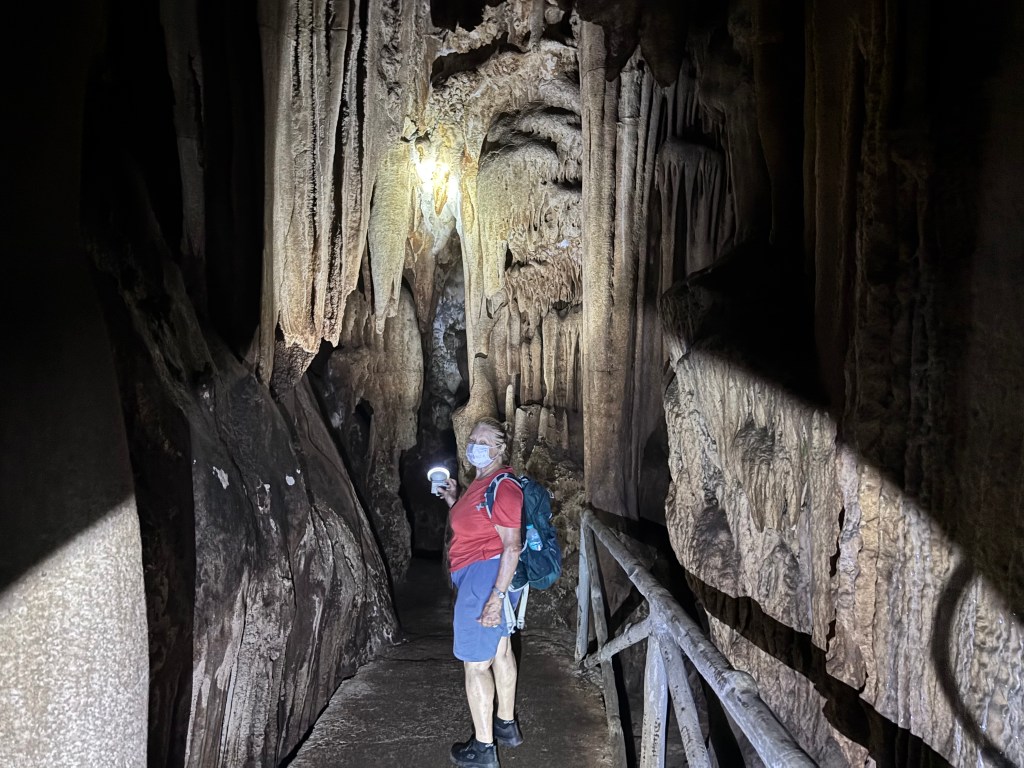
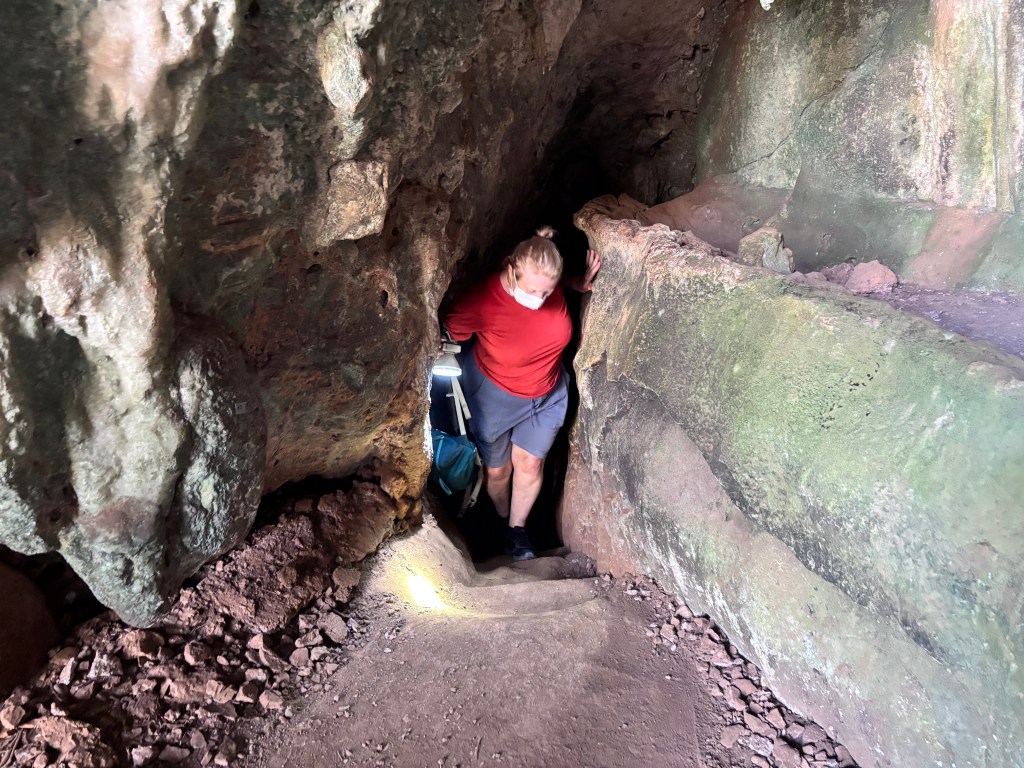
I was the only visitor there on a Monday morning. The cave is 748m uphill – most of it steps (600+). My guide spoke little (0!), but he had two torches, a first aid kit and extra water. I had to put on a face mask for my protection as there are bats in the cave. We crawled in through a very narrow entrance. It was eery.
I flew into Ushuaia from Buenos Aires, with a vague idea of doing a cruise in the Antarctic, “as I was already in the area”. Naively, I thought I would walk up the plank onto whatever ship was in the harbour, have a chat with a purser and get a berth… Not so – for security reasons, only ticketed or authorised people can access the port. So I took advice from the Lonely Planet and visited a couple of agencies in town.
The USHUAIA is one of the smallest ships that cross the Drake’s Passage; it has room for 90 passengers (and 40 crew). The Freestyle Agency got me a twin cabin for $6680 for a 10 day cruise and lent me the ski pants, jacket and gloves free of charge, as well as a gifted me a beanie and a muffler. I learnt later from other passengers that the Wayfinders agency gave a few more freebies, such as a book on birds, some postcards, a notebook – and a free haircut in the salon next door.
The Ushuaia in the port of UshuaiaPenguins on Dinke IslandFirst outing on the ZodiacThe whale factory shipwreckOn the BridgeNot all icebergs are the sameHumpbacks
The floating hotels are much more expensive (especially if you have to pay the single supplement) and as they carry more passengers, their offers of daily outings for everyone are fewer; the Ushuaia provided 2 trips a day for all (81 of us), once we were past the heaving Drake’s Passage. It takes 48 hours to get through the Passage; on the way to Antarctica we had 5m waves and 40 knot winds. On the way back, it was 7-8m waves and 65 knot winds. Lots of rocking and rolling, pitching and tossing, all at the same time. We were like a pancake mixture being swirled in a pan. The seasickness pills were available on the bar to take like sweets (one every 12 hours)… Keeping your balance is a challenge and you have to time getting out of the berth, going to the loo or opening the doors to coincide with the movements of the bucking ship. Still, most of us had our meals in the dining room – and we were all full of admiration for the staff who manage to keep their verticality in all conditions. I would not like to be chopping fruit and vegetables or baking when every surface is leaning; or pouring coffee at 45 degrees. Nevertheless, we had freshly baked rolls every day, chopped fruit; three course meals… (That also means putting weight on, as there isn’t that much exercise. We lounged a lot, listened to lectures, watched films (The BBC ‘Frozen Planet’ is a staple, as is ‘Shackleton’), went out in Zodiacs, went on the Bridge for a great view (theUshuaia has an open bridge policy), went on short trips ashore.
The Gento penguinsRed is from eating krill, green is from fish, white is when there’s nothing leftThe colours above and below water varyWhen the ship was NOT rolling Breathtaking viewsLeopard sealFur seals
The cold is penetrating. The temperature is well below freezing – we are the penultimate cruise, the winter is coming to Antarctica. Nevertheless, when Martin, the expedition leader, said that on the first day of autumn (or spring), 21/03, we could do “the Polar Plunge” on Brown Station, quite a few of us decided to have a go. Total madness – the water was 0 degrees, it was snowing… My legs were frozen halfway to my knees, so I didn’t feel the stones when skipping into the Antarctic, or when I shot out of the water in 5 seconds flat. We were bundled off as quickly as possible onto the Zodiac and the ship. A hot shower was never so welcome (though I had to defrost my feet in cool water first).
The polar plunge!My fellow “plungers” heading back to hot showersStrange forms everywhereThe crew were fantastic
The two kinds of penguins that stick around, the Gentoo and the Chinstrap, were great to see. Most penguins had left to feed until the next breeding season. Still, the fur seals, the leopard seal and the elephant seal also made appearances. And mot impressive, the humpback whales. The albatross, the Antarctic cormorant and the skua are usually around, especially in high winds.
Deception IslandElephant sealDeception Island So graceful, floating alongside shipThe Antarctic albatross has a wingspan of 3m!Back in the port of Ushuaia
Whaling has left many traces in Antartica in its long history, from shipwrecks of whalers and factory ships to various buildings on the islands. Whale oil was used for lighting, lubrication, in cosmetics, for making explosives, soap… The 1959 Atlantic Treaty recognised is as a unique place that should not be pillaged or used for nuclear testing or radioactive waste dumping. It was the beginning of keeping Antarctica as a neutral, uninhabited territory, to be visited carefully and used for scientific research. There are now 54 countries that have signed the treaty.
It is an otherworldly place, beautiful and eery, and surprisingly full of life.
Some years back I met a couple of Spanish travellers who ‘have been everywhere’; when I asked if there was one place they would want to revisit, they both replied “Iguazu”.
The Falls are a 1/2 hour bus ride away from the Brazilian town of Foz do Iguaçu (local buses at local prices, leaving every 20′). The Bird Sanctuary, a few hundred meters before the entrance to the (Brazilian side) Falls is very much worth a visit – the aviaries are some 8m high and a lot of conservation and species protection work goes on here.
The Harpy Eagle – fewer than 5 pairs left in the wildAn owl…
And the Falls. Despite the crowds (I’d hit the holiday season in Brazil, and the weekend to boot, so everywhere was heaving) and the heat (34-36 degrees), this was one place where “awesome, incredible, wonderful, breathtaking, superb” all fit.
There are various walks and hikes one can do around the river and the Falls – I did the Trilha Ytepopo (on the Brazilian side) – 5K through the woods (am reluctant to call it the “jungle” though you are asked to register your walk at the beginning and one of the employees warned me there may be jaguars…). An easy walk (bar the heat) all along the Iguazu river, with monkeys moving in the canopy, butterflies flitting and birds calling (no jaguars!).
The coatì are running around unconcerned. A member of the racoon family, and quite photogenic. As are the tapirs, birds and butterflies.
The coatìCrowds on the Garganta del Diablo viewing bridgeIt stayed for a bit, probingThe tapirs cooling in the IguazuMore coatis
The 07:15 bus from Foz do Iguaçu, Brazil, to Puerto Iguazu, Argentina, was quite full – a lot of day trippers, going to see the Falls on the Argentine side. The border crossing/ passport control was busy and the Brazilian bus driver does not wait – he gave us a voucher for the next bus (by the same company only). I stayed the night in Puerto Iguazu as did not wish to rush. My hotel (Lilian) was only 2 blocks from the bus terminal – very handy. I’d read about the Casa de Botella and went to see it (an Uber motorbike is a lot less scary here than in Buenos Aires or Rio). Sr Alfredo Santa Cruz first built a playhouse for his daughter from discarded plastic bottles and other recyclable materials in 2000 (to buy one was prohibitively expensive). This was the beginning of his ecological journey (he calls himself “el soldado ecologico”). The materials are all recyclables – the wood is from pallets; the ‘string’ to tie things with is plastic, using a little home made Sten knife tool to cut the bottles to a precise narrow width, like peeling an apple; cans are used to make toys; ring pulls to make fly curtains, rubber tyres to make chairs; tetrapack to insulate roofs…
Quite comfortableFreddy, Alfredo Santa Cruz’s sonThe plastic lasts a 100 years… and the bed is quite firm but comfortableToy kitchen
The copyright for the construction of such dwellings is free to all who wish to use it and there are houses in South Africa, Costa Rica, Colombia and others that have taken it up.
The night bus from Puerto Iguazu to Buenos Aires takes 17 hours (or more). I booked a ‘coche cama’ – the equivalent of business class on the plane. And getting on the bus felt like going left when you get on the plane! Comfortable, almost flat seat, a blanket and a few snacks provided. The cost was 84000 Ar pesos (cash) or $84 (cash) or 119000 pesos if paying by card – 30% more. Argentina is economically in a very bad way and everyone I spoke to complained – the recession has hit hard. For me a as a tourist, it is just as bad (I did not bring enough dollars to be able to exchange them at the “blue” rate, i.e., the ‘illegal’ exchange rate that is 20% above the official bank rate). Getting the cash out of the cashpoint is easy, BUT (and it is a big but) the banks charge 13400 Ar pesos for EVERY withdrawal, however small, and often do not allow more than Ar pesos 30000 (less than $30) to be withdrawn. Purchasing things with a credit card always carries a ‘penalty’ – e.g. the shuttle to the Tierra del Fuego national park is 28000 cash and 30000 if paid by cc. But BA has charm and good things aplenty.
Plaza Dorrego tanguerosThe pink drawing room in the Congress, as designed by Evita PeronSan Telmo street statueThe House of CongressMafalda – a wise cartoon character famous in S.A.Sunday San Telmo marketMatė drinking is everywhereA Paris feel to BAThe (in)famous trio in El Caminito: Maradona, Evita, Peron
I flew into Ushuaia on the 10th of March, late morning, intending to seek a last minute berth on one of the Antarctica cruise ships – they all stop here on the way south. The assumption I could go aboard a cruiser and speak to the purser was quickly found to be naïve and false: all bookings are done online; the ship’s owners decide on the prices of the last minute berths; for security reasons no-one can go aboard a ship unless on business or with a ticket.
The Lonely Planet recommended Freestyle Adventures agency in Ushuaia (English is spoken by several members of staff). They were indeed helpful and found me a berth on the MS Ushuaia, sailing out on the 17th of March on a 10 day cruise – Classic Antarctica. They also lend ski pants, parkas and gloves free of charge (and gift you the hat and the muffler).
There are a number of trips one can do from Ushuaia. I filled my days with them – a boat trip to the ‘lighthouse at the end of the world’ (it used to be, and the name’s stuck, though there is a lighthouse further south now), and a ‘pingüinera’ (penguin breeding area); a shuttle to Lago Esmeralda trail; another to the Tierra del Fuego National Park with various trails; a hike up the El Martial glacier above the town… ( One small gripe: the restaurants in Ushuaia will not give you tap water as it’s “not drinkable”; when you go up to El Martial glacier, the source of the town’s water, you are told that the water is pure and drinkable… 🙂
There are always cruise ships in the Ushuaia harbourThe St Christopher wreck – a memorial to all the shipwrecks in the areaTowards the Beagle ChannelThe Eclaireur – the lighthouse at the end of the worldHumpbacksEl Martial glacierJust under the glacier with Ushuaia behindWalkway over the bog towards Laguna EsmeraldaTierra del Fuego National Park – the view of Lago Roca from half way up Cerro GuanacoA chimango caracara falcon (says Tony, who knows)
Rio welcomed me with clear skies, 34 degrees, and traffic that looks like a permanent rush hour.
Going up to the SugarloafA very French looking theatreThe Carioca clock -a good meeting point downtownThe oldest Coffee house in Rio – a proper tourist meccaEscadaria Steps – full of messages in tiles. Take your pick of the Mona LisaMusic is everywhereThe Museum of tomorrow – terrific building Inside the museum of tomorrow Sunset at IpanemaJC above the crowds
Everything was preparing for the carnival. The tickets are expensive and the Cariocas take advantage of the free technical rehearsals (all the moves, but no glitter, elaborate costumes or floats) that start in January and carry on until a few days before the real thing starts. I managed to catch the very last day of the rehearsals, Sunday, as well as the first day of the real carnival on Ash Wednesday. Itala, who I met at the Technical, explained that each samba school enacts a story (with a religious content) and each group of dancers and players within tells a part of the story. The procession takes between 45′ and 1 hour to traverse the Sambodromo (which, for the rest of the year, is a normal street full of traffic). The one advice I was given about joining in the fun was “mas brillo, menos ropa!”(more glitter, less clothes).
It was good to cool down in the Atlantic; the beaches are full all the time and all life is here: food and goods hawkers, caipirinha makers, fun seekers, hairdressing appointments…
Beach wraps for saleShort back and sidesMassage, anyone?Going blond
When going on a “free” (pay what you think it’s worth, but it is suggested you pay at least 100 reales) walking tour of Rio, learnt I could use public transport for free as I was over 65 – it works for everyone, as long as you show a document proving your age. On the buses, the driver would wave my driving license at a camera and then ask me to get on through the exit door to avoid the turnstile. Uber is inexpensive too, especially the motorbikes, which weave through the traffic at a fair (and very scary) clip…
Trip to the favelaFavela electricians must be specialFavelas are on steep hills – motors take you up
I wanted to travel down to Iguazu Falls by coach; to buy a ticket online, the Brazilian websites ask for the CPF (cepeefe – the tax number). They show the option for a passport number but then ignore that you may be foreign and not have a Cpf. It was only after I bought the flight (no issues with Cpf there) that I found out the ways around it: try 11 zeros, it sometimes works; go to the post office and buy a tax number (the legal option); ask Google to generate a fake CPF number (it does, and is useable).
A party round the corner from the hotelThe Petrobras (oil co) HQ – voted one of the ugliest buildings in RioThe cannonball tree (Rio’s tree) – beautiful flowers, deadly fruit – it is very heavy, like a bowling ball.
Leticia is where a wedge of Colombia pokes at the mighty Amazon, a shaft between Peru and Brazil – a tripartite border. Having consulted various sources (Rome2Rio, Lonely Planet, a few others), thought it a good idea to catch a slowish boat (4 days) from Leticia to Manaus. The flight from Bogota at 6 am meant being up at 03:30. The sunrise over the clouds was worth it.
Leticia – boat trip to the monkey sanctuary (this is the guide’s son, come for the ride)Fresh fish and chicken at the marketMy lunch being made
Should someone wish to do it, here are a few things you need to know: everyone (local and visitors) who doesn’t just transit Leticia (to go to Brazil or Peru) must pay a 50000 Col peso tourist tax. You also need a stamp in the passport from the Colombian immigration authorities, but it can only be acquired 24 hours or less before leaving Colombia… As I was staying in Leticia for 2 night (the boat timetable is a bit erratic) the stamp required another trip to the airport immigration office. There is no physical border between Colombia and Brazil at this point, so one needs to take the exit stamp to the Brazilian authorities in Tabatinga, who acknowledge that you are entering Brazil by stamping your passport…which is needed to buy the ticket for the boat. As this was going on, took a boat trip to a monkey sanctuary…
Leticia and Tabatinga flow seamlessly one into the other and the only visible difference is the shop signs – changing from Spanish to Portuguese (and vv). The no man’s land is abstract, but the bureaucracy is very real (“tramites” – paperwork – is the dreaded word in Spanish). The boat timings are vague. The boat I took was scheduled at noon; officially delayed till 1500; we actually sailed at 1700. I had my hammock, and my plate, cup and spoon. (The four days’ trip, with 3 meals a day, was c £40; for that I could wash my utensils.)
Waiting for the boatThe hammocks are upLoading and unloading is all done manually
There was an added bit of excitement on day 3: we were stopped by the river police at 4:30 and made to dock next to their boat. Everyone had to get off while they searched the boat – turns out they’d had a tip off that drugs were on board. The bush telephone said later that one of the boat cleaners had stowed the drugs in the bilge of the boat. Several arrests were made. Breakfast was very late… (complaints were made when the crew went to eat first, disregarding the queue).
4:30 am. Everyone off the boatSniffer dog was usedQueueing for breakfast (though the little one couldn’t wait)
We arrived in Manaus on Sunday morning at 5, 12 hours later than scheduled. The town, over 2 million people, is now an industrial hub for a number of industries – motorbikes, electronics – a far cry from the rubber baron times which started it. The opera house still looks grand and thoroughly European.
My jungle trip (booked through the Amazon Antonio Jungle Tour) started early the next day, going first by car, then by boat: a few days on the Urubu (Vulture) river (acidic, clear brown water) then two days on the Amazon (alkaline, muddy). The acidic environment means there are fewer mosquitoes and other insects, and therefore fewer other animals up the chain. Maybe we’ve been spoilt with the wonderful Attenborough documentaries; it definitely was not easy to spot wildlife, even with the expert help of the guide.
Cooling downMangrove woodsAntonio Amazon jungle lodgesThe Urubu river is sometimes like glass
A couple of hours’ trek through the rainforest and a night in the jungle were the highlight. We were only 4 – Alvaro (the guide), Sabine and Chris from Vienna and I. We were full of admiration for Alvaro’s ability to get the fire going from (what looked like) very wet wood. There was a little caiman in the stream we used for cooking and washing…. Of course, it rained torrentially in the night.
Our camp in the rainforest – we were grateful for the tarpaulin!Chris, Sabine and AlvaroGetting the wood for the fireChicken cooking!There was rice with vegetables, fruit…Only about 2 ftDinner by candlelightA wild hen got spooked – they don’t return to sit on the eggs (Alvaro took them to his mum to hatch)Alvaro’s father – they live locallyLeaf cutting antsAlvaro started the fire and made coffee Bananas, pineapple, papaya – breakfast
There were more animals on the Amazon part of the trip – Jose, our guide, certainly knew where to find them. Sloths, monkeys, birds… Francesco, my new companion, and I were thoroughly impressed. We even managed to catch a piranha (thrown back as too tiddly, but hey!)
A slothHoatzin birdsHanging nestsFrancesco, and Jose the guide steering Our hostess (and cook) in the indigenous villageGleaming utensils in the kitchenThe chief of the village Lovely poseMy piranha – in close up
The planning for this South America trip has been very much of the same ilk as the previous one up the Silk Road – scant. A flight to Bogotá, (a known entity – or so I thought) and a fair idea of the places I’d like to see in South America in the 3 months I have.
Bogota has grown a bit in the 35 years since we lived here. The buses look modern, unlike the ones that seemed to have been held together by tarpaulin and string. Motorbike riders wear helmets as protective devices and not as a fashion accessory. But traffic is heavy and one still wonders why there are not more accidents – the rule, if you don’t look you don’t see, still applies when joining a lane.
I have been lucky that a friend has welcomed me in her home in Chapinero, a nice residential area in the north of the city. All the things one wants to see are downtown – the streets and squares of the old town, the museums, but easily reached – buses are frequent (one needs to buy a card – no cash) and taxis cheap.
La CANDELARIA streetThe church of San Francisco, the oldest in BtáThe chess players near the Gold museumRecycling Bogota style
The gold museum is stunning. Well displayed by regions and with sufficient information in Spanish and English. The intricacy, beauty and care invested in each piece brings home the difference in how the indigenous peoples viewed the value of gold – as offerings to gods, and what the Spanish did with it – melting it into money.
The conch inside the gold cover is crumbling, but the gold remainsRemember seeing this on display in the British Museum.
The Cerro Monserrate is 1968 ft (600m) above Bogota (which is at 8666 ft (2600m). The church at the top is a place of pilgrimage and many will walk the 1500 uneven, very steep steps up as penitents and supplicants (and nowadays, as an exercise). The bronze sculptures of the Stations of the Cross are displayed surrounded by greenery. The views over Bogota (on a clear day) are superb and far reaching. I took the funicular up, but did walk down – hard enough, with the addition of the stones being slippery, polished from many feet. It took me 40 minutes to get down – it can take 2 hours to get up – and my legs were jelly.
A few minutes in the funicularVeronica wipes J’s faceThe view!Shops and stands of all kinds line the steps The toilet along the steps
On Sunday I took a bus to Zipaquira, a town 50 K north of Bogotá, known for its Salt Cathedral. The Muisca people mined the salt here long before the Spanish arrived. The original Salt Cathedral, which we visited on school trips in the late 1980’s, closed in 1995. This new one is a whole “experience”, a major tourist attraction. As it was Sunday, it was very busy. The queues were well regulated and a lot of young people (they looked like high-school children) were there to answer questions and point the way – once you got near. (No signs from the main road towards the Cathedral – I asked a policewoman.)
Follow the white lineThe monument to minersA snazzy tunnel leading down to the Stations of the Cross and the main chambersSalt tunnelsThe sculptures of the Calvary are abstract and garishly litThis Michelangelo copy is in the well shaped space in the main naveThe nave is enormous – 18m high Way outZipaquira streetThe main square, Zipaquira
It was lovely to spend time in Bogotá, but it was also time to move on. The flight to Leticia is under two hours, but it will all be new to me.