Skip to content
    • About
    • Contact

Maribibi_travels

  • Azerbaijan

    Jan 13th, 2024

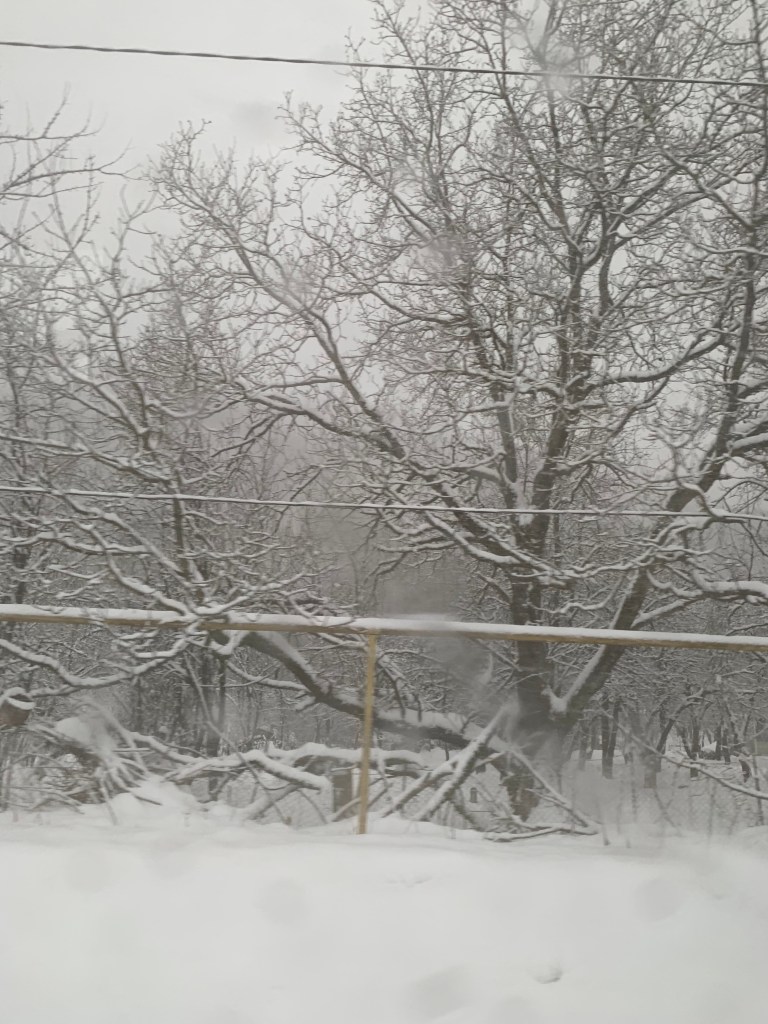
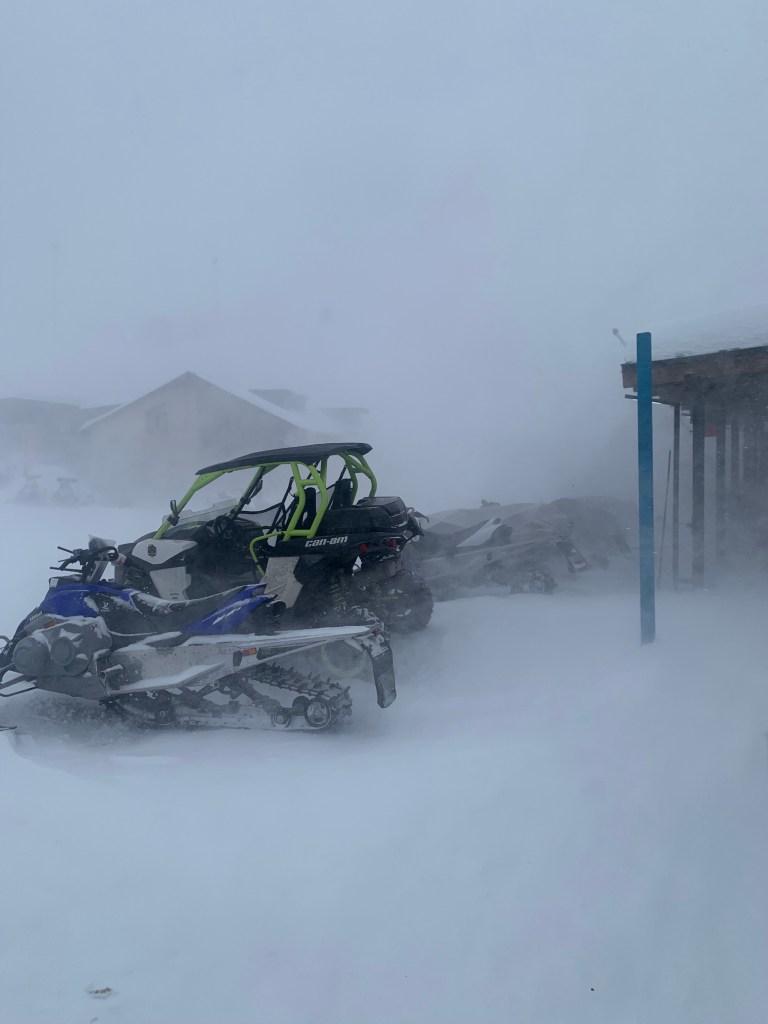
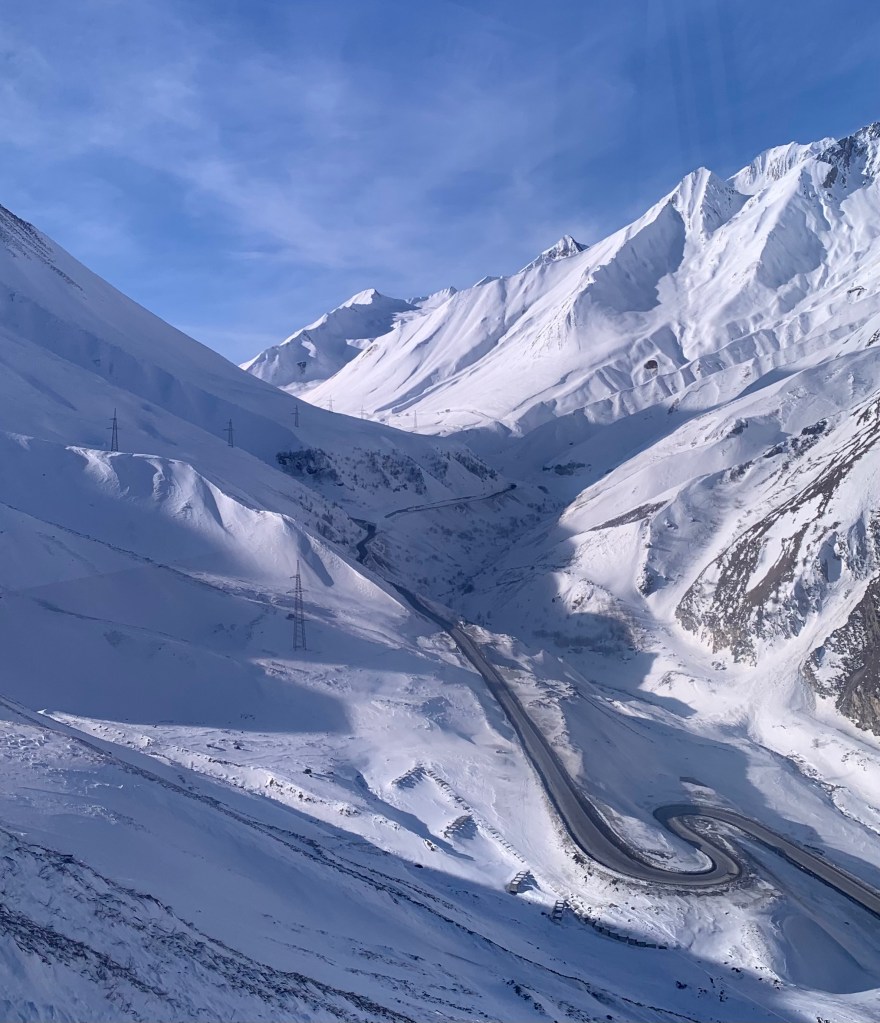
    I left Gudauri (Georgia) ski resort (with some difficulty) on the 4th of January, in a snow storm. The two marshrutkas I tried to hail would not stop (full, presumably, and seeing me there with my giant backpack, was too much). The car wheels were spinning, the cars sliding, snow chains being bought (the bus stop was next to the petrol station and shop). Interesting to watch, though less so when you are trying to get somewhere.

    Negotiated a taxi ride to Tbilisi (120Km) and persuaded Christoph, a German Erasmus student who was also waiting for a marshrutka, to contribute what he could. We were both glad to get in (the snowman look had started to pale long before – the hour spent outside was plenty). The ride down the snowy mountain road was slow and slippy, unsurprisingly, though there were those who tried to overtake the queue, unsurprisingly. Once out of the mountains, a complete change: dry roads and some vague sunshine.

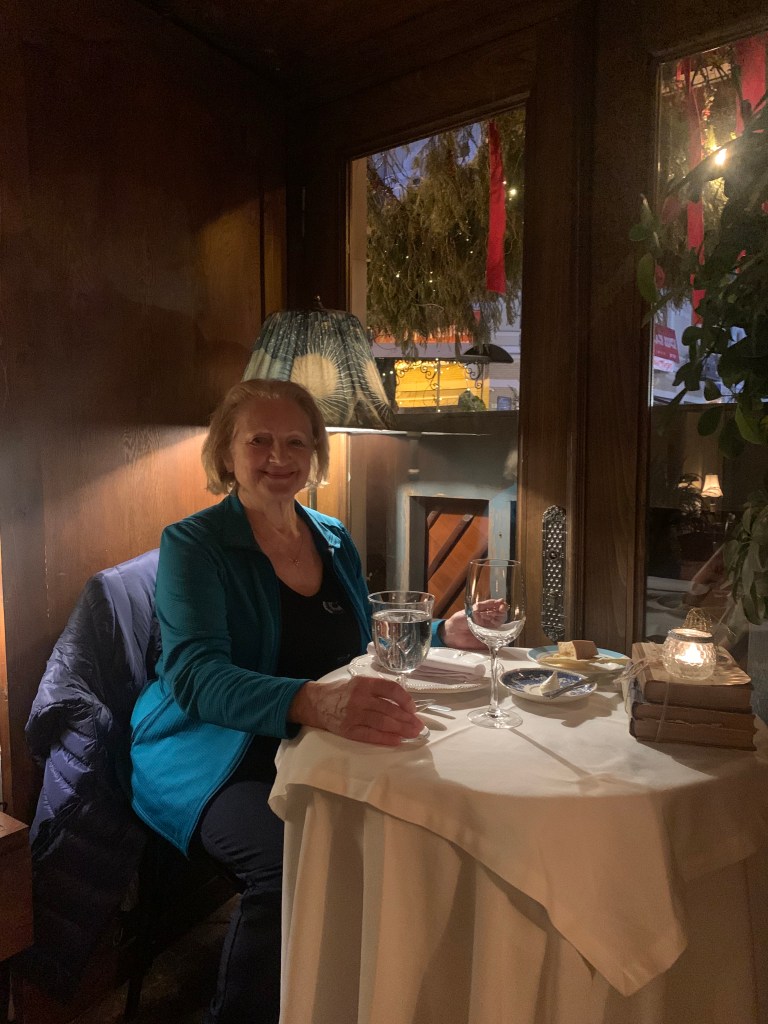
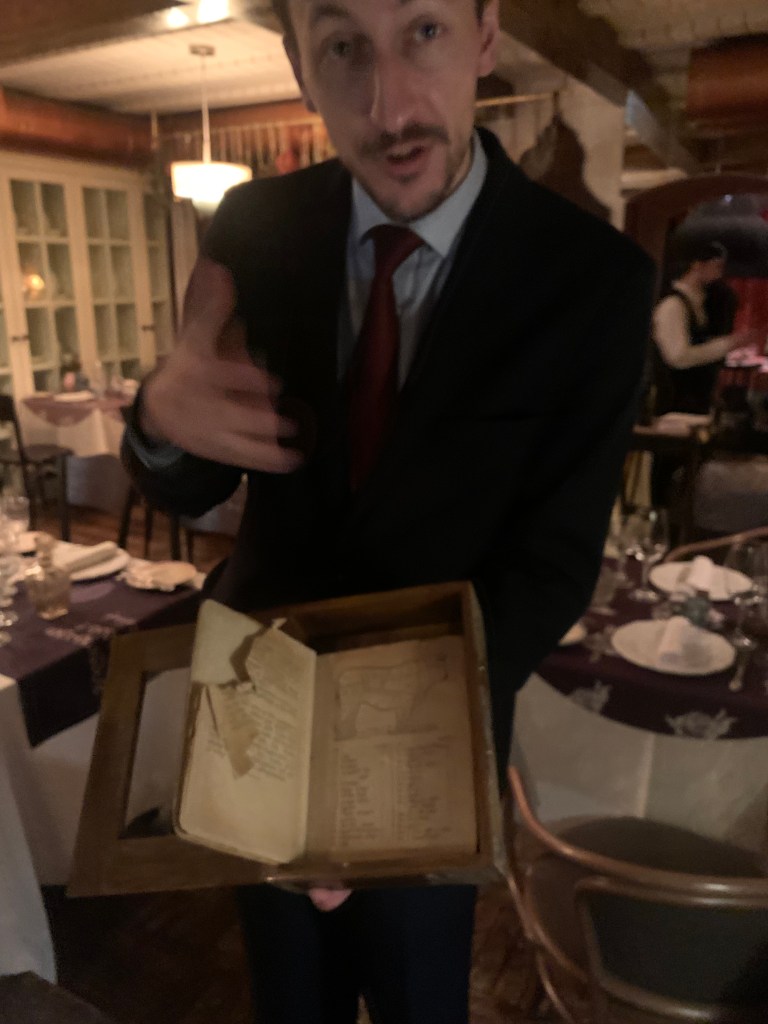
    Should you happen to be in Tbilisi, the Barbarestan restaurant on the Left Bank is worth a visit – the food is good, but it’s the story, the presentation and the ambience that make it so. The menu is based on a cookery book found at the Tbilisi Dry Bridge flea market a few years ago. It is a collection of Georgian recipes by a lady cold Barbara, written c. 1874 and published by her daughter – the book they got was printed in 1940. It is reverently kept in a box with a glass lid and shown with pride (though I may have been lucky that it was shown me very unctuously by a Uriah Heap namesake…) . The restaurant is slowly and diligently going through the recipes, using seasonal ingredients.

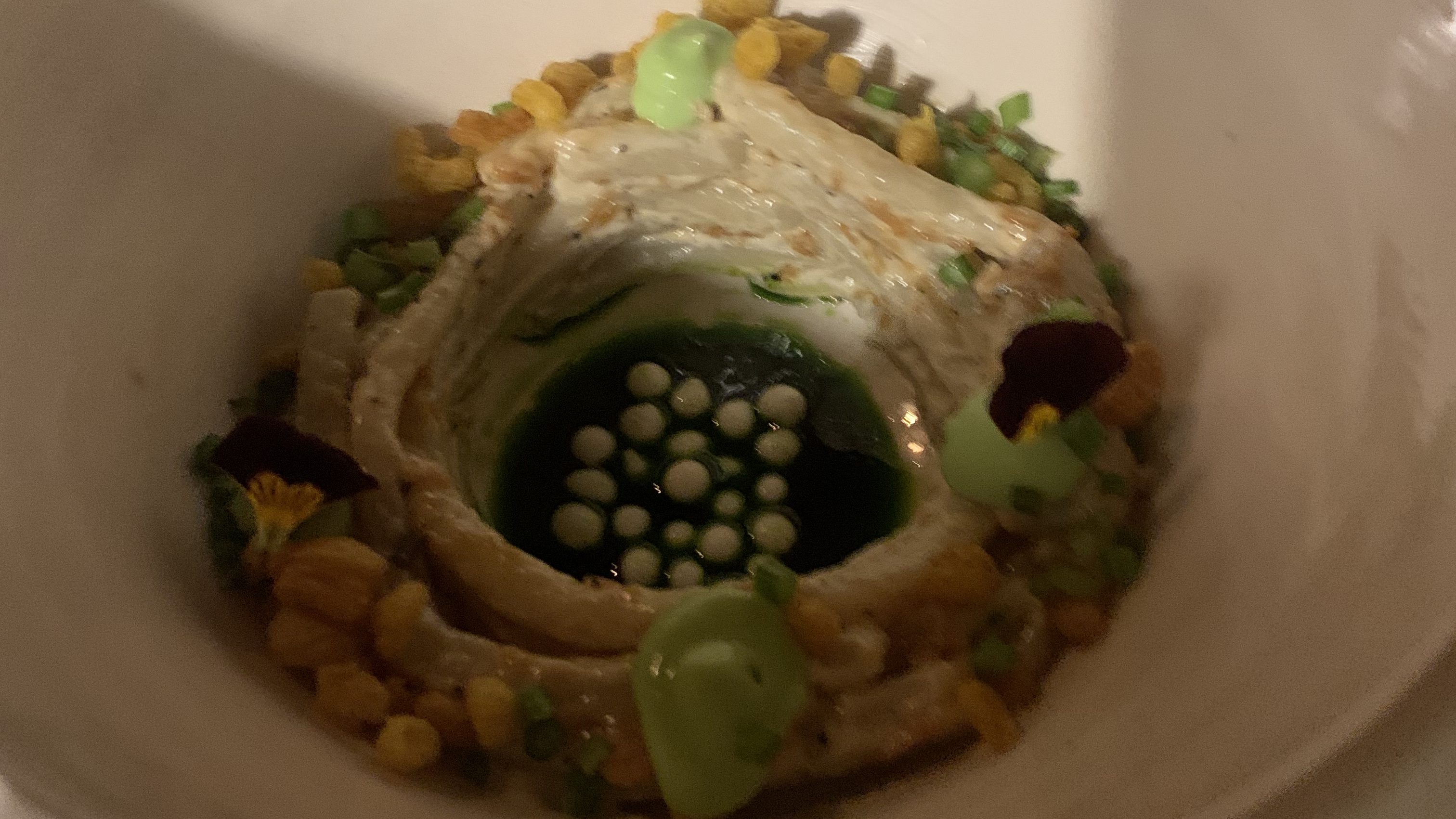
    Chicken soup (the broth came in a dinky teapot and was poured most carefully onto the nest. Tasty.)

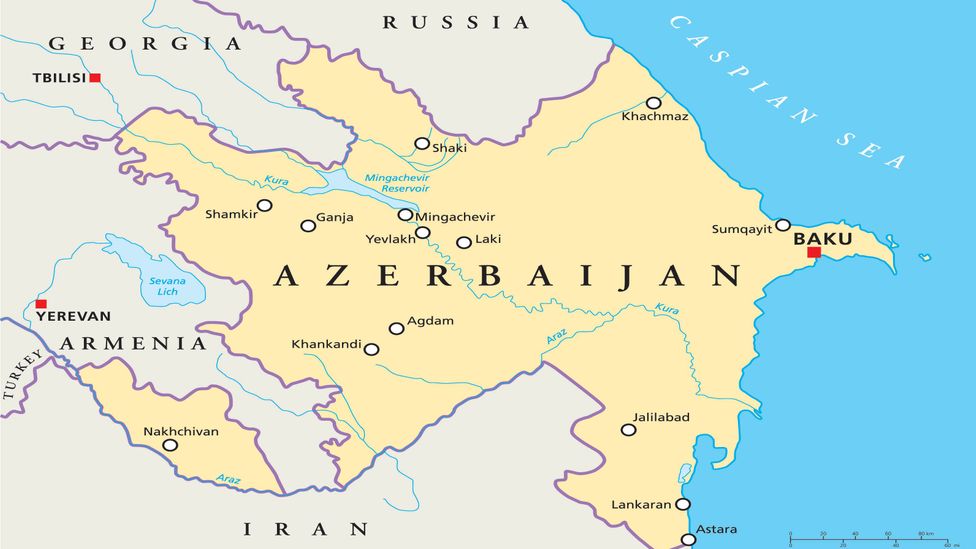
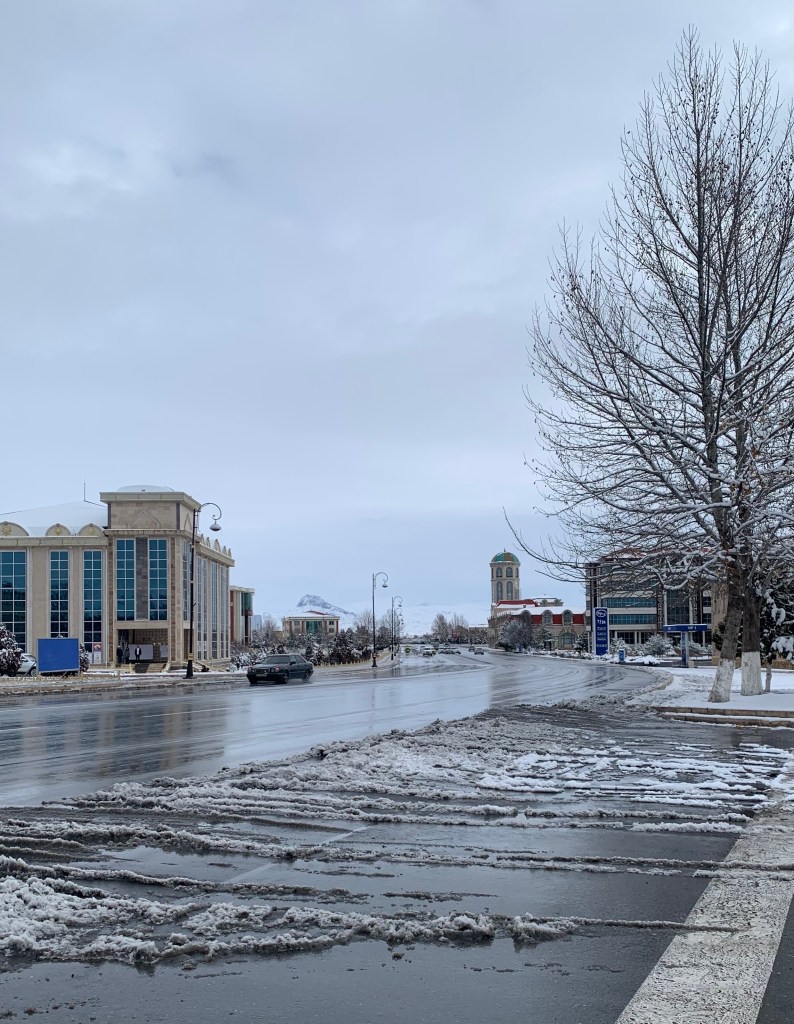
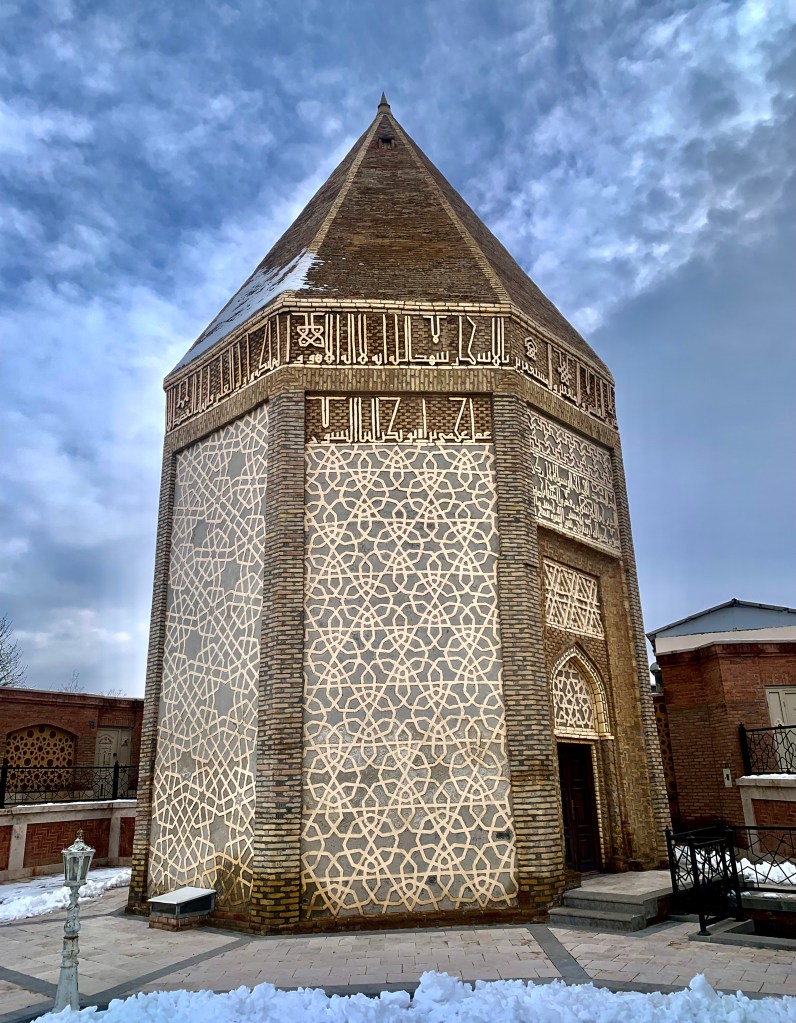
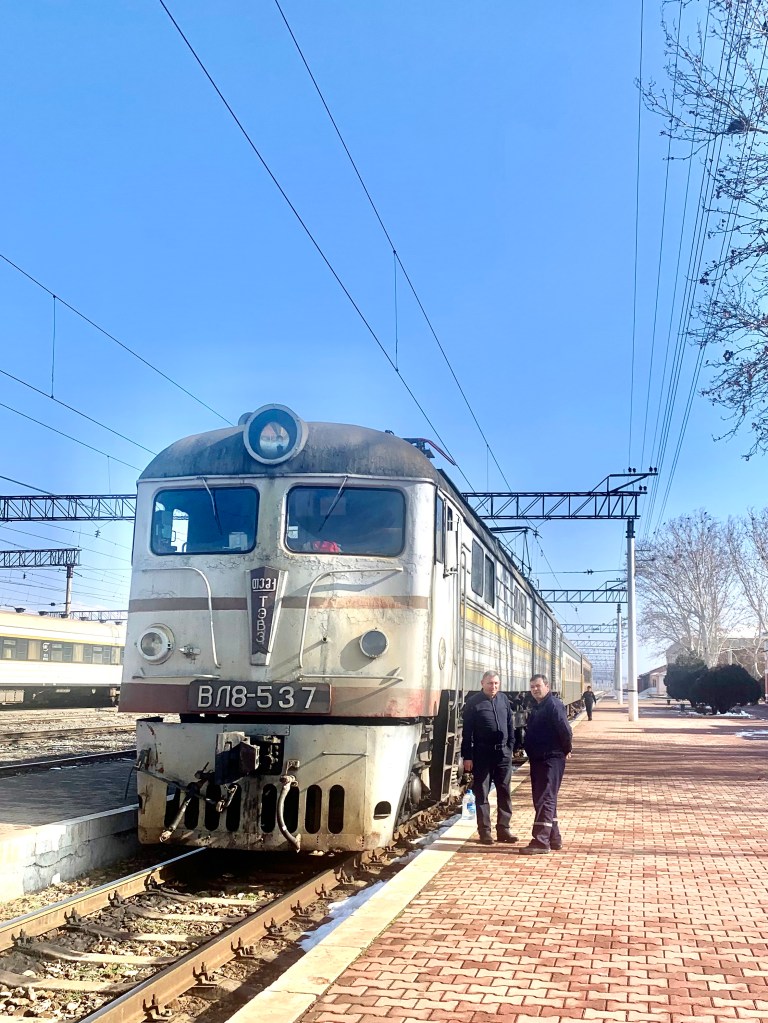
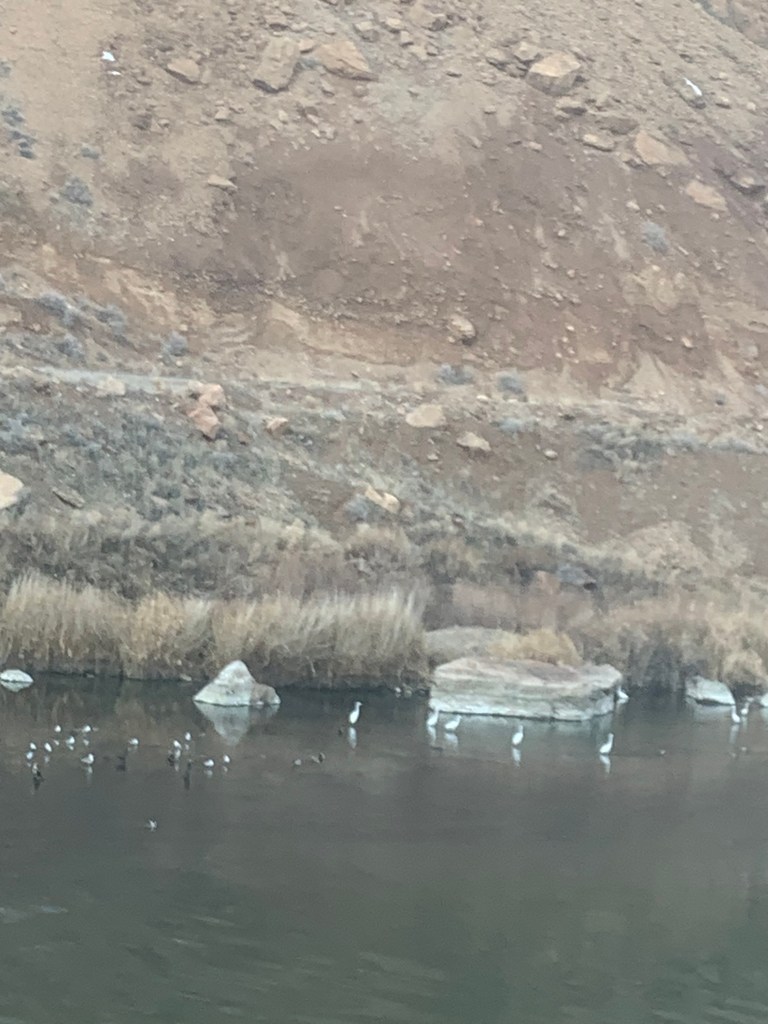
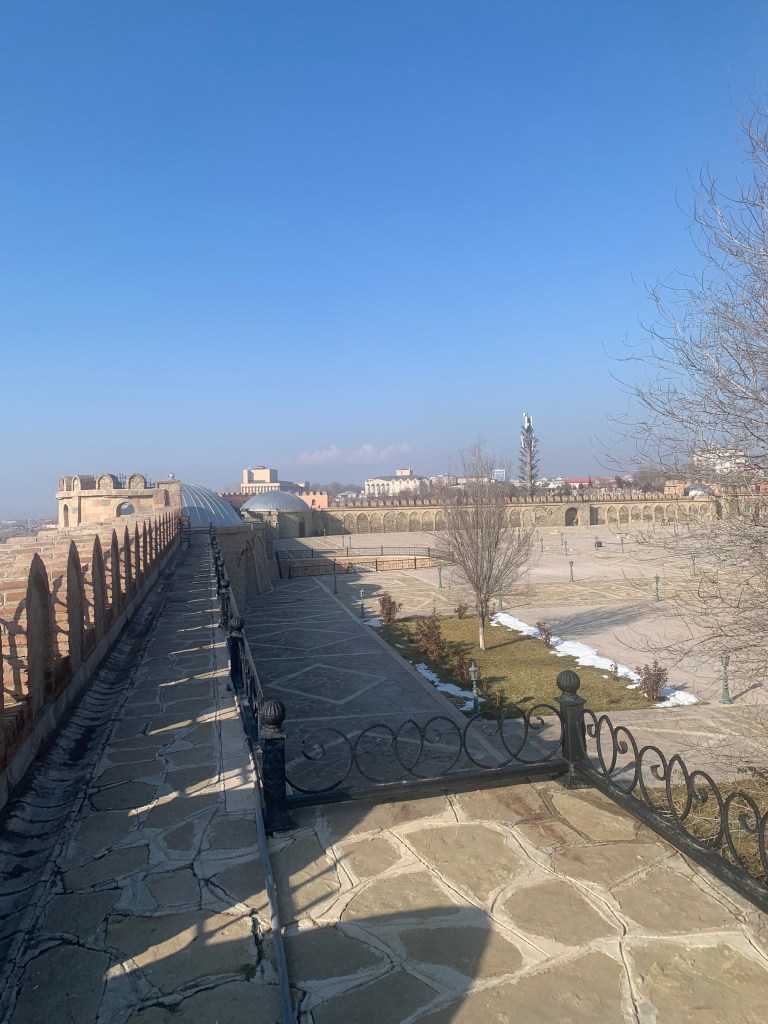
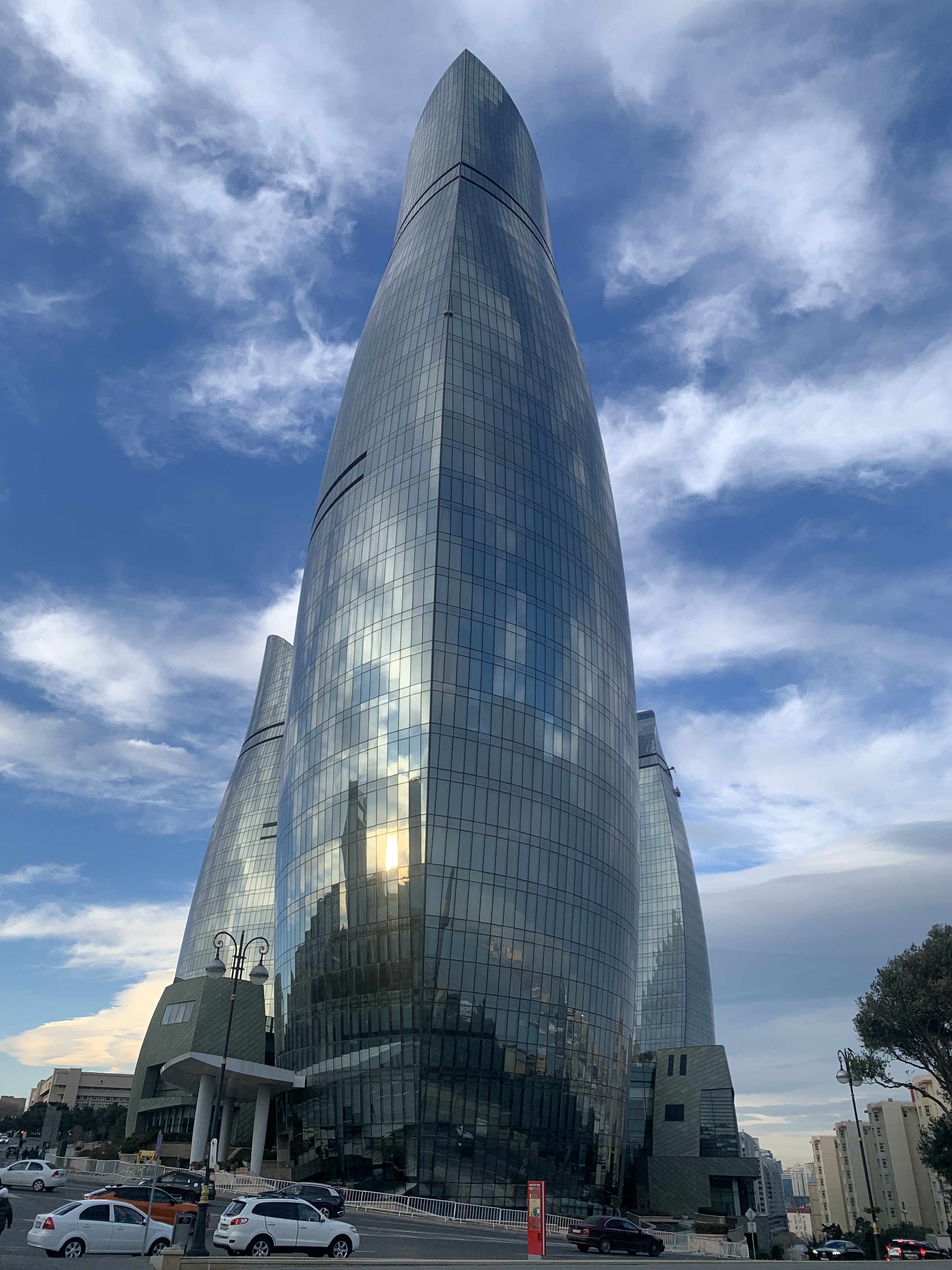
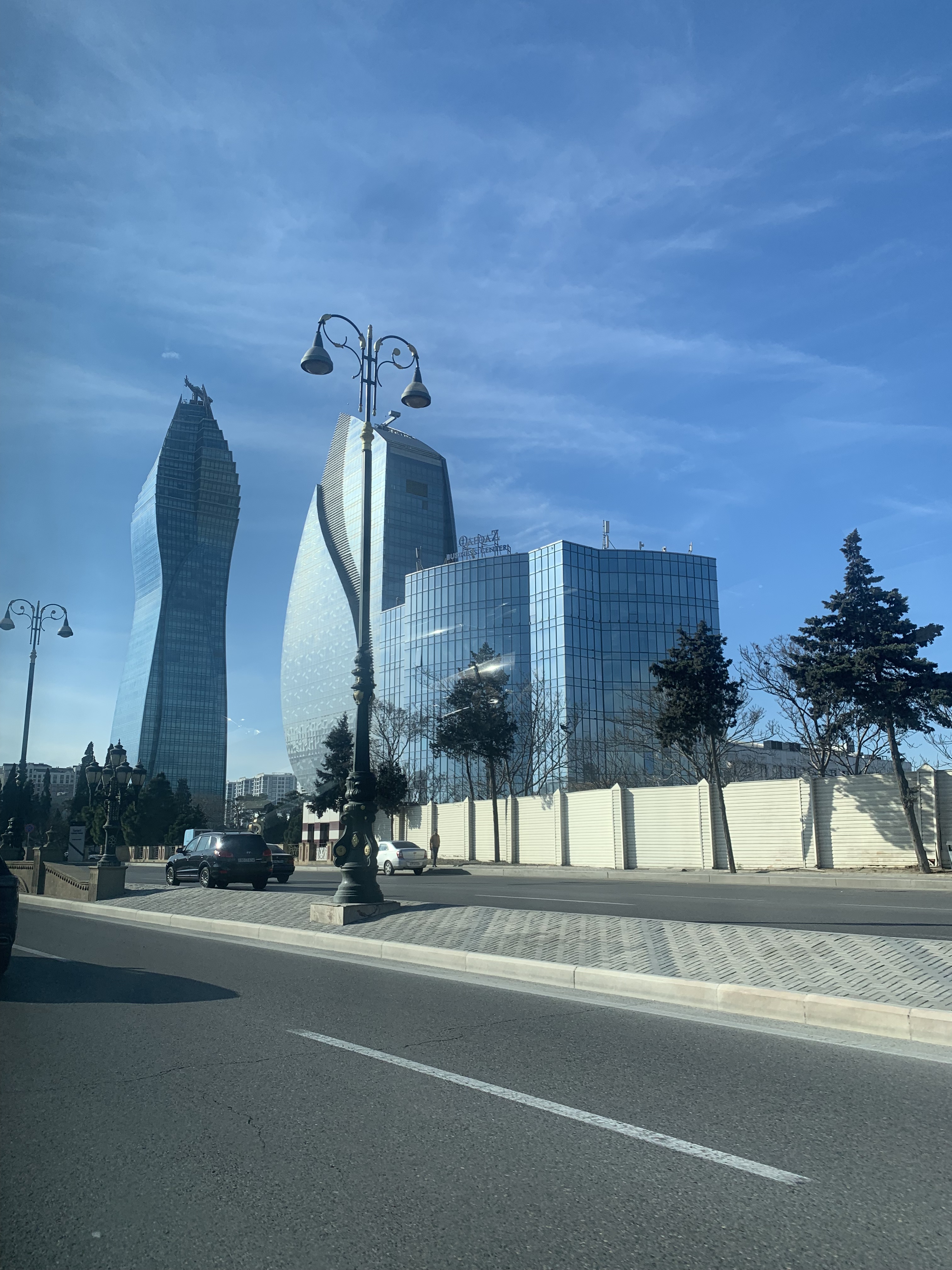
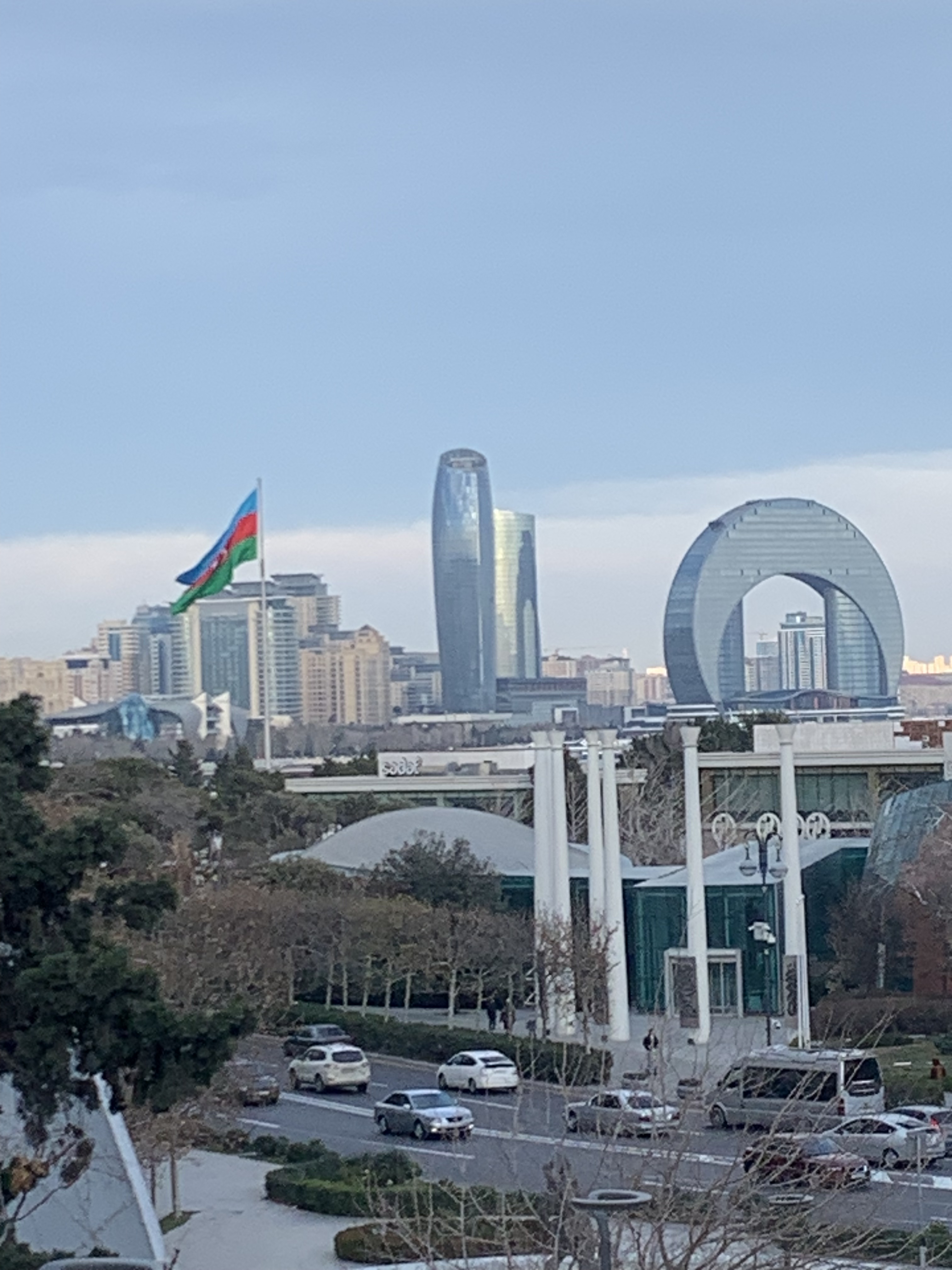
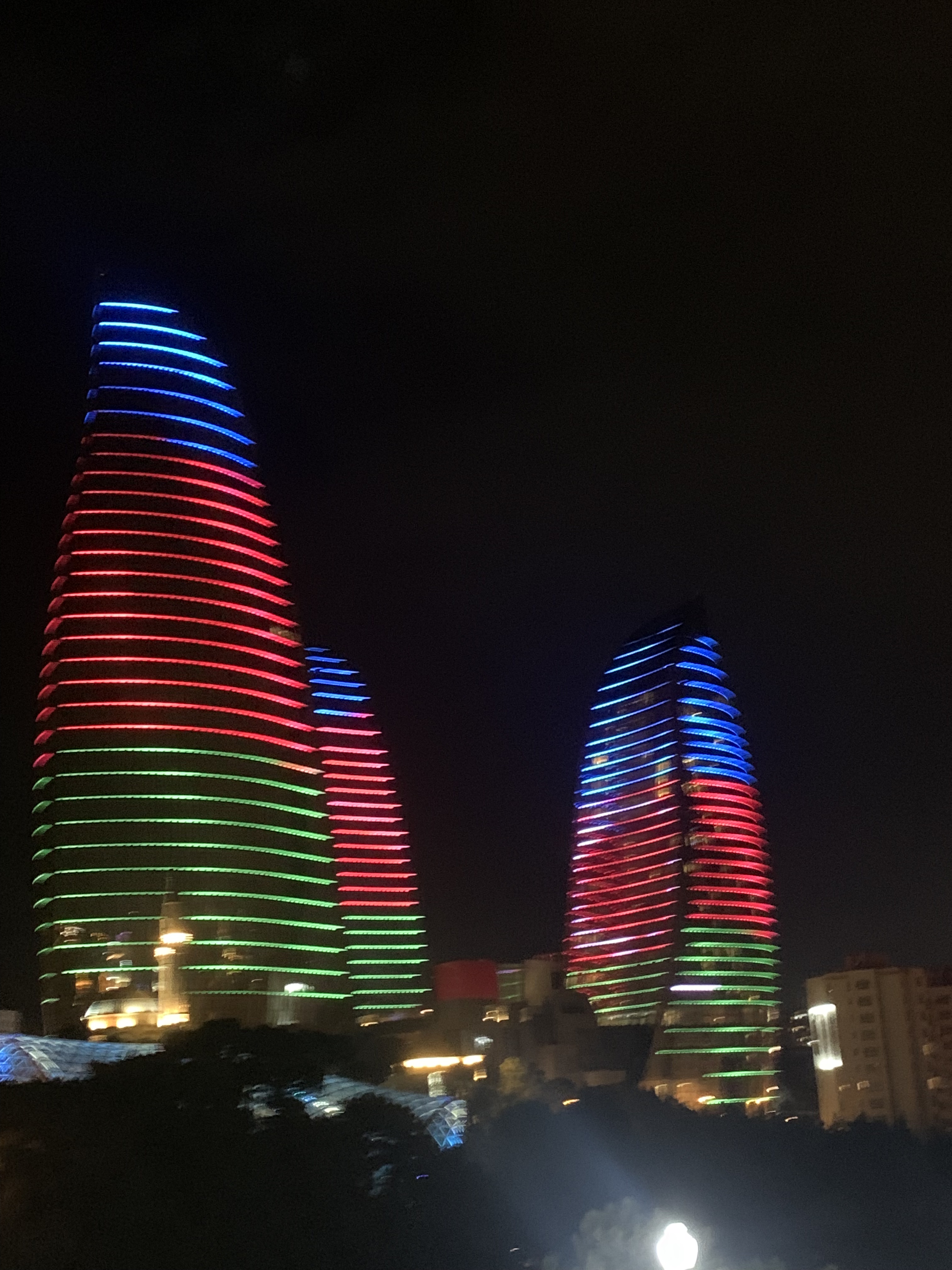
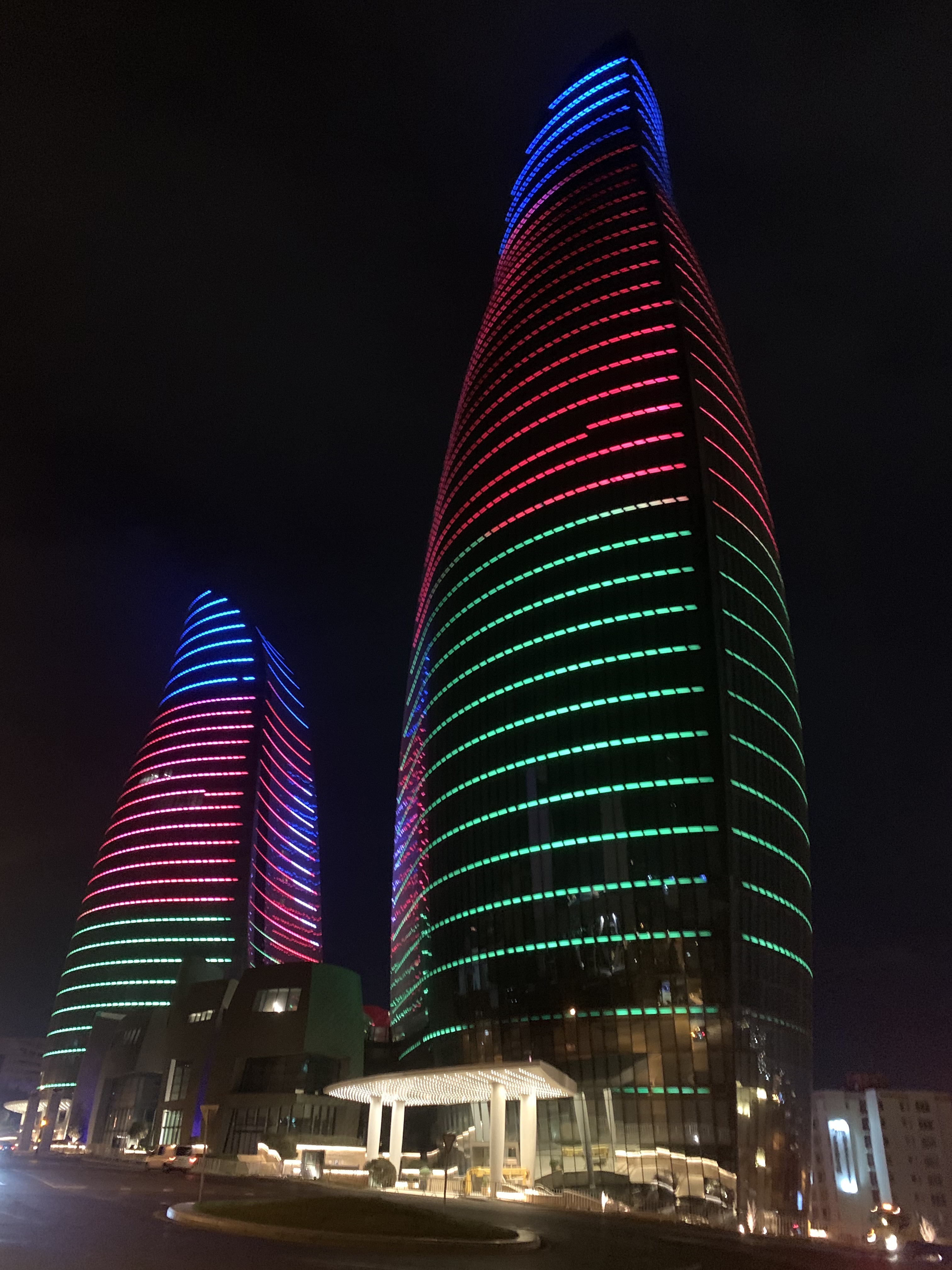
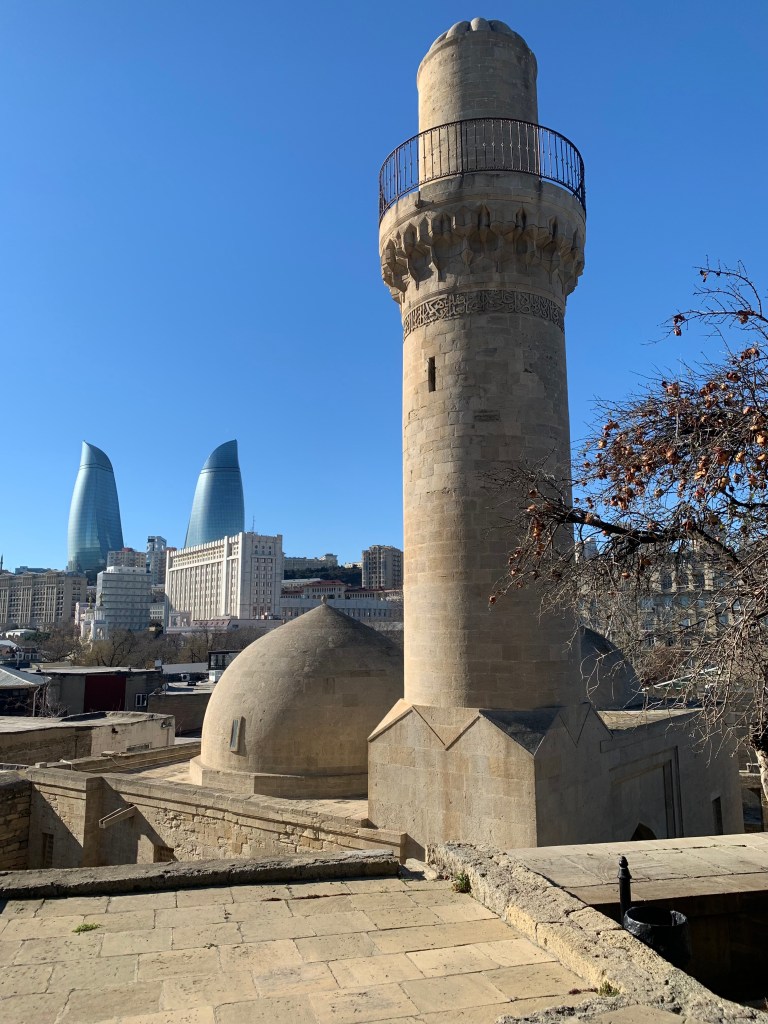
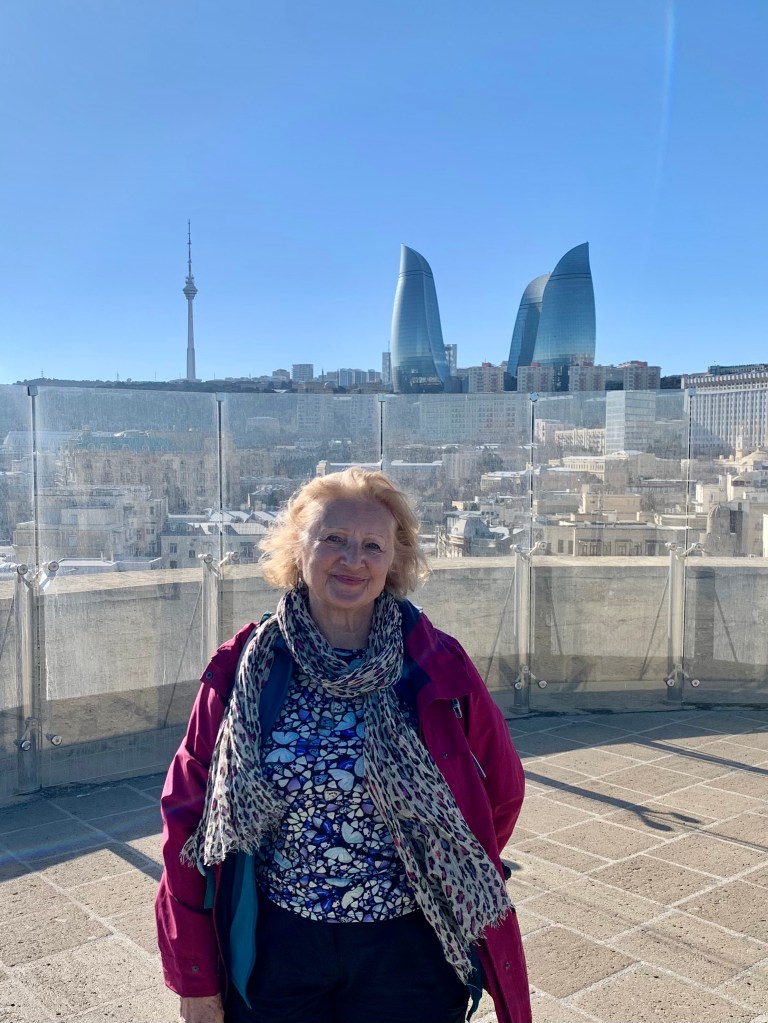
    Baku is quite a city. The Flaming Towers (for once, “iconic” seems the right word ) are but one of many architectural wonders. I did have a drink n the Fairmont Hotel but did not book into the $5000 suite…

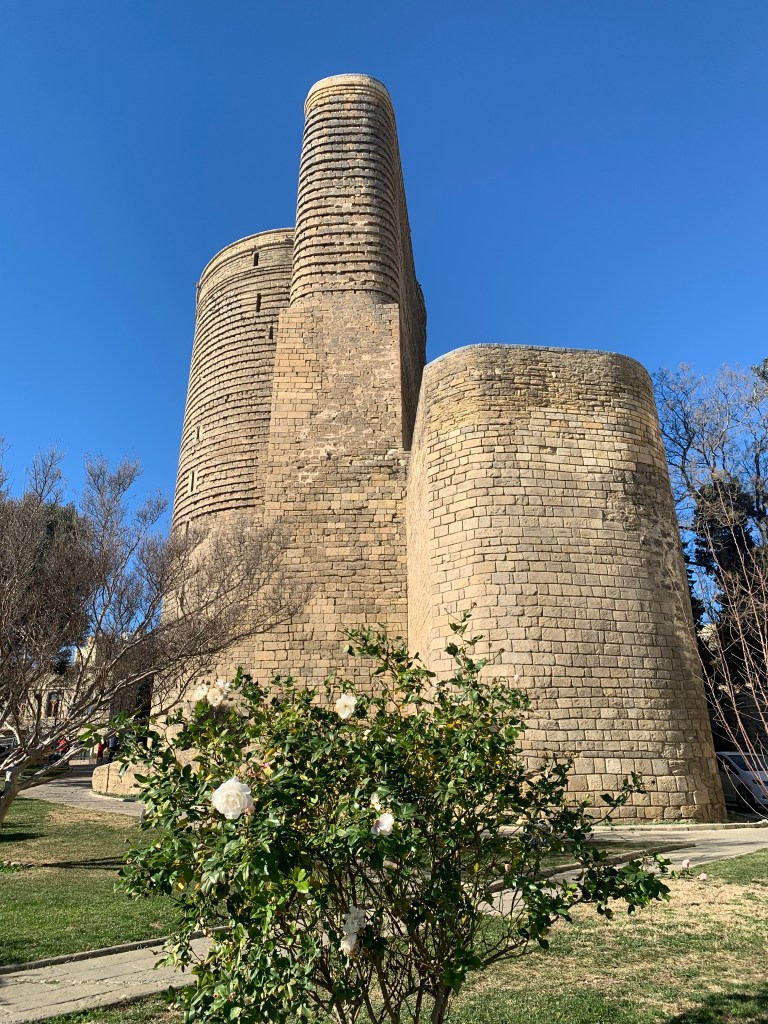
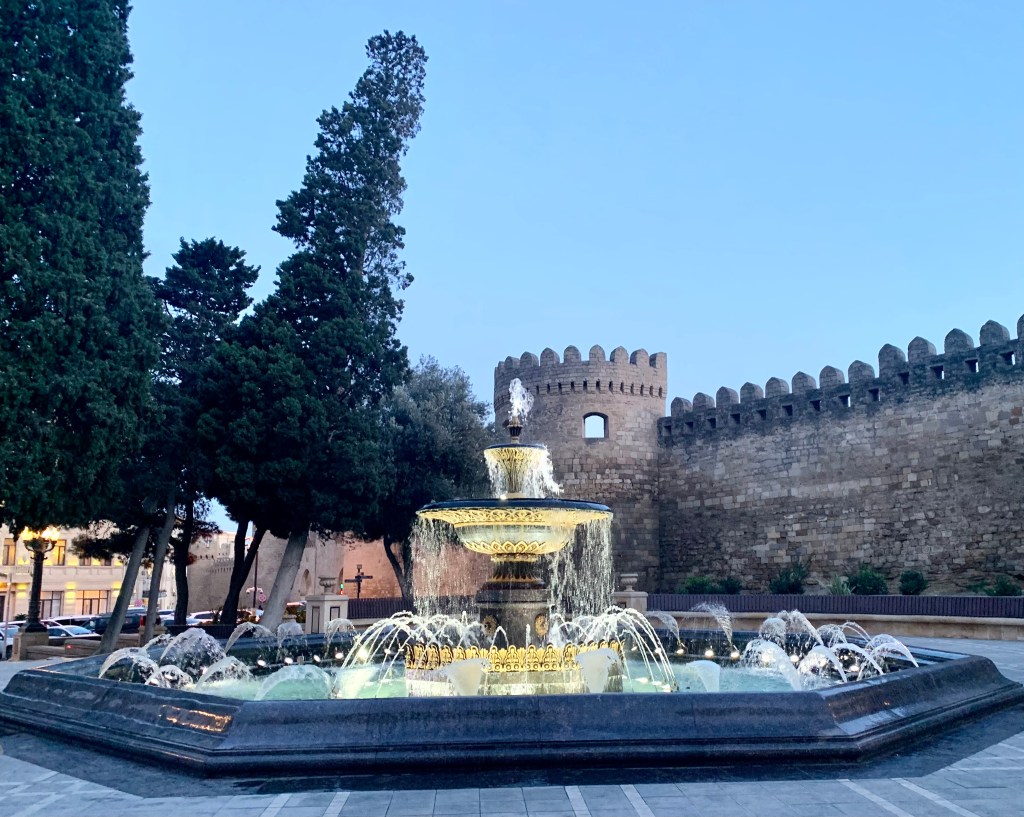
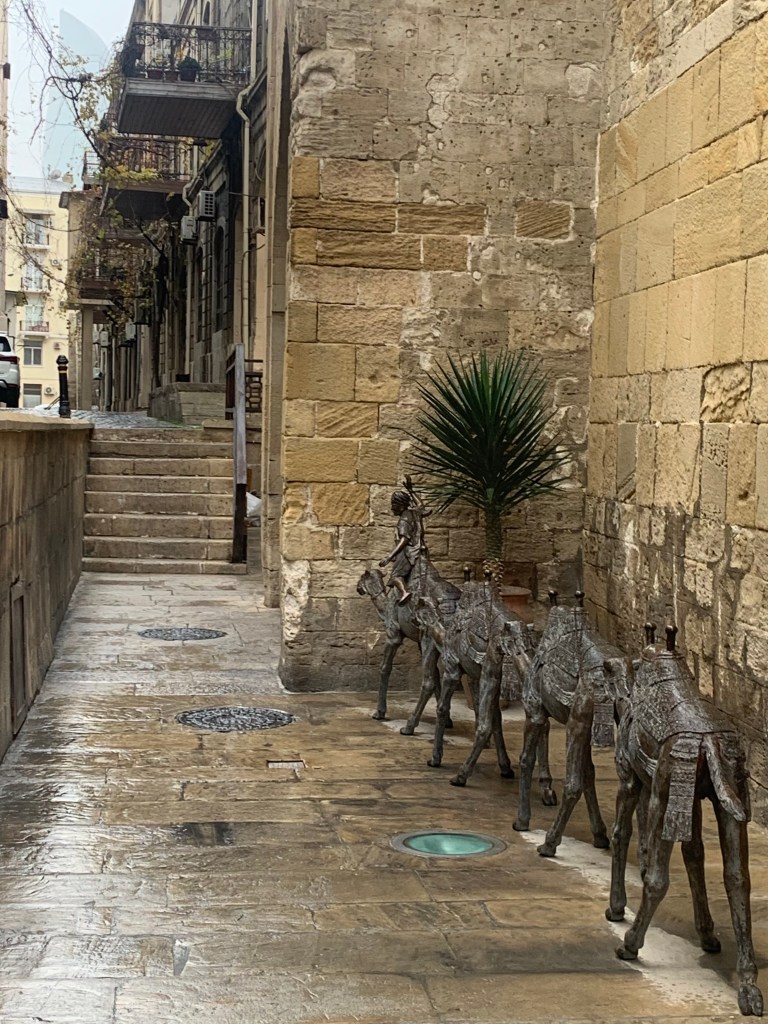
    The Old Town, nicely preserved, is a joy (and can be a frustration, as it is a bit of a labyrinth) to walk around. It is pedestrianised (though there seem to be plenty of cars within – a way for the Old Town to make money).

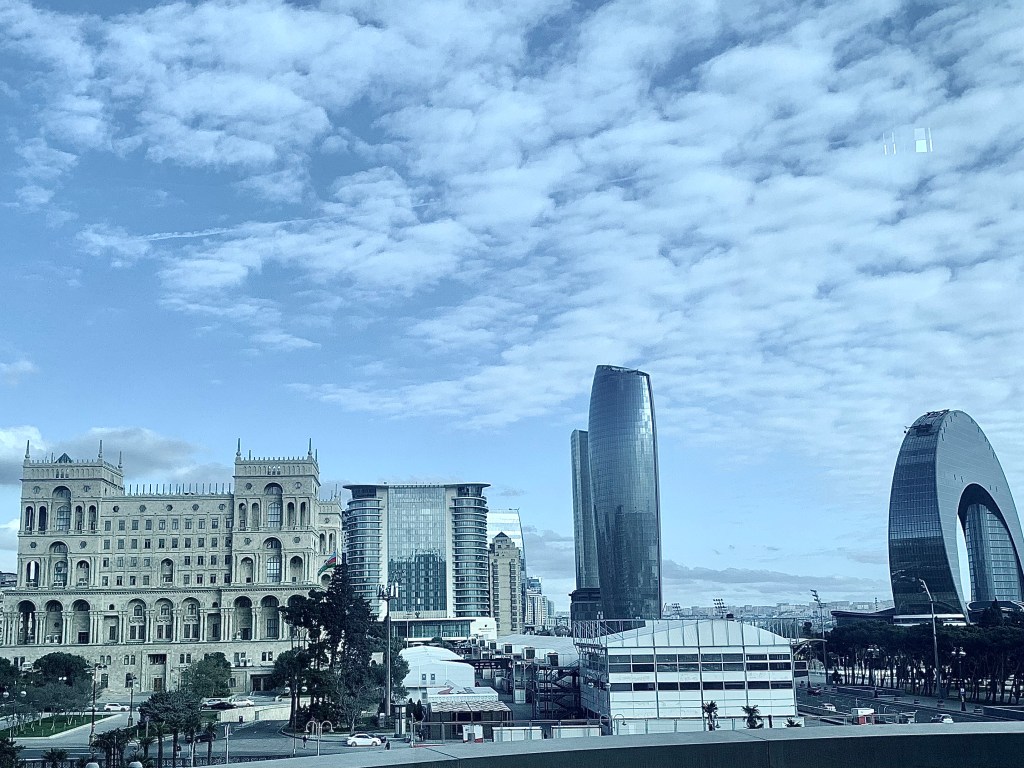
    There are many Soviet style buildings – the best known one is the Dom Soviet, then as now, a government building, but also recognised around the world as Formula 1 pitstops are right in front of it.

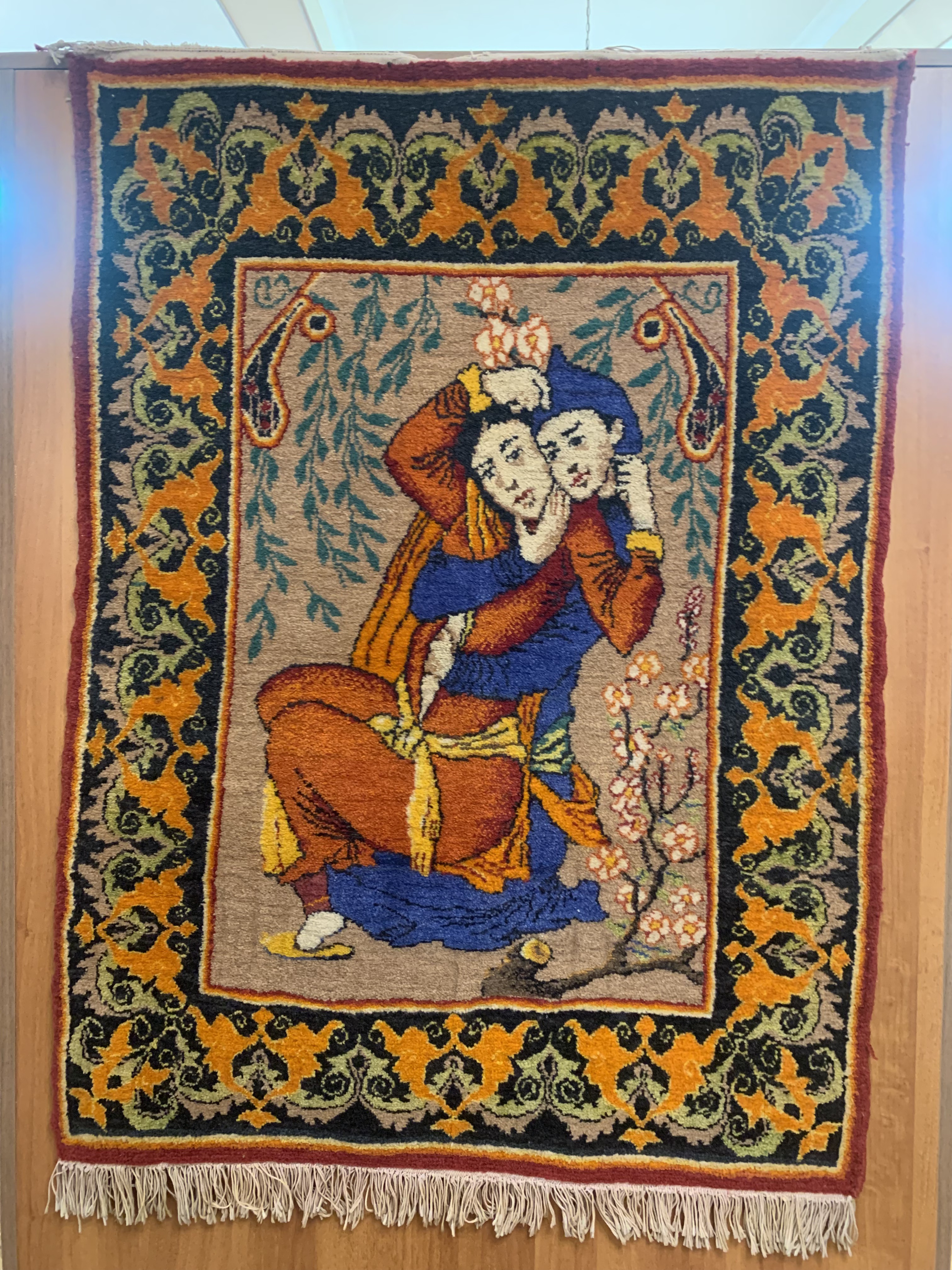
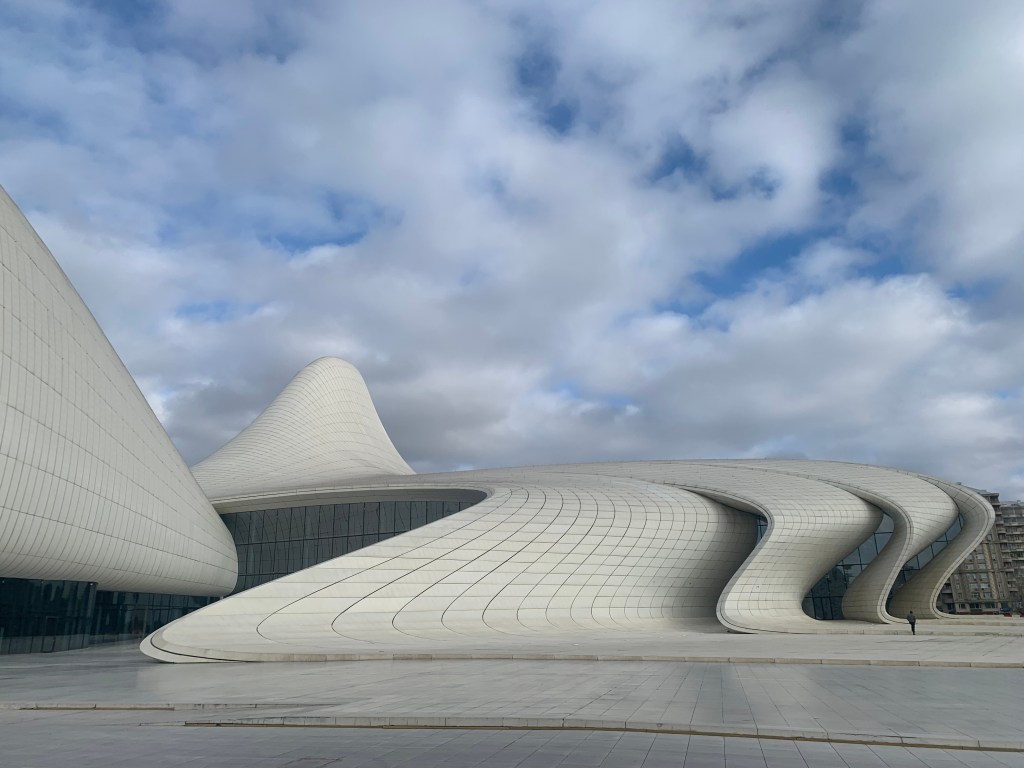
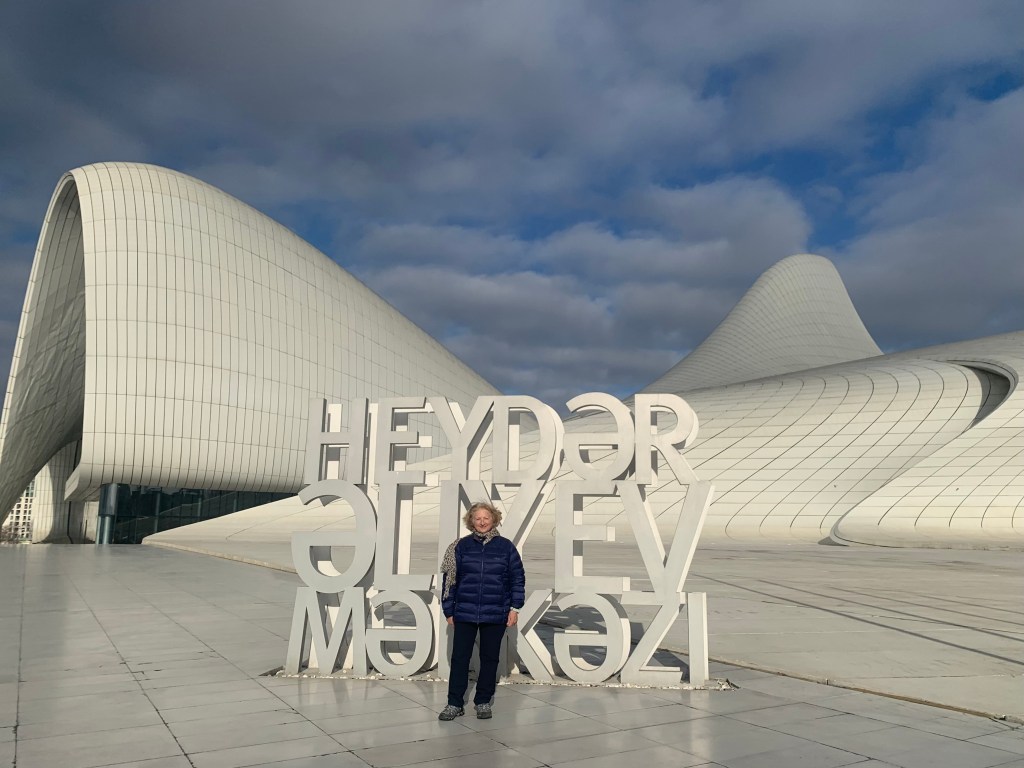
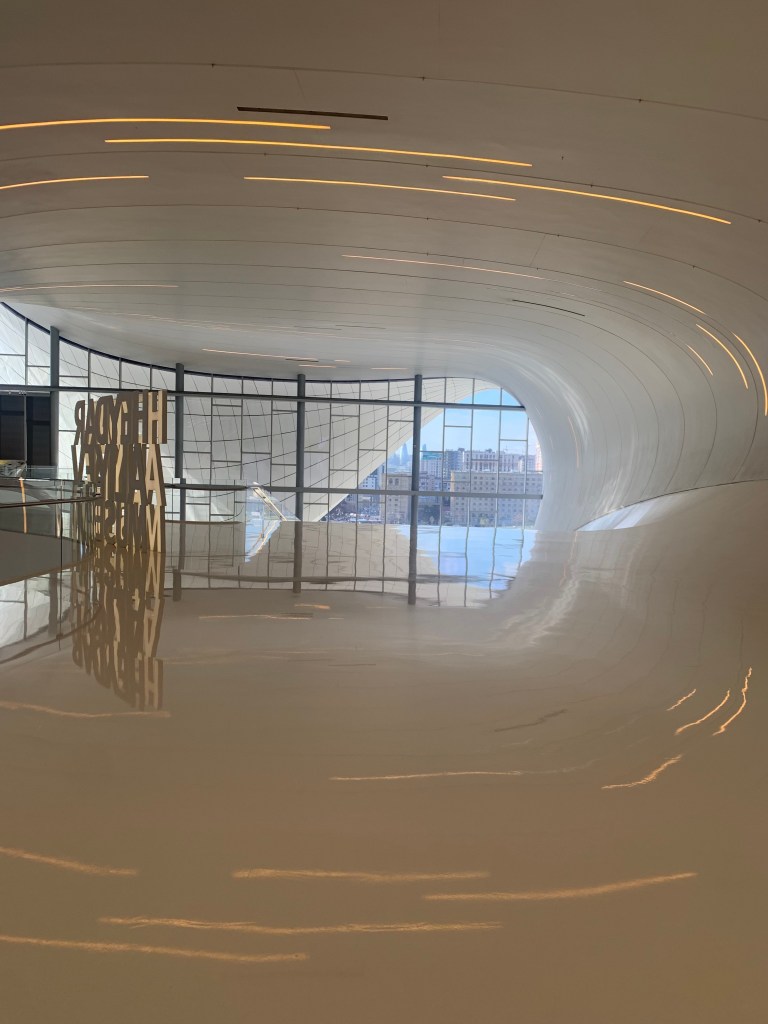
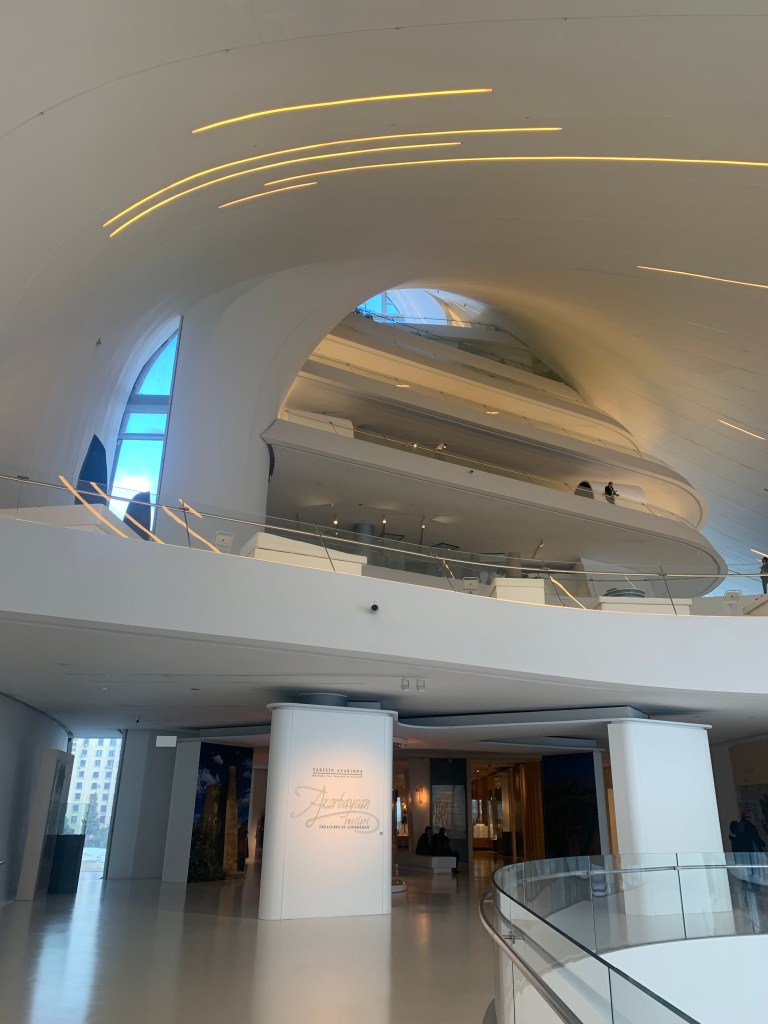
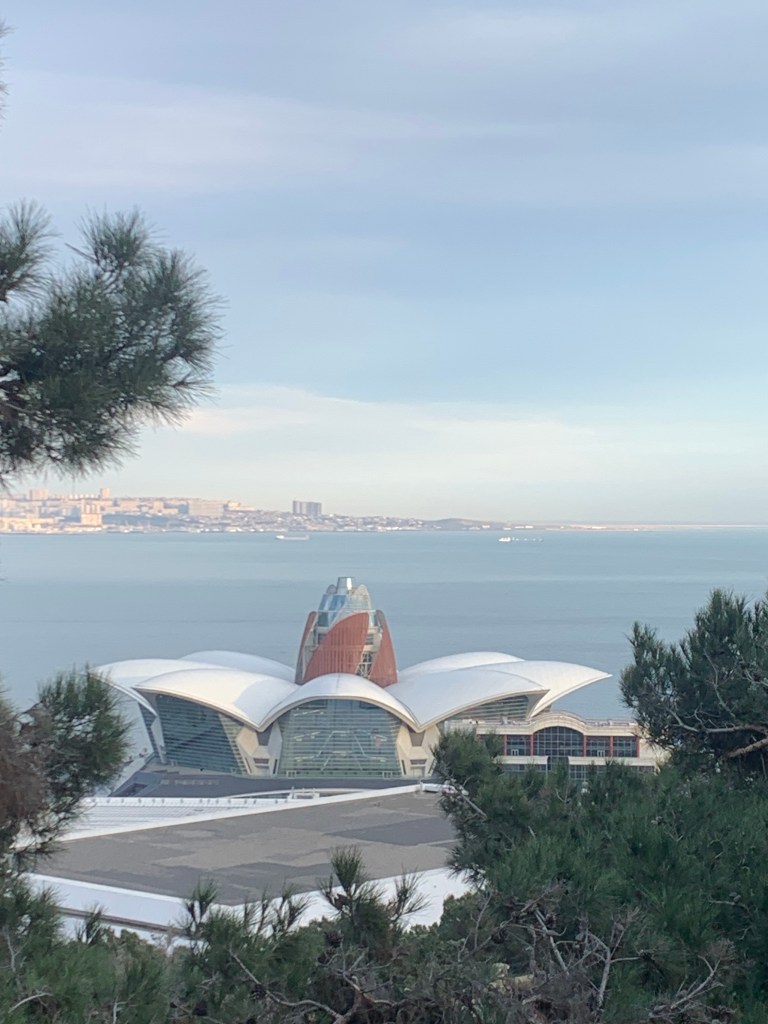
    I was mesmerised by the Heydar Aliyev centre, designed by Zaha Hadid, all sinuous lines, curves and soft meldings, both inside and out. It is all white and the walls curve into floors – it feels giddy and like walking on water. There are several exhibitions - art, musical instruments, history of carpet making in Azerbaijan, cars (temporary) and a detailed and reverent one on Heydar Aliyev’s life.

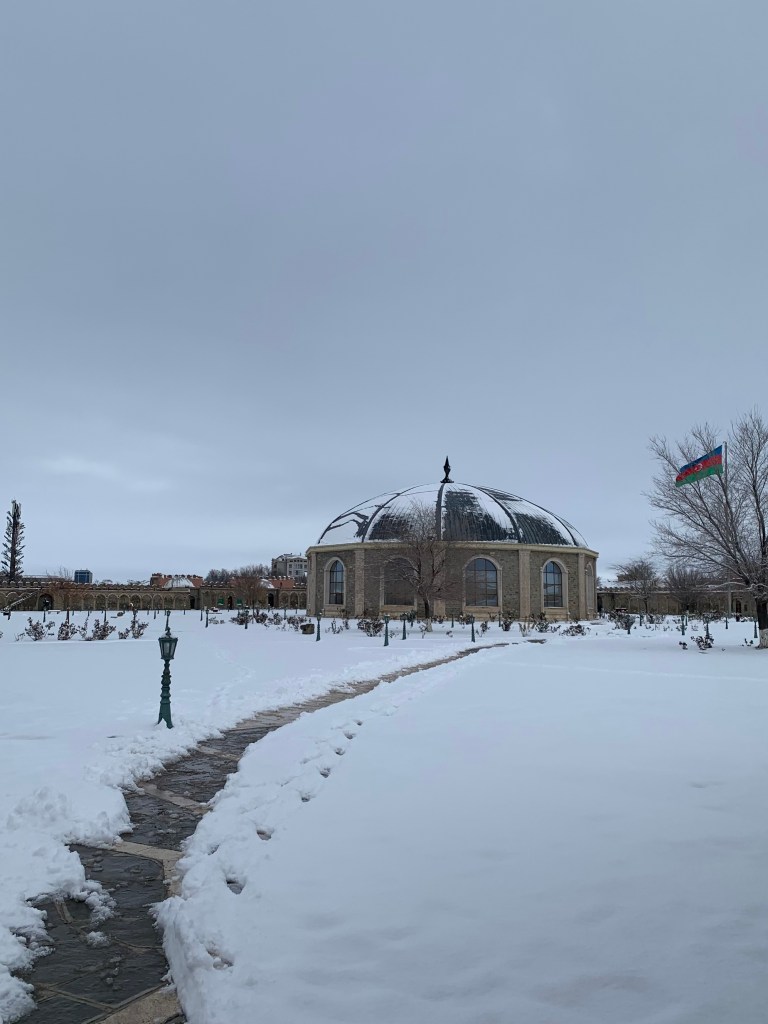
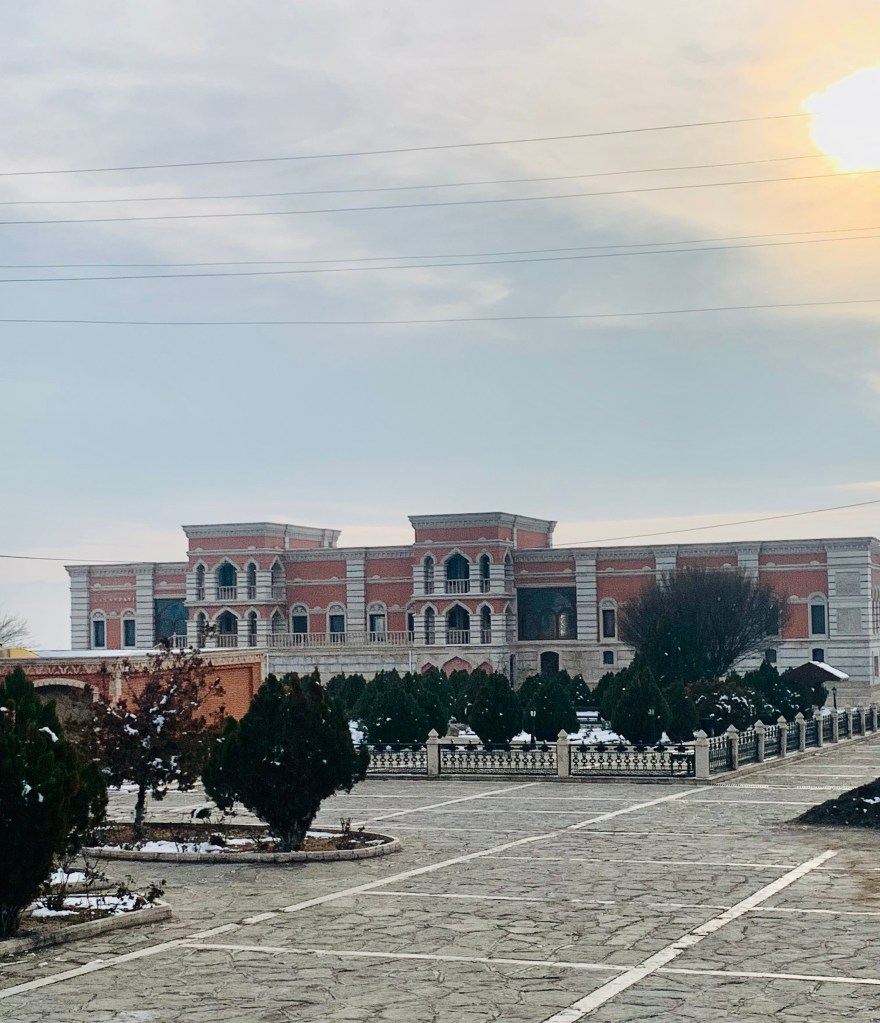
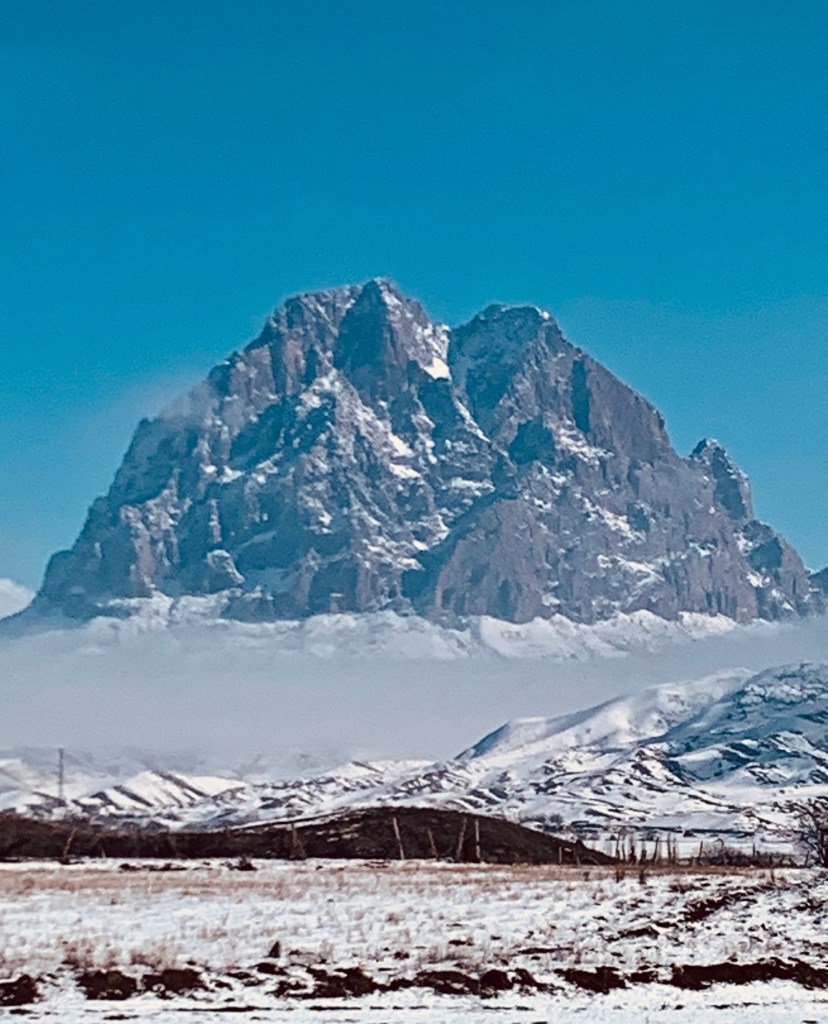
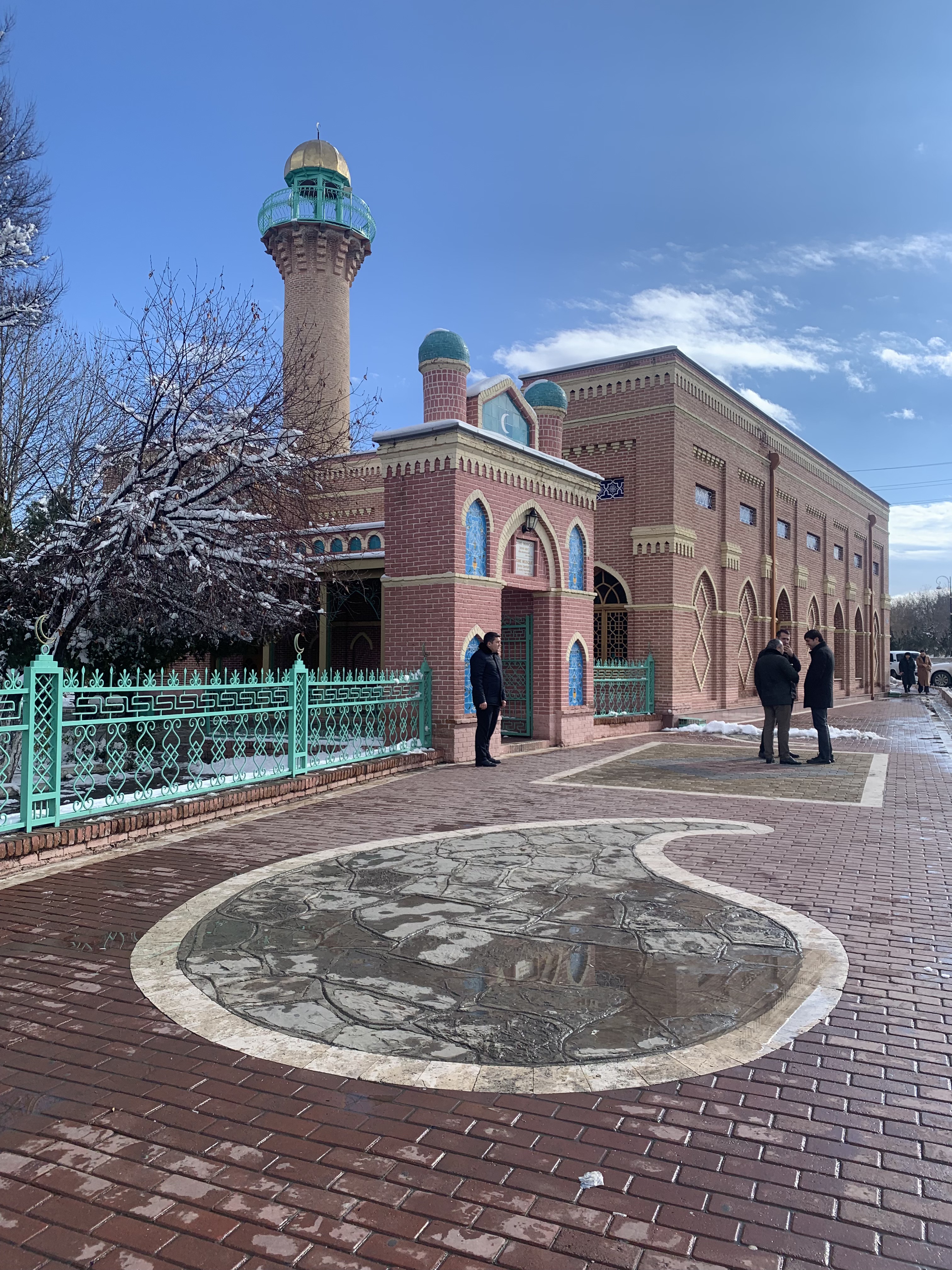
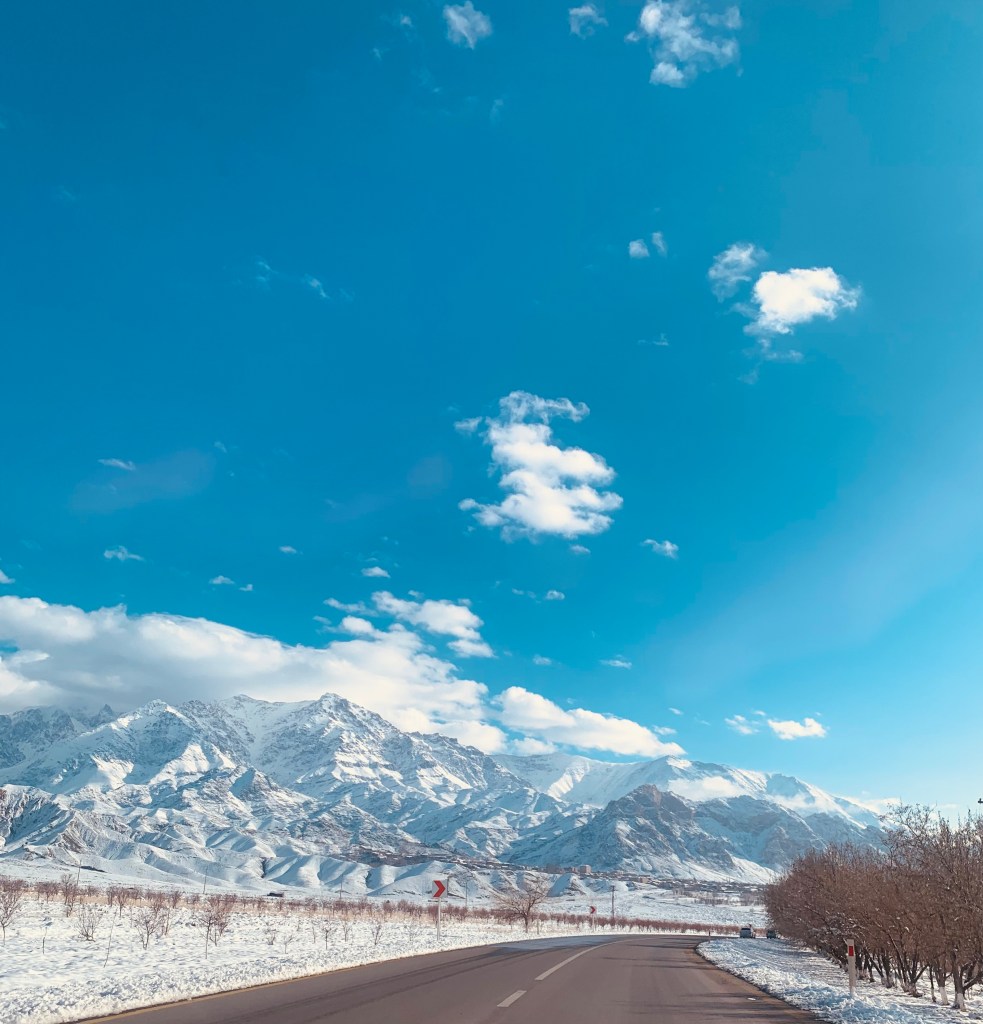
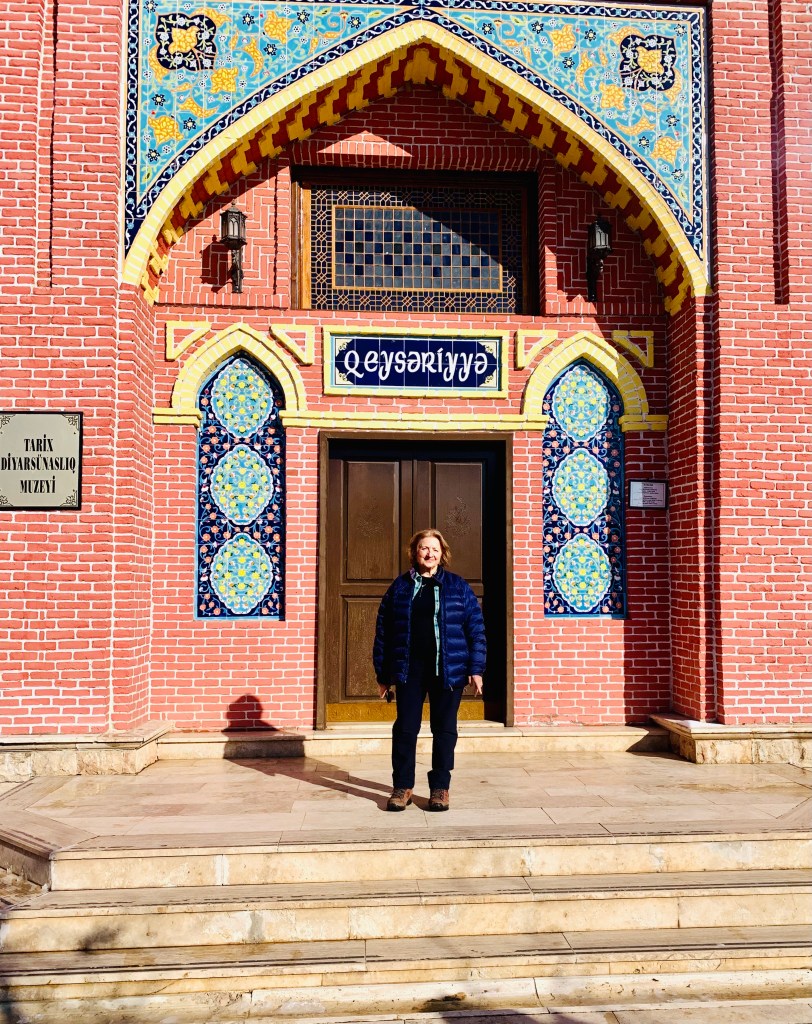
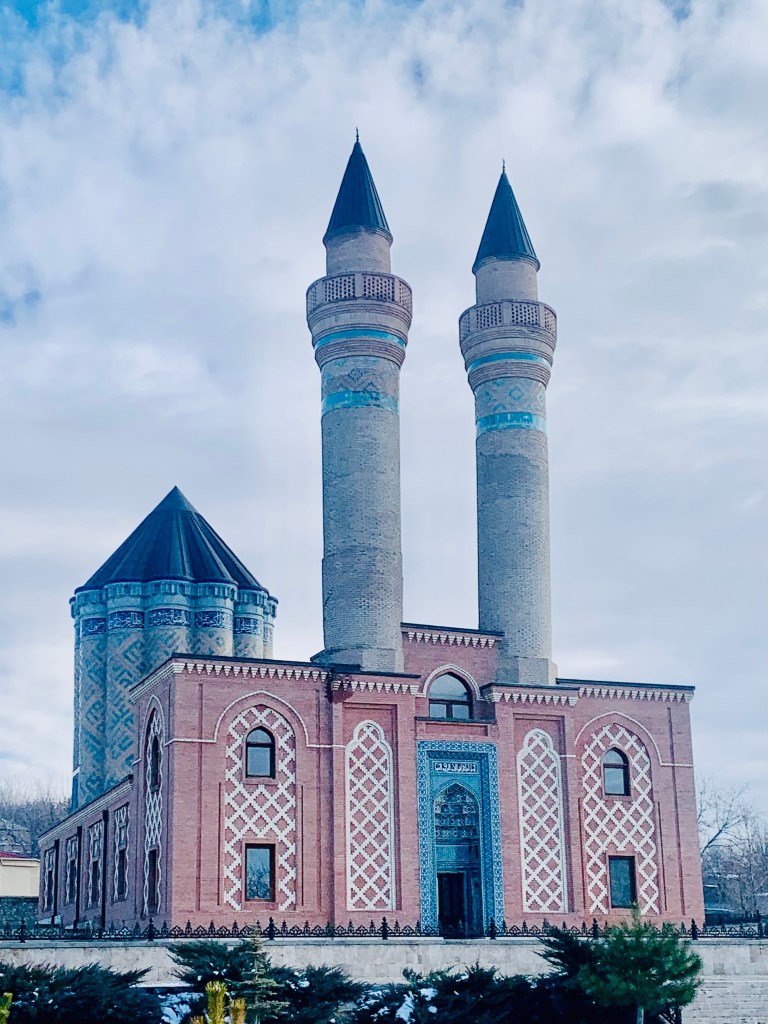
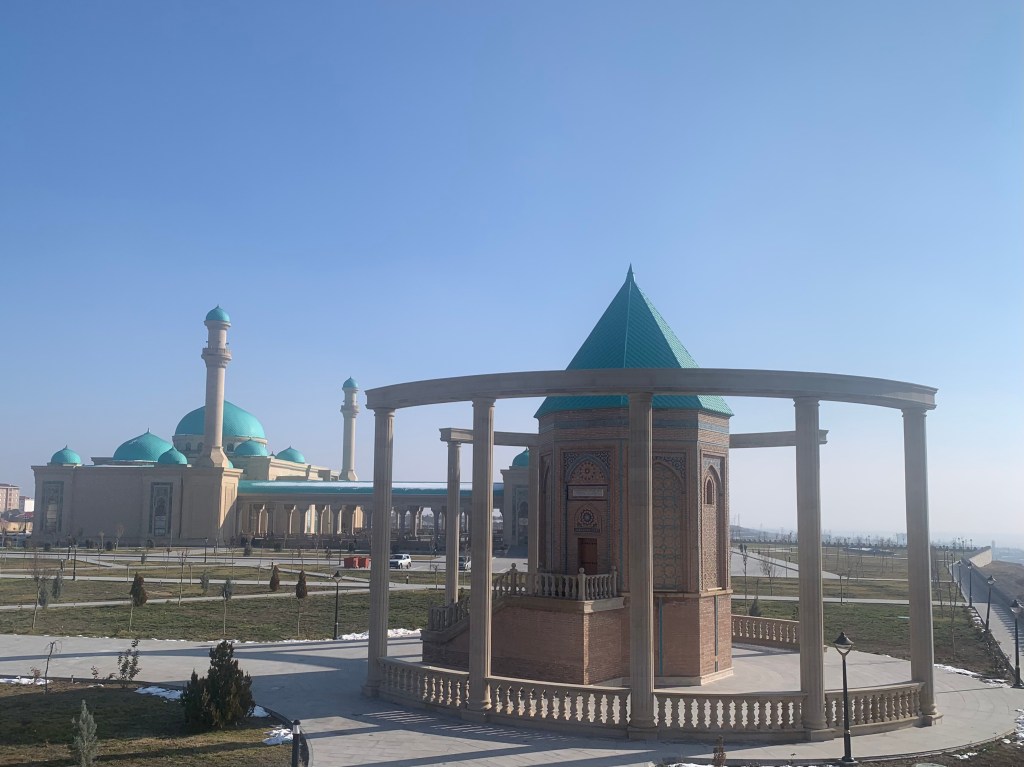
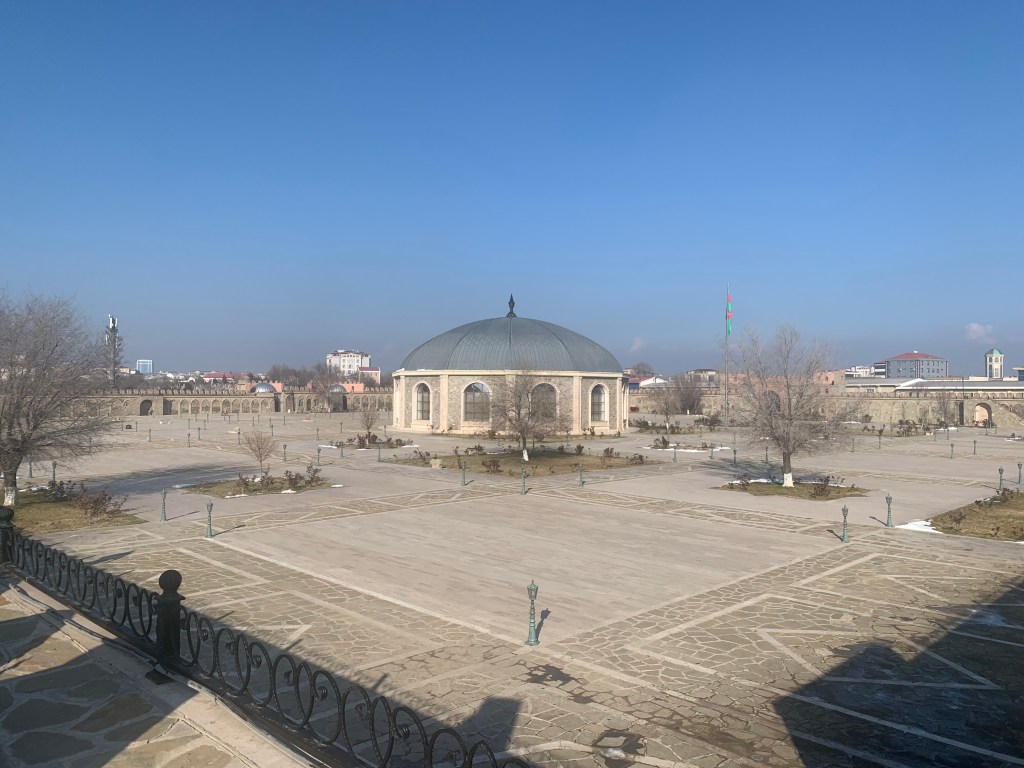
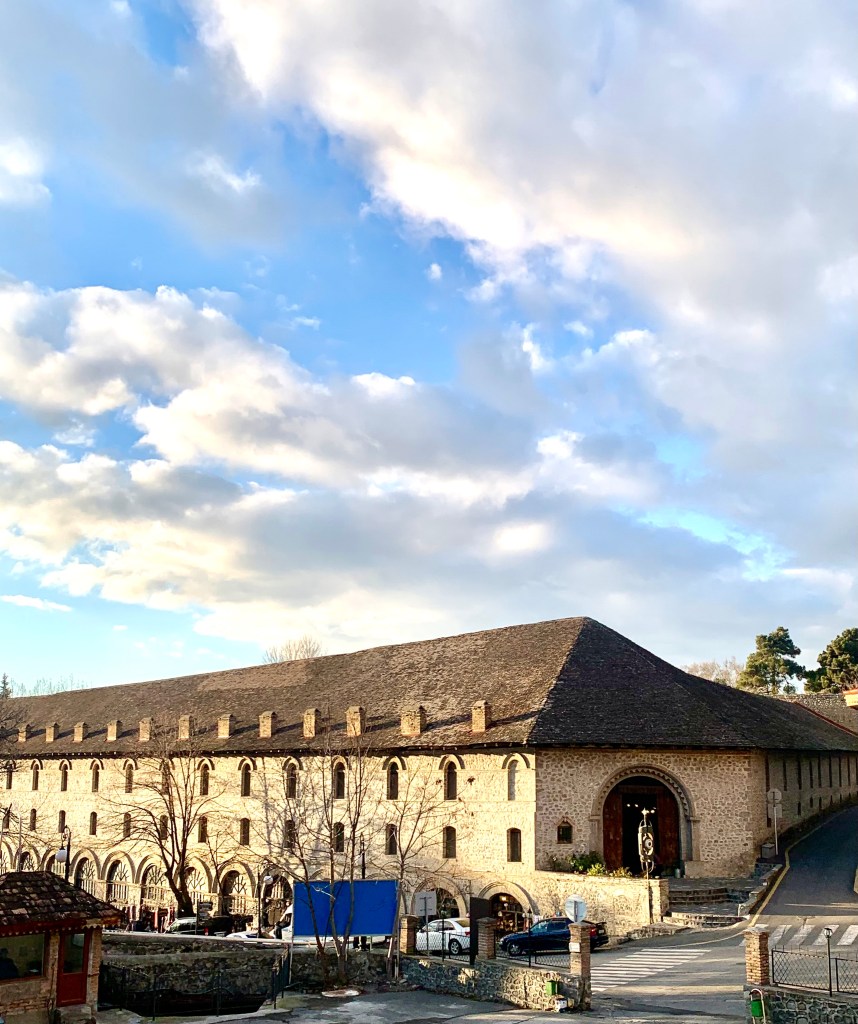
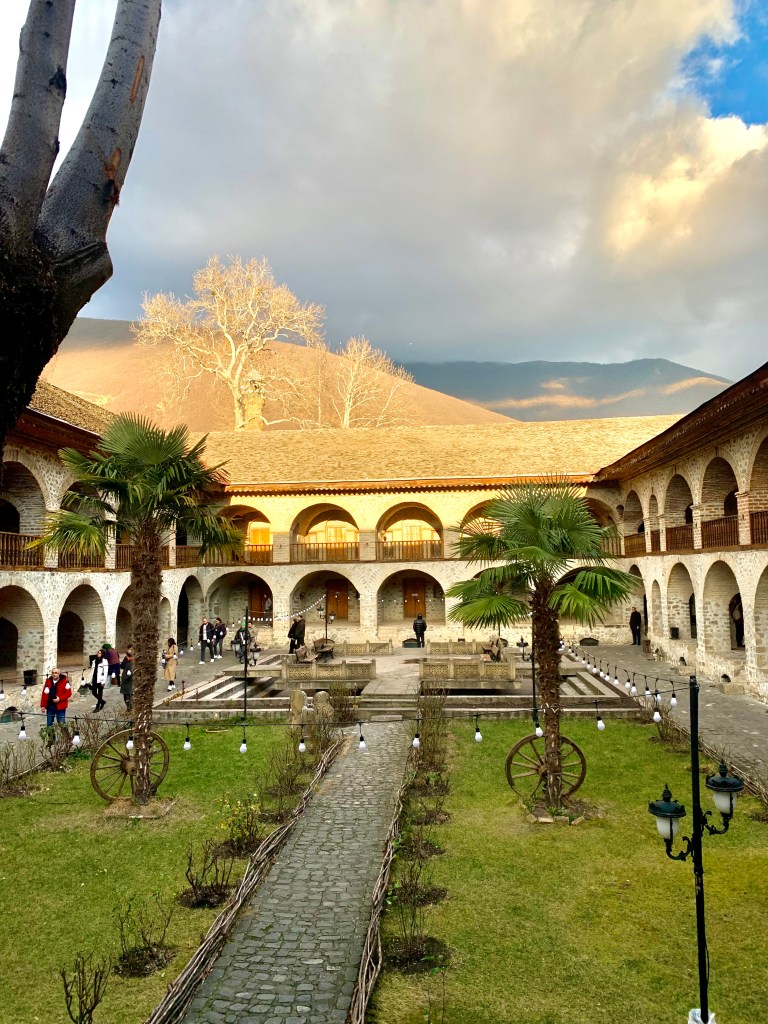
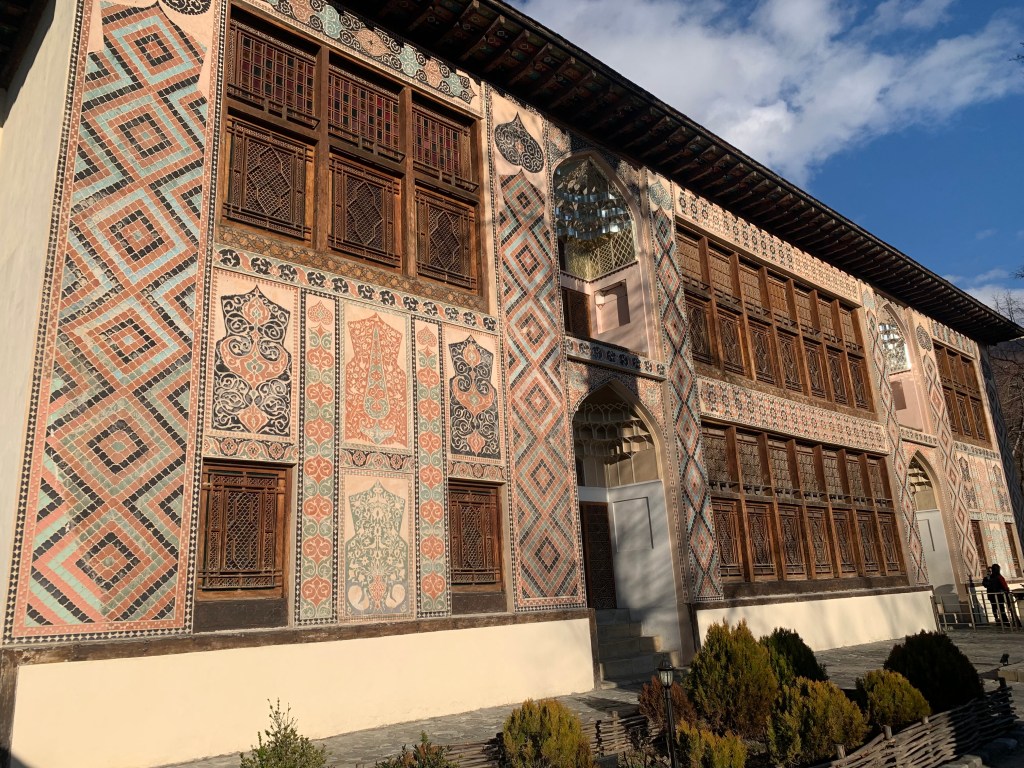
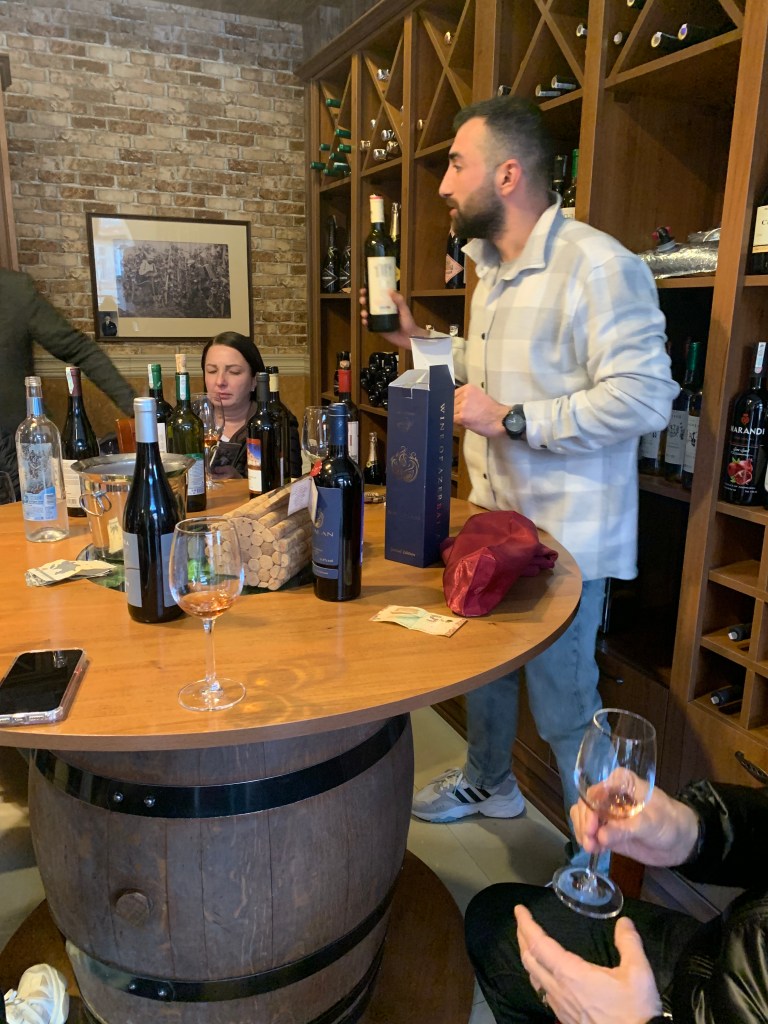
    The trip “4 regions in 1 day” was quite a marathon – we covered some 800km – it started at 0800 and finished at c 2230. The most impressive place for me was Sheki – a Silk Road town that I would happily have spent a day or two roaming around. The Khan’s summer palace is a beautifully painted and ornamented place, both inside and out, with intricate stained glass windows that throw shimmering, kaleidoscopic colours on the floor (photos NOT allowed, though I can’t see why). The Caravanserai down the road has been in use for centuries, though the current building is from the 18th ct. And it is still used as a hotel. Sheki is known for its silk making and carpet weaving. There is a winery (we did get a wine tasting, and very nice it was too). 

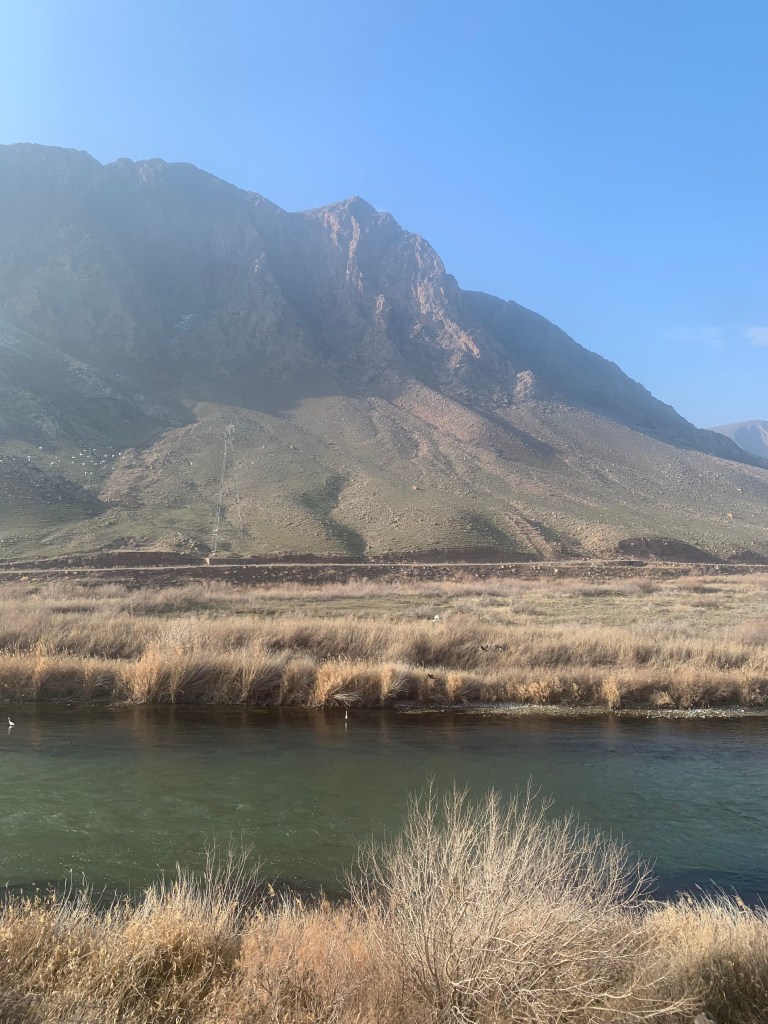
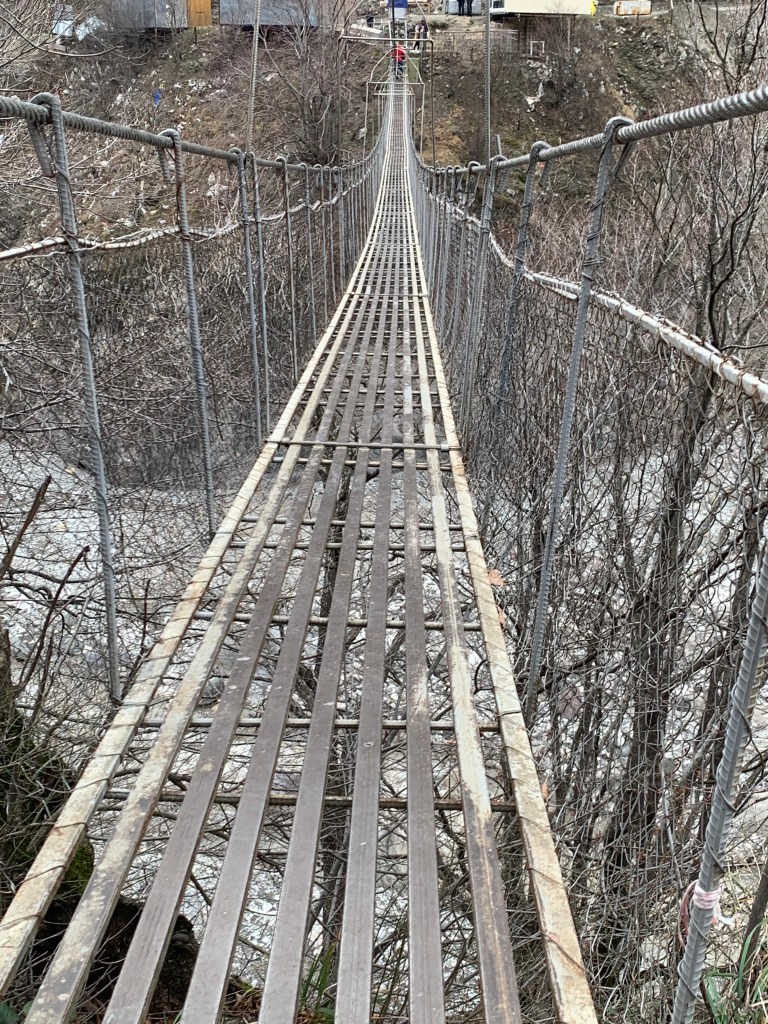
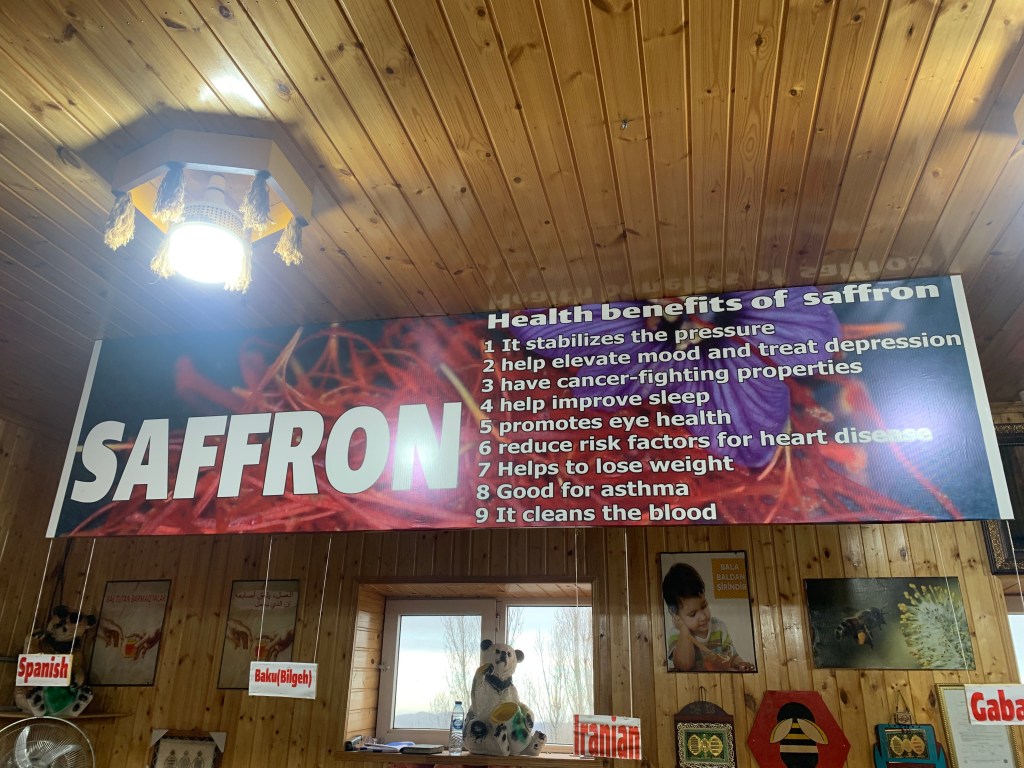
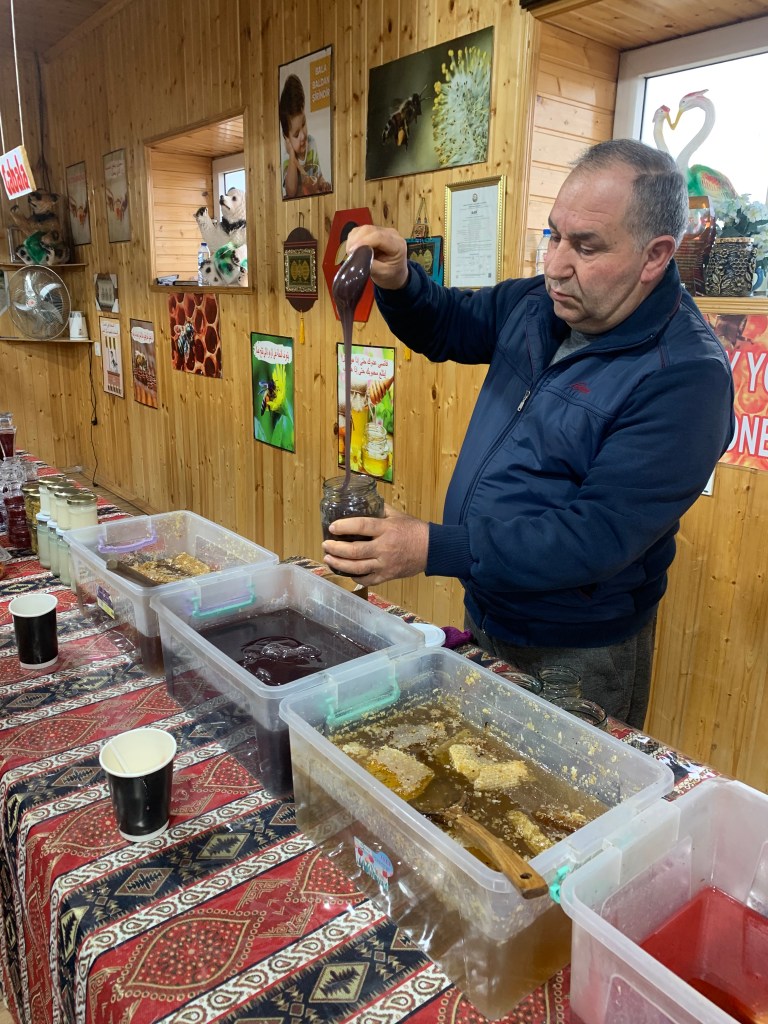
    The hanging bridge was fun and wobbly, the honey tasting generous, the views over the bare mountains spectacular. But the trip is far too long and uncomfortable in a cramped minibus space. Just as well the wine tasting was the last thing we did before starting back (and were allowed to pour ourselves a bit more…)

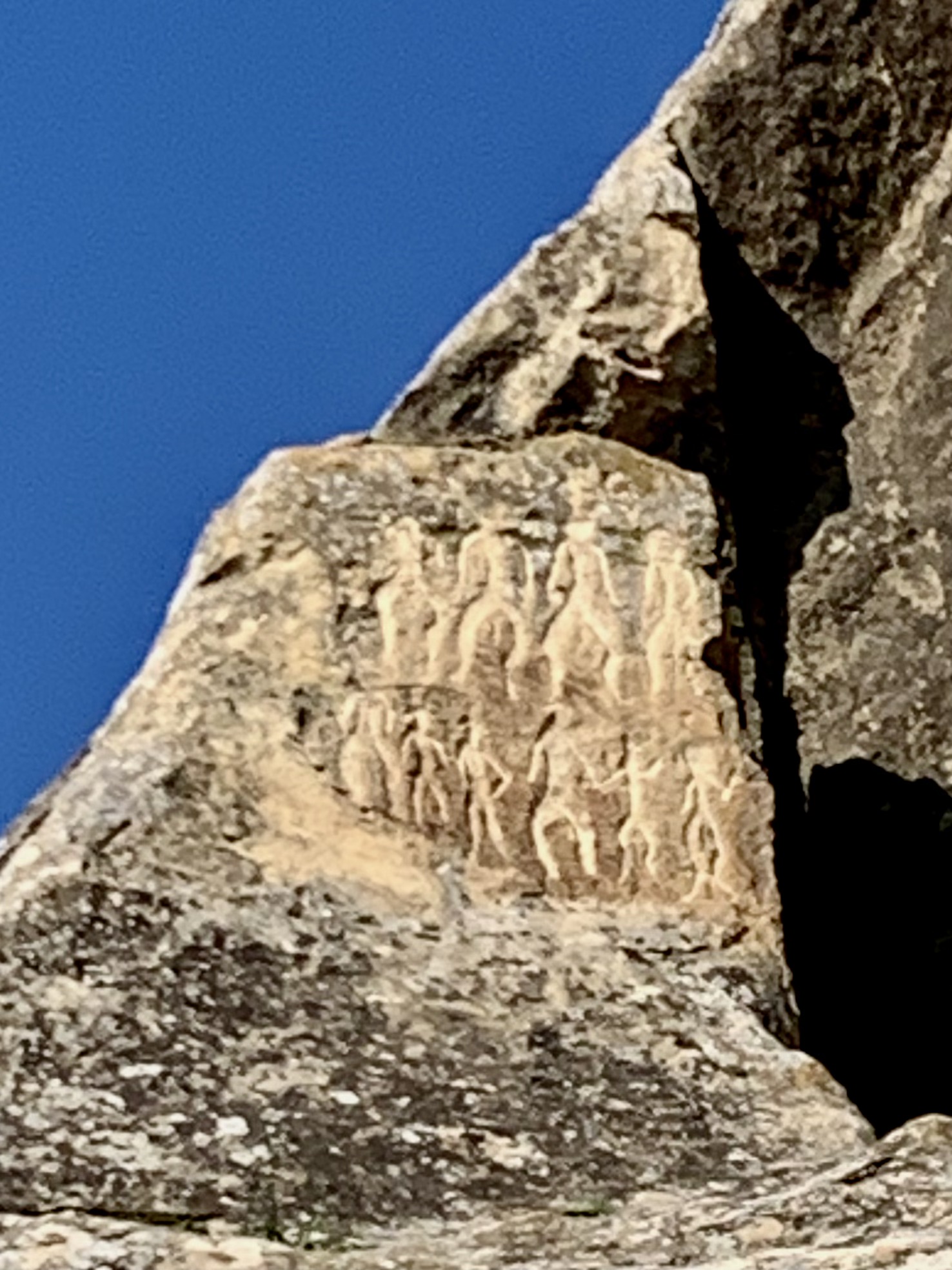
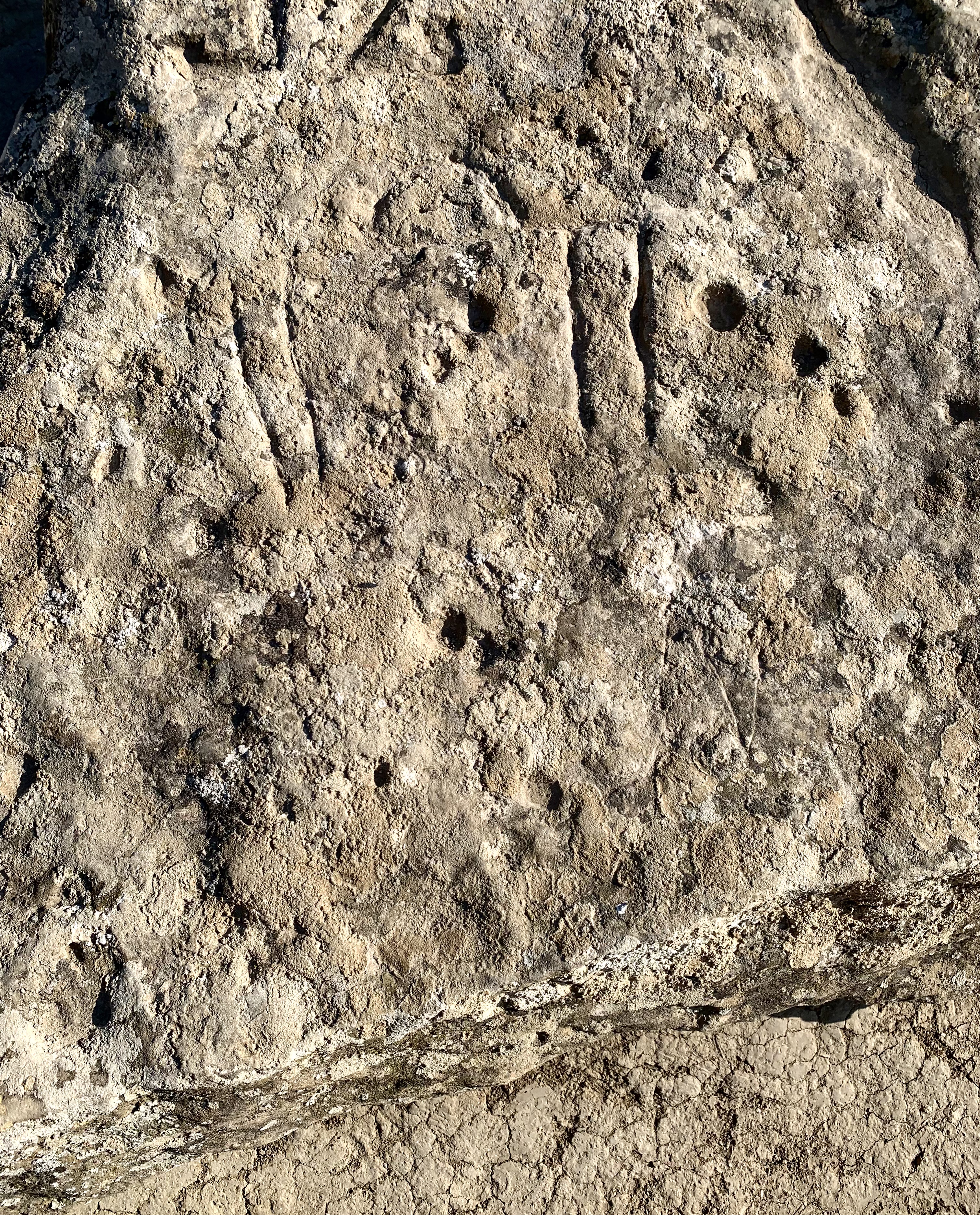
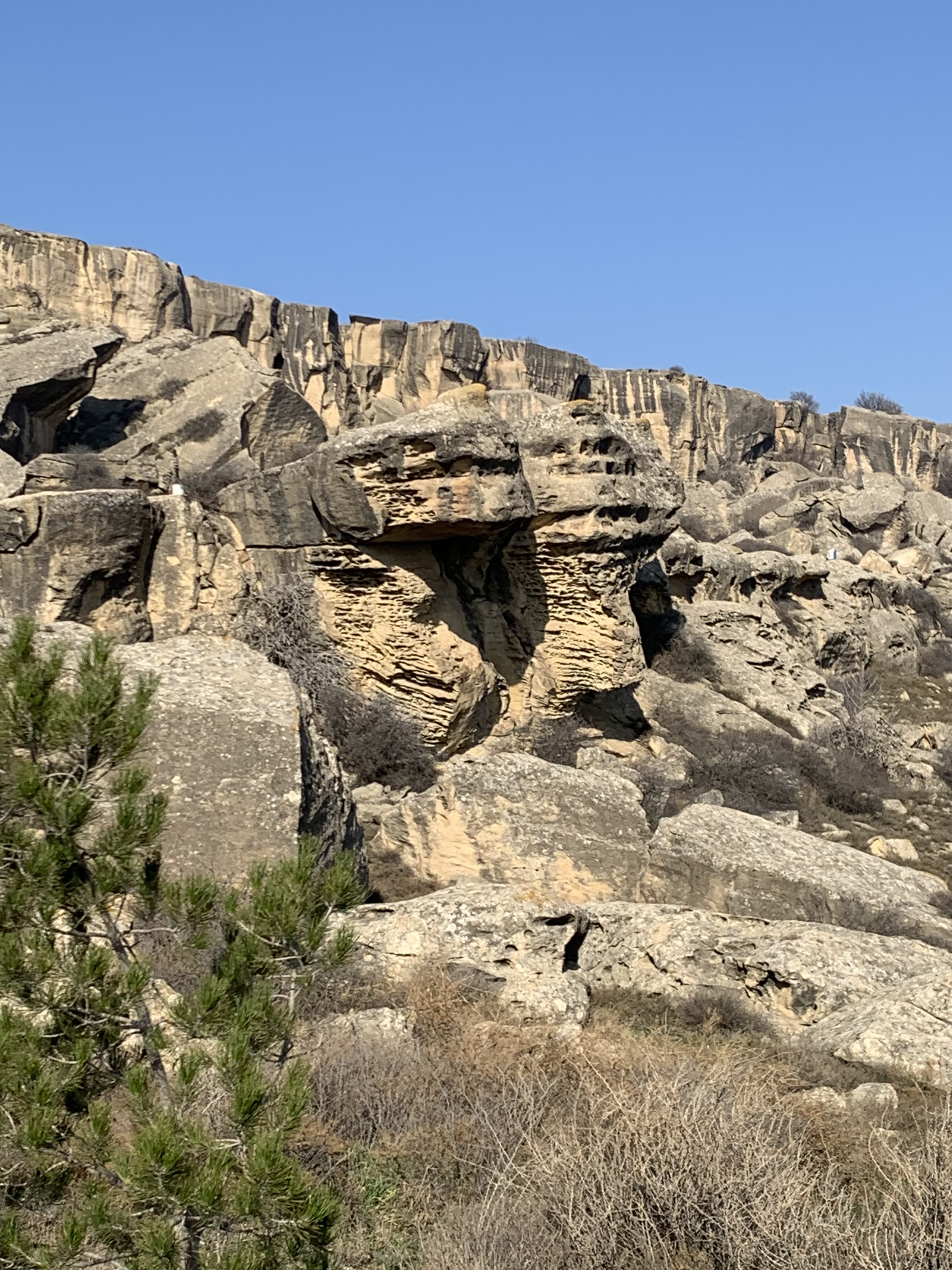
    The petroglyphs of Gobustan, a UNESCO site, are a strange pile of scattered giant sandstone boulders with scratchings on them. The earliest ones are from c. 40000BC, the newest ones from c 15000 BC. It is thought that they were originally drawn inside caves, but earthquakes, falls etc have moved the rocks and exposed them. Some smaller stones with drawings are now in museums.

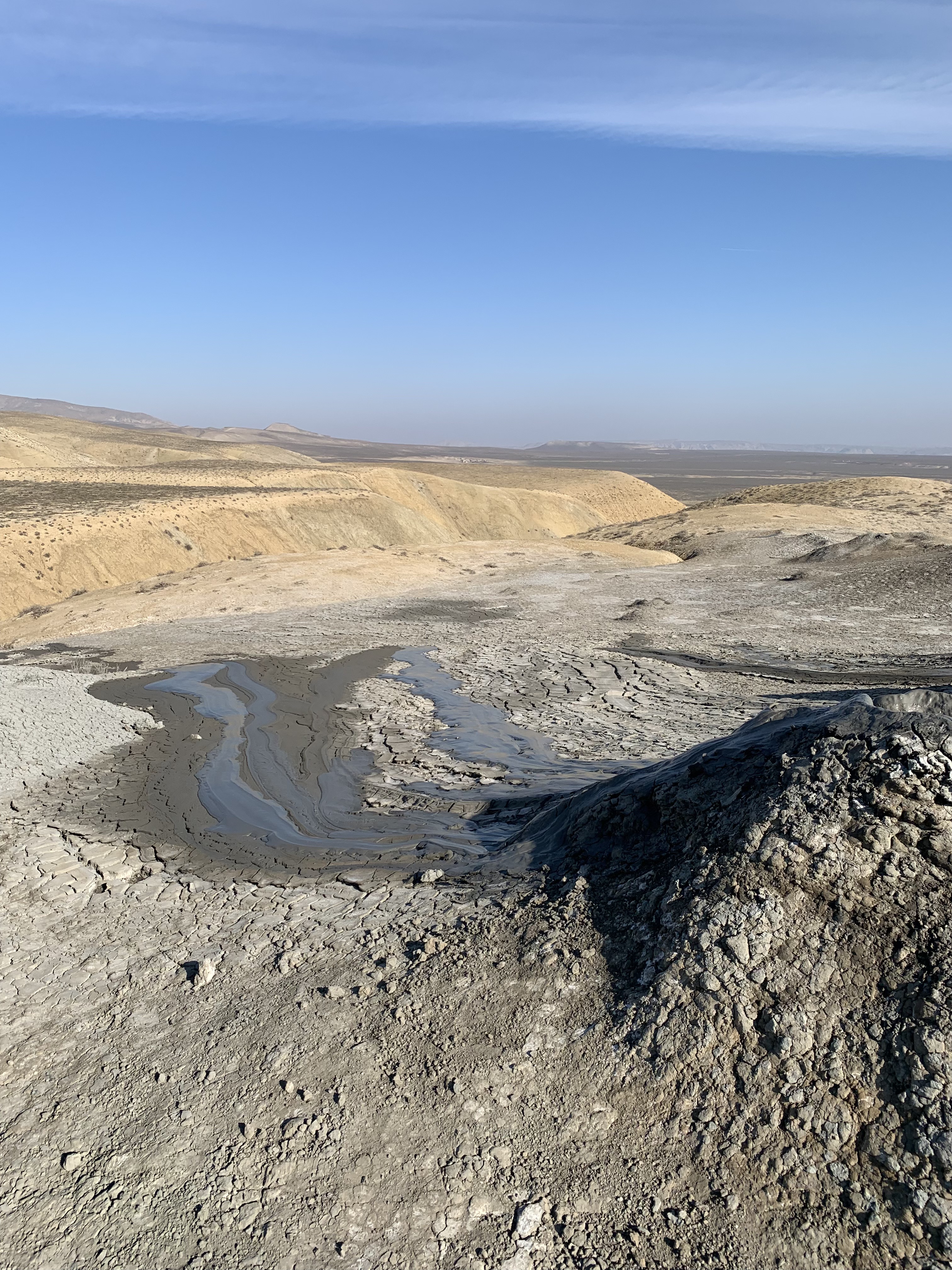
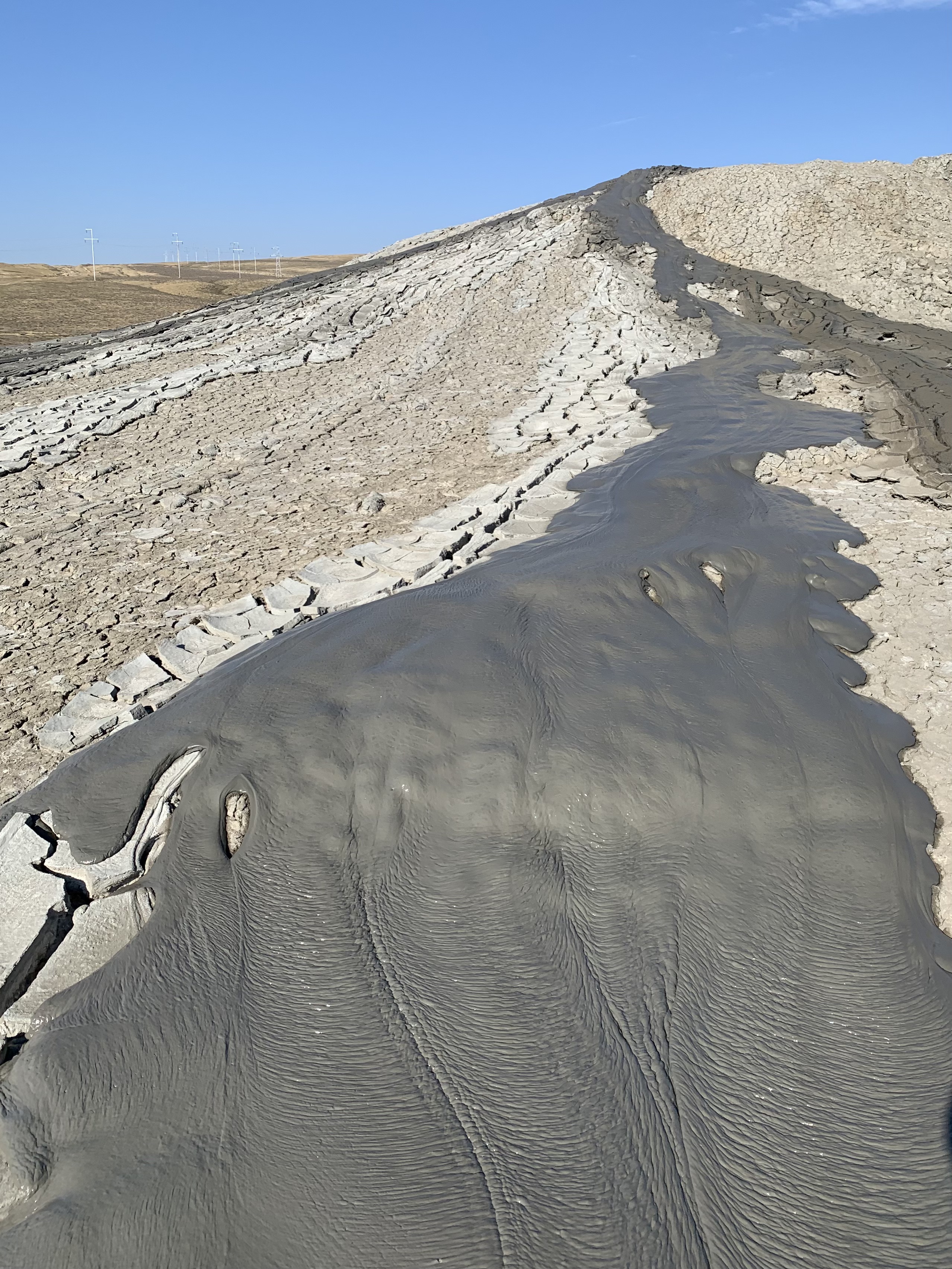
    The mud volcanoes are strange (and a little underwhelming): they pop and plop at random, flatulating gently one day, oozing cold mud, only to die down and then another one starts elsewhere. The guide, Gushlana, was a bit disappointed that things were becoming very sanitised (the workers were busy finishing the tourist buildings, which also meant they would start charging entry fees). The newly built wooden walkways take you around the site without stepping on the mud; Gushlana used to take a small lump home about once a year and dilute it with water, to use as a face mask (there are over 30 minerals in the mud). Not any more.

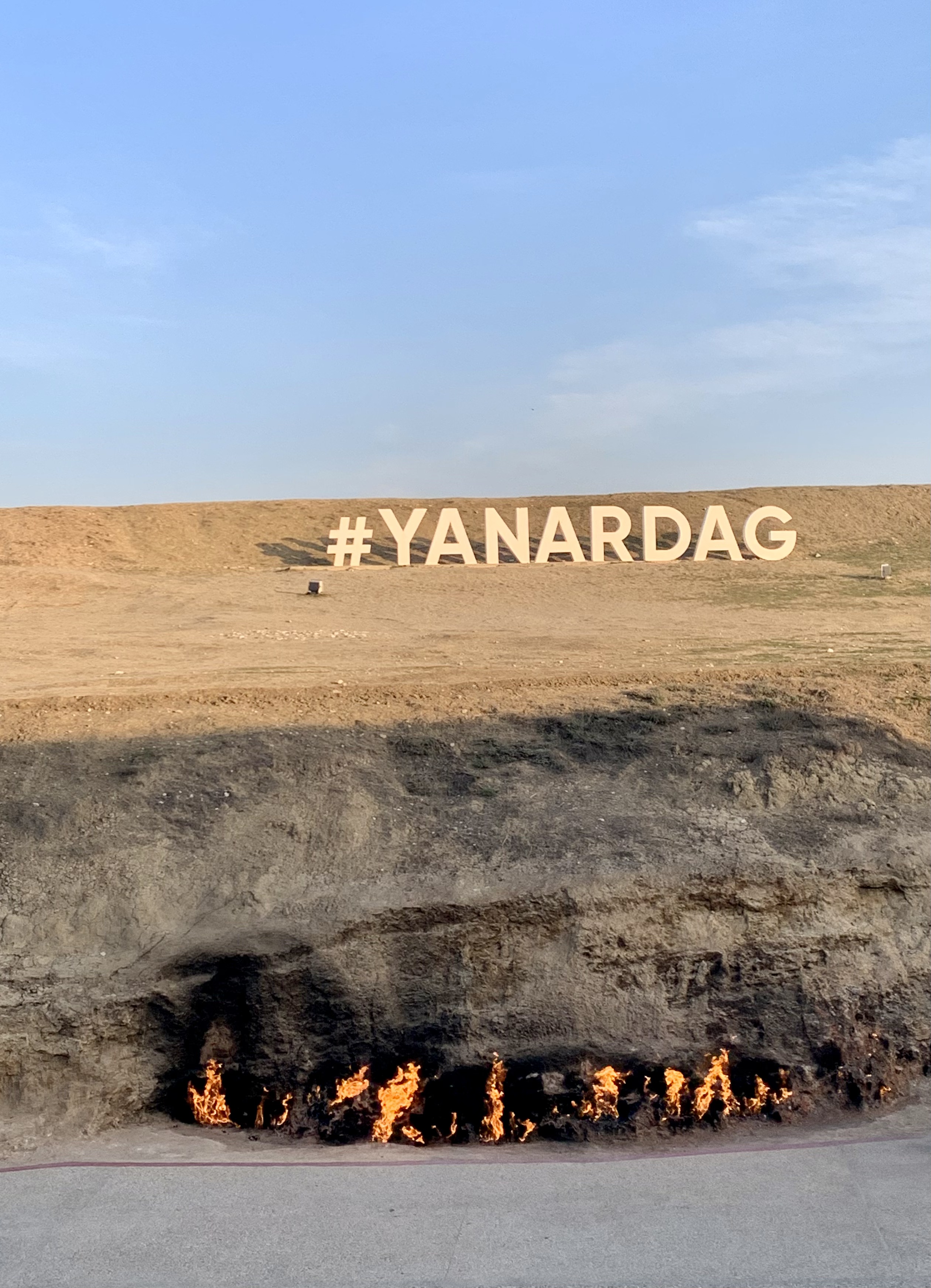
    Azerbaijan is “the land of fire”. The Zoroastrian temples have been built at the sites where fires have been burning. Natural gas and oil abound. The “fire mountain’, Yagerdag, is more of a hillock, but the fire still looks impressive.

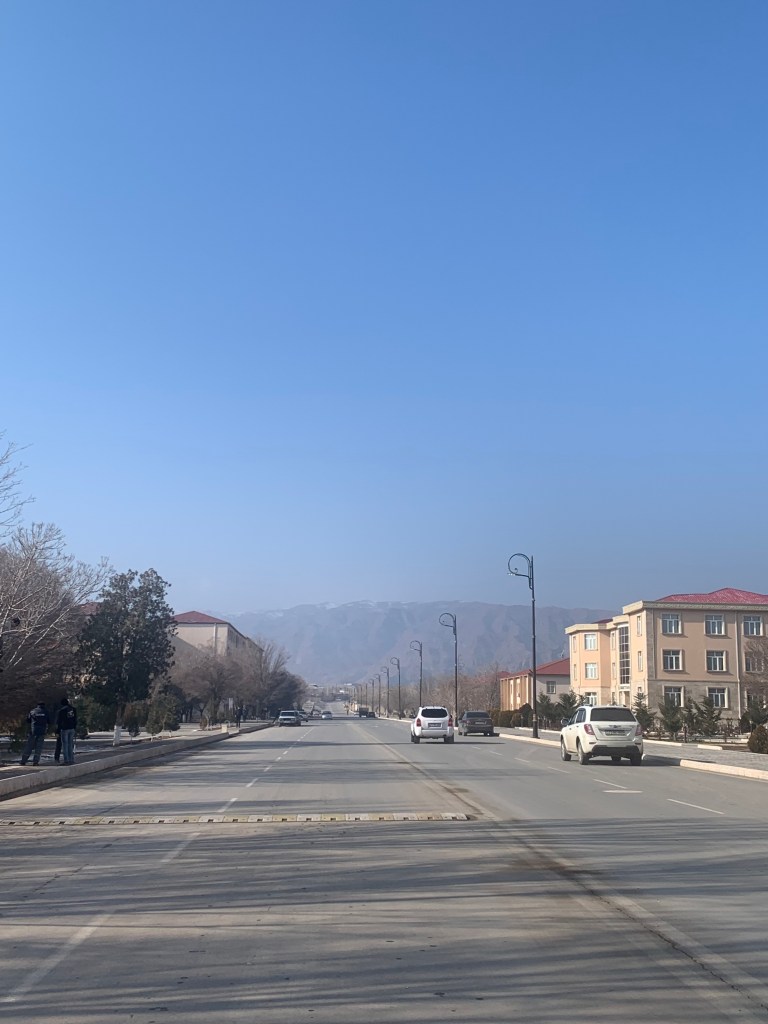
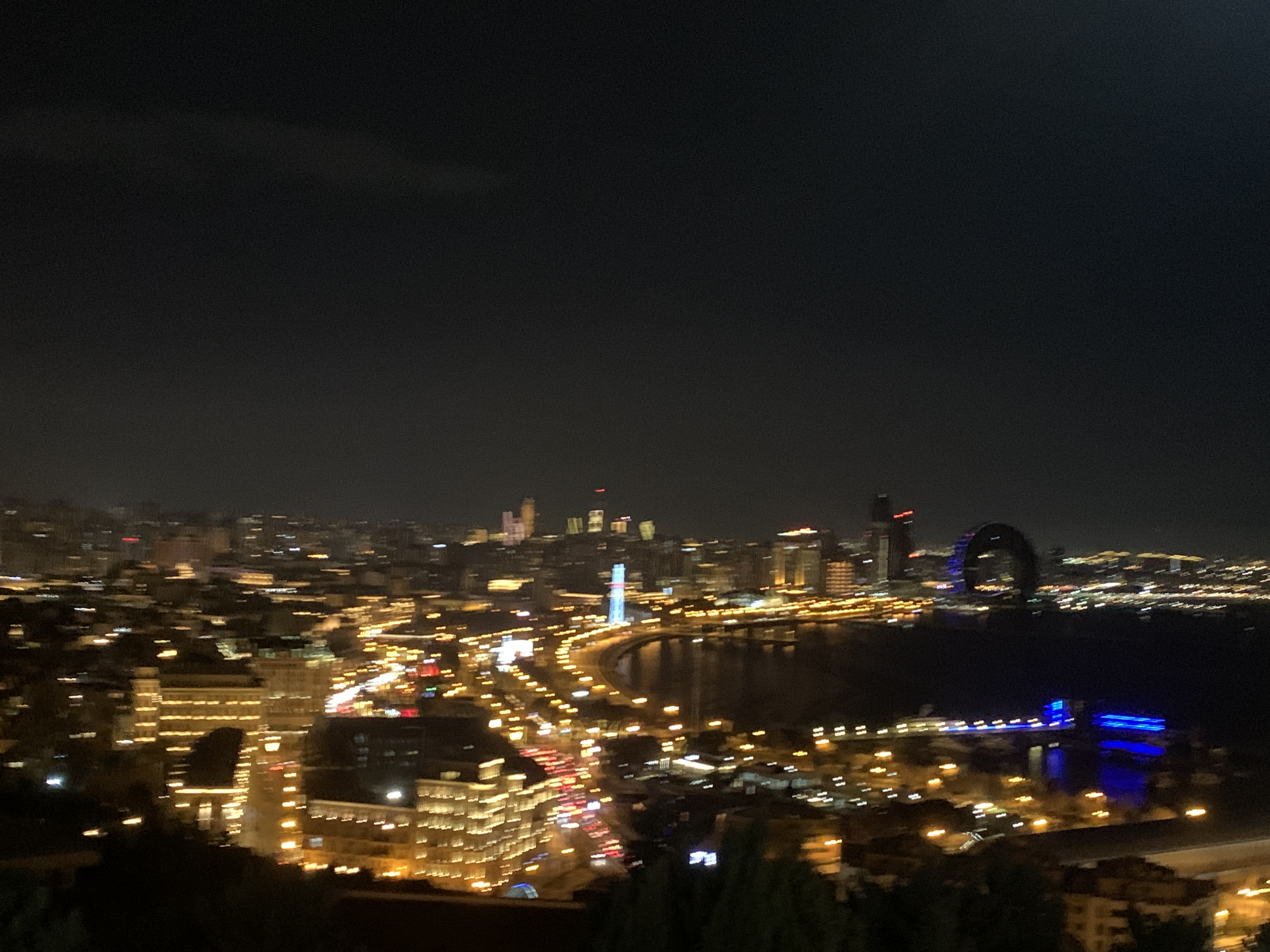
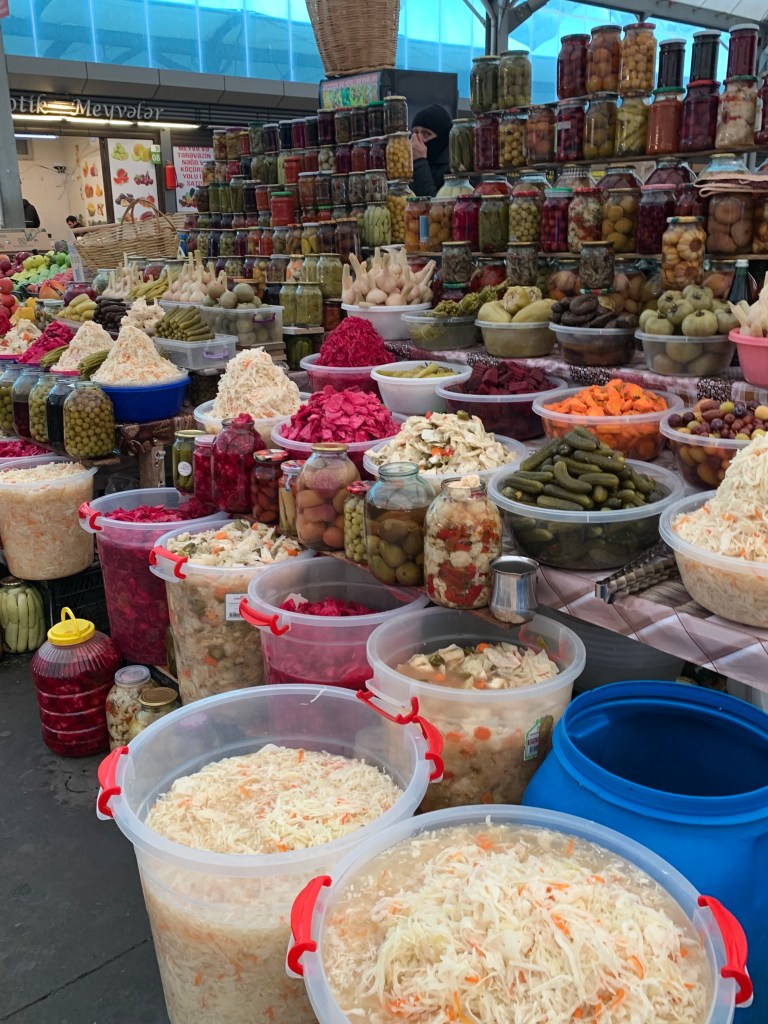
    What I enjoyed the most was walking around Baku. Taking the tube out a few stops and walking back – glimpses of the Caspian on one side and the city sprawl on the other. All the big shop names are here, though I haven’t seen too many people in them. Walked through the jewellery district yesterday – besides the Jewellery Centre (very blingy!) there is a street full of little gold/silver/jewellery shops. And in all of them men were looking at their phones…

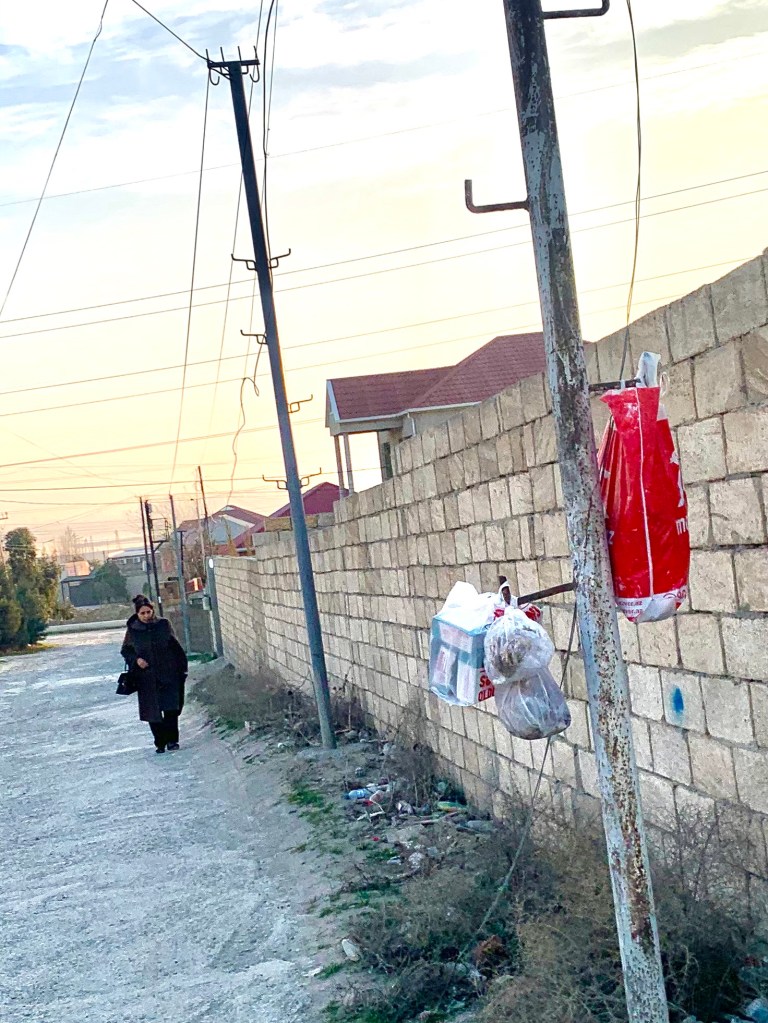
    Car is king (though there is some respect for the pedestrian crossing), which isn’t surprising in a country were petrol costs under 50p a litre and diesel less than 40p. One of the tour guides said that Azerbaijan was “diversifying and investing in wind and solar power”. Not much evidence of that. But the derricks keep on nodding and the off shore rigs are visible on the horizon.

  • Christmas in Tbilisi, New Year in Gudauri

    Jan 1st, 2024

    I was grateful that Gloria’s pick up time from Tbilisi Airport was at an ungodly 04:30 am. Driving on empty streets made it a lot easier – there isn’t much joy in driving in Georgia – much too erratic and indisciplined where there is room, much too joy-riderish and cavalier with signalling on highways. The guidebooks advise “defensive driving”.

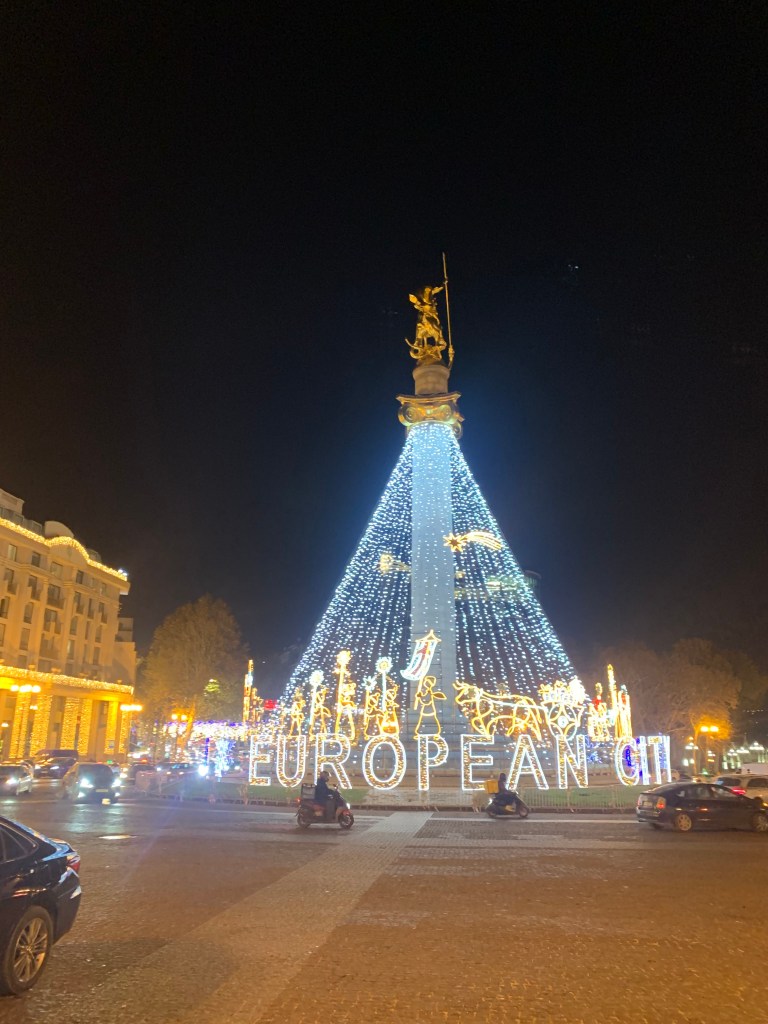
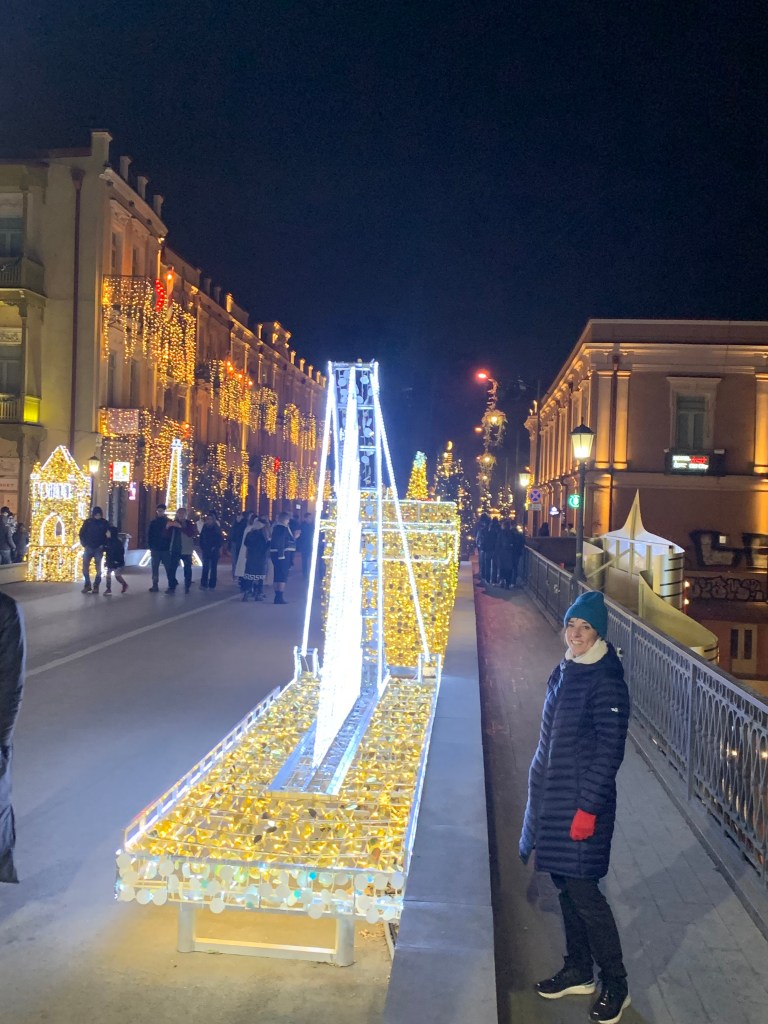
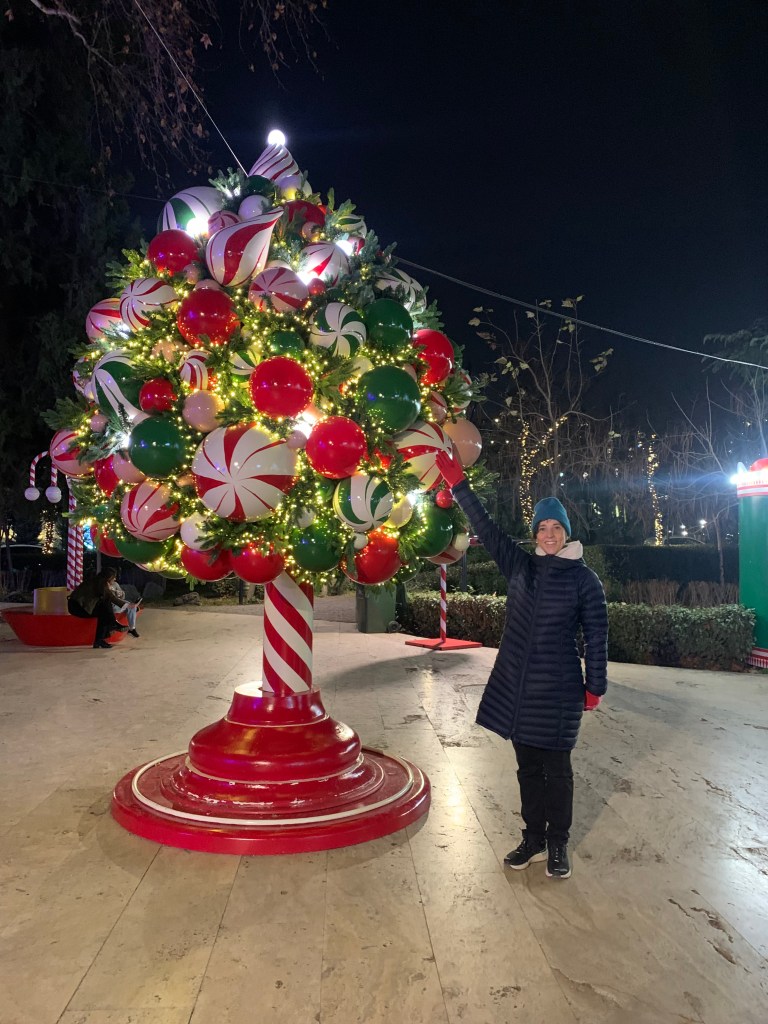
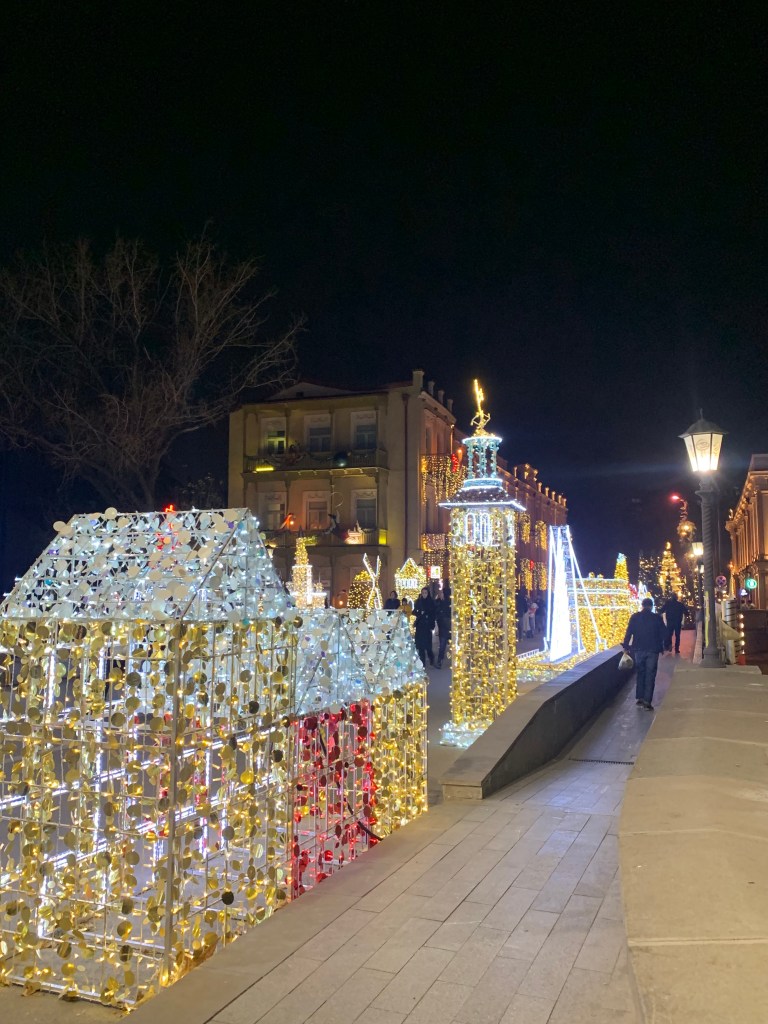
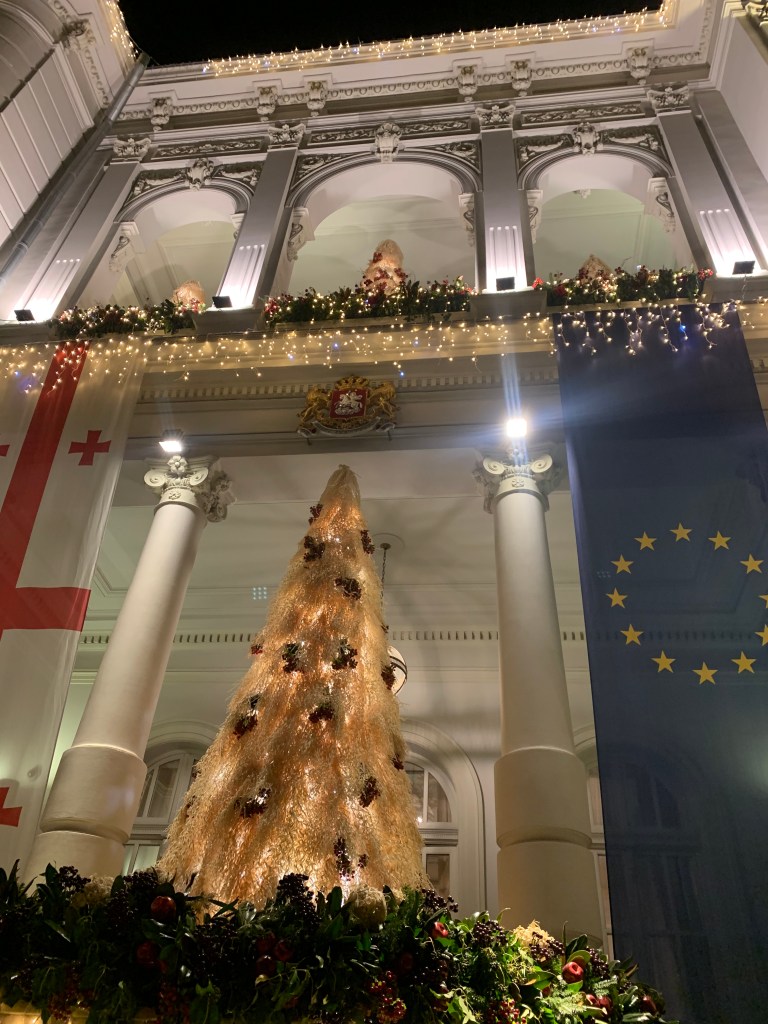
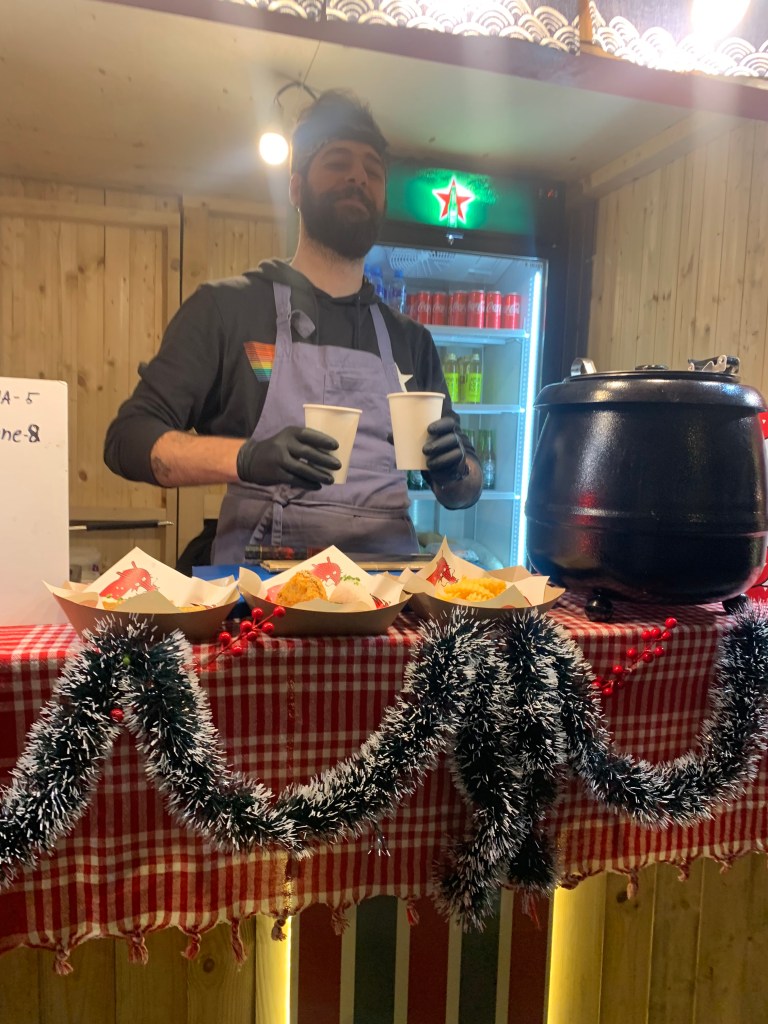
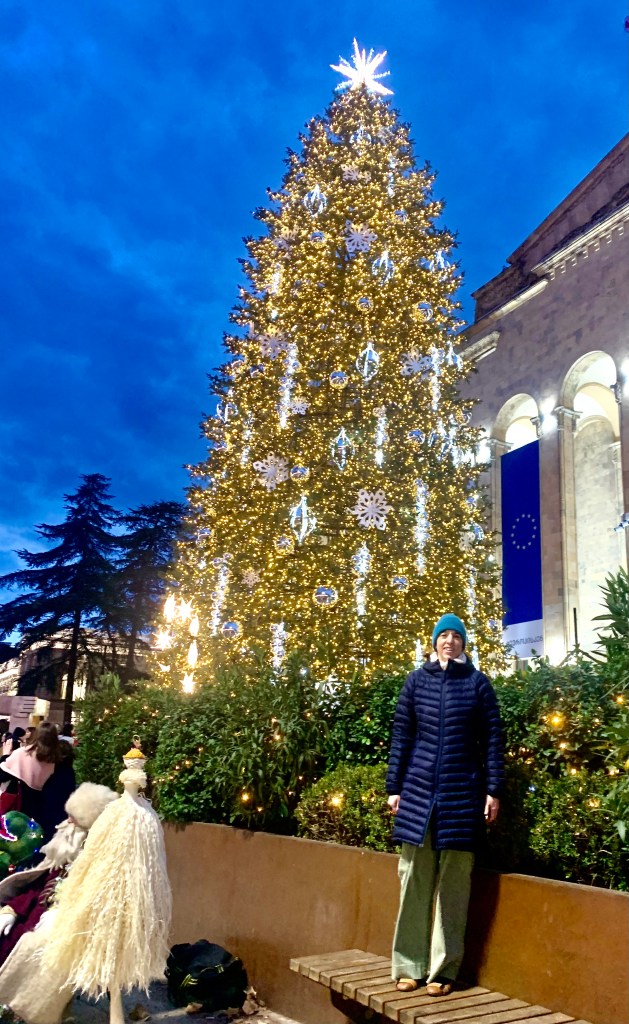
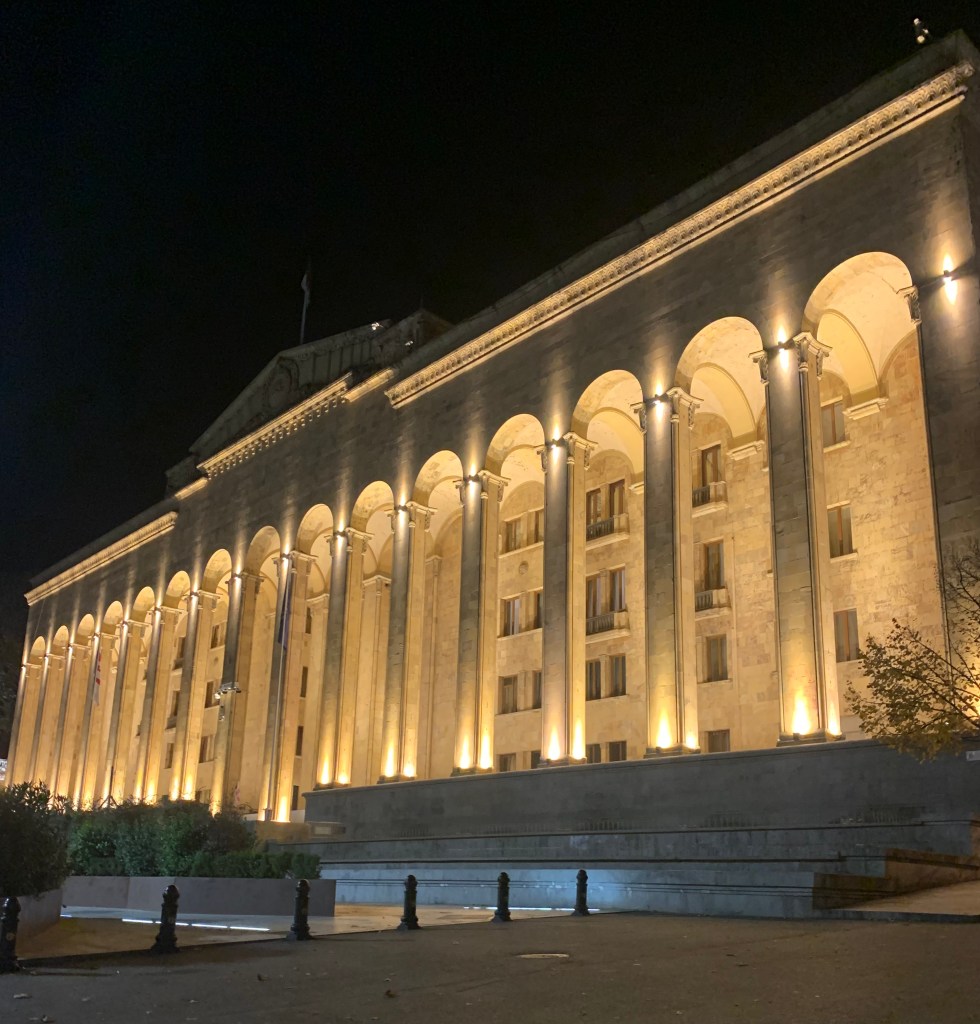
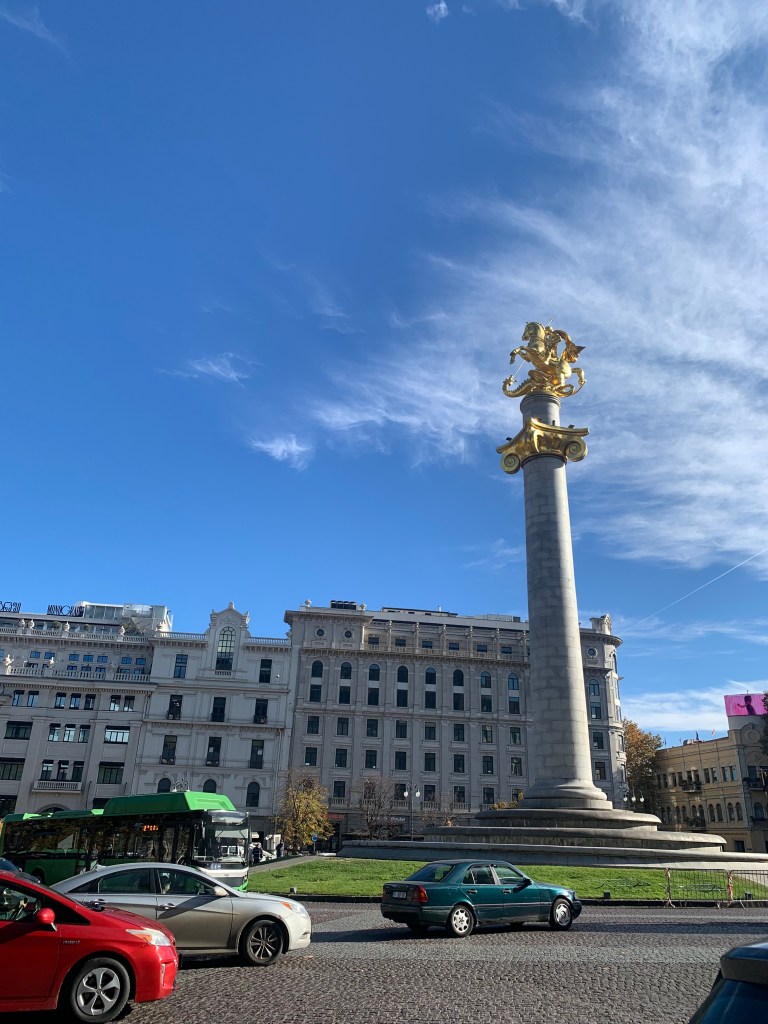
    Gloria had booked us into an Airbnb at the very centre of Tbilisi – right by Freedom Square, so the town was easy to access and we walked almost everywhere (it was good to have a look at their Metro – very deep, but not elaborately decorated as some in Russia). The main drag was only one of several extravagantly lit up areas – there were Christmas markets, squares done up, live music and gluchwein (or ‘glintwine’ as they call it here).

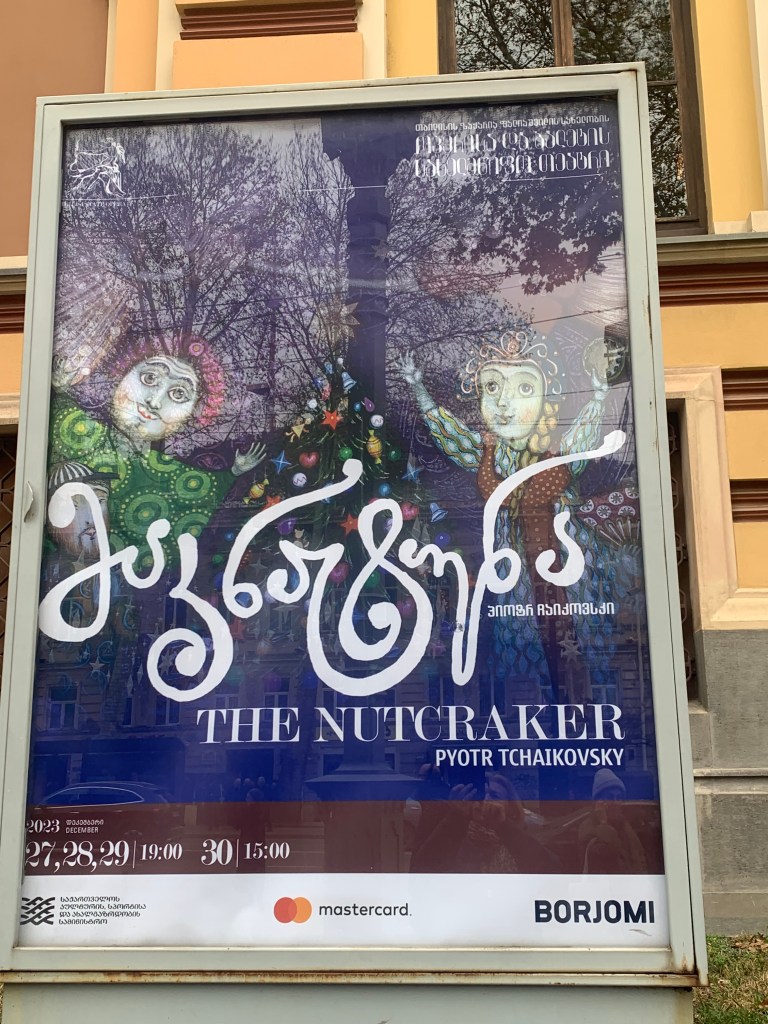
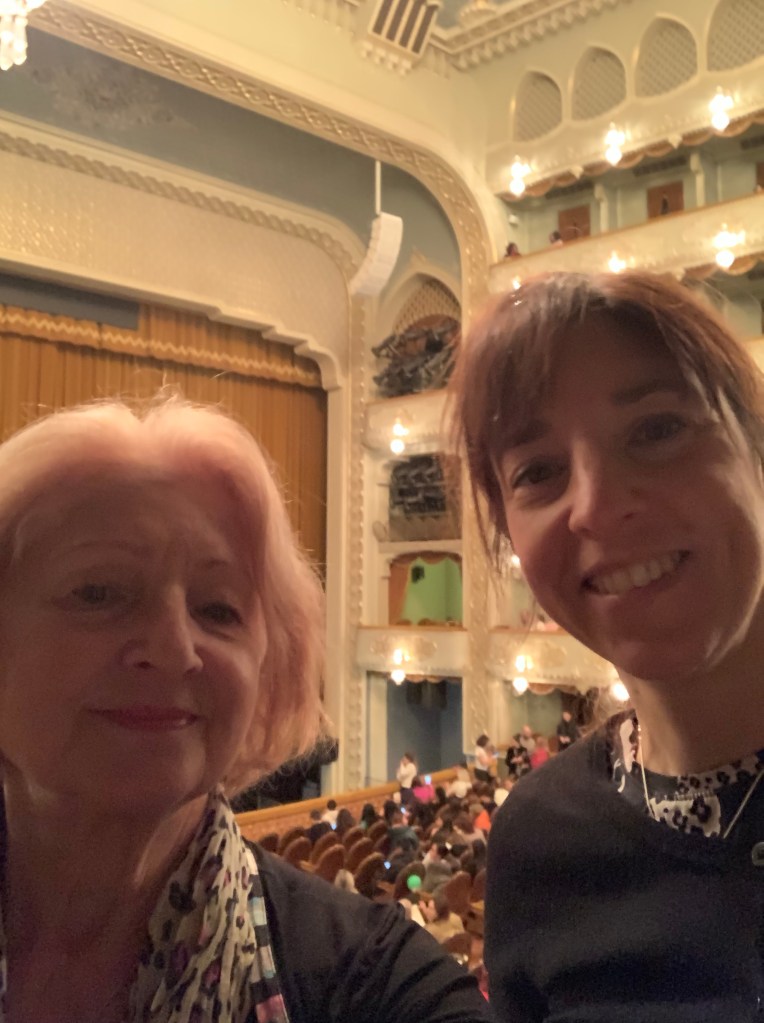
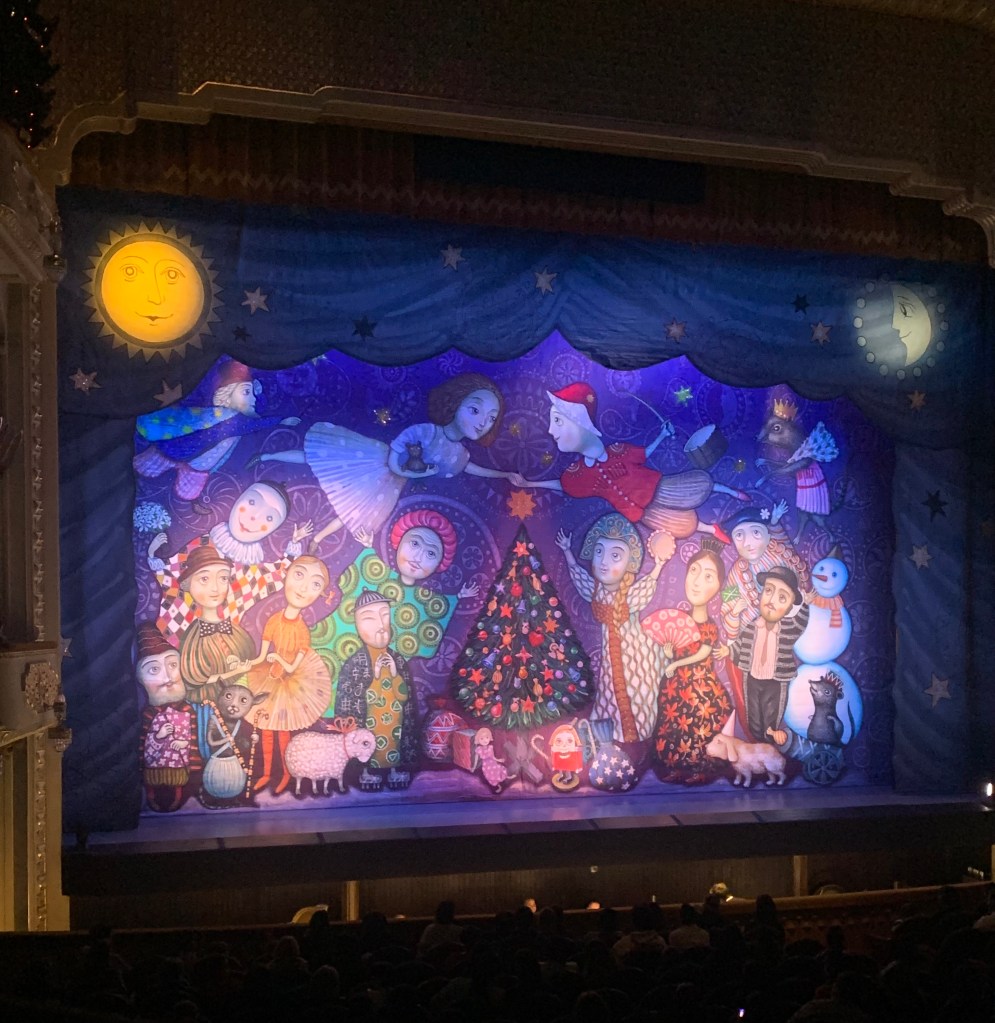
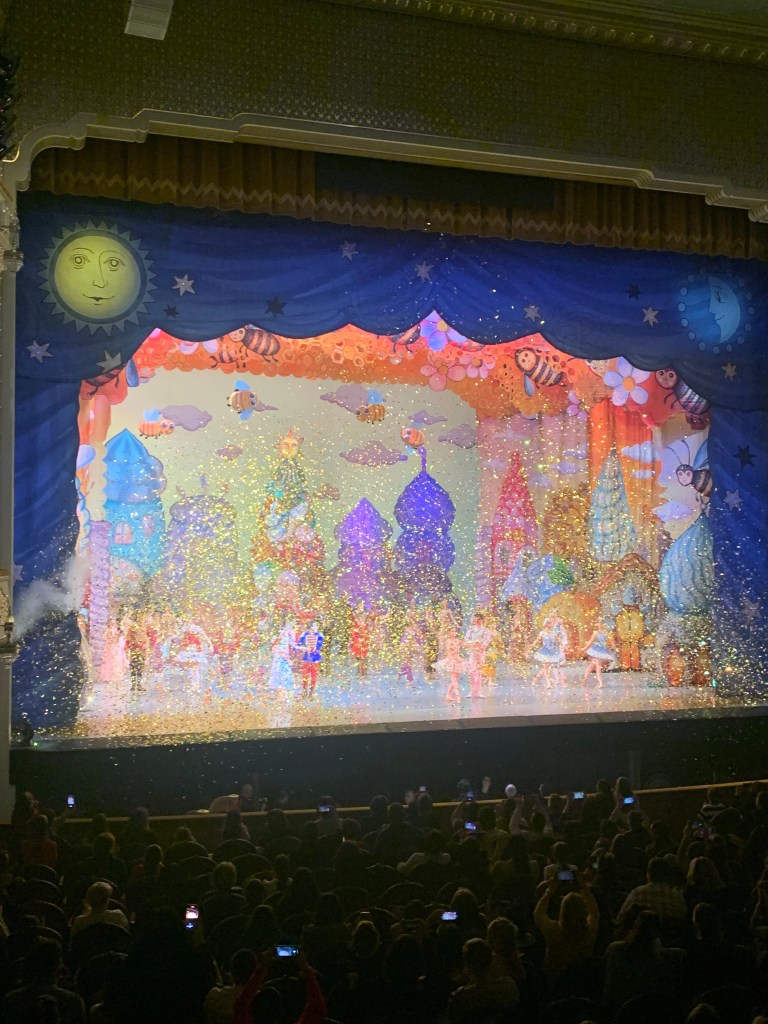
    I managed to get us a couple of tickets for the Nutcracker at the Tbilisi Opera House on Christmas Eve. The seats were very good and we enjoyed the performance (there were some funny moments, such as a prop being kicked towards the side by an elegant ballerina and an arm stretching out to pick it). Despite the request not to video or take pictures, plenty of phones were up, not discretely.

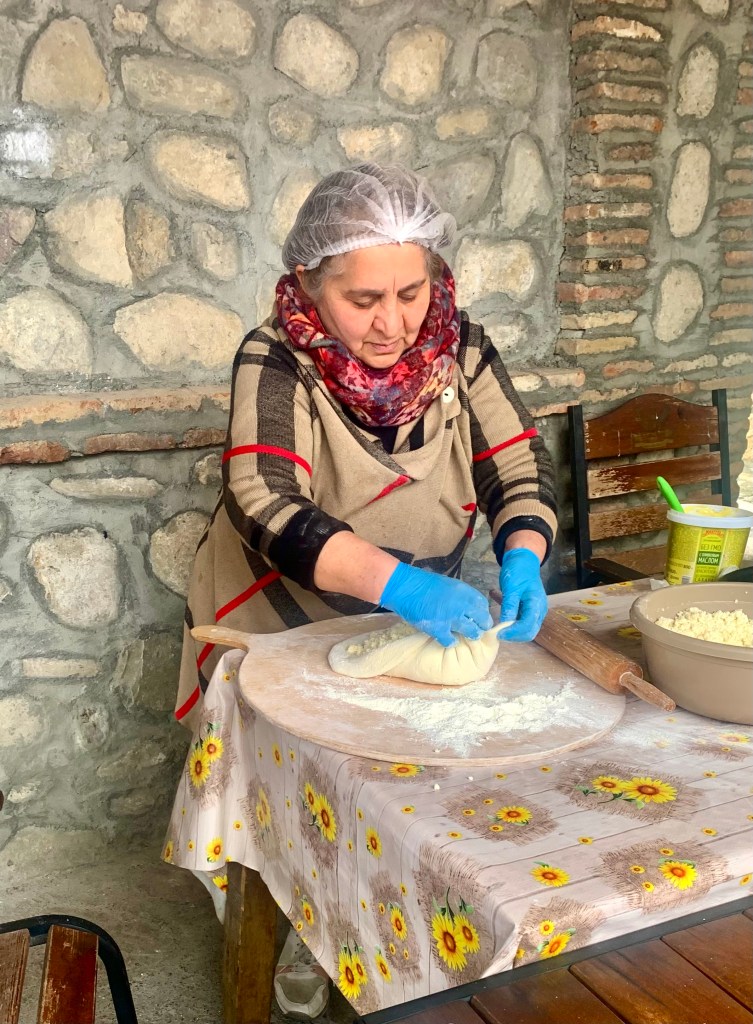
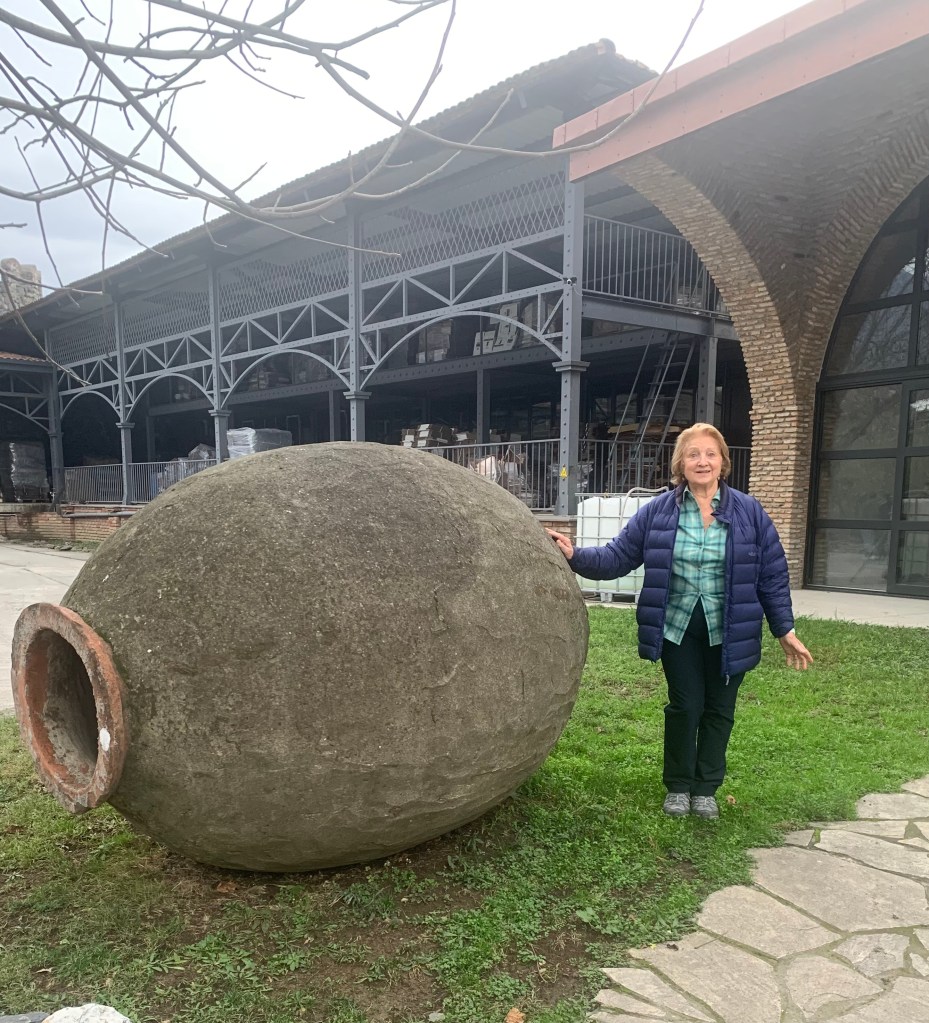
    We did an organised tour of the Kakheti wine region with a couple of wine tastings, a puri (bread) making demonstration and the one of Khachahpuri making – the cheese filled dough, shaped and baked like a pizza, but with a higher calorie content. There were also monasteries (St Nino, a female saint who was instrumental in having Christianity made a state religion in Georgia) and a Silk Road fort and city walls… The Georgians still make some of the wine in their traditional manner, putting the crushed grape pulp into giant earthenware amphorae in the ground, without adding anything to the mush (Qvevre method), though most of the wine for sale is made using the European method.

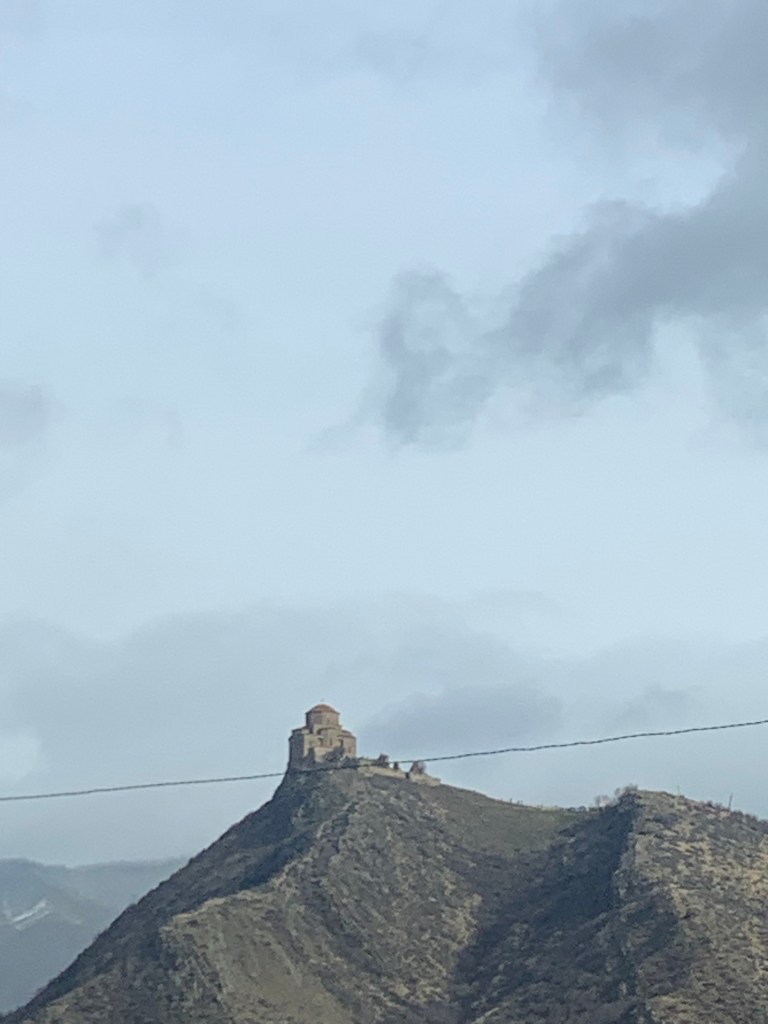
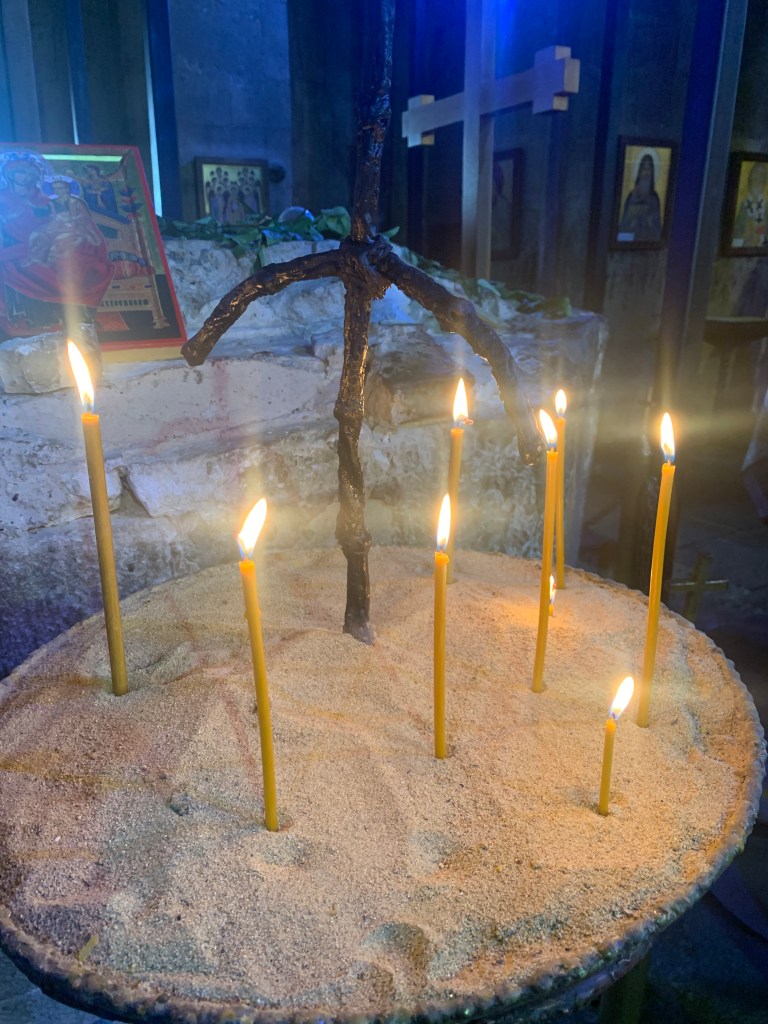
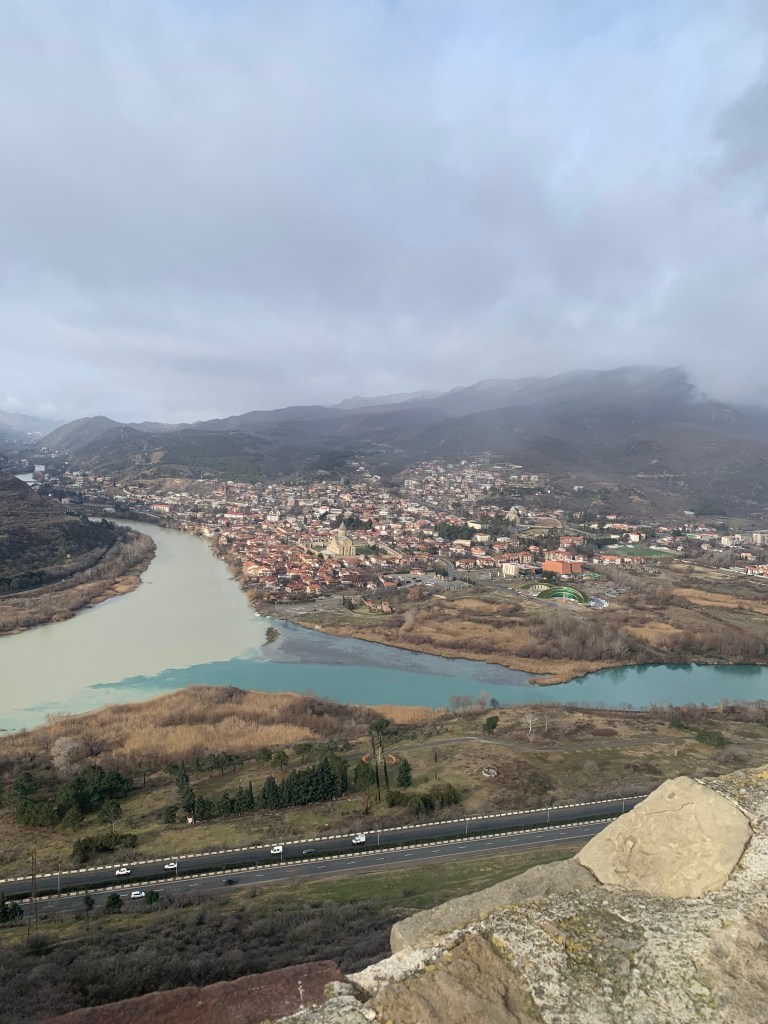
    We did our own tour of the Jvari monastery, “the holy of holies” for Georgians, looking beautiful on its high promontory above the confluence of two different coloured rivers by the old capital, Mtskheta, and its cathedral Svetitskhoveli. The drooping cross is special to St Nino (there’s a story, of course, of how Nino was presented with two pieces of wood in a dream and the next day she tied them together with her hair…)   It was a bitterly cold and windy day, and we were grateful for the warmth of the car.

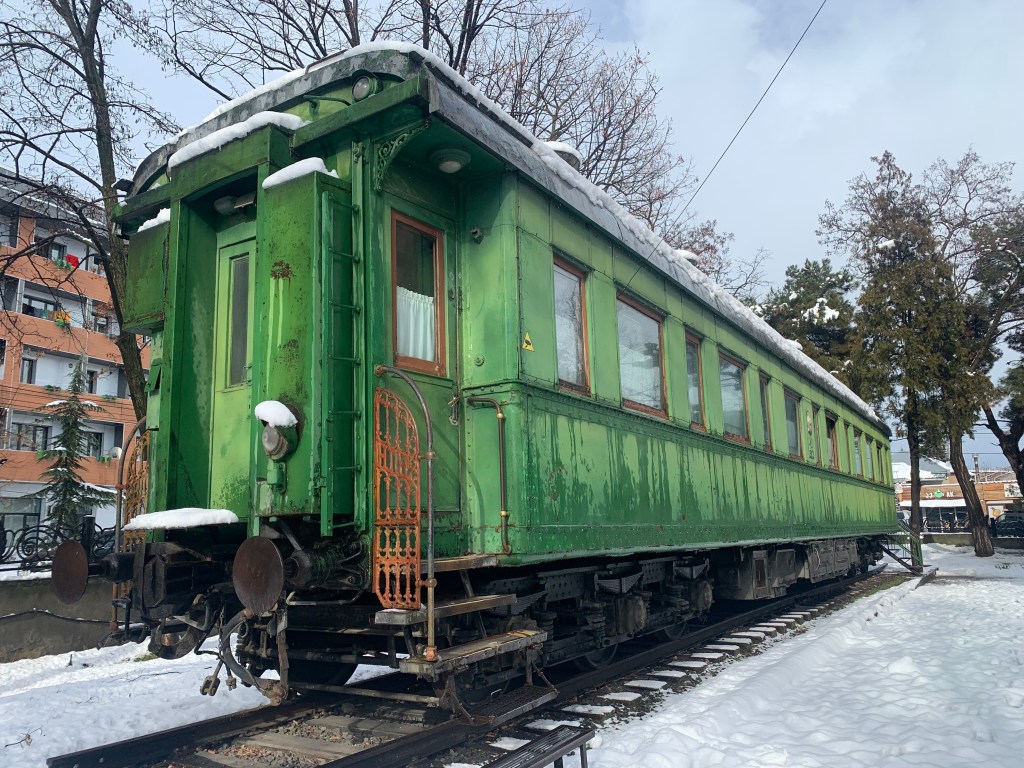
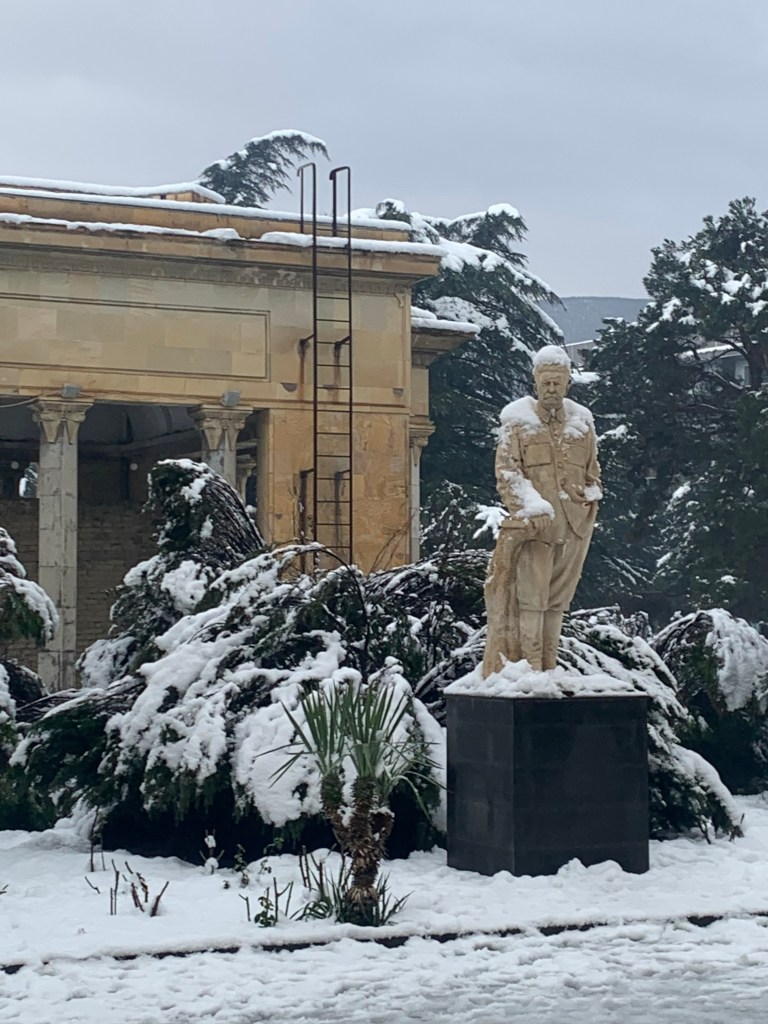
    Gori, Stalin’s birthplace, honours its one and only famous son by having a stately museum which includes the house he was born in and lived in till he was 4 – we are told Beria had the house moved to the place and the cover built over it. There is also Stalin’s railway carriage – he was afraid of flying and travelled everywhere by train. The central pedestal in the garden is empty – the 17m statue is in some back garden. But there are still a couple of smaller statues and busts and the whole display describes his revolutionary rise and various roles he played, deftly ignoring the millions whose death he caused. Not until you are about to leave – and I would have missed it had it not been for Gloria pointing to another room at the ground level – that there is some information about the murdered millions and what happened after he died in 1953 and how things played out after Khruschev’s denunciation of Stalin.
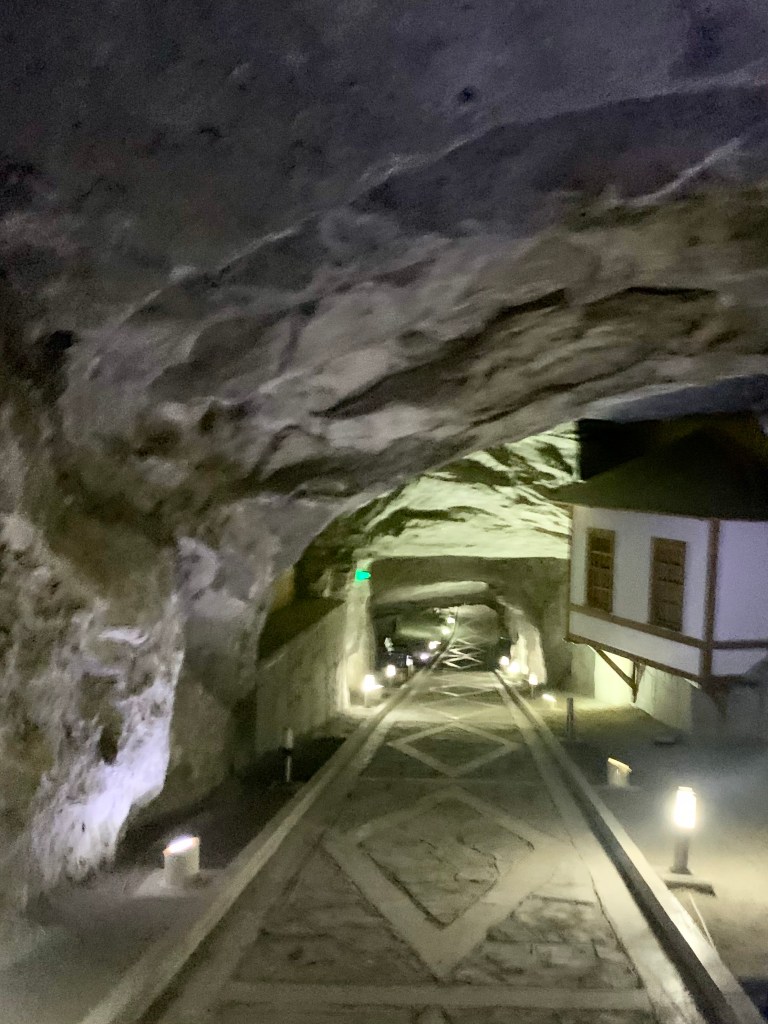
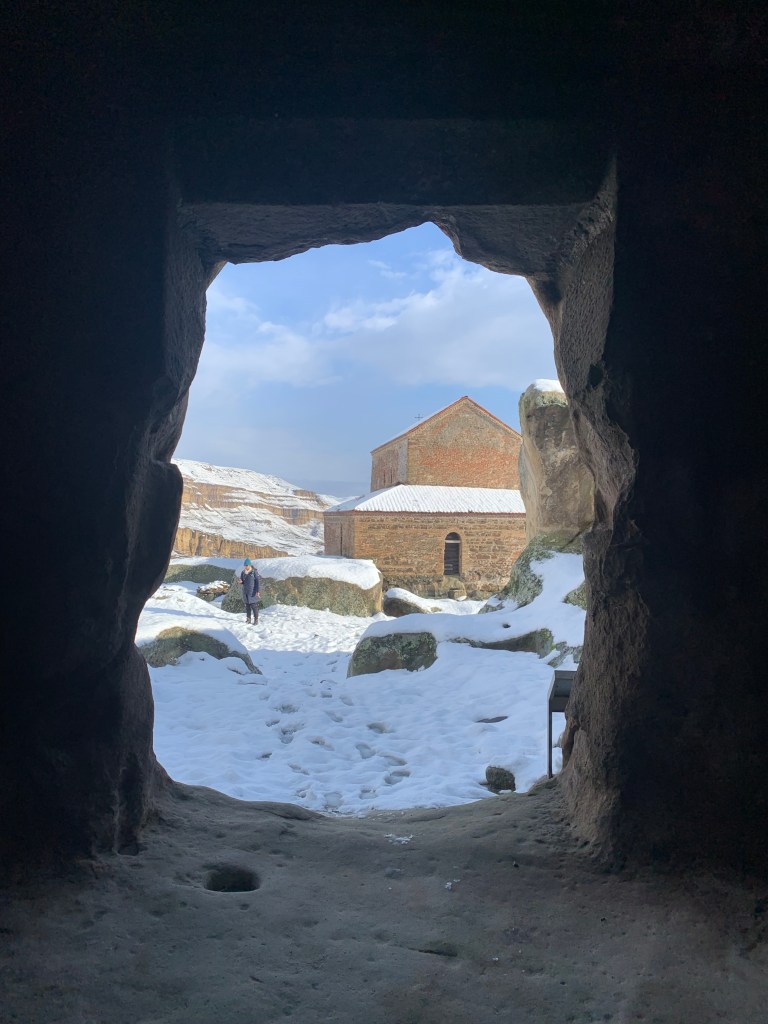
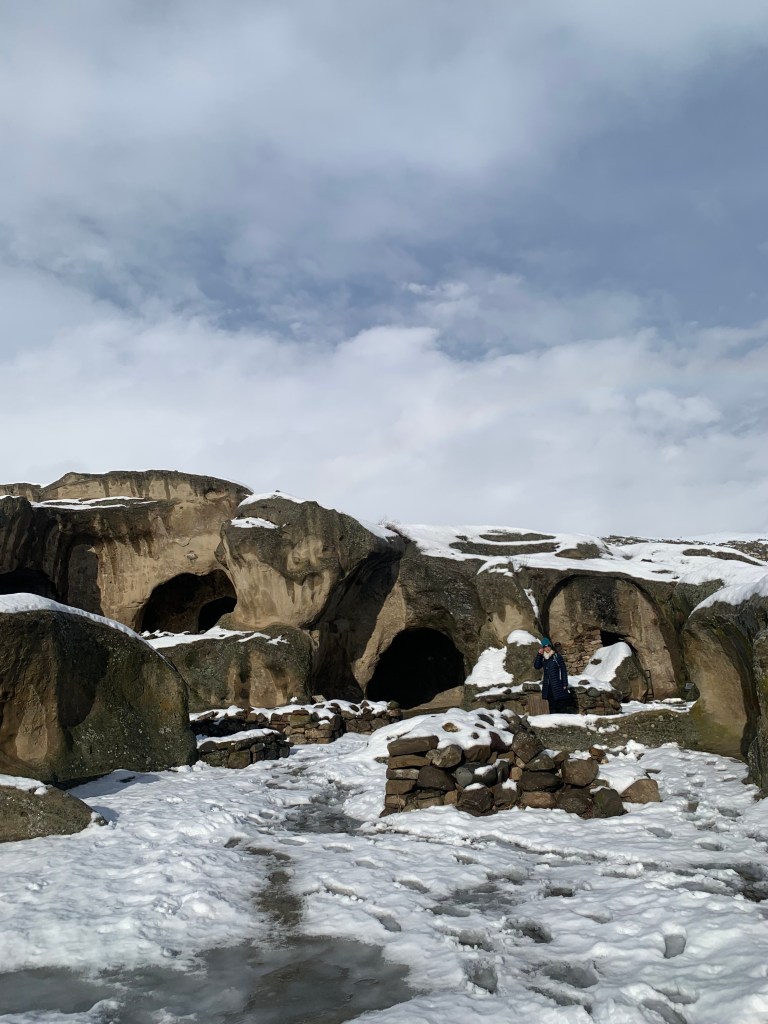
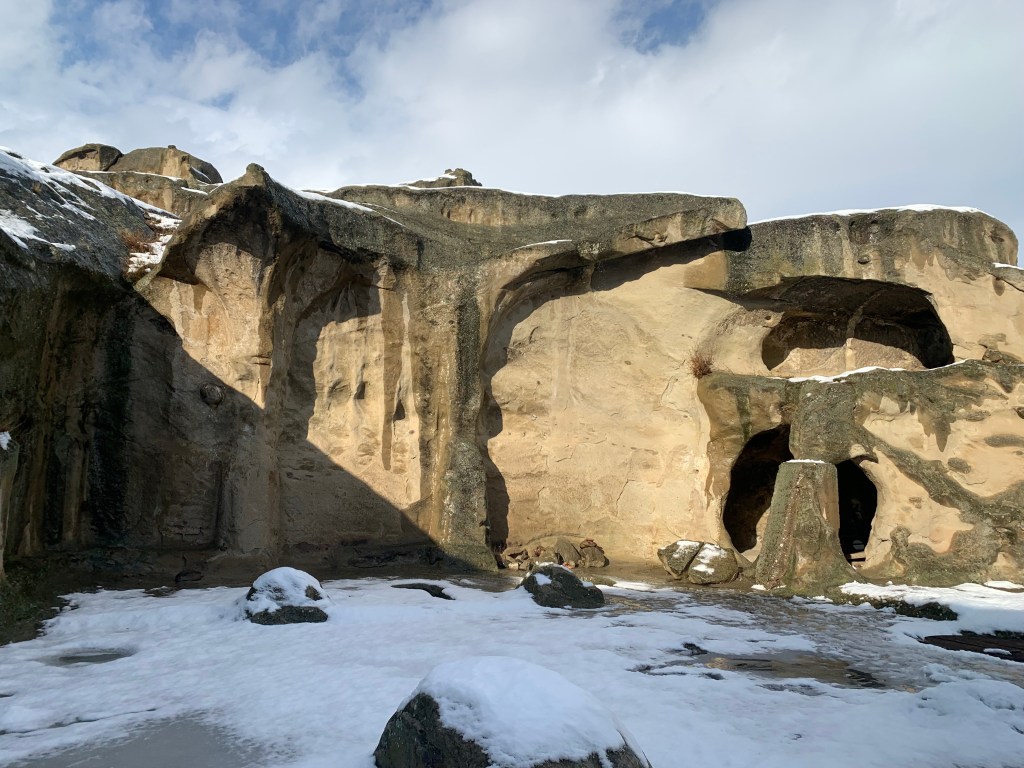
    Uplistsikhe is a cave city not far from Gori. Built between 6ct BC and 1ct AD, in a lovely spot above the Mtkvari river, at its height was a home to some 20000 people. There are temples and theatres, a throne room and wineries, a pharmacy. The ice, snow and water made it difficult to access some areas, but it was clear that it had been an impressive place.

    We had a very nice meal in a posh restaurant on Christmas day – definitely not a traditional one – not a turkey in sight! 

    As is always the case, time went far too quickly and packing and good byes came too soon. It was lovely to share those few days together. Gloria headed back to London and work the next day, and I headed to Gudauri, a ski resort in the Greater Caucasus.
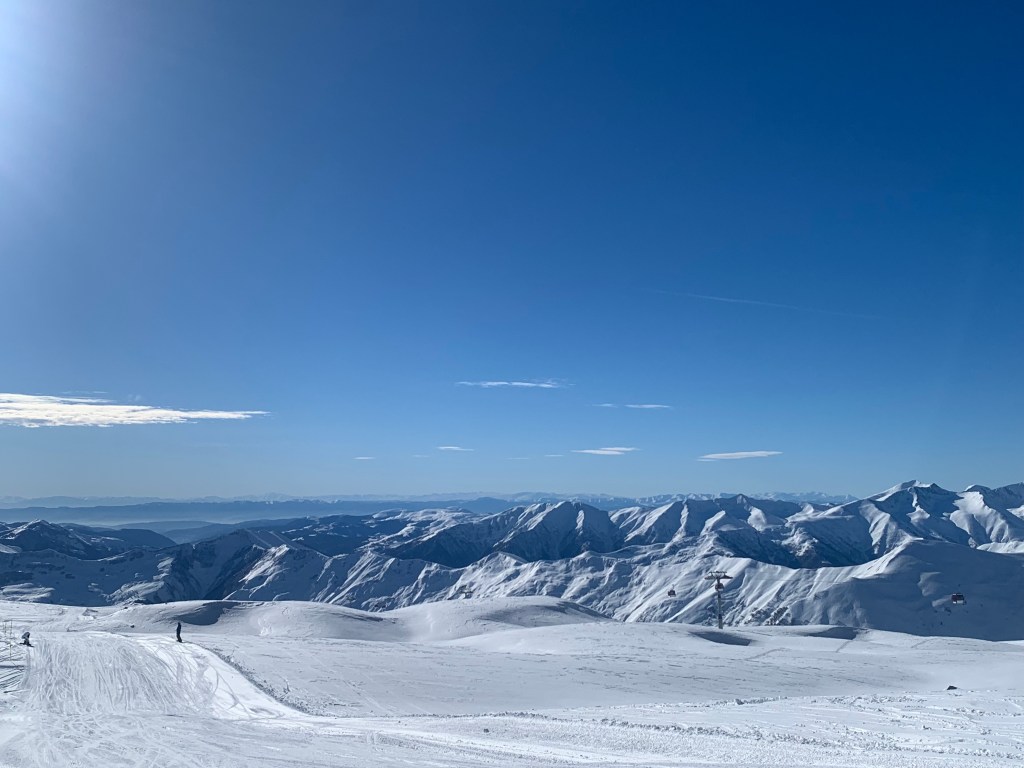
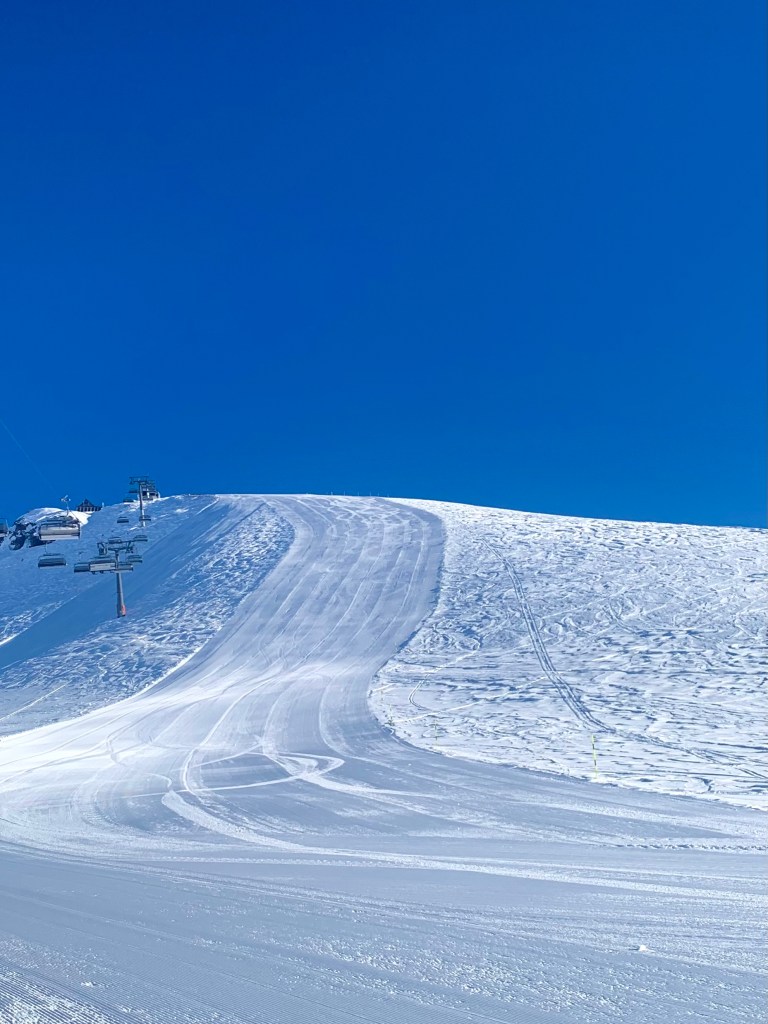
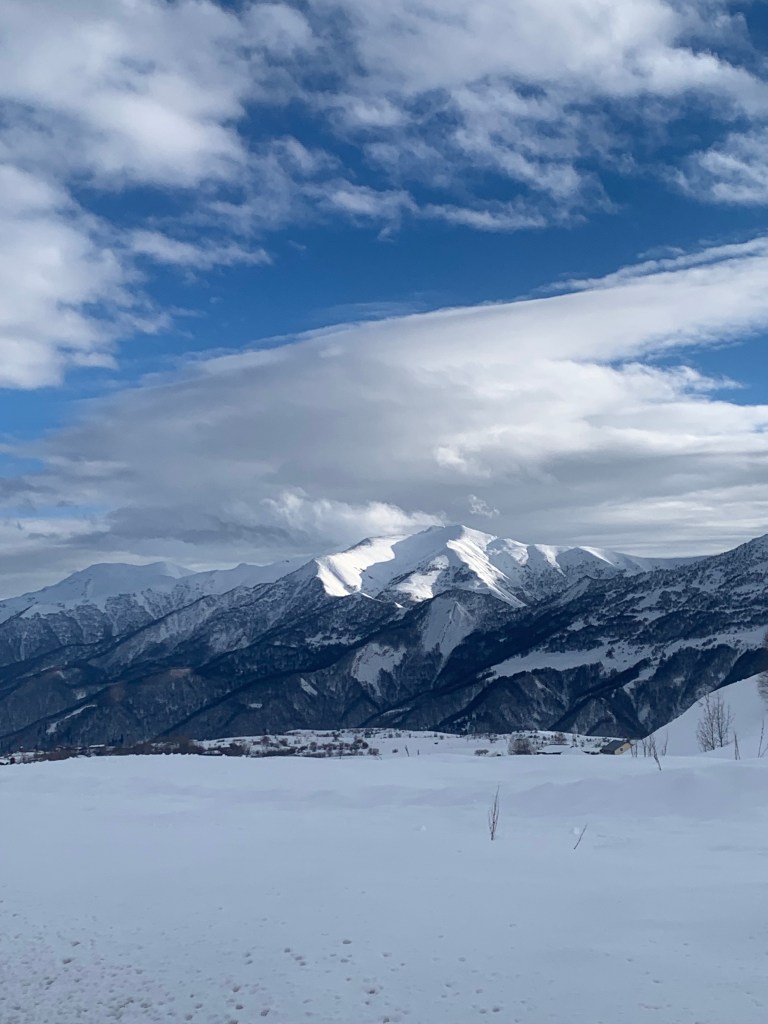
    Gudauri is a fairly new resort (just over 30 years old) and it is obvious that there has been a major investment in infrastructure – various lifts and gondolas – and there are plenty of places on the mountain to eat and drink (with inevitable techno/dance blasting from enormous loudspeakers), though most are with outdoor seating only. The runs, including the two blacks, are groomed, and there’s plenty of room. Besides the Georgians and the Russians, it attracts people from Dubai and other Arab countries and I even met two Austrians – they like the low cost here (a 6 day pass is 300 lari, c £90).

    There are a number of things that could be done better – access to the turnstiles is not cleared, steps are covered in snow, toilets are all on the level but an obstacle course to reach, there are few big maps of the ski area up (have seen only one), the names of chairlifts and gondolas are not displayed on them, so where there are several, it’s a guess which is which. One learns quickly.

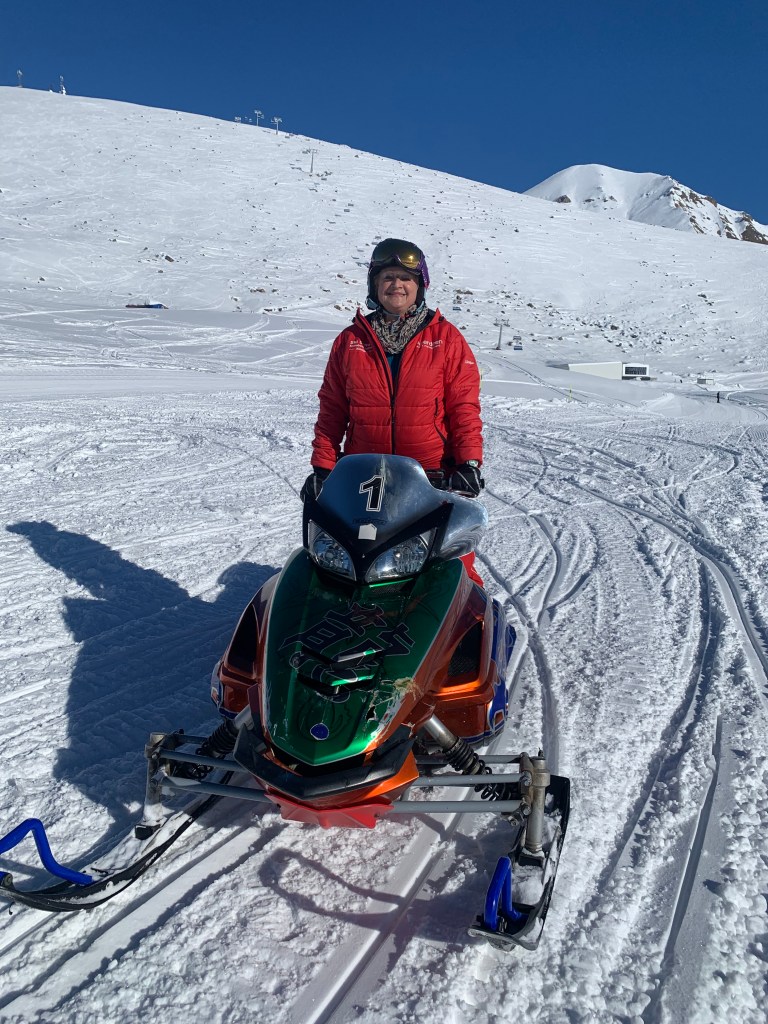
    And there is no village of Gudauri. It is all hotels and rental apartments, restaurants and a few kiosks, a police station, a petrol station and a couple of food shops. No pavements, of course. Walking on the road is like dicing with death – the drivers think they own the road…If the weather is inclement and there is no skiing, there is little to do. But if you want to learn to ride a snowmobile, or maybe heliski, that can be done.

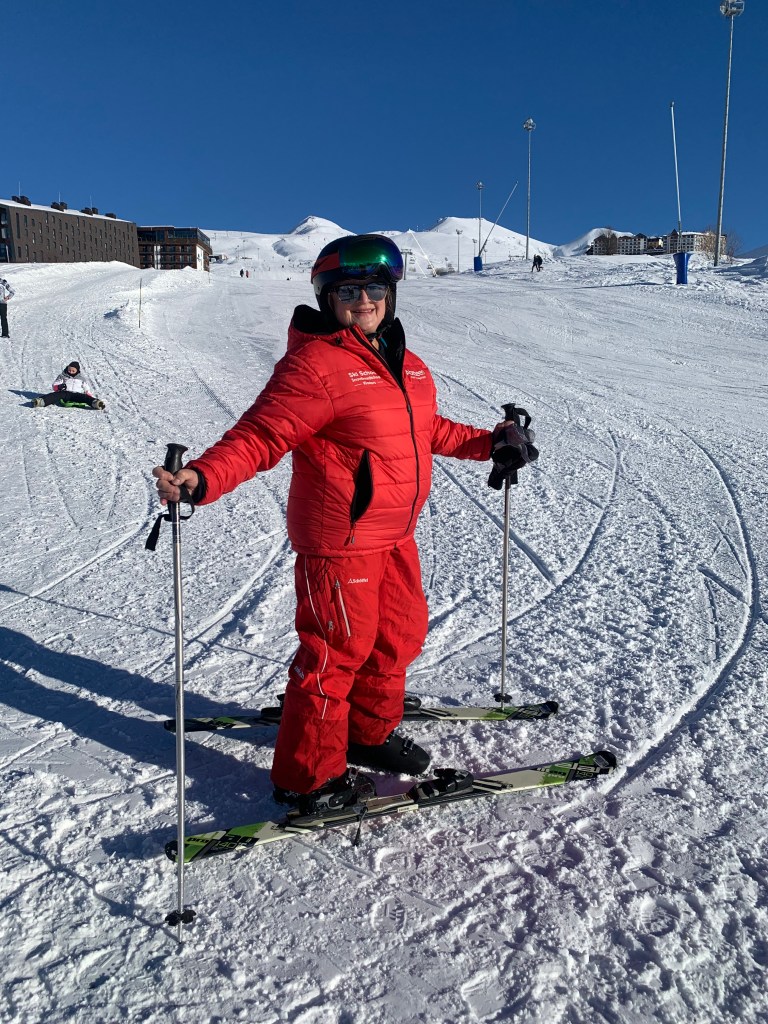
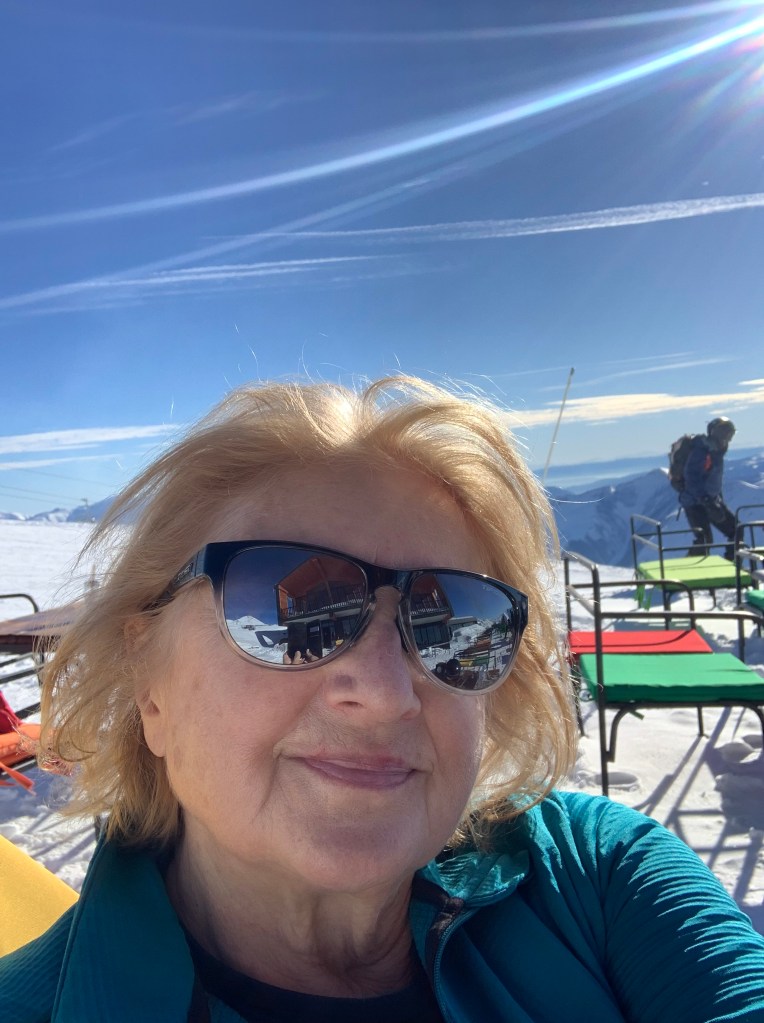
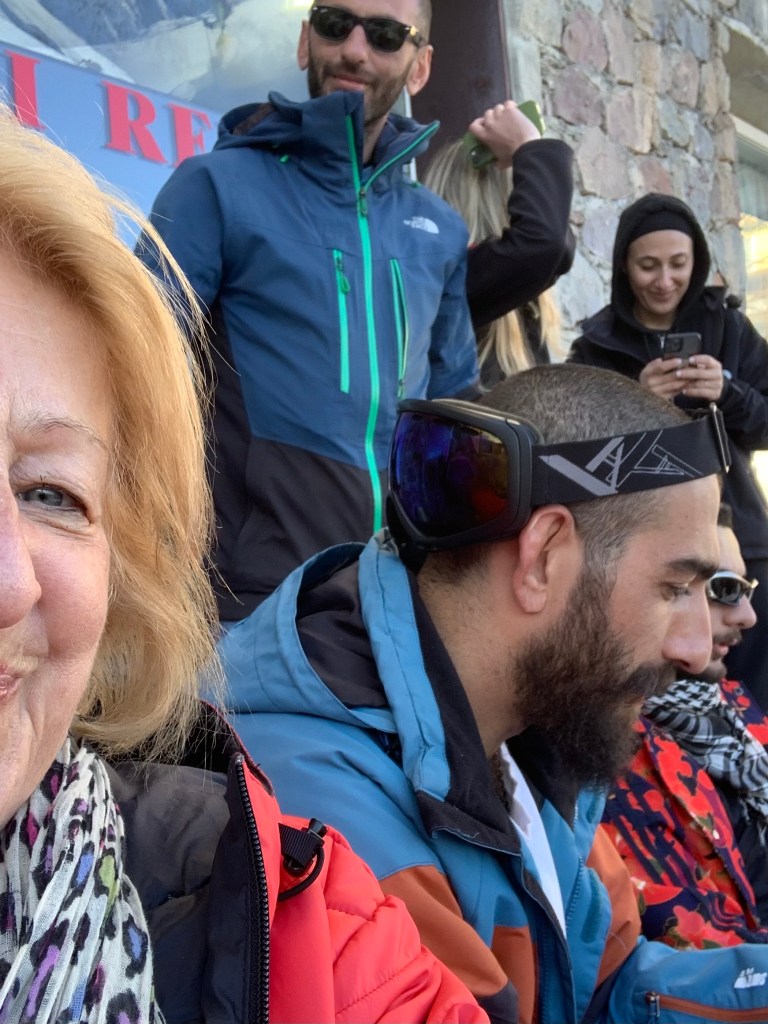
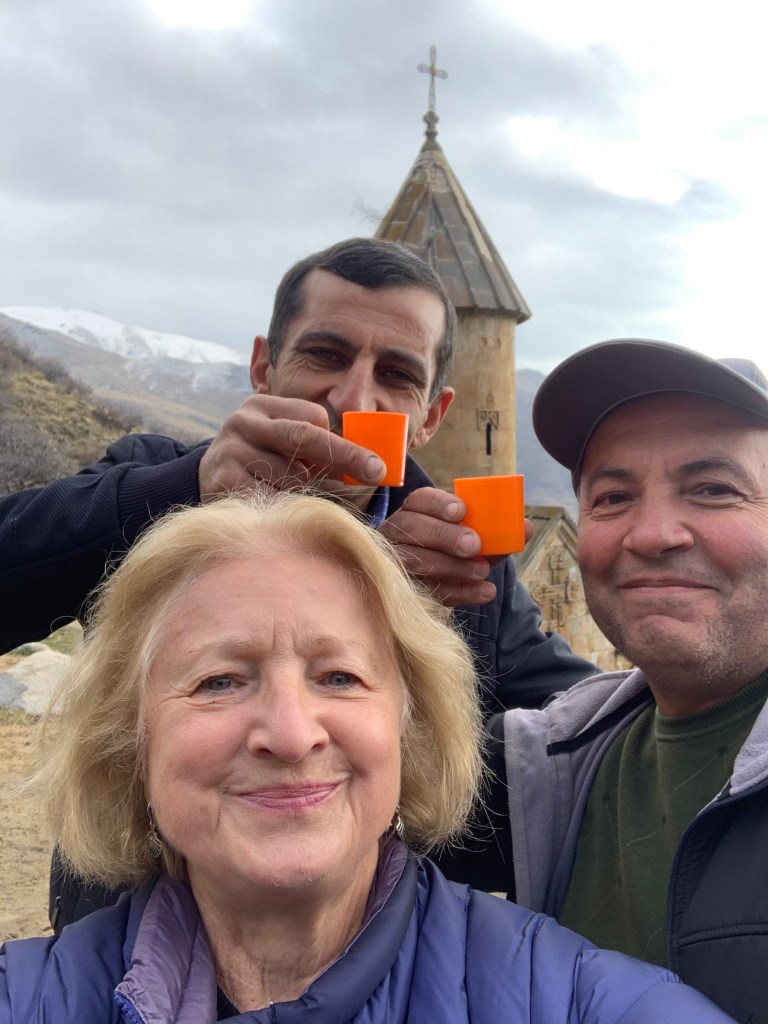
    But at the moment, skiing is good and the weather fine. My champagne is chilling on the balcony… :)) The middle pic is me fraternising with the locals, Jagermeister and all. :))

    Happy New Year.

  • Farewell to Armenia

    Dec 28th, 2023

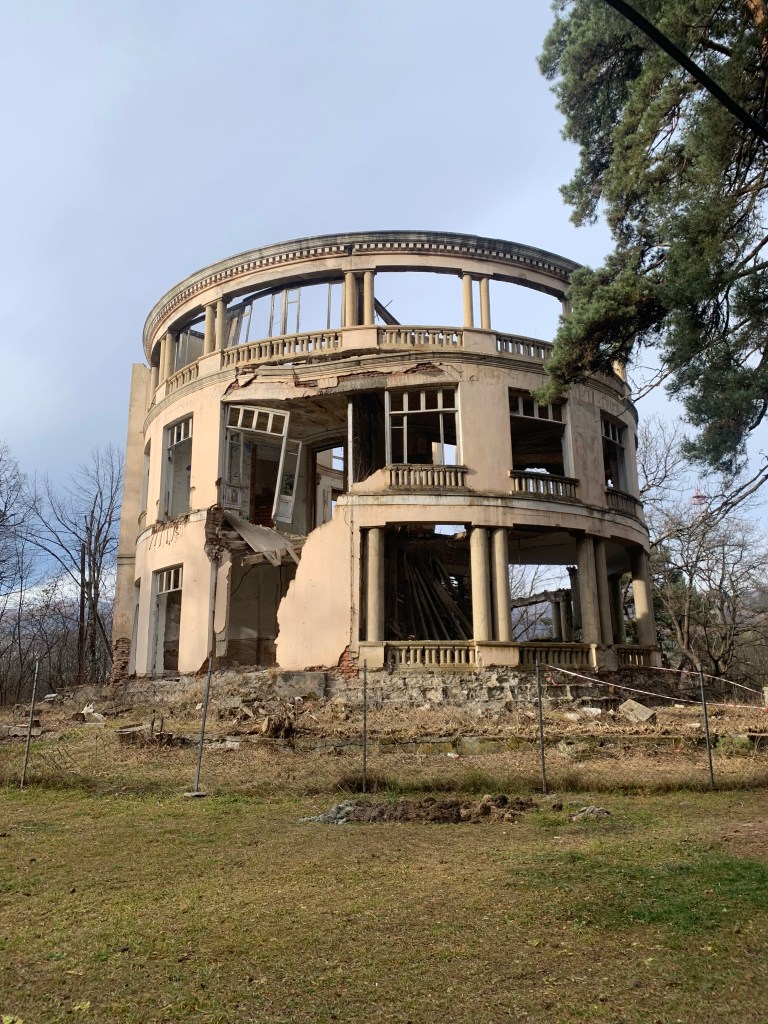
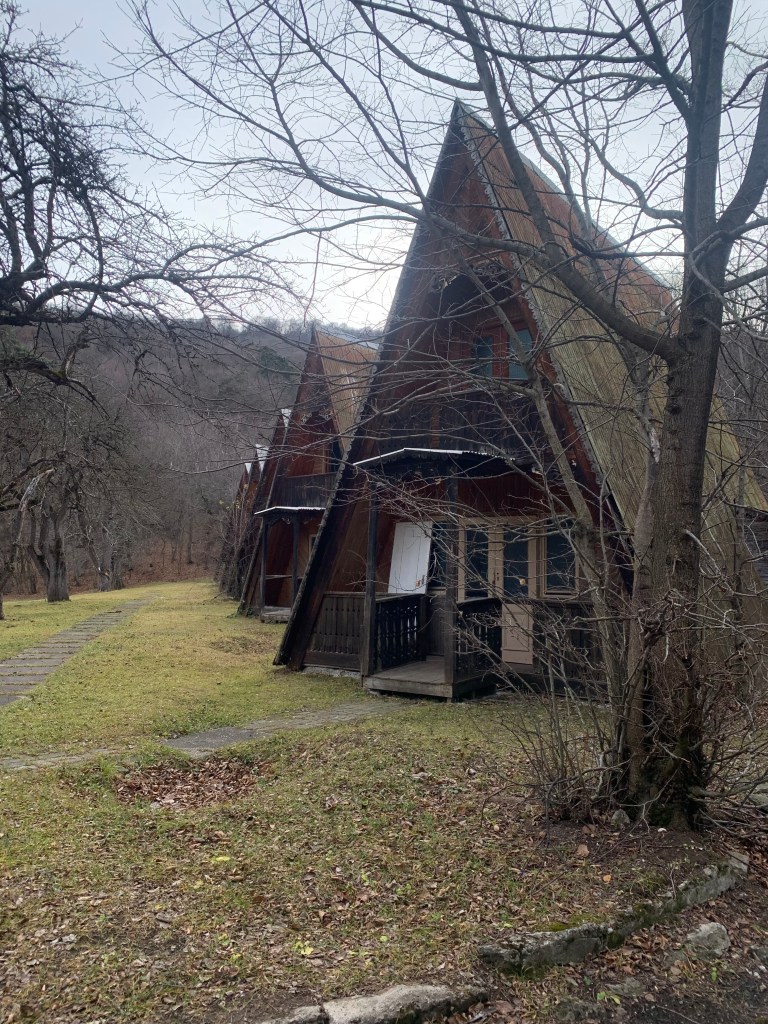
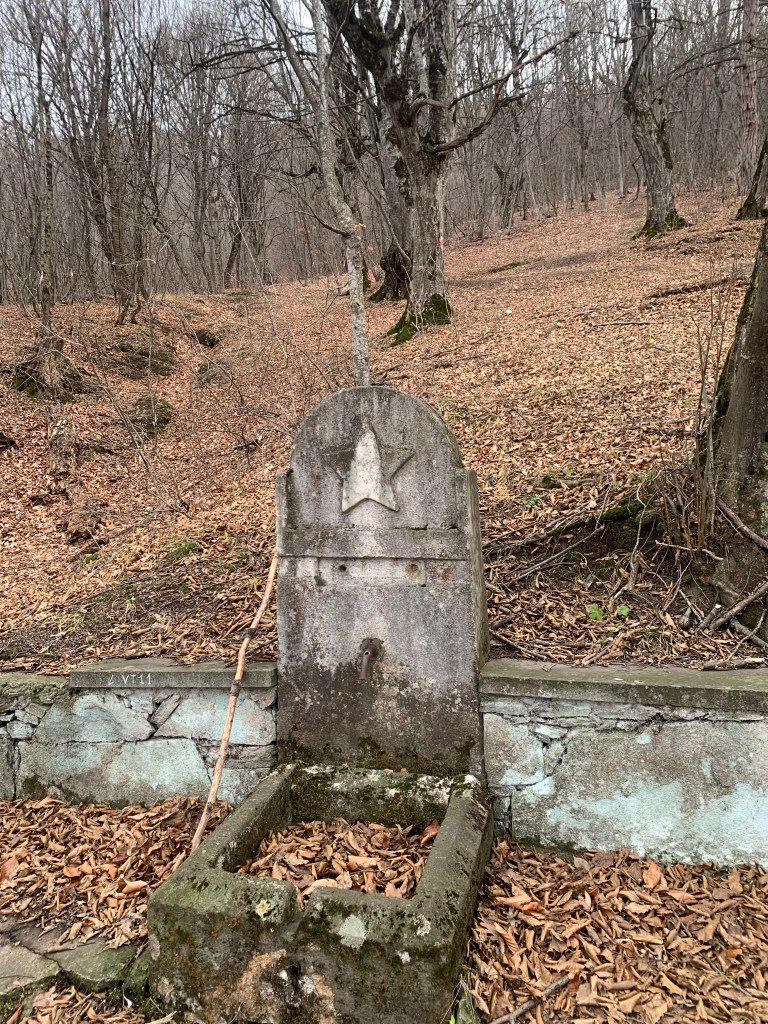
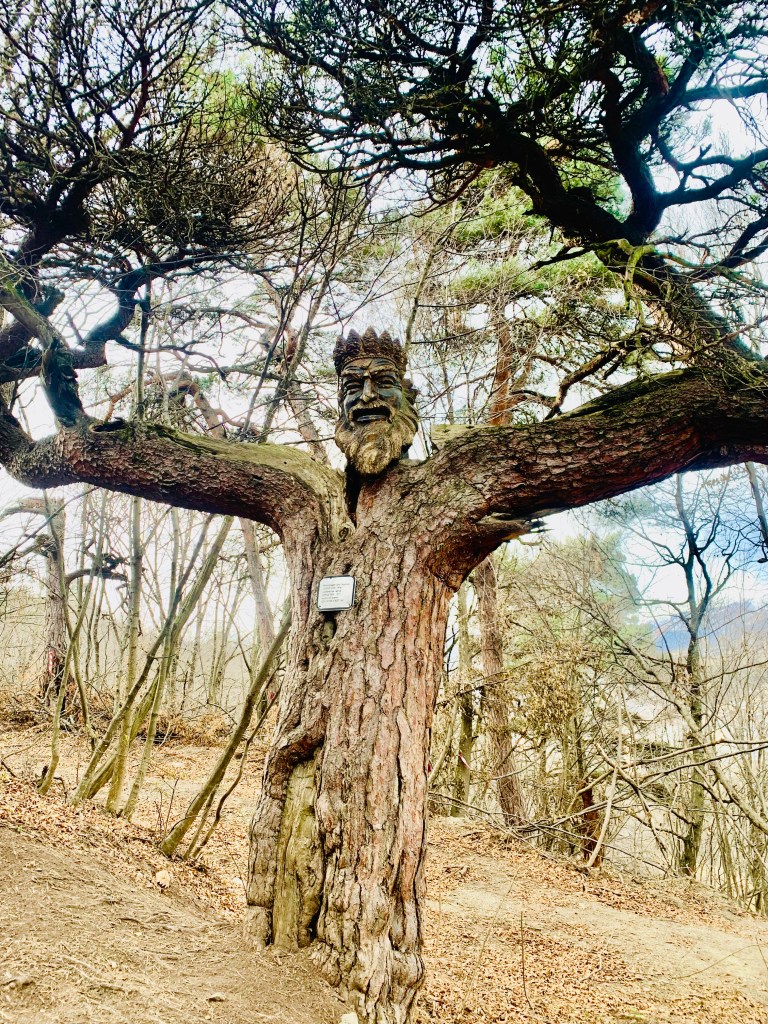
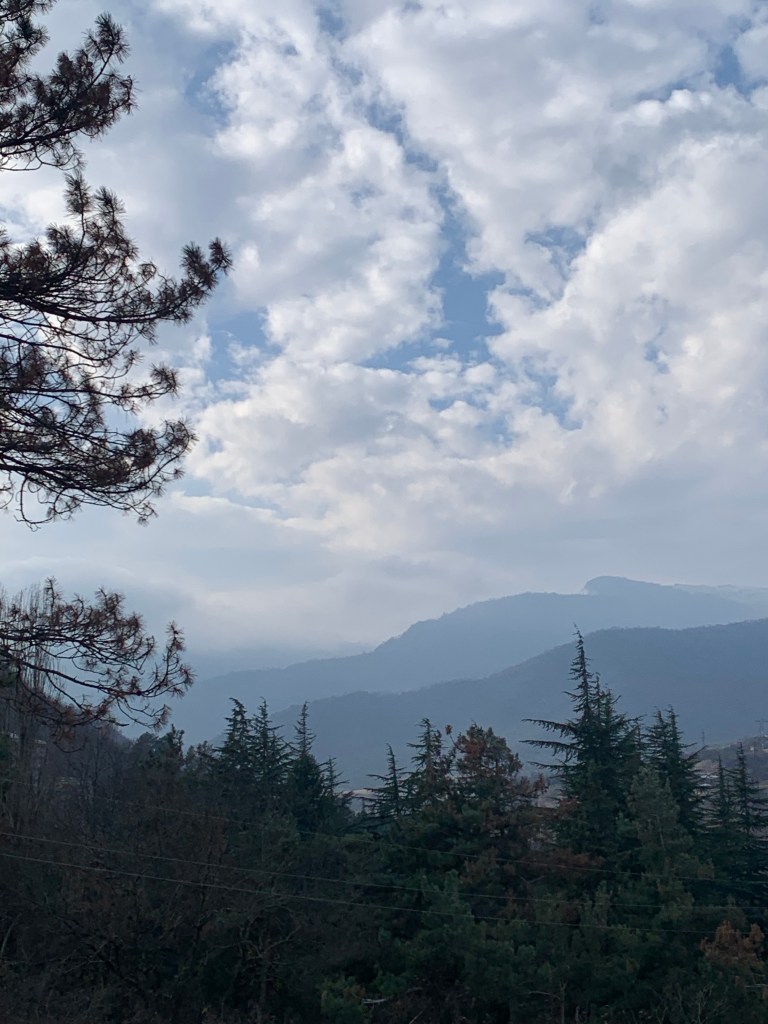
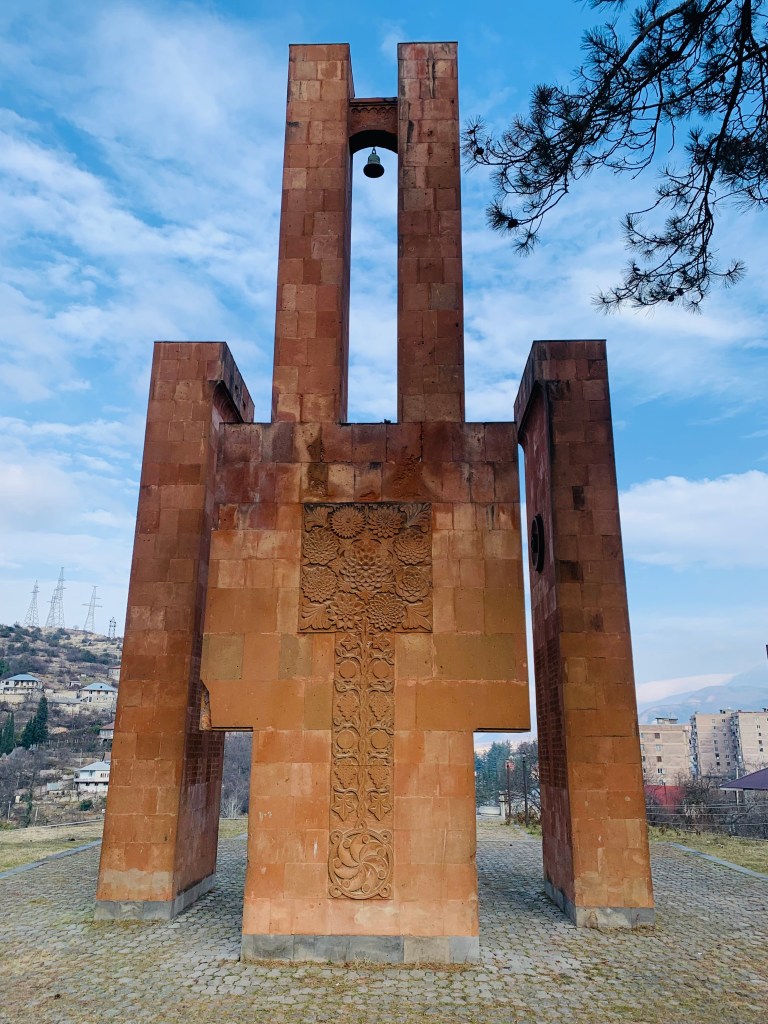
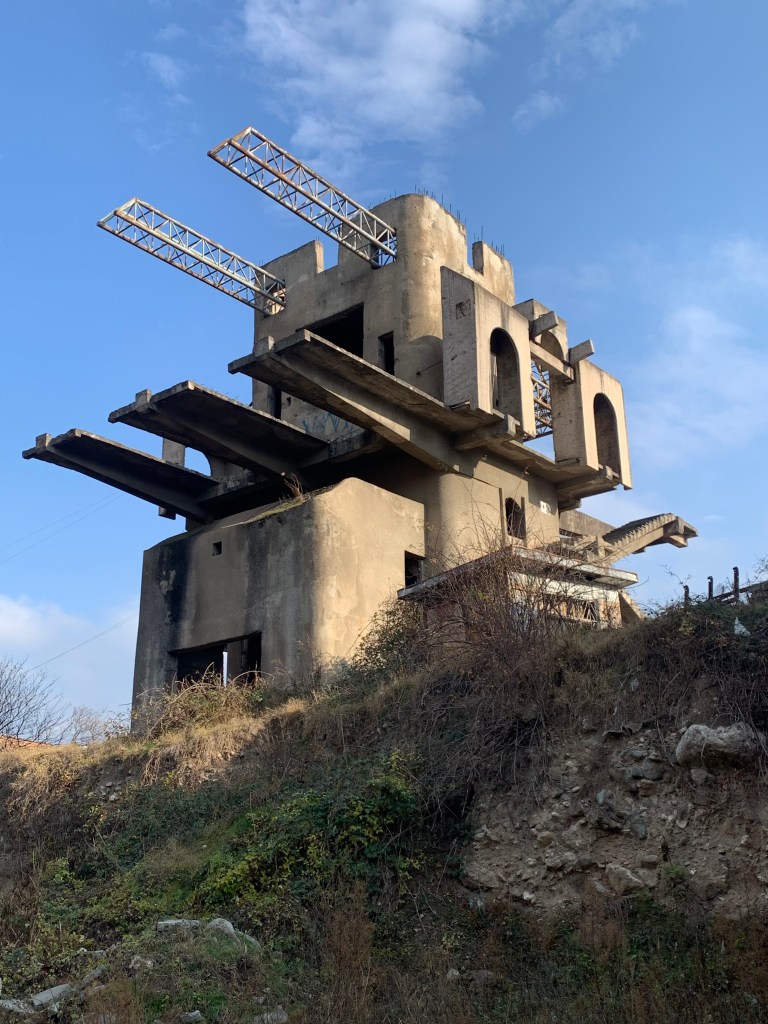
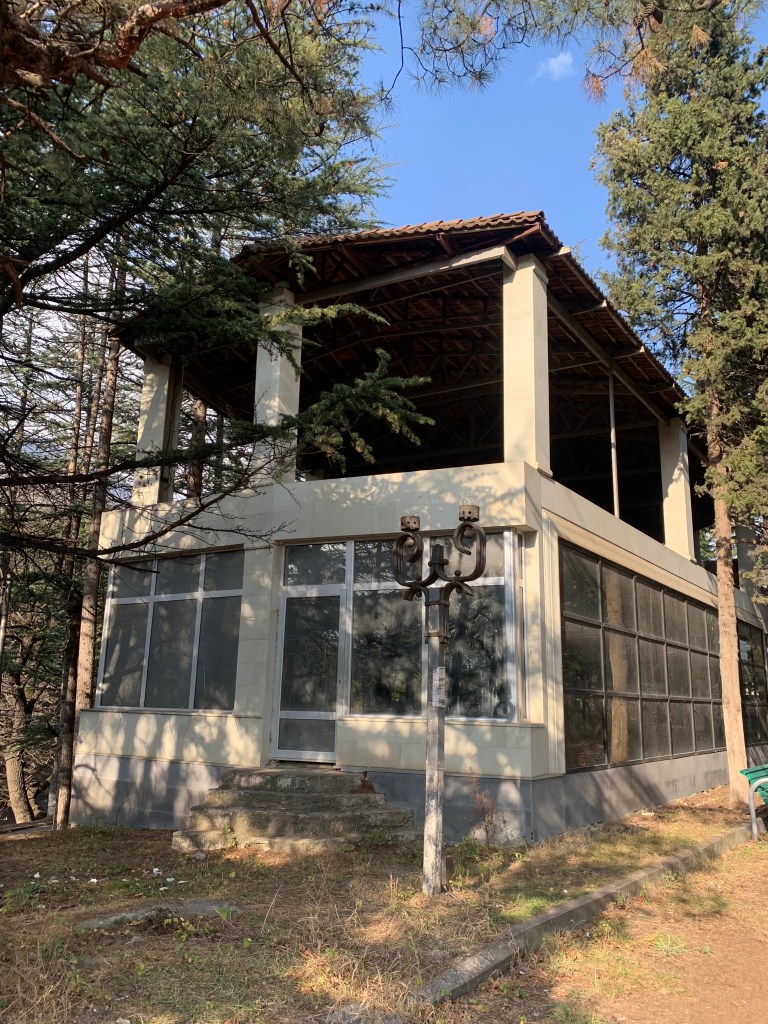
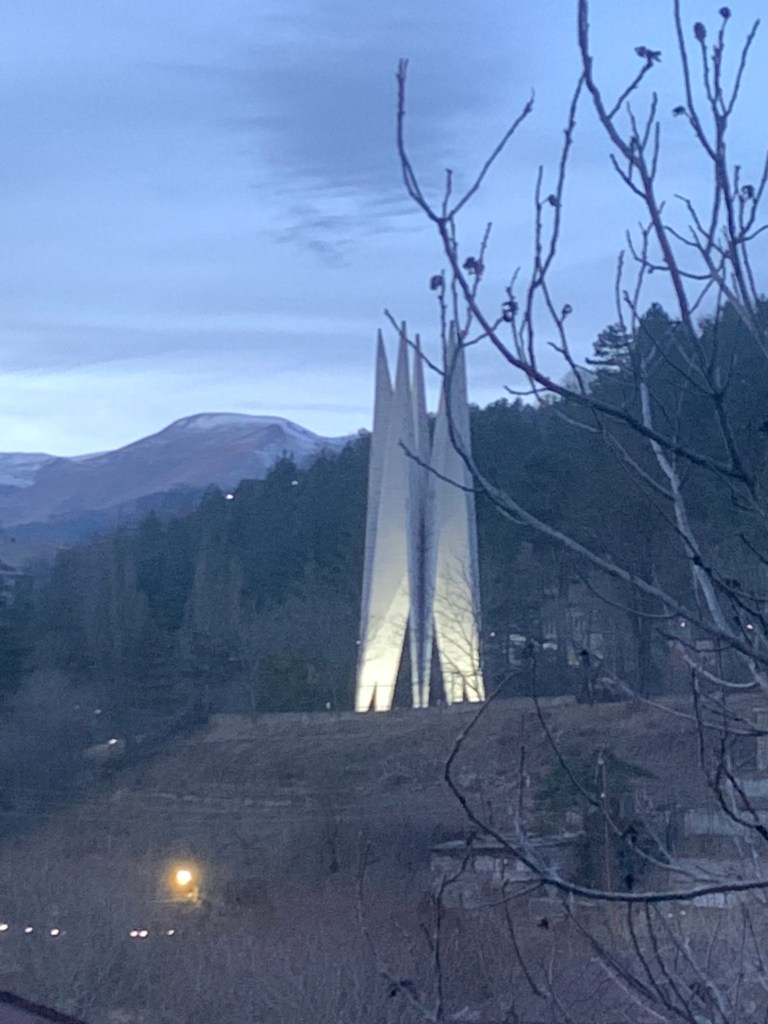
    Dilijan, a lovely mountain town (I’ve been told more than once that the area was “the Switzerland of Armenia”) not that far from the capital Yerevan, has its fair share of dilapidated Soviet architecture. One of the most notable ruins is the circular villa built in 1936 for Aghasi Khanjian, the first secretary of the Communist Party of Armenia who held the post for six years. This was his summer residence. It has a neo-classical feel, but I’m told it was built in “Armenian modernist style”. It is on a prominent site above the town, and must have been a sight to behold (though not many would have been allowed near, from what I can see – fences are still there). The views over the river Aghstev and the mountains are lovely. I also liked the live sculpture of the King of the Forest. There were lots of supporting buildings, some in a Swiss chalet style, some clearly utilitarian. There is a basketball court (overgrown).

    I recall our student visit to Russia in the early 70’s (Kiev, Moscow, Leningrad, by train). Tennis was considered “a capitalist game” and not played or encouraged, but badminton and basketball were seen as suitable for socialist youth.

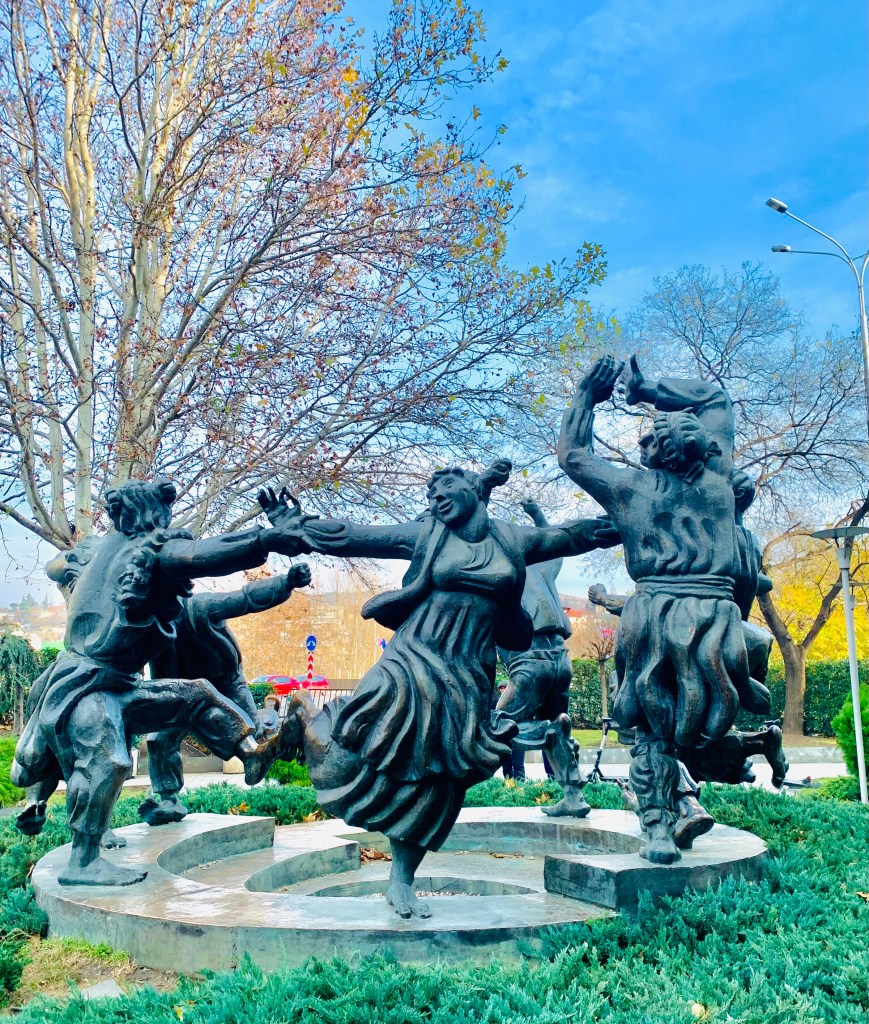
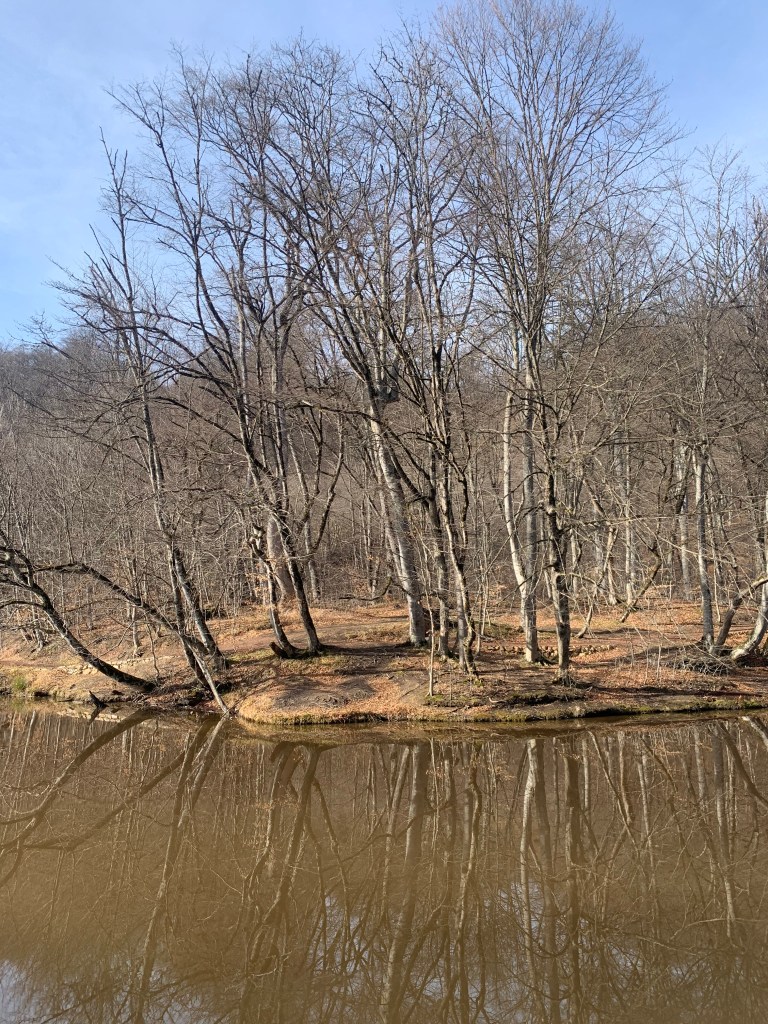
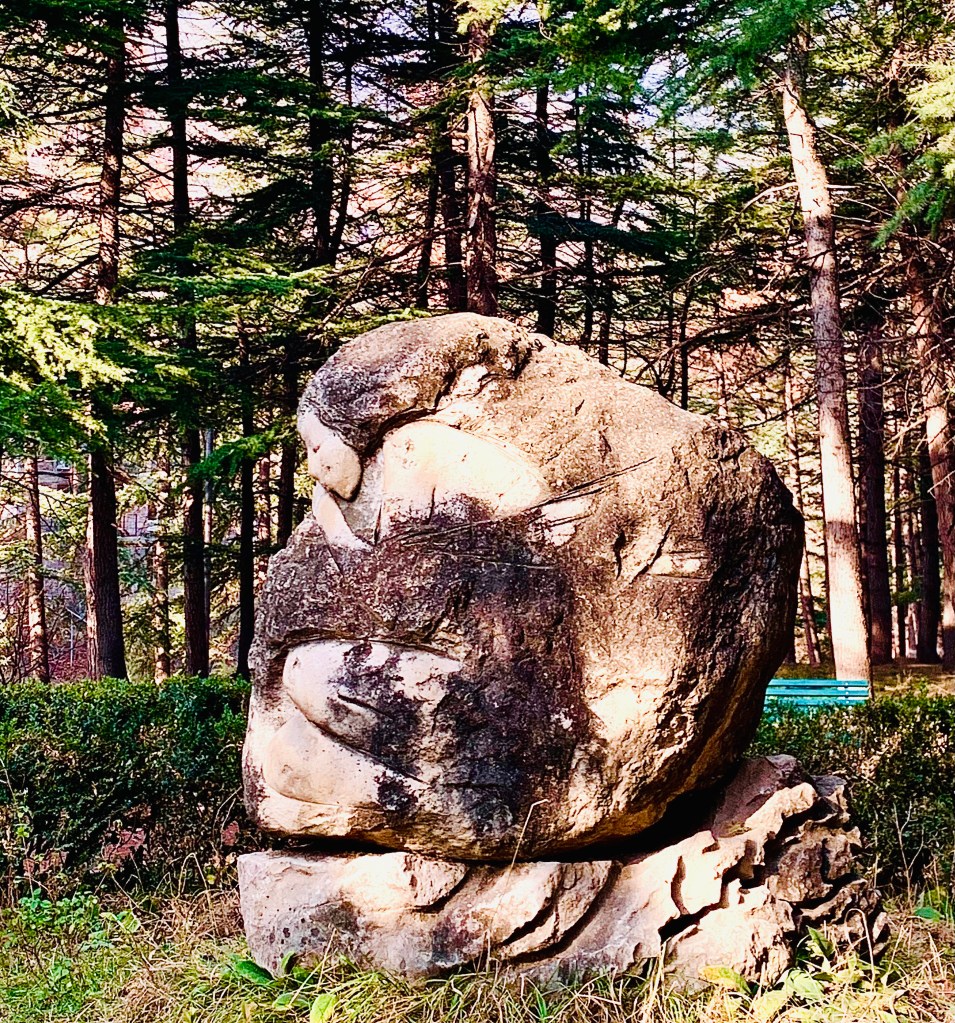
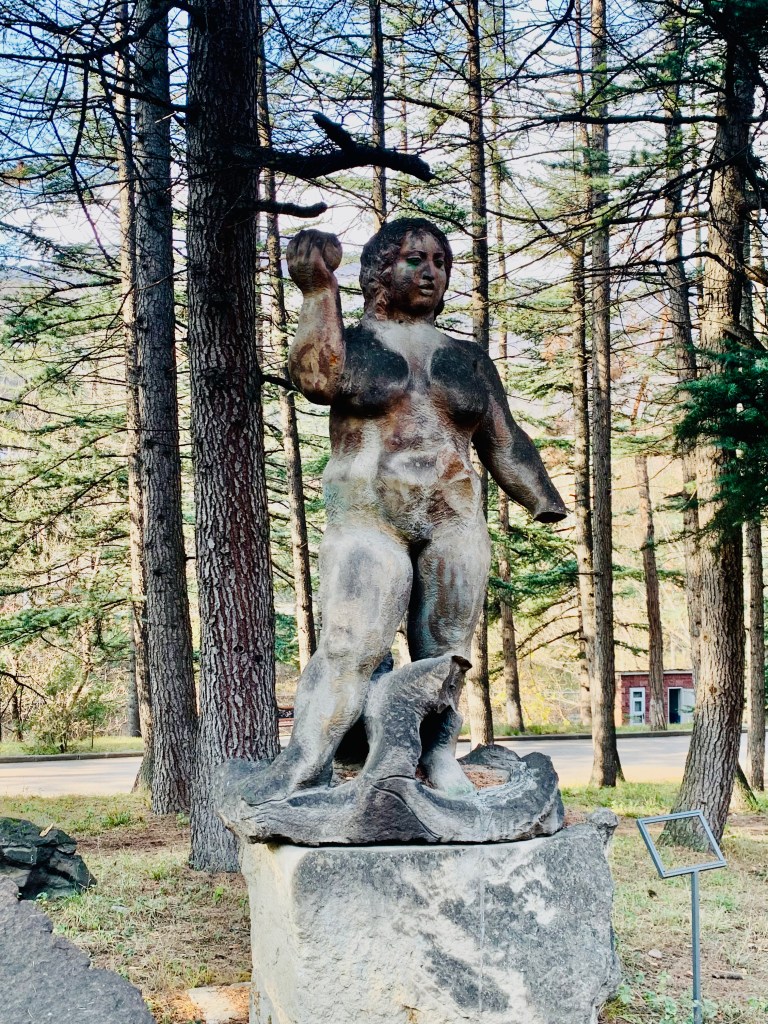
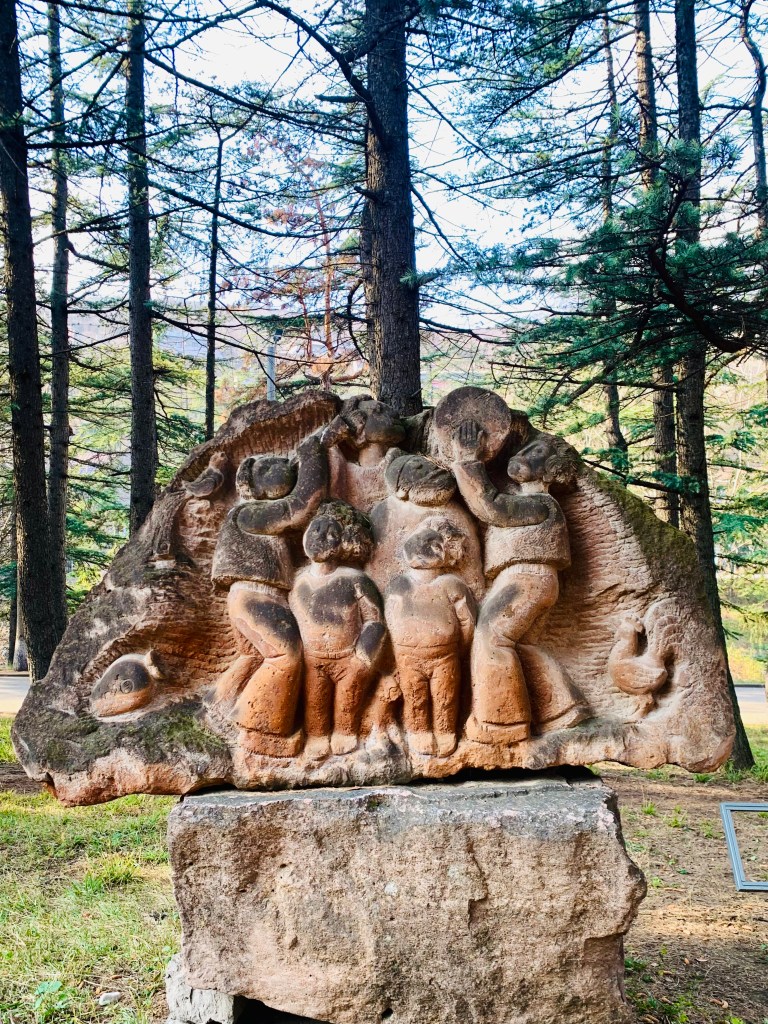
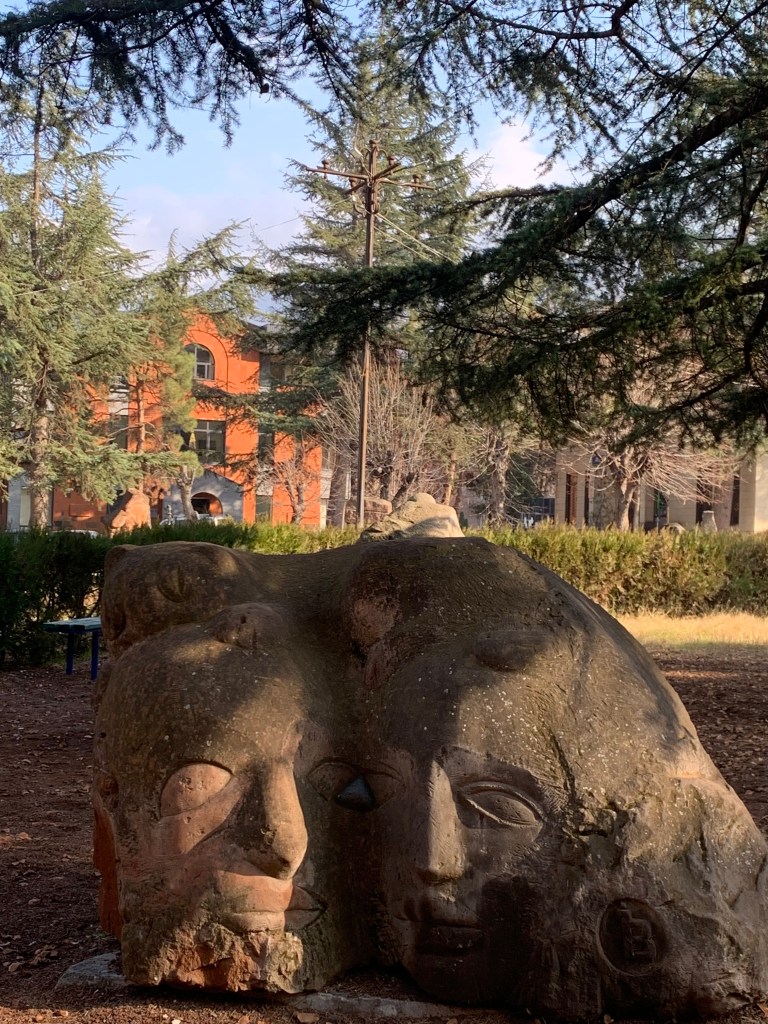
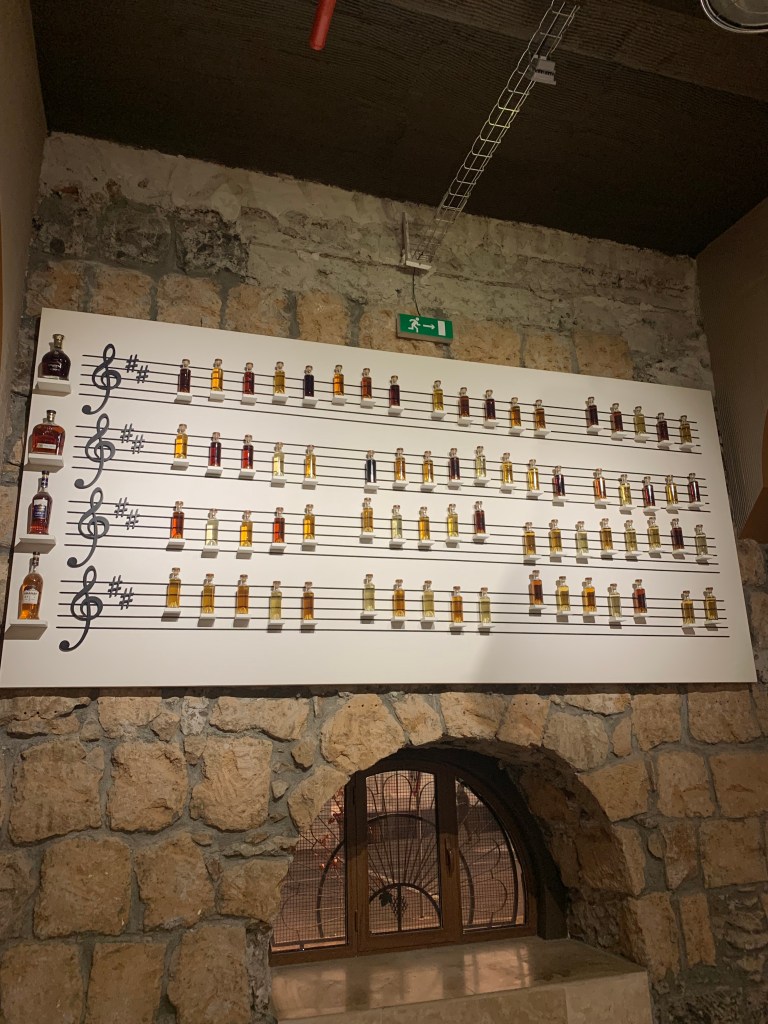
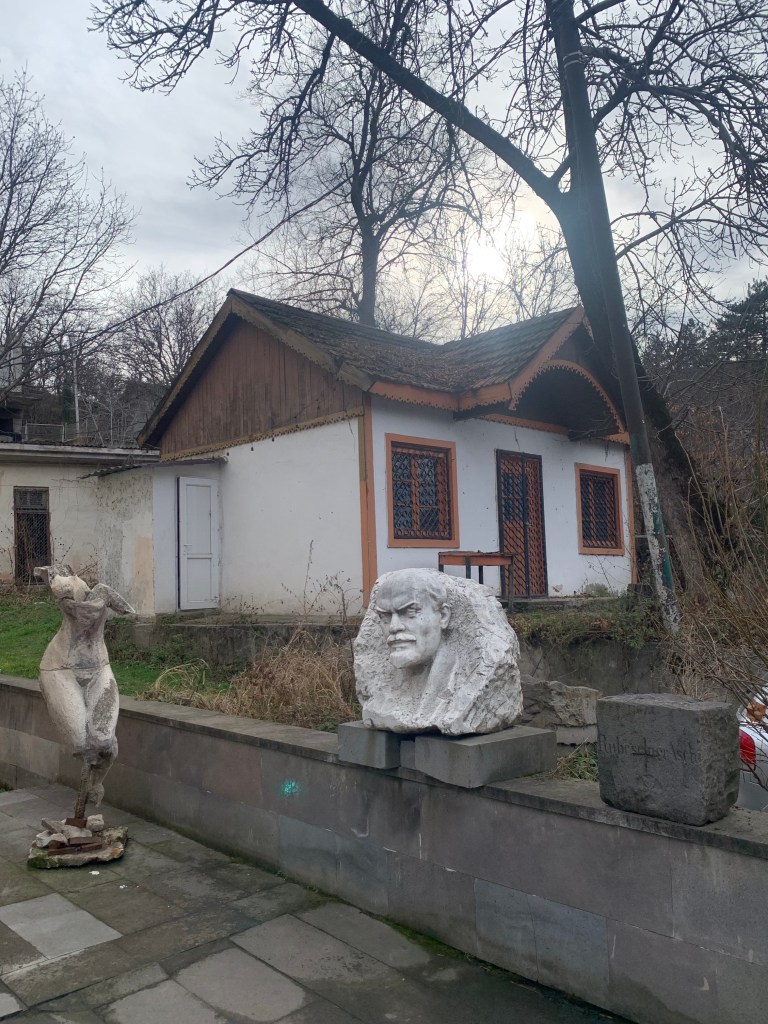
    Ijevan, up the road from Dilijan, is in a lovely spot on the river Aghstev, with a long park on one side it, filled with sculptures. Ijevan means caravanserai in Armenian and it was a major Silk Road trading post . It is also a wine and cognac producing area – have been drinking Ijevan reds for a while now.

    Getting back to Dilijan (on public transport) proved to be difficult. It was bitterly cold and windy. Normally, there are a number of marshrutkas on the road but on that Sunday none turned up. I started to walk back to the town (the winery is c 2km out) and also put my thumb out; after a while, a Toyota RAV stopped. Said I wanted to go to Dilijan and the chap said ok, he had time… It turned out he was a refugee from Nagorno-Kharabakh, a former soldier (he was in his forties, and had lost his right arm below the elbow) who told me he had arrived in Ijevan about three months ago, with little more than his car – there had been no warning from the Armenian government about the Azerbaijani takeover . He thought the Armenian government had made a deal, as otherwise the people leaving would have destroyed property and made places uninhabitable. He was understandably bitter. He drove me the 40 K to Dilijan and would not accept anything for it – he said to think of it as a kindness from an Armenian; he then went round the roundabout back to Ijevan. I also found out why there were no marshrutkas – there had been an accident with a marshrutka, which we saw overturned on the road.

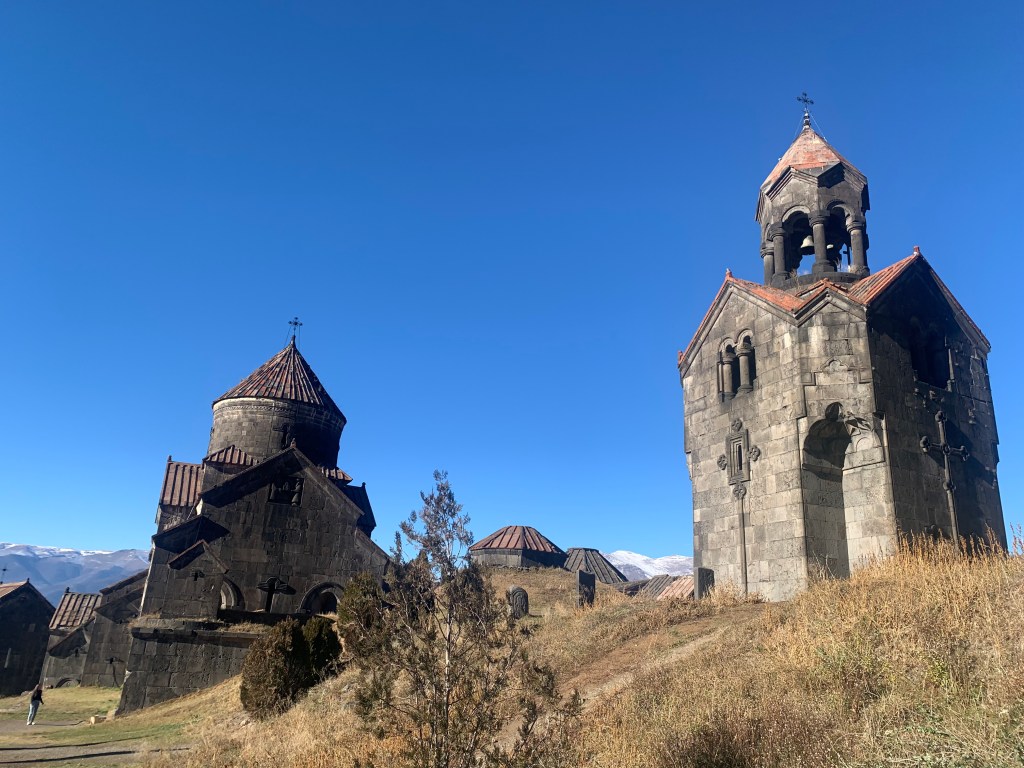
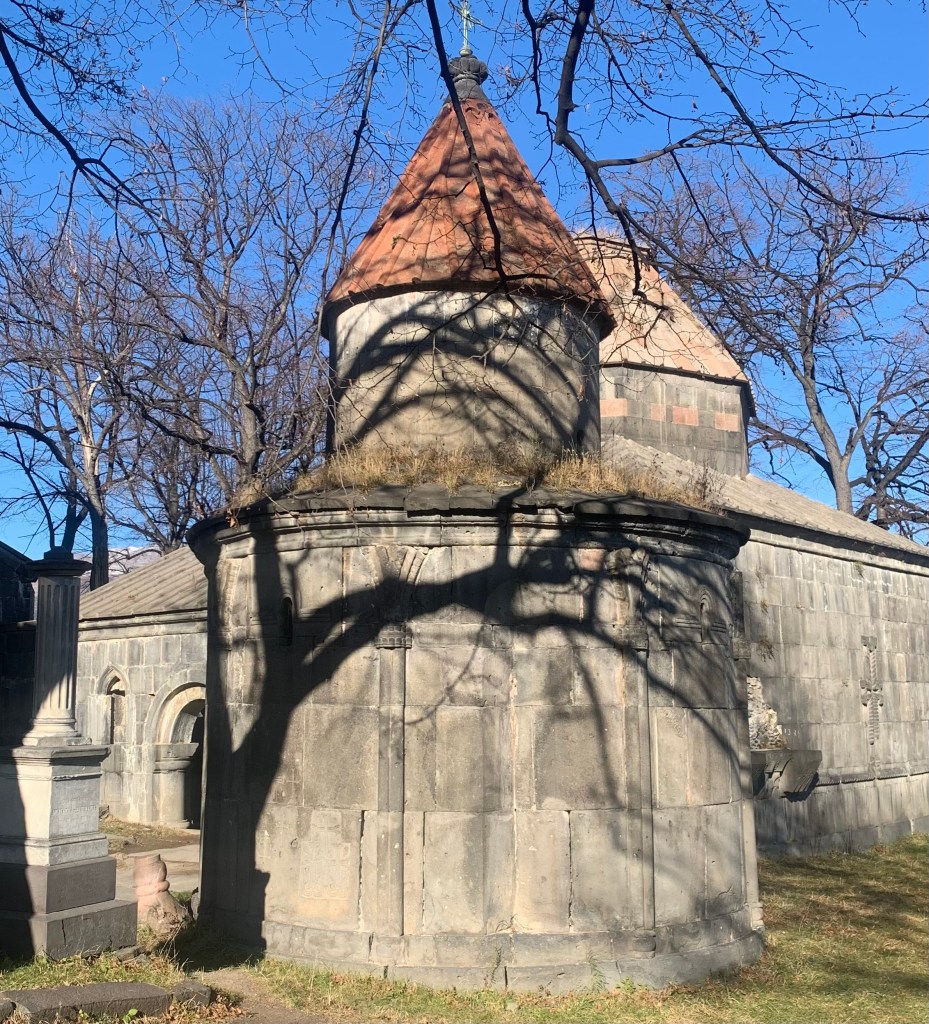
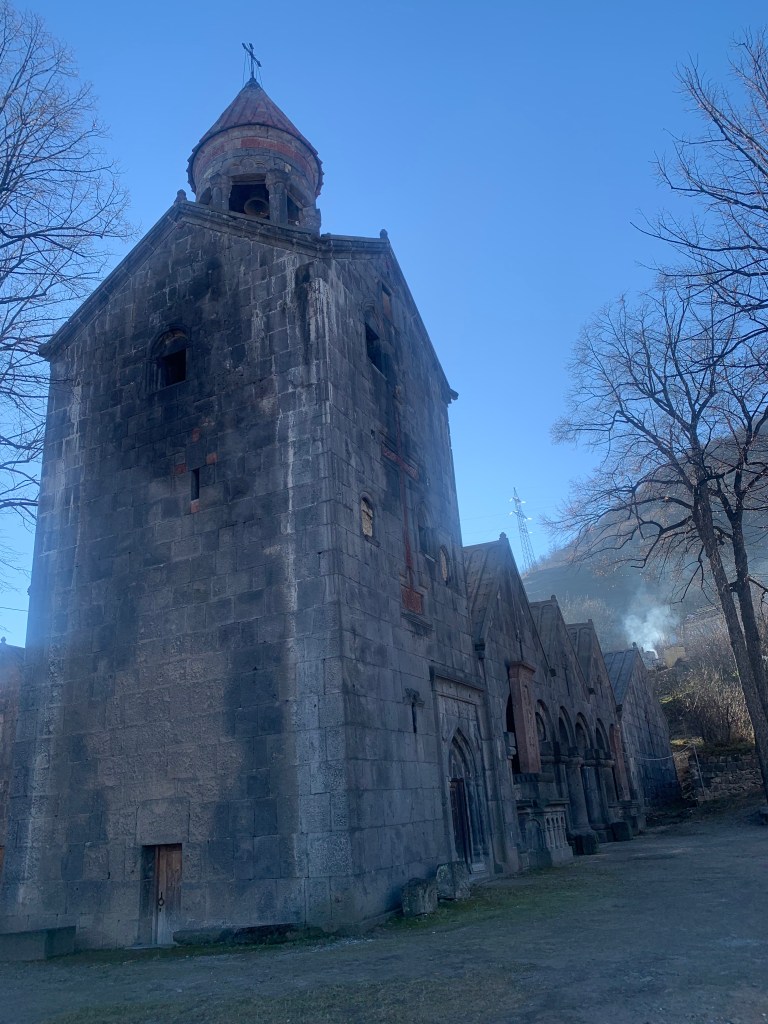
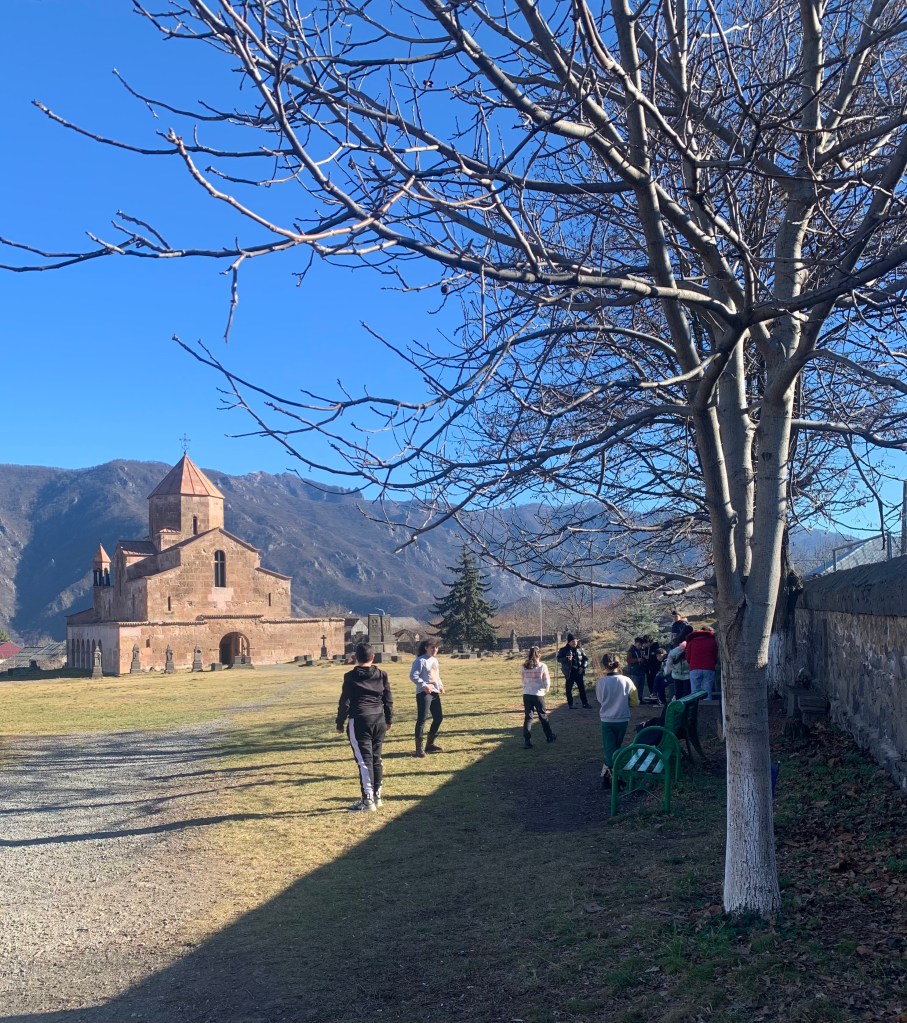
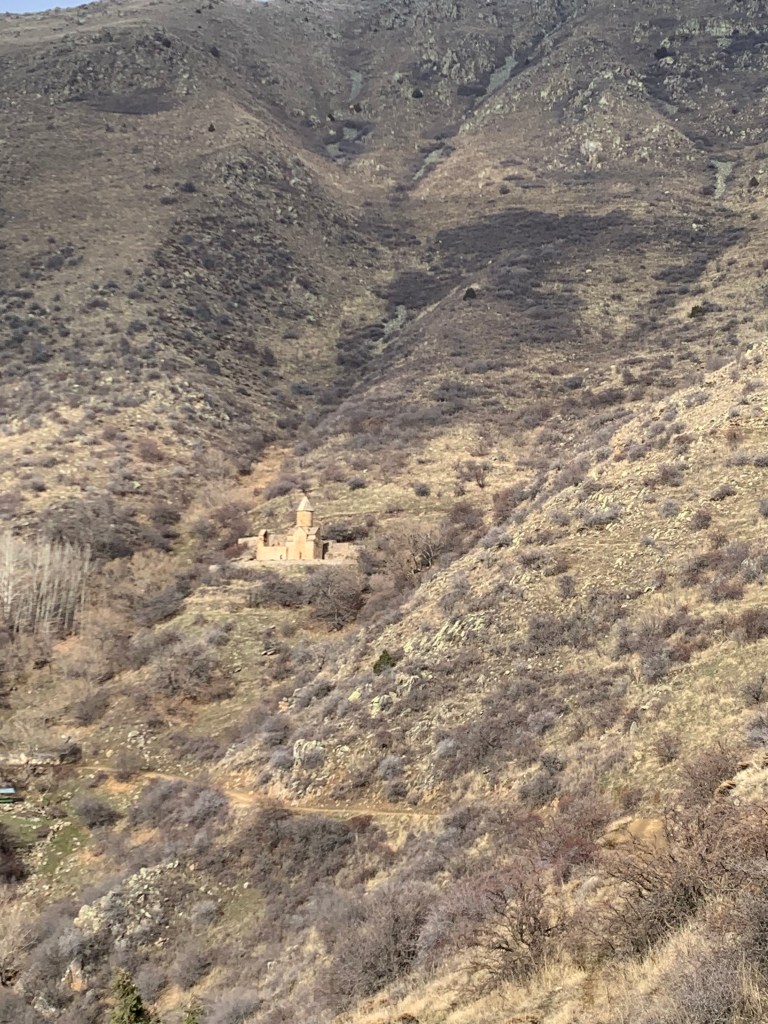
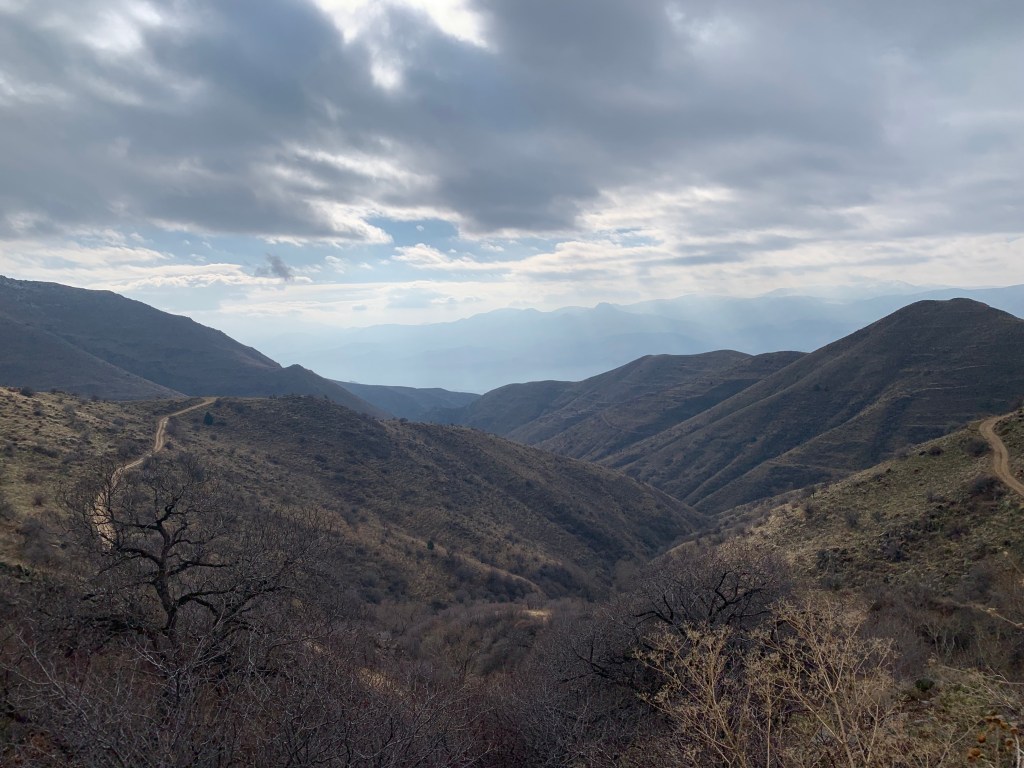
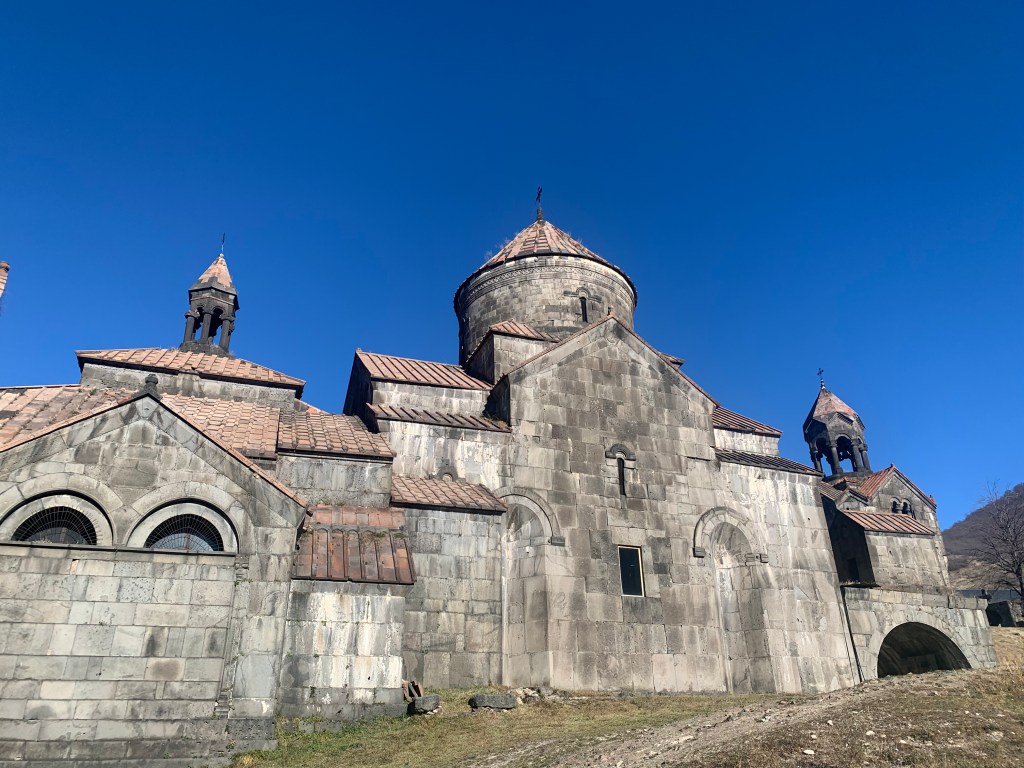
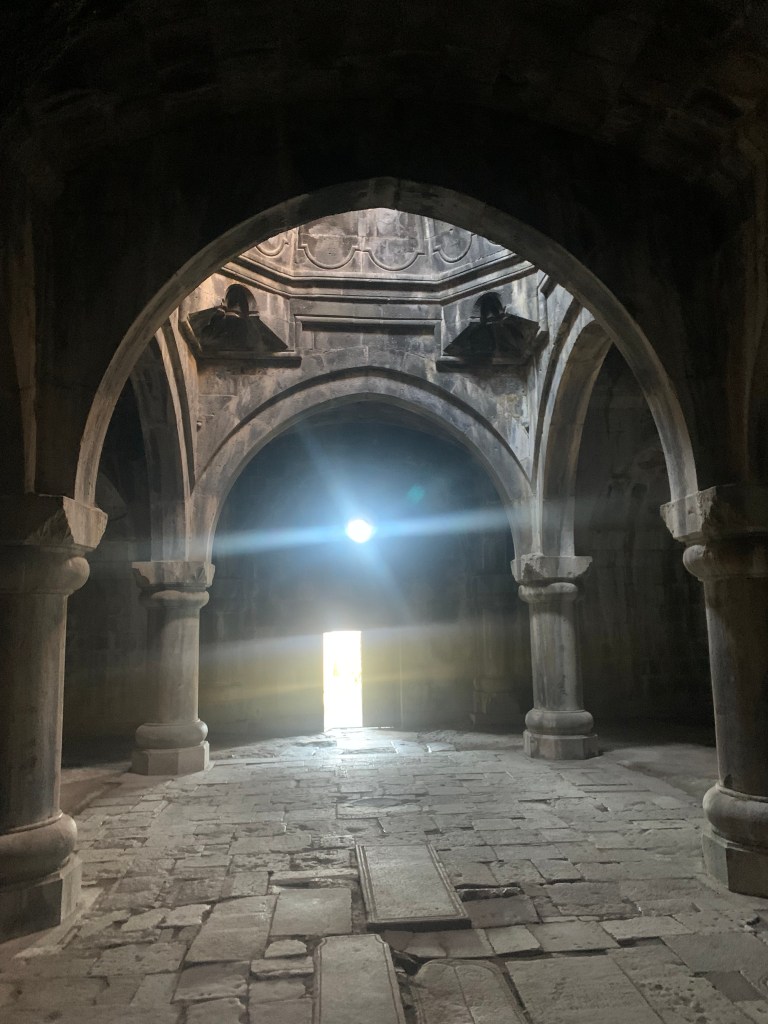
    The trip to the monasteries up in the mountains is lovely – It must be a joy to hike around here. It is sufficiently high here for the temperature to be comfortable, even when Yerevan is boiling. The Hagahartsin Monastery, up a hairpin road through the forest of the National Park, has been restored with an UAE Sheik’s money and looks good – the enormous Refectory especially.

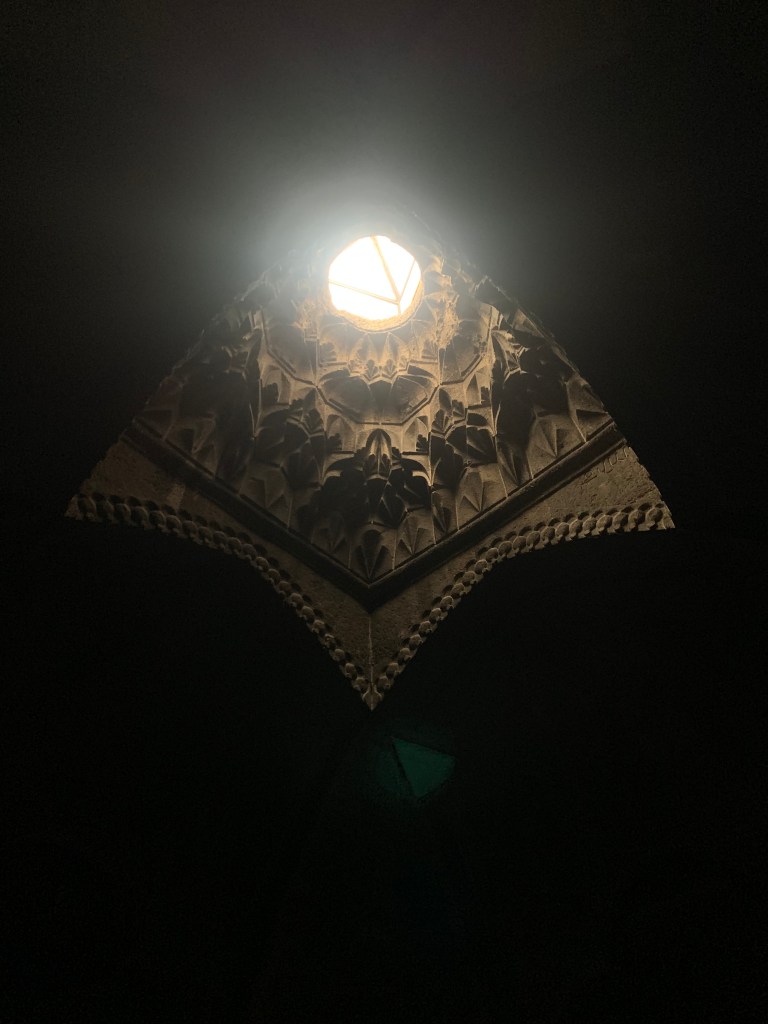
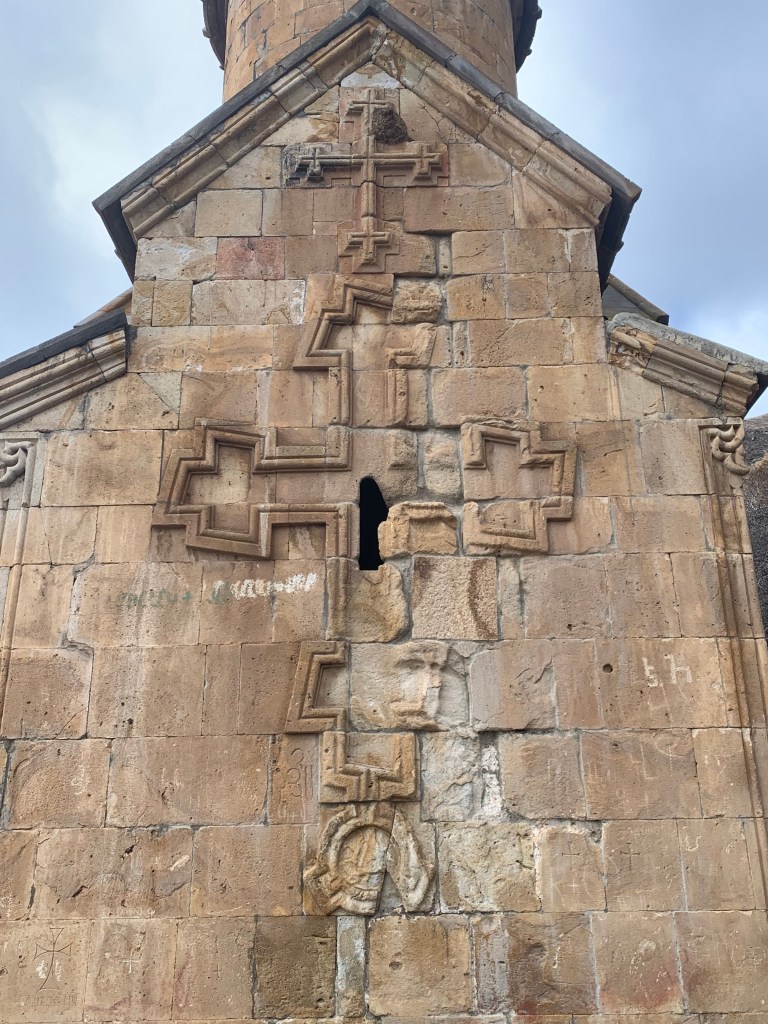
    The Ghoshavank is in a gorgeous spot (but then, they all are!) and all monasteries had libraries, manuscript copying schools and universities. It is not surprising the Armenians are so proud of their literary heritage – Mesrop Mashtots alphabet, created in 405, was well received and the first Bible in new Armenian script came out the same year (they used cuneiform before).

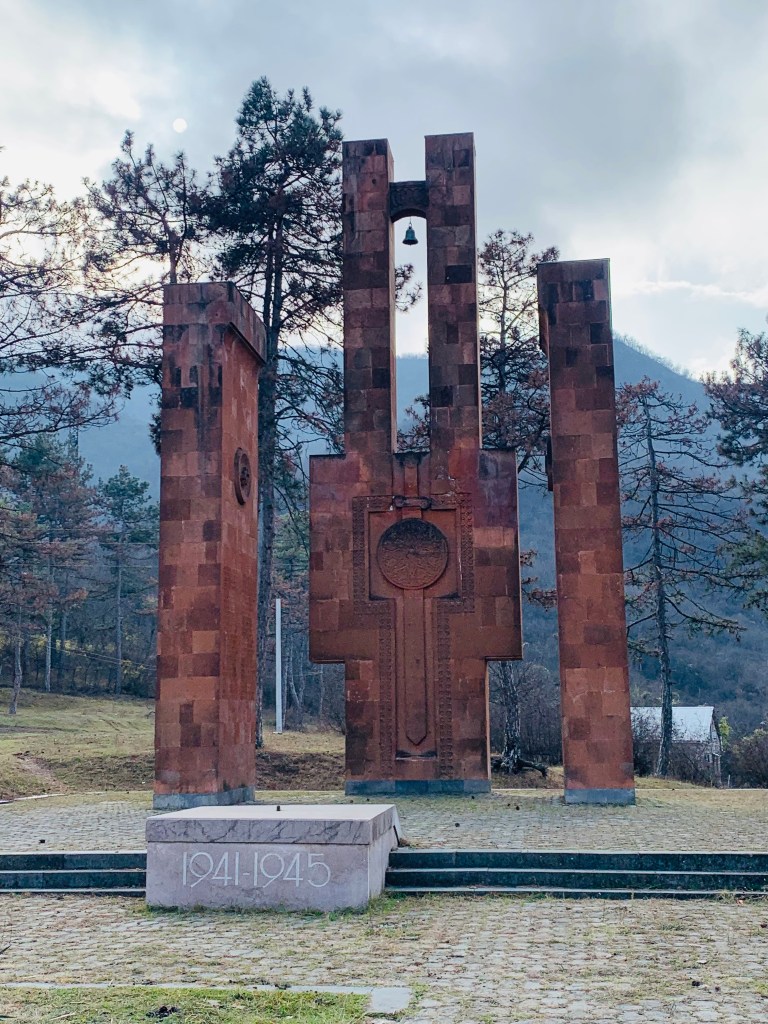
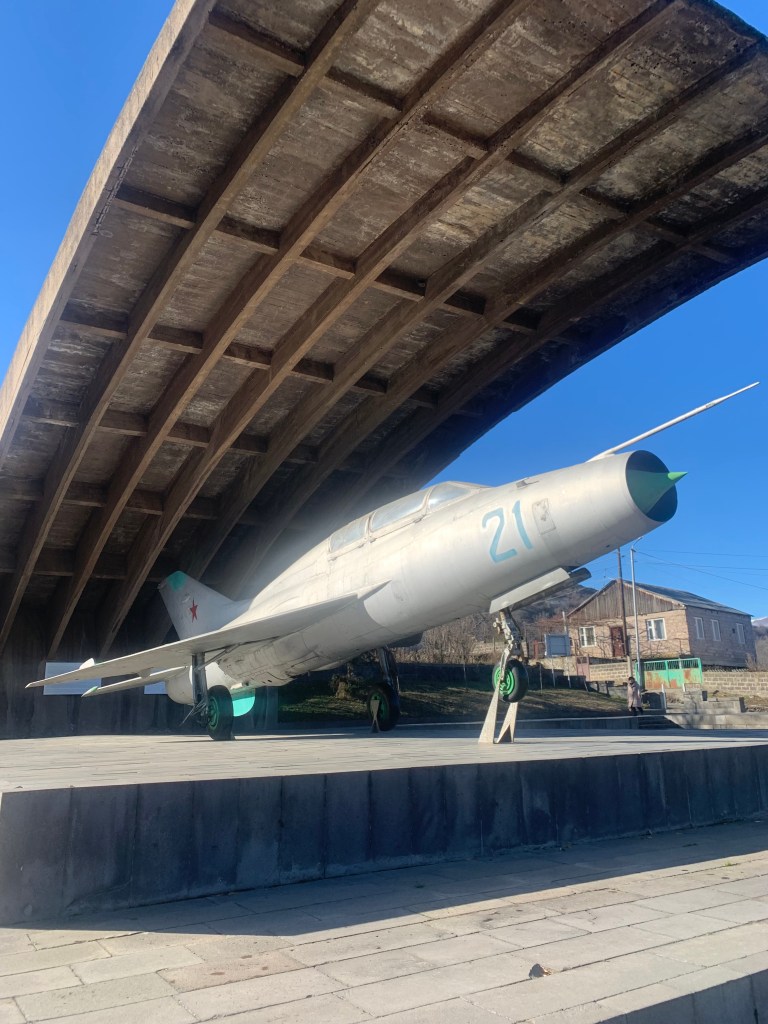
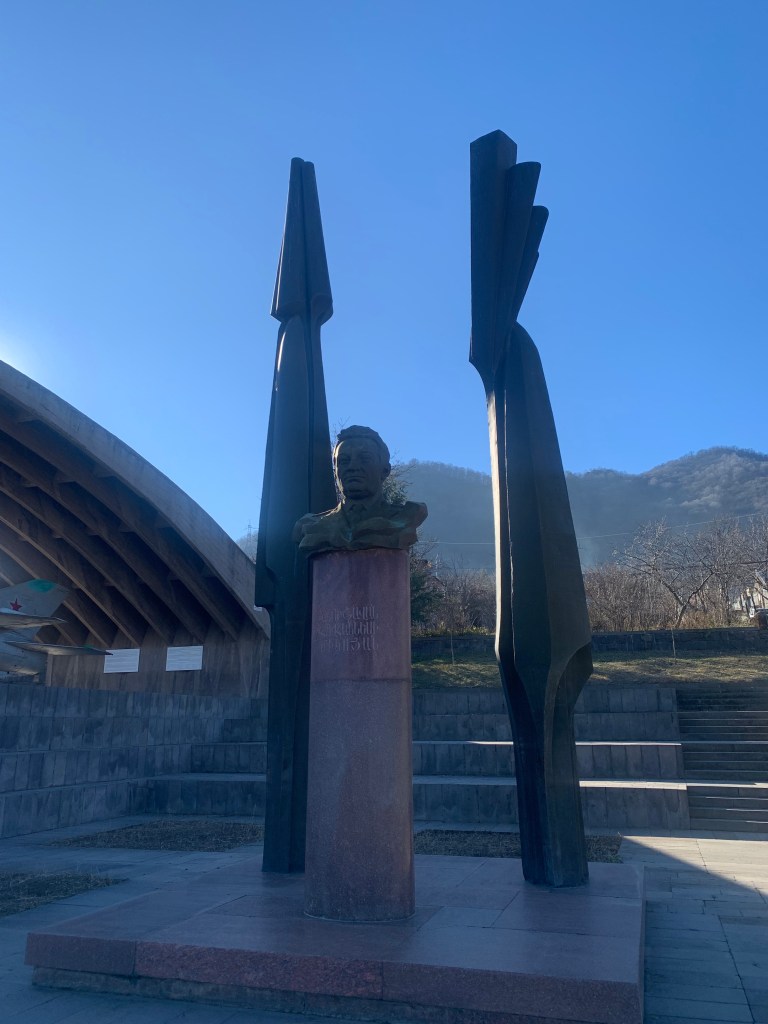
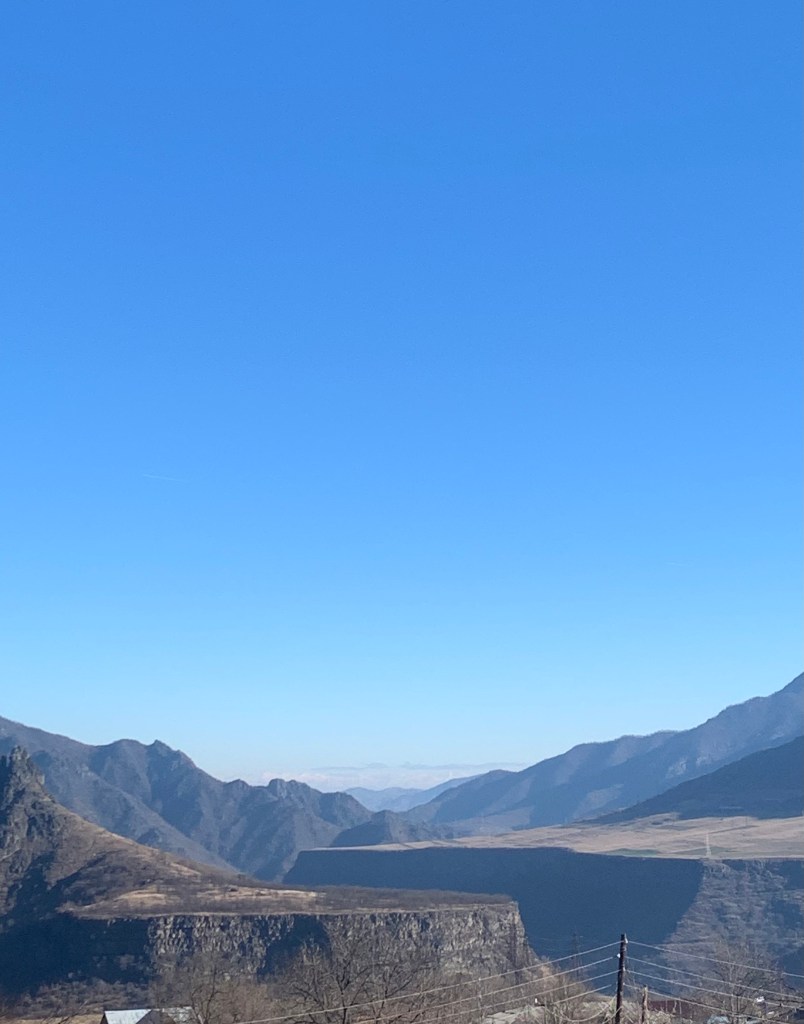
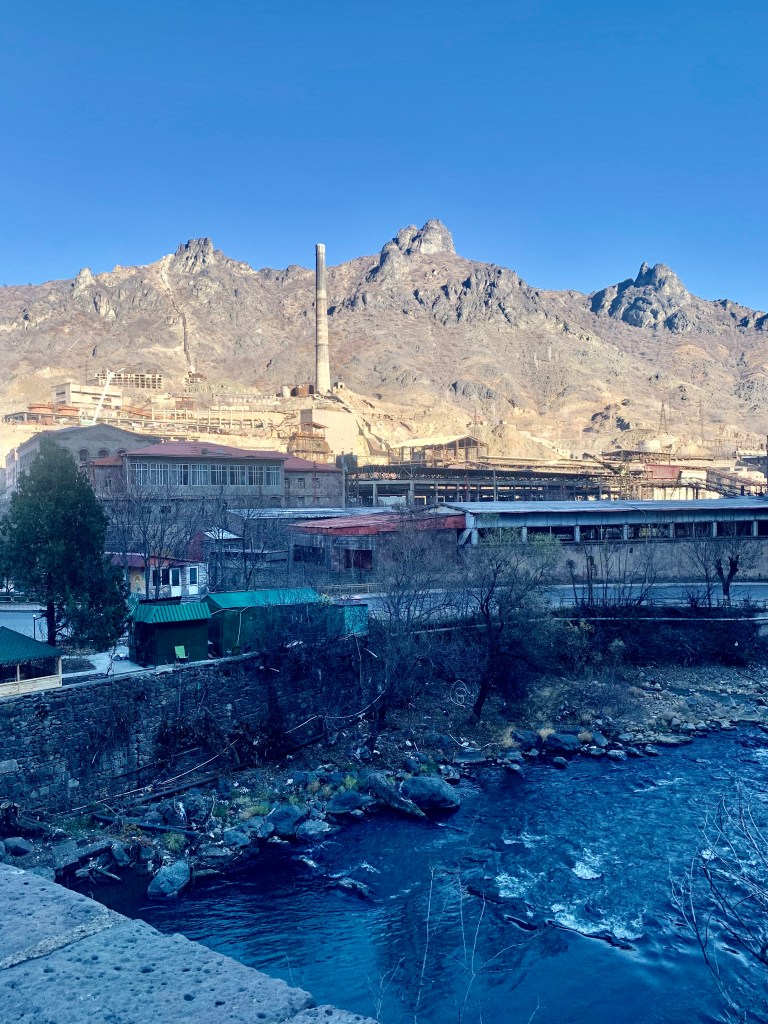
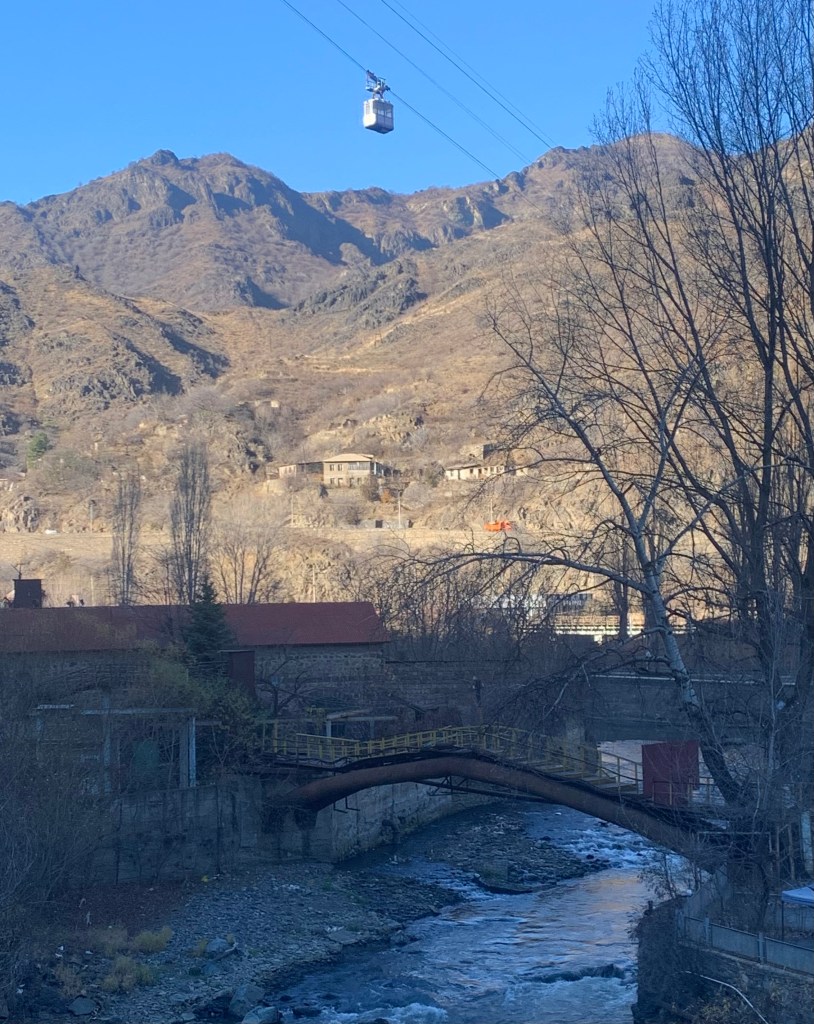
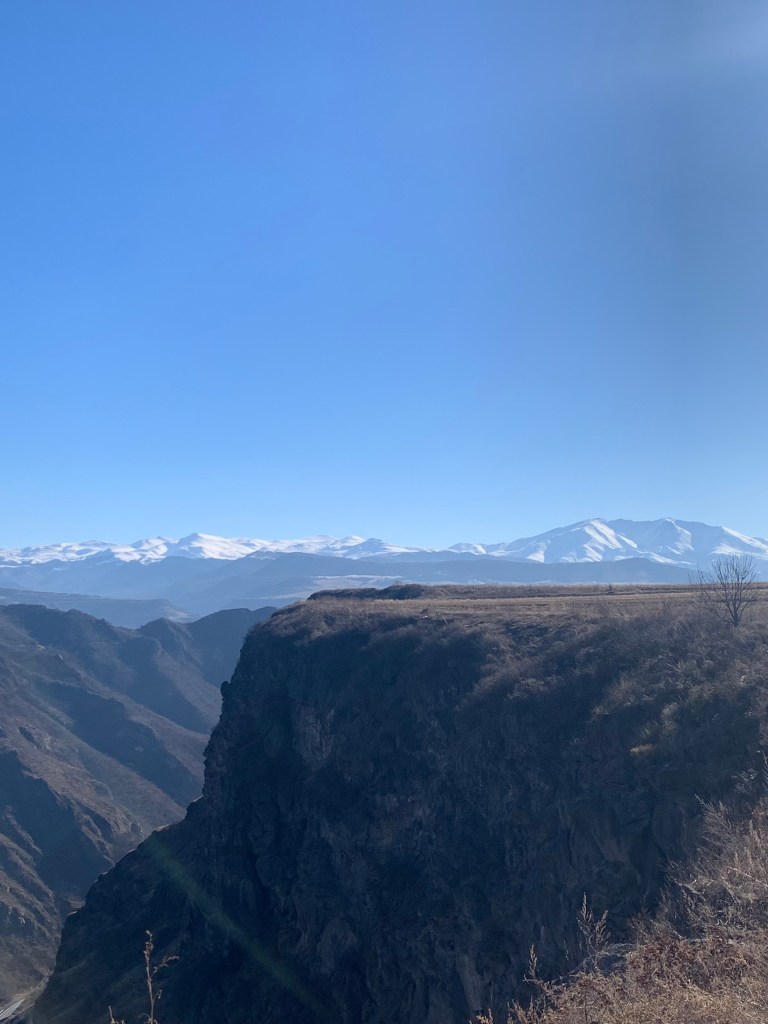
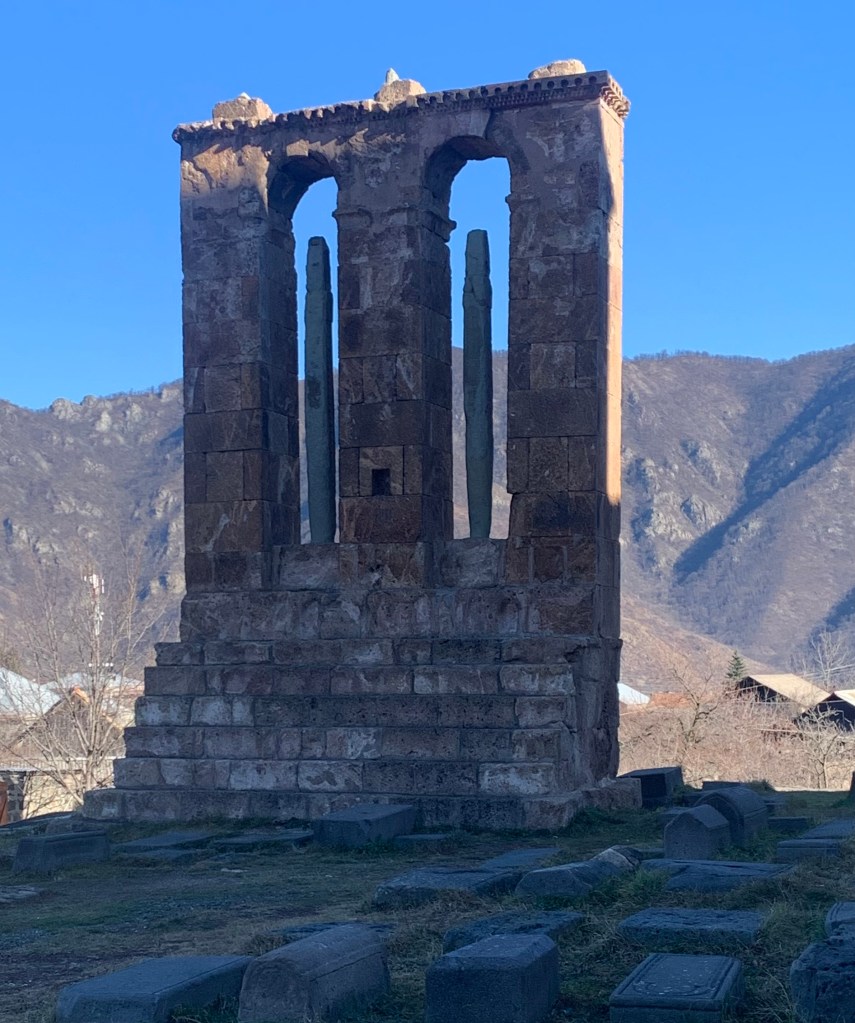
    Debed Canyon is full of things to explore – from, yes, monasteries and churches, but also breathtaking scenery and some abandoned and half-destroyed Soviet-era industrial buildings. There is also a monument and museum to the Mikoyan brothers – one of whom was the chief designer of the MIG 21 fighter plane, and the other was a member of the Soviet Presidium during the Cuban crisis.

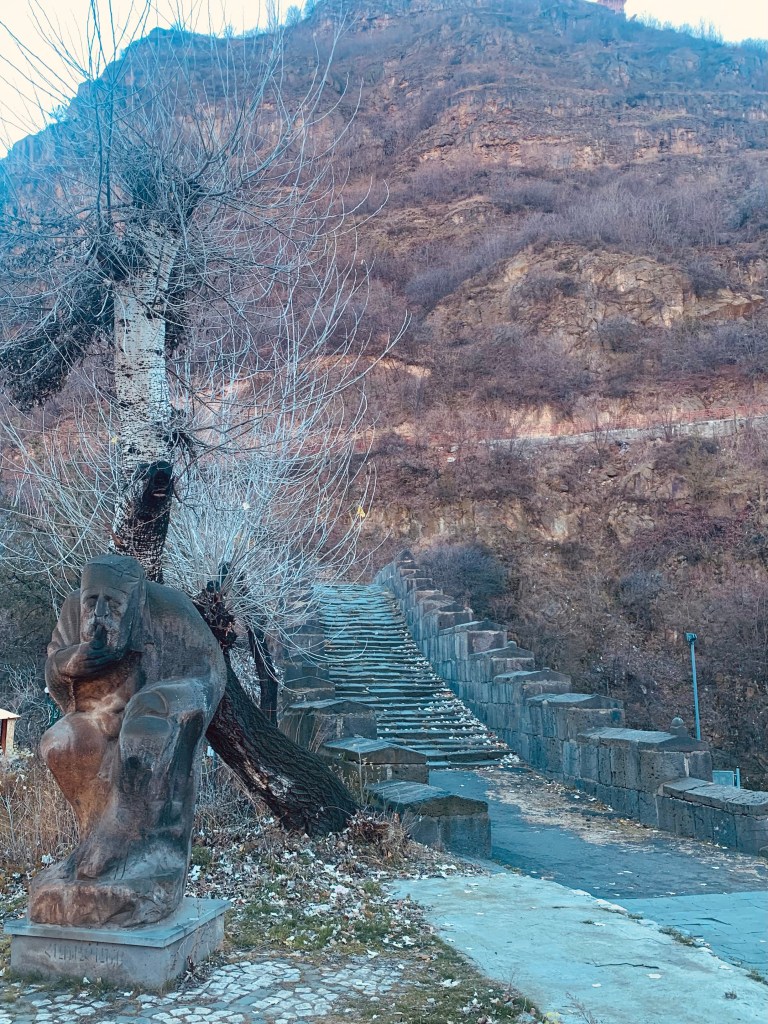
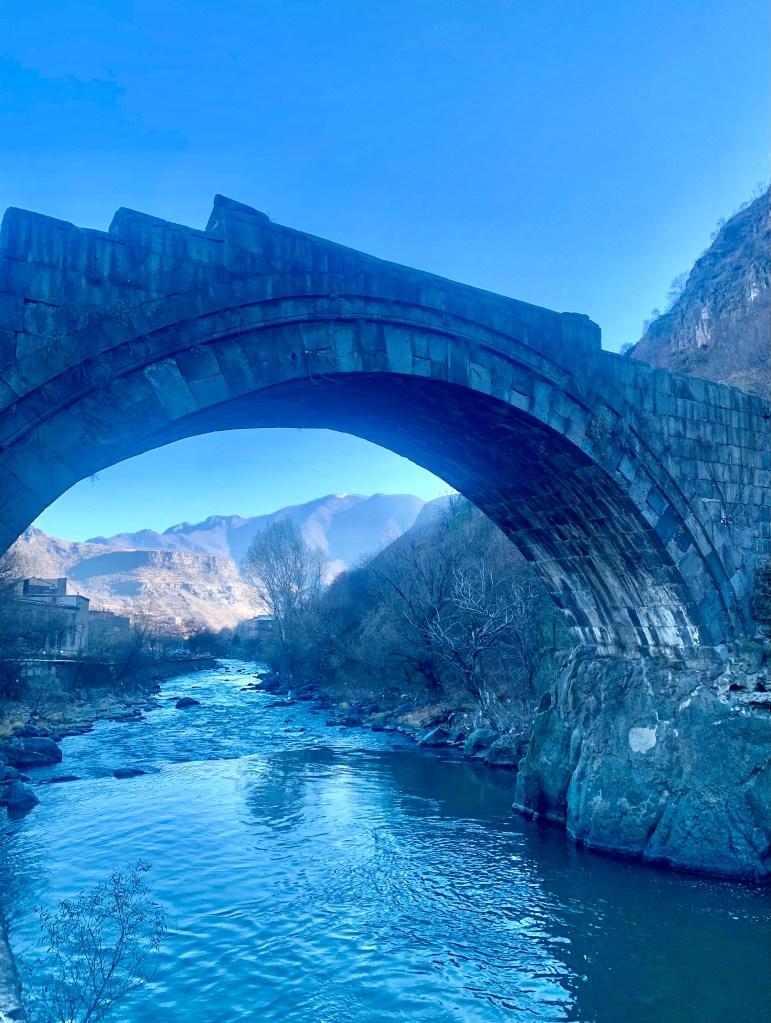
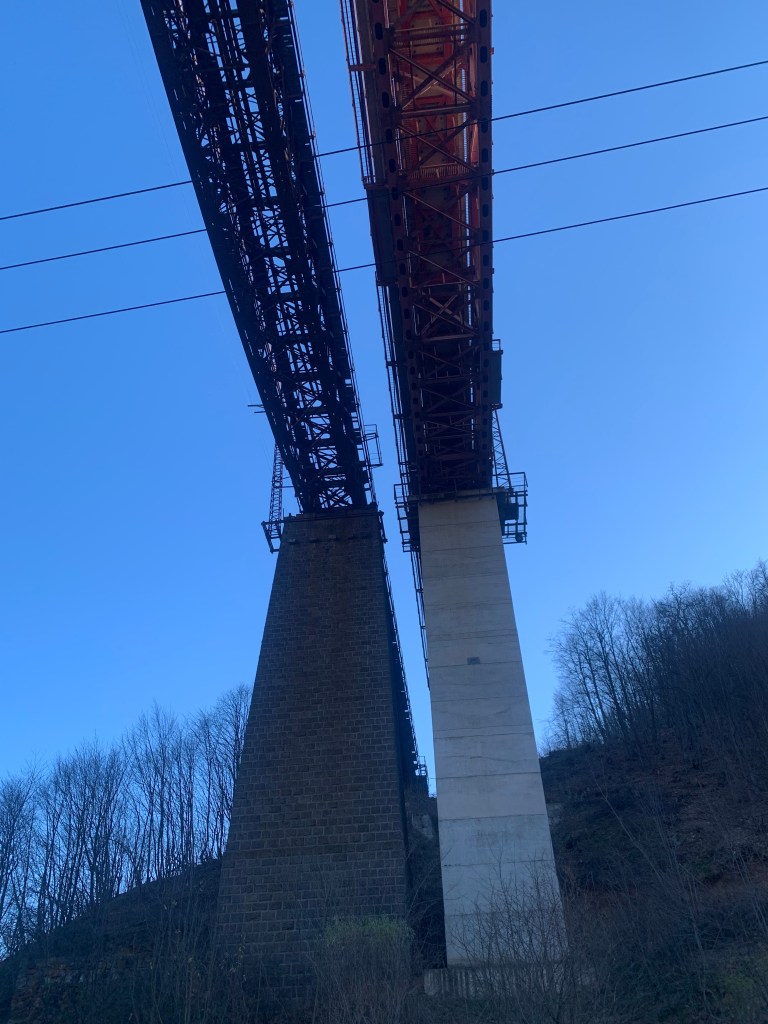
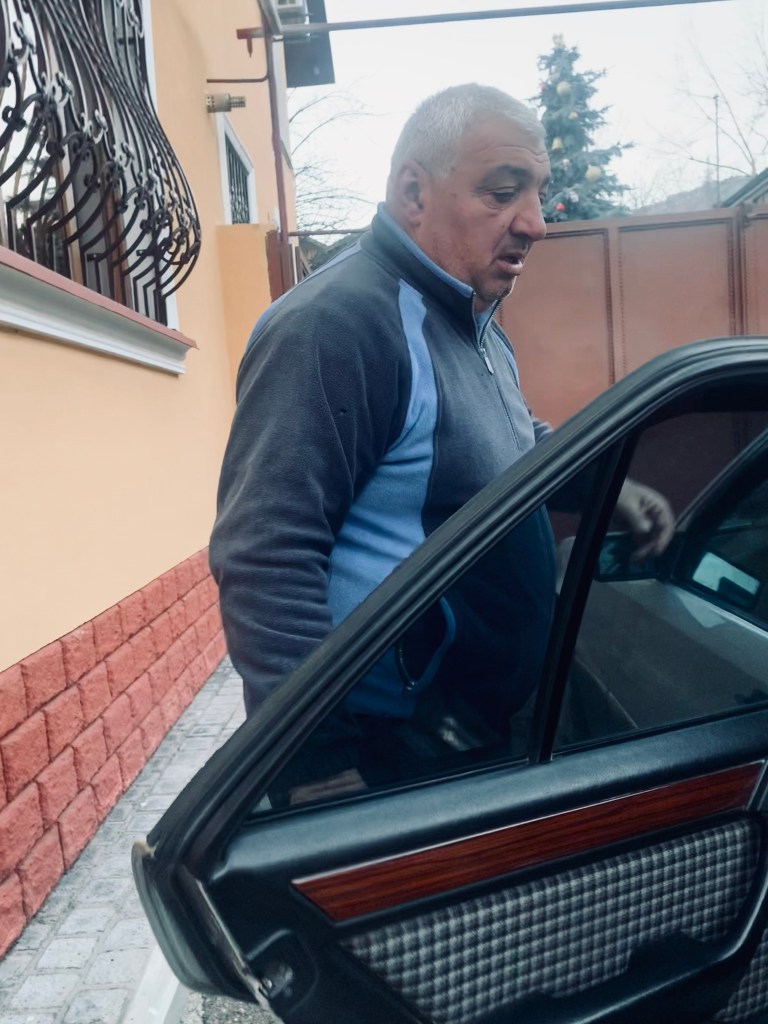
    Taxi drivers are opinionated everywhere. Ashat, who had been a USSR judo champion in his youth (he is 55), now drove a Mercedes taxi and took me around the Debed Canyon (and to Tbilisi the next day). He felt very strongly that things were NOT all better since the dissolution of the USSR. As he put it, before the dissolution, people had jobs, could buy their homes, a car, go on a holiday… He pointed to the abandoned gold refinery in the canyon – 7000 people had worked there. There is no work now. The railways ran throughout the country – now there is only one line working between Yerevan and Tbilisi, and one between Yerevan and Gyumri, Armenia’s 2nd city. (The photo of the twin rail bridges: one built by the Russian tzar in the late 19th ct, using no welding, just bolts; the other a new one, built recently. Ashat said the Imperial one is now “the reserve”.) The stone bridge is the Queen Tamar one, 7ct.

    He had little love of Georgians, who were “arrogant and self-serving, egotistic and unpleasant”. He even had an opinion on their language and writing, saying their script was like spaghetti and they spoke as if they had a hot potato in their mouth. Nevertheless, he gave a lift to a Georgian police officer from the border to Tbilisi and they had a really nice chat in Russian.

    Tbilisi next – and Christmas with Gloria.

  • Armenia

    Dec 15th, 2023

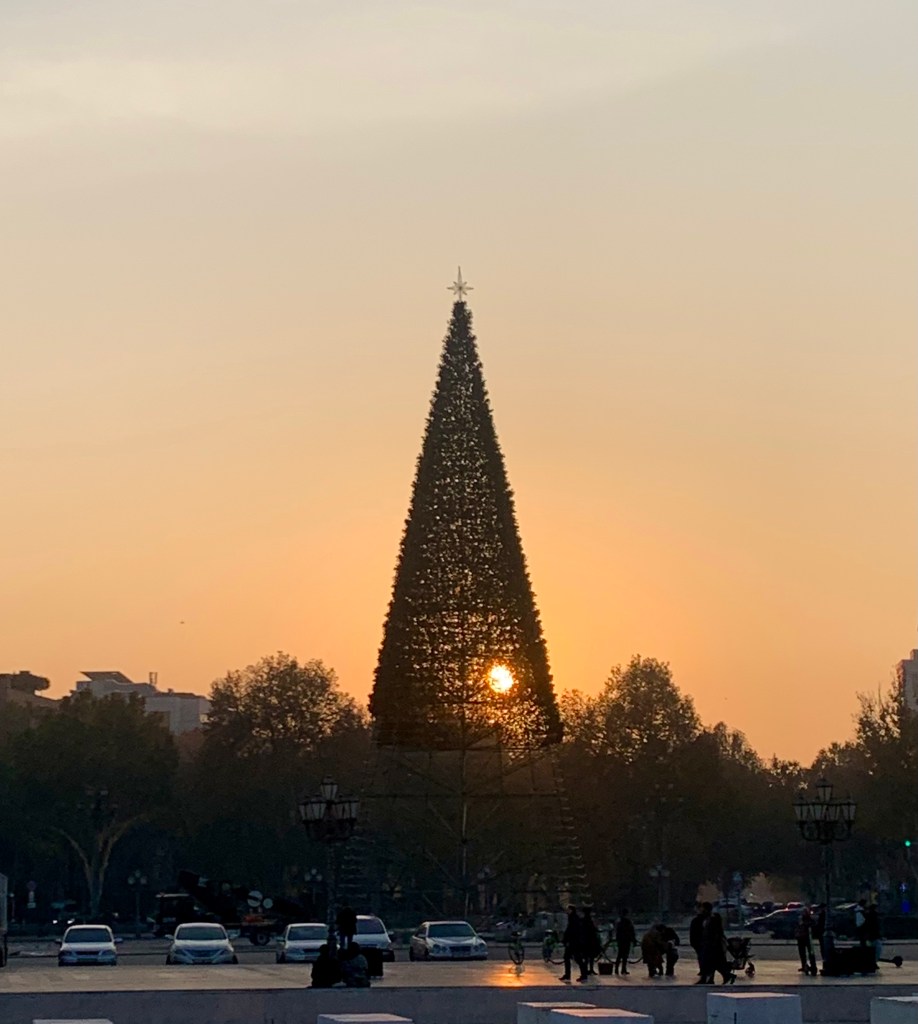
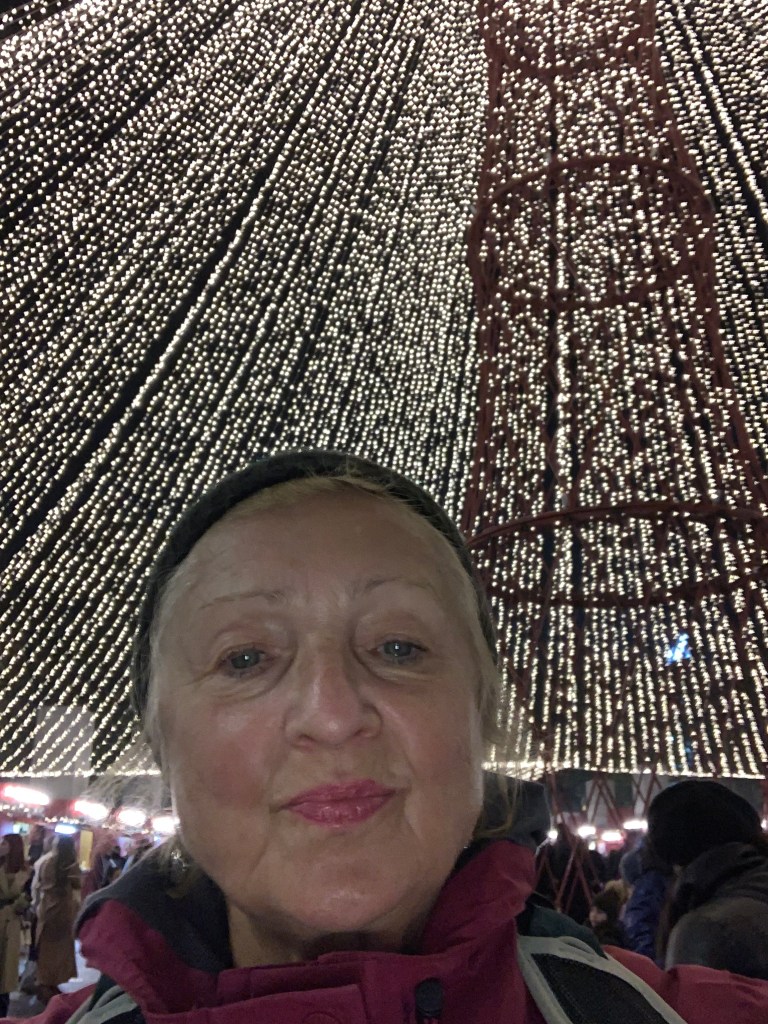
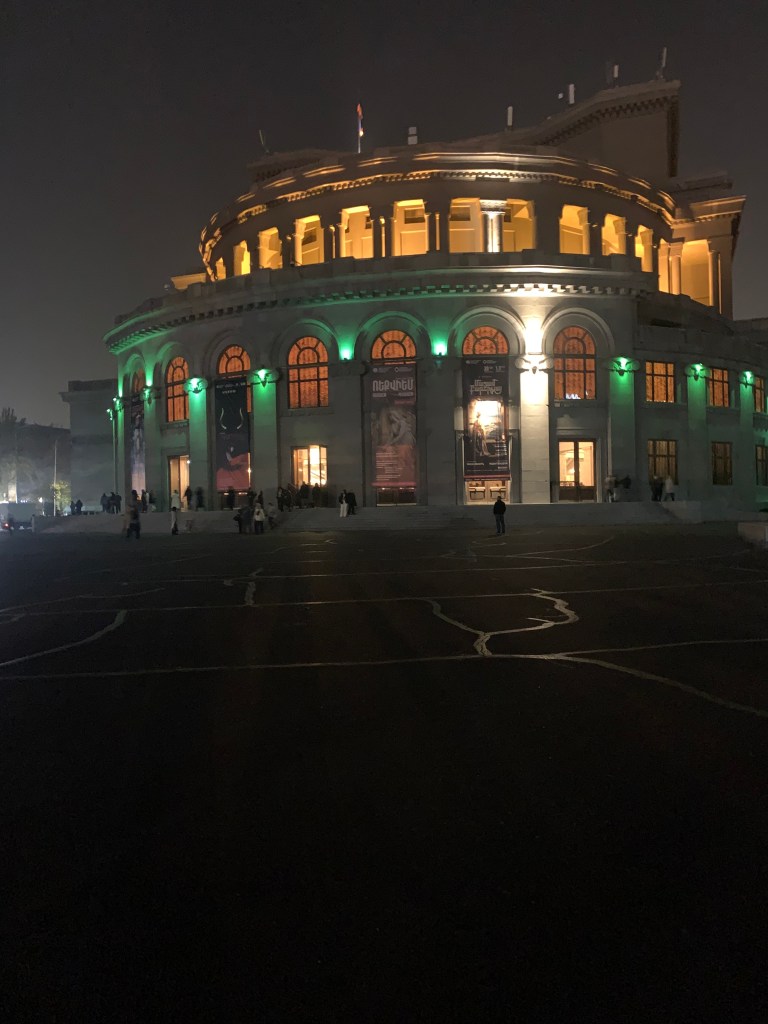
    Yerevan is getting ready for Christmas in a big way – all shops have been busy and some of the lights are quite spectacular. The Republic Square, once all the lights are up and the Christmas tree completed, will be a proper fairy tale place. The “Swan Lake” fountain and pond by the Opera has been transformed into a skating ring.

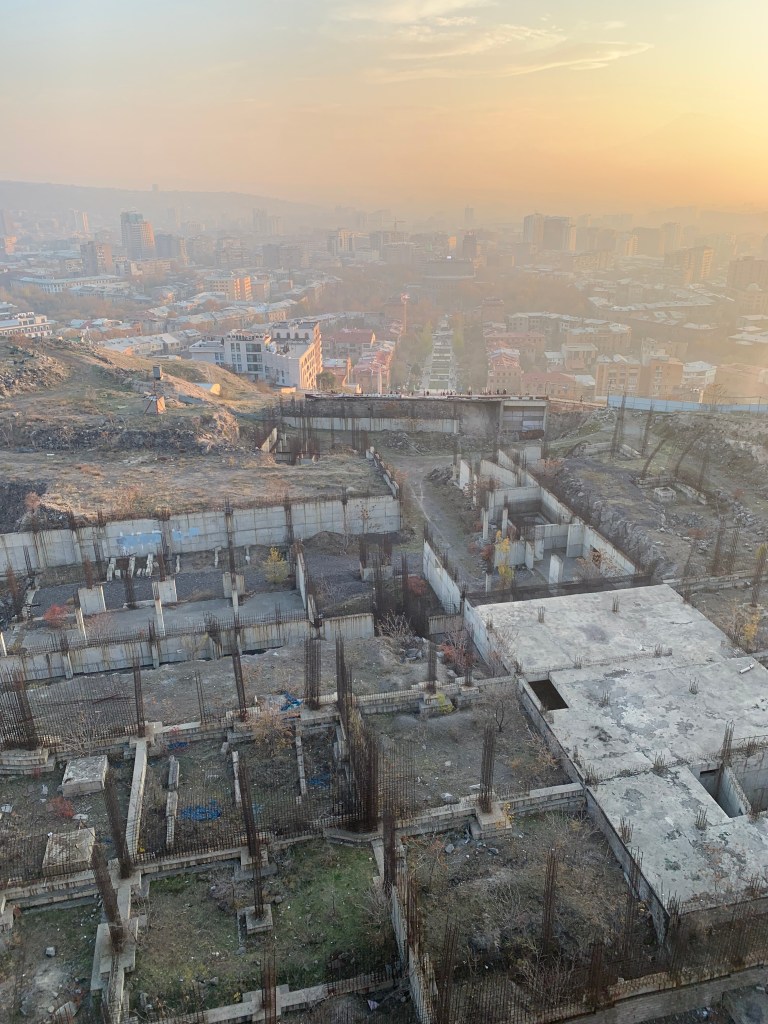
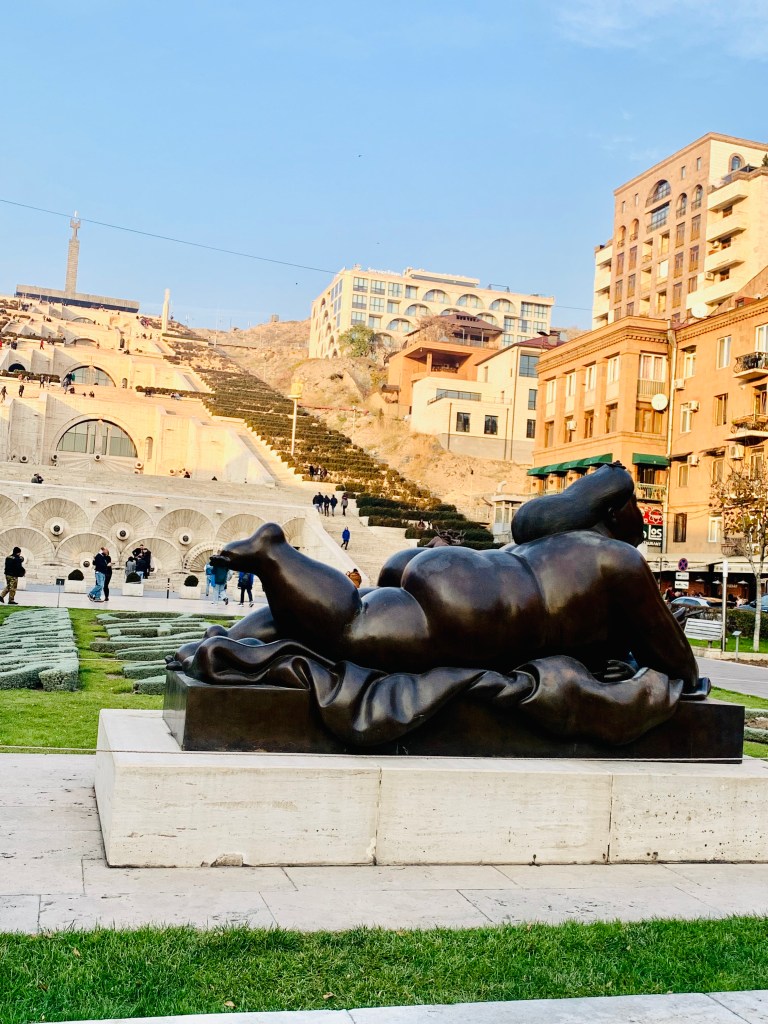
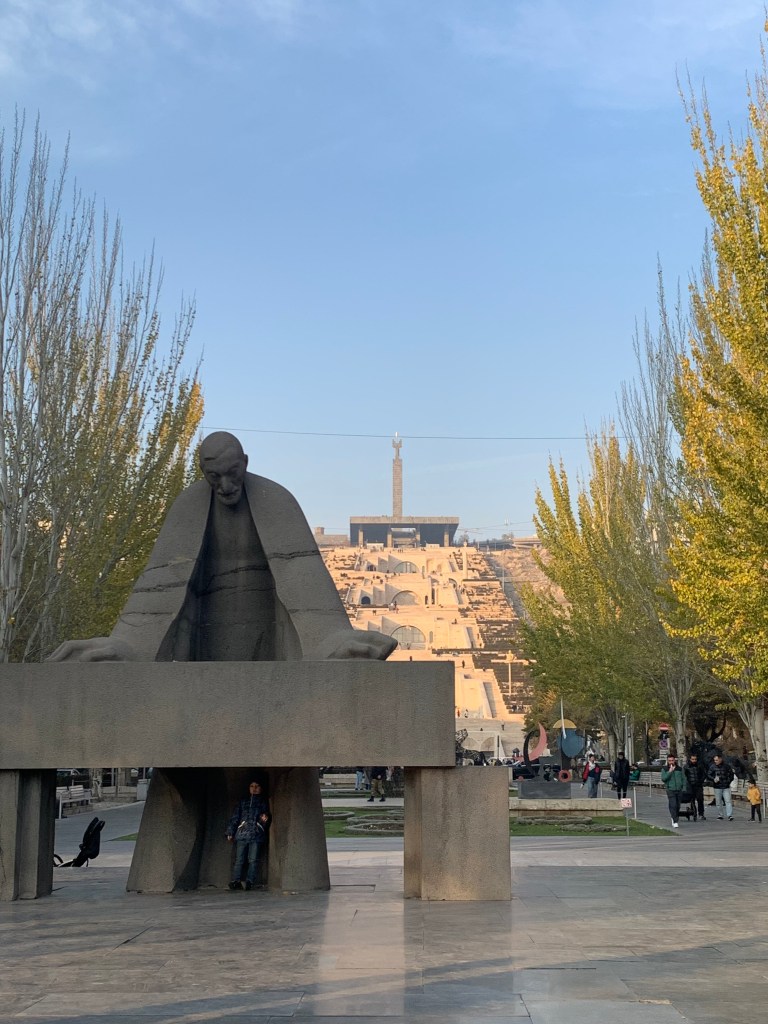
    There is much to like about Yerevan, despite the destruction of the old town and the brash new buildings replacing it. And there’s good coffee available everywhere. Some of the Soviet era buildings still stand – such as the Moscow cinema; but there are also many abandoned buildings, especially industrial, and constructions abruptly curtailed (such as the one at the top of the beautiful Cascade in the middle of the town, tools downed when the Soviet era ended at the end of the 80’s and nothing done since).

    The pavement lighting – my bugbear! is poor almost everywhere I’ve been so far. The pavements are often uneven, broken, pitted, potholed or non-existent. Come nighttime, it can feel like and obstacle course in the dark. Then again, the shops’ lighting is good and each building has its own pavement style and design – tiles, bricks, stone, very colourful and pretty.

    Yerevan, in the valley, seems to always be covered in a haze. This may be partly due to the climate/evaporation, but a lot probably has to do with the amount of traffic and especially old cars – the Ladas, even Zhigulis, are everywhere. Quite a number of cars run on LPG – it dawned on me when I saw the hosepipe being stuck up the arse-end of cars at a petrol station. (There were street protests not long ago when the government upped the price of LPG.) Electric cars have not quite made it here – haven’t seen any charging points.

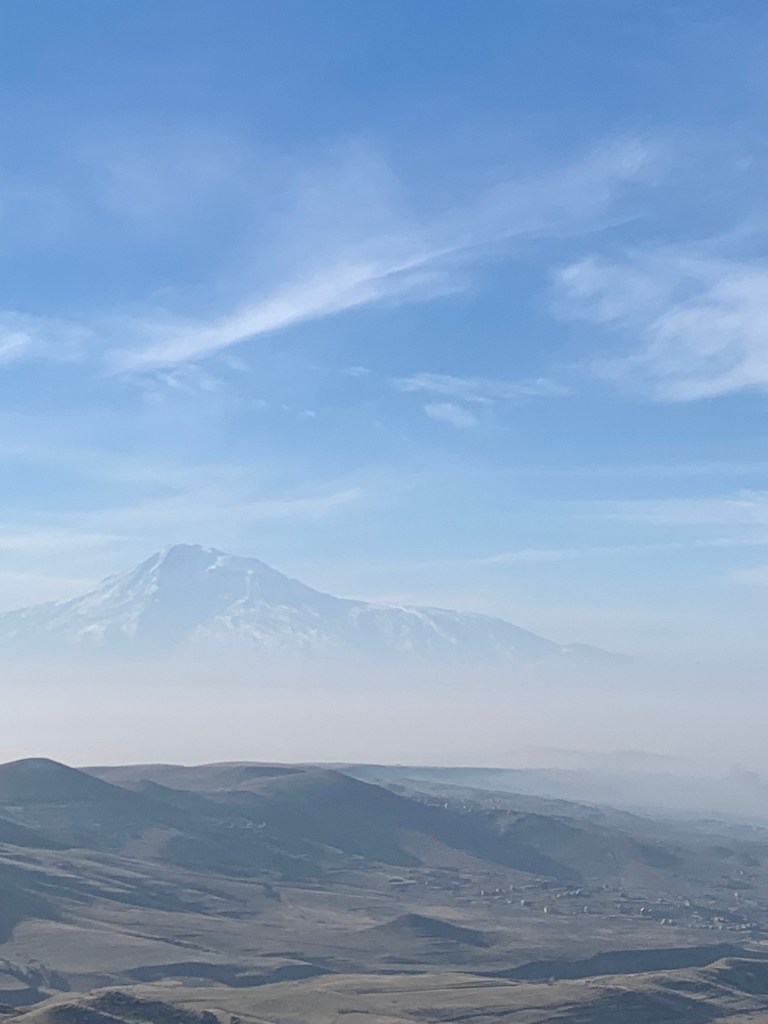
    The lightning speed with which Azerbaijan took Nagorno-Kharabakh has left a bitter taste in Armenian mouths but I have seen no refugees (though I’ve been told there are many) or any signs of a war, neither in Yerevan nor in the provinces. Goris, where I’m writing this, is on the way to Stependakert (in Nagorno-Kharabakh) and to Meghri, the border crossing with Iran. There seems to be just resignation and sadness and plenty of anger at Turkey, seen as an Islamic agent sending arms to Azerbaijan, and a bit at Russia for not helping Armenia. No-one mentions the Armenian government much. Turkey is certainly the villain when it comes to their possession of Mount Ararat and large areas around it that used to belong to Armenia.

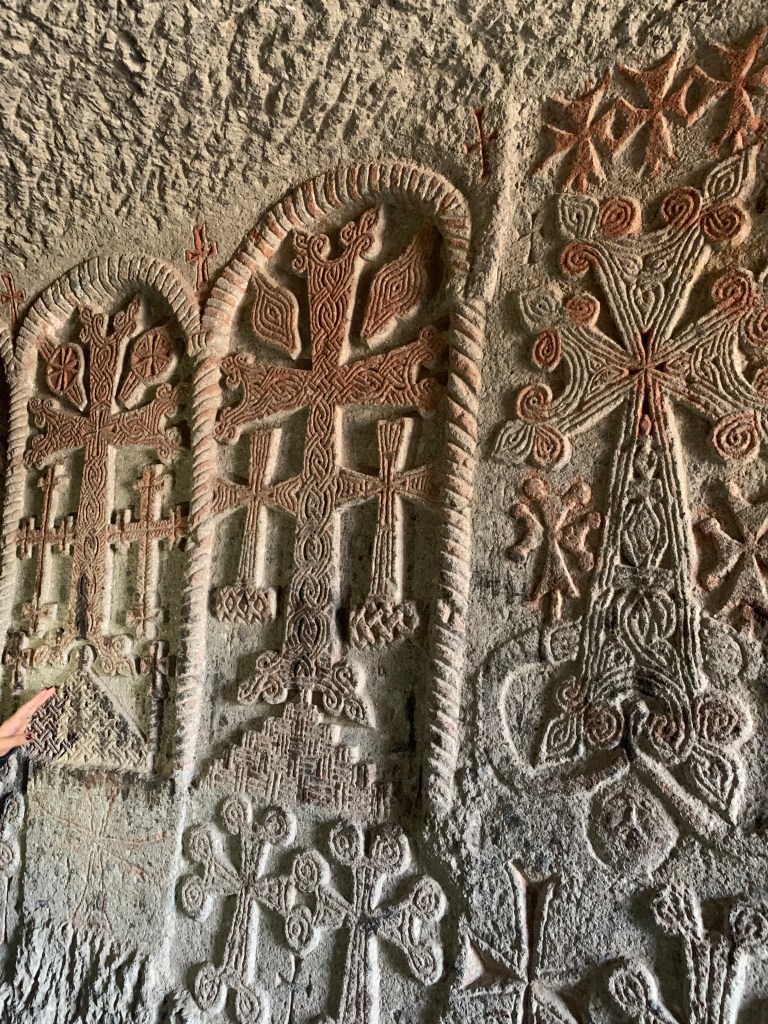
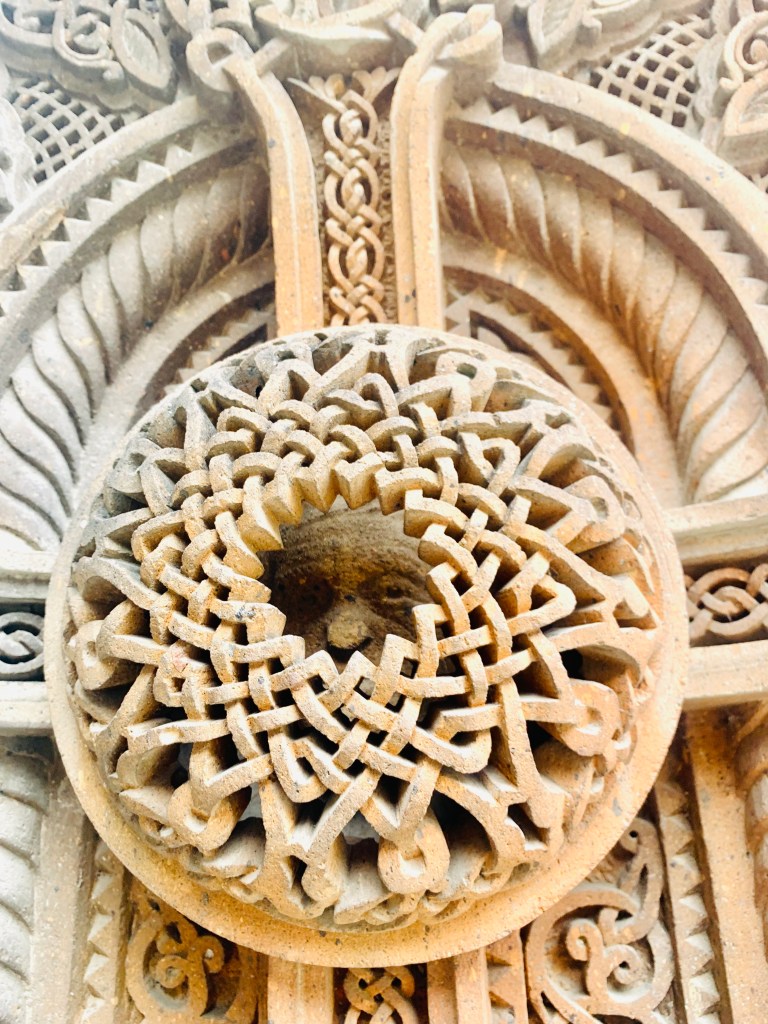
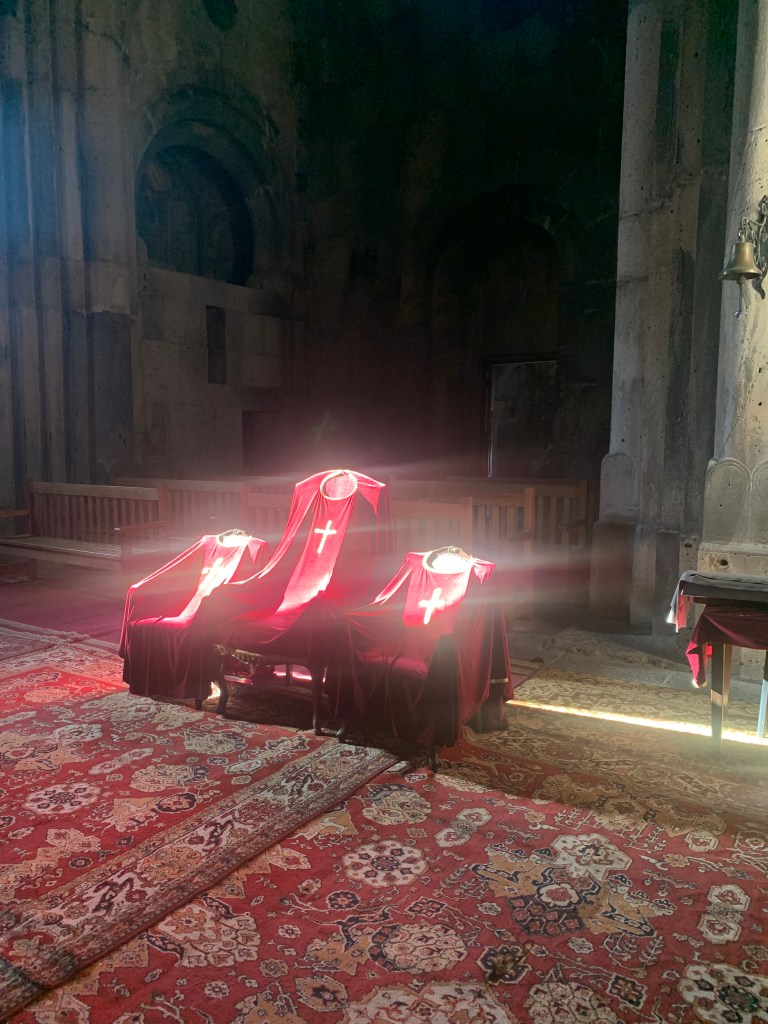
    The stories of how Armenia became the first country in which Christianity was the state religion are recounted by guides at every monastery – and there are many. The Armenians are justly proud of the fact that their 36 letter alphabet (3 more letters were added later) was created in 405 (to make the Bible available in Armenian) and there were many monastic schools and universities in which manuscript were copied and illustrated. The monasteries were often built on sites where there had been (pagan) temples before – many in difficult and hard to access places (but with clear views of specific stars). Such is Spitakavor, at 2150m and no dwelling of any kind nearby. There’s a unique cross at the back of the church – abstract, crooked, strange.

    I think I’d like to come back in late spring/early summer. Some of the neolithic sites from 7-8000 BC, where there are intriguing petroglyphs showing a remarkable knowledge of astronomy and awareness that the Earth is round, are at 3000m and inaccessible in winter. I now know there is an excellent guide in Yegheghnadzor and the family I stayed with made me feel utterly at home.

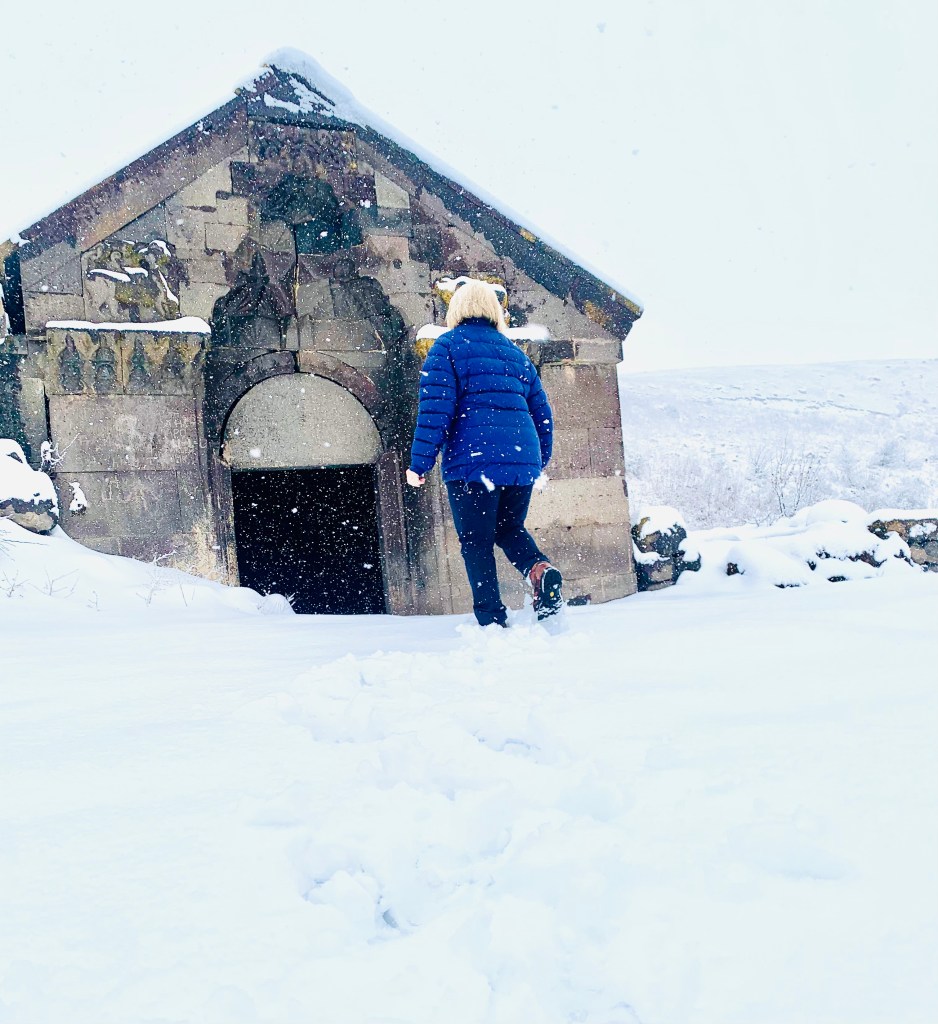
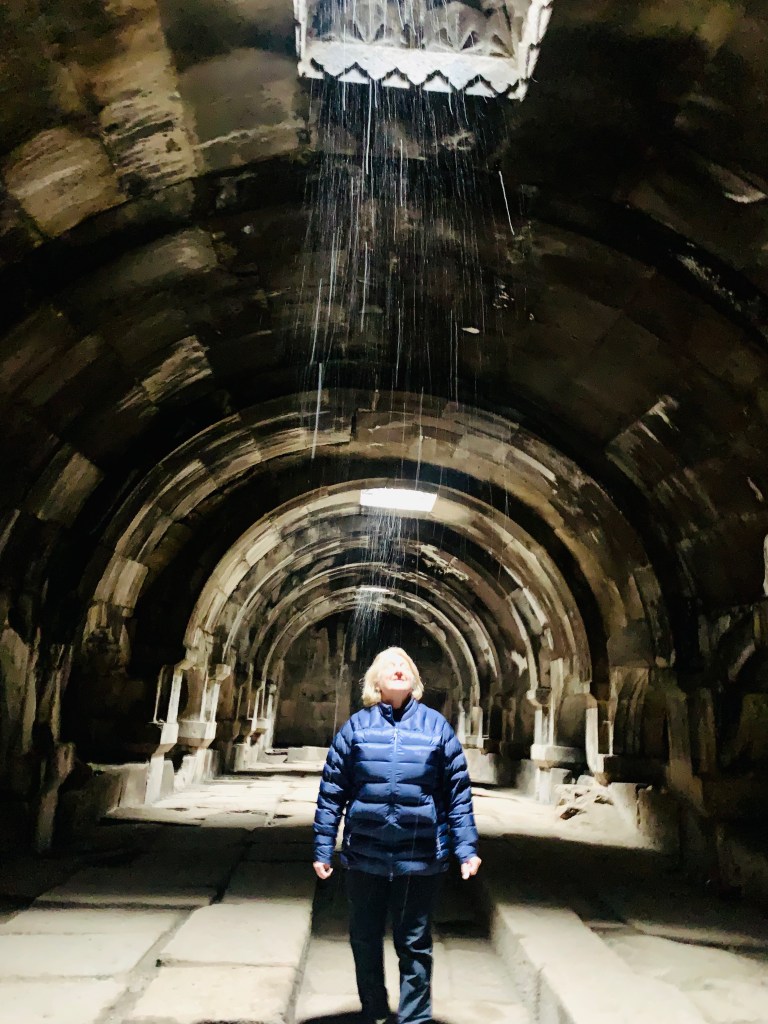
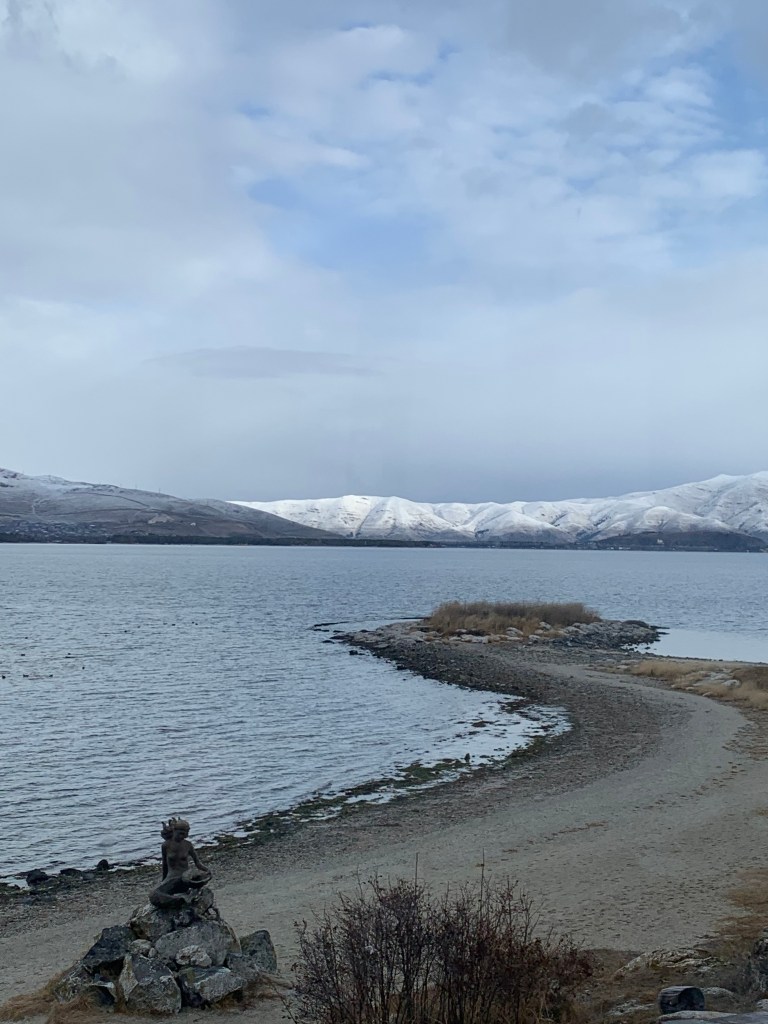
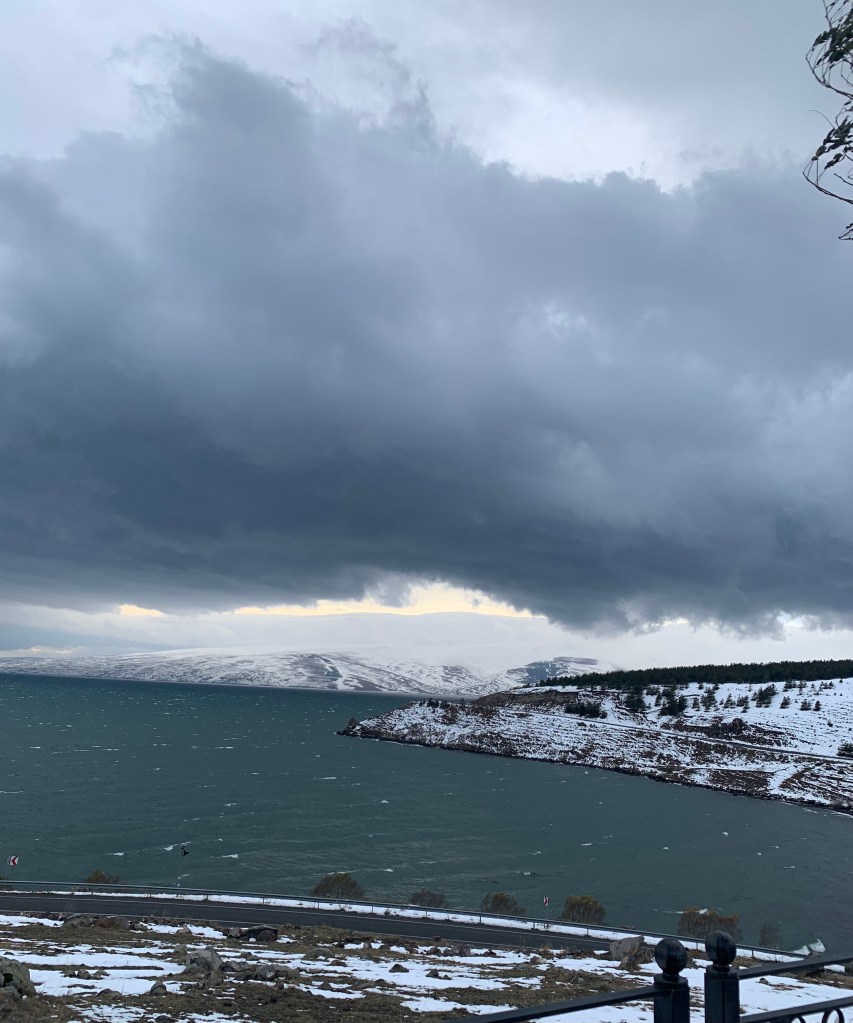
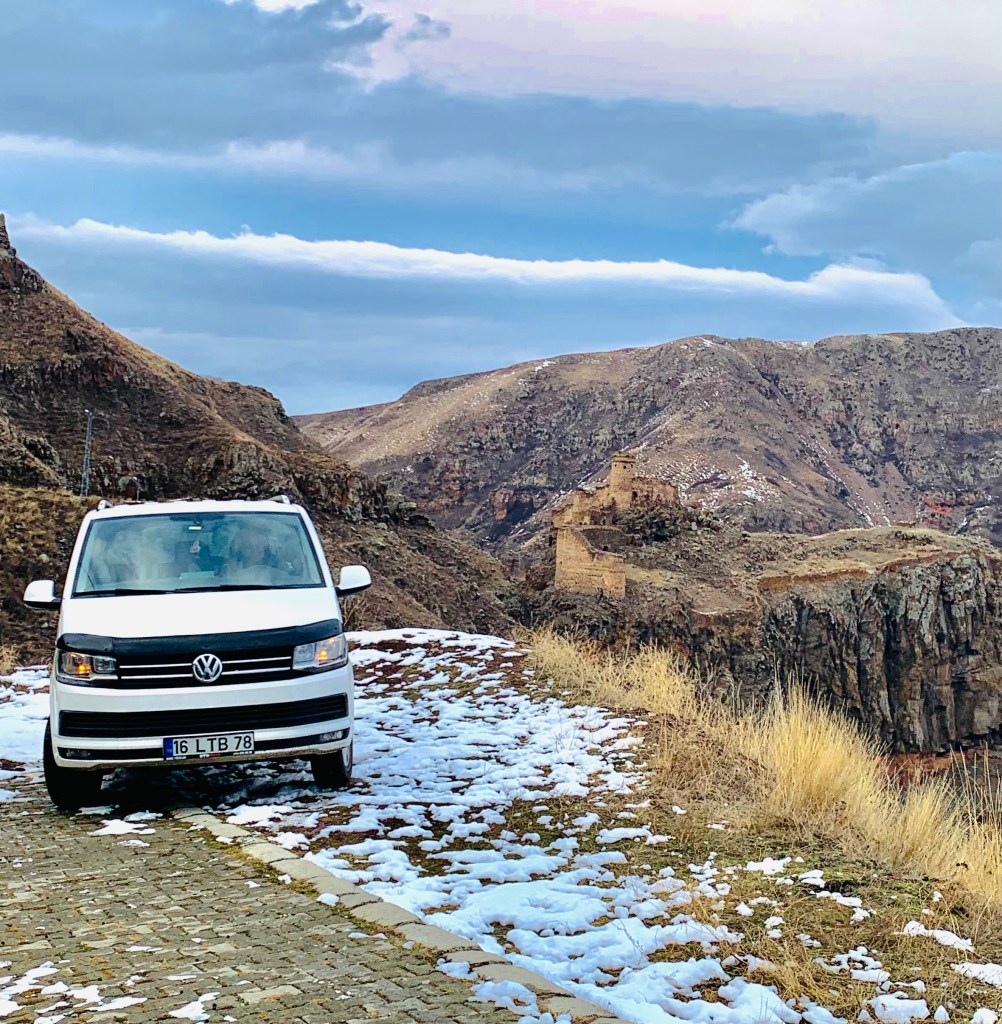
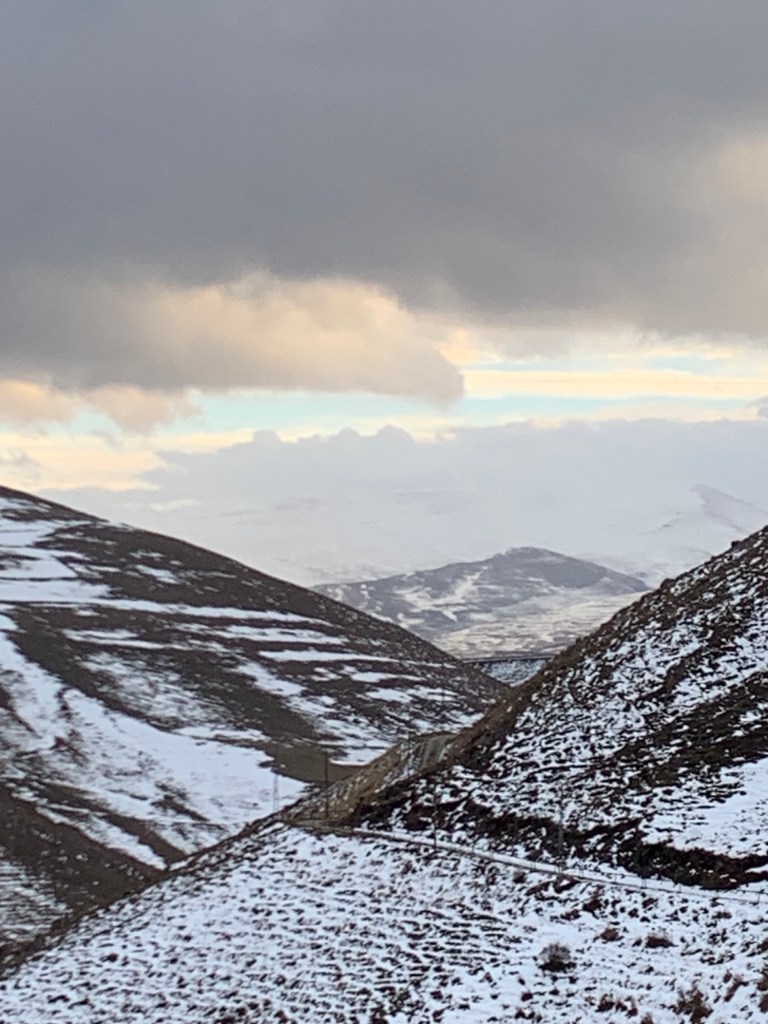
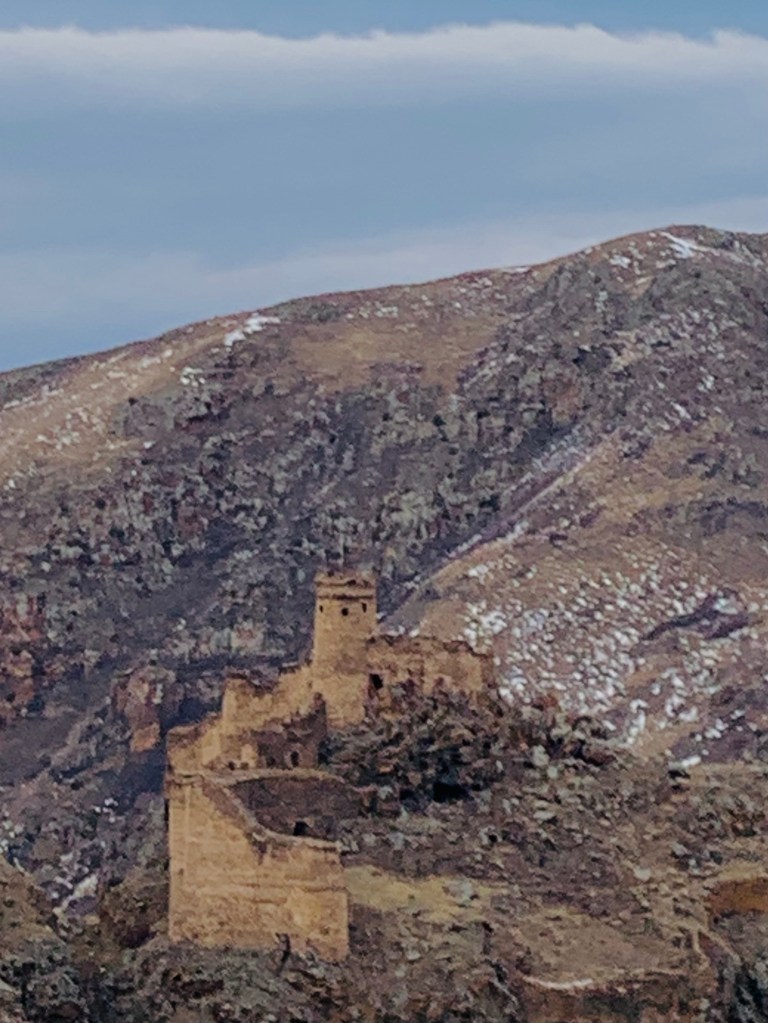
    I am glad I was able to get across the Selim Pass despite the snow and see the Orbellian Caravanserai, one of the important stops on the Silk Road. Lake Sevan, on the other side of the mountain, is the largest in the Caucasus region. It is at 1900m and very popular in summer. Nice fish. And some good wines from the Ijevan area.

  • A dip into Georgia

    Dec 6th, 2023

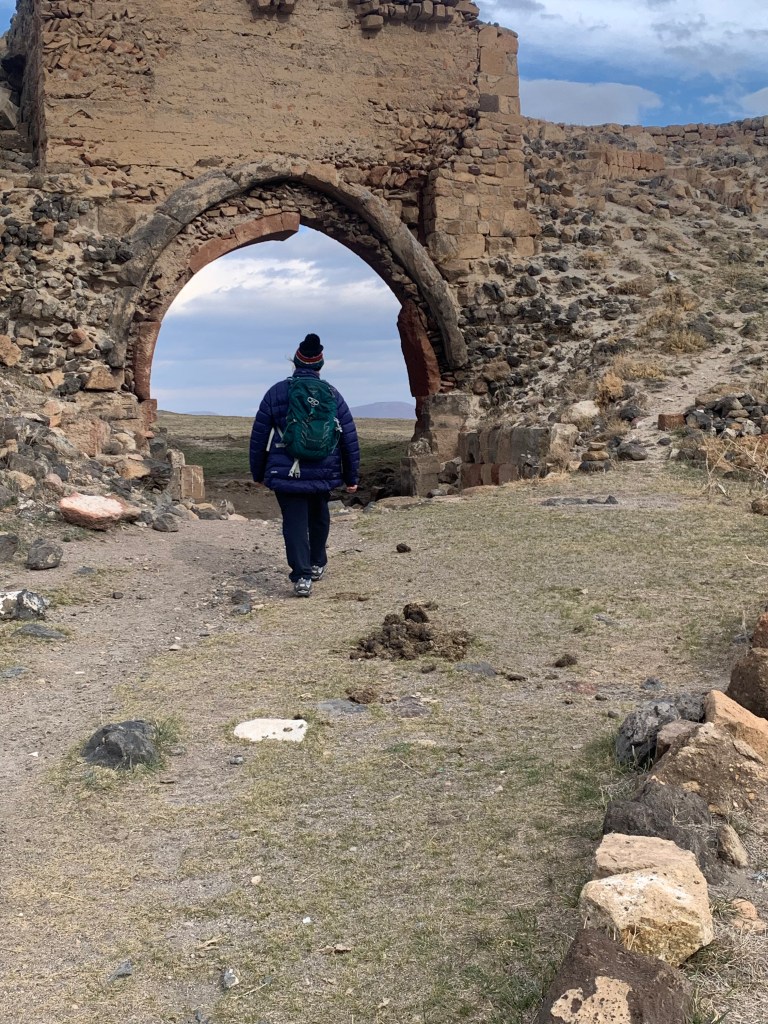
    There is a long land border between Turkey and Armenia; unfortunately, no border crossings are open at present. The guide said it was the Russians that run this show (as demonstrated by the Russian flag, flying just a little higher than the Armenian one along the border we could see on the other side of the gorge/canyon that is the border between Armenia and Turkey at the Ancient Ani) .

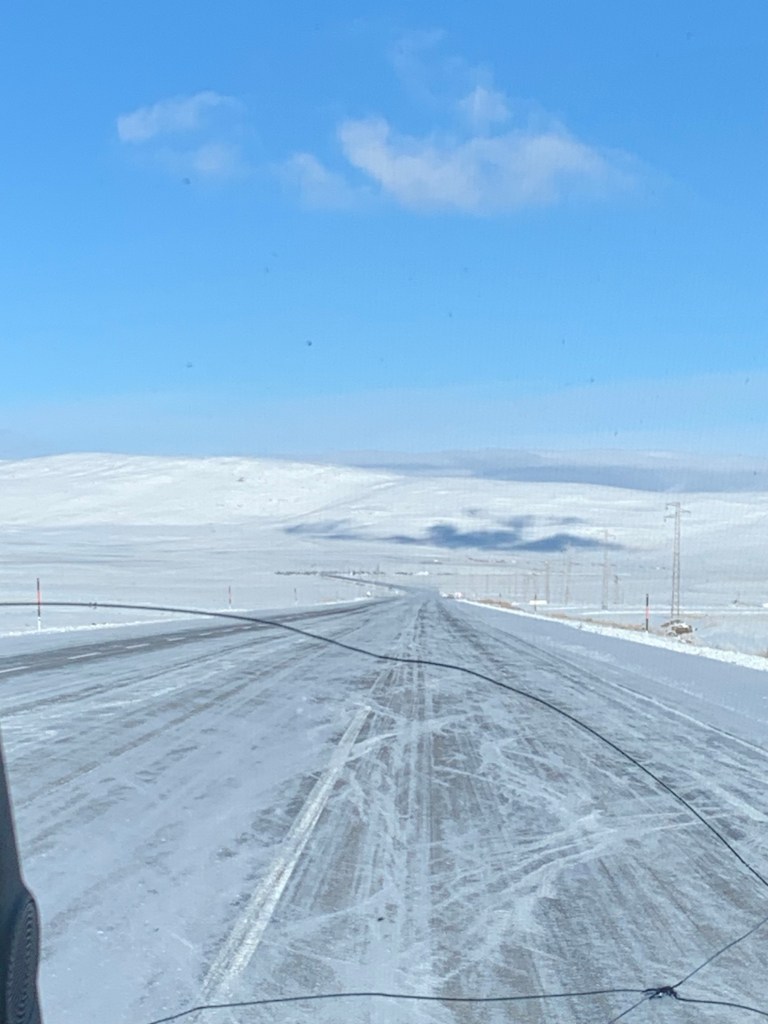
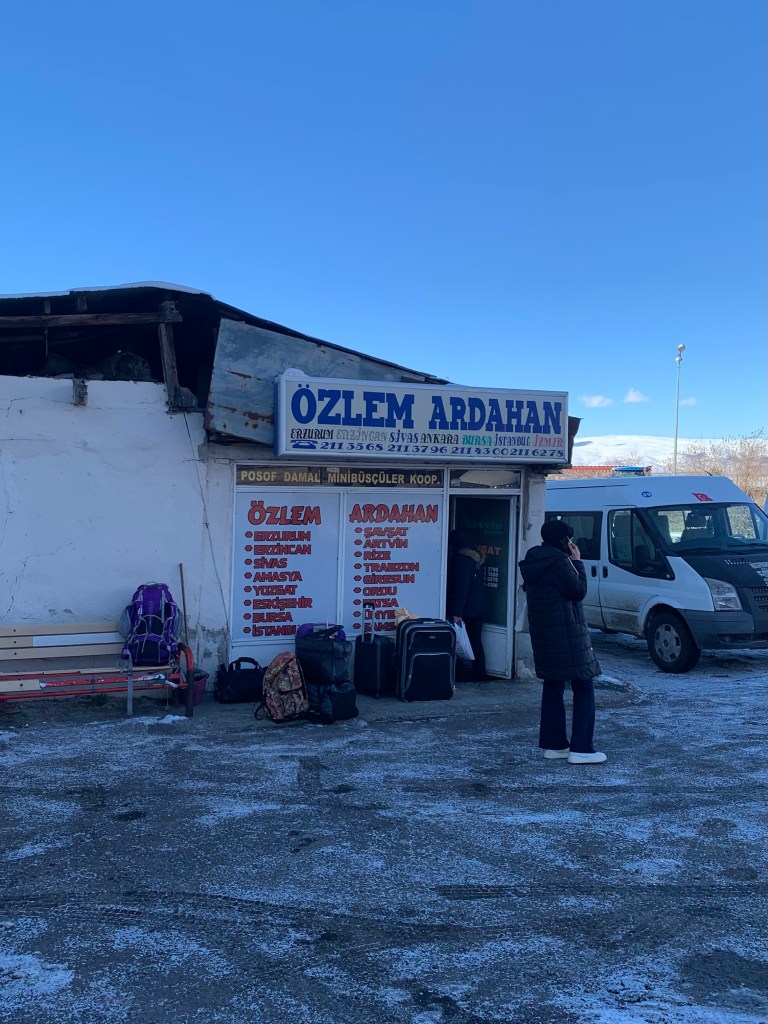
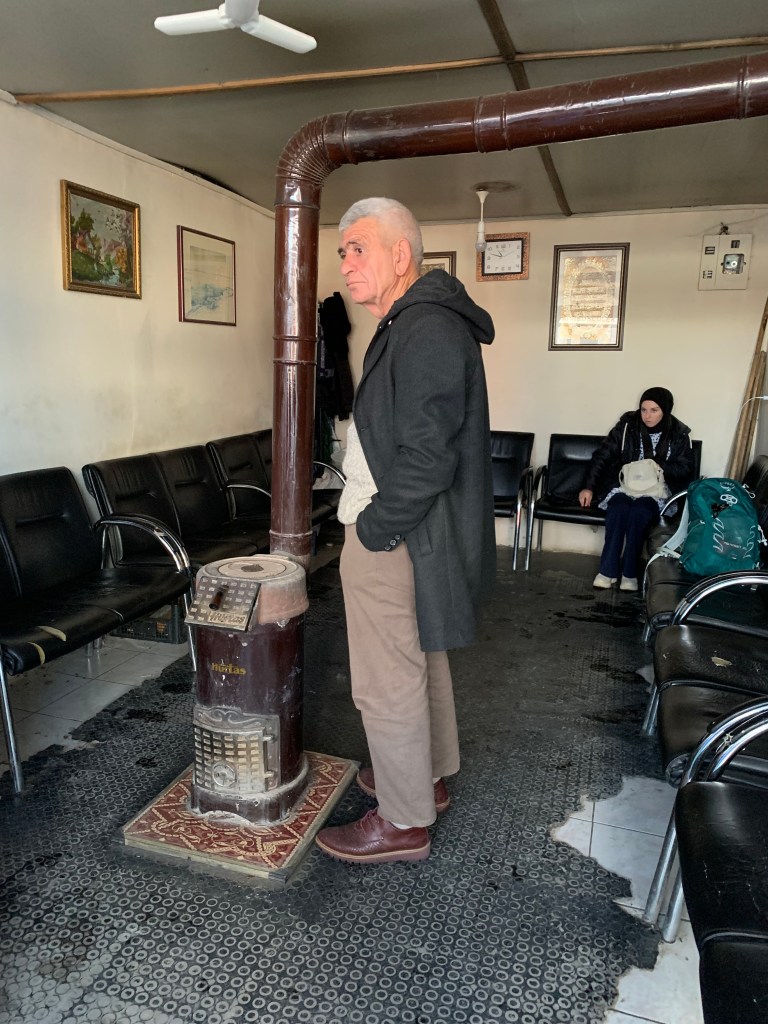
    The convoluted journey starts from Kars (an 8 o’clock dolmus, filled to the rafters with people, potato sacks, suitcases, a child’s trike…) to Ardahan. Unfortunately, the next dolmus, to Posof, does not leave from the same bus terminal; the poor chap who I asked for directions (with my 5 words of Turkish and slooow English) got fed up explaining, picked up my rucksack, stuffed it into a clapped out Renault and took me to the other place 5 min away by car ( it would not have been fun carrying the backpack on icy pavements). I barely had time to thank him – he was gone! The snow was thin on the ground, the sky blue and clear, the day sunny and crisp. There was a pot-bellied stove in the waiting room, much needed and enjoyed. A longish wait, but once we got going, it was quick: the road is good and empty. The countryside looks bleak and beautiful, barren, brown, permanent. The last bit of Turkey, from Posof to the Georgian border, some 15K away, is only by taxi. It turns out to be the most expensive part so far (c. £10). I crossed the border on foot; Georgian officials were welcoming and happy to speak English. Thought I’d have to walk some half a mile to where I was told there would be a taxi – but they are eagle-eyed and spotted me. The older generation speaks Russian, the younger prefers English. So we spoke Russian on the way to Alkhatsike.

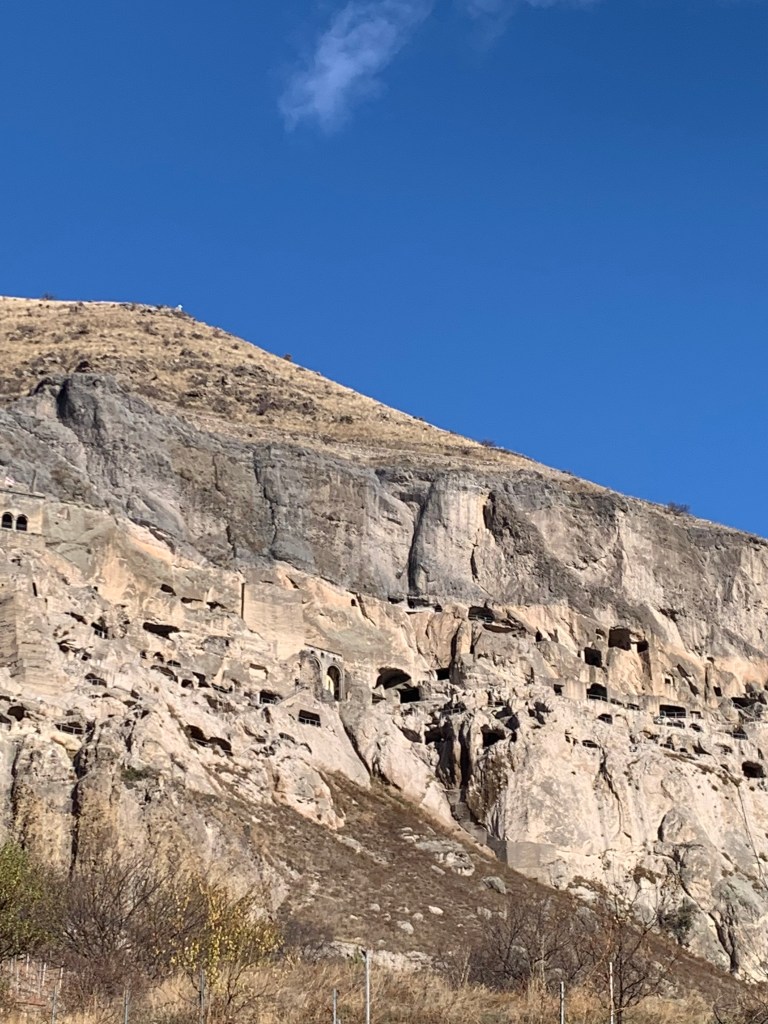
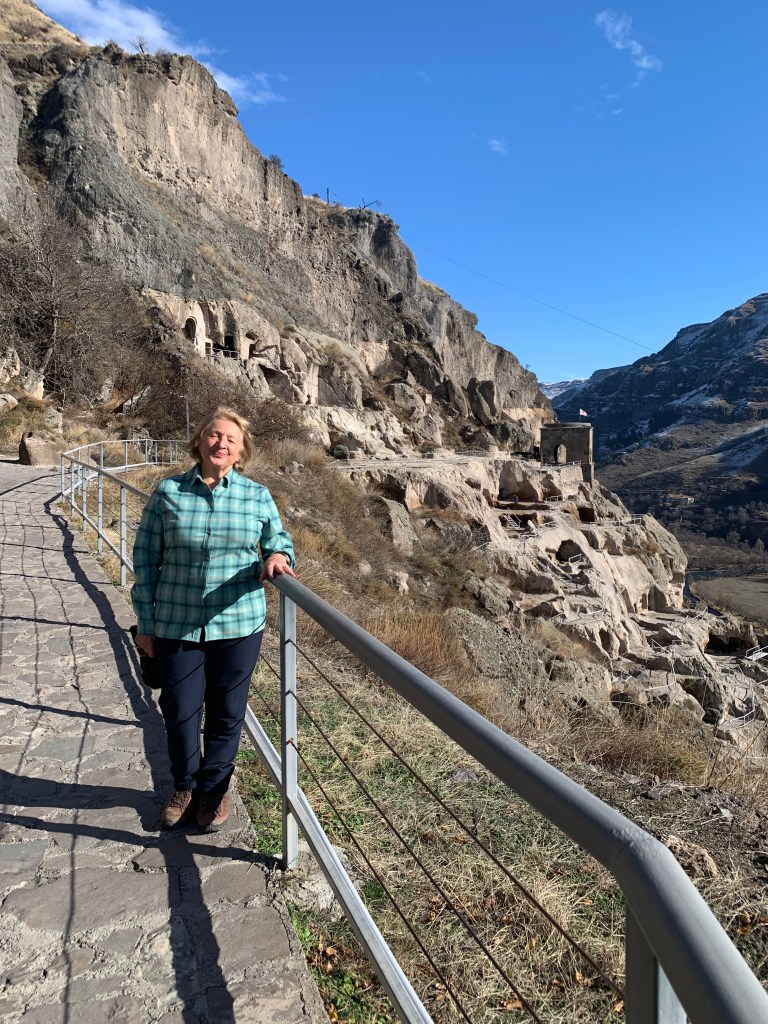
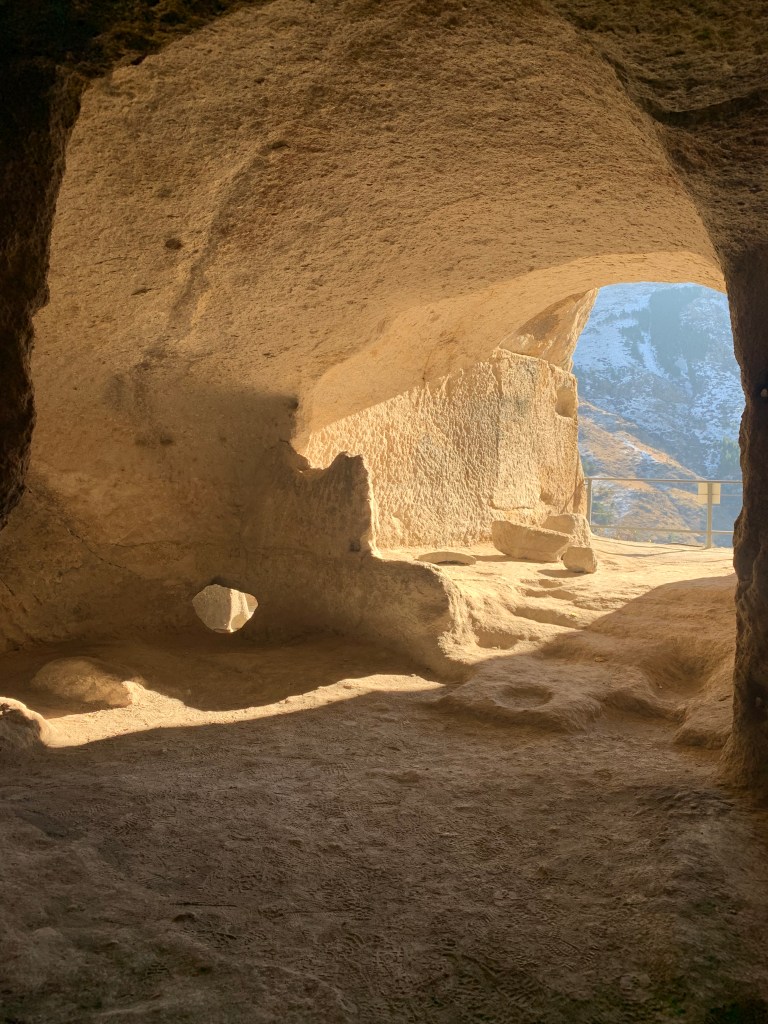
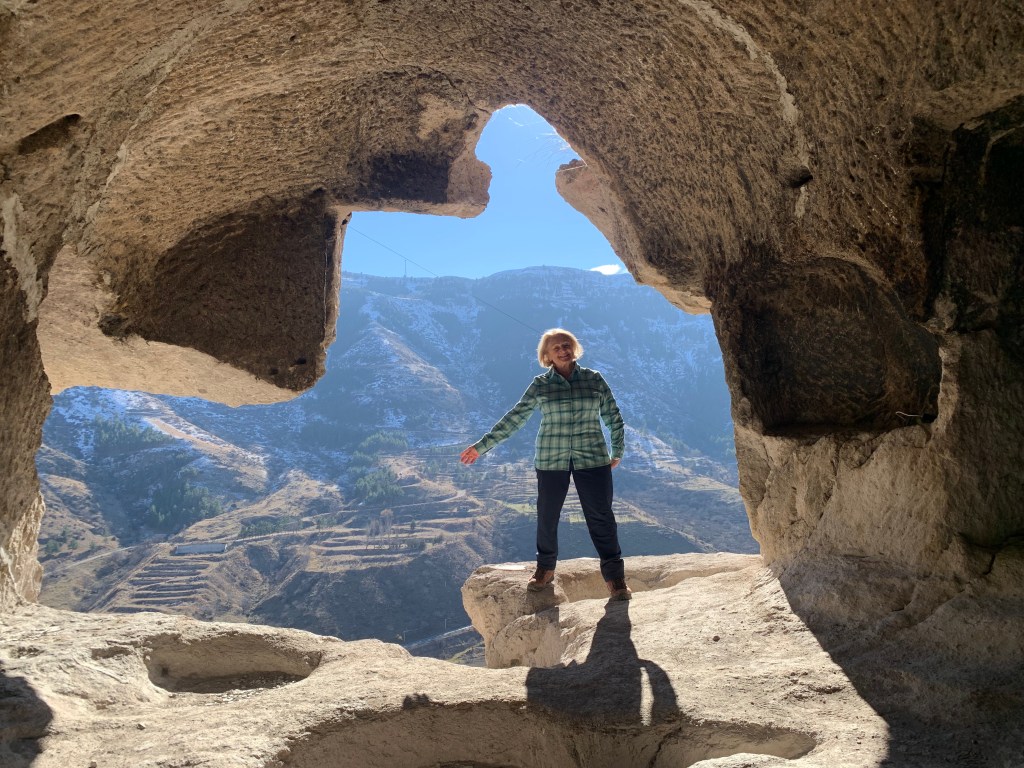
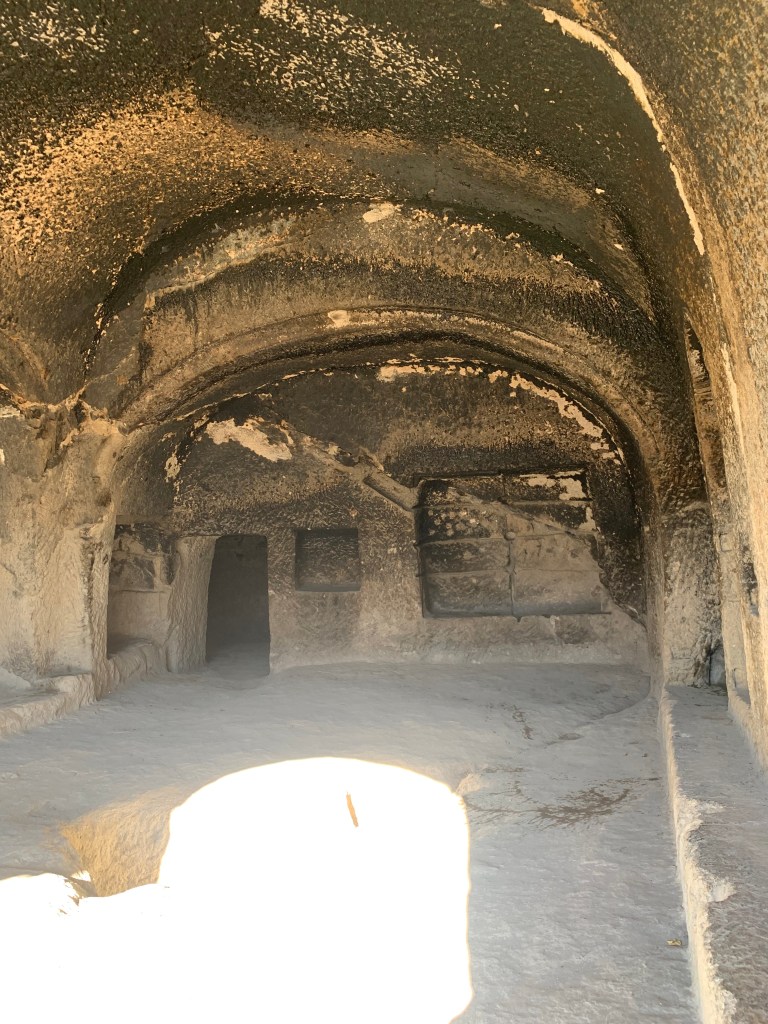
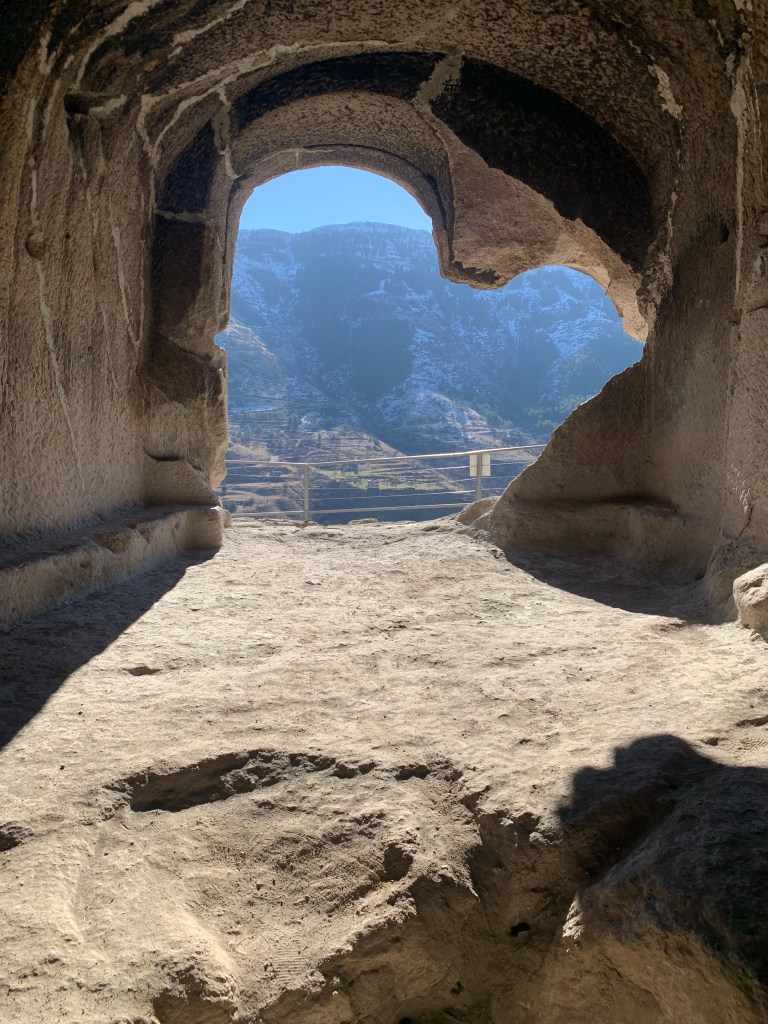
    Thus, though Armenia was within sight and reach, I had to travel to Georgia, several hundred km, before being able to swerve down to Armenia. One good thing was that this longer journey brought me close to Vardzia, the cave city that had, at its peak, housed more than 20000 people.

    Another marshrutka to get me to Tbilisi: the roads are in a much worse state than in Turkey, but there are many more cars and lorries. I have little desire to drive here – the overtaking on blind bends, the driving in the middle of the road, the close nose to tail – no appeal.

    Tbilisi traffic even worse than Istanbul: the centre is dug up as they are putting in new sewage pipes. Everyone drives so close to one another, it’s a surprise there seem to be few accidents. But when there IS space, the foot goes down and they take no prisoners.

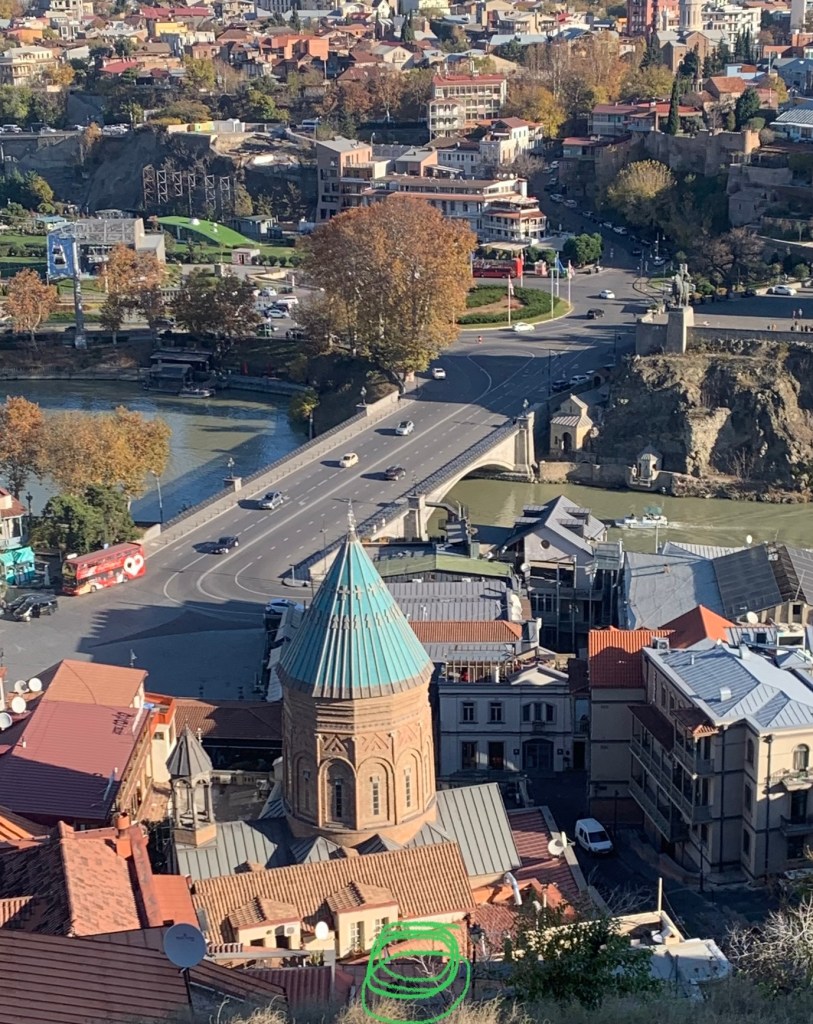
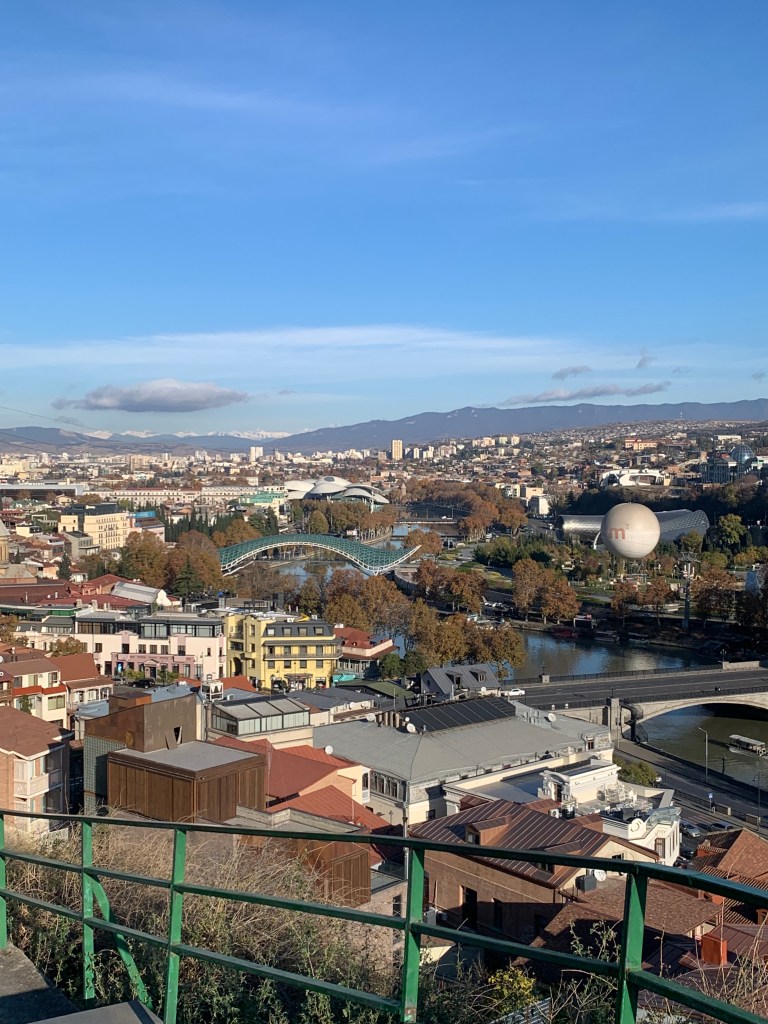
    The Envoy hostel is in Old Tbilisi, with nice views over the town and the river from the terrace. Had to claim I was claustrophobic as they tried to put me in a room with no window! And there was this lovely double room with a balcony that was going begging.

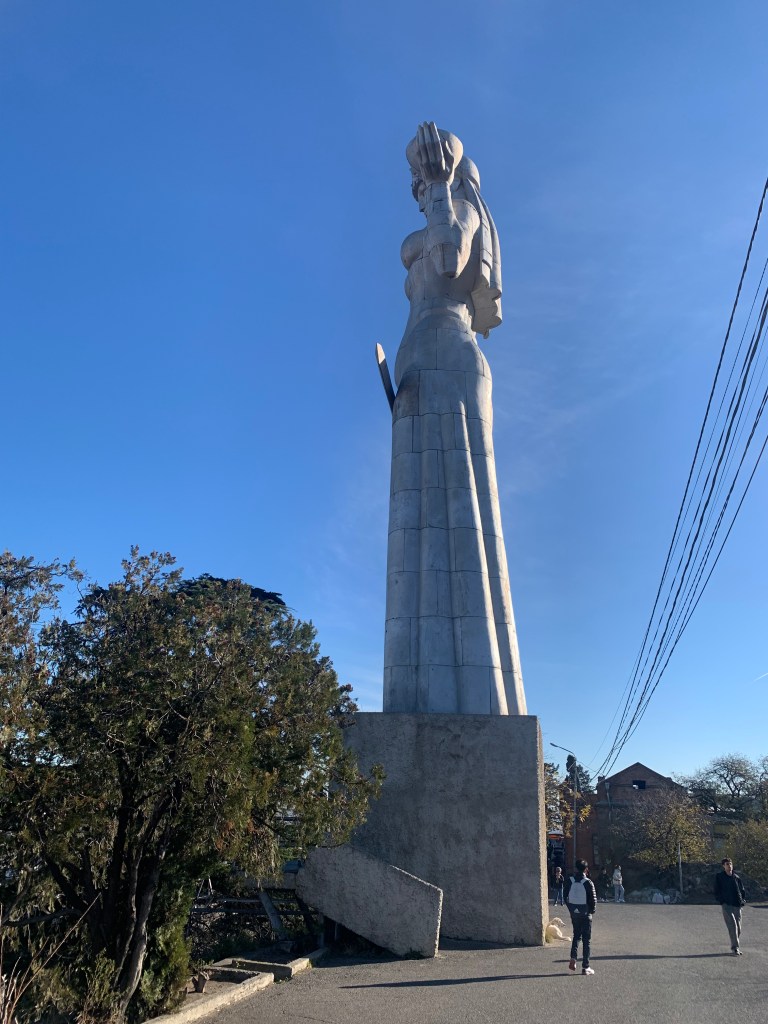
    There are now conical church tops rather than minarets popping up over the town (though noticeably fewer). Am only here till I sort out transport to Armenia – there are trains to Yerevan, but they don’t run every day. So it’s back to the minibus/ marshrutka. In the meantime, had a couple of good walks – up to the fort and Mother Georgia (all 17 meters of her, with a sword in one hand and a glass of wine in the other), and down by the river Kura. Managed to see Daisi (Twilight) an opera by Zaharia Paliashvili performed at the Conservatory – professional musicians and students performing in celebration of its 100 anniversary.

  • Towards the border

    Nov 27th, 2023

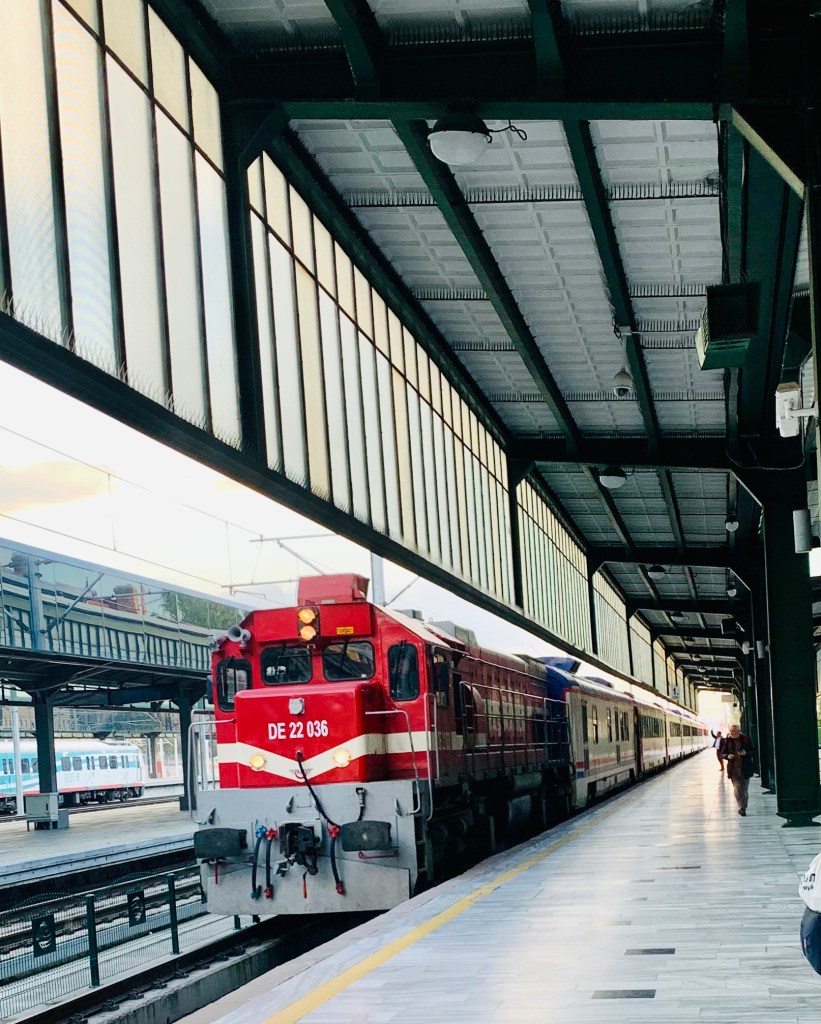
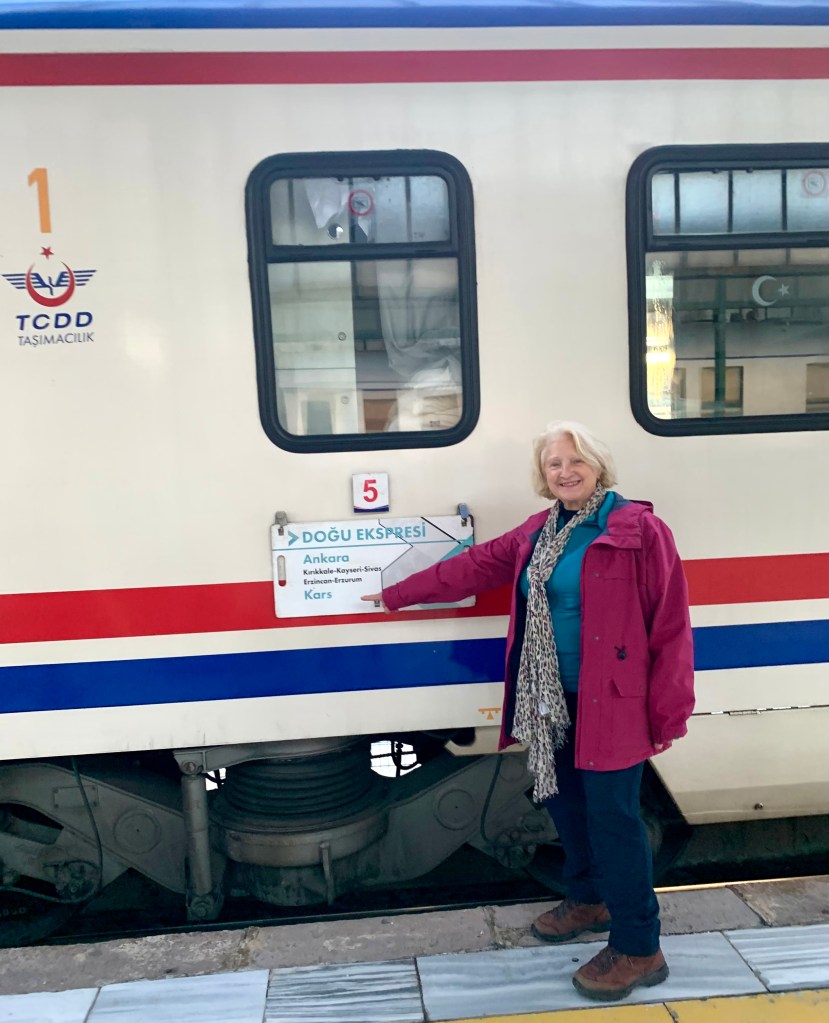
    Dogu express, the train that covers 1310 km from Ankara to Kars and takes 26 hours, leaves from platform 1. The diesel engine (electrification is slow…), in livery red, rolled in an hour before the scheduled departure at 17:55.

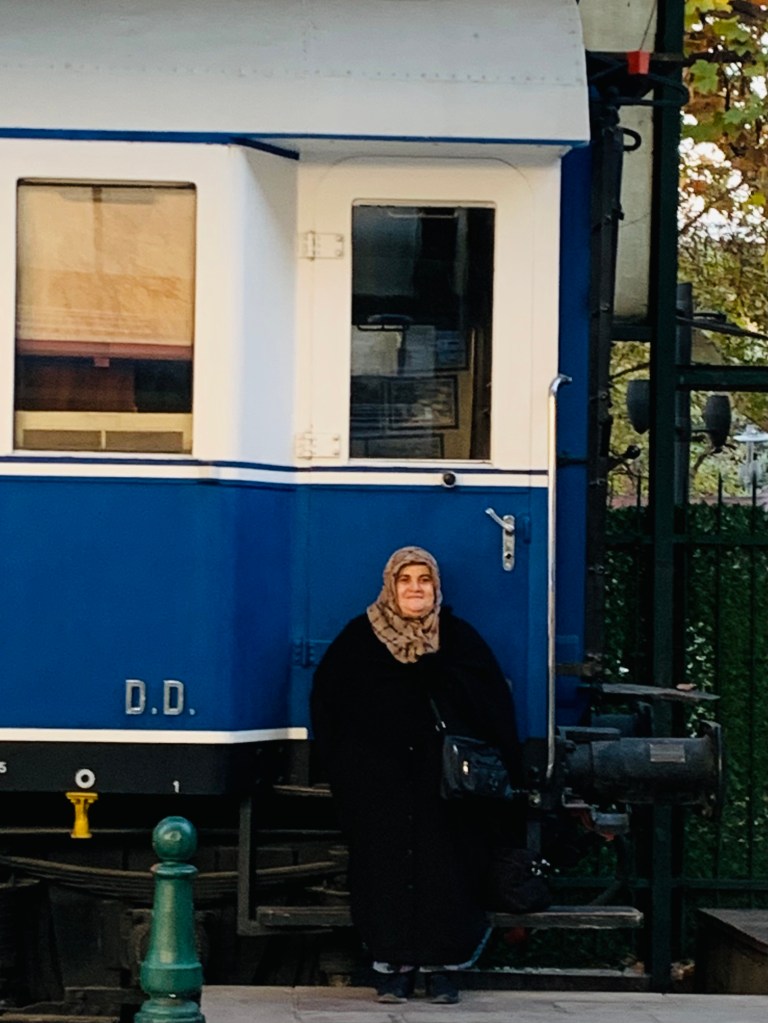
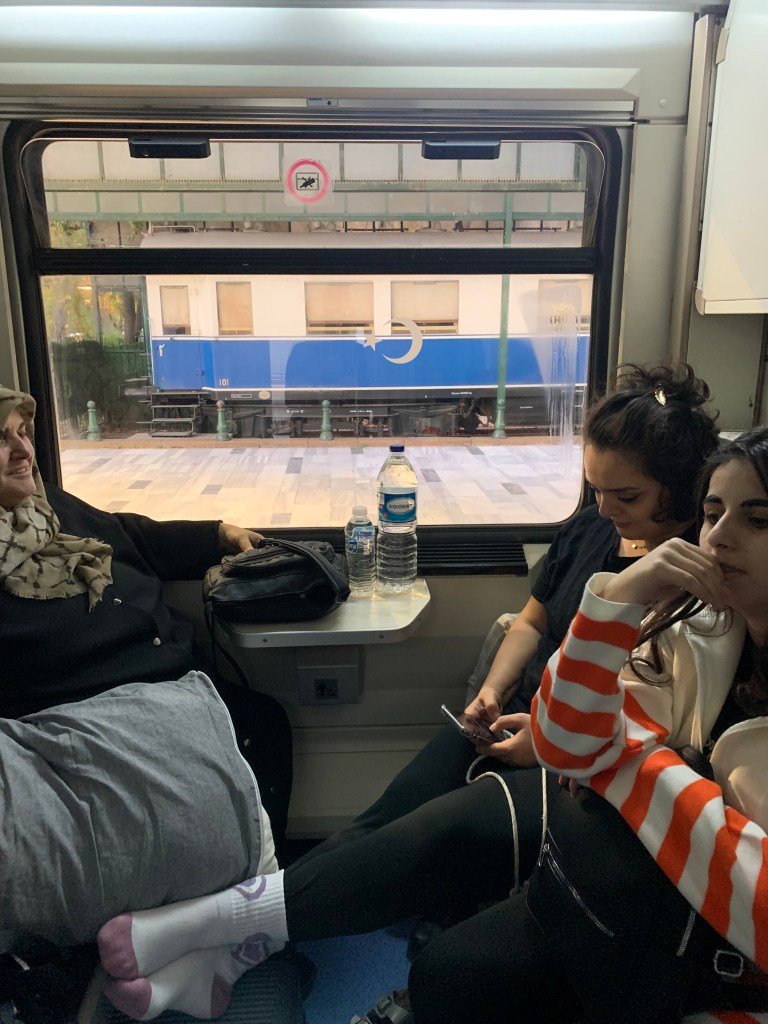
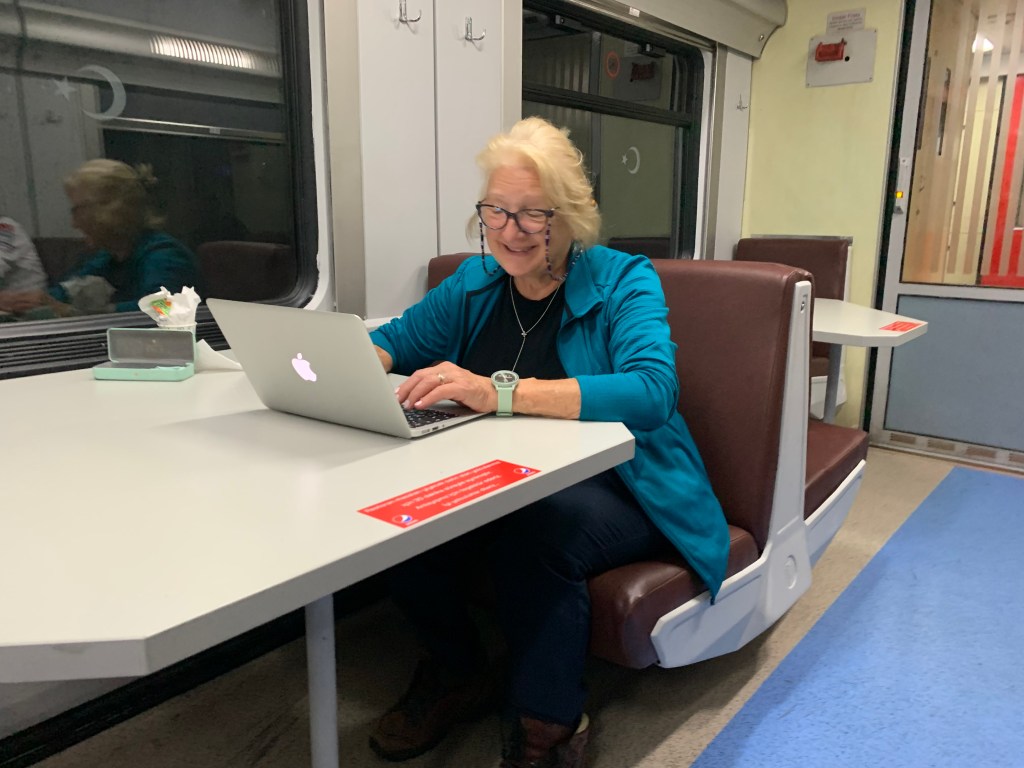
    I shared the 4-berth couchette with 3 Turkish women (the photo of the eldest on the steps of a wagon) – they made themselves completely at home: 3 generations, 3 large suitcases, bags, drinks, food…Not very communicative – they were just self-contained. They left me a top bunk; no problem, except that it was quite hot – I kept opening the window, they kept closing it.

    Spent all my waking hours in the restaurant car, where views were better as available on both sides of the carriage. And the views are definitely spectacular. The train gets very busy in winter, for the views of the mountains covered in snow.

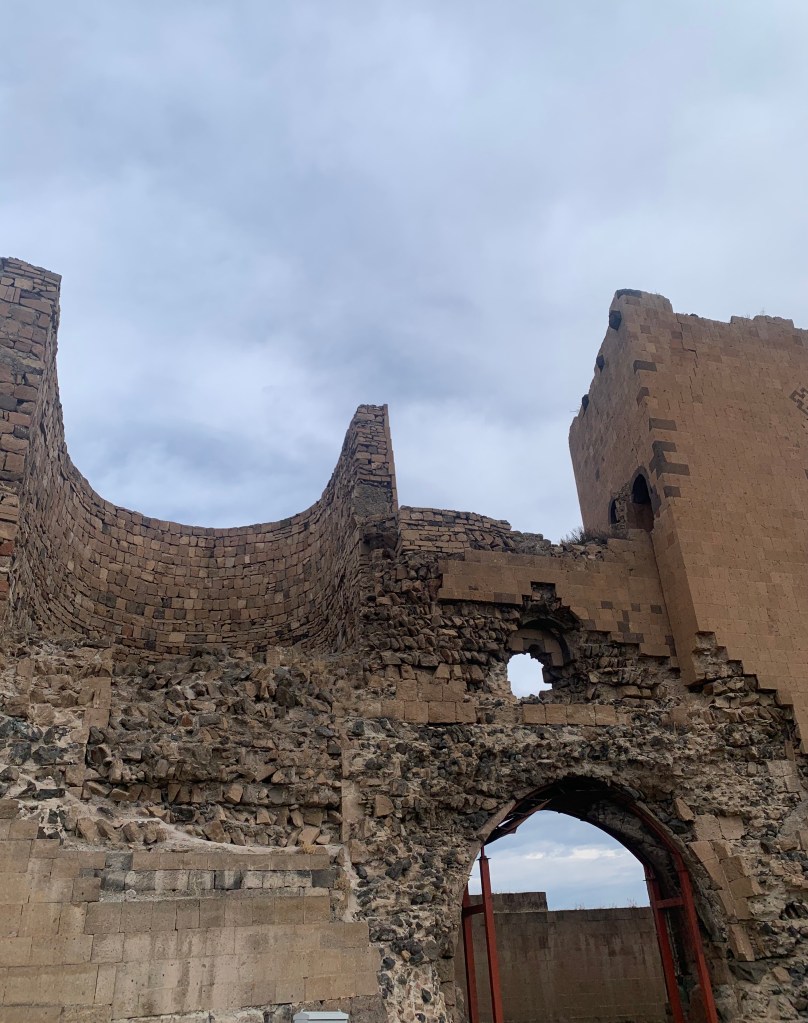
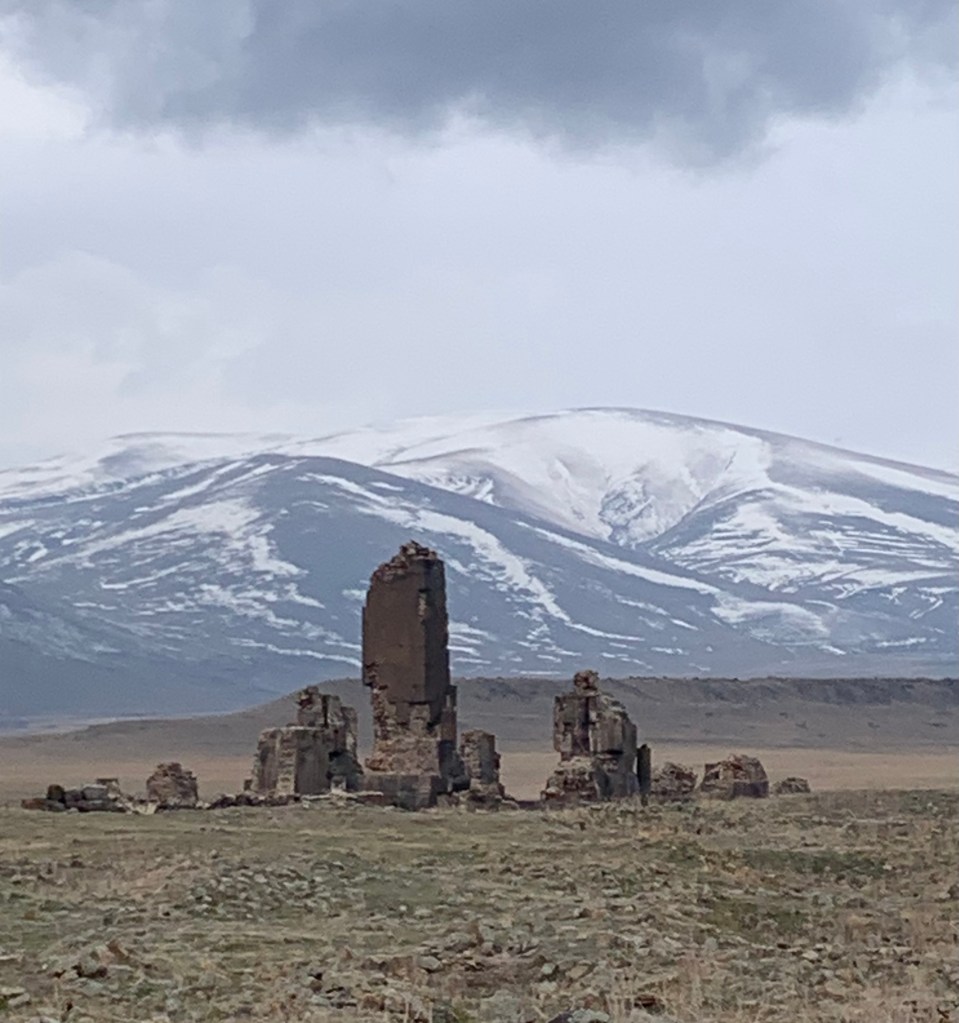
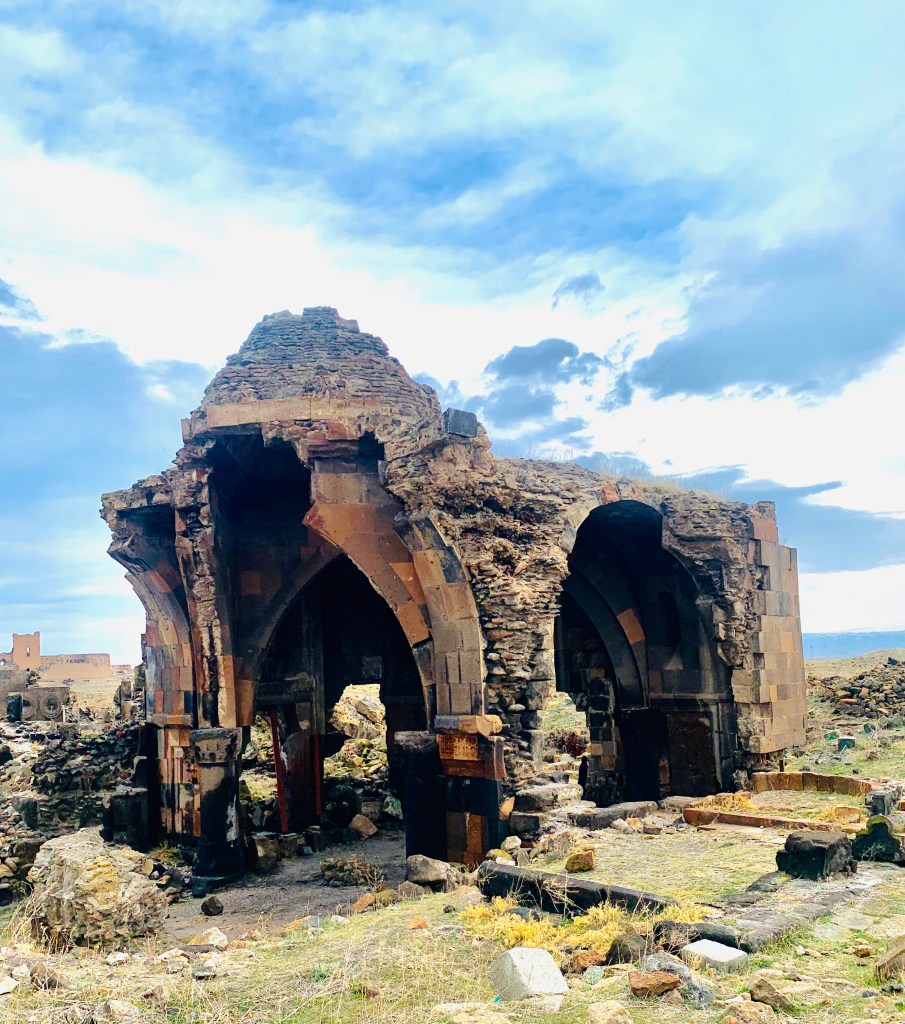
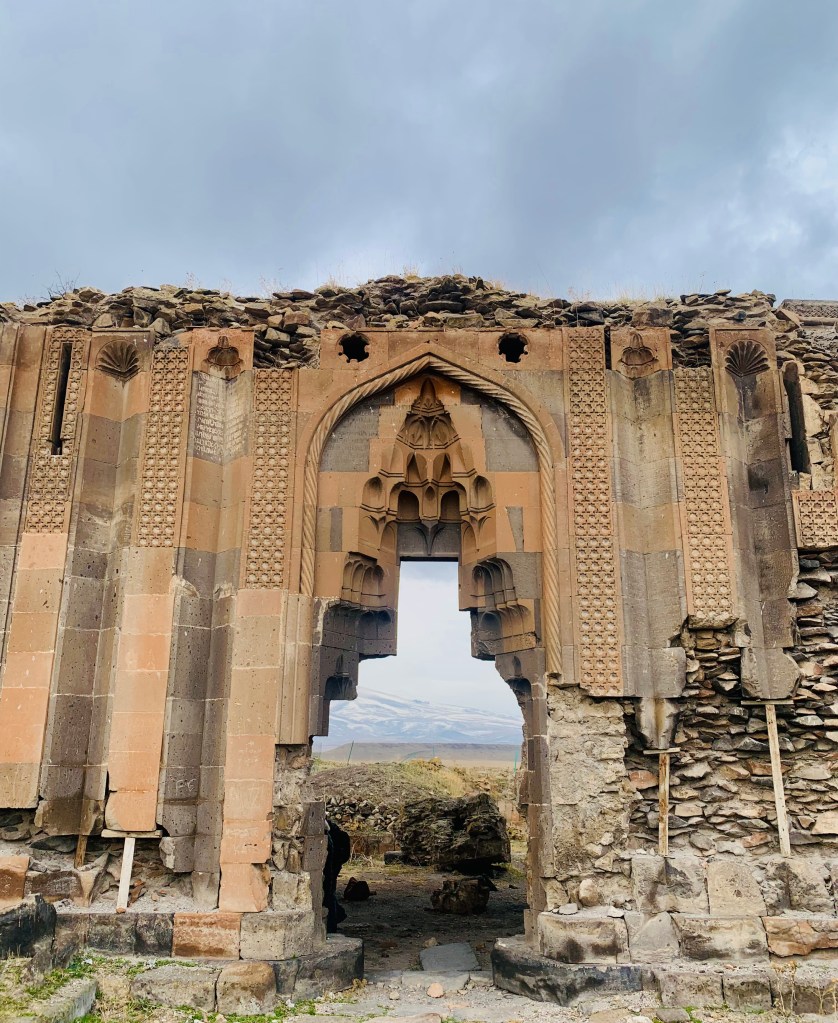
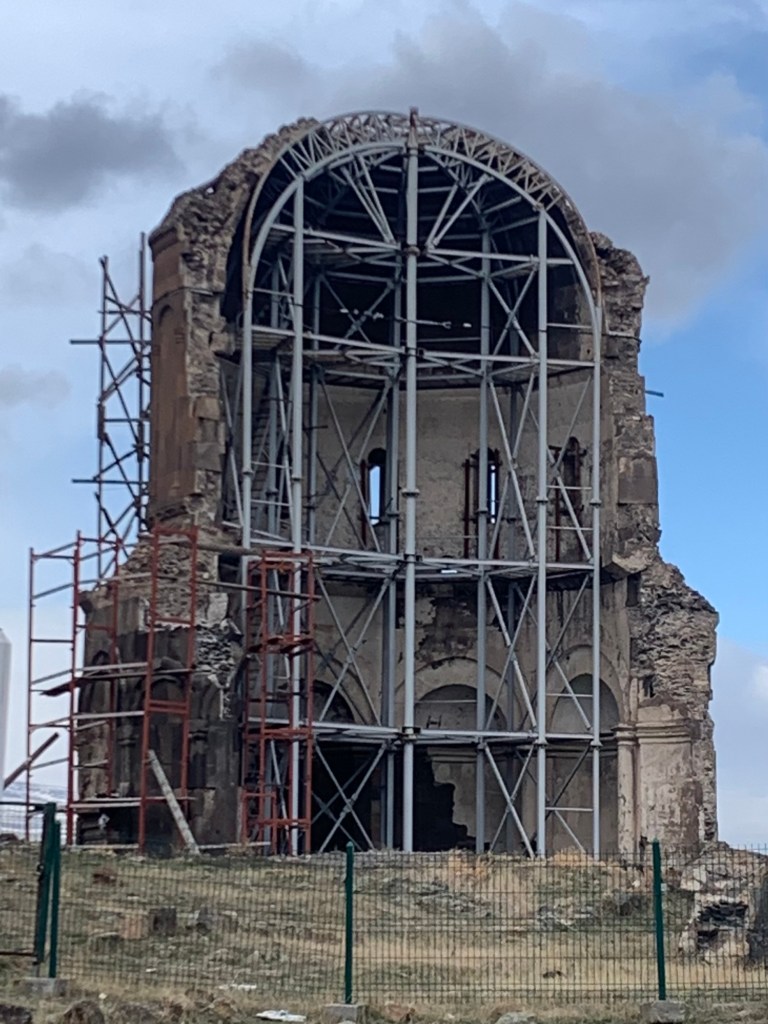
    Met Miguel, the Portuguese (cyclist) who lives in Bern, and was doing a 2 week circular trip overland by train/ferry from Bern. If you thought I was mad…:)) Then there was Tom from Wales (who lives in Toulouse) – one has enough time to really get to know one’s travel companions on this journey. (Tom and I landed in the same hotel in Kars.) There was also an Australian family, mum Suzanne, dad Simon, and “the boys”, Oscar and Max (in their 20’s). The boys were visiting parents who are on a posting in Ankara. They’d booked the Lonely Planet recommended guide, Celil Ersozoglu, to take them to Ani, the Cildir Lake and Seitan Kalesi (the Devil’s Castle) and kindly agreed to let Tom and me join them. Had a super day. Ani, a UNESCO site, is in a magnificent setting. The canyons surrounding it, the double walls around the fortified town…

    We drove around Lake Cildir which is famous in these parts for freezing over so much that they have sleigh rides on it, that cars do sliding arabesques on it, that people fish for carp through the holes in the ice… At present, it is cold and windblown, but no ice – climate change?

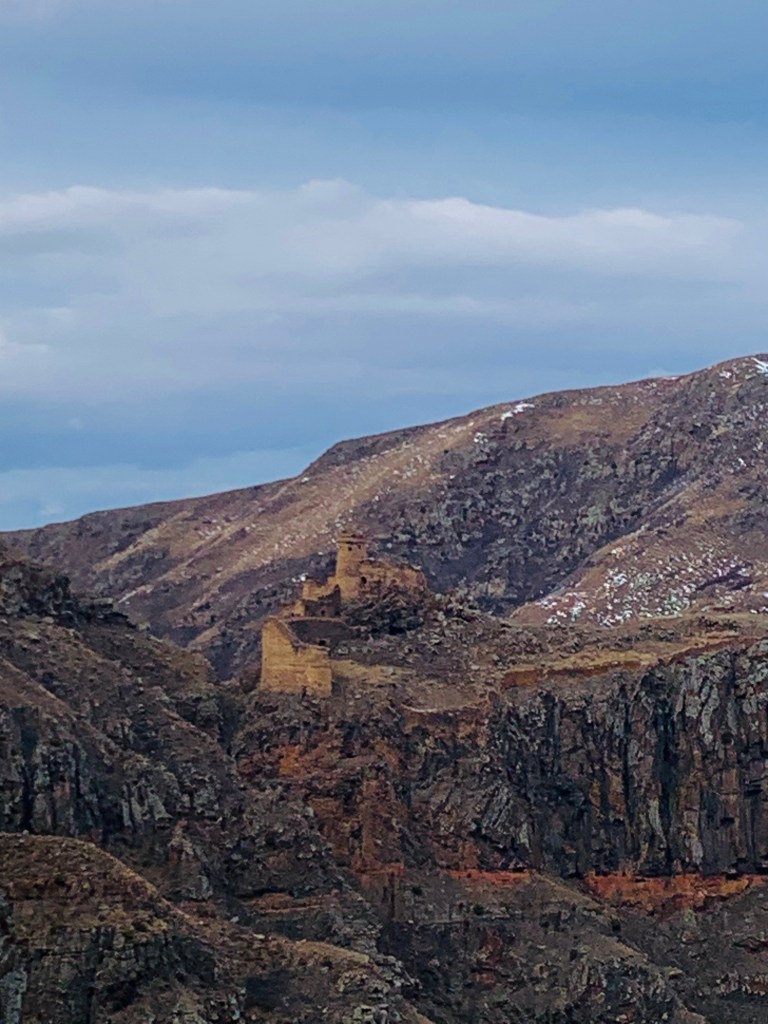
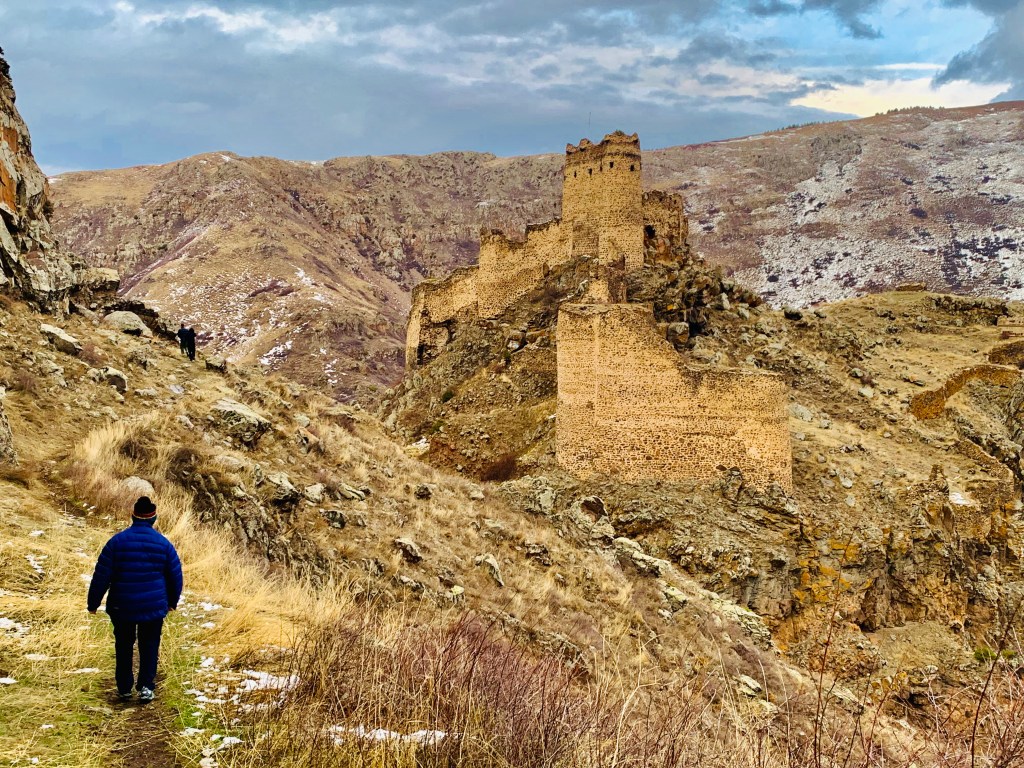
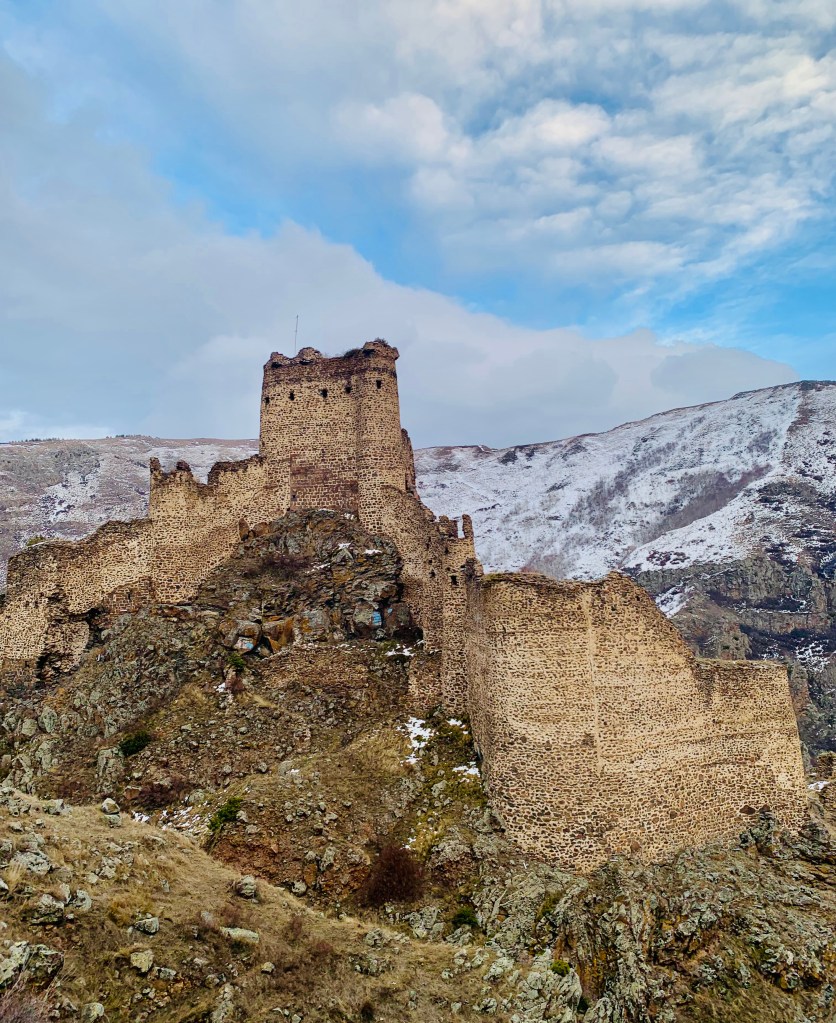
    The road to Devil’s Castle is a single track one with a metal fence (broken in places) along a deep canyon below. The mountains around look barren, inhospitable, magnificent. When the castle comes into view, it is breathtaking in its proud isolation. The car can only get to within about a mile of it – then we walked.

    Should anyone come this way, there are better hotels than the Hotel Kent Ani. It was cheap as chips – c £85 for 5 nights, B&B (so I don’t mind leaving a day early). My room was small, facing the back, on the 2nd floor. Smelt strongly of cigarette smoke and pigeon shit. Flecks of soot on the linen when I opened the window – smearing into black streaks… but I was very tired.

    And in the morning, the pigeons were cooing on the windowsill, LOUDLY – competing with the muezzin in the minaret nearby. The hotel is virtually empty, so I asked if I could move. The boy who showed me the new room, opened the door as if it were a palace and said “beautiful”? The room is exactly the same, but it is on the 4th floor and thus above the roosting pigeons and the soot. The loo seat is broken and shifting – showed the reception guy the google trans about the toilet seat. He sighed: “problem…”

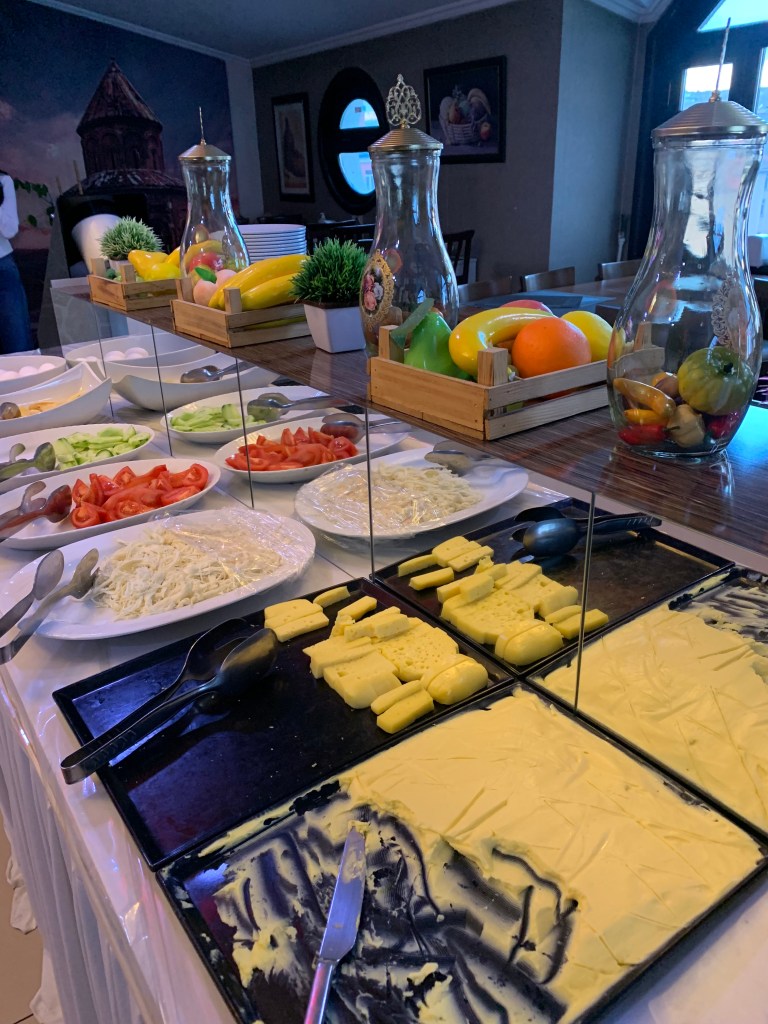
    Breakfast is fun too – lots of olives, tahini, chai, several (very salty) cheeses… but the fruit is plastic :))

    I shall start my journey to Armenia tomorrow. The 3 boys, Tom, Oscar, Max left yesterday – a dolmus to another town, a bus to the border, cross on foot, get another bus or taxi…

    Georgia tomorrow.

  • Mardin to Ankara

    Nov 23rd, 2023

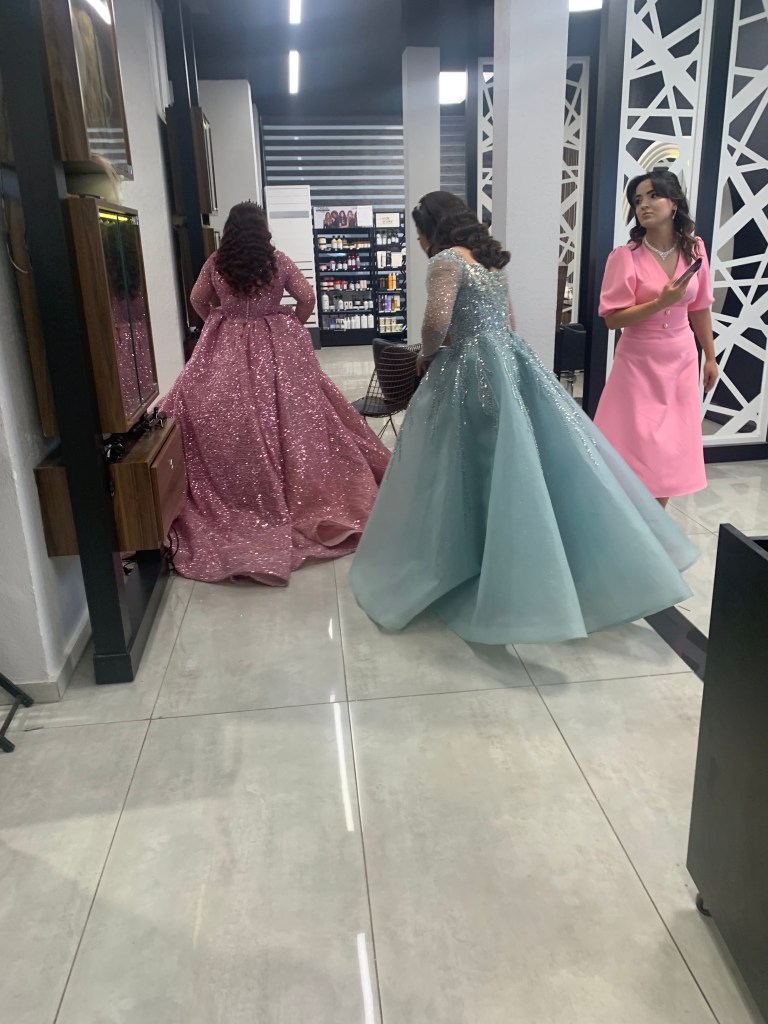
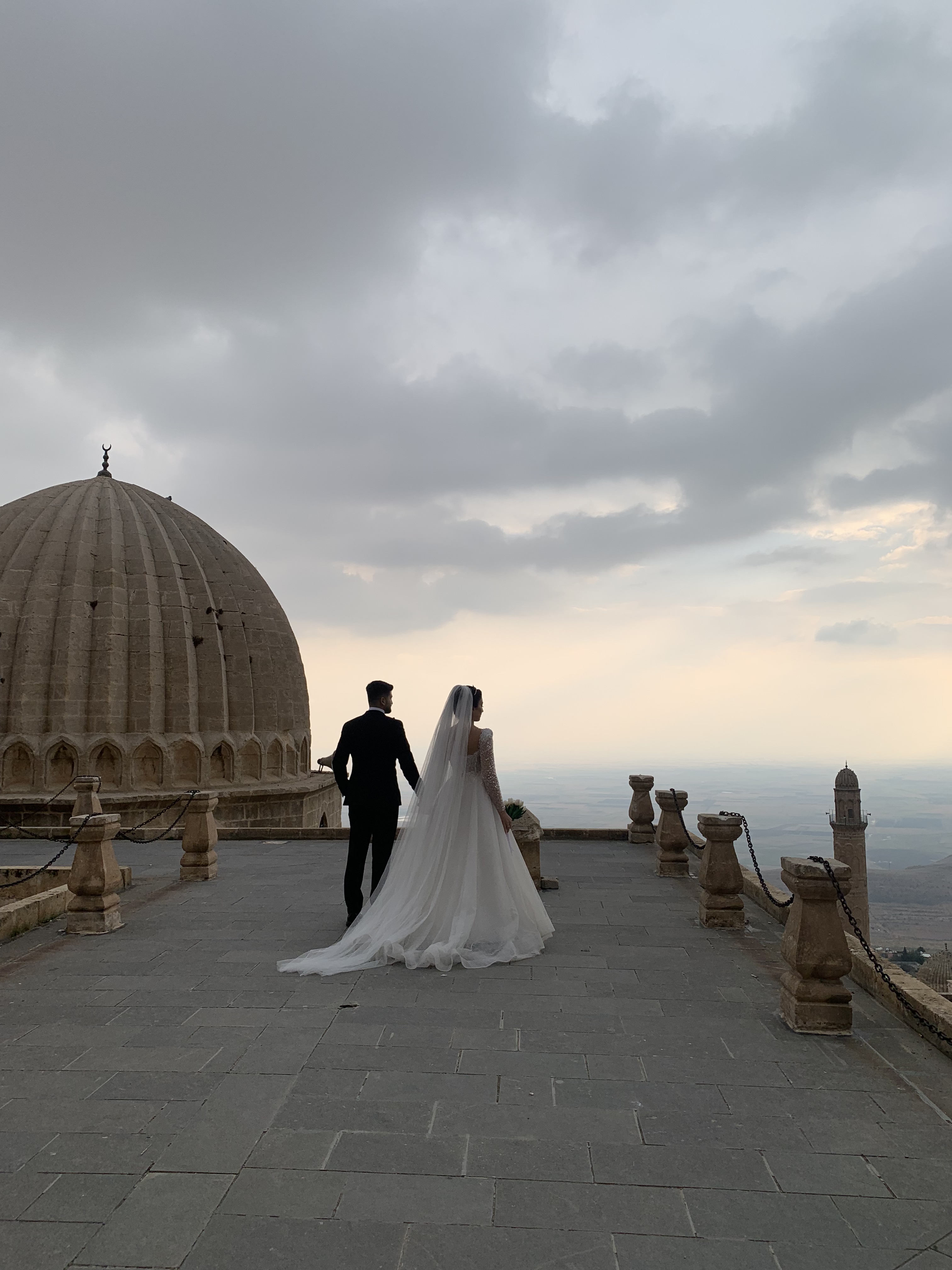
    For my last two days in Mardin (18-20 November), the weather was on the turn. It became a lot colder, and when the wind and rain hit, it was biblical. Mardin being on a steep hill, there were rivers and streams running downhill everywhere. Really felt sorry for the brides being done up in the salon for their big day. Their multicoloured Barbie frocks, the sparkly tiaras, the special make up and high-heels could not possibly survive the weather.

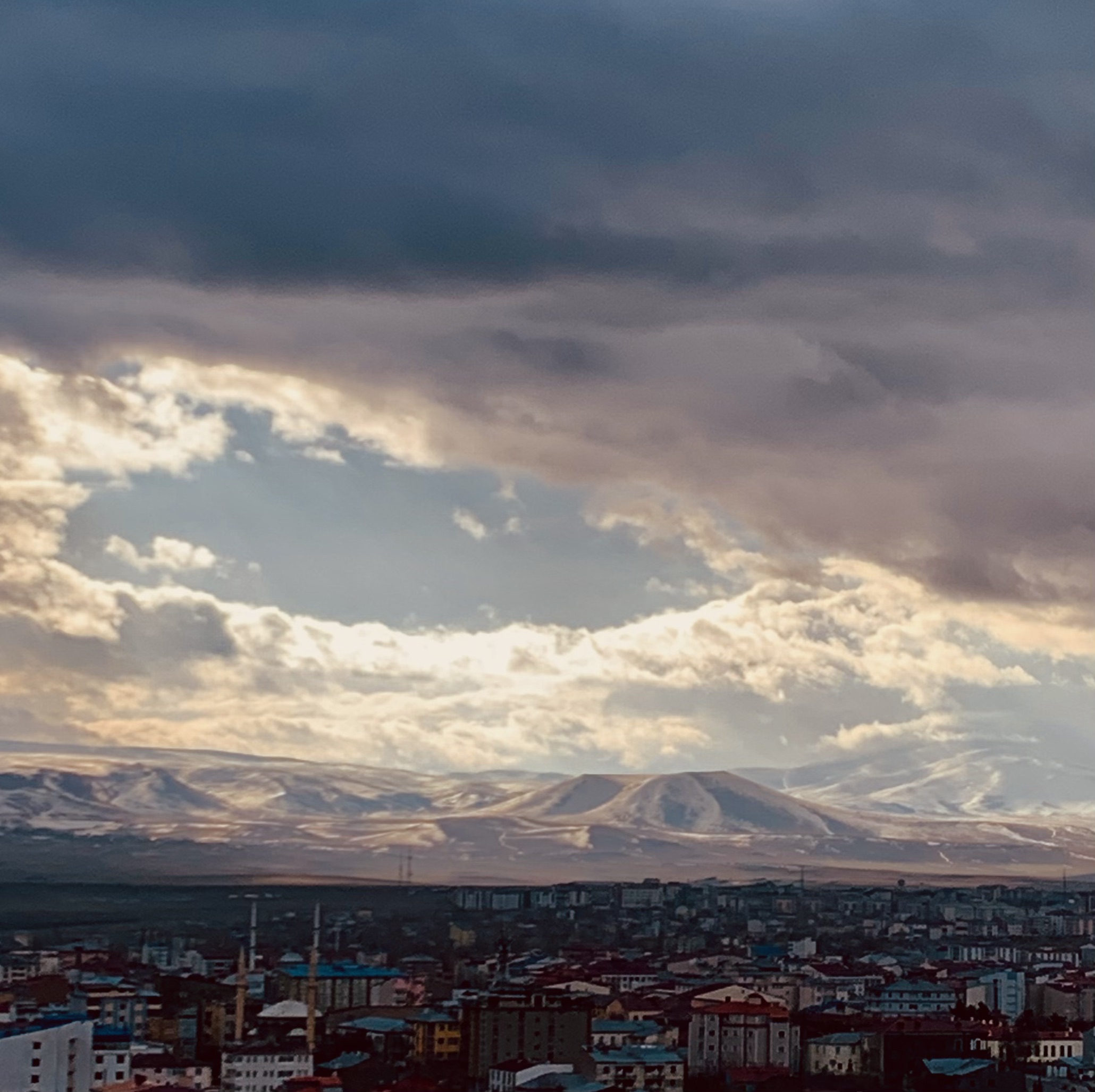
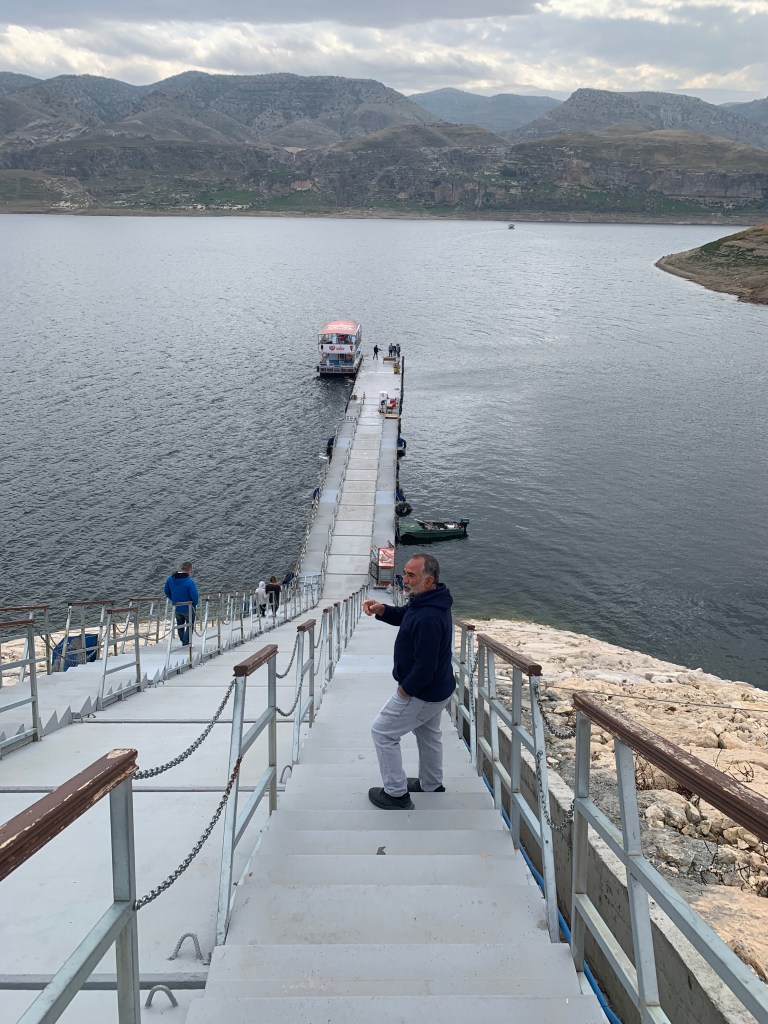
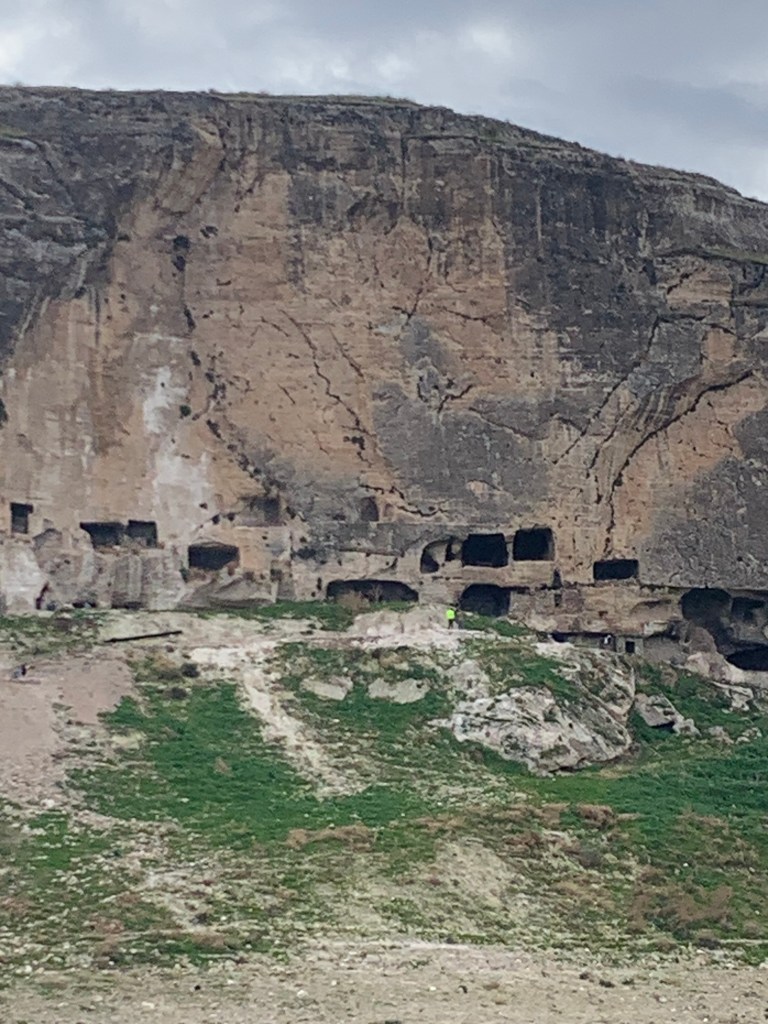
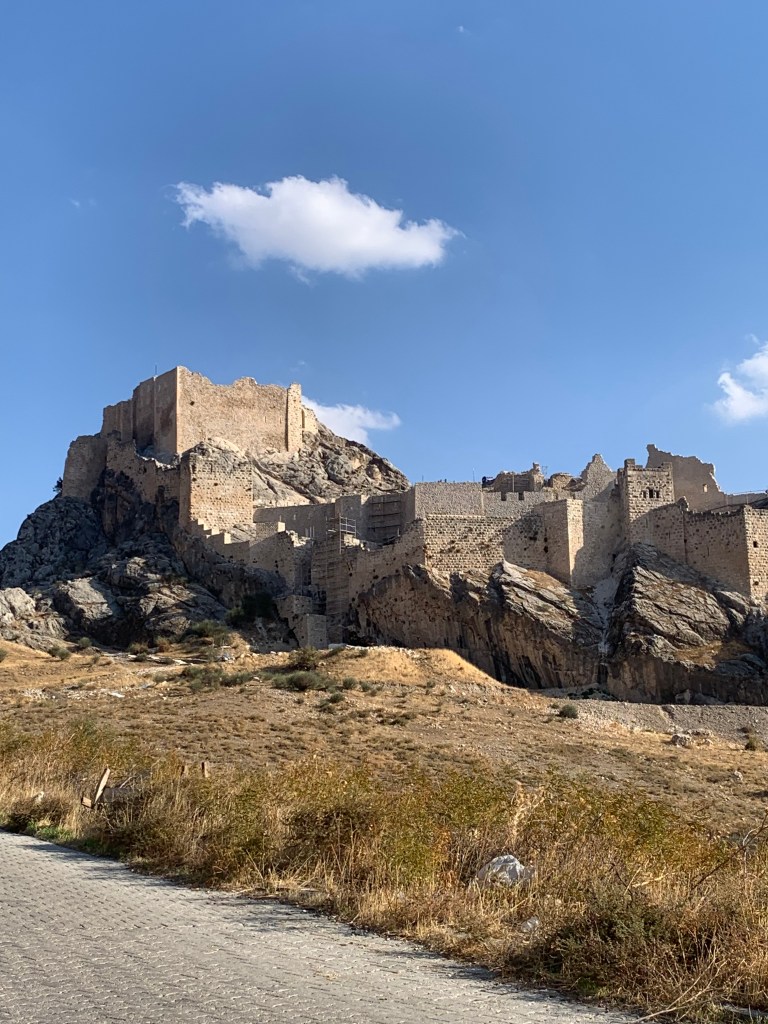
    Went to have a look at Hasankeyf, the ancient village on the Tigris that was drowned when they built a hydroelectric dam there; the archeologists managed to get a few key buildings transferred up, but the village that has outlasted invasions and been a post on the Silk Road is now deep under water. The place looks lifeless and desolate, with the old cave dwellings appearing blind on one side of the dam (3 families refused to move and still live in the caves) and the museum and the new houses soulless on the other. There is still a lot of ill feeling towards the government for having destroyed the old life in the village – the guide was very passionate, and I could sense his sadness and anger without understanding Turkish.

    It took 3 dolmuses and one kind driver of a private car to get there. Felt like I was a parcel in a “pass the parcel” game – bus drivers and controllers shifting me along… I did strike it lucky on the pleasure boat taking us on an hour’s trip on the water. Two families from Istanbul, everyone spoke English (children go to a private school and are taught French and German too) gave me a lift back, with a side trip to an abandoned Yezidi (Kurdish) village (another sad place as the villagers had to leave as they were being terrorised by the local Turkish population) and a 4th ct monastery, and we had a nice meal together.

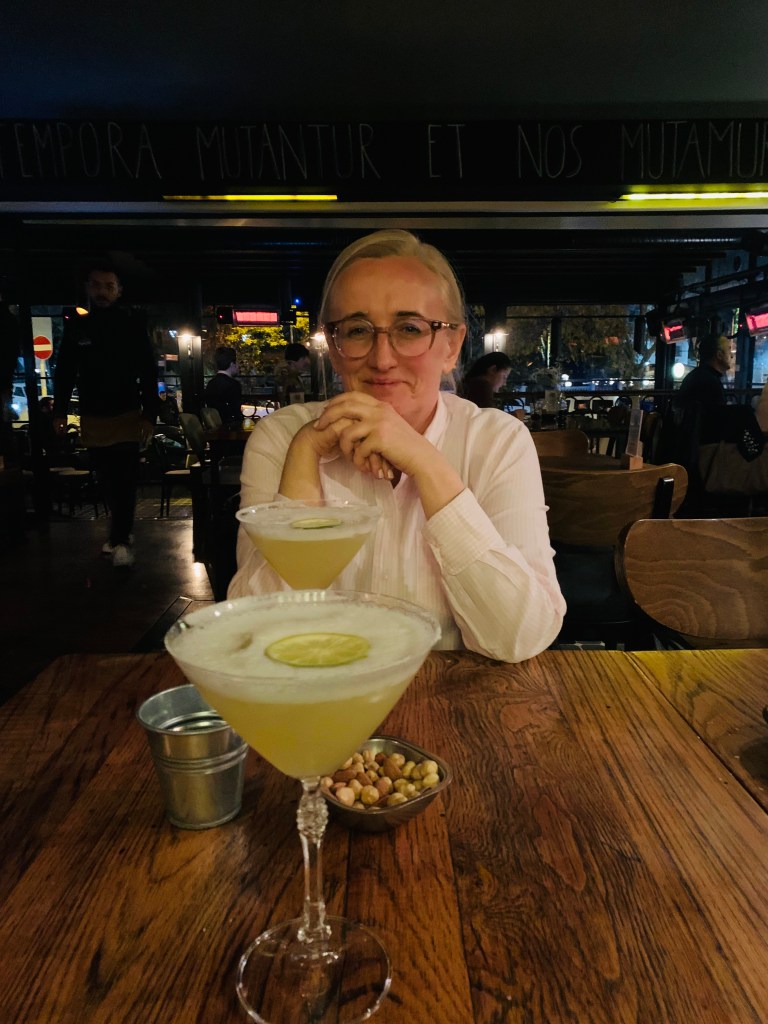
    I flew into Ankara from Mardin – an hour and a half flight, rather than some 16 hours on the bus. Magda, who I met in Konya, invited me to stay with her. She has been a wonderful host and I felt very much at home. It has been lovely to be in a home rather than a hotel, and we got on like a house on fire. While she was at work (at the Polish Embassy), I went sightseeing.

    The two days have flown by and I am off on the next leg – taking the much praised Dogu Express train overnight to Kars, near the Armenian border.

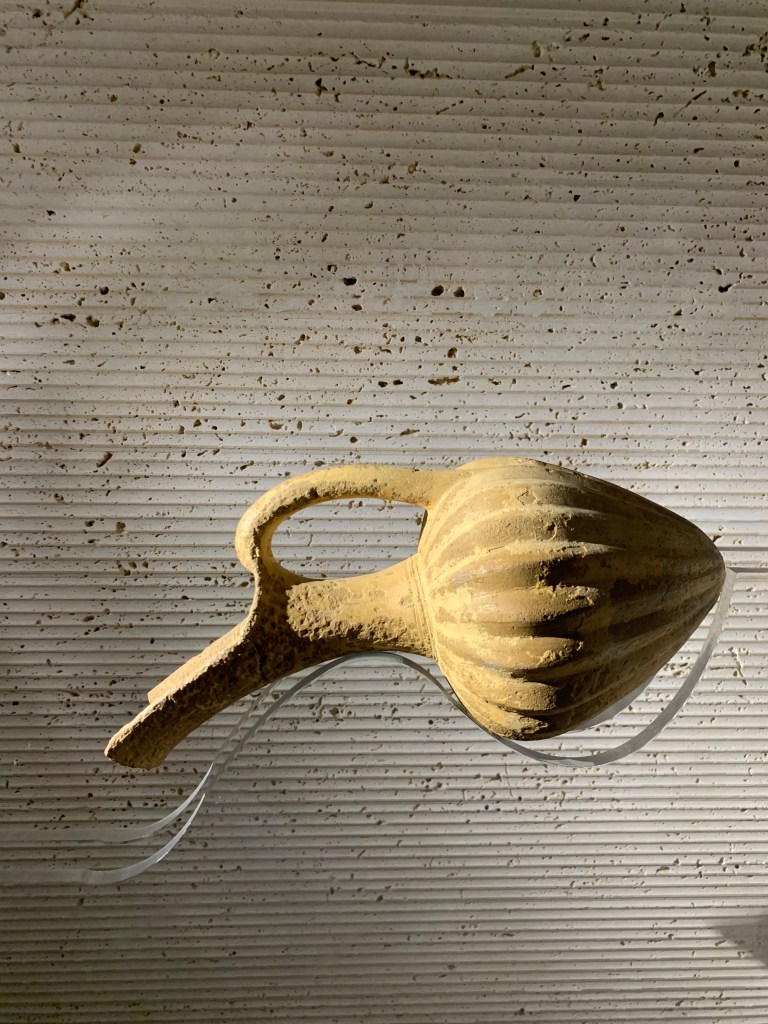
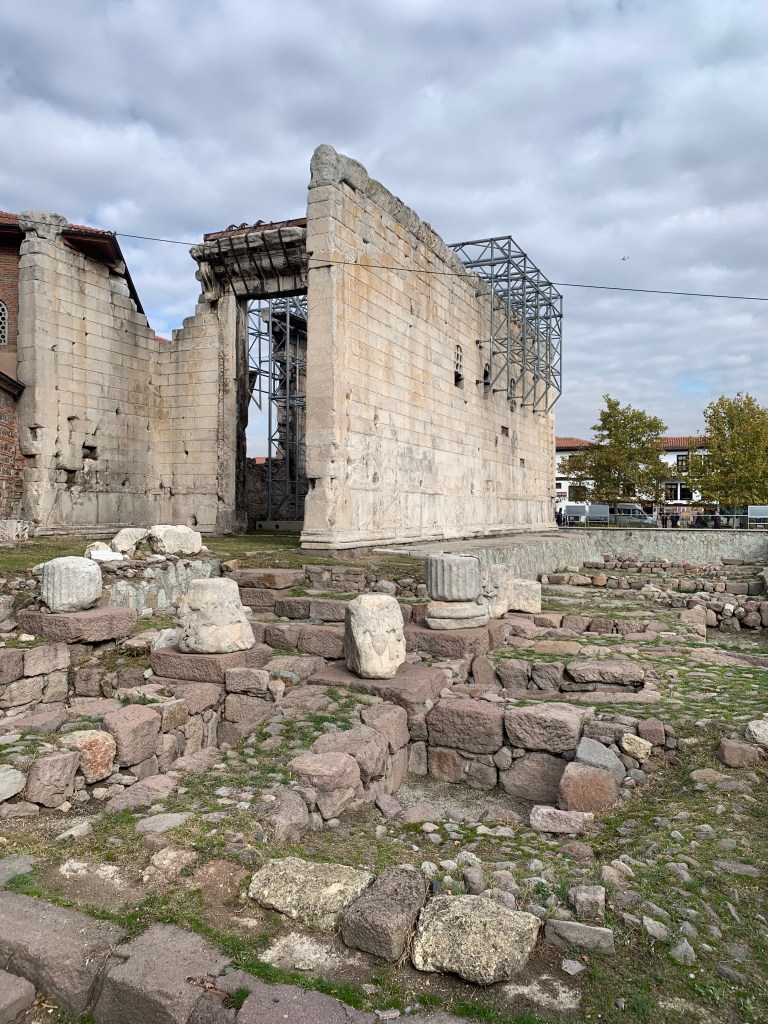
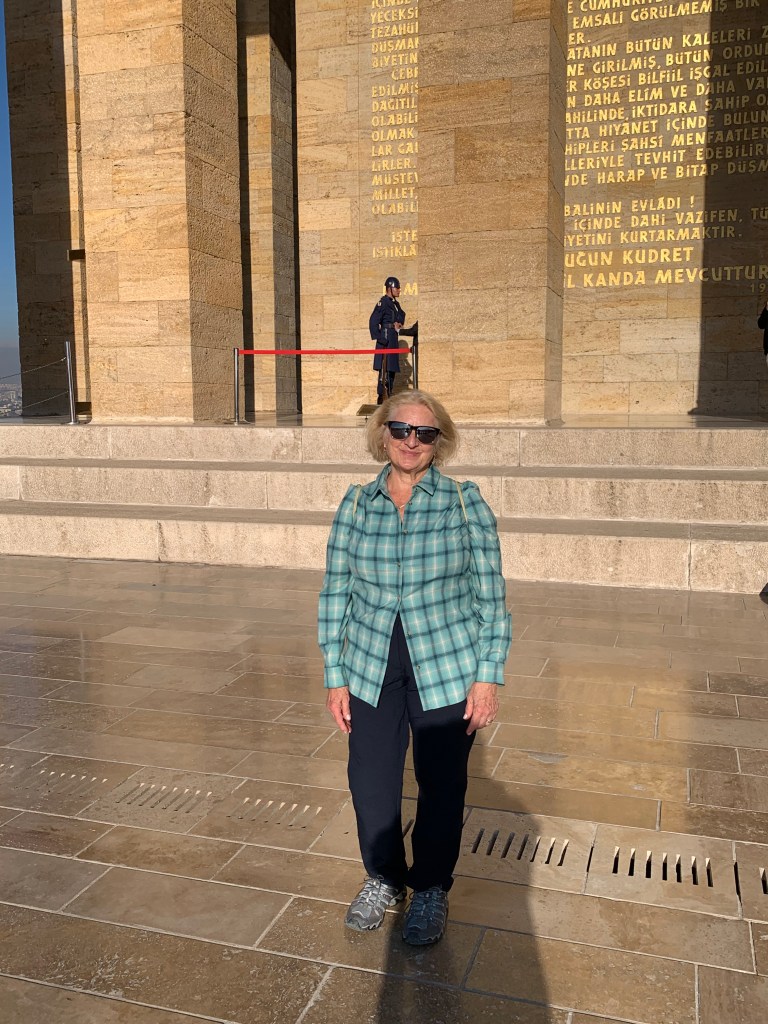
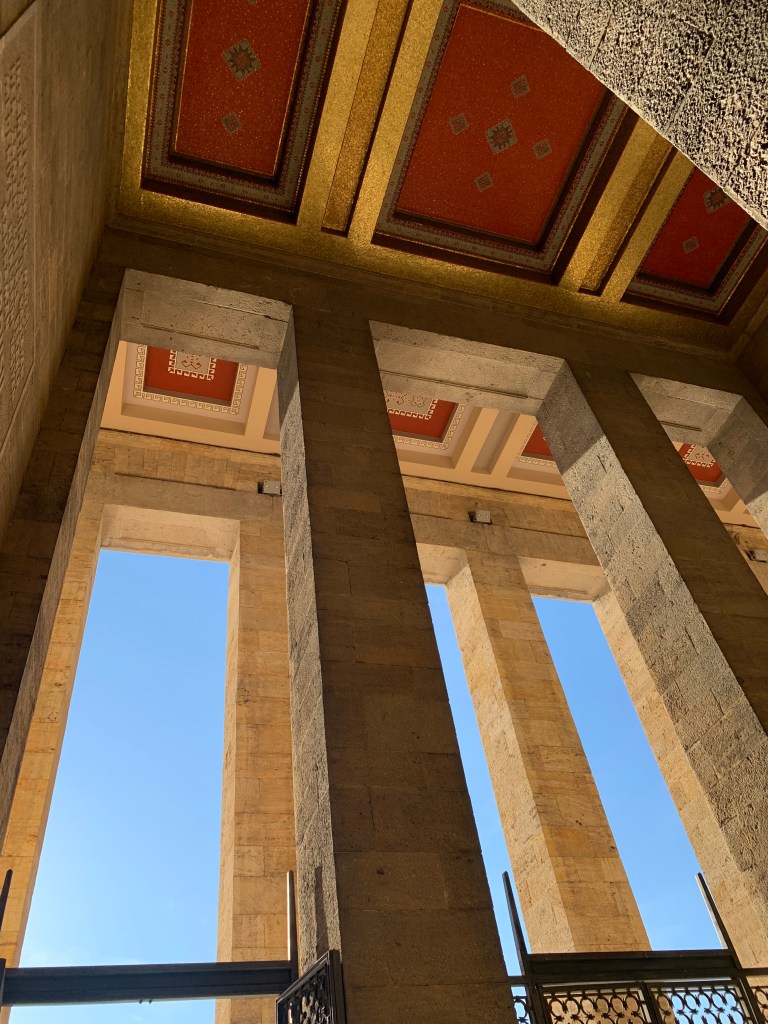
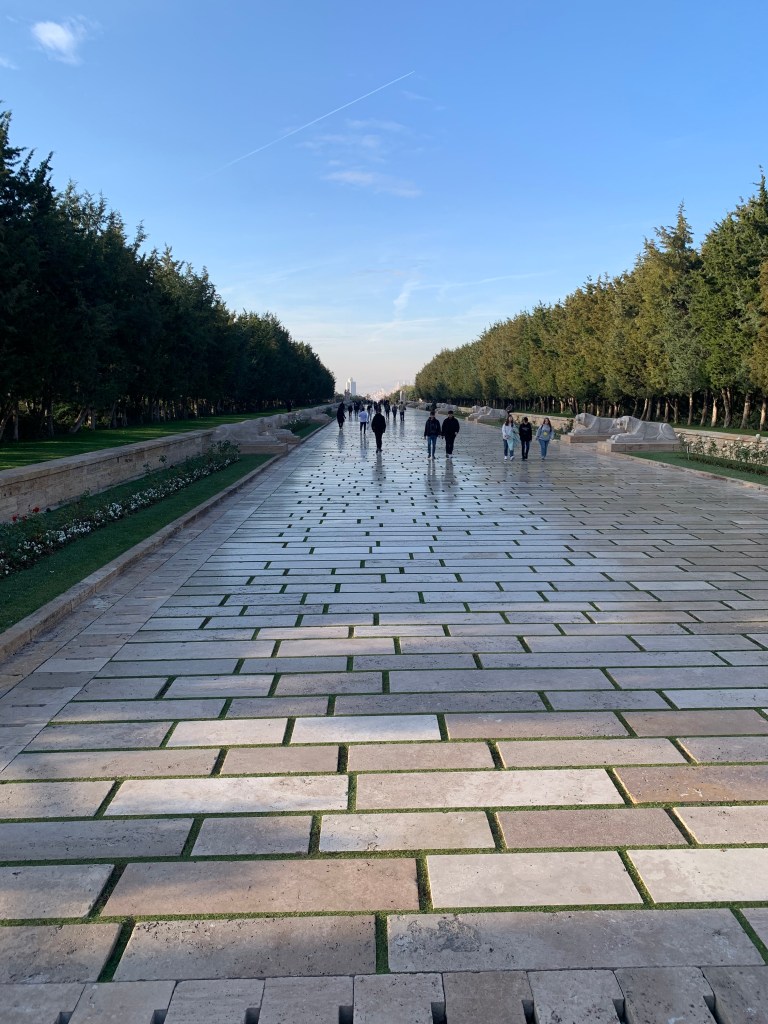
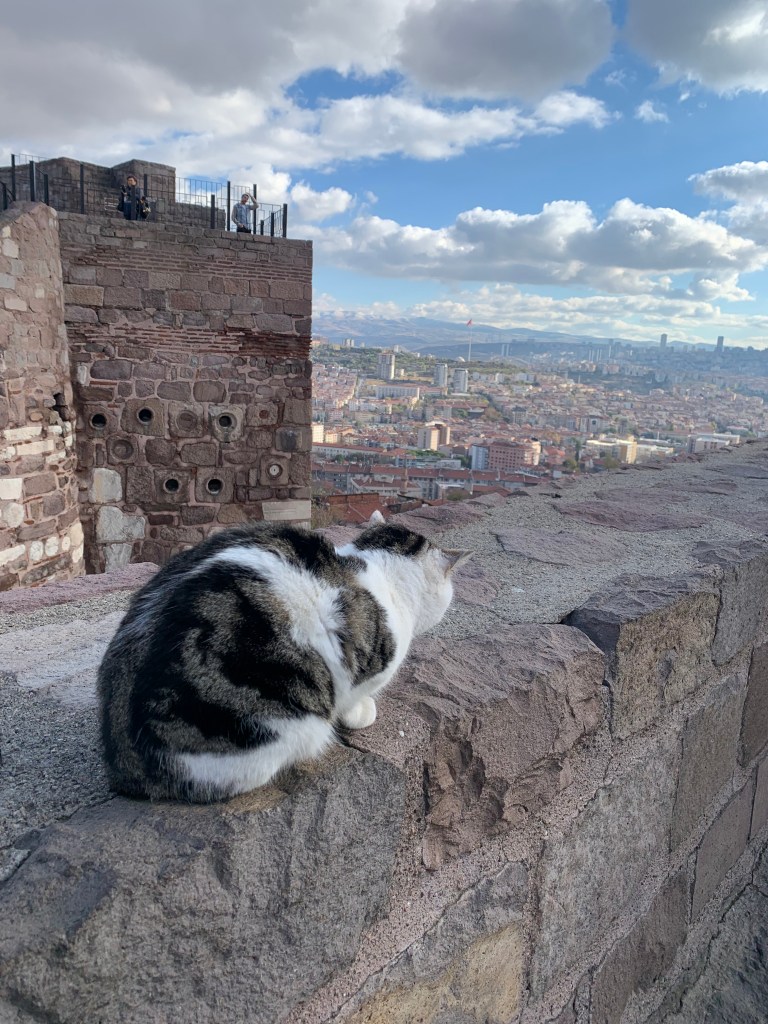
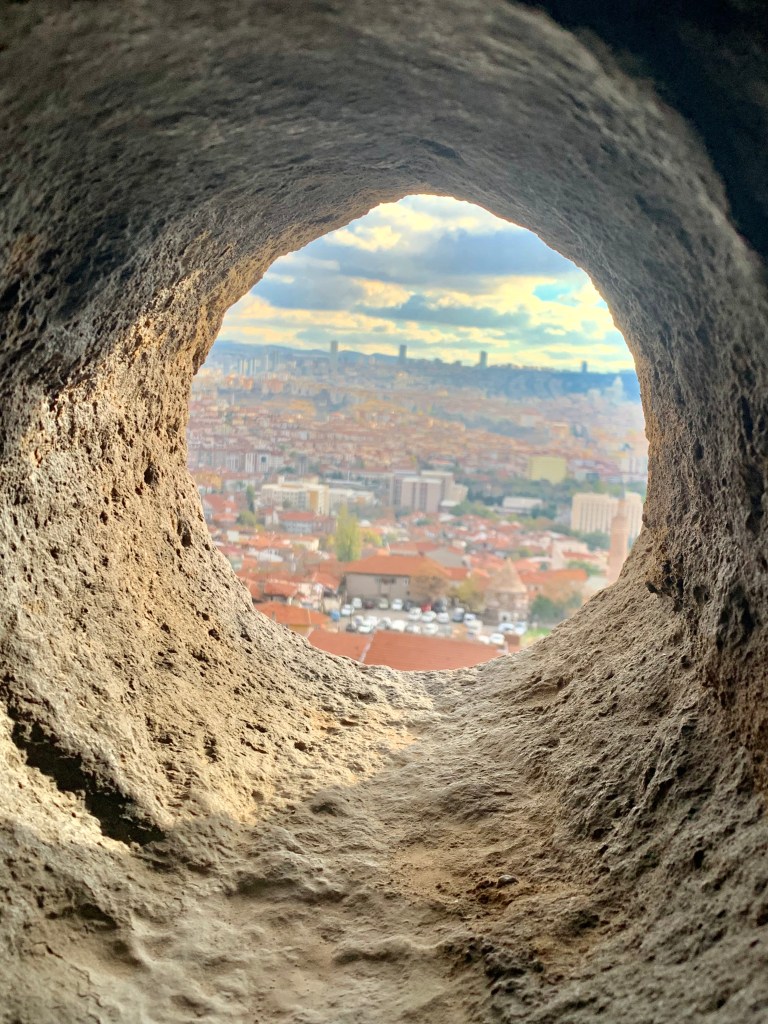
    Ankara is a sprawling town, with congested traffic and whizzing buses. There are three tube lines (quite old now). I managed to see the main bits – the Museum of Anatolian Civilisations, the Ataturk Mausoleum, the Roman baths… Their official blurb usually states that the “old, historic Ankara is buried under the modern Ankara”.

    There has been a lot of construction going on everywhere I went, but not much looks finished. Comparing the modern box-like buildings to the graceful houses of old with their intricate stonework and decorative designs is not profitable. The current preferred colours for the outside of houses are all shades of yellow and pink.

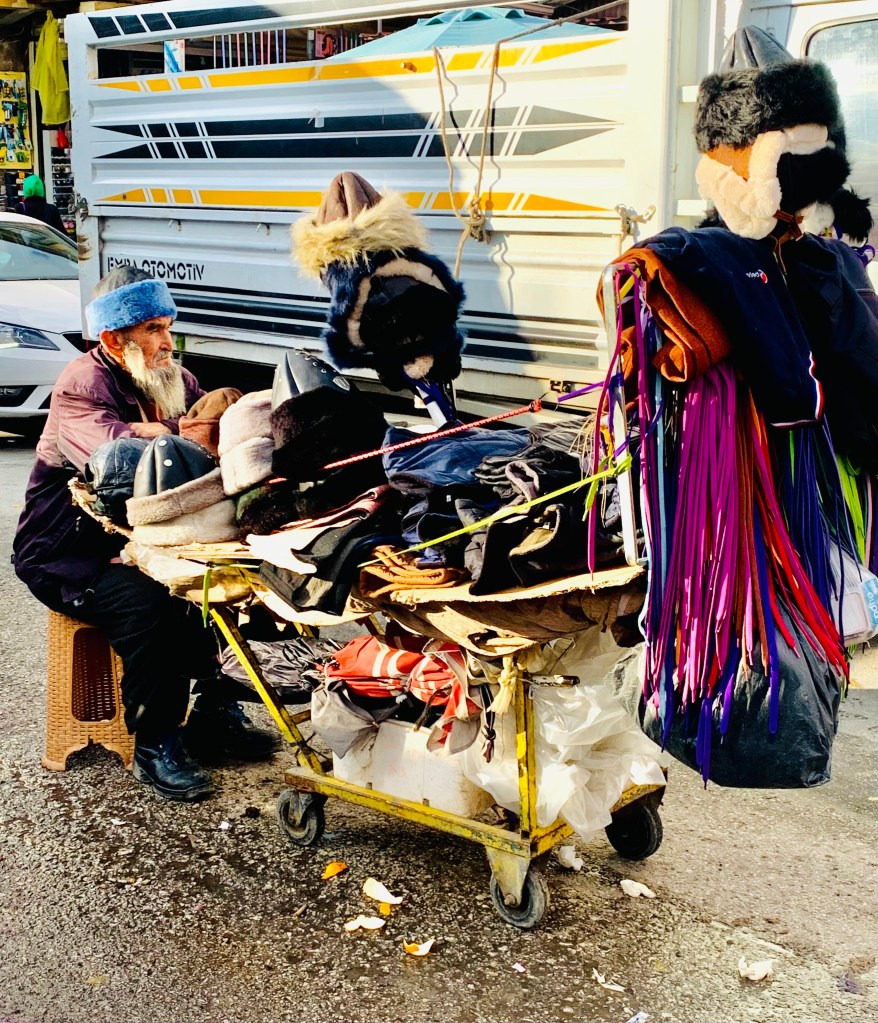
    There is dumping and rubbish everywhere, especially plastic water bottles and wrappers. There seems to be little civic pride. When I asked about it, I got two explanations: one was that people understand freedom and democracy as there right to do as they please (having missed the bit about responsibility); the other was that eduction and general teaching of culture has been in a steady decline for the last 20-30 years, with religious teachings taking precedence.

    The street lighting seems to be mainly in the middle of the road, so the light barely reaches the pavements, which are often broken, potholed and uneven – Turkey is not a place for wheelchair or pushchair users. (Capadoccia area was the exception, the villages of Goreme and Uchisar twinkling like fairy towns.)

  • Urfa, Mardin

    Nov 17th, 2023

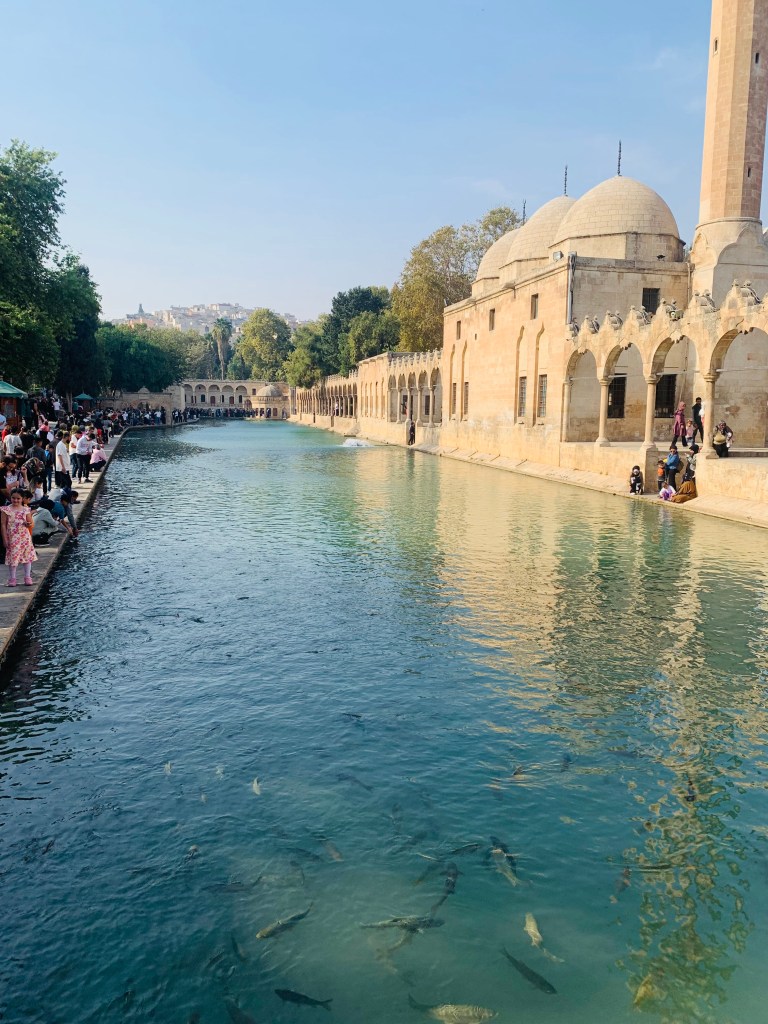
    This part of the trip through Southeastern Anatolia is all on the spur of the moment and some recommendation. I wanted to go to Antakya, to see a large mosaic floating under a hotel (look it up, looks fab), but the travel logistics were so complex that when Mehmet in Isparta INSISTED I could not possibly miss Mardin, his home town, both because it is beautiful and because it is on the Silk Road, I agreed. Urfa (Shanliurfa, officially), was on the way and (they say) is prophet Abraham’s birthplace, and there are two important and highly rated museums there… Unfortunately, both the Archeological museum and the Mosaic one are “temporarily closed” – the February ’23 earthquake damage. The Abraham cave, the mosque etc, all the places of pilgrimage, are in good working order. Maybe miracles do happen. (After all, Abraham was saved after having been hurled from the fortress by “landing in a bed of roses”. The perfume was slightly different when I visited – the manure had just been put on the beds throughout the park. The other part of the Abraham legend is that the flames of the fire prepared for him by the pagan ruler were turned into cool water and the hot coals into fish – hence the fat carp, never caught or eaten, in the two pools. )

    The “Kervid Butik Otel” in Urfa was recommended to me by Yunus, who I climbed the Nemrut Dagi with. He said it was central (it is), run by his cousin (it is), and I would be well looked after (I wasn’t). When I arrived, Mahmout, the Syrian “manager” (he said it in such a way that the inverted commas were implied), was sitting in the middle of the untidy cafe space, smoking a hookah, looking very much like a thin version of a caterpillar in Alice in Wonderland. The two nights spent there were not the best. There was a nice terrace, but it did not feel comfortable with all the hookah-smoking men and the sweet smell of flavoured tobacco. The bazaar was near and very lively, the views great. Though there was a constant flow of pilgrims and tourists, the park area was clean and well maintained. This is noticeable as generally there does not appear to be much civic pride – there is rubbish everywhere, from cigarette butts to plastic and all in between.

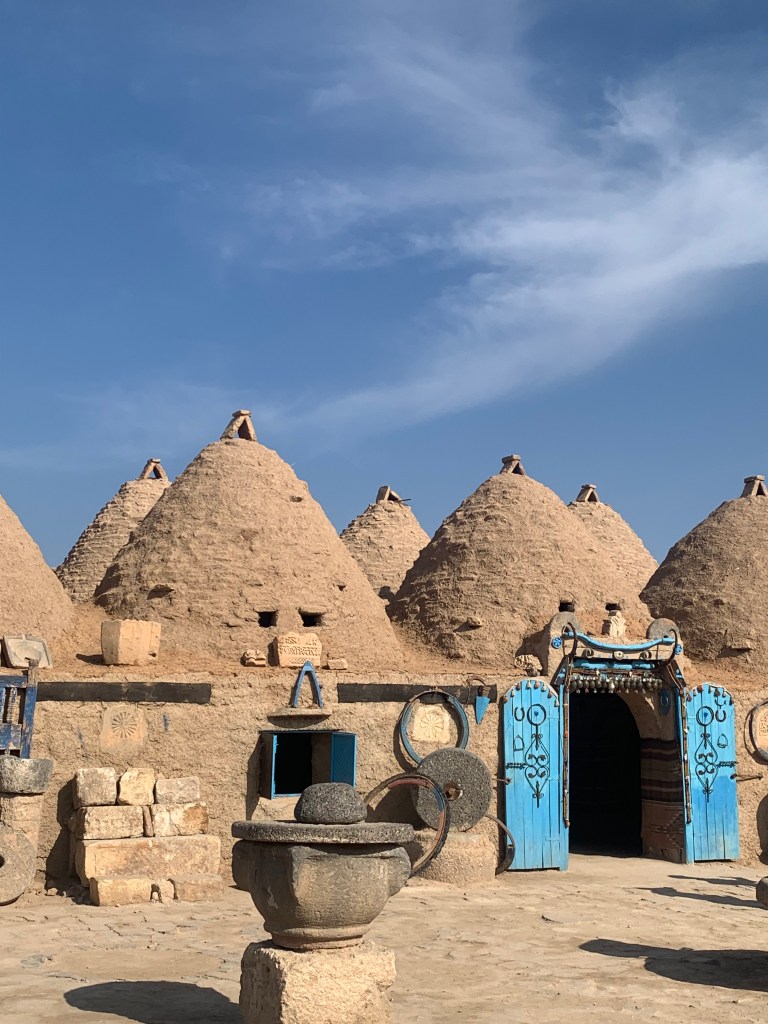
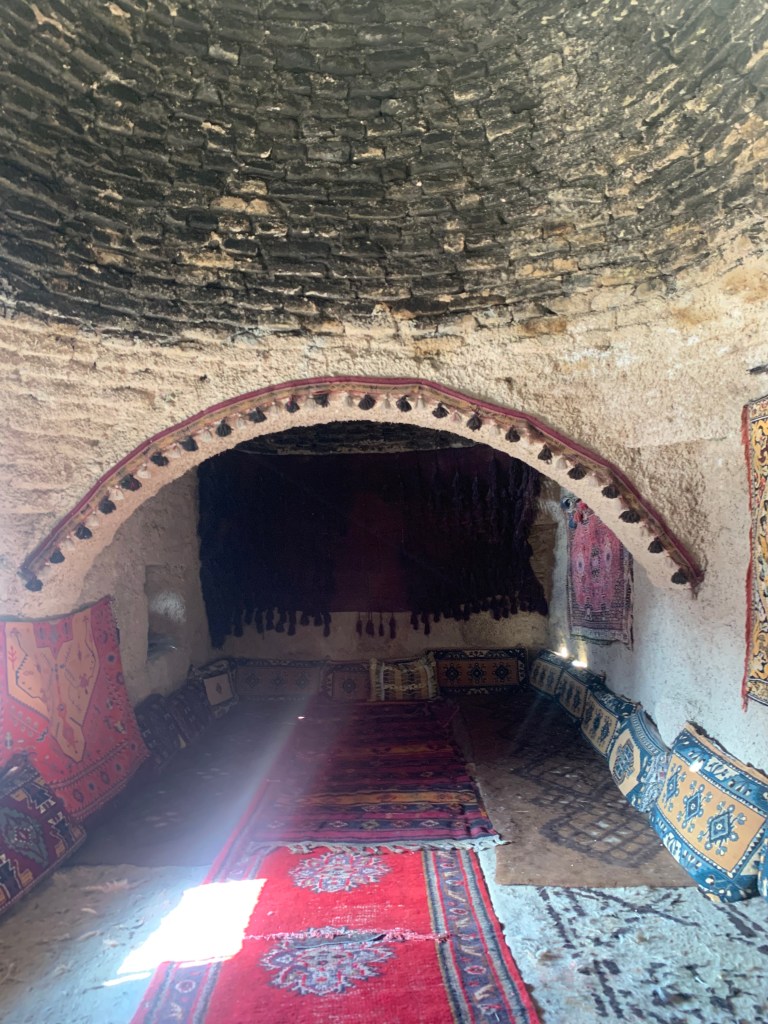
    I had a nice day out in the area around Urfa – Harran is a small village now, but it is one of the places that has been continuously occupied for at least 5000 years. The beehive houses made of mud bricks are still in use, though now as stables and sheds, rather than the living quarters. There is restoration work being done on the very old Grand Mosque and its square minaret, but it is clear that there’s a lot more archeological work to be done in the area.

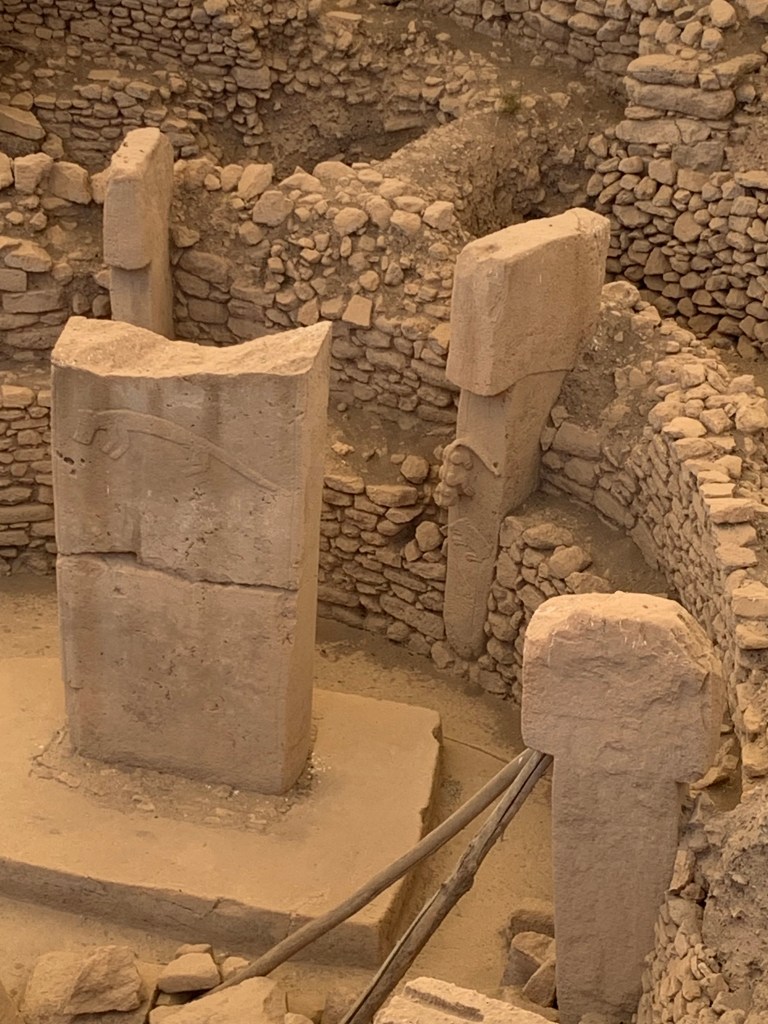
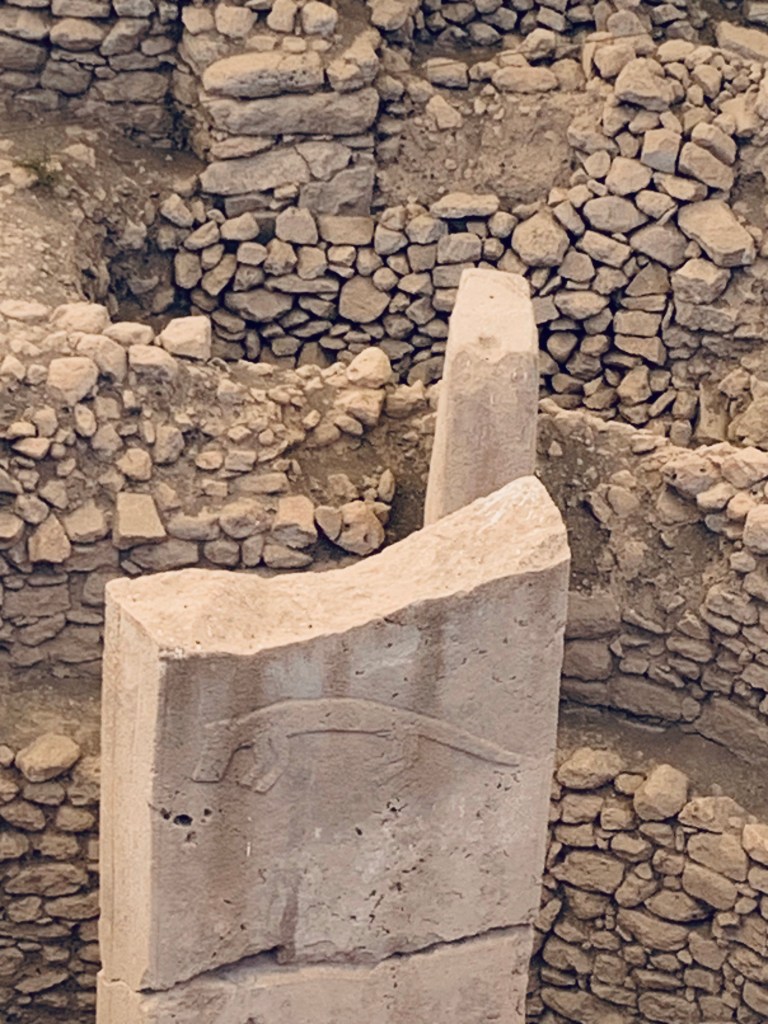
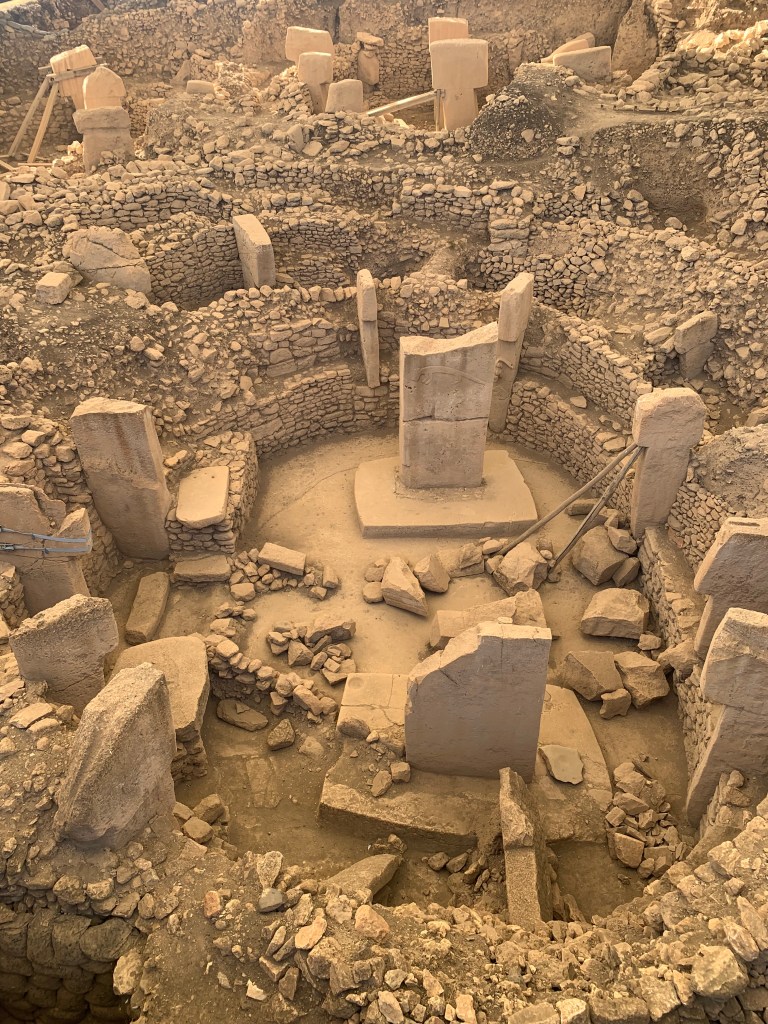
    And Gobeklitepe, the 11-12000 year old site with its stone circles, megaliths and T-shaped pillars is “turning the accepted wisdom that worship/religion followed settling and agriculture on its head” – the site is older than the pyramids or Stonehenge. And so far only 5% of the site has been excavated – there are 16 more circles in the area, as radar and modern imaging techniques have shown.

    As I move east, fewer and fewer people speak English, so Google translate is a true boon. Everyone seems to have the app, which is handy. I am here out of season (though the weather has been superb; it is mid-November and all I need is a cardigan in the evening. I shall have a proper shock when winter really hits, whenever and wherever that might be.), but Mardin is a popular destination for Turkish visitors – especially as it’s half term here this week.

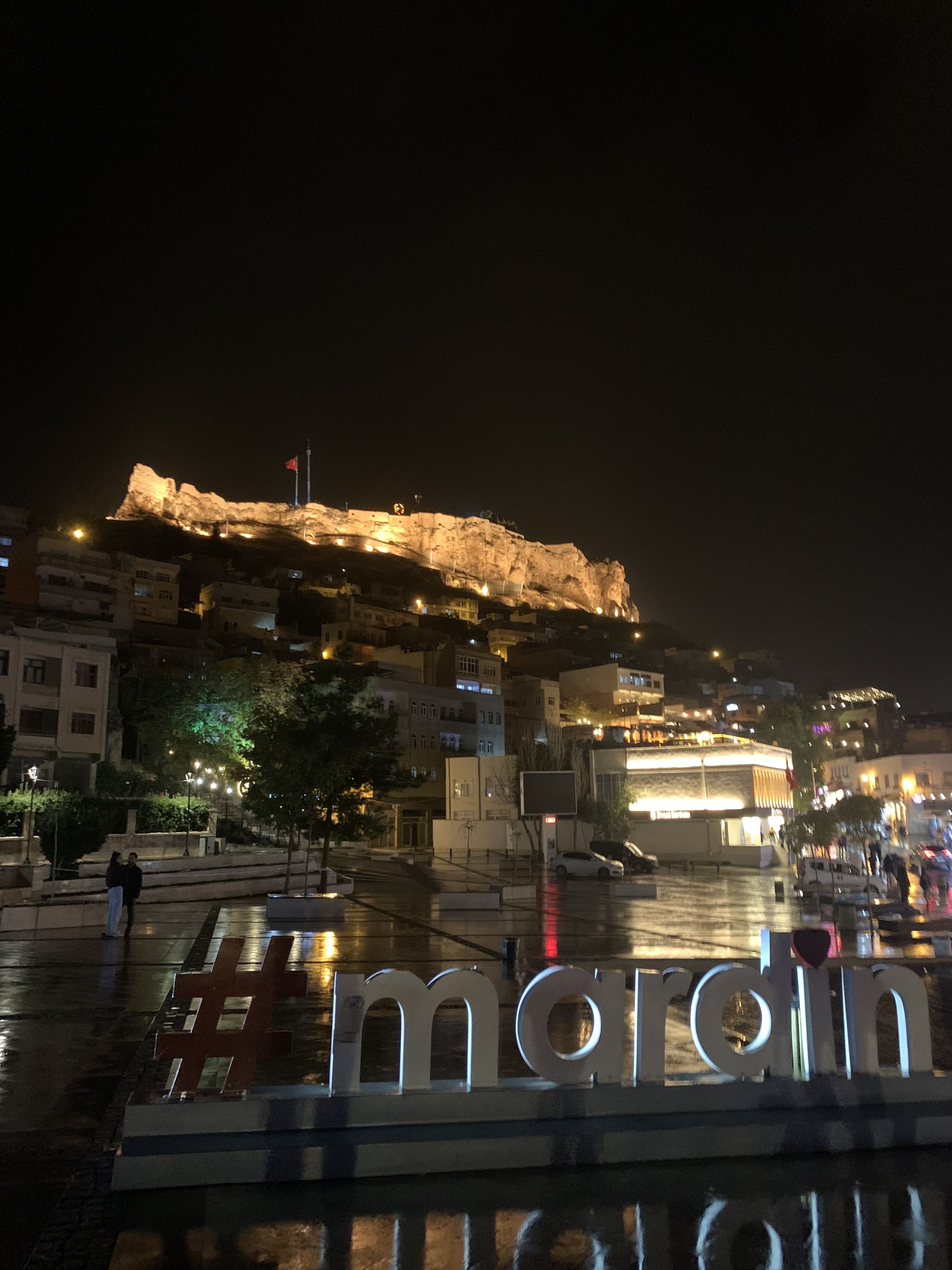
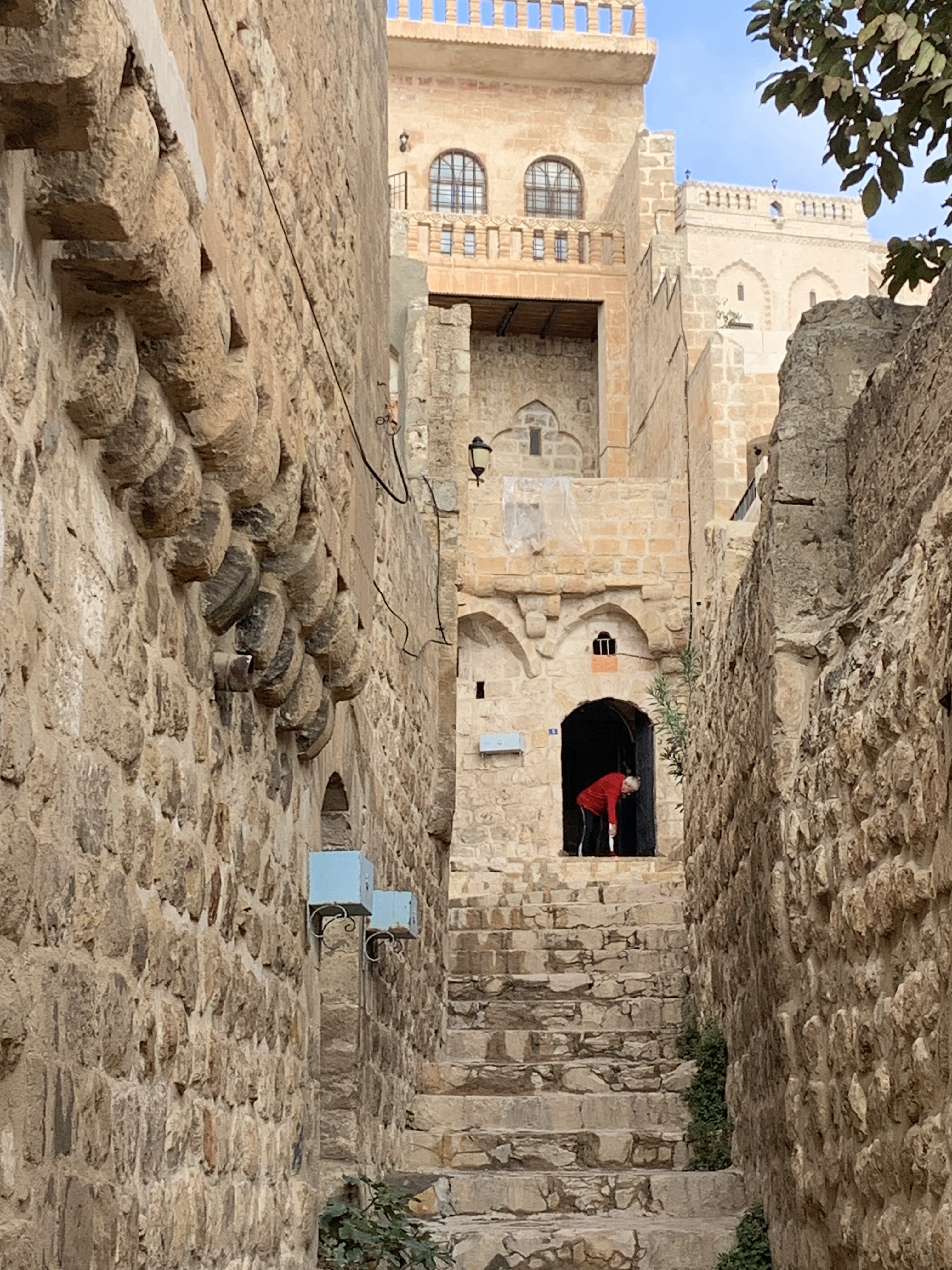
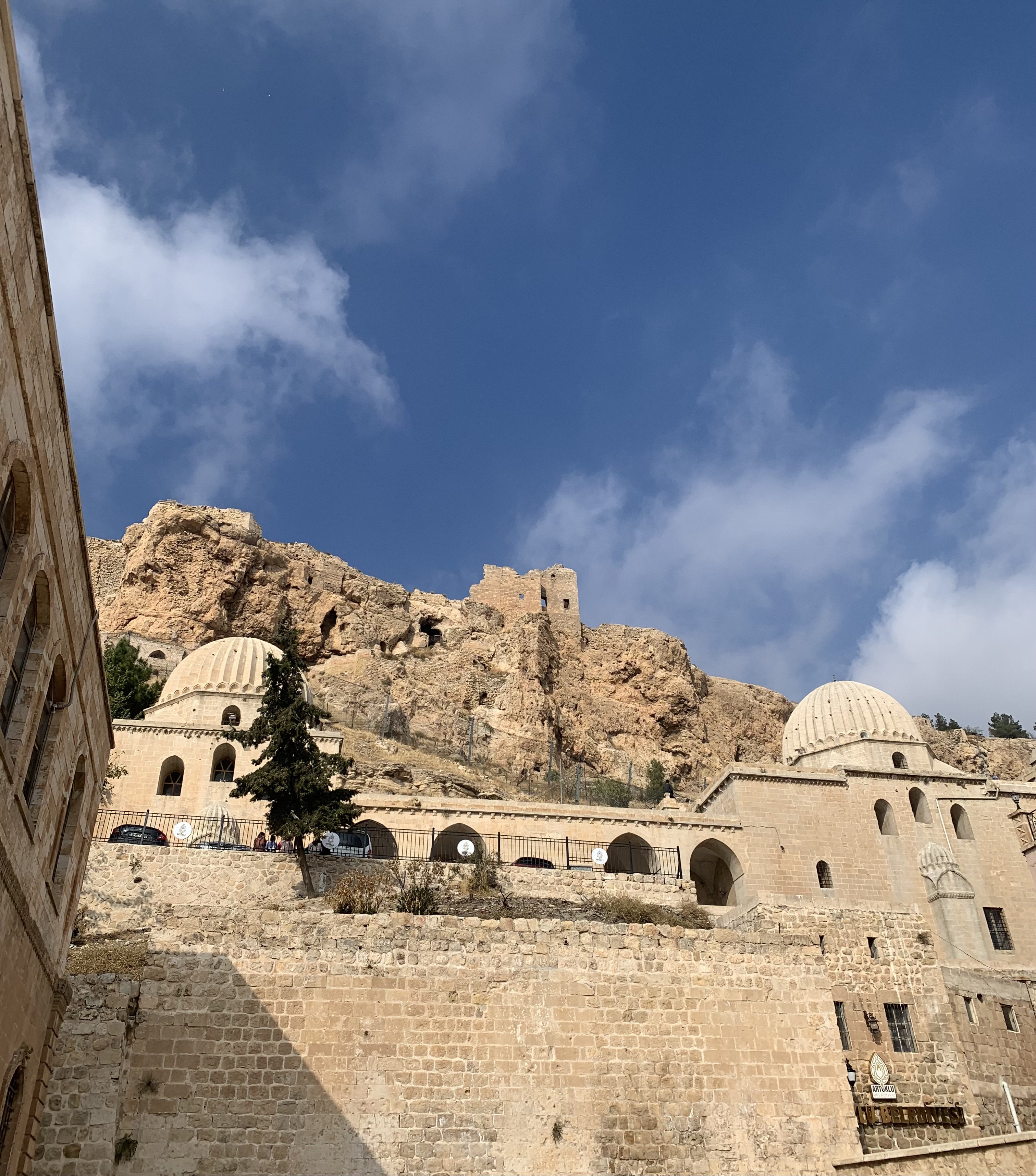
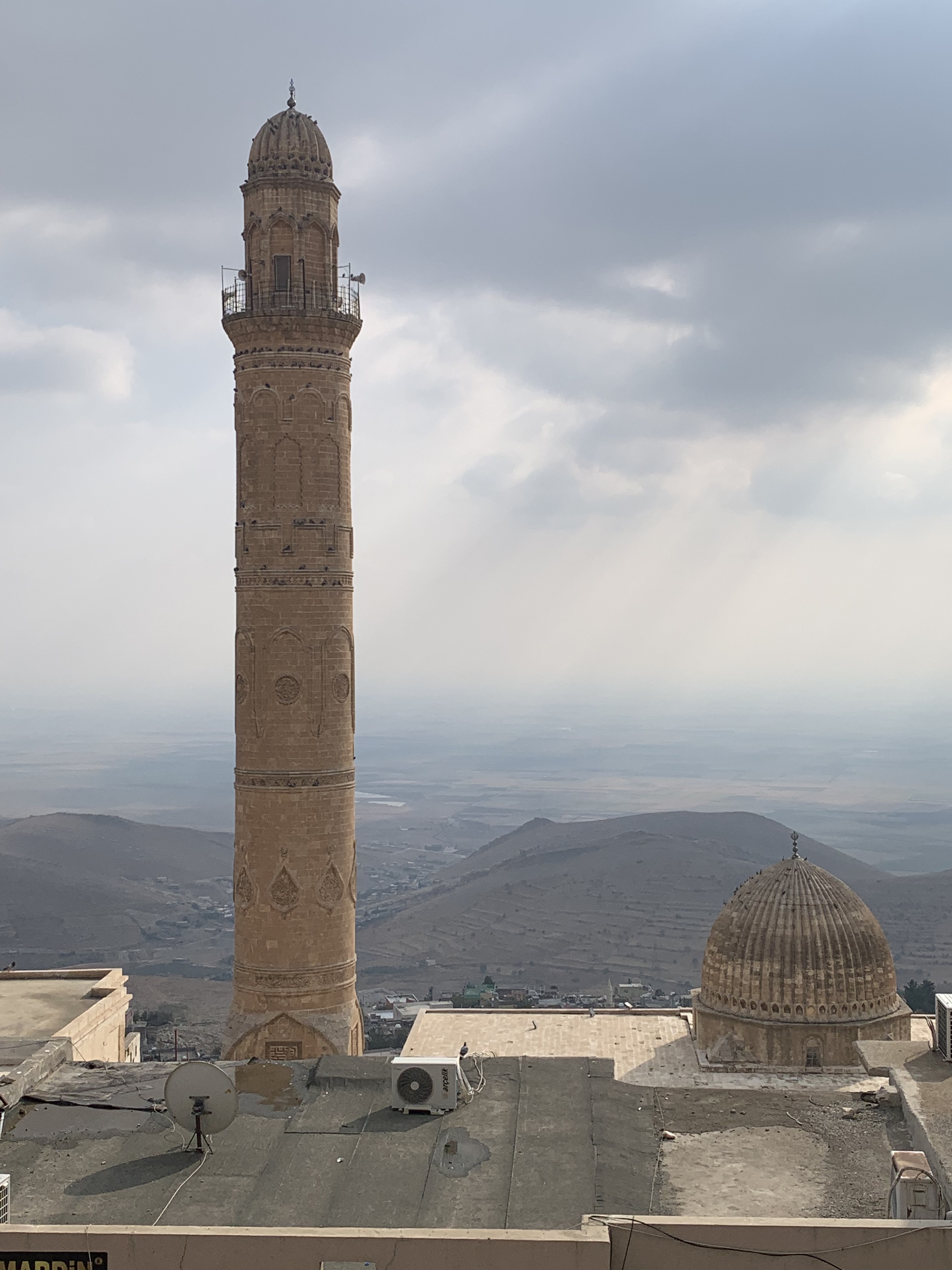
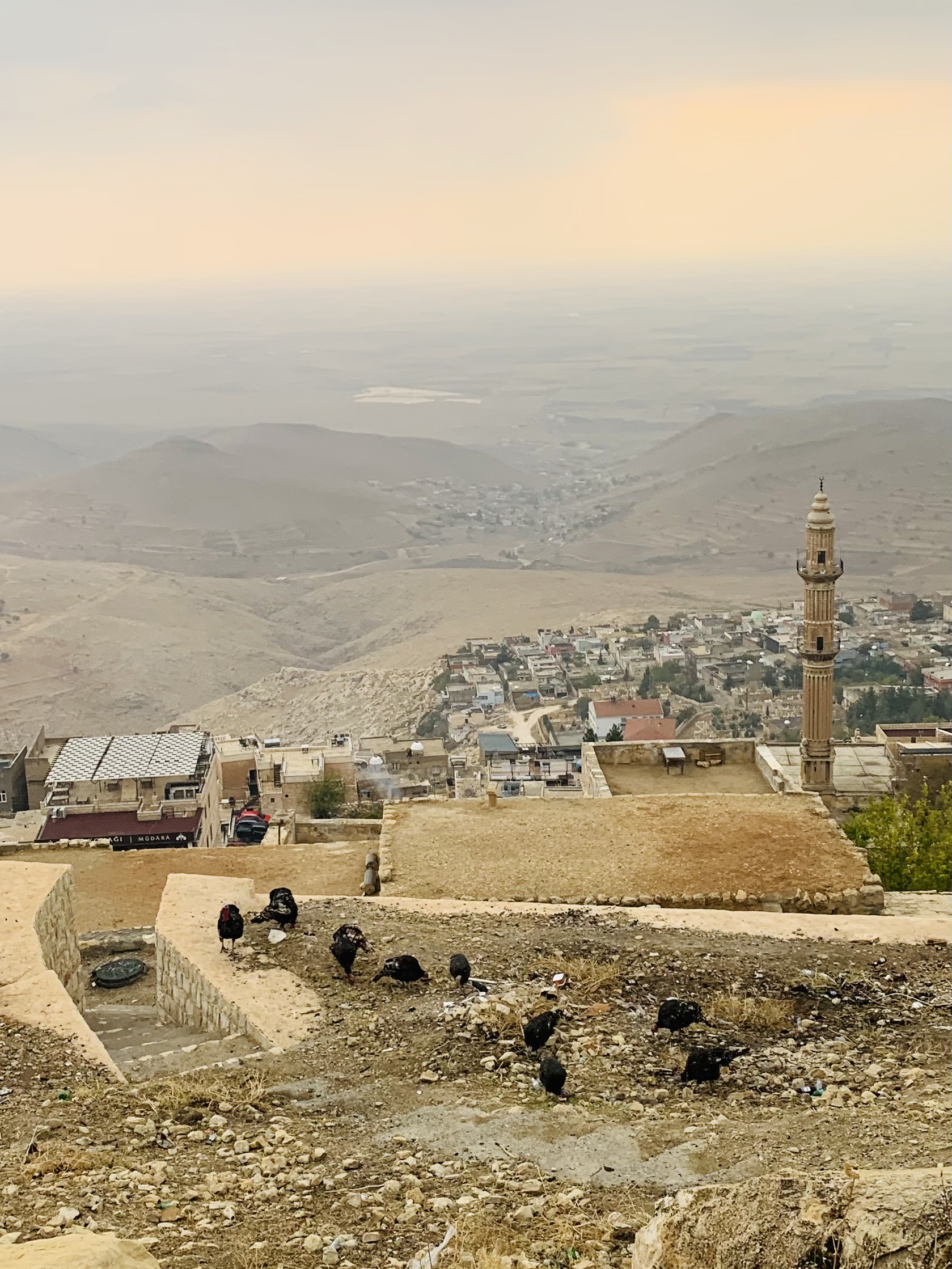
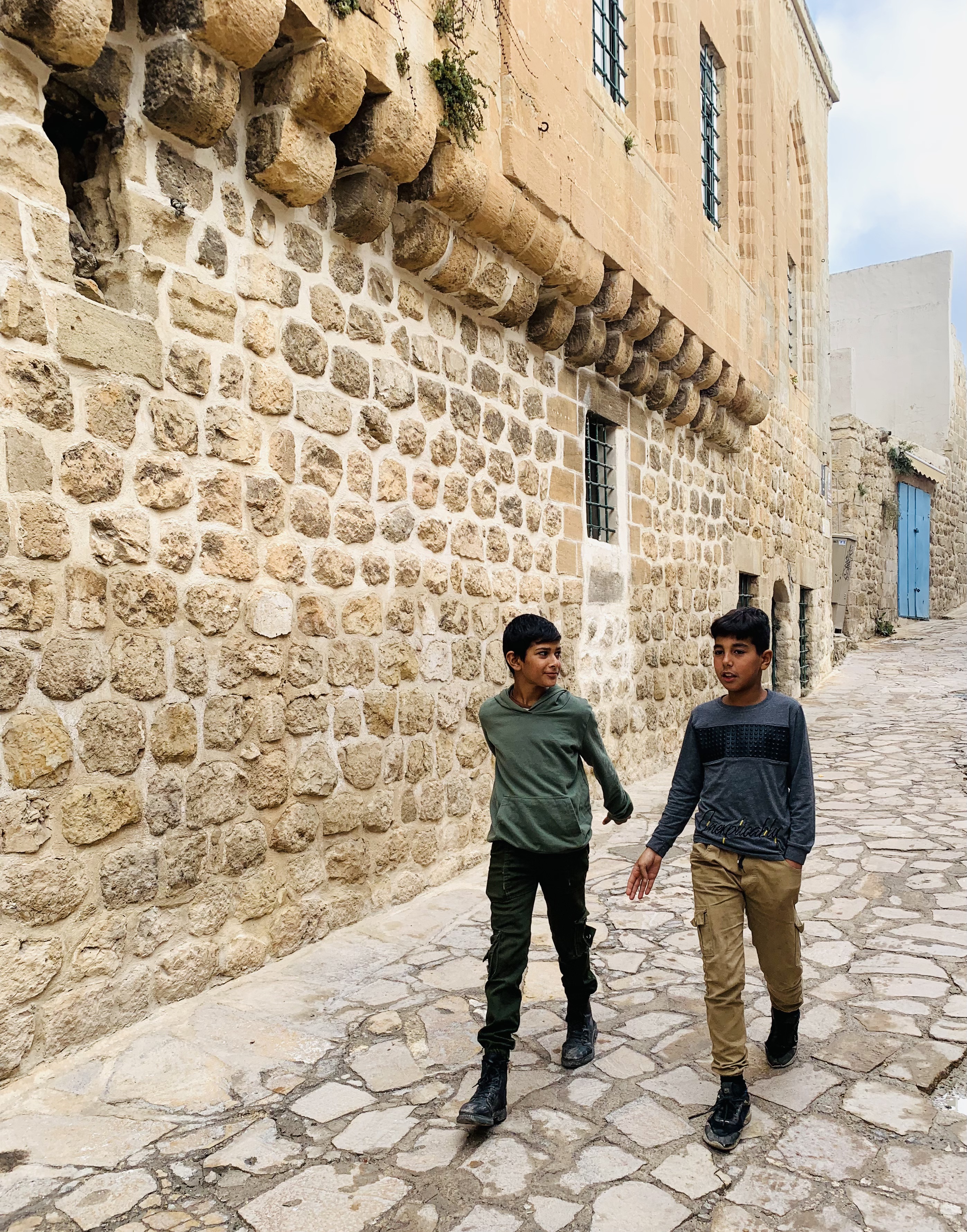
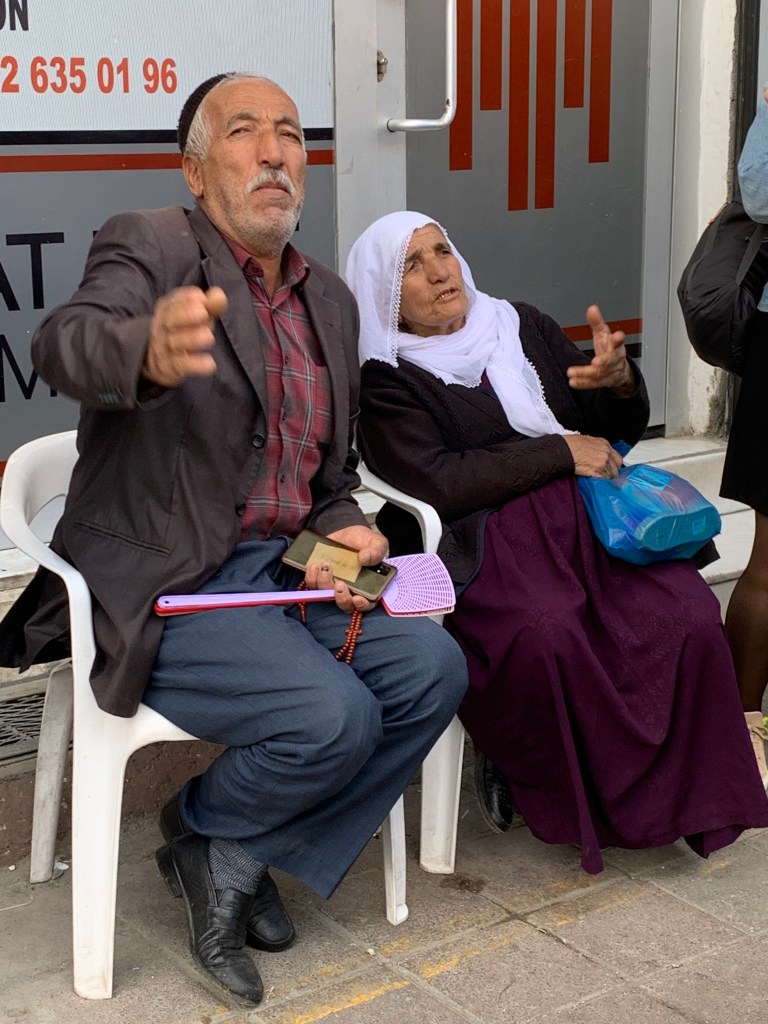
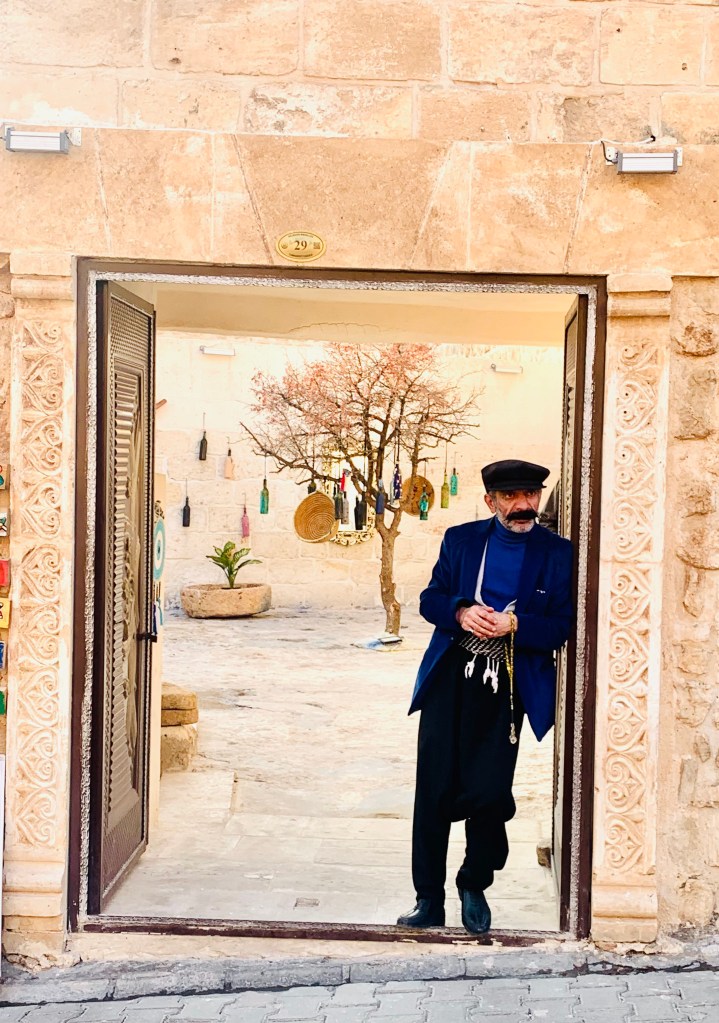
    Mehmet is right: it is a beautiful, honey and biscuit-coloured town, spilling gracefully down the steep slopes below the fortress. The streets are all steps. (Those few that aren’t steps are congested with cars.) It feels like a labyrinth at first , but it is a grid of sorts and fairly easy to navigate. The mix of cultures and faiths – Greek, Syrian, Kurdish, Yezidi, Chaldean, Christian, Jewish, Babylonian, Ottoman – I probably missed several – shows in the buildings, the food, the faces.

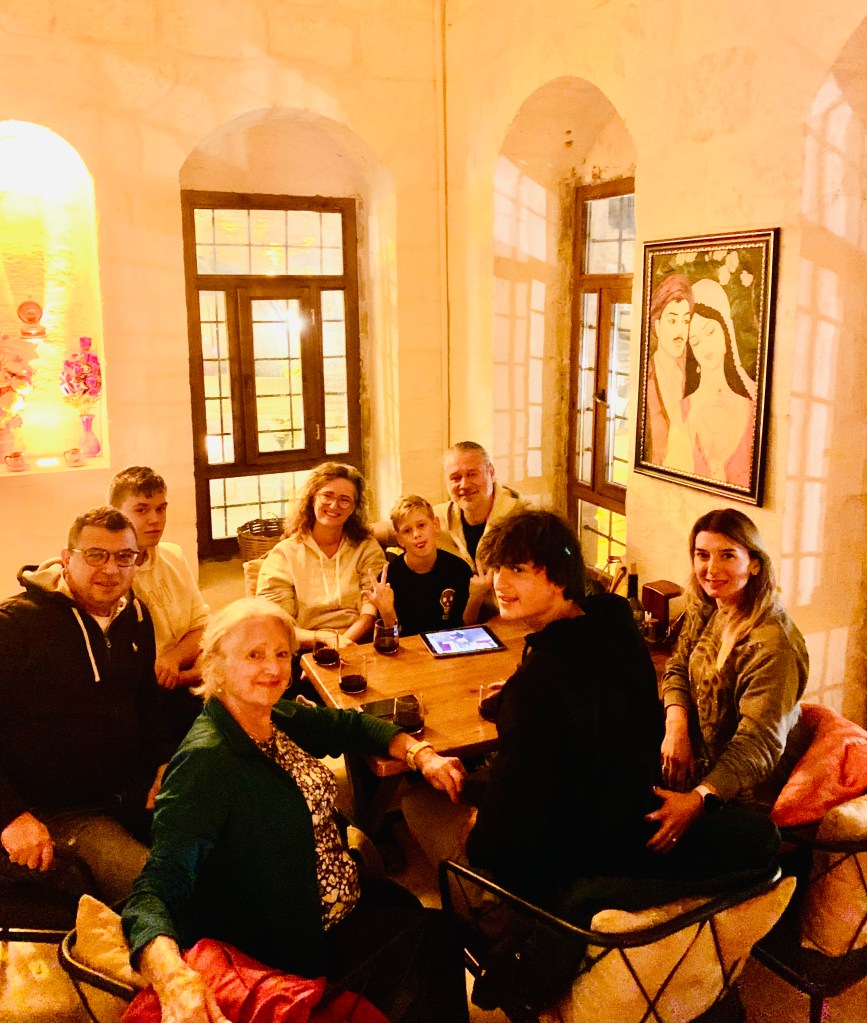
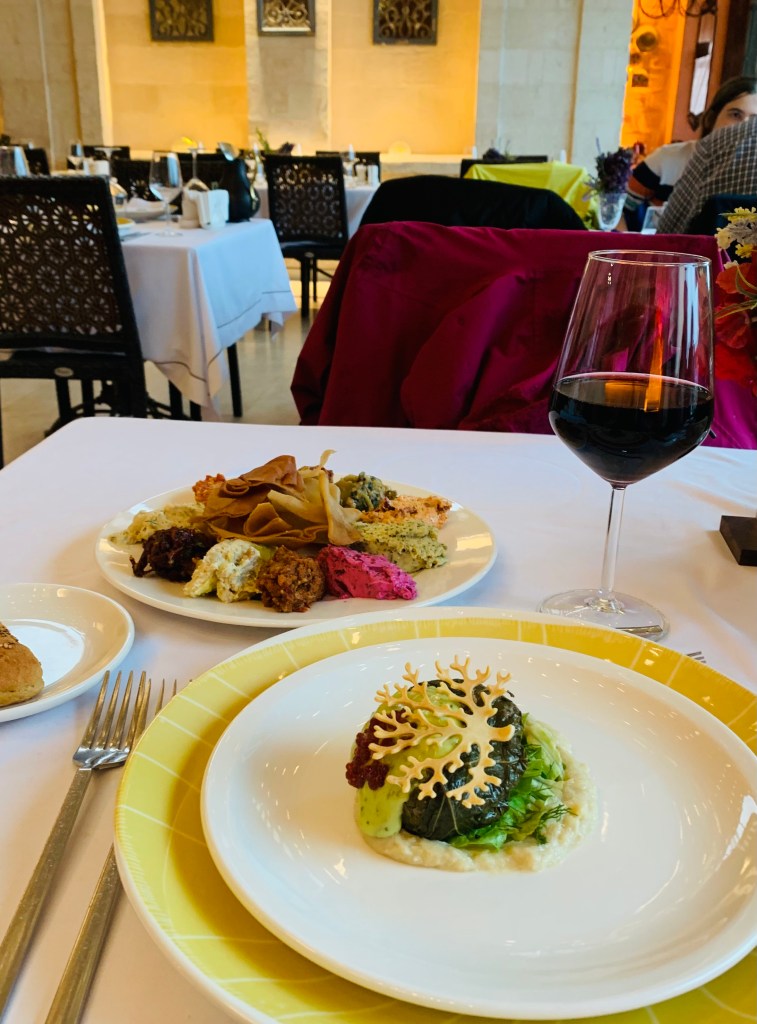
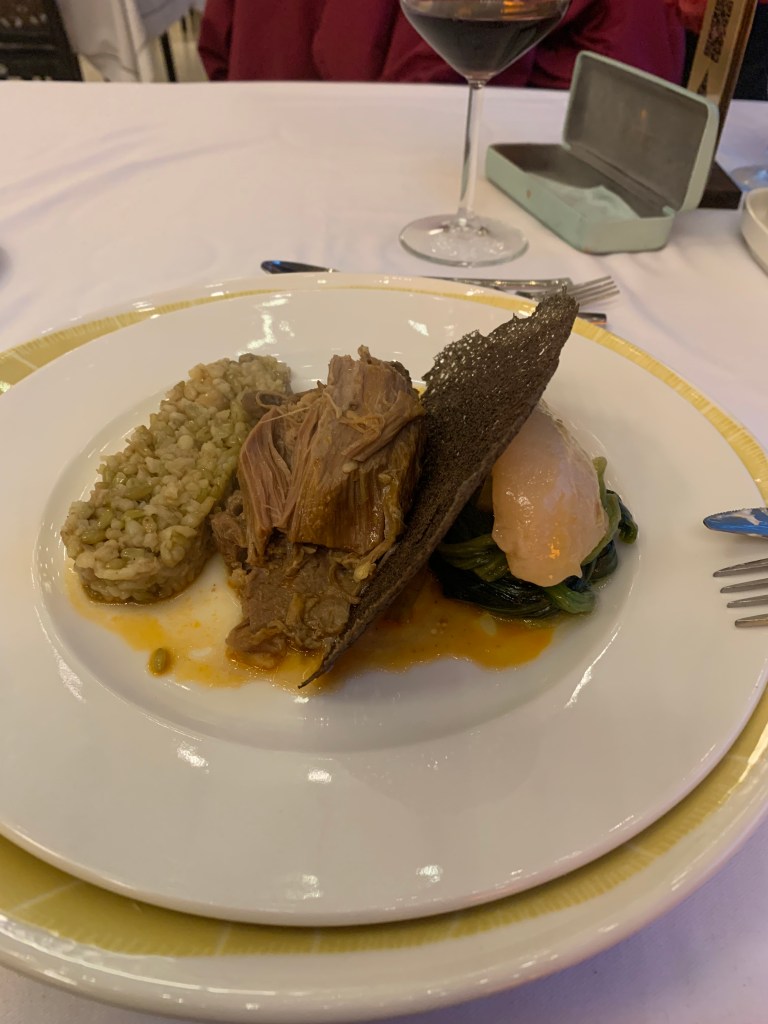
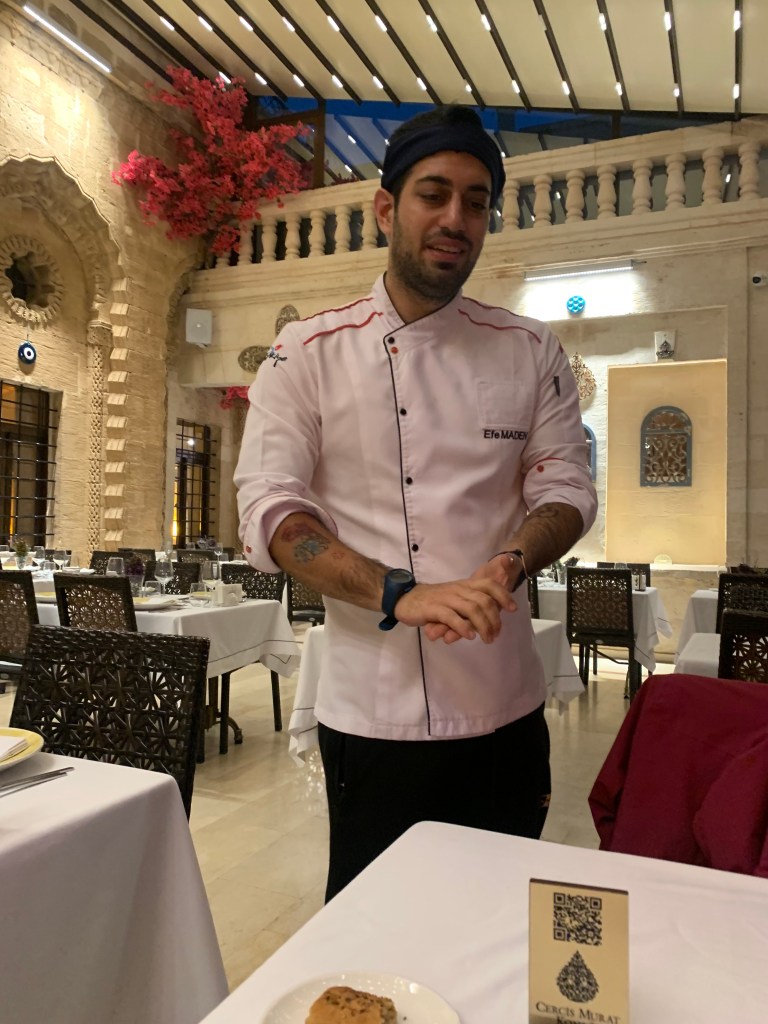
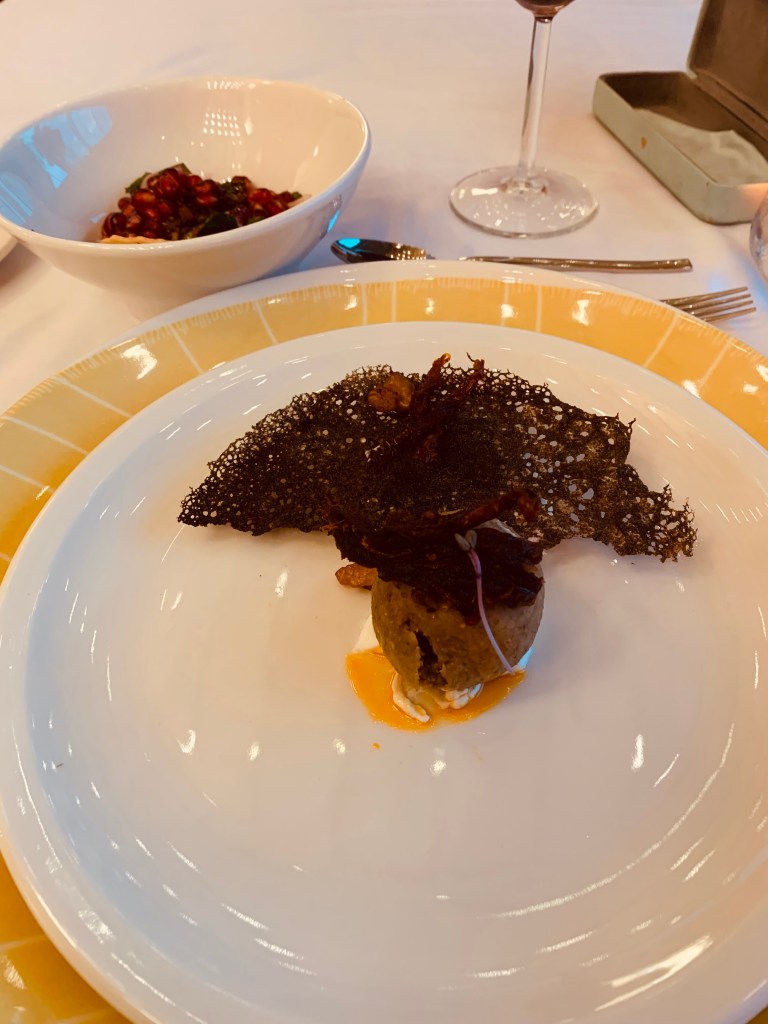
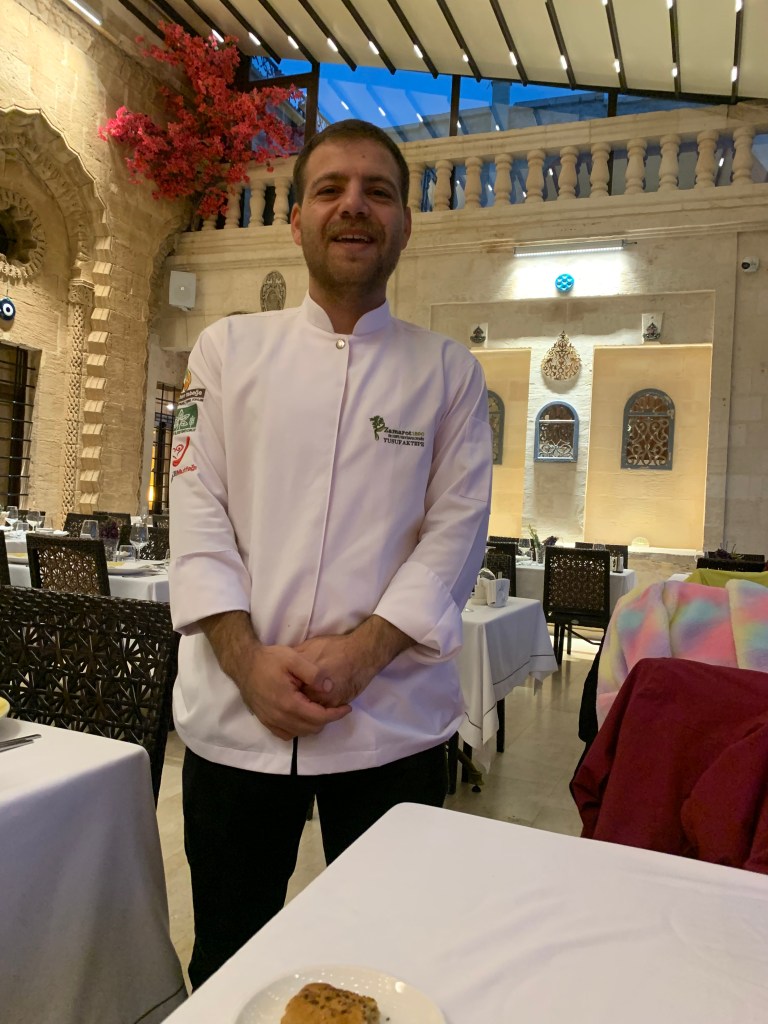
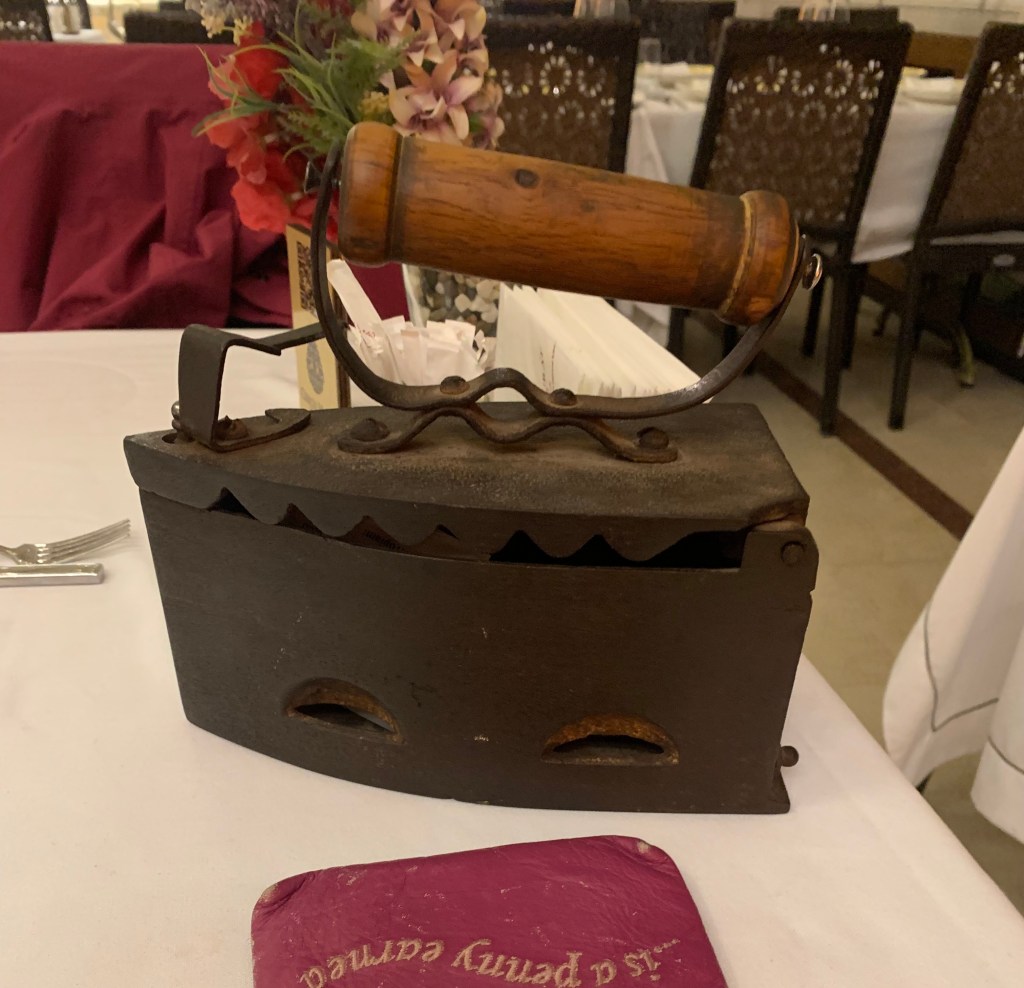
    On my first evening in Mardin, I went to the Lonely Planet recommended Cercis Murat Konagi restaurant ($$, according to the LP). A lovely dining room, nice linen, wine glasses ready on the table. No English menu, but we managed. The set (tasting?) menu was delightful and the chefs (Yusuf and Efe) came out to explain what was in the dishes as they were served. There is a Masterchef feel to it all. The Mesopotamian Classic red (their house wine) was wonderful. And the bill ($$$$) was presented in the old iron.

  • The Kindness of Strangers

    Nov 12th, 2023

    My trip from Goreme, Capadoccia, to Adiyaman, Southeastern Anatolia, was always going to be challenging (isn’t that one lovely word?) as I wanted to travel in daytime – the night bus (arriving c 5-6 am!) could have got me there in one go…

    Took some last photos of the balloons in flight at dawn – it’s hard not to, just like the bazaar spice stalls – and got onto my first dolmus at 9 am, heading for the centre of Nevshehir, a bigger town nearby; the kind driver told me which dolmus I needed to get from the centre to the Otogar (the etymology is easy to work out: Auto+ Gare, i.e. a bus terminal; there are other French words in use in Turkish , such as ‘Kuafur’ .

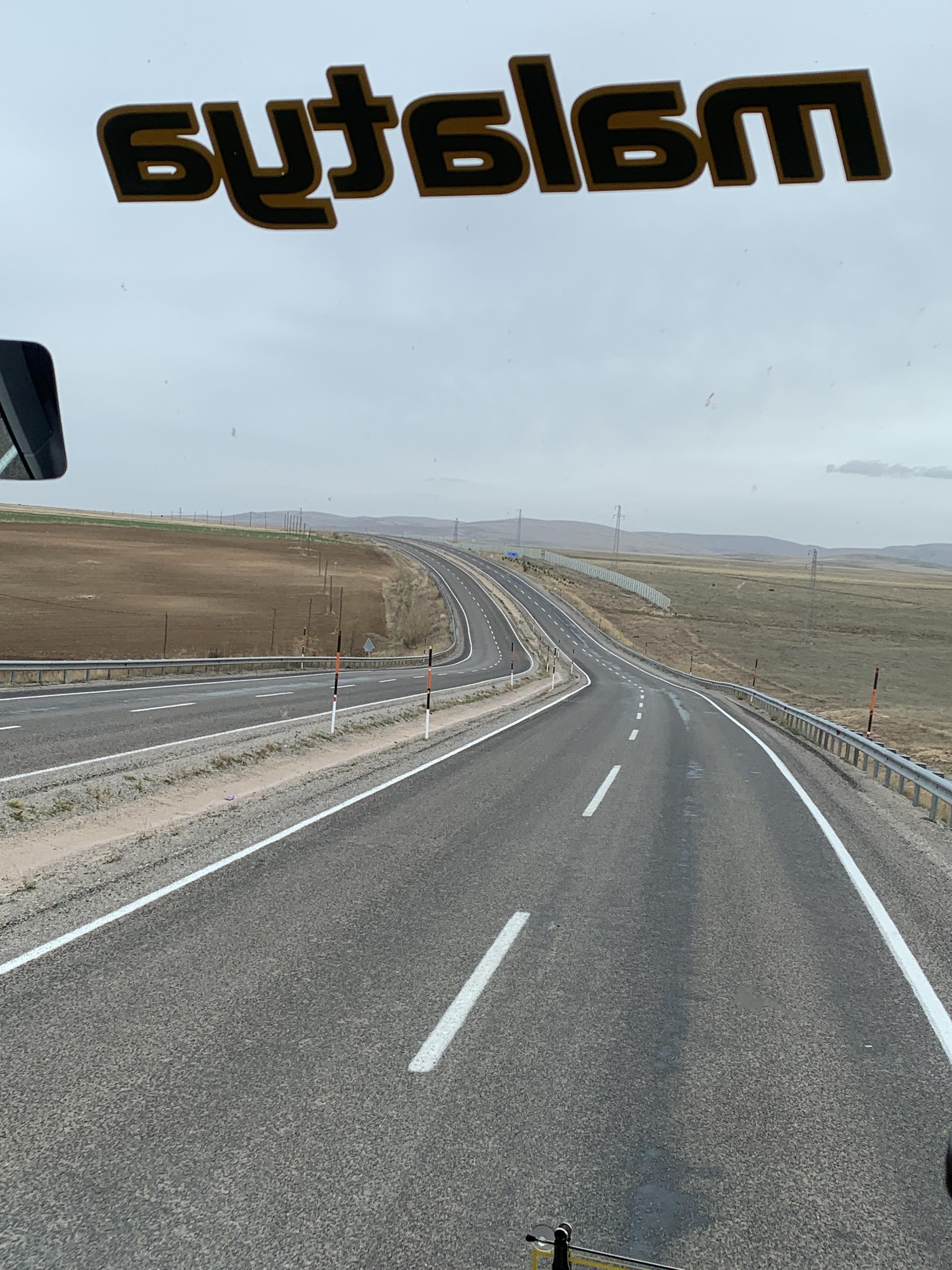
    The bus to Kayseri (a yet bigger place and a travel hub) was easy, then a bit of a wait (an hour and a half) for the 13:00 to Malatya. The coach terminal is vast, more like an airport one, and the middle is a circle of agents’ kiosks shouting out their company’s destinations and hoping to attract customers. (I got my ticket online, and a nice seat at the front.) The busbud.com website (useful in many ways) said the arrival time in Malatya was 16:10, which would give me plenty of time to get the dolmus for Adiyaman (a 2 hour trip)…

    The distance from Kayseri to Malatya is 360km; the speed limit is 90km/hour and there are parts where one cannot drive at speed, even if the roads are empty (and for the most part, they are – though the towns are dreadfully congested). We stopped for a half an hour break at 15:30 (very welcome) and it was clear we could not arrive at the destination before 1800. (It was 18:20, and the sun had set.)

    As we approached the Malatya bus terminal, I asked where to get the dolmus to Adiyaman. Some discussion took place (in Turkish), and the next thing I knew, as the coach stopped at the Otogar, the driver sprang up and indicated I should follow. He picked up my rucksack (much more easily than I do) and moved quickly through the terminal to the main road outside: rush our in full spate, trolleybuses, dolmuses, buses, cars, lights, beeping…

    The coach driver, whose name is Celal, made phone calls, and explained that the dolmus to Adiyaman should arrive in about half an hour at that spot. He then stayed with me for the full hour – the dolmus was late – heavy traffic, who knows. We had a conversation, sort of: he spoke a couple of words of English, same on my side with Turkish. (My eSim had expired that morning – as days tend to blend on a journey like this, I had not realised the eSim month was up: it meant I had no Google translate, or maps.) Celal made sure both my luggage and me were safely on the dolmus before he left for home.

    Dolmus is a small minibus: rows of 4 x two seats on one side, singles on the other and 4 at the back. The convention is that women and men who are not related do not sit together – when booking a seat on the coach, one is asked for the gender. The moment I sat down (next to a woman), a little boy (around 3 years old) found his way onto my lap. His mother was sitting in a single seat with another child, a girl of about 18 months in her lap; it was going to be an interesting journey. The chatting was a bit difficult, and as I explained where I was going, I had a sense that they were trying to tell me something important.

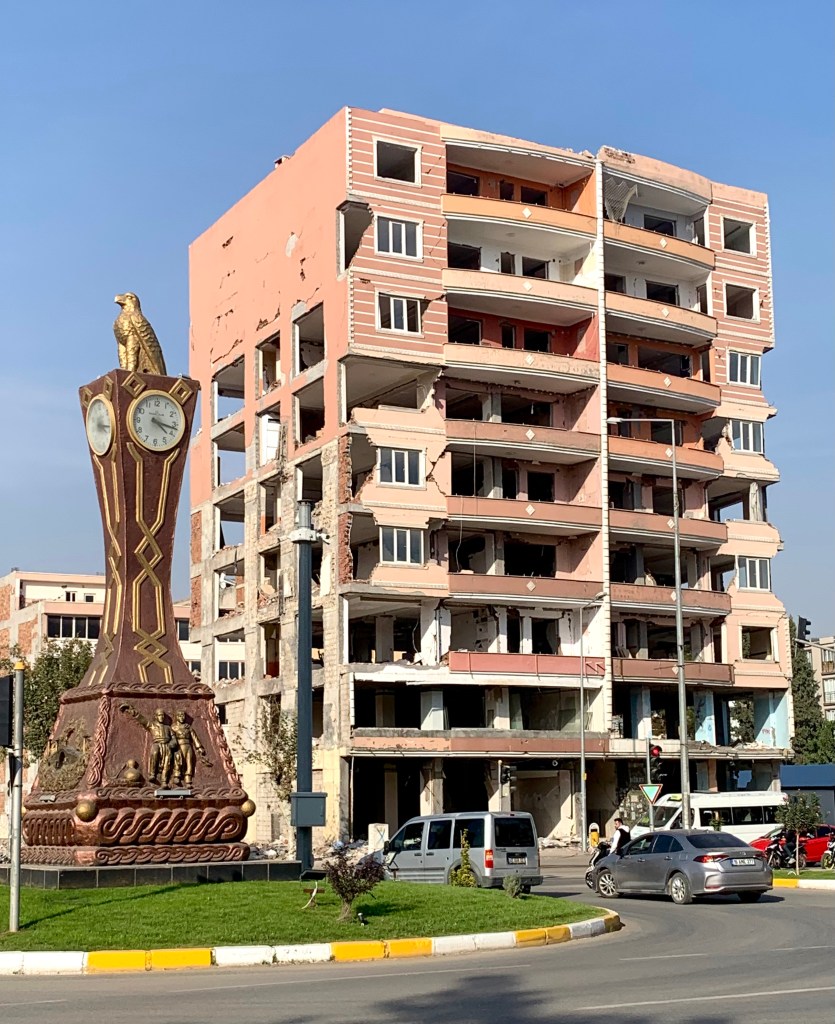
    As we approached Adiyaman, the dolmus slowly emptied and the only passengers left on it when we reached the Adiyaman Otogar were the woman with the two children and me. She was being picked up, and while we were waiting (the children were asleep on the seats), the driver used his Google translate to tell me that the hotel I had booked through Expedia did not exist any more – it had been destroyed by the earthquake in February this year (it struck at 04:17 am, as the Clocktower still shows) .

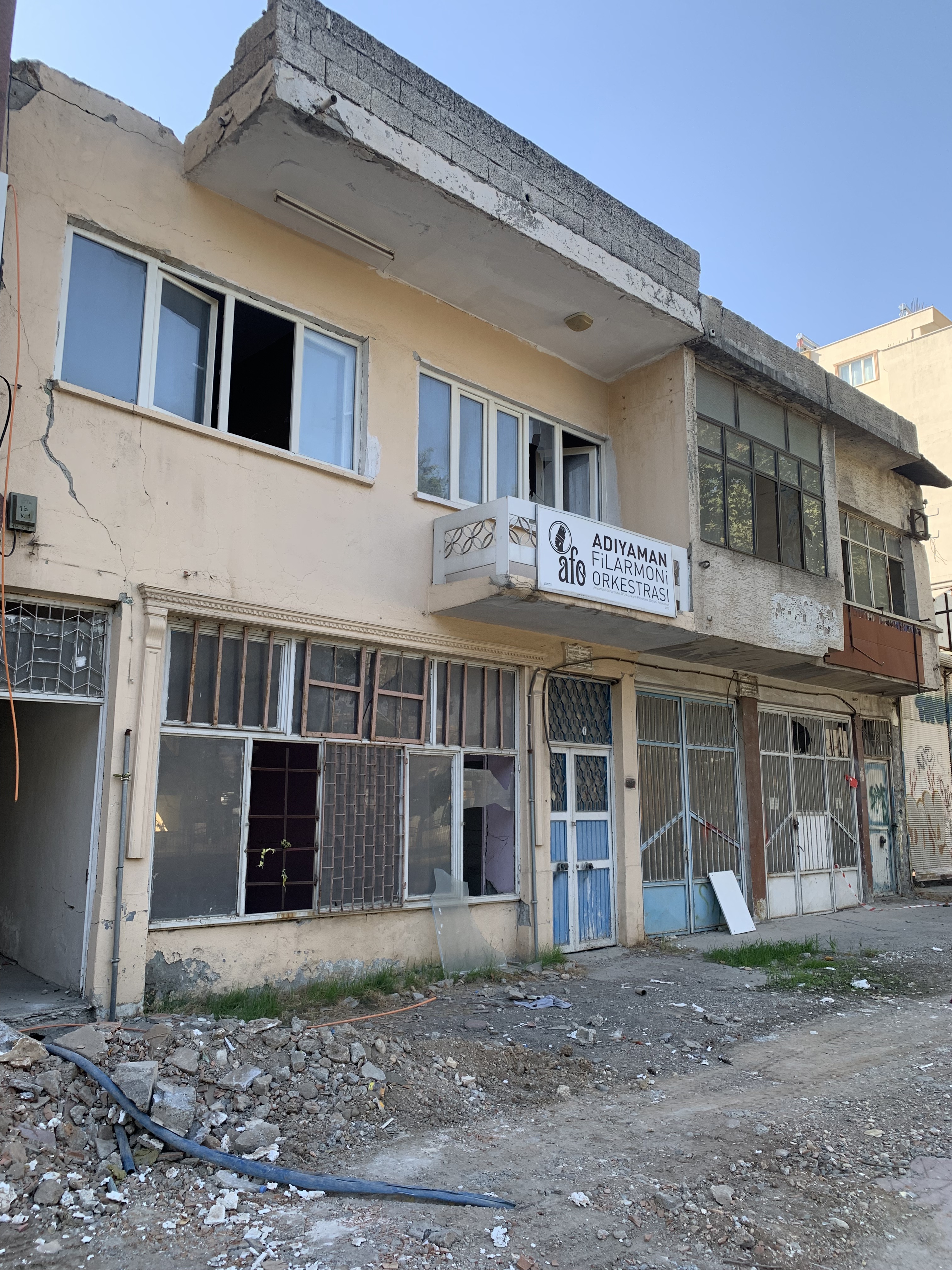
    The Otogar was empty, it was 10:30pm and it all looked a bit desolate – even before I had seen the state of the town in which over 8000 people had died. (The building below was the home of the Adiyaman Phil Orchestra)

    The dolmus driver and his boss (I suppose, no introductions were made) transferred my rucksack and me to a car and drove me to the nearest hotel – the Park Dedeman (which, I think, has Hilton aspirations in their pricing, but has a way to go in service).

    The next morning I needed to get some Turkish lire but the nearest cashpoint wanted to charge 8%. Asked a man who was working nearby where I could find the one I knew didn’t charge such exorbitant amount; he called another man, gave him the car keys and said to take me to the cashpoint I wanted! (It turned out to be a longer trip then intended as the first place we went to had very long queues. But my young driver enjoyed driving the Audi 🙂 so we drove till we found the right one.

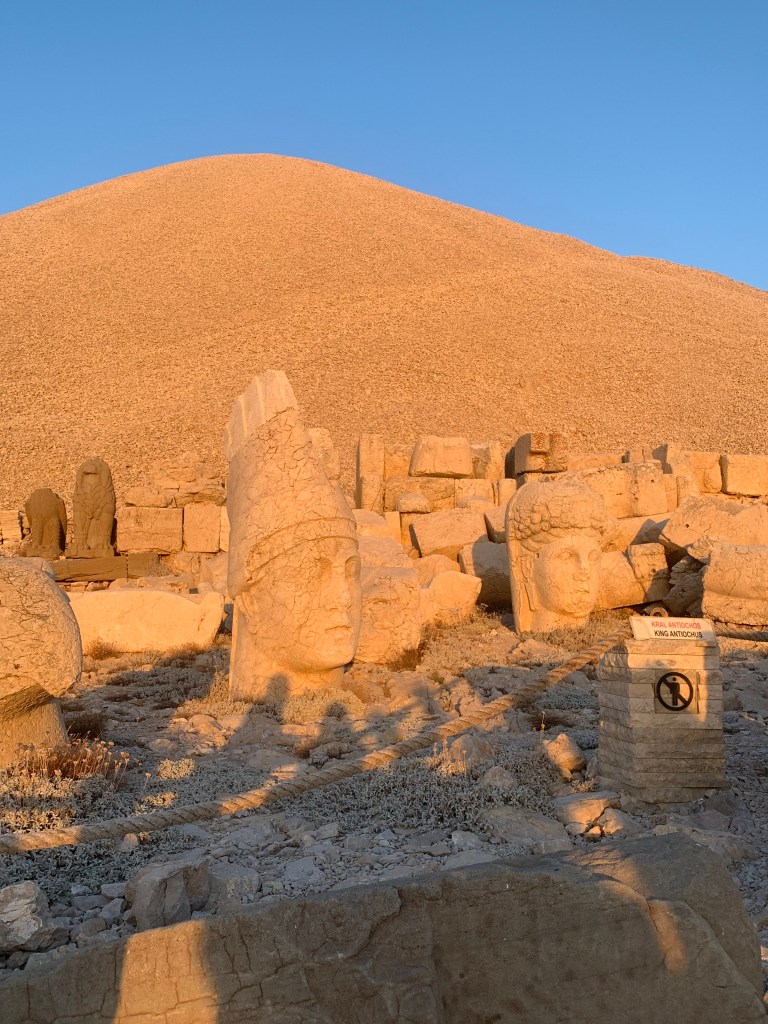
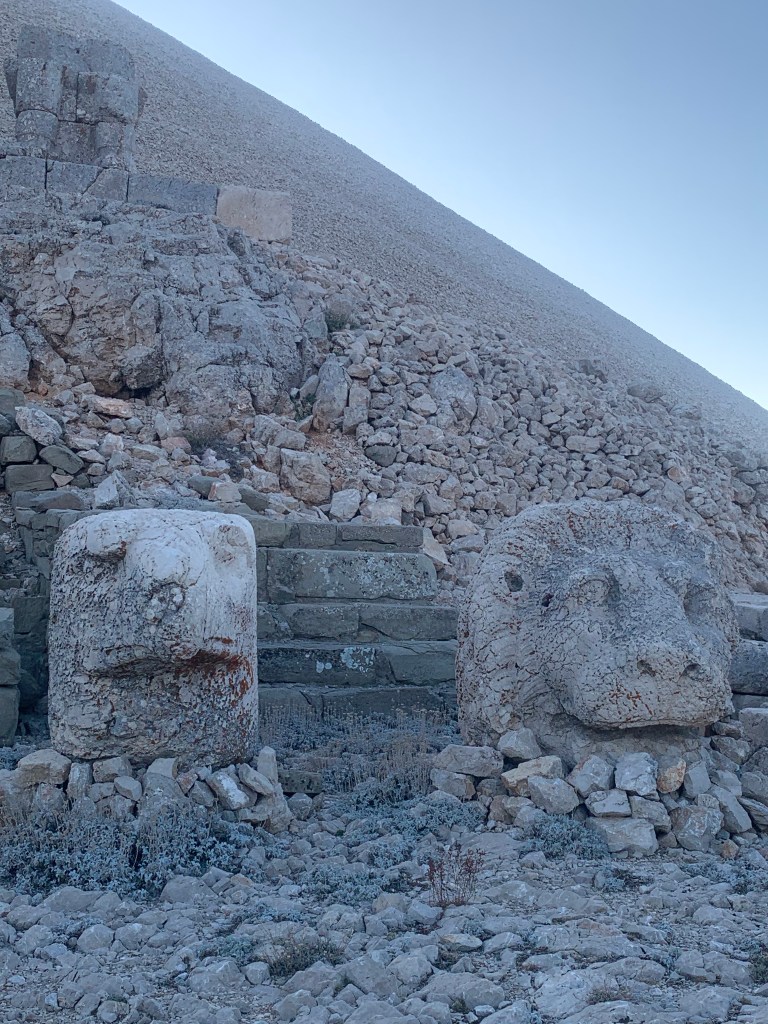
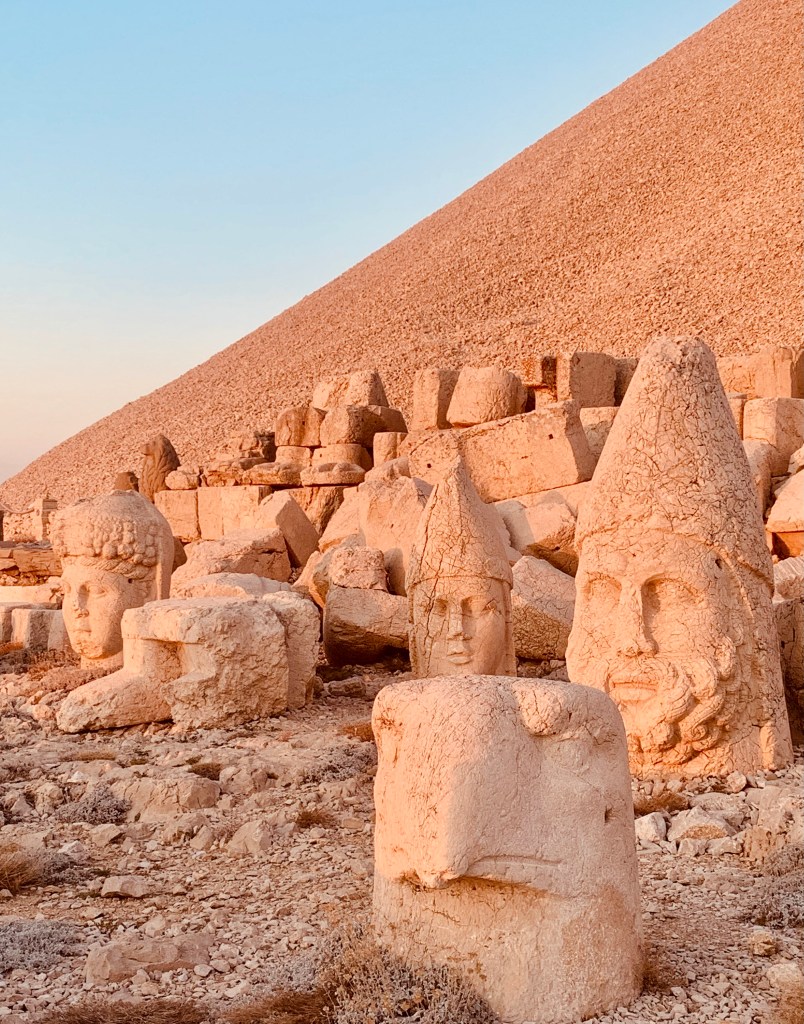
    And all this before I even found out if and when I could get to Nemrut Dagi, my reason for being in Adiyaman (the Nemrut peak is c 70K from here, in the middle of the Taurus mountains).

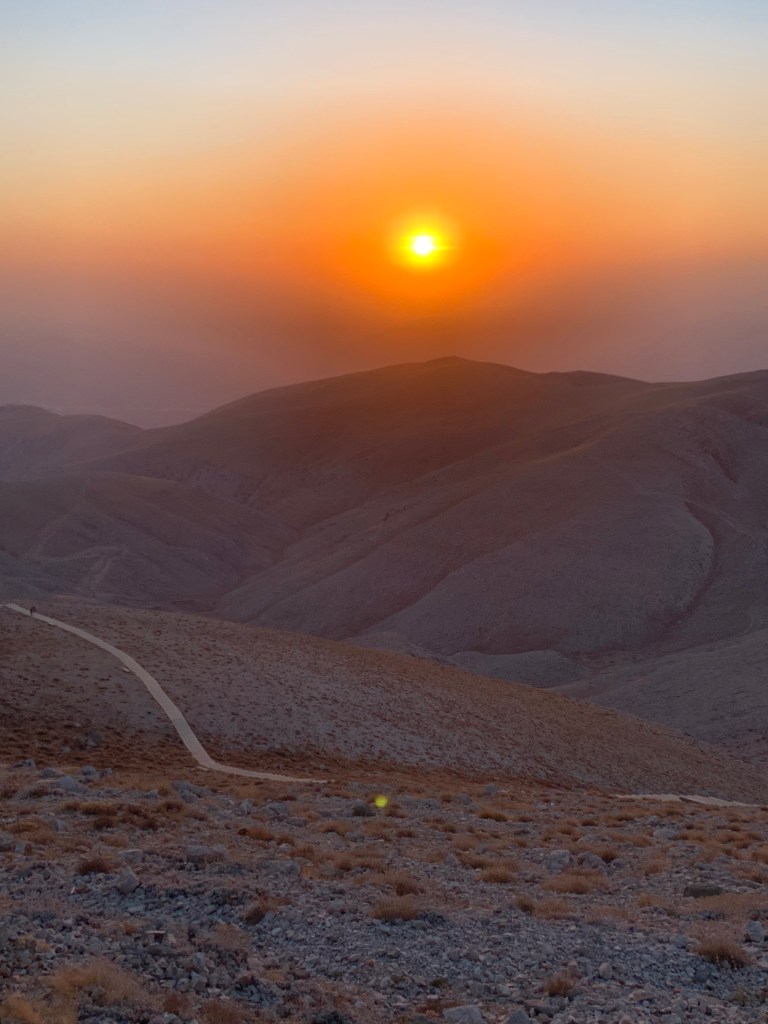
    The first agency I looked for (from my Lonely Planet guide) was not there – another victim of the quake – but I was pointed in the direction of one that existed, VEKA Tours. Arrangements were made for “the sunset tour”, starting at 1 pm. (The other option is “the sunrise one” – which would have meant getting up at 4 am…) A private tour again, but there was other option.

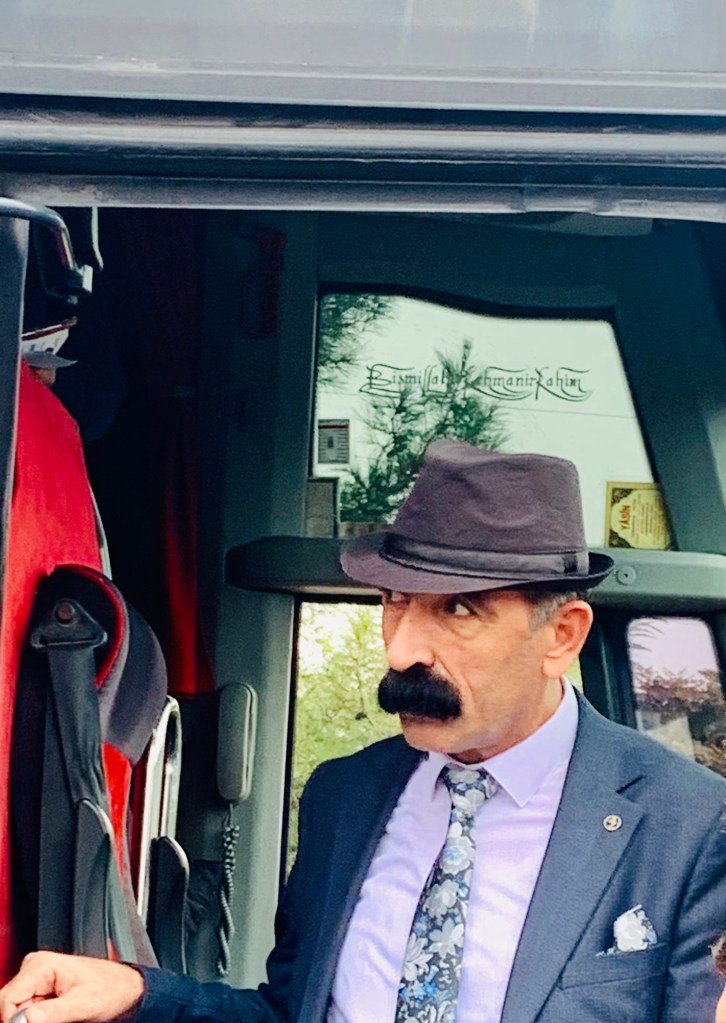
    It turned out I was honoured in that my driver was Vassail, the owner himself. That he spoke as much English as I do Turkish is beside the point. There are 5 places visited on this tour – some Comaggene (such as the Nemrut Dagi), some Roman, but at least two are currently out of bounds as the earthquake made them unsafe.

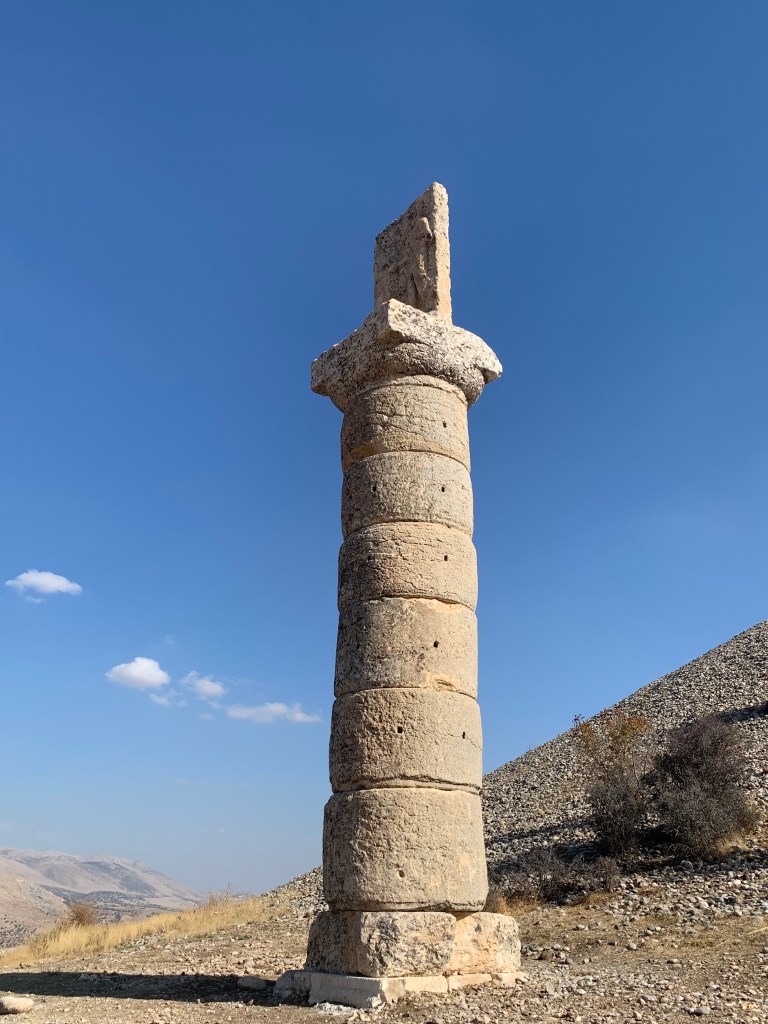
    Karakus tumulus
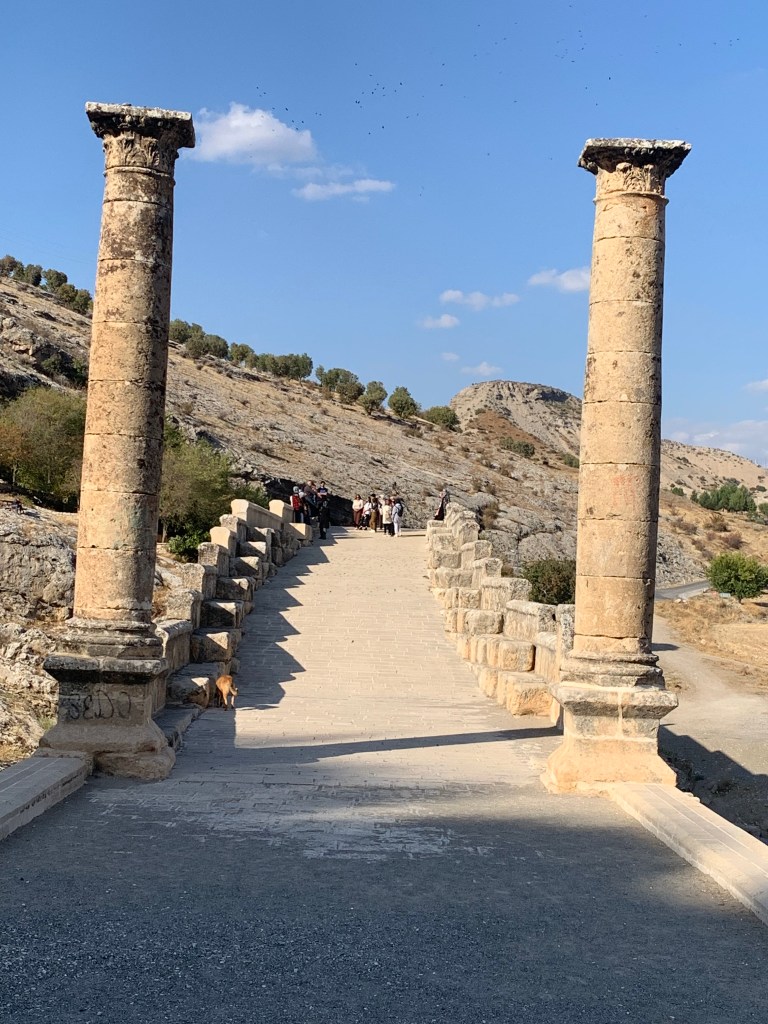
    Roman bridge
    Enormous fort Karadut

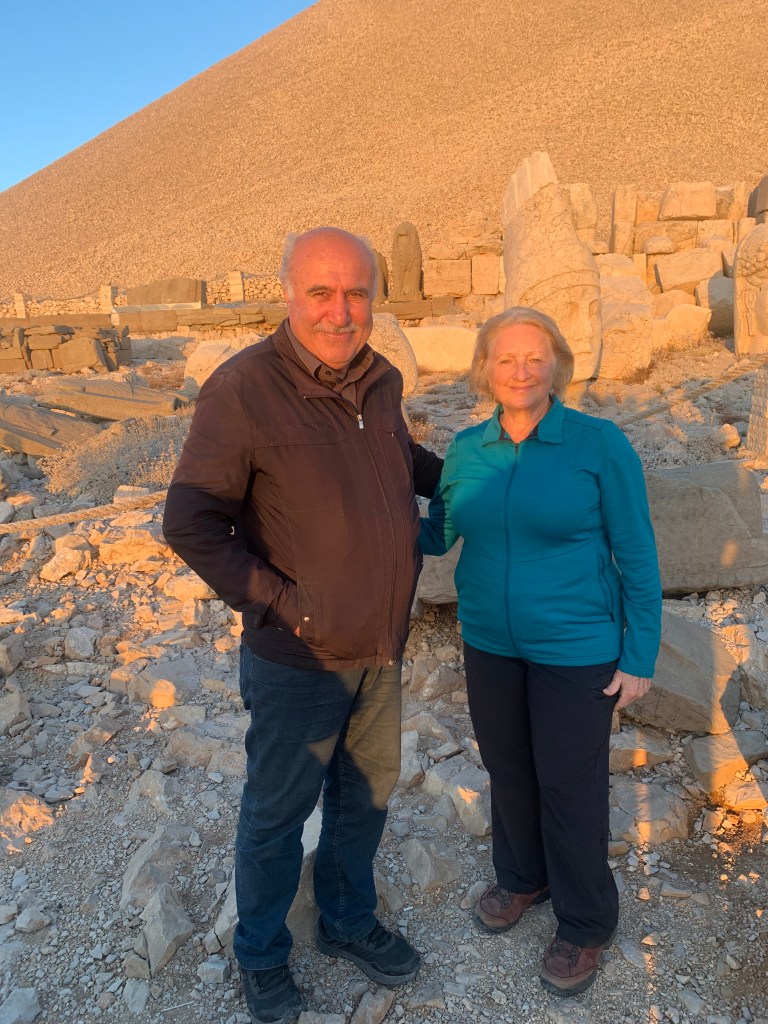
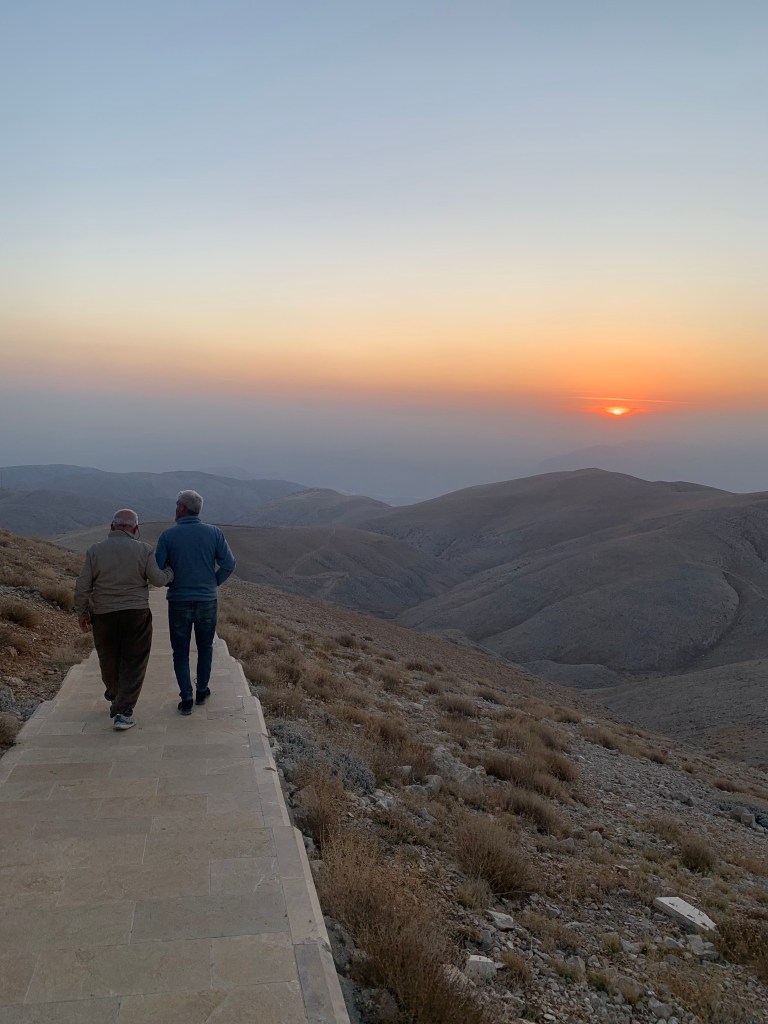
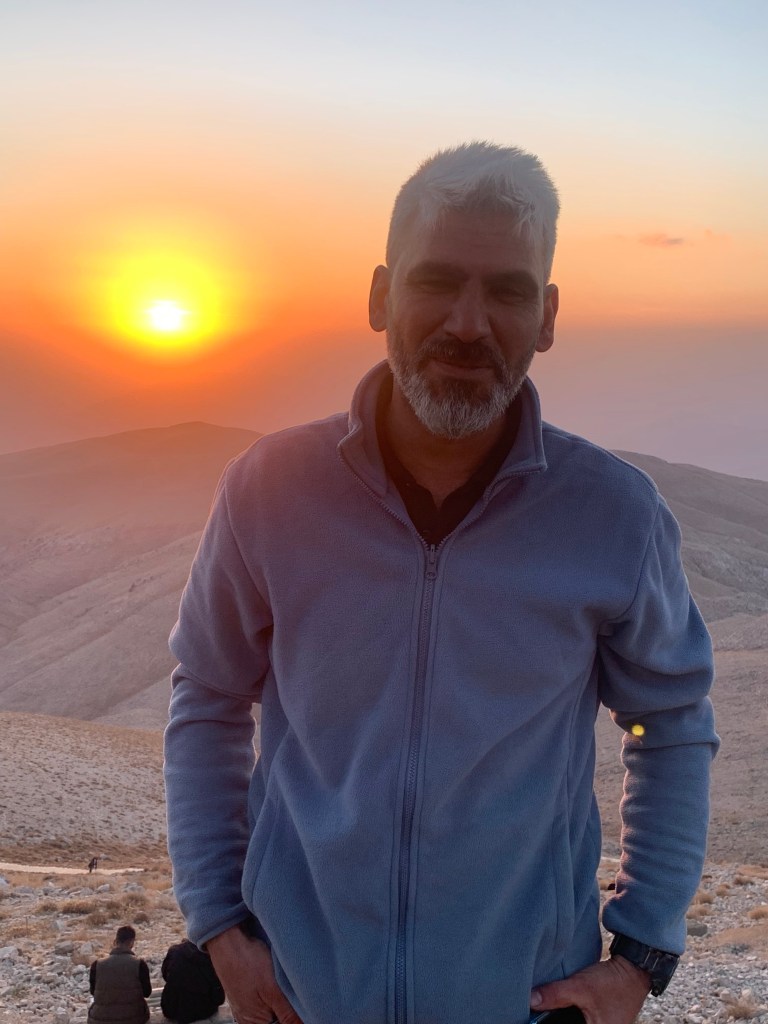
    Vassail produced Yunus (grey hair in the sunset) half way through the trip – Yunus spoke English – who was a good companion for going up the mountain. He lives near one of the sites, Arsameia, which had been the Comaggene and Roaman summer palace, and has shown me some coins he occasionally finds (and sells – he said it was legal as long as they are not gold or precious stones). Yunus’s knowledge of Nemrut and King Antiochs’s reign was minimal, but, serendipitously, a friend of Yunus’s, the former Adiyaman Minister for Tourism and a history professor with some students was also visiting (we were playing catch up over the 5 sites) and Yunus introduced us – Mustafa willingly explained the site and the history in good English.
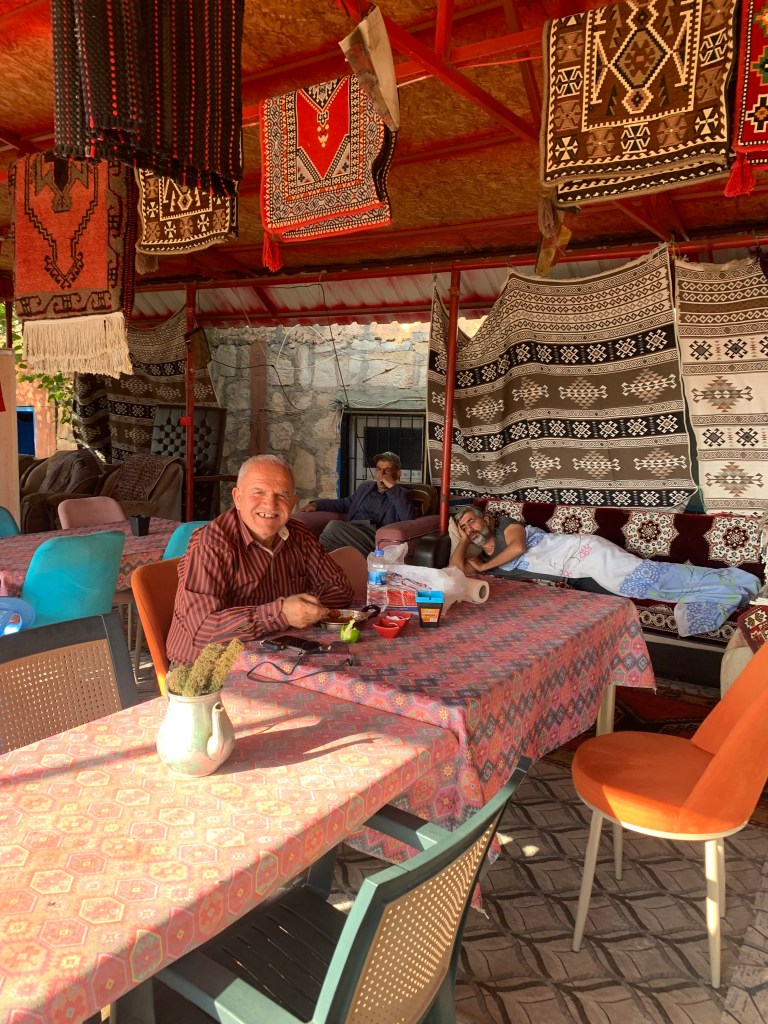
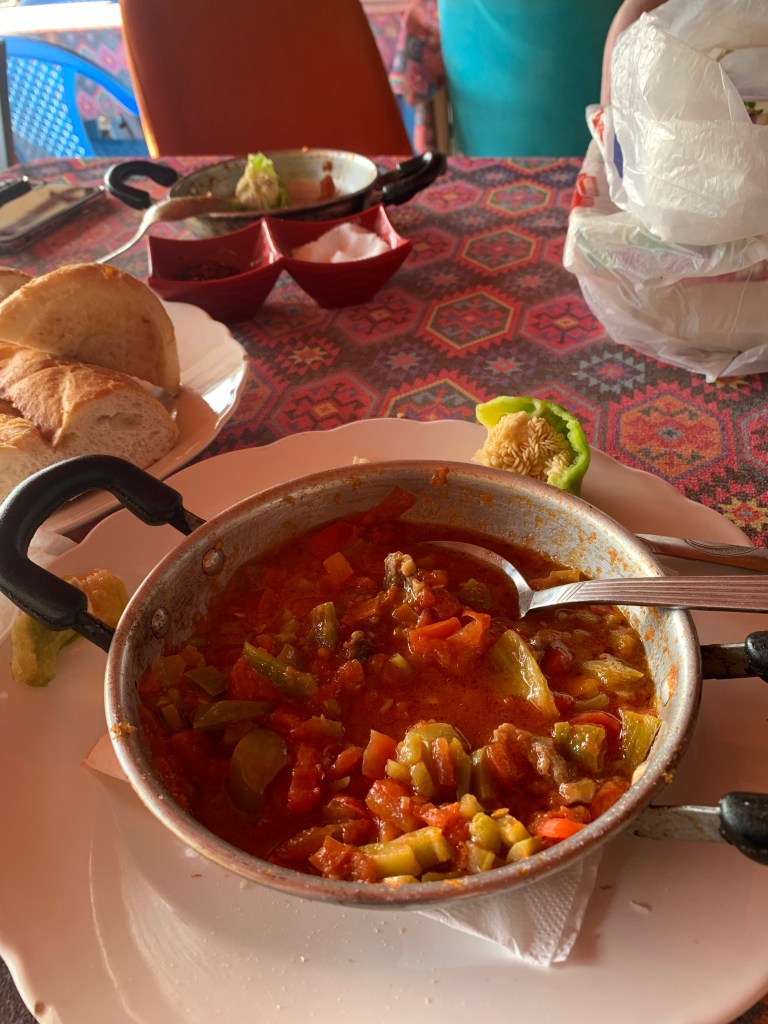
    Vassail and I had a very nice home cooked lunch by the enormous fort/castle: gjuvech (meat and veg stew) followed by freshly picked figs from the tree in the back. No wine though…

    Vassail at lunch, locals resting in the back
    Gjuvech
    Yunus
  • Whirling through middle Turkey

    Nov 11th, 2023

    The bus from Egerdir to Konya on Friday 3/11 at 0645 never turned up, with no explanation or warning. Having got up even before the first call to prayers, was not amused. Thank goodness for the kindness of strangers: a passenger waiting for a different bus phoned the company I had a ticket for, and over a 10 minutes conversation, I was rebooked on an afternoon coach. It was nice by the lake, but after 8 hours I was glad to get going. It was good to have the company of Dominika, and Hamish, a newly arrived Australian who was going to do volunteering through the Workaway scheme (in exchange for bed and board). Dominika also told me about CoachSurfing, which sounds interesting, but probably not for a single person.
    The Dervish Whirling happens on Saturday evening, and my hotel, the Konya Dervish Otel was within walking distance. It was an oasis (tucked away at the back of the Mevlana Museum and the mosque, but currently surrounded by rubble car parks and wasteland), and Momir the manager most welcoming, offering guidance, advice and recommendations as required. The tomb of Rumi is the place of pilgrimage for many – not only Muslim believers. Rumi/Mevlana was the highly regarded 13 ct poet, scholar, Sufi mystic and the man who “is responsible” for the dervish whirling as a path to enlightenment/union with god. (Konya also has a large (Magnum) ice cream factory, as our friend Julien informed me. 🙂
    The dervish whirling was performed (?) in their own Centre – a large, covered amphitheatre (there is also an open one next to it: makes one wonder what future generations will make of that). The music is eerie, the ceremony slow and solemn. And the whirling is mesmerising.

    The road from Konya to Capadoccia (“The Land of Beautiful Horses”, as every guide will tell you) goes through a flat, open valley, dry and dusty and exceedingly boring. This makes the geological wonder of the Capadoccia region even more wondrous, appealing and spectacular.

    Took a couple of tours around the area as sites are scattered and one needs a vehicle: there have been homes and churches in the “fairy chimneys” for centuries; there are a number of underground cities in this porous tufa rock – one had 12 floors, of which 8 are still accessible (and we visited) – the bottom 4 have collapsed. The ingenious way the builders devised for providing air (sort of chimneys), the deep water wells (some going down 60m and more), the stables, graves, meeting areas, and a warren of anthill-like tunnels makes you realise how inventive and capable the inhabitants were. The underground cities were used to hide in from invaders or persecution and people sometimes spent months in them.

    The balloon ride over Capadoccia is a must. The price fluctuates with demand – an hour in the air can be anything from €70-€400. (I arrived on Sunday; the Monday flights were cancelled “because of wind” – though, come Monday morning, none was felt on the ground, so it must have been higher up. The price went up for the Tuesday flights:)). And I could hear the woosh of the balloons filling from around 05:30 in the morning (not sure but it takes at least an hour?), though the nearest take off area was some 200-300 meters away.

    Ah, the food: it does not look likely that one could lose weight easily here. The breads are delightful, the meat, vegetables, fruits and nuts plentiful, the spices exotic and fragrant, the presentation pleasing to the eye and sometimes amusing (such as having a light show and a bit of techno to accompany a flaming potted kebab).

    Met Nicky from Sligo on one of the tours. She is on a couple of weeks’ holiday, moving to Antalya and on to Istanbul as I am moving east. She was a great companion and it was lovely to share Capadoccia with her. We walked the Pigeon Valley (lots of small pigeon holes made in the chimneys to encourage pigeons – the locals used the eggs for food and the manure for the fields) up to the Uchisar castle – super views.

    We ate well and enjoyed local sharap (wine), especially with the potted kebab – served with panache and showmanship. (It is full of flavour as the meat and veg cook in their own juices). After that there’s no room for baklava… but the ice cream is very nice too, with a much firmer consistency than usual because they use a percentage (17%? someone said) of goat’s milk in making it.

    Must not forget the 3 lovely women I met on the first day in Goreme (main Capadoccia village: 2000 inhabitants and 300 hotels…). They were on a day trip from Nevshehir, local school English teachers, and we had a great afternoon walking and talking.

←Previous Page
1 2 3 4
Next Page→

Blog at WordPress.com.

Loading Comments...

    • Subscribe Subscribed
      • Maribibi_travels
      • Already have a WordPress.com account? Log in now.
      • Maribibi_travels
      • Subscribe Subscribed
      • Sign up
      • Log in
      • Report this content
      • View site in Reader
      • Manage subscriptions
      • Collapse this bar