• About
    • Contact

Maribibi_travels

  • Tajikistan

    Mar 4th, 2024

    Took a taxi from Samarkand, Uzbekistan to the Tajikistan border – an easy, straightforward crossing. Panjakent, Tajikistan, is a provincial town that would be no different to any other, were it not for two important archeological sites: the ancient Panjakent that was a flourishing Sogdian town (by now, the names of various khanates, emirates, empires and kingdoms do roll off the tongue) in V-VIII centuries (until the Arab invasion); and Sarezm, which “dates back to the 4th millennium BC and is today a UNESCO World Heritage Site“. Ancient Panjakent was abandoned suddenly (in the face of fierce attacks) and never rebuilt – some therefore call it the Pompeii of Central Asia. (Most of the best preserved and important items have been taken to the Hermitage by the Soviet archeologists who worked the site in the 60’s andd70s. A few items are in the Dushanbe National Museum.) I climbed the two hills old Panjakent was built on and even my imagination had difficulty seeing it in its heyday. Sarezm is “of great interest for archaeologists as it constitutes the first proto-historical agricultural society in this region of Central Asia” (Wiki). 

    A few reconstructed walls at Panjakent ancient site
    Ancient Panjakent
    Sarezm -5000 years of history
    The most intriguing space in Sarezm
    Zoroastrian followers – a fire in the middle of every area

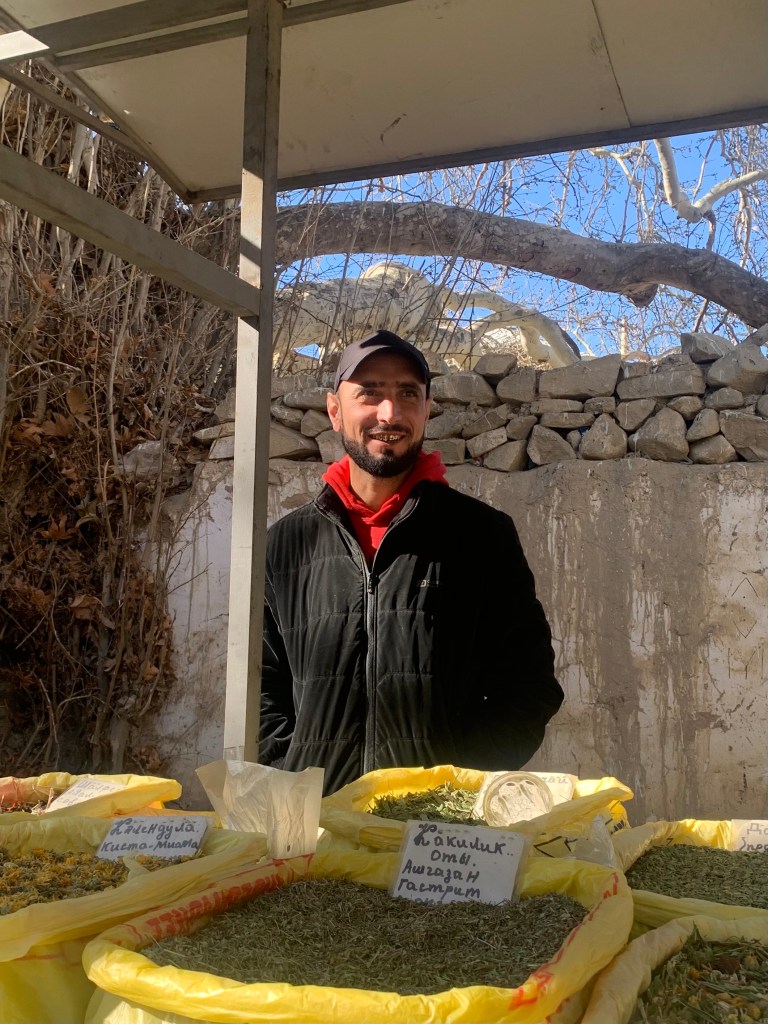
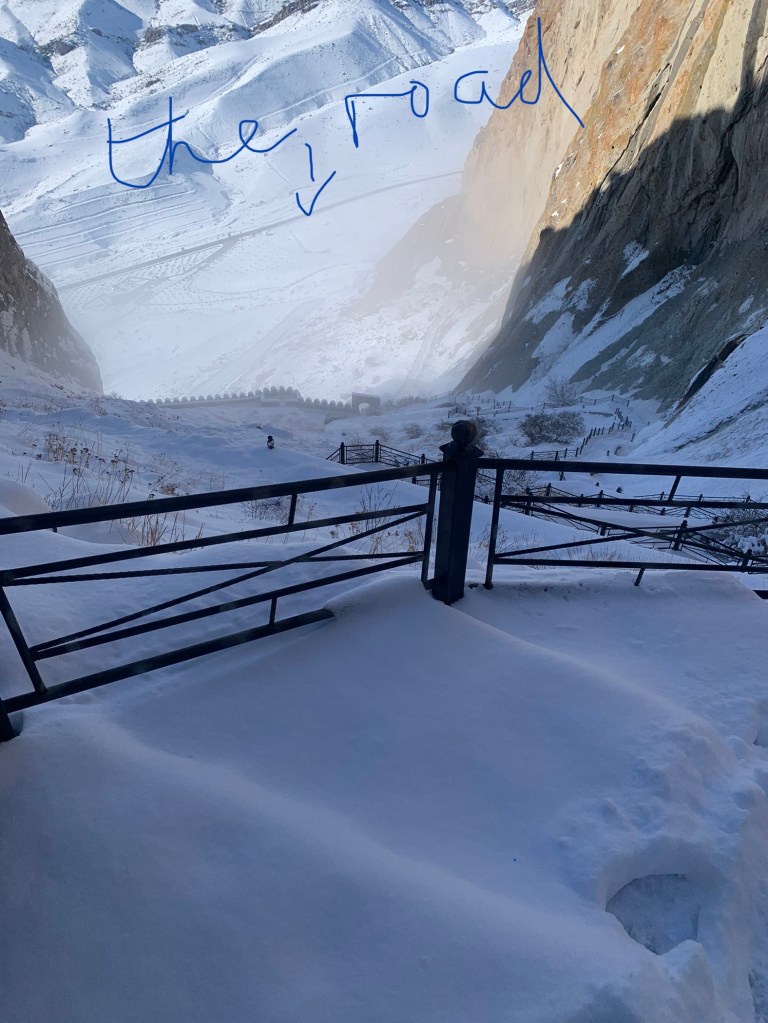
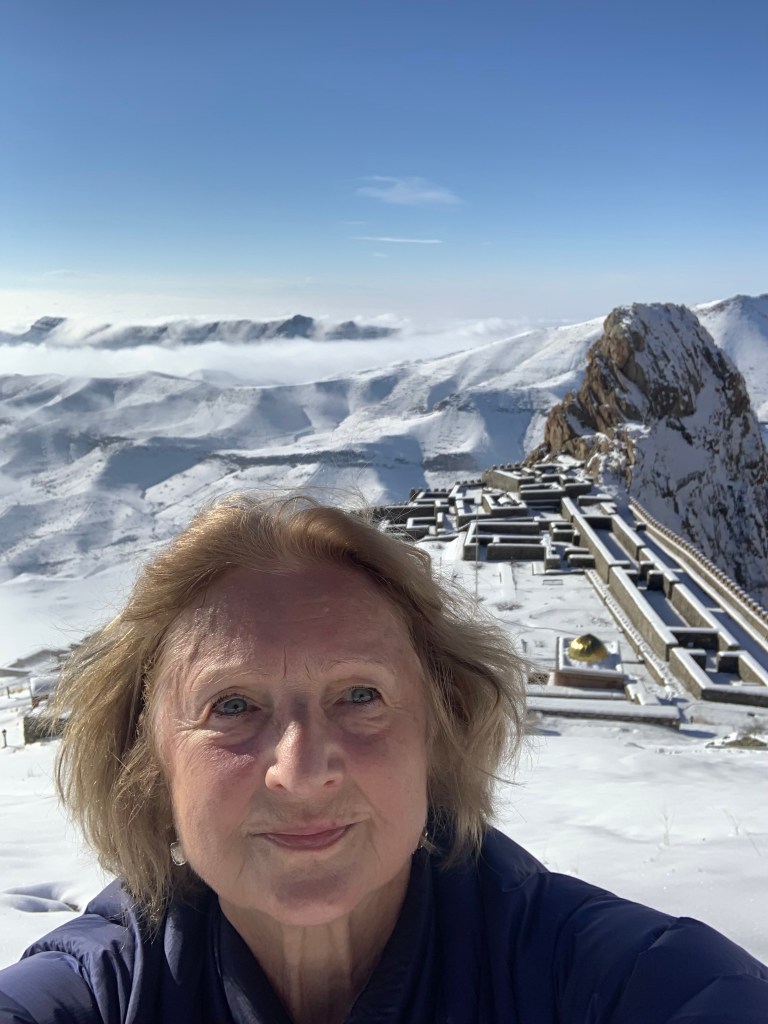
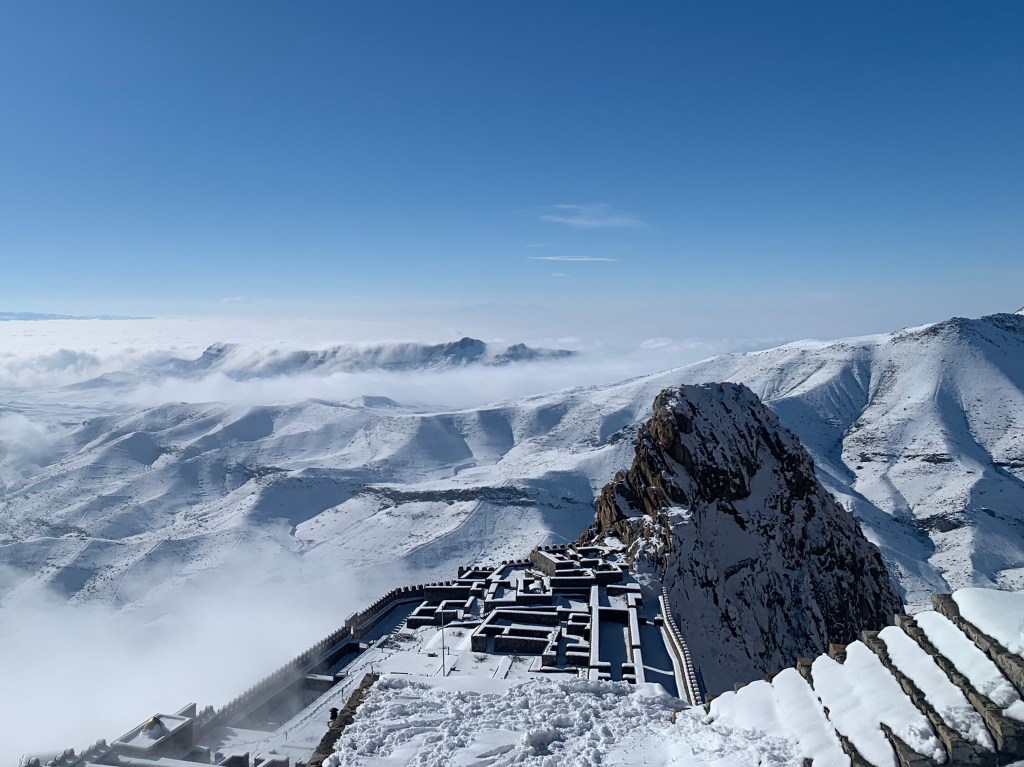
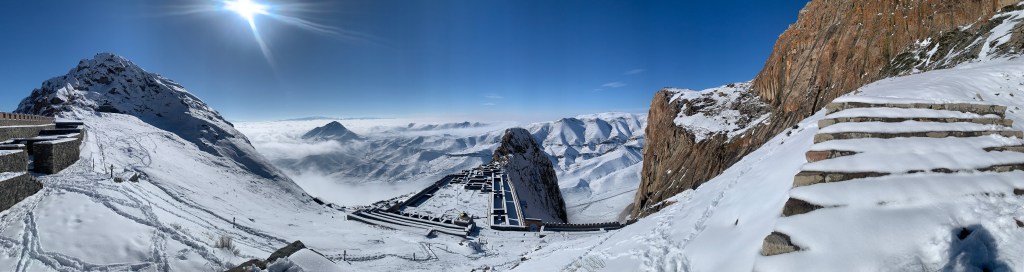
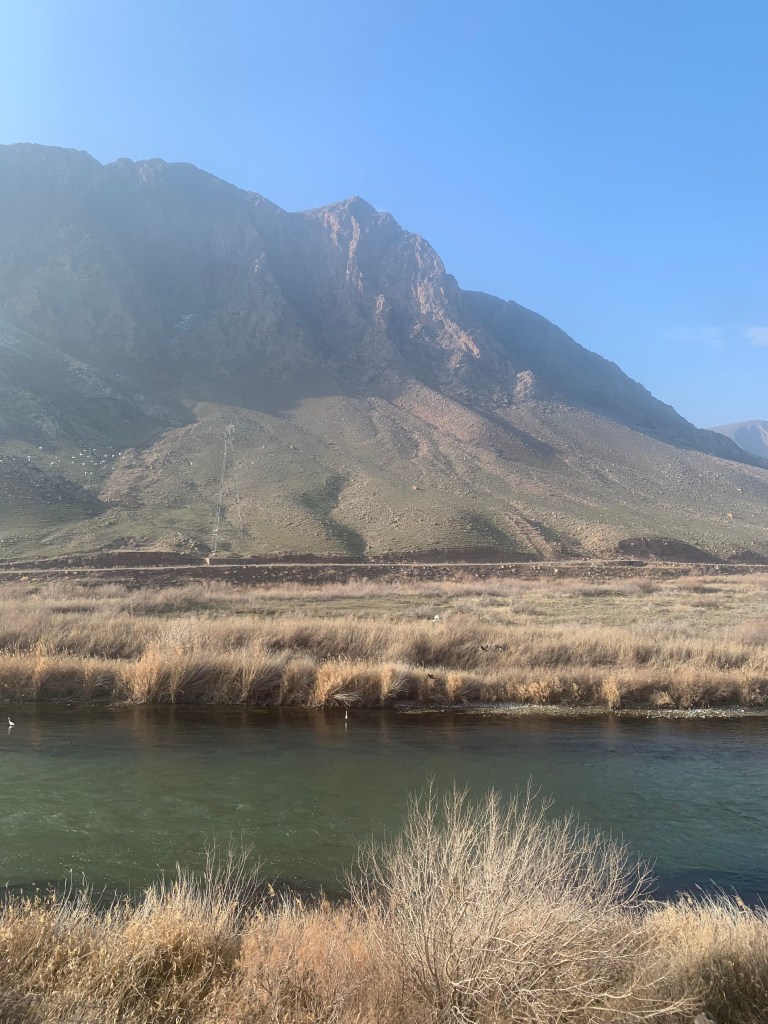
    But the trip to the Seven Lakes (HAFT KUL in Tajik) in the foothills of the Pamir range was terrific (and terrifying): Rohim, the taxi driver, owns a Mercedes automatic (with summer tyres) just fine for dry, asphalt roads. The road to the lakes is a narrow, rough, unpaved snake, strewn with stones fallen from the sheer mountain sides, riddled with potholes and having bite-shaped chinks missing on the steep slope to the lake side. There was also snow, and on one hairpin bend Rohim had five goes before making it over the icy bit. The road goes along the canyon of the river Shing. There is a gold mine and an ore processing plant a third of the way up – there was a lot of dust on the way – and silt and waste from the processing go into the river. Higher up though, the water is pristinely clean. (We took with us a dozen or so plastic gallon containers to bring back fresh water from the top lake for Hajji, my host.)

    The gold mine nearby
    Going home
    Cliffs to one side, drop the other

    The first lake is called Eyelash, because of its shape; the second is Soja – Shady; the third is Gusher – Nimble; the forth is Nofin – belly button; the fifth is Churdak – Small; the sixth is Marguzor – Blossoming Place; the seventh is Hazorchasma – a 1000 springs.

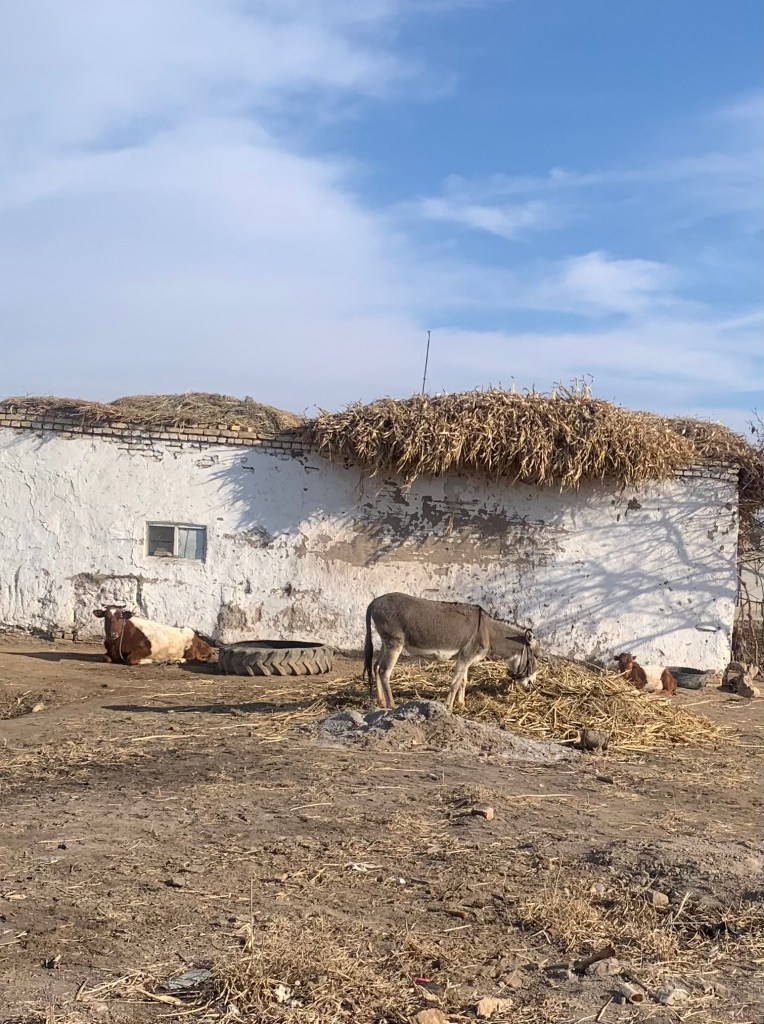
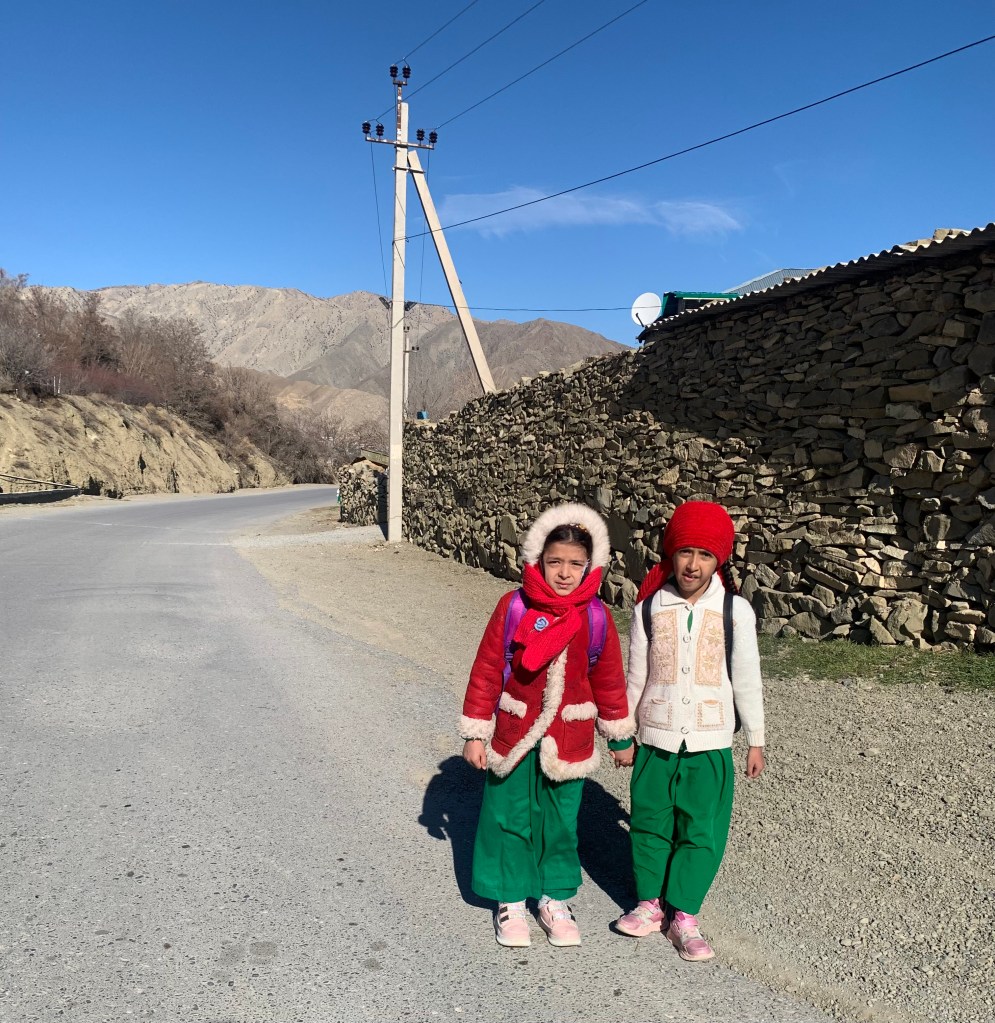
    Life in the mountains has a different, much slower pace. Yes, there are satellite dishes and mobile phones, but laundry is still done by the lake, the most reliable transport is by donkey, and visitors are still interesting enough for the children to gather and watch.

    I took the shared taxi to Dushanbe – a little more expensive than the marshrutka minibus but much more comfortable. Hajji, the owner of the hotel where I stayed, organised for the taxi to pick me up at the hotel and Hajji made sure I got the front seat, so no squeezing in the back (and it was a squeeze: 3 people and a baby.) It is a 3,5 hour journey on a good road through spectacular mountain and canyon scenery along the Zarafshan river.

    Dushanbe is a young capital. There is little to see from before the beginning of the 1930’s – the town is all Soviet central planning snd building – and nowadays they are getting rid of some of the heavy Soviet constructions. There are many parks, squares and fountains (though all water features were wrapped up against the frost). And plenty of sculptures and monuments: every town has the statue of Ismaili Somoni, the 10th century emir, seen as the father of the Tajik nation; and the poet Rudaki is honoured in statue and park and street names.

    The forever president of Tadjikistan on every building
    Ismaili Somoni
    The president and the future president (his son, currently the mayor of Dushanbe)
    Rudaki

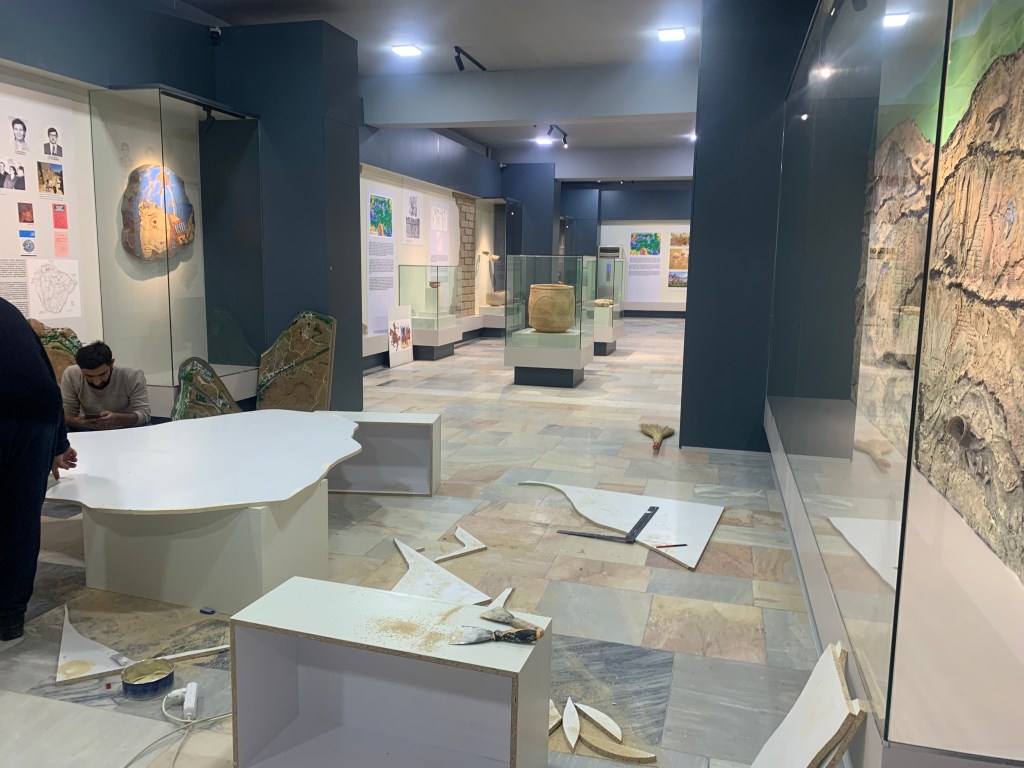
    The electronic display outside the Ayni Opera House advertised Tchaikovsky’s Idomeneo among other things and I thought, yippee! The lady in the booking office was very sorry, but the opera had been cancelled (no reason given). But I could go and see a musical drama for children the next morning… so I did. The Rabbit with His Nose in the Air (in Russian) was a (cautionary?) tale of the downtrodden and frightened animals who manage to outwit the ruler Lion (who wants to eat one of them). Thought there may have been a subtle lesson in it to teach the children how to get rid of dictators… The music ranged from Enio Moricone’s The Good, the Bad and the Ugly to the Sugar Plum Fairy. The theatre is a nice neoclassical building from the 1940s. Not far from the Ayni Opera House is the National Museum of Antiquities where the pride of place goes to the Sleeping Buddha, at 16m the largest statue of him in the world (since the destruction of the Bamiyan Buddhas in 2001). Lots of other interesting exhibits, but not many of them have an explanation in English (and even Russian was scant). I found the polystyrene pieces holding parts of antiquities up odd – as if temporary has become permanent.

    The foyer of the Ayni Opera
    The primary school children seemed to enjoy the show
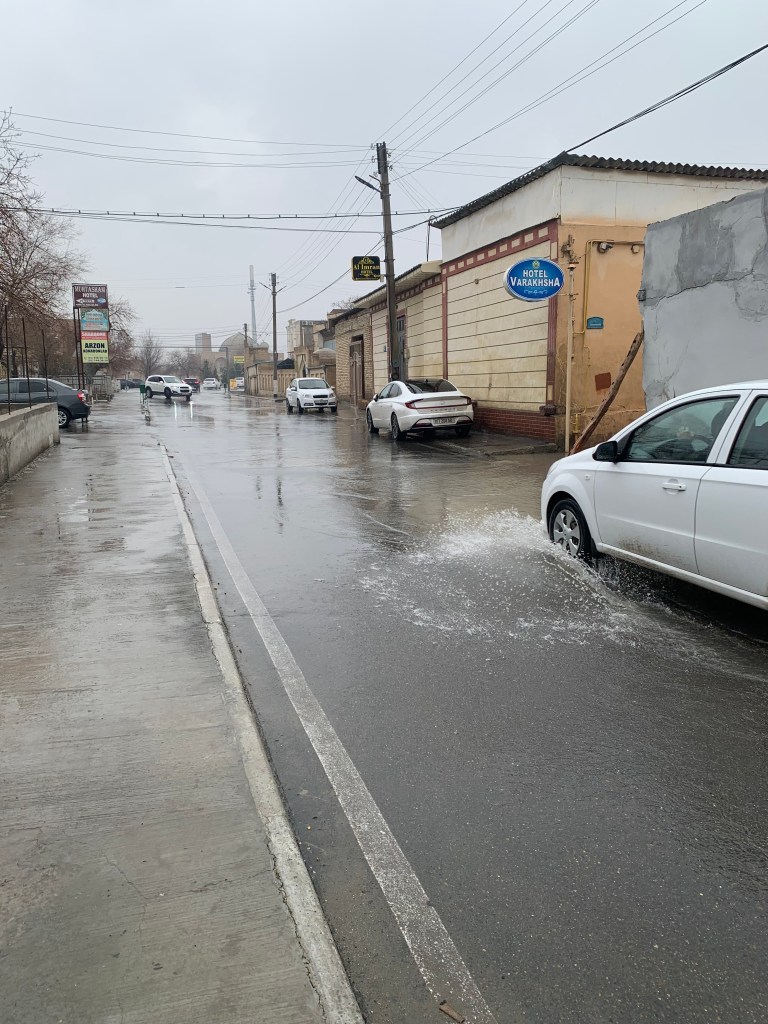
    It rained incessantly for two days in Dushanbe
    NOT a gym weight but a grain grounder
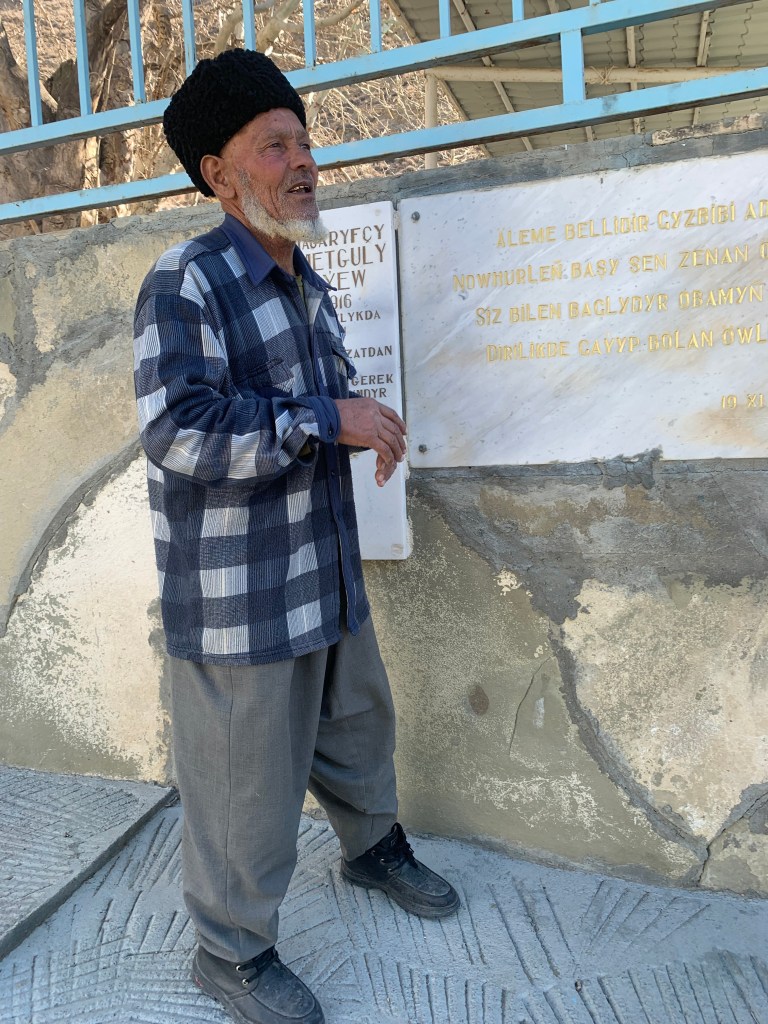
    Think they are grave stone inscriptions – in Kufi, Arabic, Persian
    A X ct reconstructed piece of ornamental decor

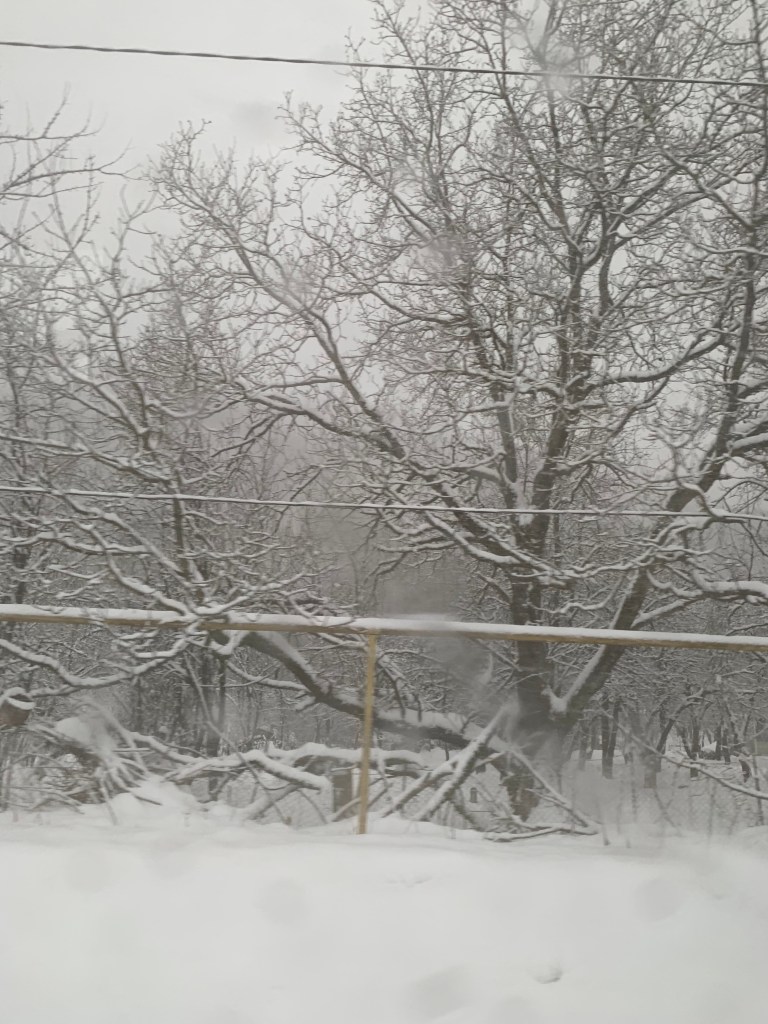
    Left Dushanbe in the rain to fly to Khujand (near the Uzbekistan border, as I needed to dip into Uzbekistan to get to Kyrgyzstan – the land border crossings between Tajikistan and Kyrgyzstan are not open to foreigners as yet). Khujand welcomed us with snow – though the locals kept saying “it never snows here”… The bazaar is, as always, a place of colour and movement, hawking and fascination.

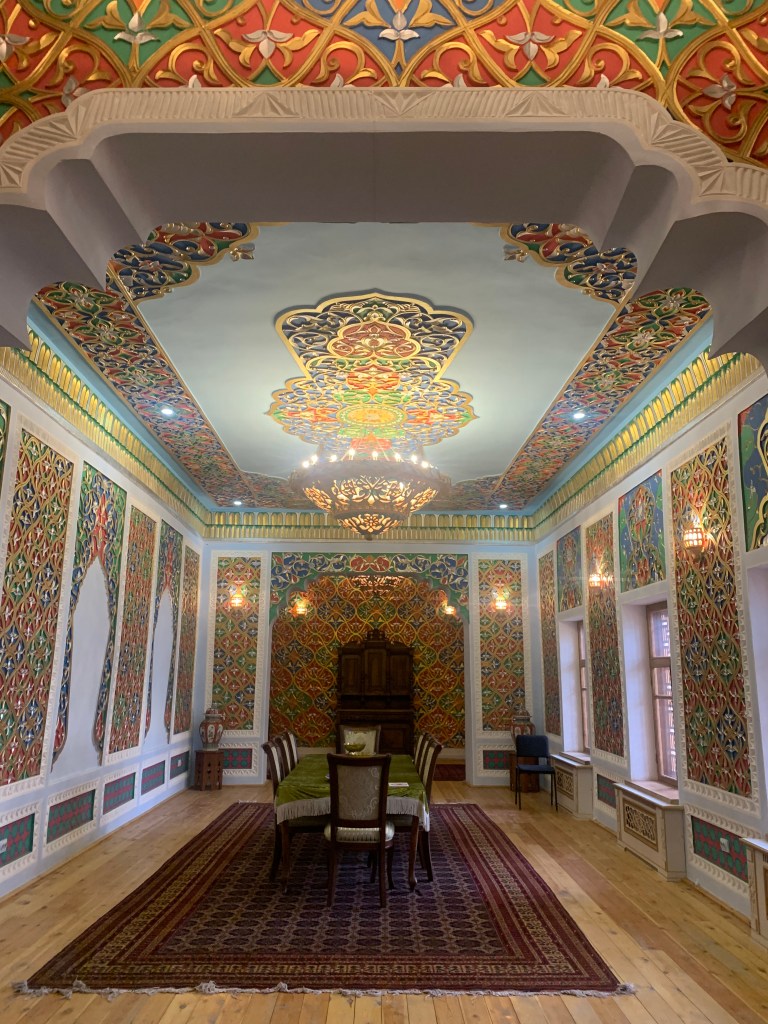
    Arbob Cultural palace is a wonderful oxymoron: built in the early 1950s, to be used by the workers of the kolkhoz/sovhoz as a place for meetings and entertainment, it is based on the tsarist Winter Palace in St Petersburg. The driving force behind the construction was a local Tajik, Urukhoajev, the leader of the collective farm and a member of the Soviet leadership in the area (it seems even Stalin respected him – when the order had been given that everyone had to wear a military uniform to Soviet meetings, Urukhoajev was permitted to wear the traditional Tajik clothes). The palace has been built with local labour and local artisans did all the decorating – from woodcarving to painting intricate designs on ceiling panels, to stone and plasterwork statuary. It is now a museum, but also used for special state occasions – and for wedding photos.

    I spent a day in Margilan, Fergana Valley, THE silk town in Uzbekistan. The town is synonymous with silk production – the Yodgorlik silk factory still uses traditional hand-weaving method for some of its products, and it is fascinating to watch the women work (women weave, men dye the silk thread). The Institute for the Research of Natural Fibres showed me around too – they investigate and test which mulberry trees (and there are quite a few varieties) produce the best leaves-food for the silkworm, and through selection and feeding of worms work out which produce the best and longest thread – some cocoons will have more than 2000m of silk thread.

    The feet dance the pattern, the hands firm the weave
    The various cocoons from various mulberry trees
    Raw silk

    Getting the ticket for the train from Margilan to Andijan (a 45 min journey), close to the Kyrgyzstan border, was a lesson in patience. I inadvertently got to the ticket office at 13:40, so it was closed for lunch (a lot of public service places close for lunch between 13:00-14:00 in these parts). Went and had a cup of tea and got there soon after 14:00. The queue (a loose term) seemed long and it was a nice day, so I went for a walk. By 14:30 the queue had not changed much (still the same 5 people) but I thought I’d give it a go. By 15:00 I could ask for a ticket, only to be told that it was a local train, leaving at 07:00 and to come buy the ticket in the morning before I got on… Managed to persuade him that he could issue me a ticket as I was there.

    The Margilan railway ticket office
    The ceiling at the train stations
    The bread all looks lovely – and like the ceiling
    The tourist office in the railway station – not sure when it was last open
    The overnight train from Bokhara to Andijan
    The wagon was full of men from Bokhara going to work for Gazprom in Irkutsk

  • Six days in Turkmenistan

    Feb 21st, 2024

    (The process to enter Turkmenistan started well before I left the UK – one cannot visit the country without a Letter of Invitation (LOI), usually provided by a travel agency which then also organises the visit in full. The letter is valid for a month and the transit visa gives you 6 days within that month. The trip is not cheap, especially if it is for one person, as in my case. Owadan Travel is a government approved agency and Saray, the lady with whom I dealt online, has kept me informed throughout. I was initially taken aback when I was told that they would only accept cash payment (in crisp $ notes) . Carrying $2500 – $3000 in cash around Central Asia for months was not an option. On arrival in Ashgabat, my guide took me to the Central Bank to get the cash. I visited their offices and met the owner and members of staff, was shown their little ethnographic museum and given a small present.)

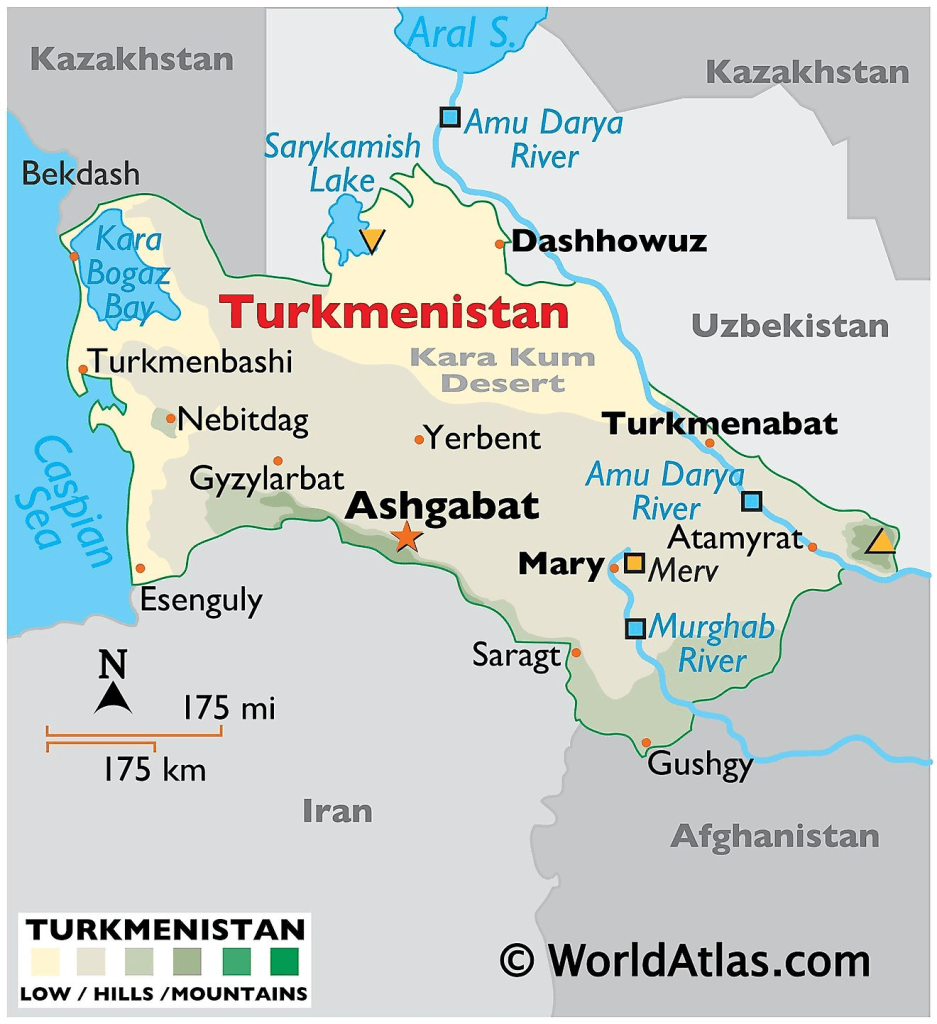
    There are no direct flights from Baku, Azerbaijan, to Ashgabat and the Caspian sea port at Turkmenbashi is closed to tourists. Thus, a change of plan and “doing” Uzbekistan first, so I could use the land border crossings. The crossing at Shavat (Uzbekistan side, not far from Khiva) wasn’t very busy at 09:30 am (it is open from 09:00 – 17:00). Just a dozen of us, with me the only non-local – and once the passport was stamped and the luggage put through the scanner, I could walk towards the no man’s land. Beyond the Uzbekistan border fence there was an old commuter type bus, battered, mauled and scarred, likely from the Soviet times, but I was truly grateful that I wouldn’t have to walk the mile or so to the Turkmenistan border fence with my luggage on my back.

    The very young Turkmen soldier (military service is obligatory for men at 18; they can defer it if they go to university but need to do it after) took my passport and the LOI and passed it on to someone else… It took about an hour, some 8 people, including my guide (who was called by one of the 8), a doctor (to do a $33 PCR test), various small window counters, old technology, various bits of paperwork, the payment… and I could finally put my luggage on the scanner. Having read about people’s bags being searched to the last pocket and seam, it was a pleasant surprise when the officer said “welcome to Turkmenistan” and asked, smiling, if I smoked, had any codeine based drugs or heroin.

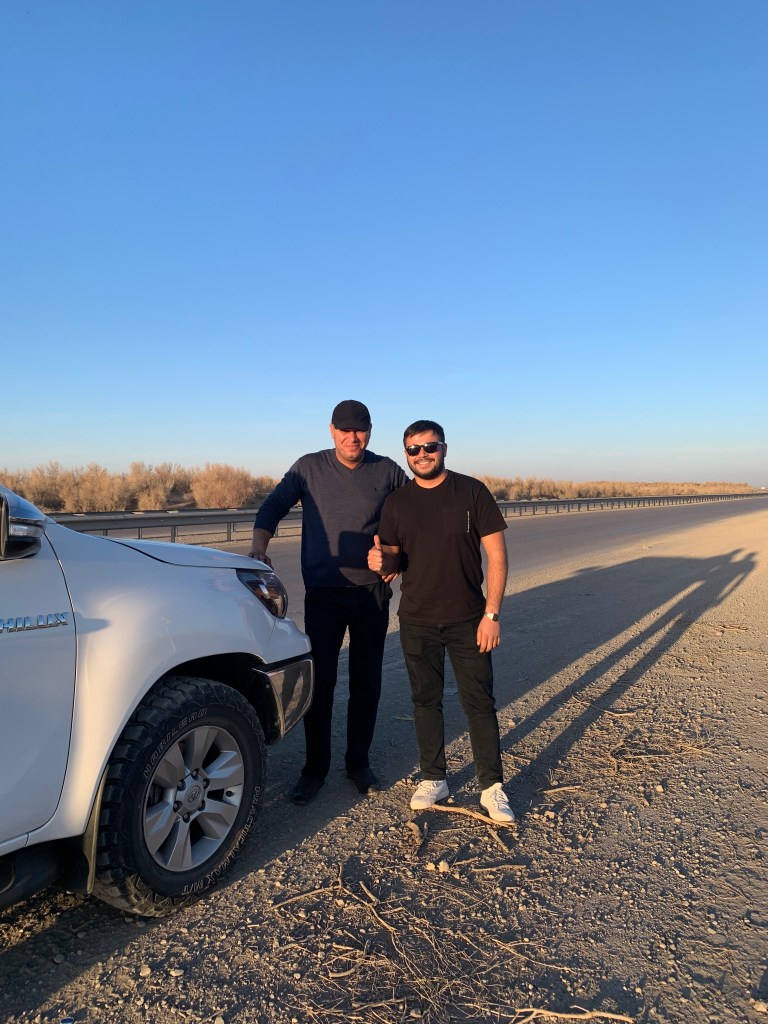
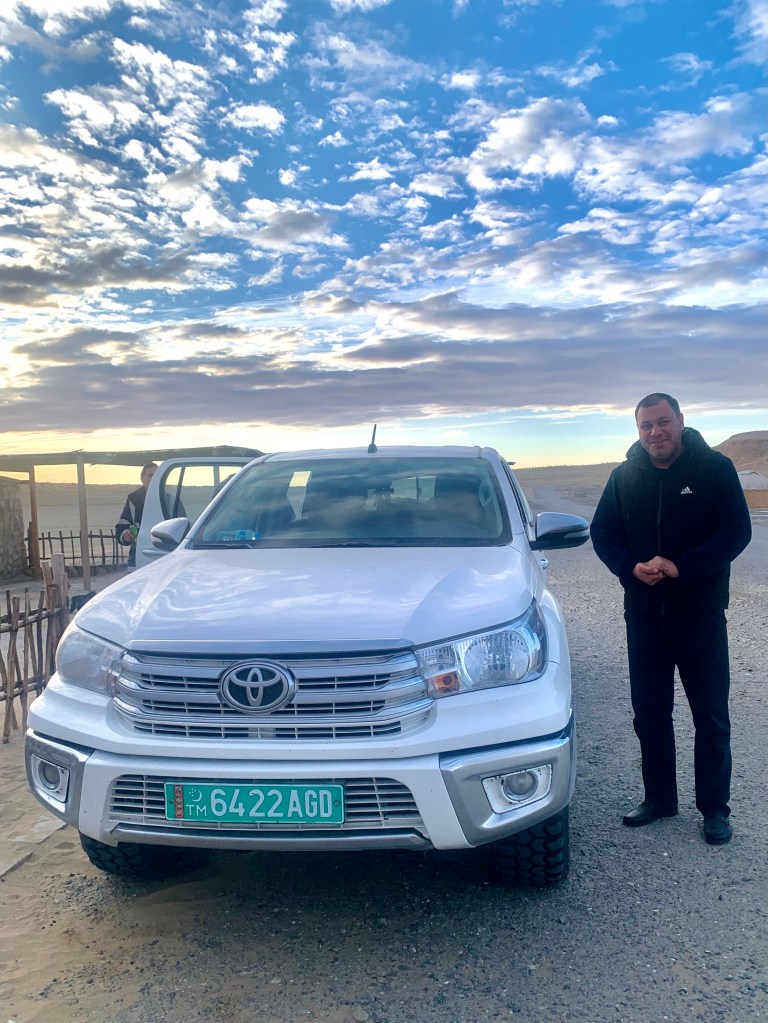
    Mekan, the Owadan Travel guide, is a 25 year old English language and literature graduate (studied in Turkey) who can guide in English, Russian and Turkish. Guwanch, the driver of the gleaming white Toyota Hilux, looked a little apprehensive when I usurped the front seat – until he realised I spoke Russian – he then visibly relaxed. He is a good and conscientious driver (seatbelt on at all times!) and we got on very well. (I called him “my hero”, after a particularly scary road bit was negotiated with panache, and he remained “Мой герой” (Russian for ‘my hero’) throughout. I was presented with a lovely box of chocolates by him – he did say this was the first time he ever bought anything for a tourist.

    Guwanch and Mekan and the trusty Hilux

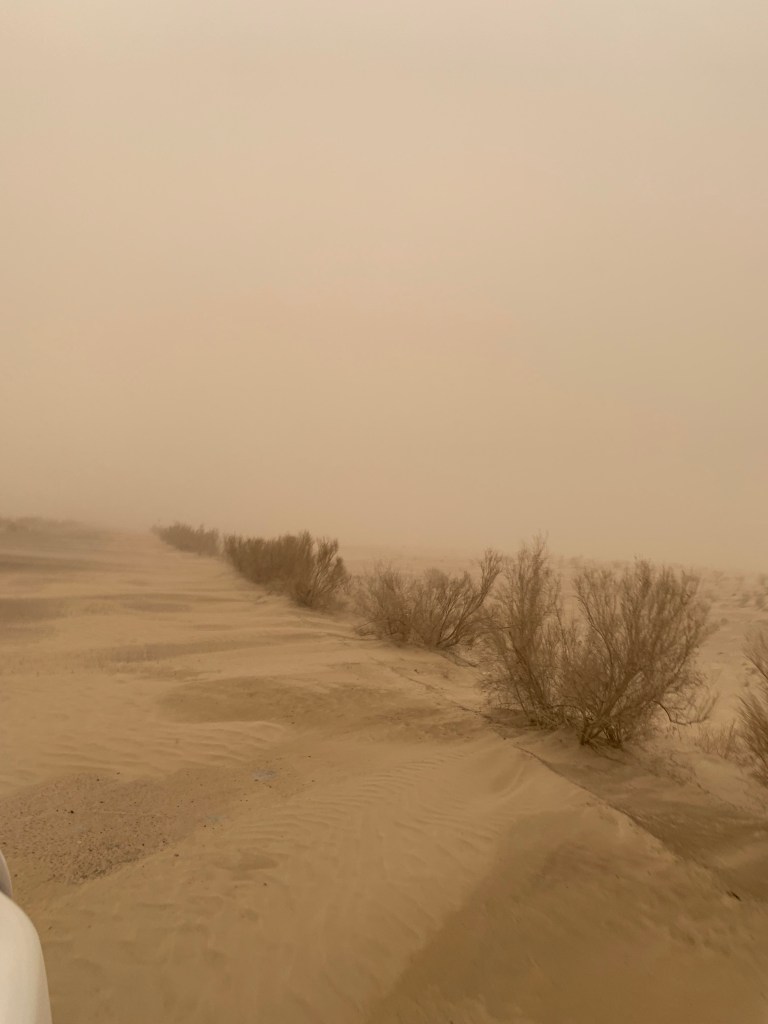
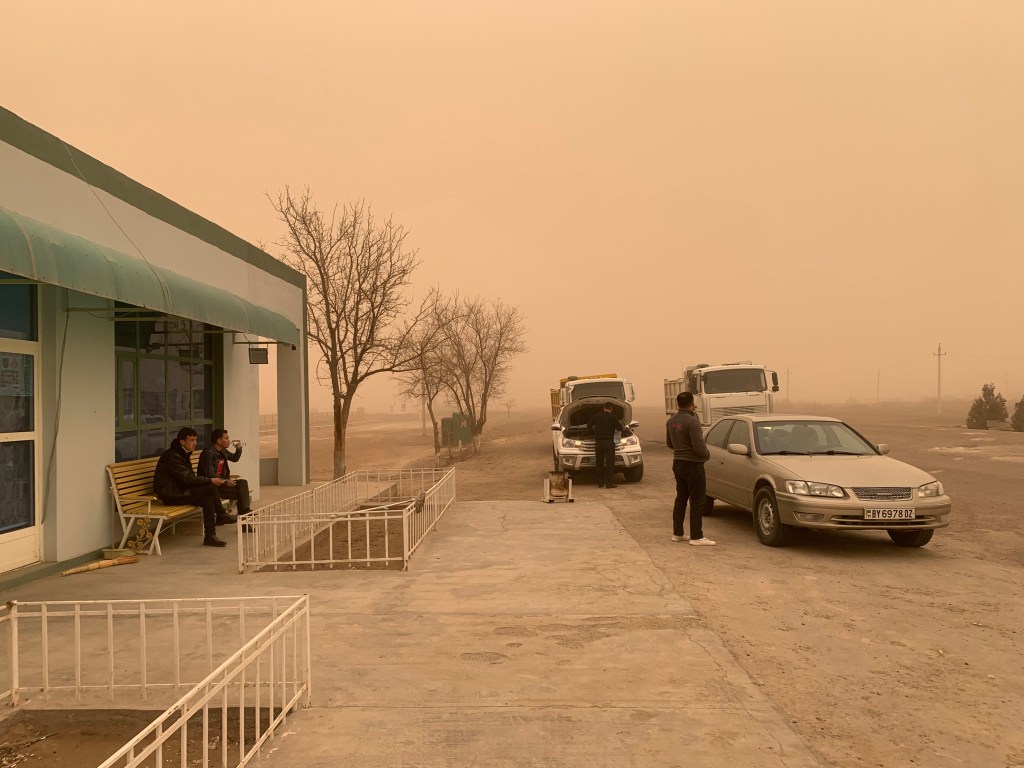
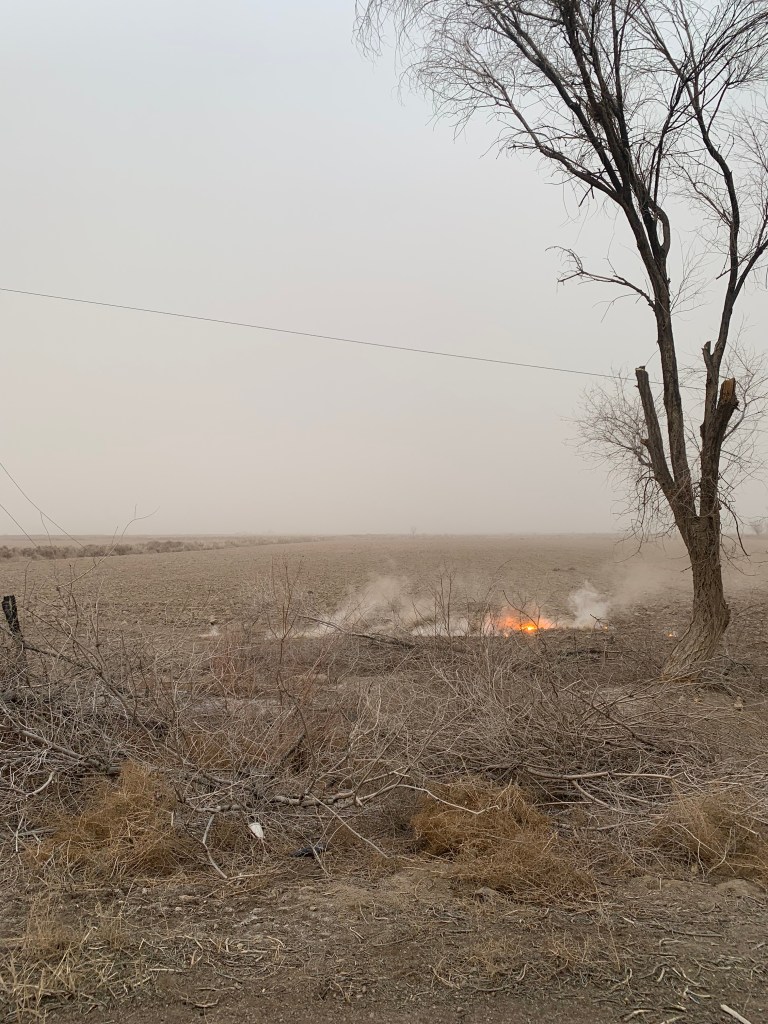
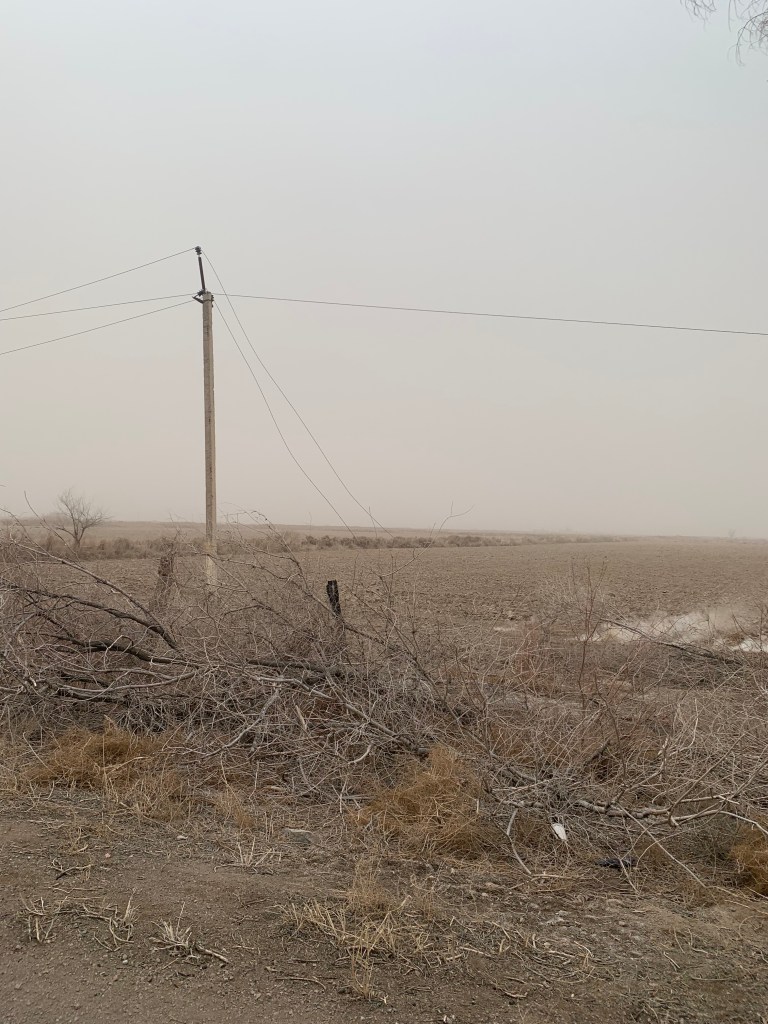
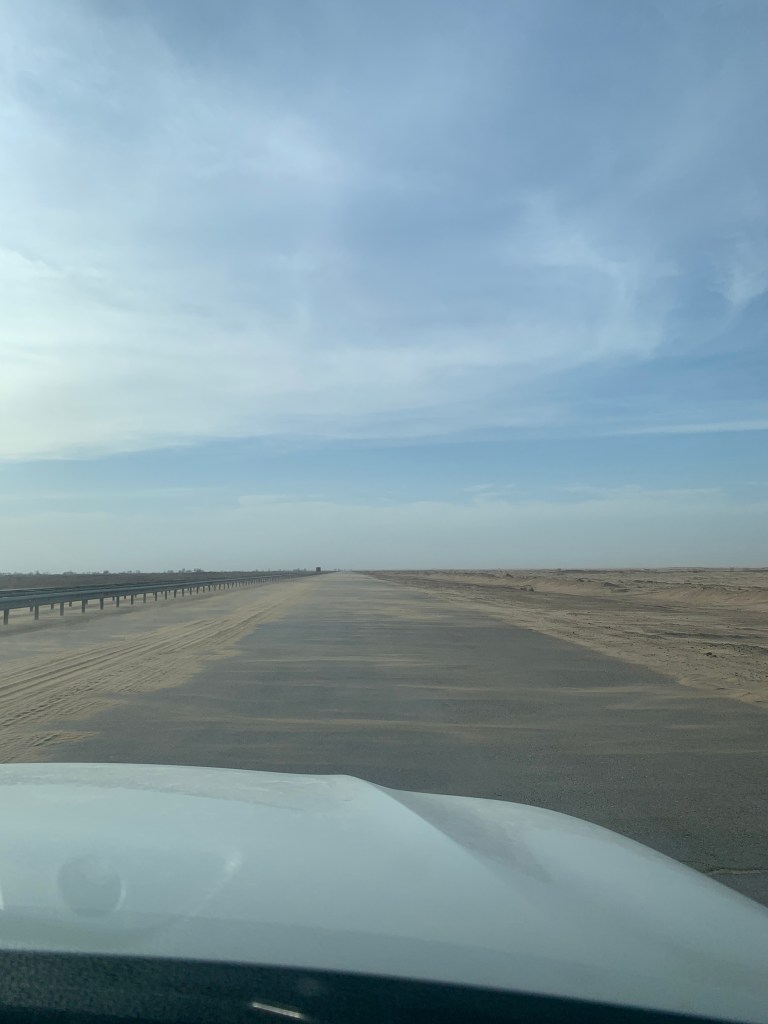
    The roads are abysmal. Rutted, potholed, scraped, ploughed, furrowed, scarred, disappeared. The dual carriageway (not always dual) was used on both sides in both directions as each driver tried to find the least damaged bit to drive over. We drove on the right and on the left, overtook on any side, went off road when that was the least awful part. Guwanch manoeuvred the 4-wheel drive Toyota Hilux with (new) heavy duty winter tyres with skill and panache – he had a schedule to keep (to get me to all the places on the programme – we did 310 km on the first day). That day, the wind was up, the sand carried across the road in gusts as blinding as a sudden fog. We saw a tree brought down by the wind that crashed onto the electric wires and broke them – it looked like the ground was burning and Mekan called the provincial fire brigade to tell them about it.

    My hero – Guwanch and his Hilux
    The last supply shop and loo for 100+km across the desert

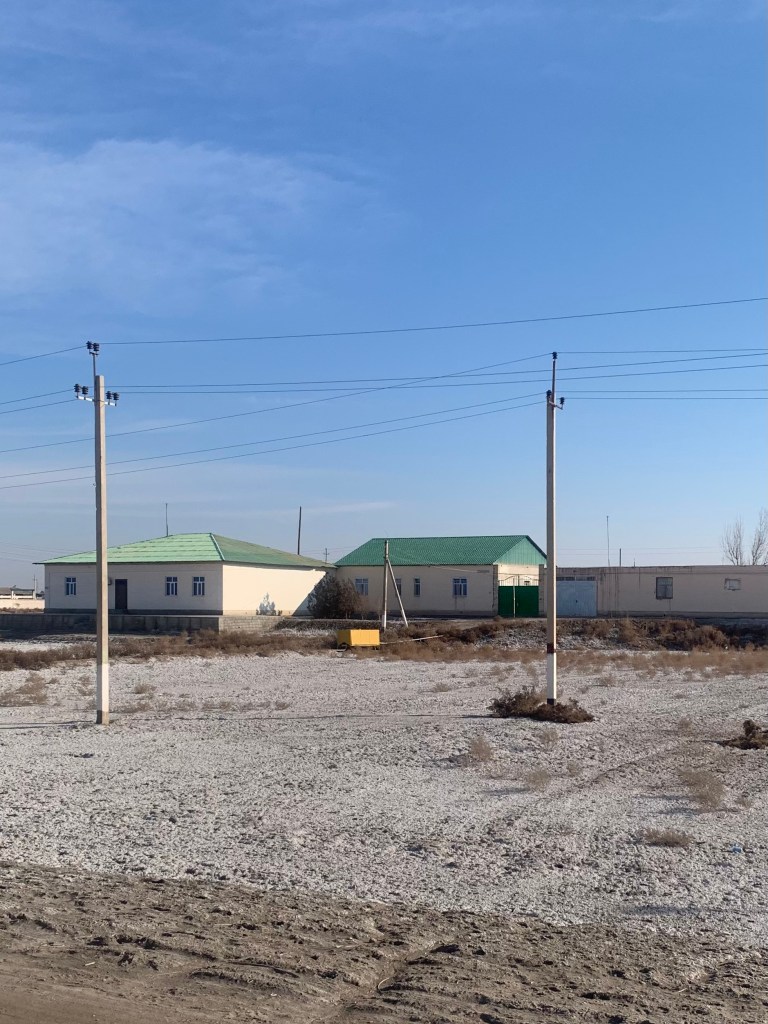
    Turkmenistan is 80% desert; its riches, the natural gas, the minerals, ore, are all underground. The soil is salty. I thought at first it was hoarfrost on the ground (also in Uzbekistan) – it is salt. They do grow excellent fruit and vegetables in the areas near the water – melons and cantaloupes are especially highly rated.

    Salt appears as water evaporates
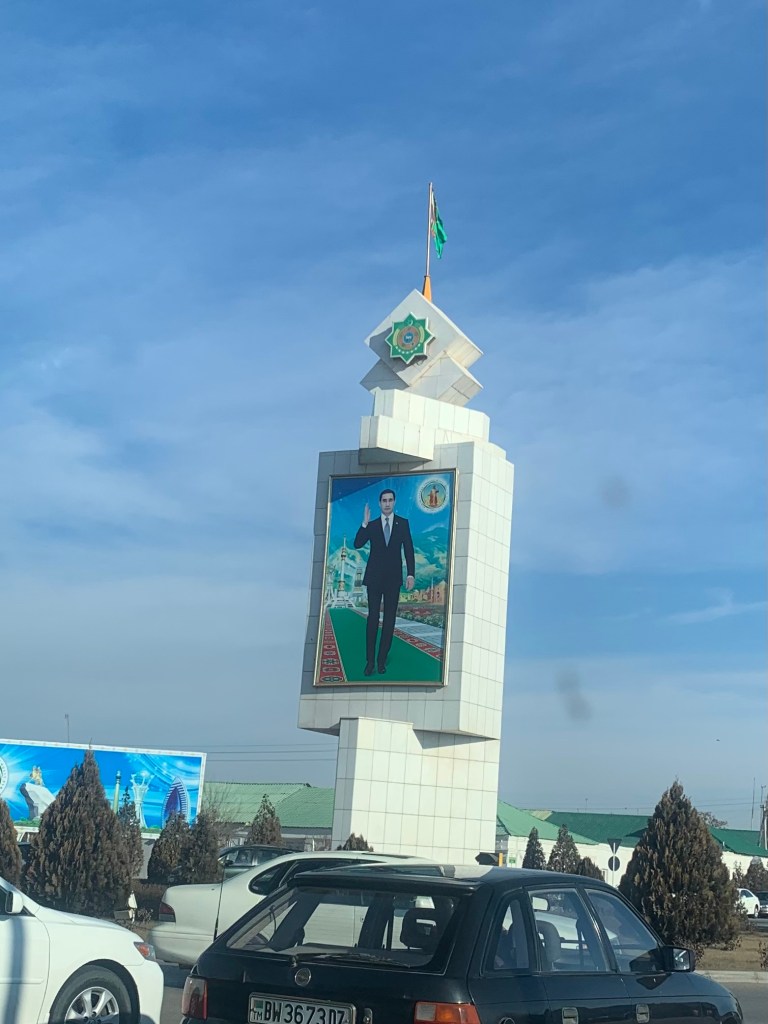
    Welcome by the President in Dashoguz

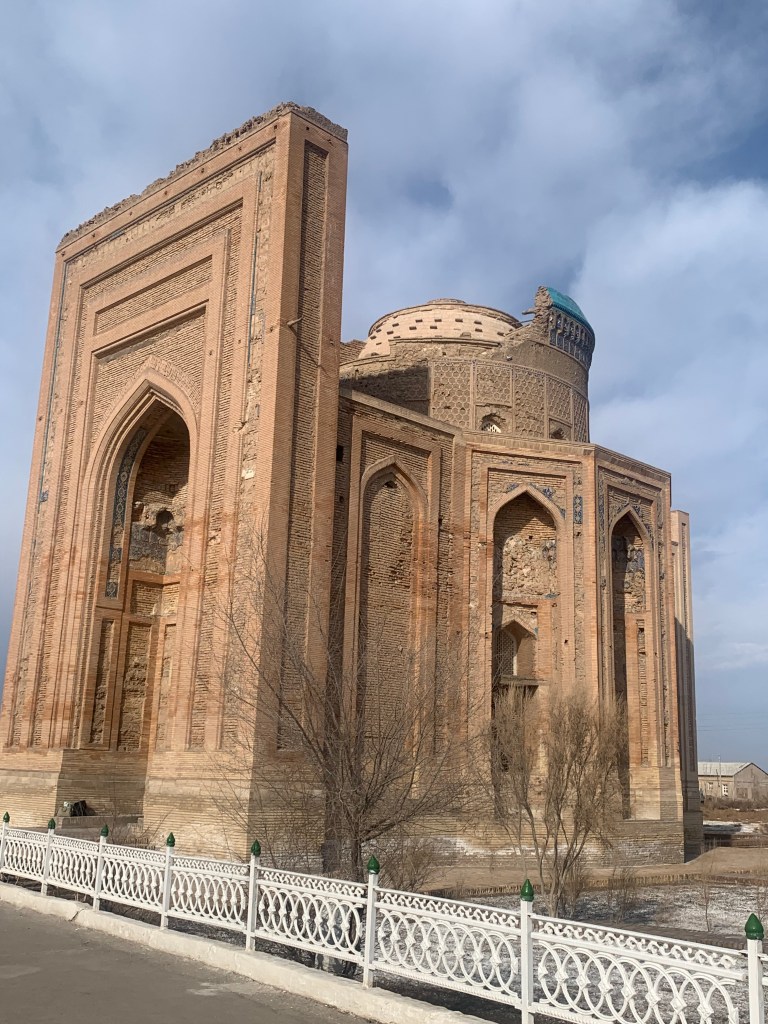
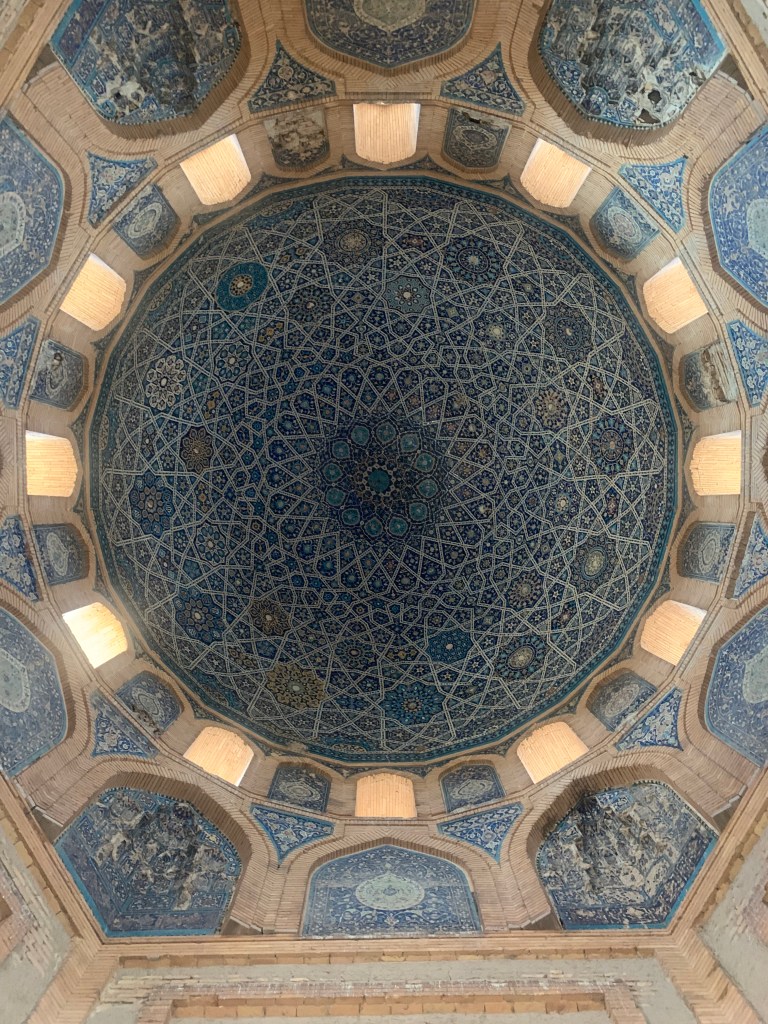
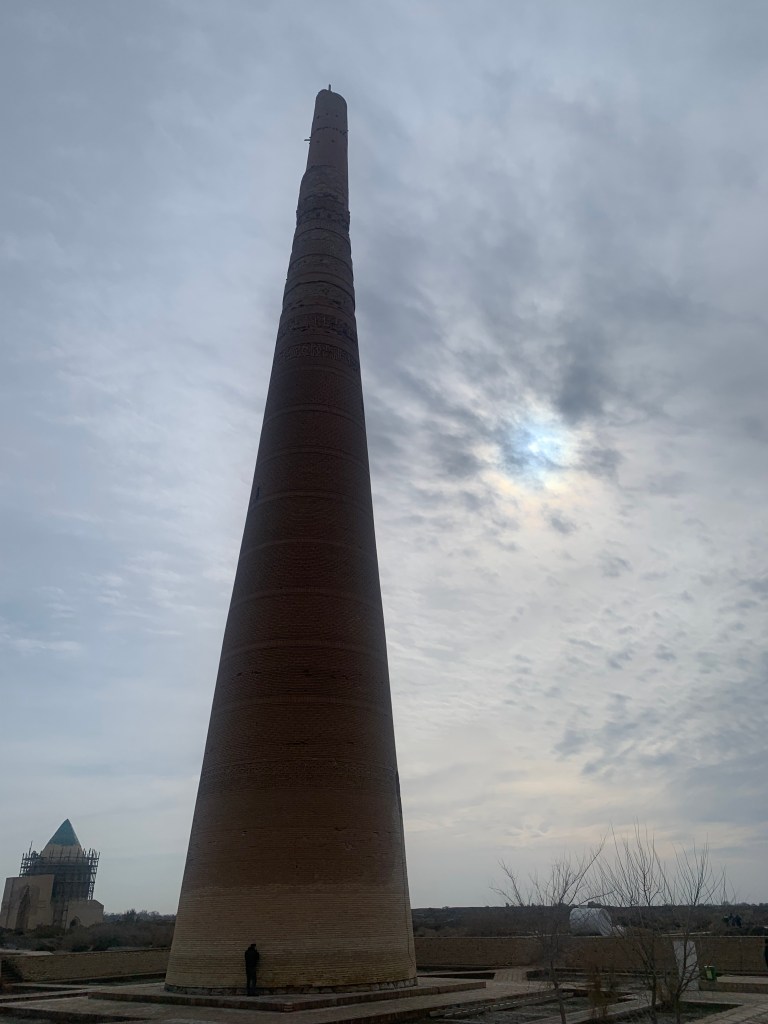
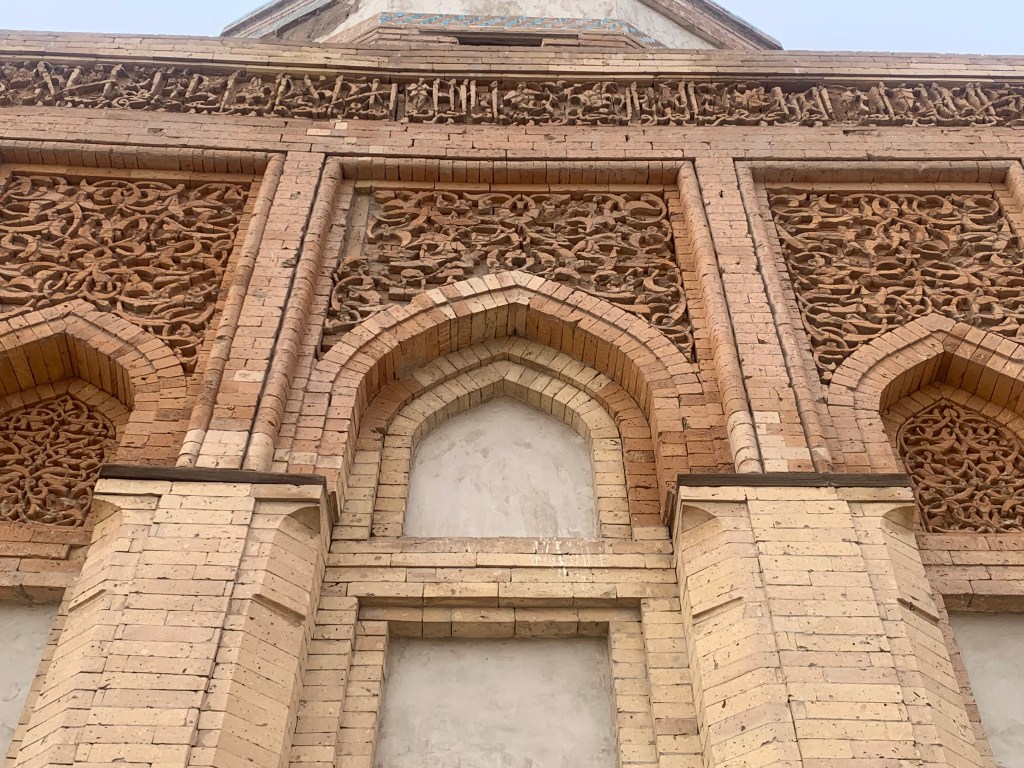
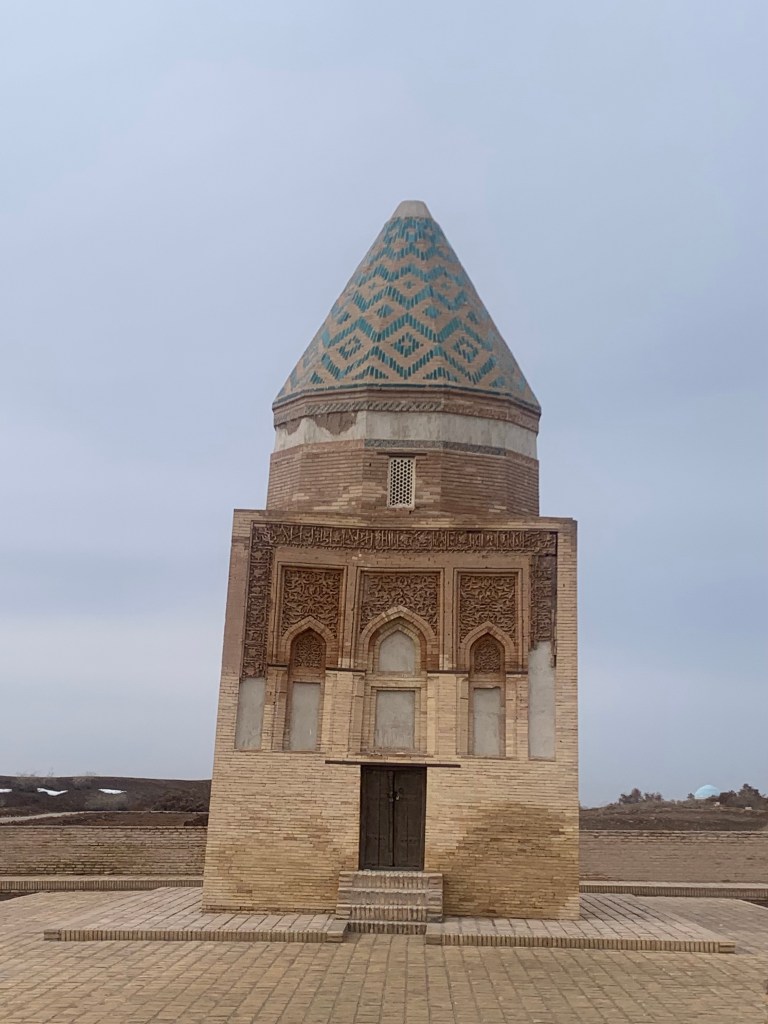
    We headed to the first historic place on our sightseeing tour - Konyeurgench. It has a long history, starting in the 5 ct BC, but its heyday was between 11-14 ct when it was the capital of the Kwarezm empire and an important, rich, well developed town on the Silk Road. (Of course, it got raided and sacked and rebuilt several times.) It is now a UNESCO site.

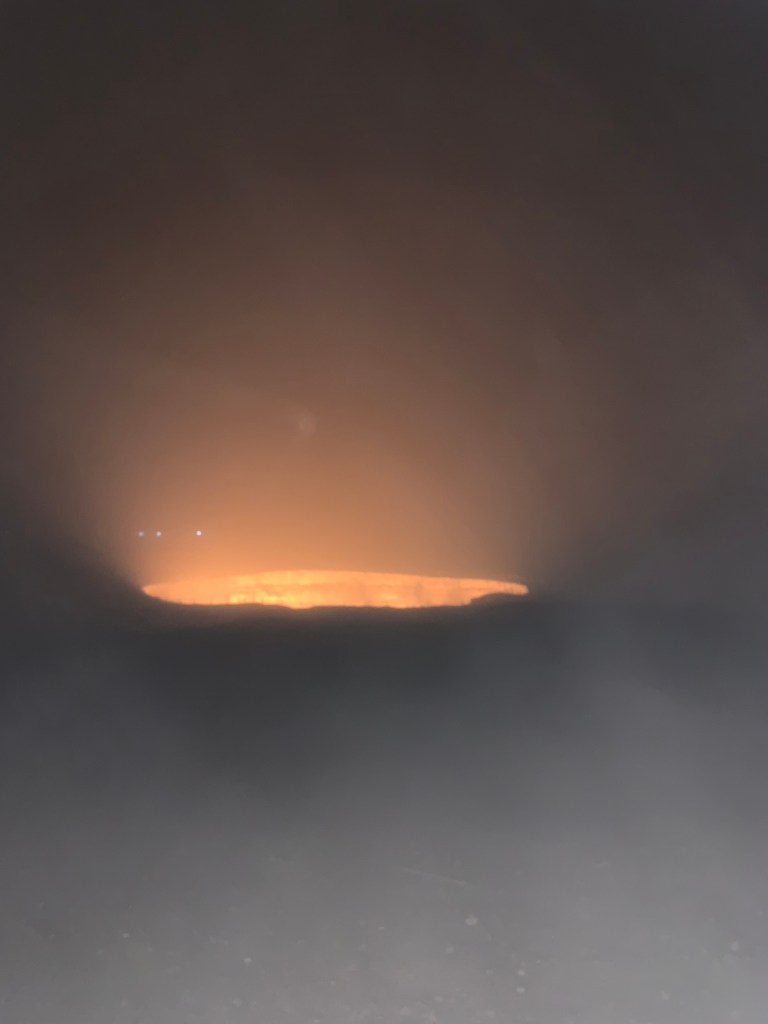
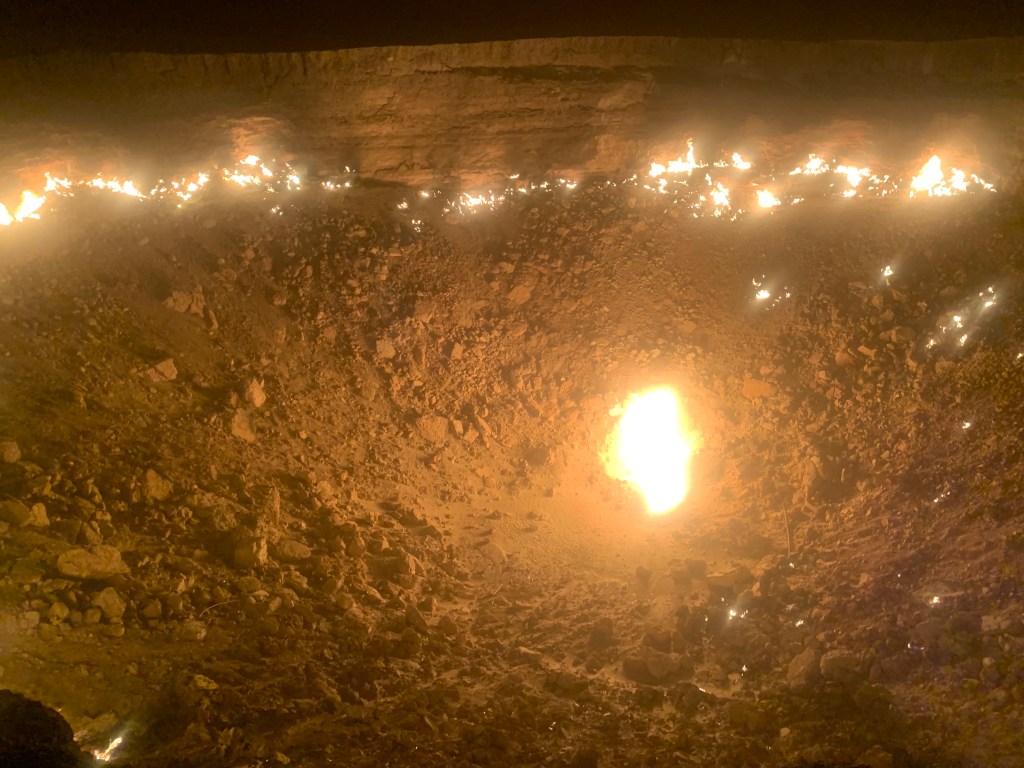
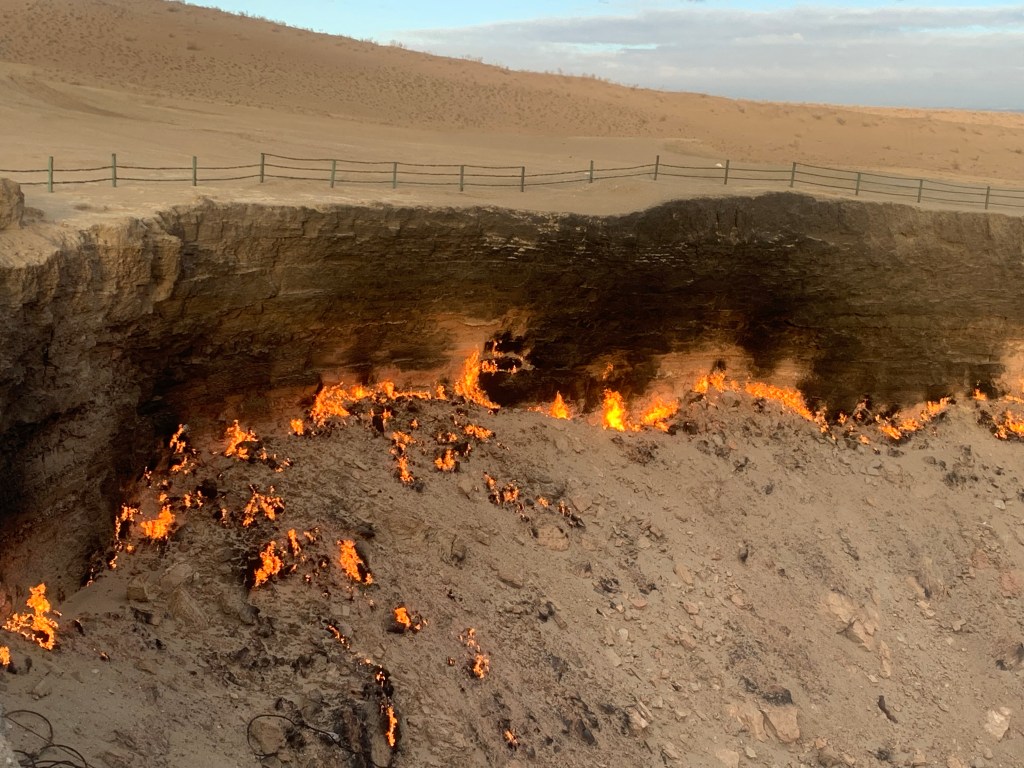
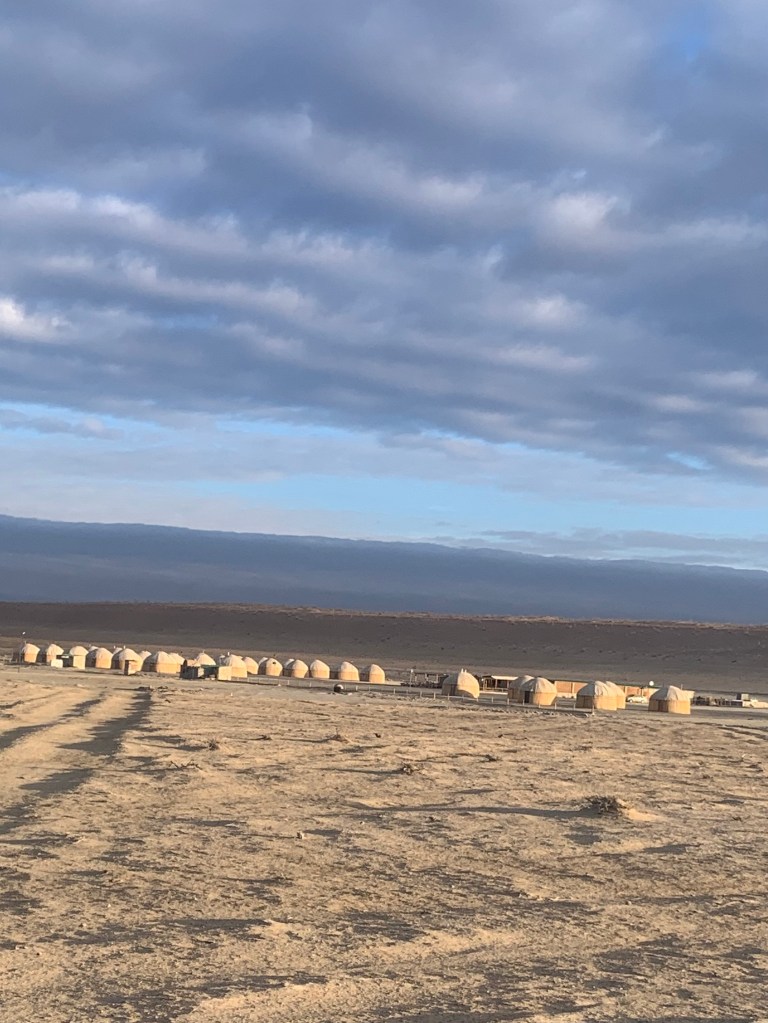
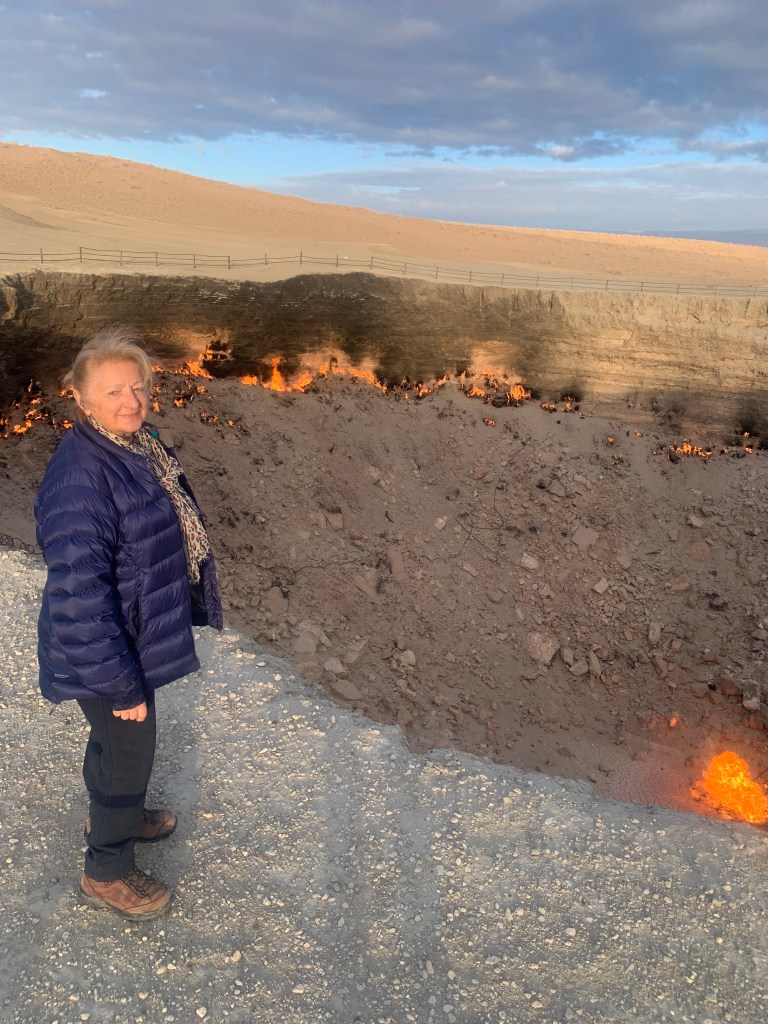
    Then a long drive to Darwaza, in the middle of the Karakum desert, where The Gates of Hell gas crater has been burning since the 1970’s when the Soviet experts were prospecting for natural resources (Kara-kum means ‘black sand’, as there is a lot of shale underneath). I was told there had been a lot of heavy equipment in the area at the time and a spark may have caused an explosion that created the crater – there are metal bits and pipes visible at the bottom. The natural gas has been burning since. (It made me smile, thinking of the Azerbaijan’s “Fire Mountain”, which is but a smidgeon compared to the hundreds of clean, smokeless flames around the giant crater.

    The yurt village
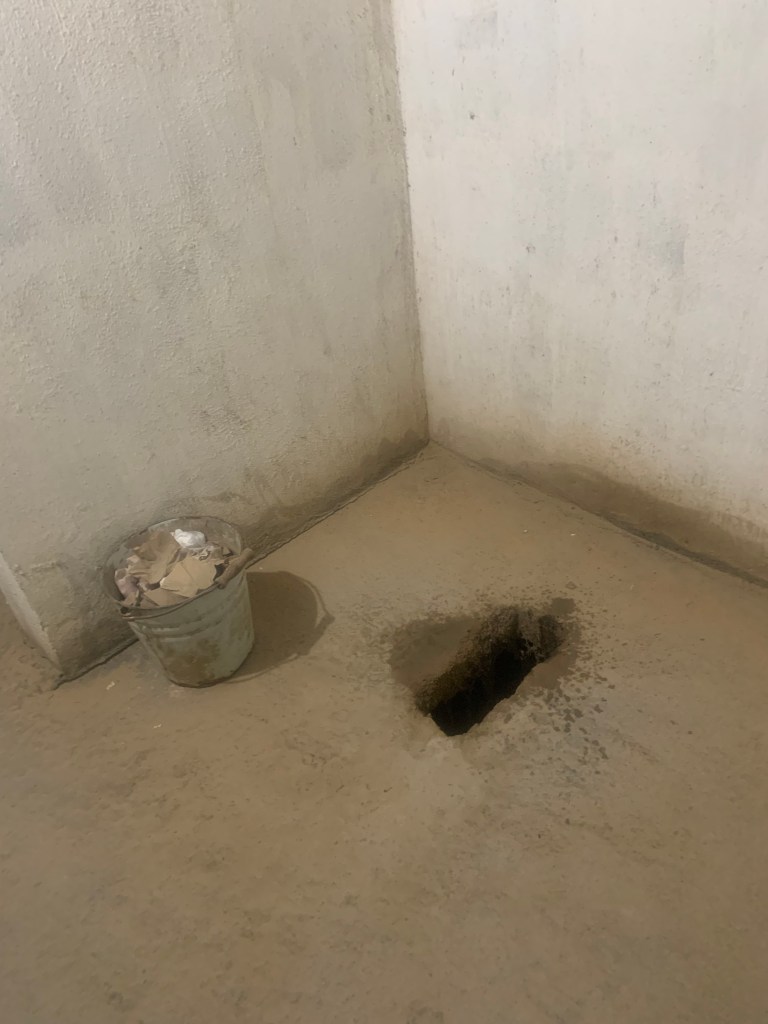
    The loo
    The Turkmenistan massage road
    My yurt stove

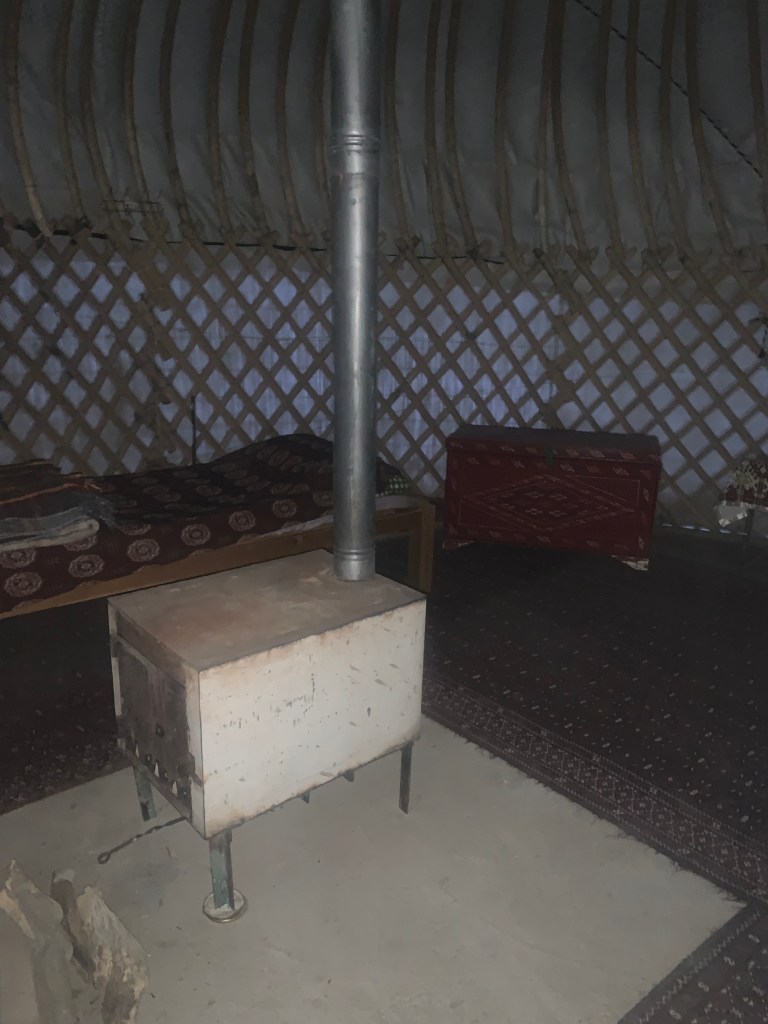
    Owadan travel built and owns the yurts here and this is where I slept. This being February, I was, yet again, the only visitor. But I was well looked after, and there was a fire in the little stove in the yurt. (The loo, though, could not be put closer – at 50m, it is a trek.)

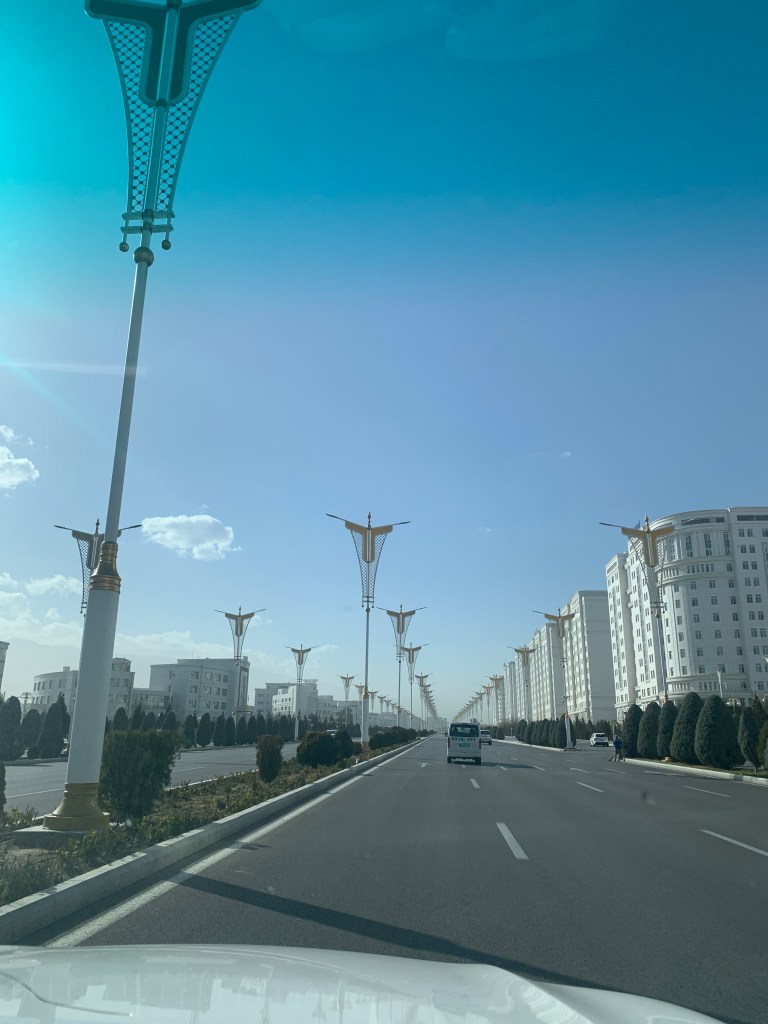
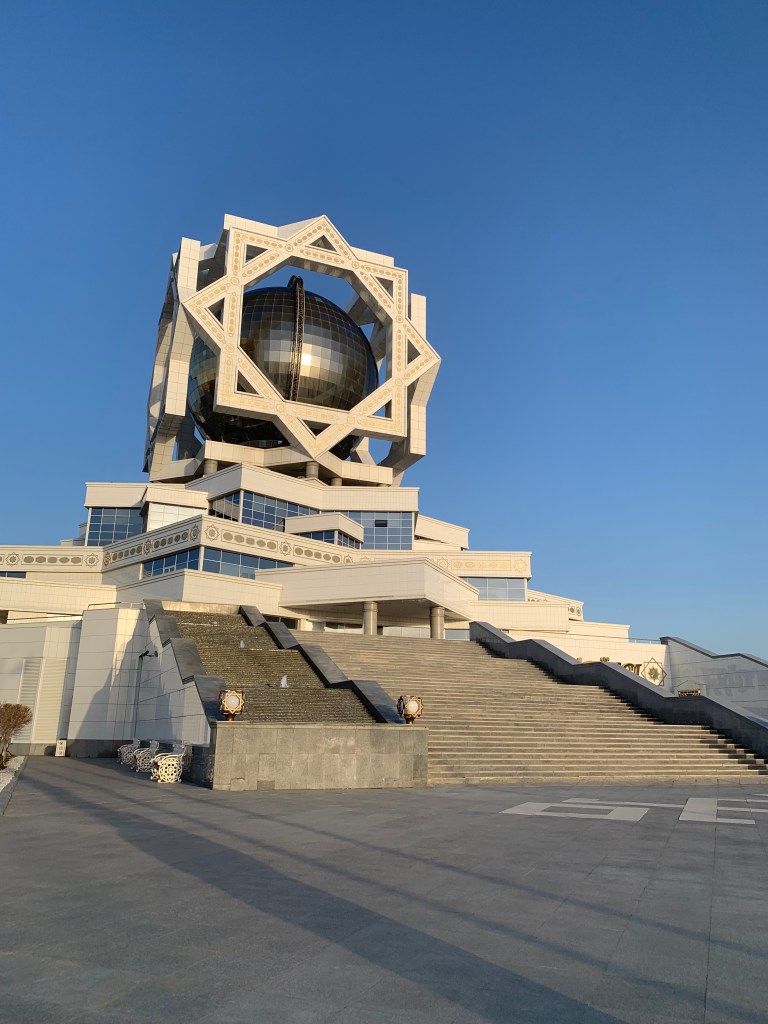
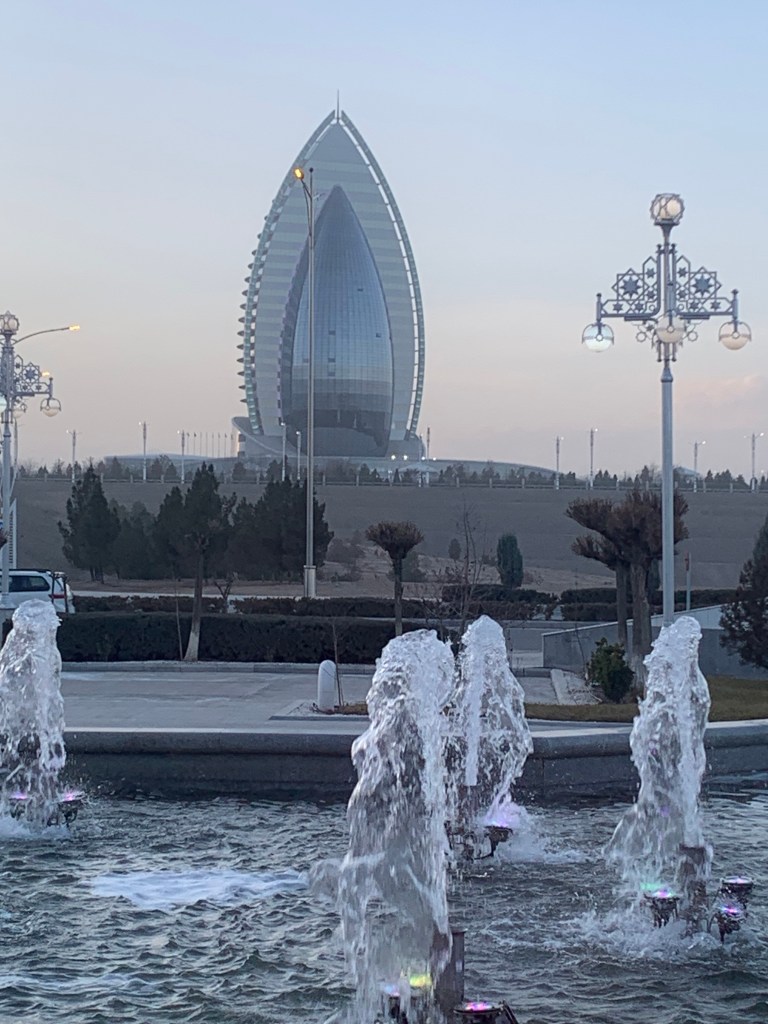
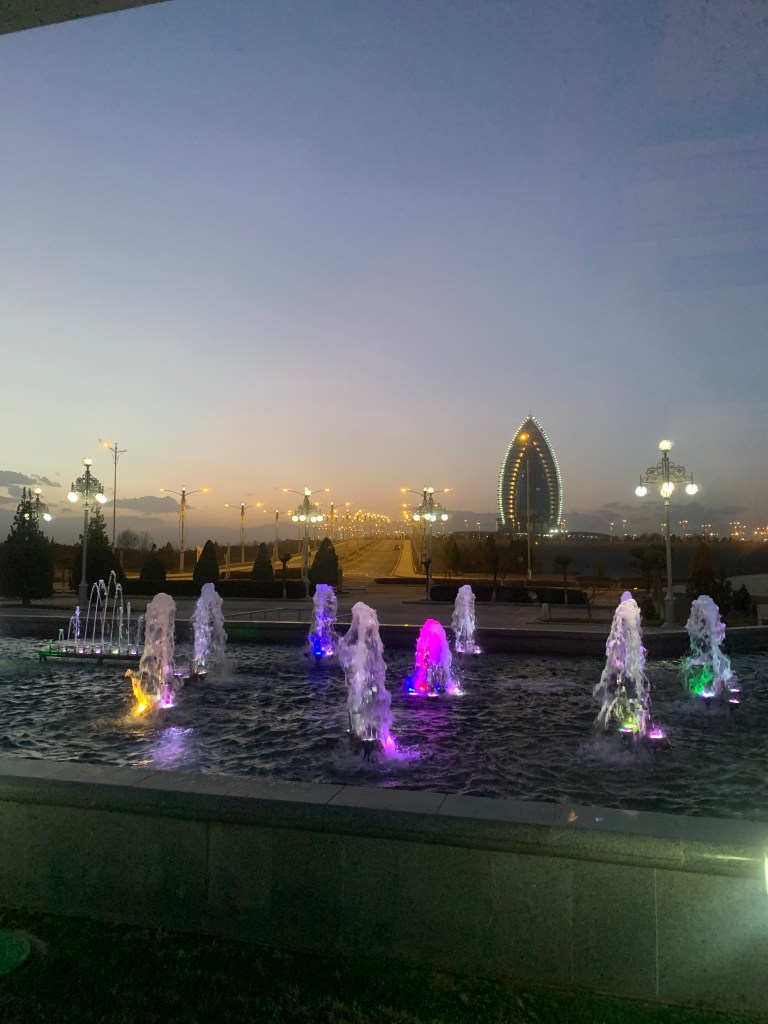
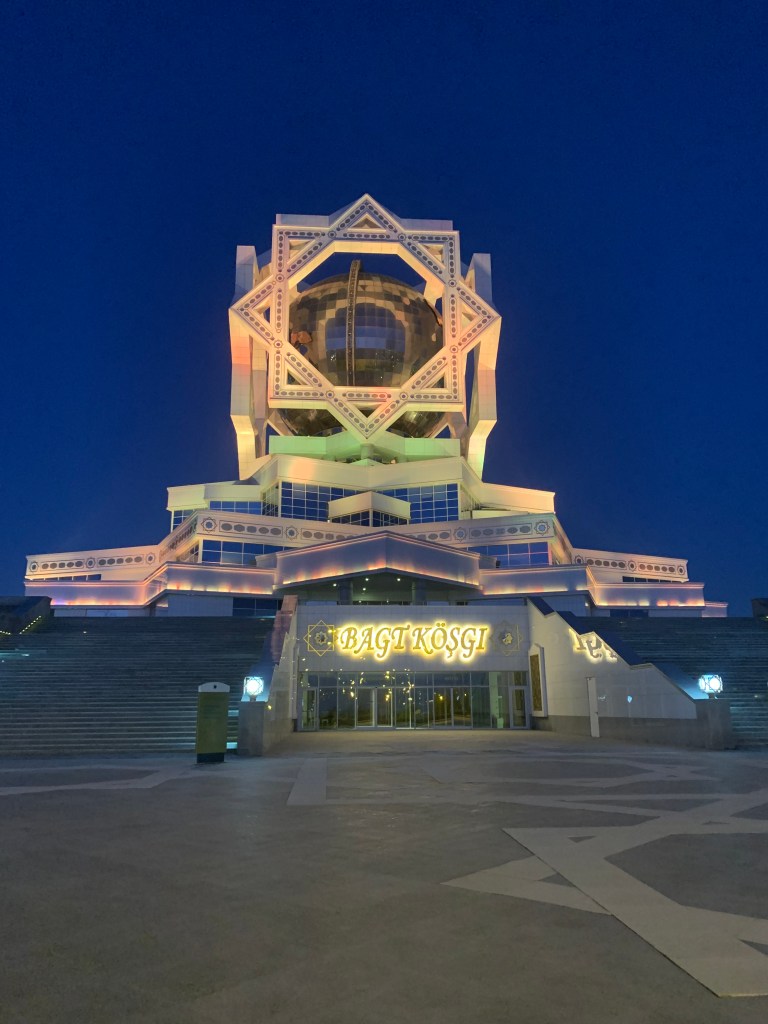
    Ashgabat is officially “the whitest city in the world”. The buildings cannot be painted anything but white; the only cars allowed inside the city limits must be white, silver or gold; the street lights (and there are, for once, plenty) are all on white or silver posts. The cars must be clean – else they will get stopped by the traffic police and fined. This has occasioned a very brisk business in car washes in the environs of the city (The Toyota was washed 3 times in the 6 days I was there.) Out of the 5 provinces, cars registered in 2 (Dashoguz and Mary) cannot enter Ashgabat, whatever their colour and state of cleanliness – they must be left on the outskirts. The city roads are in perfect condition, wide and spotlessly clean. Very few people outside, except for the street cleaners (mainly women with brooms). No traffic jams. There is a sterile and sterilised feel to the town, as after an apocalypse. However, when the night falls, the psychedelic multicoloured lights play on every building, including the high rise apartment blocks.

    Arriving in Ashgabad
    The Wedding Palace – the hotel I stayed in
    My view from the room towards another hotel – only parks in between
    The evening falls and lights start playing
    My hotel at night – colours change
    The shopping mall

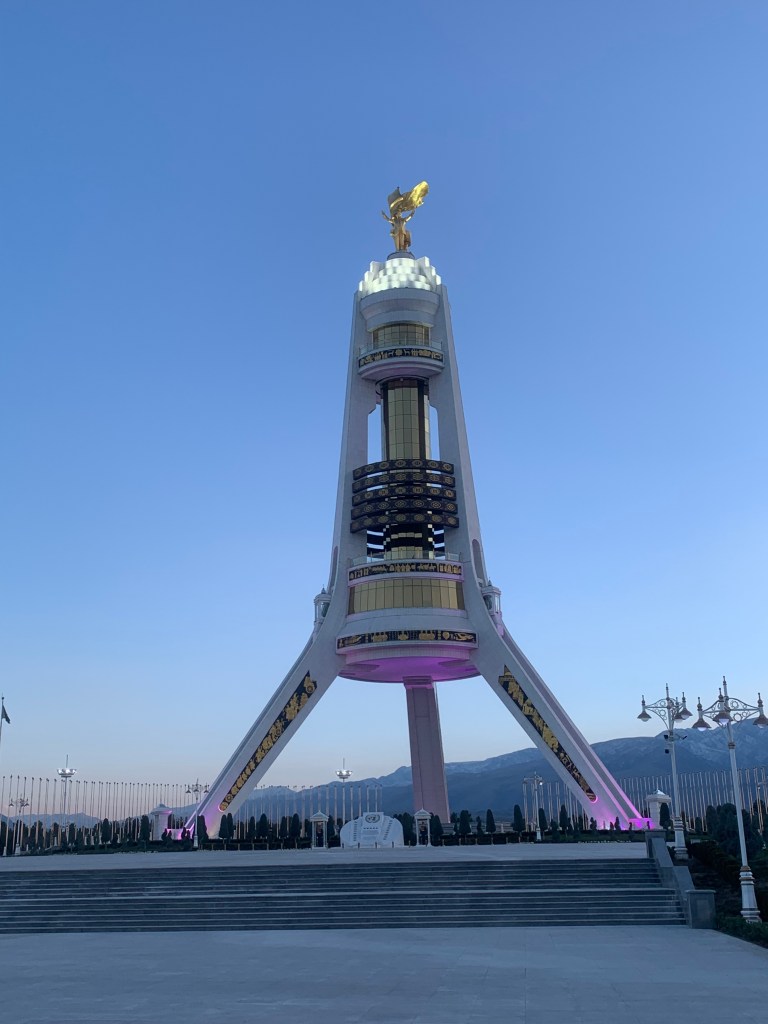
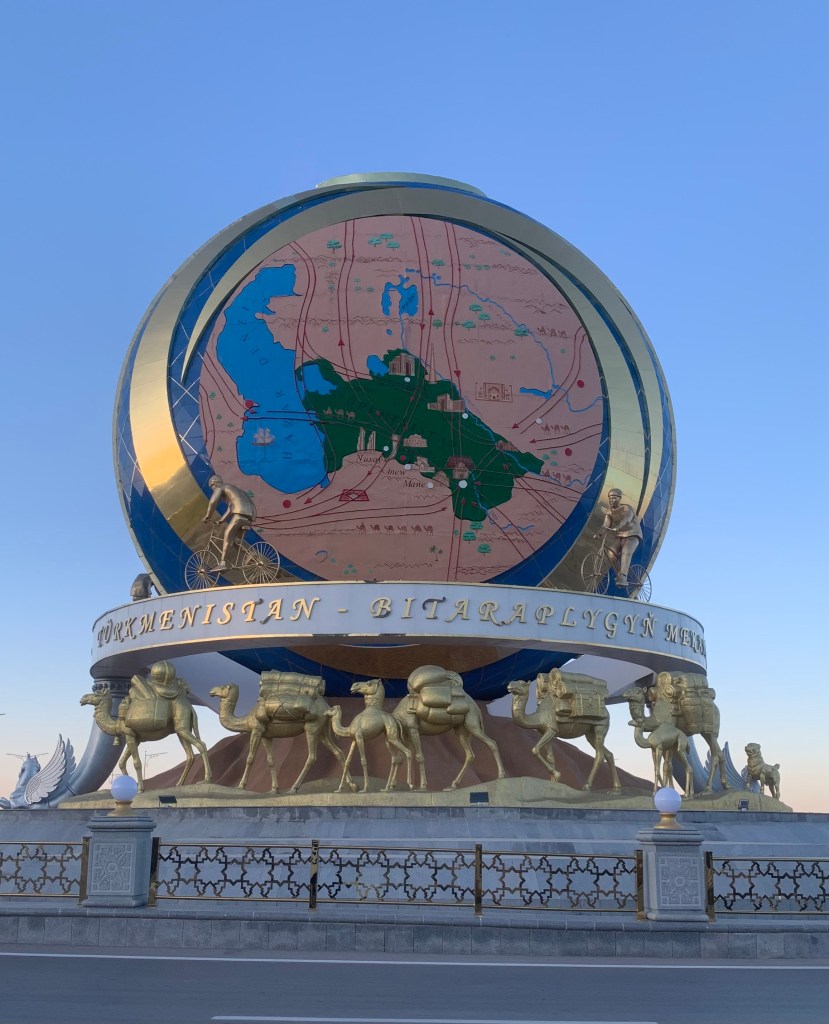
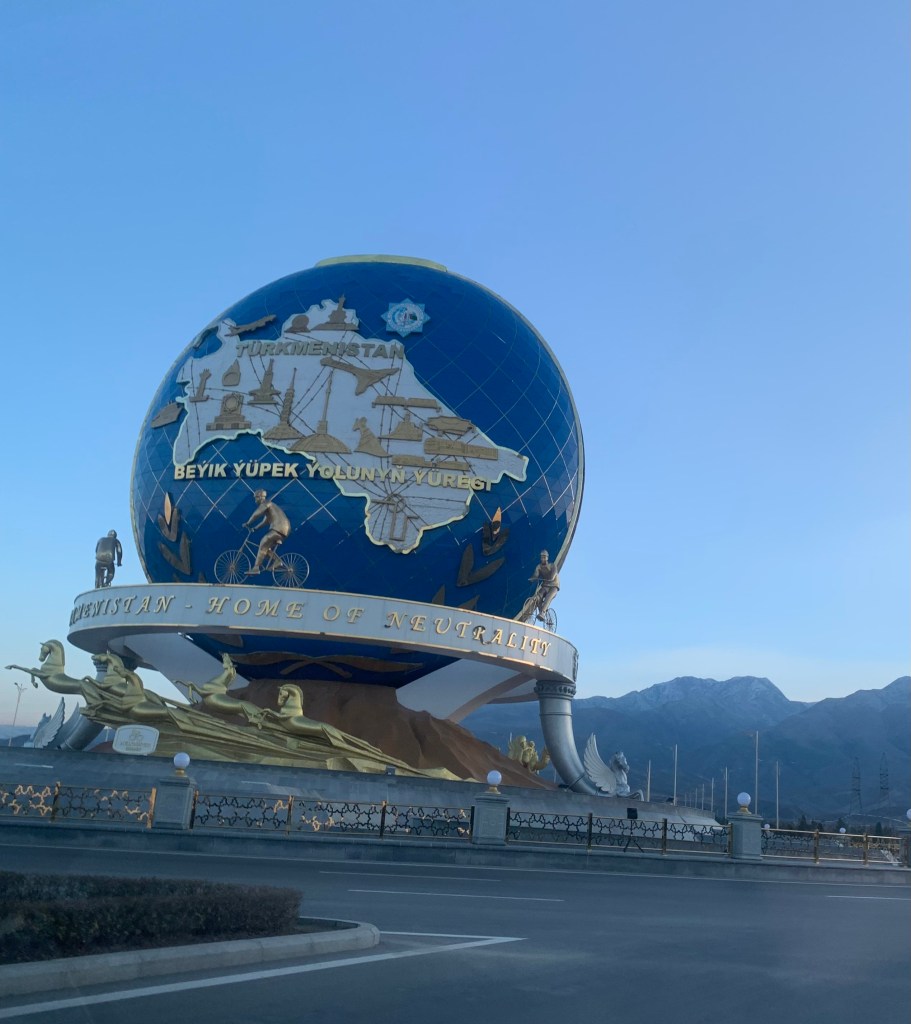
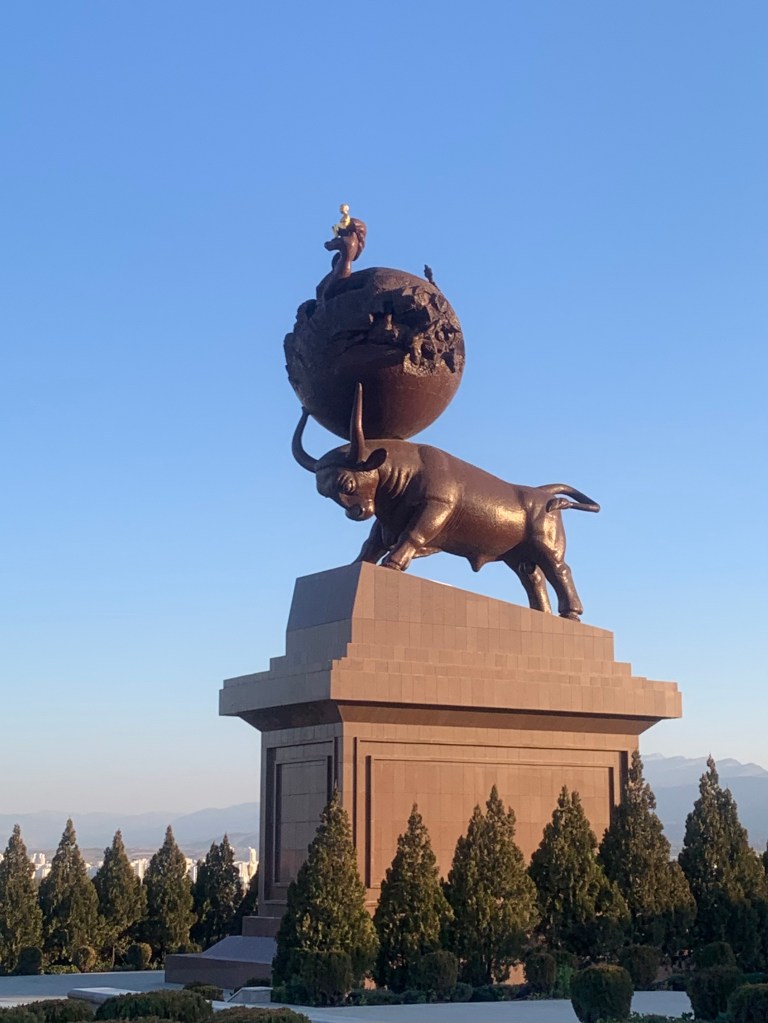
    The monuments are highly visible, grand and quite literal: the monument to Independence is 91 metres tall as the event happened in 1991; the monument to Neutrality is 95 metres tall (1995). Every roundabout has a monument as a centrepiece.

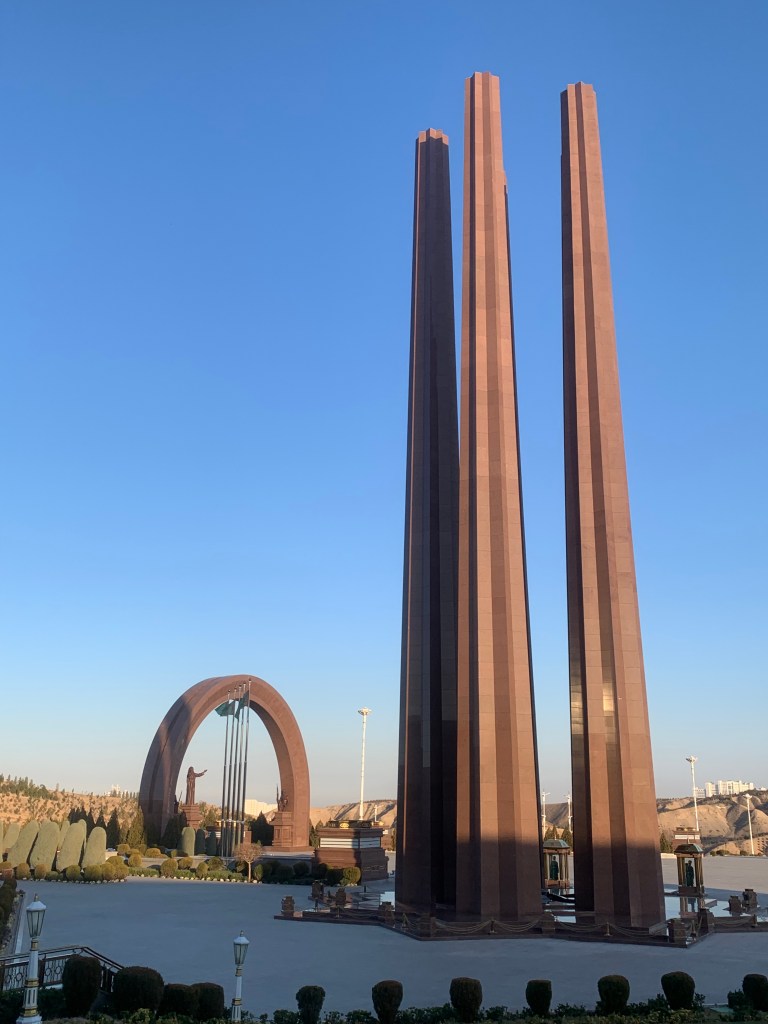
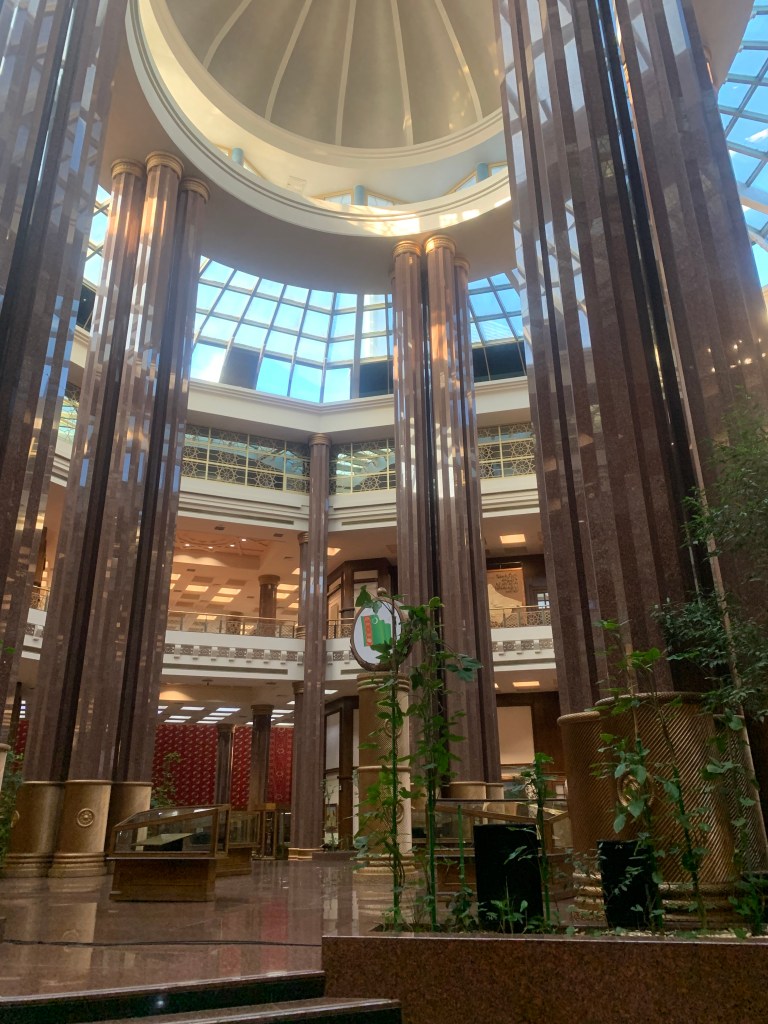
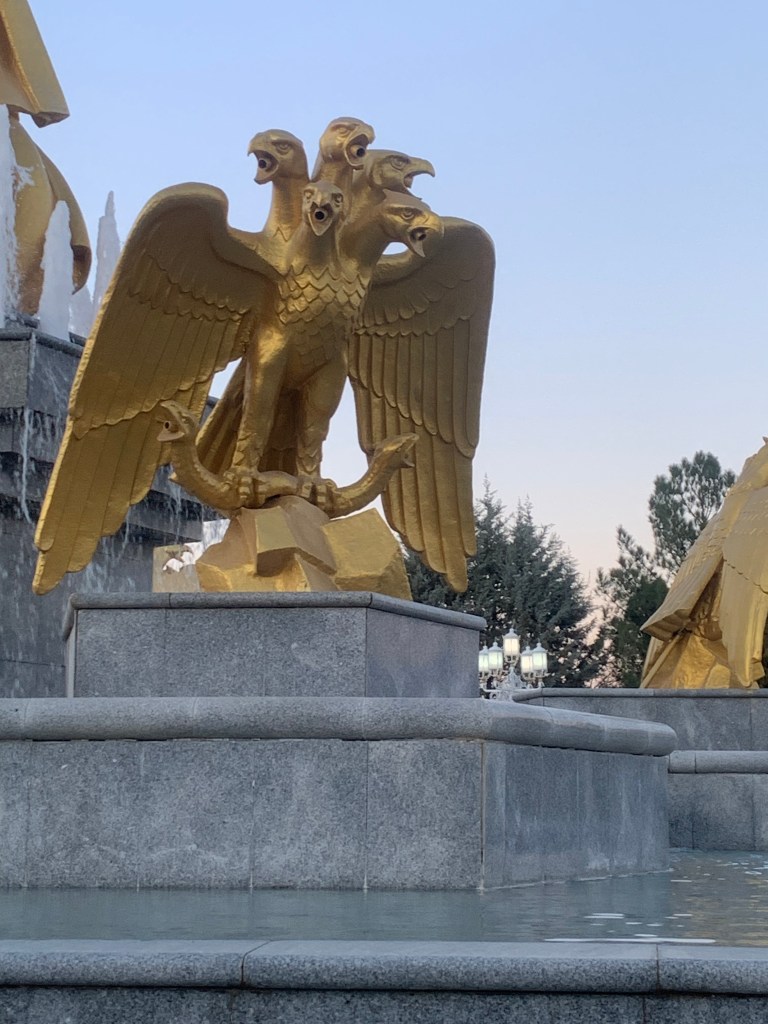
    There are some odd things – such as the largest (and only) Ferris wheel inside a building (I did ask, why?). The national flag pole may not be the tallest but is the only one in the world with a jet engine installed to ensure steady fluttering. The five tribes that make up Turkmenistan are represented on the flag with the ancient symbols often seen in their carpets; the National Museum of Turkmenistan incorporates the five pillars inside its architecture, the Memorial complex has five pillars to commemorate the loss of life in the war, there is a 5-headed eagle…

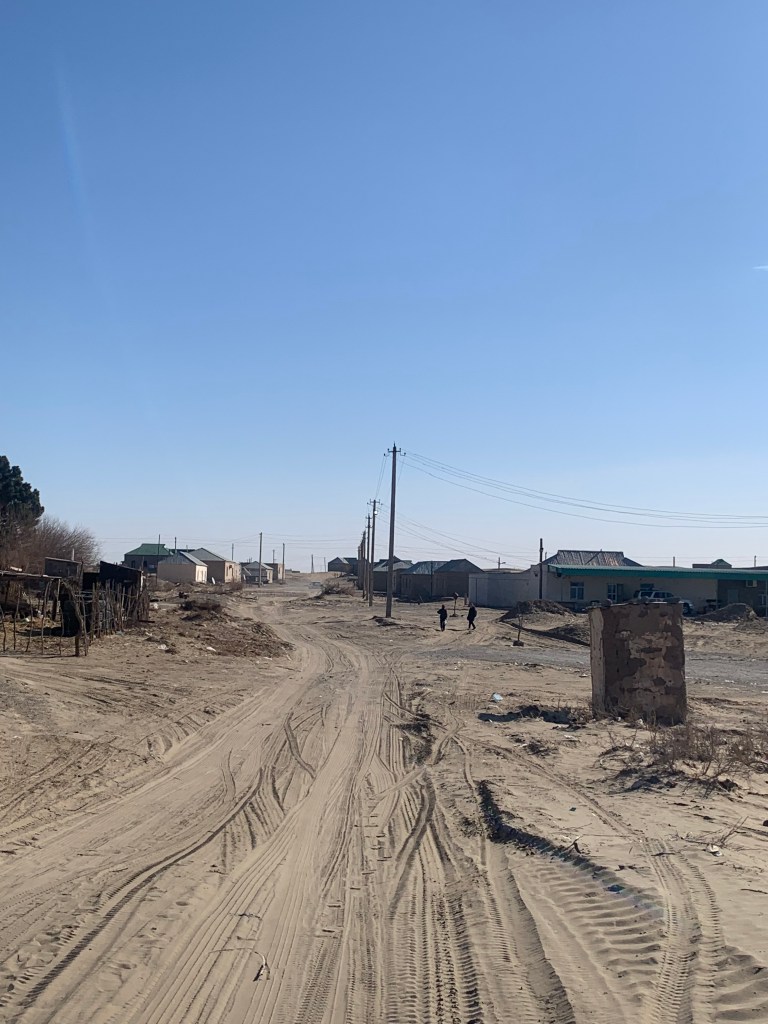
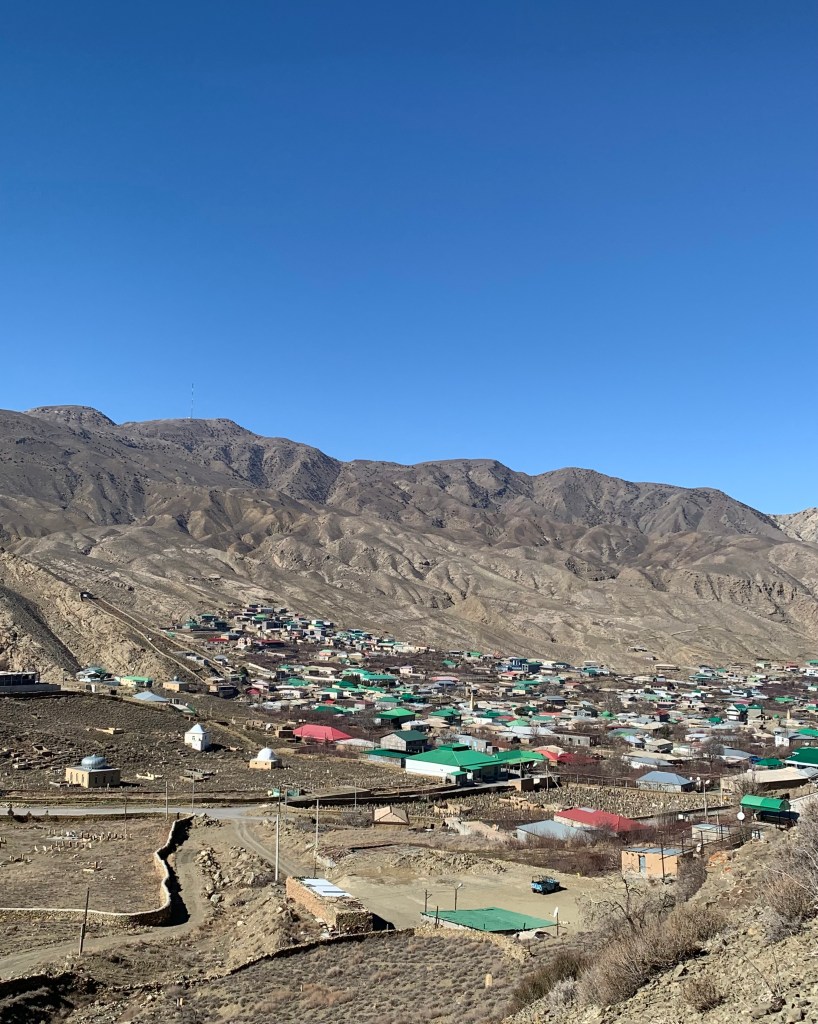
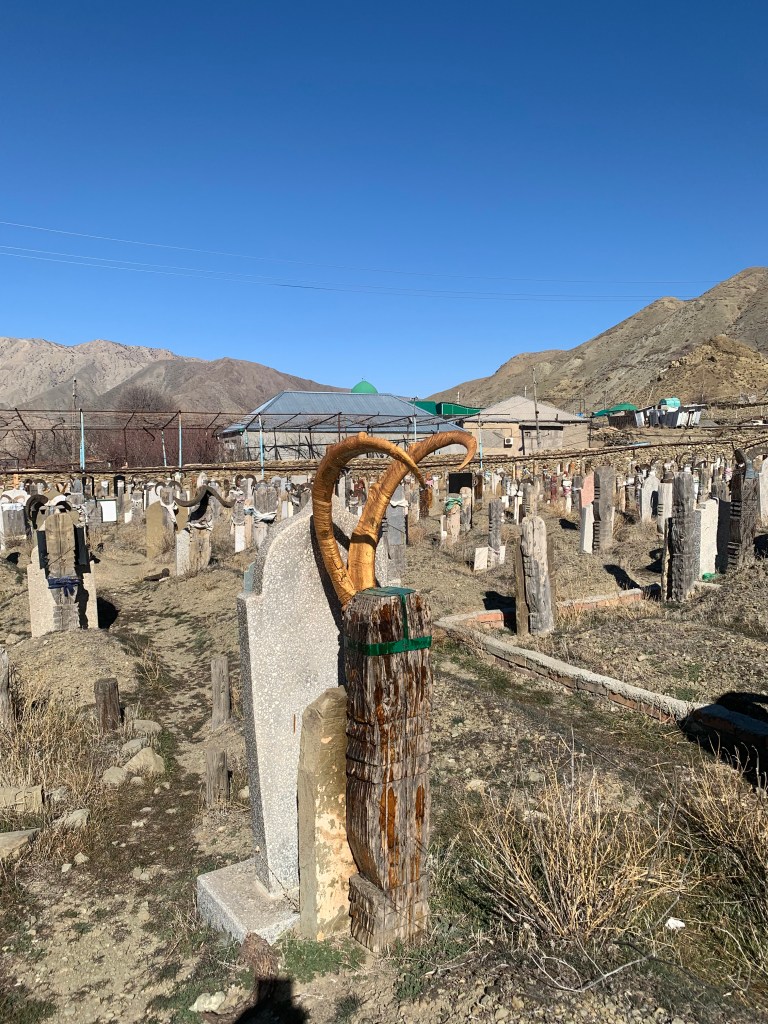
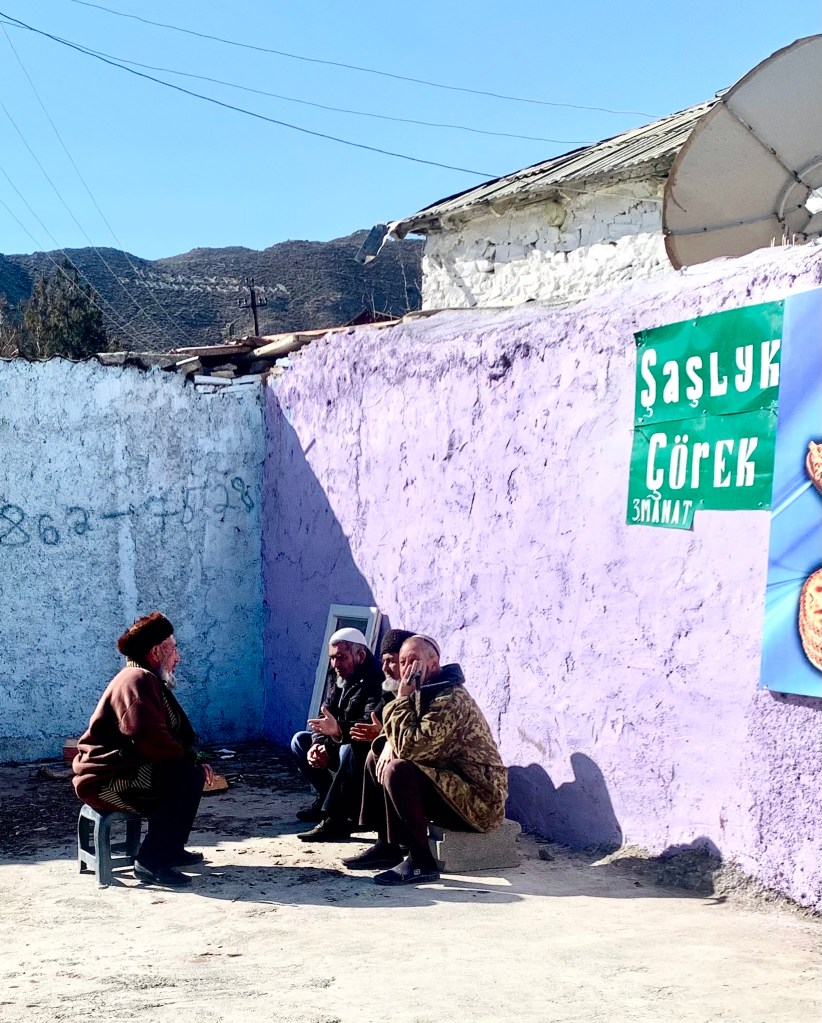
    The visit to Nokhur village (where people put ram’s horns on the graves – one story is that it’s to ward off evil spirits, the other that it is just a decoration) finally gave me an opportunity to see how ordinary people live.

    Nokhur from above
    Horns on graves in Nokhur
    School uniform
    Good spot for a chat
    This lovely lady with a golden smile gave me some home made bread
    Bought some tea by the old china tree

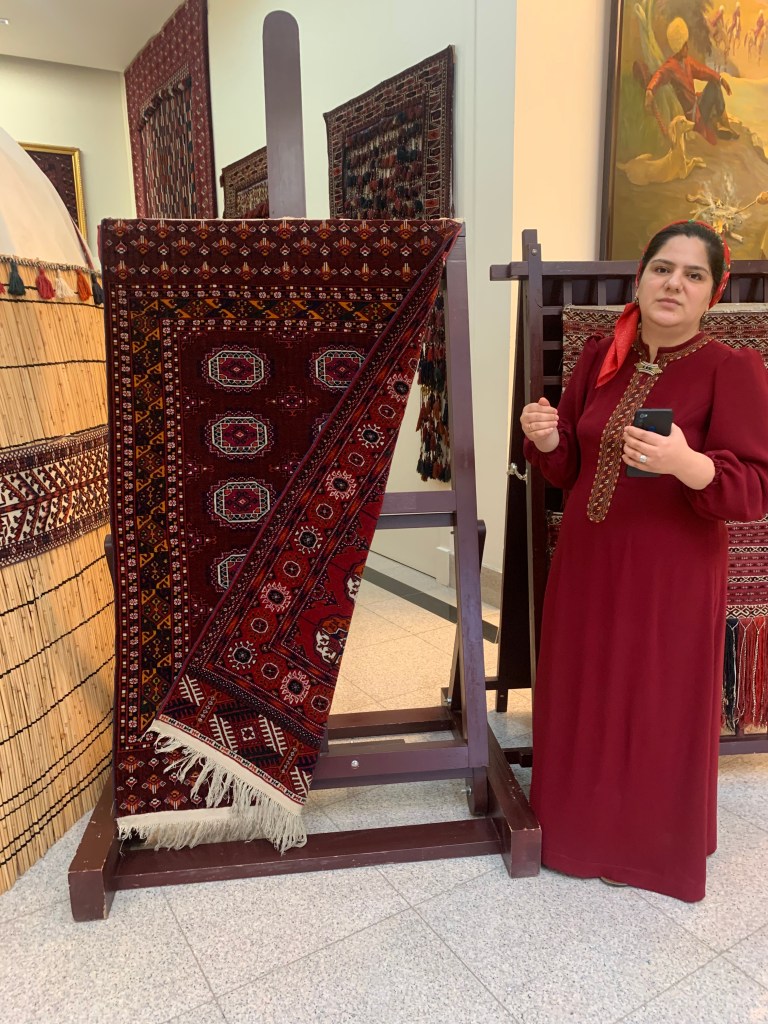
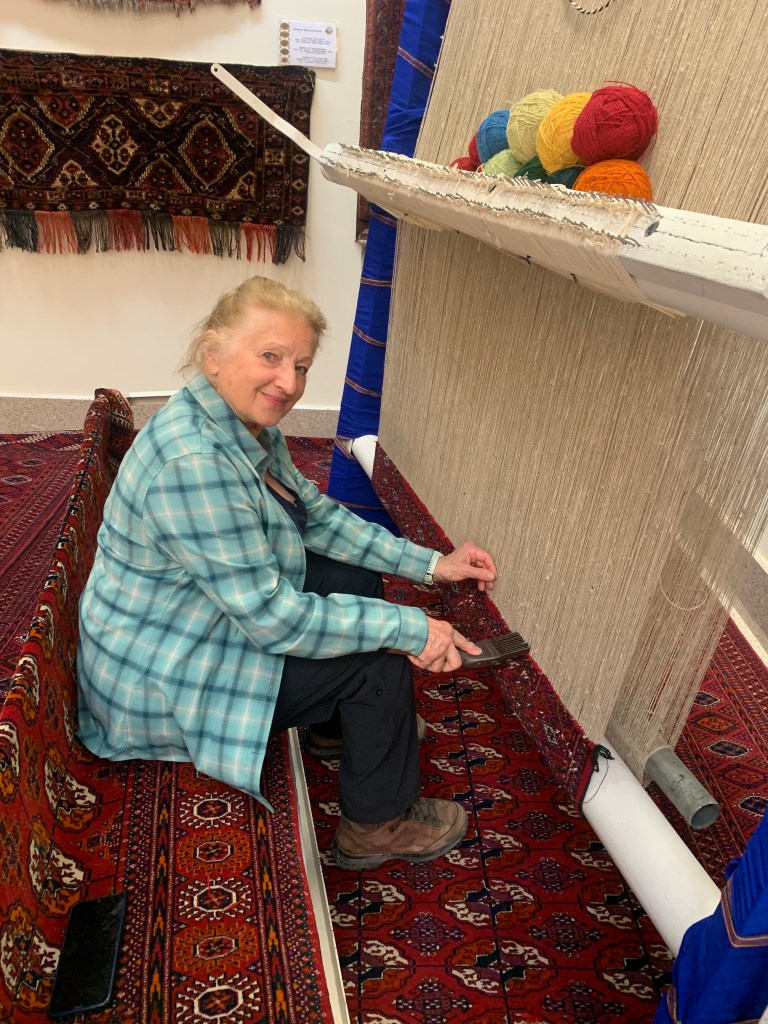
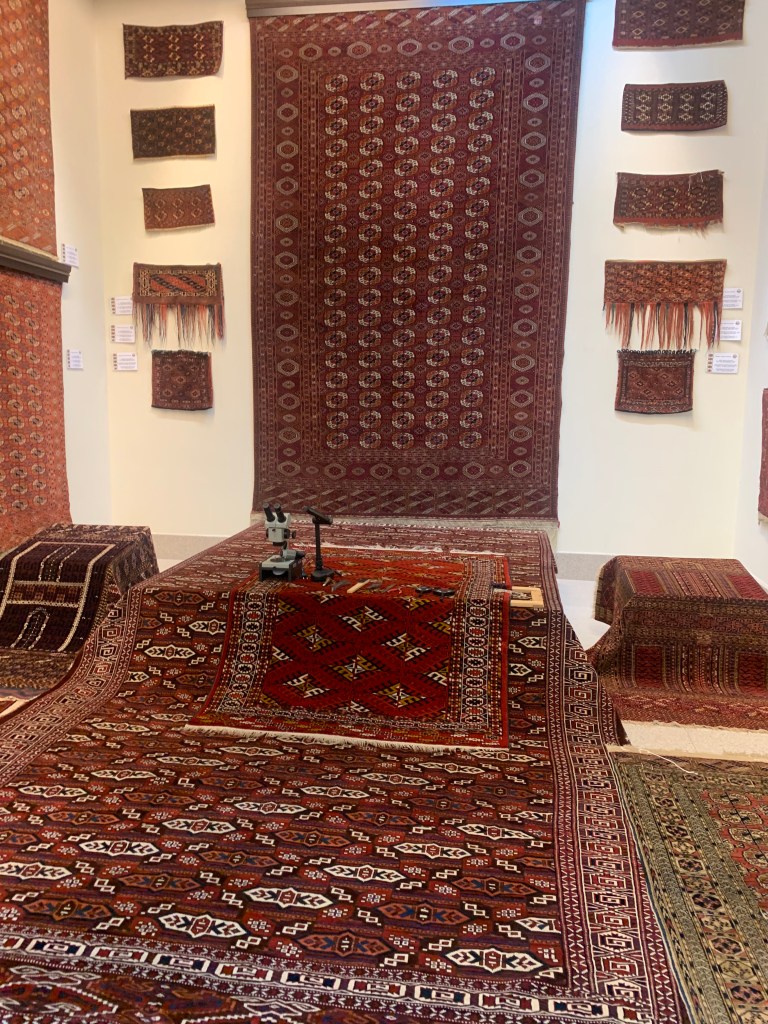
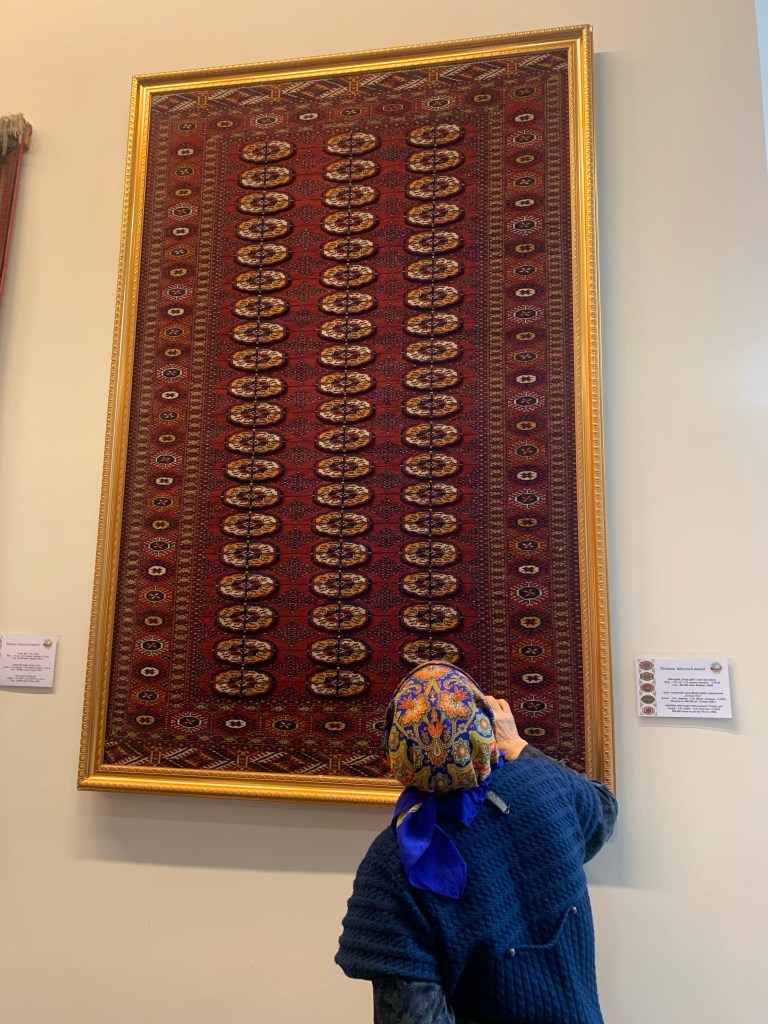
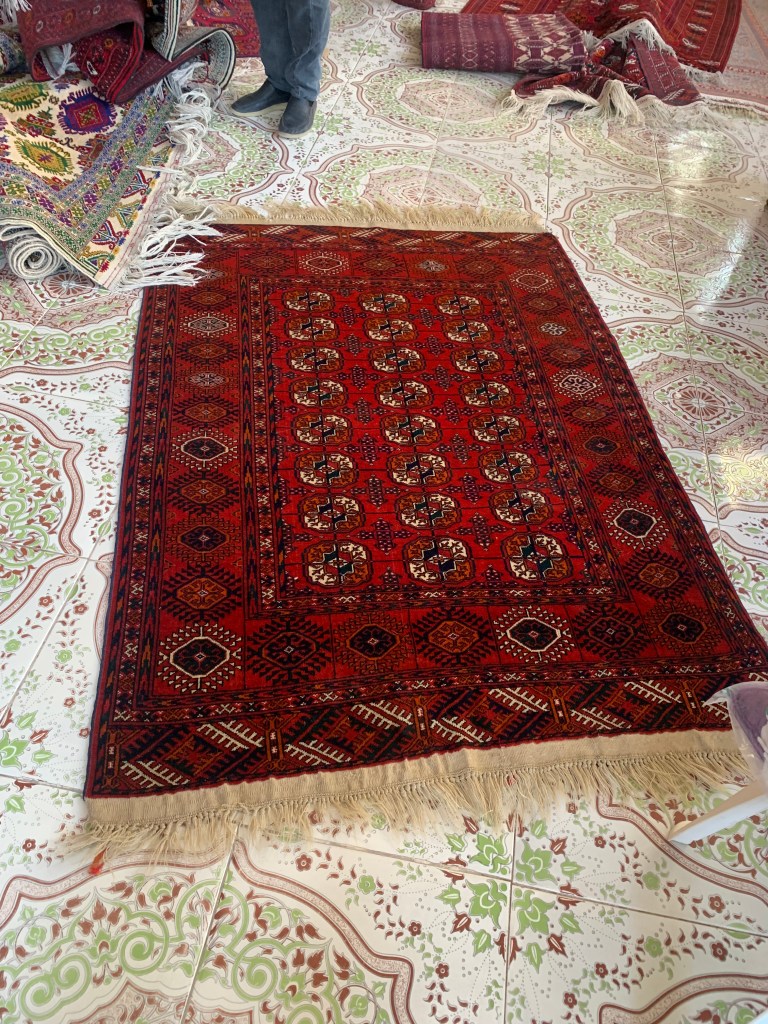
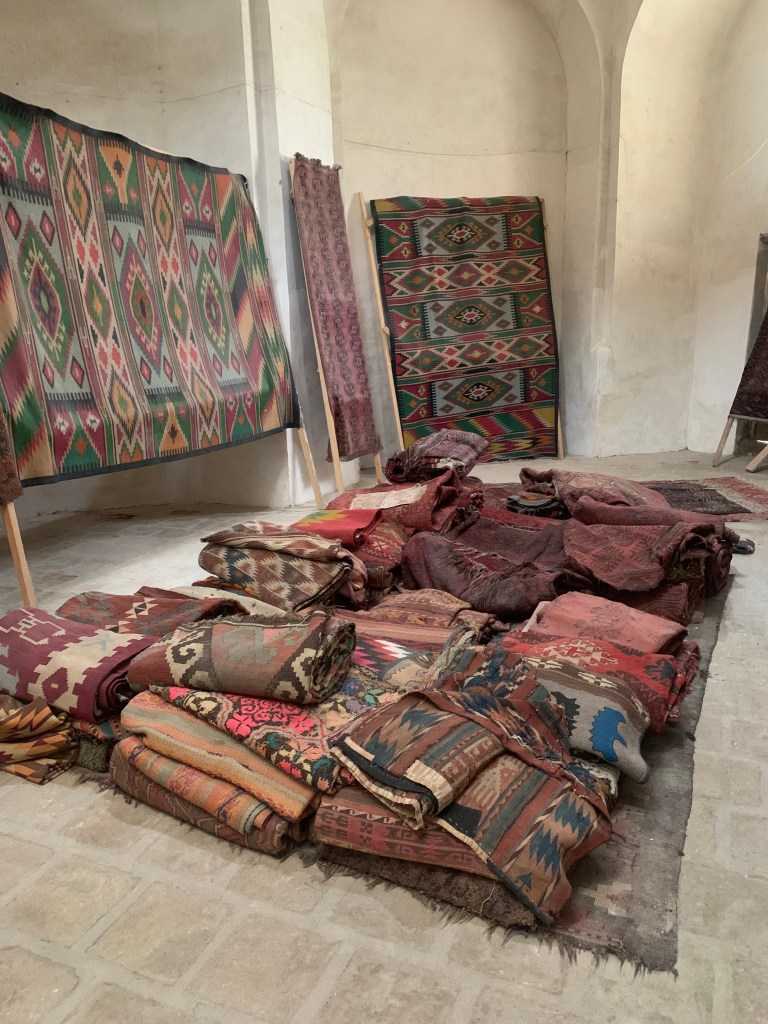
    I enjoyed the visit to the Carpet Museum. We all know of the “Bokhara” carpets as the best quality hand-knotted ones. But they were only SOLD in Bokhara and have always been made by the Turkmen people. I did drool over a couple of them. Later I really wanted to buy one (in the shop in Mary) – but I would not have been given an export license as it was over 60 years old.

    A 3-D carpet – the light ovals are raised
    A 60-year old beauty I wanted

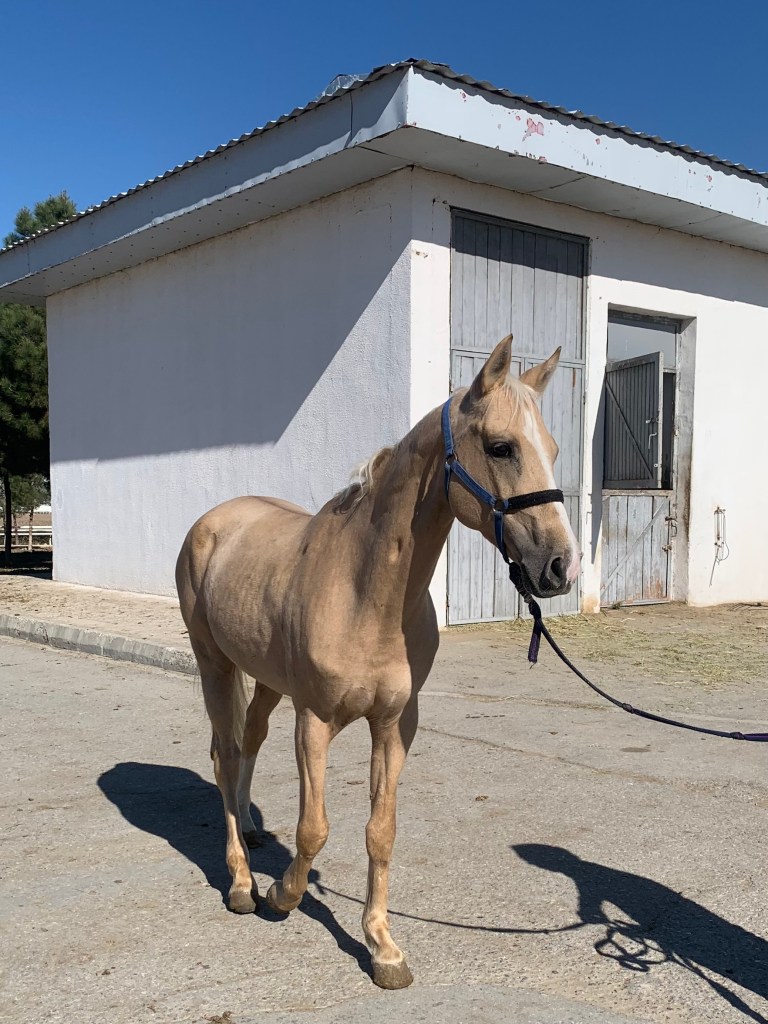
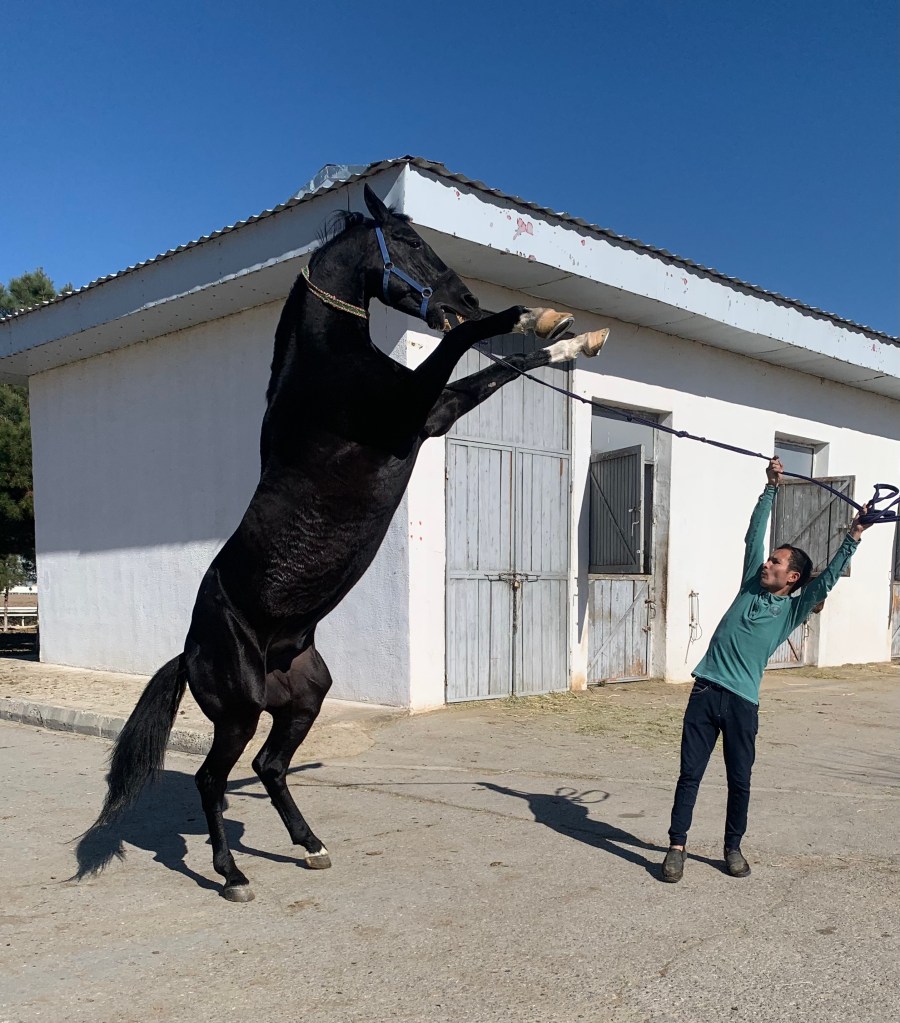
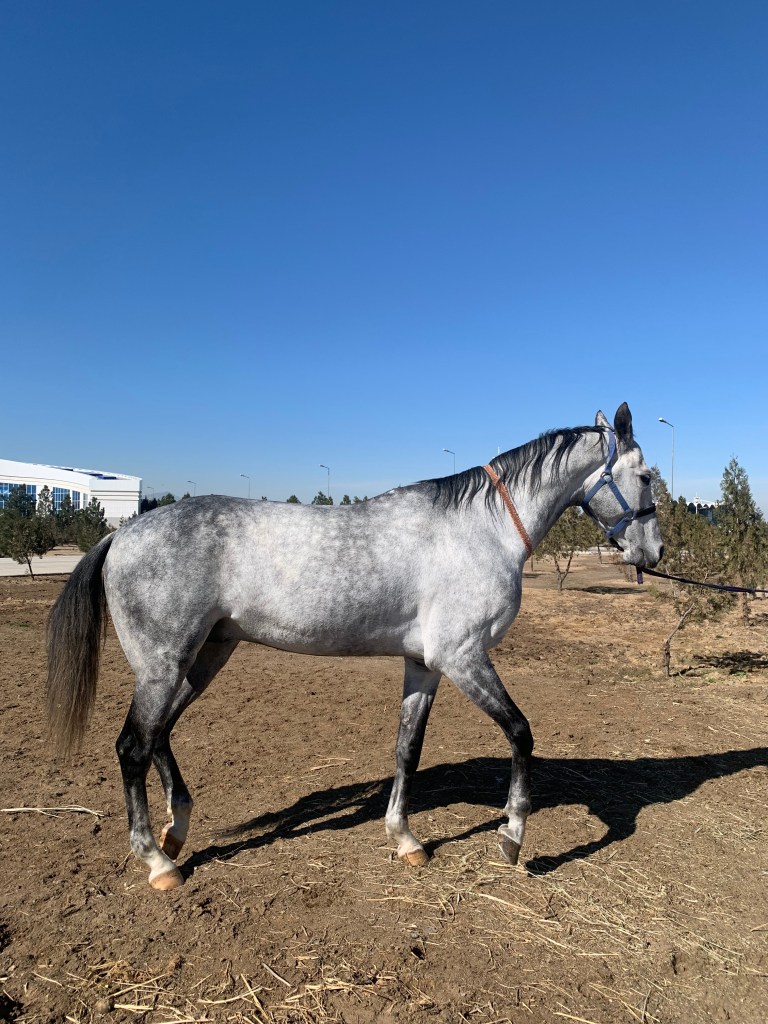
    Turkmen are well known for their horsemanship and I was looking forward to seeing the “golden horses”. The Stables near the race course is a home to 600 horses, the Akhal-Teke among them. (I was told that the late Queen was gifted an Akhal-Teke horse by Turkmenistan and the grooms were convinced that the horse had been painted gold and tried to wash it off.) I could have had a ride ($10). Were I a better horsewoman, I might have had a go. They all looked well looked after, if a little frisky (the black stallion is known for being headstrong).

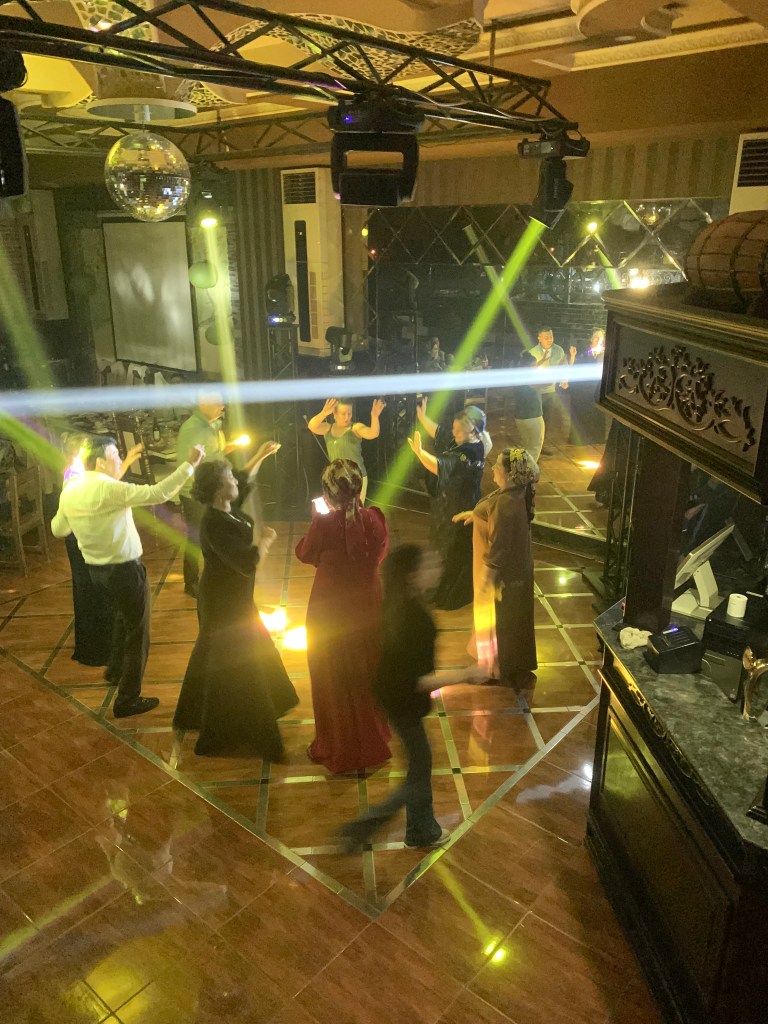
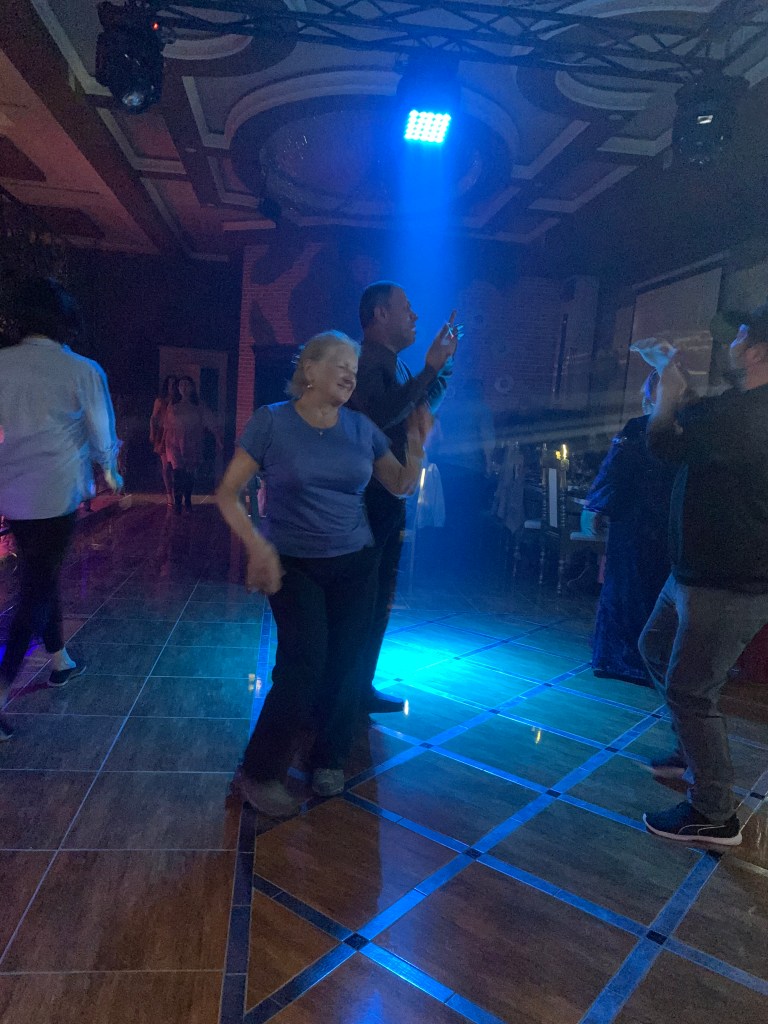
    The original programme had me staying in Ashgabat for 3 days, with a couple of trips out. As we more than covered Ashgabat in 2 days, we headed to Mary – the old Merw of the Silk Road (the new town is some 45 km southwest from the ancient city – the river Murgab changed course. Merw is 350 km away from Ashgabat on the road that could be better. There are a number of checkpoints where everyone must slow down; there are also random stops and car document checks along the road. Having the green license plates (a government vehicle) helps but is not a guarantee. (The foreign business partners/investors have yellow plates; the diplomats have blue; folk have white.) One is not allowed to take photos of the checkpoint or police in action. It was good to get to Mary a day early – poor Guwanch would otherwise have had to drive some 800km in one day on those awful roads. It also gave us a nice evening out – dinner and disco!

    Approaching a police checkpoint

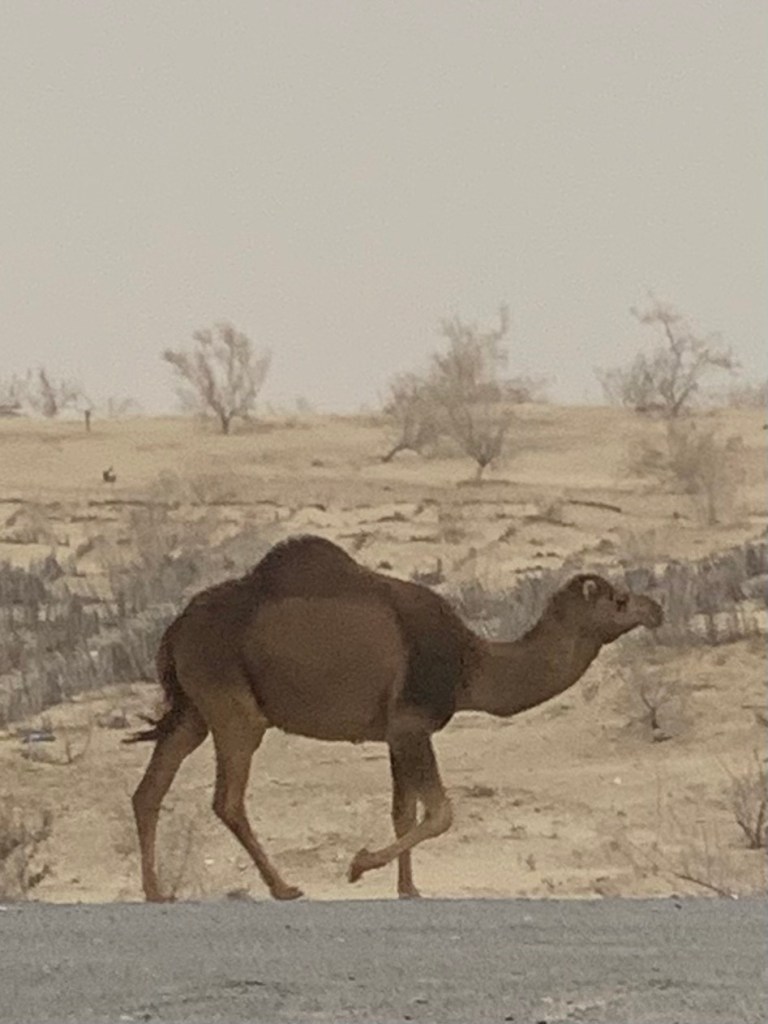
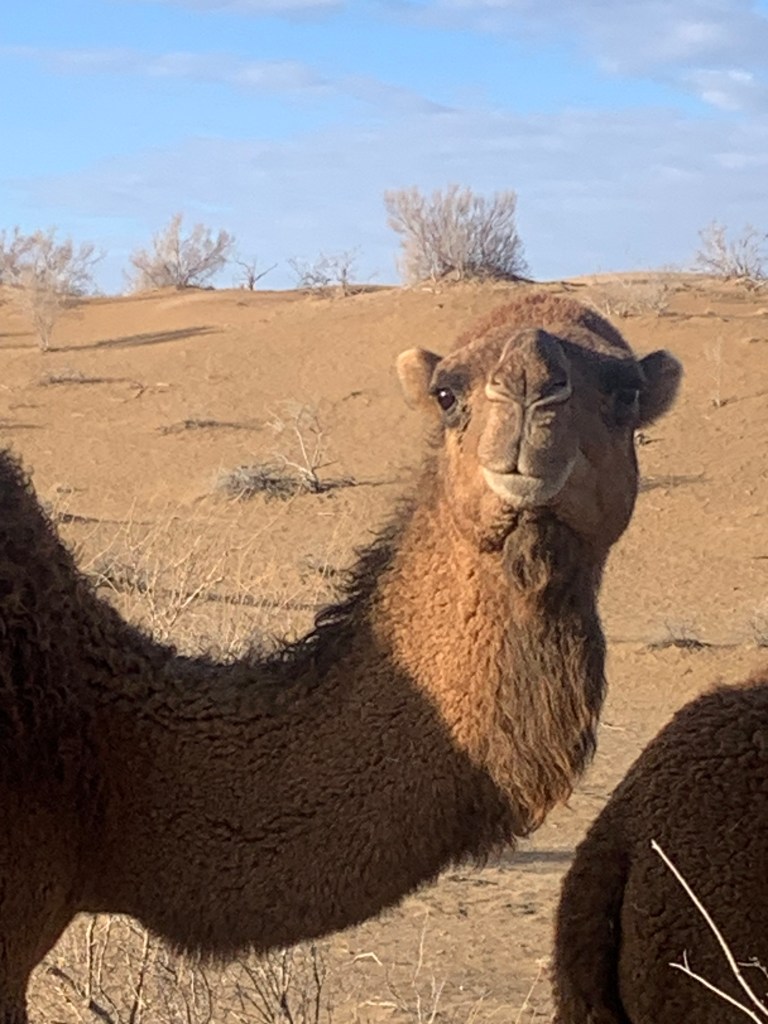
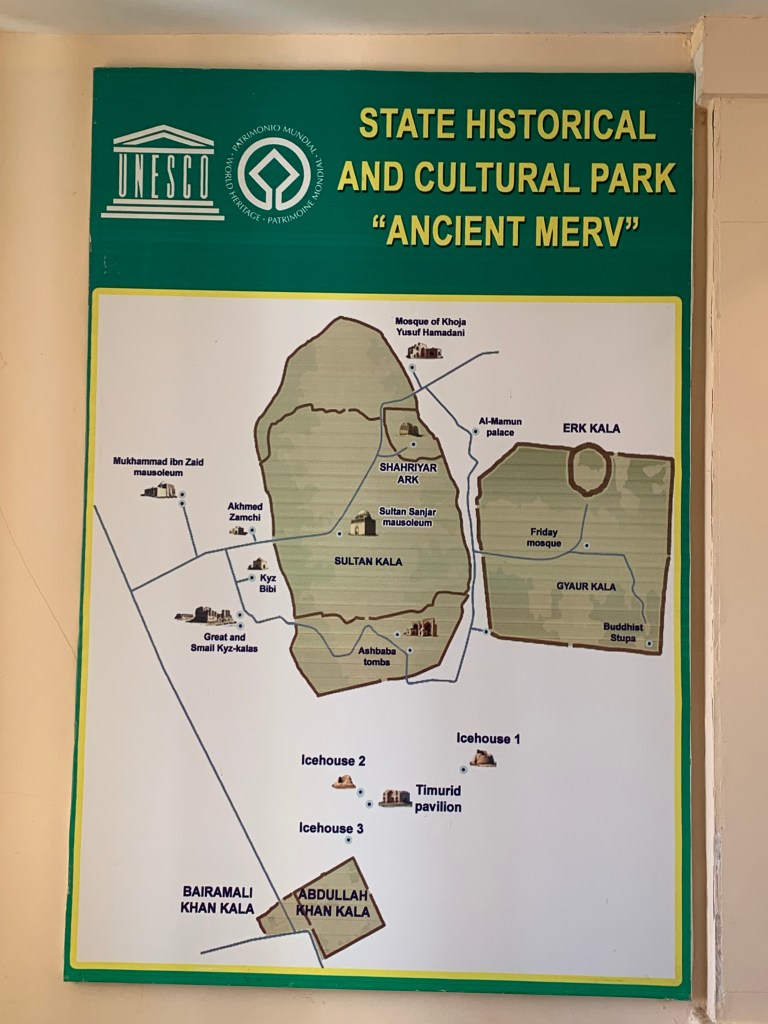
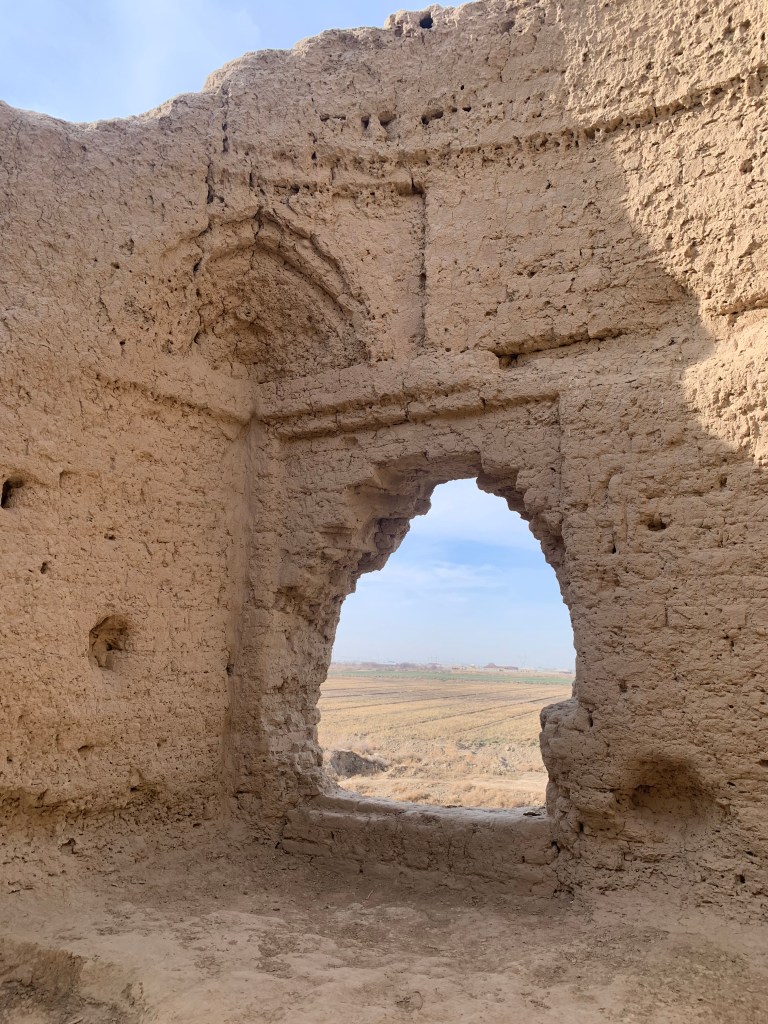
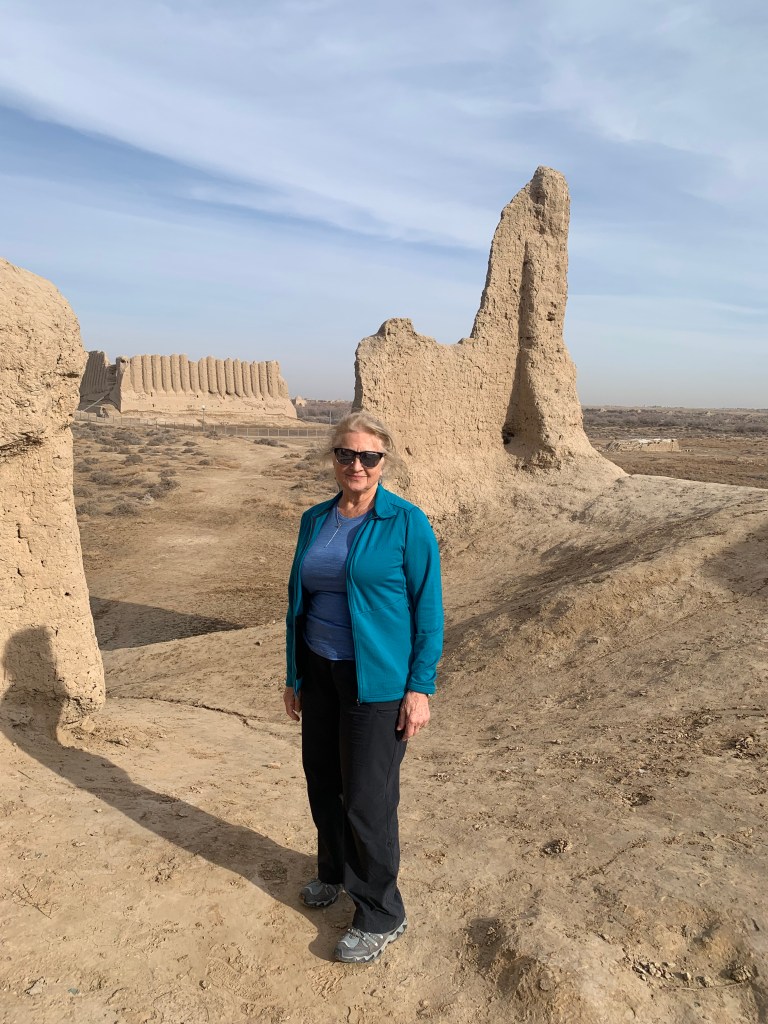
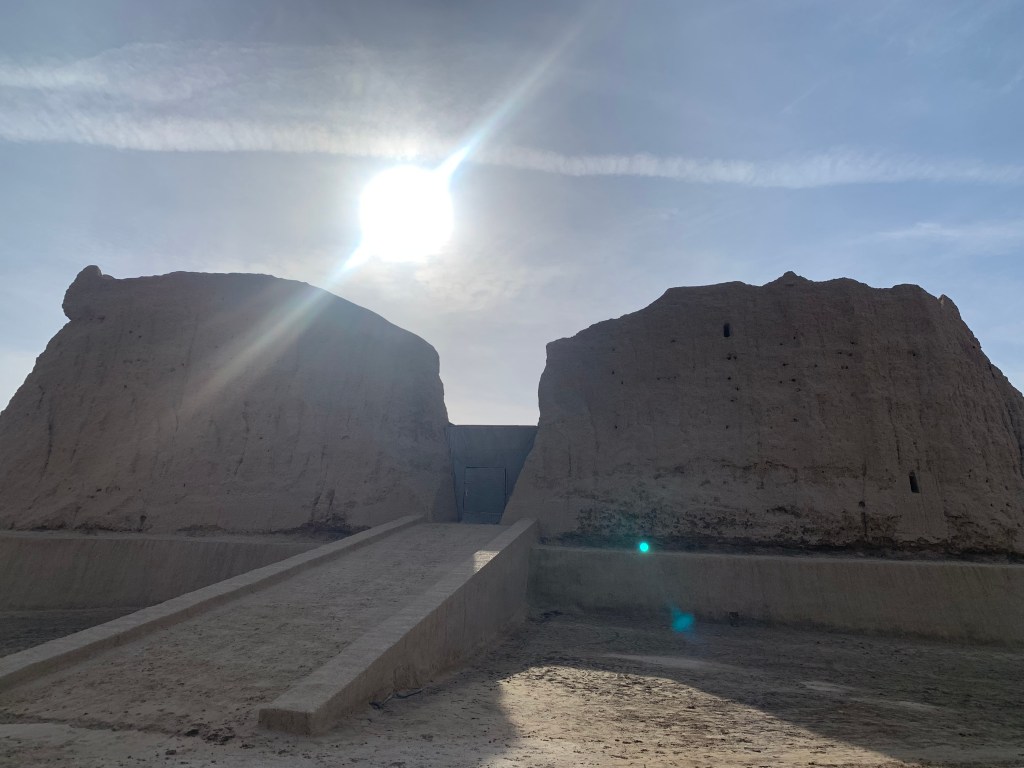
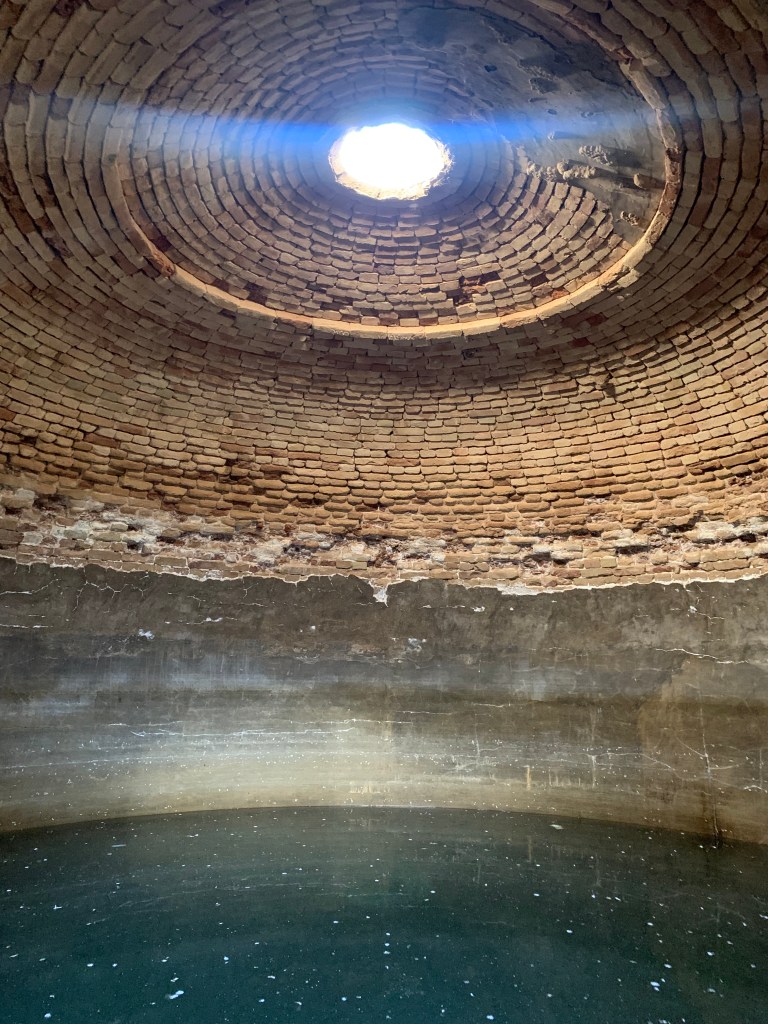
    The ancient Merw did not disappoint. It used to cover some 1000 hectares and was the largest city in the world at its peak – 1/2 million people lived there. The conquerors and emperors came and took and destroyed and rebuilt. The far stretching walls, some fortresses and Ice houses still stand. And the camels graze where the merchants traded and the caravanserais stood.
  • Khiva

    Feb 12th, 2024

    The 2 trains from Bukhara to Khiva are the night ones that start in Tashkent or Andijan, in the east of the country. Got up at 02:30 for the 03:52 train, which I caught by the skin of my teeth – the taxi booked by the hotel turned up late and I had to run – the station entrance is a long way away from the drop off. Running with a heavy rucksack on your back may be ok if you want to join the SAS, but it’s not for me.

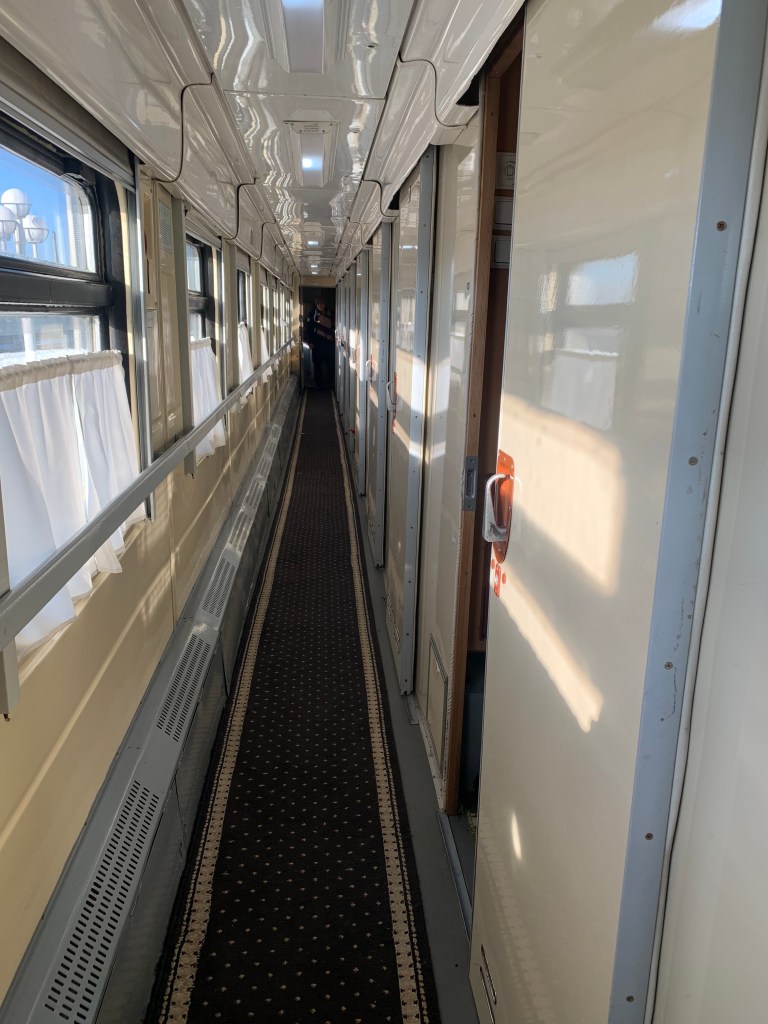
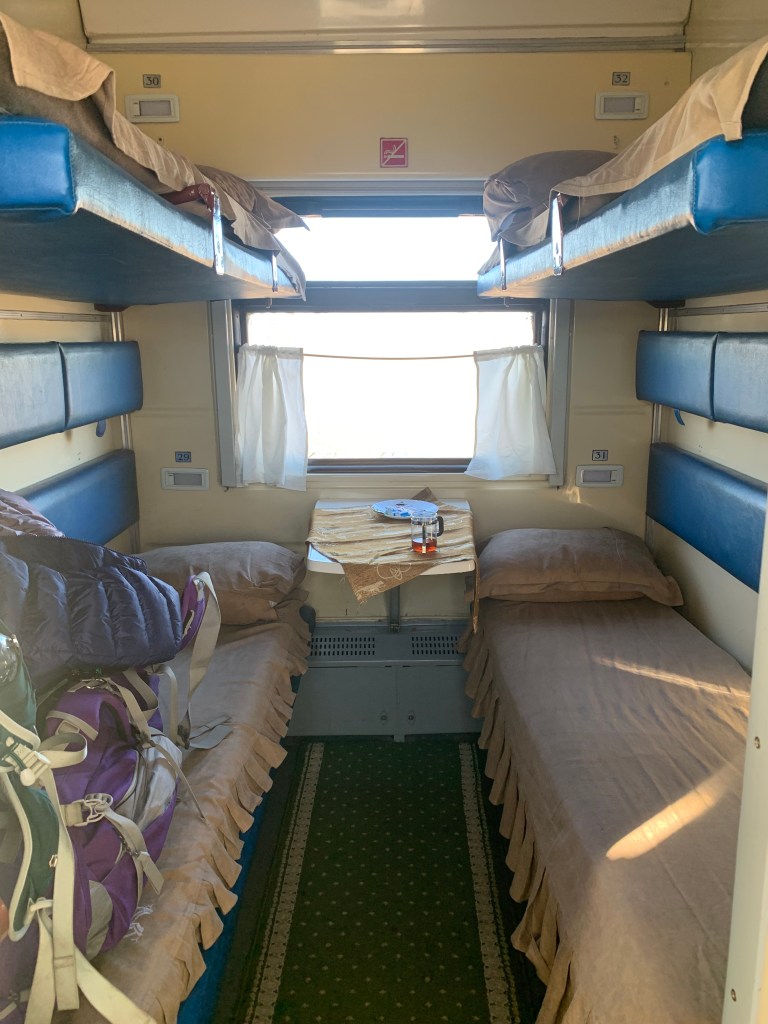
    This train was the old Soviet stock, with a diesel engine (the line is not electrified beyond Bukhara) and old-fashioned coupe style sleeping berths. I settled quietly in mine in the dark, aware there were 2 people in the bunks opposite. (They were two brothers, in their 50s or so, returning home to Urgench from a wedding in Navoi. Their womenfolk (four) were in a different cabin. We had a nice chat in the morning over the railway- provided cup of tea and they gave me a large round of filo pastry bread (patir). Chewy and very tasty - a kind of borek with no filling.

    I was, yet again, the only guest in my hotel, the Khan’s Palace. (A friend has suggested that I should call my blog “I was the only visitor”. ) All of the Old Khiva inner city, the Ichan Qala, is a museum. The thick walls surround it, and the guide says it is possible to walk along part of them – at present, very little, maybe 50 meters near the North Gate. The town thrived for centuries (and was sacked and rebuilt) and grew on the Silk Road goods travelling to and fro. As it spread, another wall was built further out to accommodate this – Dichan Qala, much bigger and having 11 gates. There are some buildings of interest there (such as the 19th century Nurallabay palace, and some of the walls are still there, but it is the Ichan Qala we all come to see. 

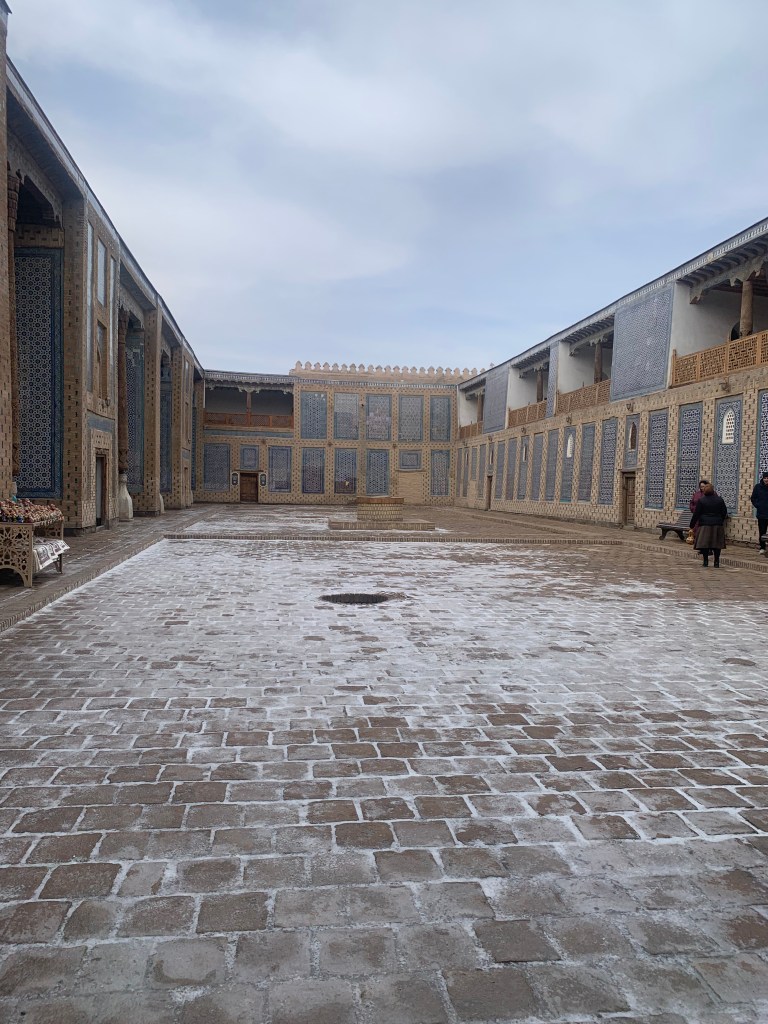
    One of the courtyards in the palace is surrounded by the buildings of the Khan’s harem. The 4 official wives on the left, the 40 concubines on the right. Though it may not have been exactly 40 – it is a number used in muslim lore to denote ‘many’ – Alibaba and the 40 thieves, the 40 virgins being pursued by the enemy and hiding in caves…

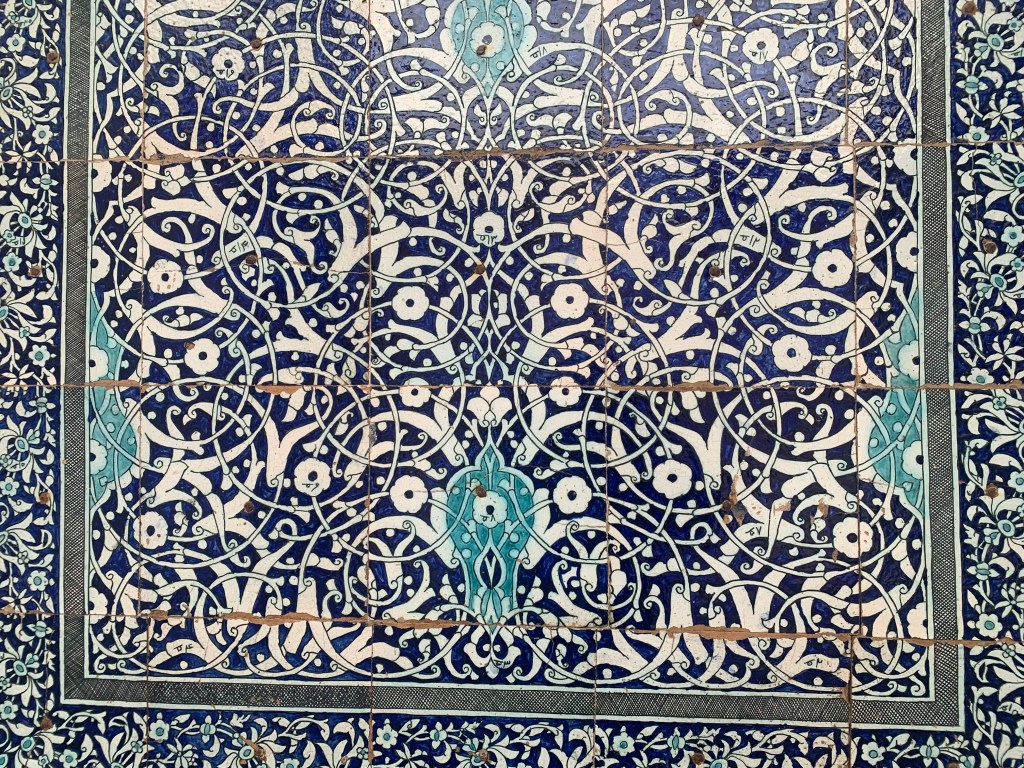
    The beautiful, original majolica tiles from the 18 ct can be recognised by their Arabic markings (to help match patterns). The new ones have the markings in latin script.

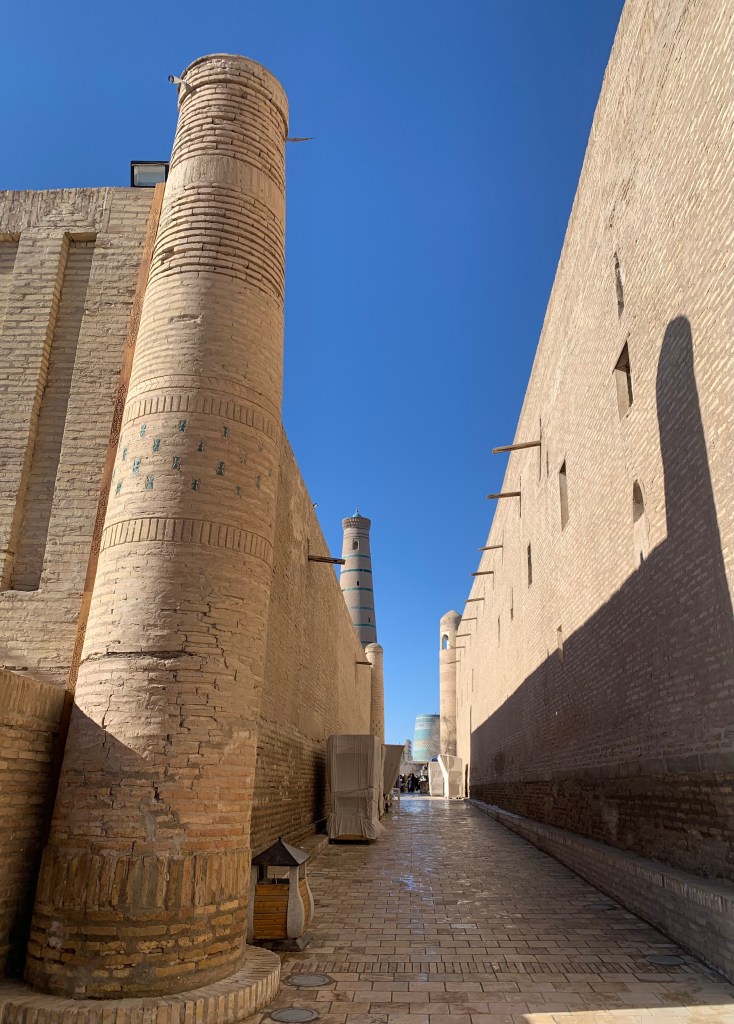
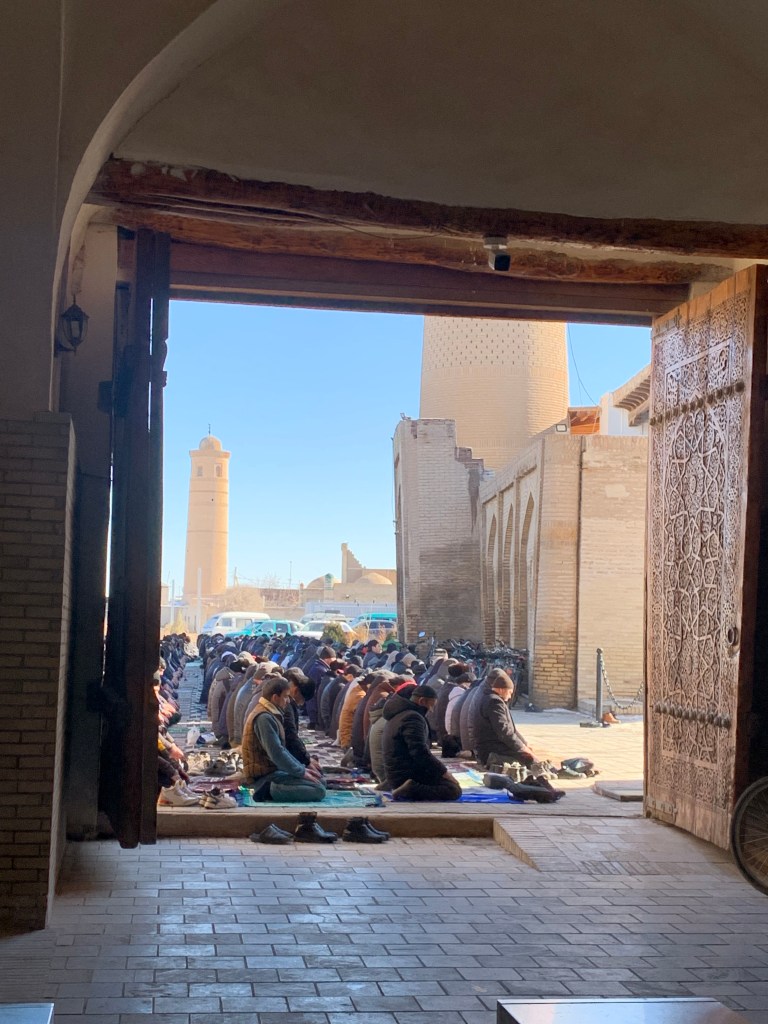
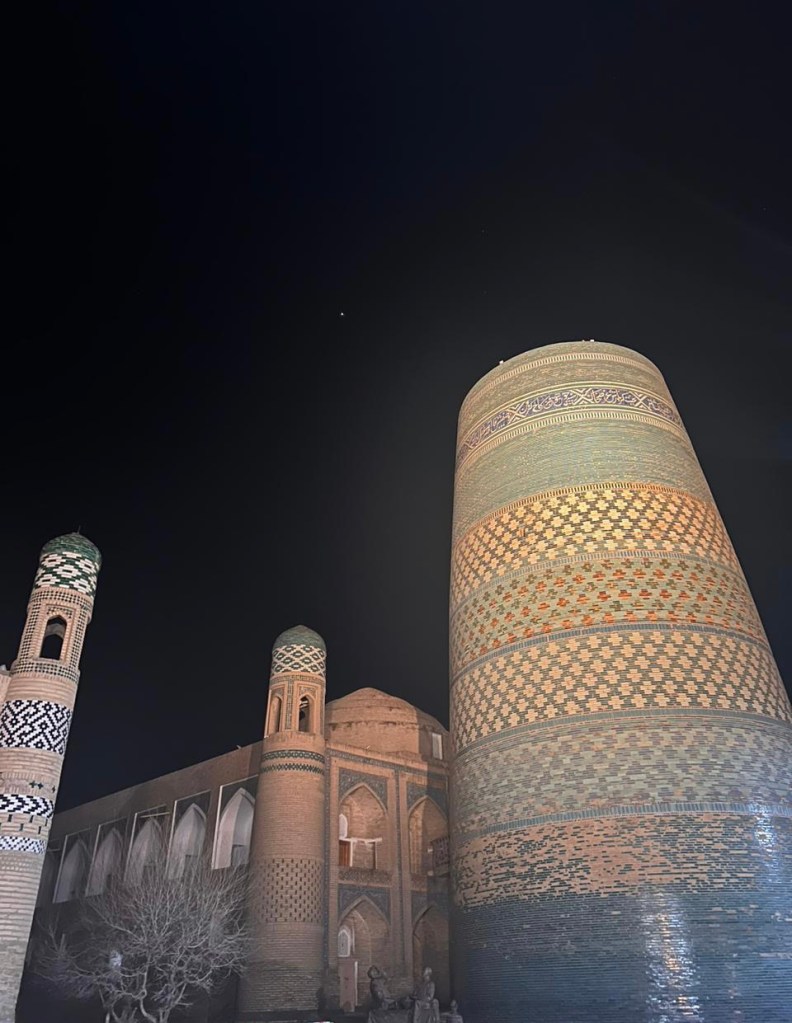
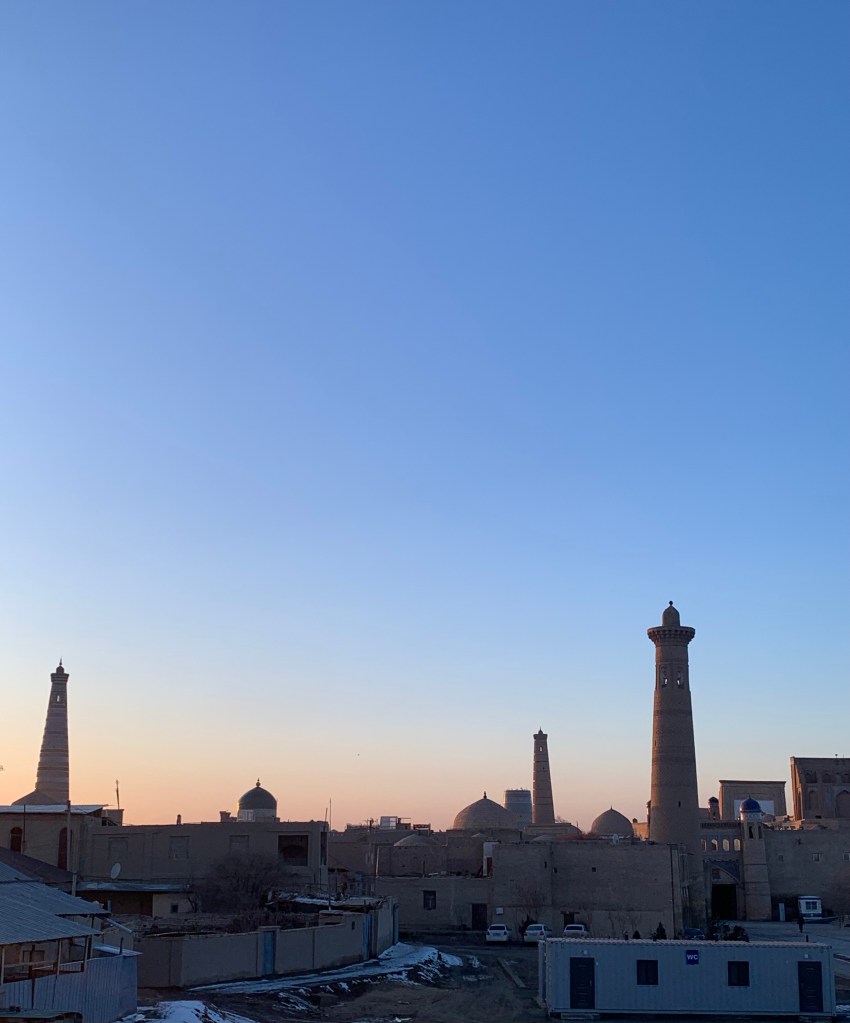
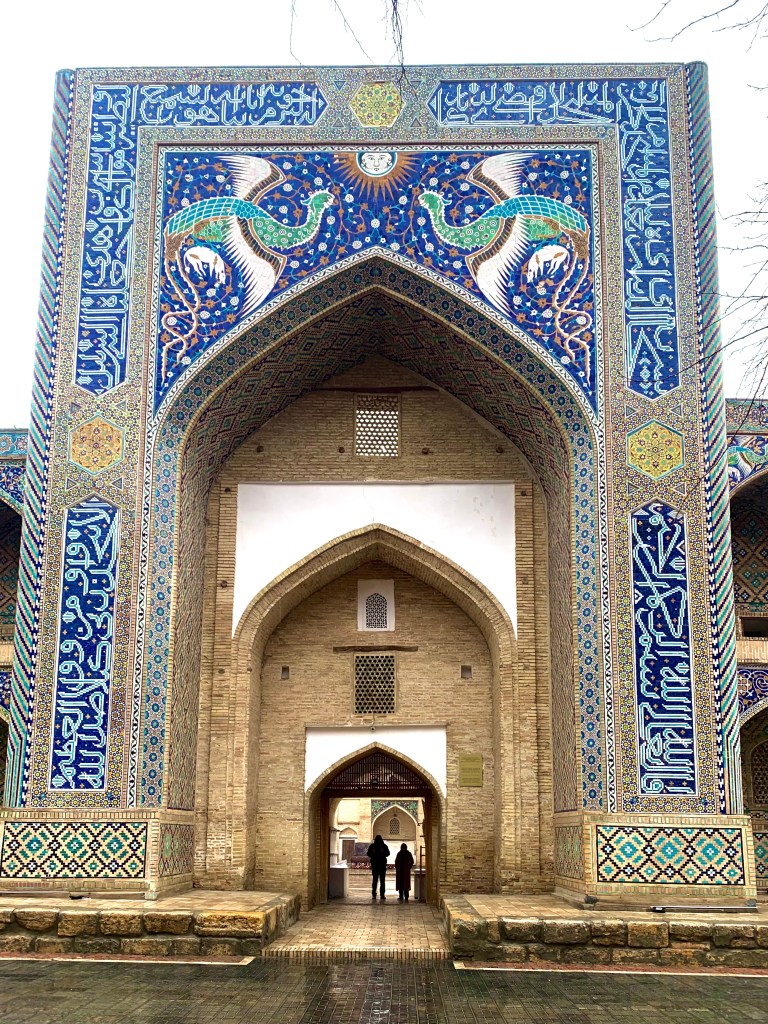
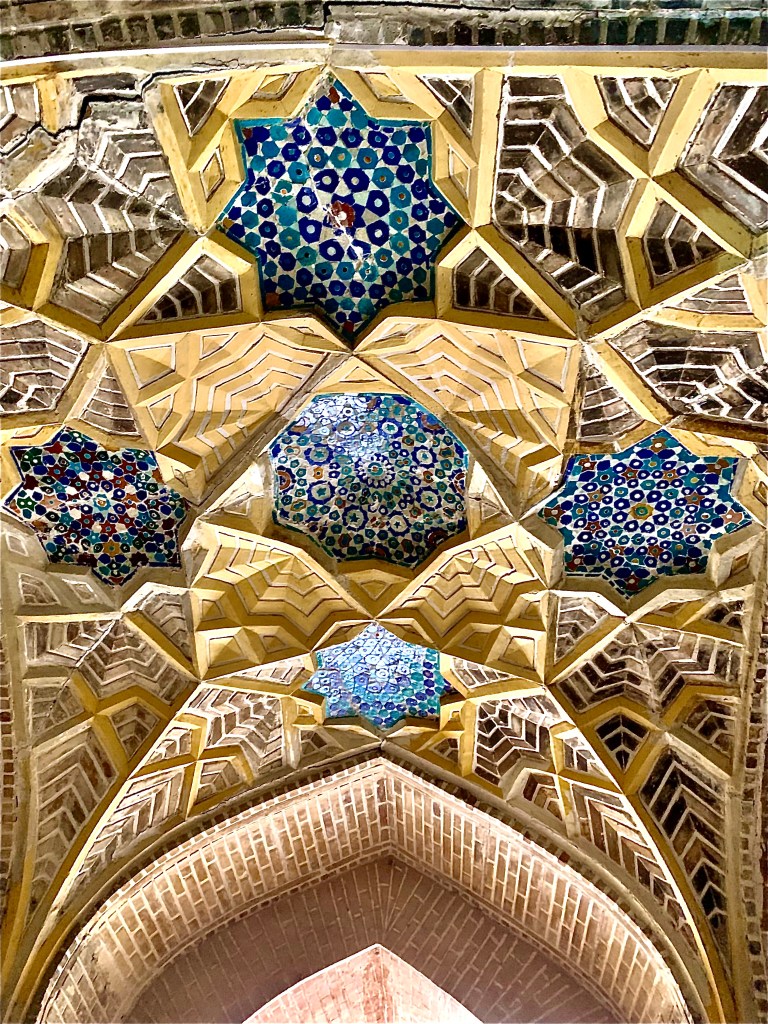
    There is a timeless feel to walking along the quiet streets of the old town of an evening, minarets rising by the mosques, madrasahs and caravanserais standing shoulder to shoulder, the large, carved gates to the Khan’s palace closed for the day. 

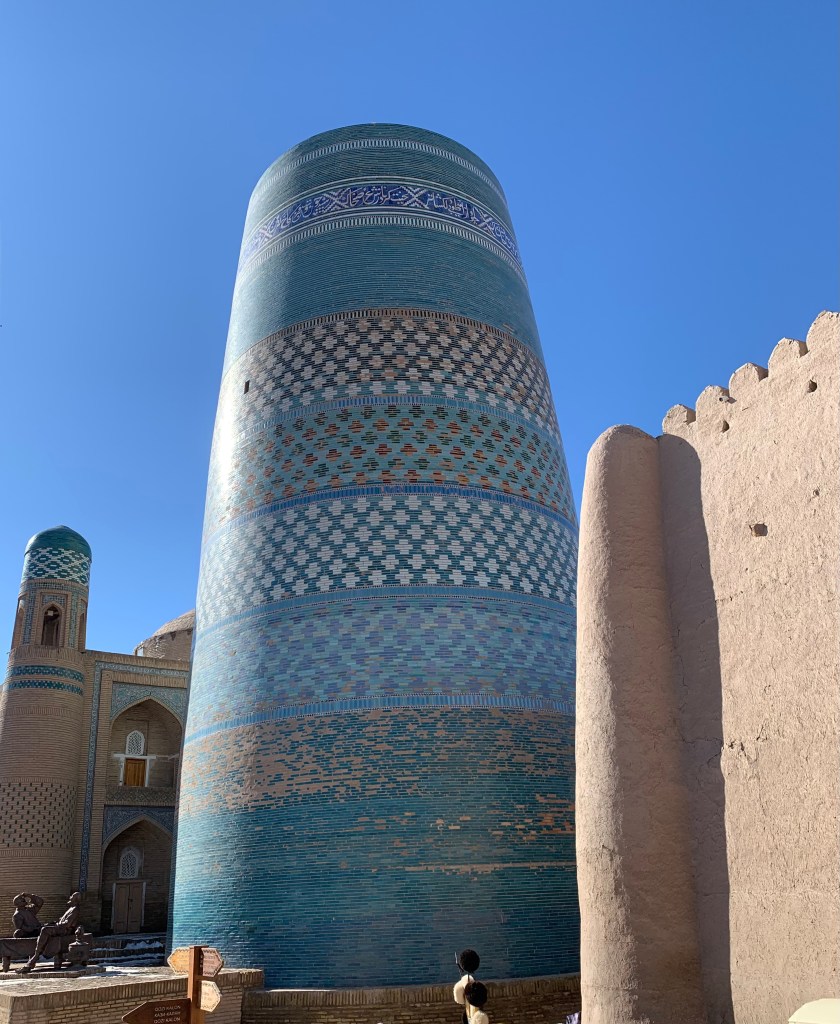
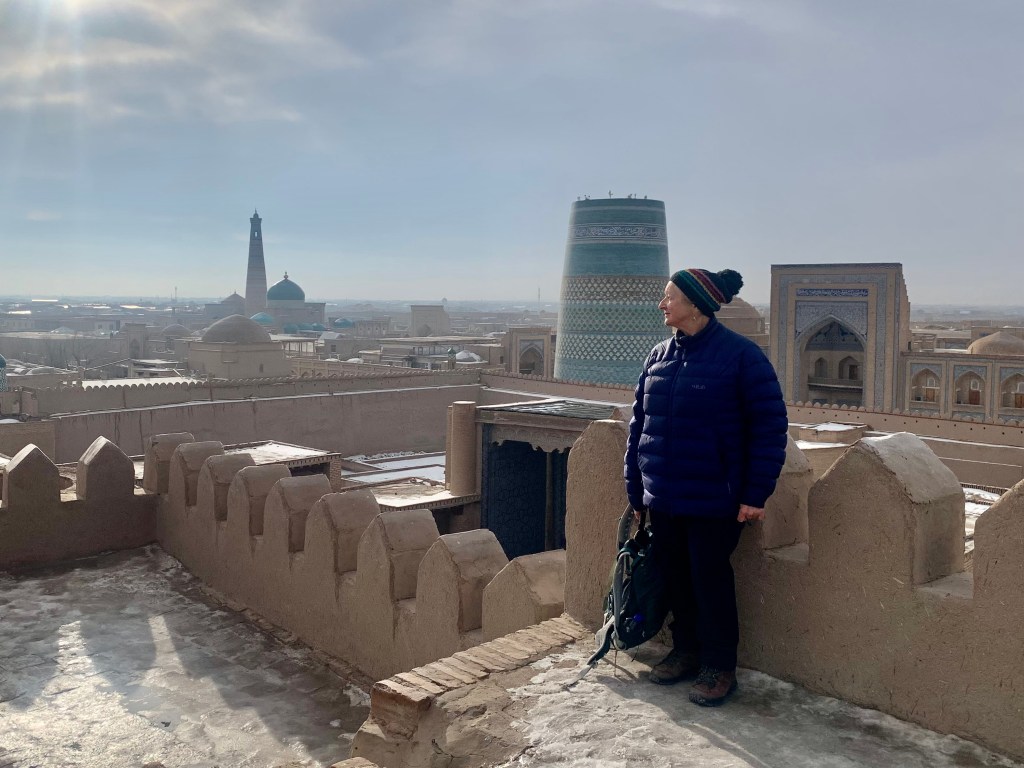
    Old Khiva is under UNESCO protection. The renovations are done sympathetically. Some madrasahs have been made into hotels – one of the biggest is the East Star hotel, next to the postcard pretty 19ct Kalta Minor minaret, the large, beautifully glazed but unfinished minaret ( 29m  – it was to be 70-80m tall, but Muhammad Amin Khan died in battle half way through the construction and the heirs did not carry on).  Several more caravanserais and madrasahs are in the process of being converted to hotels and crafts and souvenir shops. There has been a suggestion from the Presidential office that the remaining 250 or so families that still live within the old walls should be moved out and the dwellings made into tourist accommodation. Thankfully, it has not been enacted (so far). 

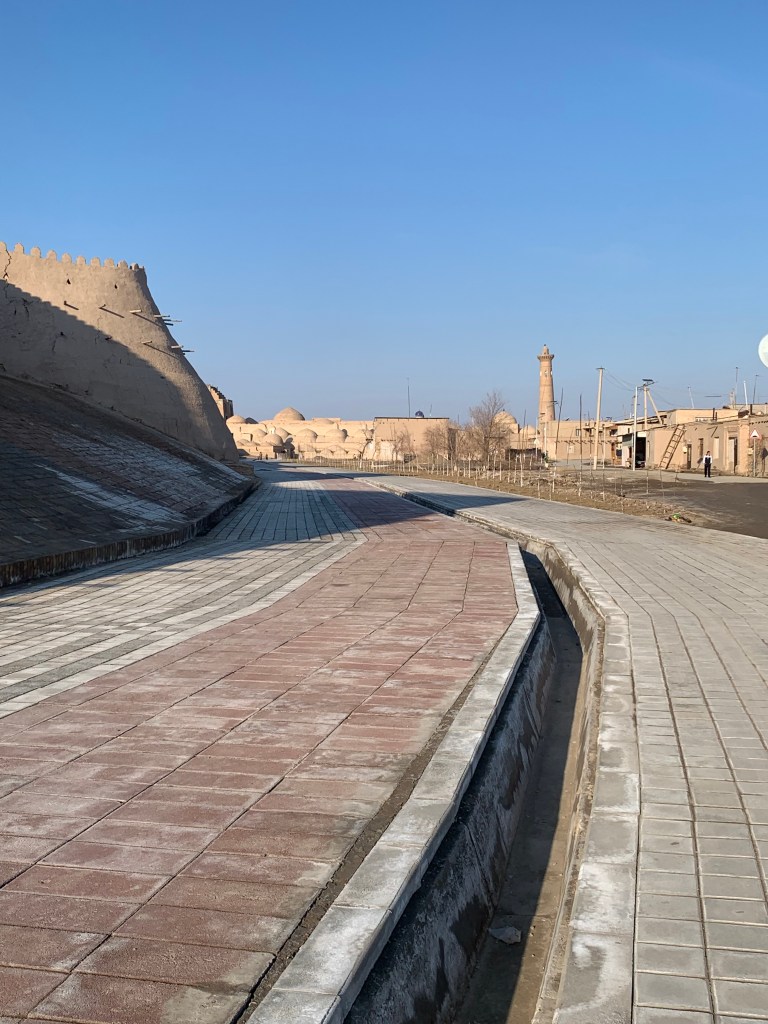
    I’m not certain why all the culverts are left uncovered – even at pedestrian crossings. It must be a nightmare for pushchairs and wheelchair users (haven’t seen many).

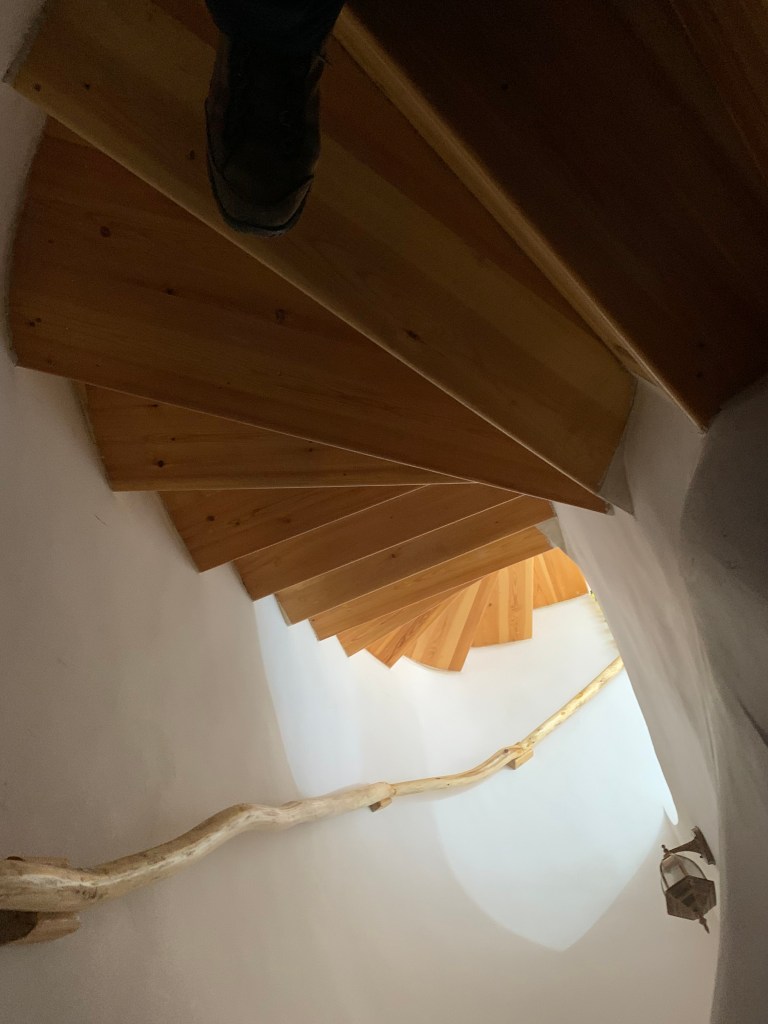
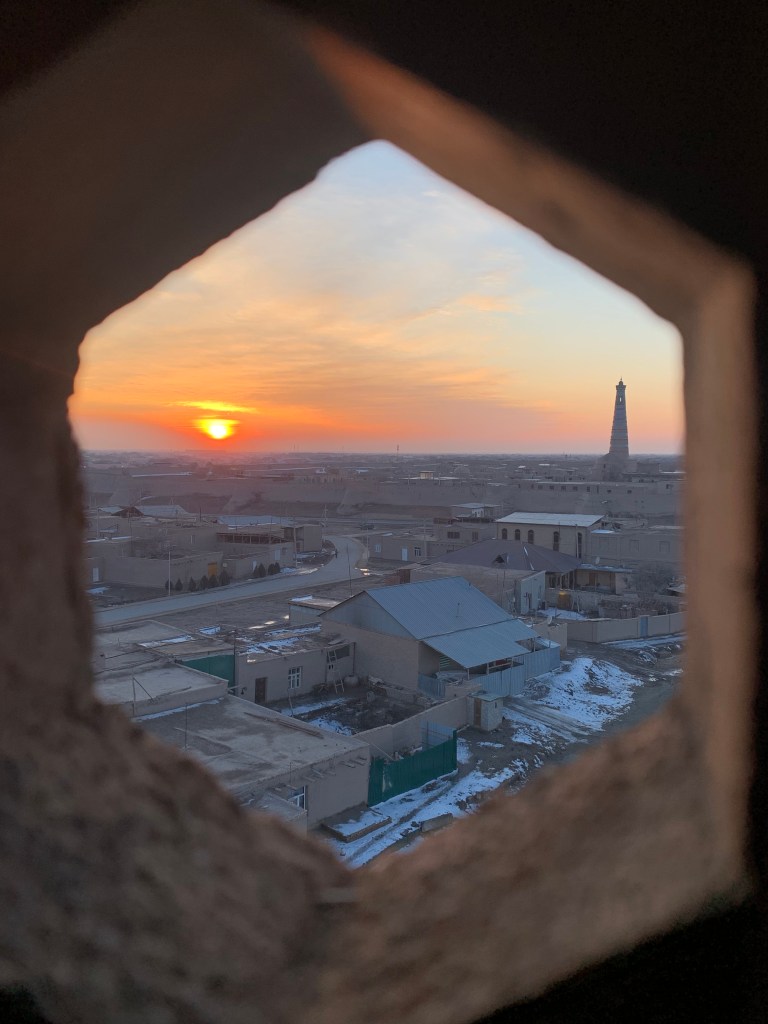
    I was told that the best view of sunsets over Khiva was from the Polvon Ota hotel, near the East Gate. The hotel used to be a madrasah, and access to the upper floor is a challenge – steep, spiral staircase (and no lift) – how do they take the luggage up?.  But the views over the city are rewarding. They are even more spectacular from the adjacent minaret. Even if the climb is up yet another spiral, dark, narrow, uneven staircase.  

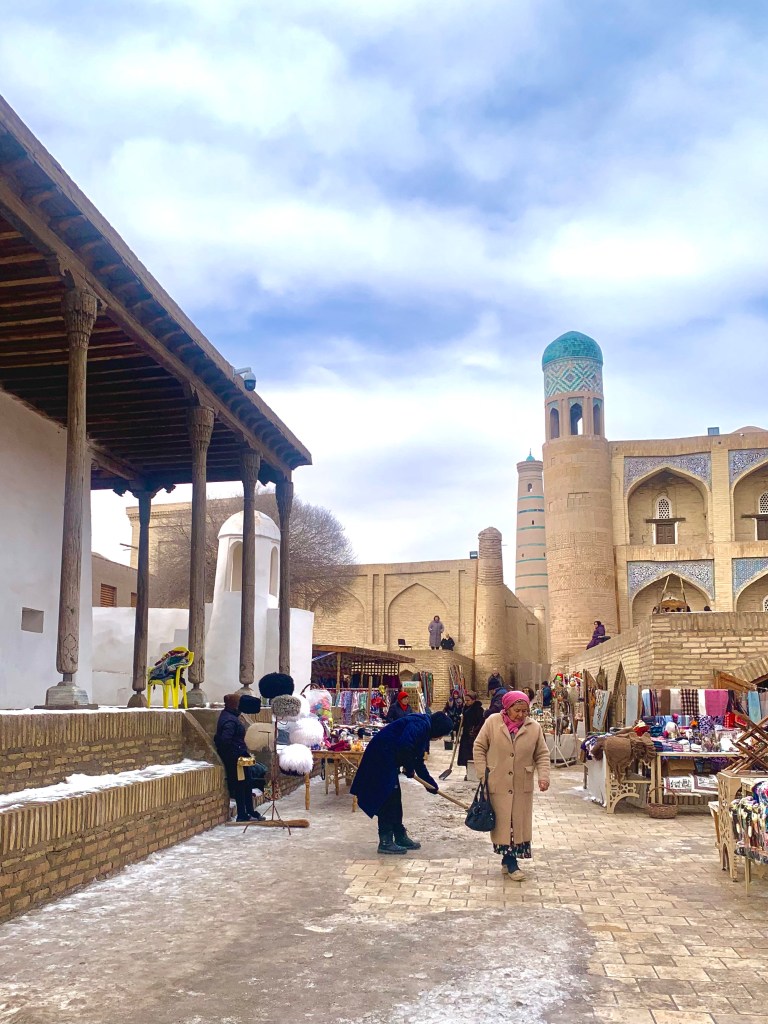
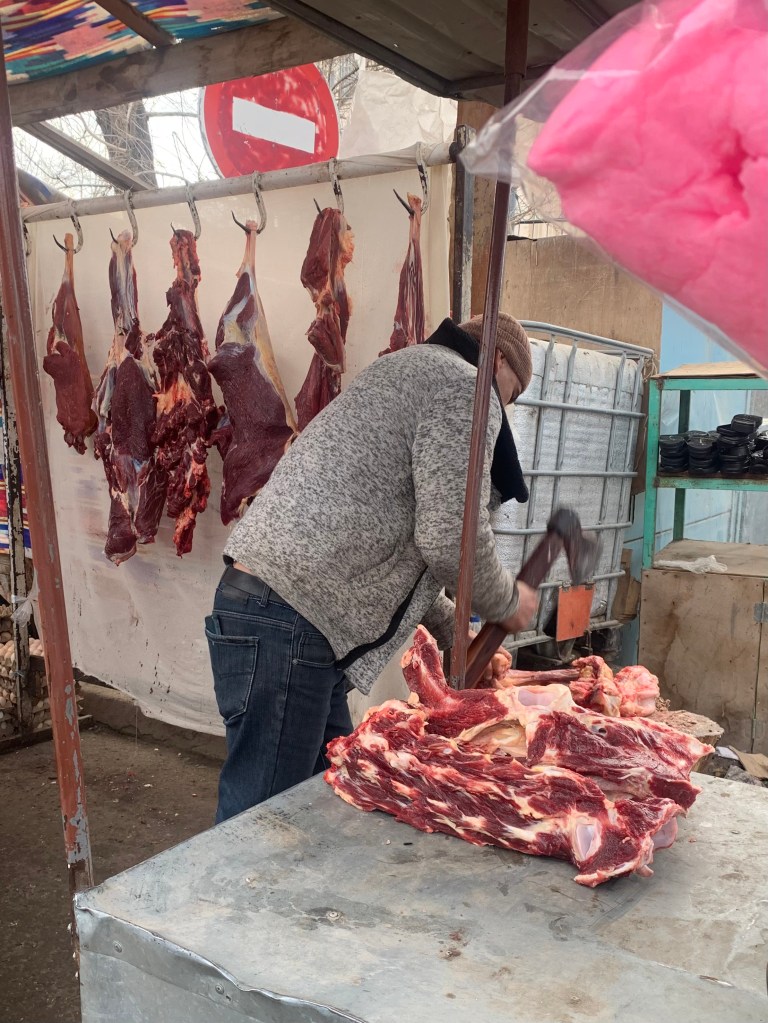
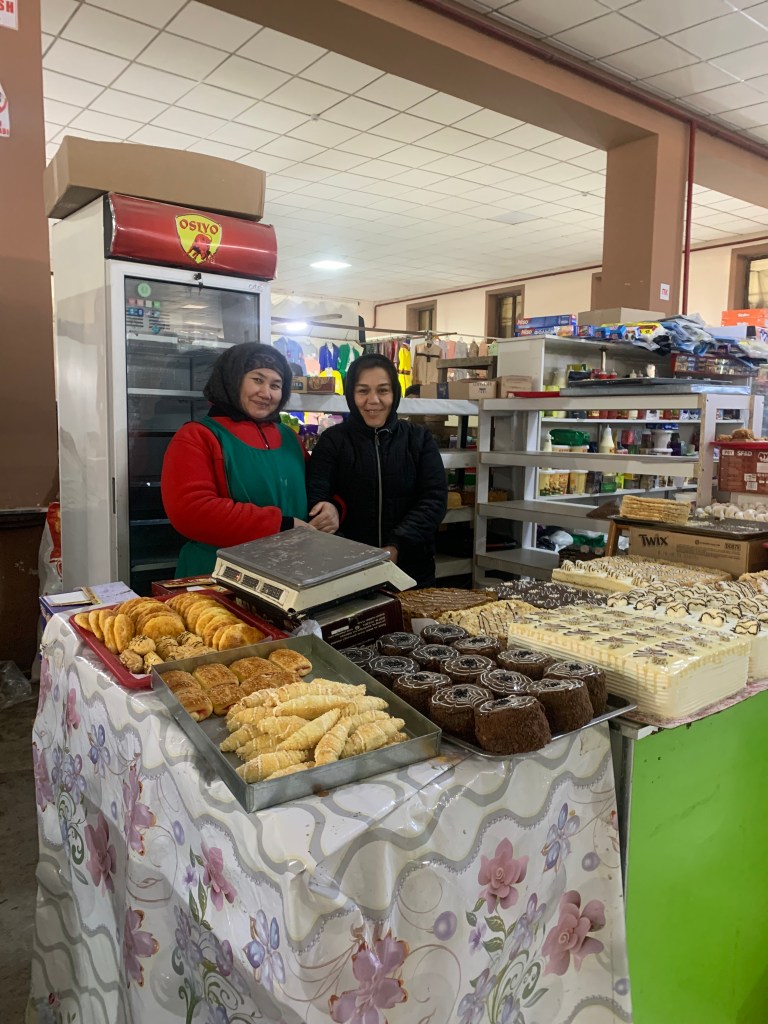
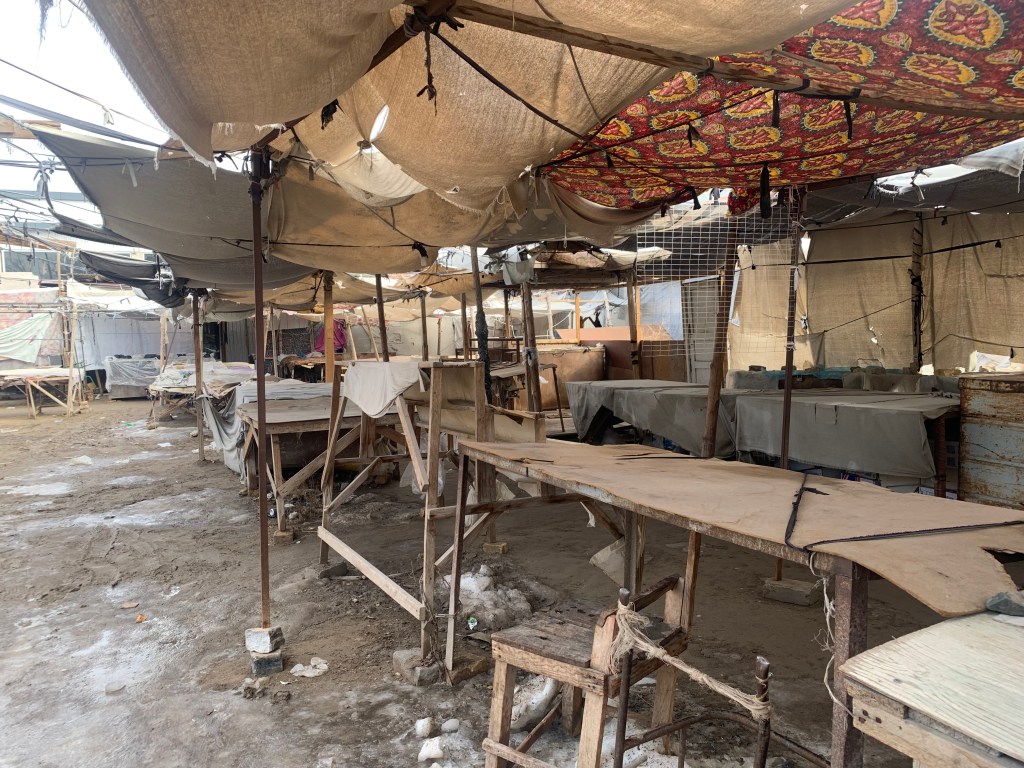
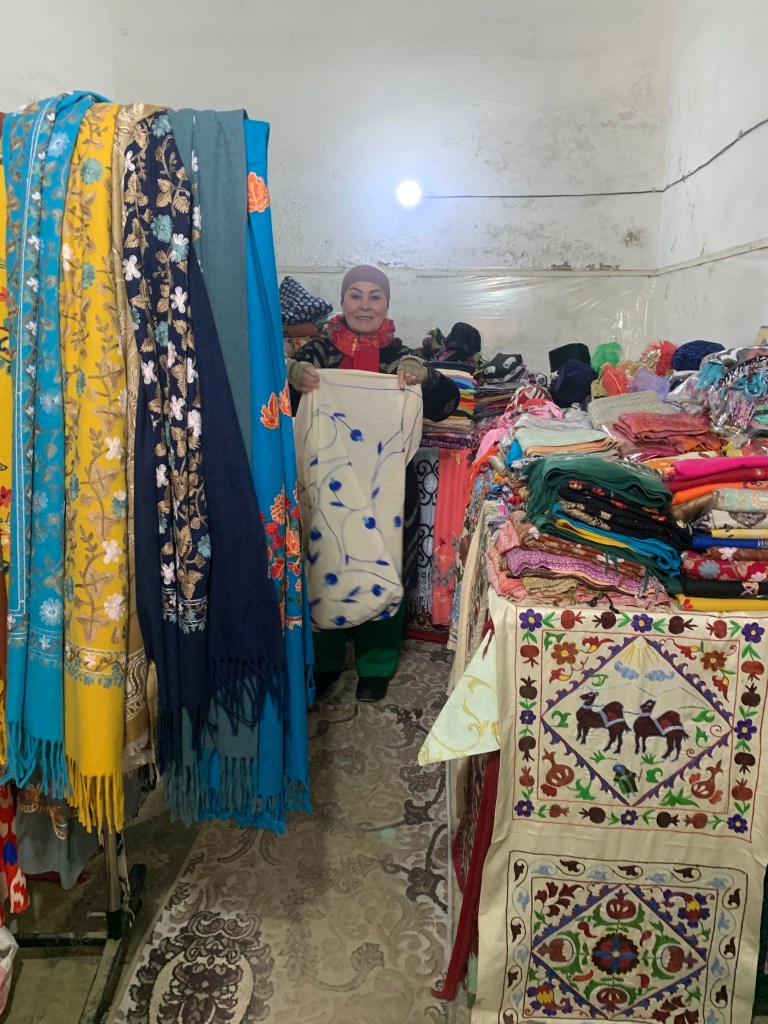
    The markets are places that permanently fascinate me. The way food and goods are displayed, the variety of merchandise, the way people behave. I have been greeted often as I wander around, asked where I was from (and, of course – how old I was), what did I think of their city… And whenever I needed help in finding a place, people have been invariably helpful – often taking me to within sight of where I wanted to go. 

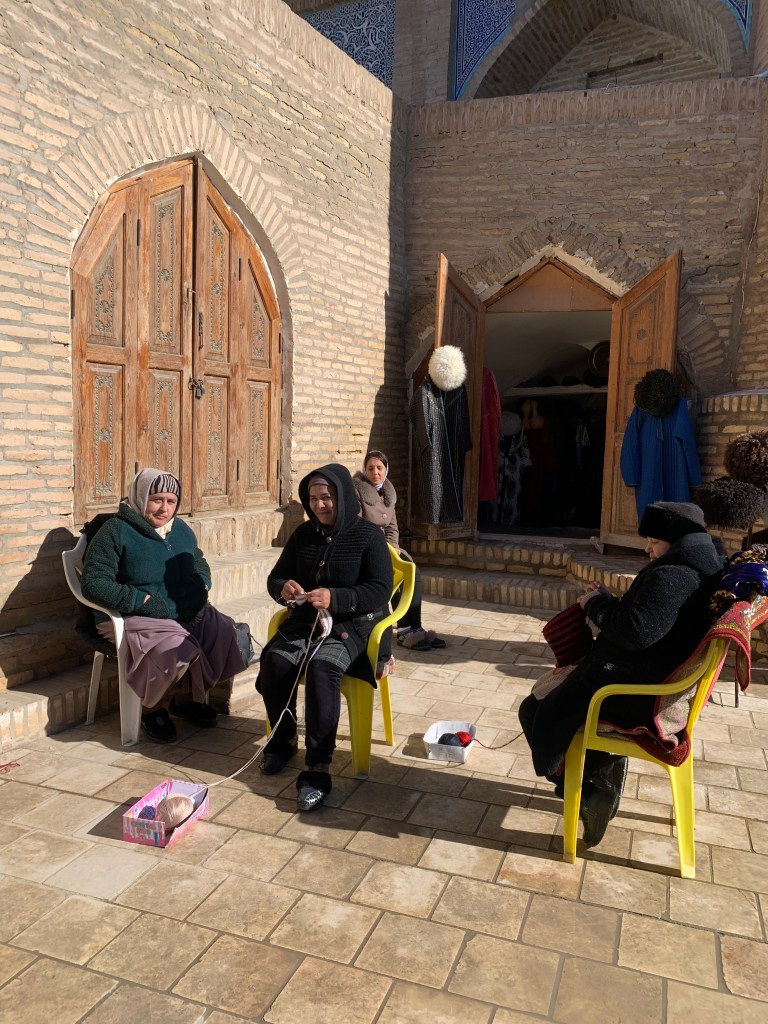
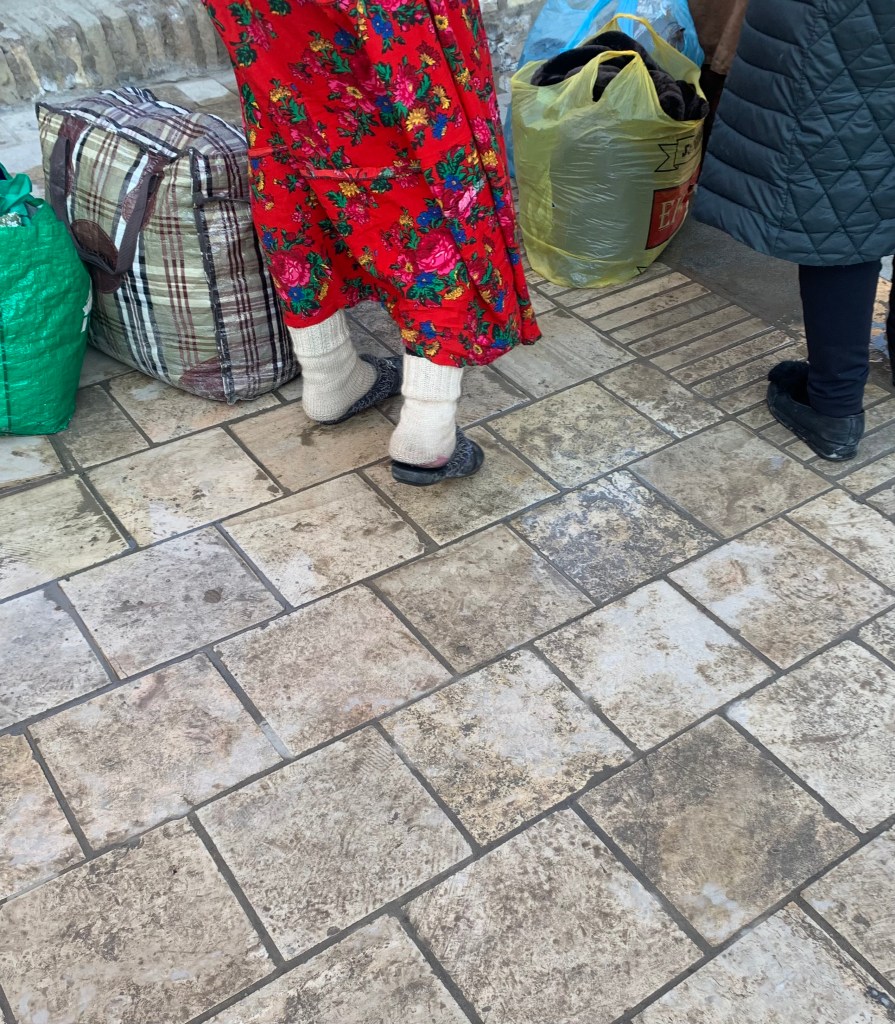
    The women’s footwear was another thing that caught my attention, especially the vendors at the market. They wear several layers of (hand-knitted) woolen socks and then stick their feet, or however much or little will fit in, into a slipper. Most of the time the heels are hanging free.

    So many people have gold teeth. I wondered why – one explanation was that it was a hangover from Soviet times, but no explanation as to purpose – was it decorative or needed because of poor teeth/diet or poor dentistry?

    I shared a dinner with the Chinese girls I had met along the walk to the taxi “rank” at Khiva station- between us we drove a hard bargain and got a ride to the old town for a third of the asking price. We were going to share the cost of the excursion to see the forts in the Karakalpak desert and the Igor Savitsky museum of disapproved 20th ct Soviet artists in Nukus, but it didn’t work out (Jing is doing a PHD in anthropology and wanted to go to 10 fortresses – I wanted to see the art).

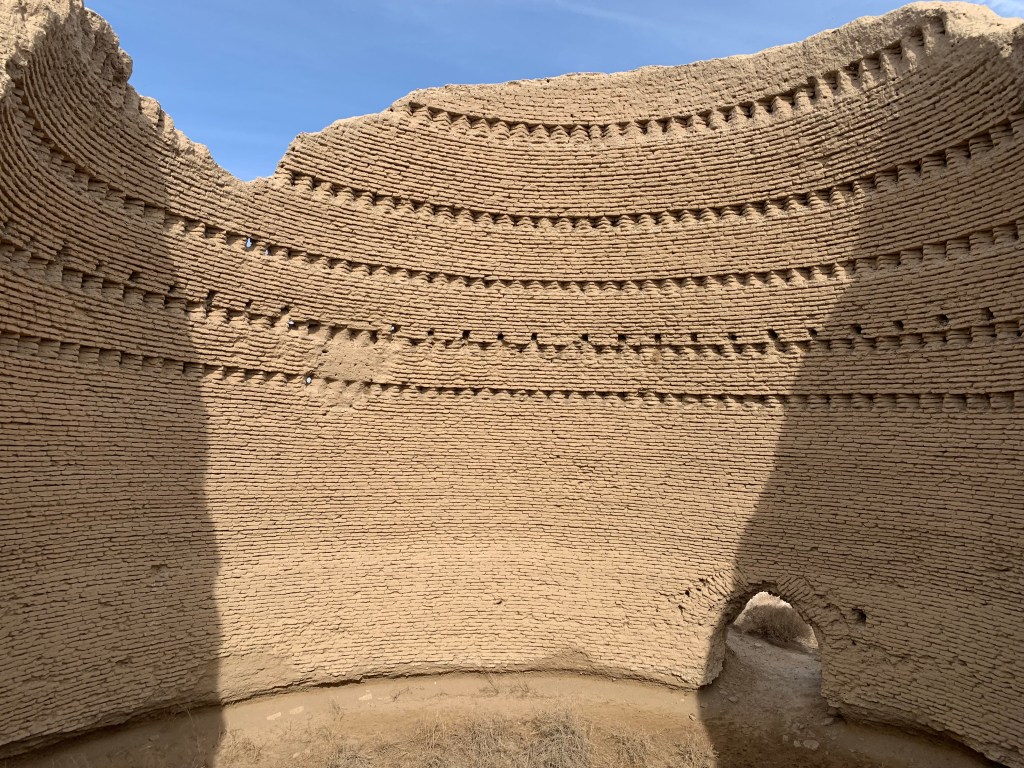
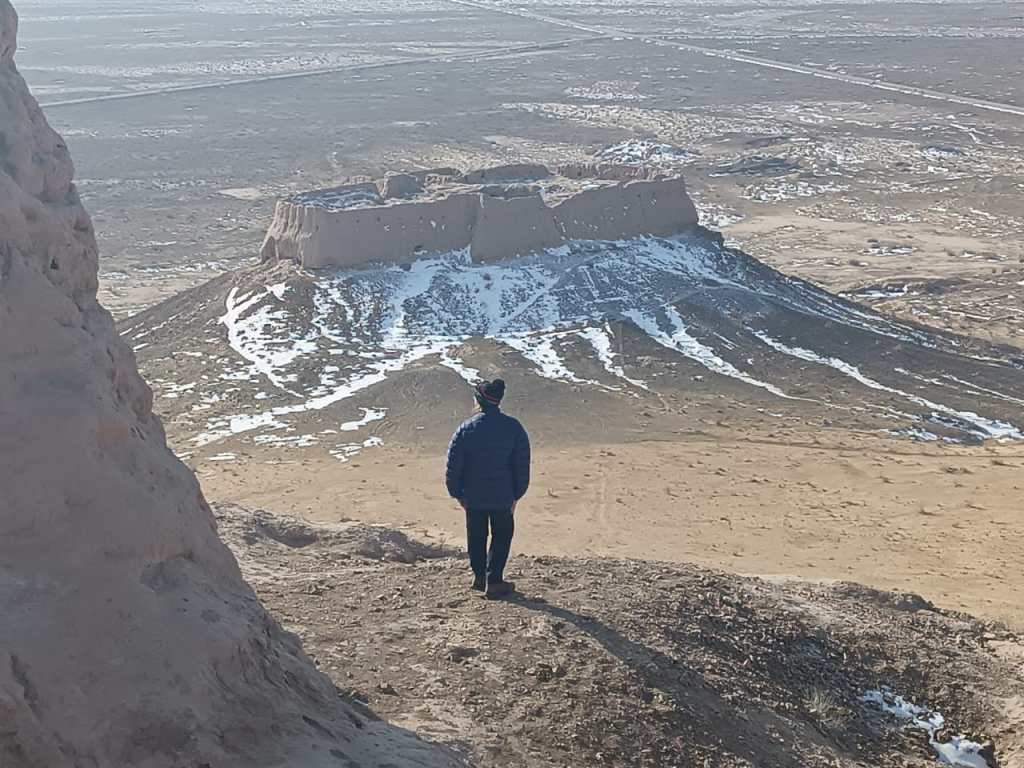
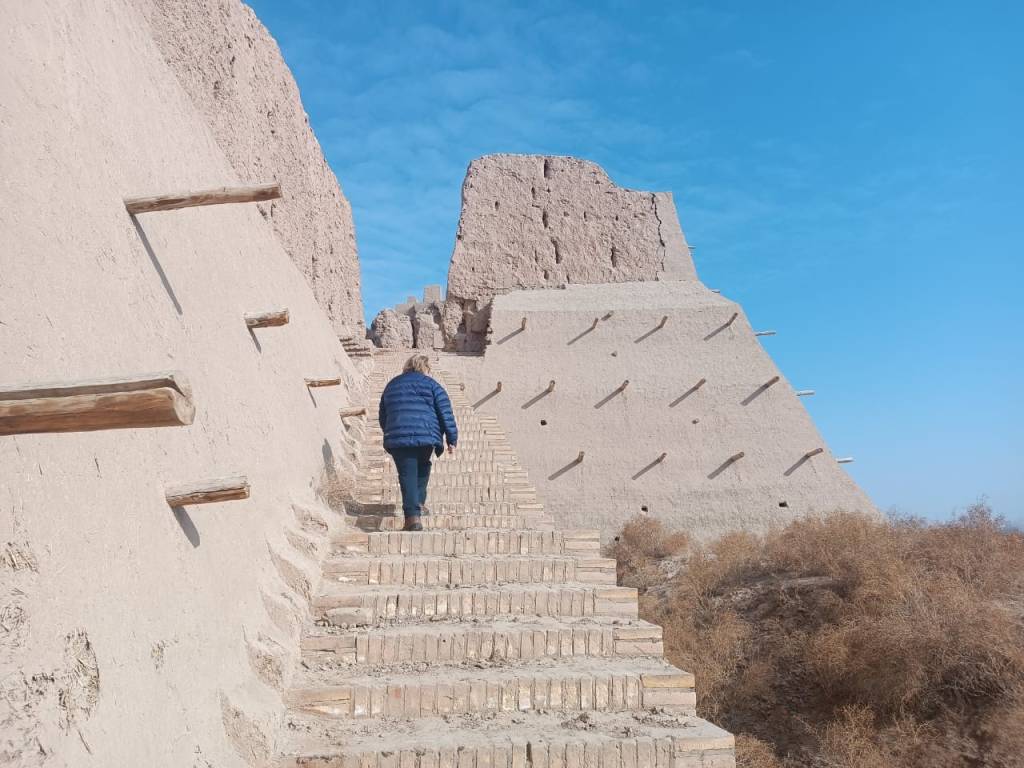
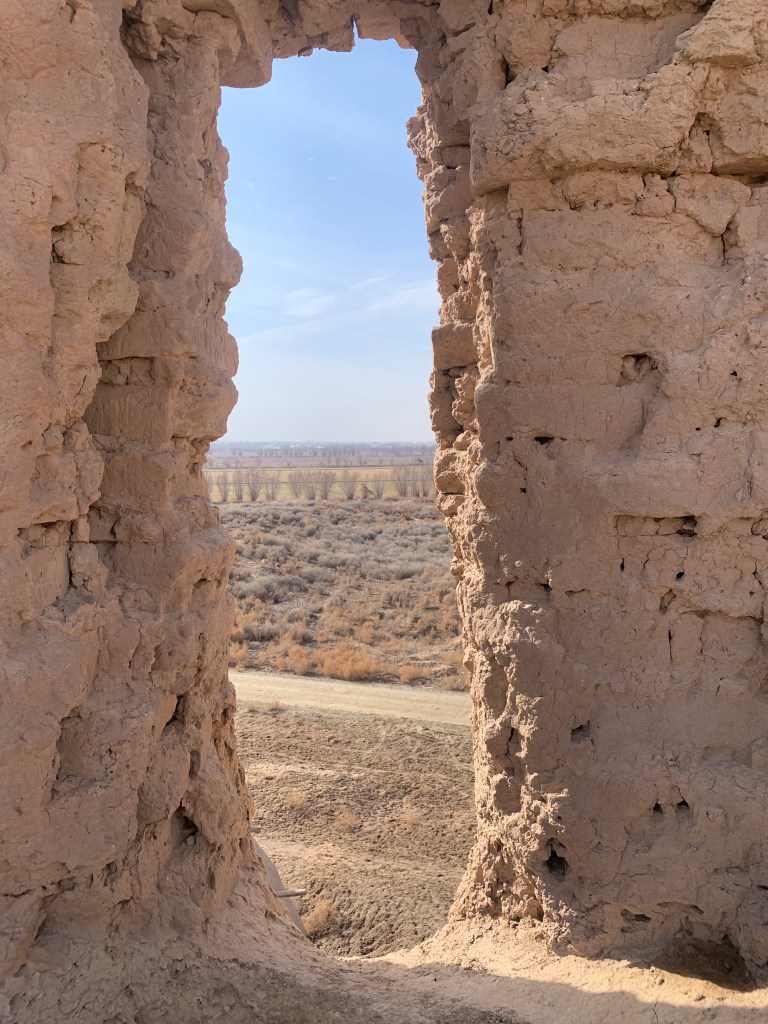
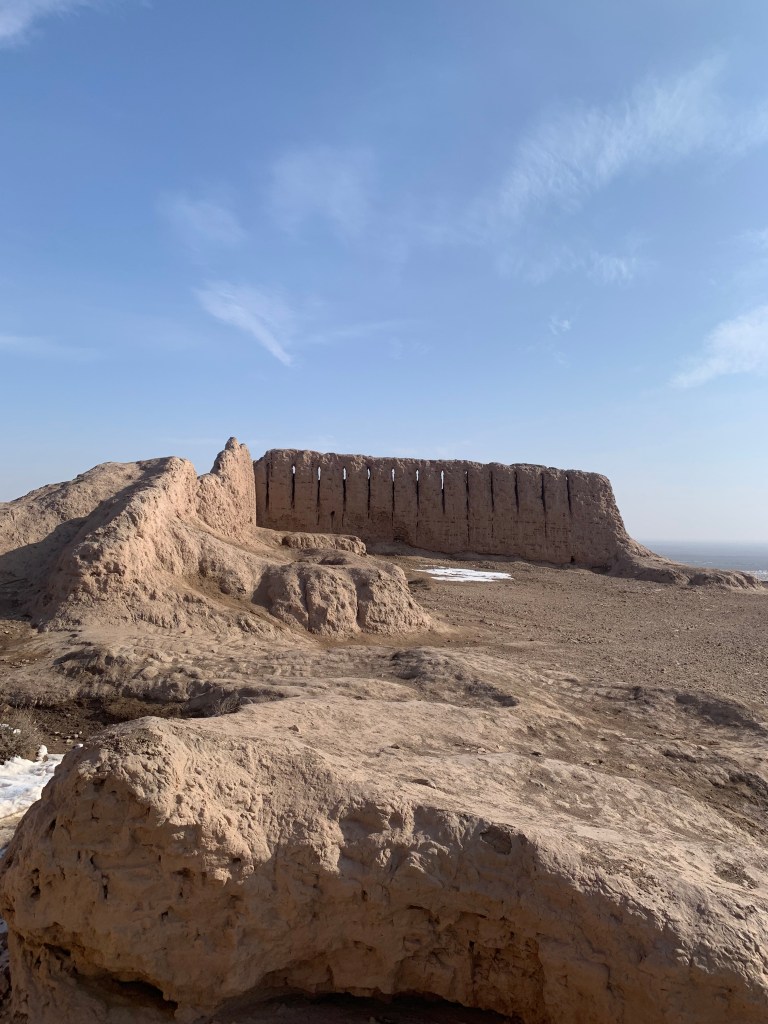
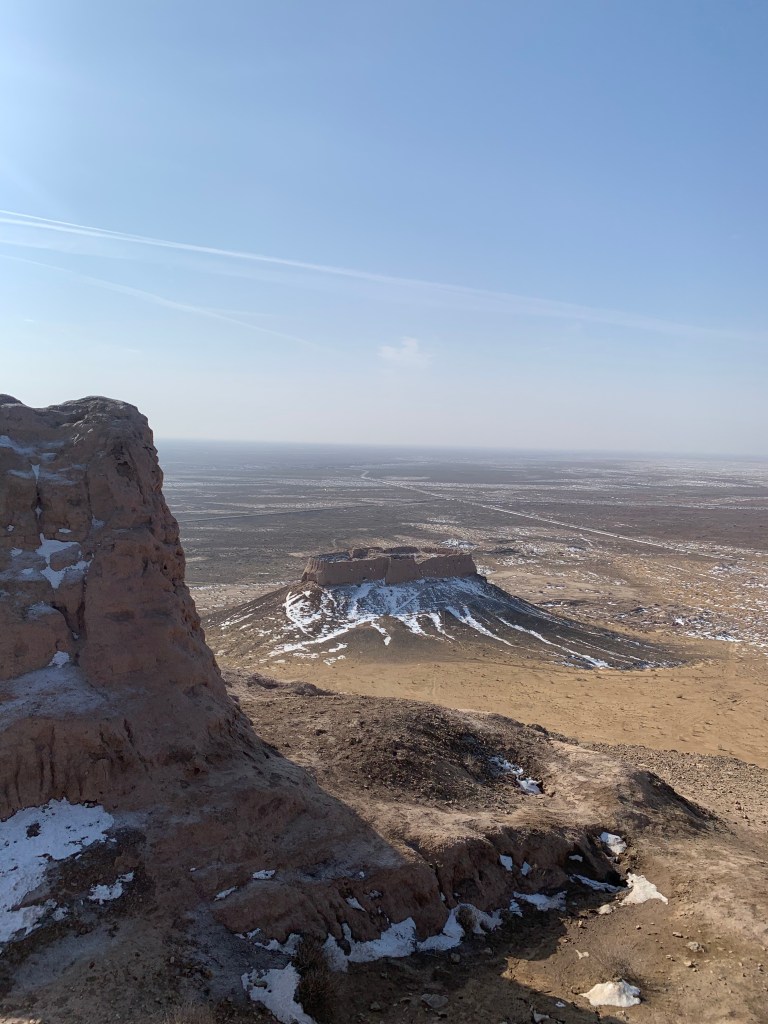
    There are some 50 forts dotted around the Karakalpak (kara= black, kalpak=hat/cap – the land of men who wear black hats) desert, though not all have been excavated or explored. The 4 I visited gave me a good idea of what they may have been like in their heyday: thick, well fortified walls, 360 degree views over the plain, room for the garrison and villagers.

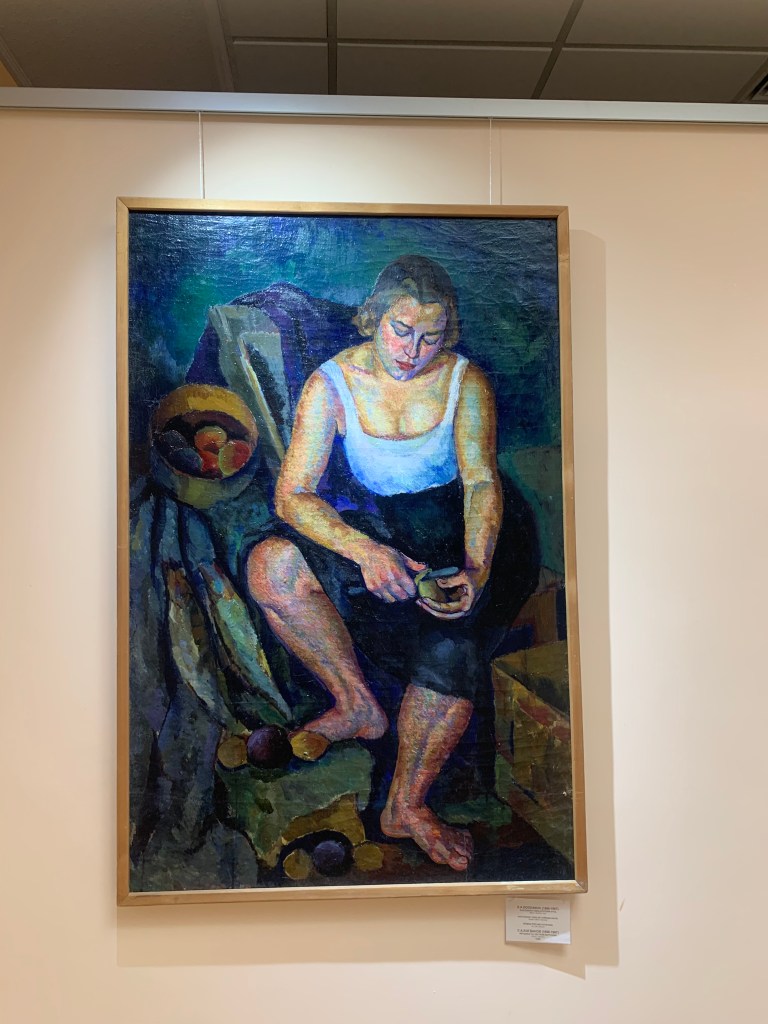
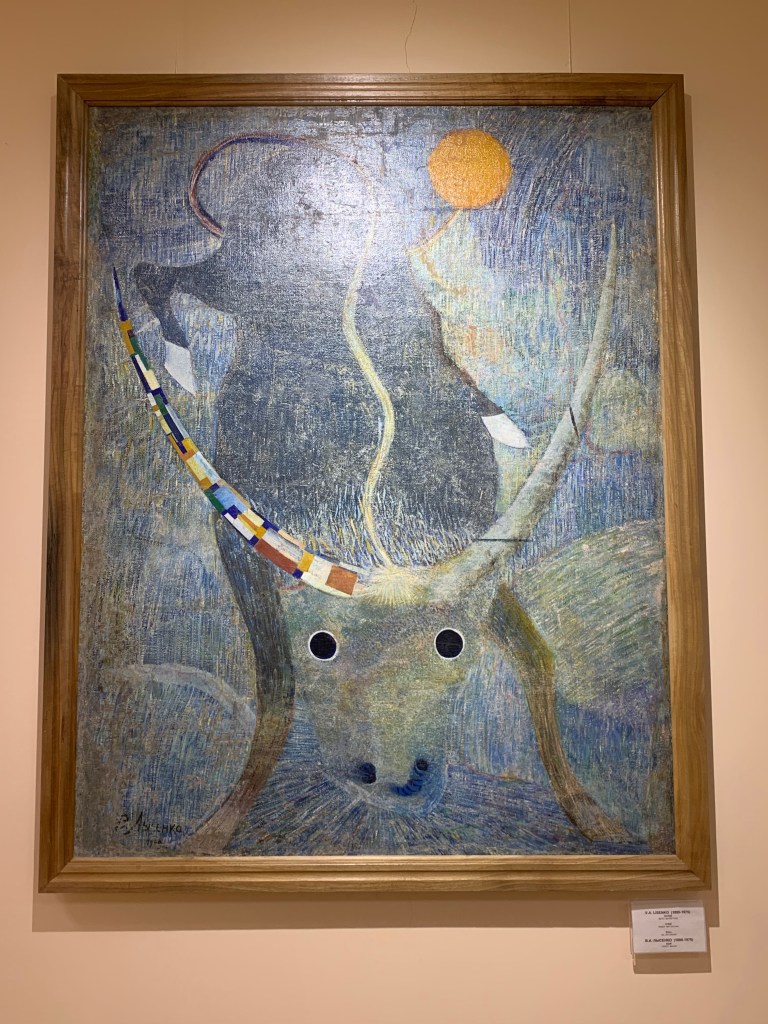
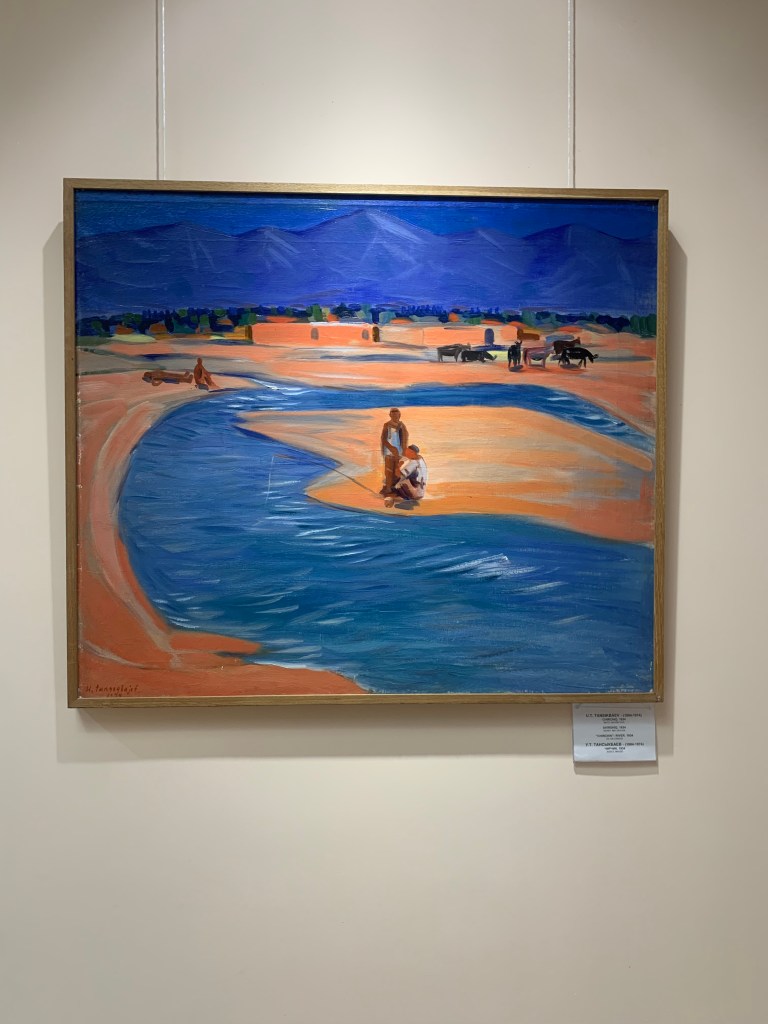
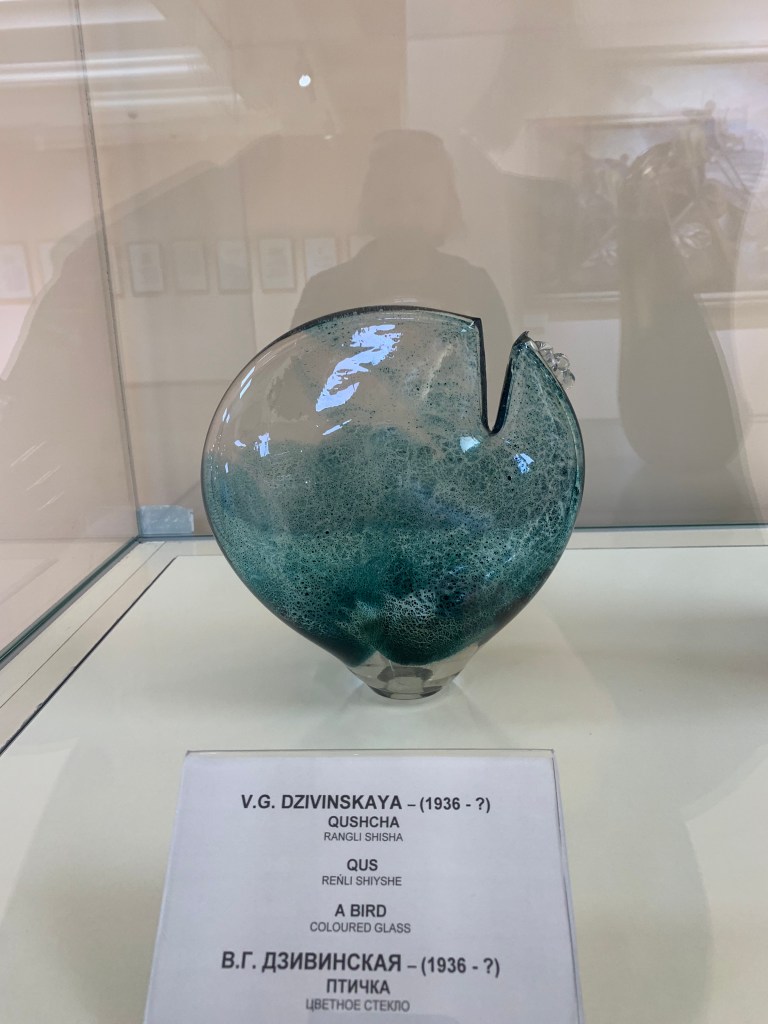
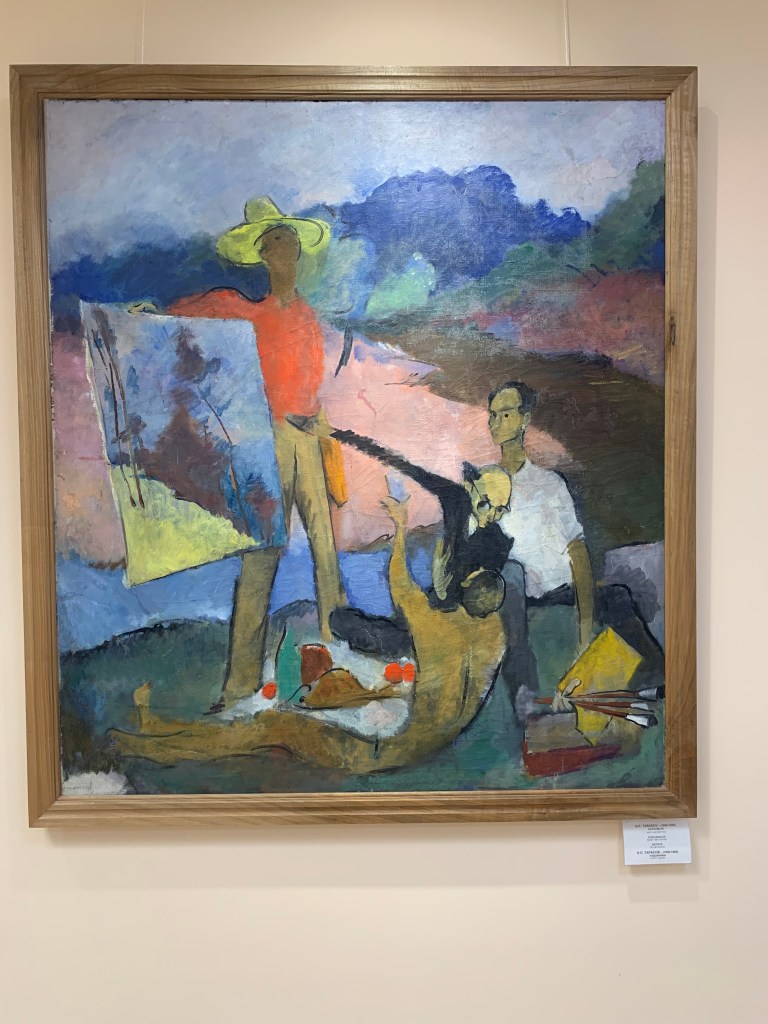
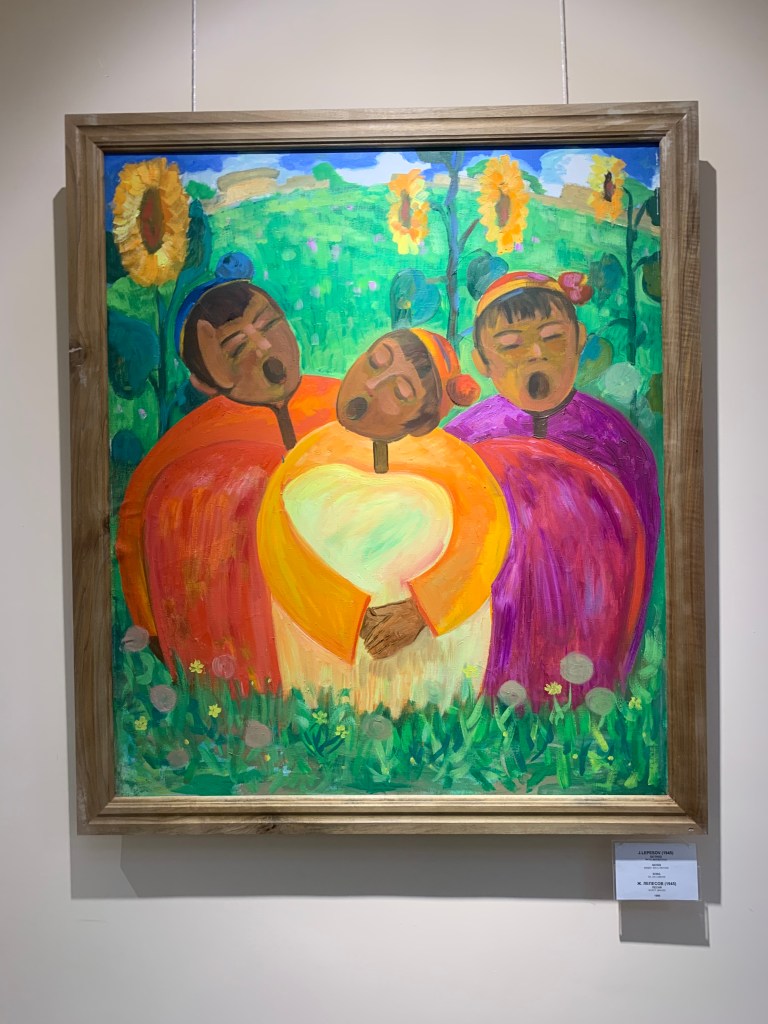
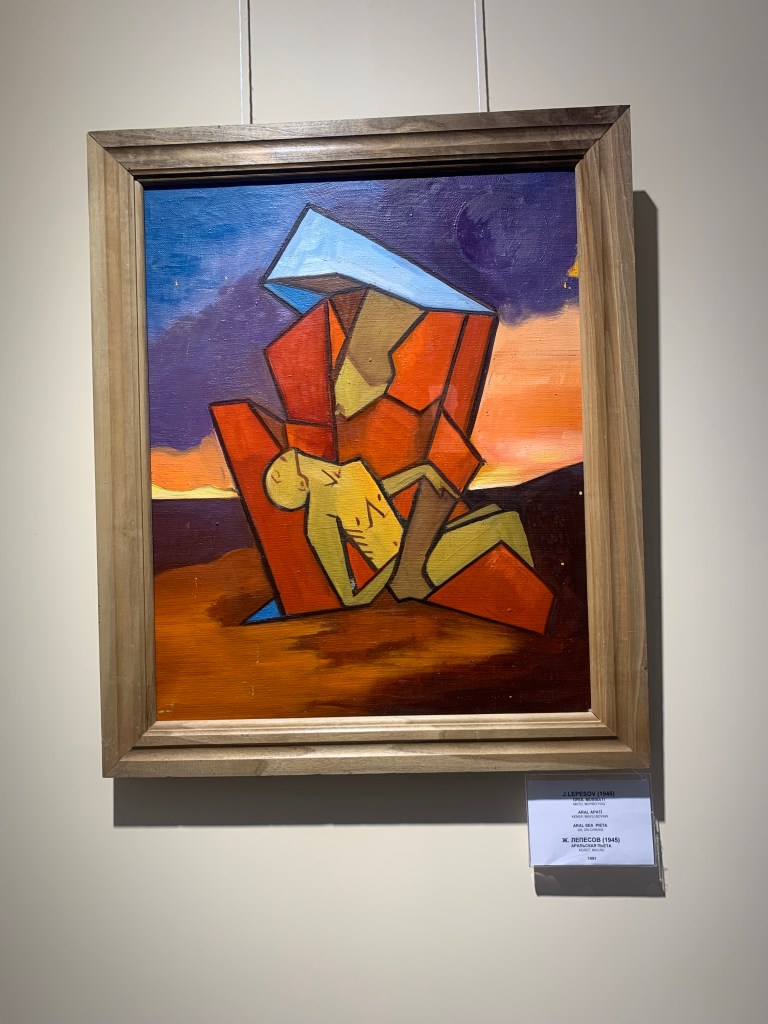
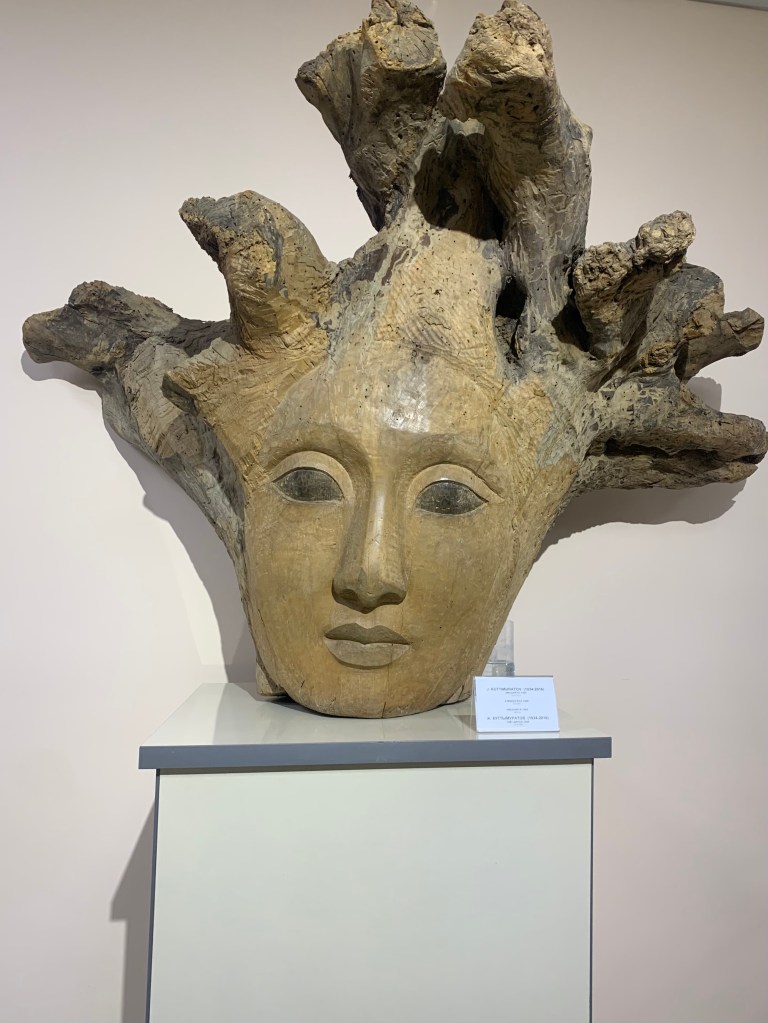
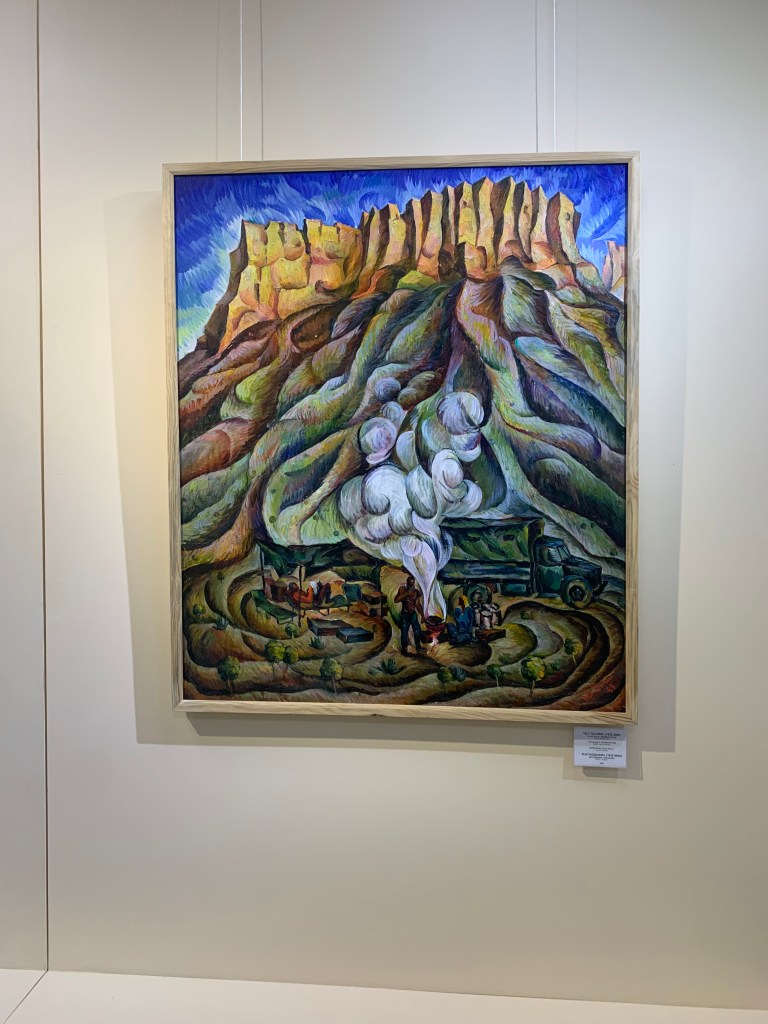
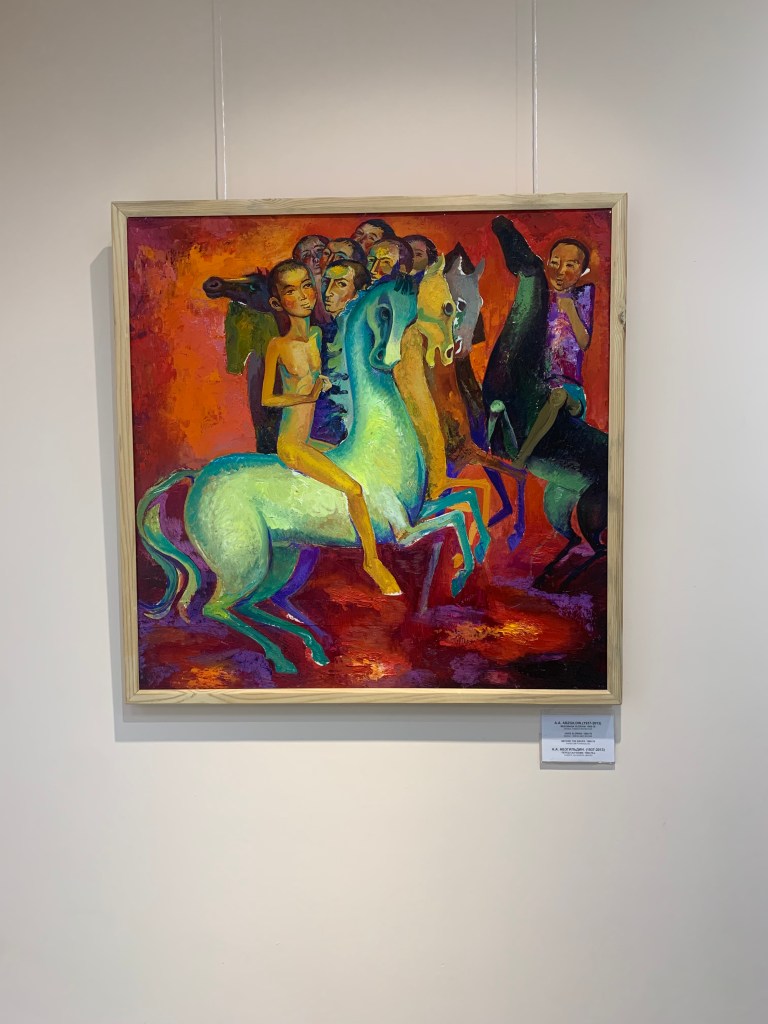
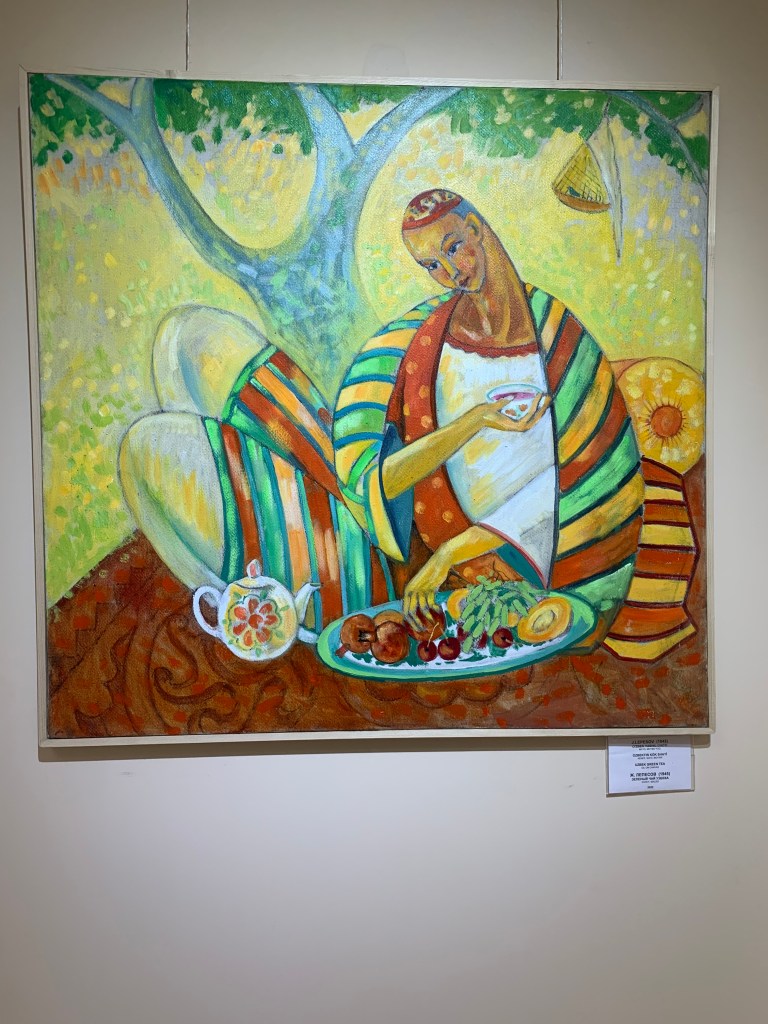
    The Savitsky museum in Nukus. The works collected are so varied it is now hard to see what was the objection – the socialist realism may have been the tune to which all artists had to sing, but a number of artists have been disapproved of for reasons that had little to do with art.

  • Bukhara

    Feb 5th, 2024

    Bukhara is only a couple of hours away from Samarkand on the comfortable fast train (the same one I took from Tashkent). The weather changed more quickly. The rain was coming down in sheets as we arrived. I was the last off the train, covering my rucksacks in waterproofs and hoping it wasn’t too far to the transport – the Bukhara train station is not in Bukhara at all, but in Kogon, 10 km away, known as Bukhara 1. The taxi drivers were there, touting; it is not easy to drive the price down when you are getting soaked, and they know it. (Managed to get it to half of the asking price.)

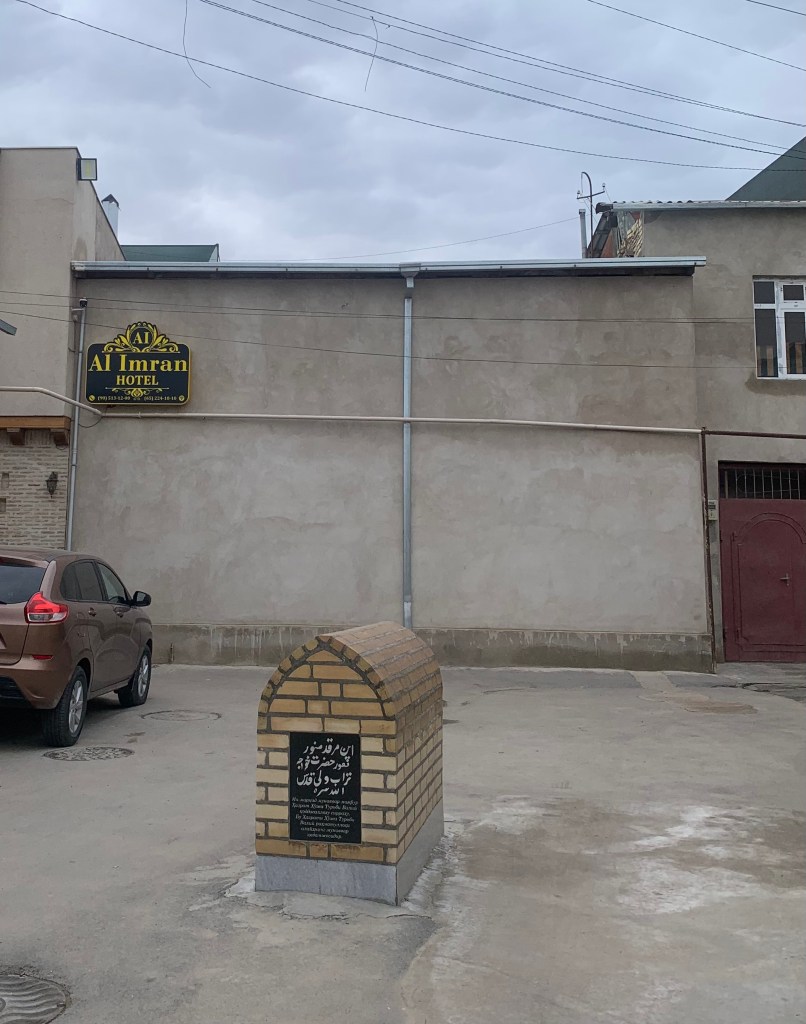
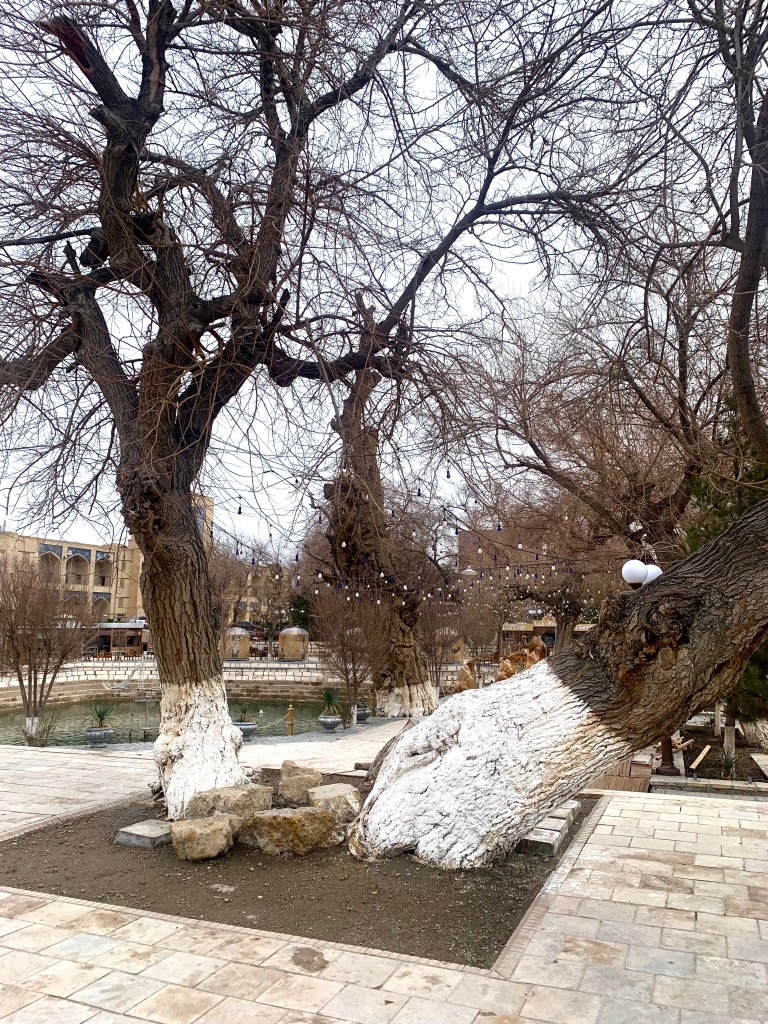
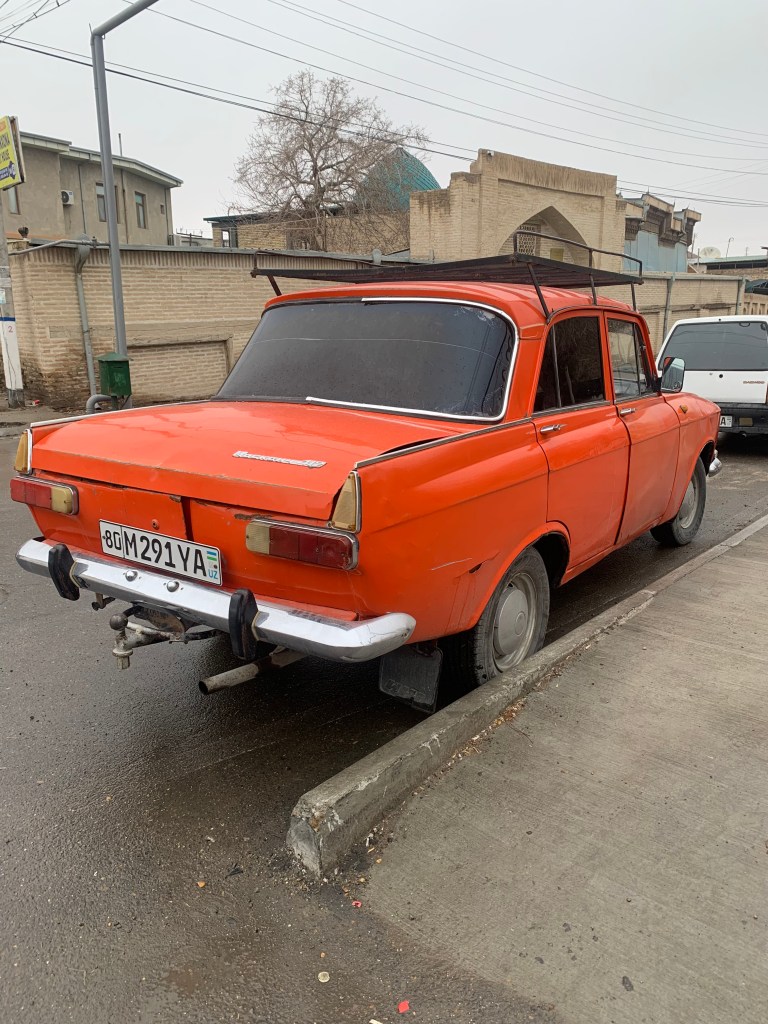
    The beauty of Old Bukhara was not diminished by the rain, just different. The houses are built very close and the narrow streets all seem to connect – I found several ways to get to my hotel, though at first it looked like it was in a cul-de-sac. With a 16ct hoja’s tomb in the middle of the yard/parking area. There are many old mulberry trees around, and some truly old cars – like this Moskvich.

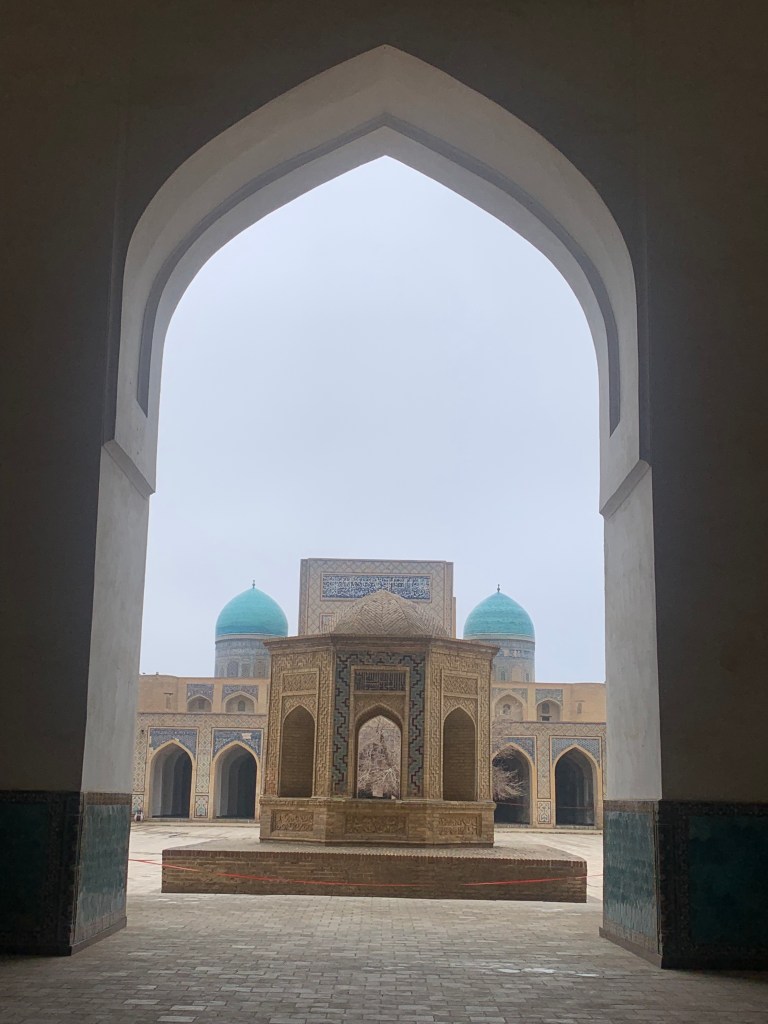
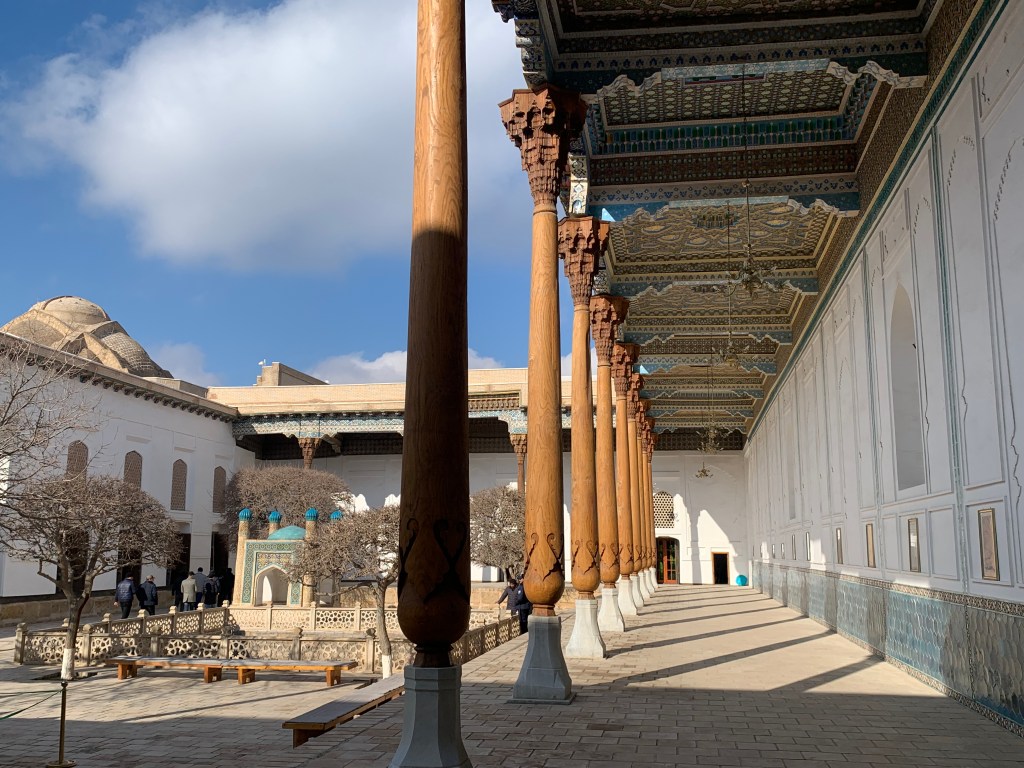
    The space around the madrasahs and mosques, forts and palaces has been cleared and paved with marble, a far cry from the dust (or, as on my first two days, water and mud) of the past.

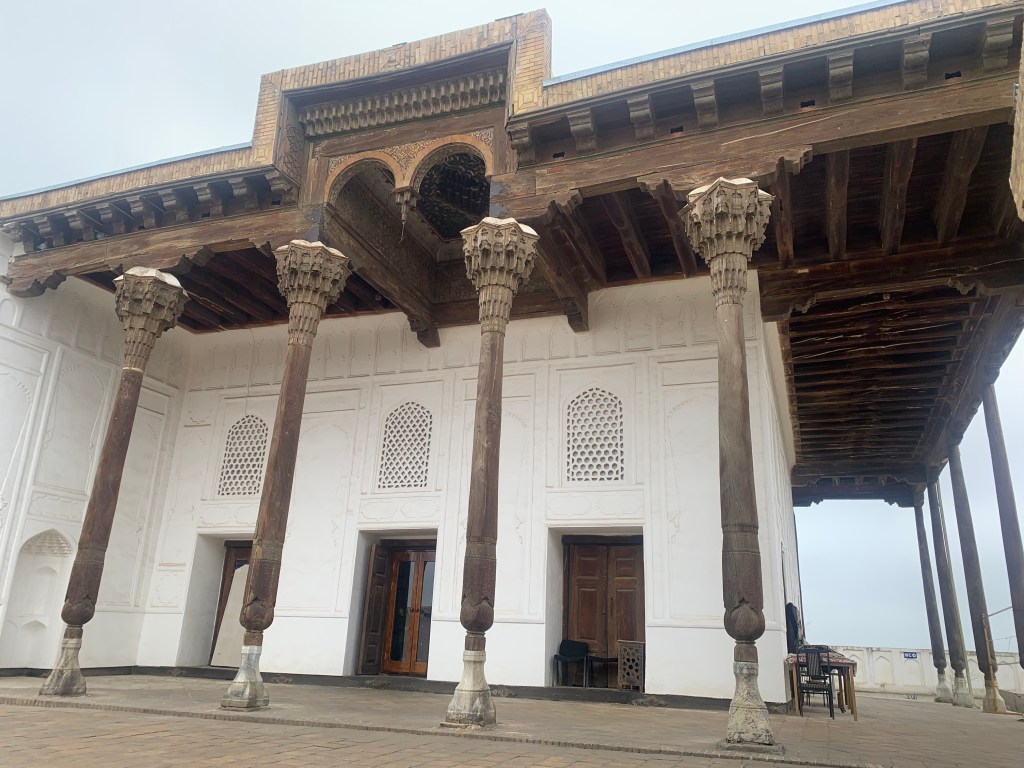
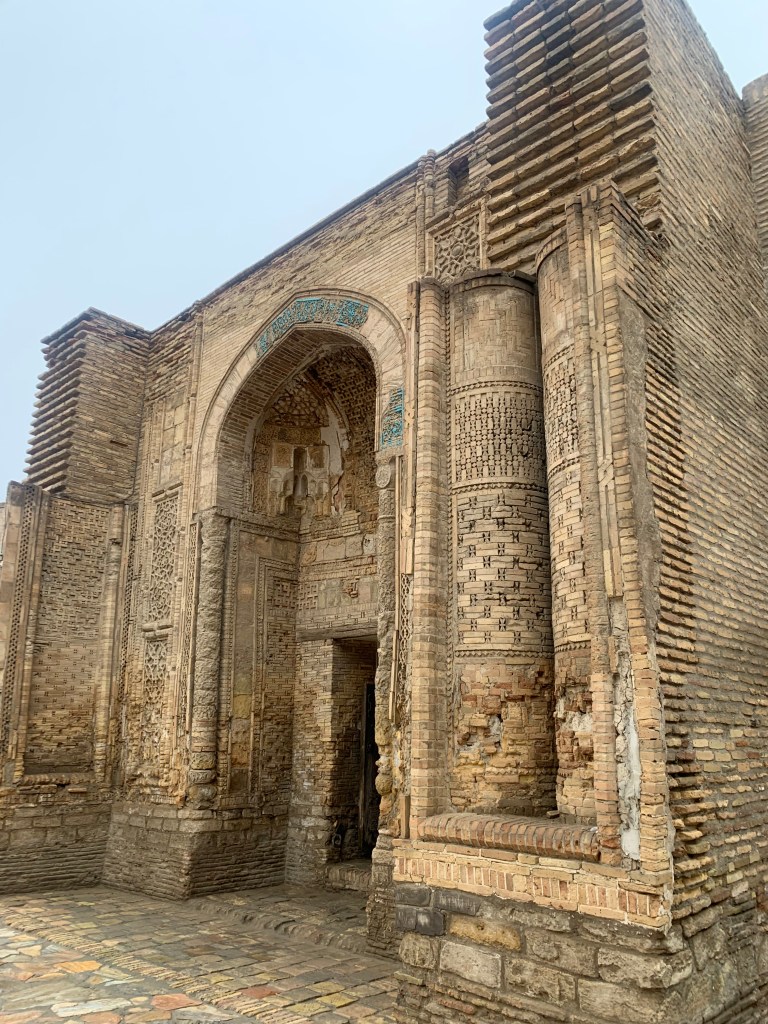
    The oldest mosque in Bukhara

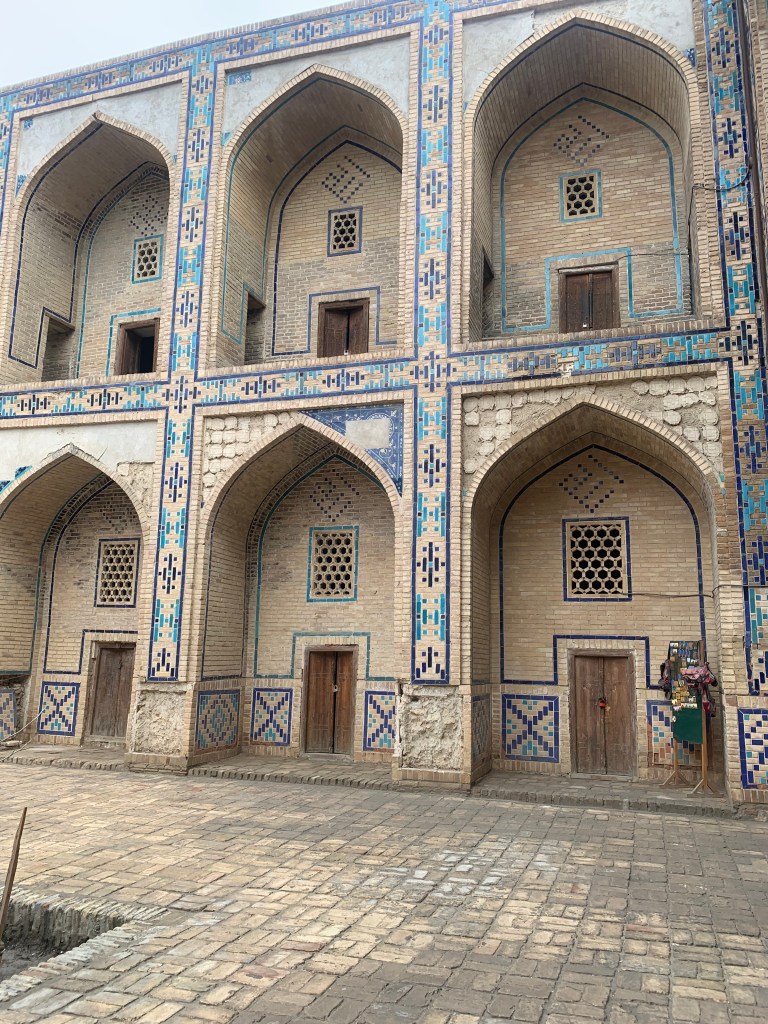
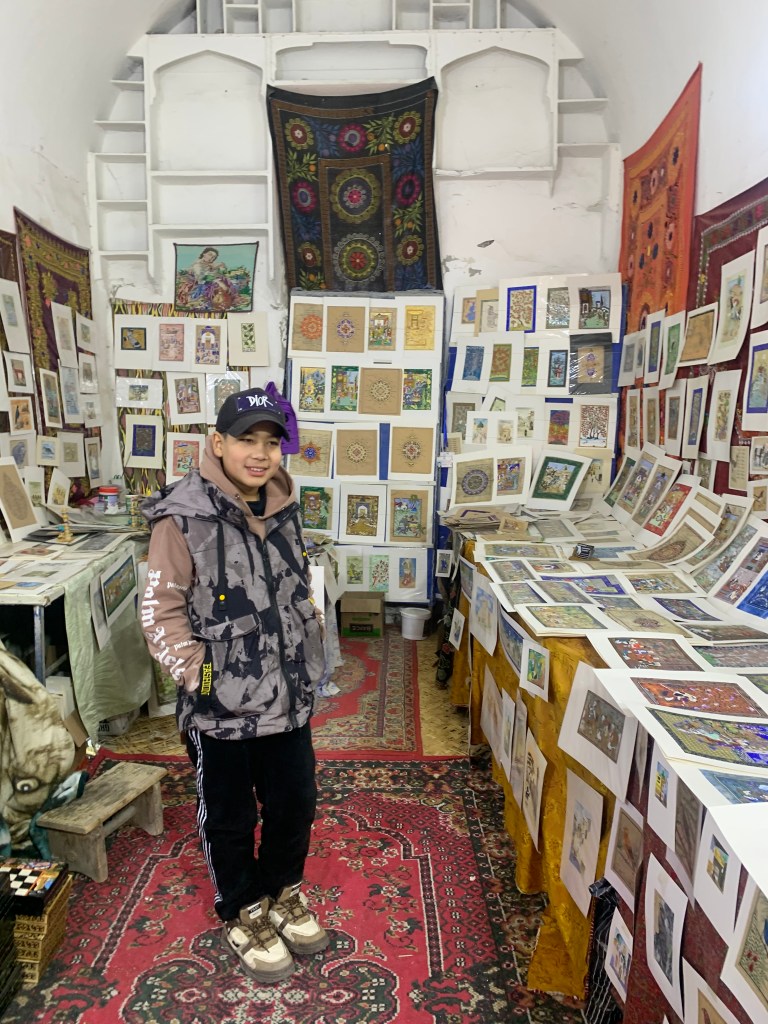
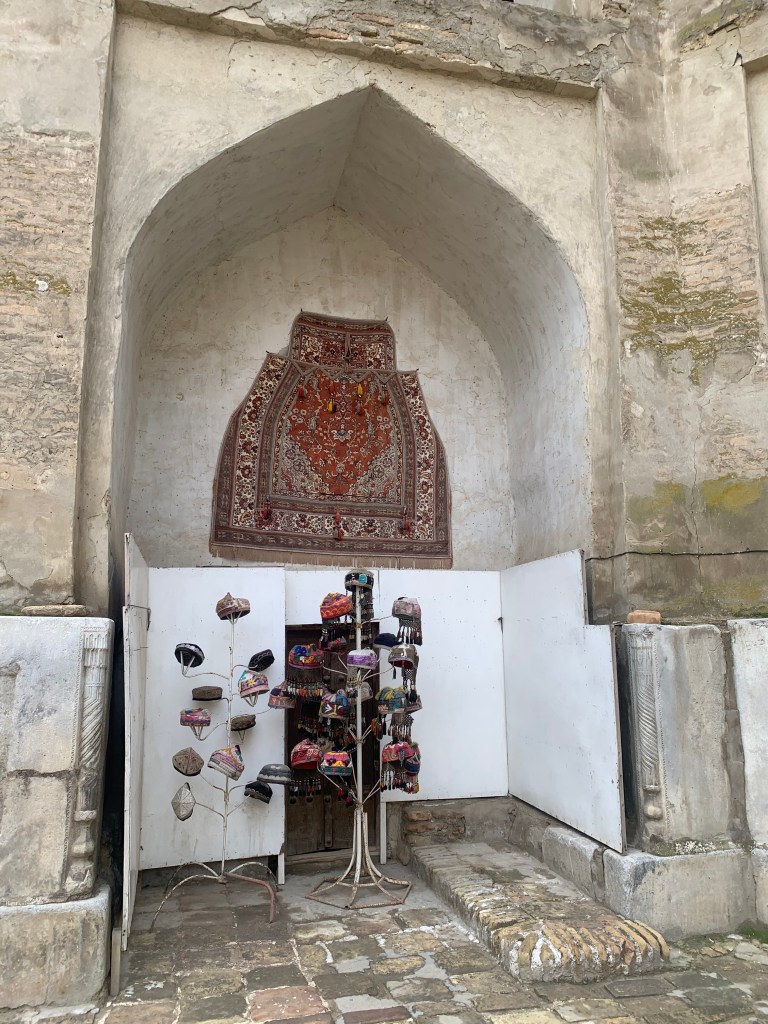
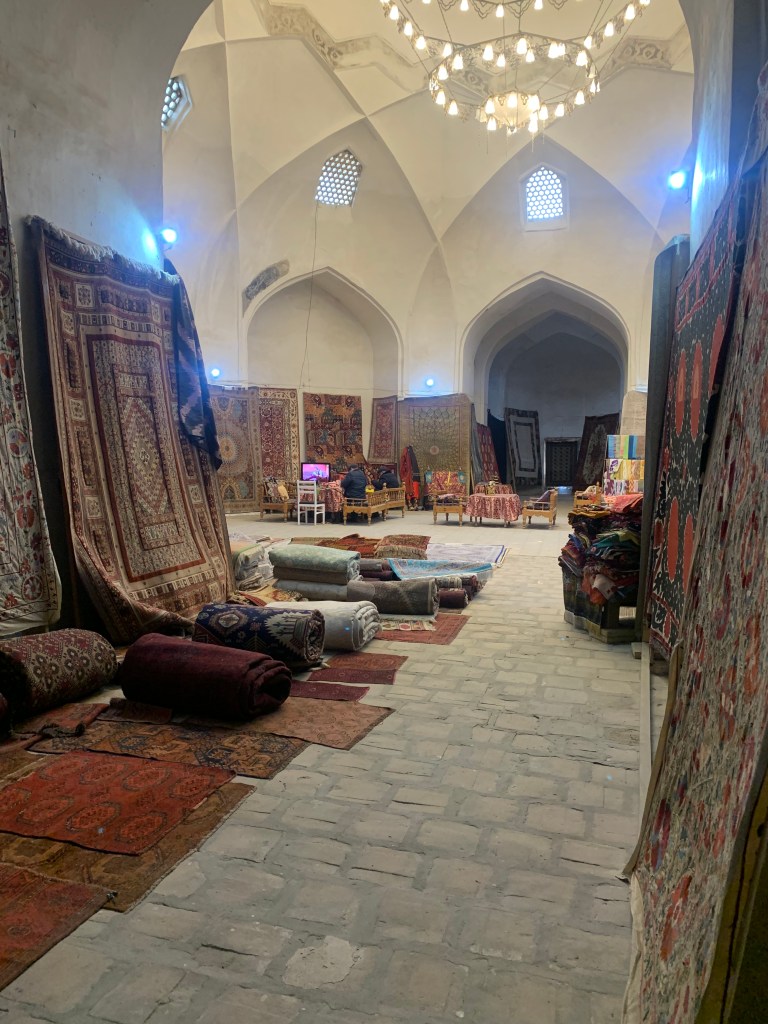
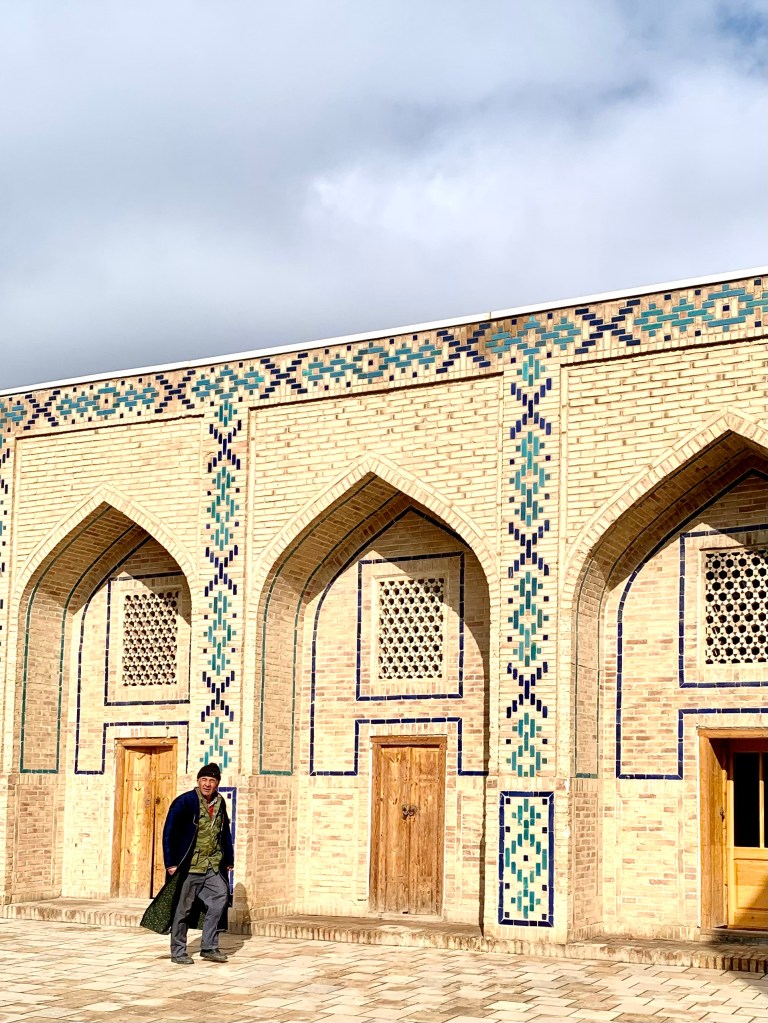
    Most of the students’ rooms in the old madrasahs are now crafts and souvenir shops. Silks, embroidery, miniatures, tat, books, gold, silver and copper, hats, ceramics. (Some old madrasahs still use the spaces for learning, but most are now given to tourist trade, an important part of the local economy. Though people are quick to point out that (new) Bukhara is a thriving town with a variety of industries and enterprises.)

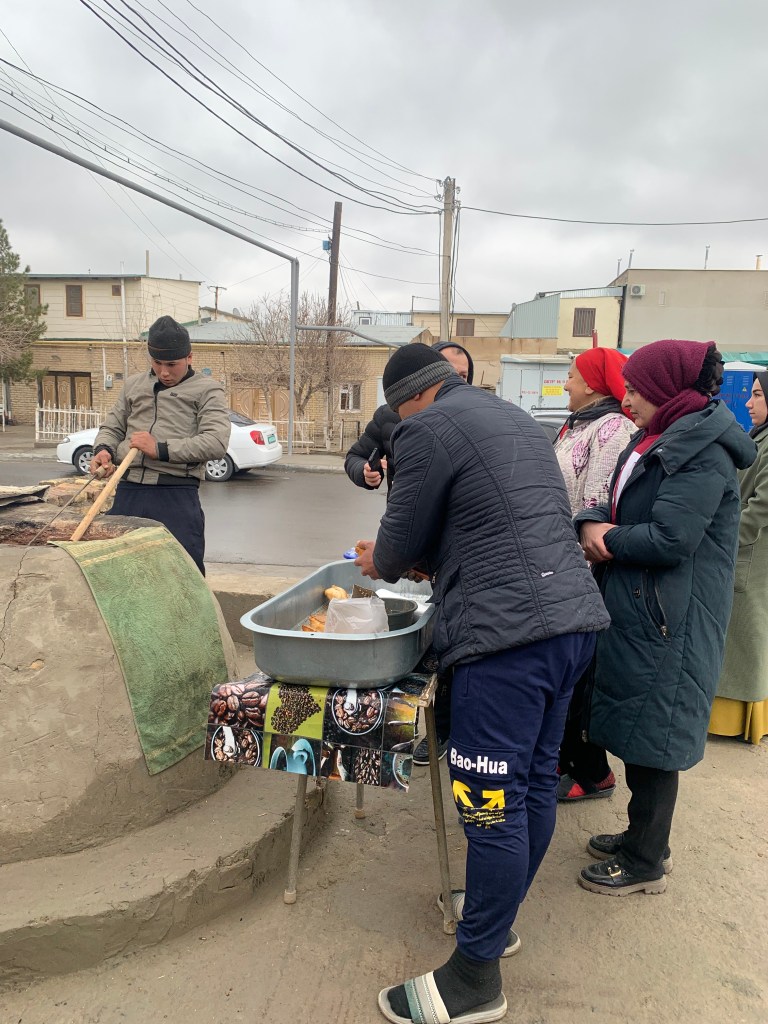
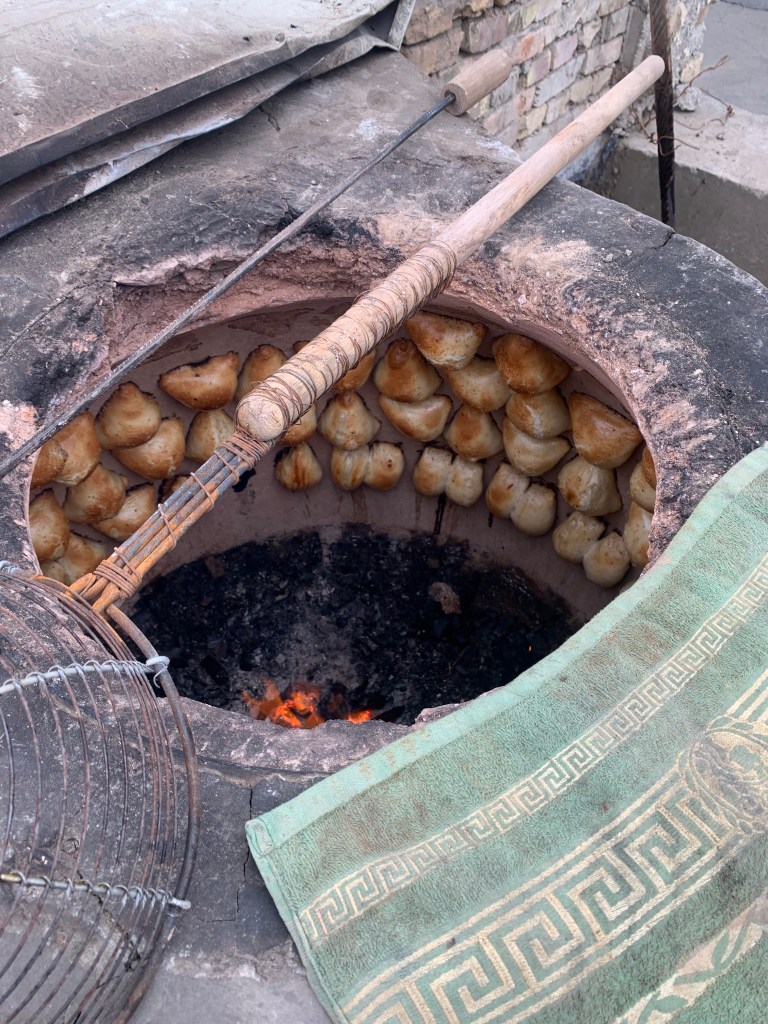
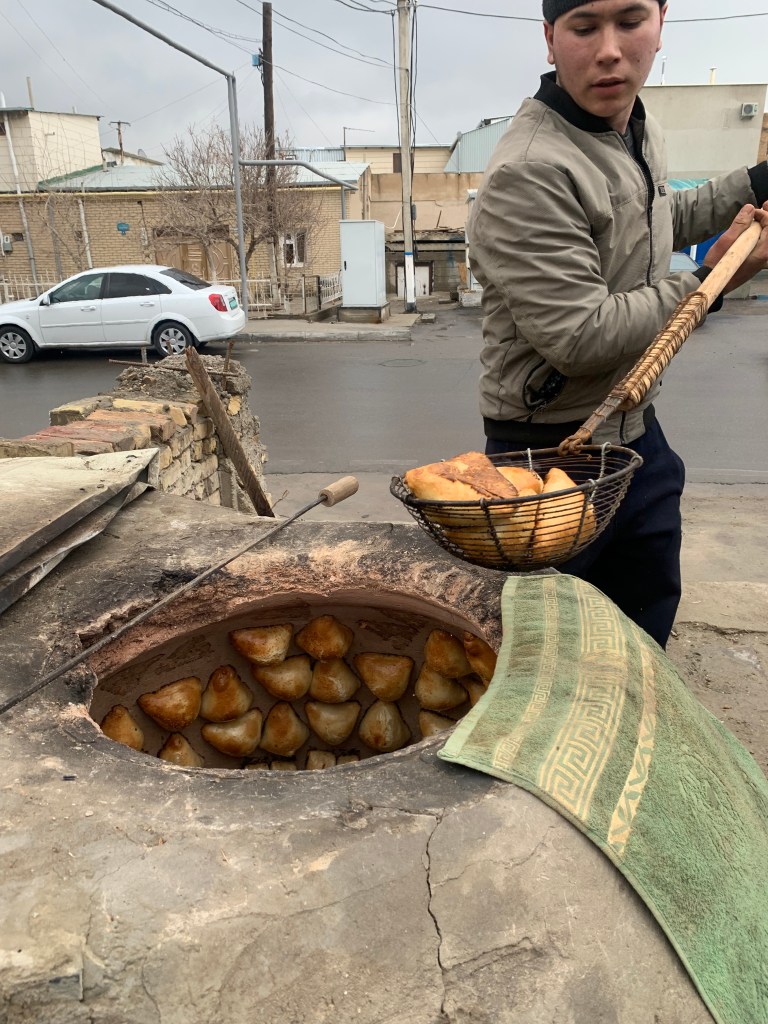
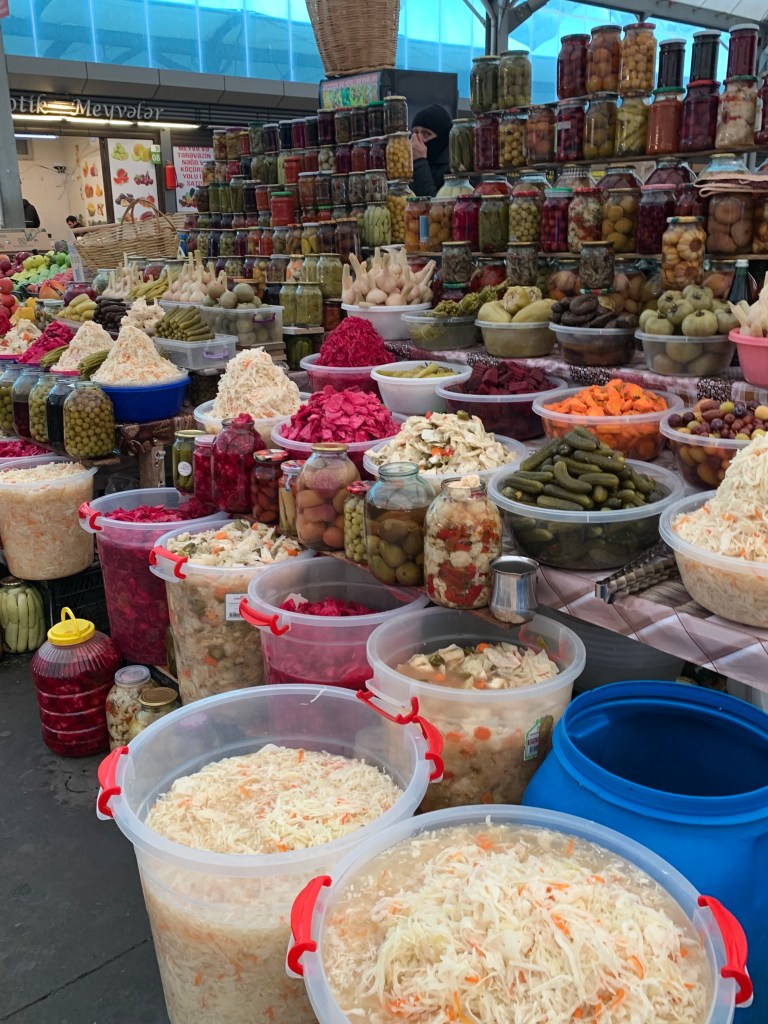
    Uzbek food is quite rich – lots of meat and dairy, very tasty breads, lots of pickles and dried fruit (in winter), plenty of nuts and seeds. And ubiquitous chai. Samsa, the Uzbek pasty (beef, chicken, mutton, potato or pumpkin filling with onion and spices), is available on many a corner at lunchtime: the earthenware round ovens (tandir) are fired up in late morning and the queue forms quickly once the samsas that have been slapped onto the hot sides of the oven start being scraped off.

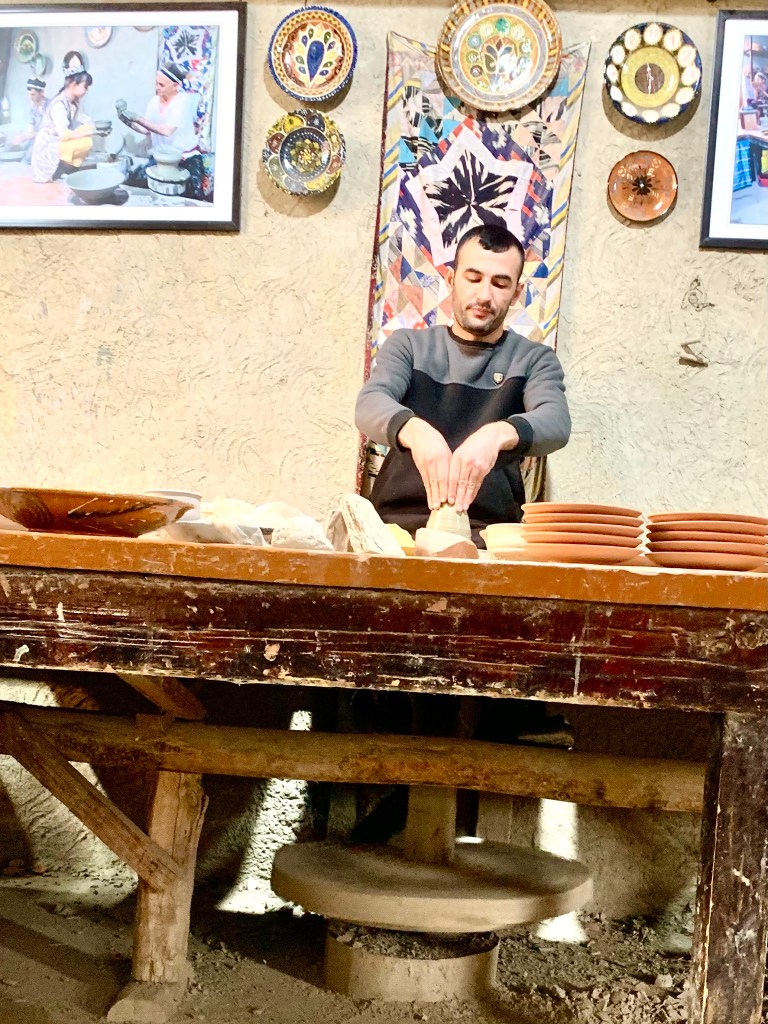
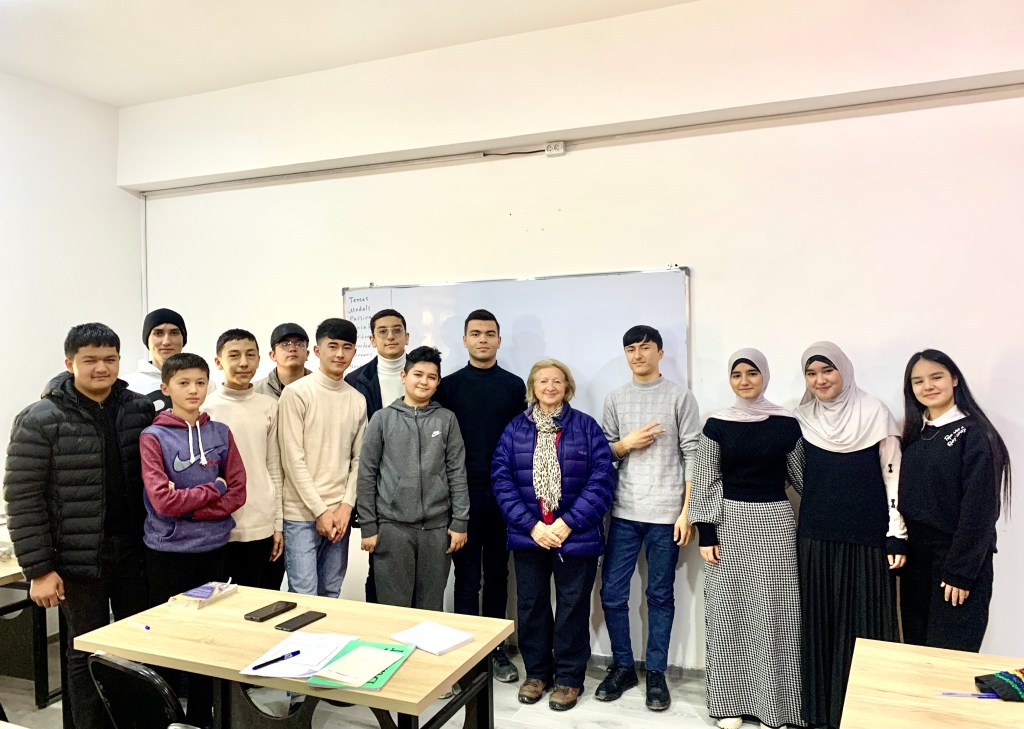
    On a day trip out of the town (very flat landscape – after all, Bukhara was an oasis in the desert), besides the impressive mausoleums and places of pilgrimage, the Khan’s lovely summer palace with peacocks strutting in the garden, there was a ceramics workshop that has been in the same family for 300 years – they somehow even managed to carry on during the Soviet era when private enterprise was not encouraged. They still use the same techniques in making the ceramics, including powering the potters’ wheel with their foot. The family is moving with the times though – they have a language school upstairs and I met a group of students learning English. Very polite and a bit shy, but it didn’t take them long to ask if I had an Instagram…

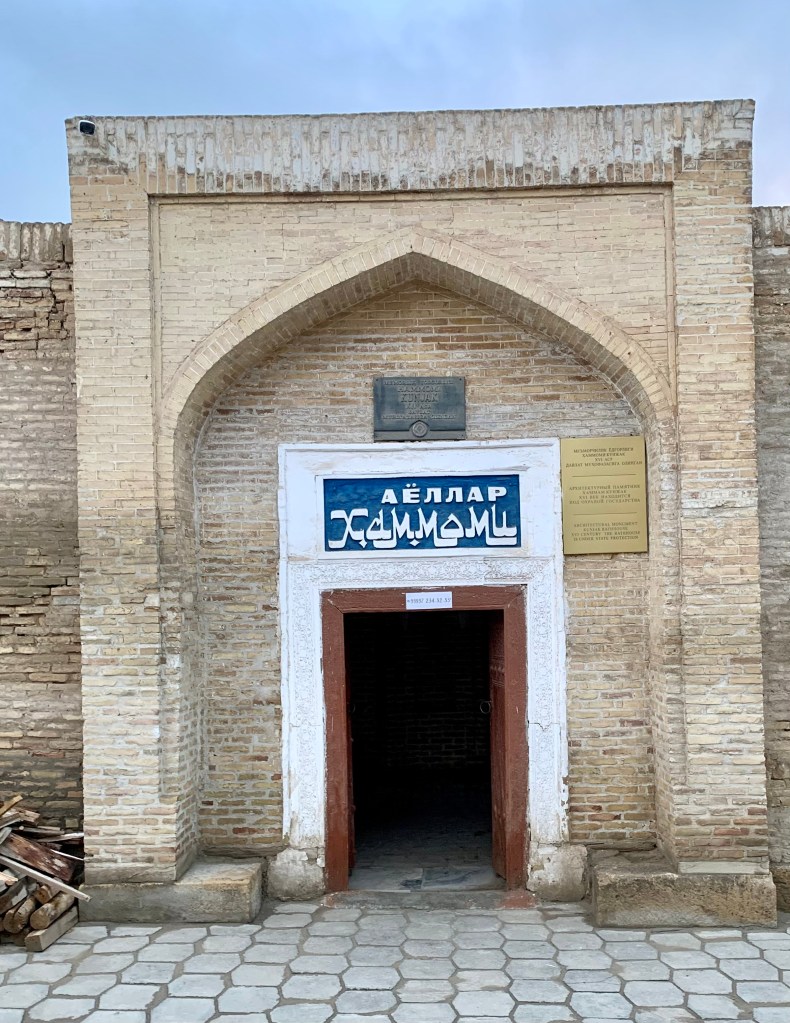
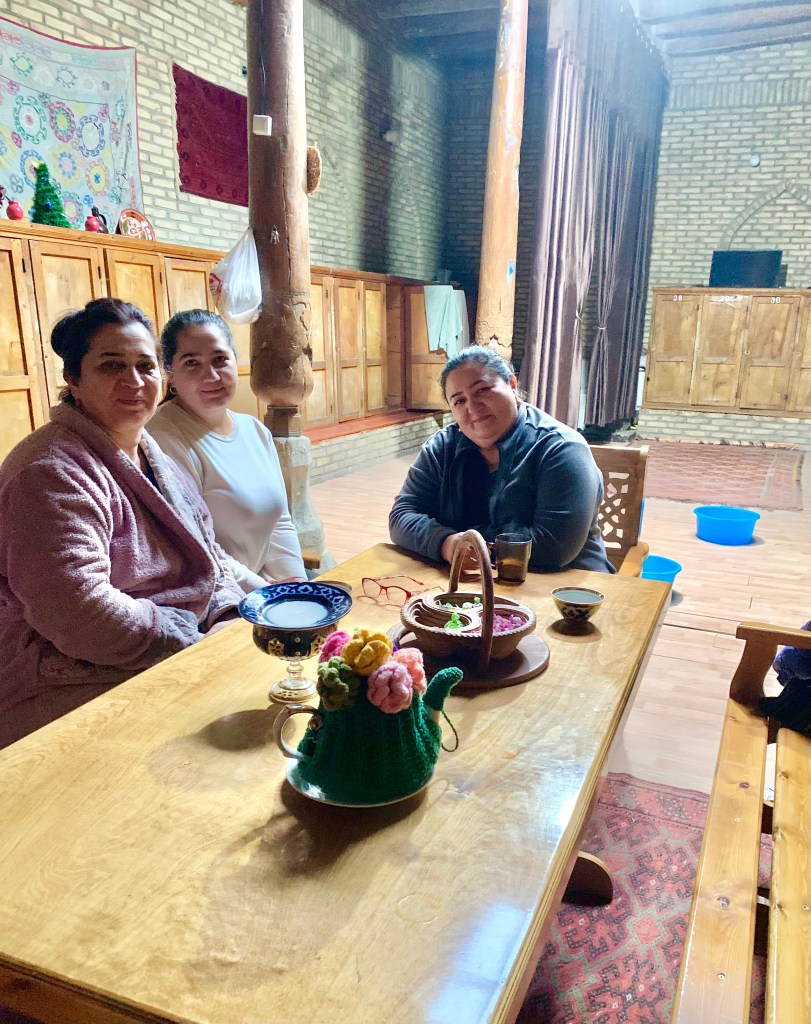
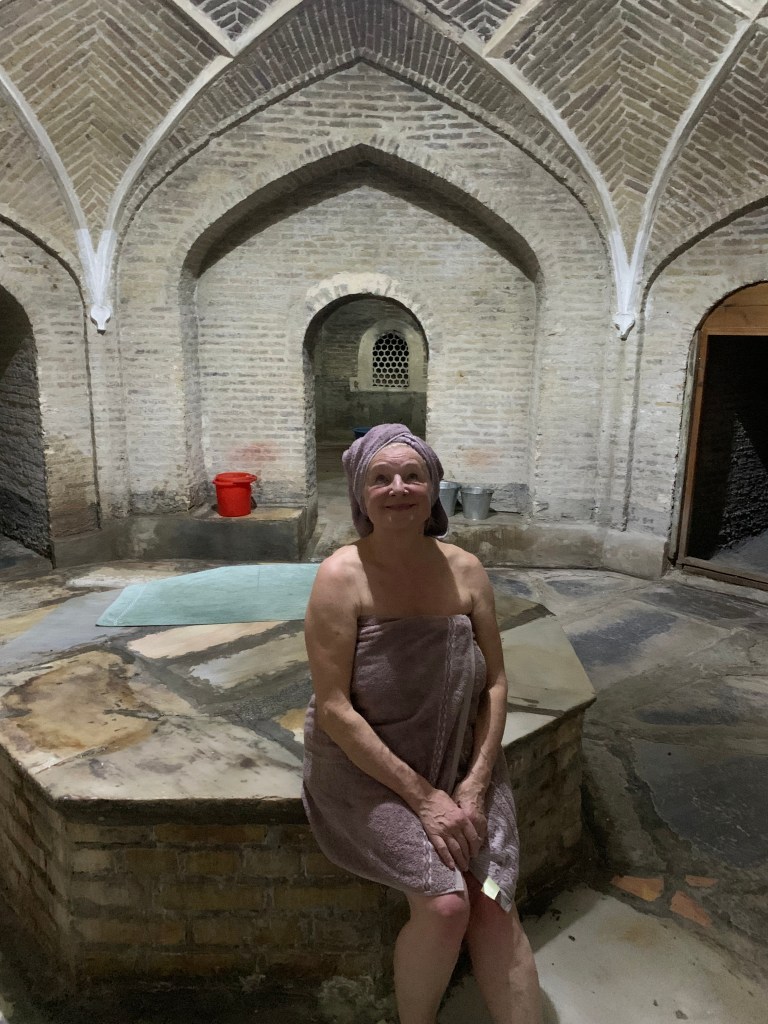
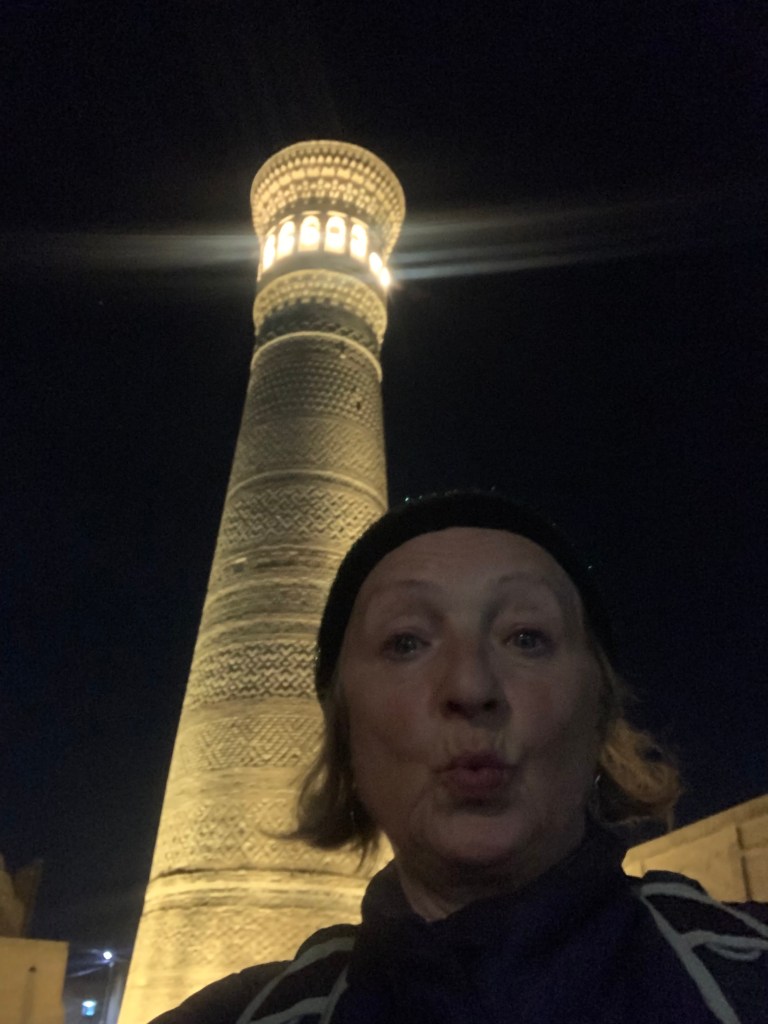
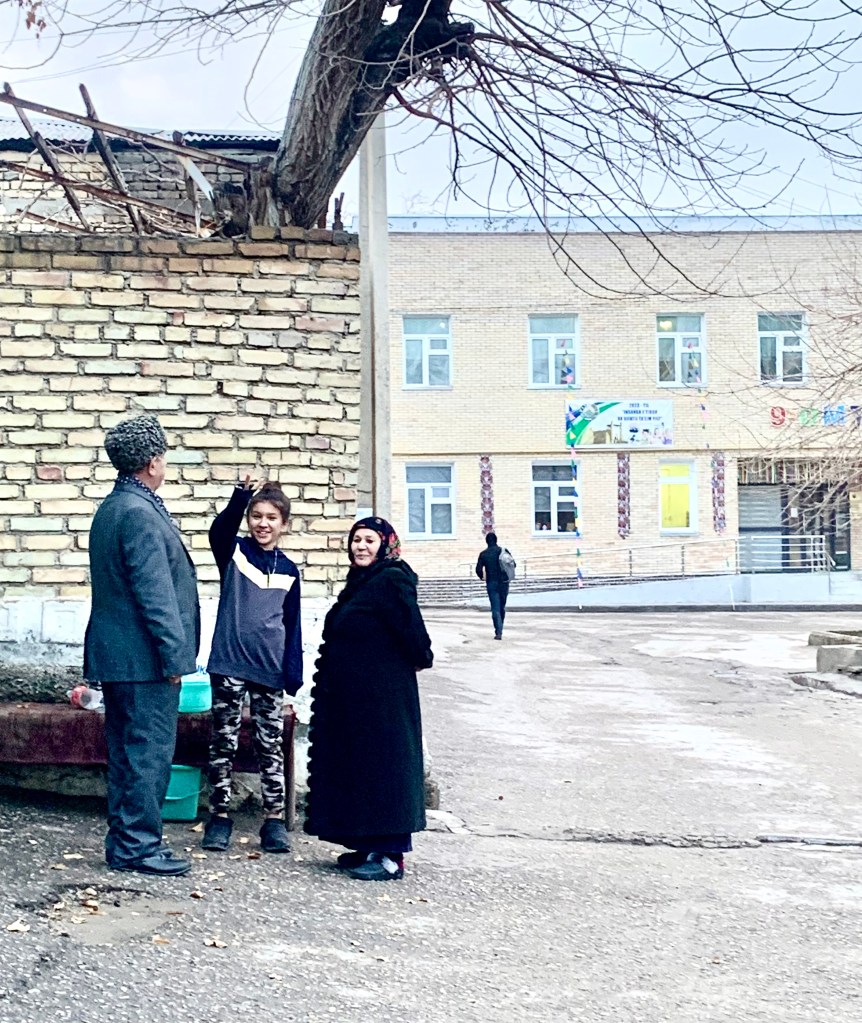
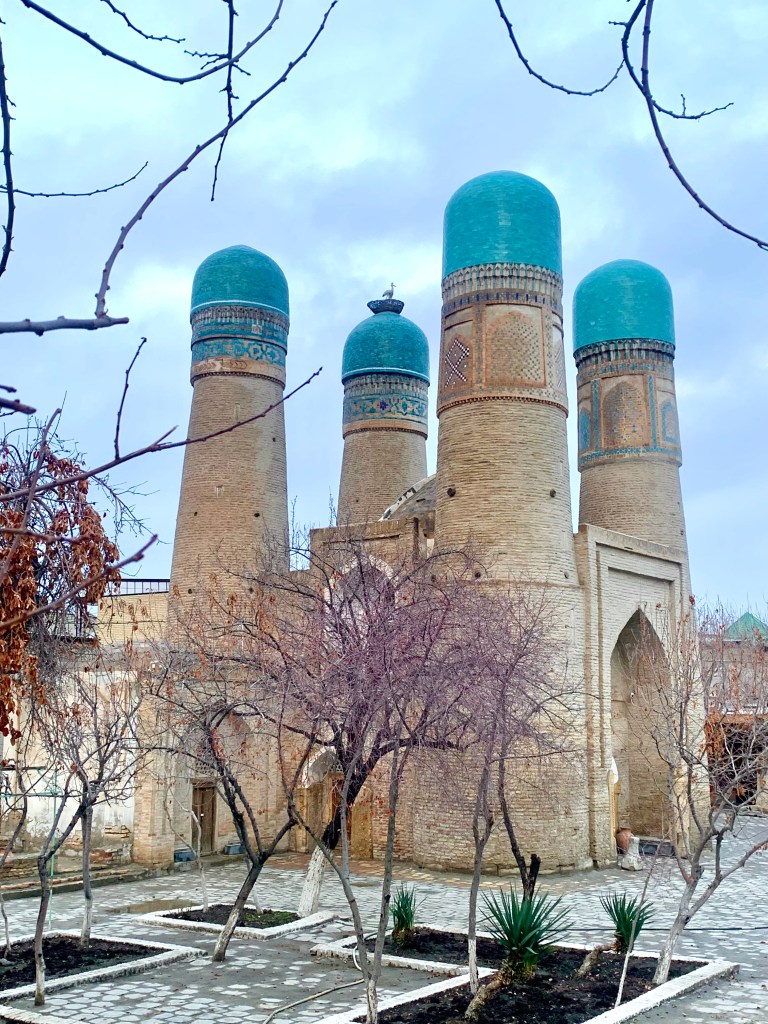
    I did enjoy the hamam. Tucked away behind the giant minaret, it has been serving women of Bukhara since the 1500s. (There is also a men’s/mixed one, from the same period.) I came at the right time – no other customers – and Mahfuza took her time to sit with me and was wonderful in explaining the role of the hamam in women’s life in the past – a club where women could discuss matters freely, where young women were prepared for marriage, pregnancy and after birth care and also where Khan’s harem candidates were spotted. I took a walk afterwards, and near the Chor Minor madrasah (The 4 brothers) a girl with her grandparents asked me (in English) where I was from, how old I was, if I liked Bukhara, did I have children… she was clearly gifted – she has only been learning English for a year…:)

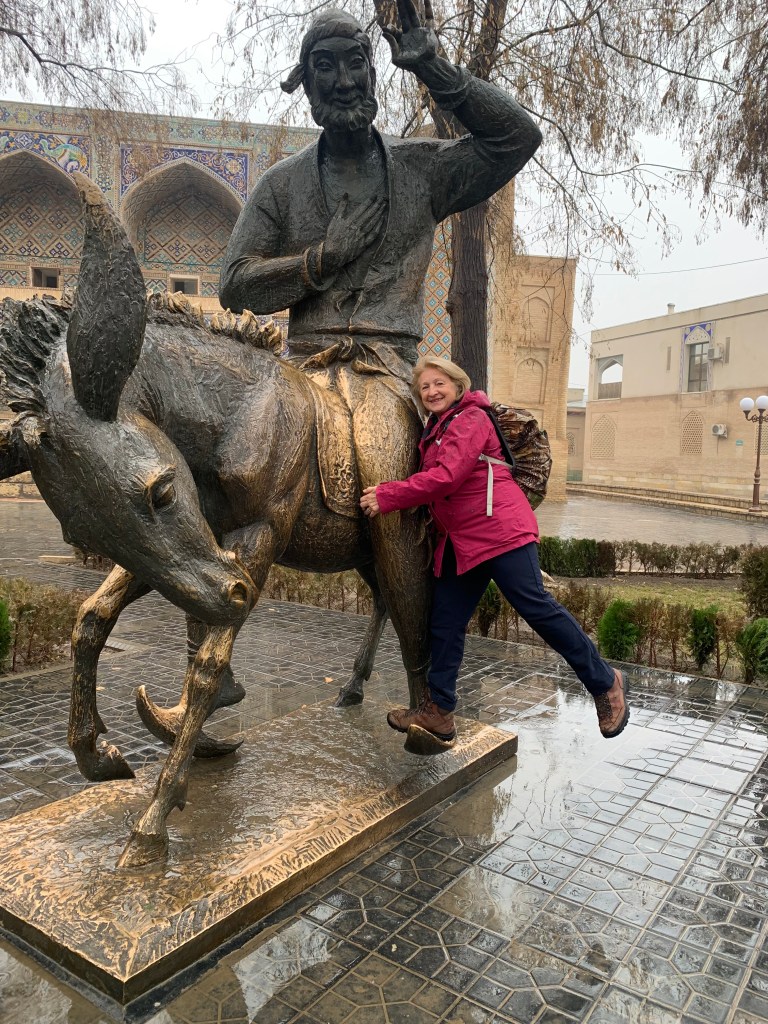
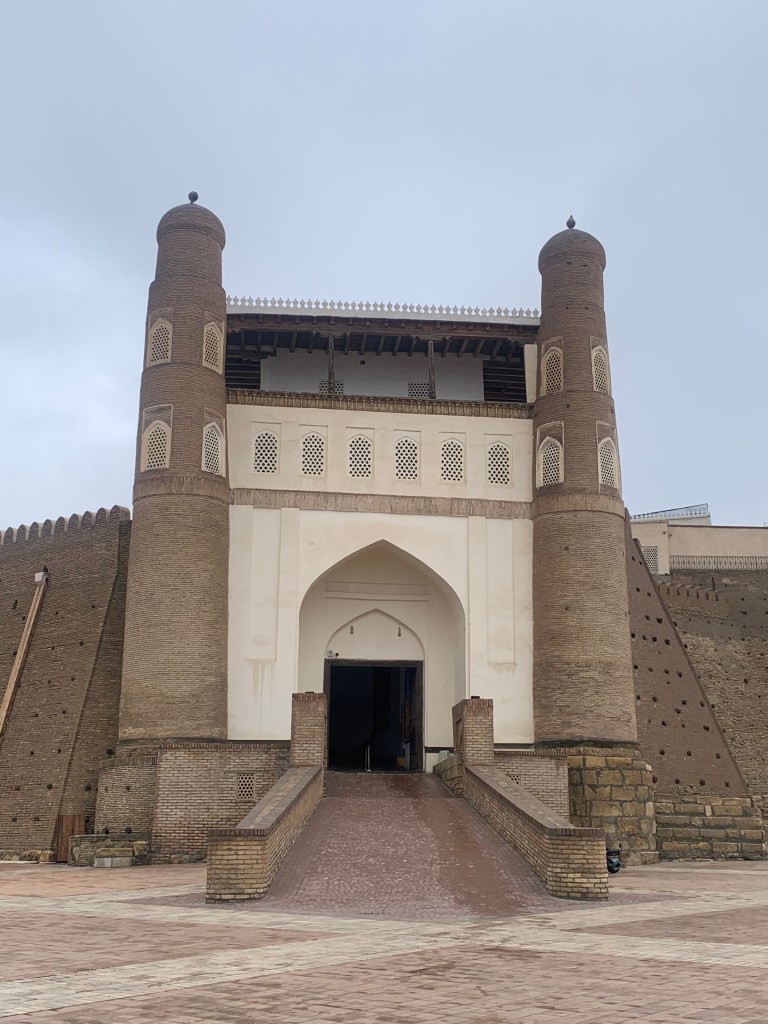
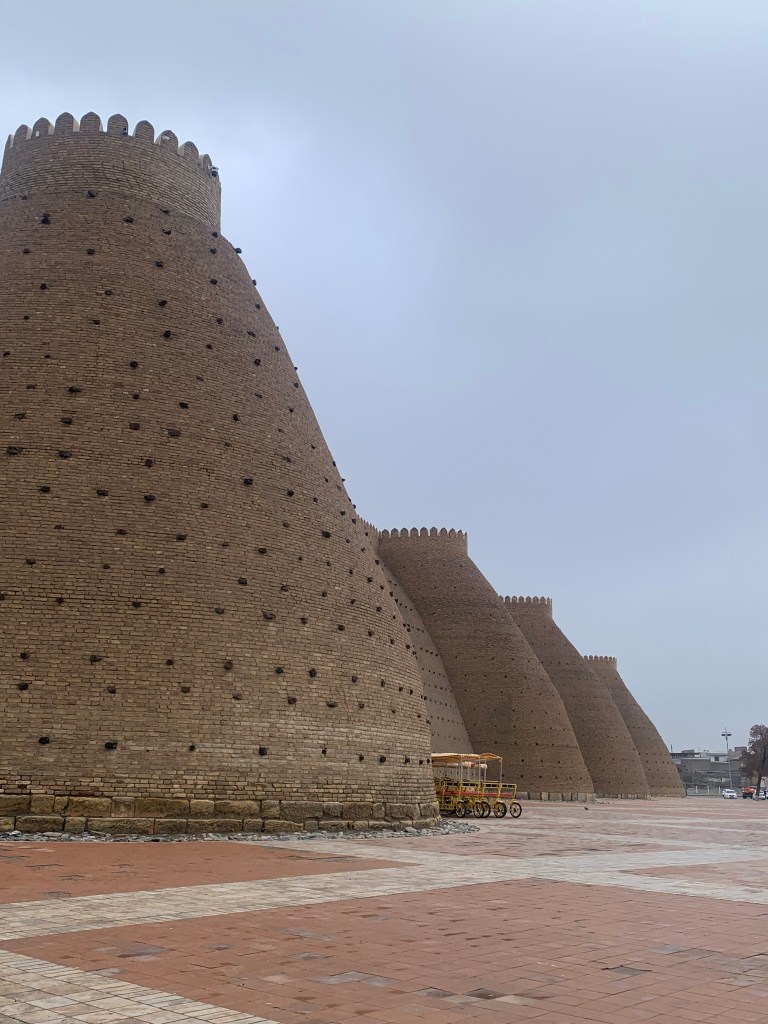
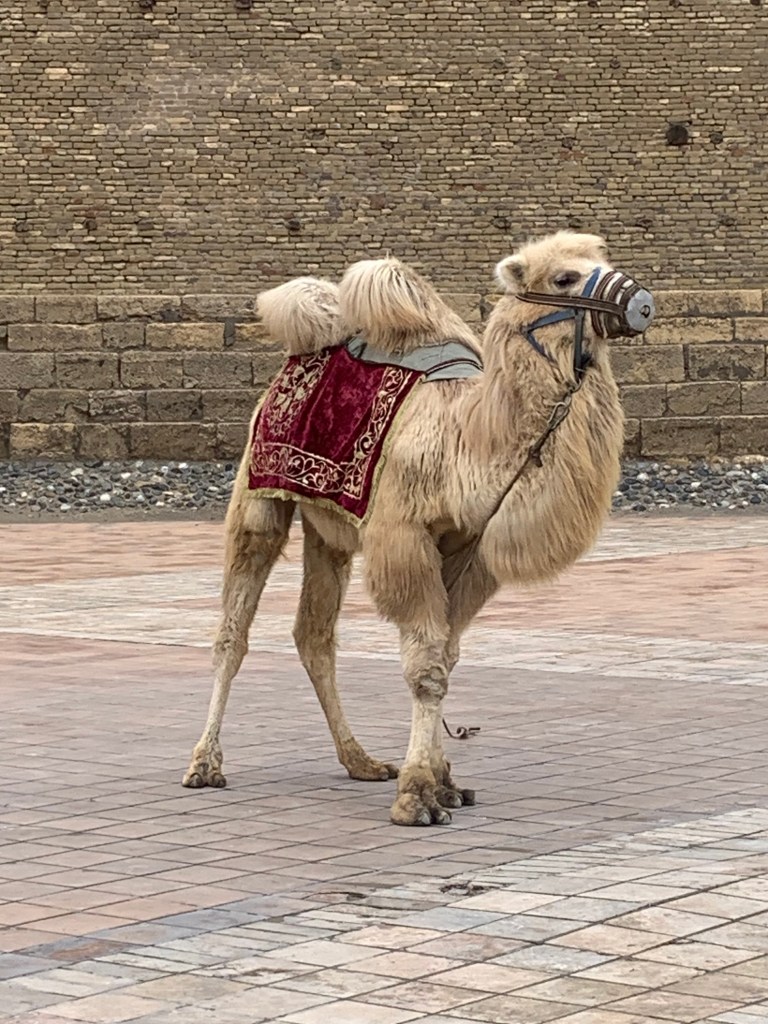
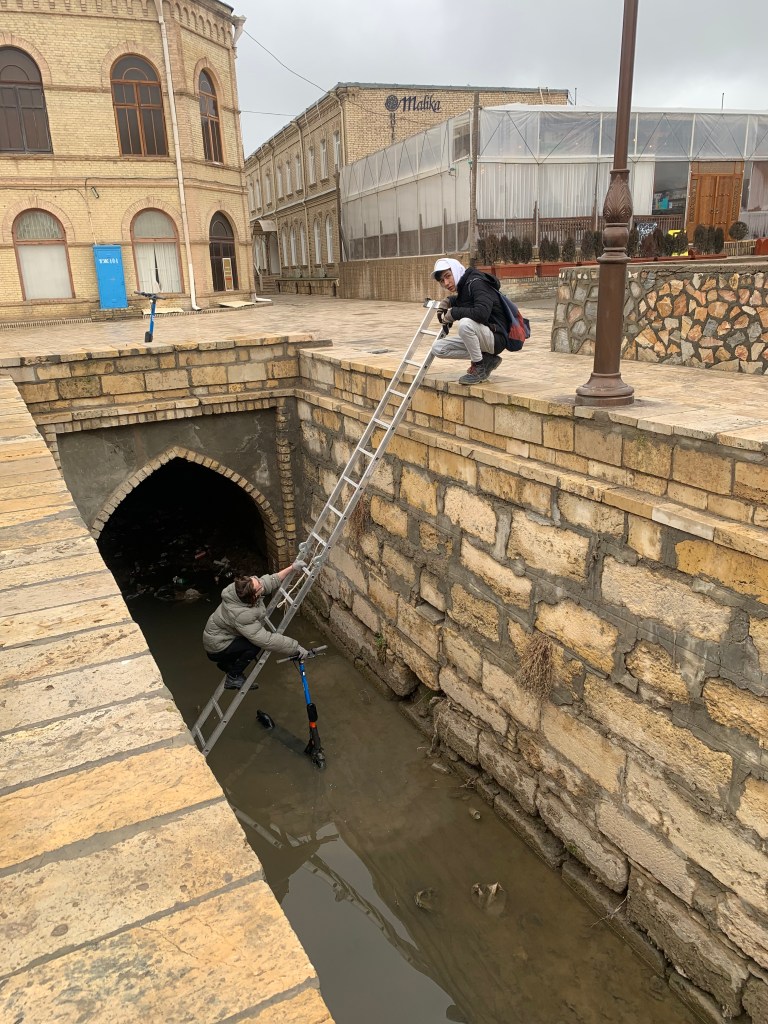
    These last two images: one saddened me – the camel in front of the Bukhara Fort, looking out of place, muzzled, there for us to climb on and have a photo taken. The A frame ladder didn’t make it into the photo.) The other amused me – here, too, someone threw the scooter into the canal. Getting it out was not easy – too heavy to lift with one hand, so they had to go fetch a rope…)

  • Samarkand

    Feb 3rd, 2024

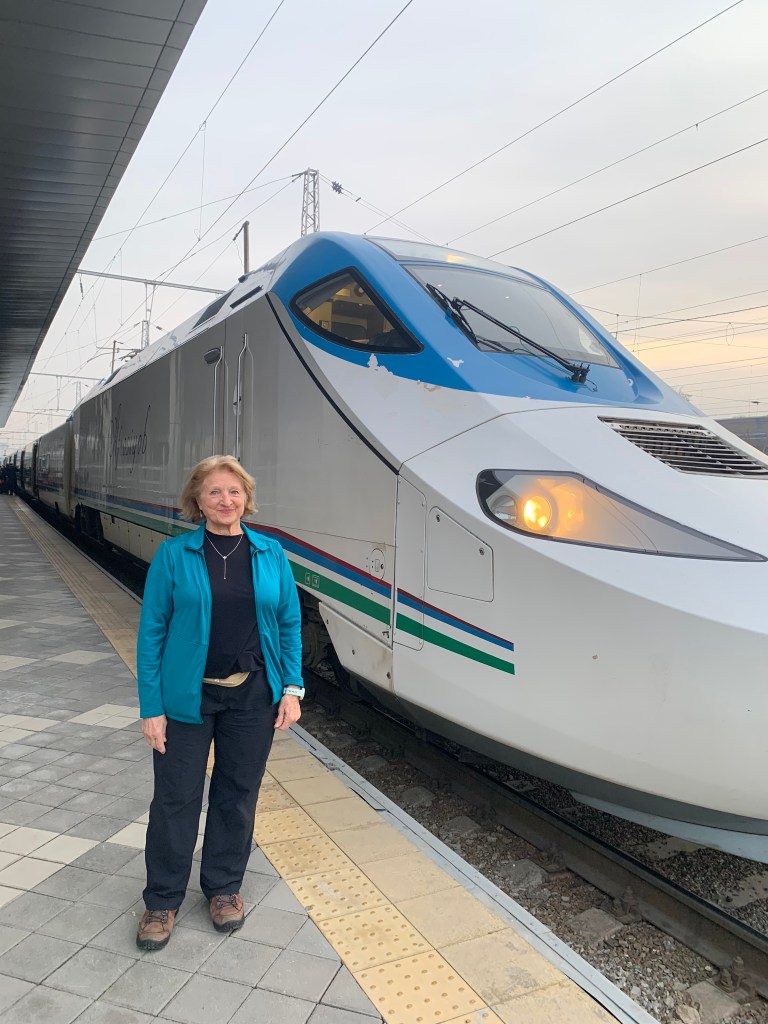
    The fast train from Tashkent to Samarkand takes just over two hours. A comfortable journey, with staff welcoming you at the door of every carriage (and checking your ticket), very much like an airline crew would. The trains get booked up very quickly, even in winter, and I dread to think what it might be like in high tourist season. Tickets are wonderfully cheap – long may it last – about £13 one way to Samarkand, then £9.60 to carry on to Bukhara. I shall also be taking a sleeper (at an ungodly 03:50, a night train that starts in the east of the country) to Khiva, a 6,5 hour trip, for £13. 

    The Afrosyab fast train
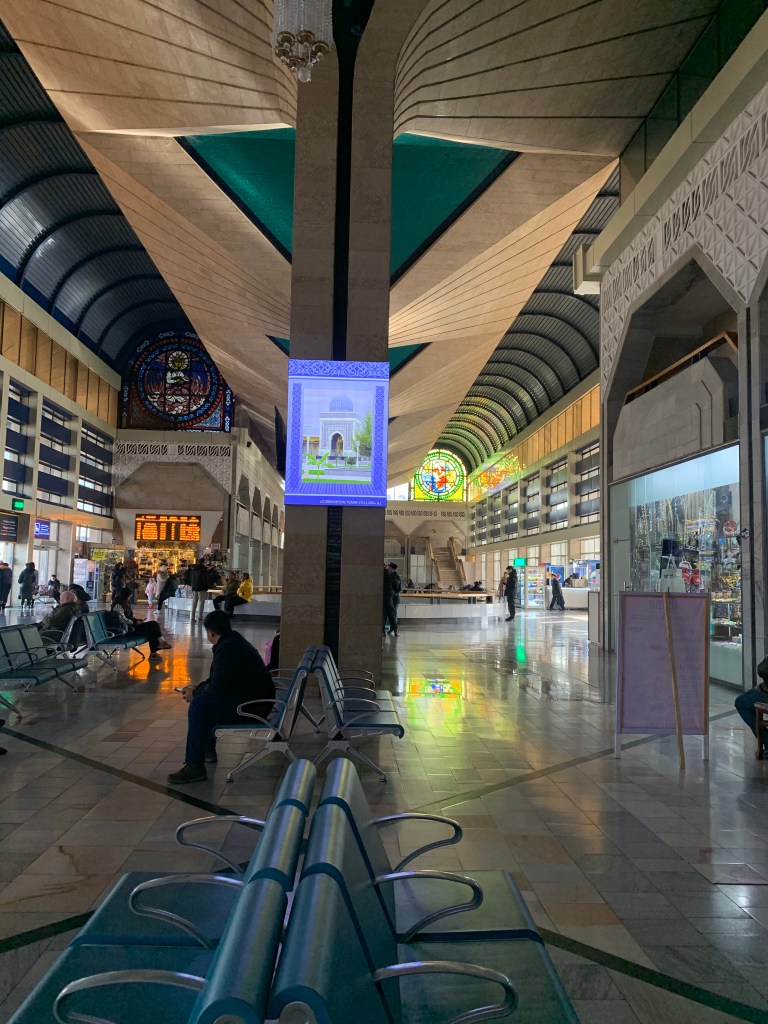
    Samarkand train station
    Gur-Amir, Samarkand

    The Bolshevik revolution and subsequent Soviet rule were not a blessing. However, the railways built across the USSR, linking all 16 (former Soviet) republics, made an immense change in the cultural and economic landscape of Central Asia. The rail tracks are still in place, but a number of them are not in use and often are not maintained. Local issues, long standing fights over territory, arbitrary rules, political unwillingness, make land journeys much longer as one needs to nip back into other countries. You have to go from Turkey to Georgia to get to Armenia (tantalising, seeing the border you cannot cross), then again to Georgia to get to Azerbaijan. The next bit of toggling will be going from Tajikistan to Kyrgyzstan, via Uzbekistan.

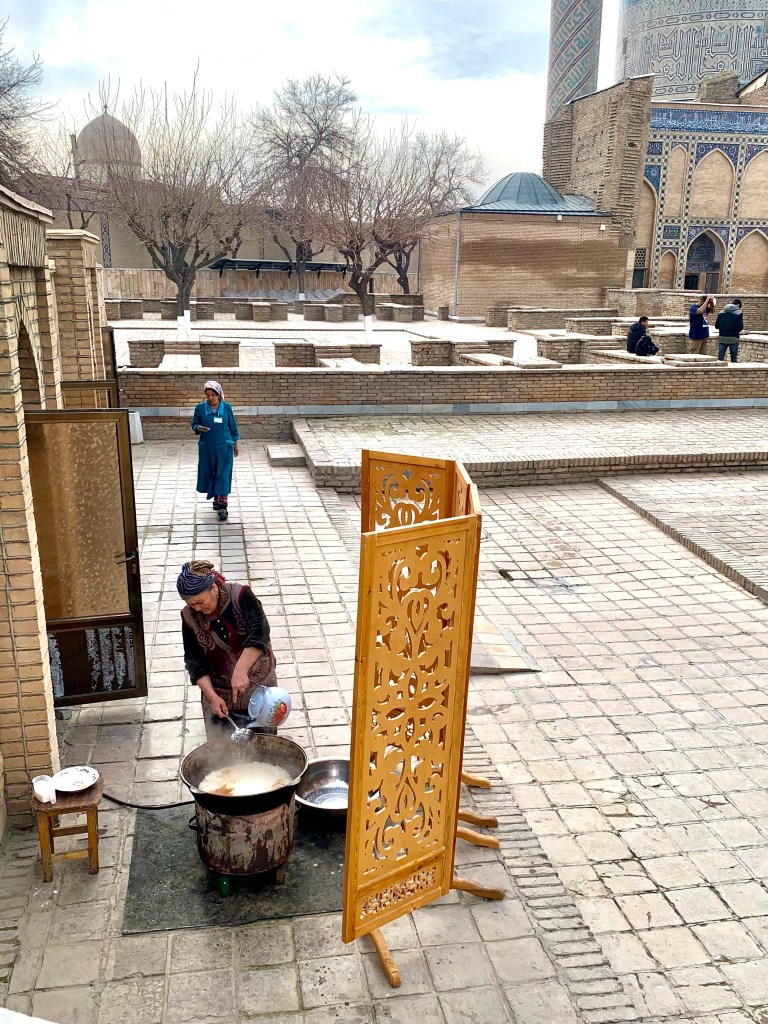
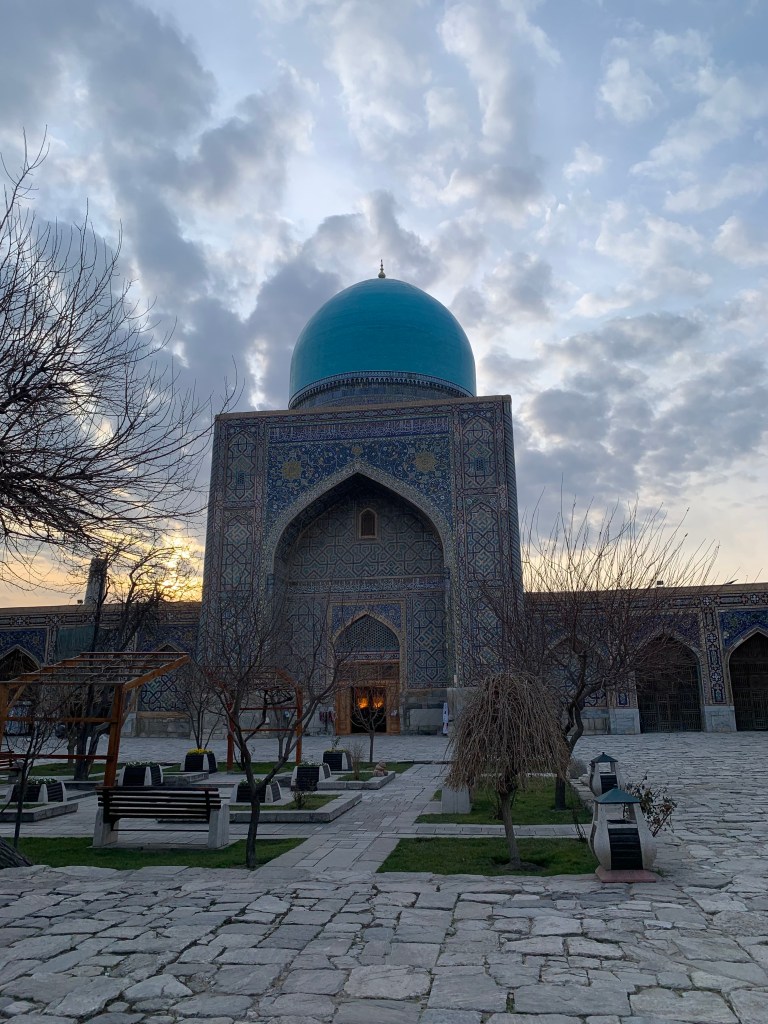
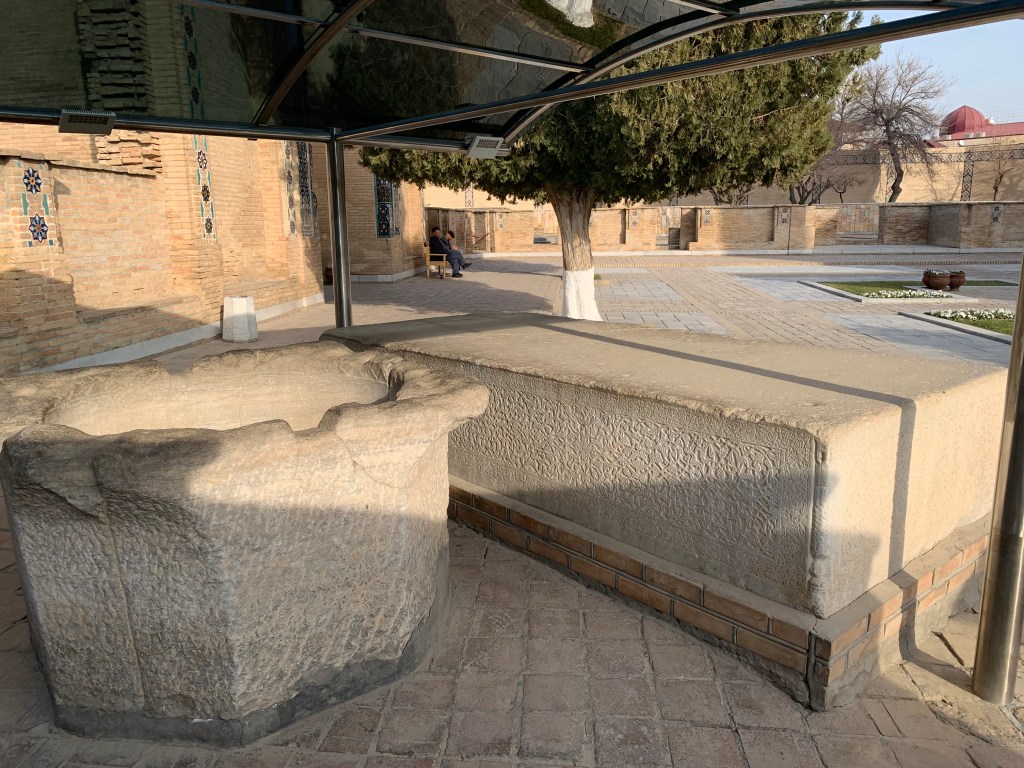
    Samarkand. Even the sound of the name has an exotic, magical quality to me. My little B&B was hugging the walls of Gur-Amir Mausoleum, a graceful building with a usual tall arched entrance, a courtyard, and the mausoleum itself where the jade tombstone of Amir Timur lies among other family tombstones. It was good to see plov (Uzbekistan rice, meat and vegetable dish – like a pilau) being prepared for lunch on one side of the courtyard of the Gur-Amir mausoleum; on the other side is the giant block of stone, thought to have been a pedestal for Amir Timur’s throne, and an immense font that would have been filled with pomegranate juice for his soldiers to drink.

    Making plov
    Pomegranate juice font and throne pedestal

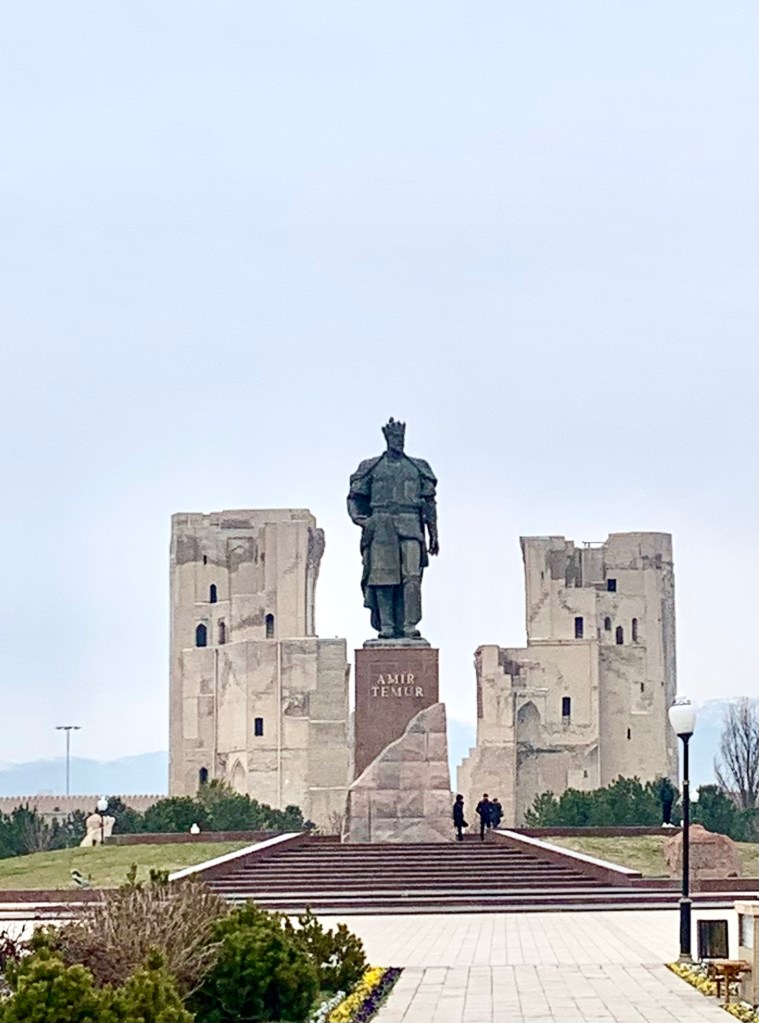
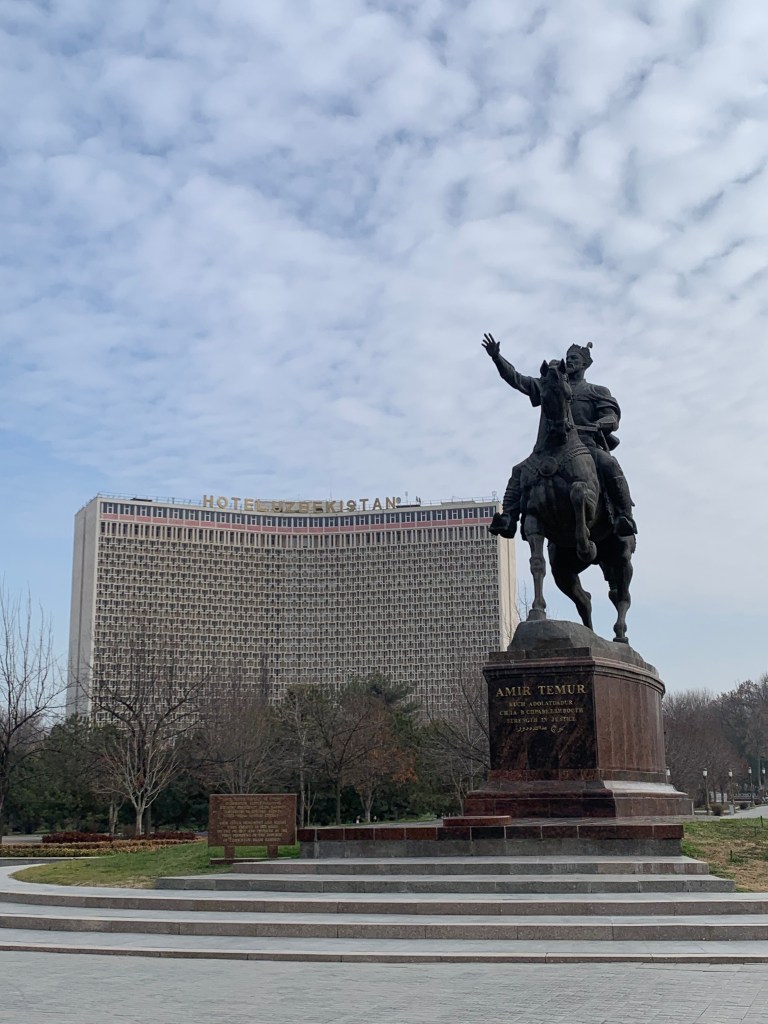
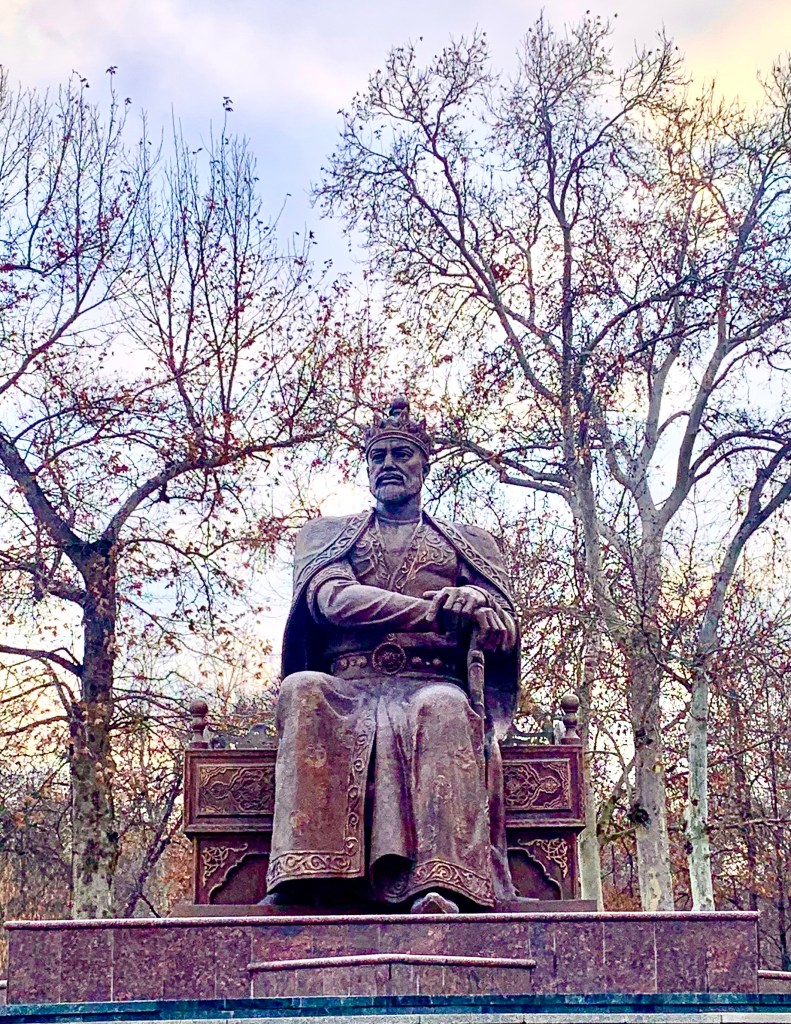
    Amir Timur desired to be buried in his birthplace, Shakhrabaz, but Samarkand had been his royal seat, and so others decided he would stay there. The guides tell a nice story about the way he is depicted in different places – in Shakhrabaz, he is standing – that’s where he rose; in Tashkent he is on a horse, for his victories, and in Samarkand, he sits, as this was his capital.
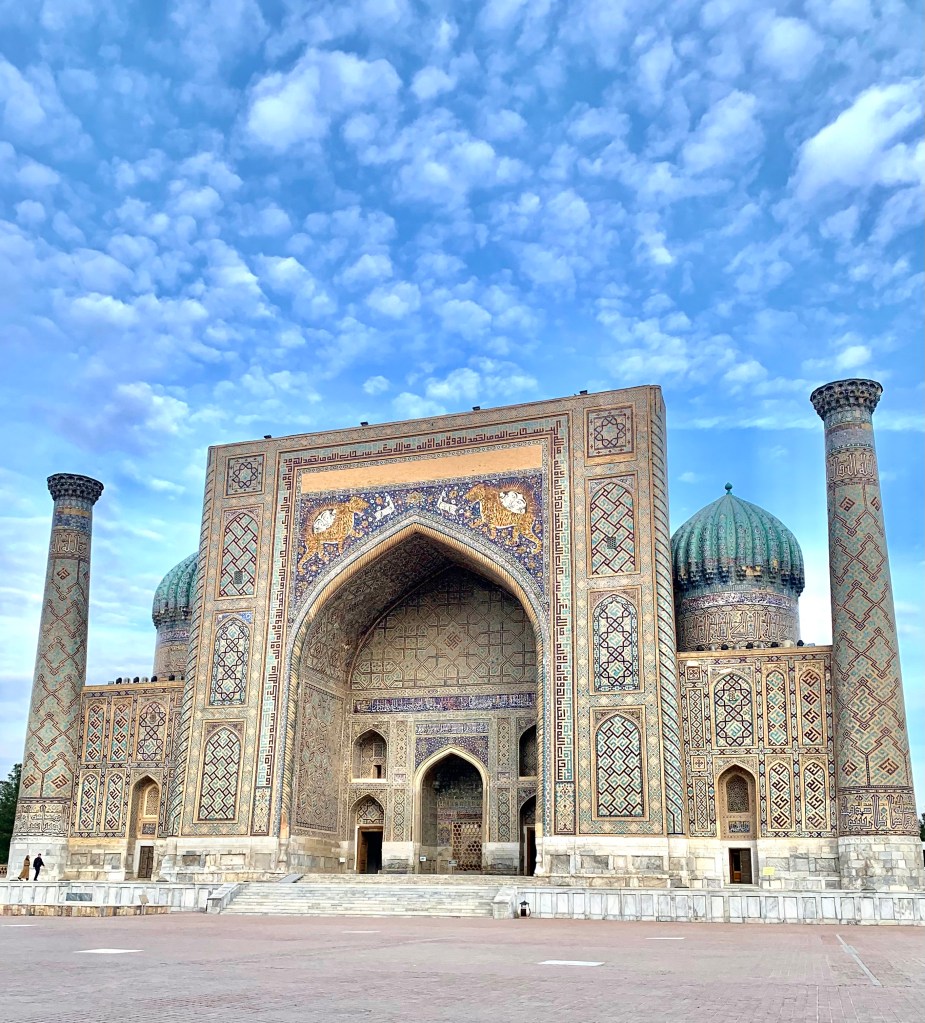
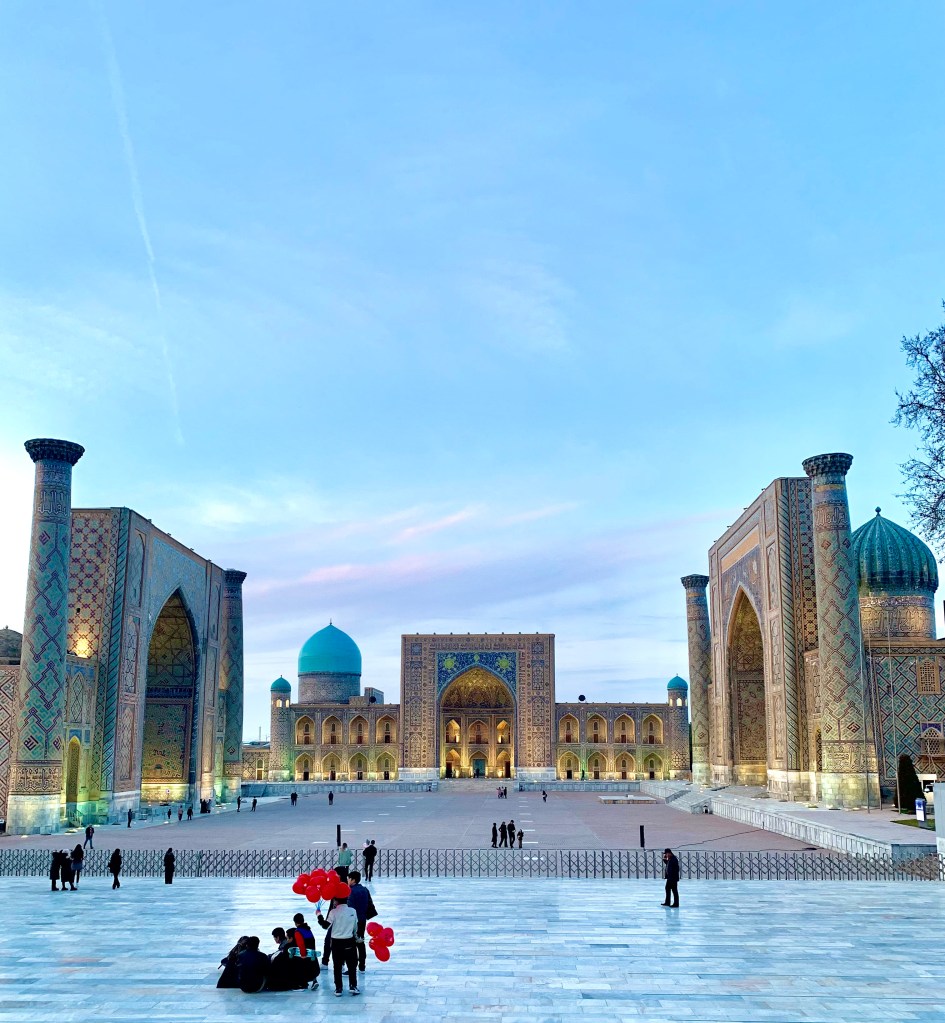
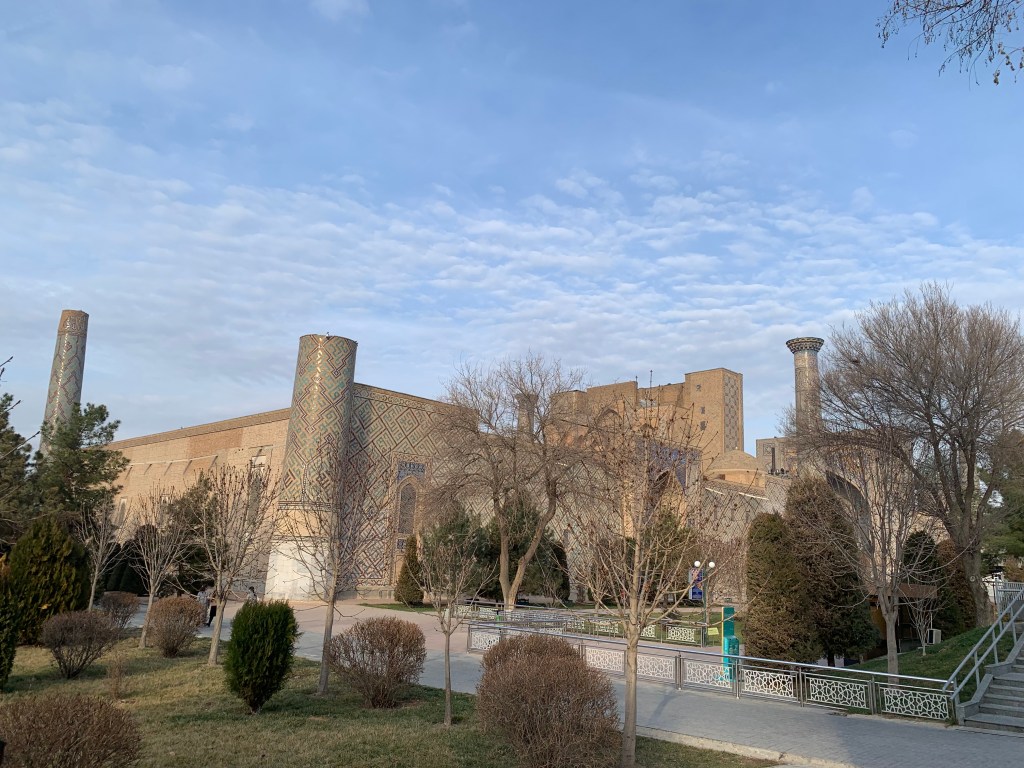
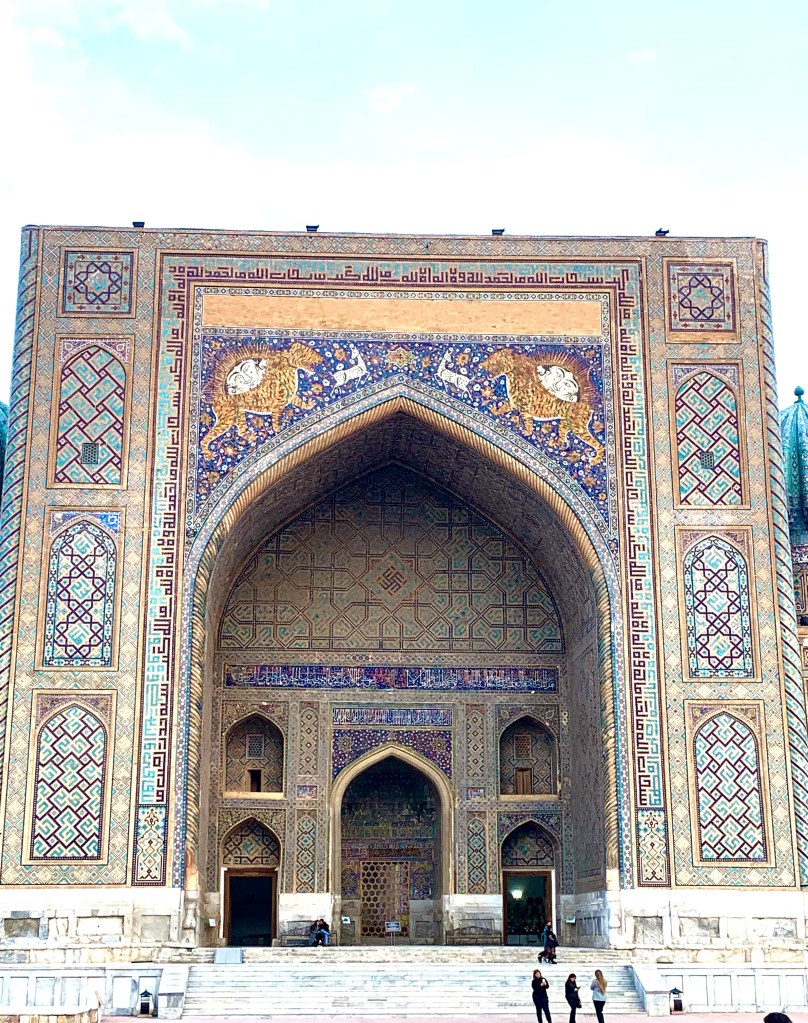
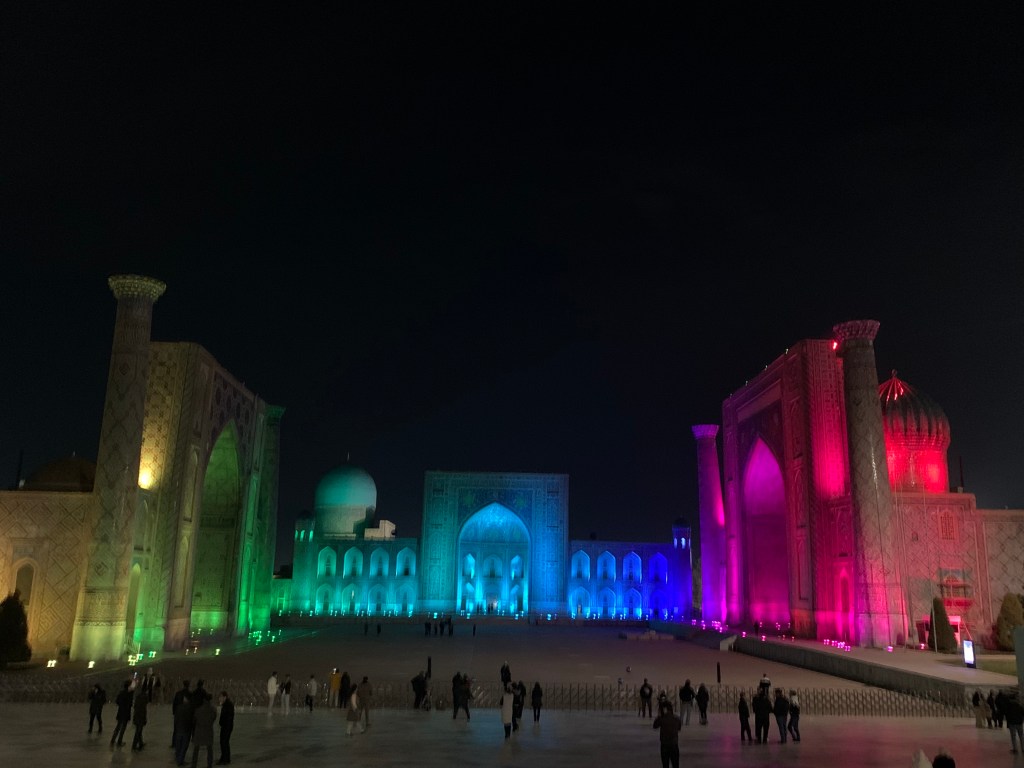
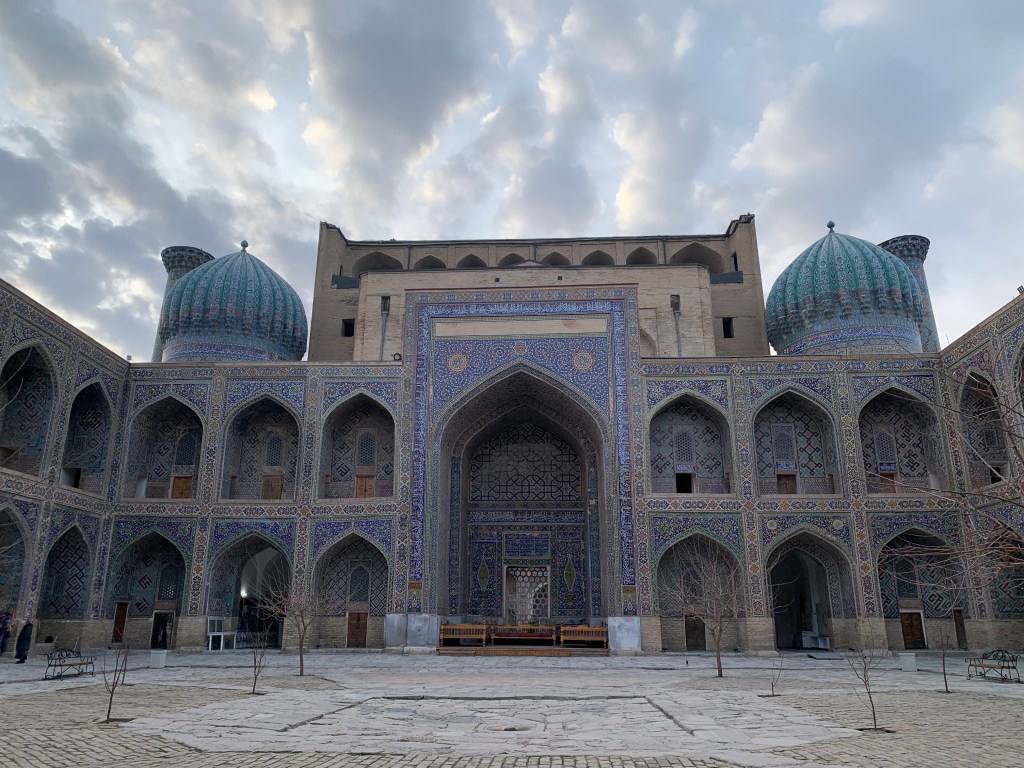
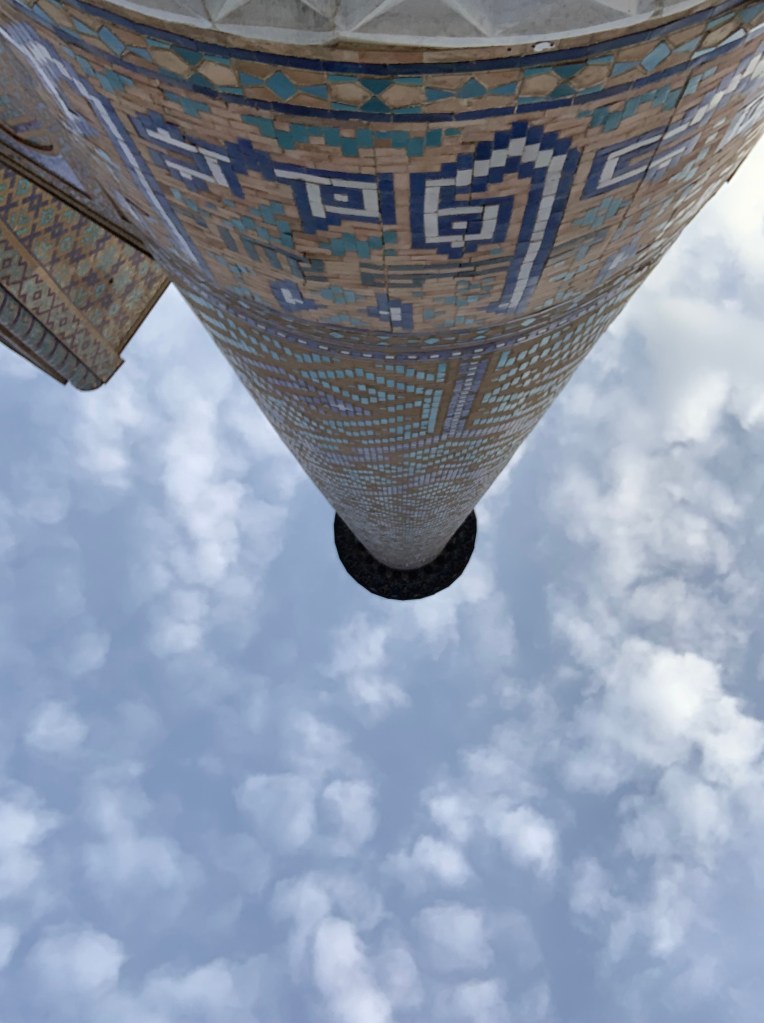
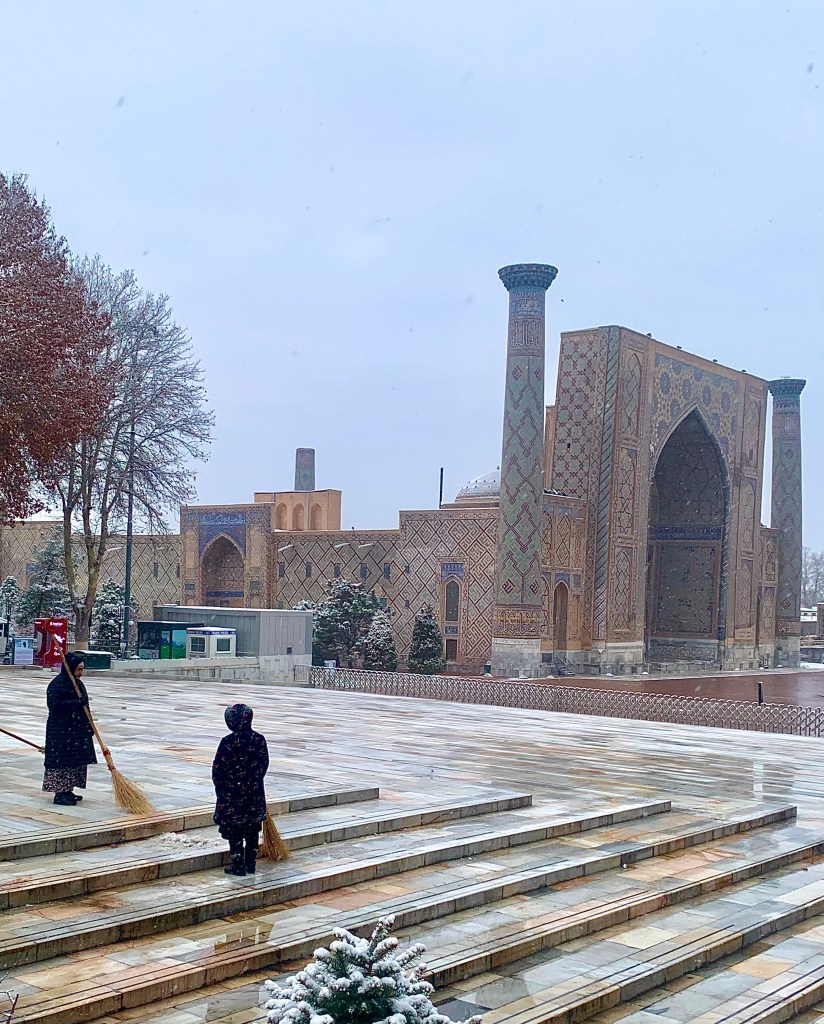
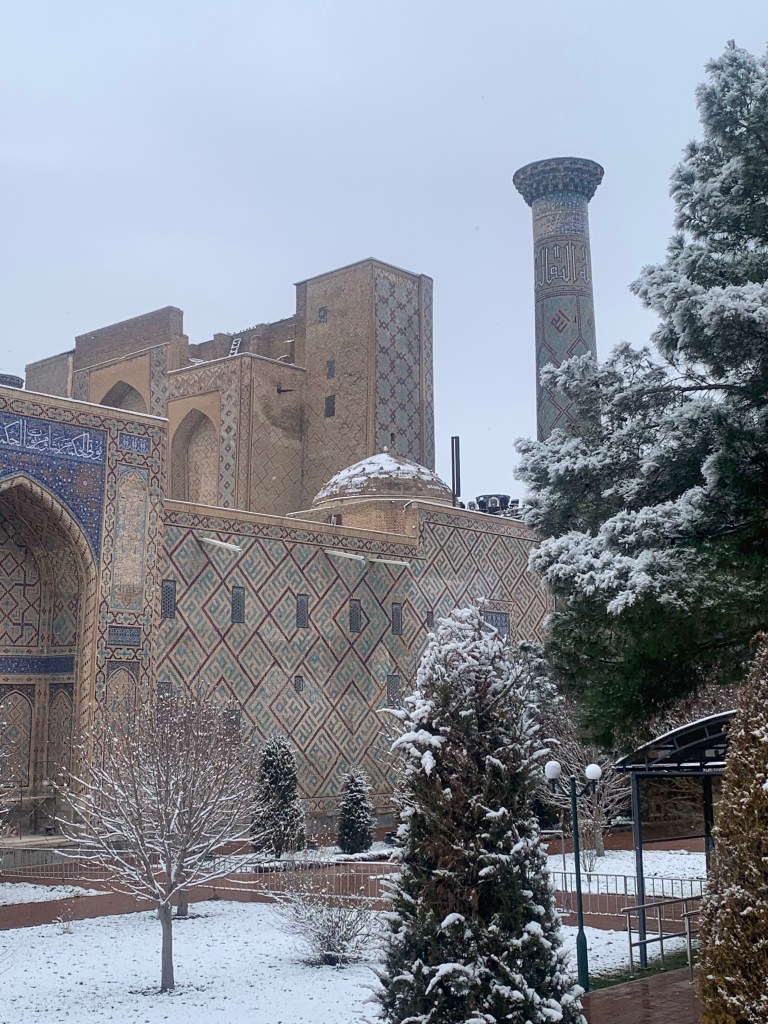
    The Registan, with famously gorgeous buildings on its three side, the gently leaning minarets, the blue of the tiles and the intricacy of the calligraphy in stone, the geometric designs weaving seamlessly throughout, does not disappoint. The pale marble square makes the colours stand out even more. (Though there is a little problem, especially on the marble viewing platform when it snows/ is wet – it becomes very slippery and even the sweepers with their besom brooms shuffle carefully across this shiny skating rink.)

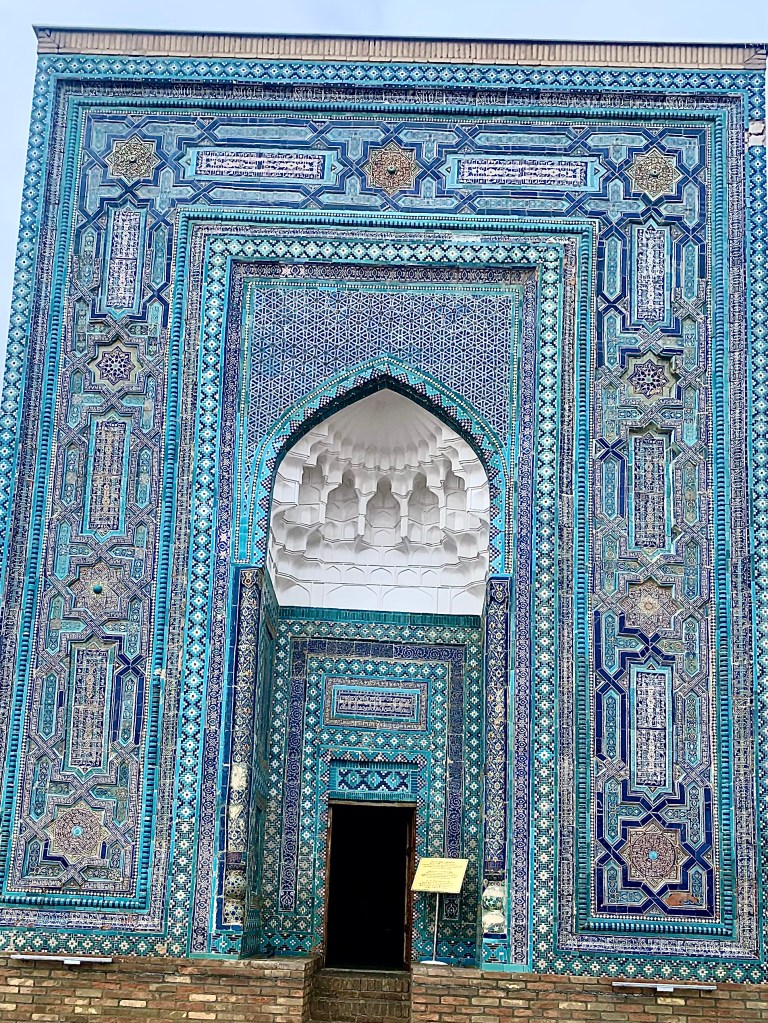
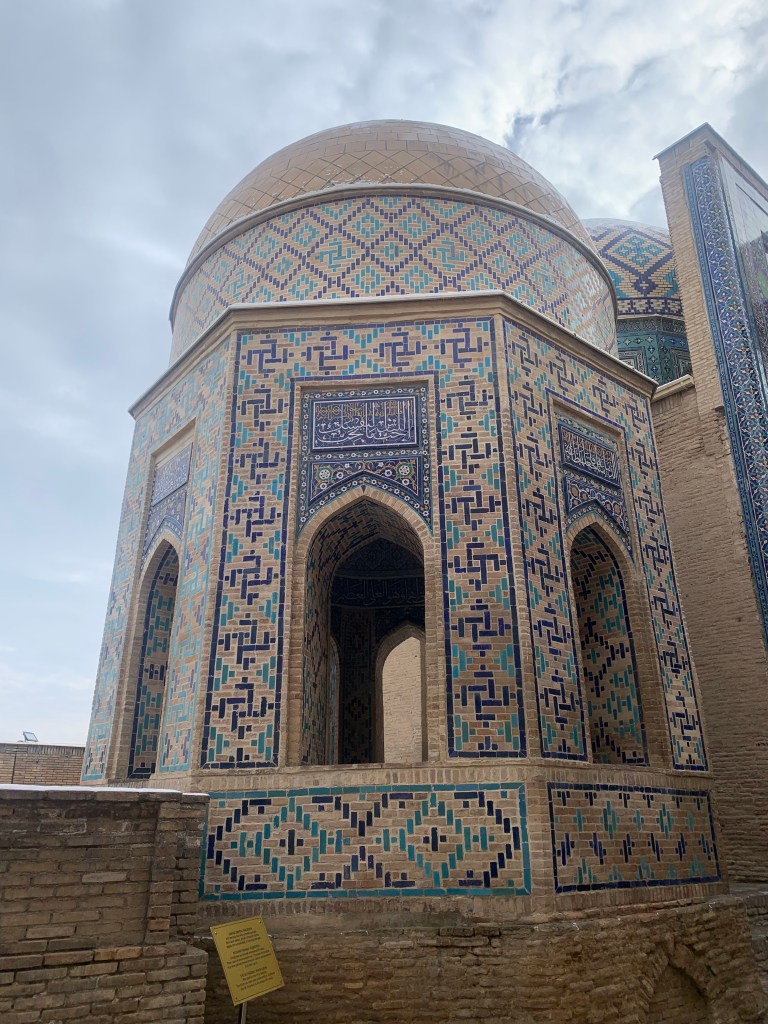
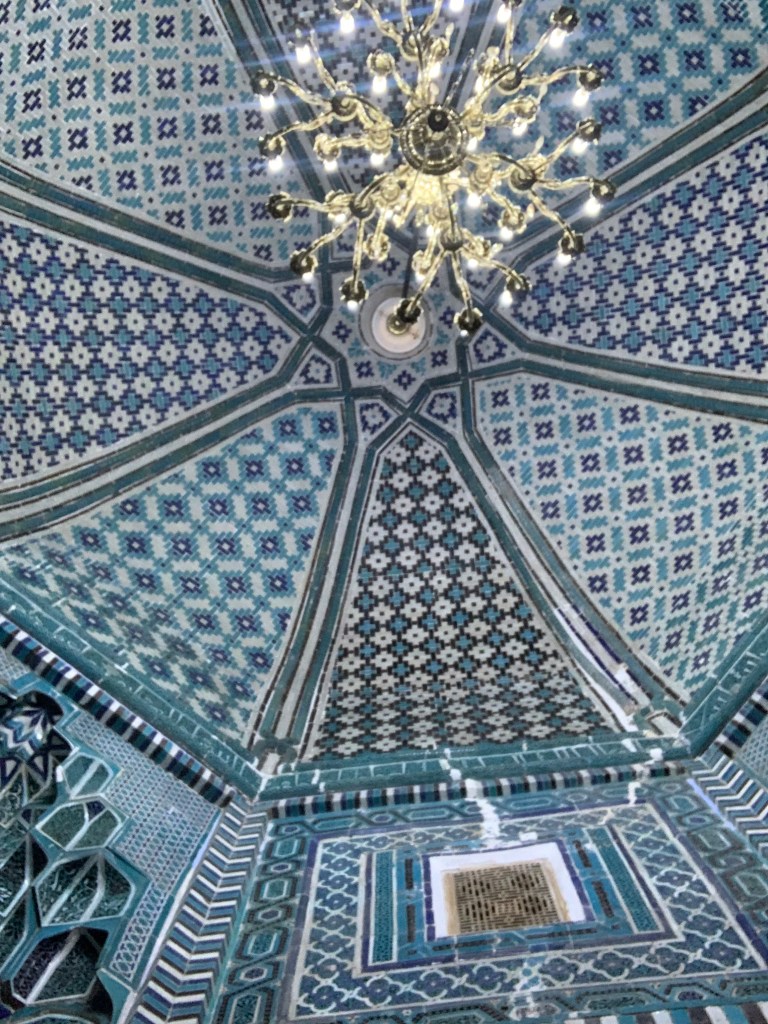
    The blue tiles of Shah-i-Zinda are dazzling, the arabesques and designs whirl with colour and beauty. It struck me that the majority of the places we come to see are tombs, necropolises, mausoleums, cities of the dead.

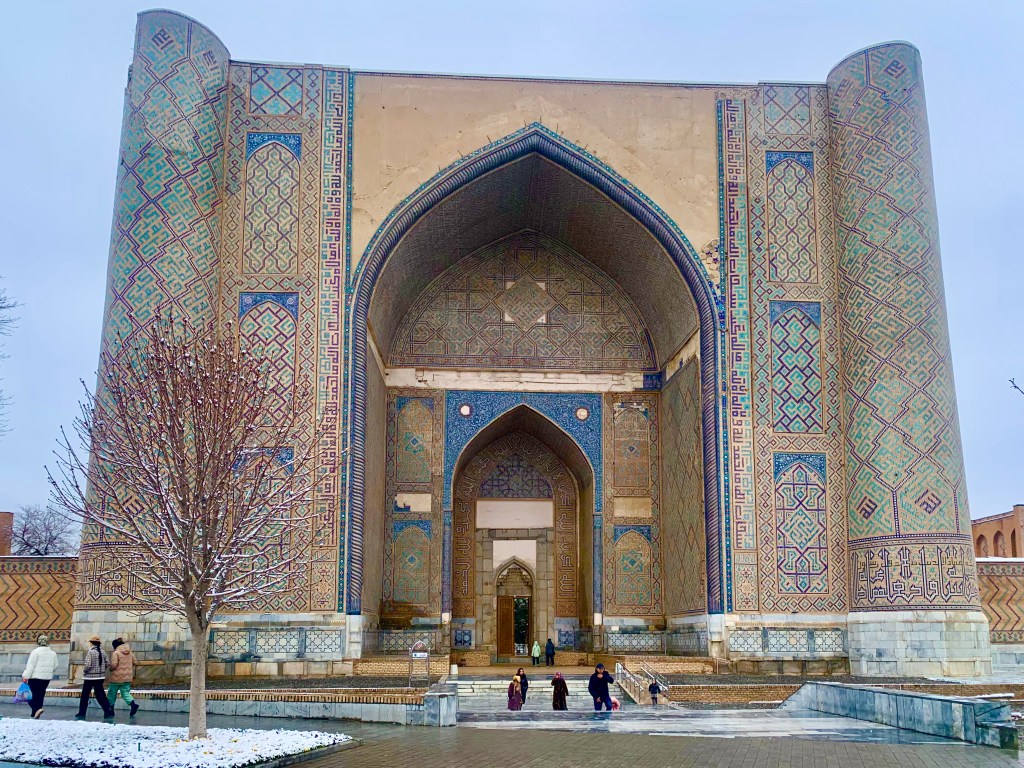
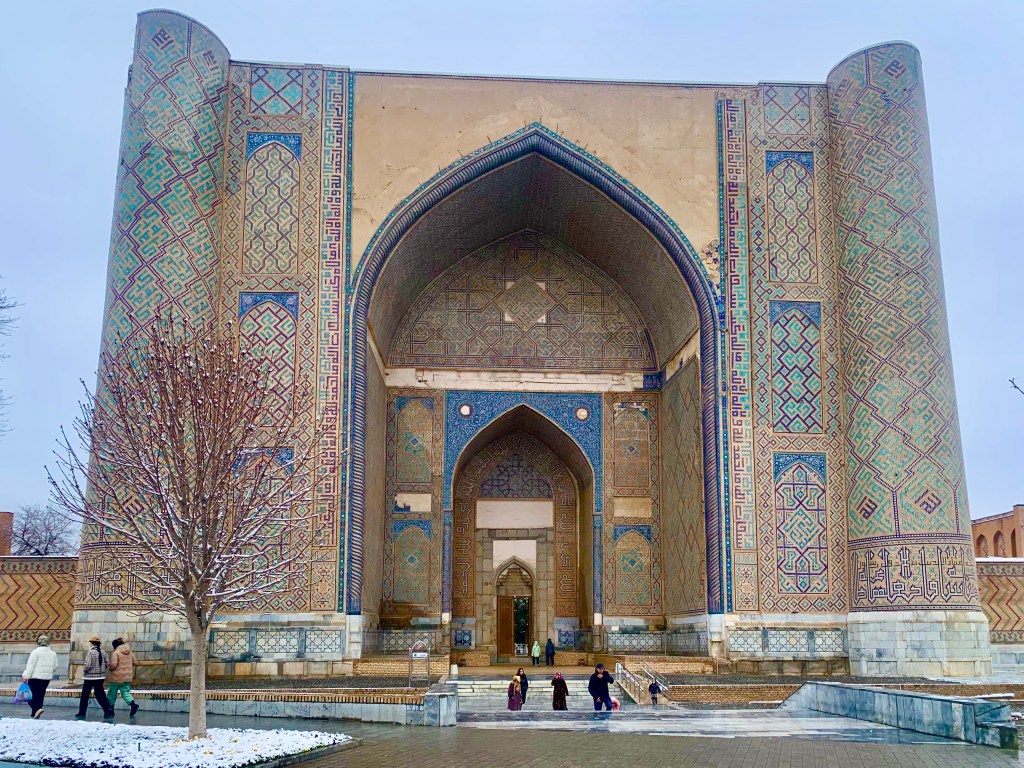
    There are a number of madrasahs, mosques and museums, that are currently being renovated – some will be ready for the season which is due to start in March, but not all. I found it interesting that a museum such as Afrasiab, “the most important museum in Samarkand” (it is a long walk to it from the Bibi-Khanim Mausoleum – about 4 km) was very much open and charging for entry, despite the fact that there were fewer than half exhibits available, workmen drilling and definitely no video explaining the frescoes (needed, as the originals are faint and missing some key parts). The archeological site of the fort (one of the largest in the world) was so muddy and waterlogged, I didn’t need to be told there was little point in going there.
    Afrosiab museum
    The upstairs exhibition

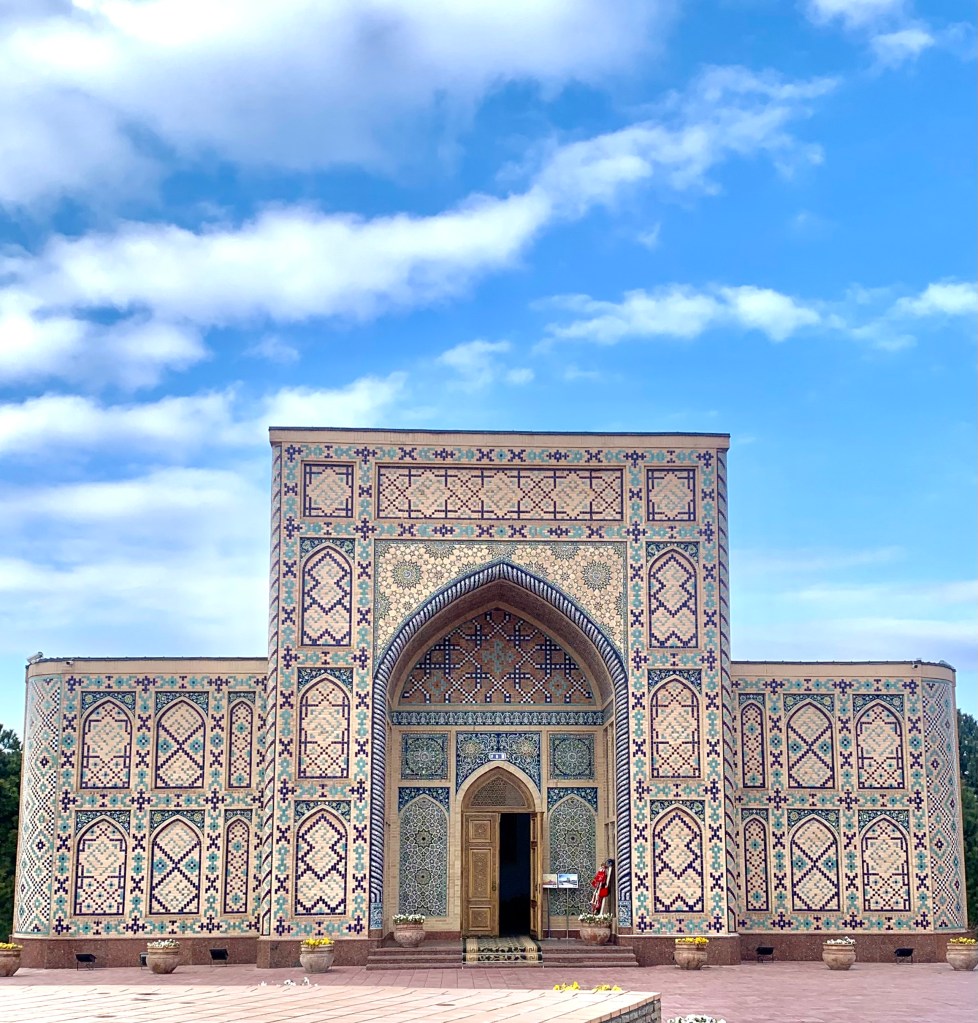
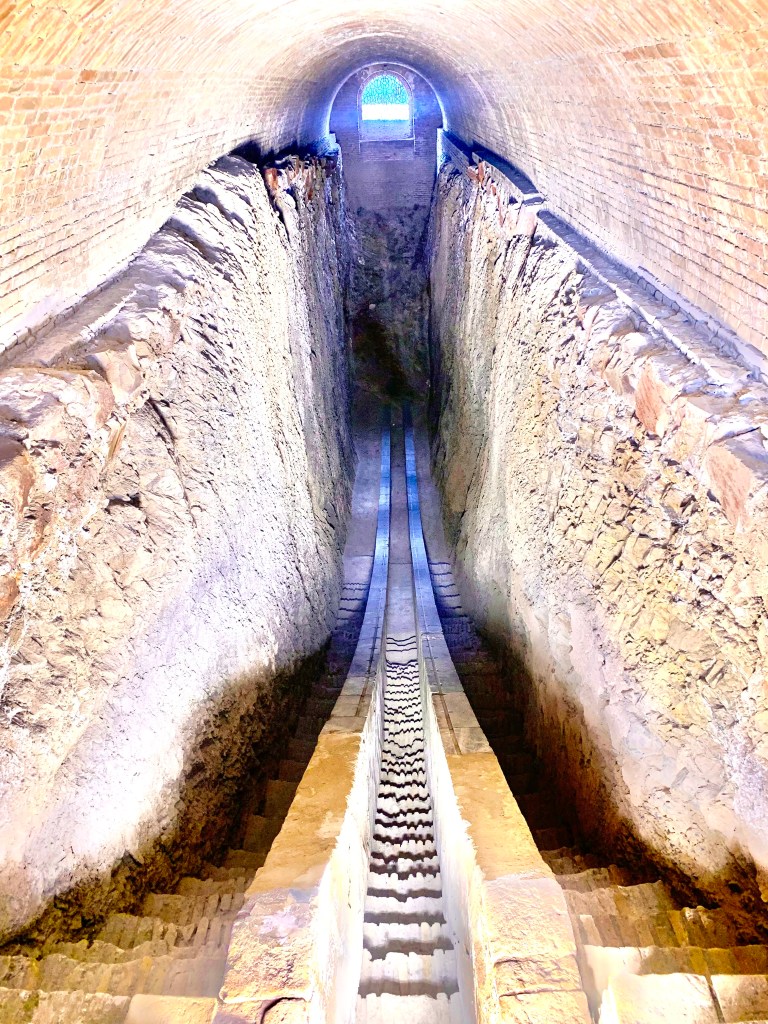
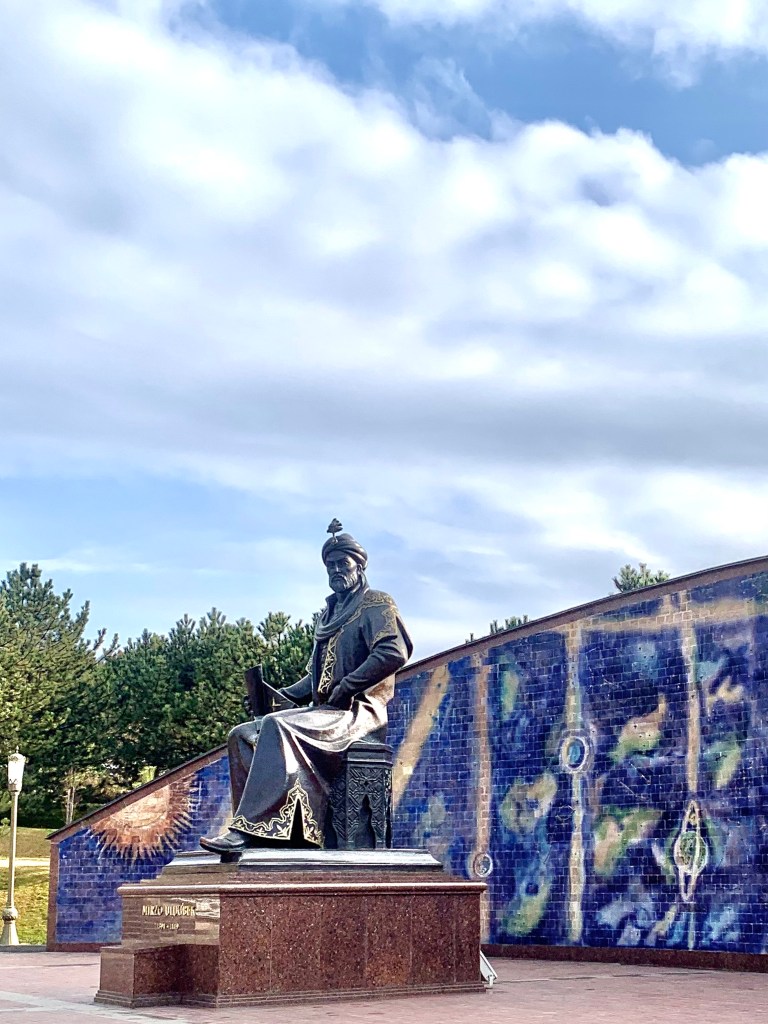
    Ulug Beg was one of Amur Timur’s grandsons, and well favoured (he was given Bukhara and Samarkand, among other bits, as a gift). He is known as the Astronomer King and his observatory, built in the 1420s, provided measurements so accurate that some have not been bettered until the computer age. The one part that has survived the destruction wreaked by fanatics (no change there) in 1449 is a part of the meridian arc. The radius of the sextant had been just over 40m, and the solution to the problem of having a building that could accommodate it without collapsing on itself was to sink the arc into the ground. (The Lonely Planet and Wikipedia provided the information.) One can still see the notches used for the measurements on the metal and it must have been a sight to behold when the sextant and the astrolabe were in place.

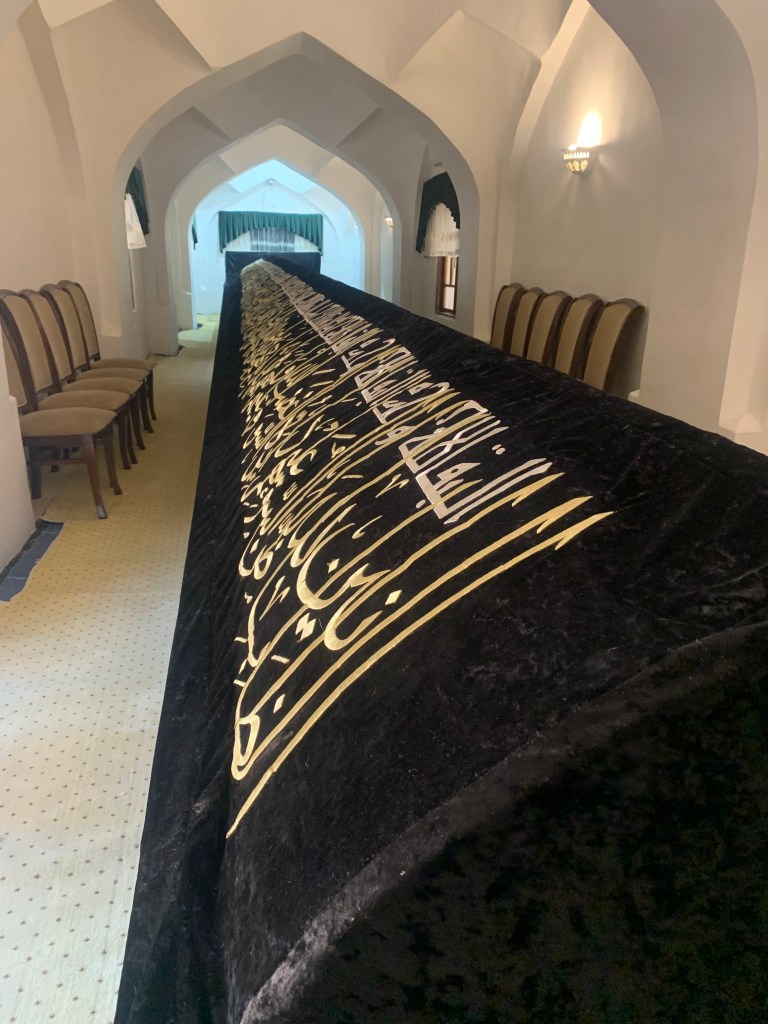
    I can’t help but mention one more mausoleum – that of Daniel, of the lions’ den fame. Samarkand is one of 6 places that has the tomb of Daniel. It is a place of pilgrimage and there is a spring of water below it that is thought by many to be sacred. The legend has it that Daniel’s severed leg (could not find any reference to how it got severed) keeps growing inside his marble tomb . The tomb is currently 18m long and it is said that when the leg reaches it, “the world will surely end”.

  • Tashkent, Uzbekistan

    Jan 23rd, 2024

    The fog lay heavy on Tashkent as the Baku flight landed late on a Friday night. It seemed to be a surprise to everyone, including the 36 pilgrims returning from the Hajj – numerous phones were out videoing and photographing the fog. Fog aside, it makes a wonderful difference that entry into Uzbekistan is now visa free for UK and EU citizens. 

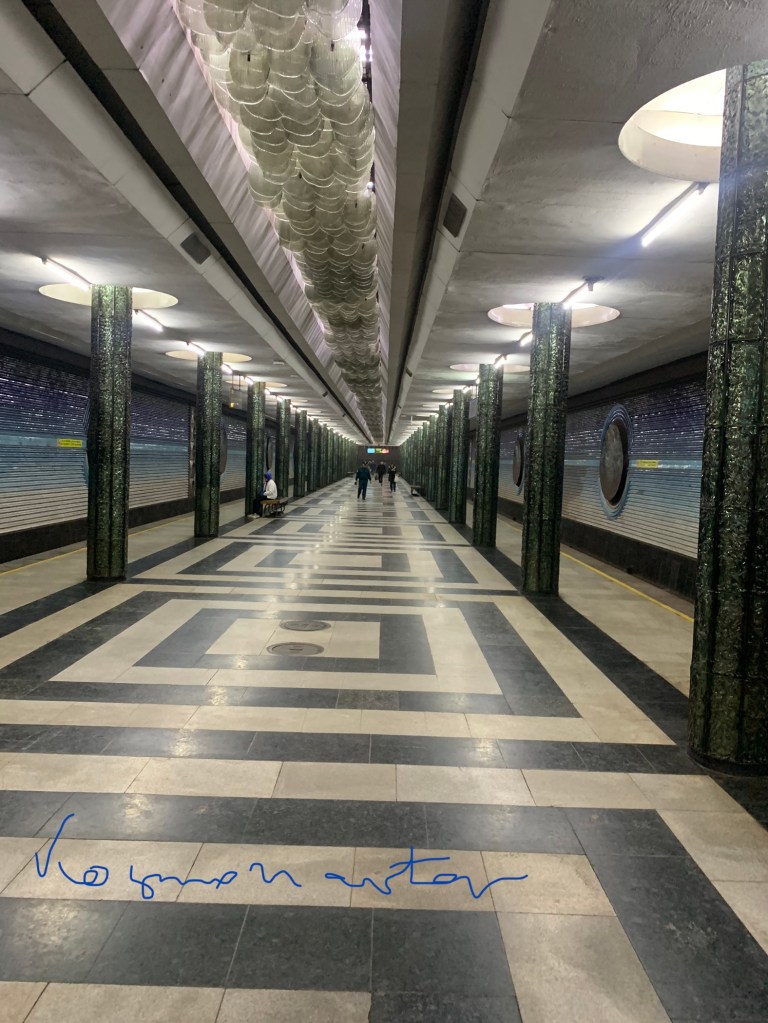
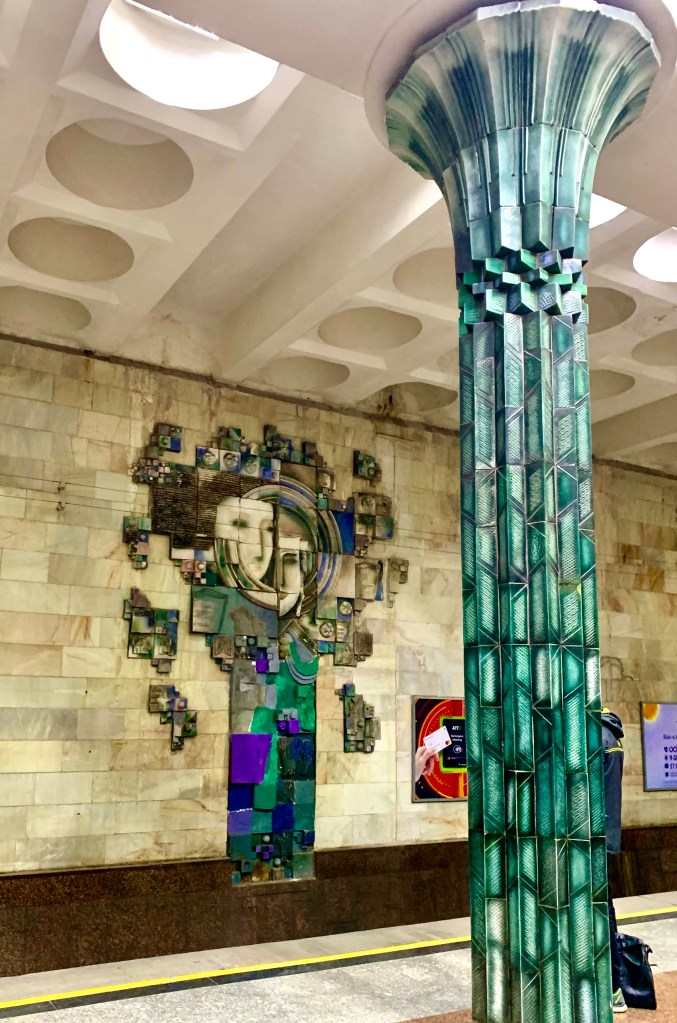
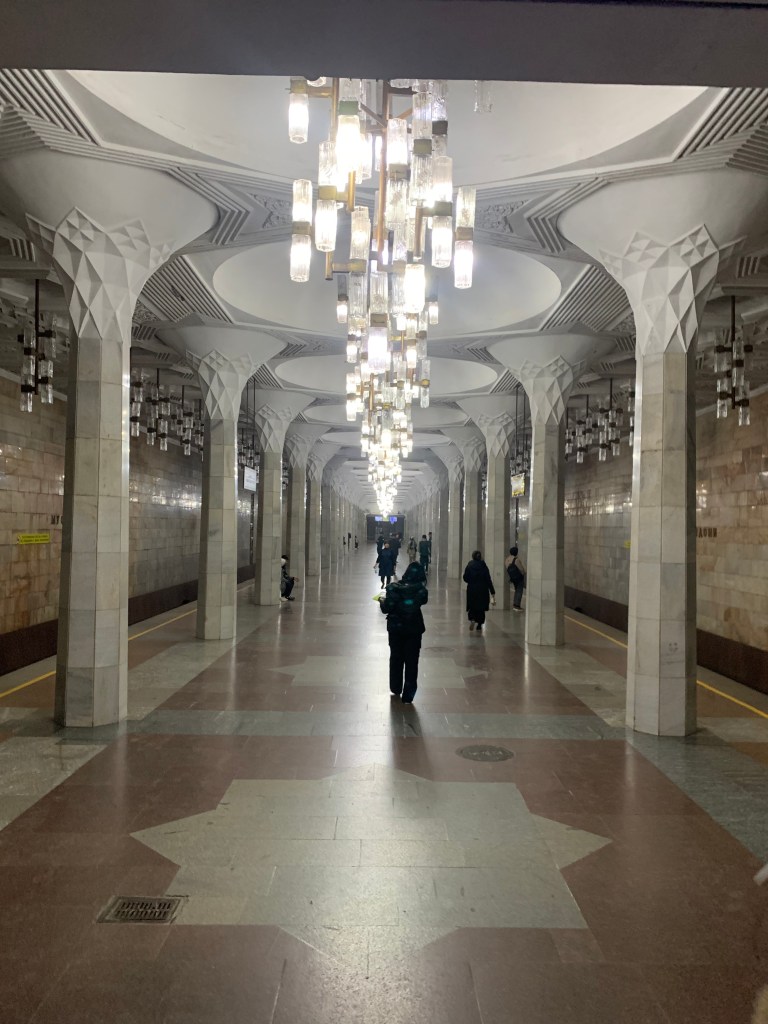
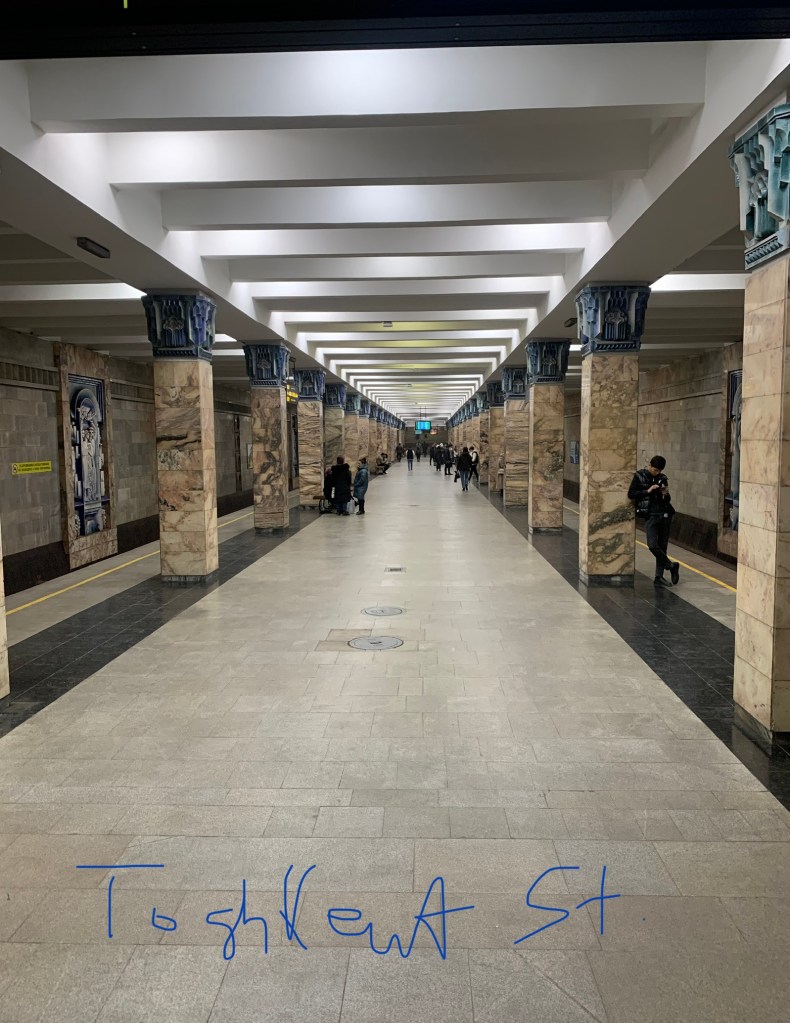
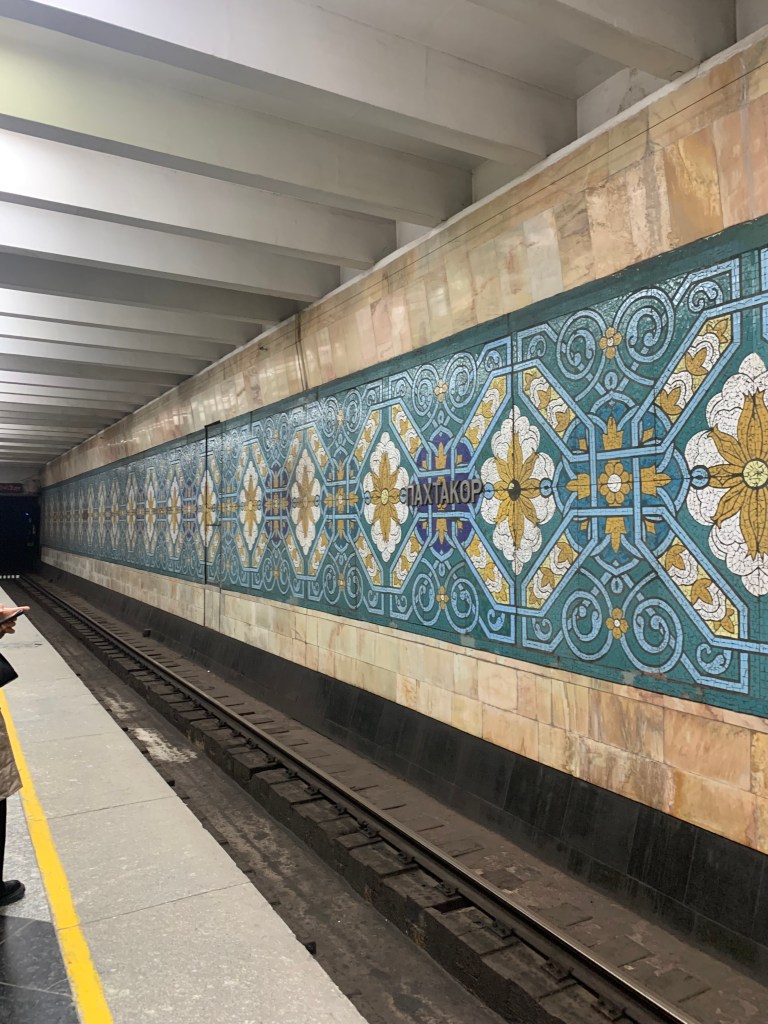
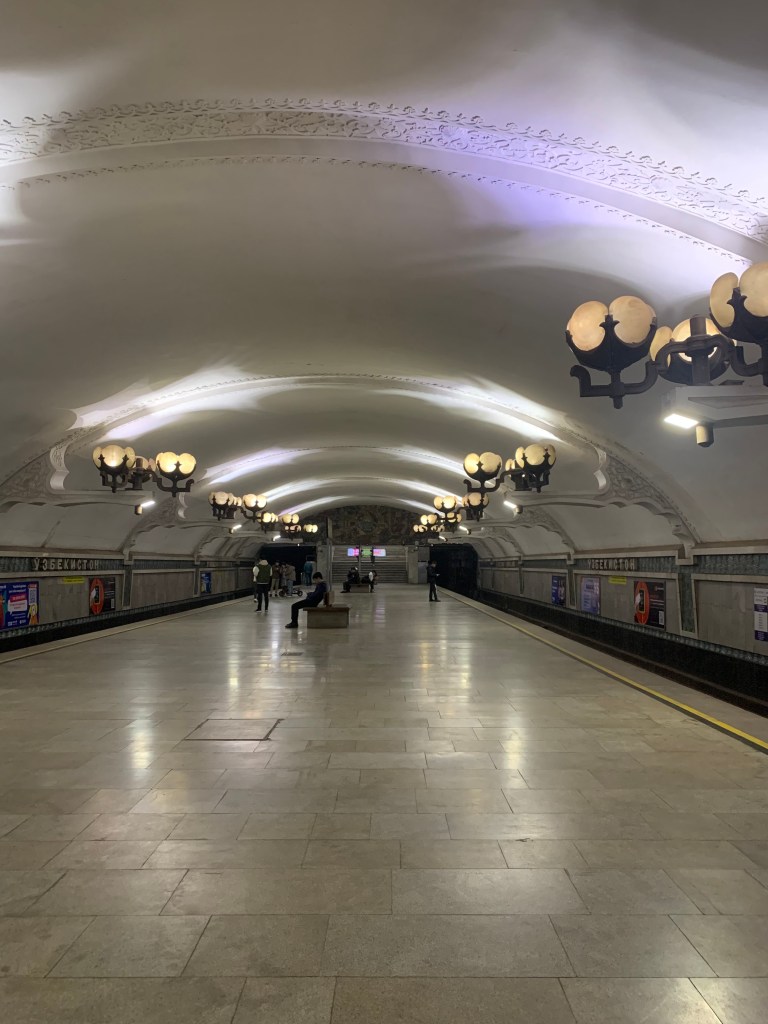
    Staying with friends also makes a difference, the feel of a home rather than the impersonality of a hotel. And the weather has obliged too – it may be January, but the sun has been shining (or squinting through thin clouds) and it feels quite balmy. Having read so much about the Metro, had to go and have a look at a few stations. Tashkent has but recently introduced the Oyster type card (it costs 15000 sum = £1 to purchase, plus what you need to ride) and can be used on the buses as well. Each ride is ridiculously cheap – about 12-14p (cheaper on the card than buying individual tickets). And the stations are magnificent.

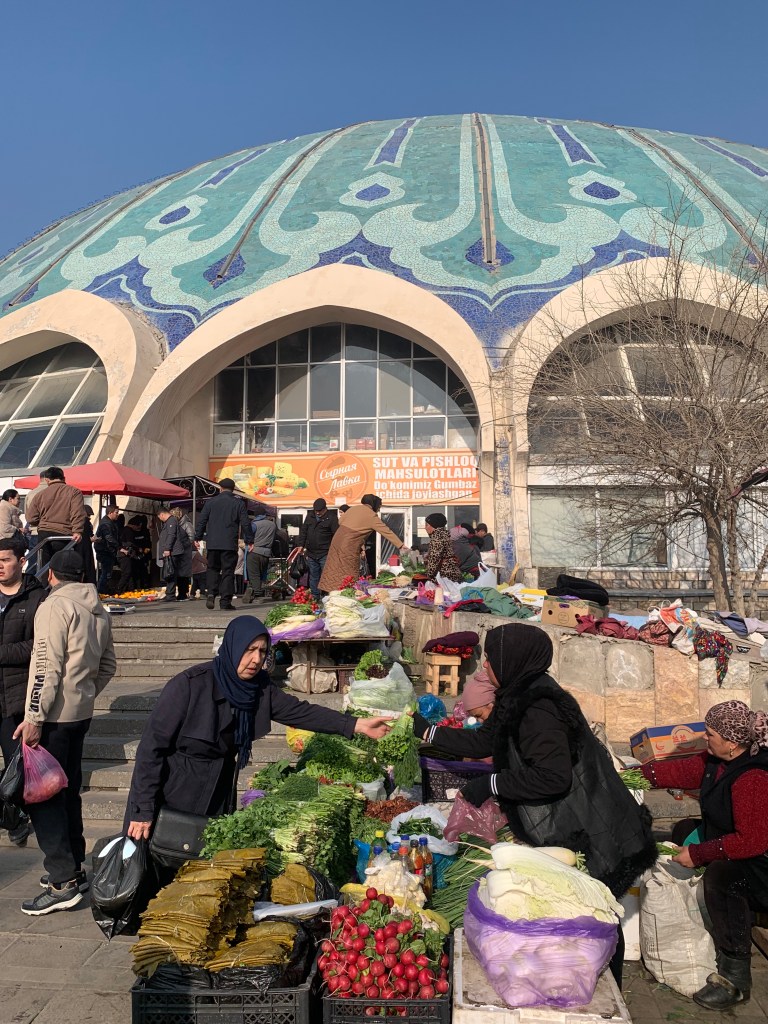
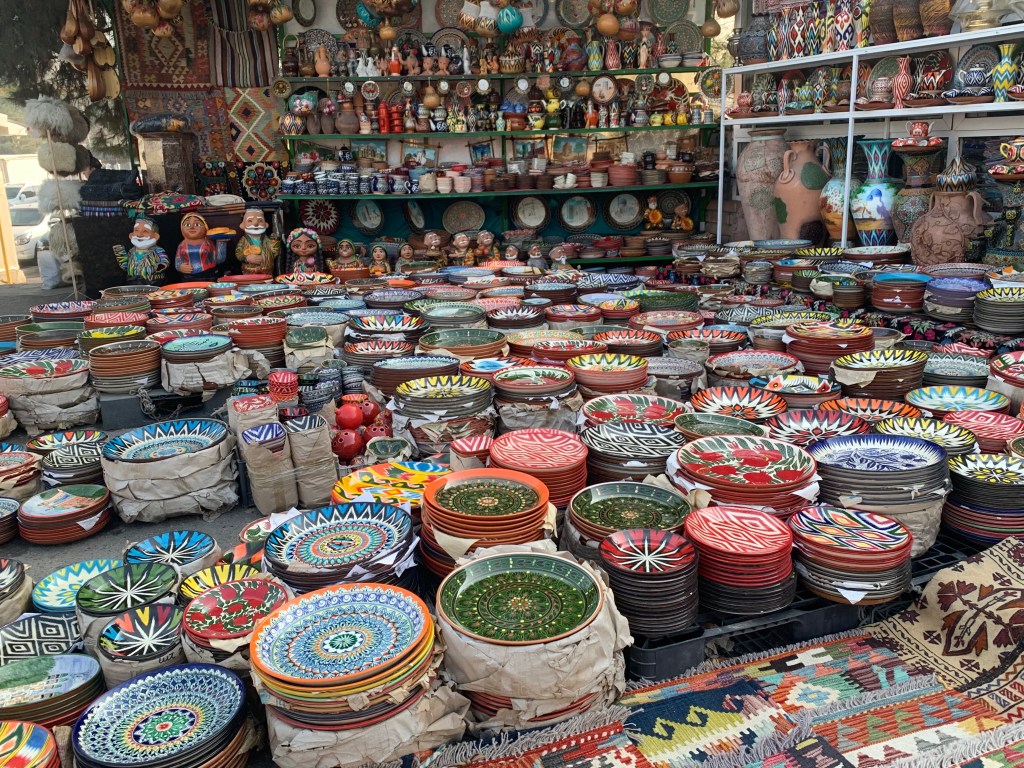
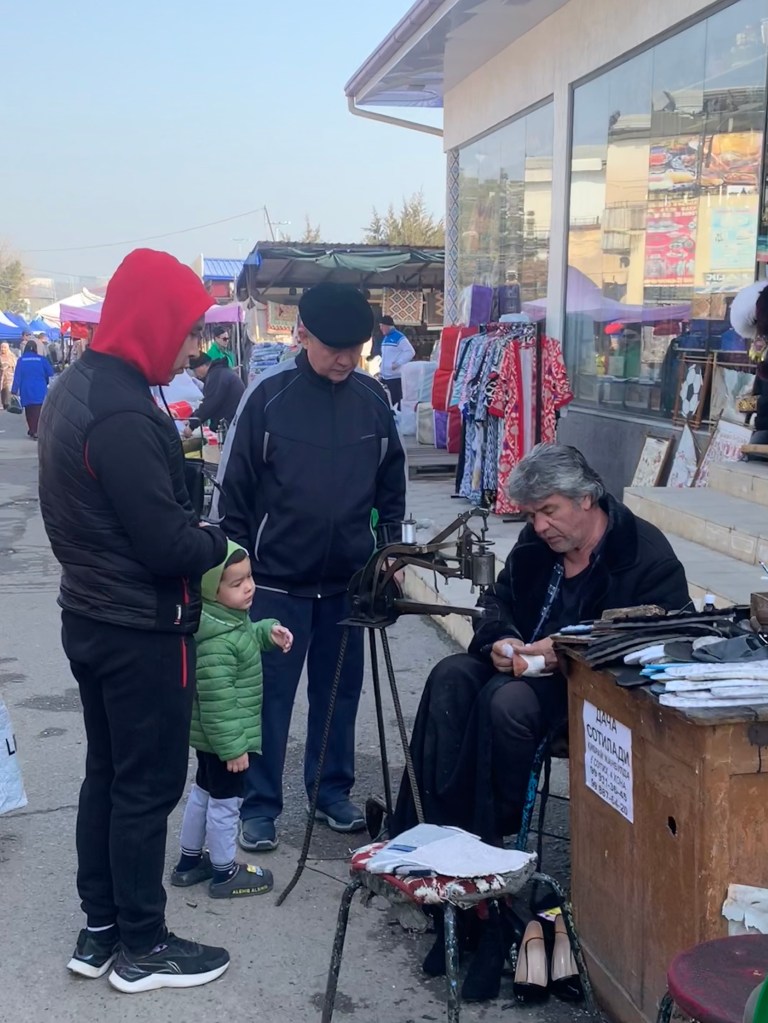
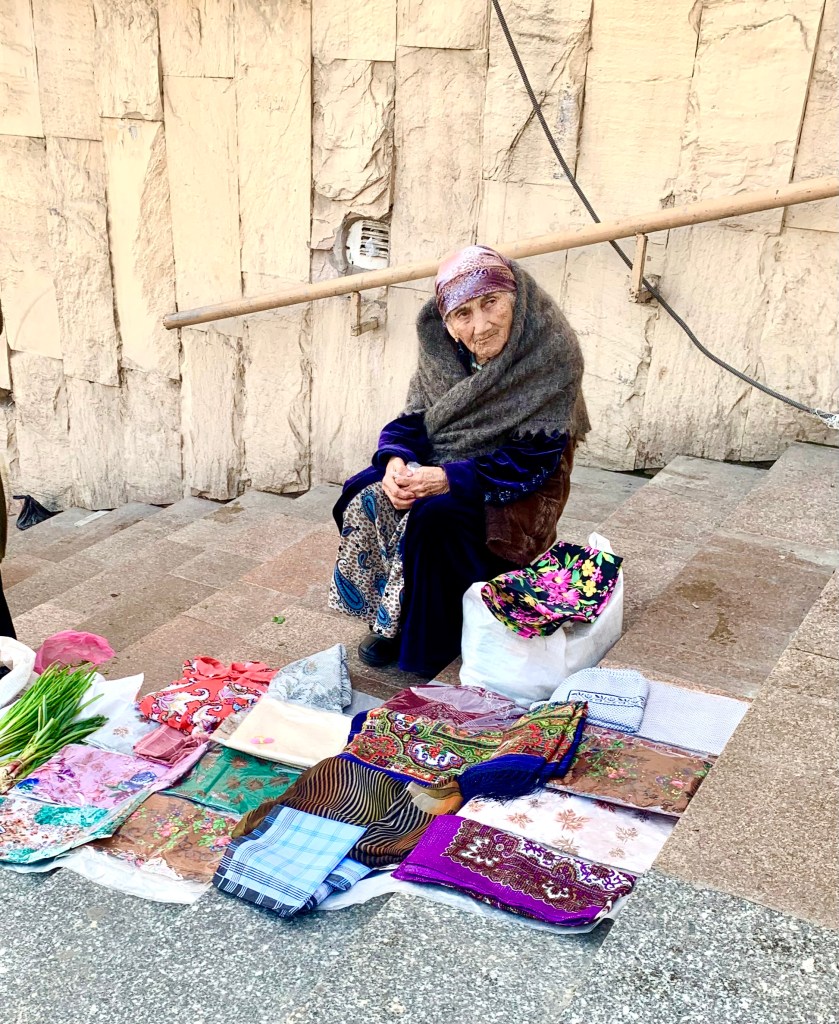
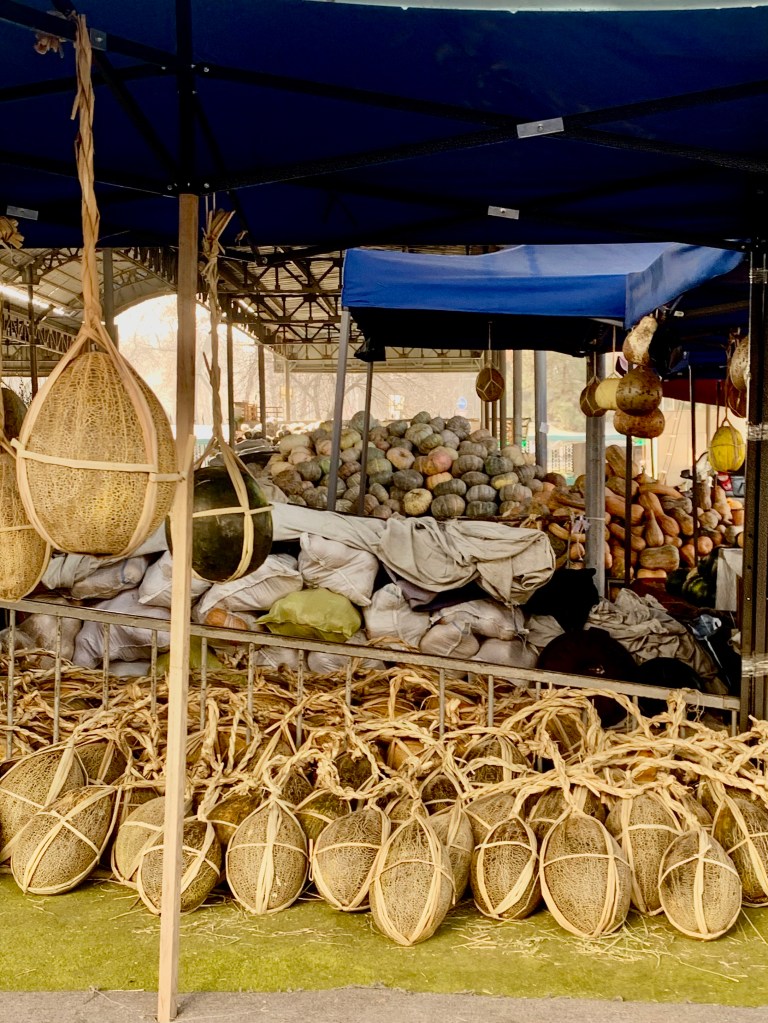
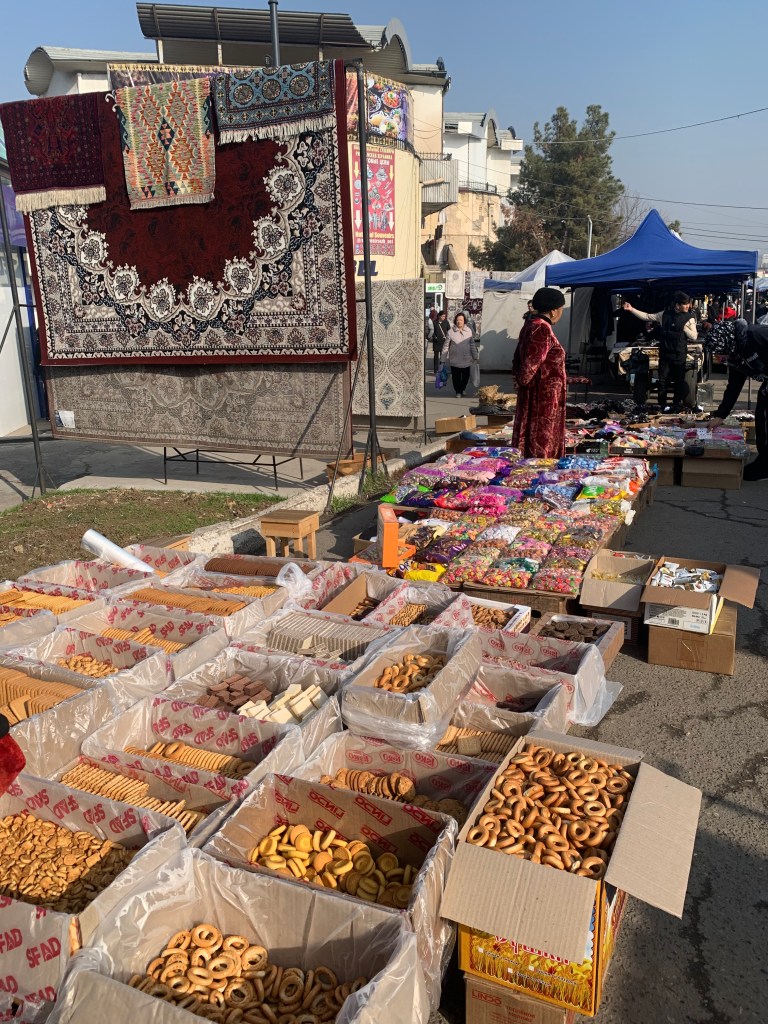
    Tashkent was very much at the centre of the Silk Roads trade from the start and Chorsu market still exemplifies that. It is ENORMOUS, and if you look hard enough, you can probably find everything there, fruit, vegetables, nuts, spices, souvenirs, ceramics, fabrics, shoe repair, knife grinders, gold and silver, fur hats and shoes, meat and eggs, cheese… I still love being able to taste the wares before buying – a few nuts and dry fruits at lunchtime can stave of hunger. :))

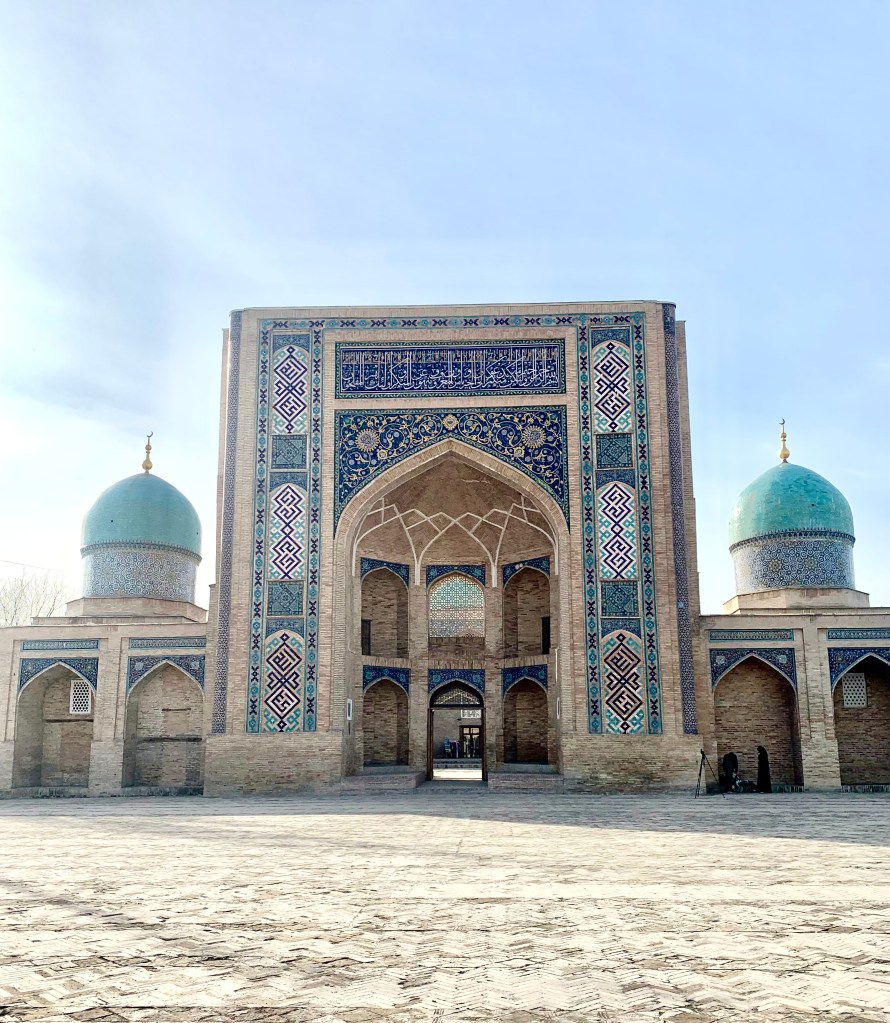
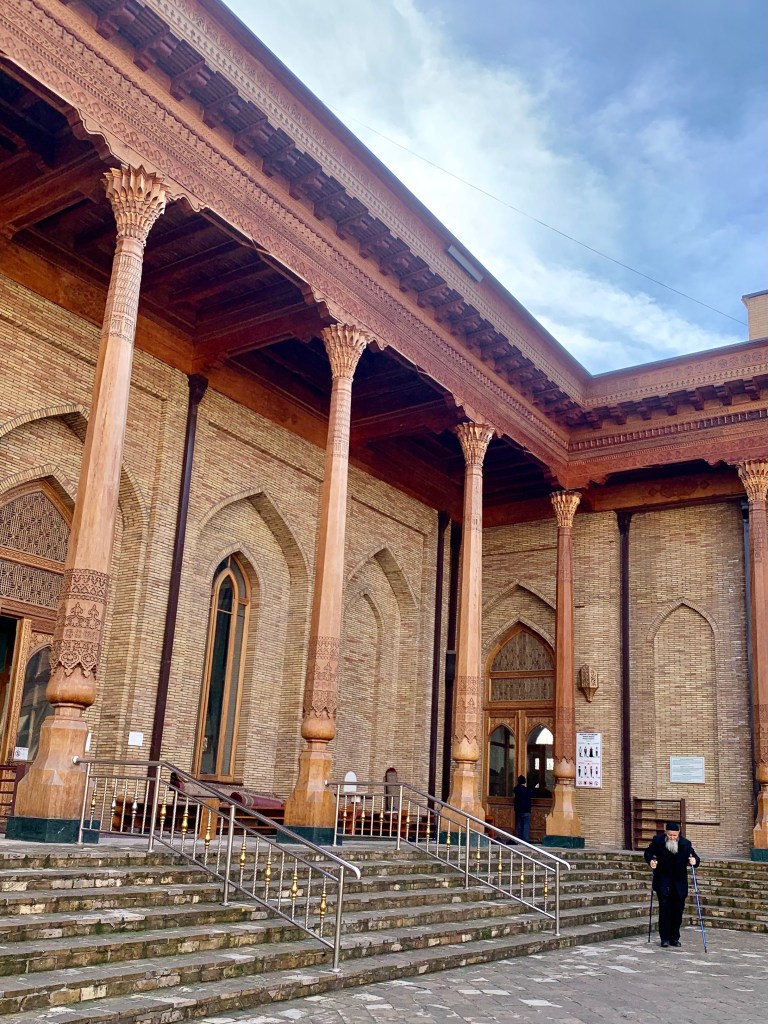
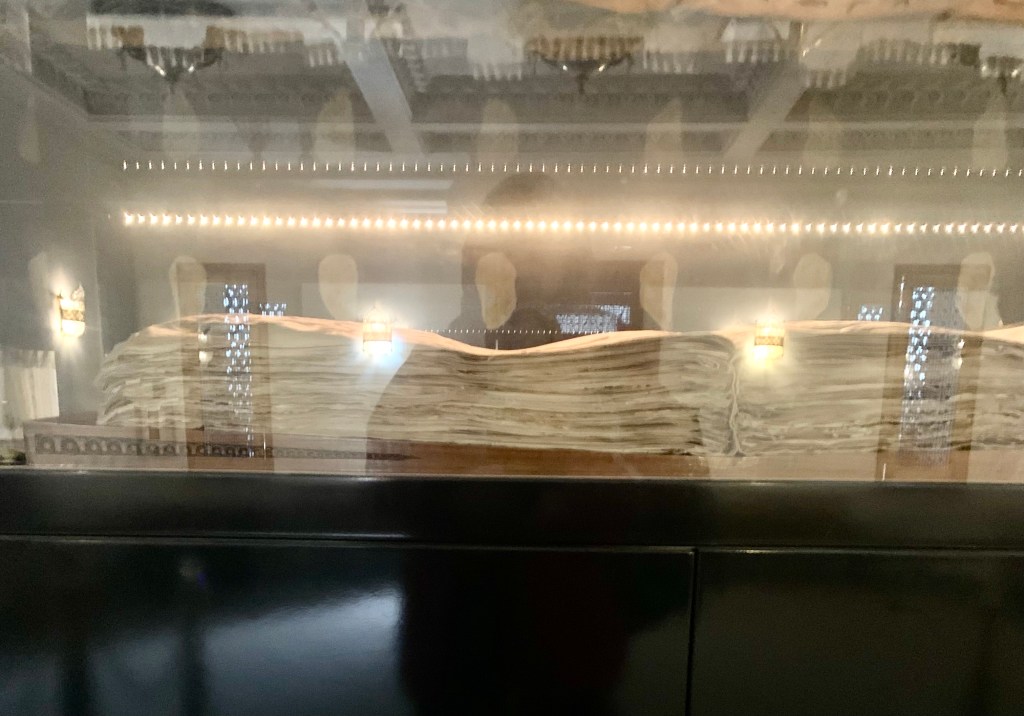
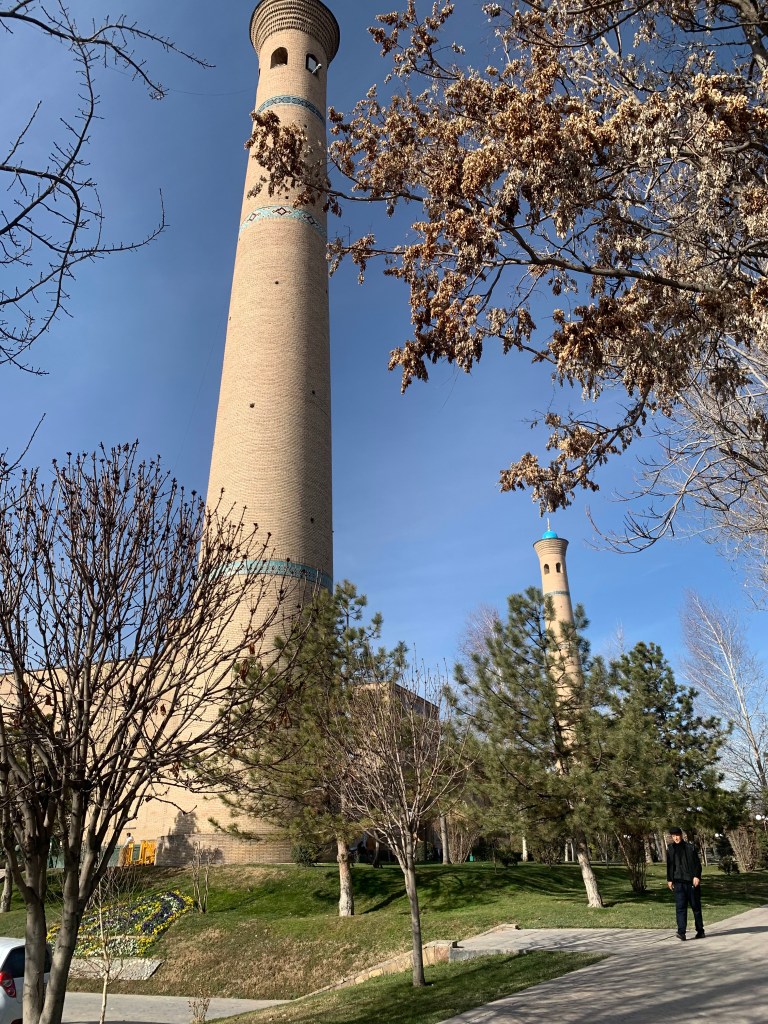
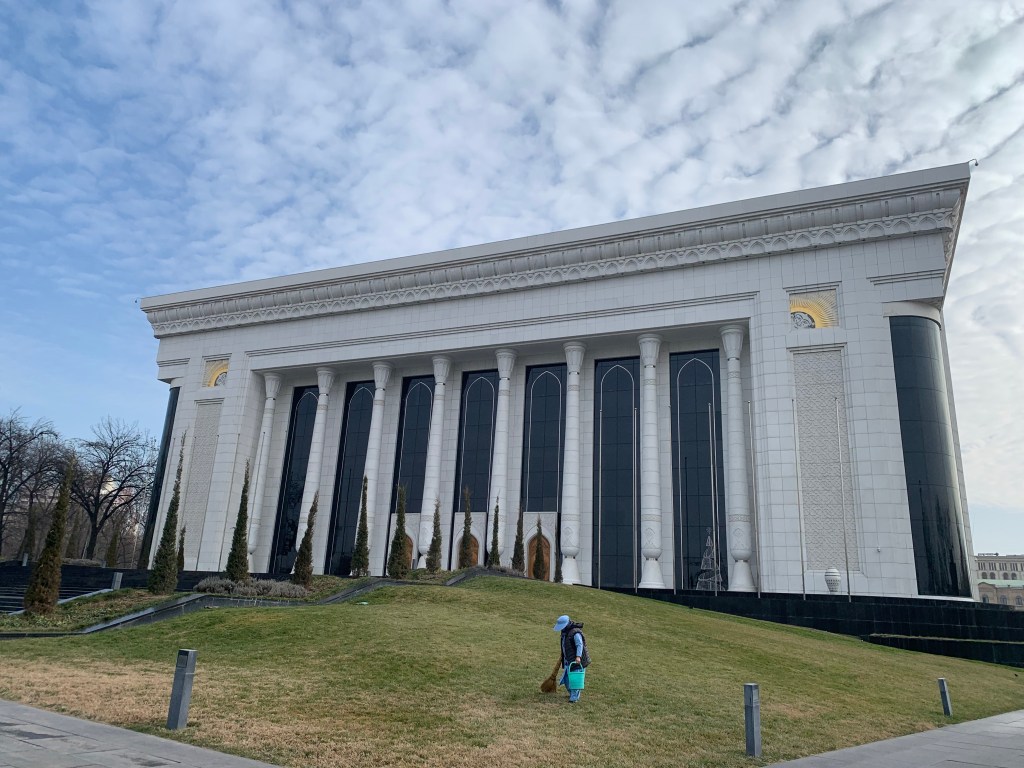
    The Hazrati Imam Complex is impressively grand (the mosque is still one of the largest around) and the area will be even grander once the Centre for Islamic Civilisations is finished. One of the oldest Qurans in the world is kept in the museum nearby, with a number of other Koranic scripts.

    Also tried a local dish, a samsa – an Uzbek pasty. The fillings vary – potatoes, pumpkin, beef or mutton. Delicious and satisfying – the pastry is short, crumbly and moreish. Some good local tea to wash it down with, and all for less than £2.

    The city sprawls – the 1966 earthquake, which had flattened most of the town, has also made the town planners decide to build out, not up. There are high rises, but no skyscrapers. The roads are wide, there are parks and recreation areas and plenty of trees. The Amir Timur Square is green, though the trees are very young. There had been a major outcry over the cutting of old trees in 2009, especially large chinars (plane trees) – the protesters called it “the tree genocide”. The wholesale cutting of trees took place suddenly, with no consultation, warning or explanation. When asked, the mayoralty reluctantly explained that it was done as an “aesthetic decoration” of the capital, “to make the city even more beautiful and landscaped.”

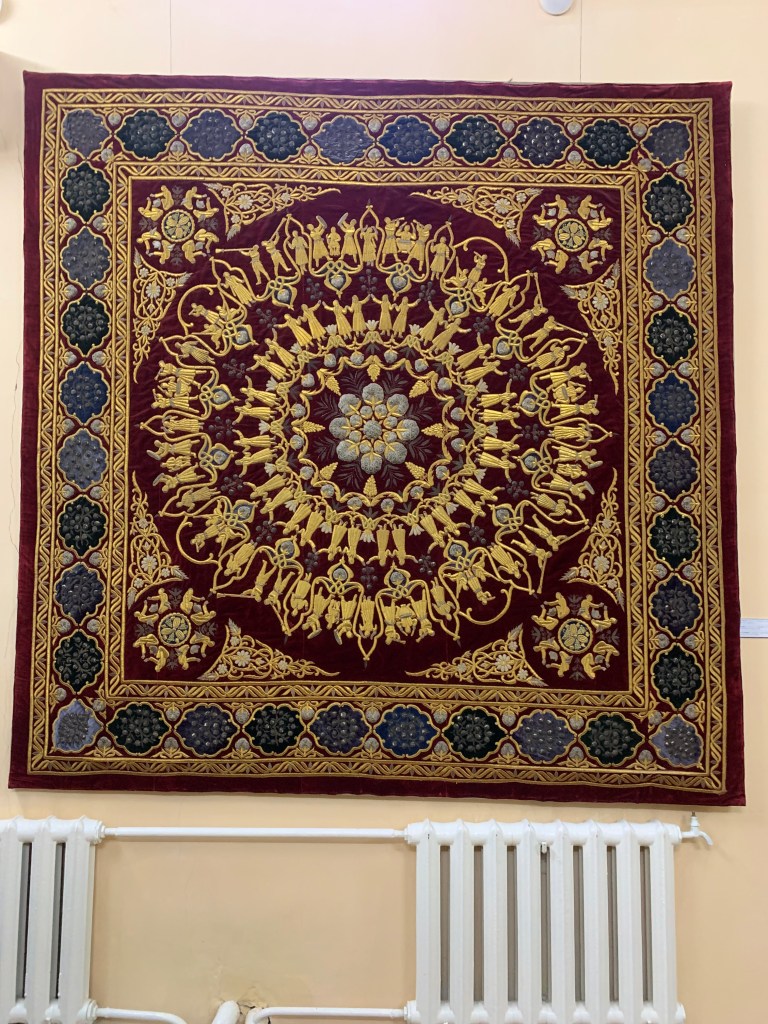
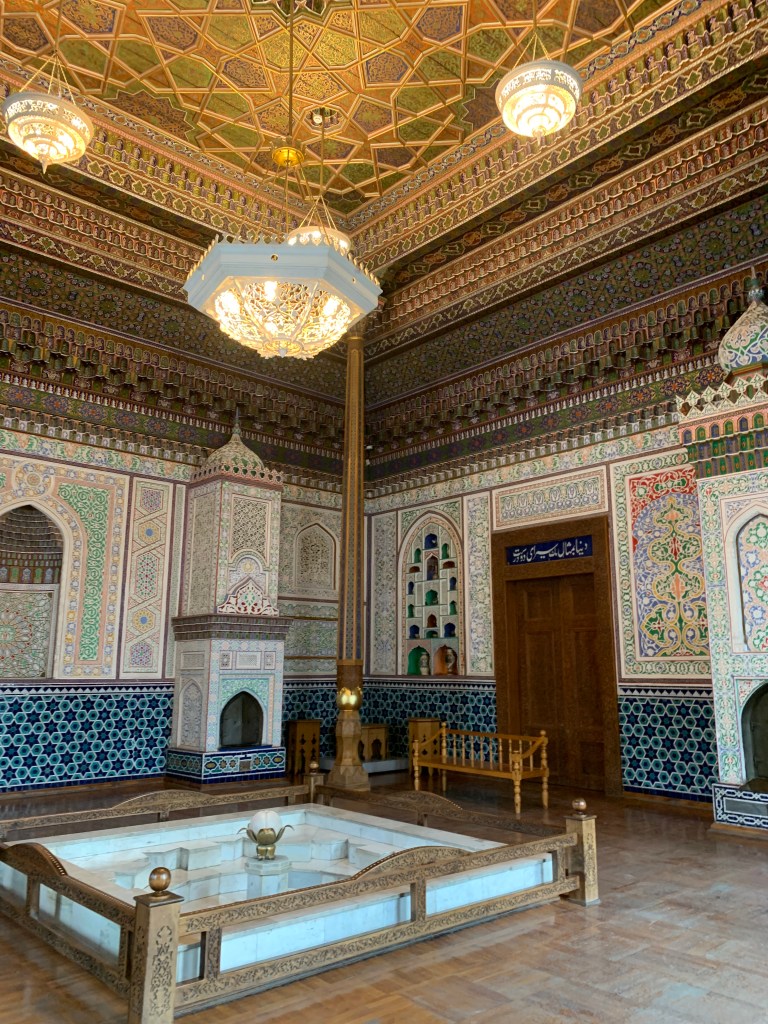
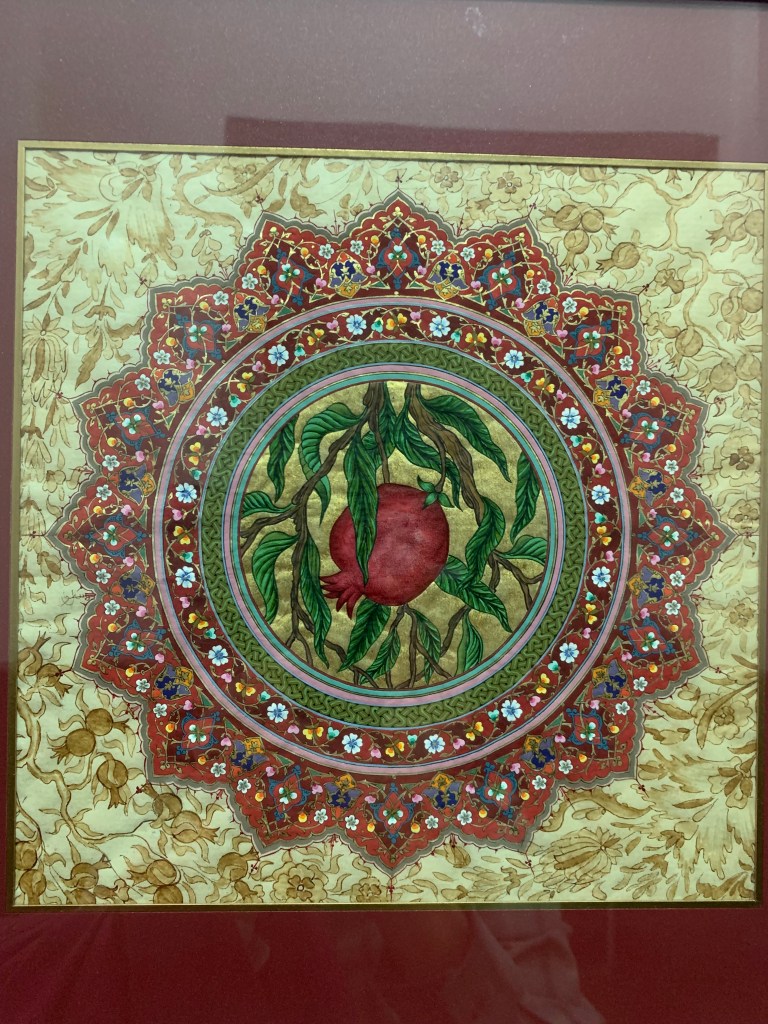
    The Museum of Applied Arts showcases the intricate, painstaking work done in textile, embroidery, wood, metal, musical instruments. The detail is stunning and one can but stare at such dedication, skill and patience.

    And tomorrow – Samarkand.

  • Nakhichevan

    Jan 19th, 2024

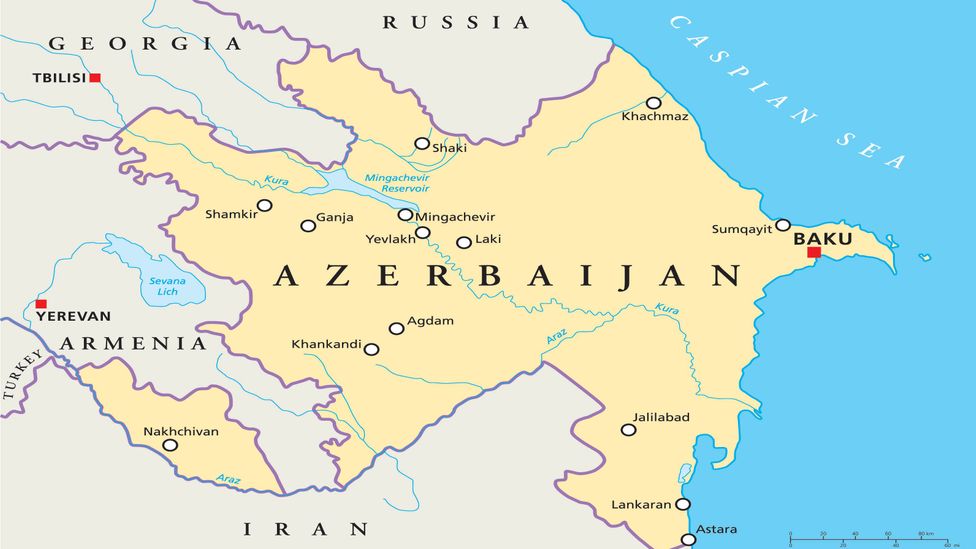
    As the guide book says, a place you probably never heard of. A lozenge of land, bordered by Iran to the south/southwest, Turkey (a sliver) to the north and Armenia to the north/northeast, but an autonomous province of Azerbaijan. It would have been nice to pop over when I was in Eastern Turkey, but the land borders are closed for foreigners. So I flew in from Baku (flights are inexpensive and frequent).

    Surrounded by Armenia, Turkey and Iran but part of Azerbaijan, Nakhchivan is the world's largest landlocked exclave (Credit: PeterHermesFurian/Getty Images)

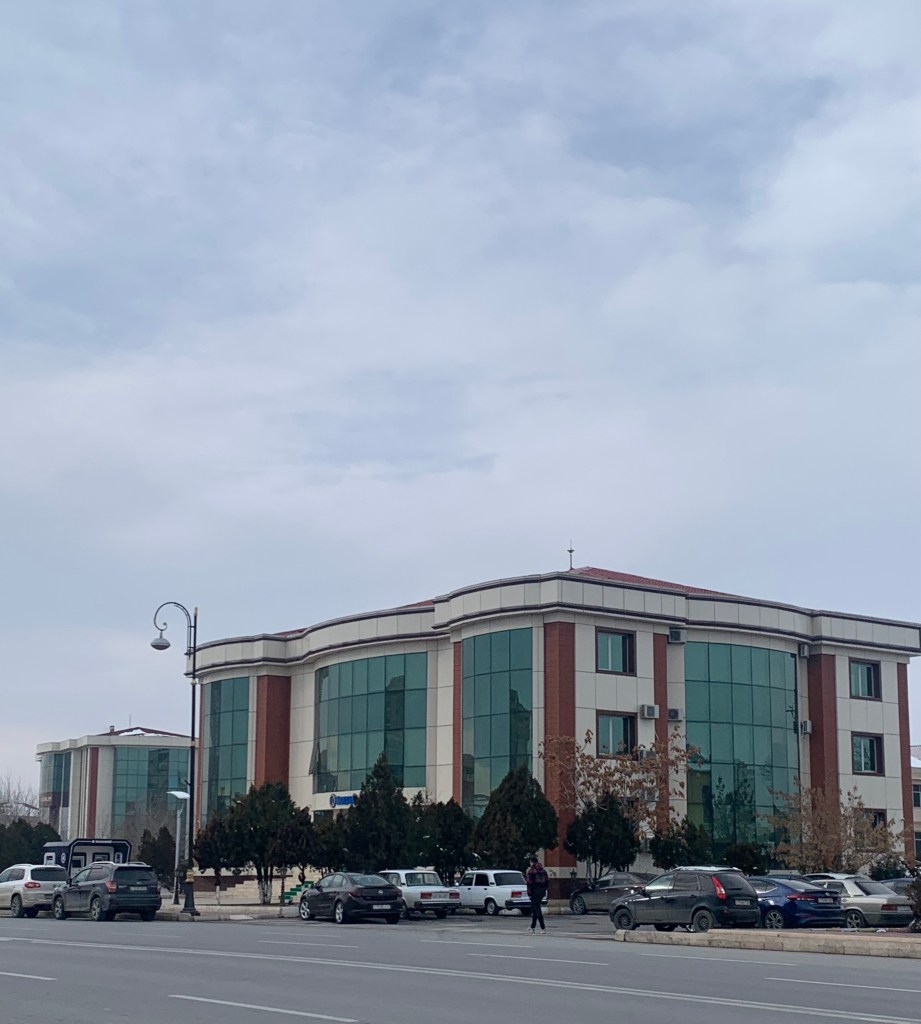
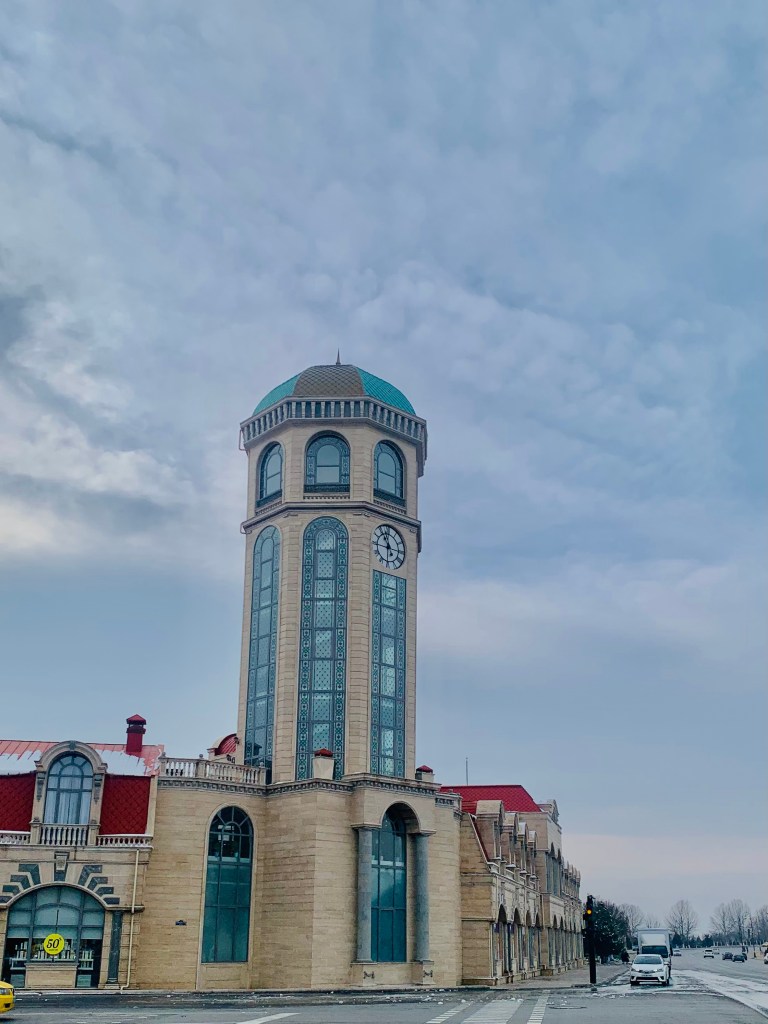
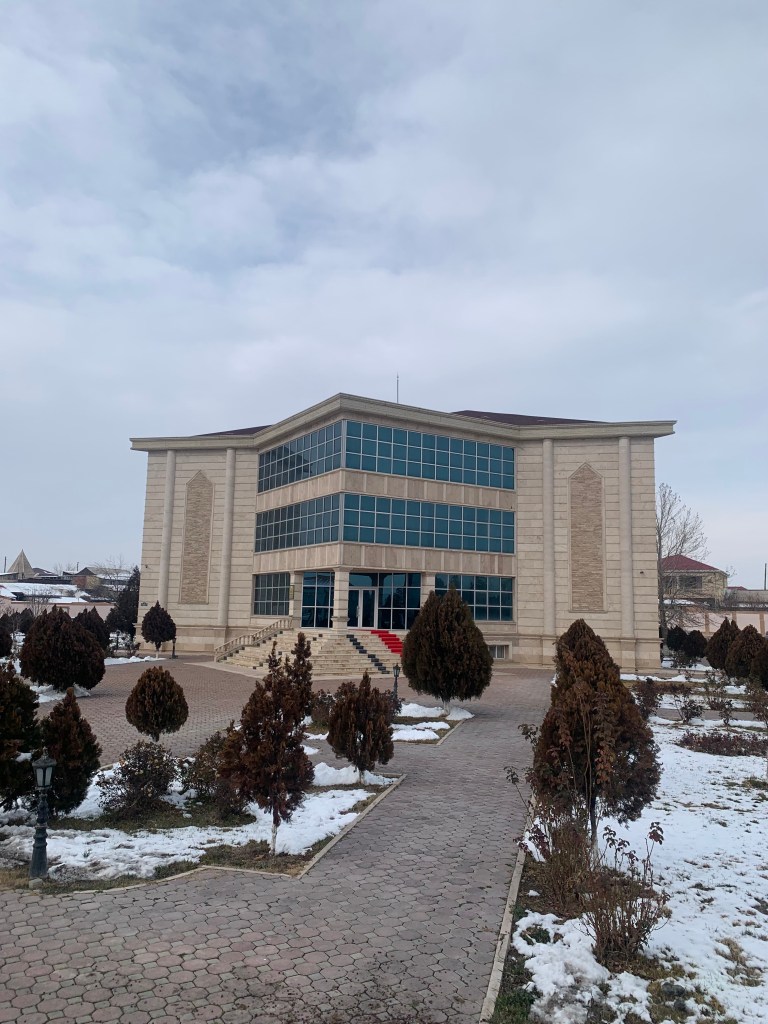
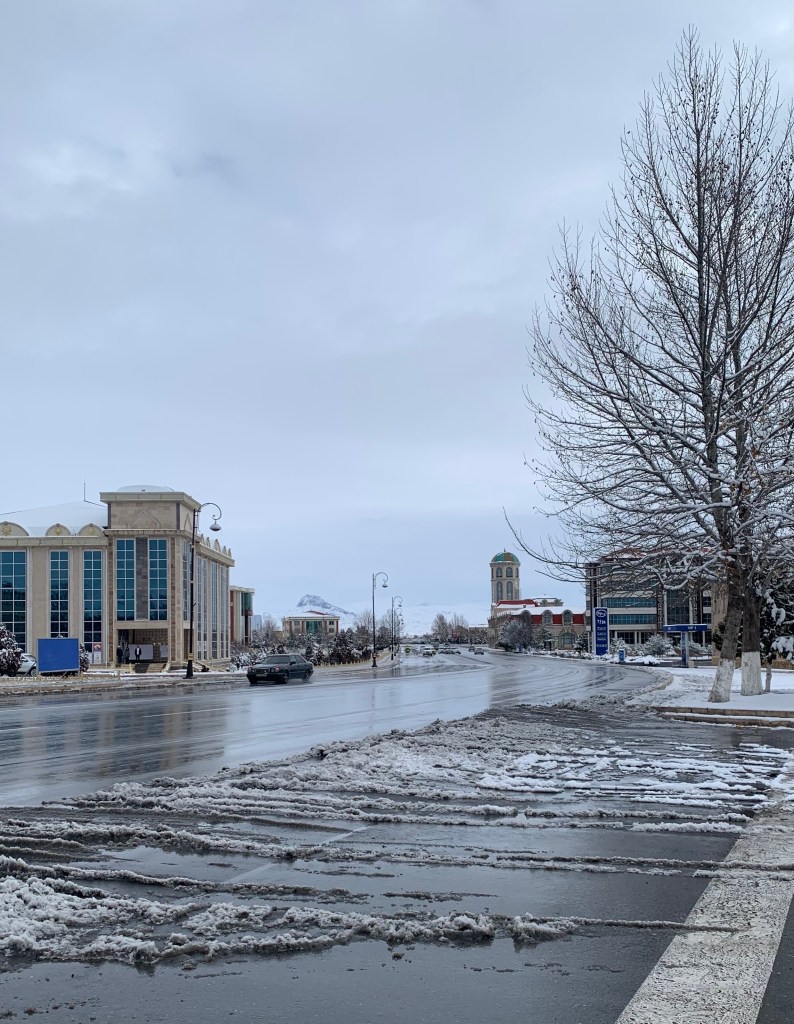
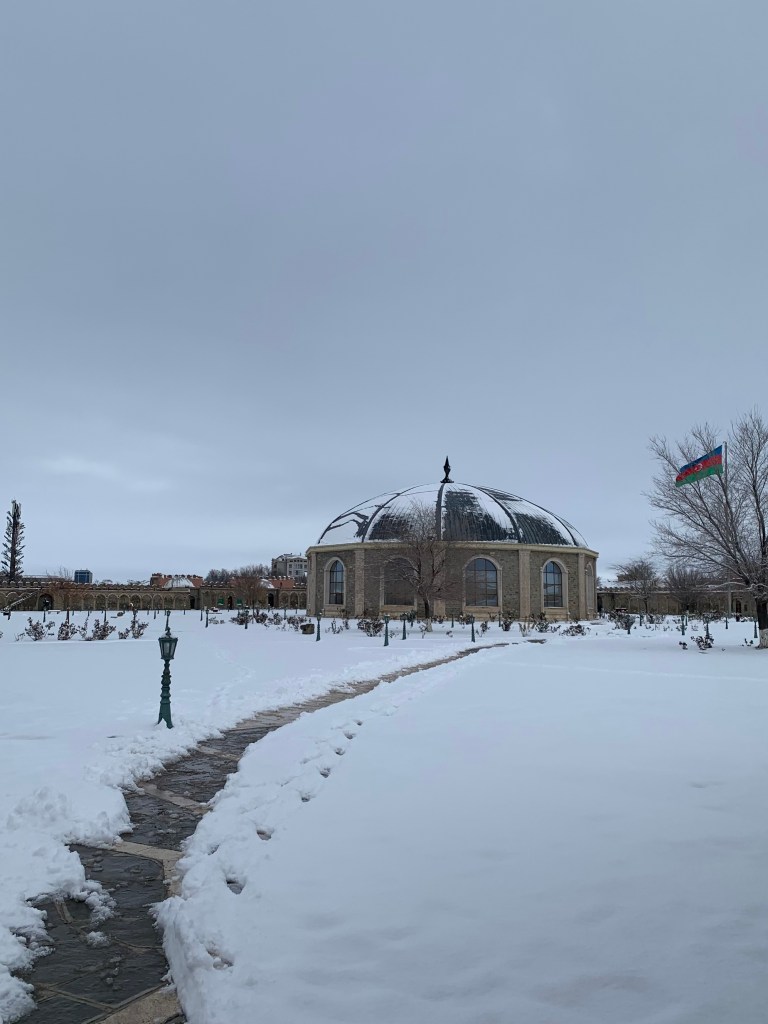
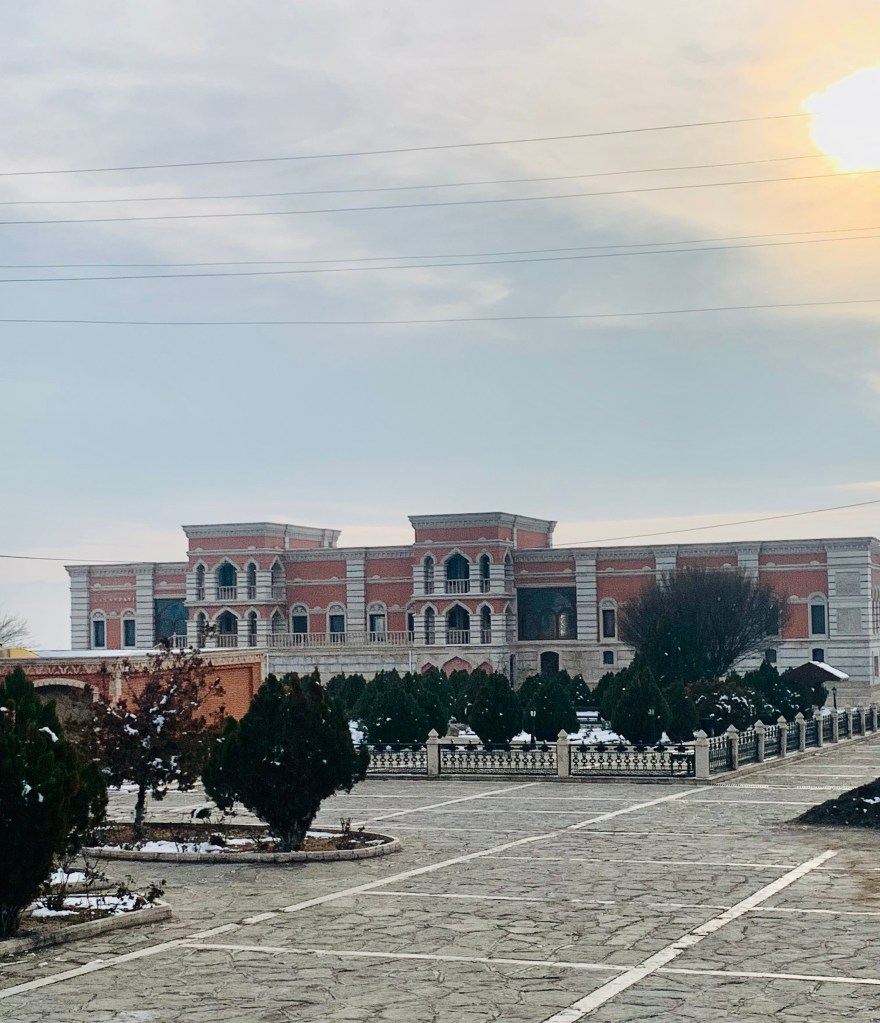
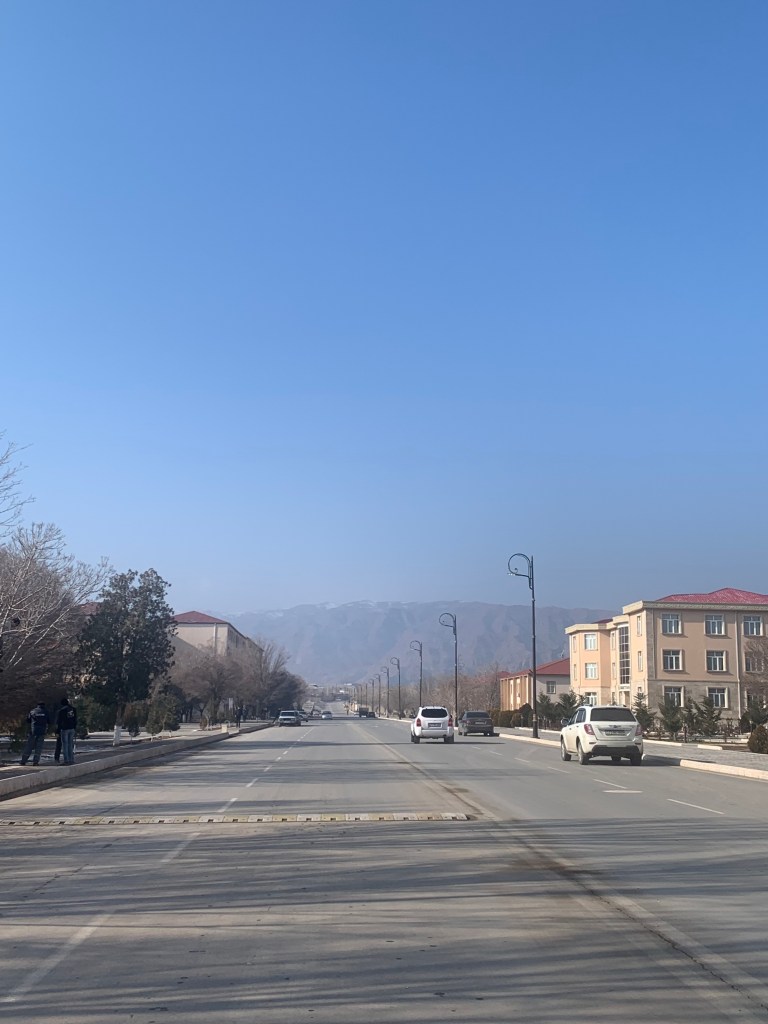
    The capital, Nakhichevan, has a slightly surreal feel to it. The roads are wide and clean, the buildings well spaced and new-looking (even the giant Soviet built apartment blocks), the traffic light and, considering this is Central Asia, well behaved. I read that government employees voluntarily (or they might lose their job :)) clean streets and plant trees in their spare time… a hangover from the Soviet era “sobbotniki” system.

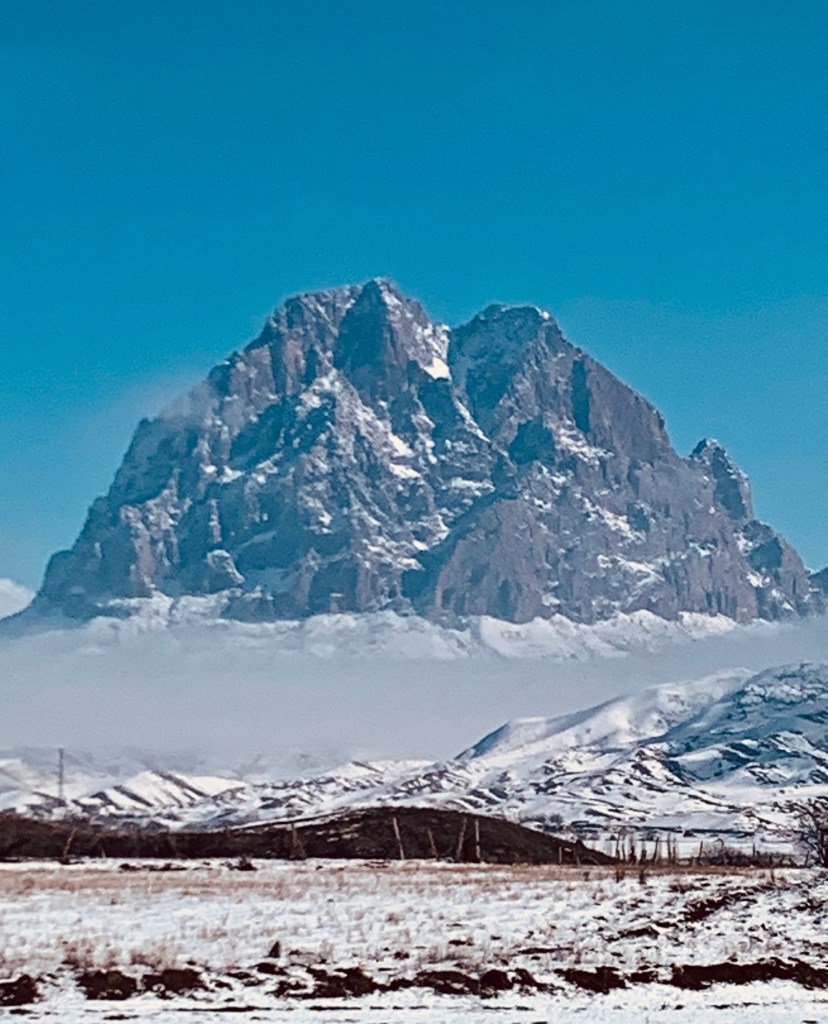
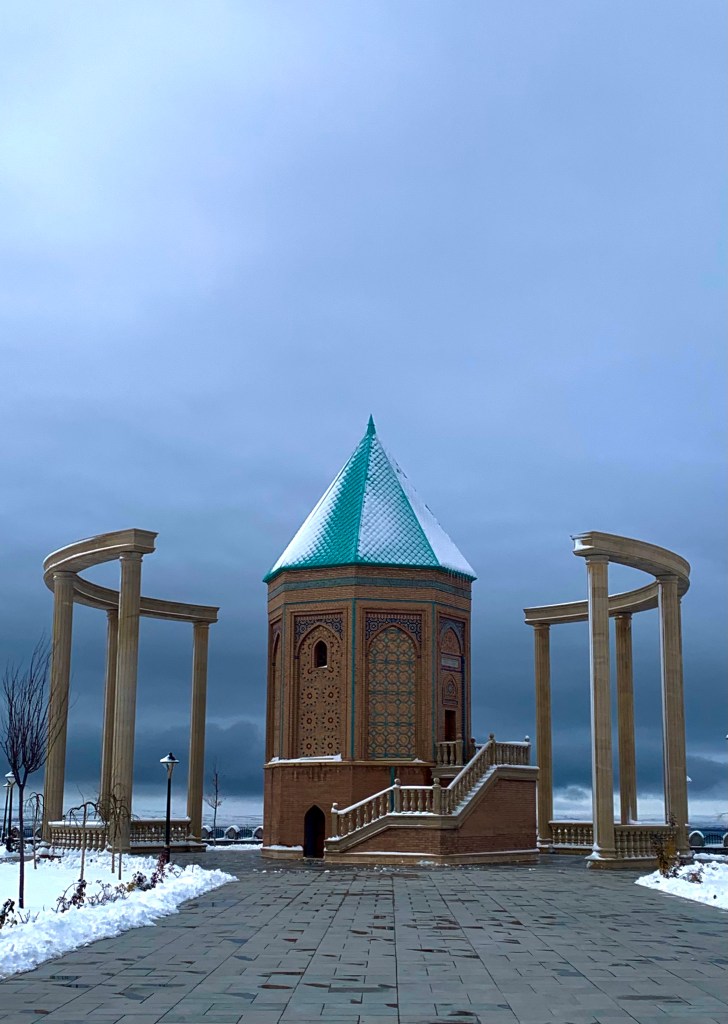
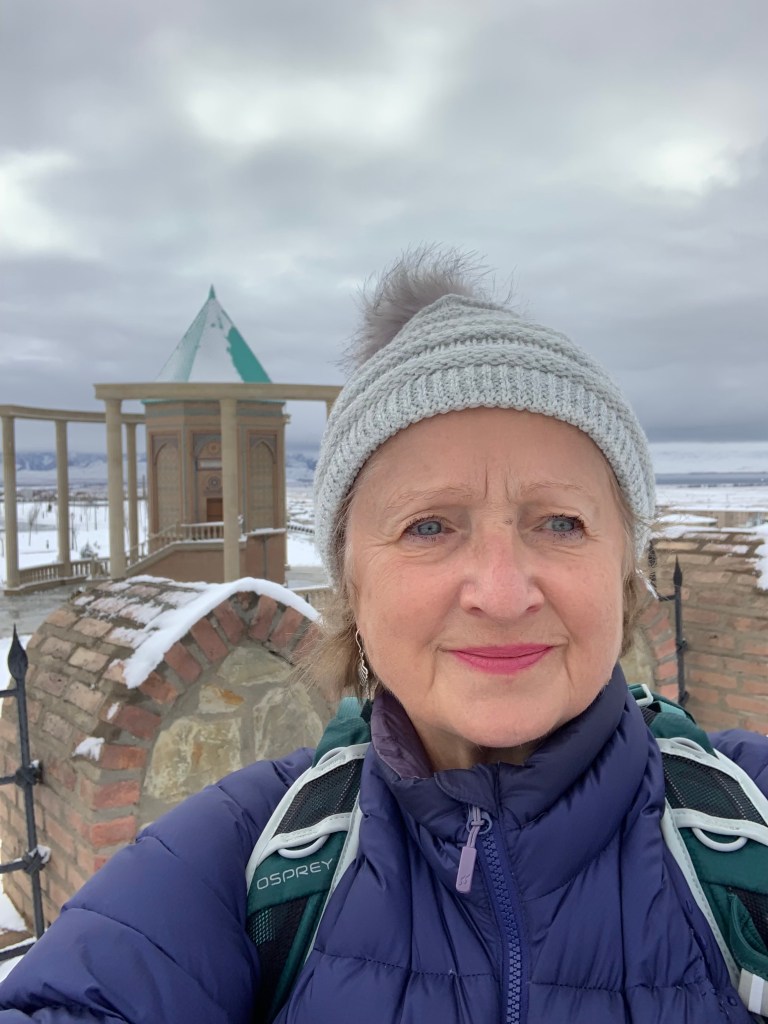
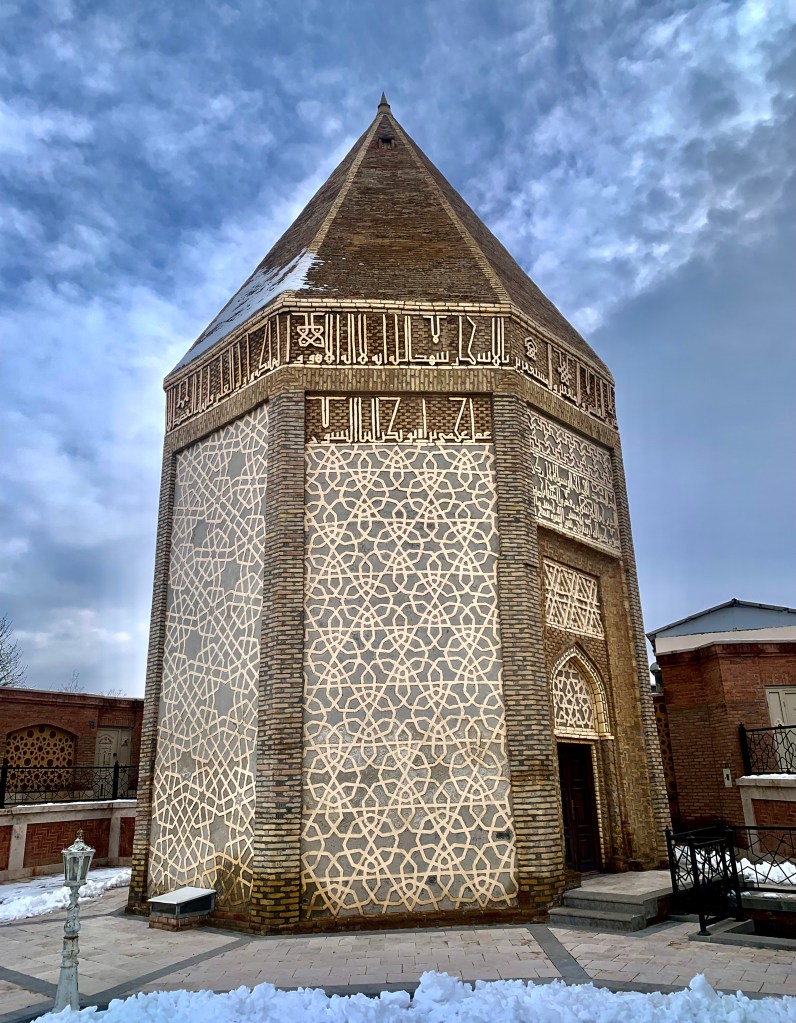
    Nakhichevan claims to be the spot where Noah (of the Ark) lived out his days, having rammed his Ark on the Ilan Dag (Snake Mountain), and caused the top of it to cleave (“he made wine, and lived for another 369 years”). The tomb, said to be originally from VI ct BC, has had several iterations and the current version is a very recent construction. On a clear day you might be able to see Mt Ararat, poignantly, behind it to the north (some 180Km away).

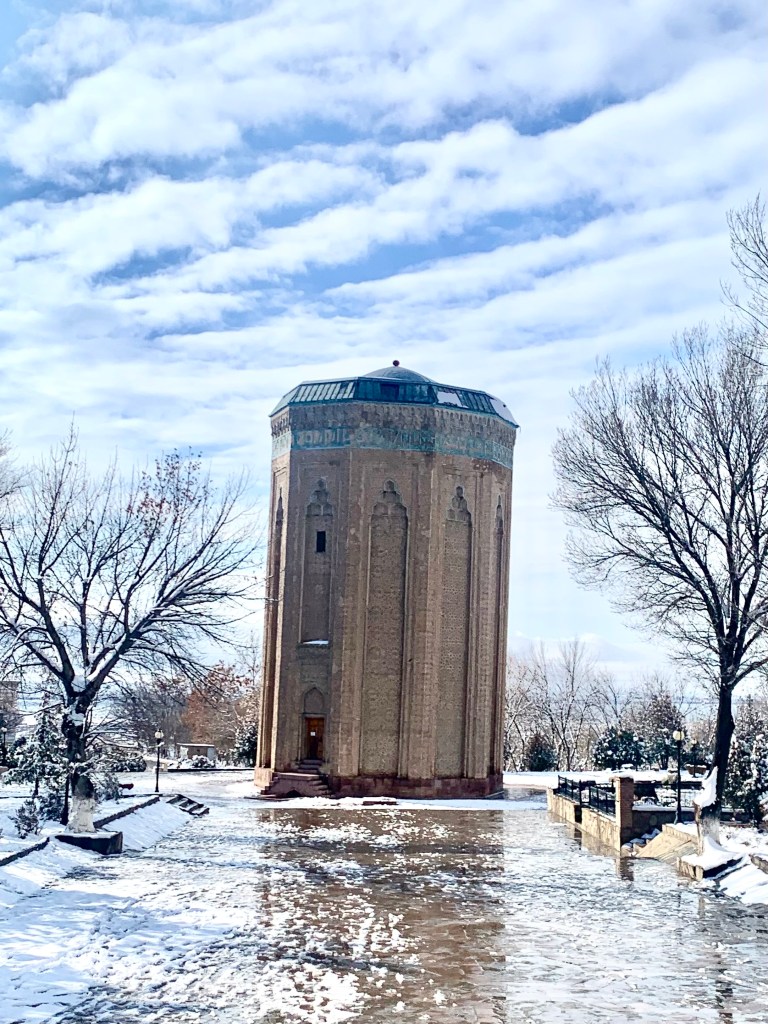
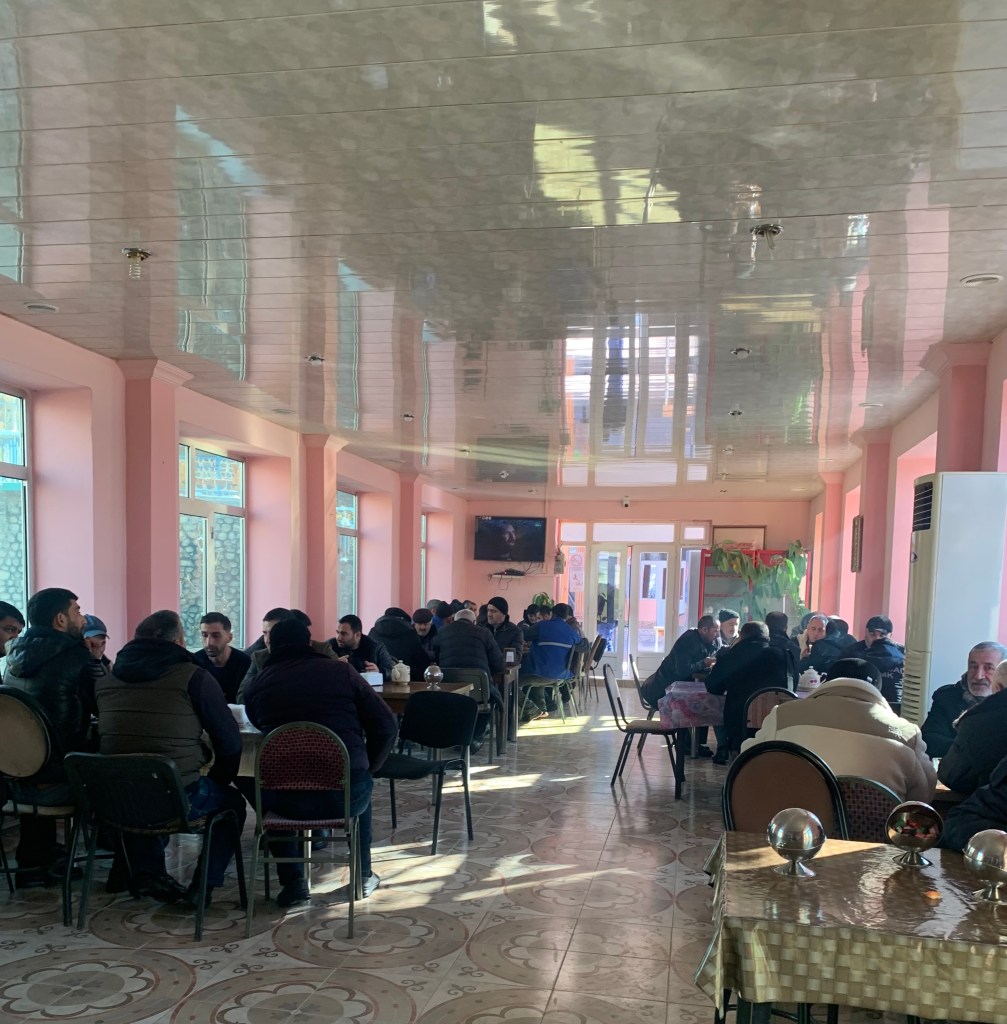
    Another mausoleum is the 12 ct Momine Khatun, built for the mother of one of the Nakhichevan Khans (the palace, heavily restored and soulless, is behind it). The basement tomb has been removed by the Russians, which has caused the structure above to start leaning gently. I went there with two very nice young people, Gulu and Ulvi, who I had met in a cafe across the road. They were keen to speak English and Ulvi, a 19 year old chemistry student, especially wants to use it to get away from Nakhichevan. Gulu taught English at a local school and also spoke wistfully about going abroad.

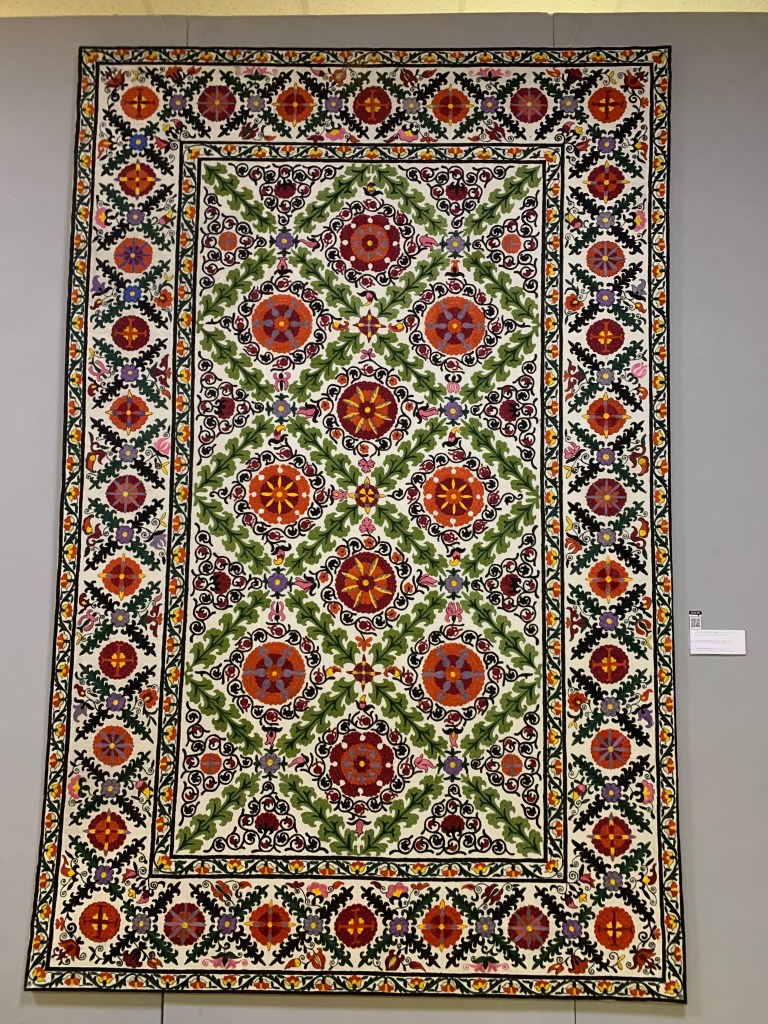
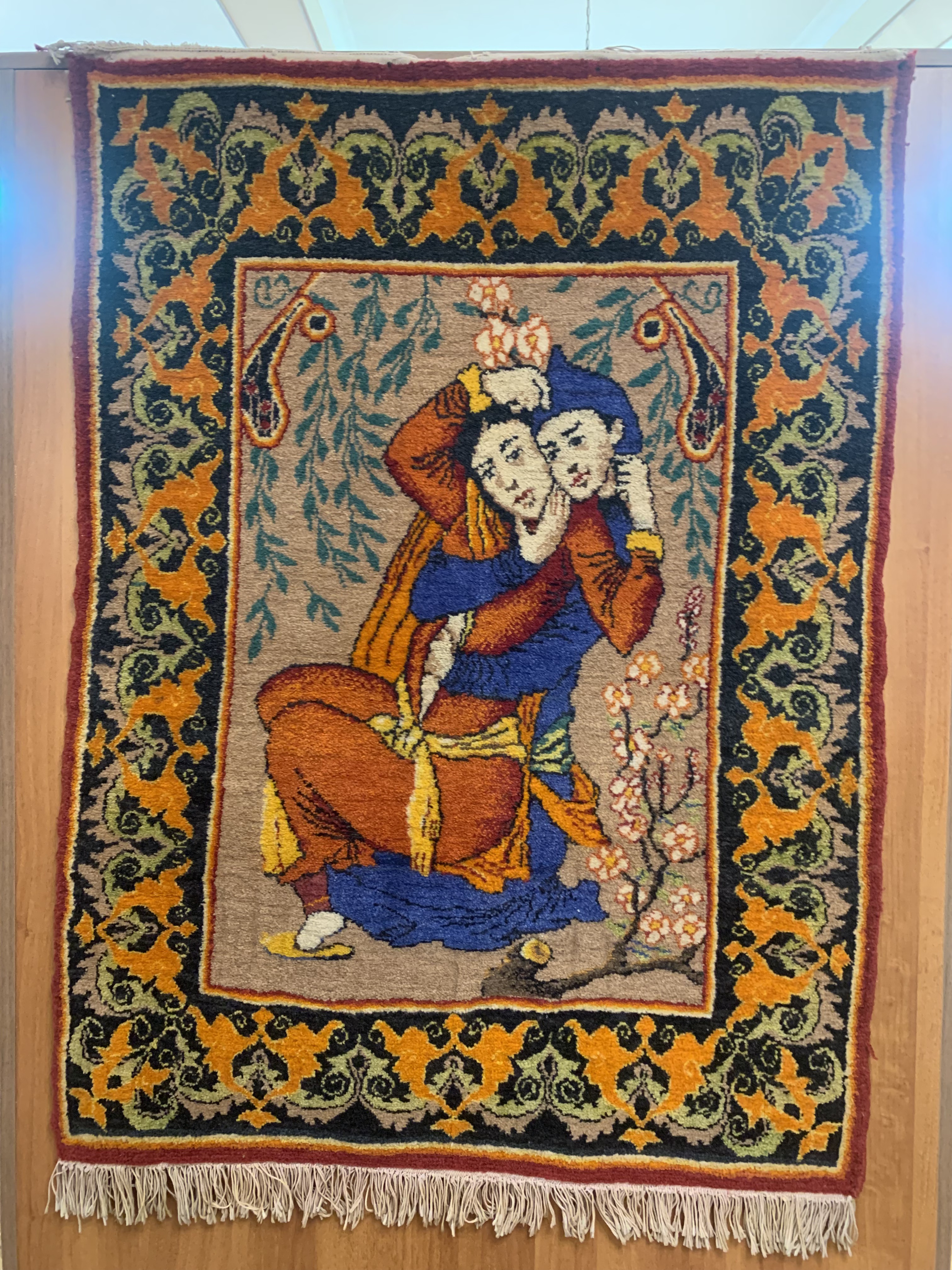
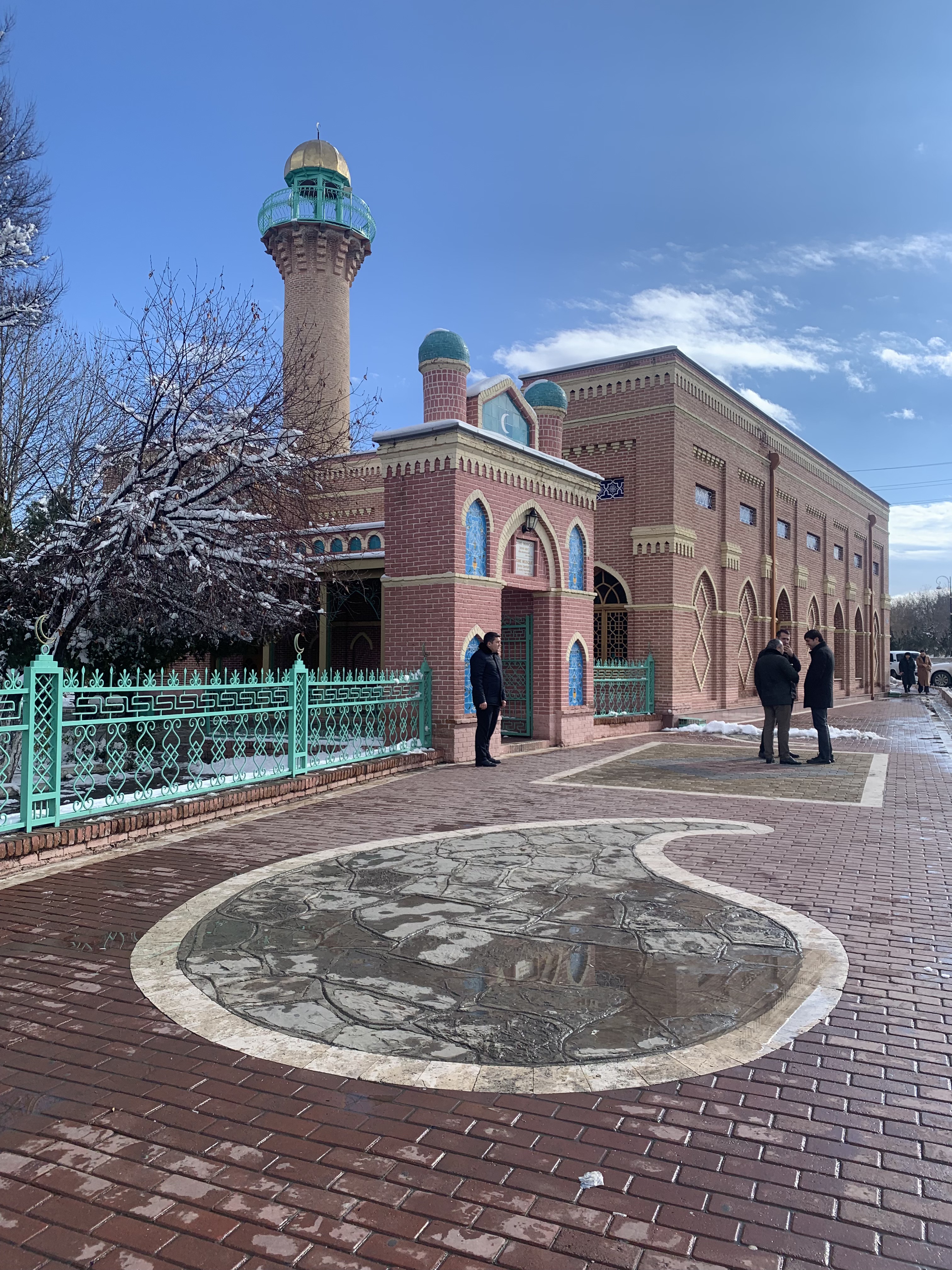
    There are a number of (free) museums in Nakhichevan, but the pride of place must go to the Carpet Museum which has a small but comprehensive collection, from felt ones to silk knotted ones – Nakhichevan rugs and carpets are respected for their high quality. The paisley is the symbol of Nakhichevan and can be found on carpets as well as incorporated in the pavements and everywhere else.

    The bazar is the usual affair of prettily arranged colourful fruits and vegetables, nuts, herbs, dried fruits, cheese, spices… It puzzles me that with so much available produce the “5*hotel Duzdag” I’m staying in (no slumming it this time! ) never serves fresh fruit – the breakfast is an anaemic affair, sad and unappetising, repeated daily without any variation.

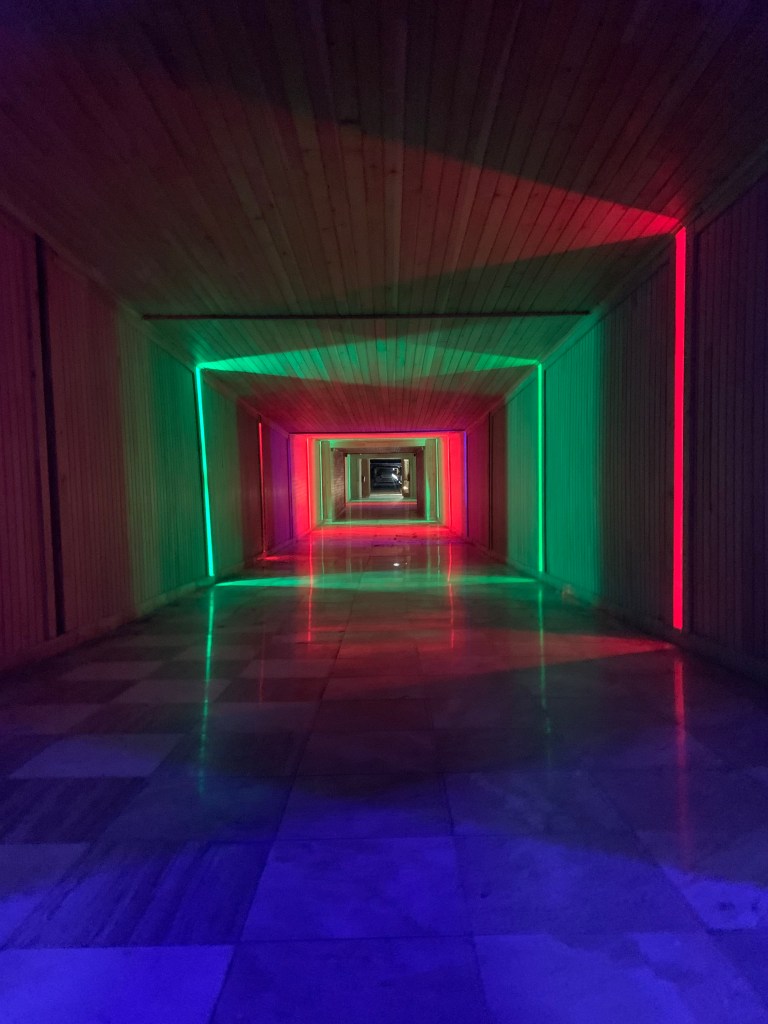
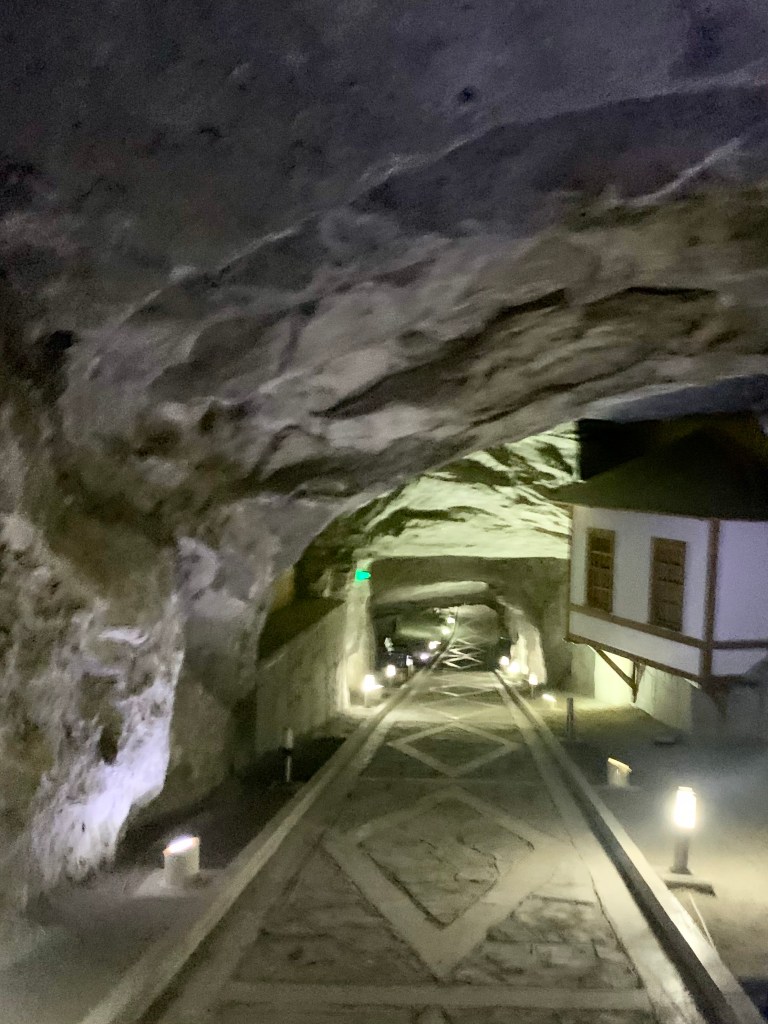
    The reason I’m staying in Duzdag is that it is the base for the Duzdag salt mine Centre for treatment of respiratory problems. (Thought I’d give it a go as have had the post-Covid cough for a while). The Gulag times are long gone, but even then it had been noted that people who spent time in the mine did not have any respiratory or skin issues. The rock salt mine has now been repurposed as a curative resort: there are dormitory style bedrooms with no ceilings or doors, paravane type walls and salt floors – allowing salt and mineral laden air to circulate around. The temperature is a steady 18 degrees C and there’s a difficult-to-describe smell, an aroma: something like a combination of pressed dry figs, straw, wet bird wing, sour plums… Never thought of salt having a scent.

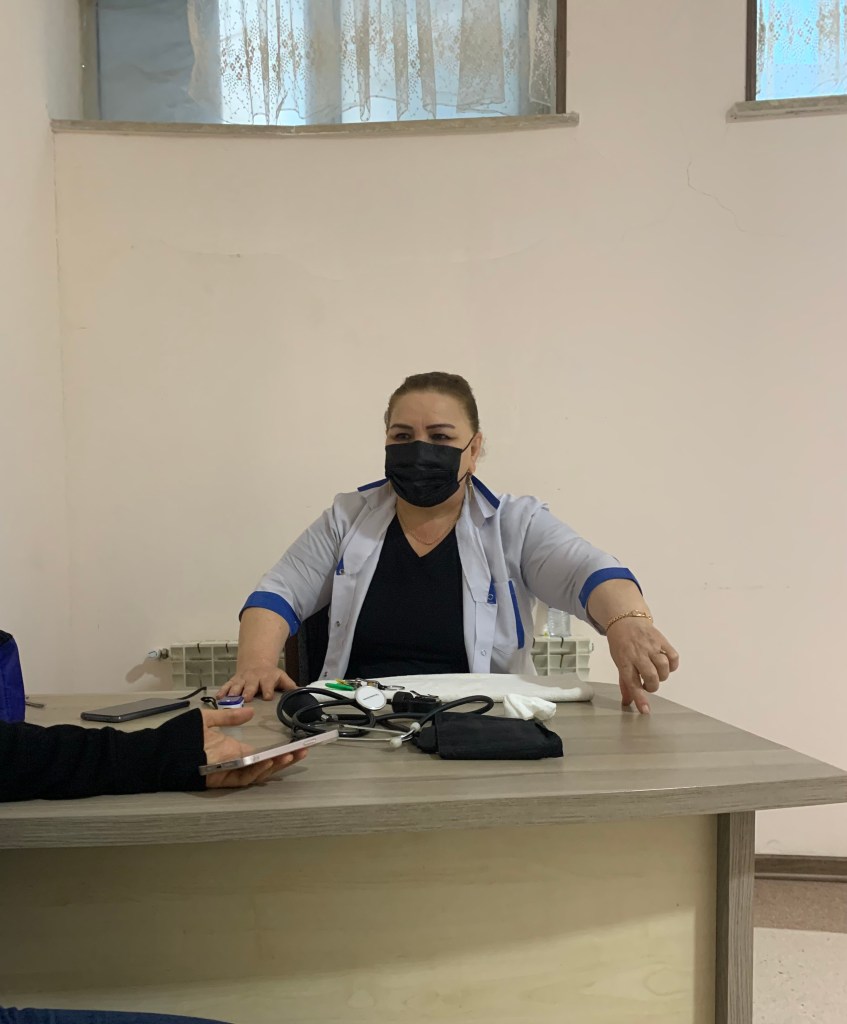
    One can either spend the night there, or go for an afternoon shift of c 4 hours. The professional medical advice is included in the price of the room. (I saw Tibb, a nurse, first, and she so reminded me of the women guards on each floor of the student dormitory in Kiyv in the 1970s, except for the fact that they were silent, moustachioed ones, and Tibb liked to chat – Azerbaijani only!). The doc, Amil, is an allergy specialist. (Winter is the least popular time to come here – fewer than 10 people staying in the hotel when I arrived – right now I am the only guest!) In the high season there are a number of medical staff – and stays in the mine are in 3 shifts.

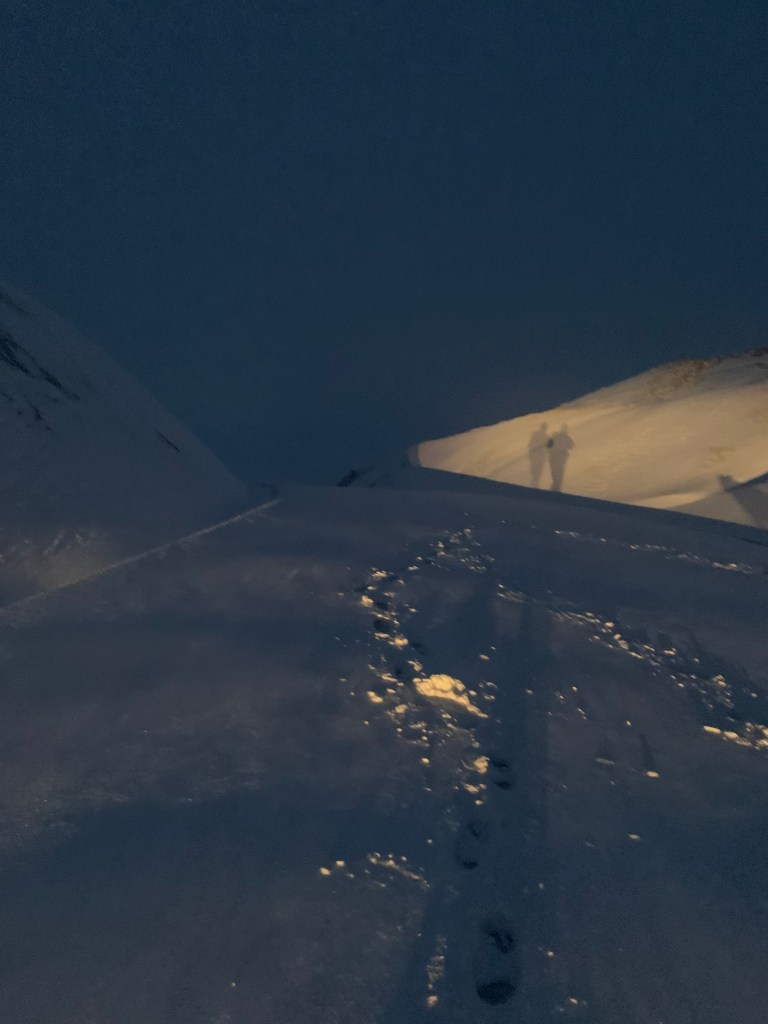
    It snowed a couple of days ago – about 10cm came down overnight (“it doesn’t snow here”, said a taxi driver, and no-one has winter tyres). The minibus couldn’t make it to the mine for a 0730 pick up, so we had to walk the 2km to the hotel – wet and uncomfortable. (I had been told off for walking to the mine on my own the first evening – the result of a misunderstanding – as there are “wolves and wild dogs”. Must say, it did not feel very jolly at the time – there is no street lighting and there was no moon – thank goodness for phone torches.)

    The snow has lingered, and it made my trip to Alinja Castle, Xanagah Yolu, a lot more of a challenge than it would have been otherwise. There are almost 2000 steps to it, and with snow and ice on them, it was a tough, slippery climb. The fortress was in its prime in the 12-14 ct. It withstood a 14 year siege at one point. It has been renovated sympathetically to give an idea of what it had looked like. The views are worth the climb: of the mountains around, the valleys below and the eagles above (the pair was too fast for me to photograph). Others have seen mountain goats and even wolves . 

    The town of Ordubad is “one of the nicest settlements in Nakhichevan”, nestling on the foothills of the mountains, looking like an oasis rising out of the desert. It is, however, a dying town: there is no employment since the demise of the Soviet Union, when there had been KOLHOZes growing fruit and a factory making preserves, and there were mulberry trees and silk making. The young are leaving, seeing no prospects. The men sit in the teahouse near the old cinar tree, smoke and drink tea, putting the world to rights. Women are at home, making sure food is on the table whenever the men come in.

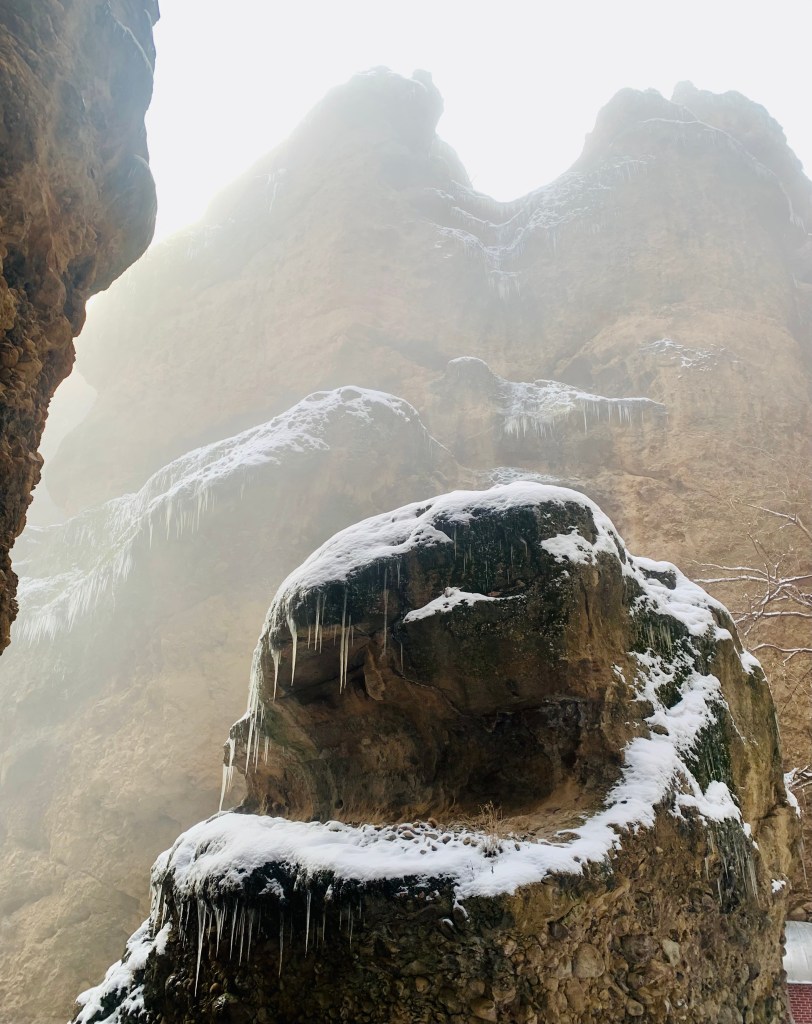
    One of the holiest pilgrimage places for Muslims is the Ashanti-Kahf, a series of caves some 10miles from Nakhichevan town. It is said to be a place of a Koranic miracle, where 7 young Muslim believers (men, of course) hid from persecution; god made them fall asleep for 309 (I like the precision) years, then woke them up. They did not like what had become of the world, and prayed to be put to sleep again/forever. God obliged and they blended into the mountain. Somehow, no-one mentioned that the caves were 546 steps up… There is a small mosque and an open air prayer area nearby, but the caves are just that. Though the icicles and mist made for an otherworldly feel.

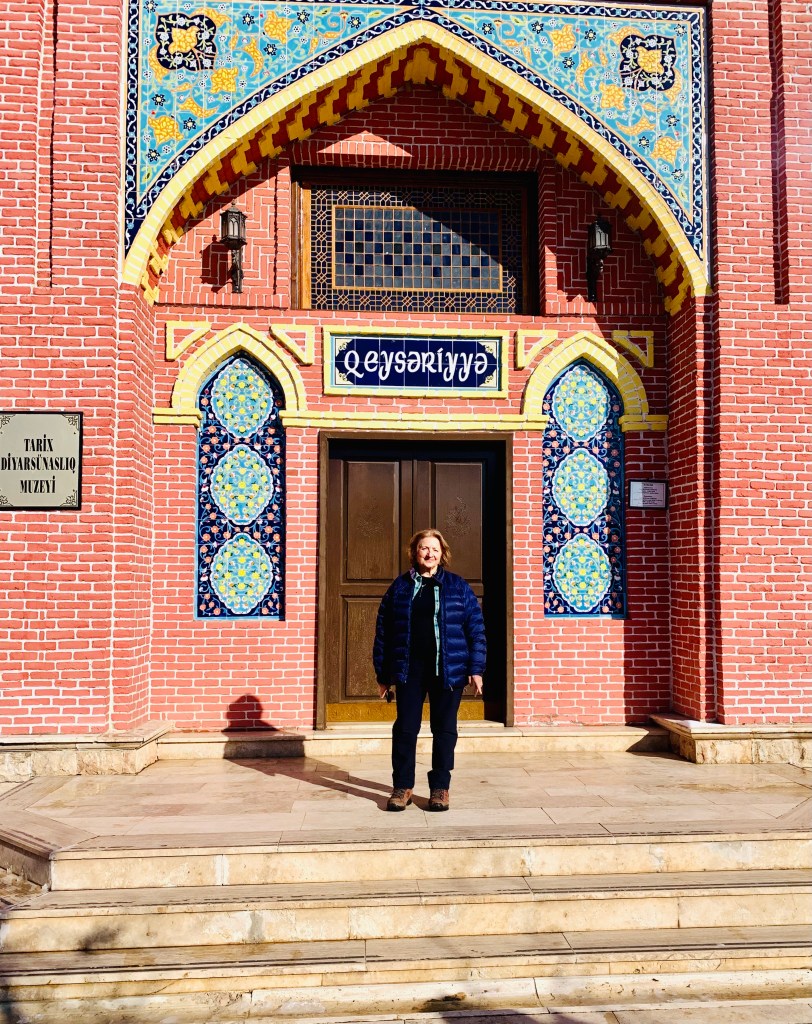
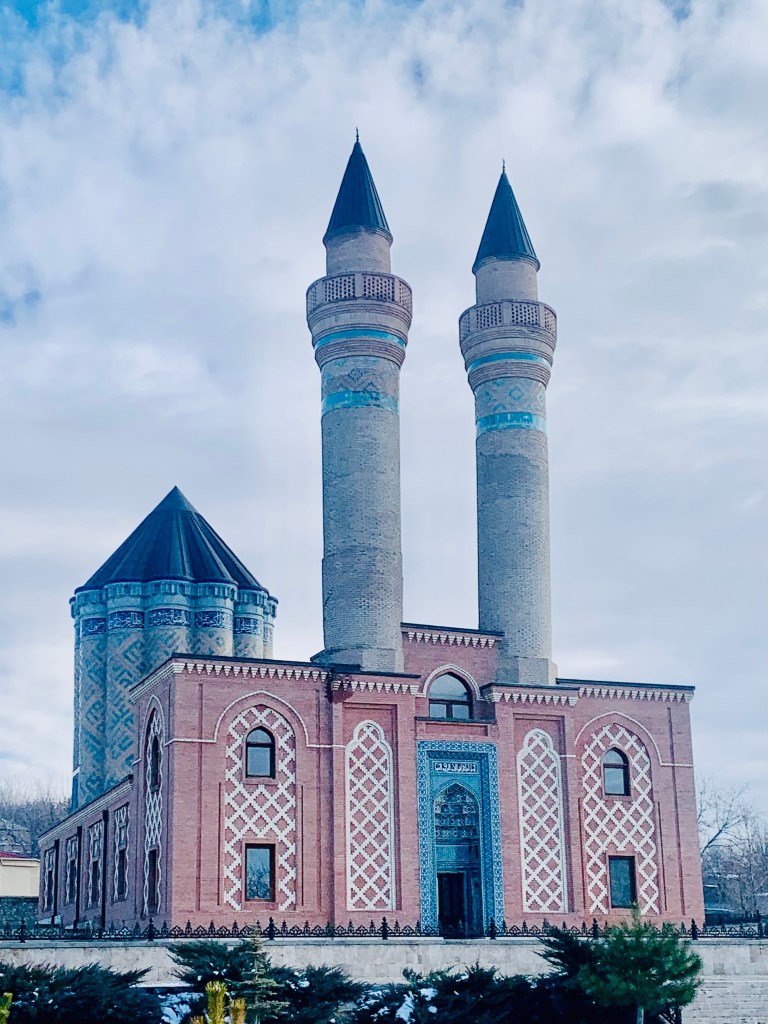
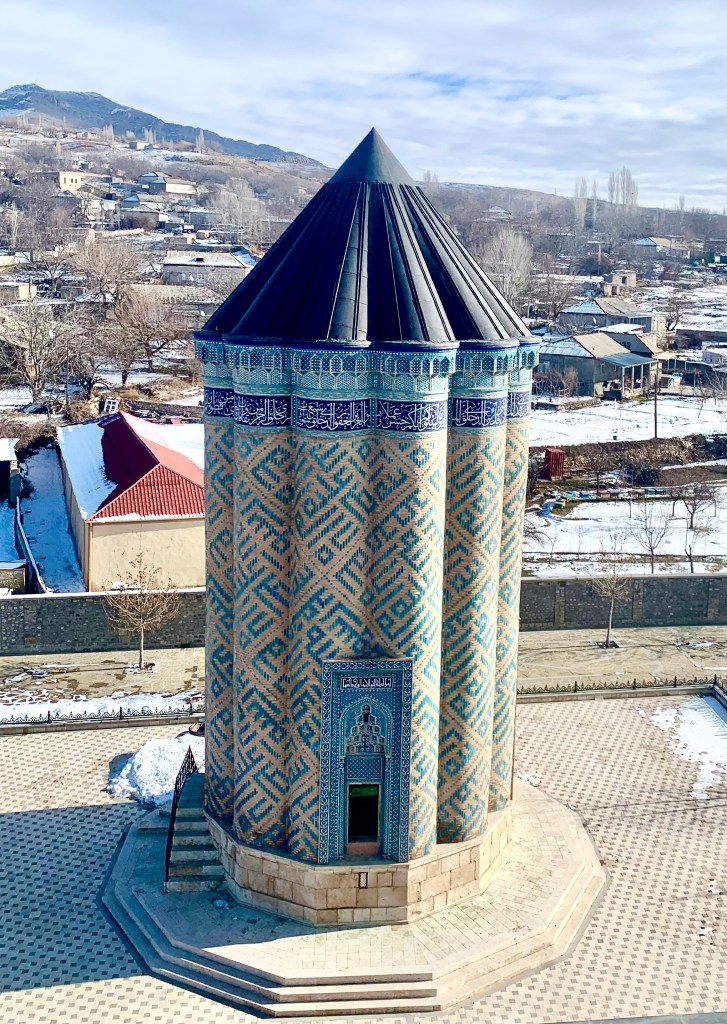
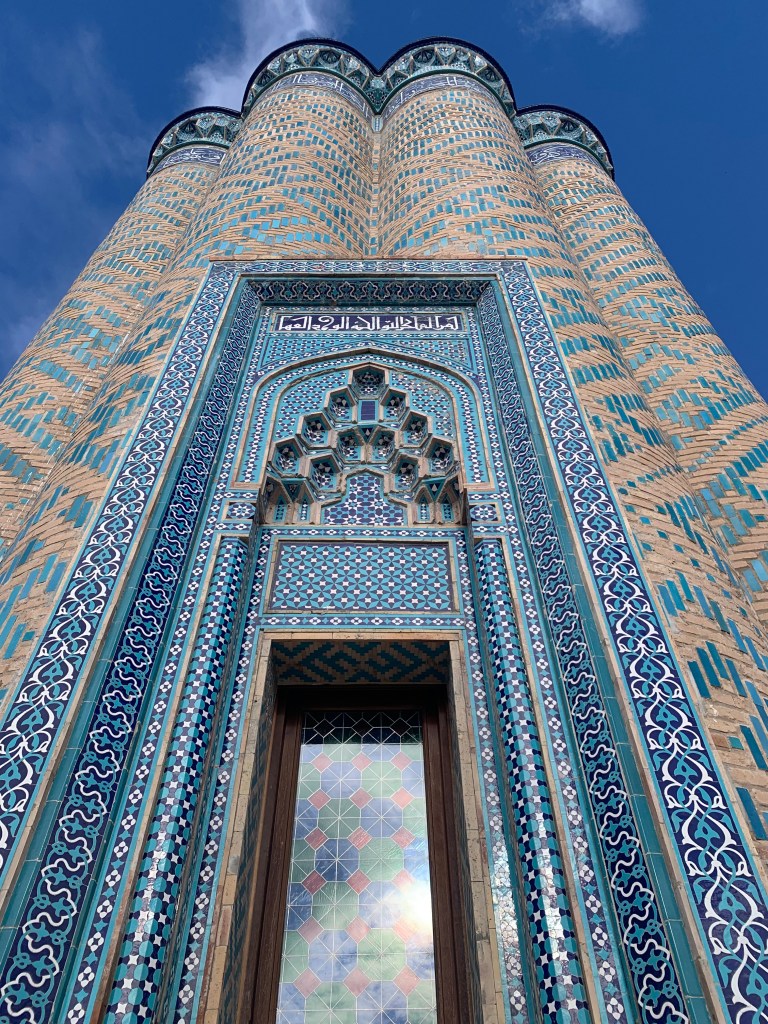
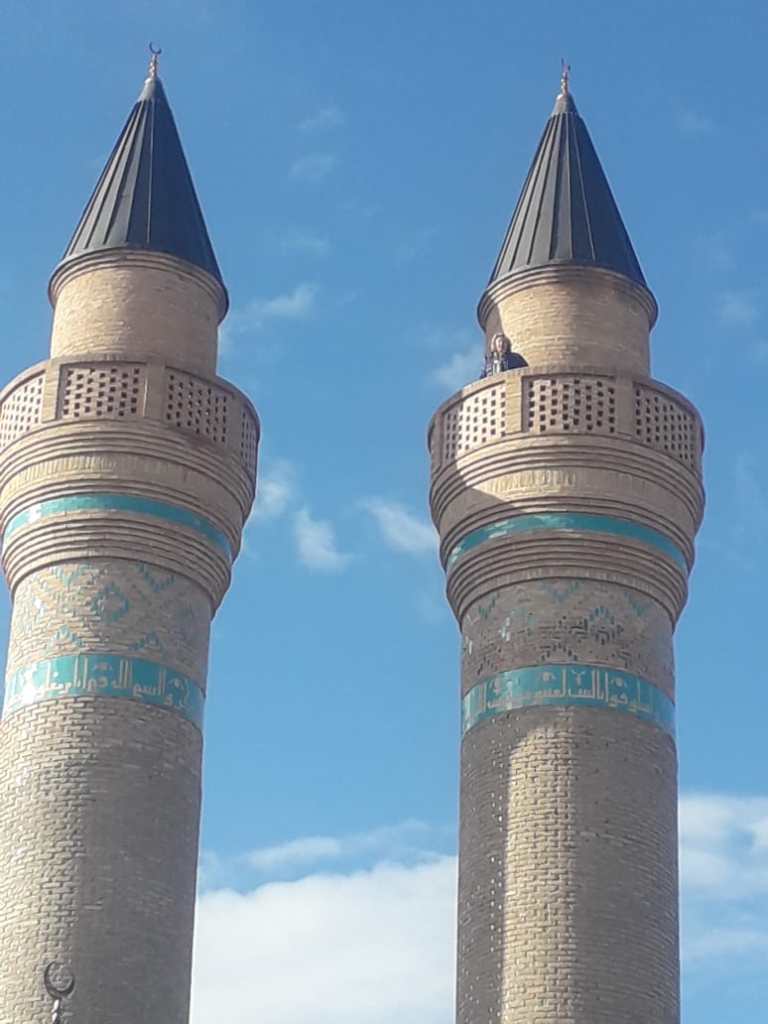
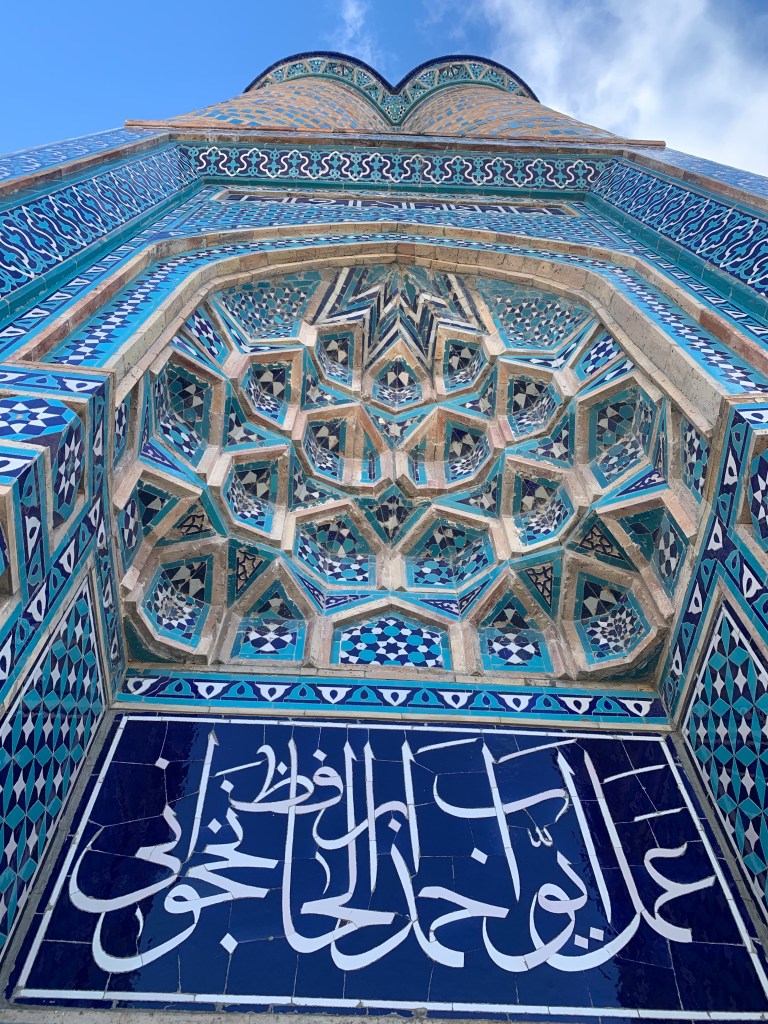
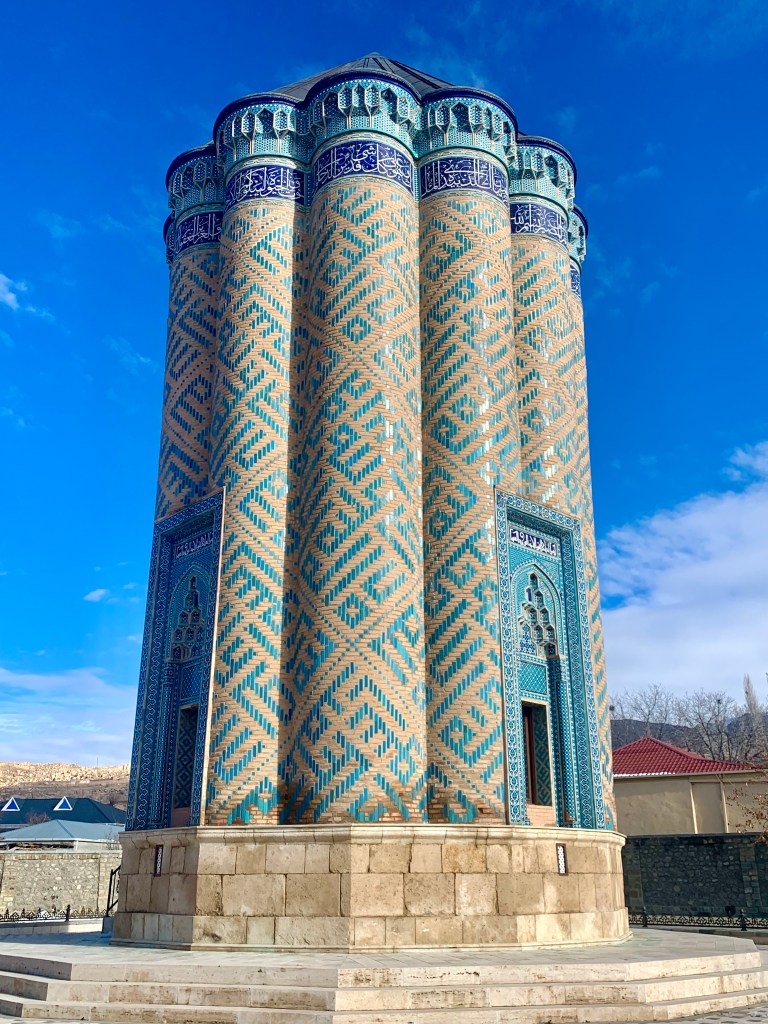
    Karabaglar Mausoleum is said to be second in importance only to Momine Khatun one in Nakhichevan. Karabaglar is now a small, quiet village, but it had had major importance in the past – a large population, many mosques and civic buildings. The Mausoleum has been beautifully restored (2016). and the blue tiles gleam in the winter sunshine. Ichin, the museum curator allowed me to climb up the minaret for a view. The narrow circular stairs are a health and safety nightmare but the view is tremendous. He asked to take my photo for the site’s Instagram page – I was the first tourist in 2024 to visit. As with the Momine Khatun, the Russians took away the graves of the three people buried in the shrine. Ichin’s explanation was that the Soviets wanted to remove the Azerbaijanis’ history.

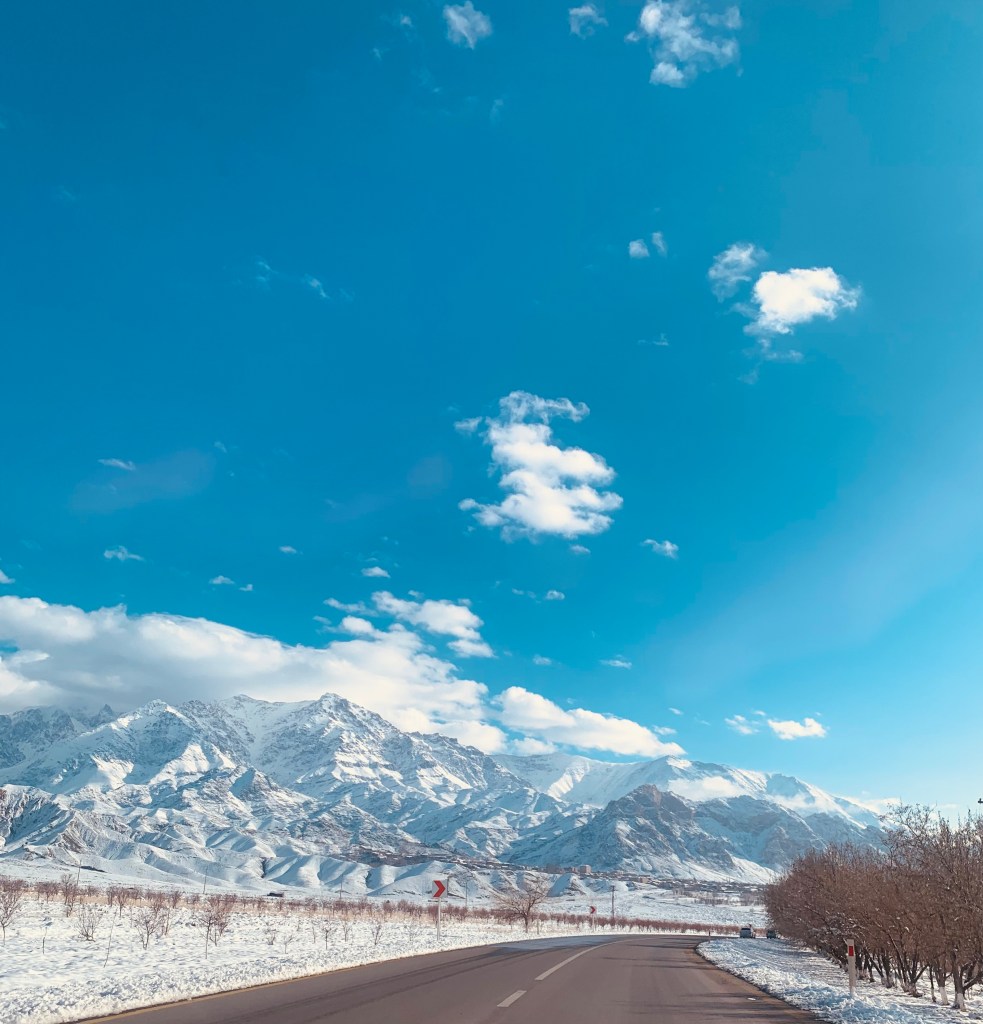
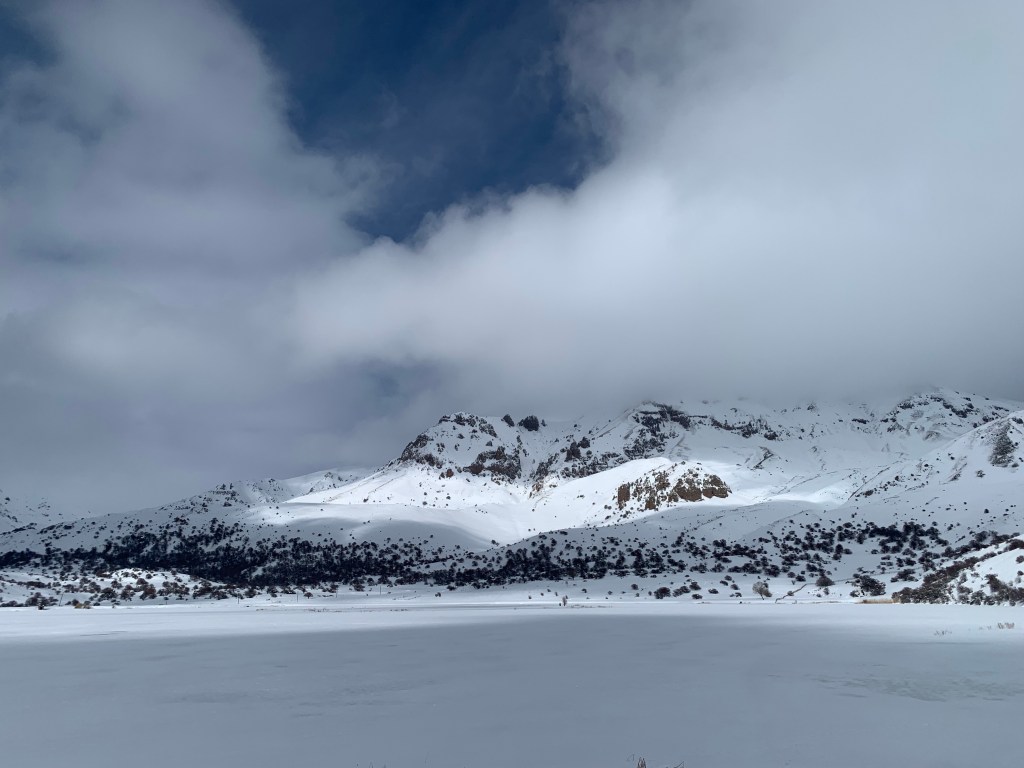
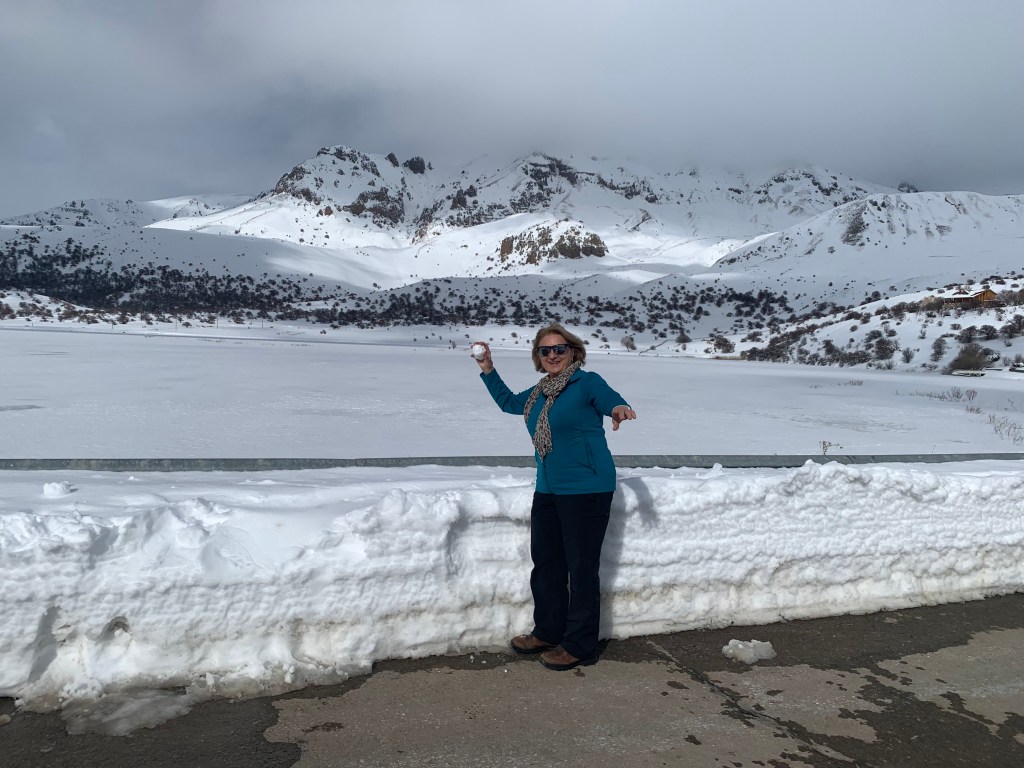
    The Batabat Lakes (there are 3) are high up in the mountains towards Armenia (the advice is NOT to go higher than the top lake – the military are there, they are very touchy and it might not end well). There are floating islands, fish, trekking, picnics, summer dachas… though not today. The lakes were frozen and covered with snow. The road to them is a twisty, hairpin one, and views open with every new turn.

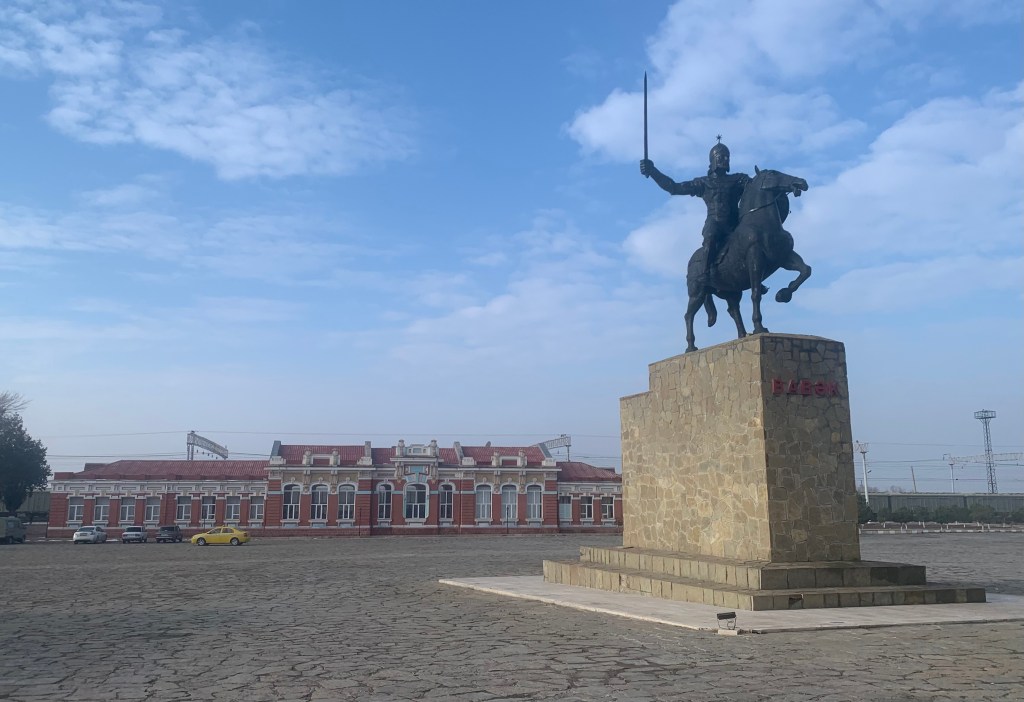
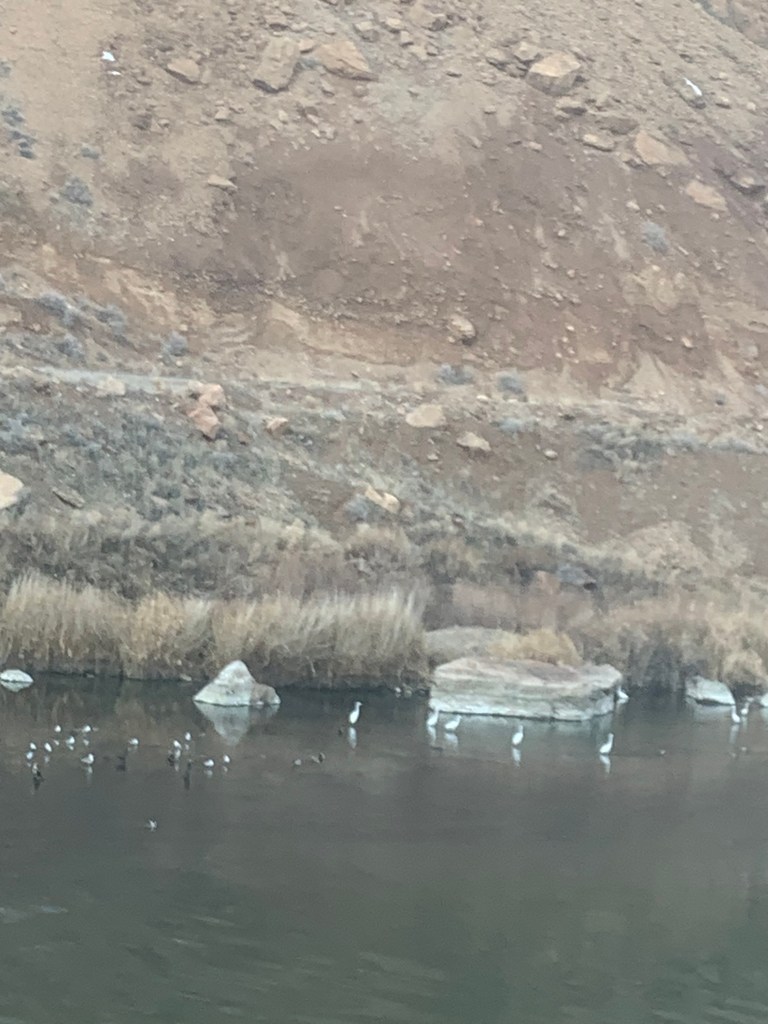
    For my last full day in Nakhichevan, I went on a train journey to Çulfa, a border town with Iran. The tracks run along the Aras river (on the Iranian side) which Iran has dammed for the hydroelectric plant  - I can see the lake out of my hotel window. The flat plain in which Nakhichevan lies, on the left bank of the Aras, slowly becomes a canyon, with red-tinted mountains rising on both sides – much higher on the Iranian side. The river runs clear here and I don’t think I’ve ever seen so many egrets, herons and other water and wading birds in one place. (The quails in Nakhachivan are as numerous as sparrows along some roads – it is forbidden to catch them…)

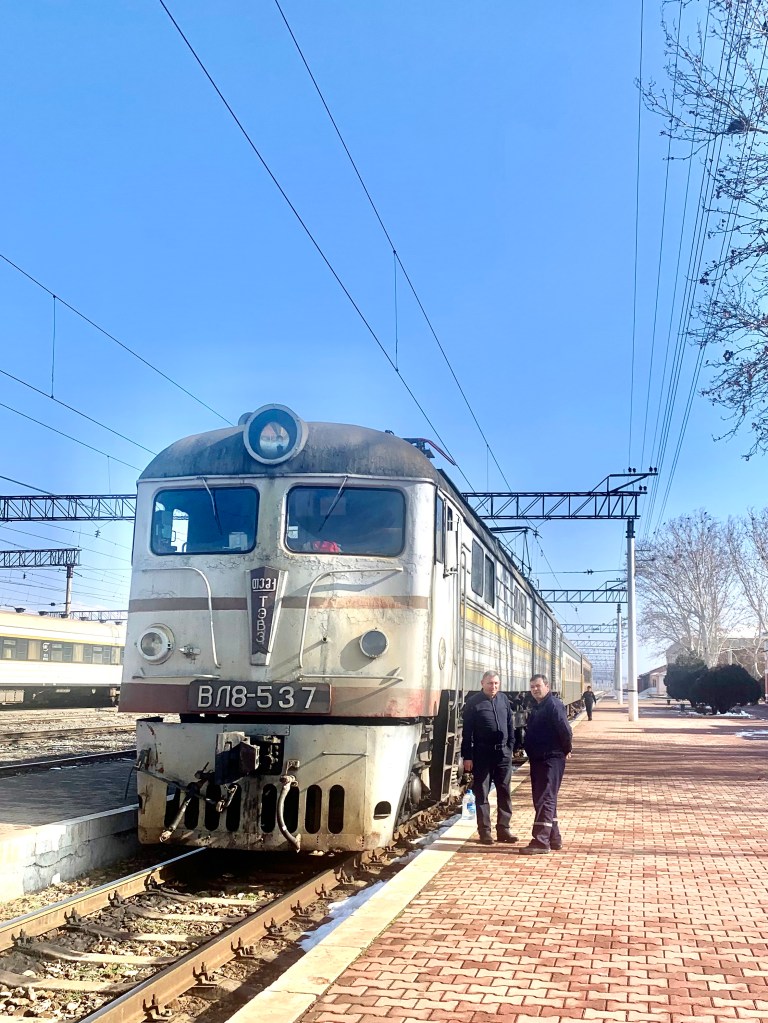
    The electric engine is Russian made, and looks venerable; it runs ponderously, lumbering along the river and the barbed wire fence. It takes an hour and a half to cover the distance of some 80-90km. The carriage is also vintage Russian – the kind that used to ply all Soviet rail routes, having 4 bunk beds (covered in dark green plastic) – can’t quite recall if that was 2nd or 3rd class…

    A dozen or so passengers were mainly young men coming or going to do their military service at the outposts along the border (I was again the only female around). The settlements along the way are sparse and probably also serving the border/ military presence – there is little else here. Çulfa itself is weirdly empty. I know it’s winter, and things are not good with Iran, but this felt abandoned.
    It was such a lovely, almost springlike day, sunshine and blue skies, I went to have a look at Noah’s tomb and the Nakhichevan heavily restored fortress again – this time without the snow. Though there was something a little magical when it was under the snow.

    Saying goodbye to Ulvi, Gula and Asger was a little sad, but they are such pleasant, fun people, I can but hope to meet them again.

  • Azerbaijan

    Jan 13th, 2024

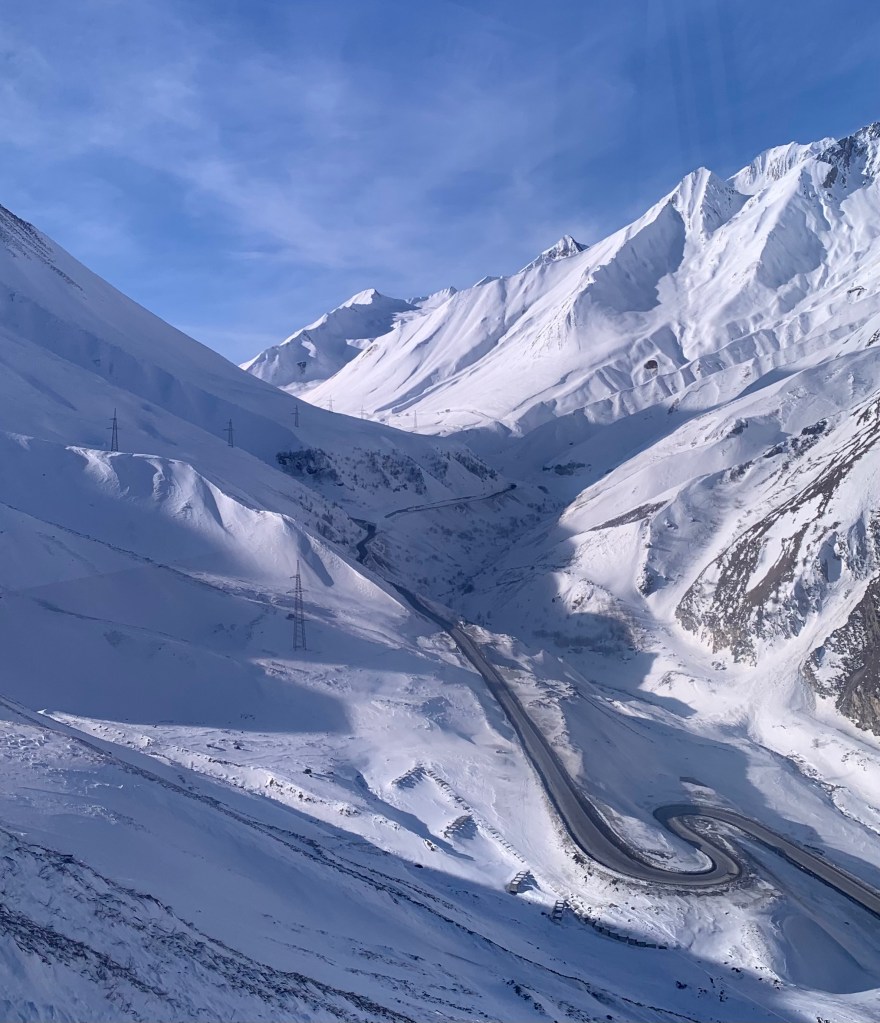
    I left Gudauri (Georgia) ski resort (with some difficulty) on the 4th of January, in a snow storm. The two marshrutkas I tried to hail would not stop (full, presumably, and seeing me there with my giant backpack, was too much). The car wheels were spinning, the cars sliding, snow chains being bought (the bus stop was next to the petrol station and shop). Interesting to watch, though less so when you are trying to get somewhere.
    Negotiated a taxi ride to Tbilisi (120Km) and persuaded Christoph, a German Erasmus student who was also waiting for a marshrutka, to contribute what he could. We were both glad to get in (the snowman look had started to pale long before – the hour spent outside was plenty). The ride down the snowy mountain road was slow and slippy, unsurprisingly, though there were those who tried to overtake the queue, unsurprisingly. Once out of the mountains, a complete change: dry roads and some vague sunshine.
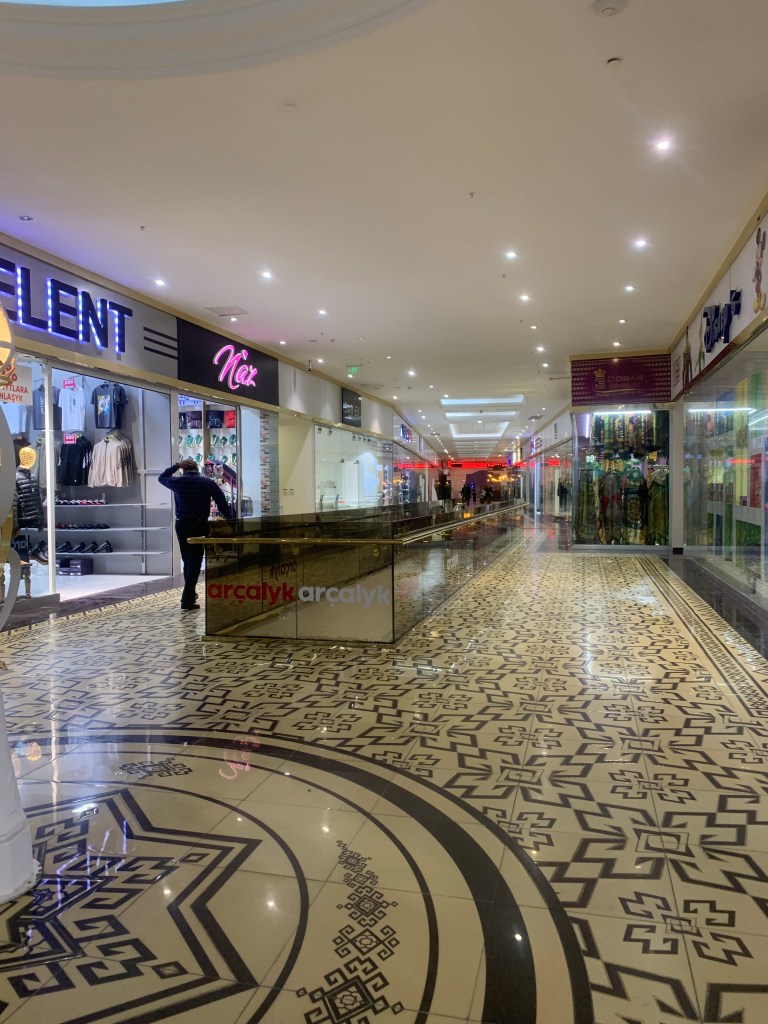
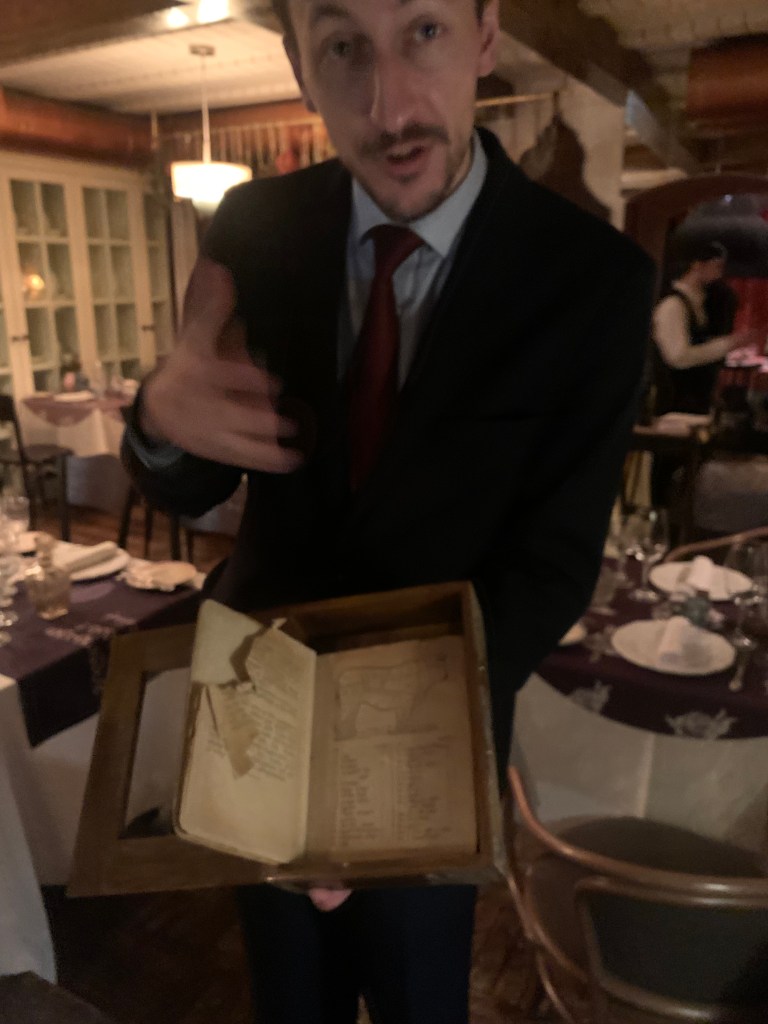
    Should you happen to be in Tbilisi, the Barbarestan restaurant on the Left Bank is worth a visit – the food is good, but it’s the story, the presentation and the ambience that make it so. The menu is based on a cookery book found at the Tbilisi Dry Bridge flea market a few years ago. It is a collection of Georgian recipes by a lady cold Barbara, written c. 1874 and published by her daughter – the book they got was printed in 1940. It is reverently kept in a box with a glass lid and shown with pride (though I may have been lucky that it was shown me very unctuously by a Uriah Heap namesake…) . The restaurant is slowly and diligently going through the recipes, using seasonal ingredients.
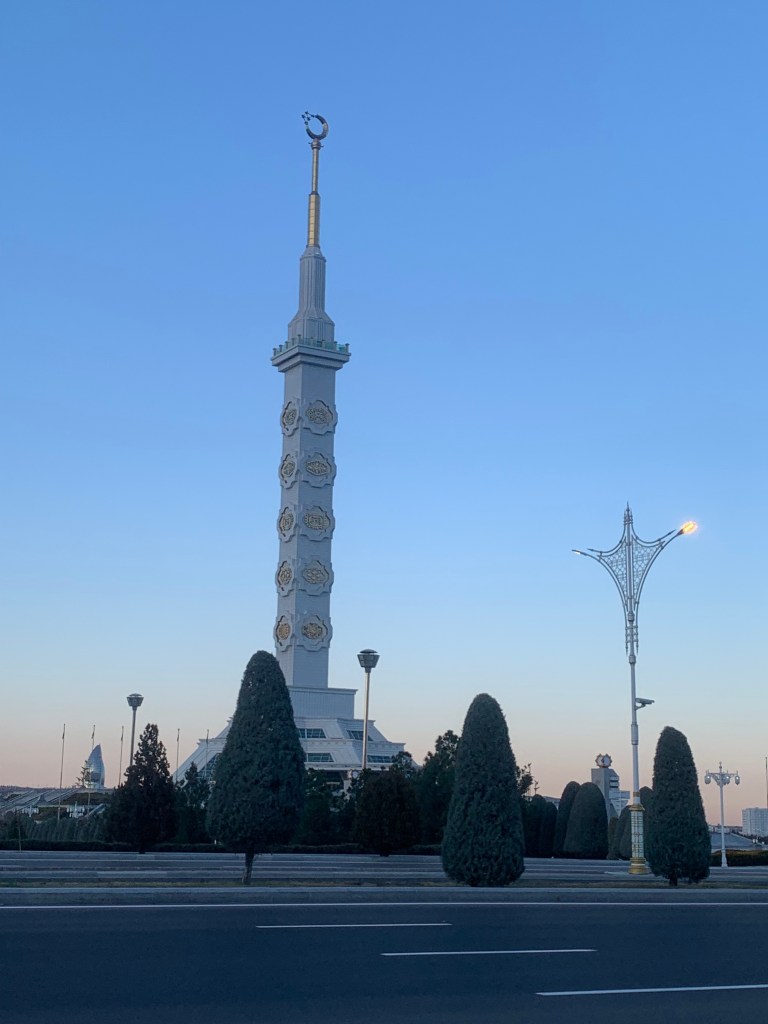
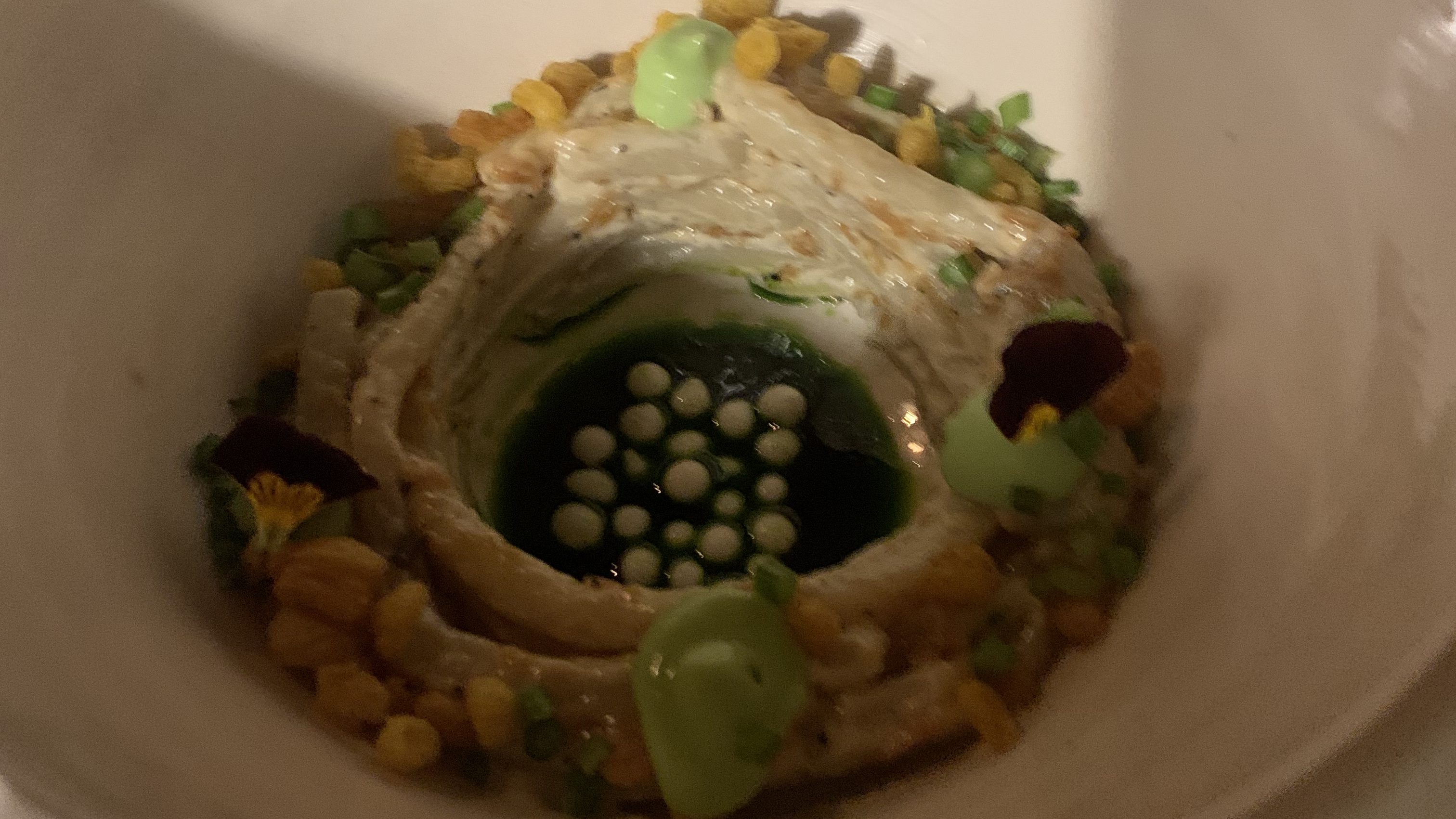
    Chicken soup (the broth came in a dinky teapot and was poured most carefully onto the nest. Tasty.)

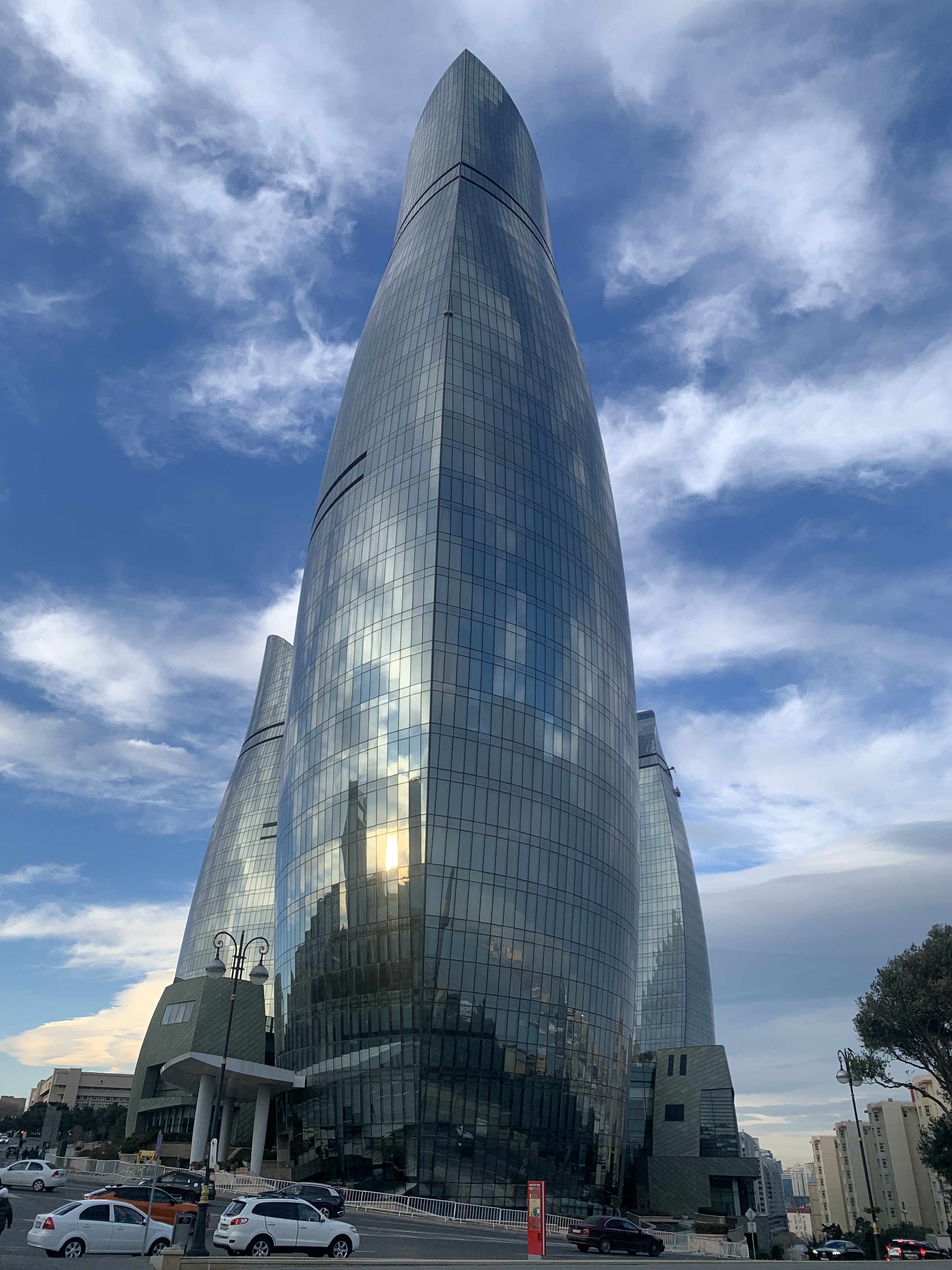
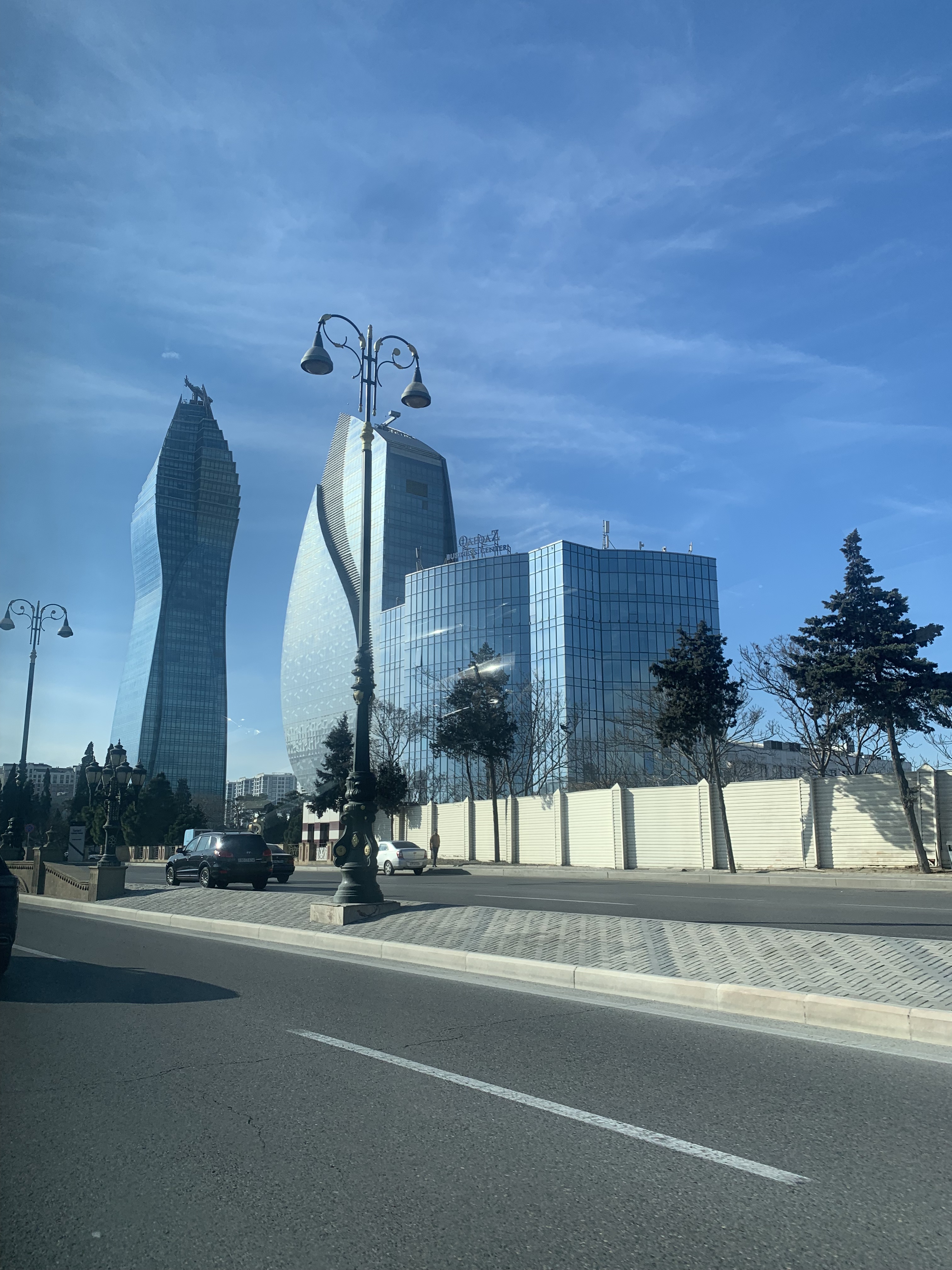
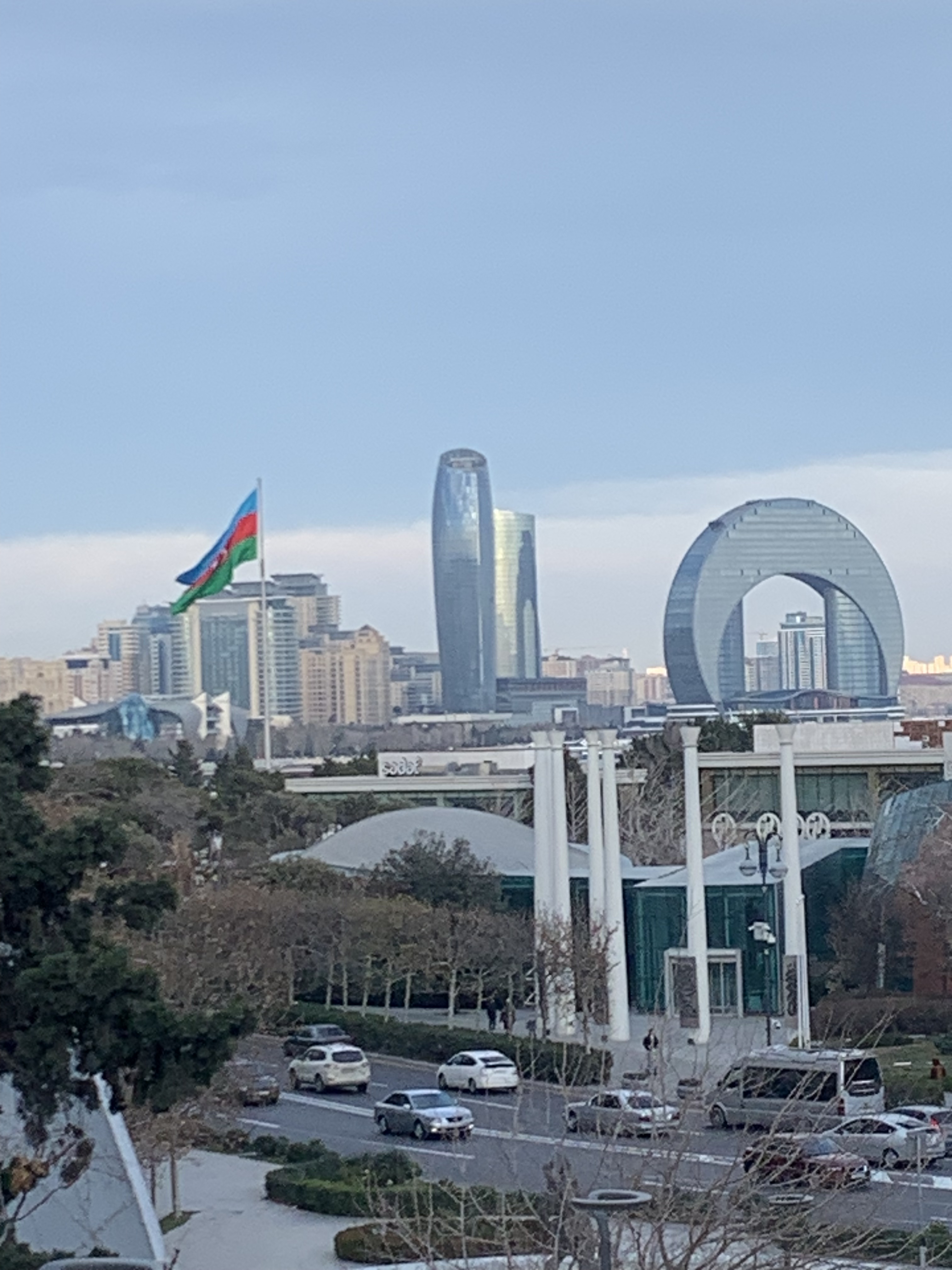
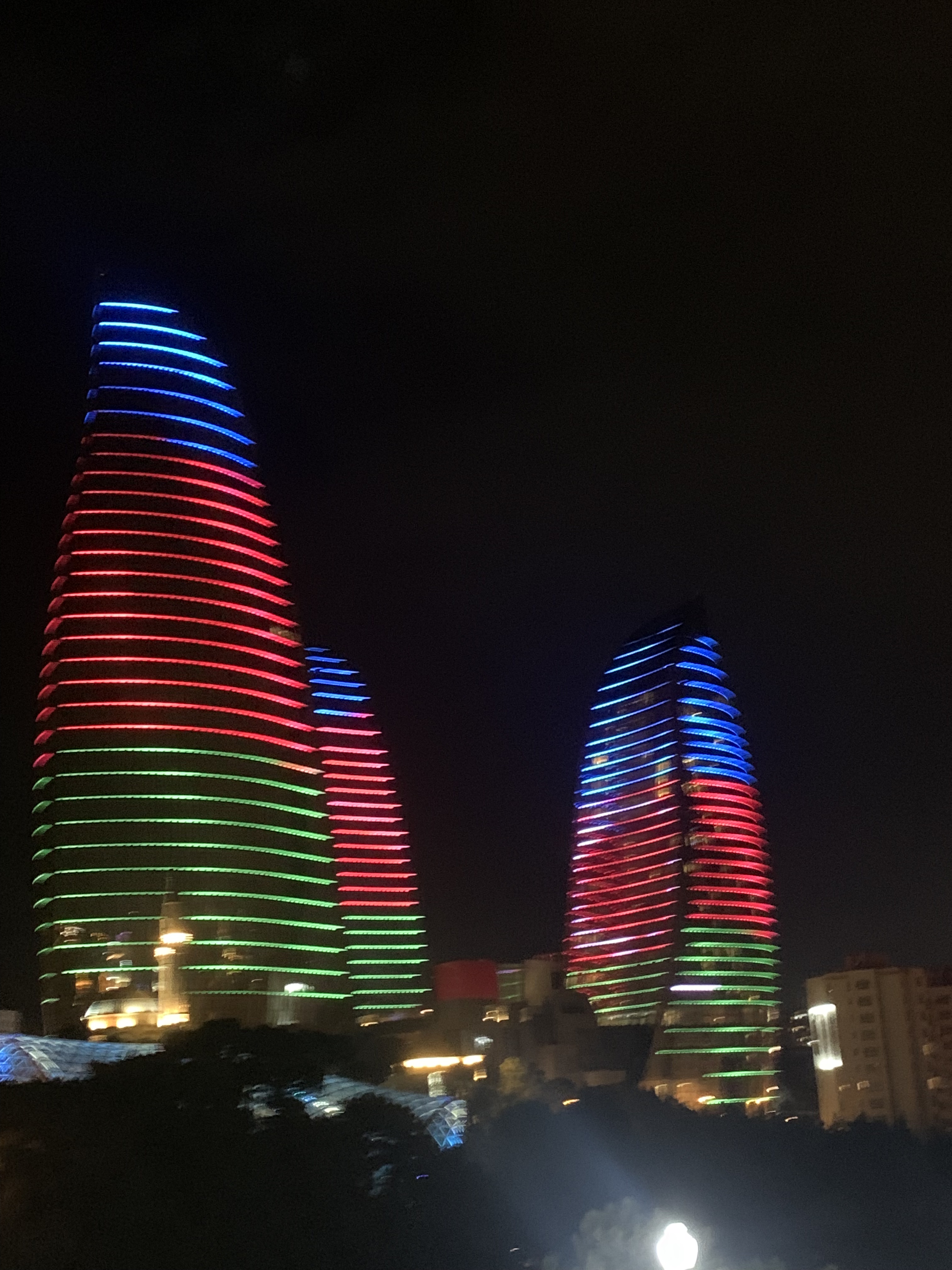
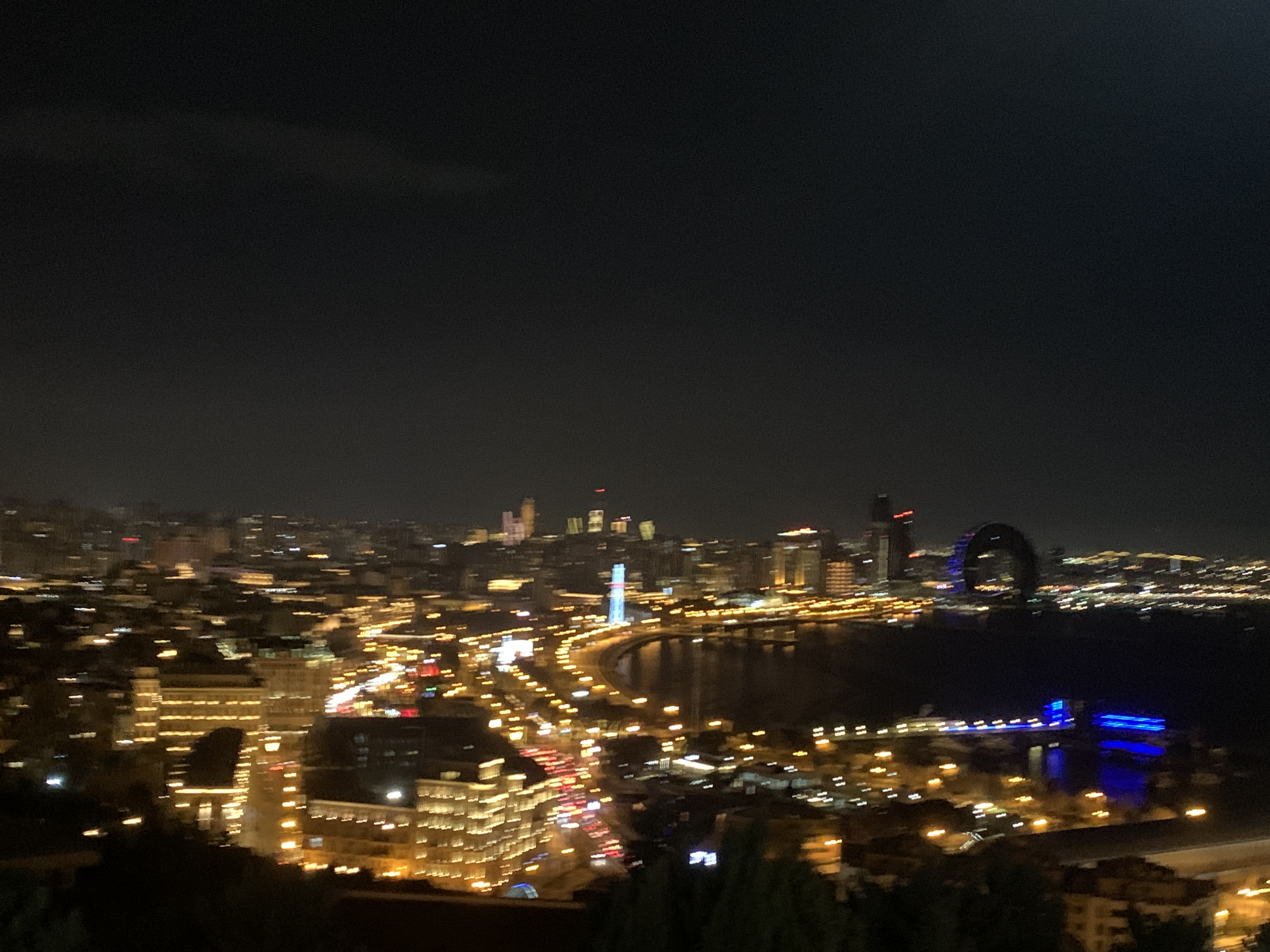
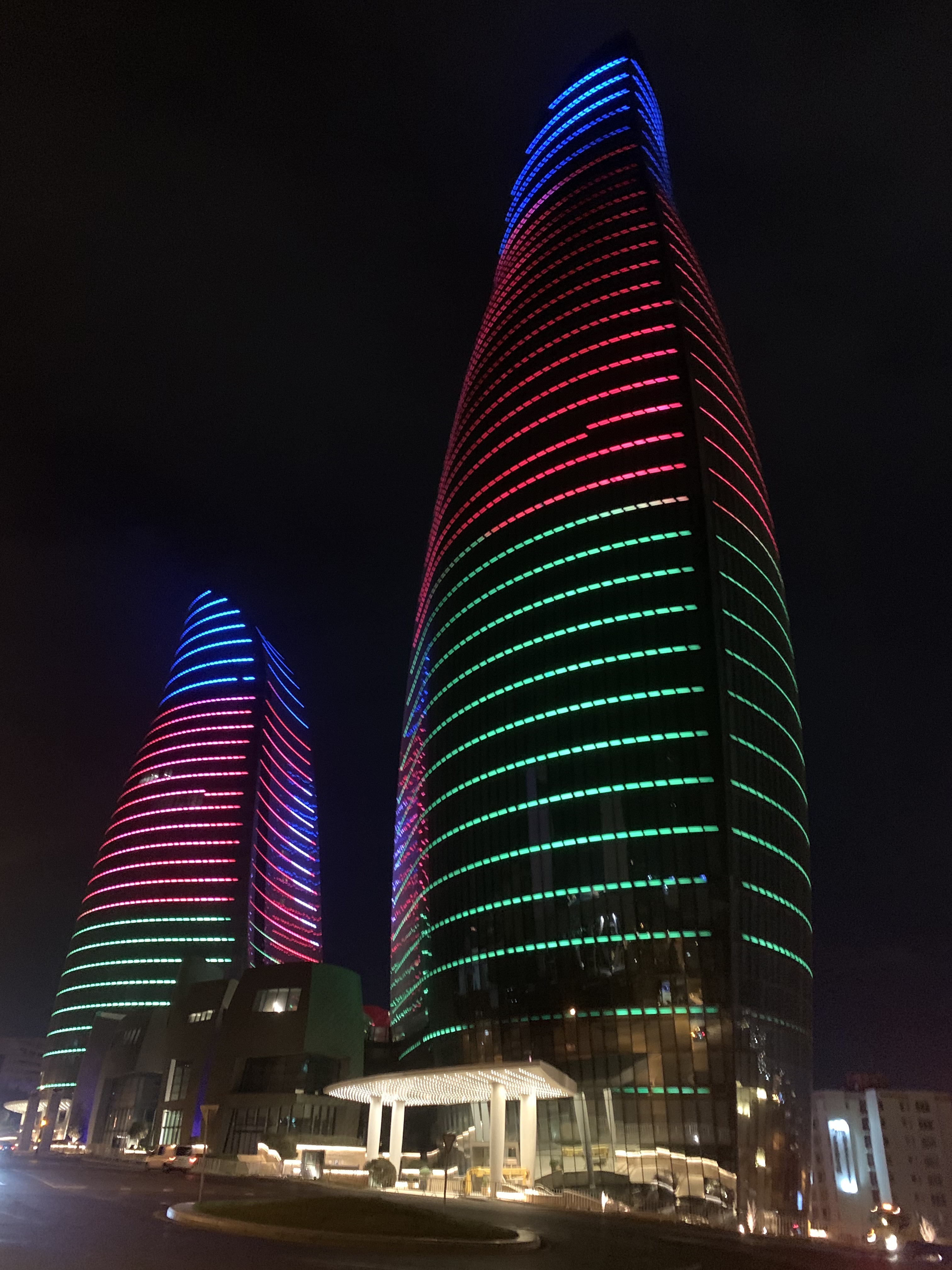
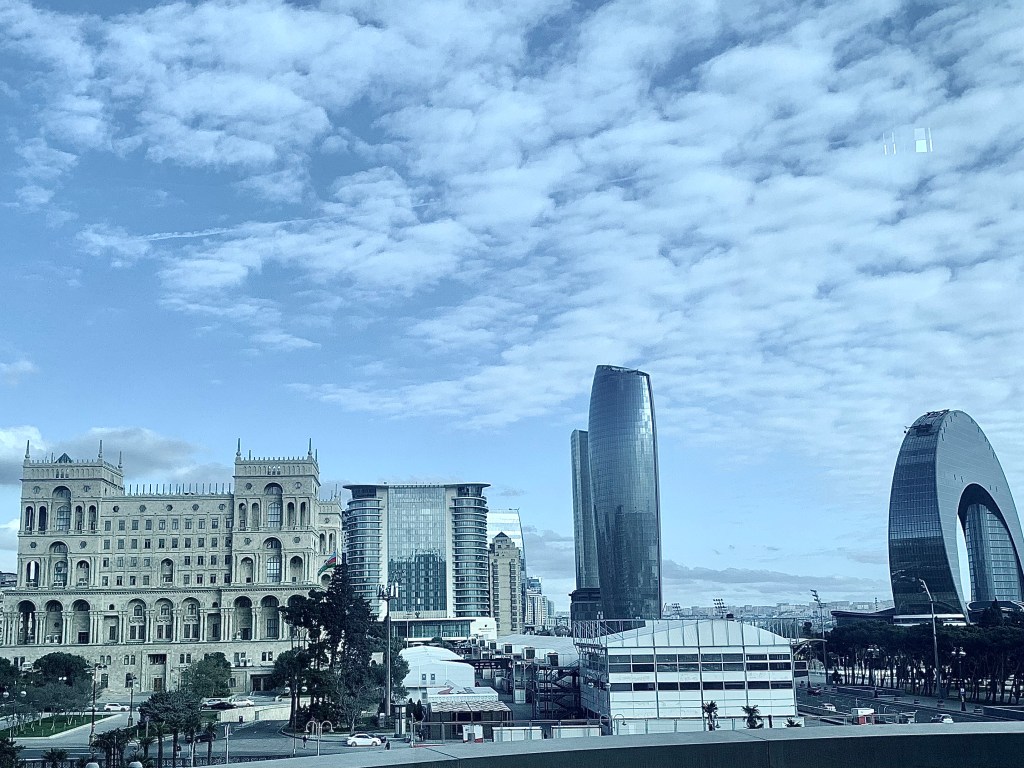
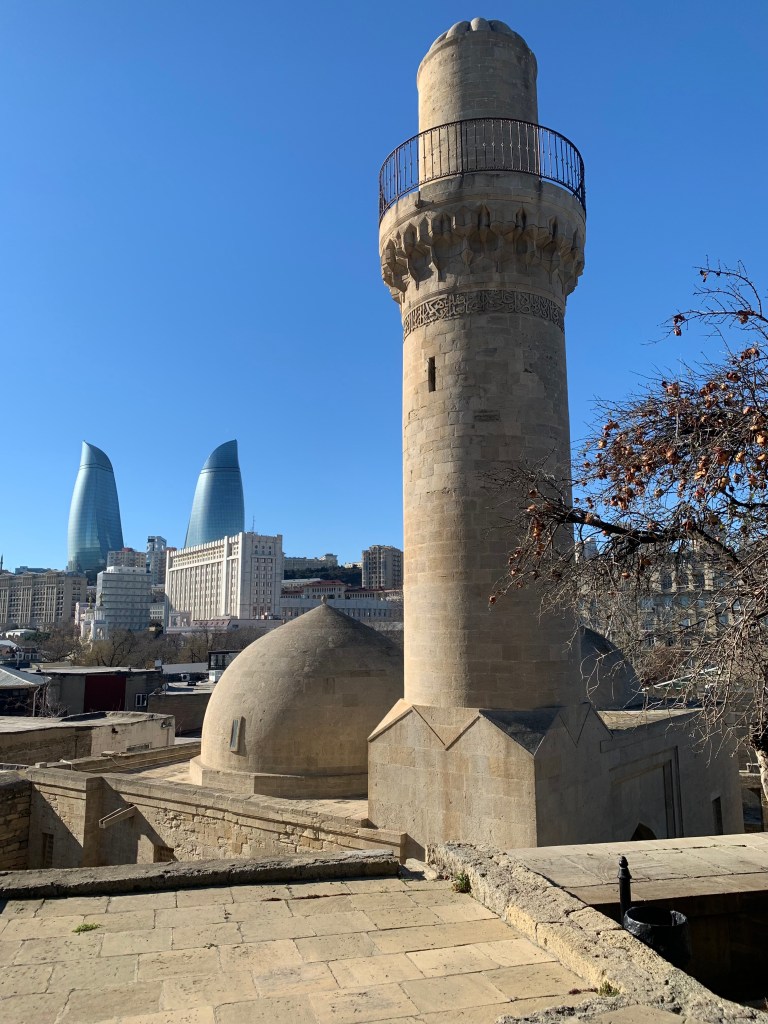
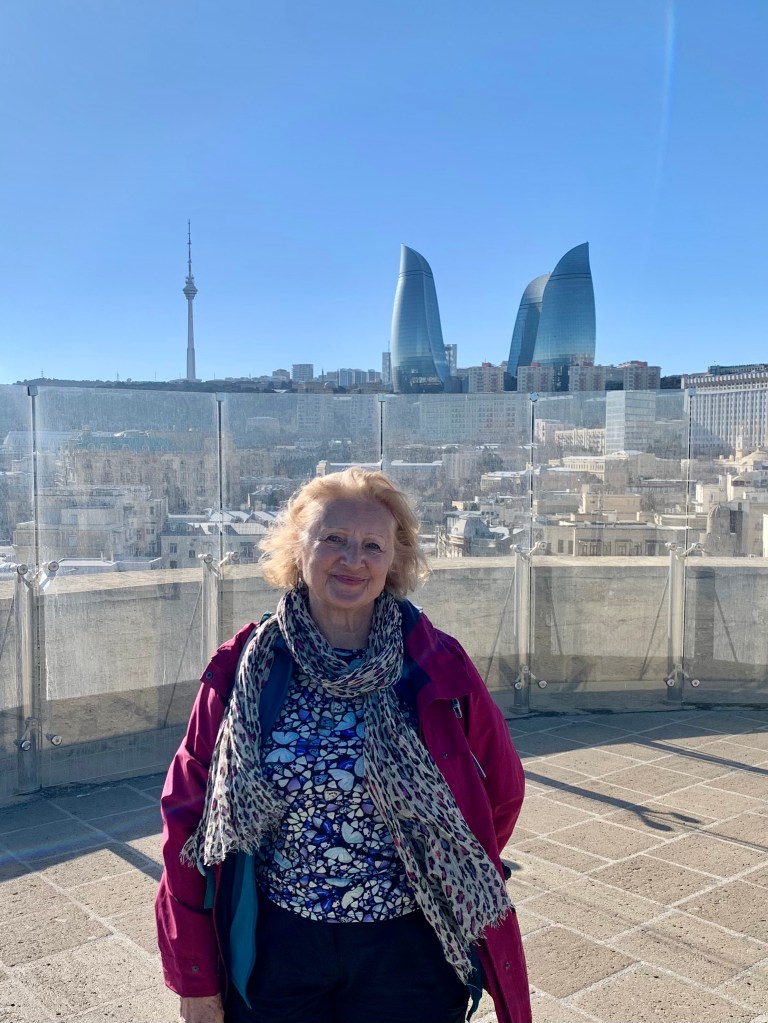
    Baku is quite a city. The Flaming Towers (for once, “iconic” seems the right word ) are but one of many architectural wonders. I did have a drink n the Fairmont Hotel but did not book into the $5000 suite…

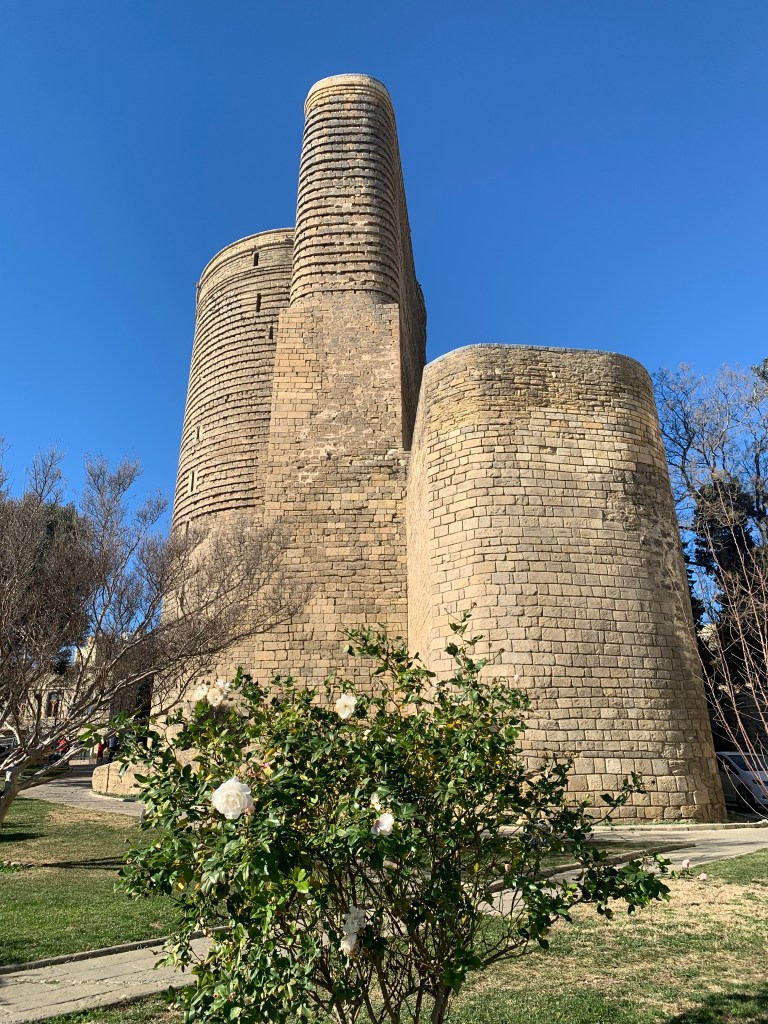
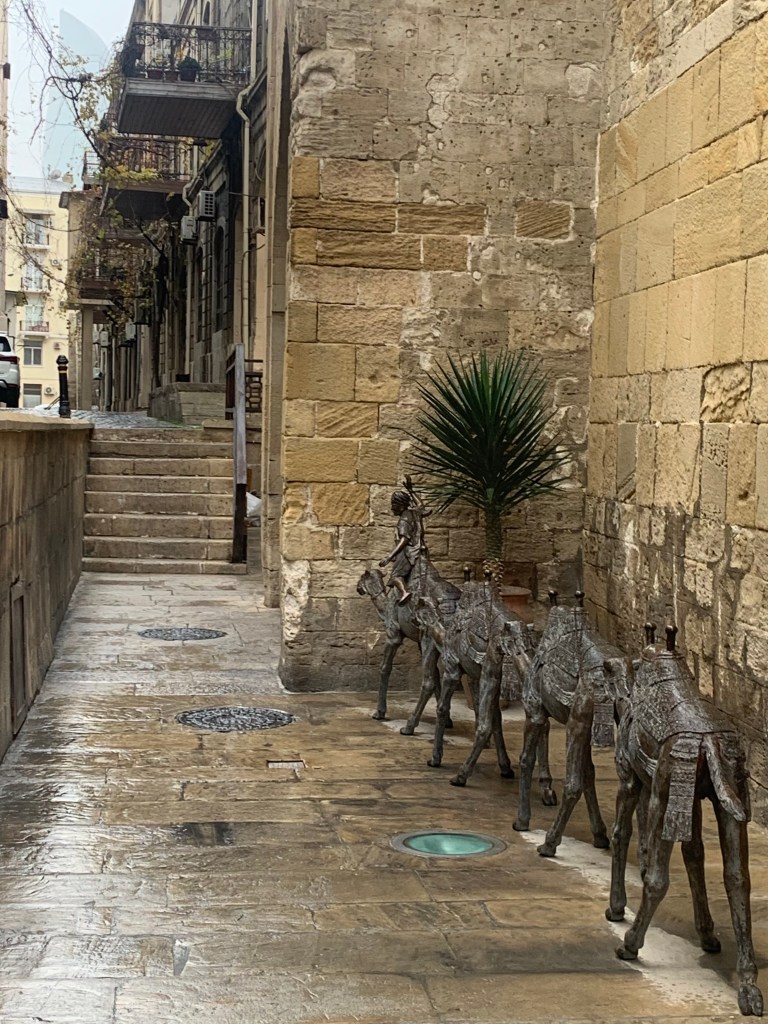
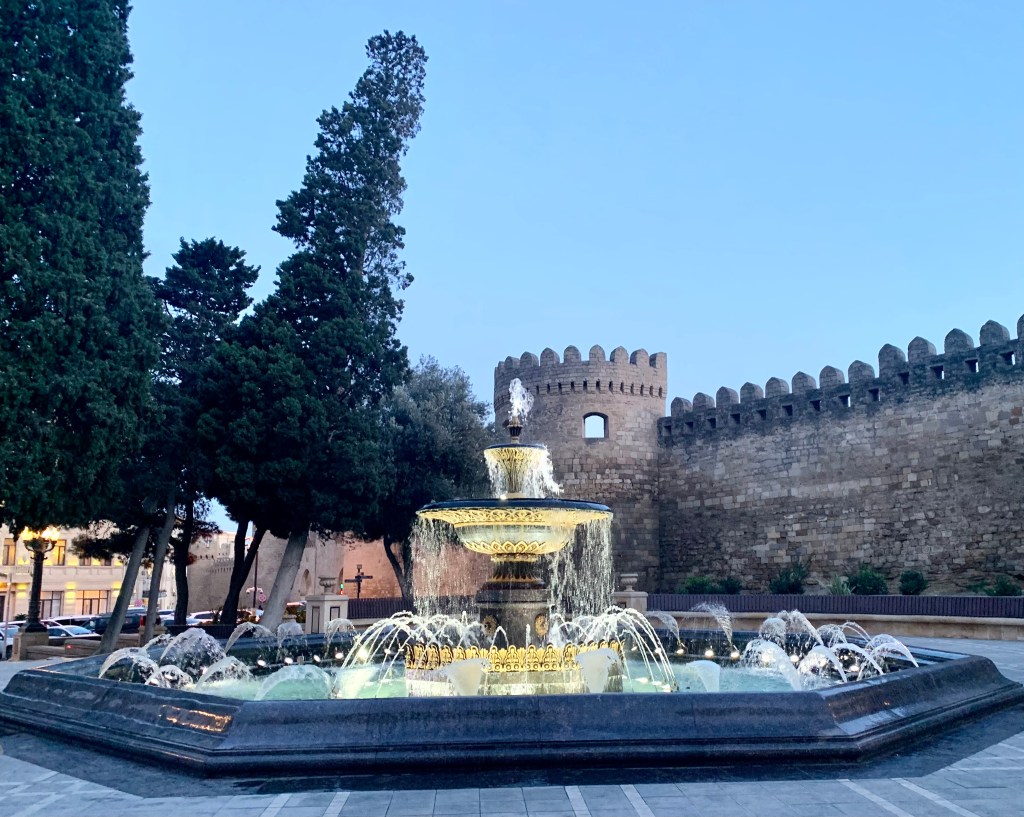
    The Old Town, nicely preserved, is a joy (and can be a frustration, as it is a bit of a labyrinth) to walk around. It is pedestrianised (though there seem to be plenty of cars within – a way for the Old Town to make money).

    There are many Soviet style buildings – the best known one is the Dom Soviet, then as now, a government building, but also recognised around the world as Formula 1 pitstops are right in front of it.

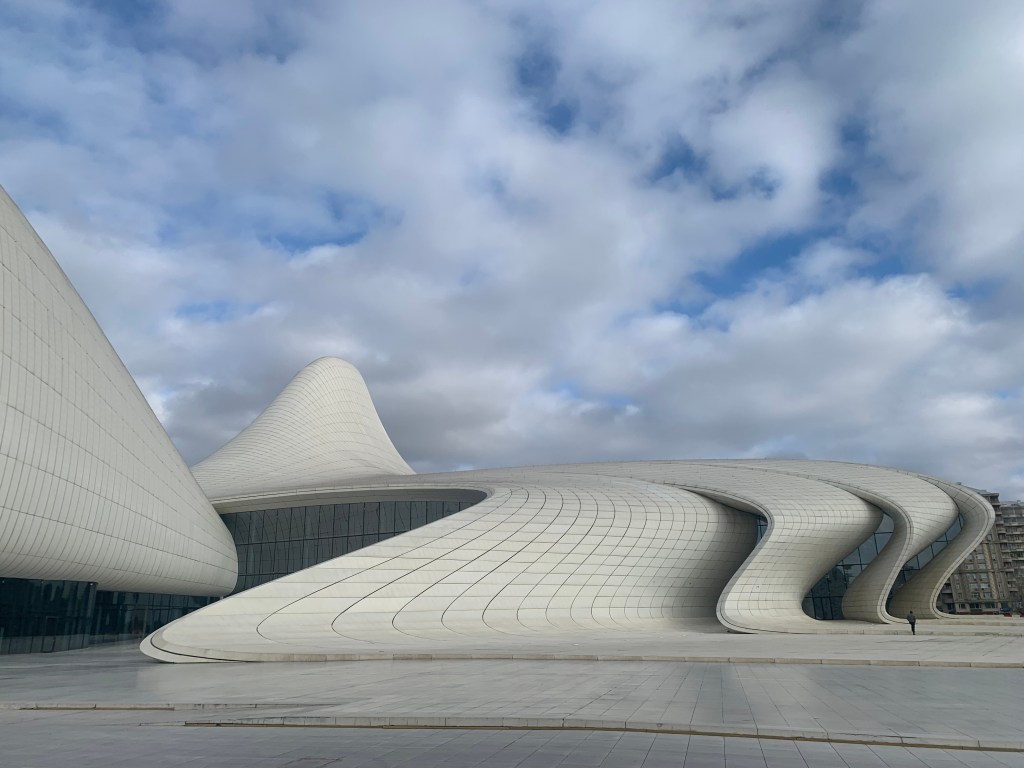
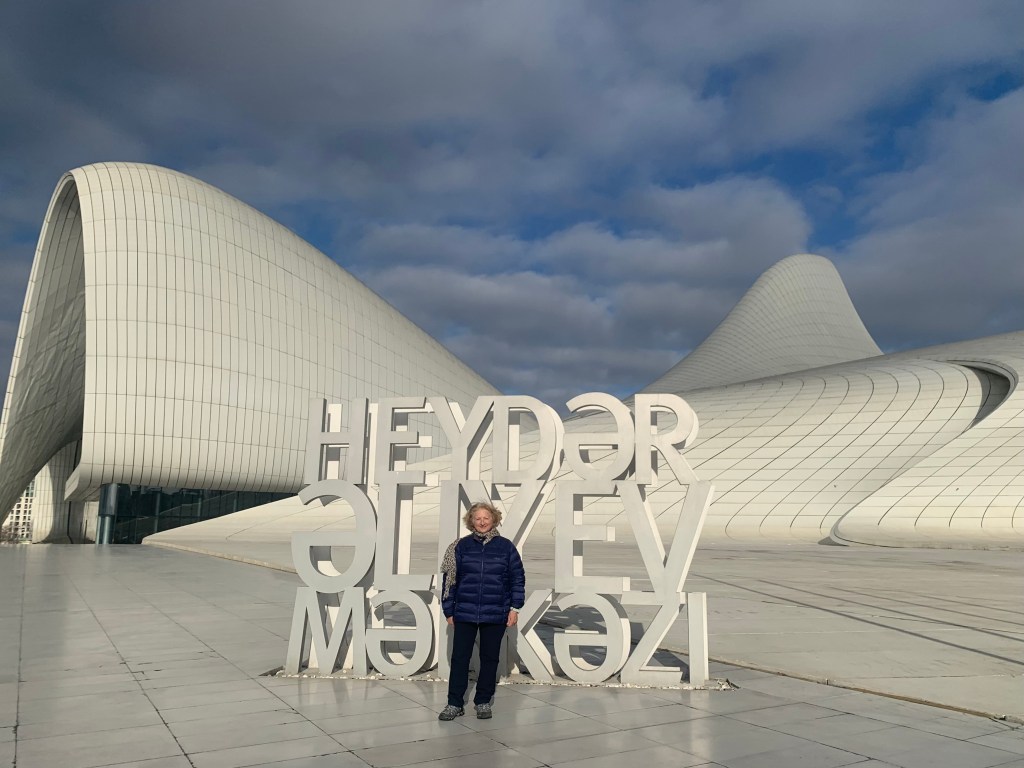
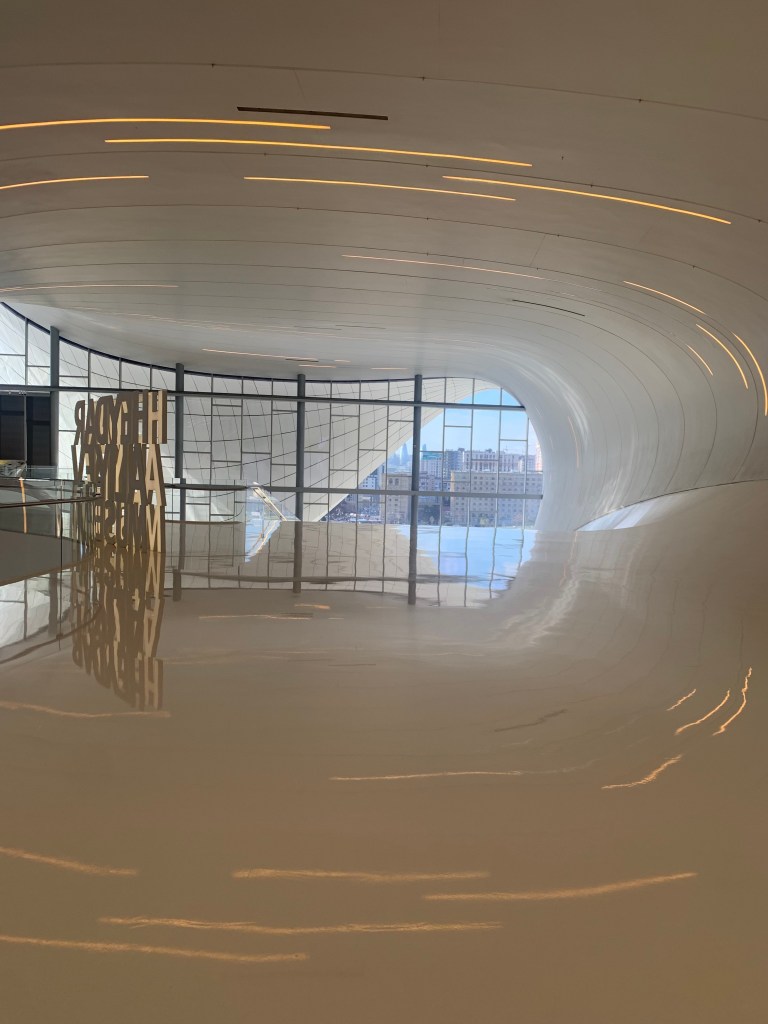
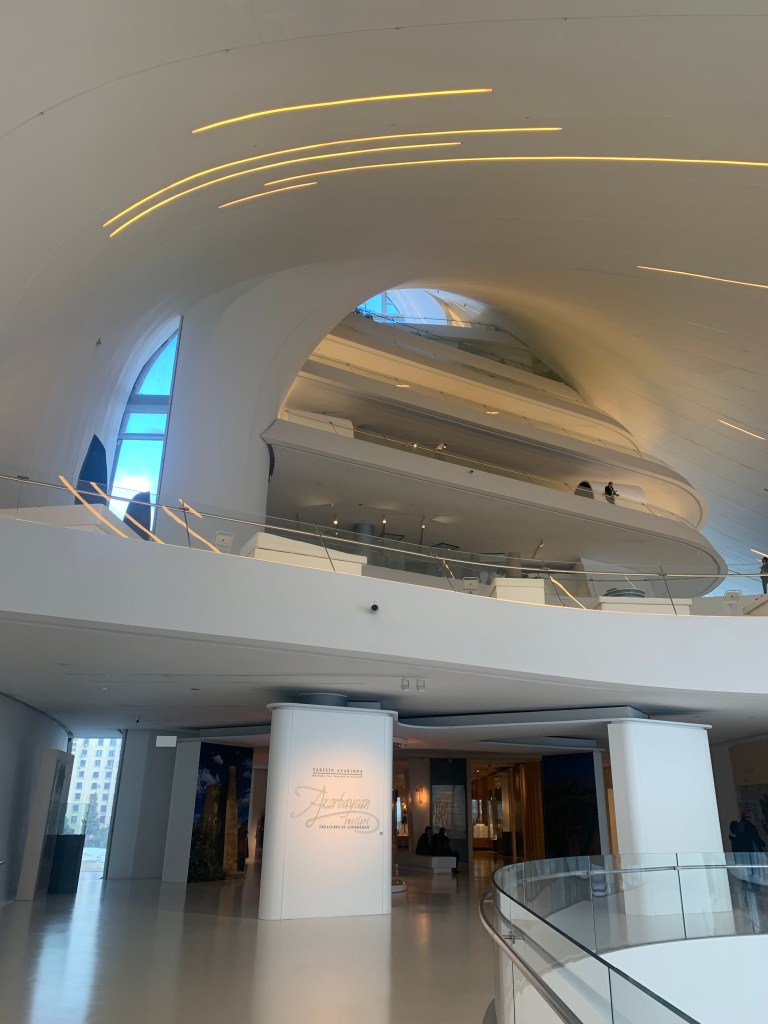
    I was mesmerised by the Heydar Aliyev centre, designed by Zaha Hadid, all sinuous lines, curves and soft meldings, both inside and out. It is all white and the walls curve into floors – it feels giddy and like walking on water. There are several exhibitions - art, musical instruments, history of carpet making in Azerbaijan, cars (temporary) and a detailed and reverent one on Heydar Aliyev’s life.

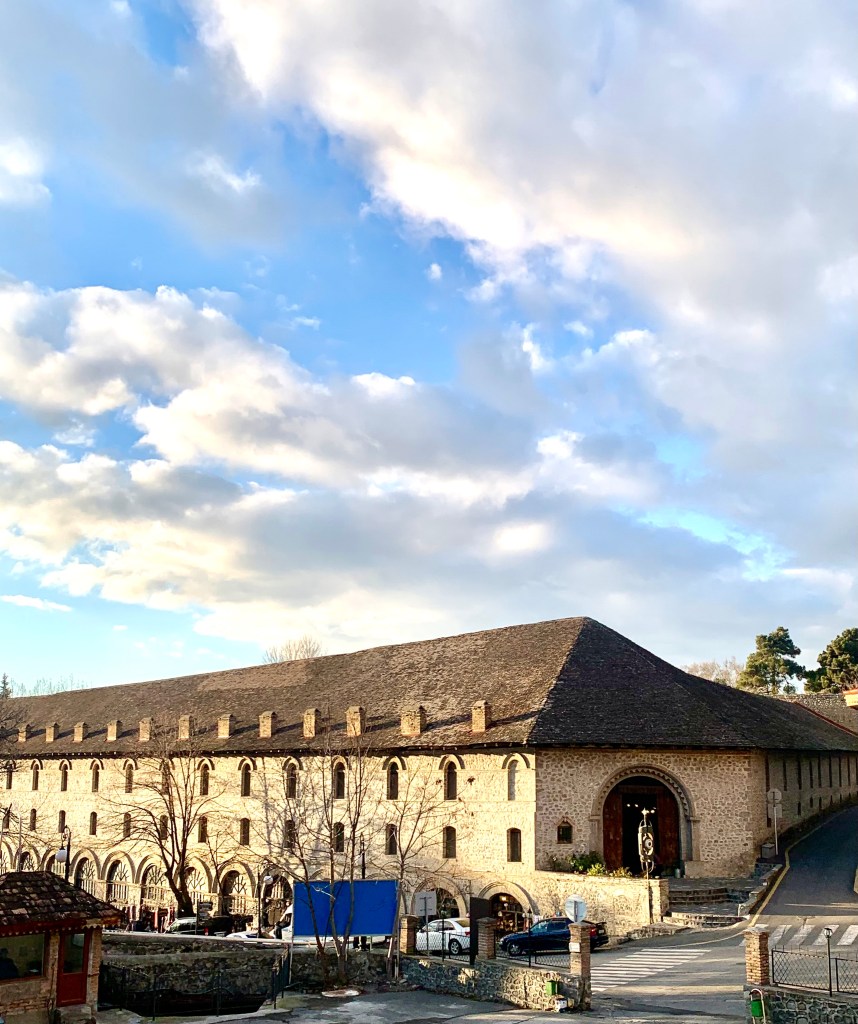
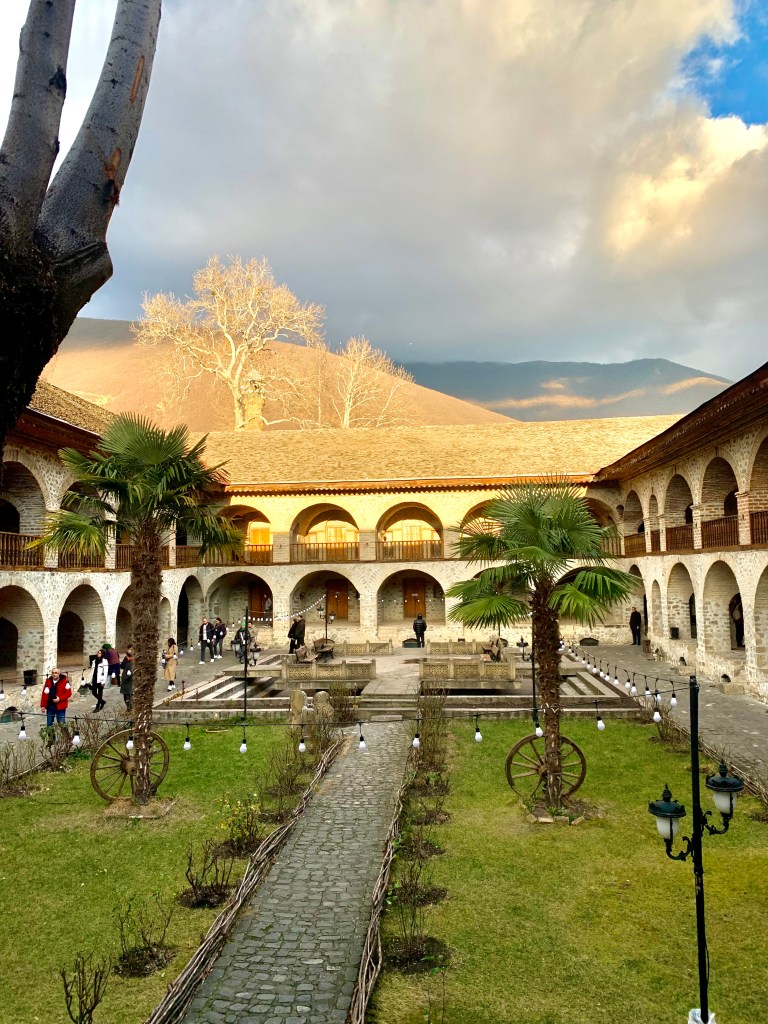
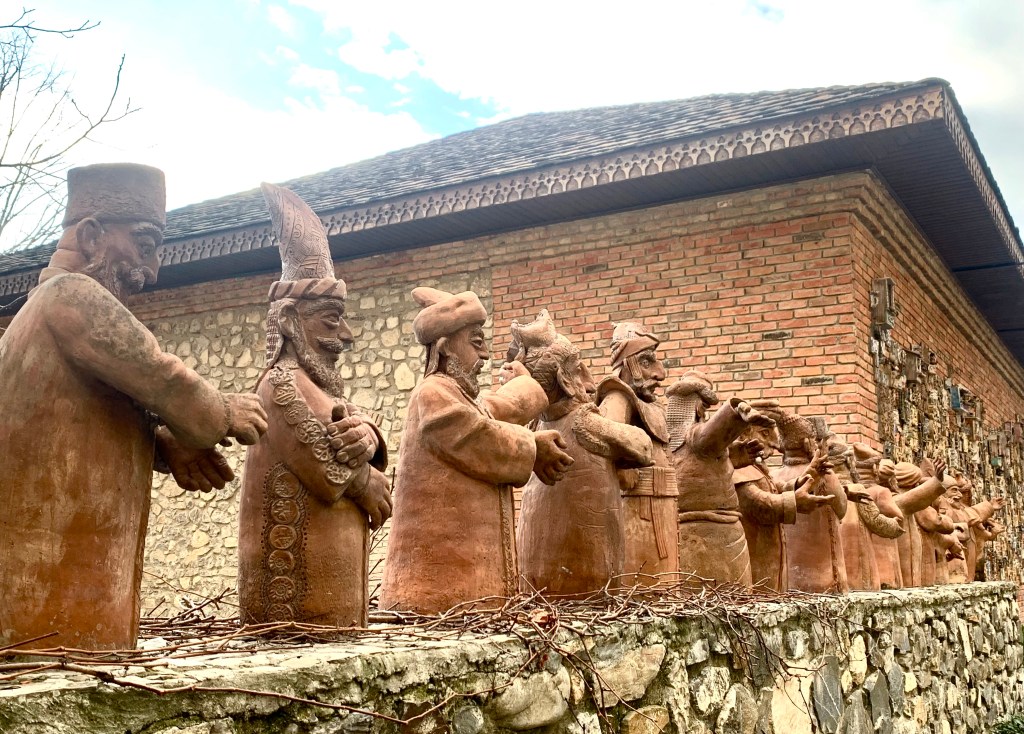
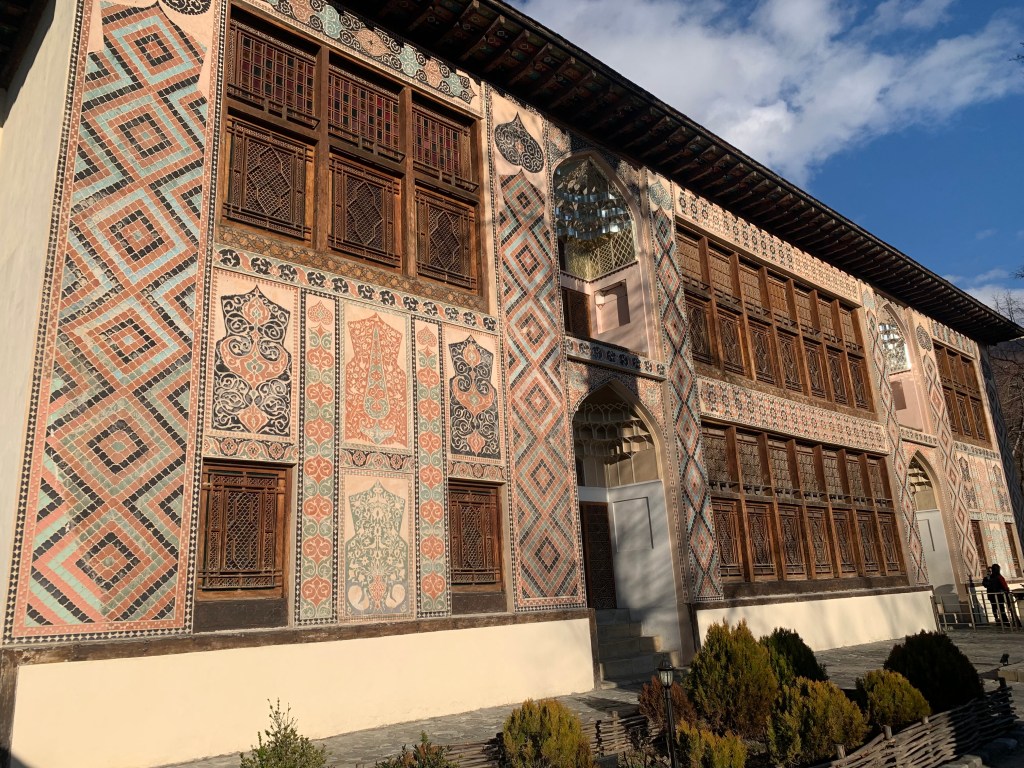
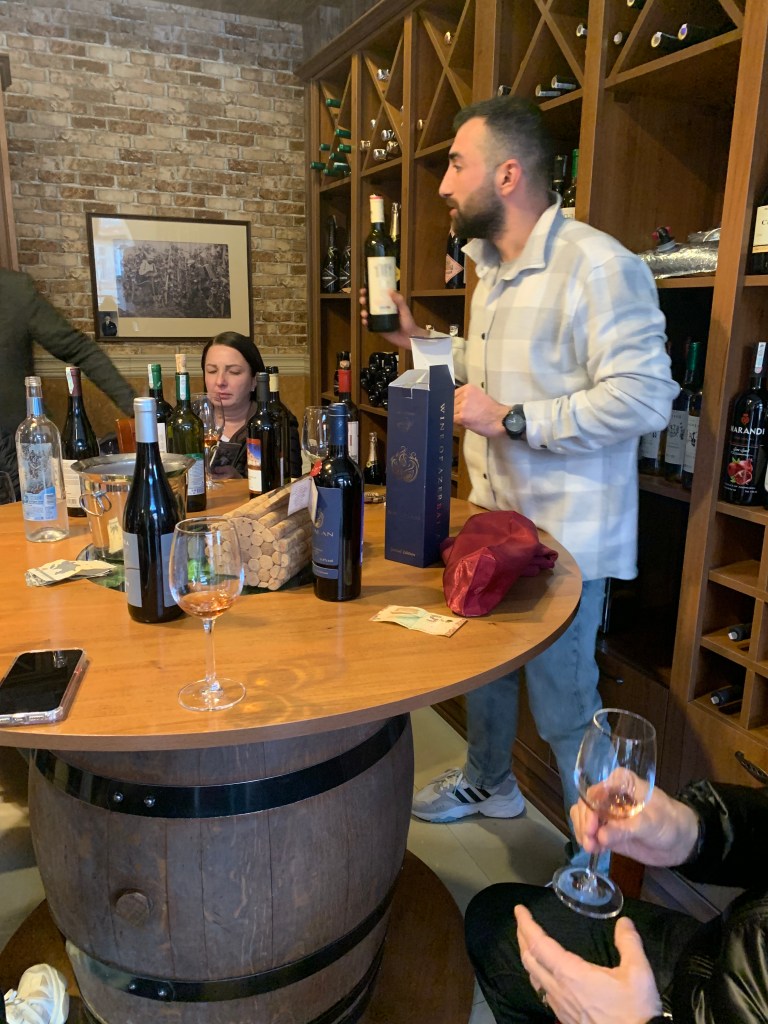
    The trip “4 regions in 1 day” was quite a marathon – we covered some 800km – it started at 0800 and finished at c 2230. The most impressive place for me was Sheki – a Silk Road town that I would happily have spent a day or two roaming around. The Khan’s summer palace is a beautifully painted and ornamented place, both inside and out, with intricate stained glass windows that throw shimmering, kaleidoscopic colours on the floor (photos NOT allowed, though I can’t see why). The Caravanserai down the road has been in use for centuries, though the current building is from the 18th ct. And it is still used as a hotel. Sheki is known for its silk making and carpet weaving. There is a winery (we did get a wine tasting, and very nice it was too). 

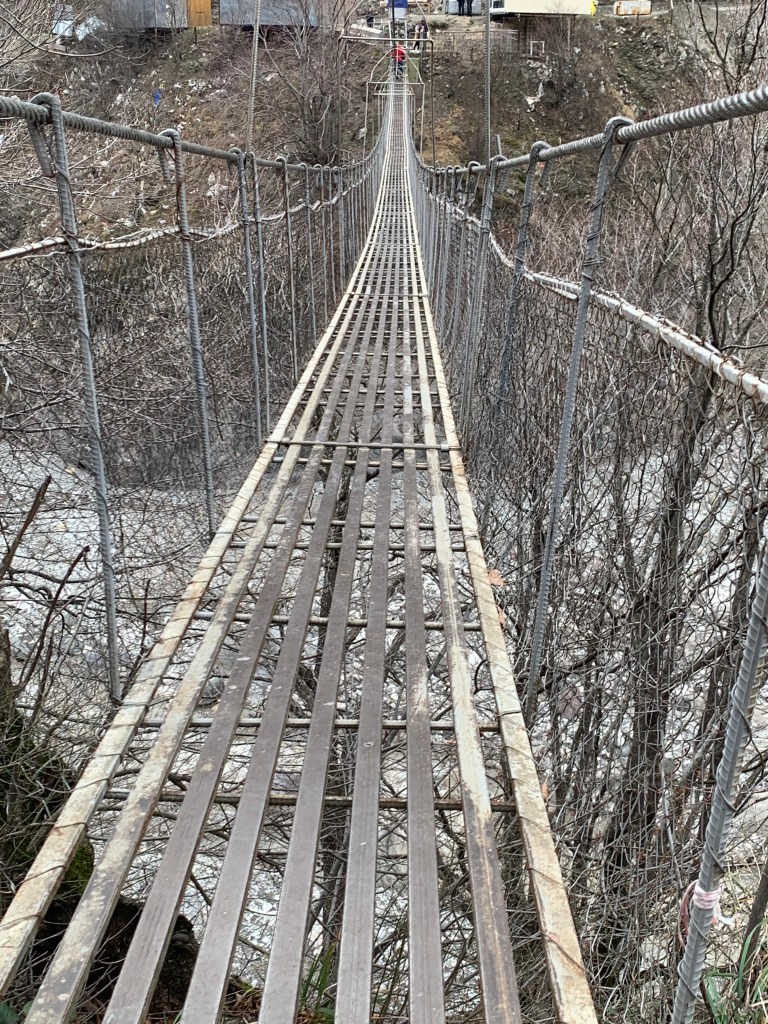
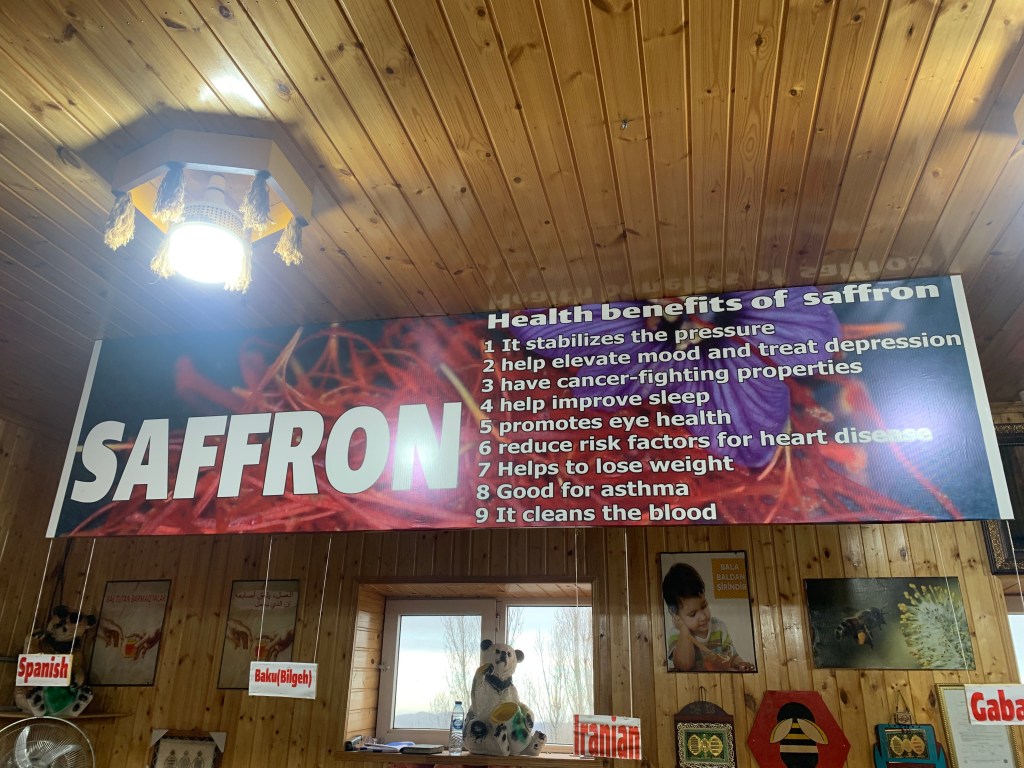
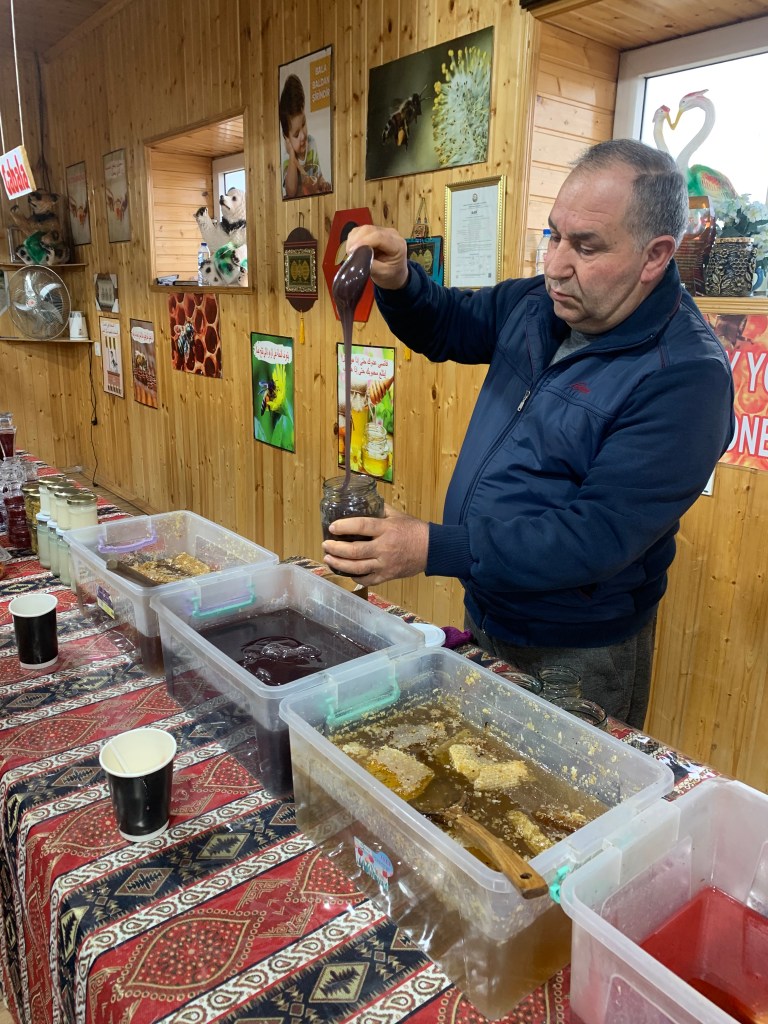
    The hanging bridge was fun and wobbly, the honey tasting generous, the views over the bare mountains spectacular. But the trip is far too long and uncomfortable in a cramped minibus space. Just as well the wine tasting was the last thing we did before starting back (and were allowed to pour ourselves a bit more…)

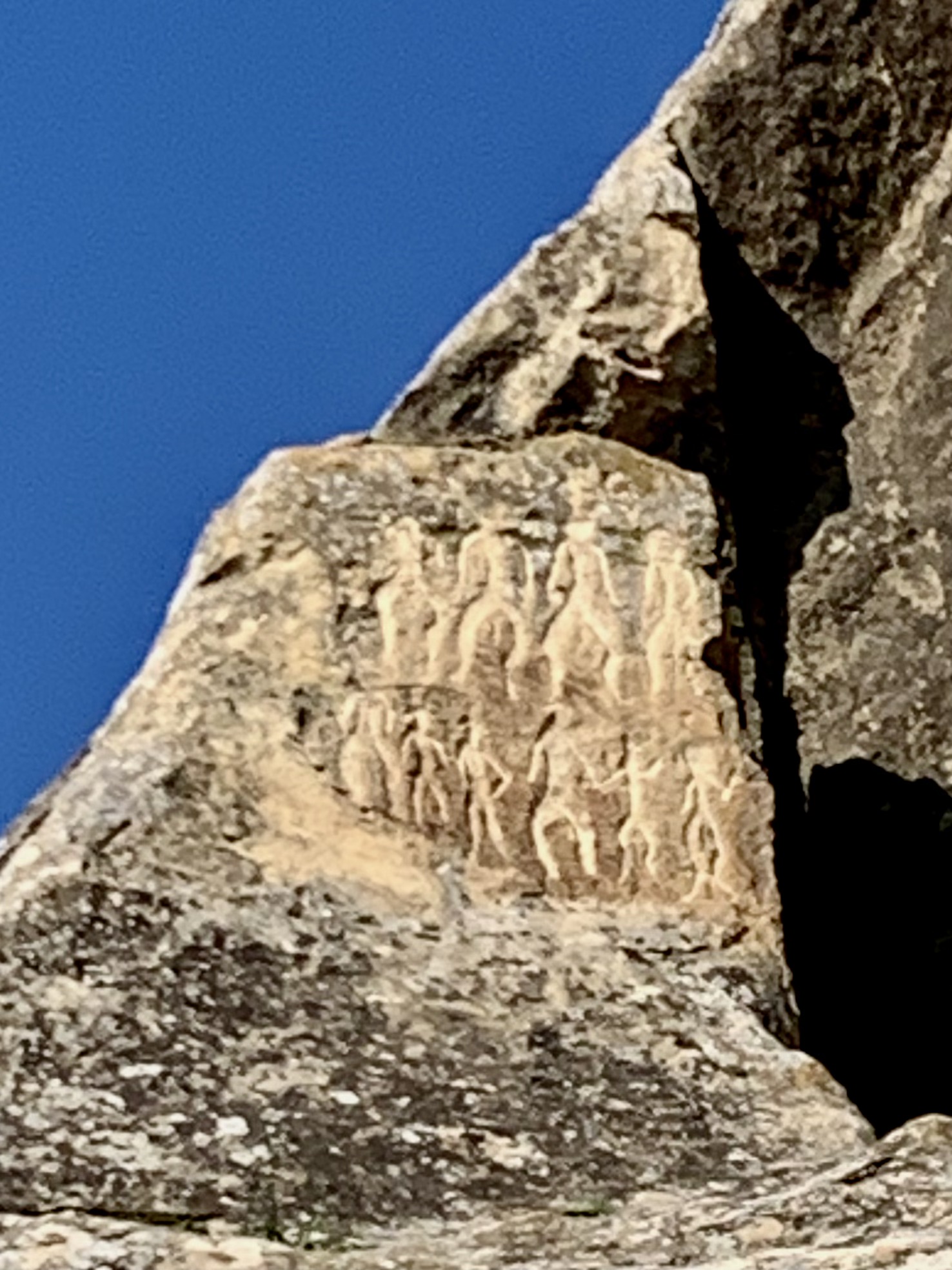
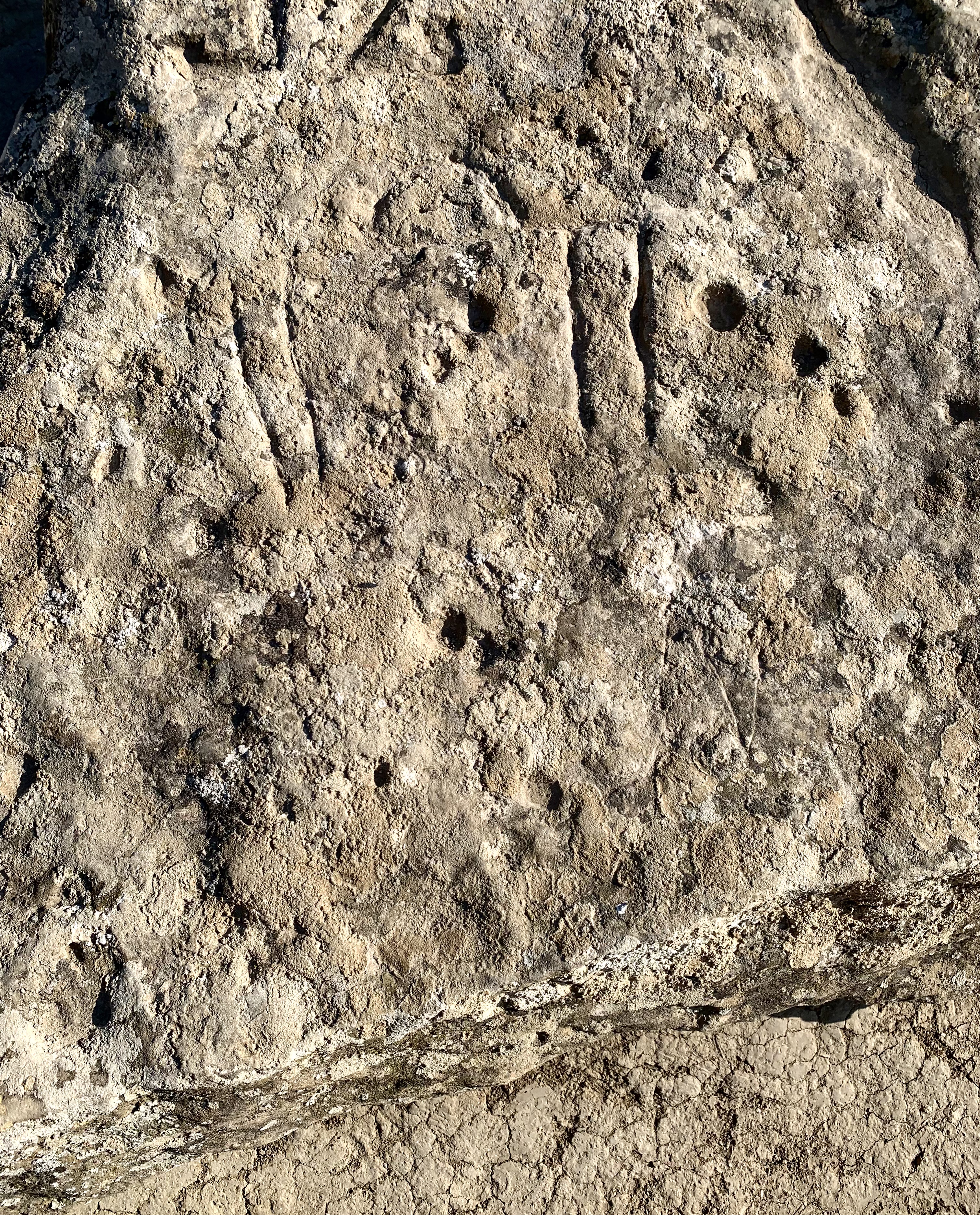
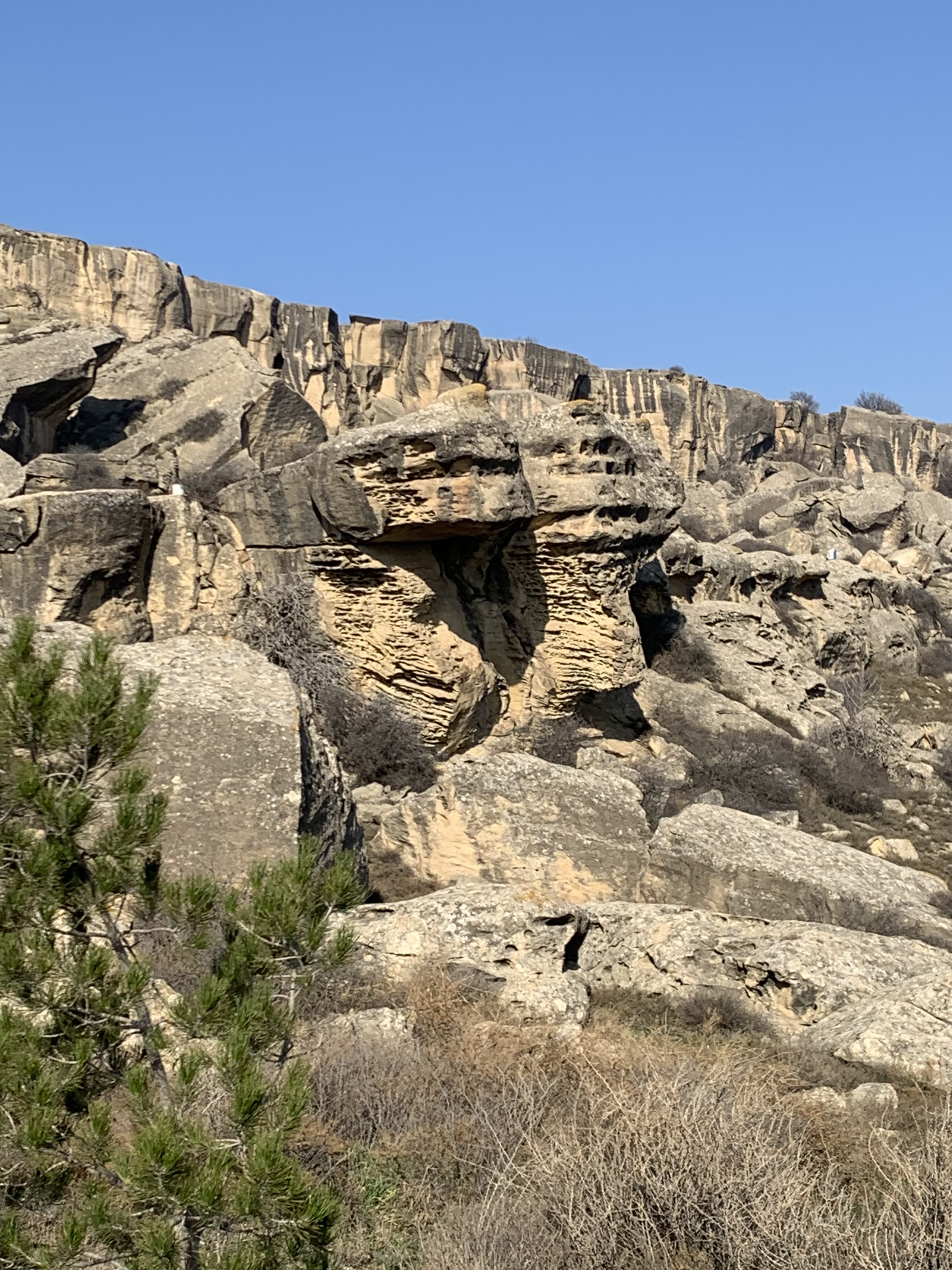
    The petroglyphs of Gobustan, a UNESCO site, are a strange pile of scattered giant sandstone boulders with scratchings on them. The earliest ones are from c. 40000BC, the newest ones from c 15000 BC. It is thought that they were originally drawn inside caves, but earthquakes, falls etc have moved the rocks and exposed them. Some smaller stones with drawings are now in museums.

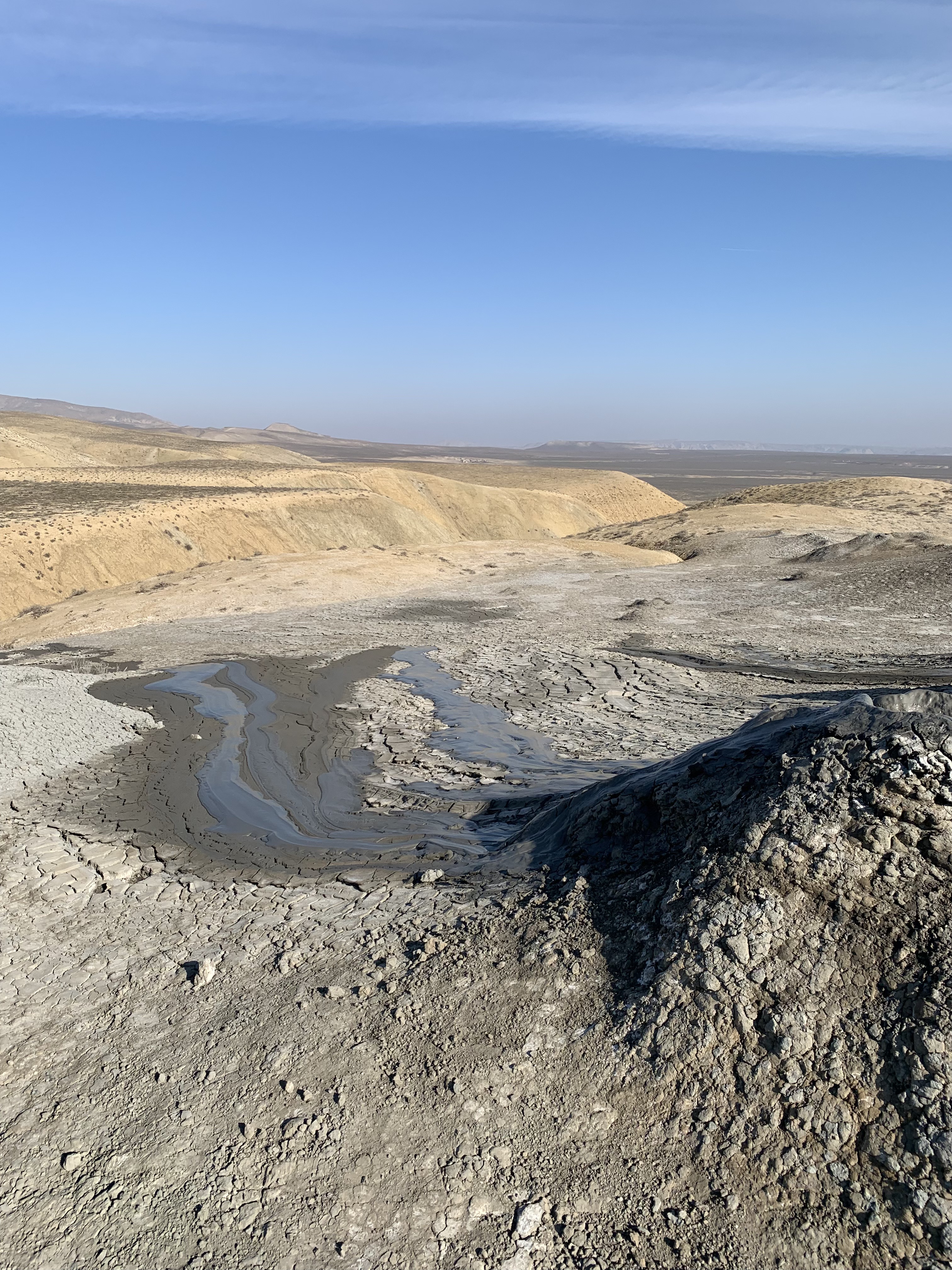
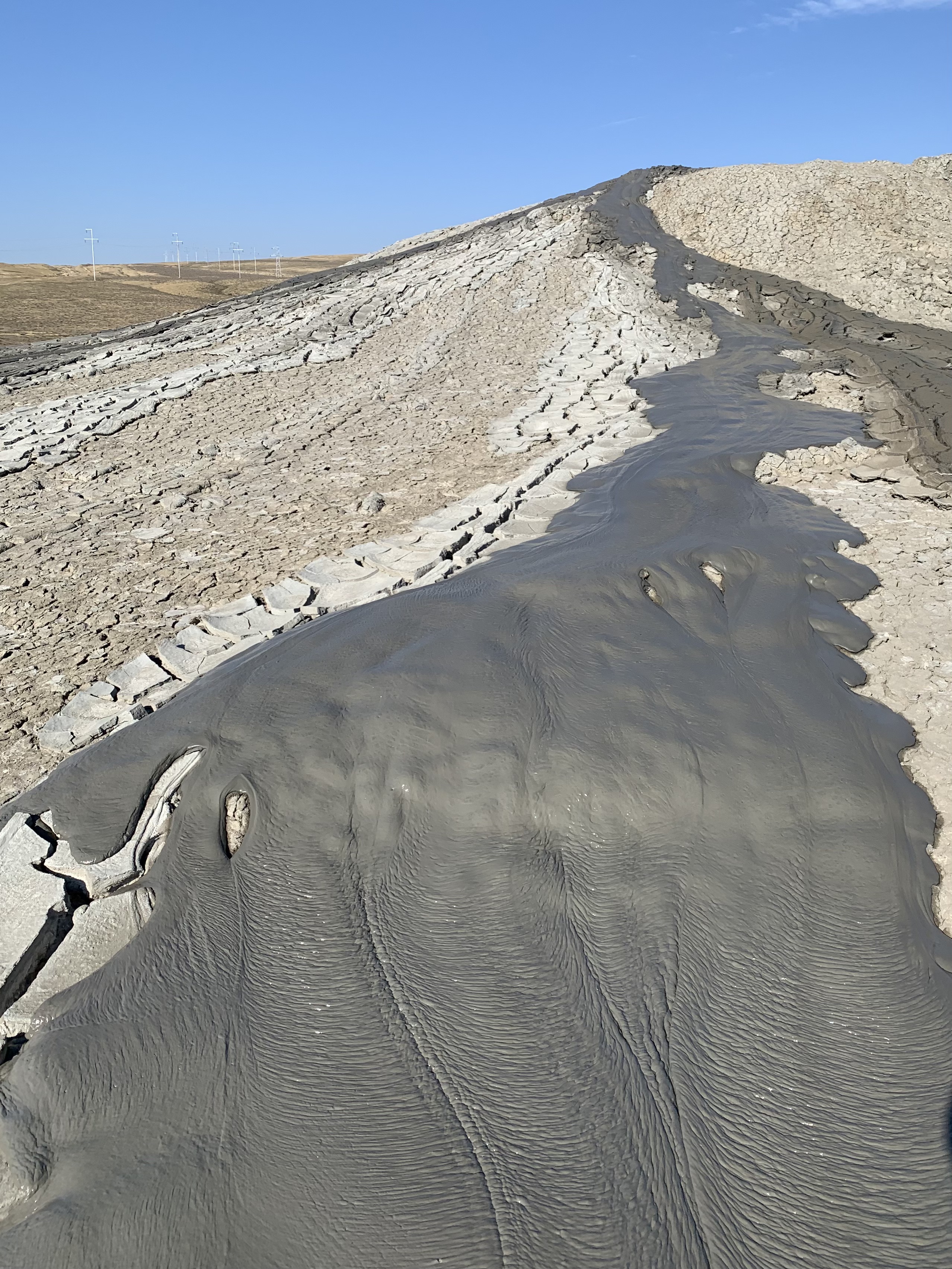
    The mud volcanoes are strange (and a little underwhelming): they pop and plop at random, flatulating gently one day, oozing cold mud, only to die down and then another one starts elsewhere. The guide, Gushlana, was a bit disappointed that things were becoming very sanitised (the workers were busy finishing the tourist buildings, which also meant they would start charging entry fees). The newly built wooden walkways take you around the site without stepping on the mud; Gushlana used to take a small lump home about once a year and dilute it with water, to use as a face mask (there are over 30 minerals in the mud). Not any more.

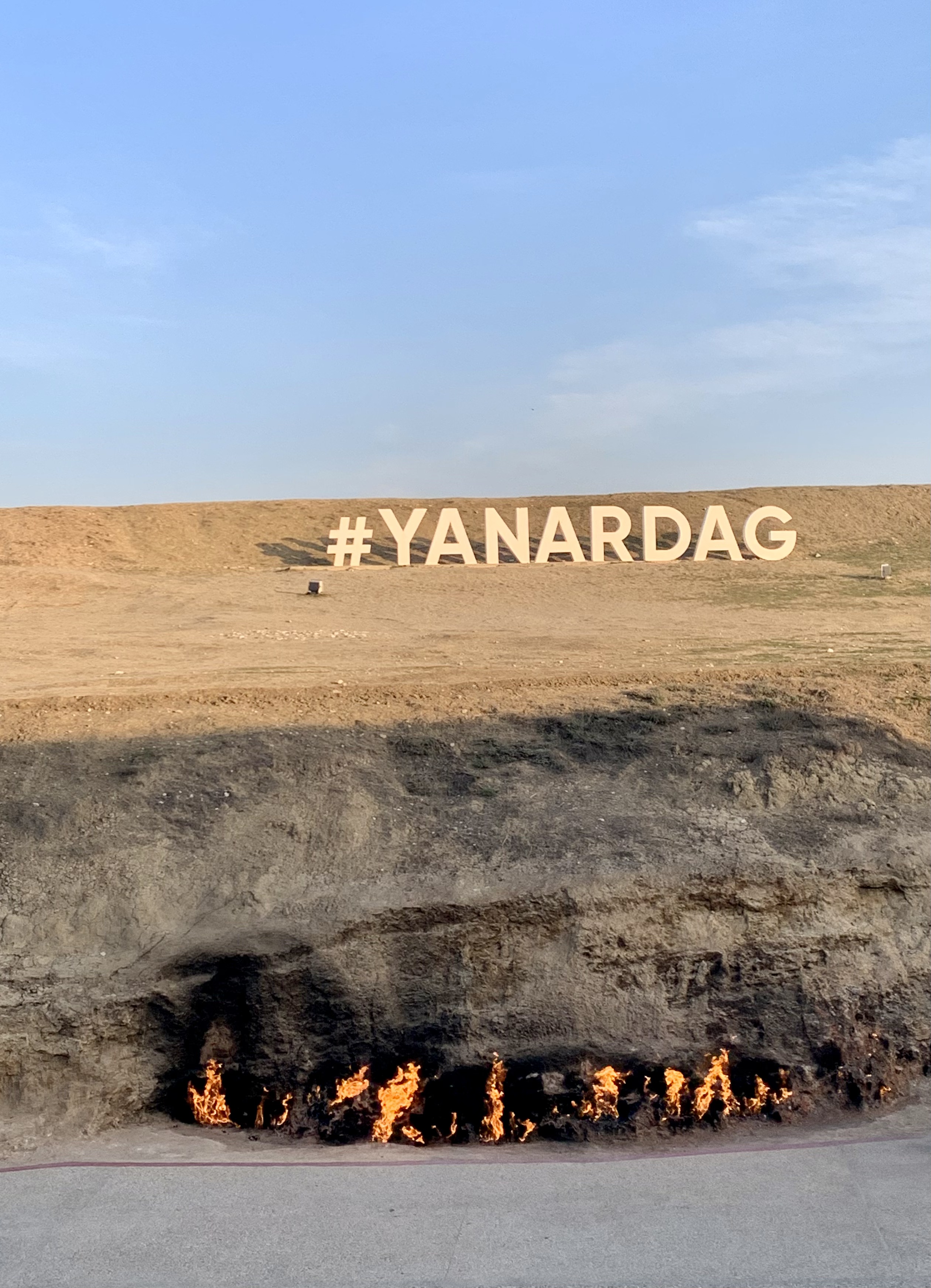
    Azerbaijan is “the land of fire”. The Zoroastrian temples have been built at the sites where fires have been burning. Natural gas and oil abound. The “fire mountain’, Yagerdag, is more of a hillock, but the fire still looks impressive.

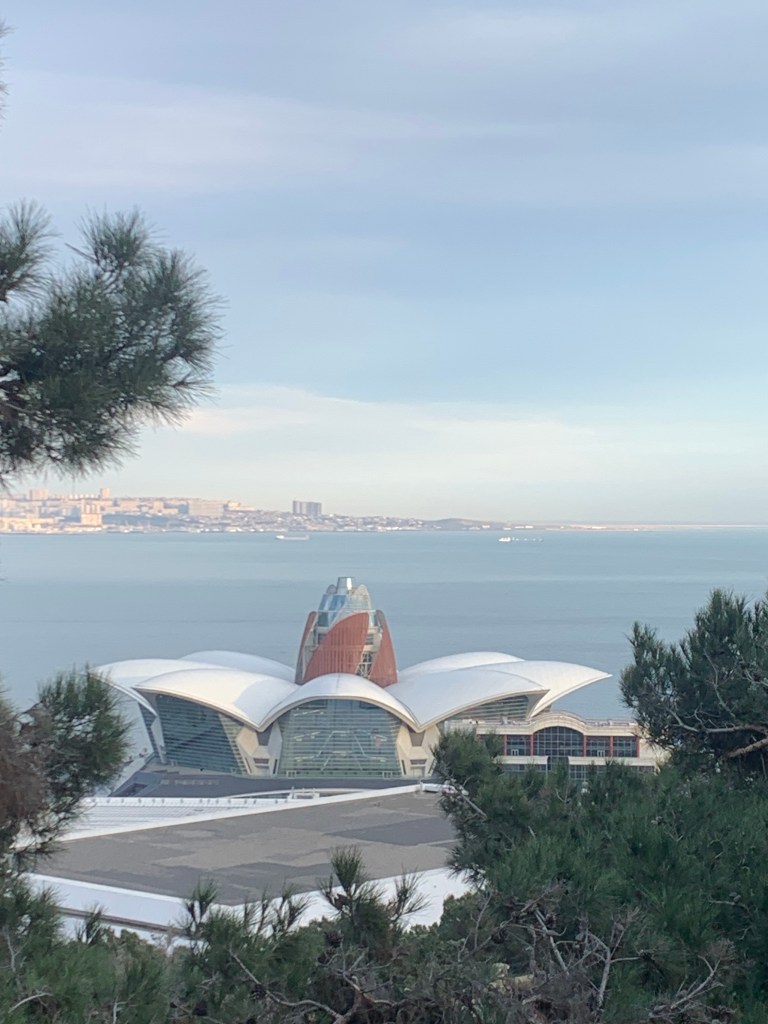
    What I enjoyed the most was walking around Baku. Taking the tube out a few stops and walking back – glimpses of the Caspian on one side and the city sprawl on the other. All the big shop names are here, though I haven’t seen too many people in them. Walked through the jewellery district yesterday – besides the Jewellery Centre (very blingy!) there is a street full of little gold/silver/jewellery shops. And in all of them men were looking at their phones…

    Car is king (though there is some respect for the pedestrian crossing), which isn’t surprising in a country were petrol costs under 50p a litre and diesel less than 40p. One of the tour guides said that Azerbaijan was “diversifying and investing in wind and solar power”. Not much evidence of that. But the derricks keep on nodding and the off shore rigs are visible on the horizon.

  • Christmas in Tbilisi, New Year in Gudauri

    Jan 1st, 2024

    I was grateful that Gloria’s pick up time from Tbilisi Airport was at an ungodly 04:30 am. Driving on empty streets made it a lot easier – there isn’t much joy in driving in Georgia – much too erratic and indisciplined where there is room, much too joy-riderish and cavalier with signalling on highways. The guidebooks advise “defensive driving”.

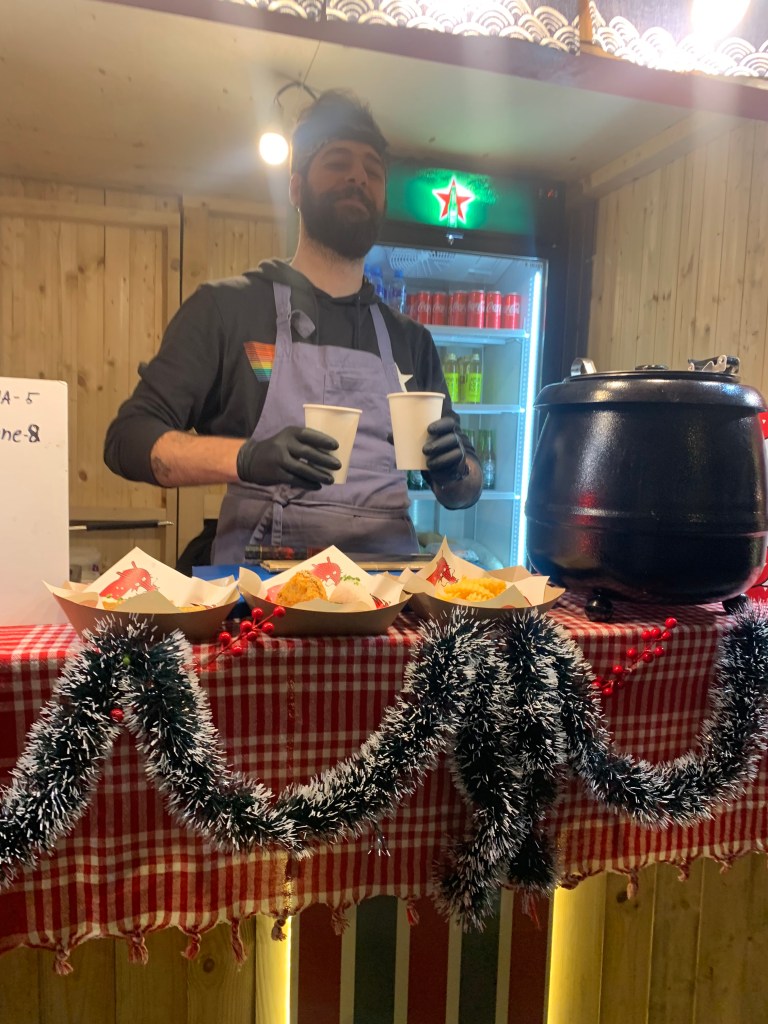
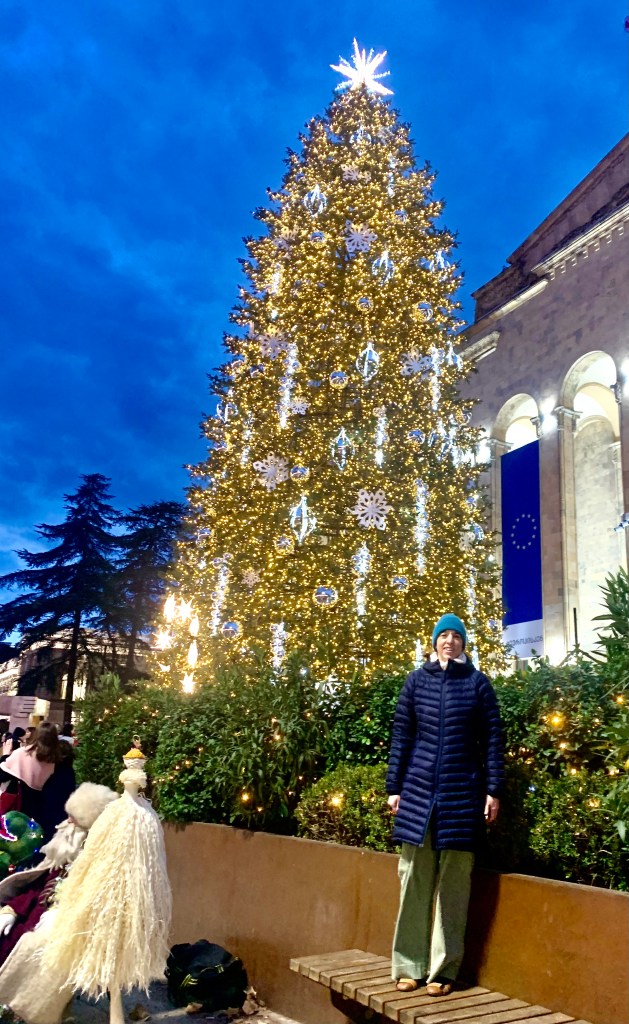
    Gloria had booked us into an Airbnb at the very centre of Tbilisi – right by Freedom Square, so the town was easy to access and we walked almost everywhere (it was good to have a look at their Metro – very deep, but not elaborately decorated as some in Russia). The main drag was only one of several extravagantly lit up areas – there were Christmas markets, squares done up, live music and gluchwein (or ‘glintwine’ as they call it here).

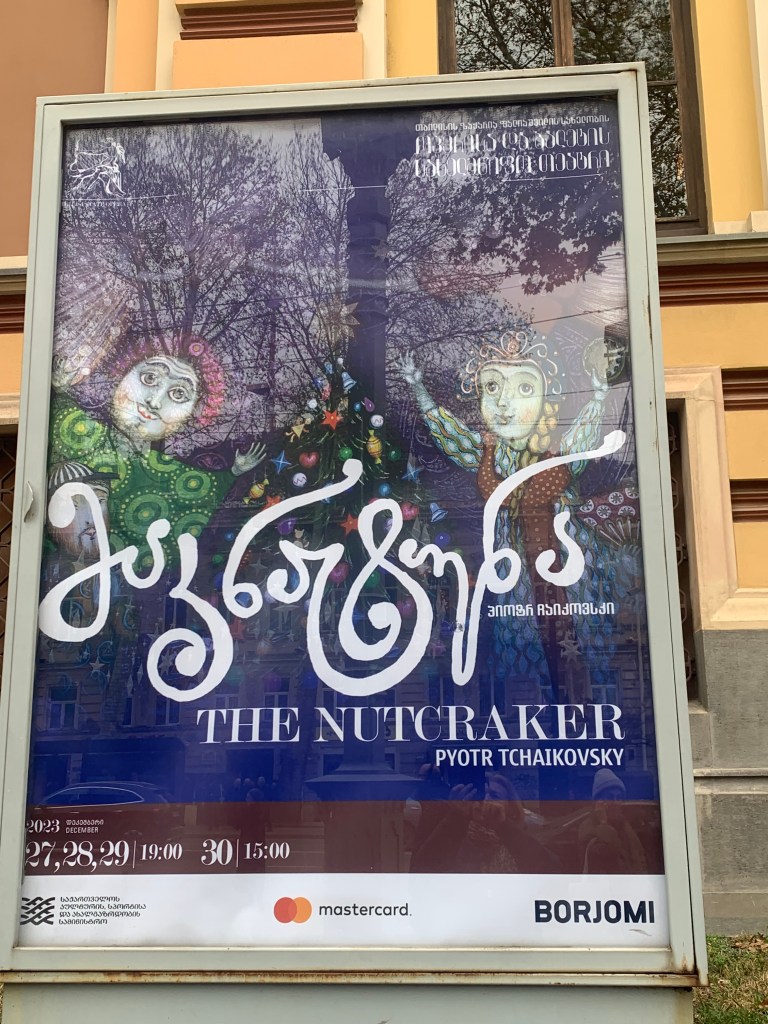
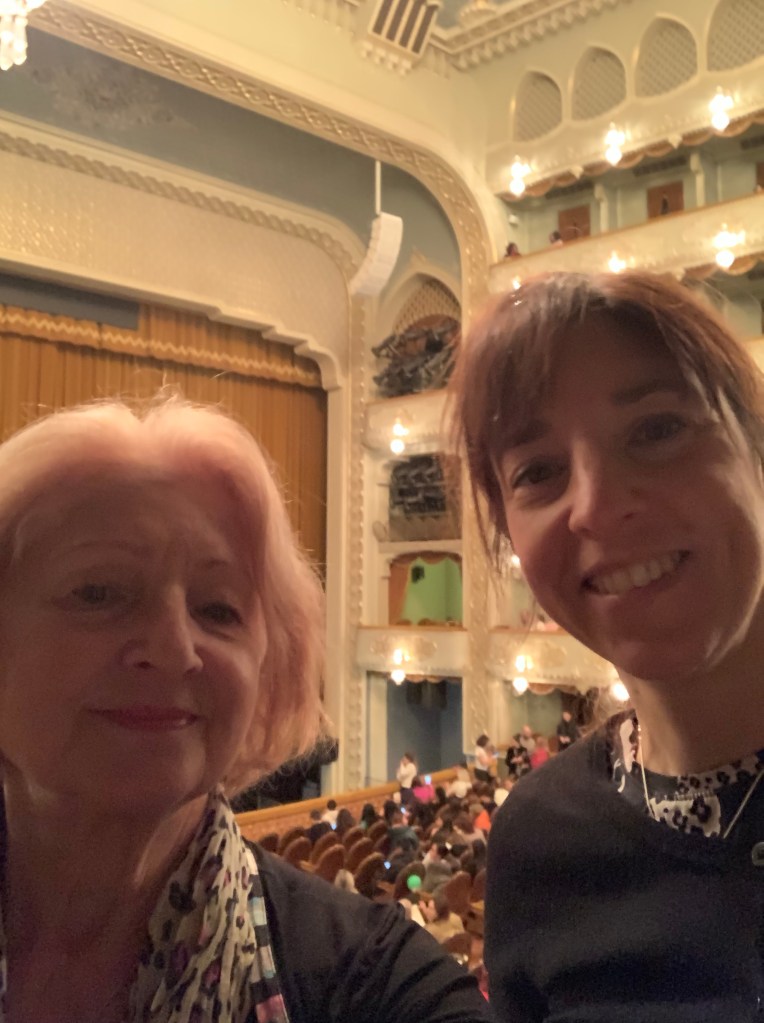
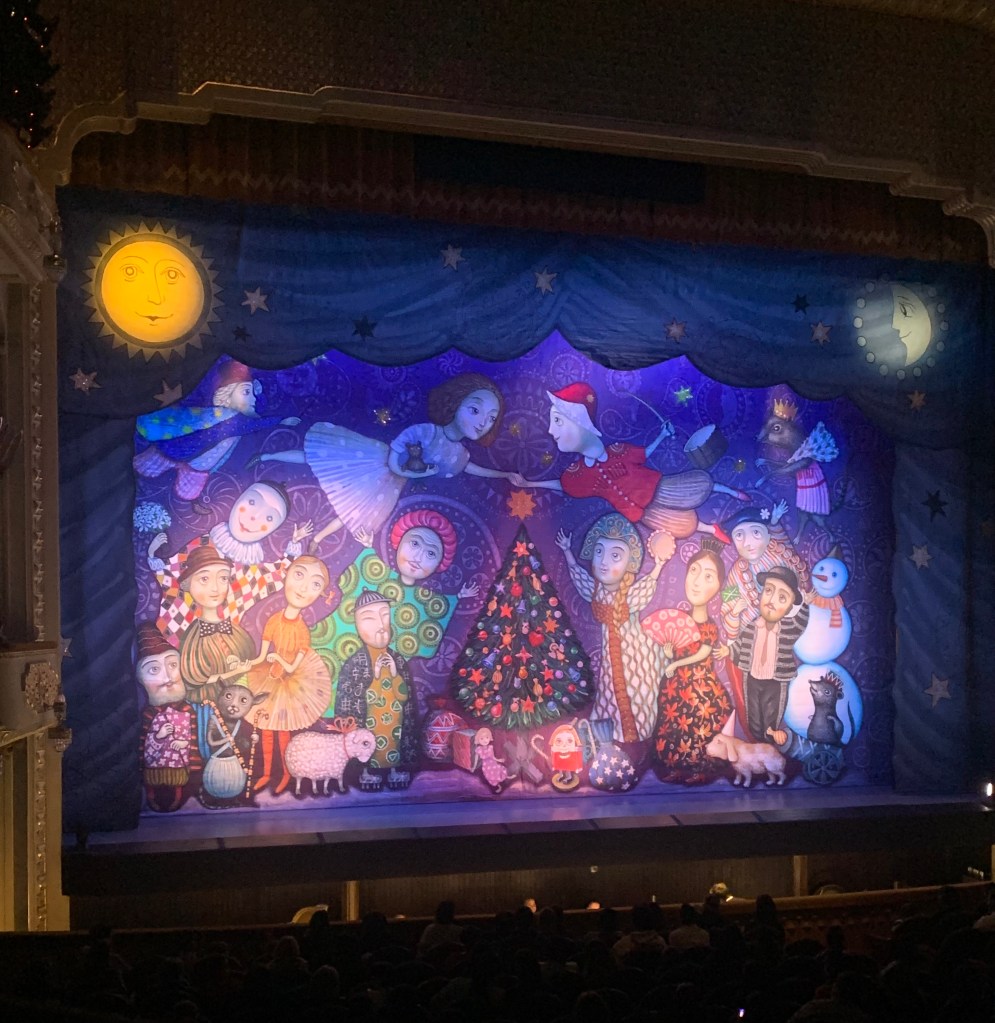
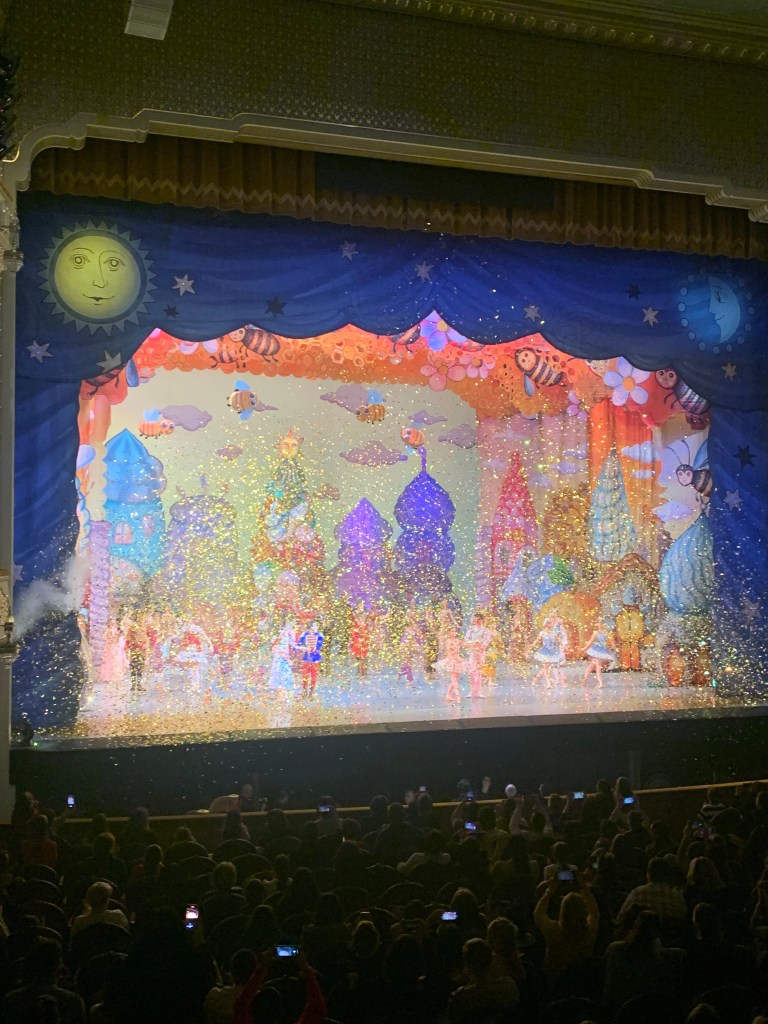
    I managed to get us a couple of tickets for the Nutcracker at the Tbilisi Opera House on Christmas Eve. The seats were very good and we enjoyed the performance (there were some funny moments, such as a prop being kicked towards the side by an elegant ballerina and an arm stretching out to pick it). Despite the request not to video or take pictures, plenty of phones were up, not discretely.

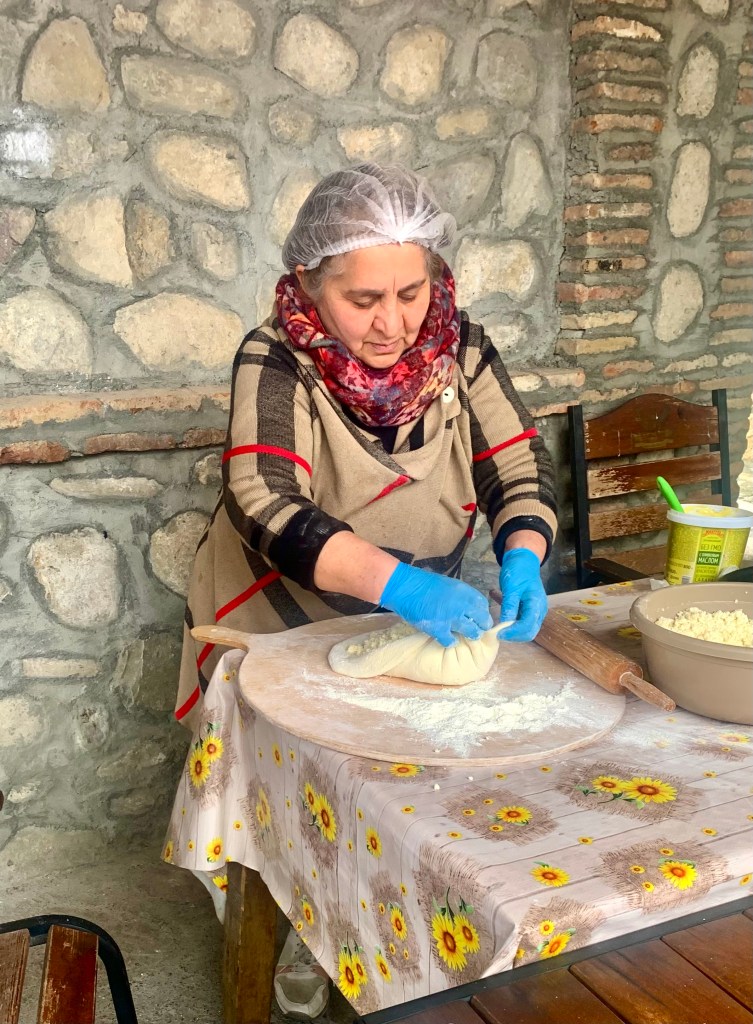
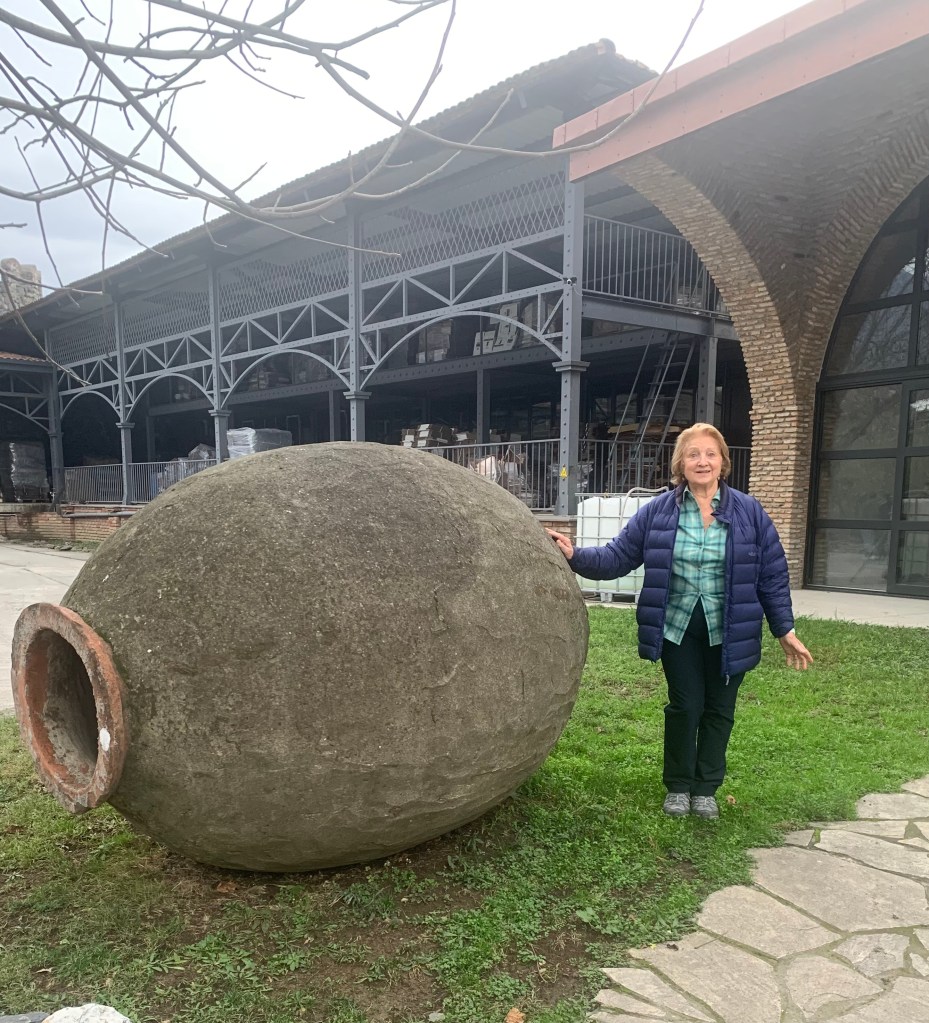
    We did an organised tour of the Kakheti wine region with a couple of wine tastings, a puri (bread) making demonstration and the one of Khachahpuri making – the cheese filled dough, shaped and baked like a pizza, but with a higher calorie content. There were also monasteries (St Nino, a female saint who was instrumental in having Christianity made a state religion in Georgia) and a Silk Road fort and city walls… The Georgians still make some of the wine in their traditional manner, putting the crushed grape pulp into giant earthenware amphorae in the ground, without adding anything to the mush (Qvevre method), though most of the wine for sale is made using the European method.

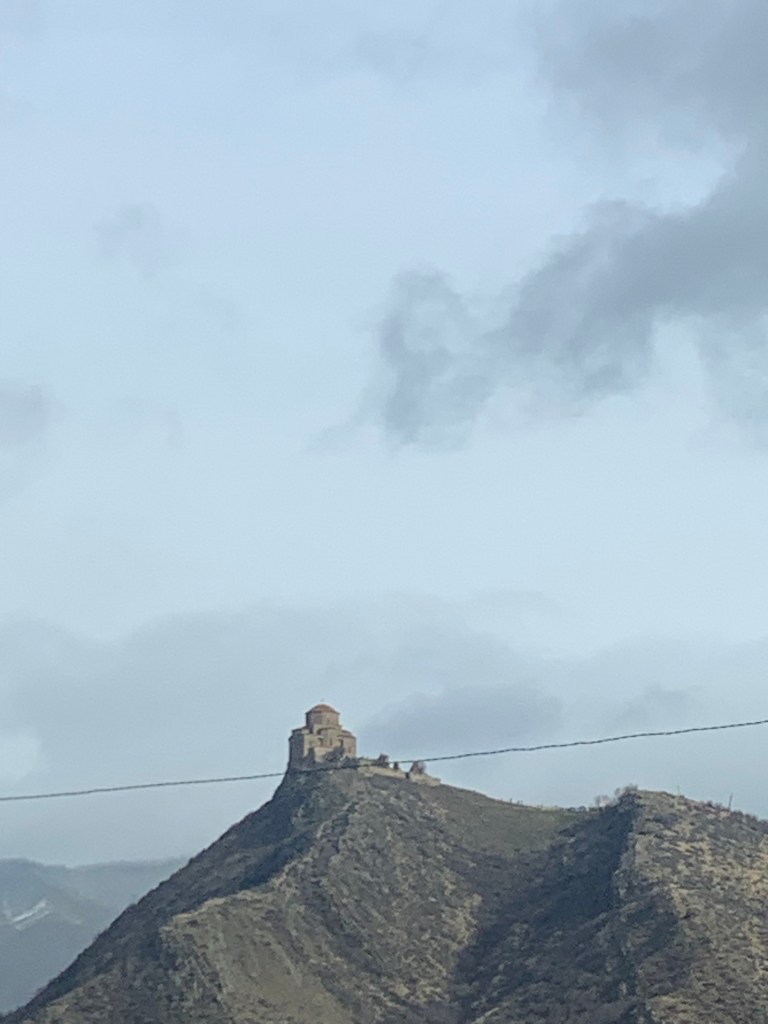
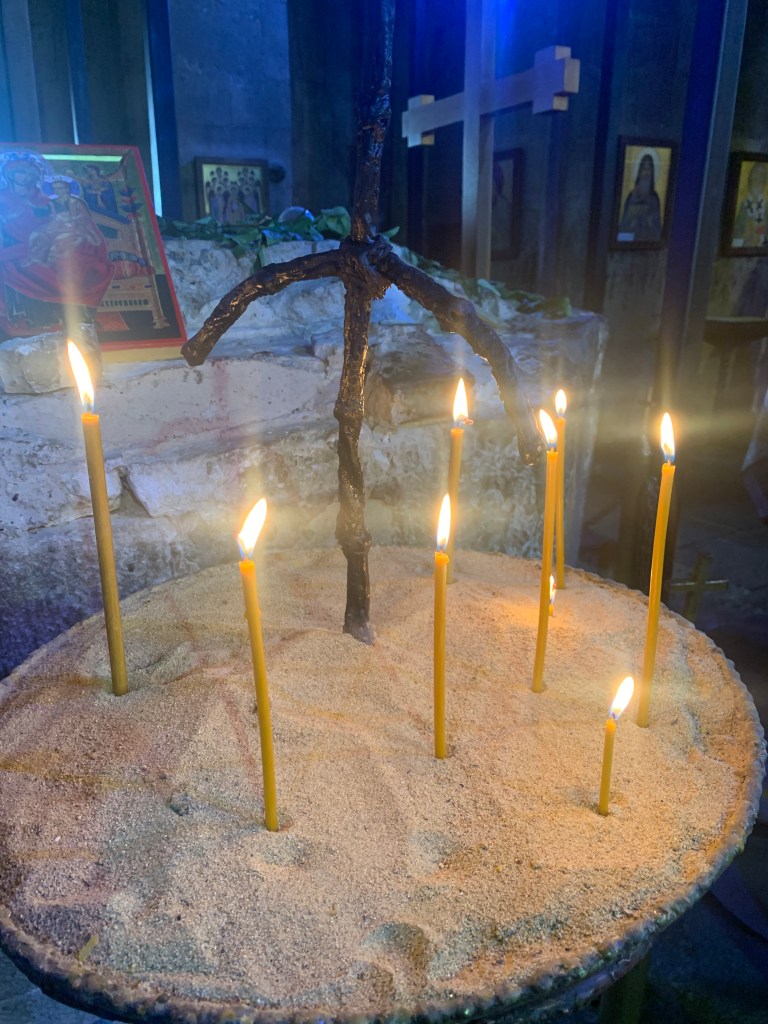
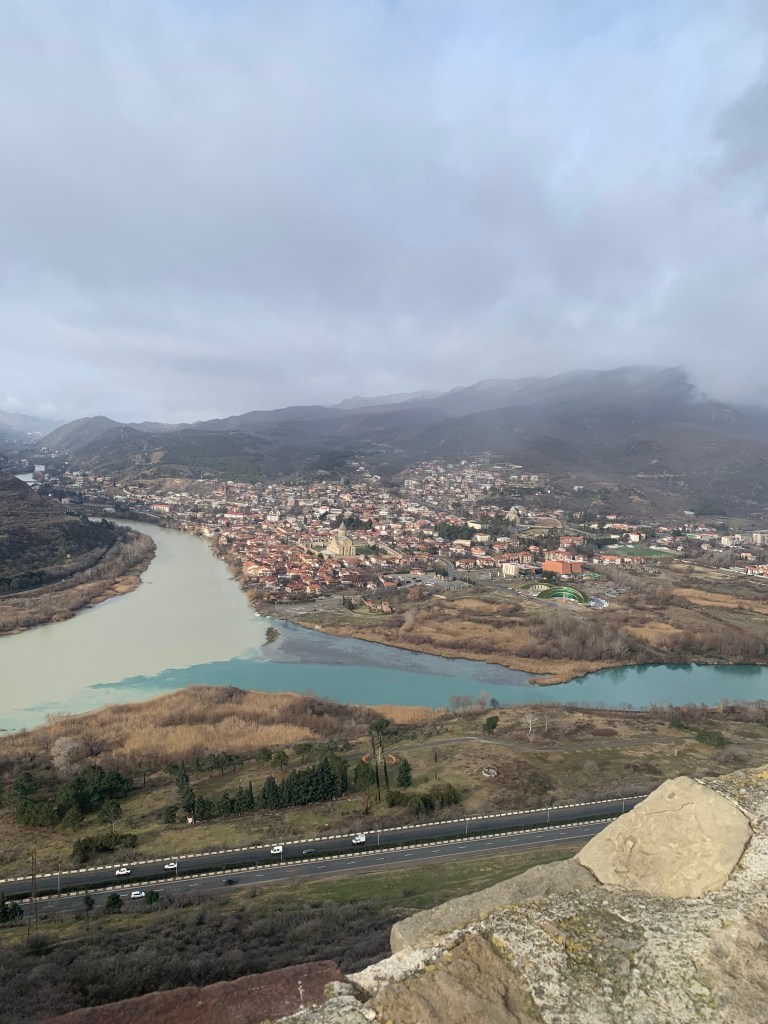
    We did our own tour of the Jvari monastery, “the holy of holies” for Georgians, looking beautiful on its high promontory above the confluence of two different coloured rivers by the old capital, Mtskheta, and its cathedral Svetitskhoveli. The drooping cross is special to St Nino (there’s a story, of course, of how Nino was presented with two pieces of wood in a dream and the next day she tied them together with her hair…)   It was a bitterly cold and windy day, and we were grateful for the warmth of the car.

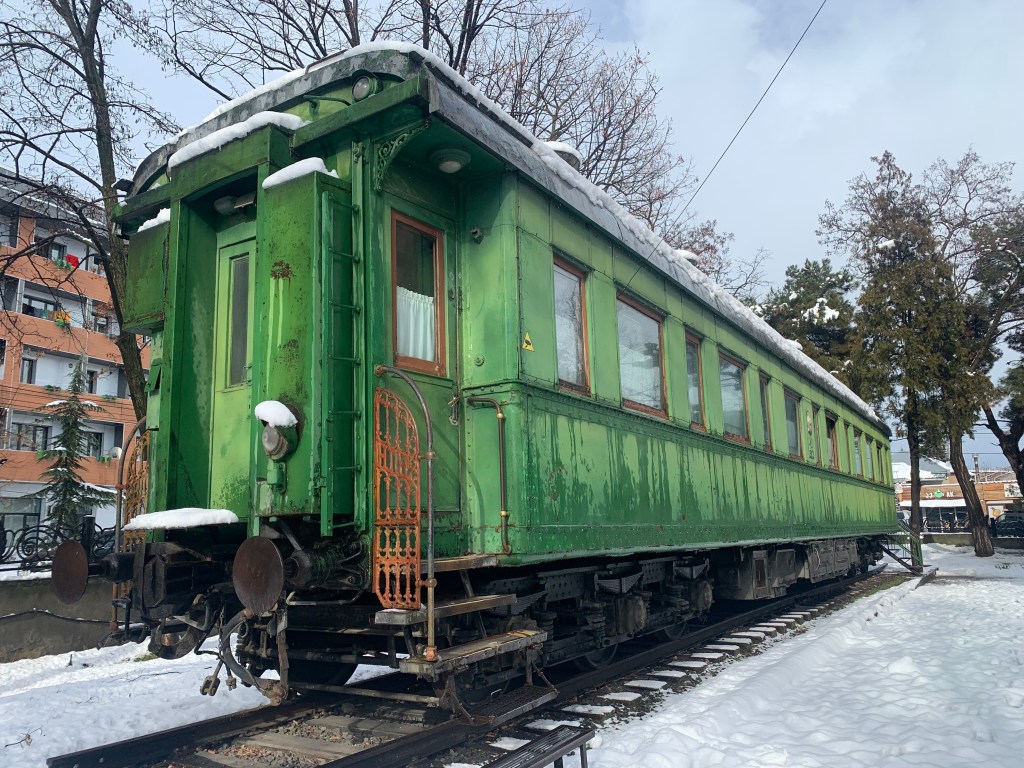
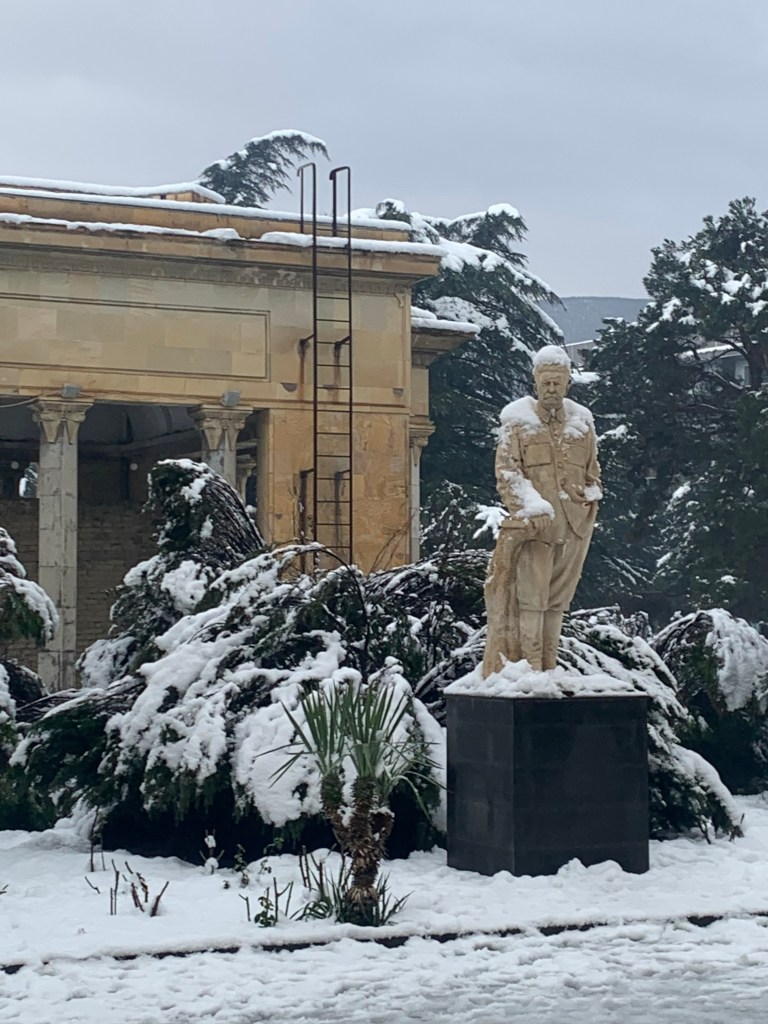
    Gori, Stalin’s birthplace, honours its one and only famous son by having a stately museum which includes the house he was born in and lived in till he was 4 – we are told Beria had the house moved to the place and the cover built over it. There is also Stalin’s railway carriage – he was afraid of flying and travelled everywhere by train. The central pedestal in the garden is empty – the 17m statue is in some back garden. But there are still a couple of smaller statues and busts and the whole display describes his revolutionary rise and various roles he played, deftly ignoring the millions whose death he caused. Not until you are about to leave – and I would have missed it had it not been for Gloria pointing to another room at the ground level – that there is some information about the murdered millions and what happened after he died in 1953 and how things played out after Khruschev’s denunciation of Stalin.

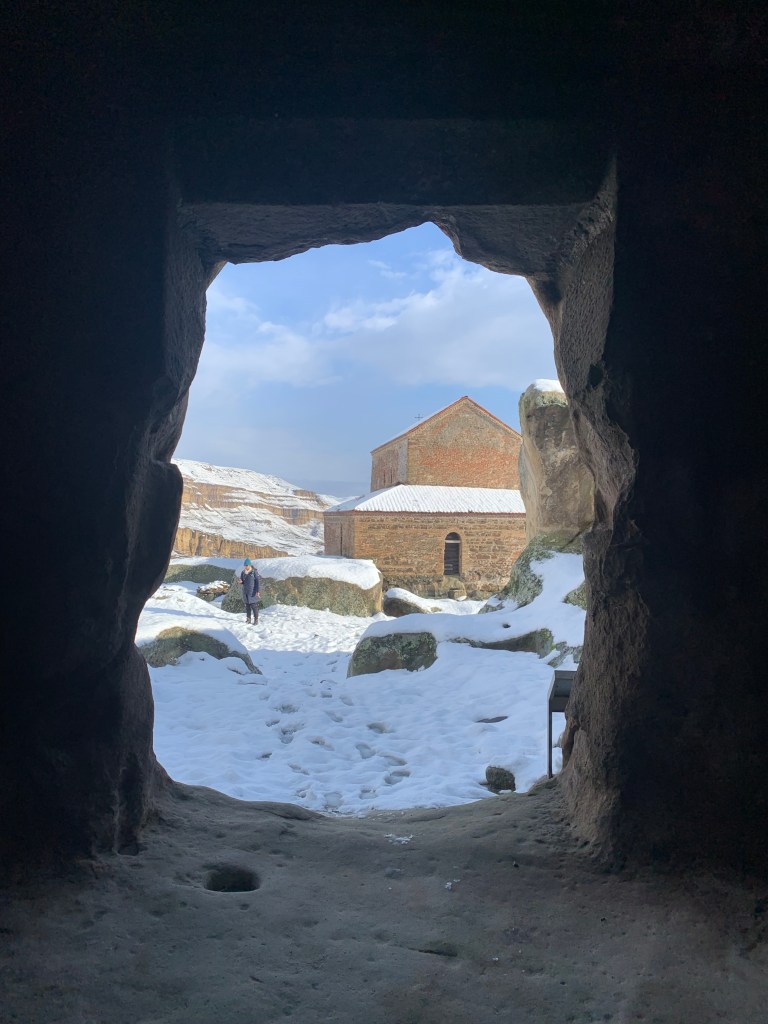
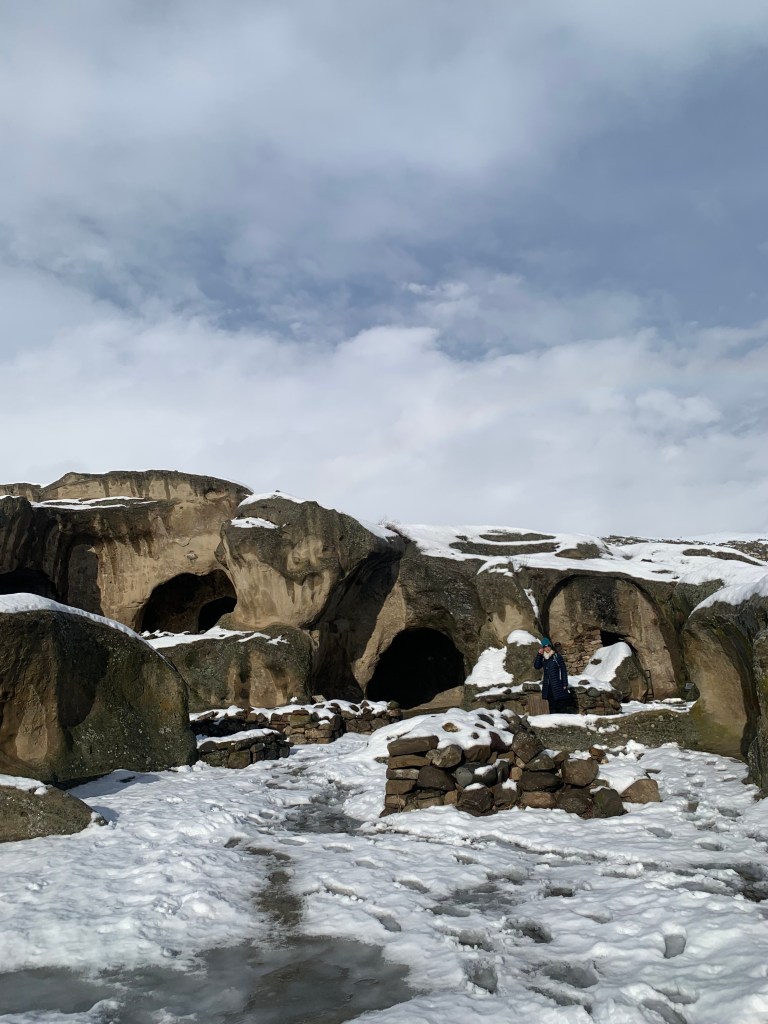
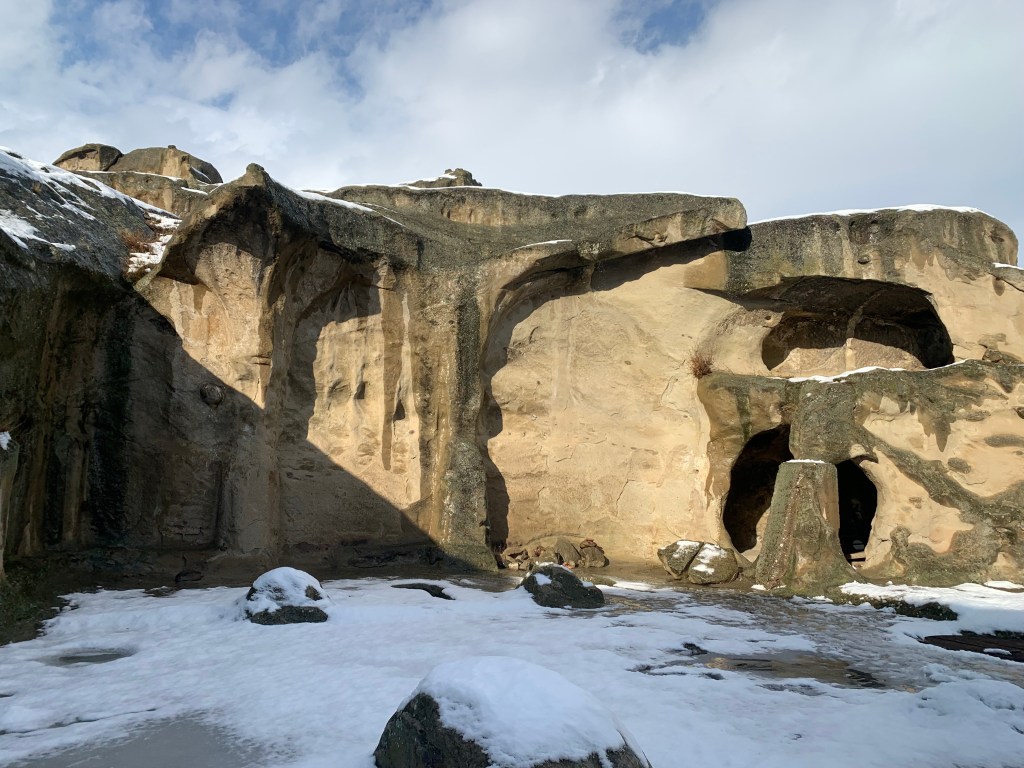
    Uplistsikhe is a cave city not far from Gori. Built between 6ct BC and 1ct AD, in a lovely spot above the Mtkvari river, at its height was a home to some 20000 people. There are temples and theatres, a throne room and wineries, a pharmacy. The ice, snow and water made it difficult to access some areas, but it was clear that it had been an impressive place.

    We had a very nice meal in a posh restaurant on Christmas day – definitely not a traditional one – not a turkey in sight! 

    As is always the case, time went far too quickly and packing and good byes came too soon. It was lovely to share those few days together. Gloria headed back to London and work the next day, and I headed to Gudauri, a ski resort in the Greater Caucasus.

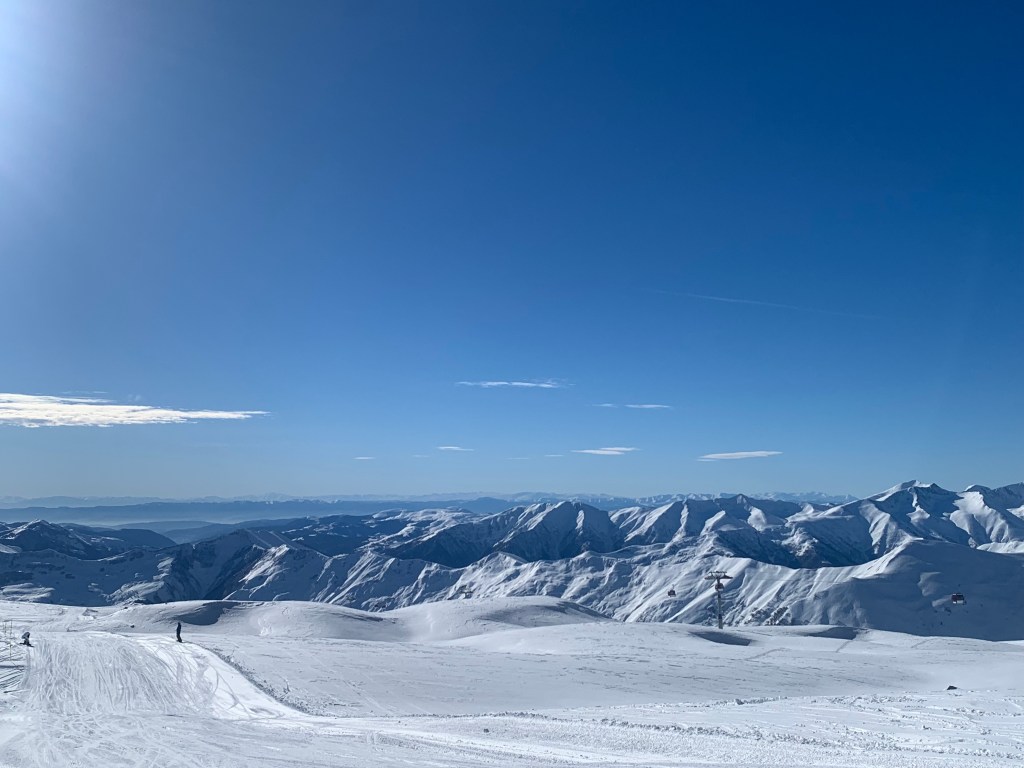
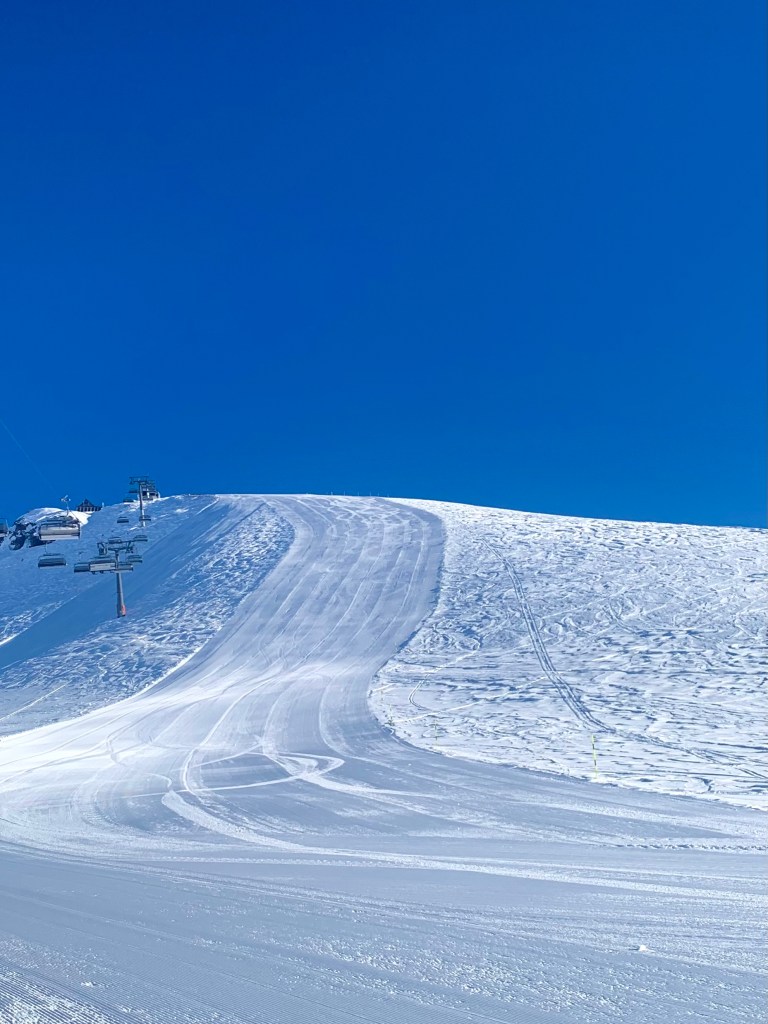
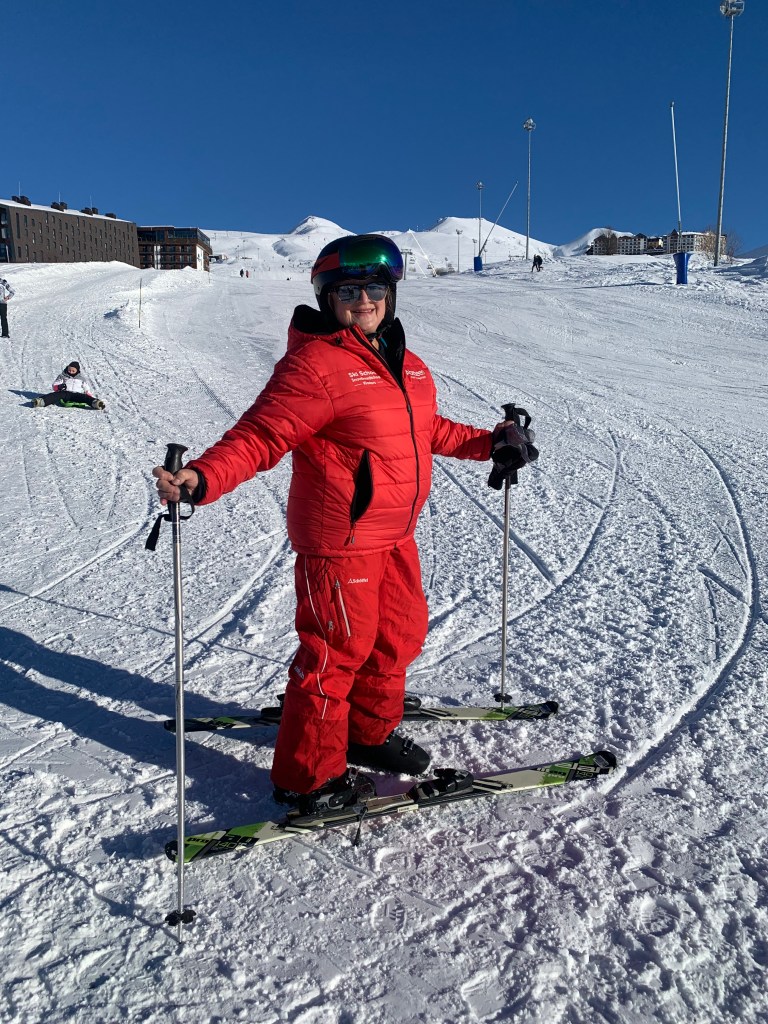
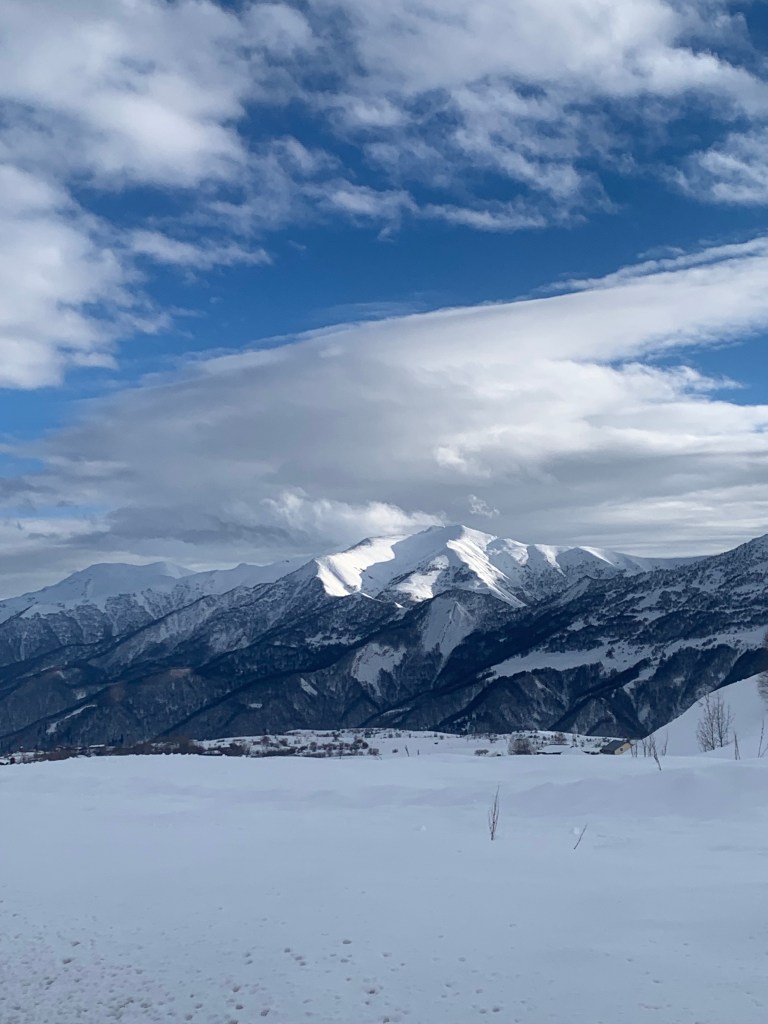
    Gudauri is a fairly new resort (just over 30 years old) and it is obvious that there has been a major investment in infrastructure – various lifts and gondolas – and there are plenty of places on the mountain to eat and drink (with inevitable techno/dance blasting from enormous loudspeakers), though most are with outdoor seating only. The runs, including the two blacks, are groomed, and there’s plenty of room. Besides the Georgians and the Russians, it attracts people from Dubai and other Arab countries and I even met two Austrians – they like the low cost here (a 6 day pass is 300 lari, c £90).

    There are a number of things that could be done better – access to the turnstiles is not cleared, steps are covered in snow, toilets are all on the level but an obstacle course to reach, there are few big maps of the ski area up (have seen only one), the names of chairlifts and gondolas are not displayed on them, so where there are several, it’s a guess which is which. One learns quickly.

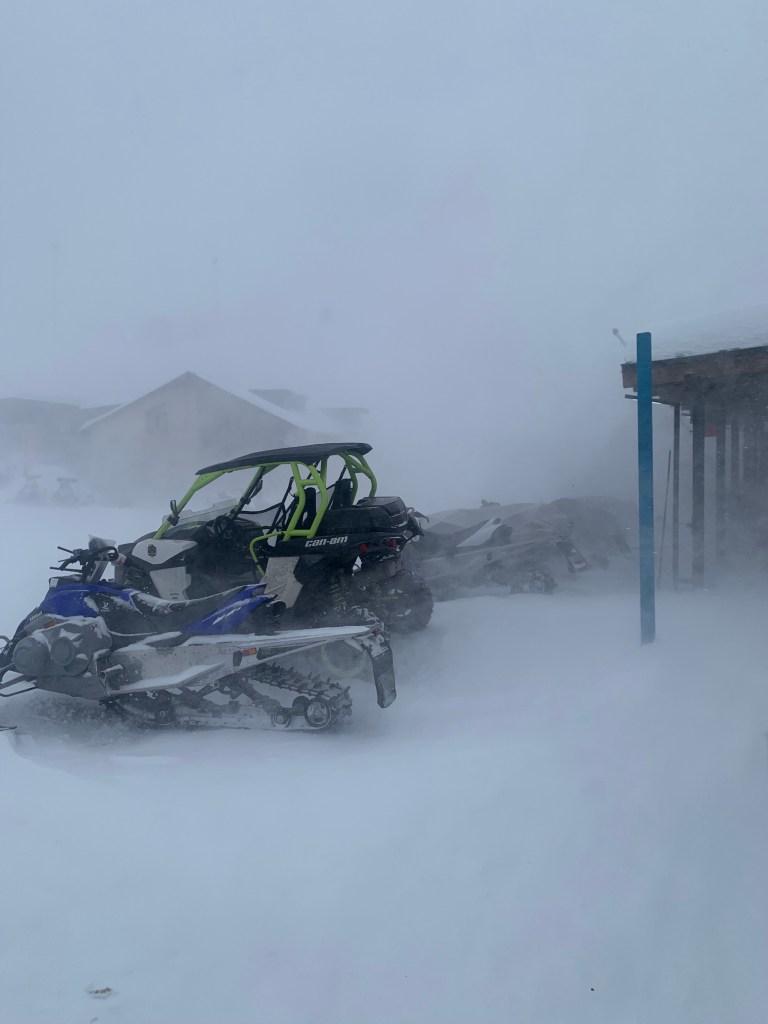
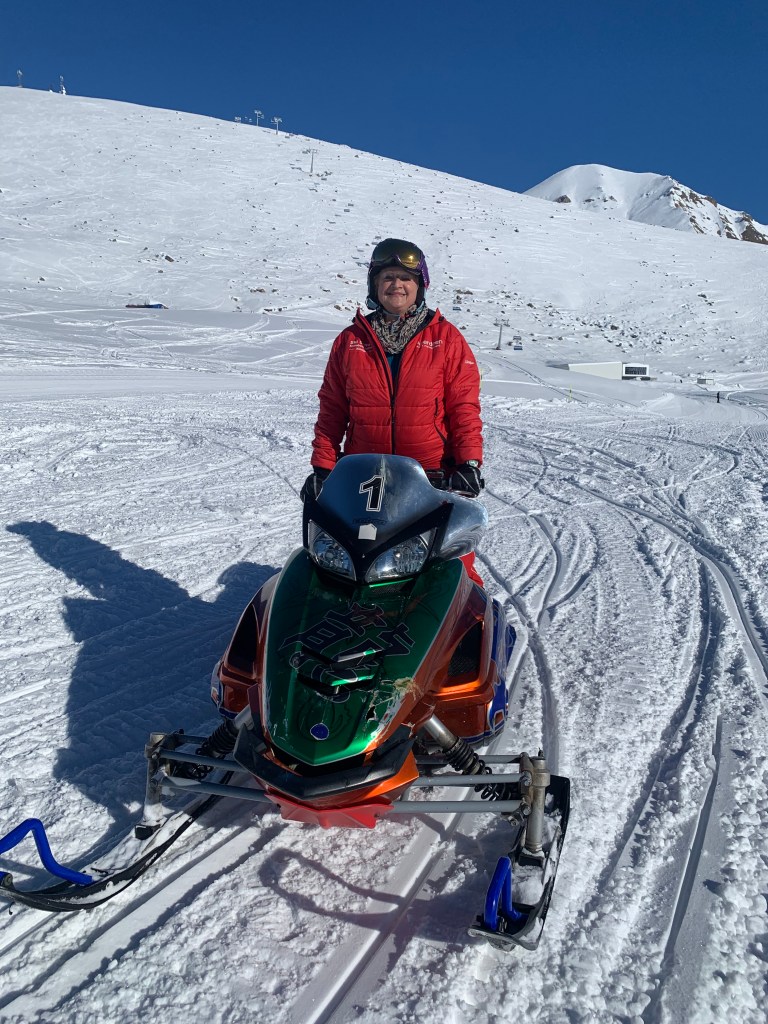
    And there is no village of Gudauri. It is all hotels and rental apartments, restaurants and a few kiosks, a police station, a petrol station and a couple of food shops. No pavements, of course. Walking on the road is like dicing with death – the drivers think they own the road…If the weather is inclement and there is no skiing, there is little to do. But if you want to learn to ride a snowmobile, or maybe heliski, that can be done.

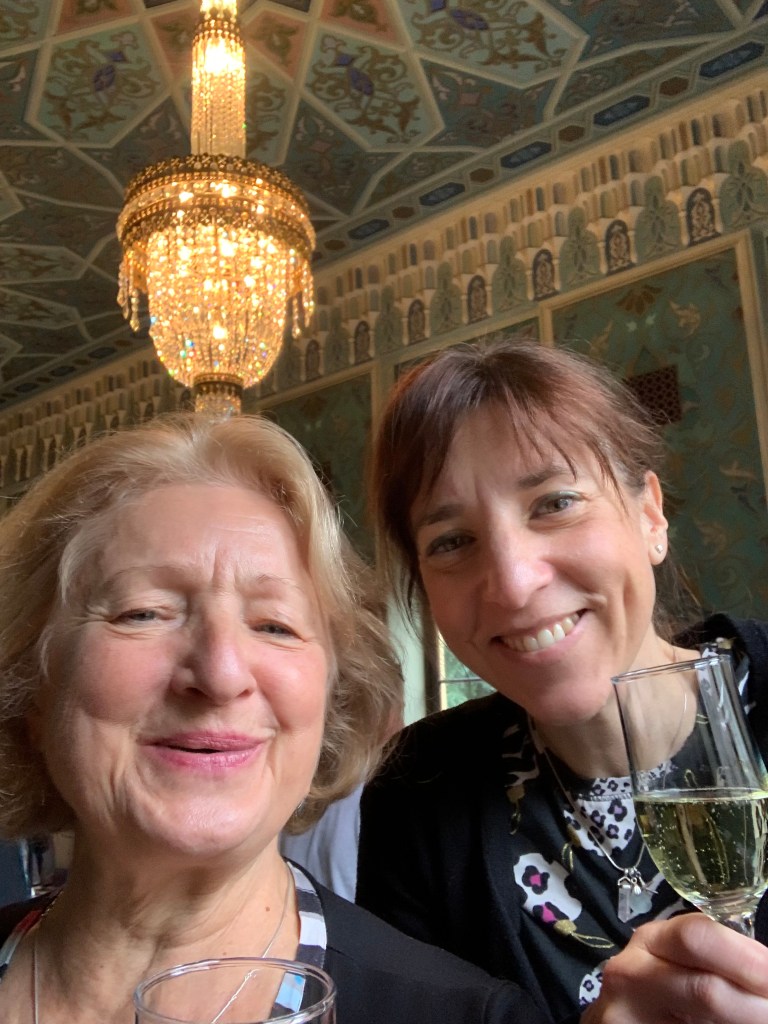
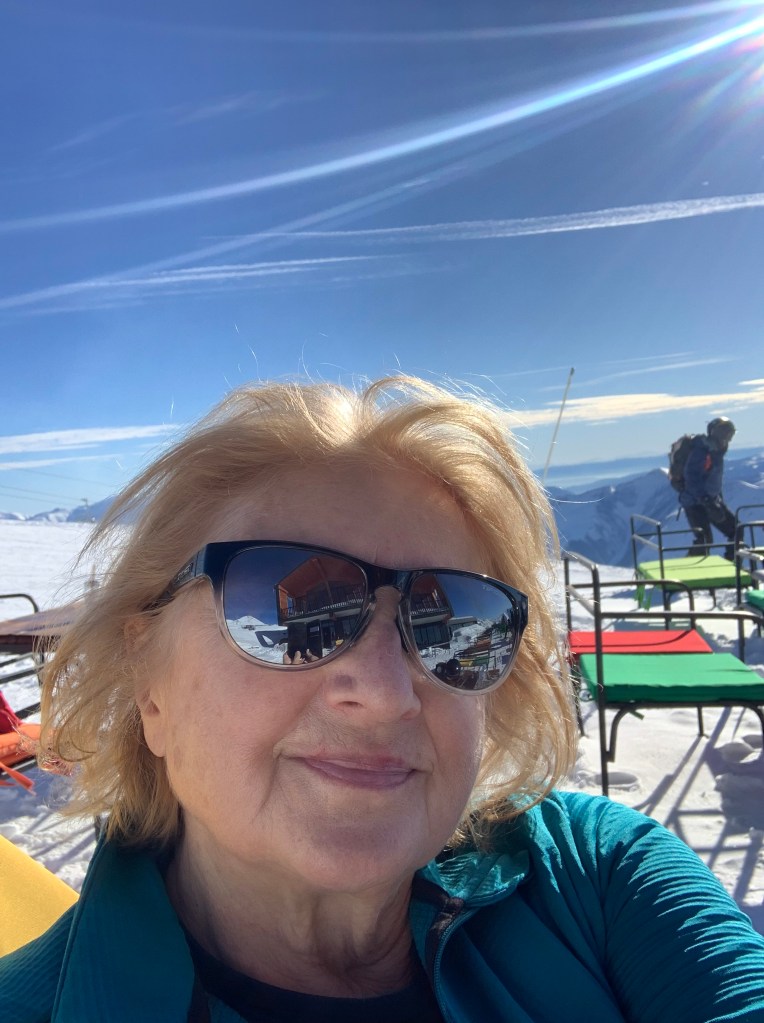
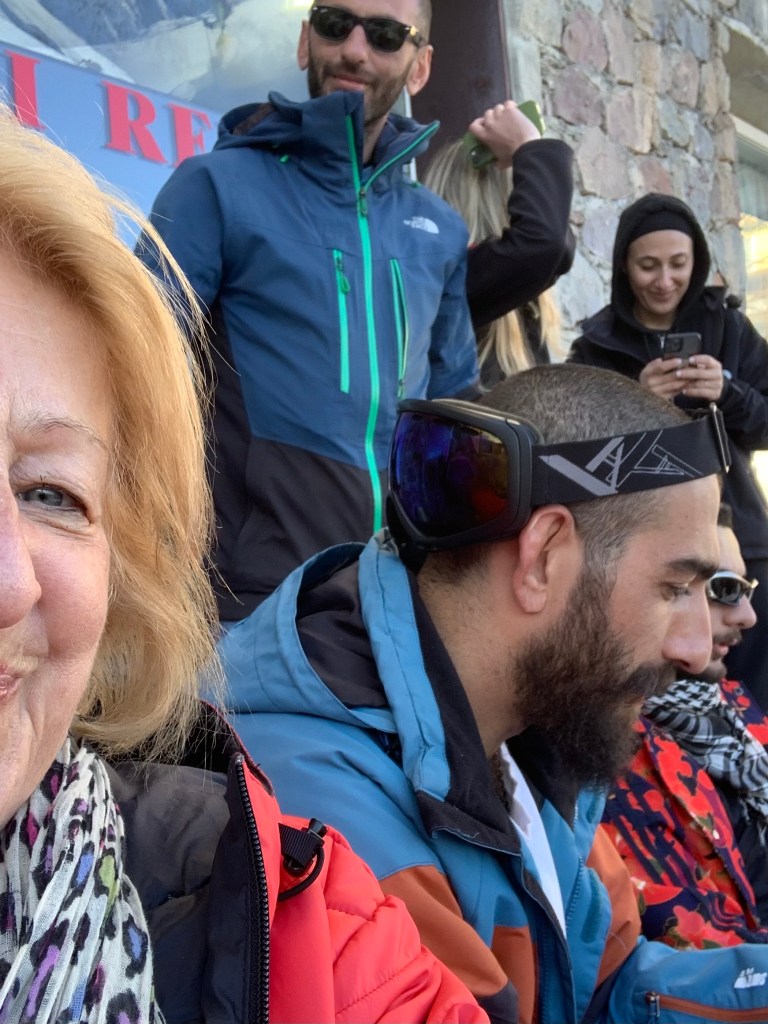
    But at the moment, skiing is good and the weather fine. My champagne is chilling on the balcony… :)) The middle pic is me fraternising with the locals, Jagermeister and all. :))

    Happy New Year.

  • Farewell to Armenia

    Dec 28th, 2023

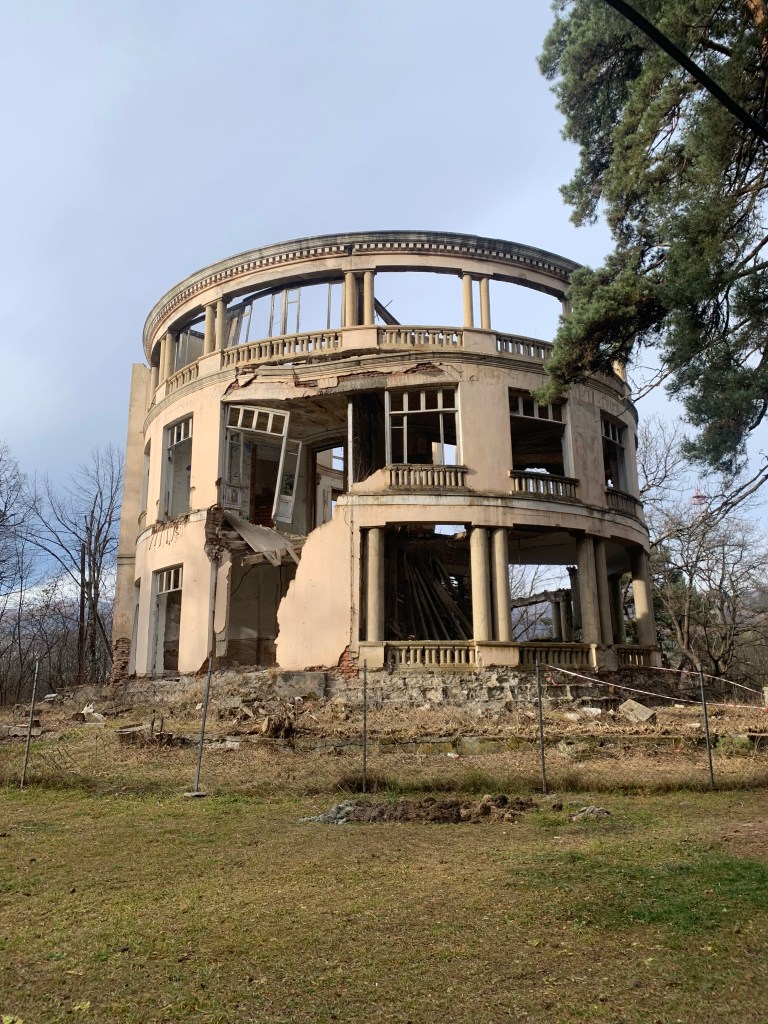
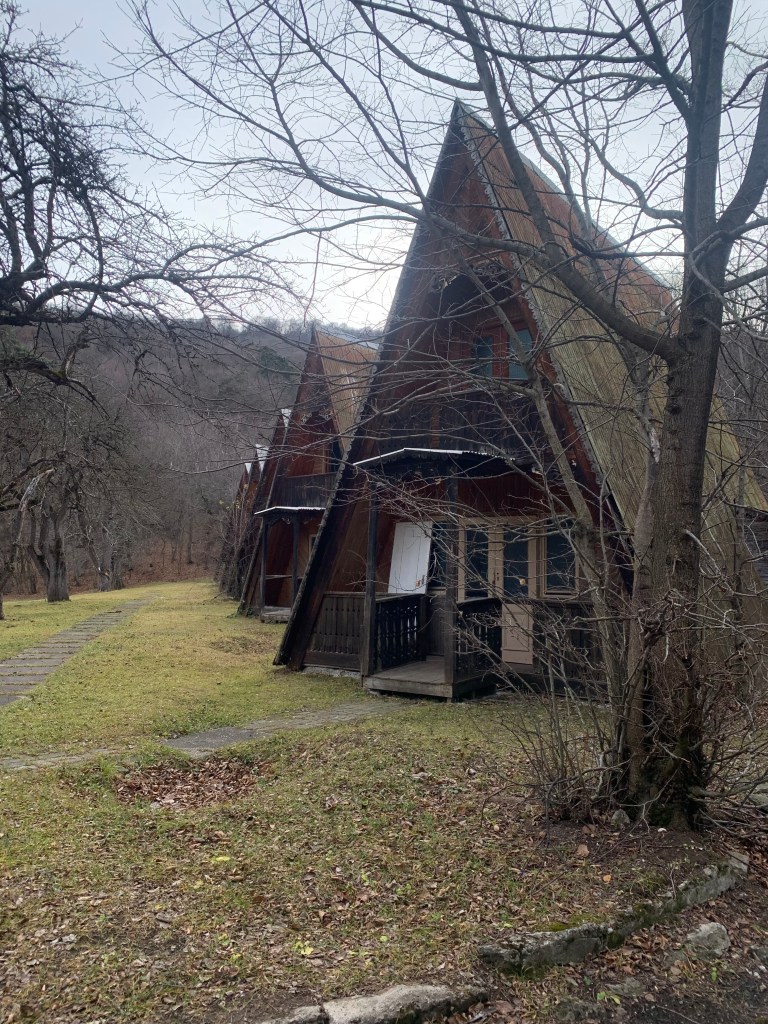
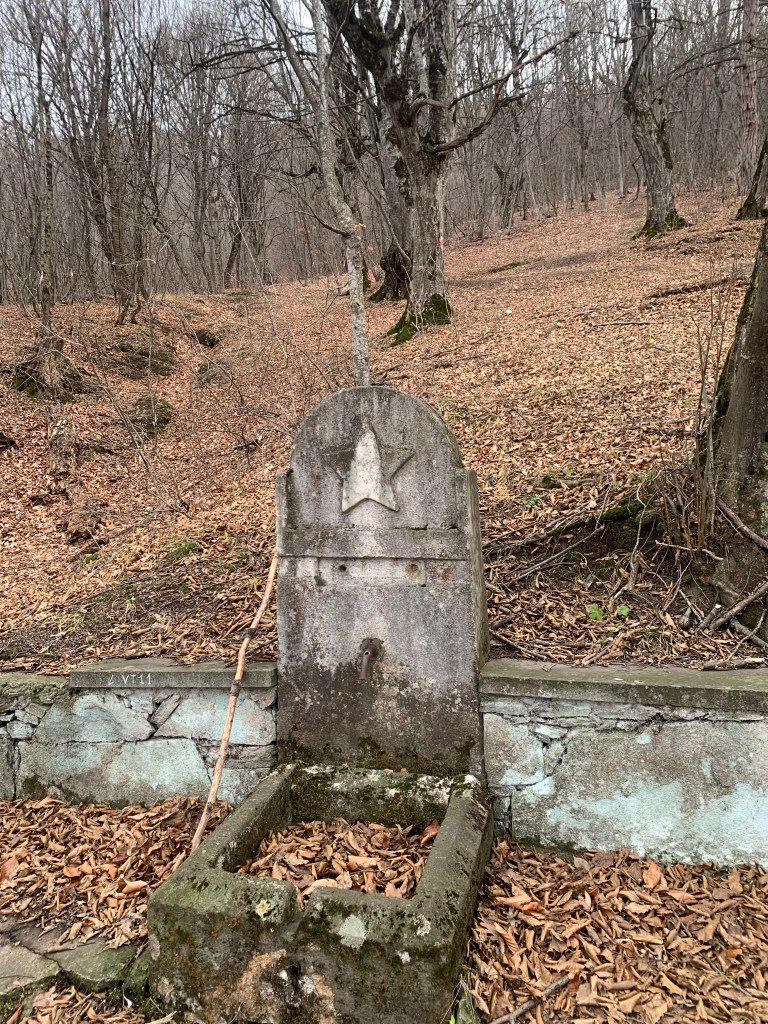
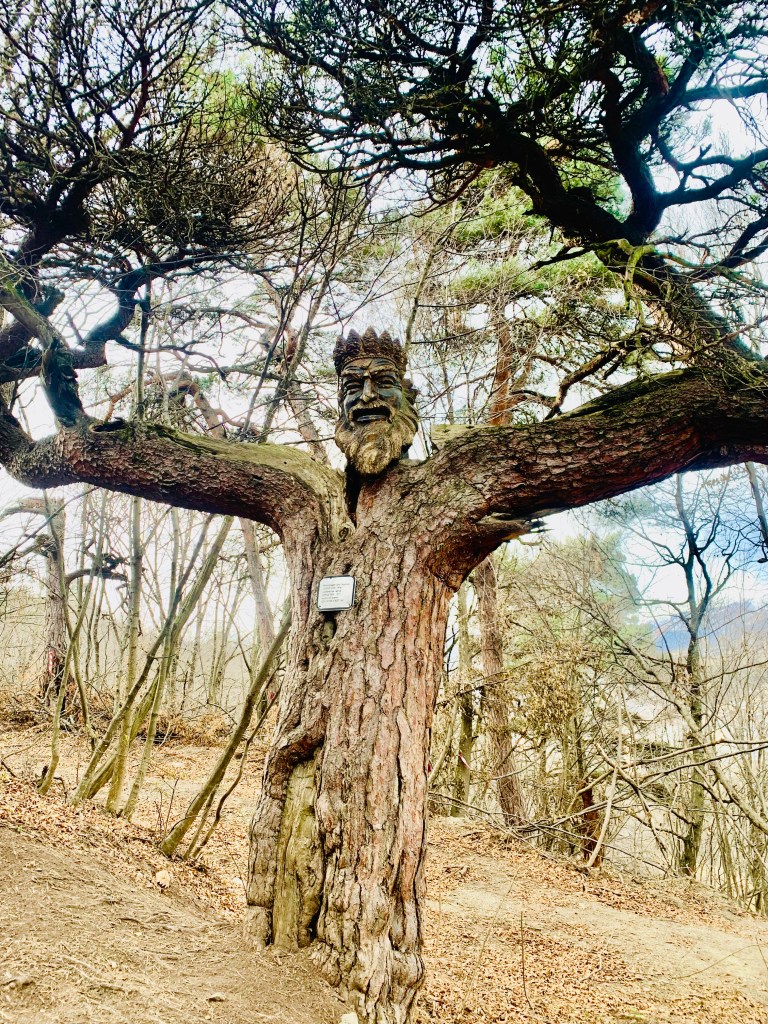
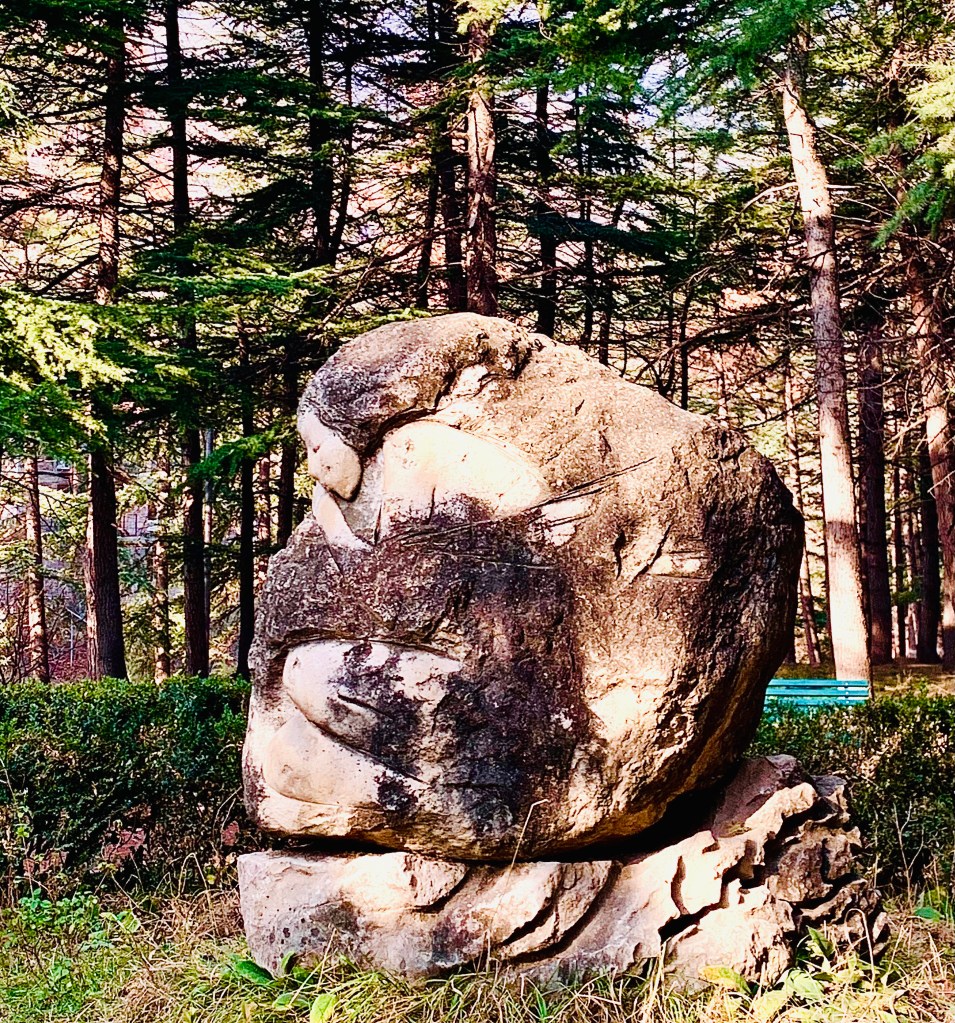
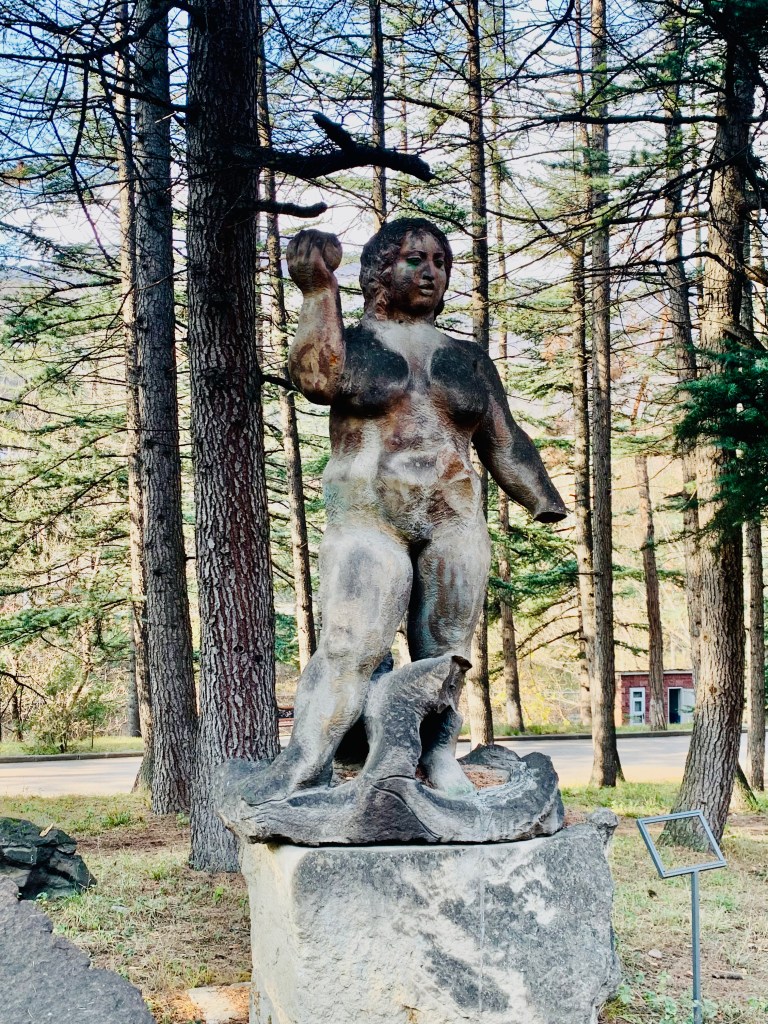
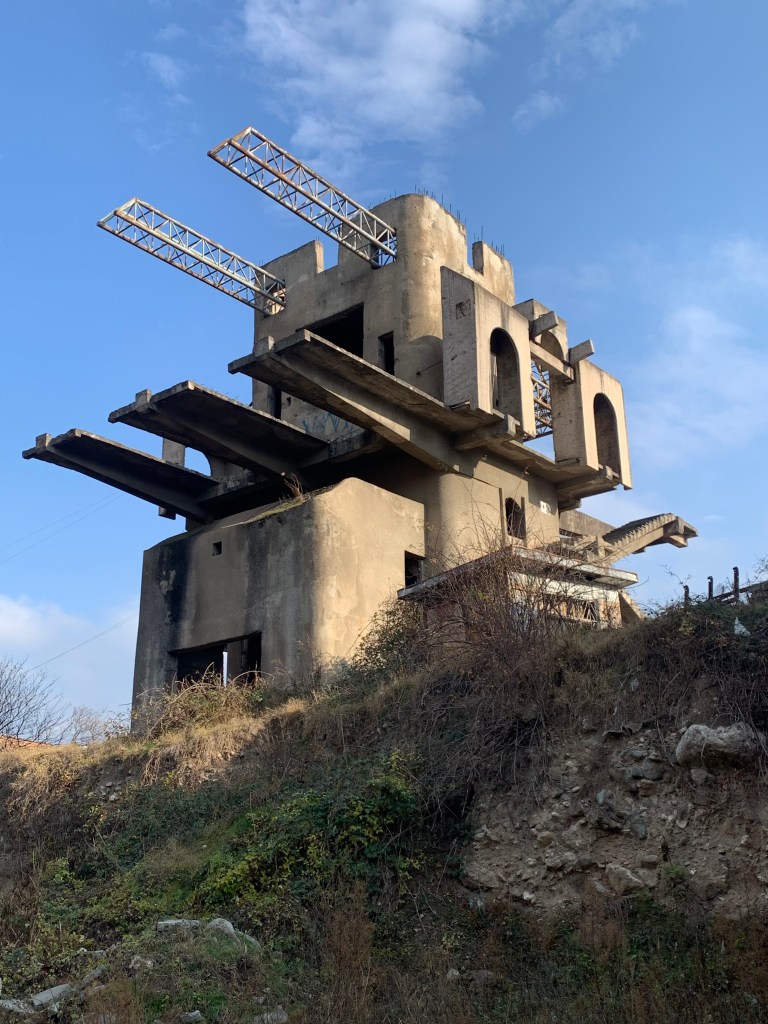
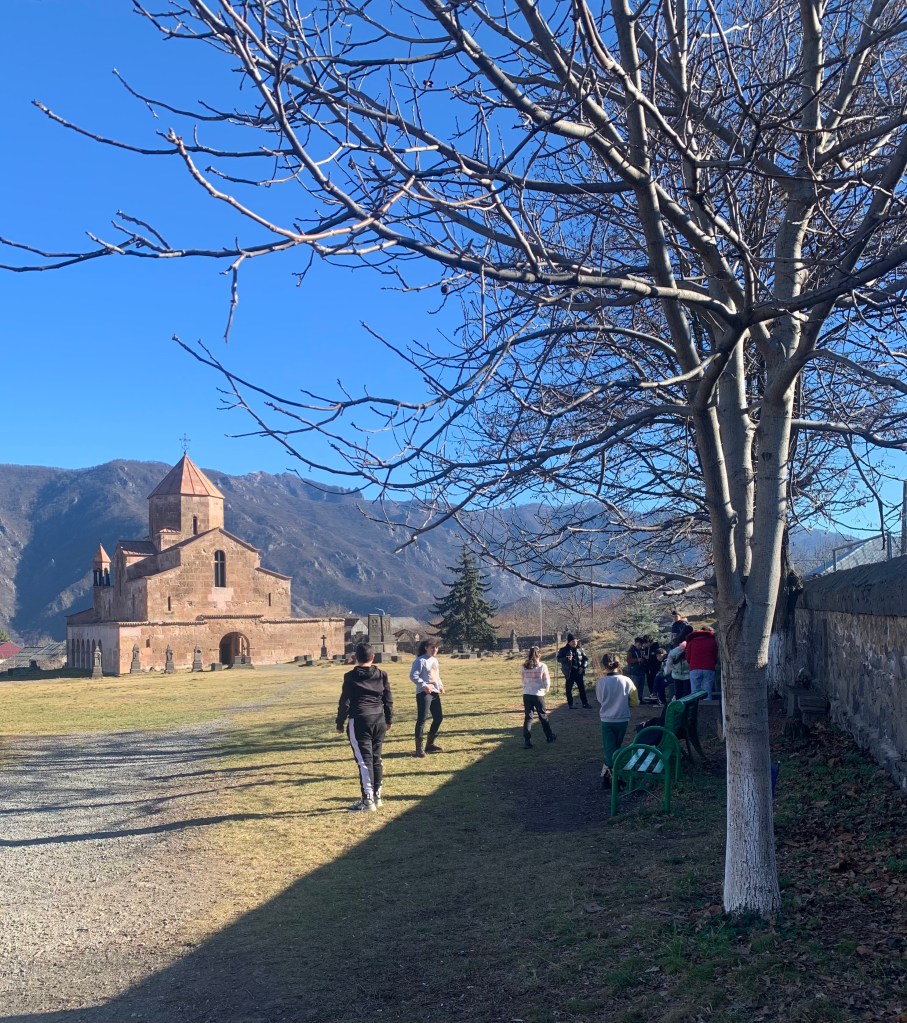
    Dilijan, a lovely mountain town (I’ve been told more than once that the area was “the Switzerland of Armenia”) not that far from the capital Yerevan, has its fair share of dilapidated Soviet architecture. One of the most notable ruins is the circular villa built in 1936 for Aghasi Khanjian, the first secretary of the Communist Party of Armenia who held the post for six years. This was his summer residence. It has a neo-classical feel, but I’m told it was built in “Armenian modernist style”. It is on a prominent site above the town, and must have been a sight to behold (though not many would have been allowed near, from what I can see – fences are still there). The views over the river Aghstev and the mountains are lovely. I also liked the live sculpture of the King of the Forest. There were lots of supporting buildings, some in a Swiss chalet style, some clearly utilitarian. There is a basketball court (overgrown).

    I recall our student visit to Russia in the early 70’s (Kiev, Moscow, Leningrad, by train). Tennis was considered “a capitalist game” and not played or encouraged, but badminton and basketball were seen as suitable for socialist youth.

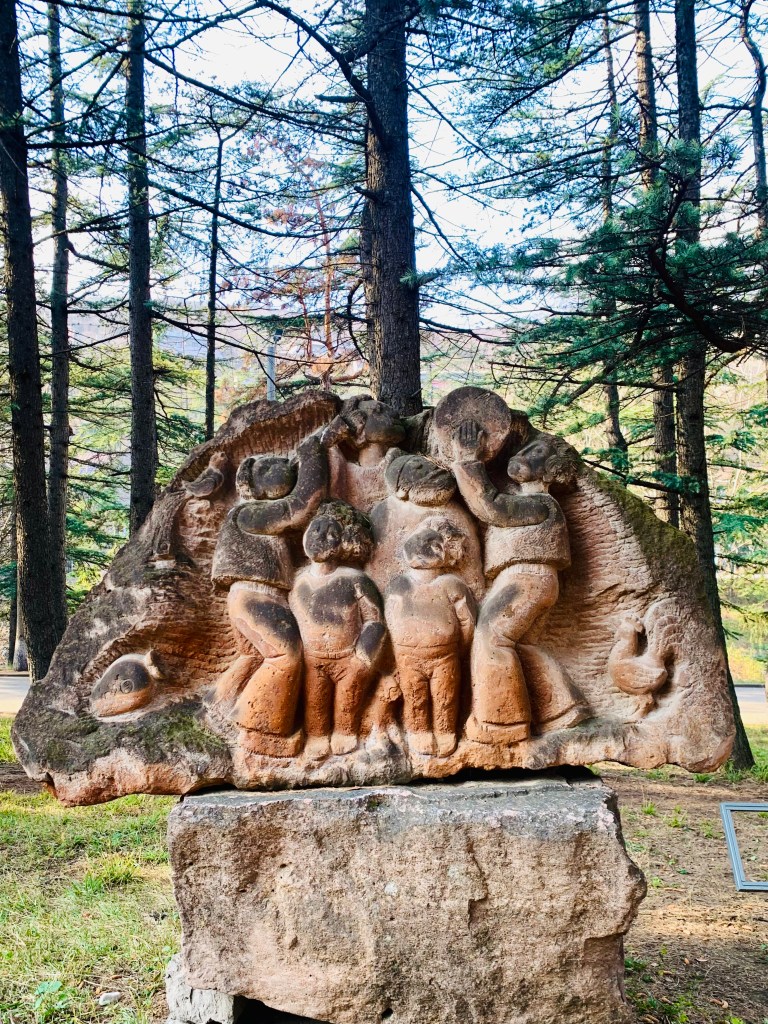
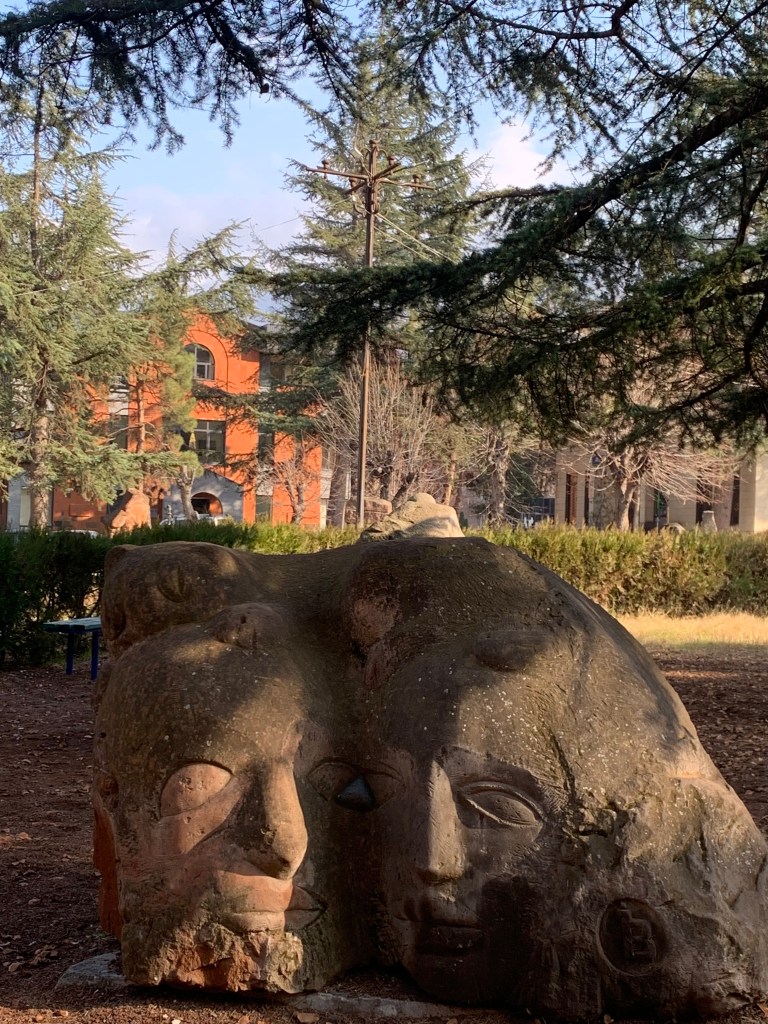
    Ijevan, up the road from Dilijan, is in a lovely spot on the river Aghstev, with a long park on one side it, filled with sculptures. Ijevan means caravanserai in Armenian and it was a major Silk Road trading post . It is also a wine and cognac producing area – have been drinking Ijevan reds for a while now.

    Getting back to Dilijan (on public transport) proved to be difficult. It was bitterly cold and windy. Normally, there are a number of marshrutkas on the road but on that Sunday none turned up. I started to walk back to the town (the winery is c 2km out) and also put my thumb out; after a while, a Toyota RAV stopped. Said I wanted to go to Dilijan and the chap said ok, he had time… It turned out he was a refugee from Nagorno-Kharabakh, a former soldier (he was in his forties, and had lost his right arm below the elbow) who told me he had arrived in Ijevan about three months ago, with little more than his car – there had been no warning from the Armenian government about the Azerbaijani takeover . He thought the Armenian government had made a deal, as otherwise the people leaving would have destroyed property and made places uninhabitable. He was understandably bitter. He drove me the 40 K to Dilijan and would not accept anything for it – he said to think of it as a kindness from an Armenian; he then went round the roundabout back to Ijevan. I also found out why there were no marshrutkas – there had been an accident with a marshrutka, which we saw overturned on the road.

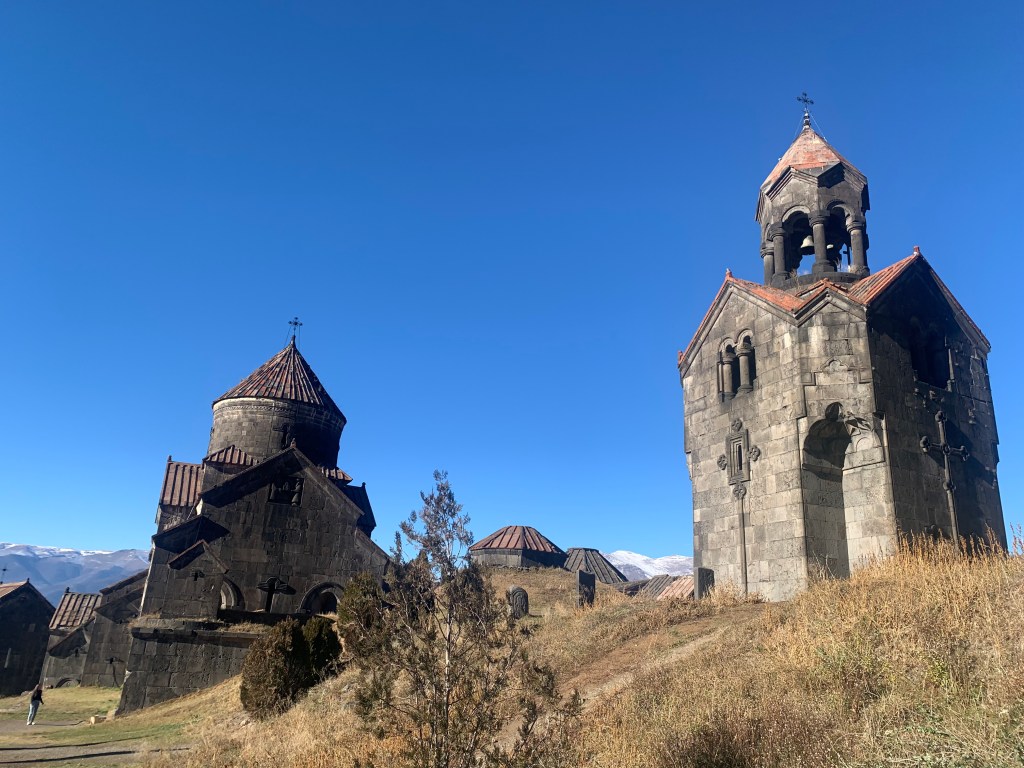
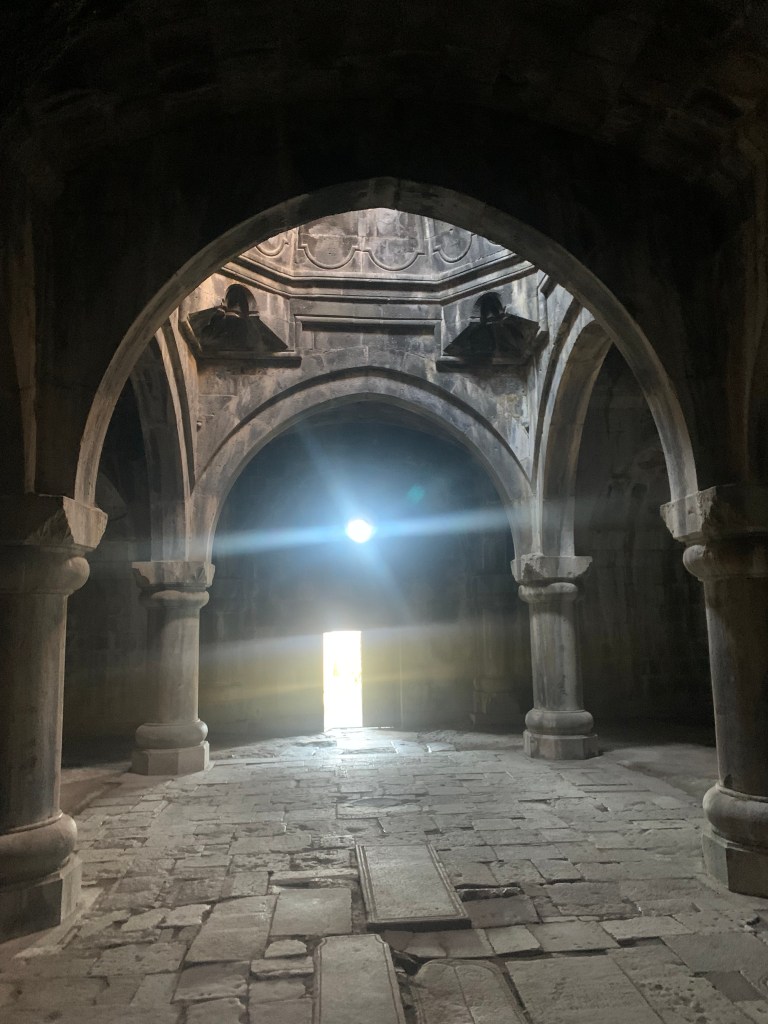
    The trip to the monasteries up in the mountains is lovely – It must be a joy to hike around here. It is sufficiently high here for the temperature to be comfortable, even when Yerevan is boiling. The Hagahartsin Monastery, up a hairpin road through the forest of the National Park, has been restored with an UAE Sheik’s money and looks good – the enormous Refectory especially.

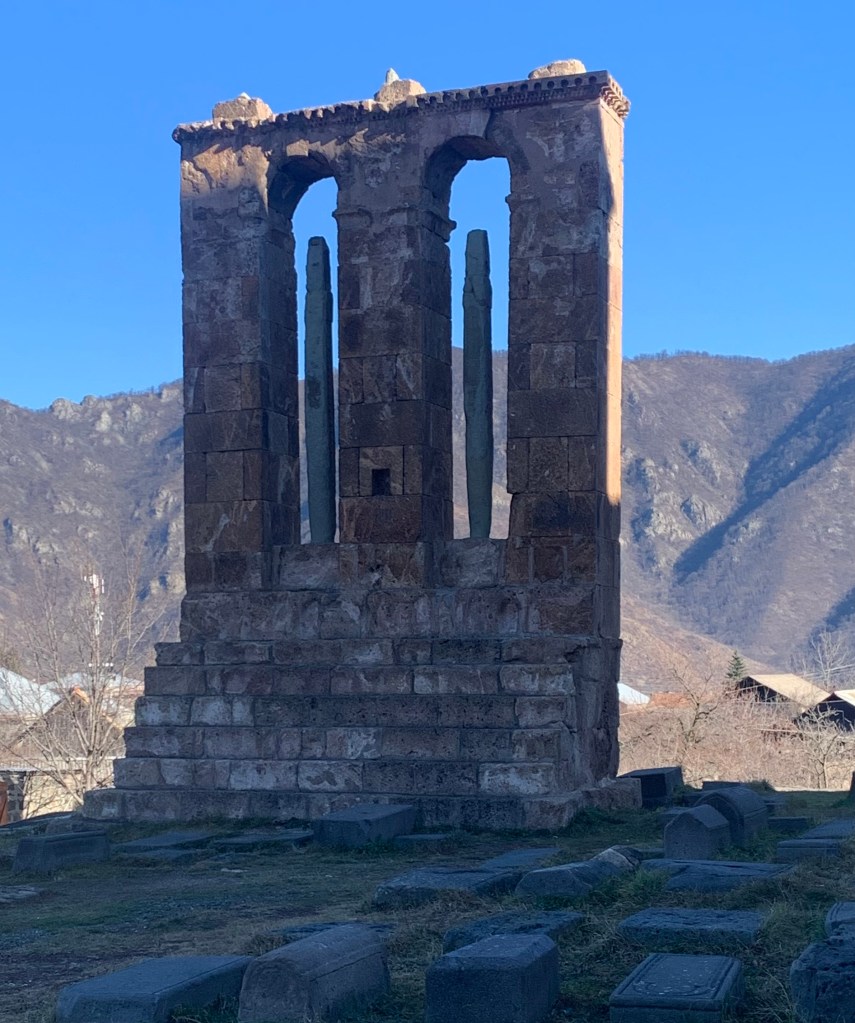
    The Ghoshavank is in a gorgeous spot (but then, they all are!) and all monasteries had libraries, manuscript copying schools and universities. It is not surprising the Armenians are so proud of their literary heritage – Mesrop Mashtots alphabet, created in 405, was well received and the first Bible in new Armenian script came out the same year (they used cuneiform before).

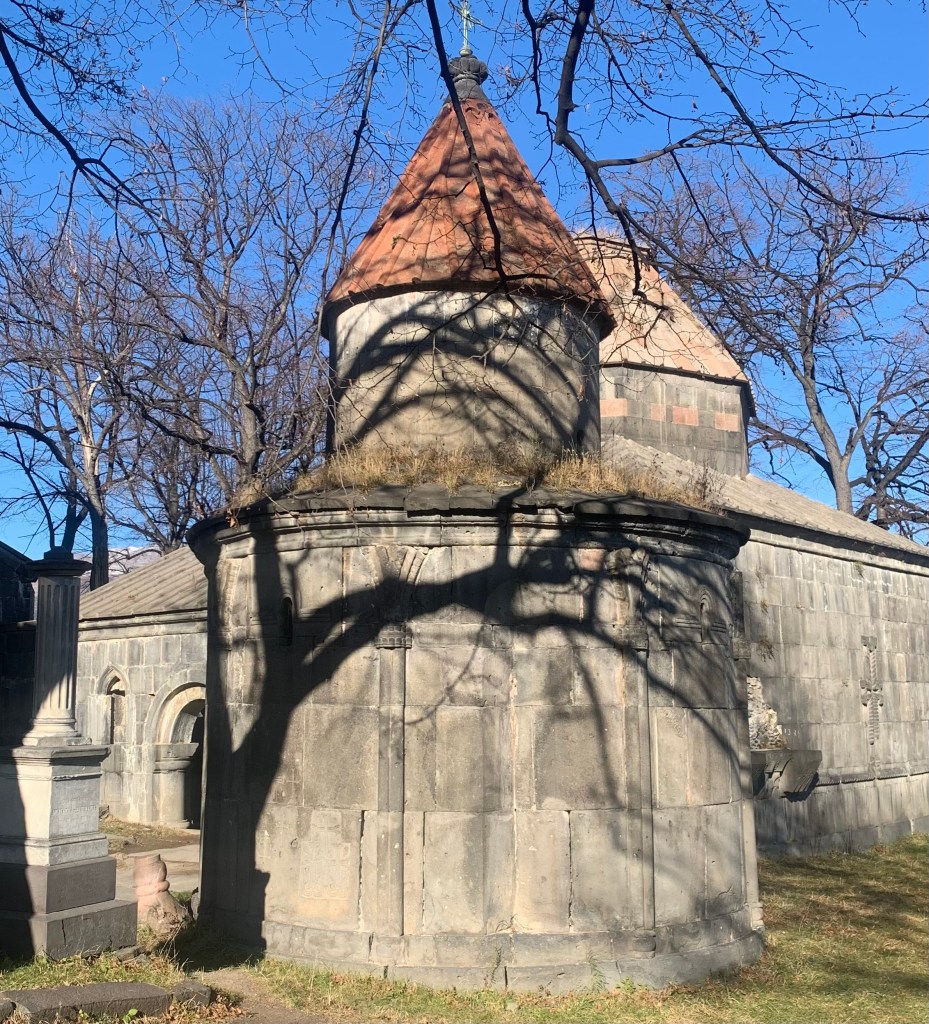
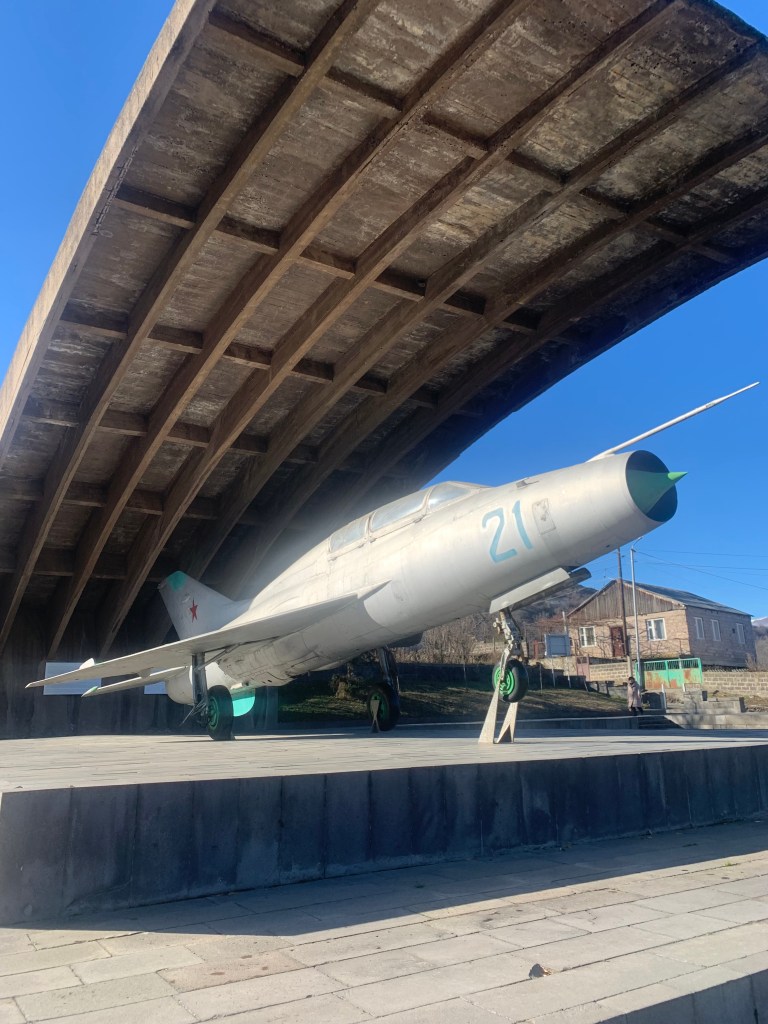
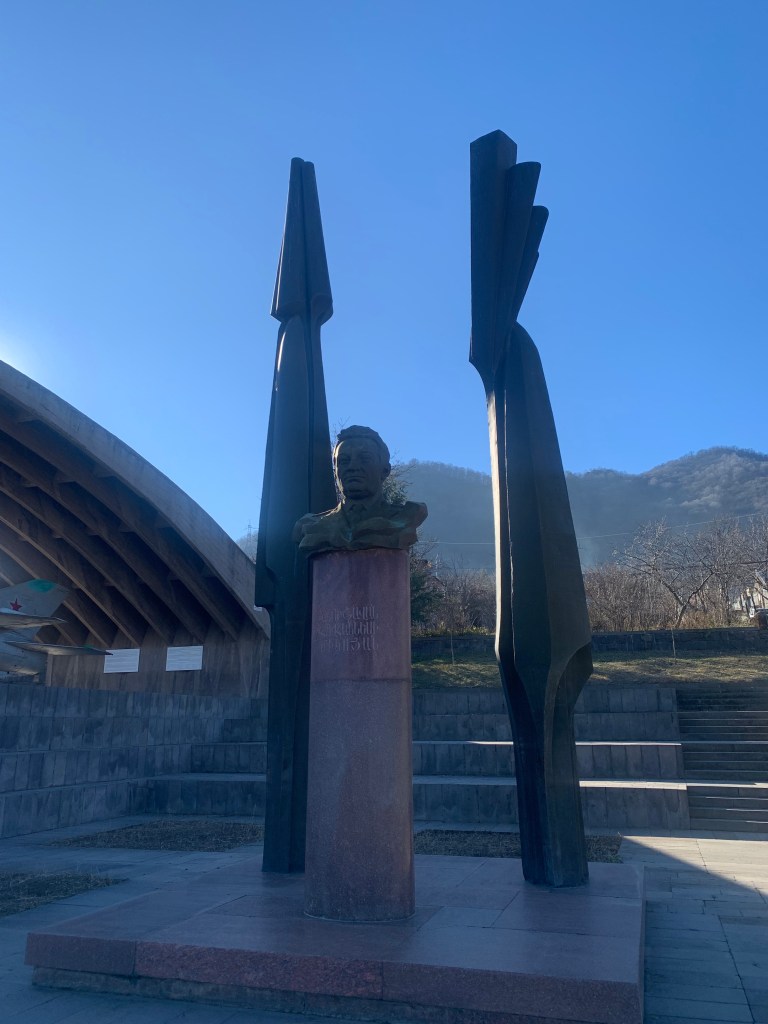
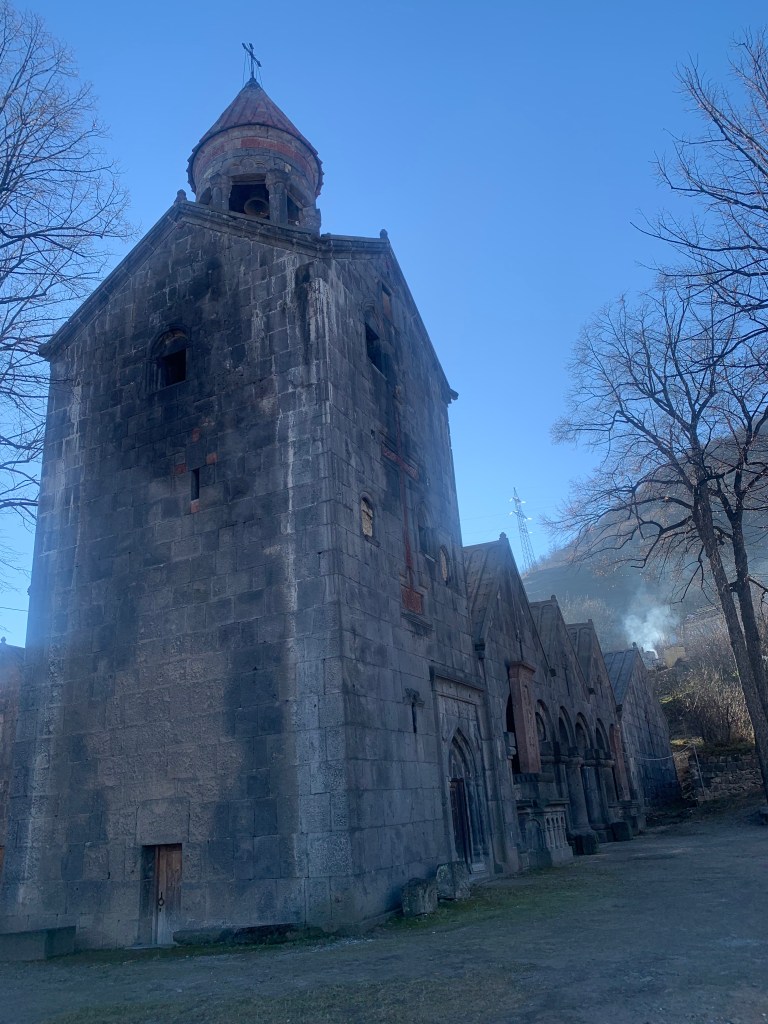
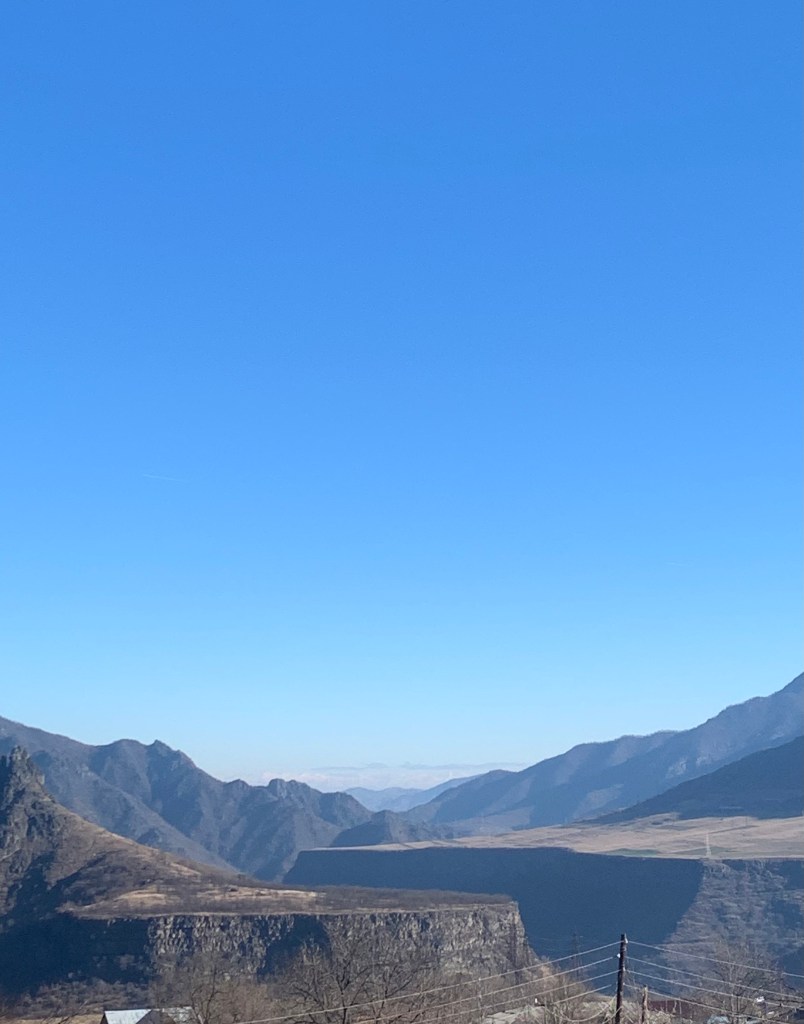
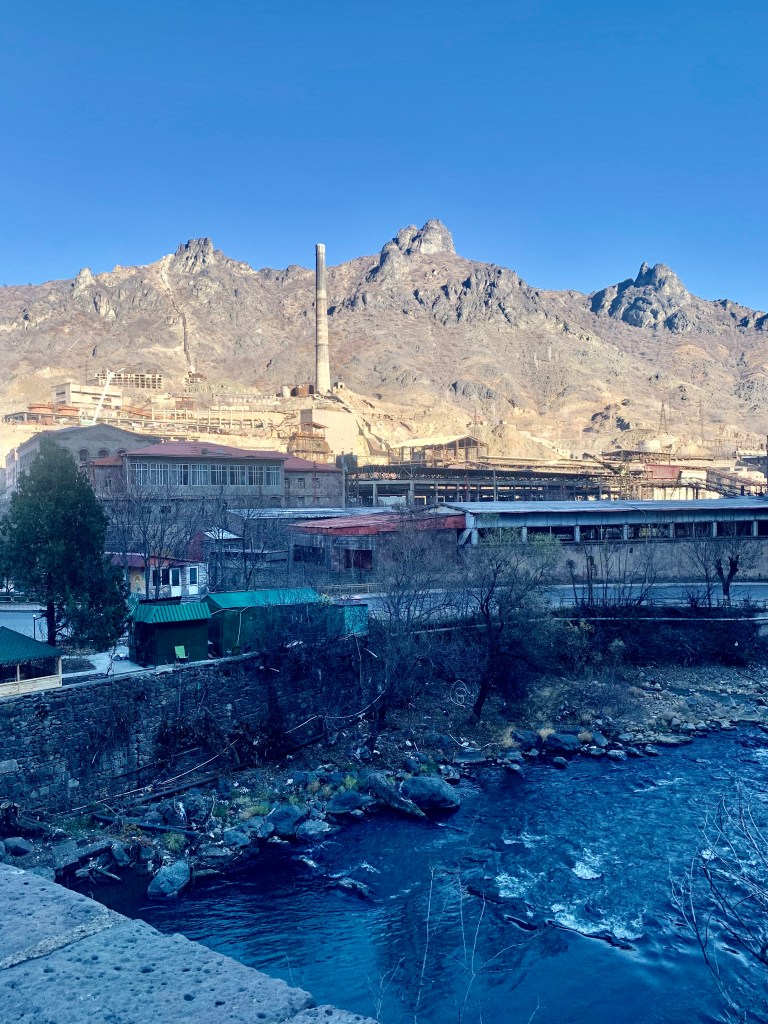
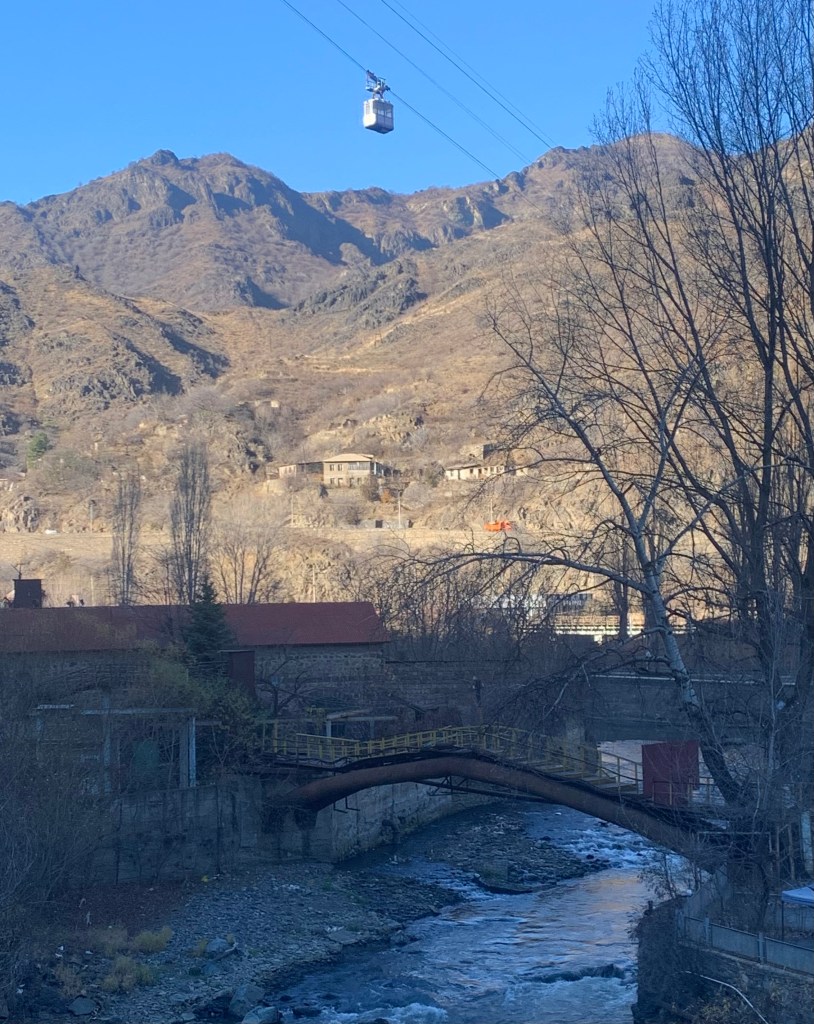
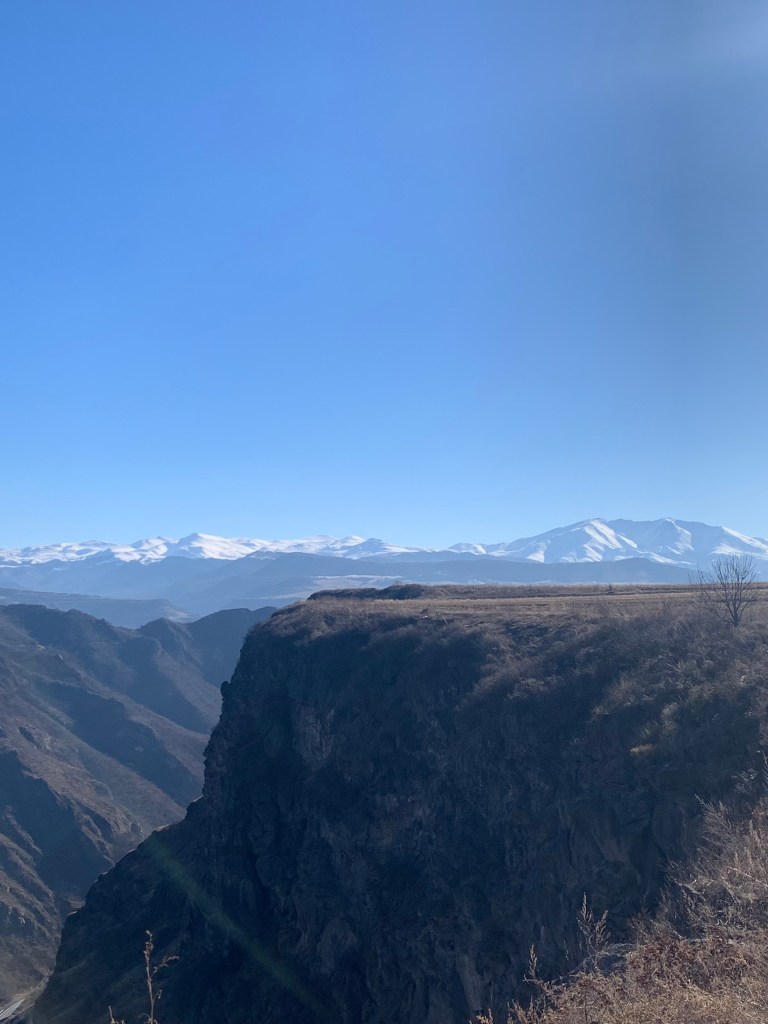
    Debed Canyon is full of things to explore – from, yes, monasteries and churches, but also breathtaking scenery and some abandoned and half-destroyed Soviet-era industrial buildings. There is also a monument and museum to the Mikoyan brothers – one of whom was the chief designer of the MIG 21 fighter plane, and the other was a member of the Soviet Presidium during the Cuban crisis.

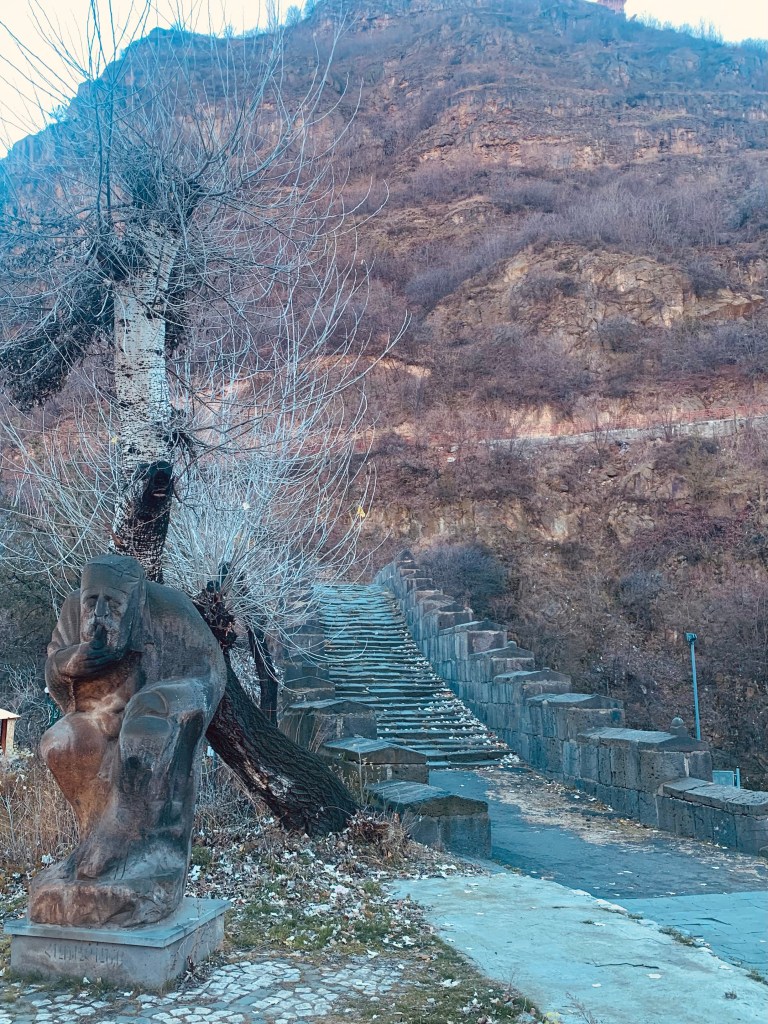
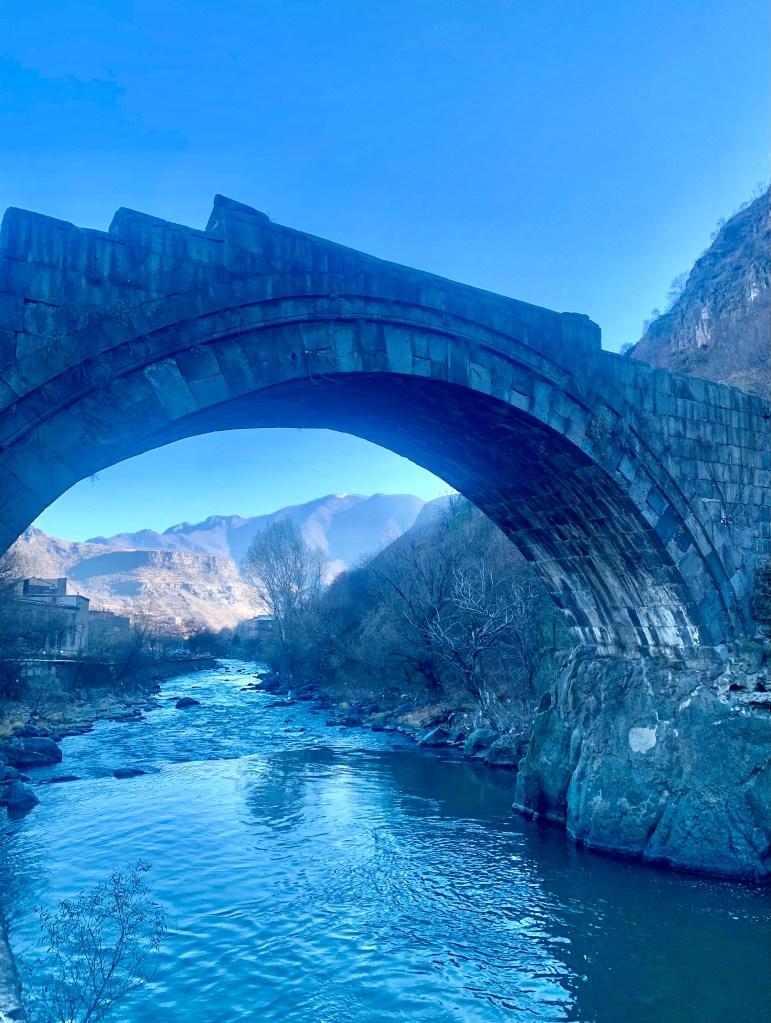
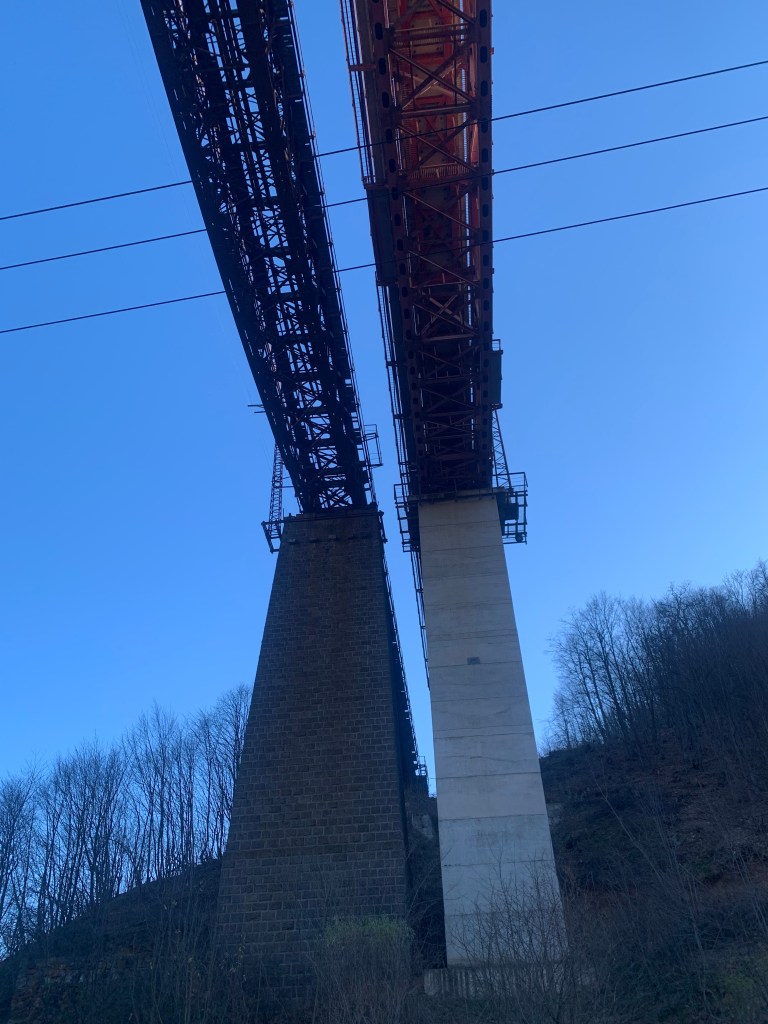
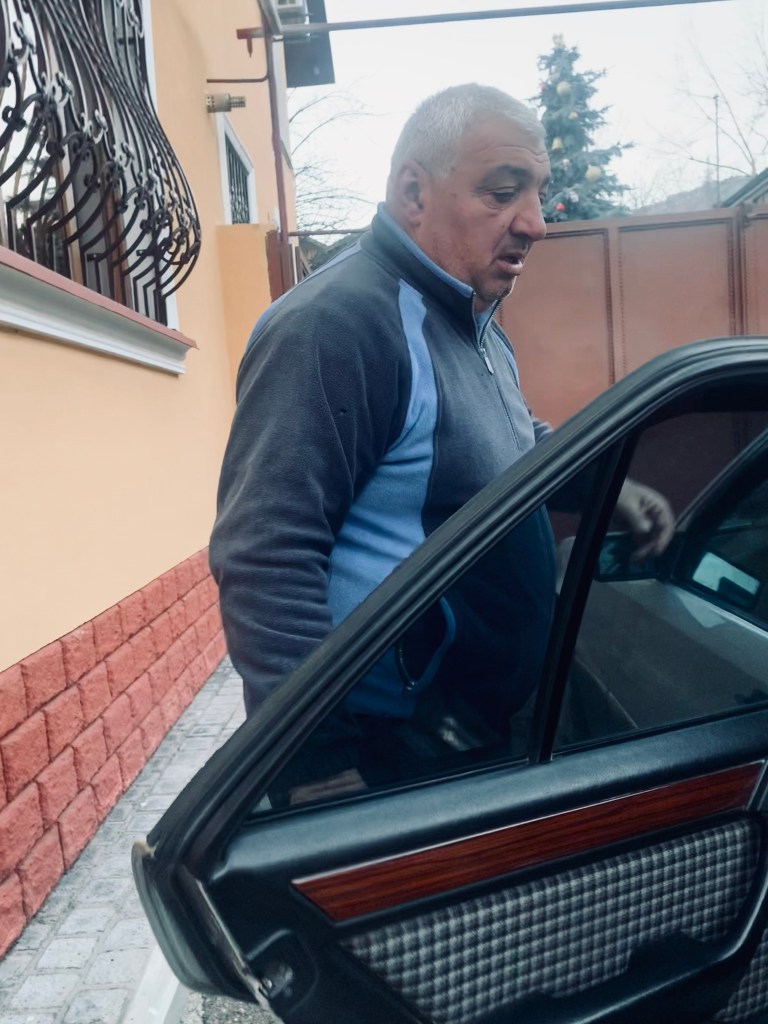
    Taxi drivers are opinionated everywhere. Ashat, who had been a USSR judo champion in his youth (he is 55), now drove a Mercedes taxi and took me around the Debed Canyon (and to Tbilisi the next day). He felt very strongly that things were NOT all better since the dissolution of the USSR. As he put it, before the dissolution, people had jobs, could buy their homes, a car, go on a holiday… He pointed to the abandoned gold refinery in the canyon – 7000 people had worked there. There is no work now. The railways ran throughout the country – now there is only one line working between Yerevan and Tbilisi, and one between Yerevan and Gyumri, Armenia’s 2nd city. (The photo of the twin rail bridges: one built by the Russian tzar in the late 19th ct, using no welding, just bolts; the other a new one, built recently. Ashat said the Imperial one is now “the reserve”.) The stone bridge is the Queen Tamar one, 7ct.
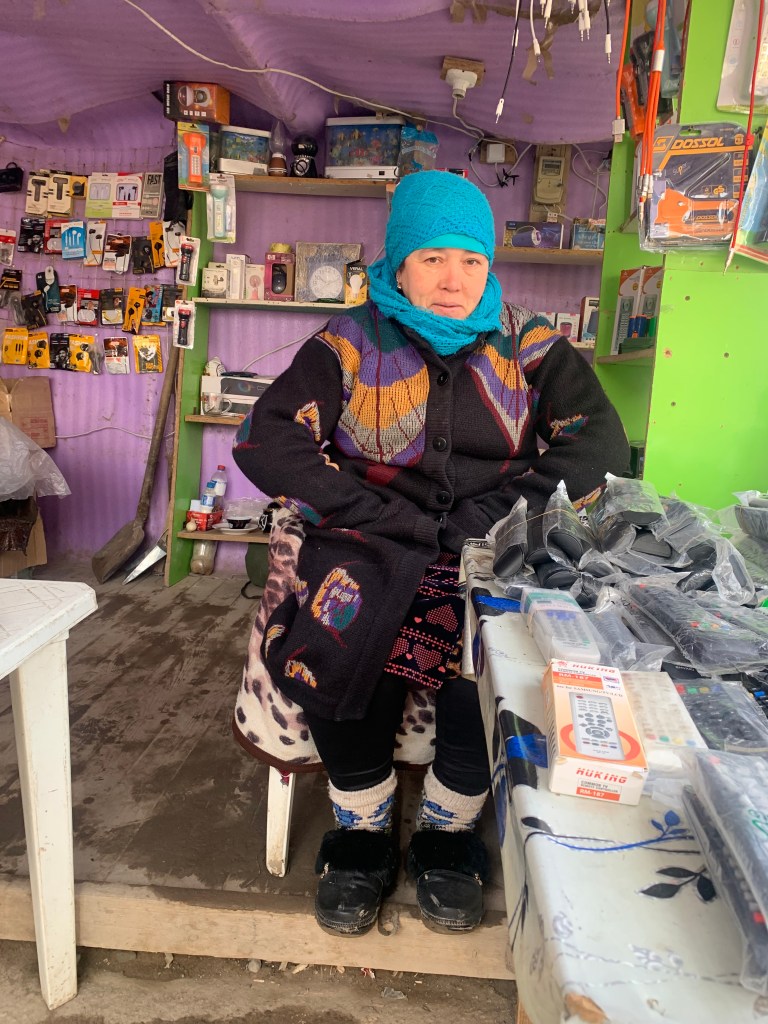
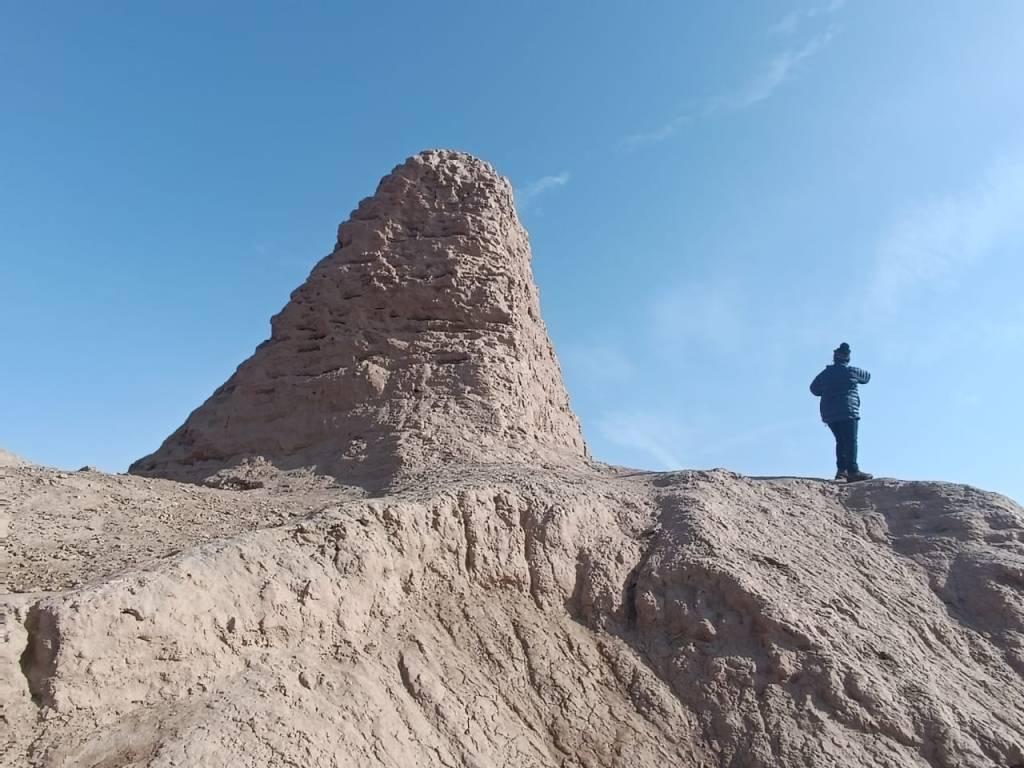
    He had little love of Georgians, who were “arrogant and self-serving, egotistic and unpleasant”. He even had an opinion on their language and writing, saying their script was like spaghetti and they spoke as if they had a hot potato in their mouth. Nevertheless, he gave a lift to a Georgian police officer from the border to Tbilisi and they had a really nice chat in Russian.

    Tbilisi next – and Christmas with Gloria.

←Previous Page
1 2 3 4
Next Page→

Blog at WordPress.com.


Loading Comments...
 

    • Subscribe Subscribed
      • Maribibi_travels
      • Already have a WordPress.com account? Log in now.
      • Maribibi_travels
      • Subscribe Subscribed
      • Sign up
      • Log in
      • Report this content
      • View site in Reader
      • Manage subscriptions
      • Collapse this bar