• About
    • Contact

Maribibi_travels

  • A dip into Georgia

    Dec 6th, 2023

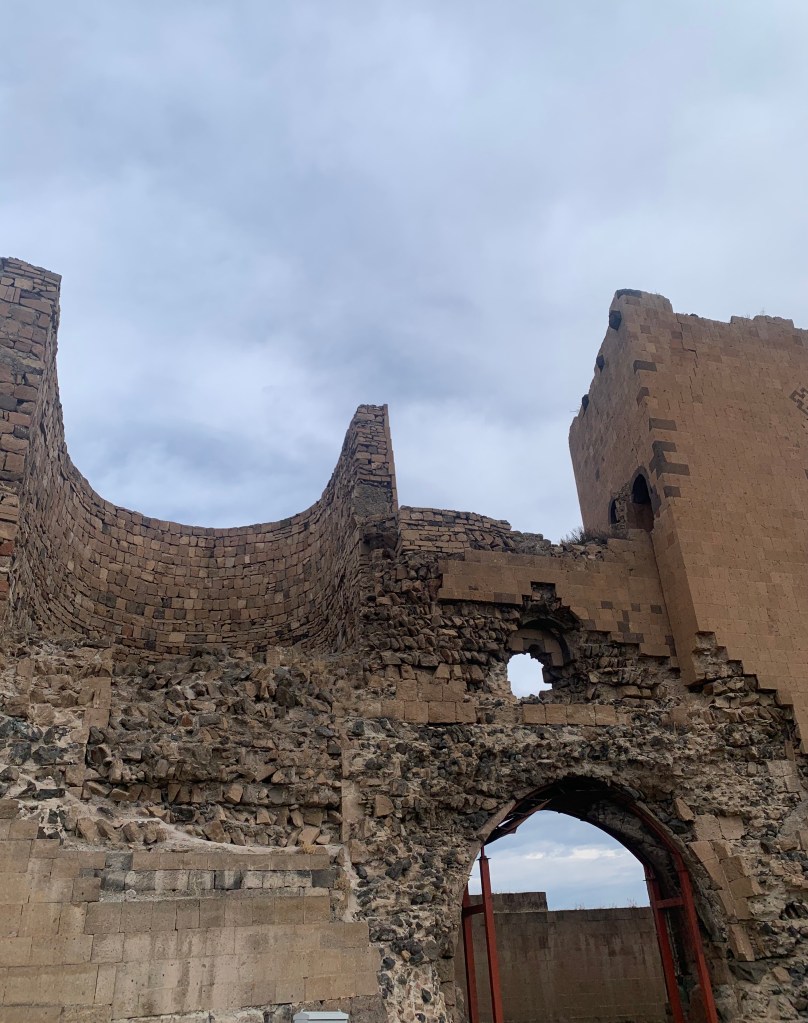
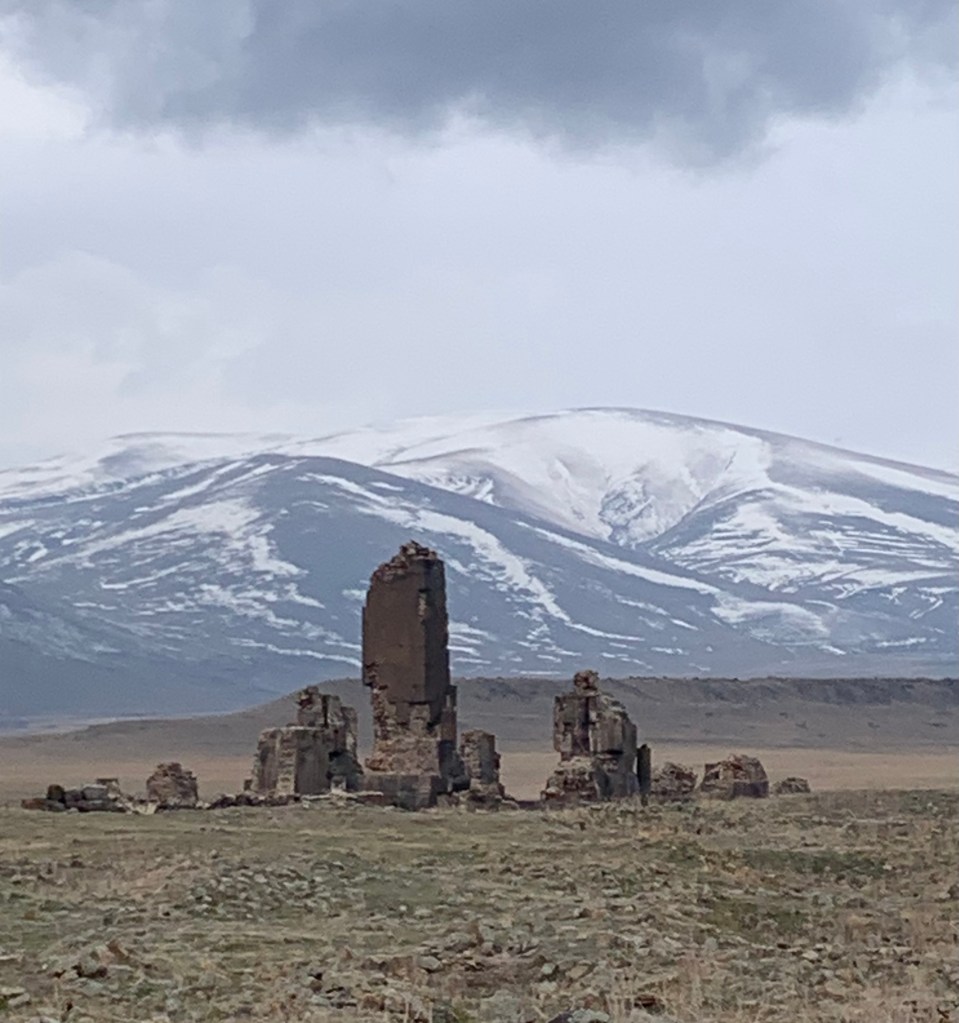
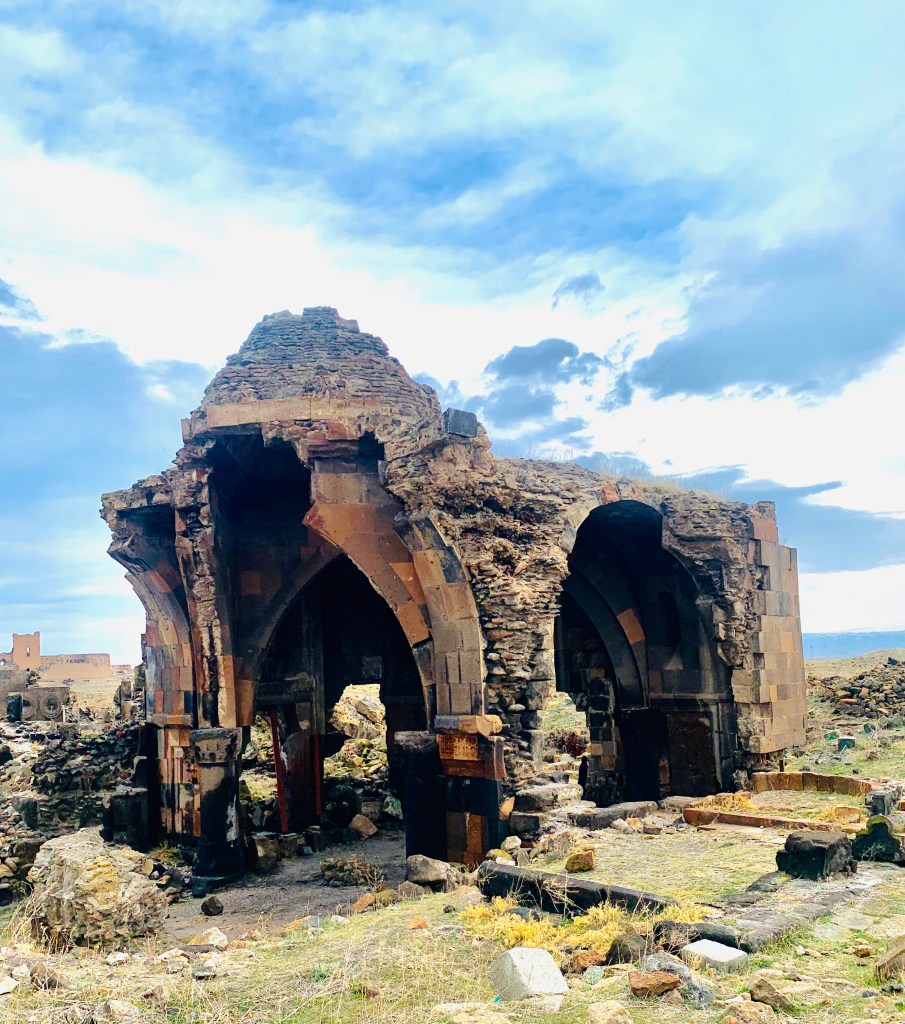
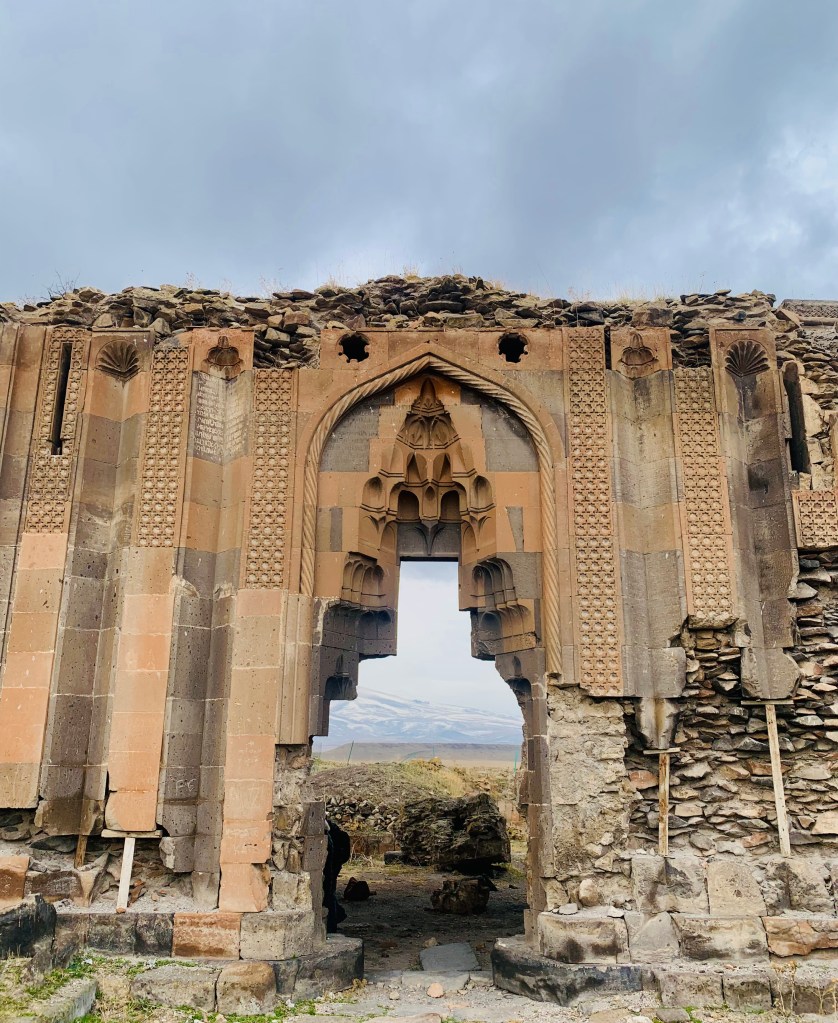
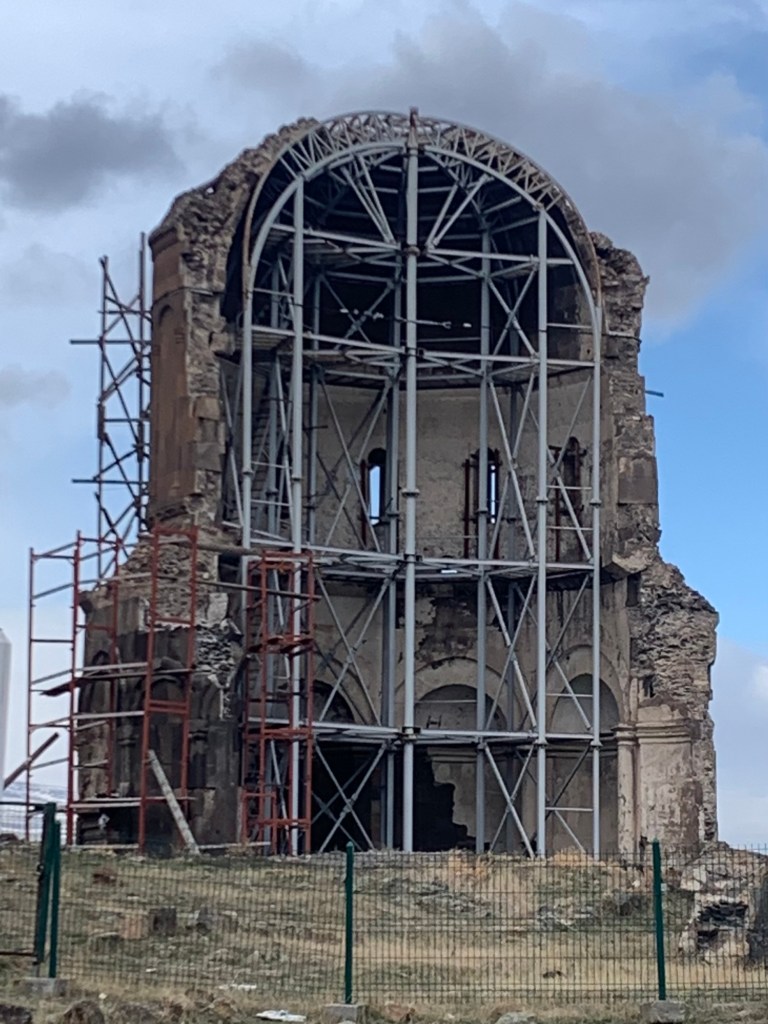
    There is a long land border between Turkey and Armenia; unfortunately, no border crossings are open at present. The guide said it was the Russians that run this show (as demonstrated by the Russian flag, flying just a little higher than the Armenian one along the border we could see on the other side of the gorge/canyon that is the border between Armenia and Turkey at the Ancient Ani) .

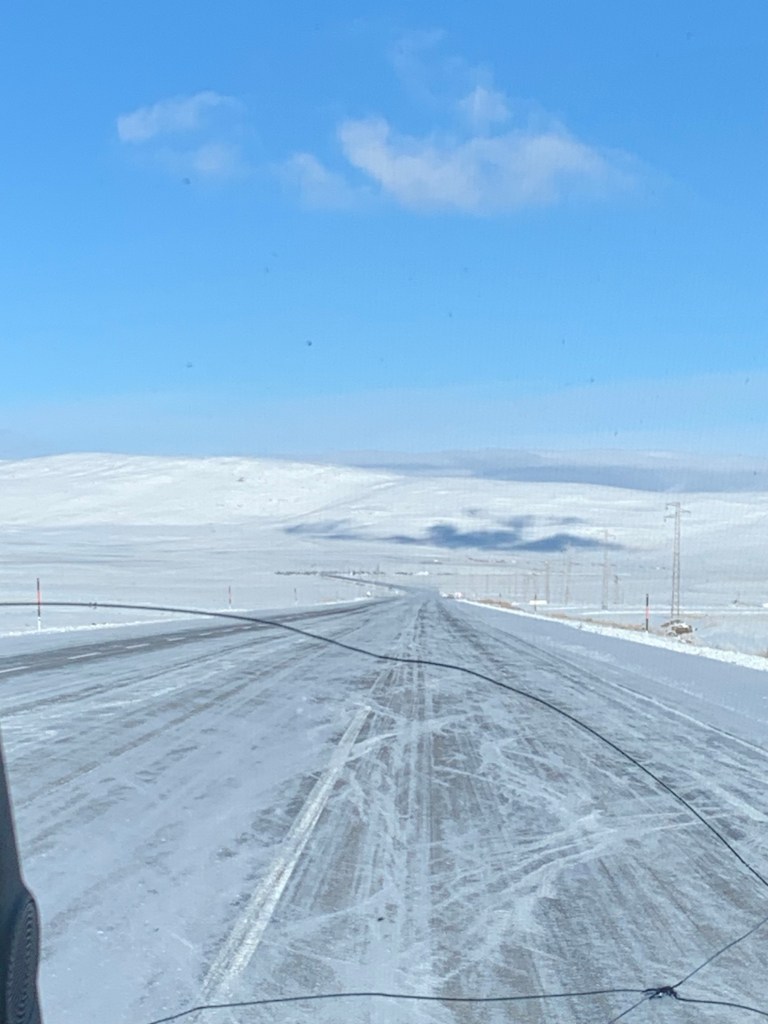
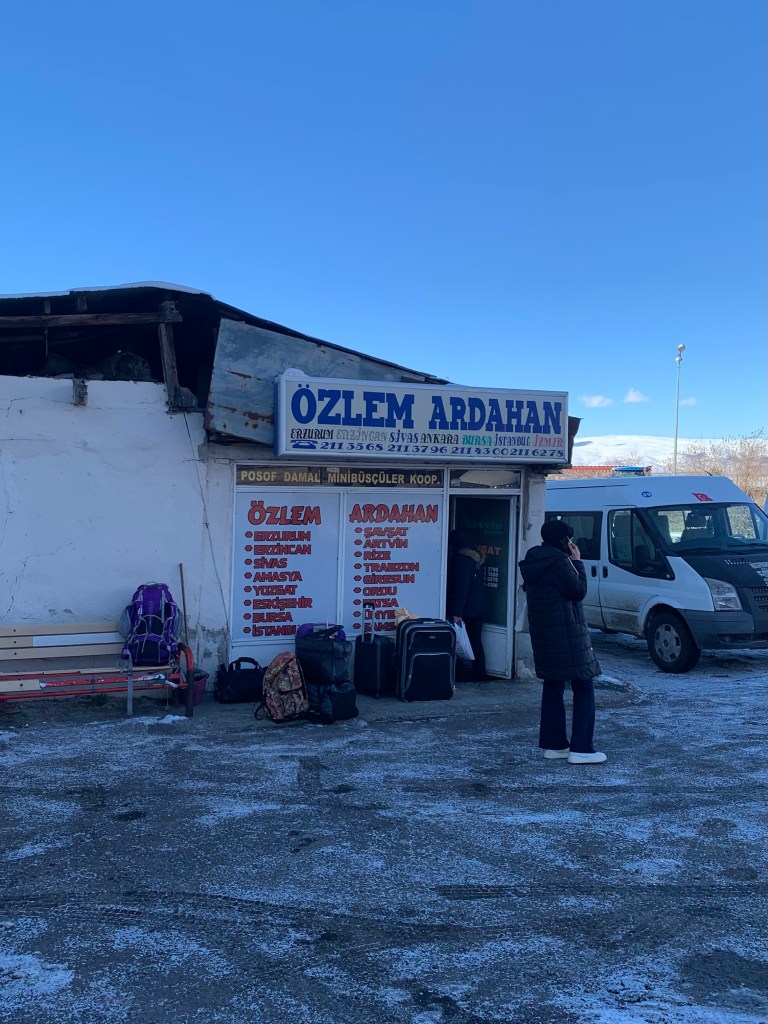
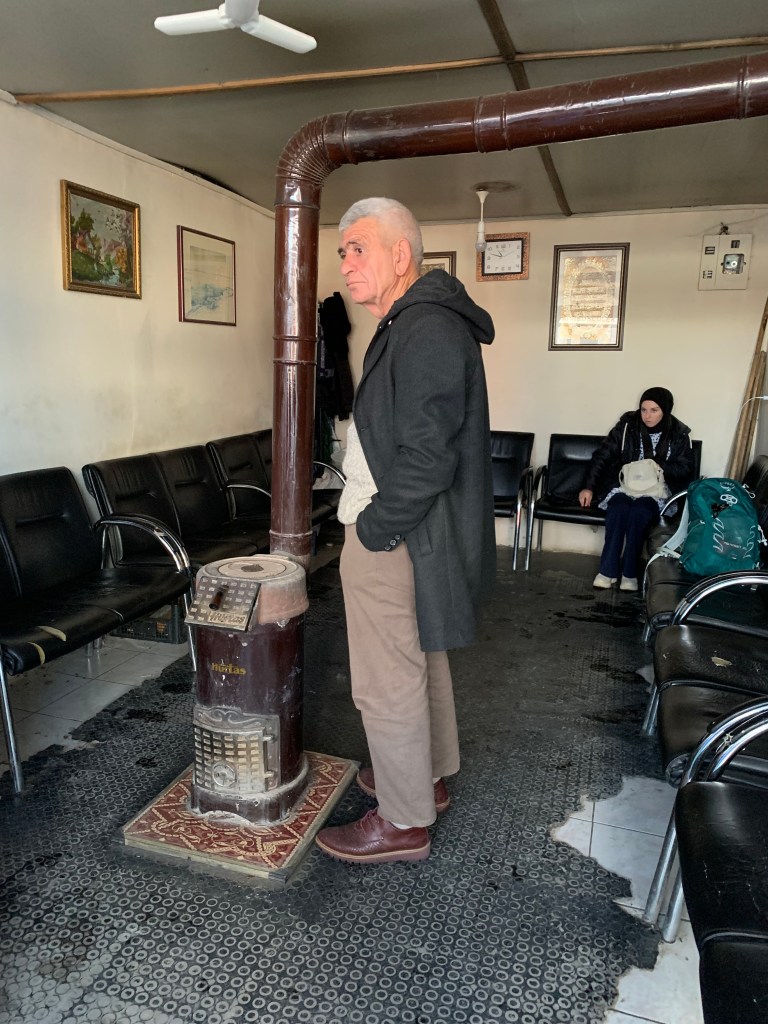
    The convoluted journey starts from Kars (an 8 o’clock dolmus, filled to the rafters with people, potato sacks, suitcases, a child’s trike…) to Ardahan. Unfortunately, the next dolmus, to Posof, does not leave from the same bus terminal; the poor chap who I asked for directions (with my 5 words of Turkish and slooow English) got fed up explaining, picked up my rucksack, stuffed it into a clapped out Renault and took me to the other place 5 min away by car ( it would not have been fun carrying the backpack on icy pavements). I barely had time to thank him – he was gone! The snow was thin on the ground, the sky blue and clear, the day sunny and crisp. There was a pot-bellied stove in the waiting room, much needed and enjoyed. A longish wait, but once we got going, it was quick: the road is good and empty. The countryside looks bleak and beautiful, barren, brown, permanent. The last bit of Turkey, from Posof to the Georgian border, some 15K away, is only by taxi. It turns out to be the most expensive part so far (c. £10). I crossed the border on foot; Georgian officials were welcoming and happy to speak English. Thought I’d have to walk some half a mile to where I was told there would be a taxi – but they are eagle-eyed and spotted me. The older generation speaks Russian, the younger prefers English. So we spoke Russian on the way to Alkhatsike.

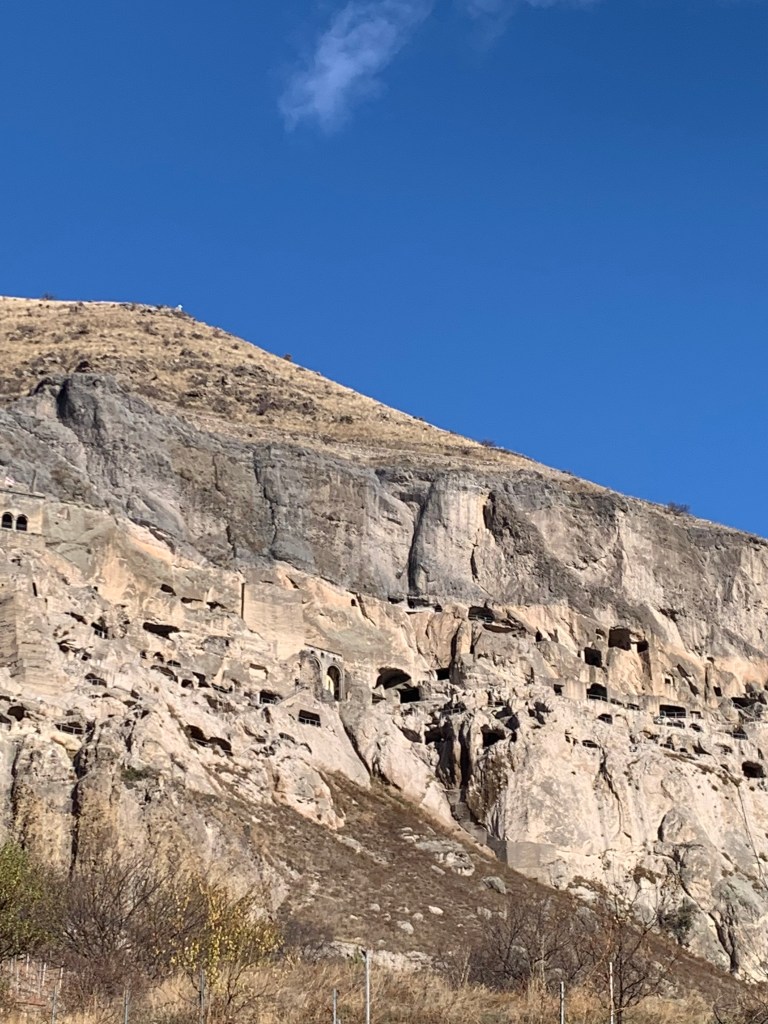
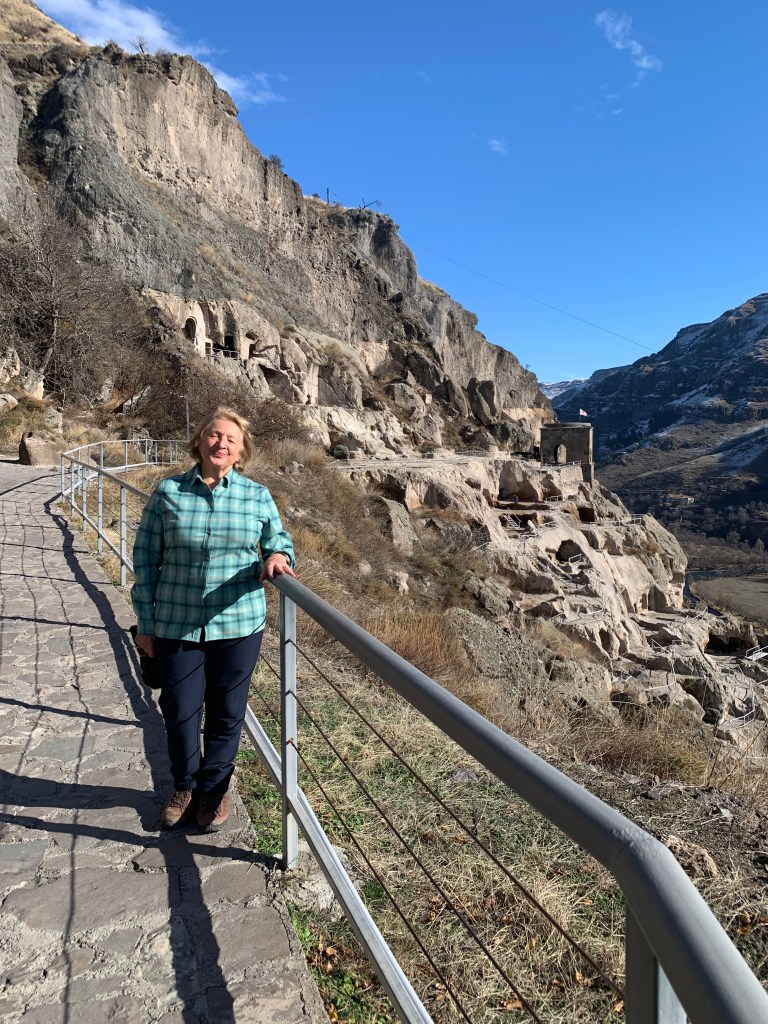
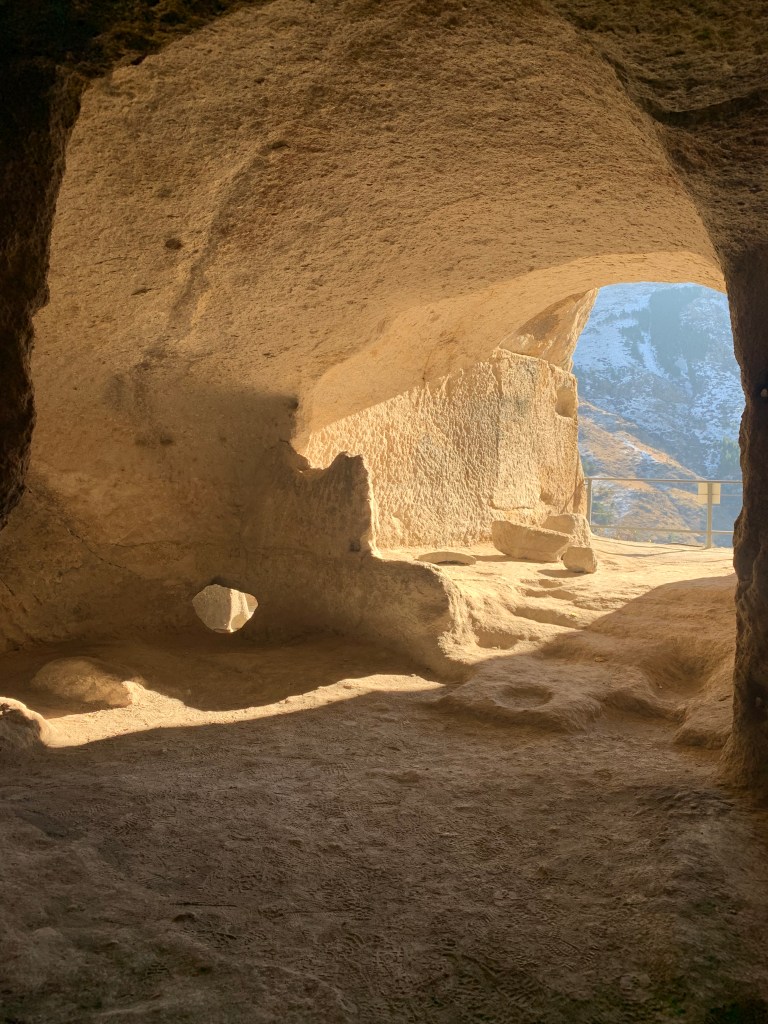
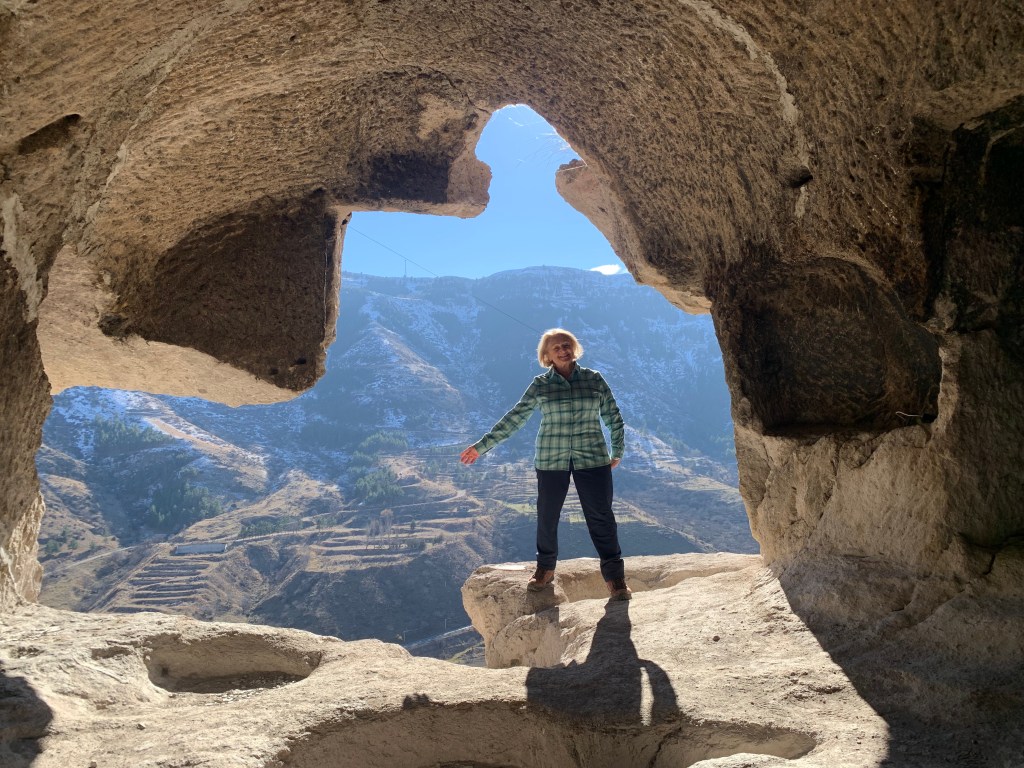
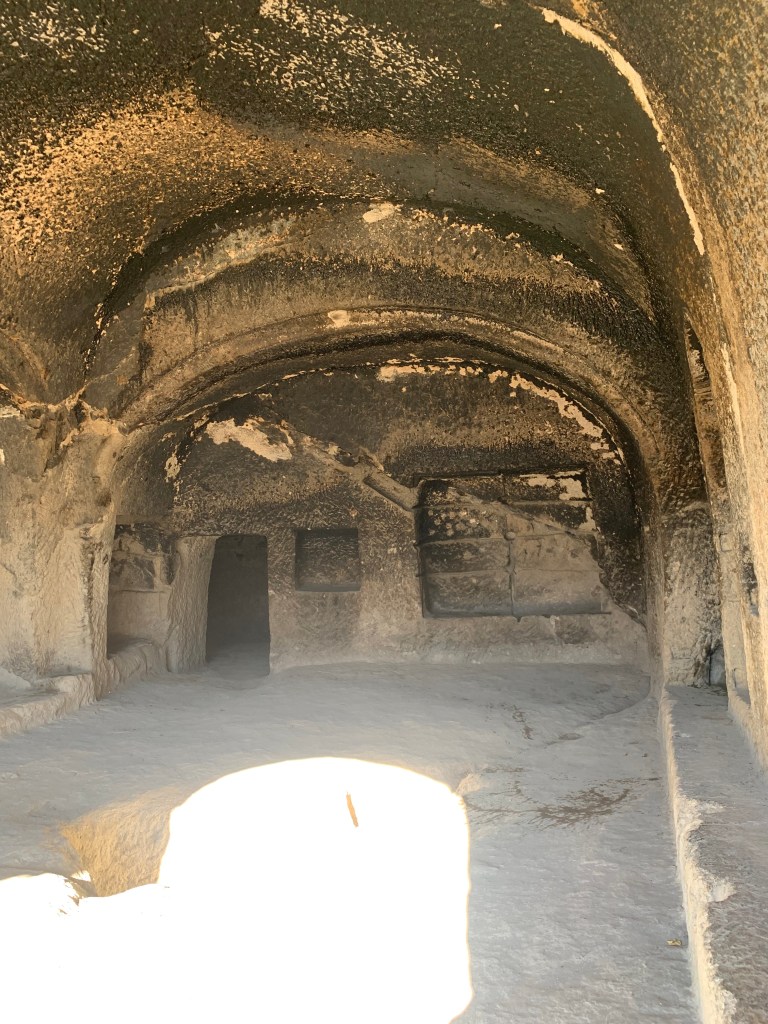
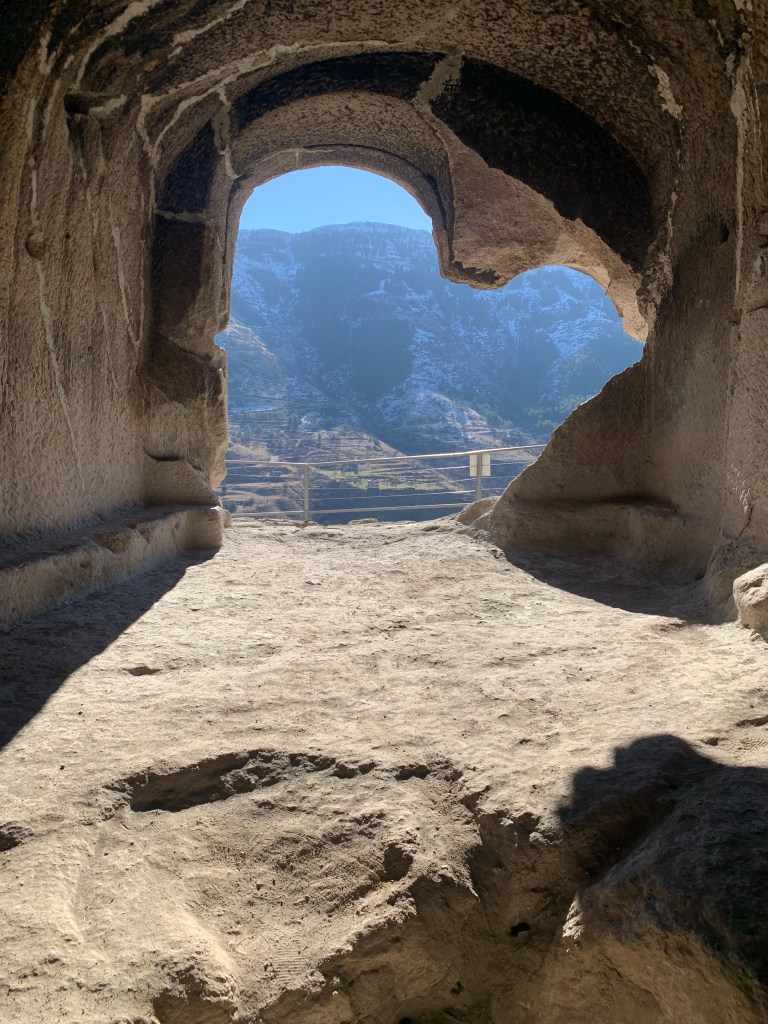
    Thus, though Armenia was within sight and reach, I had to travel to Georgia, several hundred km, before being able to swerve down to Armenia. One good thing was that this longer journey brought me close to Vardzia, the cave city that had, at its peak, housed more than 20000 people.

    Another marshrutka to get me to Tbilisi: the roads are in a much worse state than in Turkey, but there are many more cars and lorries. I have little desire to drive here – the overtaking on blind bends, the driving in the middle of the road, the close nose to tail – no appeal.

    Tbilisi traffic even worse than Istanbul: the centre is dug up as they are putting in new sewage pipes. Everyone drives so close to one another, it’s a surprise there seem to be few accidents. But when there IS space, the foot goes down and they take no prisoners.

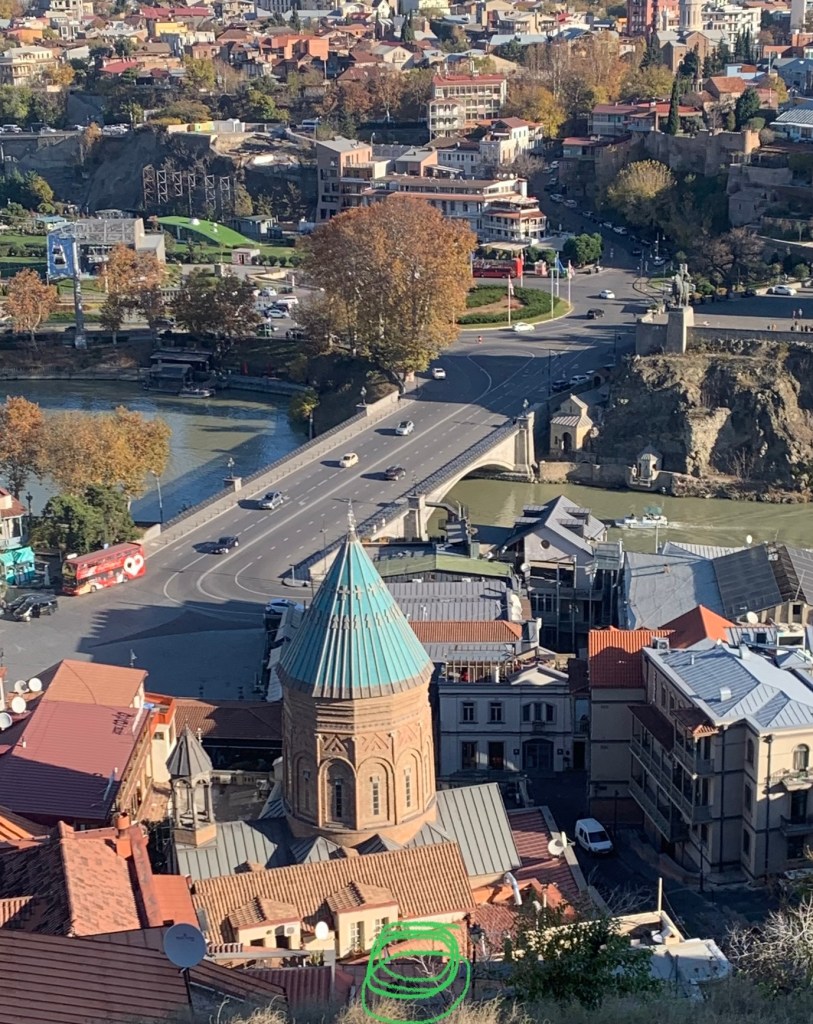
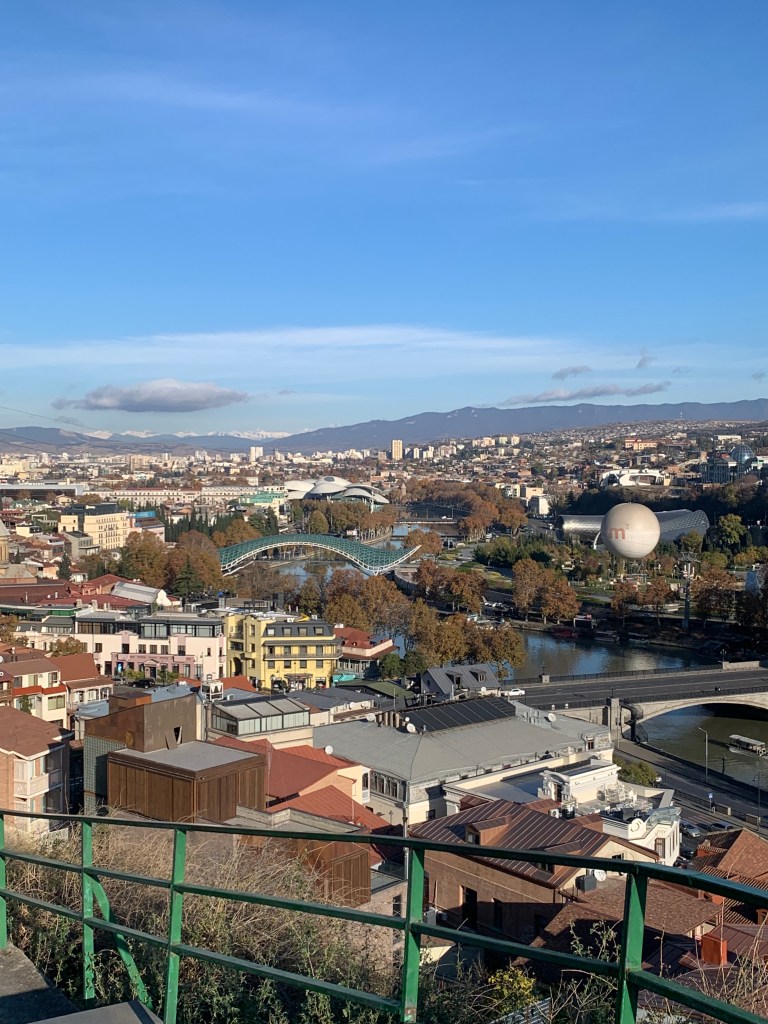
    The Envoy hostel is in Old Tbilisi, with nice views over the town and the river from the terrace. Had to claim I was claustrophobic as they tried to put me in a room with no window! And there was this lovely double room with a balcony that was going begging.

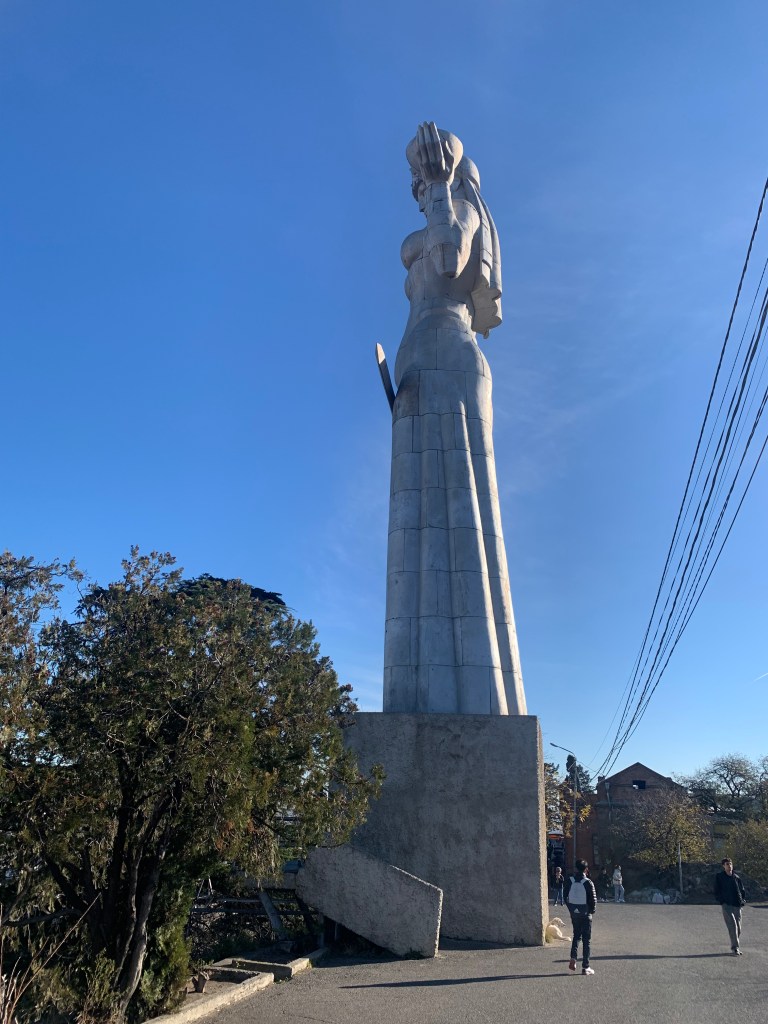
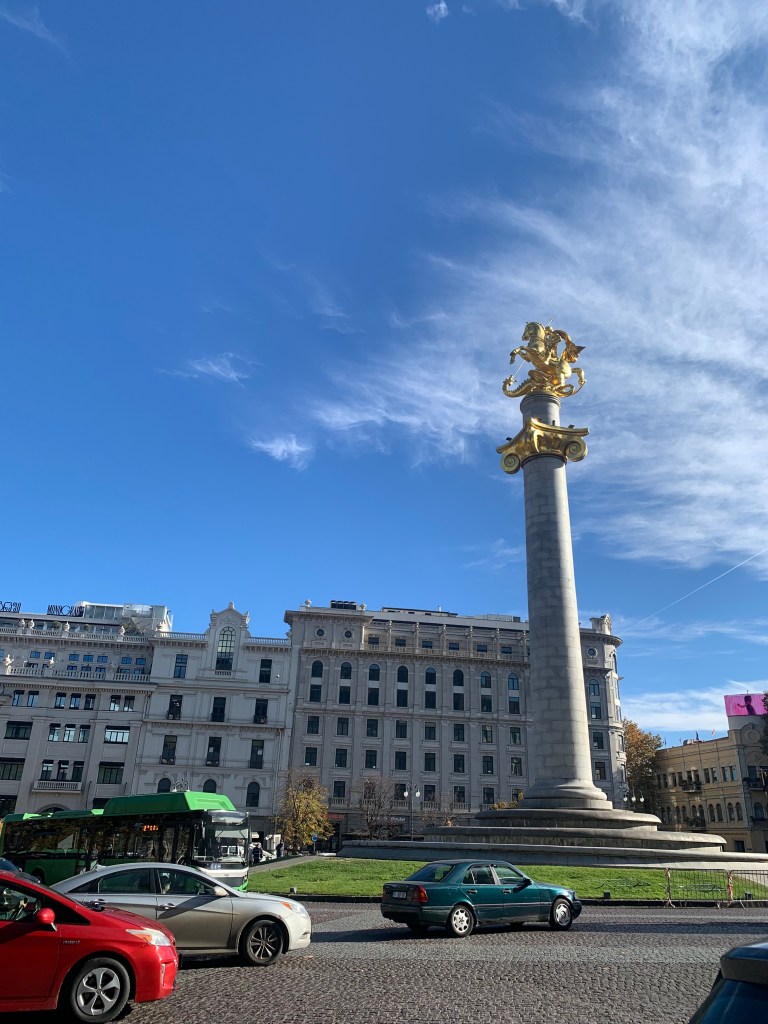
    There are now conical church tops rather than minarets popping up over the town (though noticeably fewer). Am only here till I sort out transport to Armenia – there are trains to Yerevan, but they don’t run every day. So it’s back to the minibus/ marshrutka. In the meantime, had a couple of good walks – up to the fort and Mother Georgia (all 17 meters of her, with a sword in one hand and a glass of wine in the other), and down by the river Kura. Managed to see Daisi (Twilight) an opera by Zaharia Paliashvili performed at the Conservatory – professional musicians and students performing in celebration of its 100 anniversary.

  • Towards the border

    Nov 27th, 2023

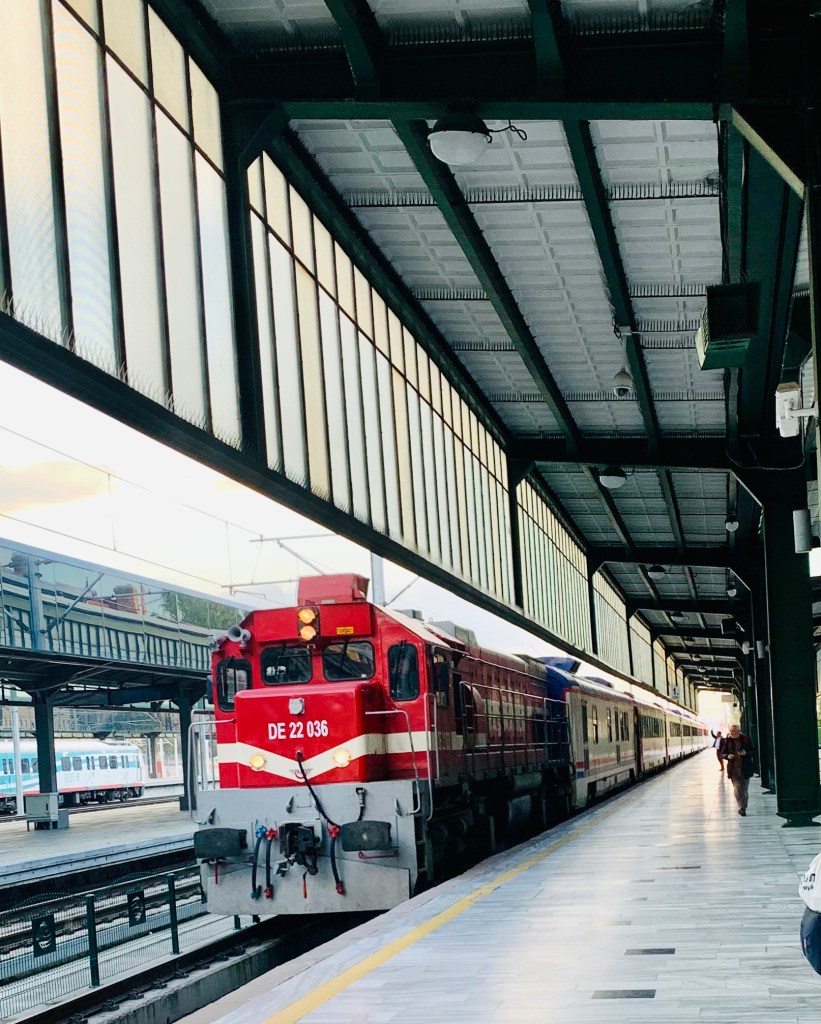
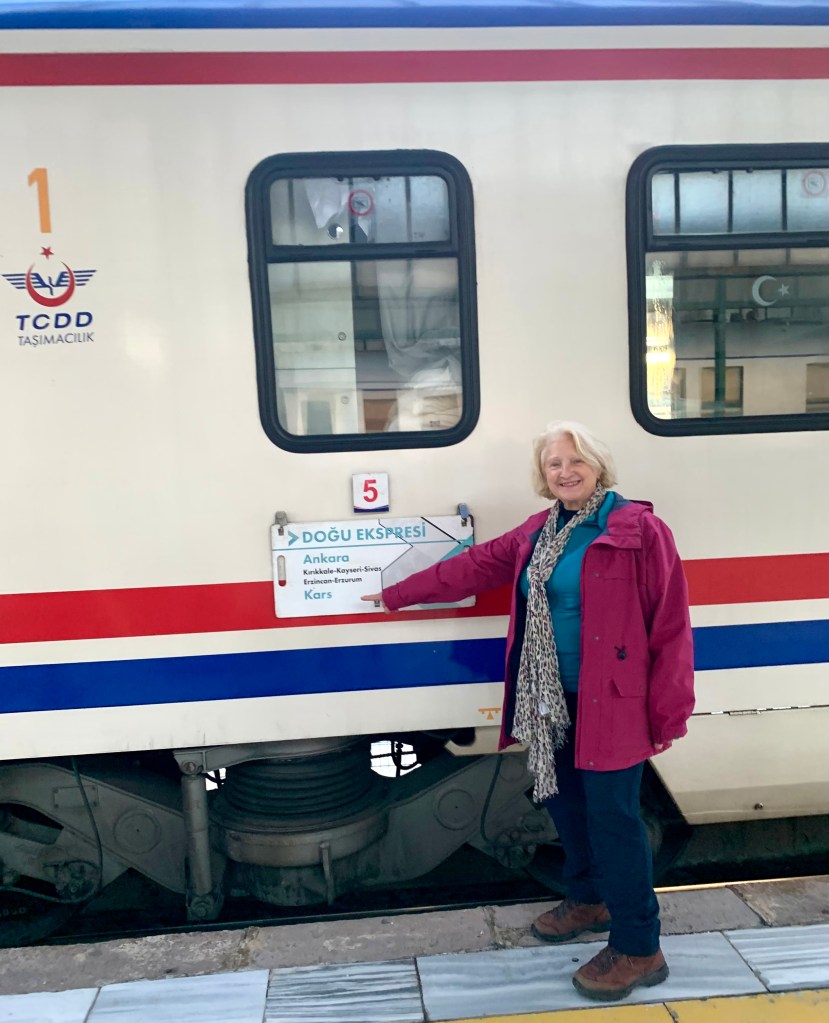
    Dogu express, the train that covers 1310 km from Ankara to Kars and takes 26 hours, leaves from platform 1. The diesel engine (electrification is slow…), in livery red, rolled in an hour before the scheduled departure at 17:55.

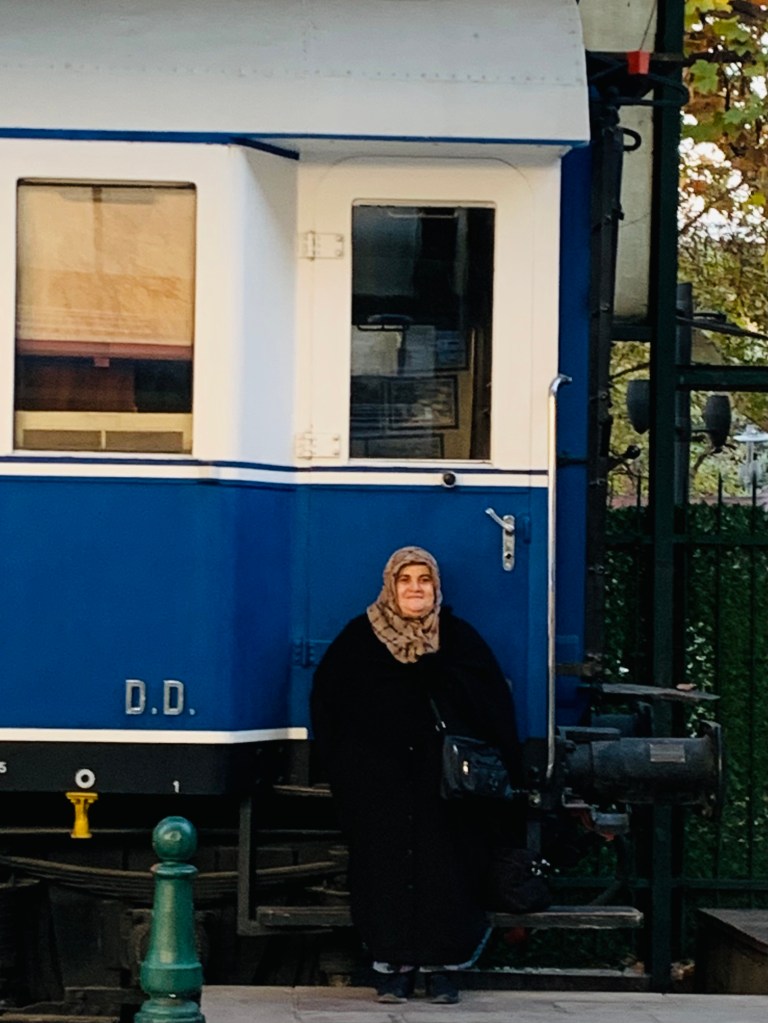
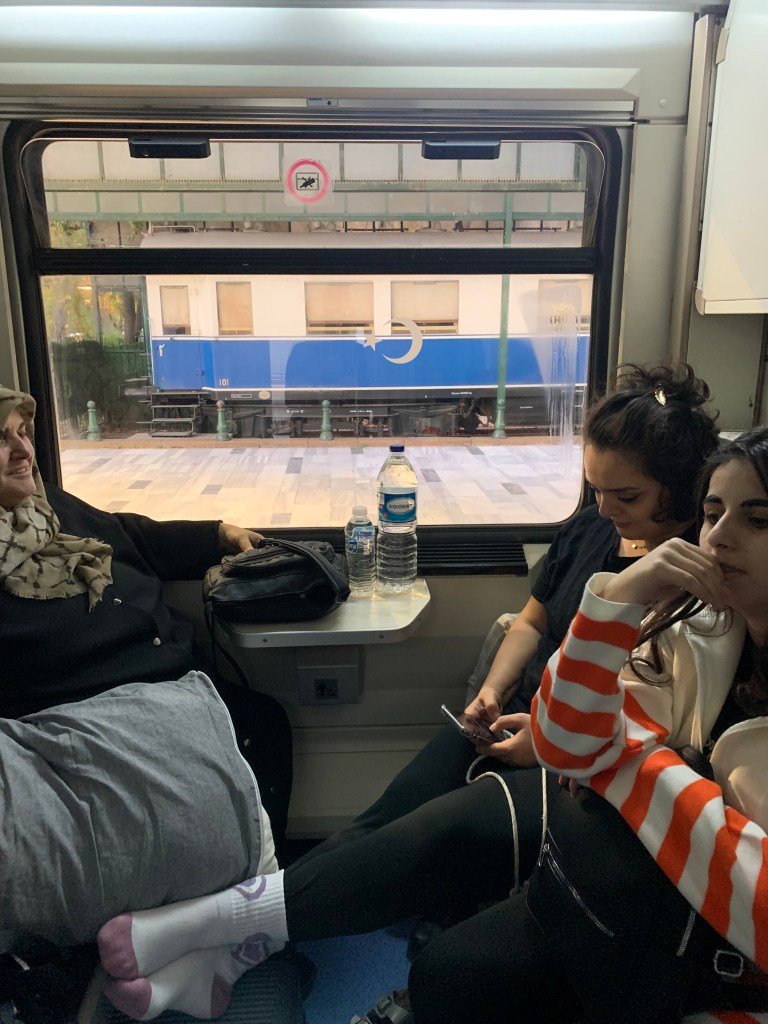
    I shared the 4-berth couchette with 3 Turkish women (the photo of the eldest on the steps of a wagon) – they made themselves completely at home: 3 generations, 3 large suitcases, bags, drinks, food…Not very communicative – they were just self-contained. They left me a top bunk; no problem, except that it was quite hot – I kept opening the window, they kept closing it.

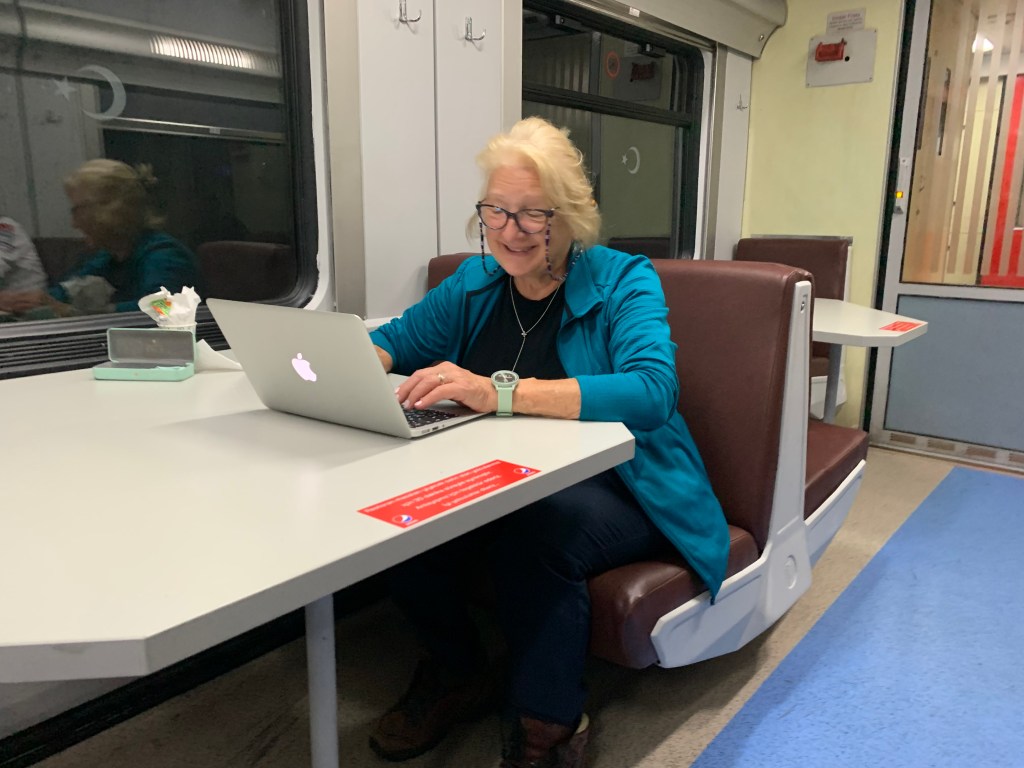
    Spent all my waking hours in the restaurant car, where views were better as available on both sides of the carriage. And the views are definitely spectacular. The train gets very busy in winter, for the views of the mountains covered in snow.

    Met Miguel, the Portuguese (cyclist) who lives in Bern, and was doing a 2 week circular trip overland by train/ferry from Bern. If you thought I was mad…:)) Then there was Tom from Wales (who lives in Toulouse) – one has enough time to really get to know one’s travel companions on this journey. (Tom and I landed in the same hotel in Kars.) There was also an Australian family, mum Suzanne, dad Simon, and “the boys”, Oscar and Max (in their 20’s). The boys were visiting parents who are on a posting in Ankara. They’d booked the Lonely Planet recommended guide, Celil Ersozoglu, to take them to Ani, the Cildir Lake and Seitan Kalesi (the Devil’s Castle) and kindly agreed to let Tom and me join them. Had a super day. Ani, a UNESCO site, is in a magnificent setting. The canyons surrounding it, the double walls around the fortified town…

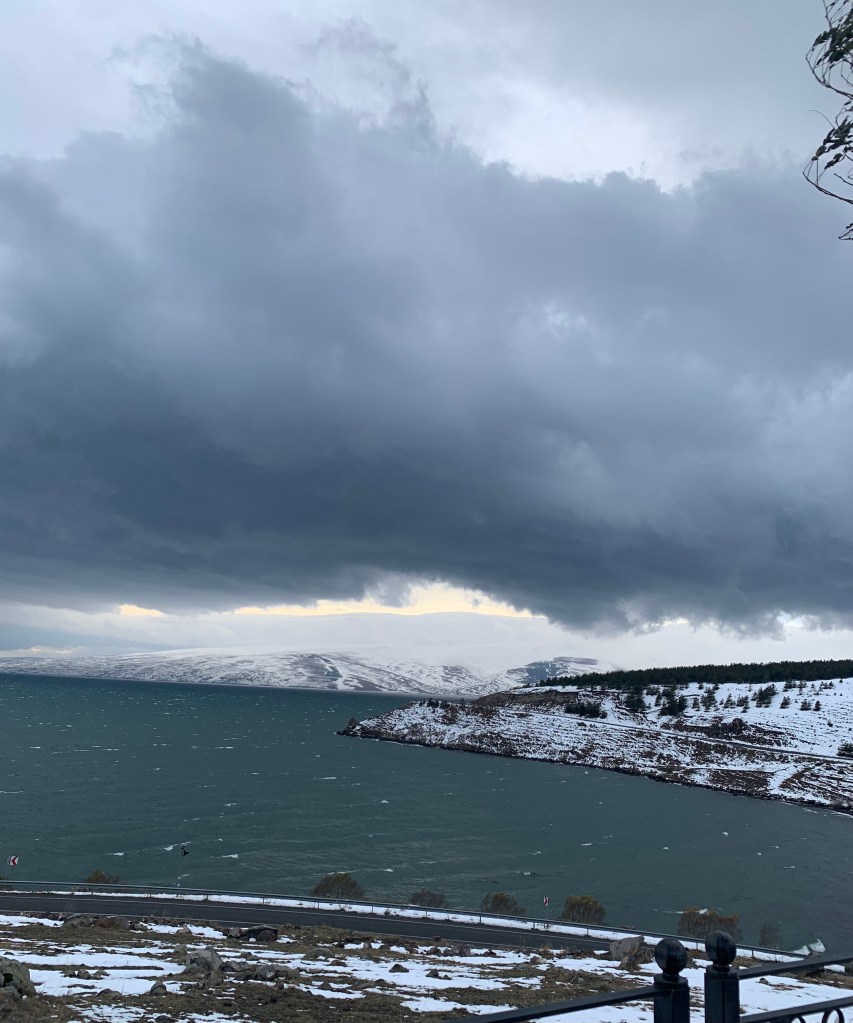
    We drove around Lake Cildir which is famous in these parts for freezing over so much that they have sleigh rides on it, that cars do sliding arabesques on it, that people fish for carp through the holes in the ice… At present, it is cold and windblown, but no ice – climate change?

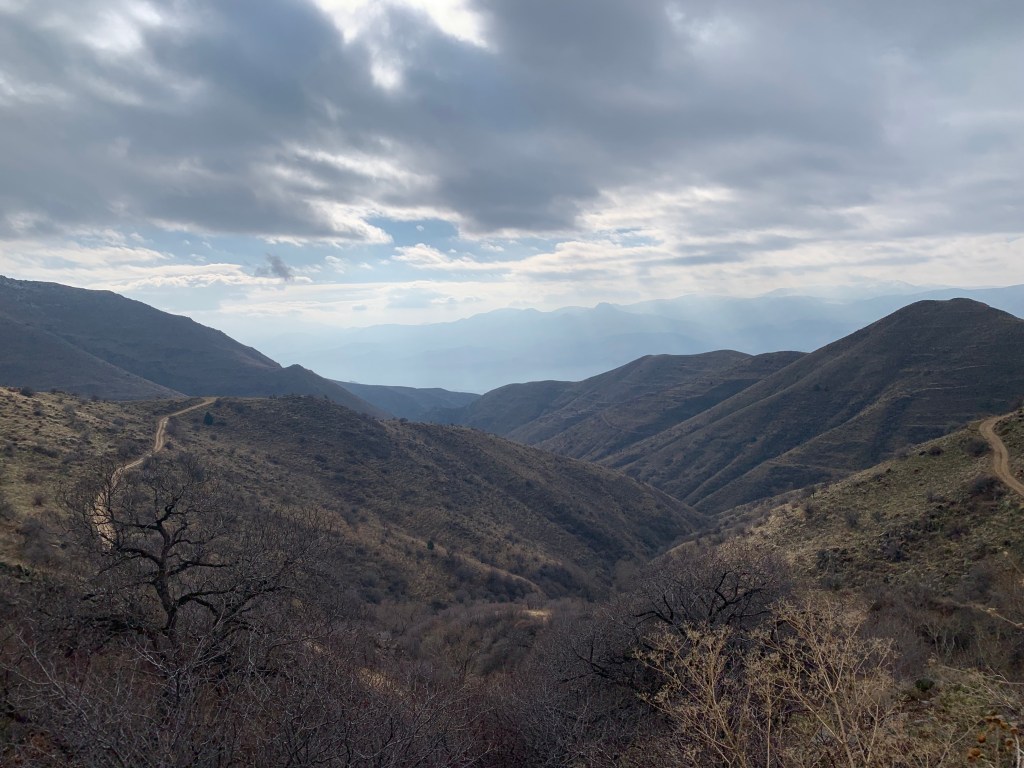
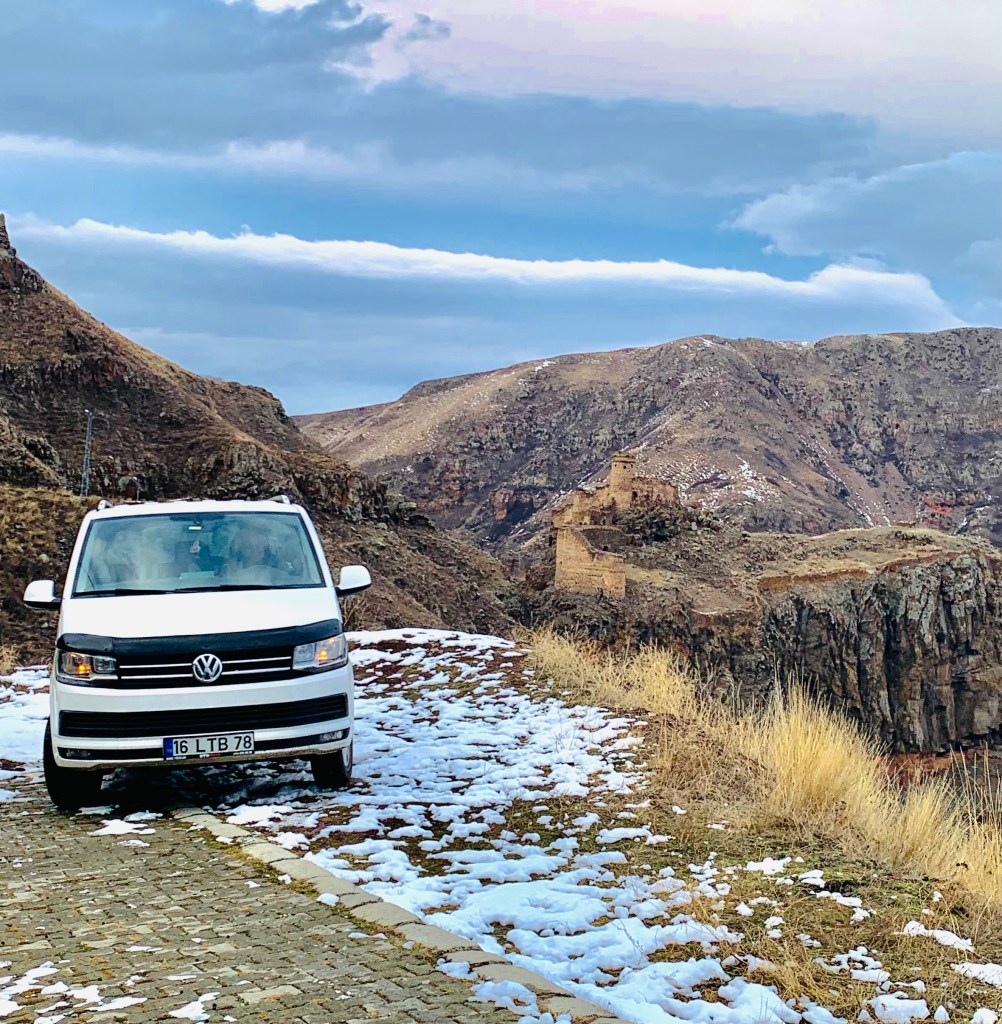
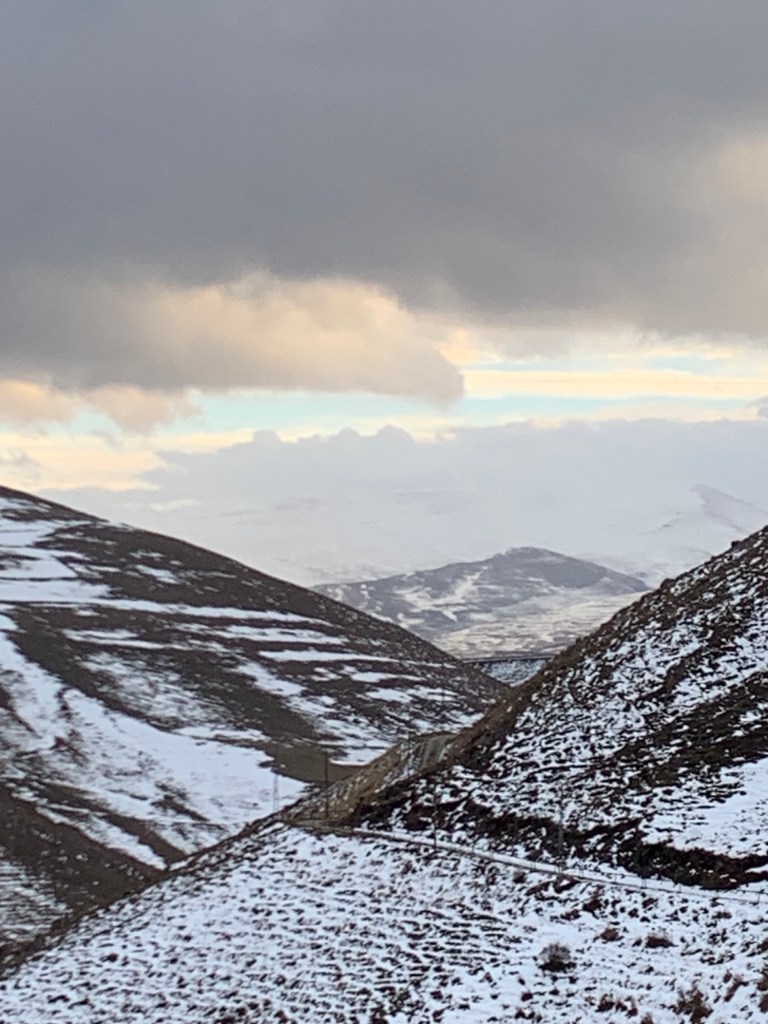
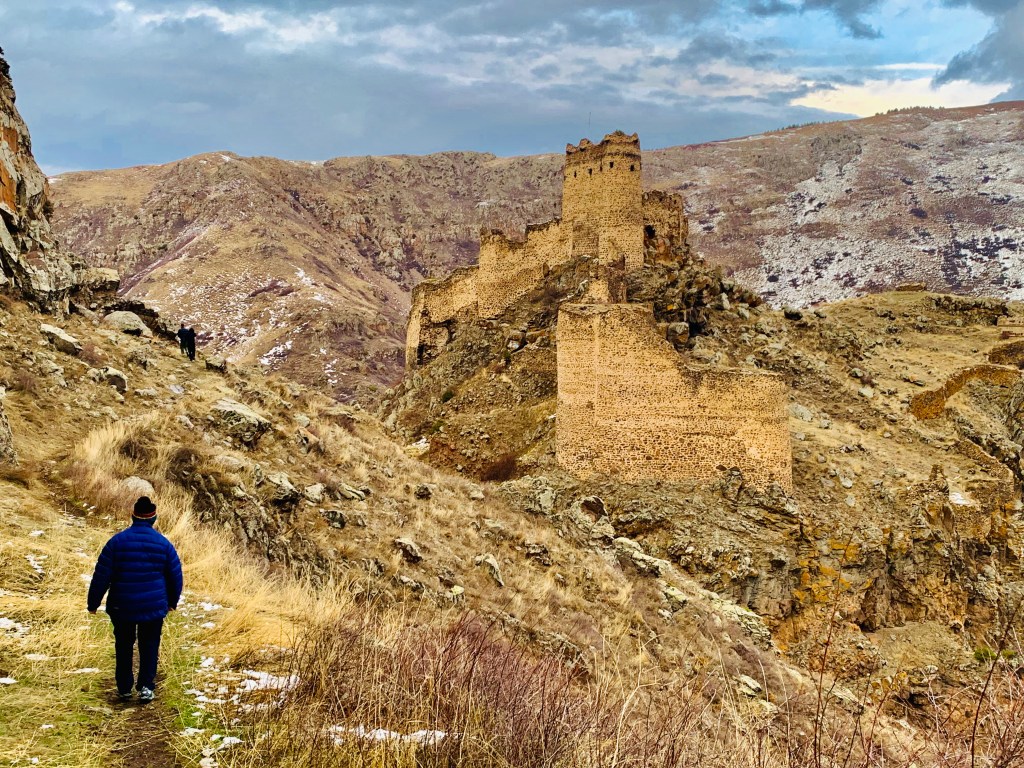
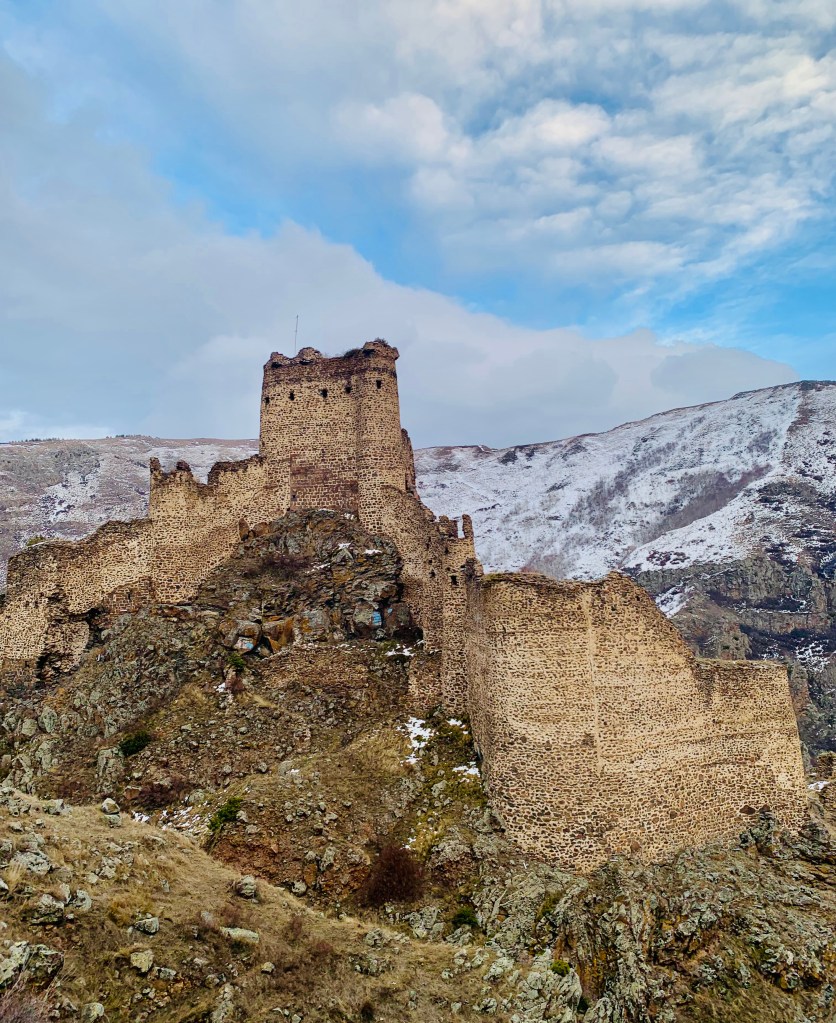
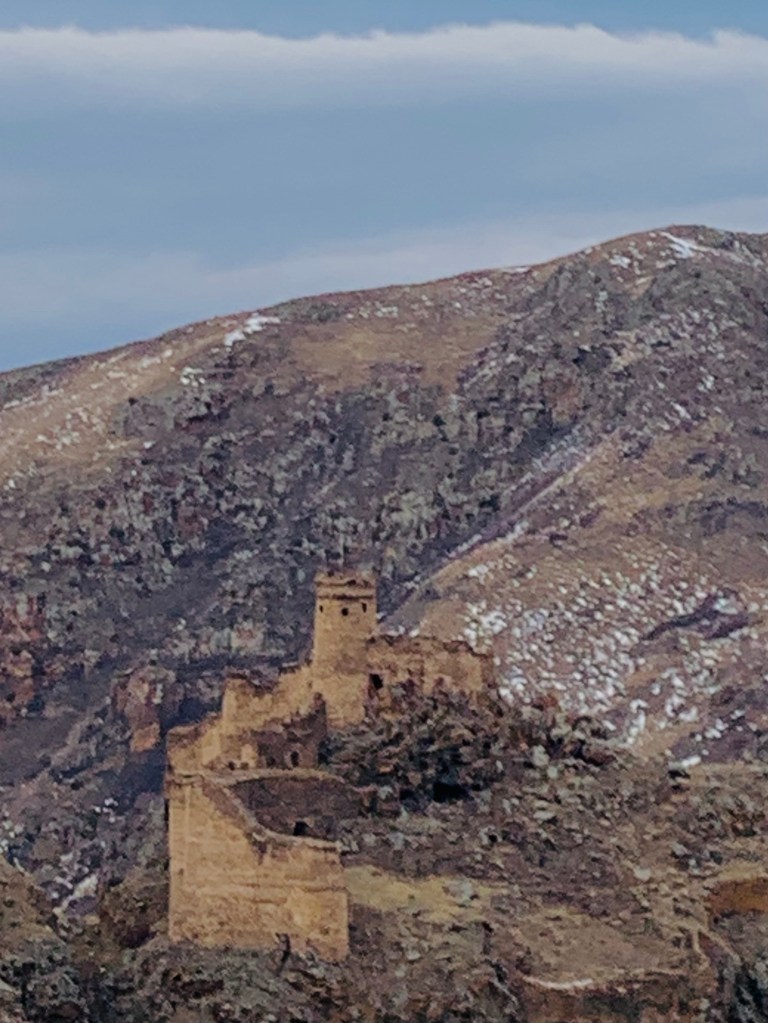
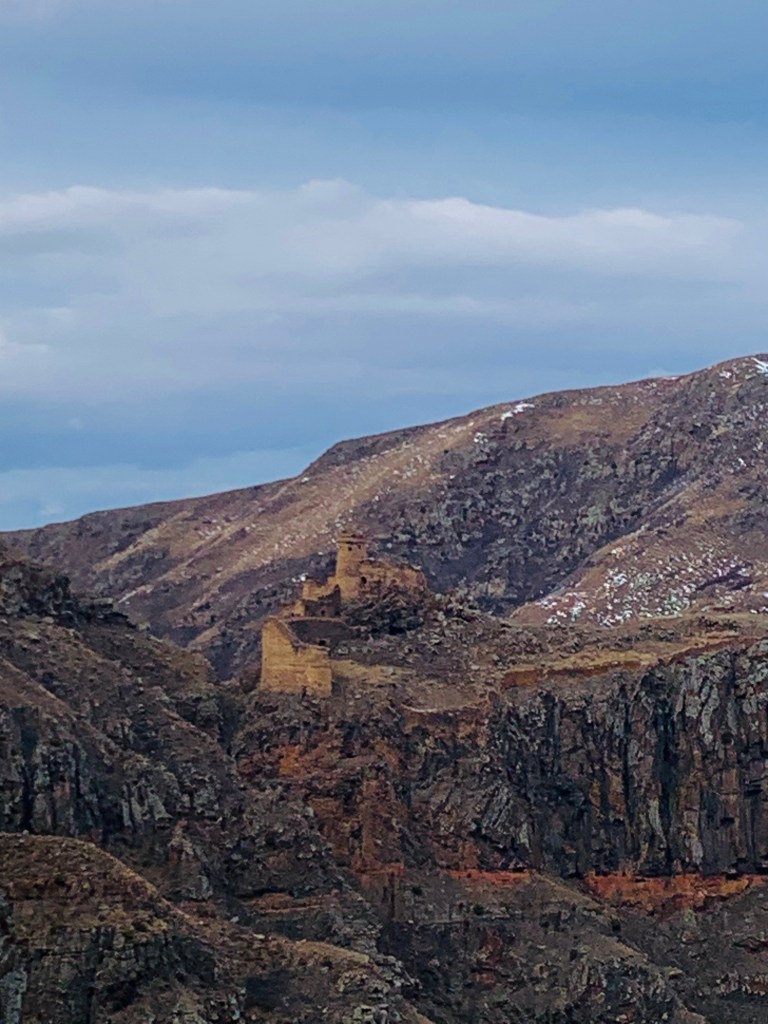
    The road to Devil’s Castle is a single track one with a metal fence (broken in places) along a deep canyon below. The mountains around look barren, inhospitable, magnificent. When the castle comes into view, it is breathtaking in its proud isolation. The car can only get to within about a mile of it – then we walked.

    Should anyone come this way, there are better hotels than the Hotel Kent Ani. It was cheap as chips – c £85 for 5 nights, B&B (so I don’t mind leaving a day early). My room was small, facing the back, on the 2nd floor. Smelt strongly of cigarette smoke and pigeon shit. Flecks of soot on the linen when I opened the window – smearing into black streaks… but I was very tired.

    And in the morning, the pigeons were cooing on the windowsill, LOUDLY – competing with the muezzin in the minaret nearby. The hotel is virtually empty, so I asked if I could move. The boy who showed me the new room, opened the door as if it were a palace and said “beautiful”? The room is exactly the same, but it is on the 4th floor and thus above the roosting pigeons and the soot. The loo seat is broken and shifting – showed the reception guy the google trans about the toilet seat. He sighed: “problem…”

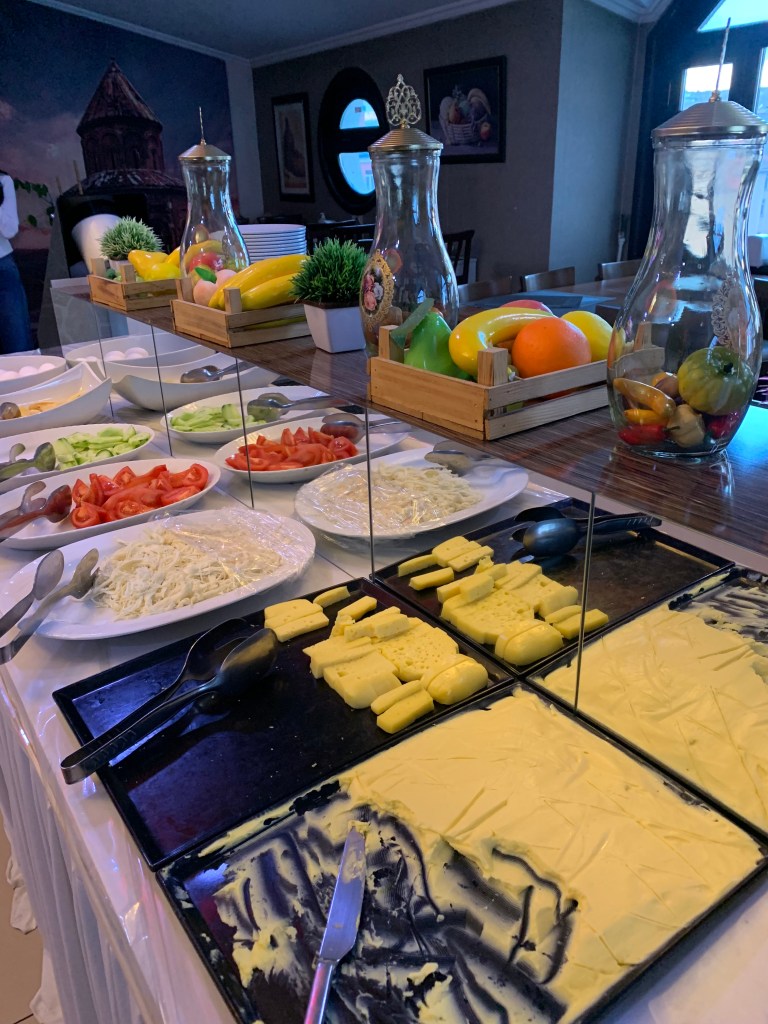
    Breakfast is fun too – lots of olives, tahini, chai, several (very salty) cheeses… but the fruit is plastic :))

    I shall start my journey to Armenia tomorrow. The 3 boys, Tom, Oscar, Max left yesterday – a dolmus to another town, a bus to the border, cross on foot, get another bus or taxi…

    Georgia tomorrow.

  • Mardin to Ankara

    Nov 23rd, 2023

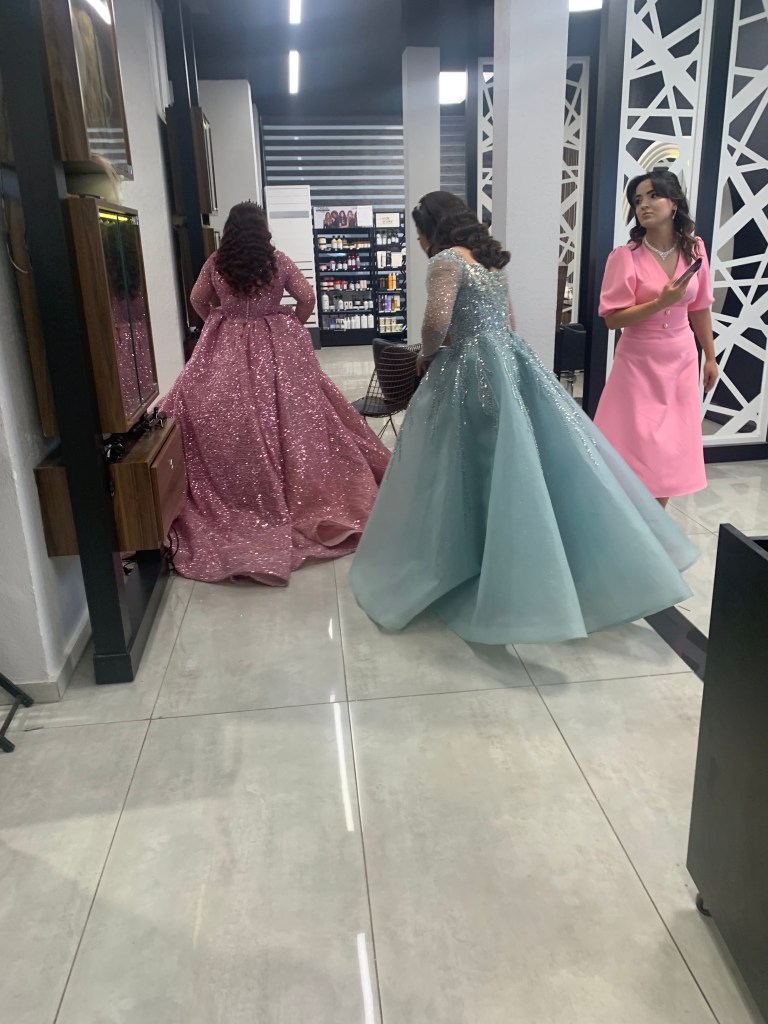
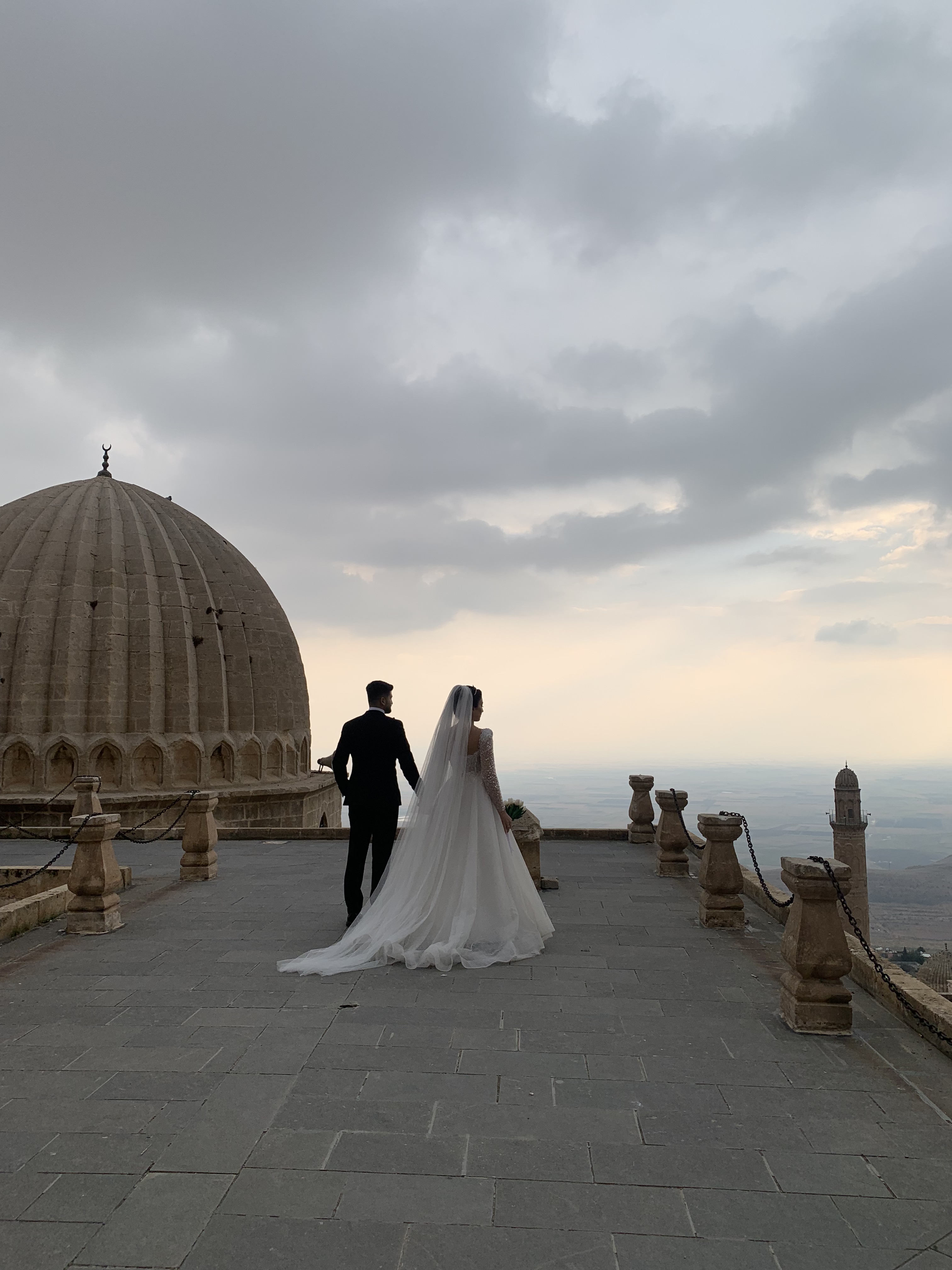
    For my last two days in Mardin (18-20 November), the weather was on the turn. It became a lot colder, and when the wind and rain hit, it was biblical. Mardin being on a steep hill, there were rivers and streams running downhill everywhere. Really felt sorry for the brides being done up in the salon for their big day. Their multicoloured Barbie frocks, the sparkly tiaras, the special make up and high-heels could not possibly survive the weather.

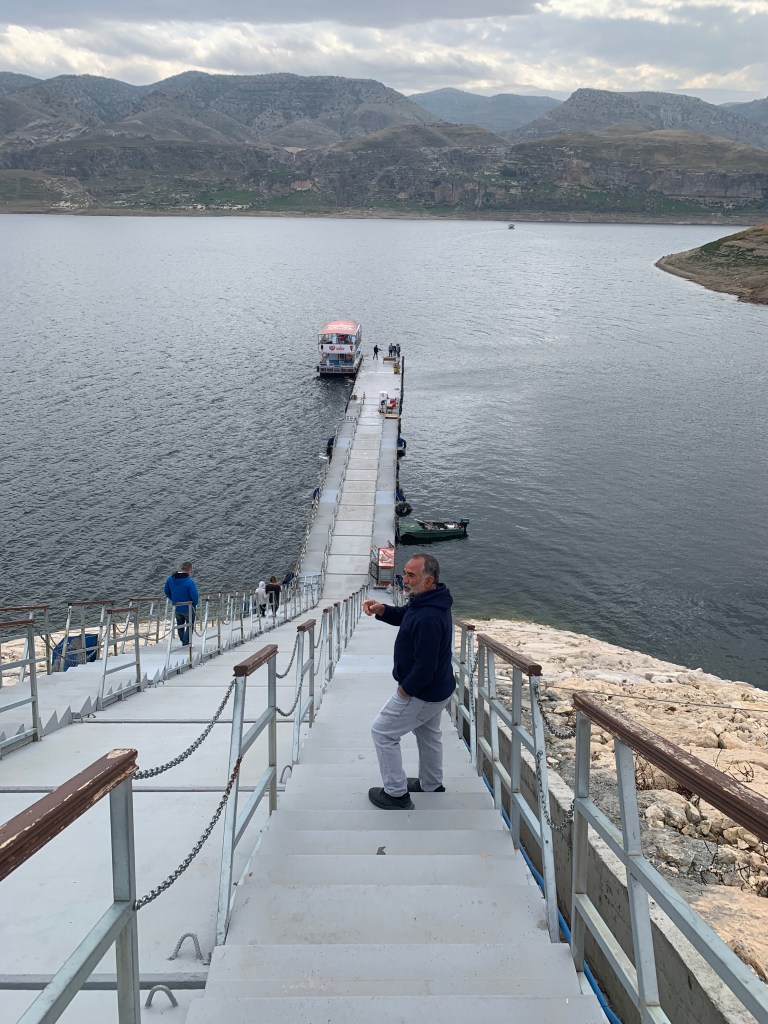
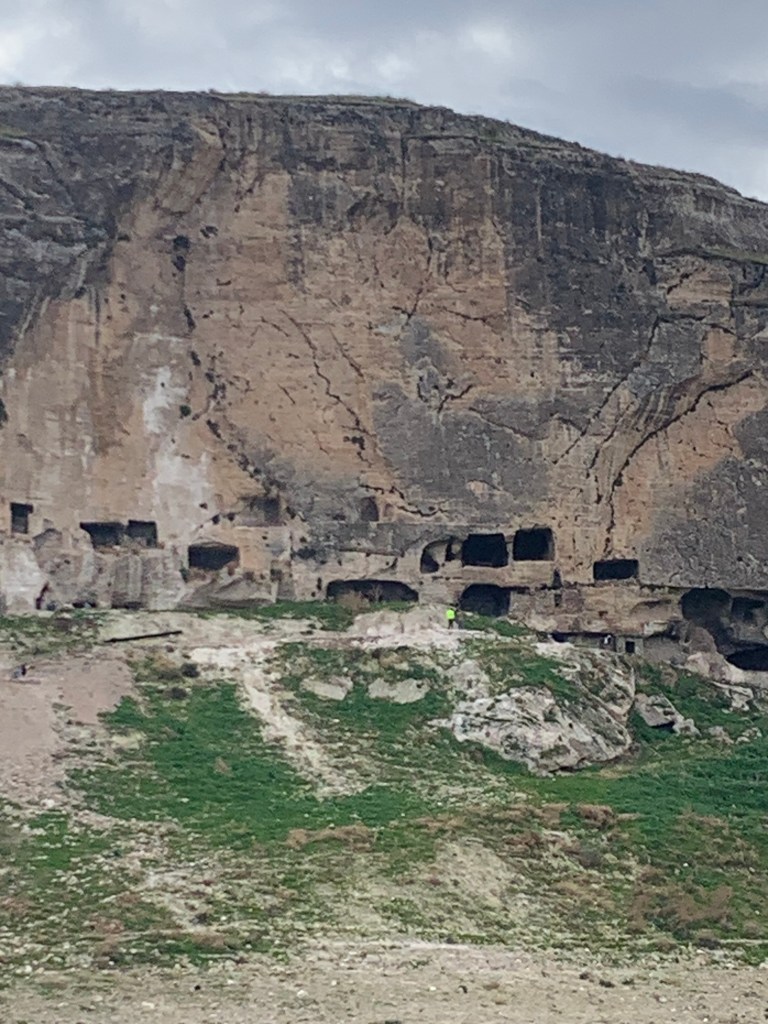
    Went to have a look at Hasankeyf, the ancient village on the Tigris that was drowned when they built a hydroelectric dam there; the archeologists managed to get a few key buildings transferred up, but the village that has outlasted invasions and been a post on the Silk Road is now deep under water. The place looks lifeless and desolate, with the old cave dwellings appearing blind on one side of the dam (3 families refused to move and still live in the caves) and the museum and the new houses soulless on the other. There is still a lot of ill feeling towards the government for having destroyed the old life in the village – the guide was very passionate, and I could sense his sadness and anger without understanding Turkish.

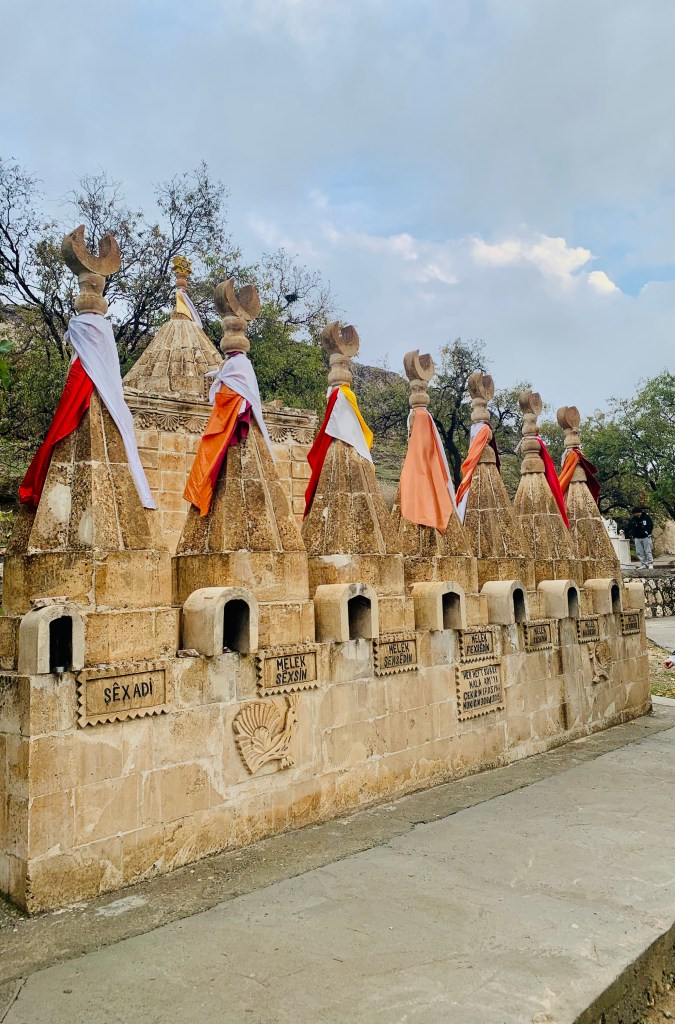
    It took 3 dolmuses and one kind driver of a private car to get there. Felt like I was a parcel in a “pass the parcel” game – bus drivers and controllers shifting me along… I did strike it lucky on the pleasure boat taking us on an hour’s trip on the water. Two families from Istanbul, everyone spoke English (children go to a private school and are taught French and German too) gave me a lift back, with a side trip to an abandoned Yezidi (Kurdish) village (another sad place as the villagers had to leave as they were being terrorised by the local Turkish population) and a 4th ct monastery, and we had a nice meal together.

    I flew into Ankara from Mardin – an hour and a half flight, rather than some 16 hours on the bus. Magda, who I met in Konya, invited me to stay with her. She has been a wonderful host and I felt very much at home. It has been lovely to be in a home rather than a hotel, and we got on like a house on fire. While she was at work (at the Polish Embassy), I went sightseeing.

    The two days have flown by and I am off on the next leg – taking the much praised Dogu Express train overnight to Kars, near the Armenian border.

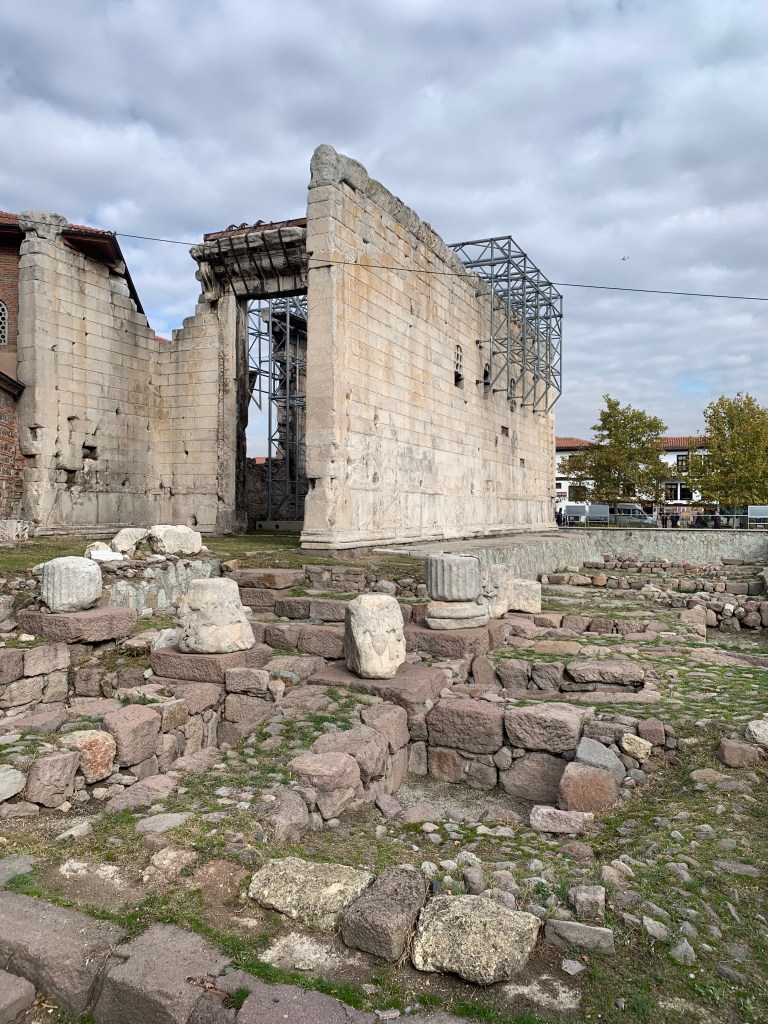
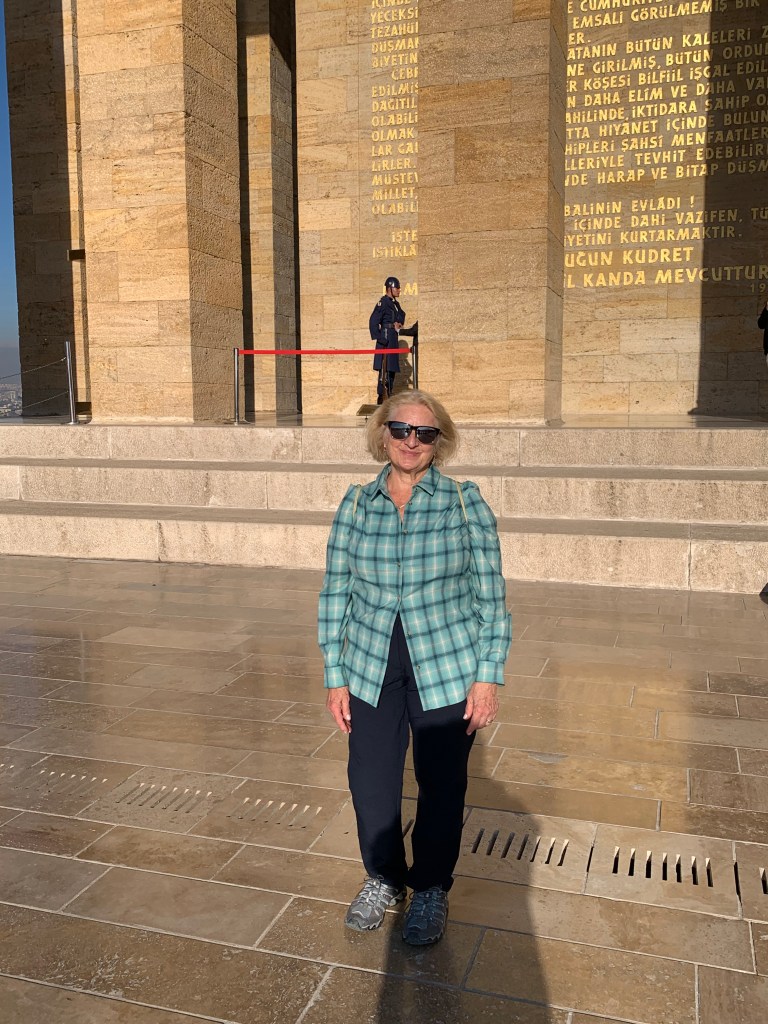
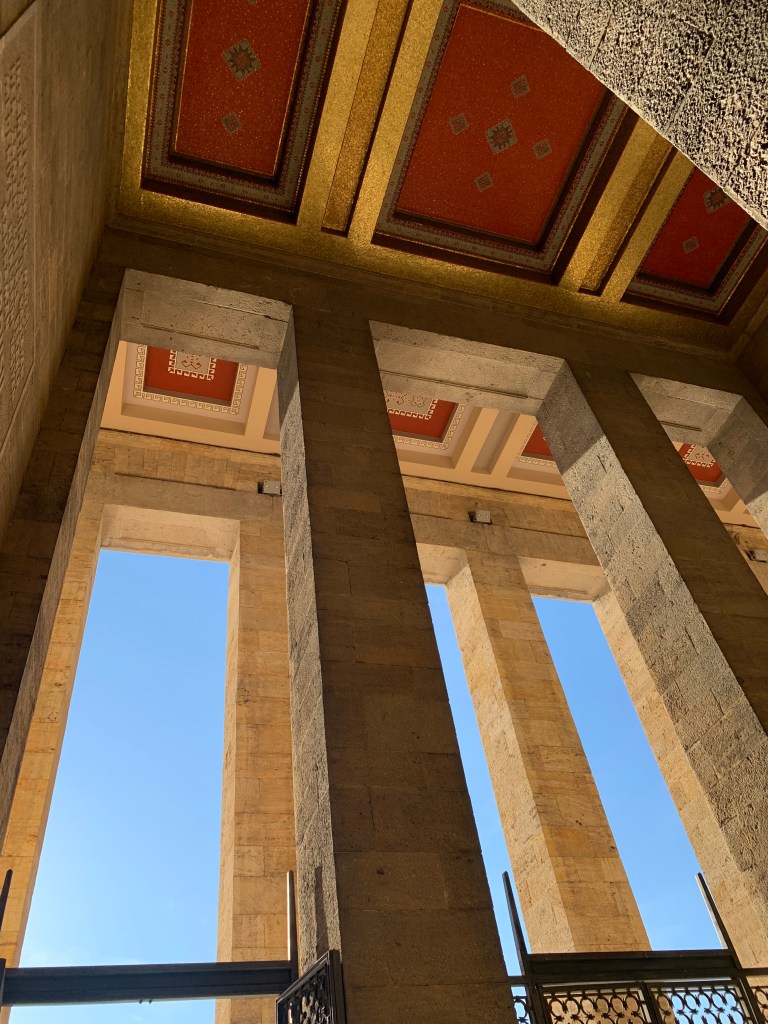
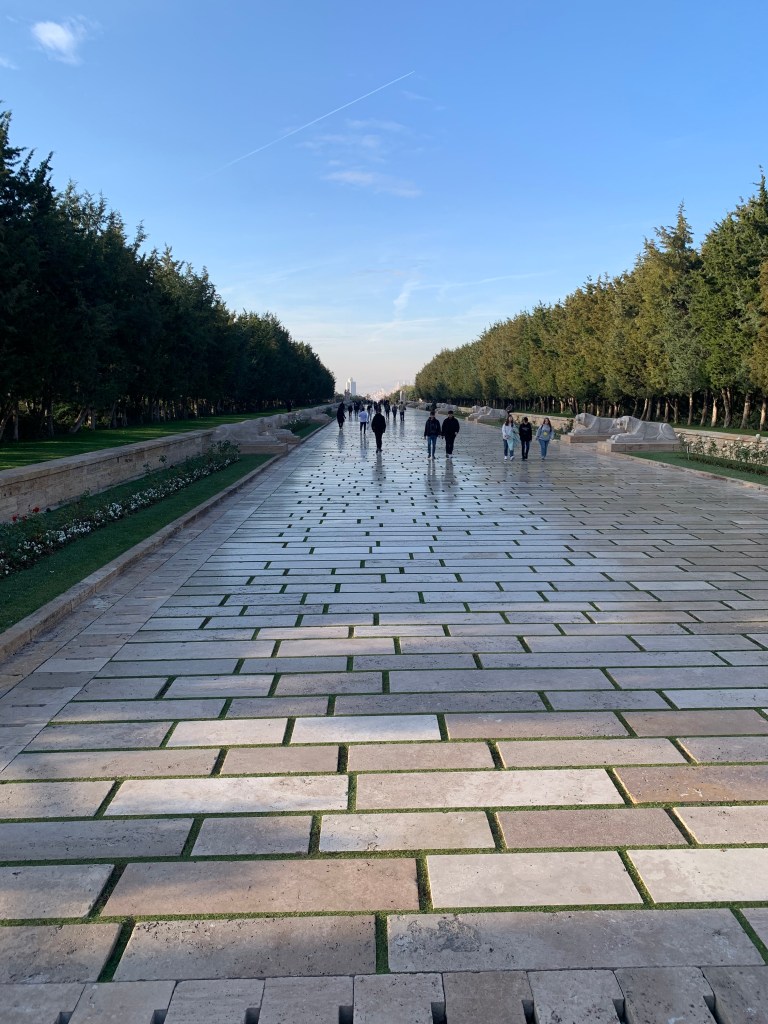
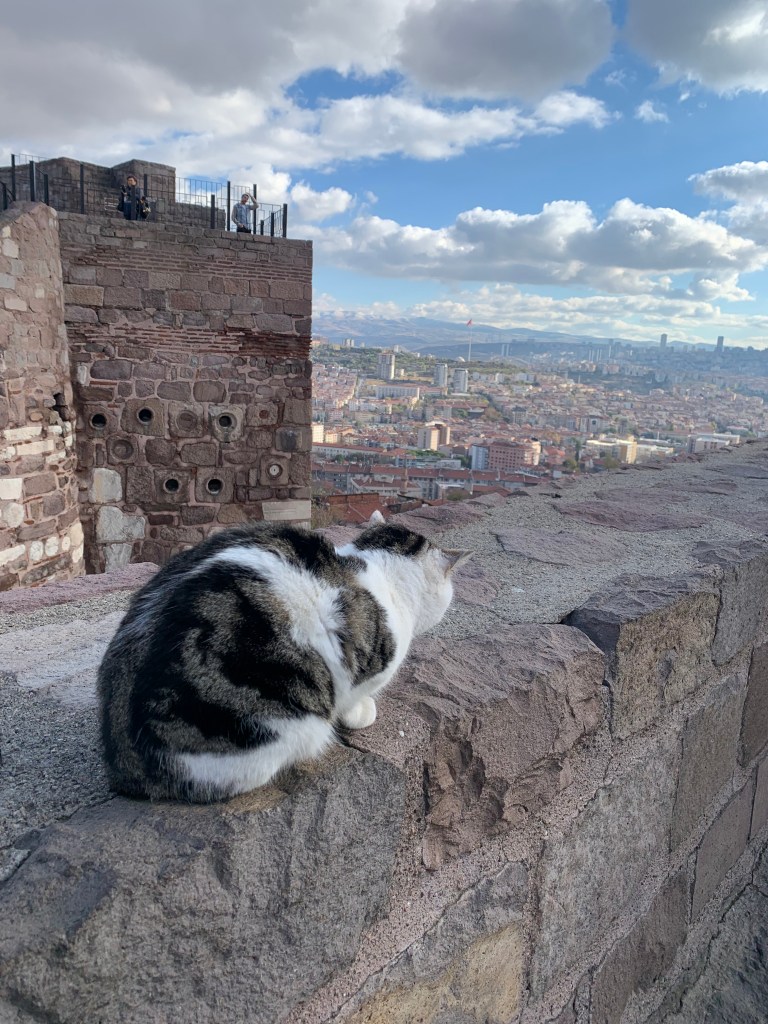
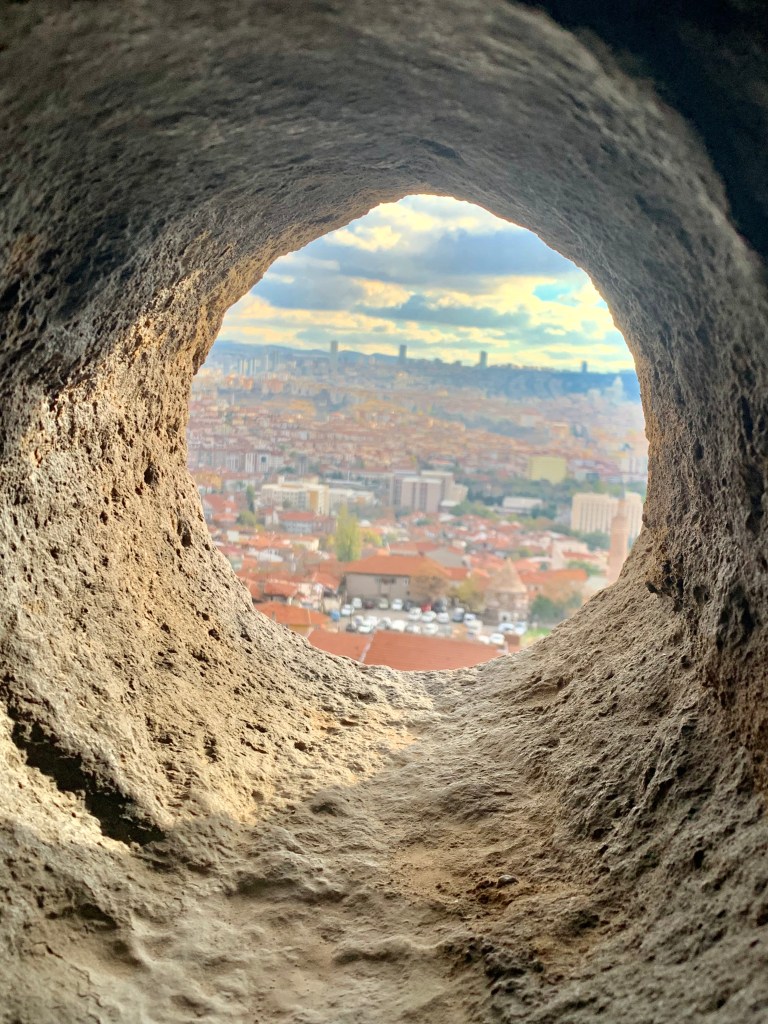
    Ankara is a sprawling town, with congested traffic and whizzing buses. There are three tube lines (quite old now). I managed to see the main bits – the Museum of Anatolian Civilisations, the Ataturk Mausoleum, the Roman baths… Their official blurb usually states that the “old, historic Ankara is buried under the modern Ankara”.

    There has been a lot of construction going on everywhere I went, but not much looks finished. Comparing the modern box-like buildings to the graceful houses of old with their intricate stonework and decorative designs is not profitable. The current preferred colours for the outside of houses are all shades of yellow and pink.

    There is dumping and rubbish everywhere, especially plastic water bottles and wrappers. There seems to be little civic pride. When I asked about it, I got two explanations: one was that people understand freedom and democracy as there right to do as they please (having missed the bit about responsibility); the other was that eduction and general teaching of culture has been in a steady decline for the last 20-30 years, with religious teachings taking precedence.

    The street lighting seems to be mainly in the middle of the road, so the light barely reaches the pavements, which are often broken, potholed and uneven – Turkey is not a place for wheelchair or pushchair users. (Capadoccia area was the exception, the villages of Goreme and Uchisar twinkling like fairy towns.)

  • Urfa, Mardin

    Nov 17th, 2023

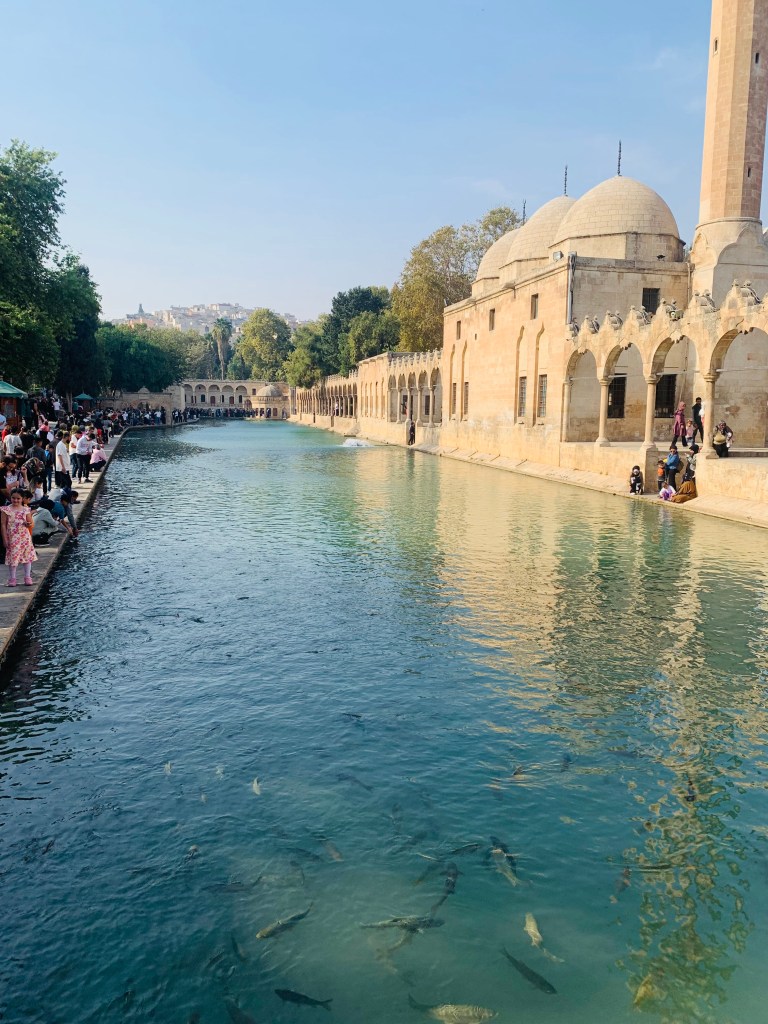
    This part of the trip through Southeastern Anatolia is all on the spur of the moment and some recommendation. I wanted to go to Antakya, to see a large mosaic floating under a hotel (look it up, looks fab), but the travel logistics were so complex that when Mehmet in Isparta INSISTED I could not possibly miss Mardin, his home town, both because it is beautiful and because it is on the Silk Road, I agreed. Urfa (Shanliurfa, officially), was on the way and (they say) is prophet Abraham’s birthplace, and there are two important and highly rated museums there… Unfortunately, both the Archeological museum and the Mosaic one are “temporarily closed” – the February ’23 earthquake damage. The Abraham cave, the mosque etc, all the places of pilgrimage, are in good working order. Maybe miracles do happen. (After all, Abraham was saved after having been hurled from the fortress by “landing in a bed of roses”. The perfume was slightly different when I visited – the manure had just been put on the beds throughout the park. The other part of the Abraham legend is that the flames of the fire prepared for him by the pagan ruler were turned into cool water and the hot coals into fish – hence the fat carp, never caught or eaten, in the two pools. )

    The “Kervid Butik Otel” in Urfa was recommended to me by Yunus, who I climbed the Nemrut Dagi with. He said it was central (it is), run by his cousin (it is), and I would be well looked after (I wasn’t). When I arrived, Mahmout, the Syrian “manager” (he said it in such a way that the inverted commas were implied), was sitting in the middle of the untidy cafe space, smoking a hookah, looking very much like a thin version of a caterpillar in Alice in Wonderland. The two nights spent there were not the best. There was a nice terrace, but it did not feel comfortable with all the hookah-smoking men and the sweet smell of flavoured tobacco. The bazaar was near and very lively, the views great. Though there was a constant flow of pilgrims and tourists, the park area was clean and well maintained. This is noticeable as generally there does not appear to be much civic pride – there is rubbish everywhere, from cigarette butts to plastic and all in between.

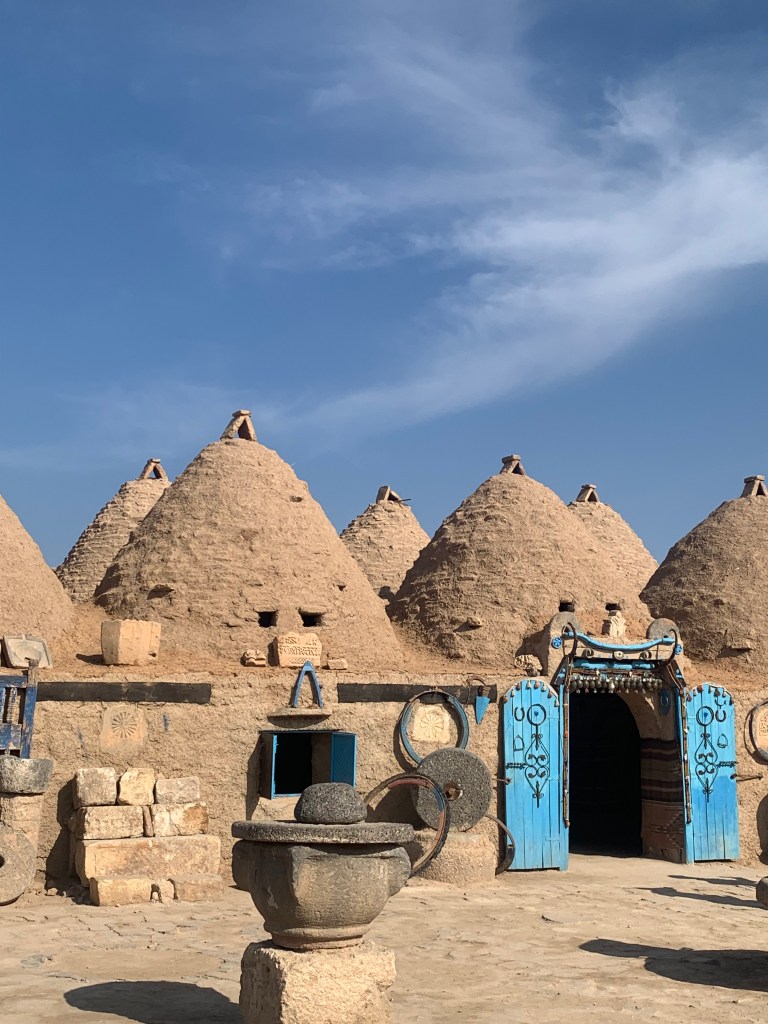
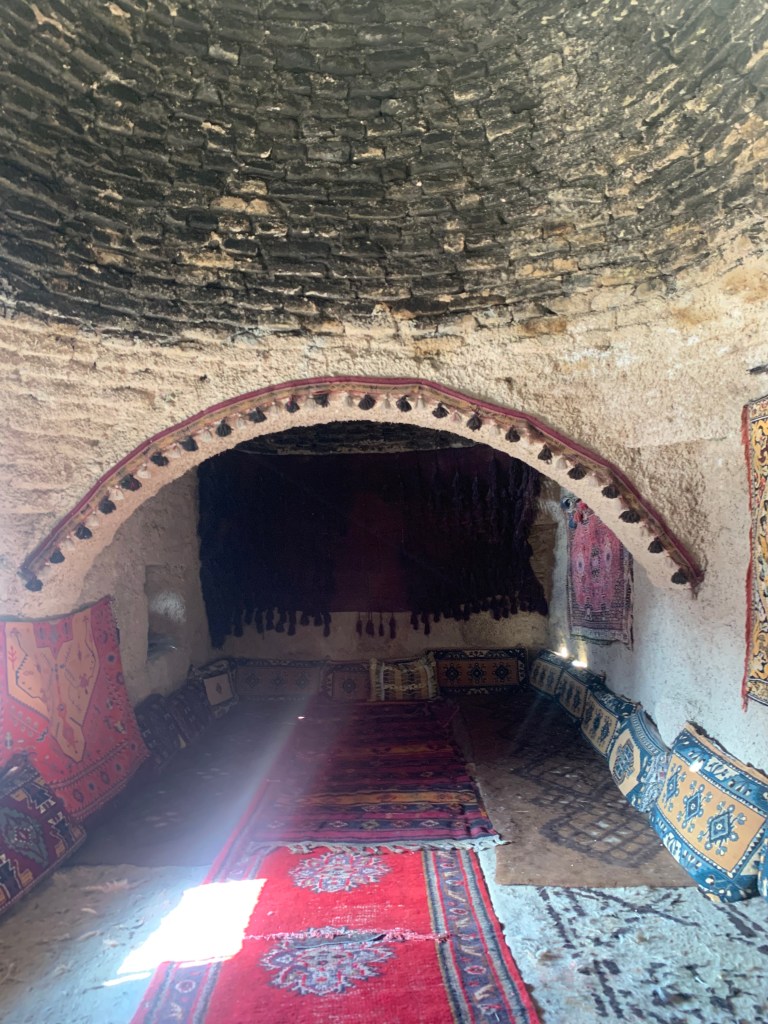
    I had a nice day out in the area around Urfa – Harran is a small village now, but it is one of the places that has been continuously occupied for at least 5000 years. The beehive houses made of mud bricks are still in use, though now as stables and sheds, rather than the living quarters. There is restoration work being done on the very old Grand Mosque and its square minaret, but it is clear that there’s a lot more archeological work to be done in the area.
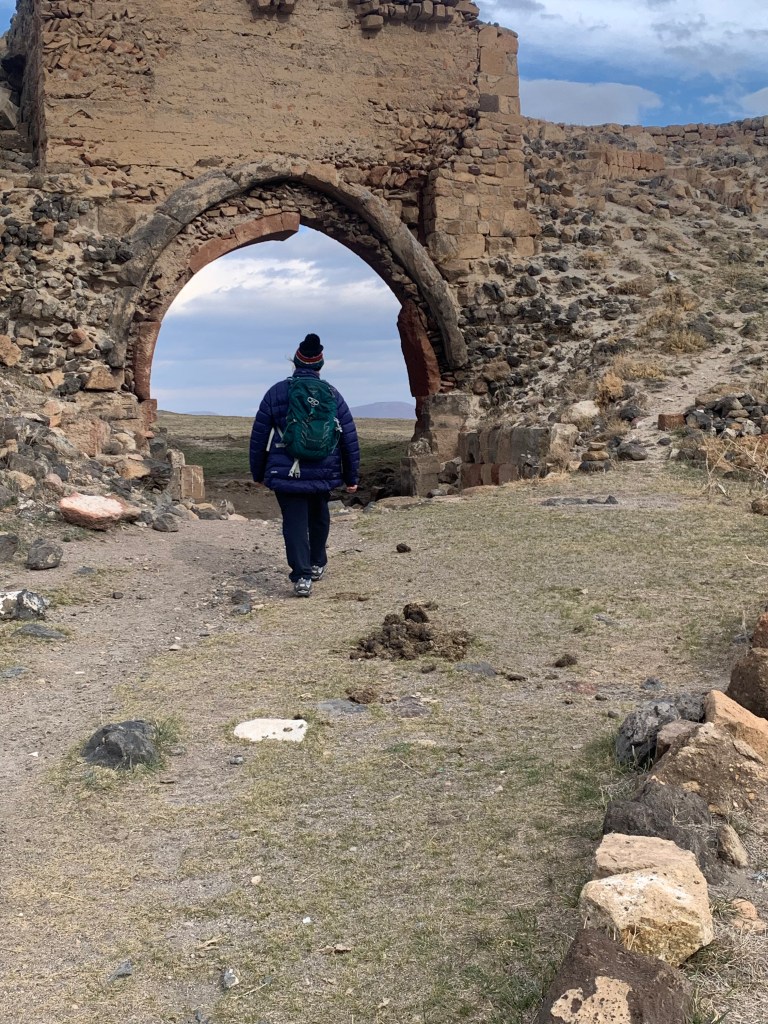
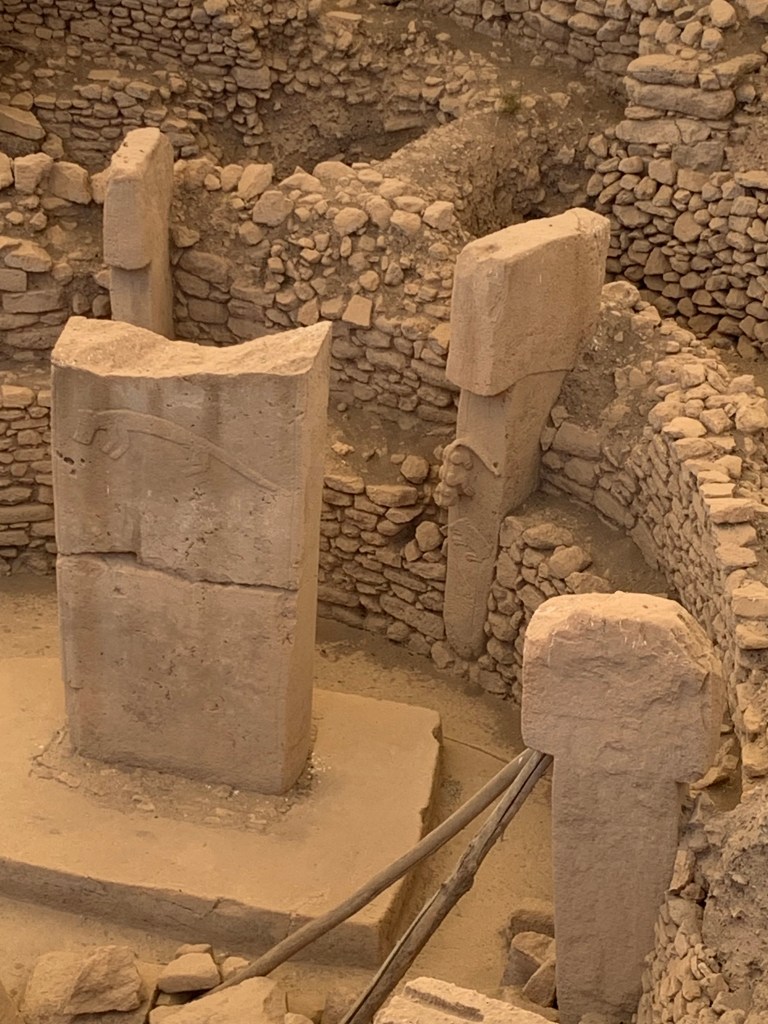
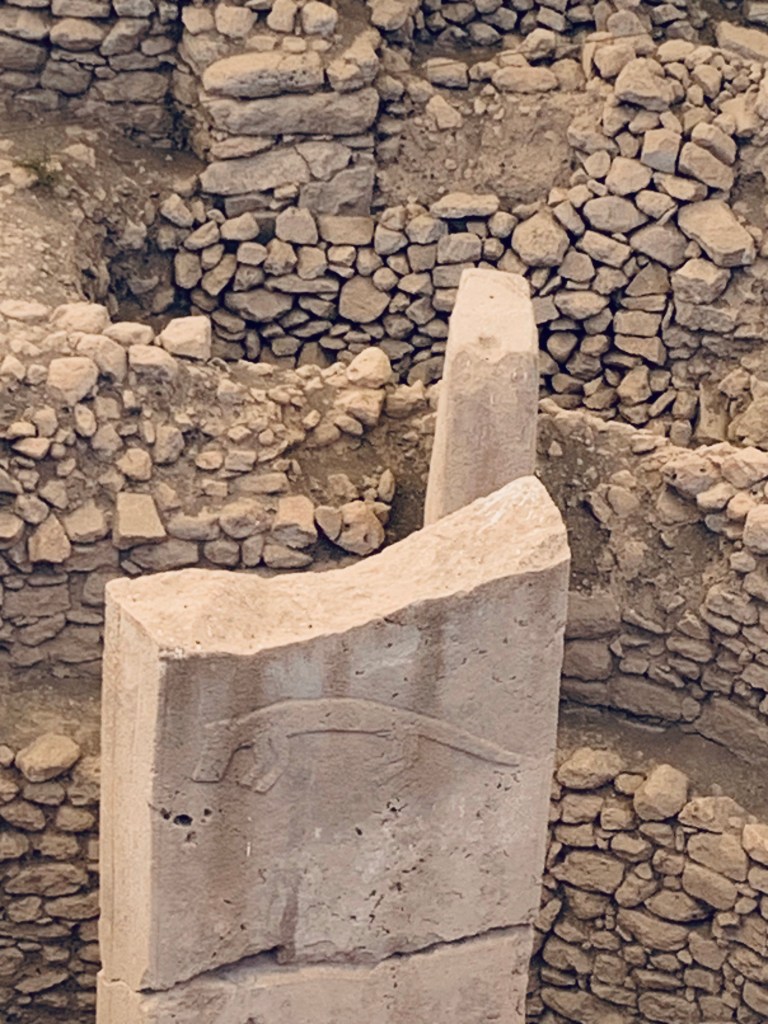
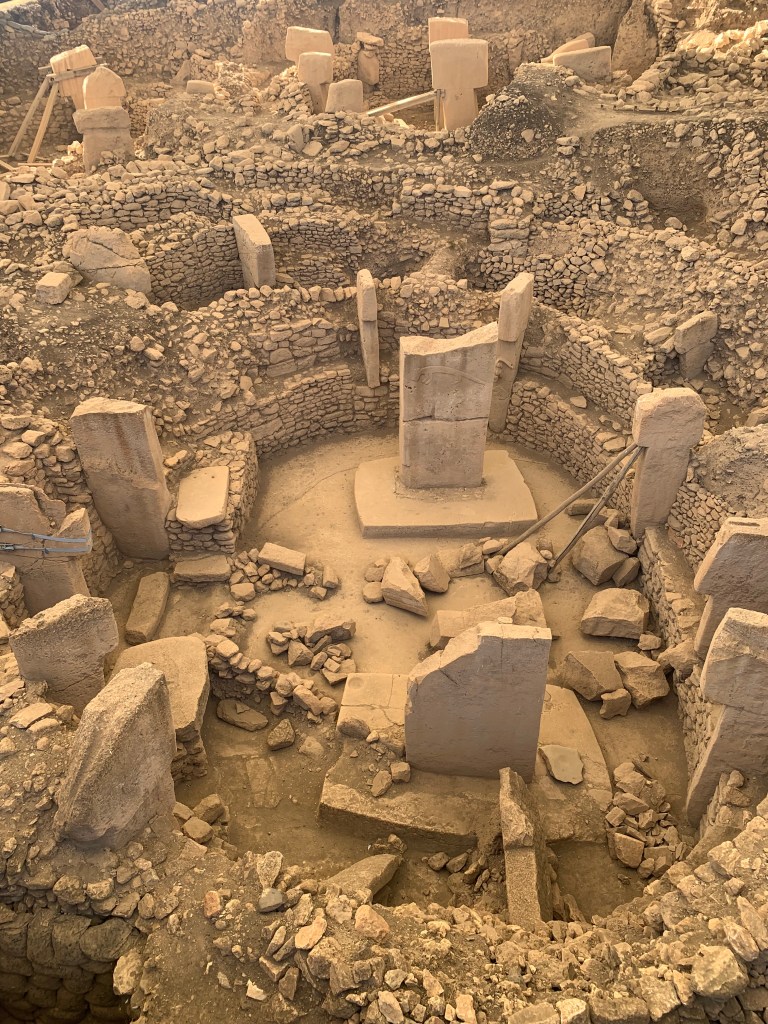
    And Gobeklitepe, the 11-12000 year old site with its stone circles, megaliths and T-shaped pillars is “turning the accepted wisdom that worship/religion followed settling and agriculture on its head” – the site is older than the pyramids or Stonehenge. And so far only 5% of the site has been excavated – there are 16 more circles in the area, as radar and modern imaging techniques have shown.

    As I move east, fewer and fewer people speak English, so Google translate is a true boon. Everyone seems to have the app, which is handy. I am here out of season (though the weather has been superb; it is mid-November and all I need is a cardigan in the evening. I shall have a proper shock when winter really hits, whenever and wherever that might be.), but Mardin is a popular destination for Turkish visitors – especially as it’s half term here this week.

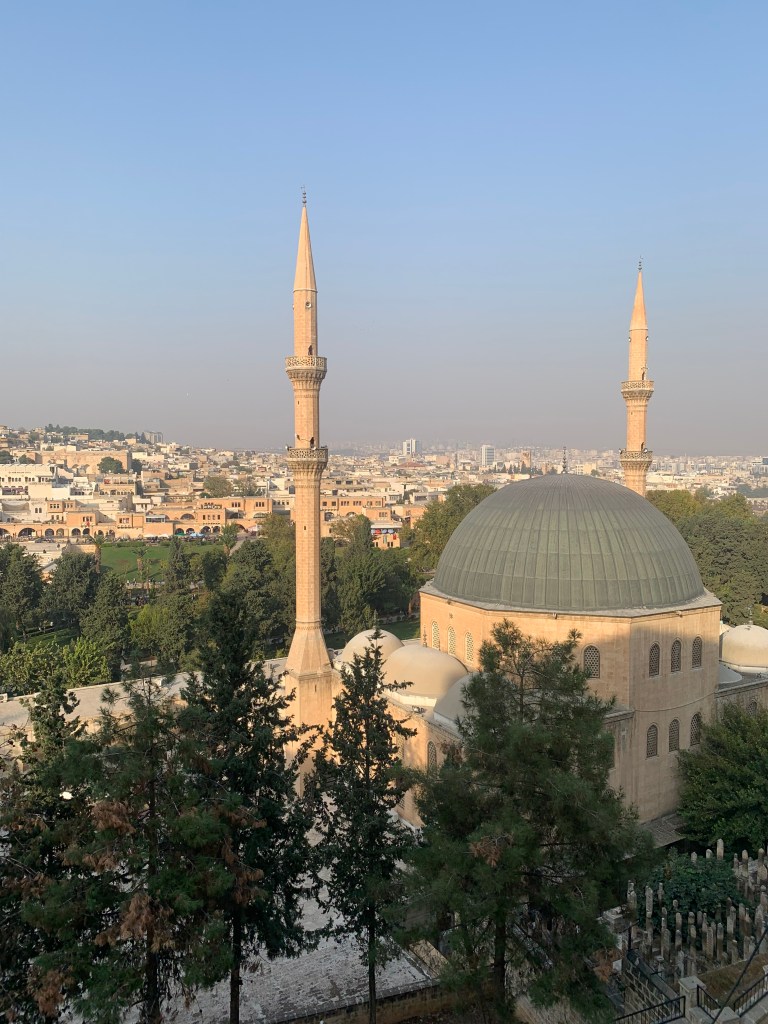
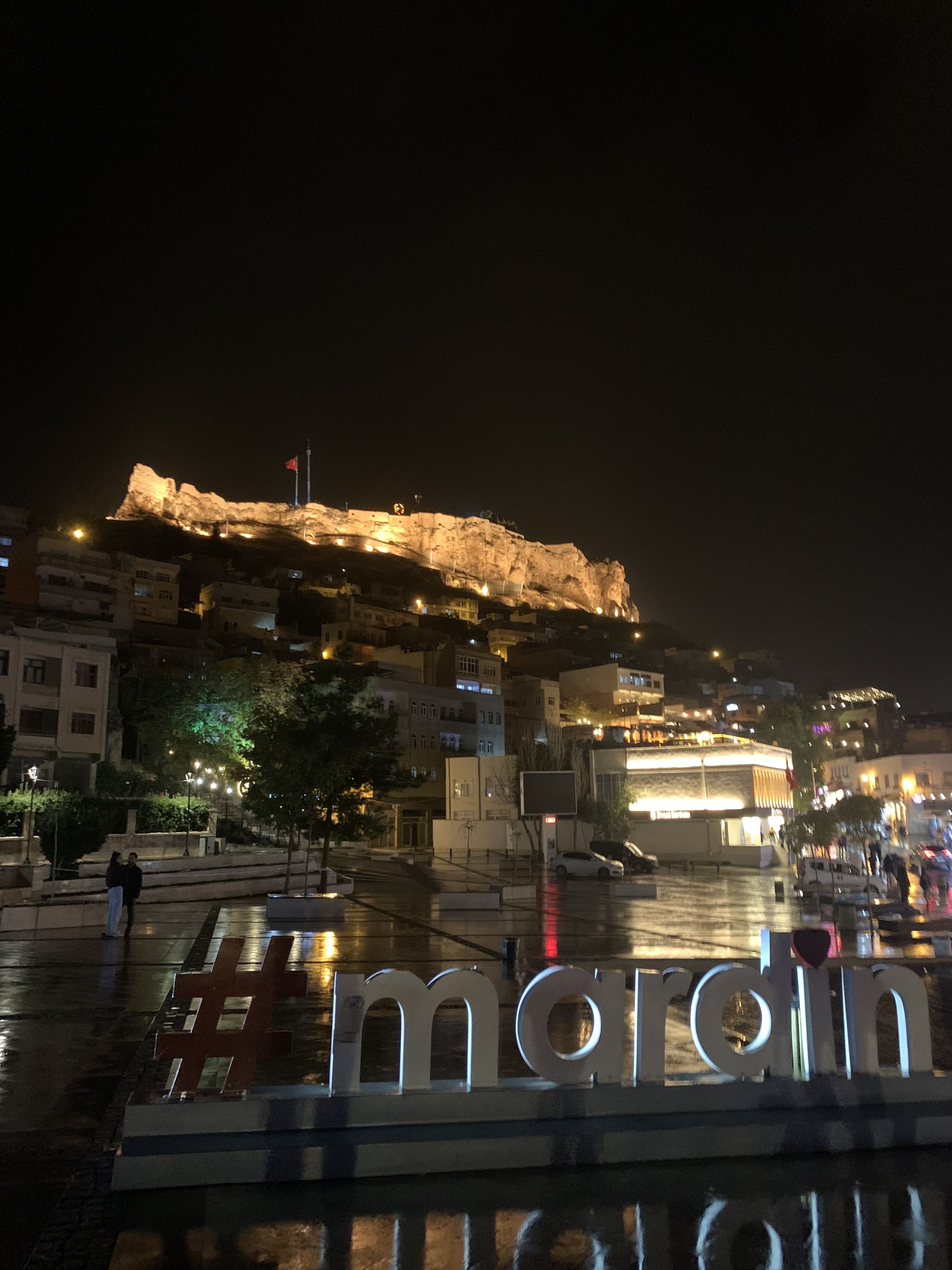
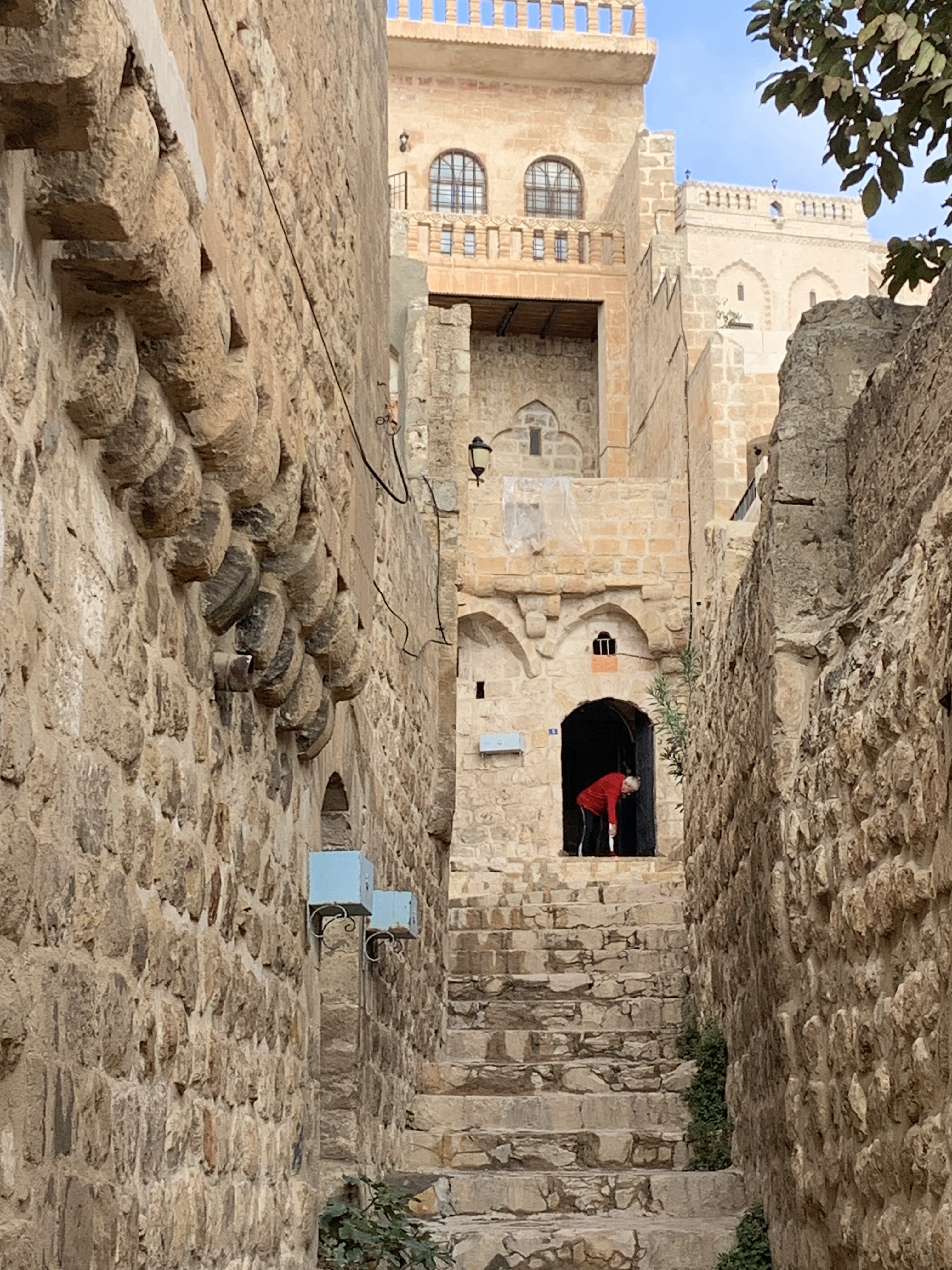
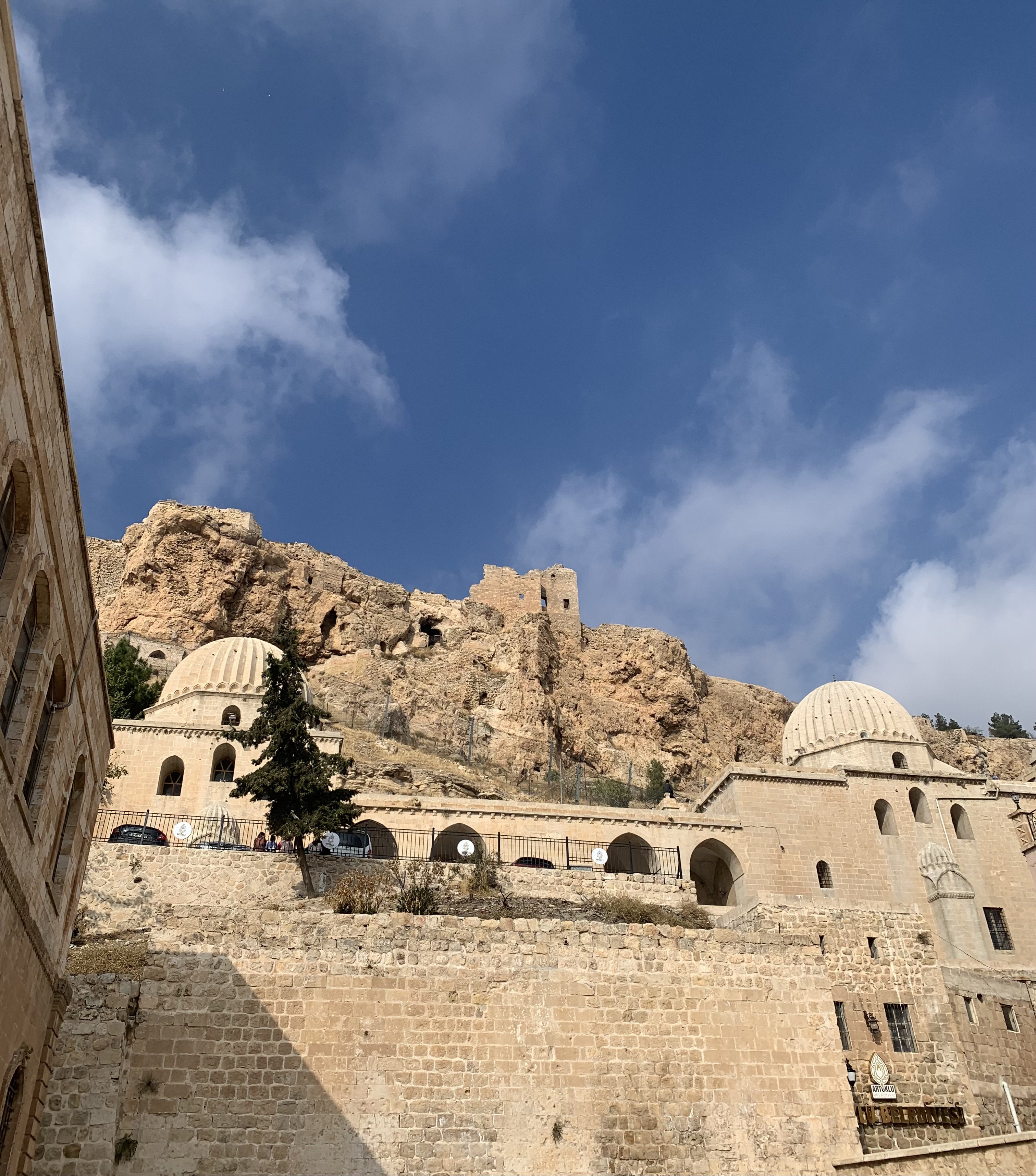
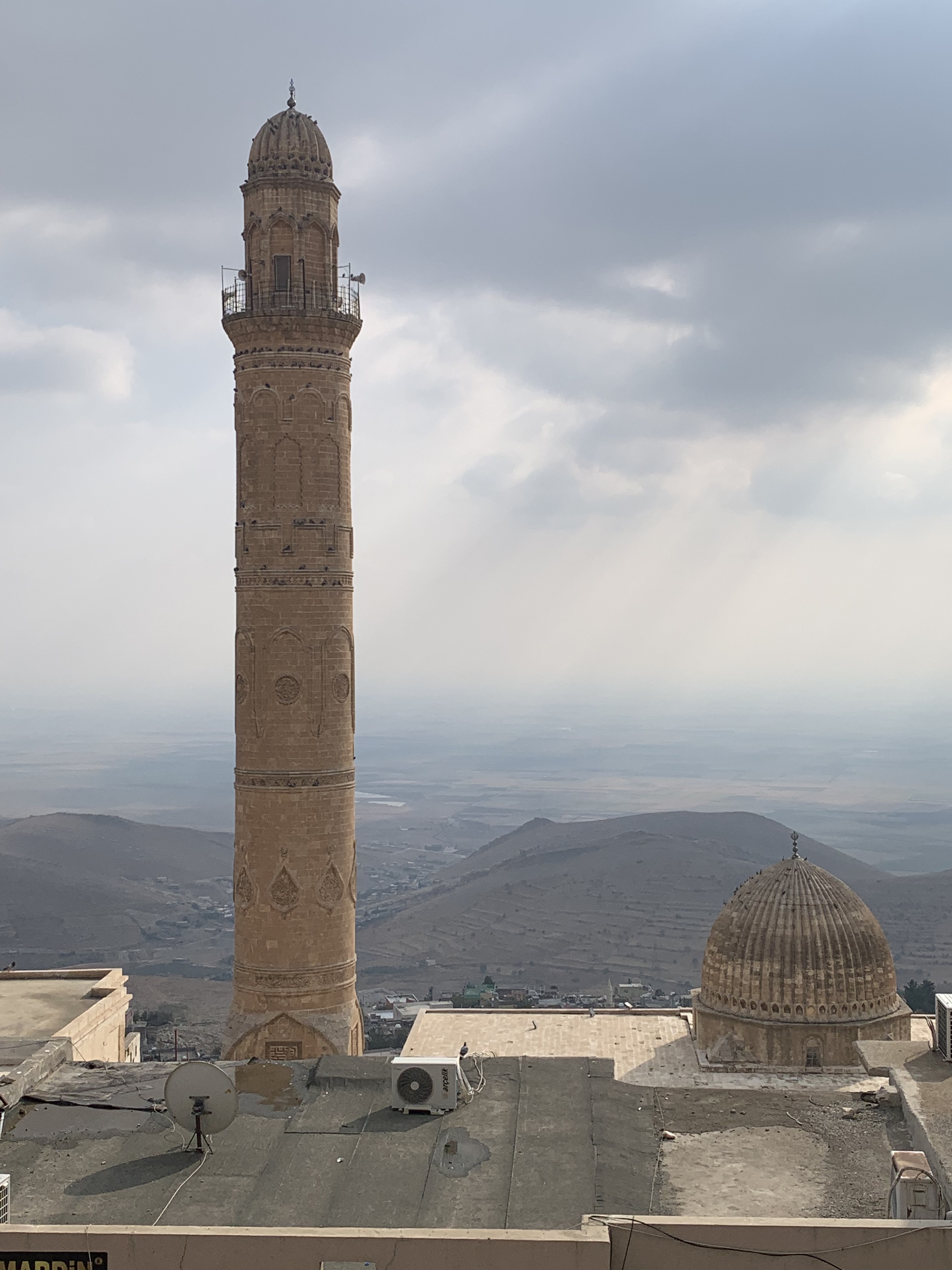
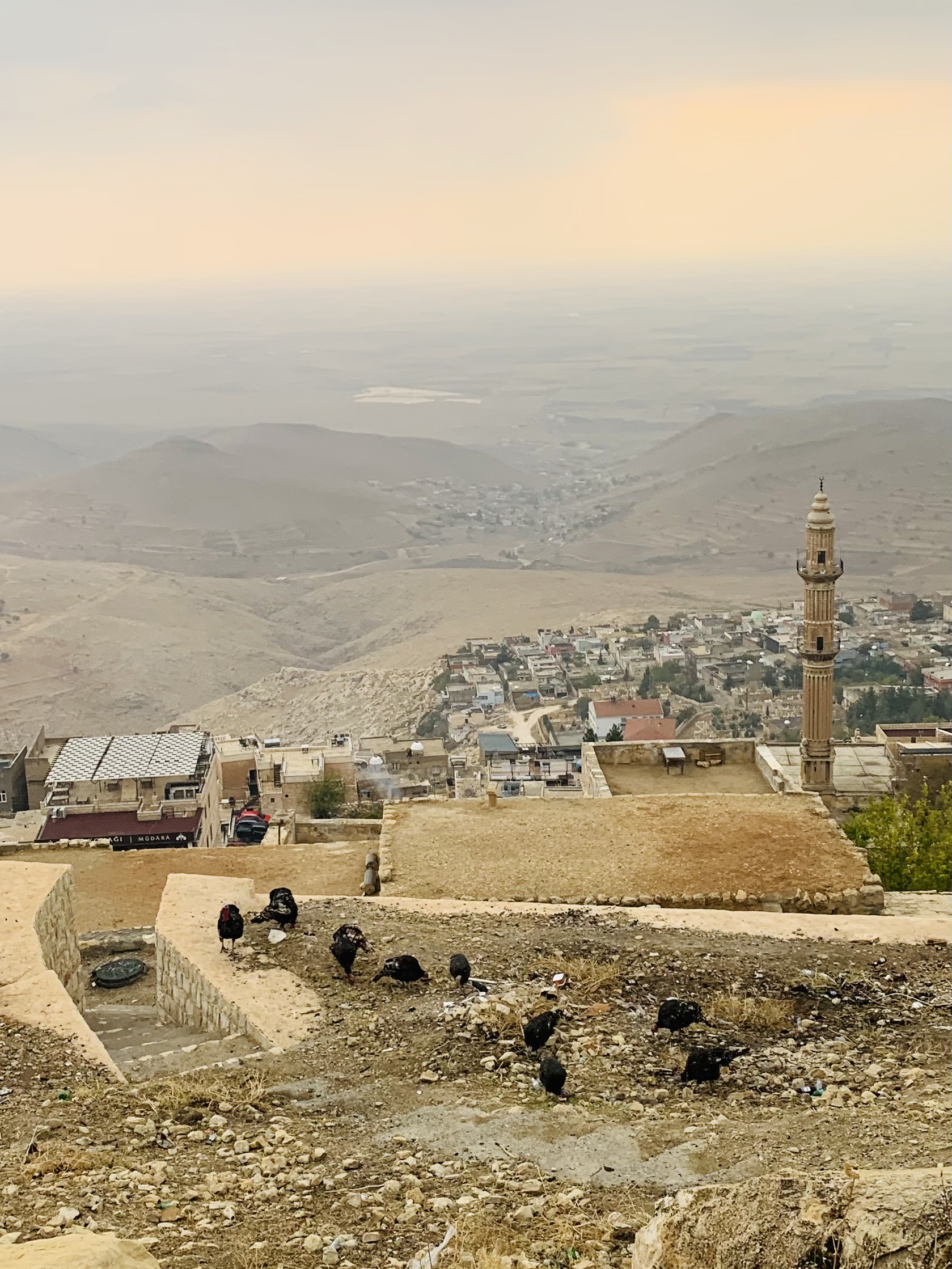
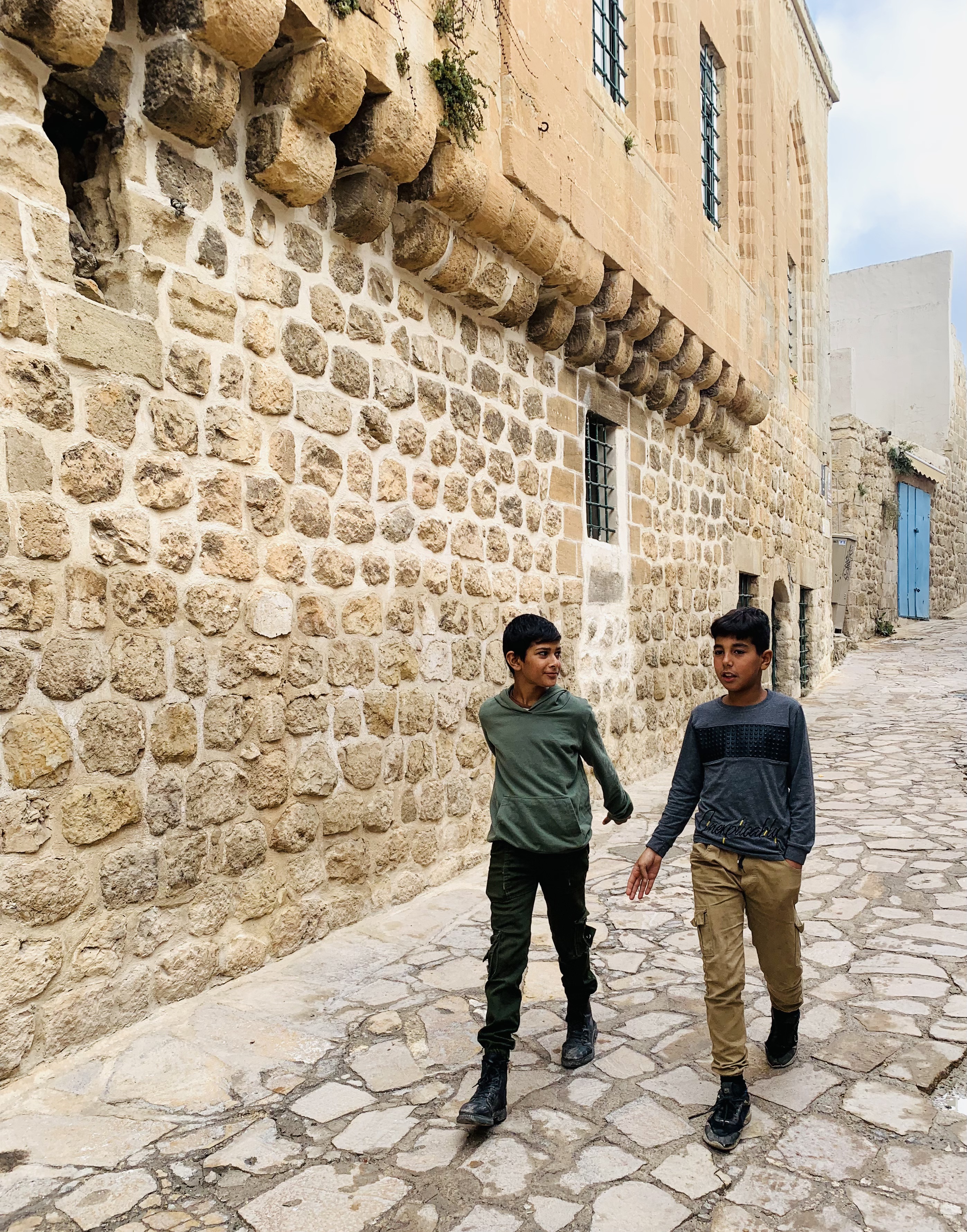
    Mehmet is right: it is a beautiful, honey and biscuit-coloured town, spilling gracefully down the steep slopes below the fortress. The streets are all steps. (Those few that aren’t steps are congested with cars.) It feels like a labyrinth at first , but it is a grid of sorts and fairly easy to navigate. The mix of cultures and faiths – Greek, Syrian, Kurdish, Yezidi, Chaldean, Christian, Jewish, Babylonian, Ottoman – I probably missed several – shows in the buildings, the food, the faces.

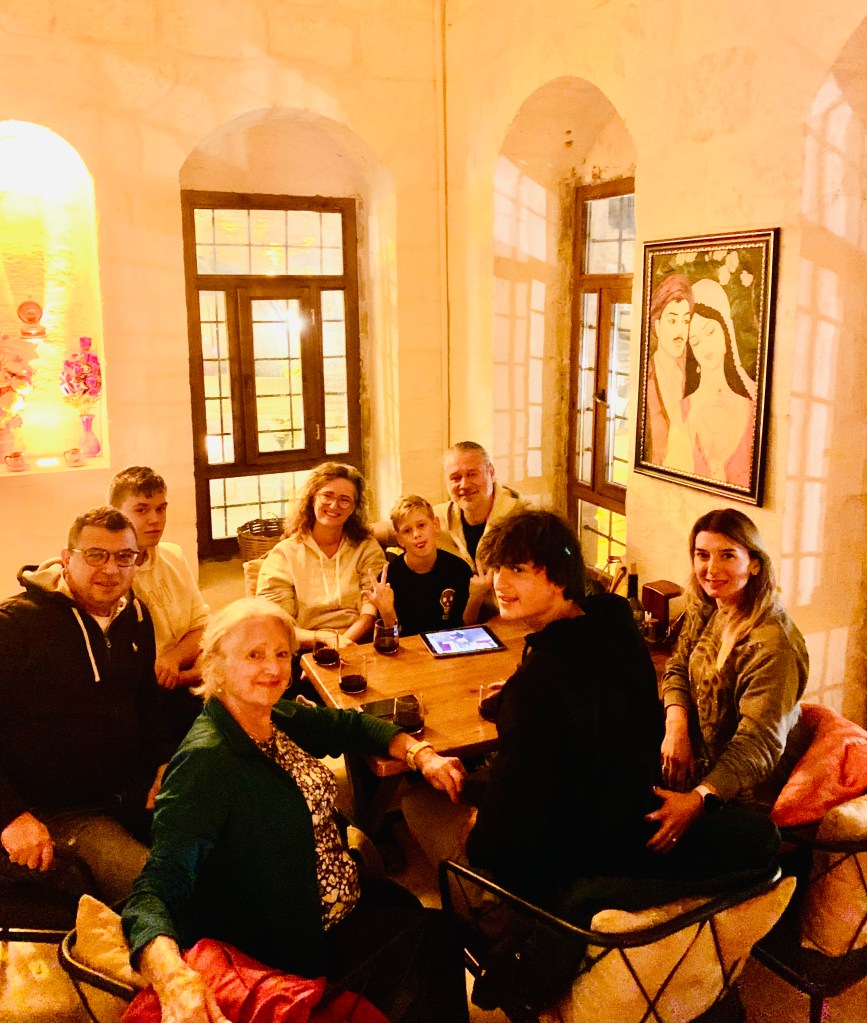
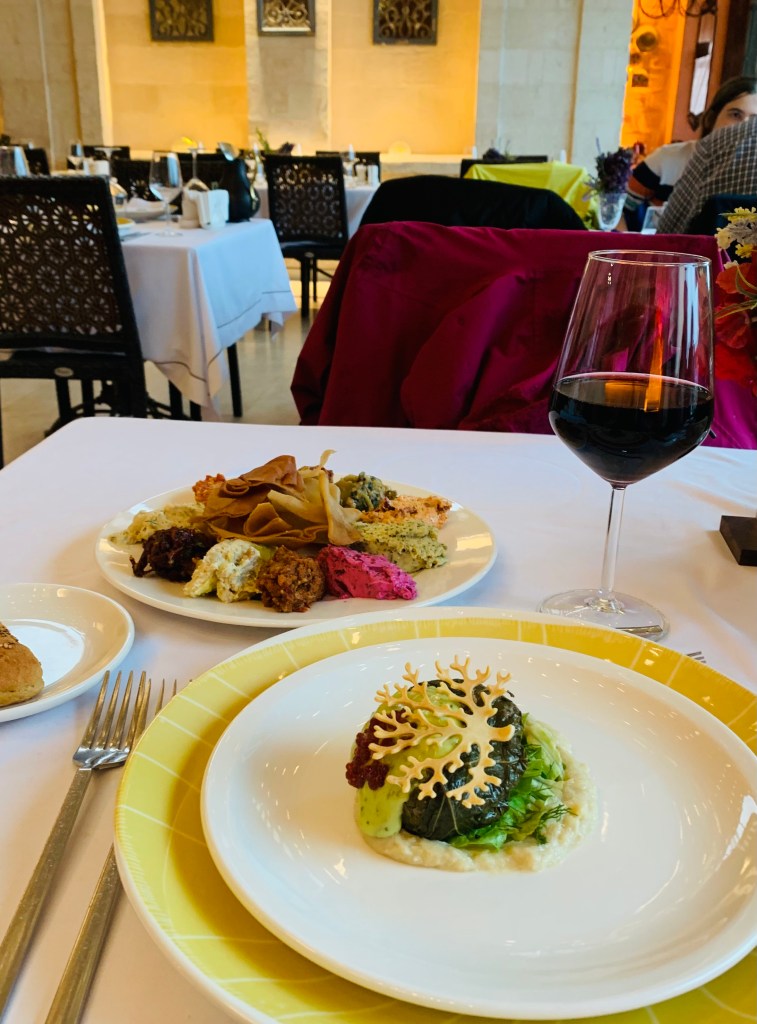
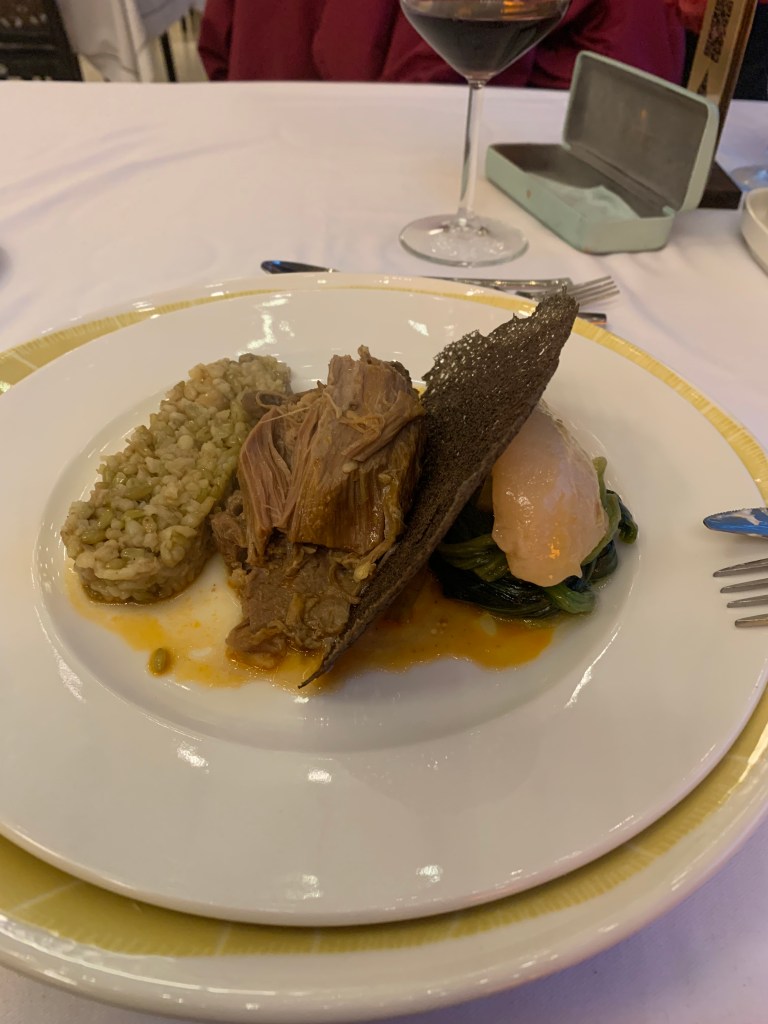
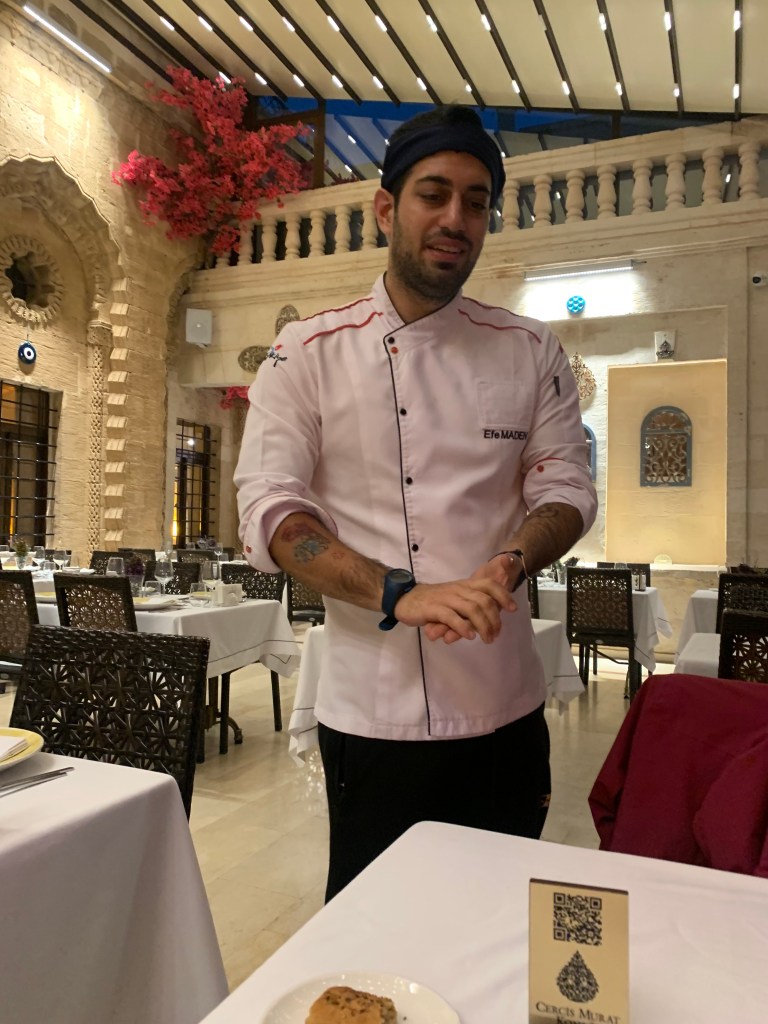
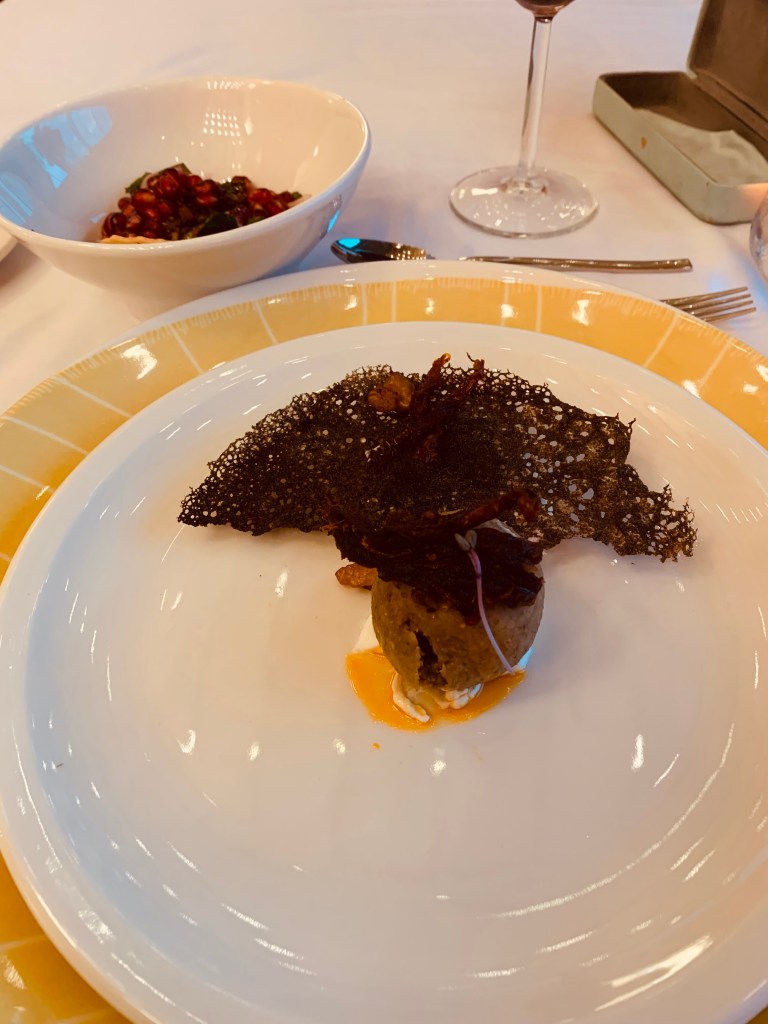
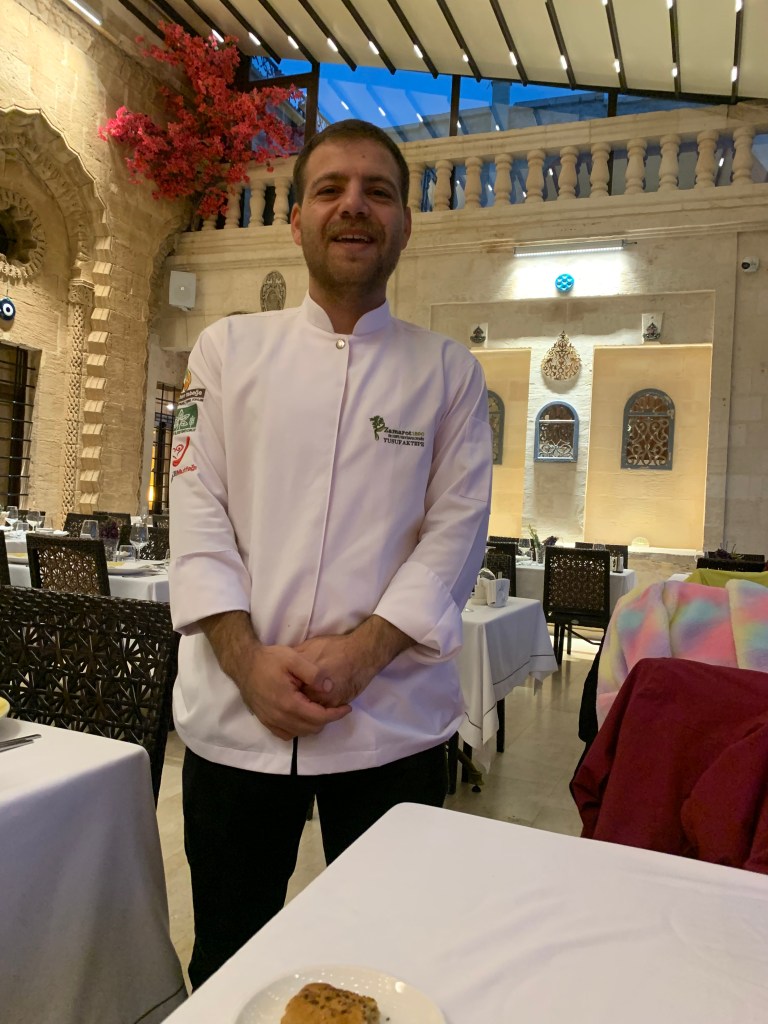
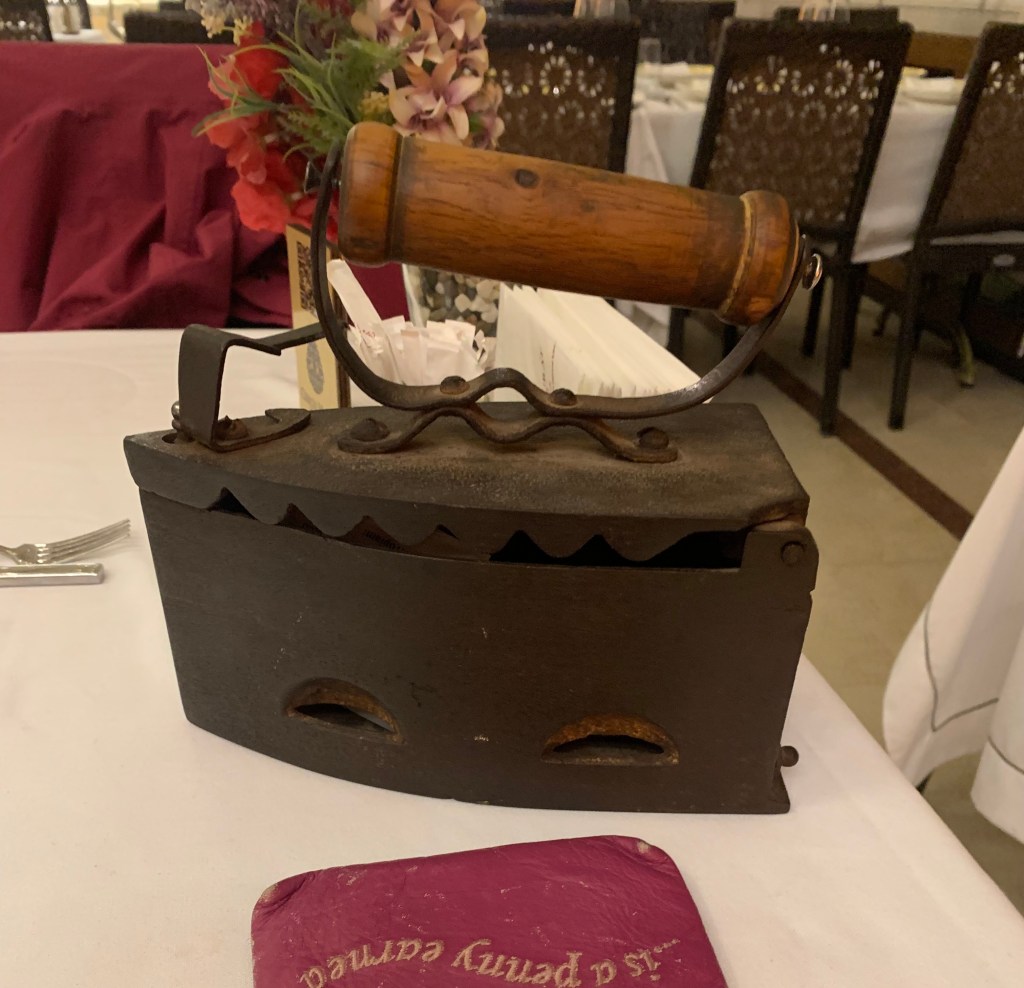
    On my first evening in Mardin, I went to the Lonely Planet recommended Cercis Murat Konagi restaurant ($$, according to the LP). A lovely dining room, nice linen, wine glasses ready on the table. No English menu, but we managed. The set (tasting?) menu was delightful and the chefs (Yusuf and Efe) came out to explain what was in the dishes as they were served. There is a Masterchef feel to it all. The Mesopotamian Classic red (their house wine) was wonderful. And the bill ($$$$) was presented in the old iron.

  • The Kindness of Strangers

    Nov 12th, 2023

    My trip from Goreme, Capadoccia, to Adiyaman, Southeastern Anatolia, was always going to be challenging (isn’t that one lovely word?) as I wanted to travel in daytime – the night bus (arriving c 5-6 am!) could have got me there in one go…

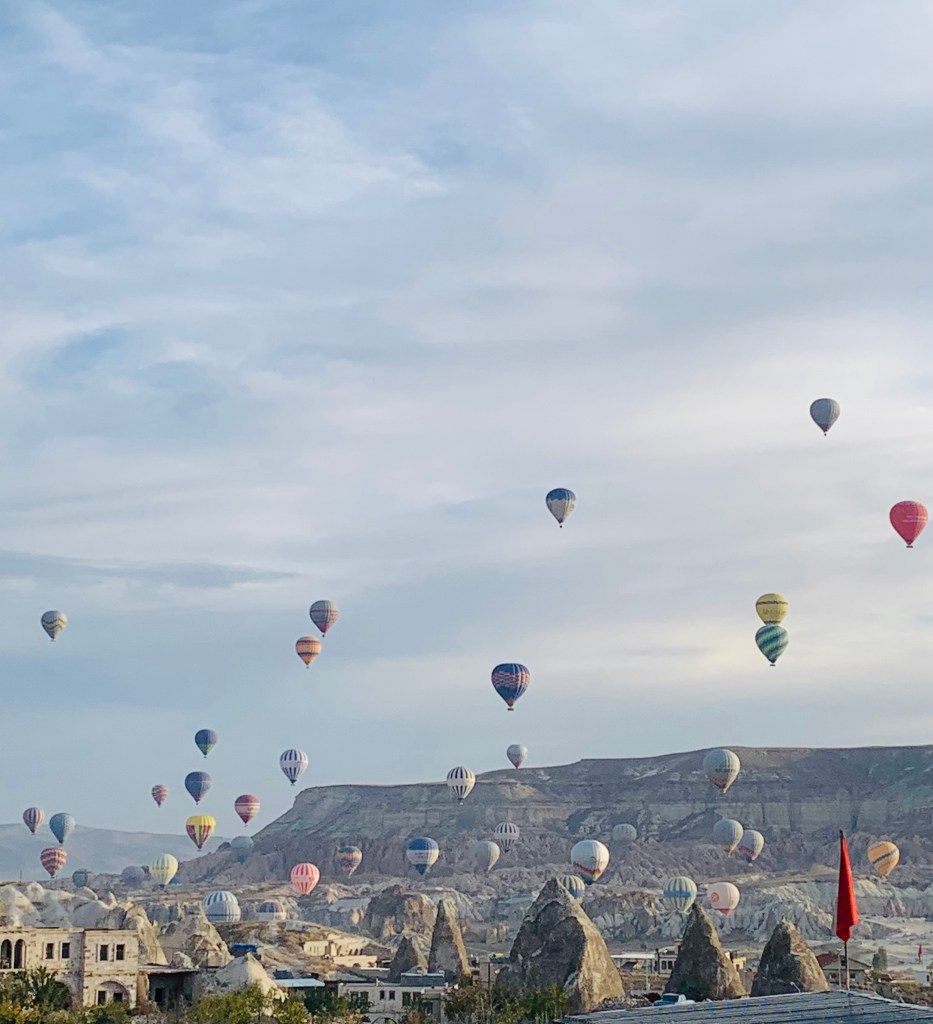
    Took some last photos of the balloons in flight at dawn – it’s hard not to, just like the bazaar spice stalls – and got onto my first dolmus at 9 am, heading for the centre of Nevshehir, a bigger town nearby; the kind driver told me which dolmus I needed to get from the centre to the Otogar (the etymology is easy to work out: Auto+ Gare, i.e. a bus terminal; there are other French words in use in Turkish , such as ‘Kuafur’ .

    The bus to Kayseri (a yet bigger place and a travel hub) was easy, then a bit of a wait (an hour and a half) for the 13:00 to Malatya. The coach terminal is vast, more like an airport one, and the middle is a circle of agents’ kiosks shouting out their company’s destinations and hoping to attract customers. (I got my ticket online, and a nice seat at the front.) The busbud.com website (useful in many ways) said the arrival time in Malatya was 16:10, which would give me plenty of time to get the dolmus for Adiyaman (a 2 hour trip)…
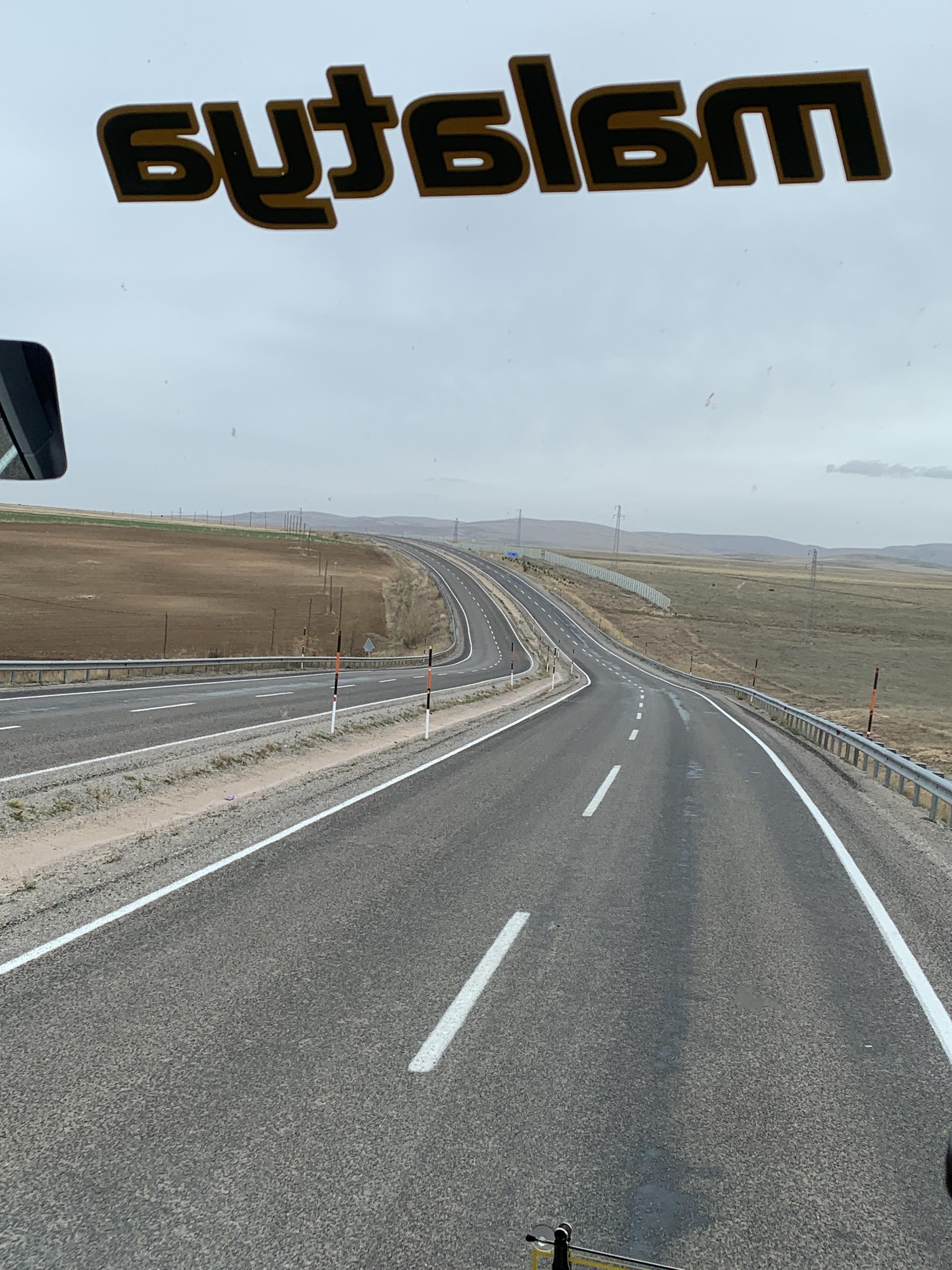
    The distance from Kayseri to Malatya is 360km; the speed limit is 90km/hour and there are parts where one cannot drive at speed, even if the roads are empty (and for the most part, they are – though the towns are dreadfully congested). We stopped for a half an hour break at 15:30 (very welcome) and it was clear we could not arrive at the destination before 1800. (It was 18:20, and the sun had set.)

    As we approached the Malatya bus terminal, I asked where to get the dolmus to Adiyaman. Some discussion took place (in Turkish), and the next thing I knew, as the coach stopped at the Otogar, the driver sprang up and indicated I should follow. He picked up my rucksack (much more easily than I do) and moved quickly through the terminal to the main road outside: rush our in full spate, trolleybuses, dolmuses, buses, cars, lights, beeping…

    The coach driver, whose name is Celal, made phone calls, and explained that the dolmus to Adiyaman should arrive in about half an hour at that spot. He then stayed with me for the full hour – the dolmus was late – heavy traffic, who knows. We had a conversation, sort of: he spoke a couple of words of English, same on my side with Turkish. (My eSim had expired that morning – as days tend to blend on a journey like this, I had not realised the eSim month was up: it meant I had no Google translate, or maps.) Celal made sure both my luggage and me were safely on the dolmus before he left for home.

    Dolmus is a small minibus: rows of 4 x two seats on one side, singles on the other and 4 at the back. The convention is that women and men who are not related do not sit together – when booking a seat on the coach, one is asked for the gender. The moment I sat down (next to a woman), a little boy (around 3 years old) found his way onto my lap. His mother was sitting in a single seat with another child, a girl of about 18 months in her lap; it was going to be an interesting journey. The chatting was a bit difficult, and as I explained where I was going, I had a sense that they were trying to tell me something important.

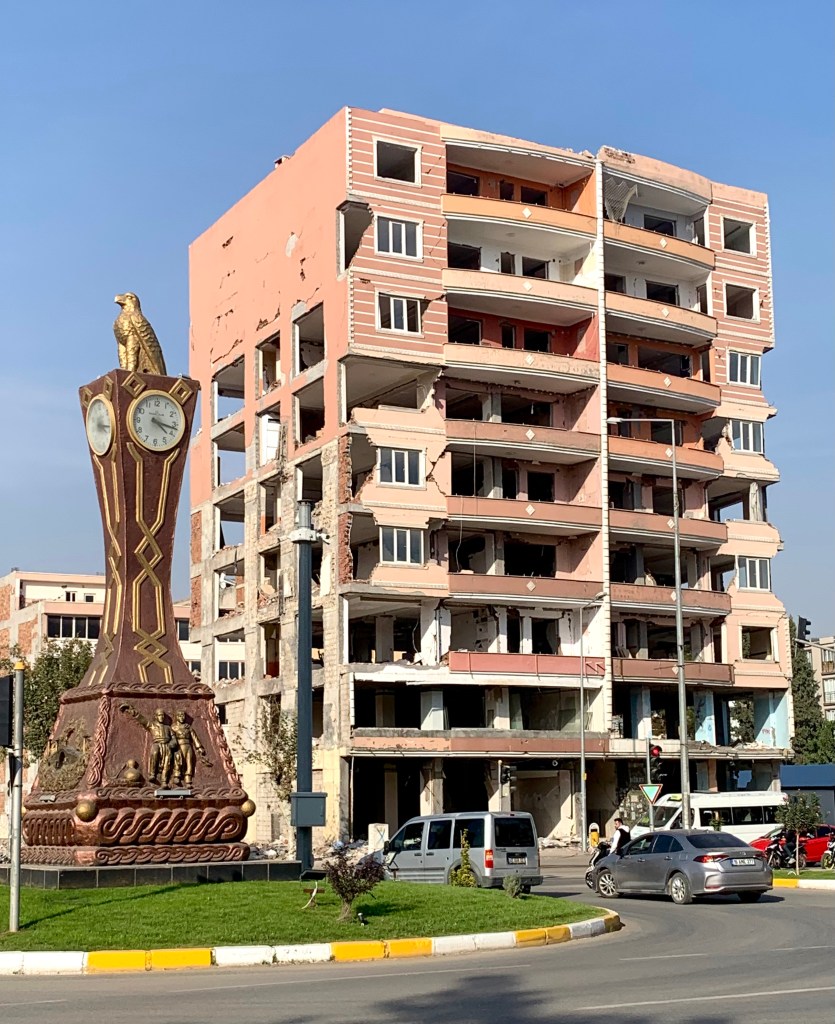
    As we approached Adiyaman, the dolmus slowly emptied and the only passengers left on it when we reached the Adiyaman Otogar were the woman with the two children and me. She was being picked up, and while we were waiting (the children were asleep on the seats), the driver used his Google translate to tell me that the hotel I had booked through Expedia did not exist any more – it had been destroyed by the earthquake in February this year (it struck at 04:17 am, as the Clocktower still shows) .

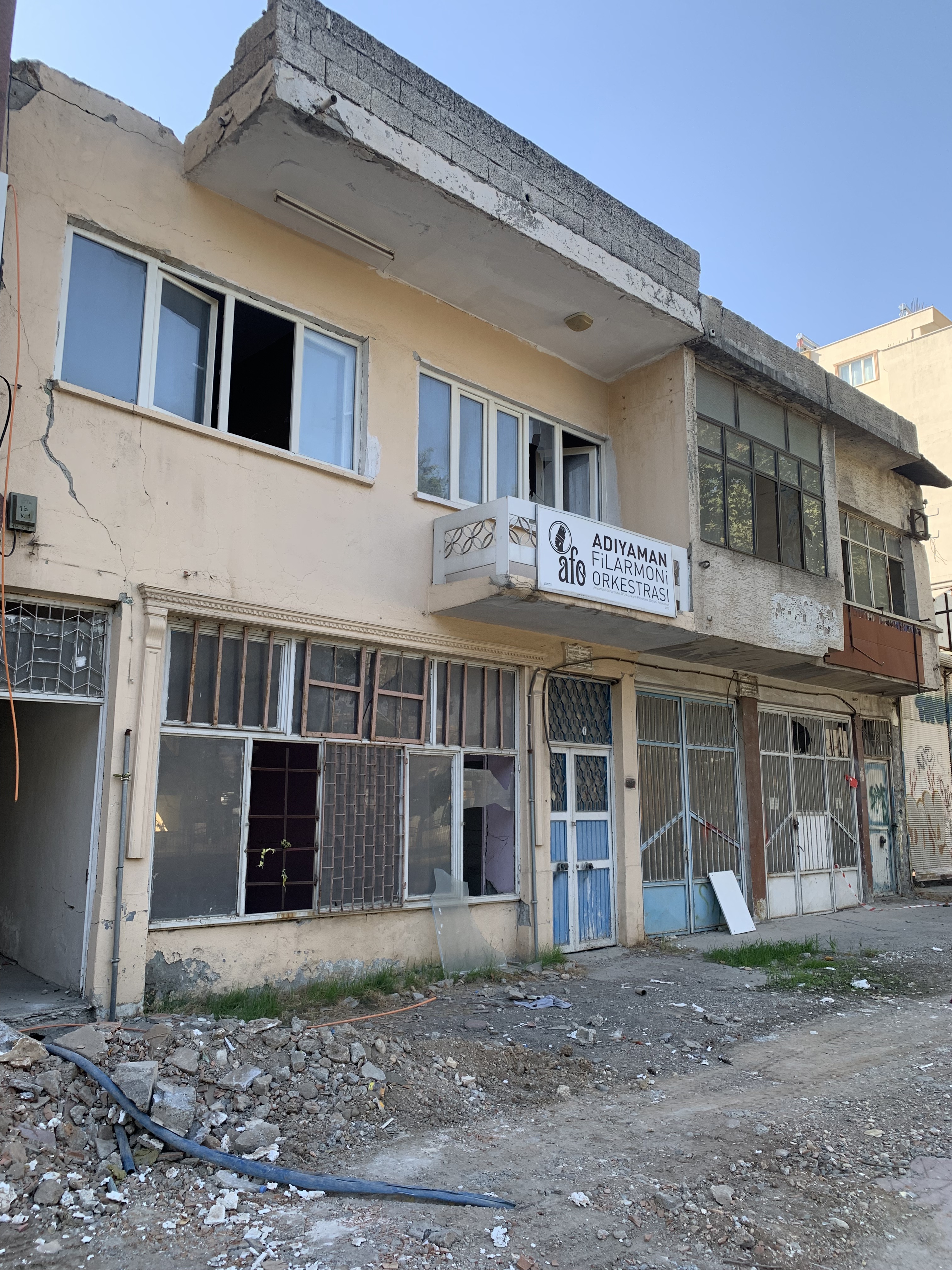
    The Otogar was empty, it was 10:30pm and it all looked a bit desolate – even before I had seen the state of the town in which over 8000 people had died. (The building below was the home of the Adiyaman Phil Orchestra)

    The dolmus driver and his boss (I suppose, no introductions were made) transferred my rucksack and me to a car and drove me to the nearest hotel – the Park Dedeman (which, I think, has Hilton aspirations in their pricing, but has a way to go in service).

    The next morning I needed to get some Turkish lire but the nearest cashpoint wanted to charge 8%. Asked a man who was working nearby where I could find the one I knew didn’t charge such exorbitant amount; he called another man, gave him the car keys and said to take me to the cashpoint I wanted! (It turned out to be a longer trip then intended as the first place we went to had very long queues. But my young driver enjoyed driving the Audi 🙂 so we drove till we found the right one.

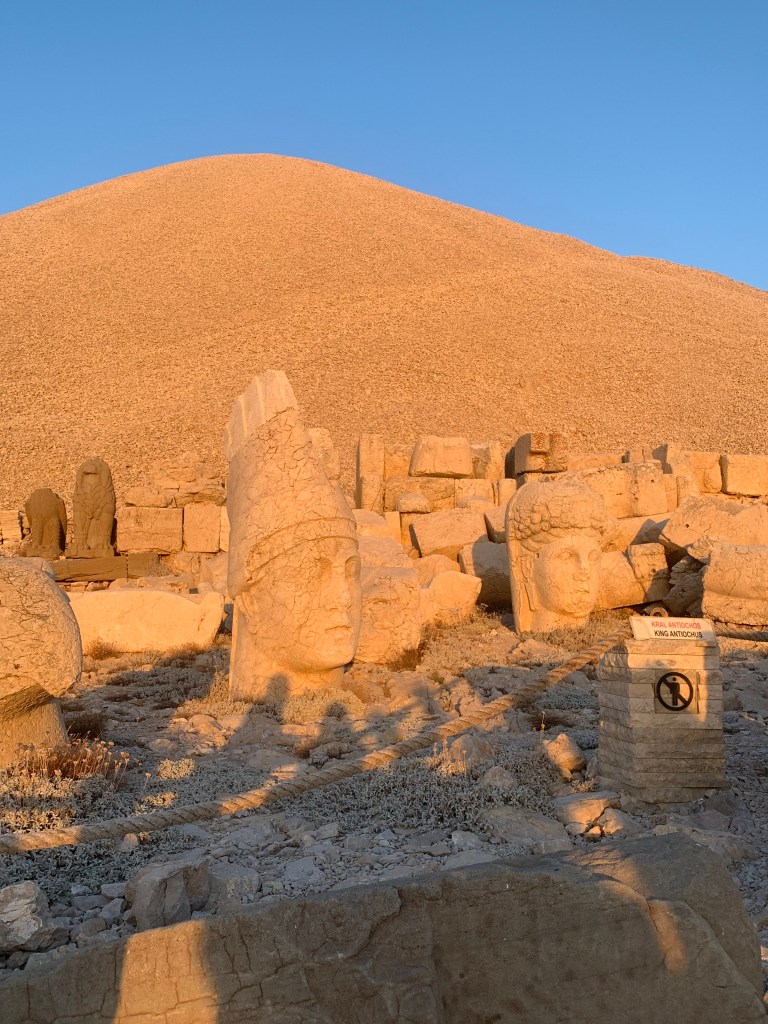
    And all this before I even found out if and when I could get to Nemrut Dagi, my reason for being in Adiyaman (the Nemrut peak is c 70K from here, in the middle of the Taurus mountains).

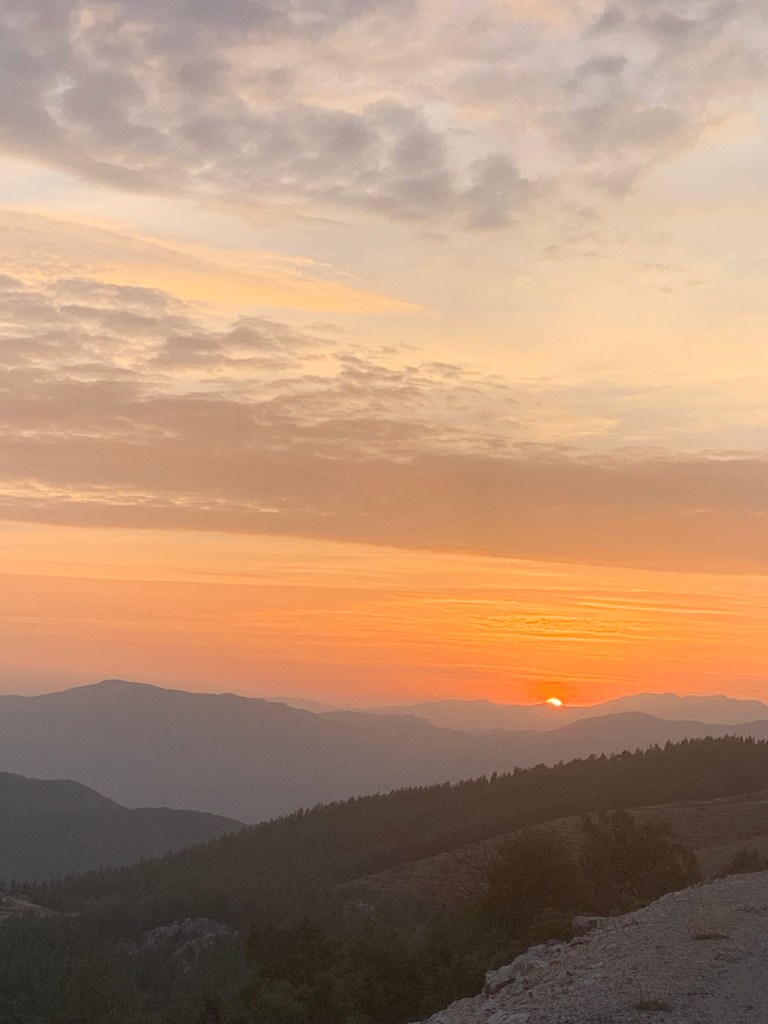
    The first agency I looked for (from my Lonely Planet guide) was not there – another victim of the quake – but I was pointed in the direction of one that existed, VEKA Tours. Arrangements were made for “the sunset tour”, starting at 1 pm. (The other option is “the sunrise one” – which would have meant getting up at 4 am…) A private tour again, but there was other option.

    It turned out I was honoured in that my driver was Vassail, the owner himself. That he spoke as much English as I do Turkish is beside the point. There are 5 places visited on this tour – some Comaggene (such as the Nemrut Dagi), some Roman, but at least two are currently out of bounds as the earthquake made them unsafe.

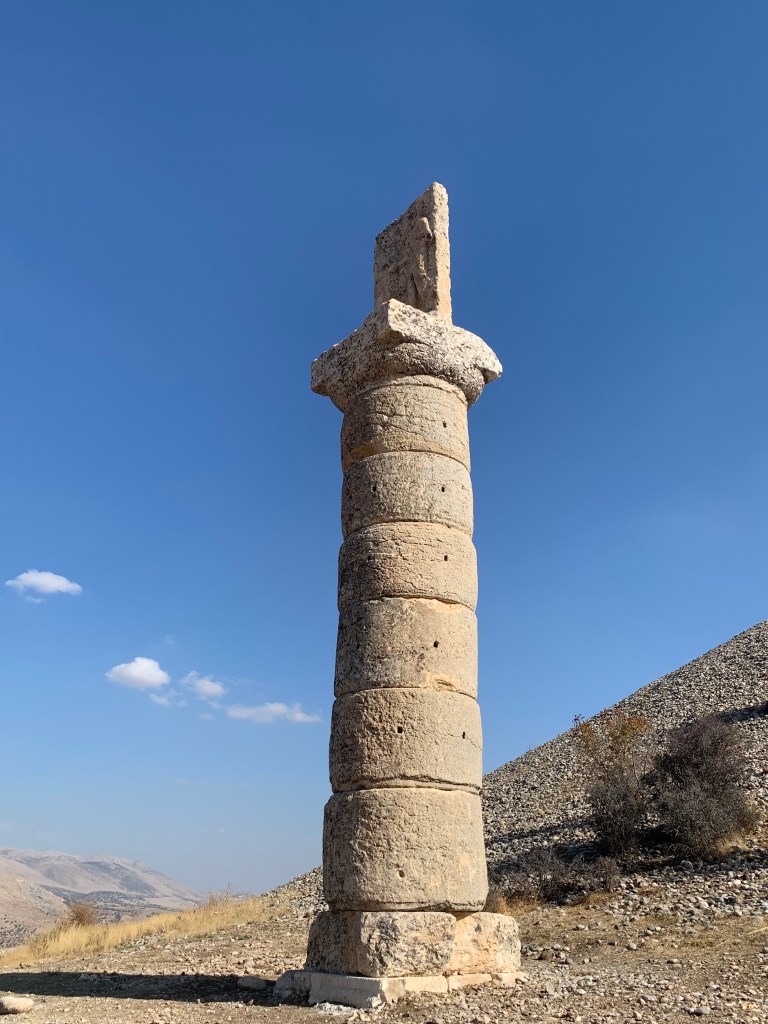
    Karakus tumulus
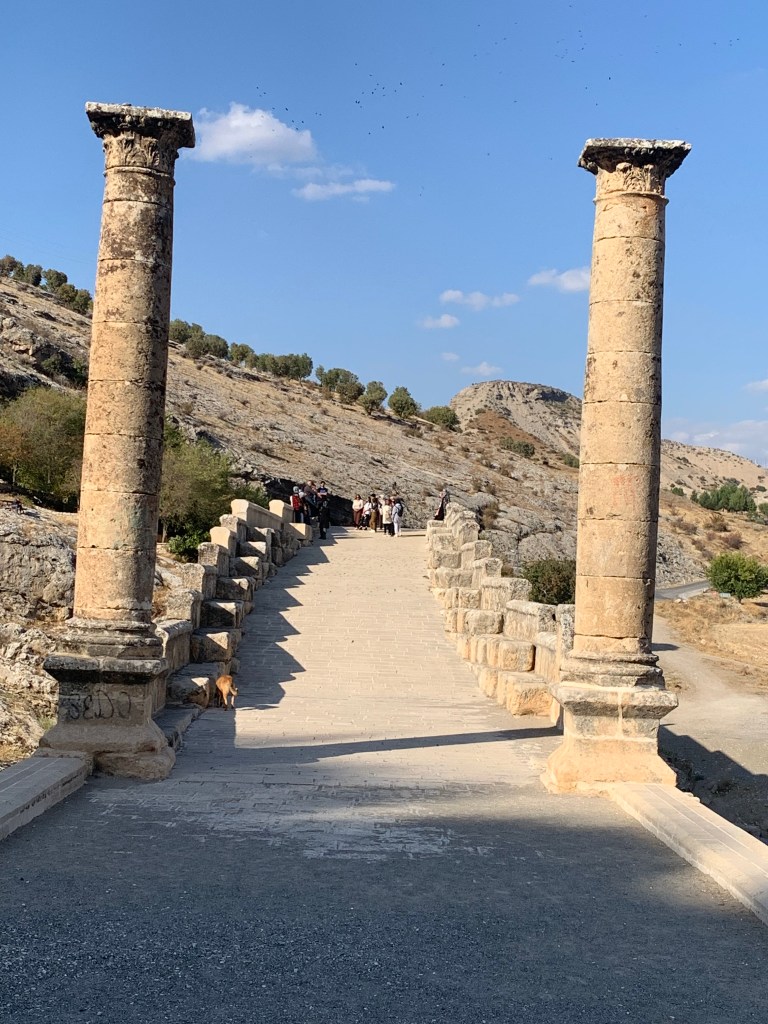
    Roman bridge
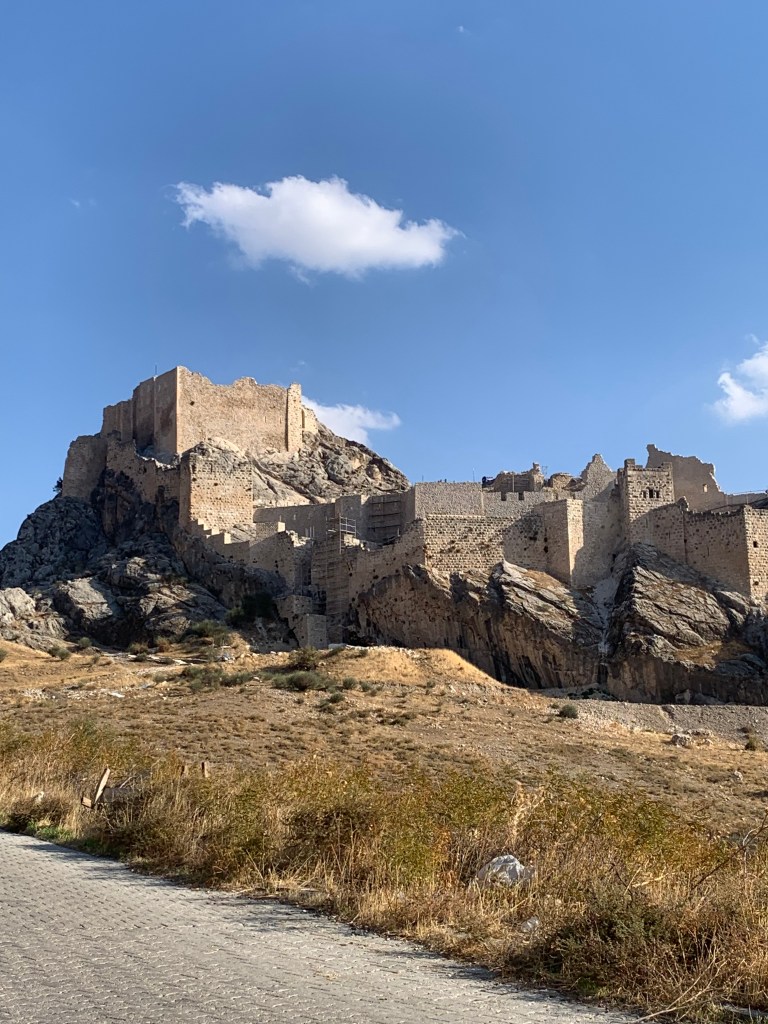
    Enormous fort Karadut

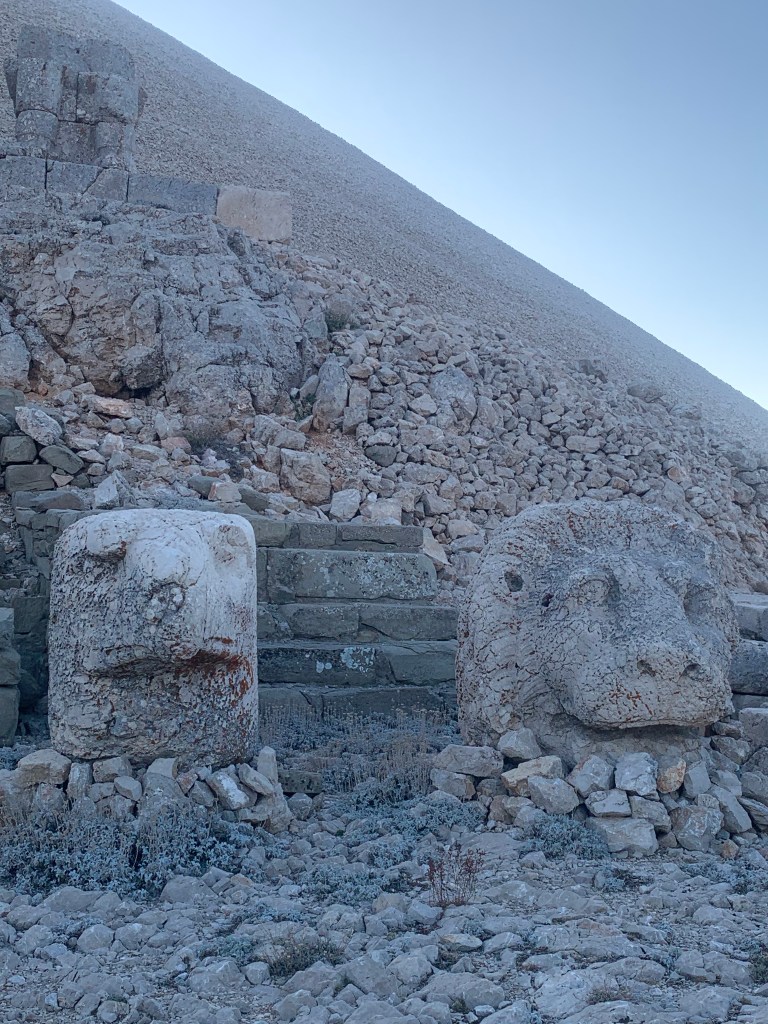
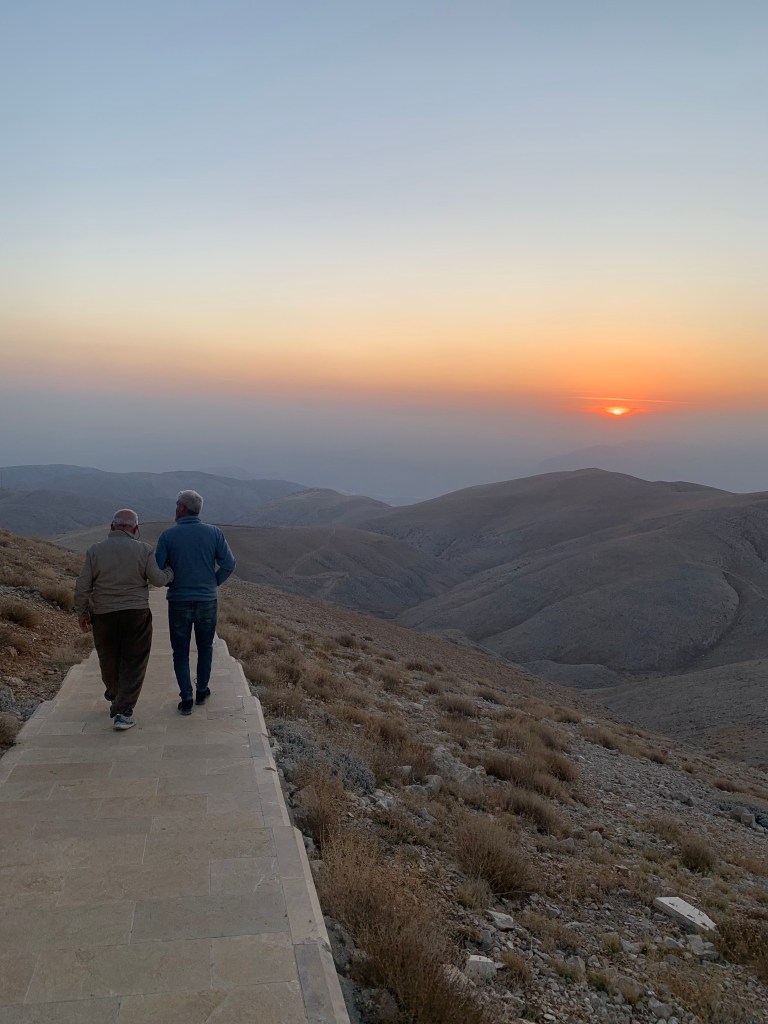
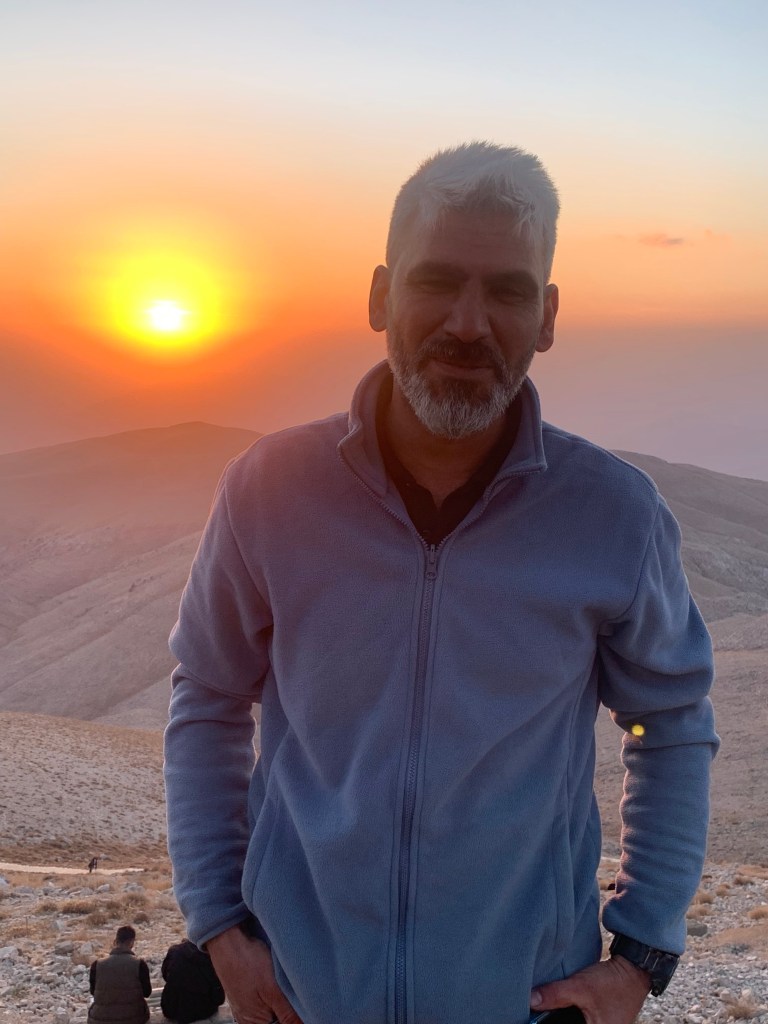
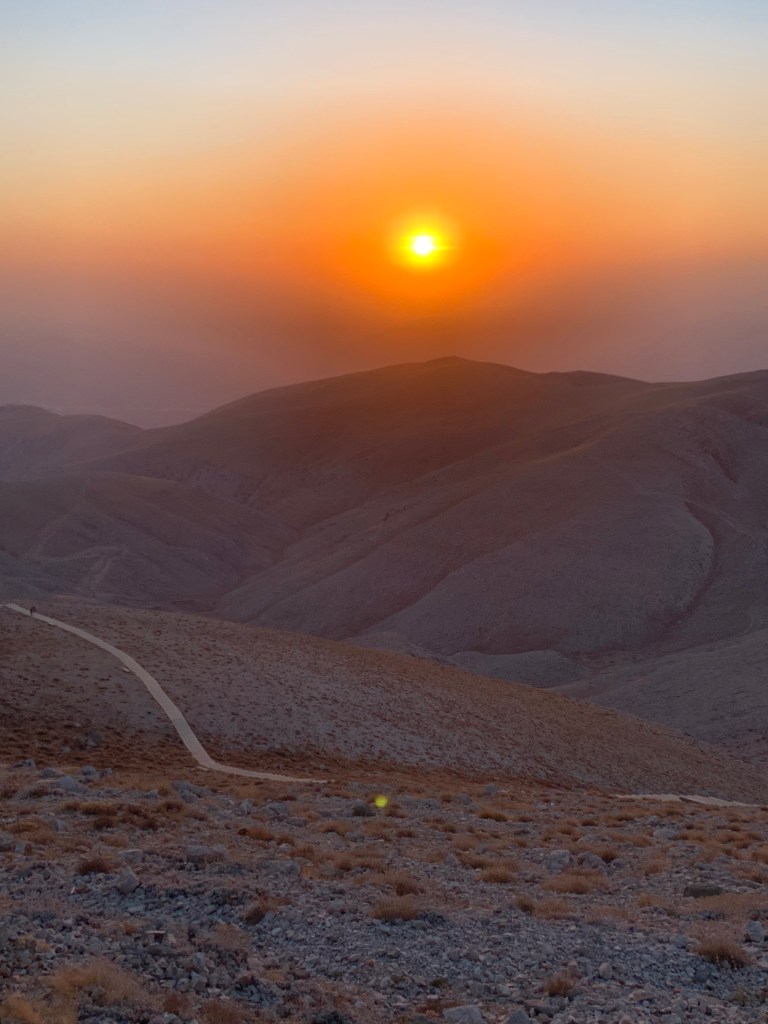
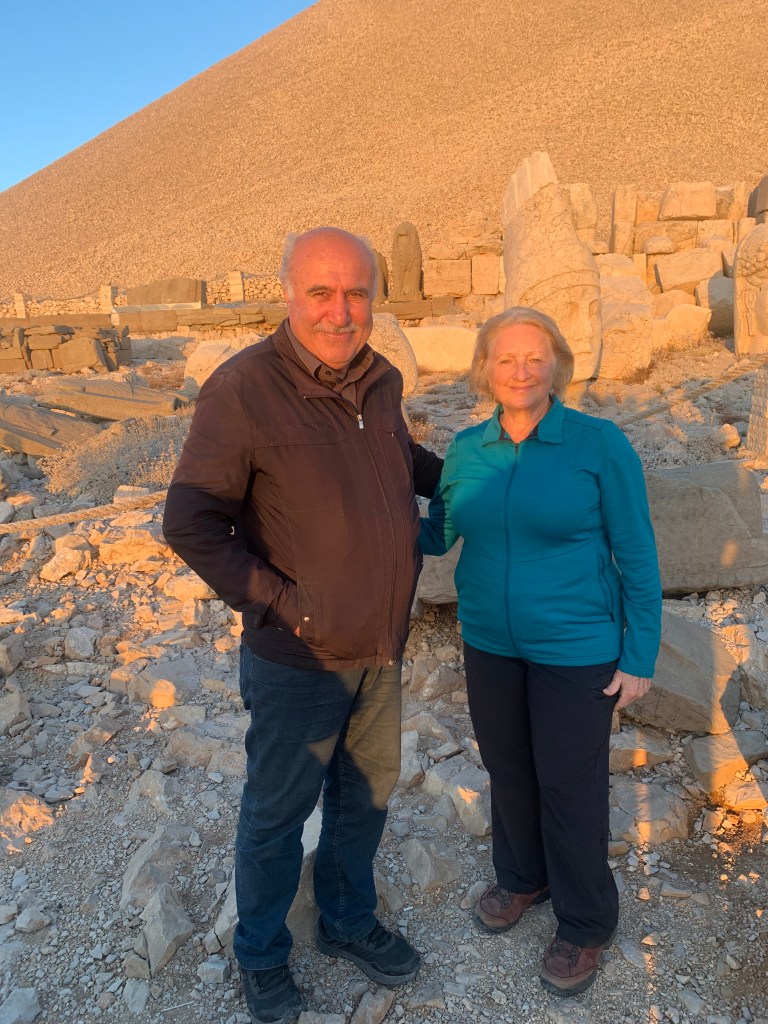
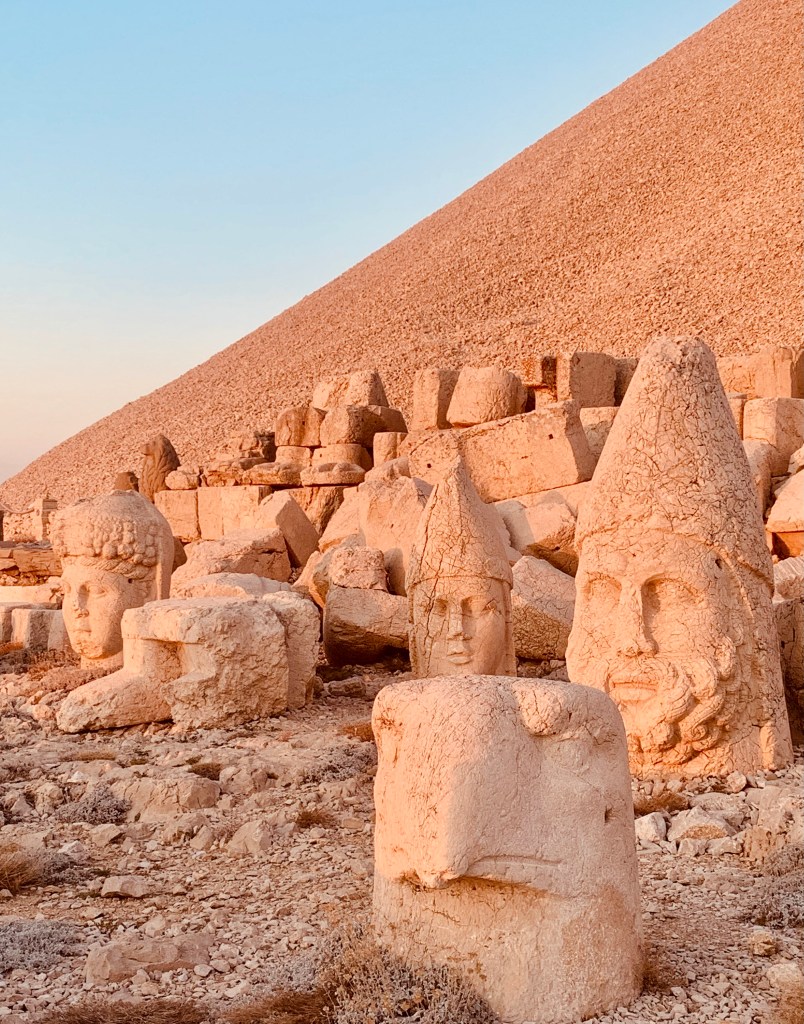
    Vassail produced Yunus (grey hair in the sunset) half way through the trip – Yunus spoke English – who was a good companion for going up the mountain. He lives near one of the sites, Arsameia, which had been the Comaggene and Roaman summer palace, and has shown me some coins he occasionally finds (and sells – he said it was legal as long as they are not gold or precious stones). Yunus’s knowledge of Nemrut and King Antiochs’s reign was minimal, but, serendipitously, a friend of Yunus’s, the former Adiyaman Minister for Tourism and a history professor with some students was also visiting (we were playing catch up over the 5 sites) and Yunus introduced us – Mustafa willingly explained the site and the history in good English.

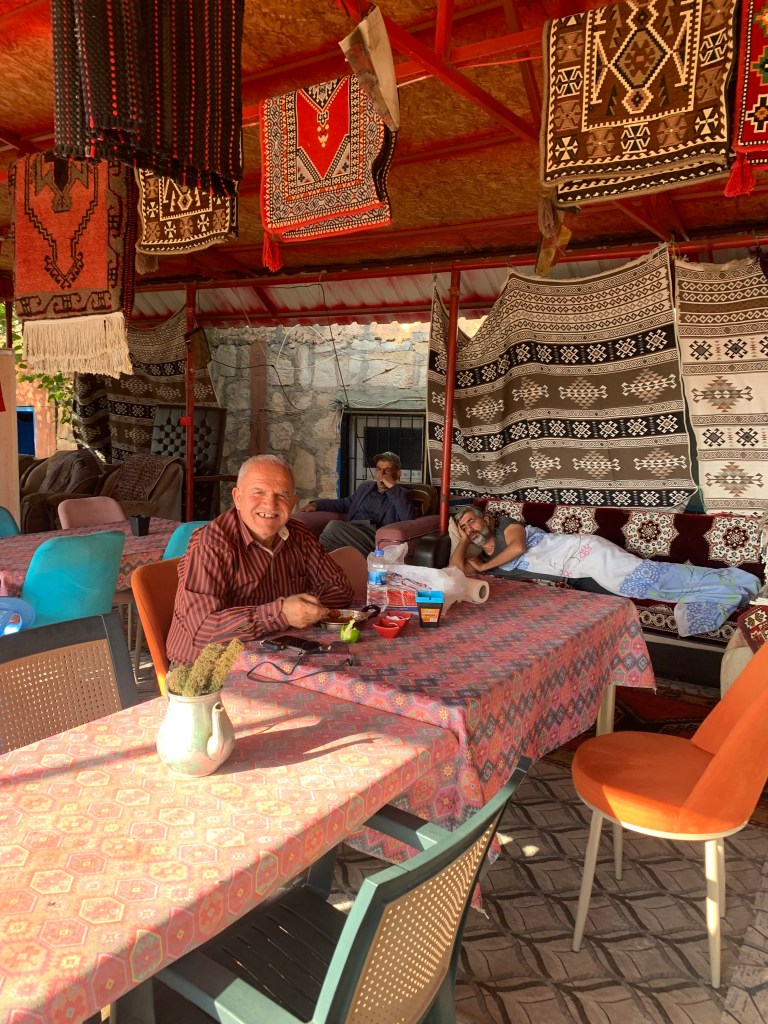
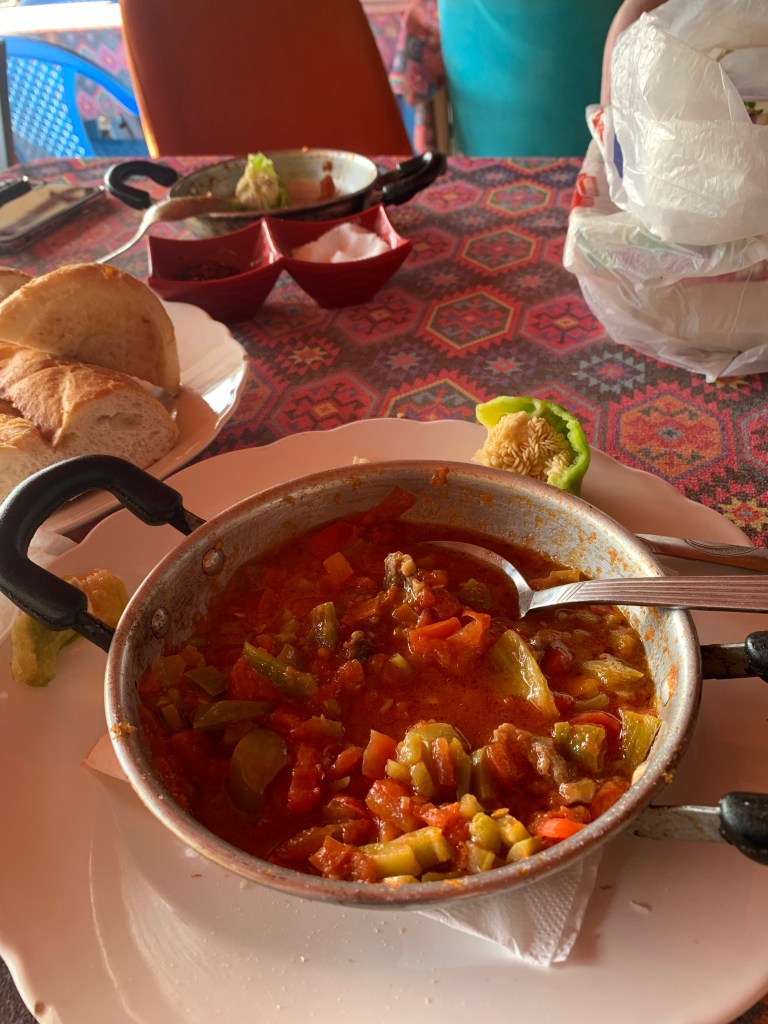
    Vassail and I had a very nice home cooked lunch by the enormous fort/castle: gjuvech (meat and veg stew) followed by freshly picked figs from the tree in the back. No wine though…

    Vassail at lunch, locals resting in the back
    Gjuvech
    Yunus
  • Whirling through middle Turkey

    Nov 11th, 2023

    The bus from Egerdir to Konya on Friday 3/11 at 0645 never turned up, with no explanation or warning. Having got up even before the first call to prayers, was not amused. Thank goodness for the kindness of strangers: a passenger waiting for a different bus phoned the company I had a ticket for, and over a 10 minutes conversation, I was rebooked on an afternoon coach. It was nice by the lake, but after 8 hours I was glad to get going. It was good to have the company of Dominika, and Hamish, a newly arrived Australian who was going to do volunteering through the Workaway scheme (in exchange for bed and board). Dominika also told me about CoachSurfing, which sounds interesting, but probably not for a single person.

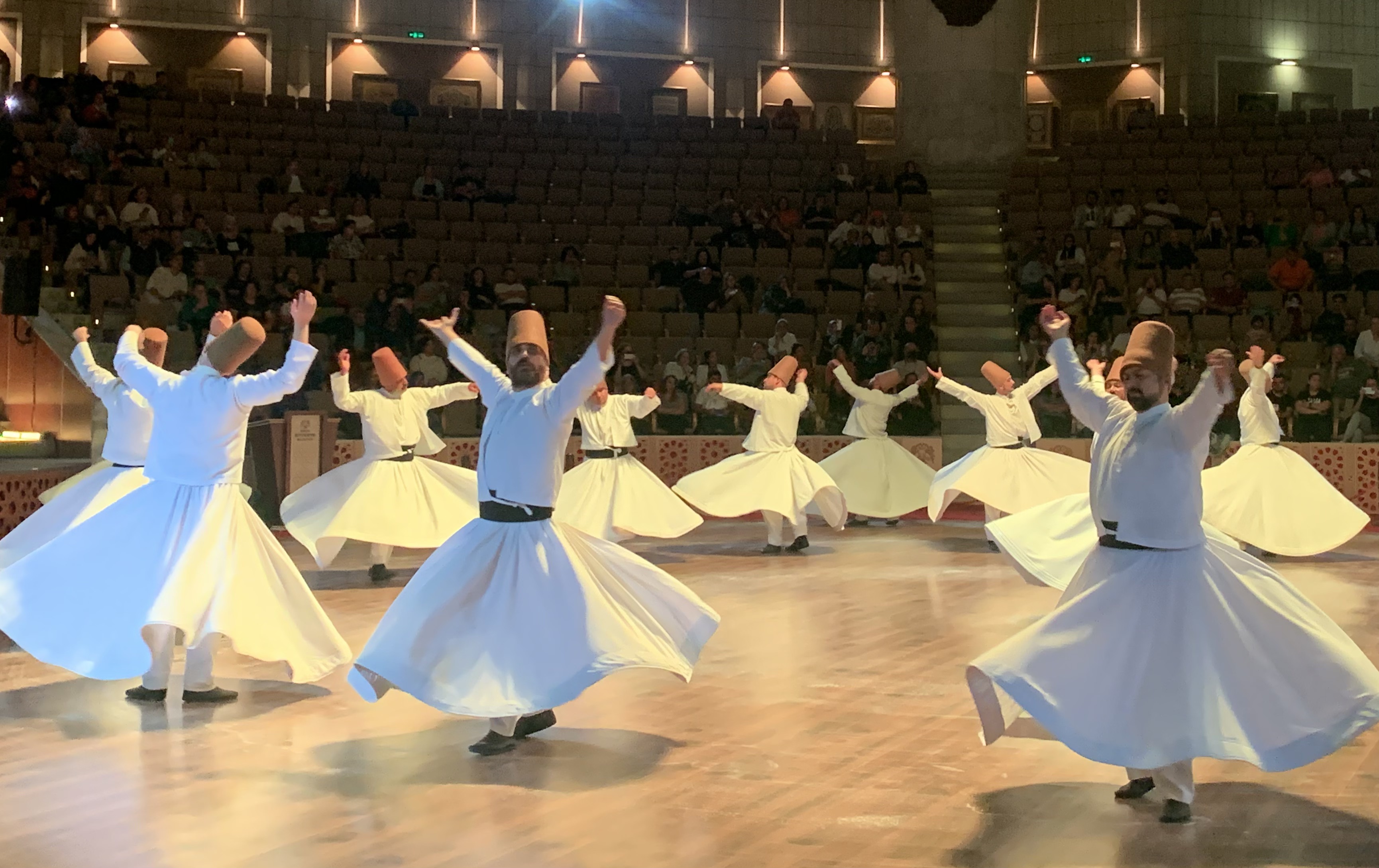
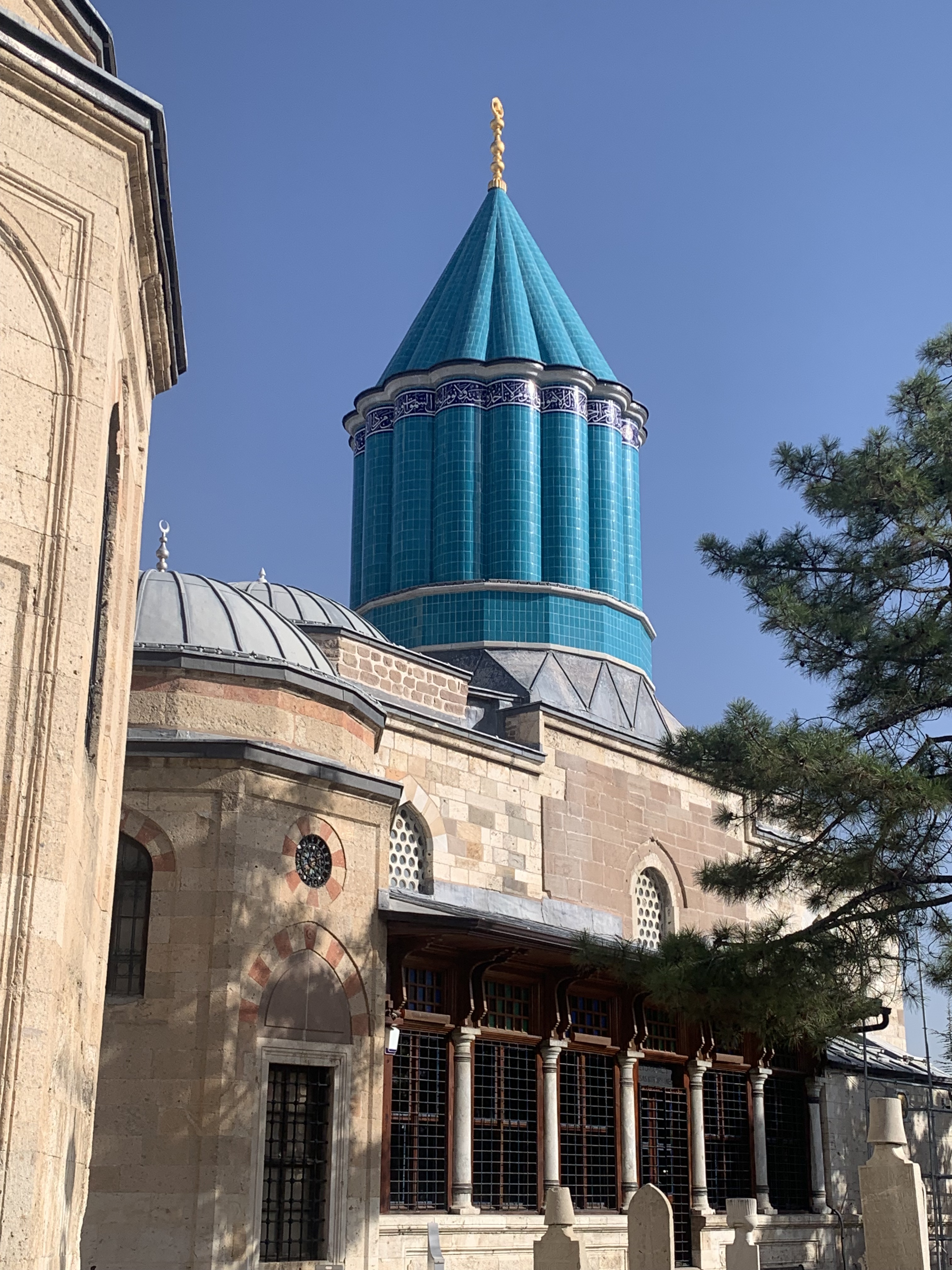
    The Dervish Whirling happens on Saturday evening, and my hotel, the Konya Dervish Otel was within walking distance. It was an oasis (tucked away at the back of the Mevlana Museum and the mosque, but currently surrounded by rubble car parks and wasteland), and Momir the manager most welcoming, offering guidance, advice and recommendations as required. The tomb of Rumi is the place of pilgrimage for many – not only Muslim believers. Rumi/Mevlana was the highly regarded 13 ct poet, scholar, Sufi mystic and the man who “is responsible” for the dervish whirling as a path to enlightenment/union with god. (Konya also has a large (Magnum) ice cream factory, as our friend Julien informed me. 🙂

    The dervish whirling was performed (?) in their own Centre – a large, covered amphitheatre (there is also an open one next to it: makes one wonder what future generations will make of that). The music is eerie, the ceremony slow and solemn. And the whirling is mesmerising.

    The road from Konya to Capadoccia (“The Land of Beautiful Horses”, as every guide will tell you) goes through a flat, open valley, dry and dusty and exceedingly boring. This makes the geological wonder of the Capadoccia region even more wondrous, appealing and spectacular.

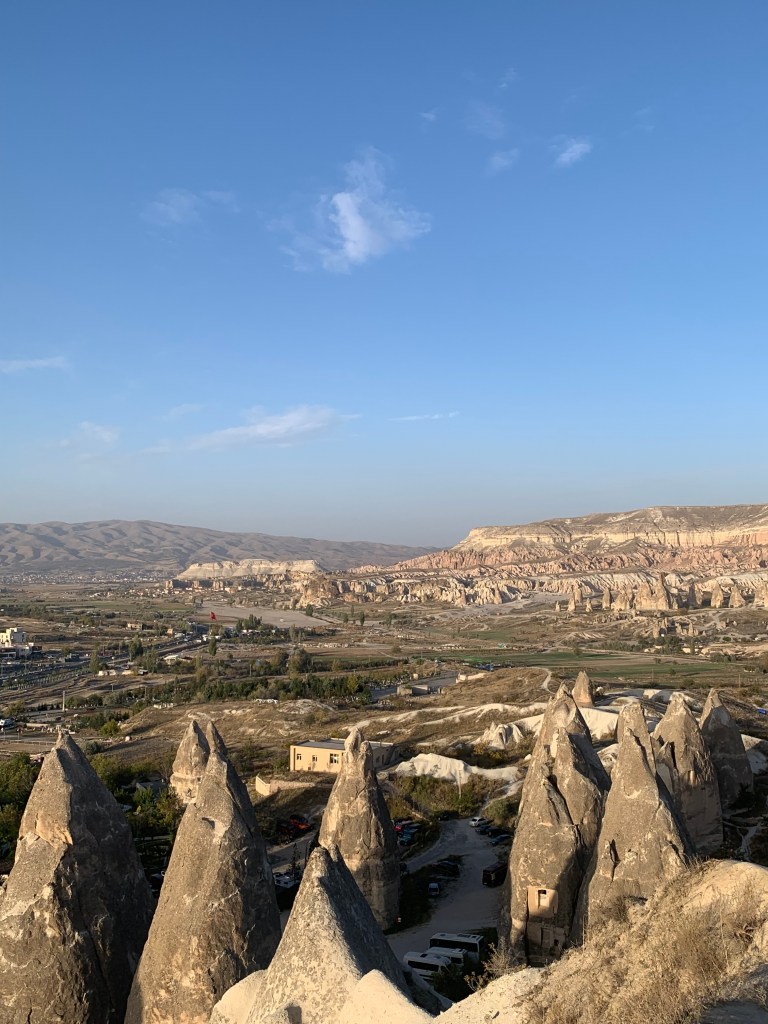
    Took a couple of tours around the area as sites are scattered and one needs a vehicle: there have been homes and churches in the “fairy chimneys” for centuries; there are a number of underground cities in this porous tufa rock – one had 12 floors, of which 8 are still accessible (and we visited) – the bottom 4 have collapsed. The ingenious way the builders devised for providing air (sort of chimneys), the deep water wells (some going down 60m and more), the stables, graves, meeting areas, and a warren of anthill-like tunnels makes you realise how inventive and capable the inhabitants were. The underground cities were used to hide in from invaders or persecution and people sometimes spent months in them.

    The balloon ride over Capadoccia is a must. The price fluctuates with demand – an hour in the air can be anything from €70-€400. (I arrived on Sunday; the Monday flights were cancelled “because of wind” – though, come Monday morning, none was felt on the ground, so it must have been higher up. The price went up for the Tuesday flights:)). And I could hear the woosh of the balloons filling from around 05:30 in the morning (not sure but it takes at least an hour?), though the nearest take off area was some 200-300 meters away.

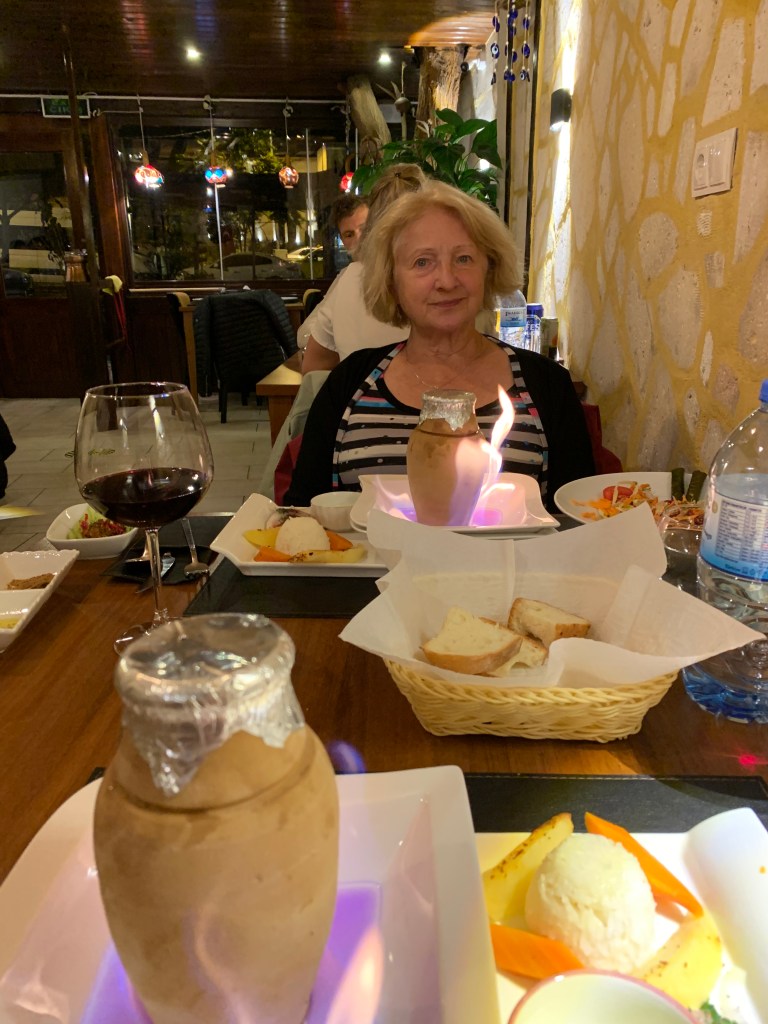
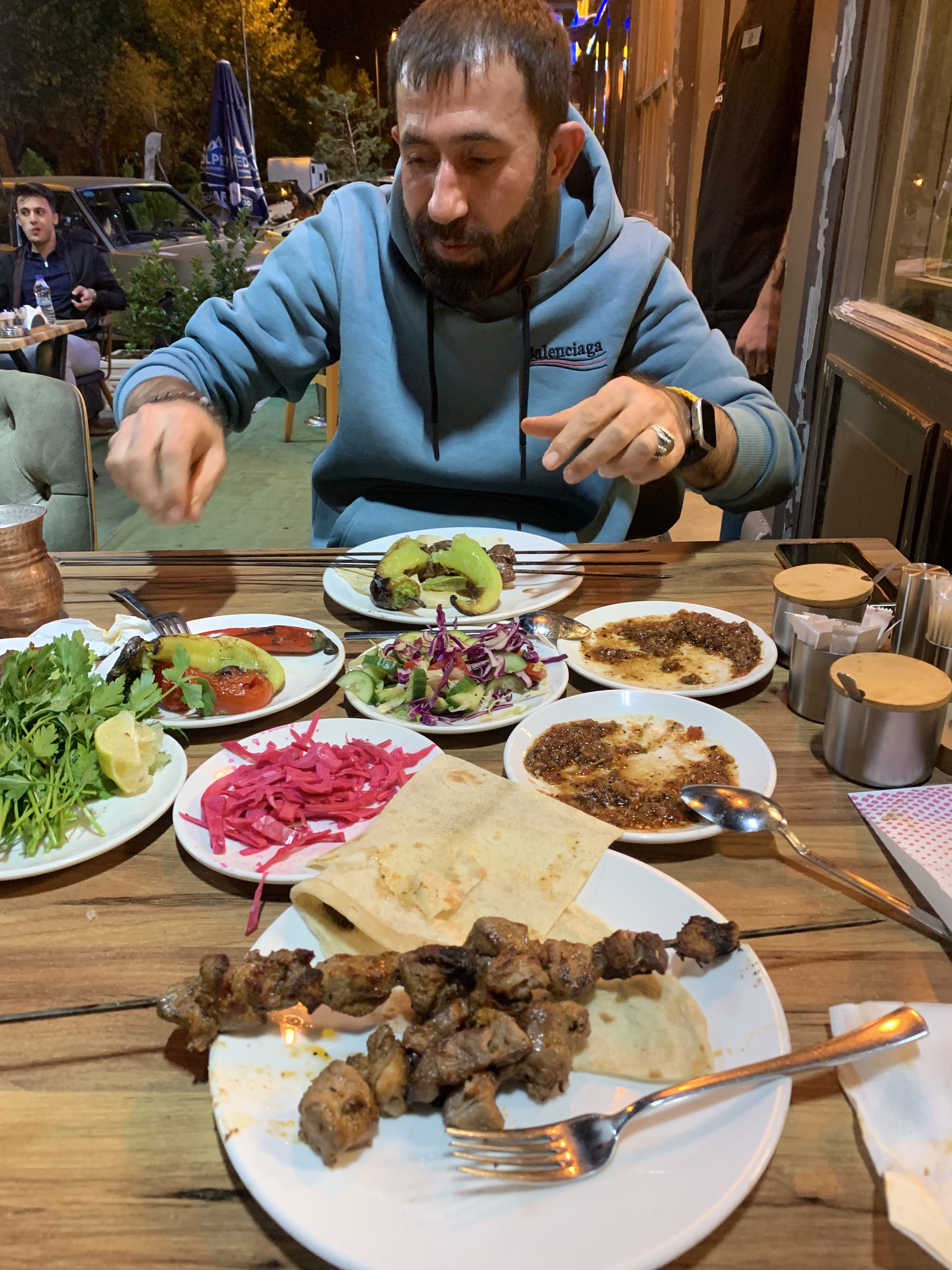
    Ah, the food: it does not look likely that one could lose weight easily here. The breads are delightful, the meat, vegetables, fruits and nuts plentiful, the spices exotic and fragrant, the presentation pleasing to the eye and sometimes amusing (such as having a light show and a bit of techno to accompany a flaming potted kebab).

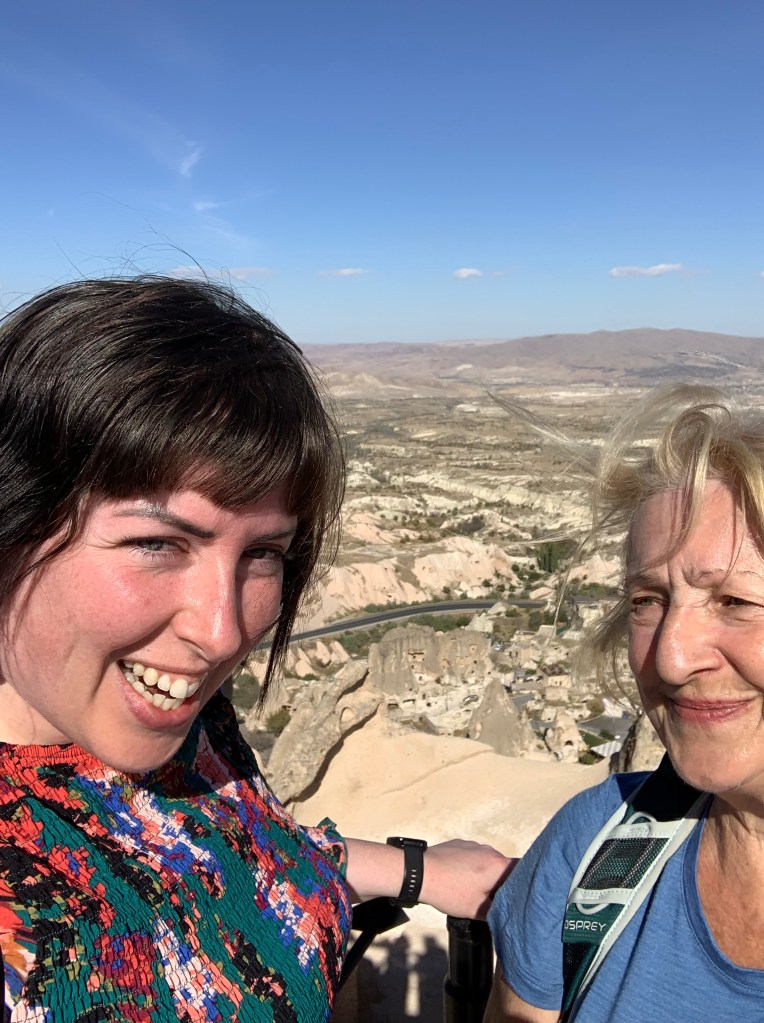
    Met Nicky from Sligo on one of the tours. She is on a couple of weeks’ holiday, moving to Antalya and on to Istanbul as I am moving east. She was a great companion and it was lovely to share Capadoccia with her. We walked the Pigeon Valley (lots of small pigeon holes made in the chimneys to encourage pigeons – the locals used the eggs for food and the manure for the fields) up to the Uchisar castle – super views.

    We ate well and enjoyed local sharap (wine), especially with the potted kebab – served with panache and showmanship. (It is full of flavour as the meat and veg cook in their own juices). After that there’s no room for baklava… but the ice cream is very nice too, with a much firmer consistency than usual because they use a percentage (17%? someone said) of goat’s milk in making it.

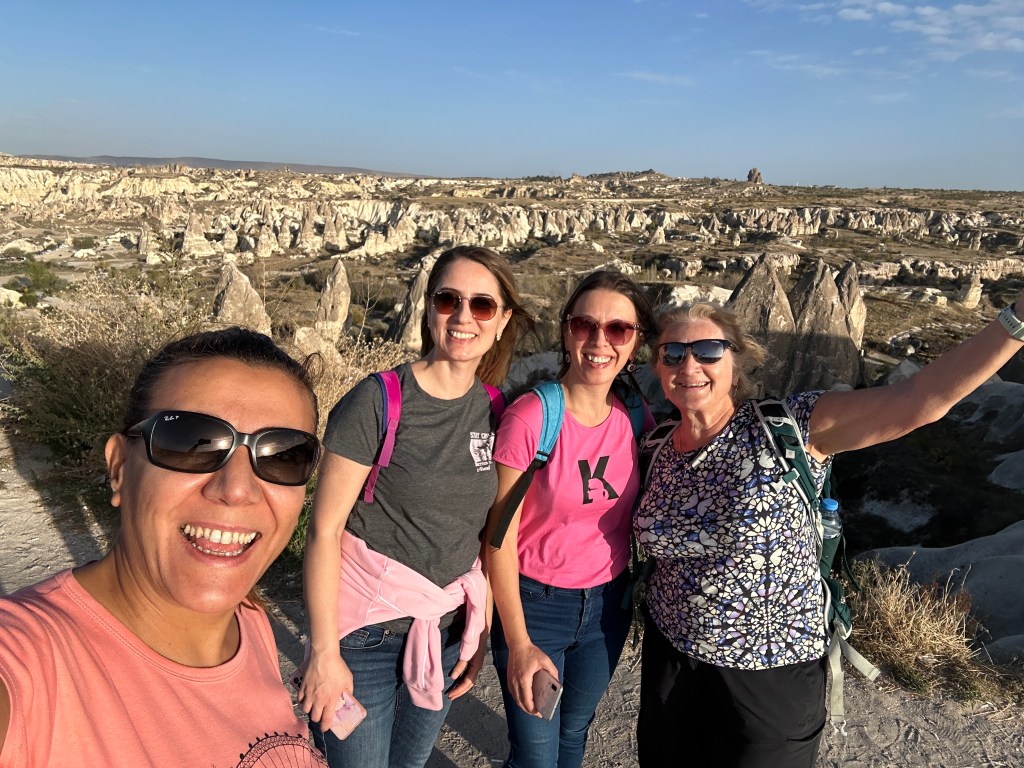
    Must not forget the 3 lovely women I met on the first day in Goreme (main Capadoccia village: 2000 inhabitants and 300 hotels…). They were on a day trip from Nevshehir, local school English teachers, and we had a great afternoon walking and talking.

  • The Lake District

    Nov 3rd, 2023

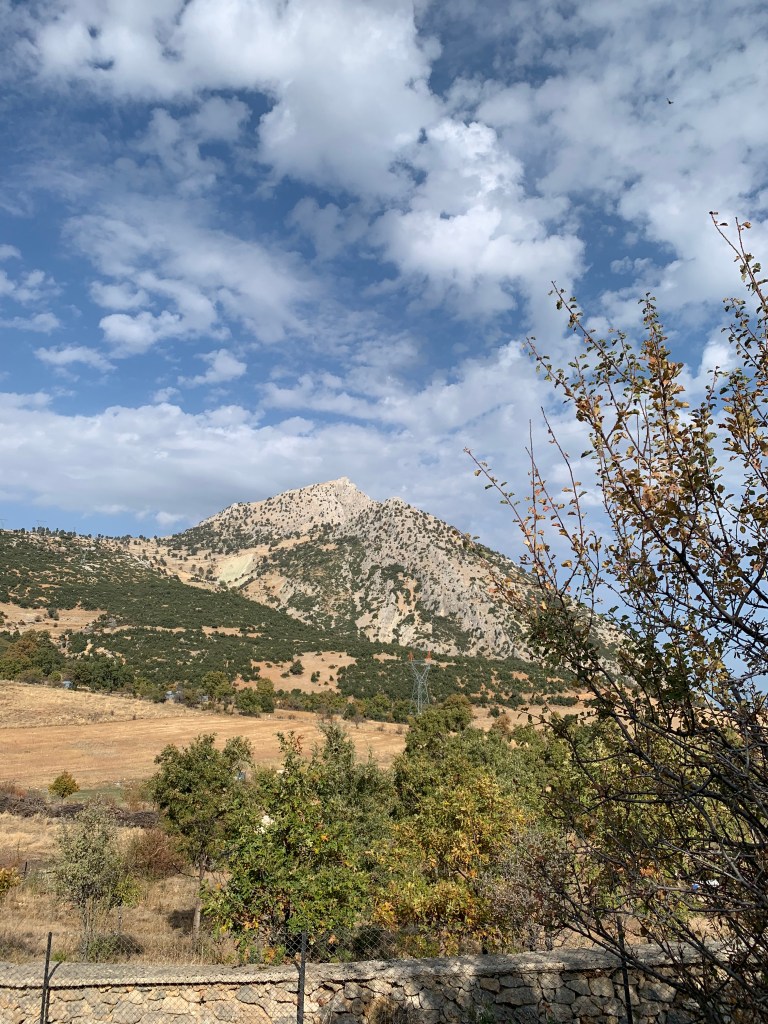
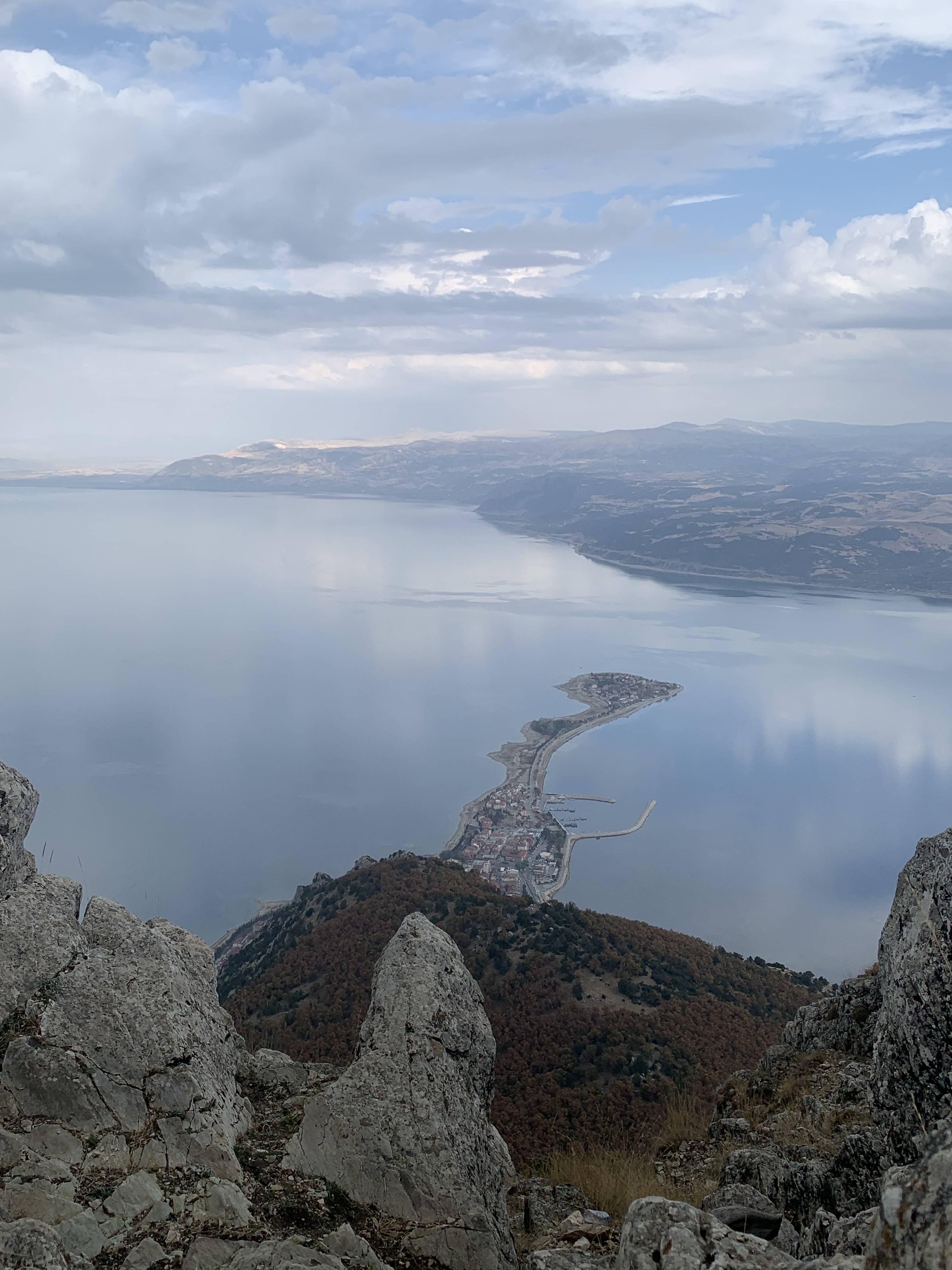
    I got to Egirdir on the 30th of October. It is a lovely spot in the Taurus mountains at an altitude of 930m (3000ft): the scenery is breathtaking, the lake wide and (not only in November) cold.

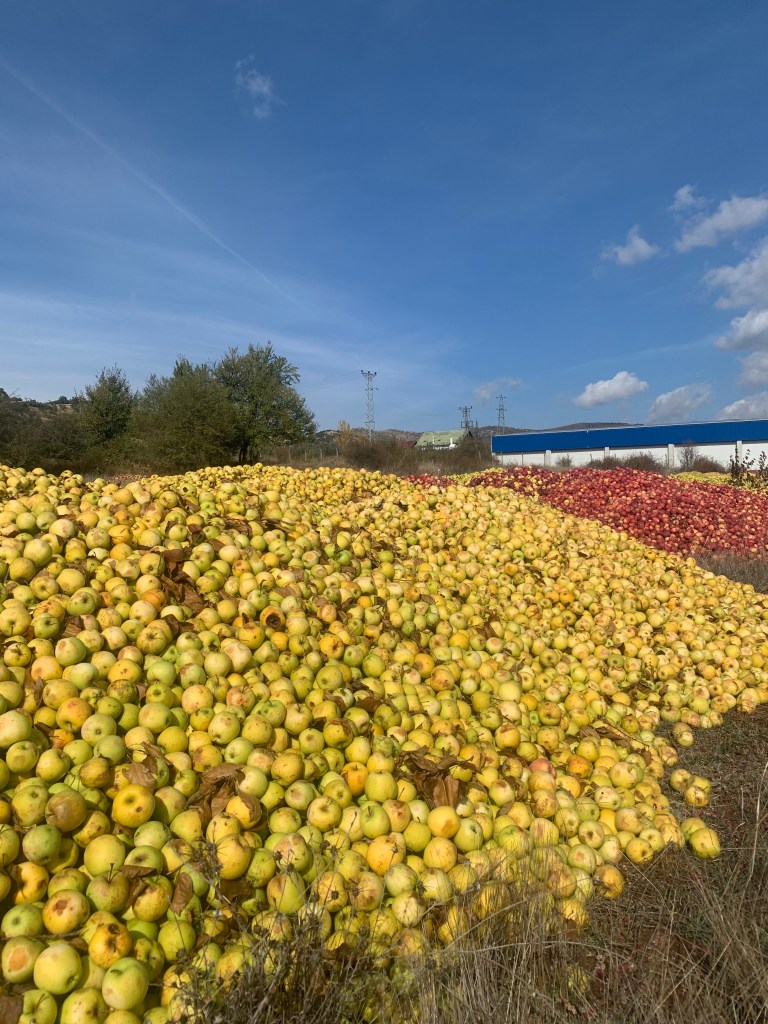
    The one hike I did, to the top of The Needle, was challenging – and rewarding. Stunning views, despite the rain and the wind. A bit of a slide coming down the steep screes, where walking poles would have been very welcome. Hired a taxi (no car rental in town) the next day and enjoyed visiting the Zidan Cave (there is, of course, a Hellenistic dwelling in front, and a Roman bridge nearby) and the Yazili canyon. It was a real pleasure to have Dominika, a 21 year old Cambridge Classics graduate, as a companion. And, of course, Jenghis (“like Khan”) the taxi driver, a local man, a bit of a maverick who’s been places and who spoke English. The haggling settled the cost of the trip at 2350TL – c £80, and though it’s a fortune in Turkey (the monthly mortgage is c 3000) I thought it worth it. Jenghis stopped whenever we wanted to take a photo (such as of mounds of apples along the road, waiting to be processed into juice or freeze dried… this is THE apple province and the scent of apples is everywhere.

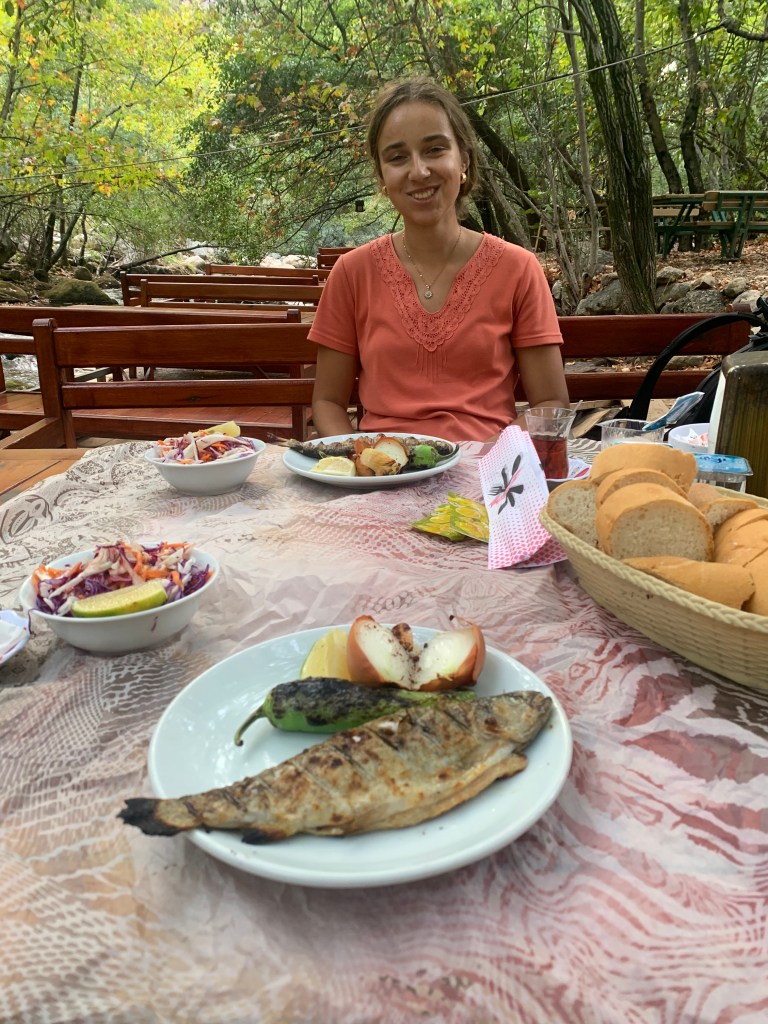
    He persuaded us to have the freshly caught trout for lunch after our canyon walk, and it was delightful. Especially as we had it at the table set on the river, with water murmuring underneath. (This did not deter the cats; they are well versed in how to get whatever is left of the fish.)

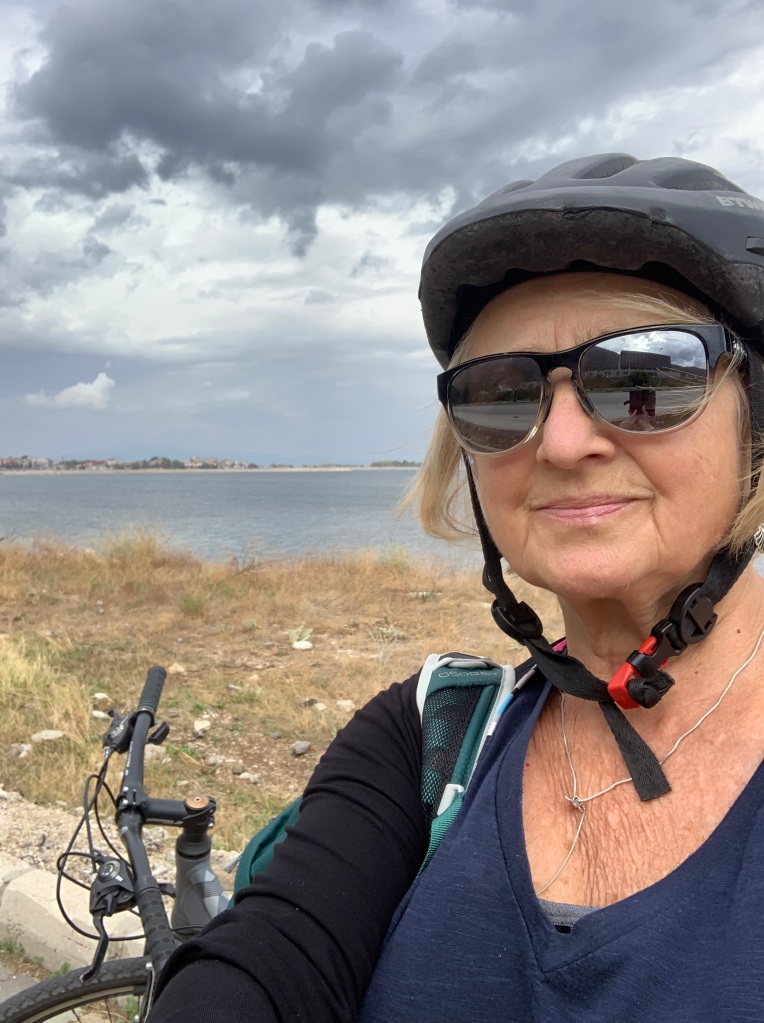
    I took a bike ride around part of the lake (where there are bike paths – the main roads are a bit chaotic and feel unsafe for a lonely cyclist (even with a helmet on – a rare sight); a lot of beeping goes on. Late autumn is probably not the best time to come here: the visitors are few and far between, which means all sightseeing is costlier as not shared. But, and it is a big but: it is beautiful and very picturesque. I hear the wind soughing down the steep mountain slopes to the water as I write. And the autumn colours are putting an impressionistic palette on everything.

    Most hotels are shuttered now, the locals (some 16000) are selling/buying fruit and vegetables to pickle and preserve for winter. The olives, apples, nuts, spices, beans, pomegranates, aubergines, gherkins, okra, potatoes, peppers, all waiting for buyers. And there are nice, large, shiny pots, just waiting to be used.

  • Deeper into Turkey

    Oct 30th, 2023

    The train journey from Seljuk presented a nice learning curve:

    If you buy the ticket from the station ticket office, you don’t get a reservation – that is only available for online purchases (don’t think the price varies much – and it is definitely the cheapest form of traveling long distance in Turkey. I just couldn’t get onto the website -wifi issues.) So you will be in unassigned seat coaches (in my case, coaches 1 and 4, (1-4 written on the ticket – you interpret it differently at your peril).

    When the door of the train opened, and I was right by it, waiting for the passengers to alight, several homely looking grannies in scarves and voluminous skirts barged past me (and the descending passengers) and scrambled up, salmon running upstream – and with an amazing alacrity shifted to “coach 1 (or 4)”. When I eventually settled in in coach 2 or 3 (which are 90% empty), all was well… until a conductor arrived.

    The conductor did not speak a word of English but clearly, if amiably and patiently, insisted me and my chattels move to 1-4. At that point I had no idea why.

    Google translate (…and several Turks using it) helped an Australian couple and me understand the need for relocation (officially; in reality, there was no need for it – the coaches 2-3 remained mostly empty throughout the train’s milk run.

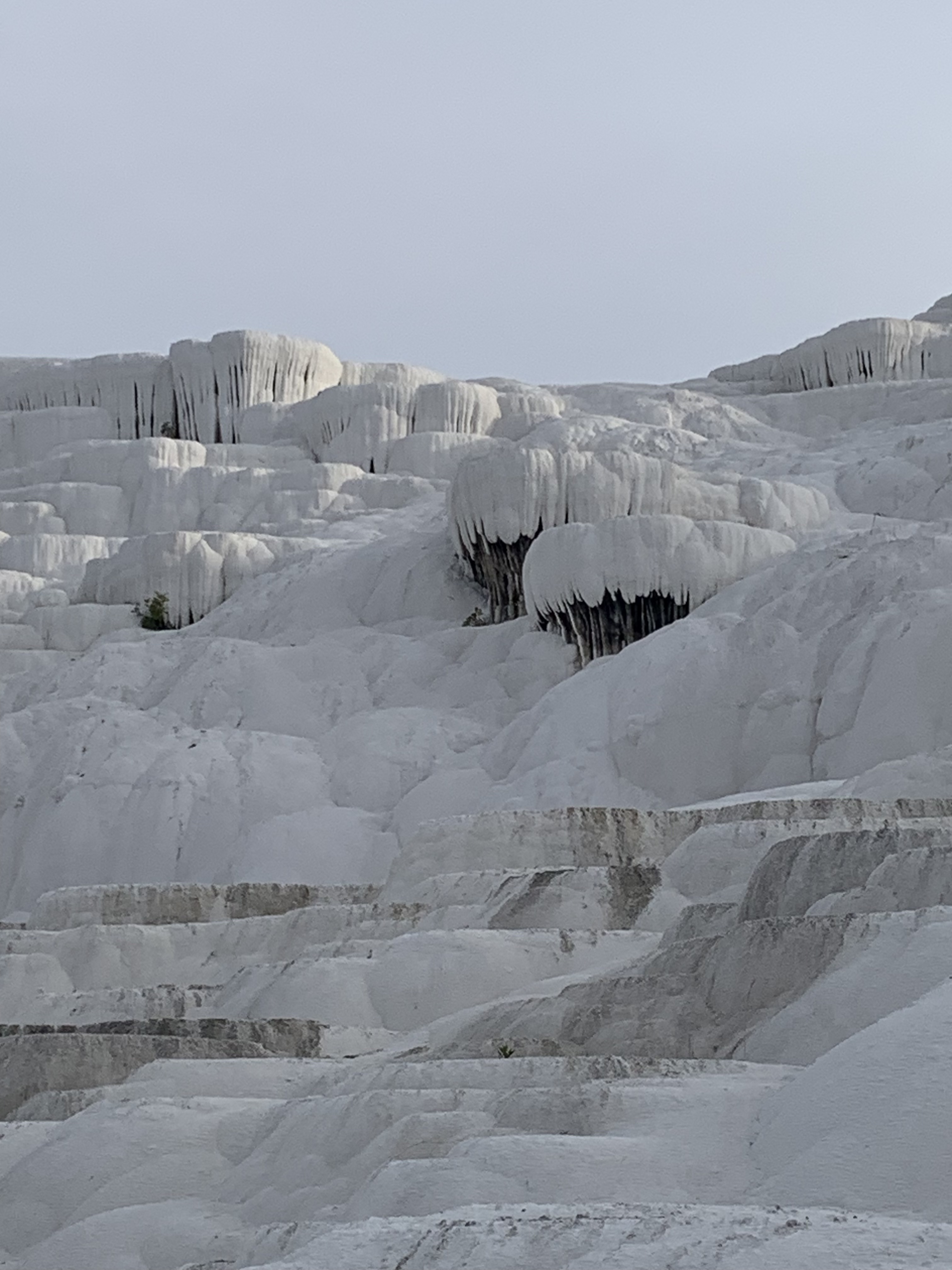
    Must say, did not think much of the White Slopes at first, but!

    There was a small misunderstanding (my landlady’s English and my meagre Turkish missed each other on how best to approach the Pamukkale/Hieropolis site by walking. Suffice it to say, I ended up taking a beeline type of shortcut (up the side of the travertines) to what I thought would be the North Gate; it wasn’t, but I bypassed the ticket booth…

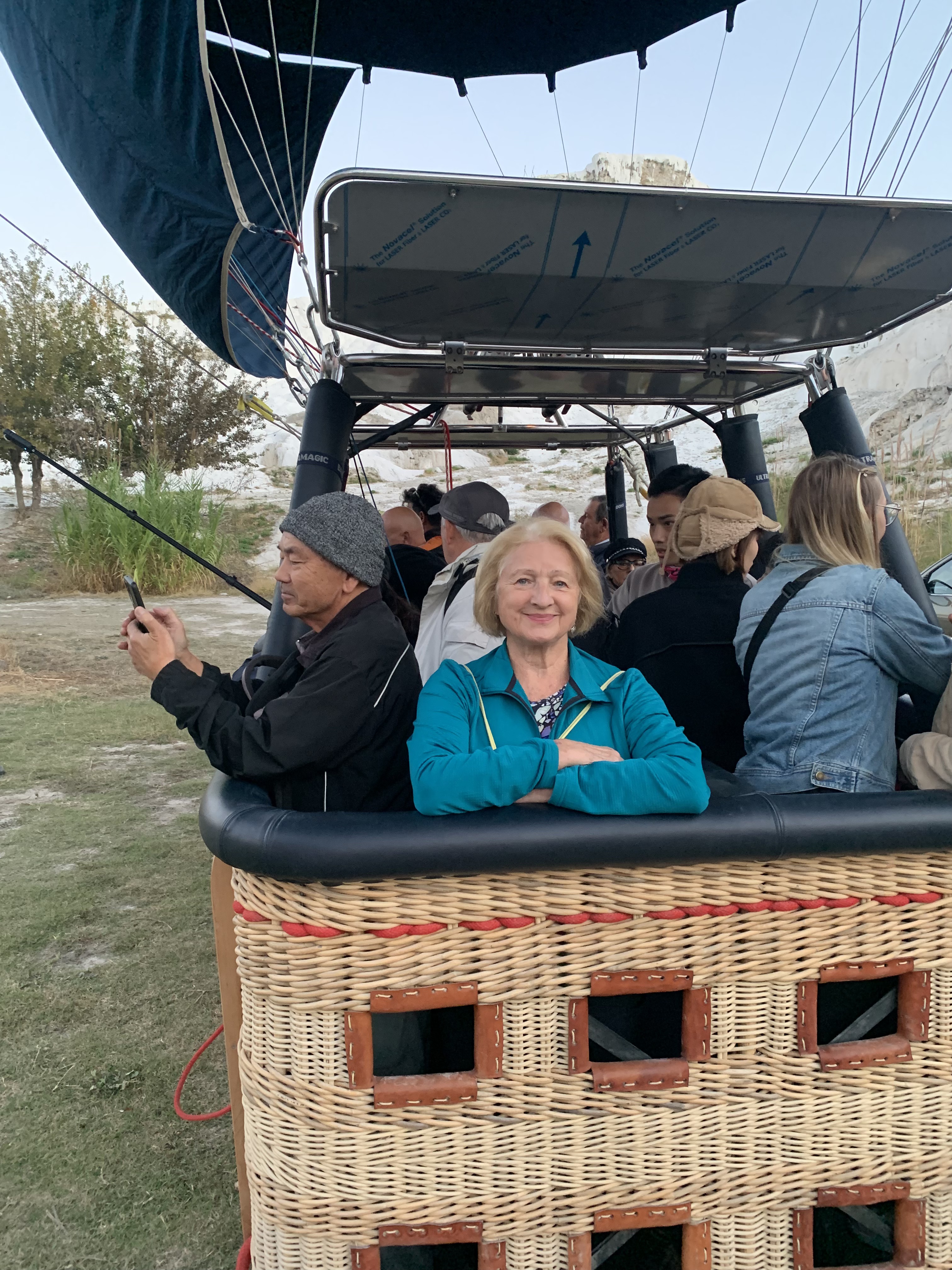
    The baloon flight was interesting, if not breathtaking – Pamukkale learnt from Capadoccia to offer it – there are now a number of companies doing it. I liked that we had a female pilot. A bit disappointing we did not go over the ancient city of Hieropolis, but that could have been for various reasons – the air currents, or government regs.

    I chose to go to Isparta next as it’s the town closest to Sagalassos. The fact that it was a Sunday when I wanted to visit, was not a problem; nor that 29 October 2023 was the 100th anniversary of the Turkish Republic and there were parades, speeches, marches and patriotic singing everywhere; there simply was no feasible way to get up the mountain using public transport – I even considered a tour, but none were available. Tried to hire a car: the chap said it can be a real problem not speaking the same language in case of an accident…

    In the end, negotiated a taxi ( £50 for 3 hours, probably paid a bit over the odds) but I was quite happy with that. I could enjoy the view while Umur negotiated the hairpin bends.

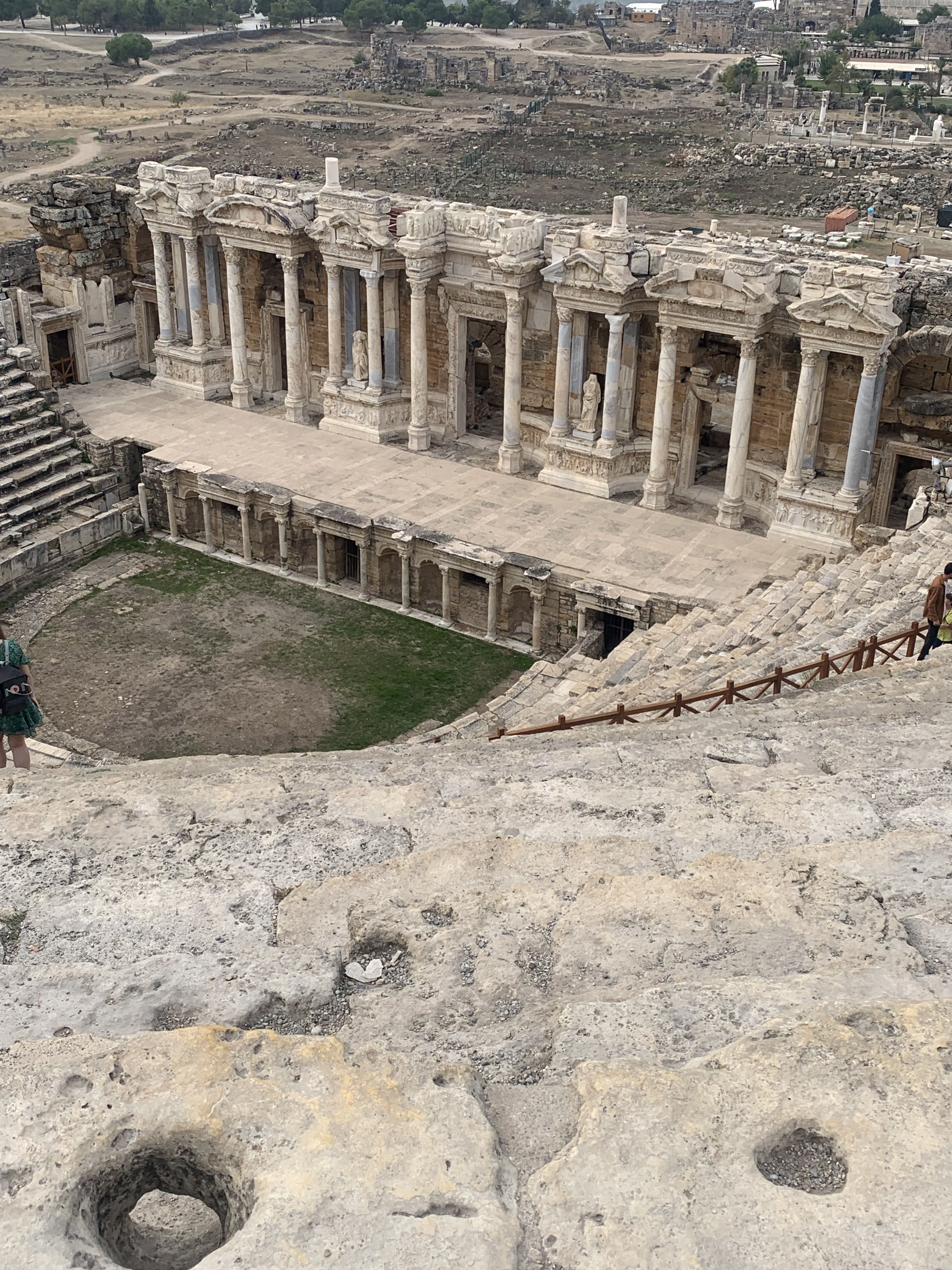
    Sagalassos is definitely worth a visit. It was built on terraces at an altitude of between 1400-1700 metres, with superb views over the countryside. The terraces below the city were cultivated, including the olive groves. Because of the altitude, the city was not looted or pillaged. The earthquakes damaged it, but it was rebuilt several times. The archeologists were able to reconstruct the Antonine Nympheum (a beautiful, giant fountain) fairly easily as the earthquake had made the stone structure fold like dominoes. The water gushing again through is cold and fresh and the one in the fountain below the Neon Library is said to be the best and the purest water anywhere.

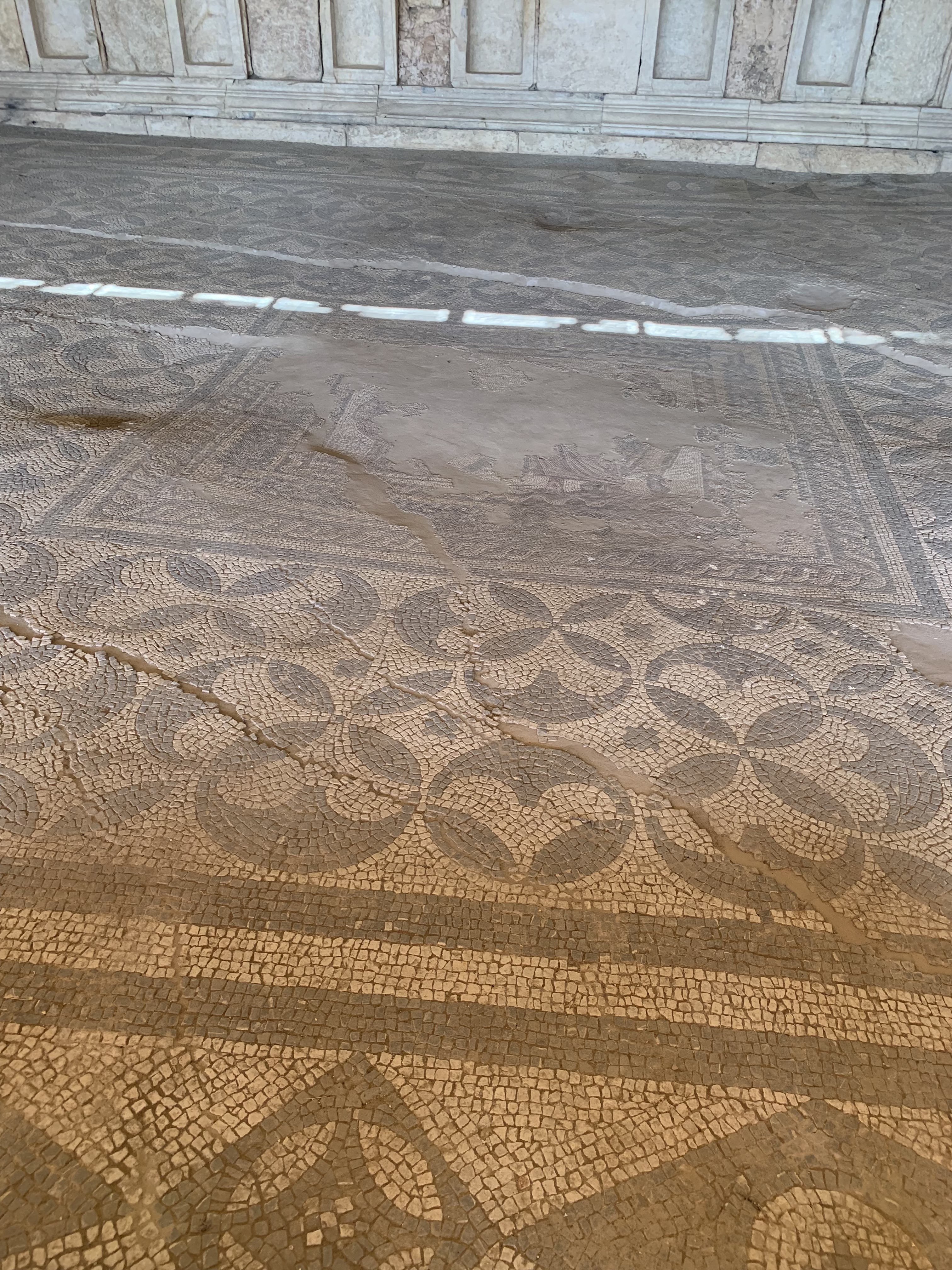
    Met Wilem and Denise from Belgium in the Agora, and he, being a former professor of ancient history and a professional history guide (after he retired from Uni), was able to throw a proper light on the place. He knew that the central image of the mosaic “carpet” (damaged by Theodosian Christians in the 5th ct) had been of Achilles saying farewell to his mother; and that the lines carved onto the stone seats of the amphitheatre by the Romans marked how far you could put your feet if you sat above.

    Mehmet, the Kurdish owner of a caffe (good, proper coffee!) was a serendipitous find: he speaks English (years of working in the Bodrum tourist area), has a stash of good red wine from Eastern Turkey, has a large family spread all over, and has volunteered them if I needed help (pinch of salt here), and, of course, knows good local restaurants.

    Egirdir was easy to get to on the dolmus – only 45 minutes from Isparta. The pension has a lovely terrace with beautiful views of the lake and the surrounding mountains. Some very good hikes and walks around here, and bike rides.
  • Settling in, moving on

    Oct 25th, 2023

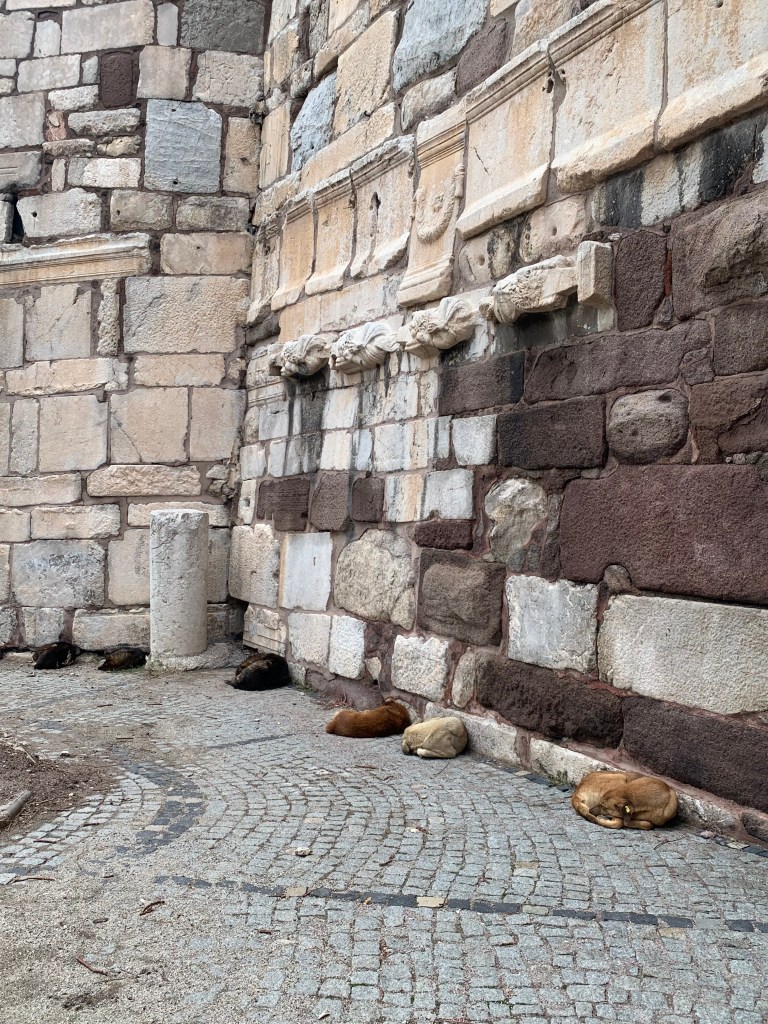
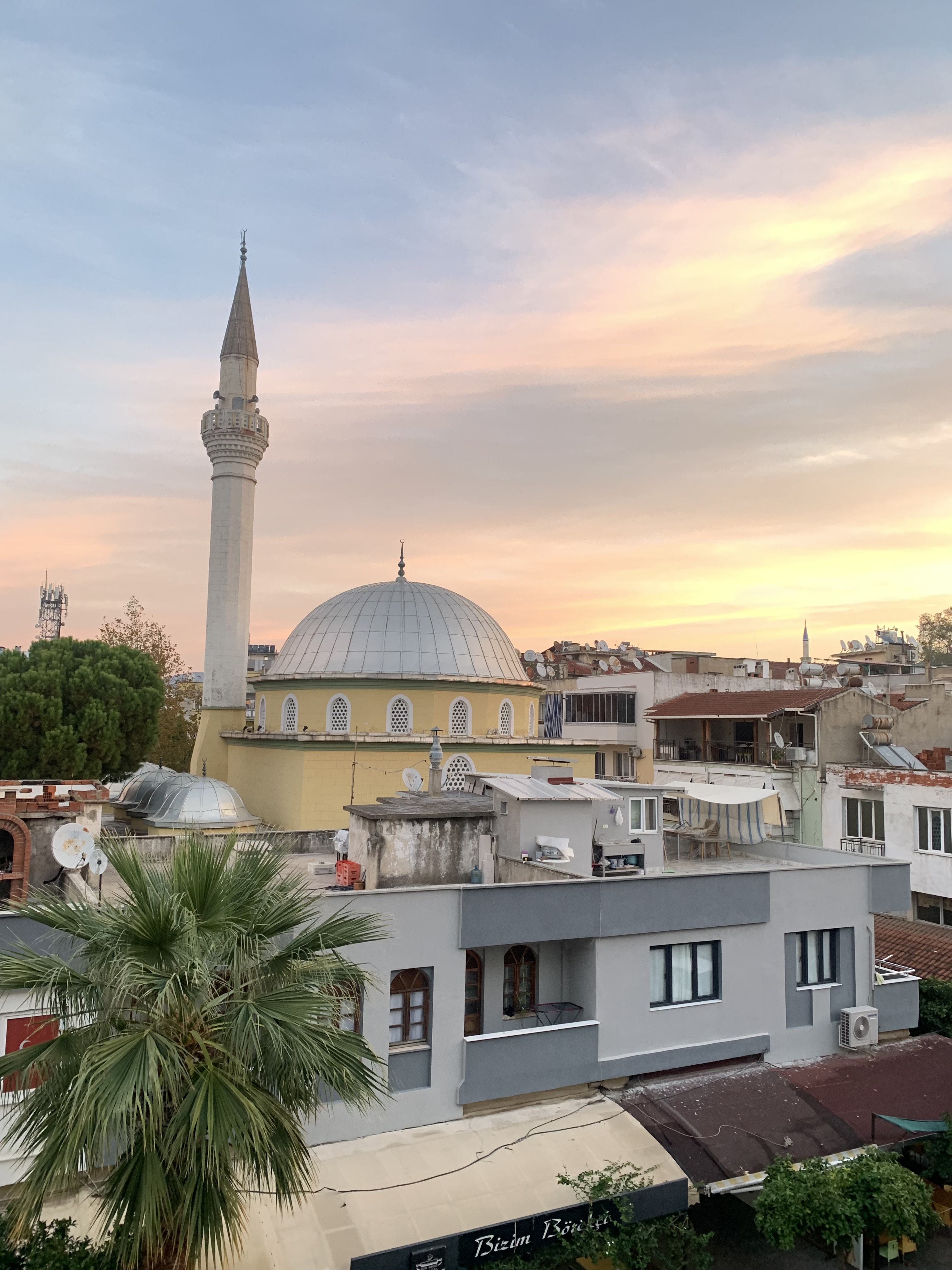
    The day starts at 06:18, very loudly, as the muezzin calls the faithful to prayer from the mosque opposite the hotel. There is no snooze button – the wake up call is full five minutes long, and the sound of others can be heard further along. It drowns the barking of street dogs and the quarrelling of urban birds. The sunrise is not for an hour…

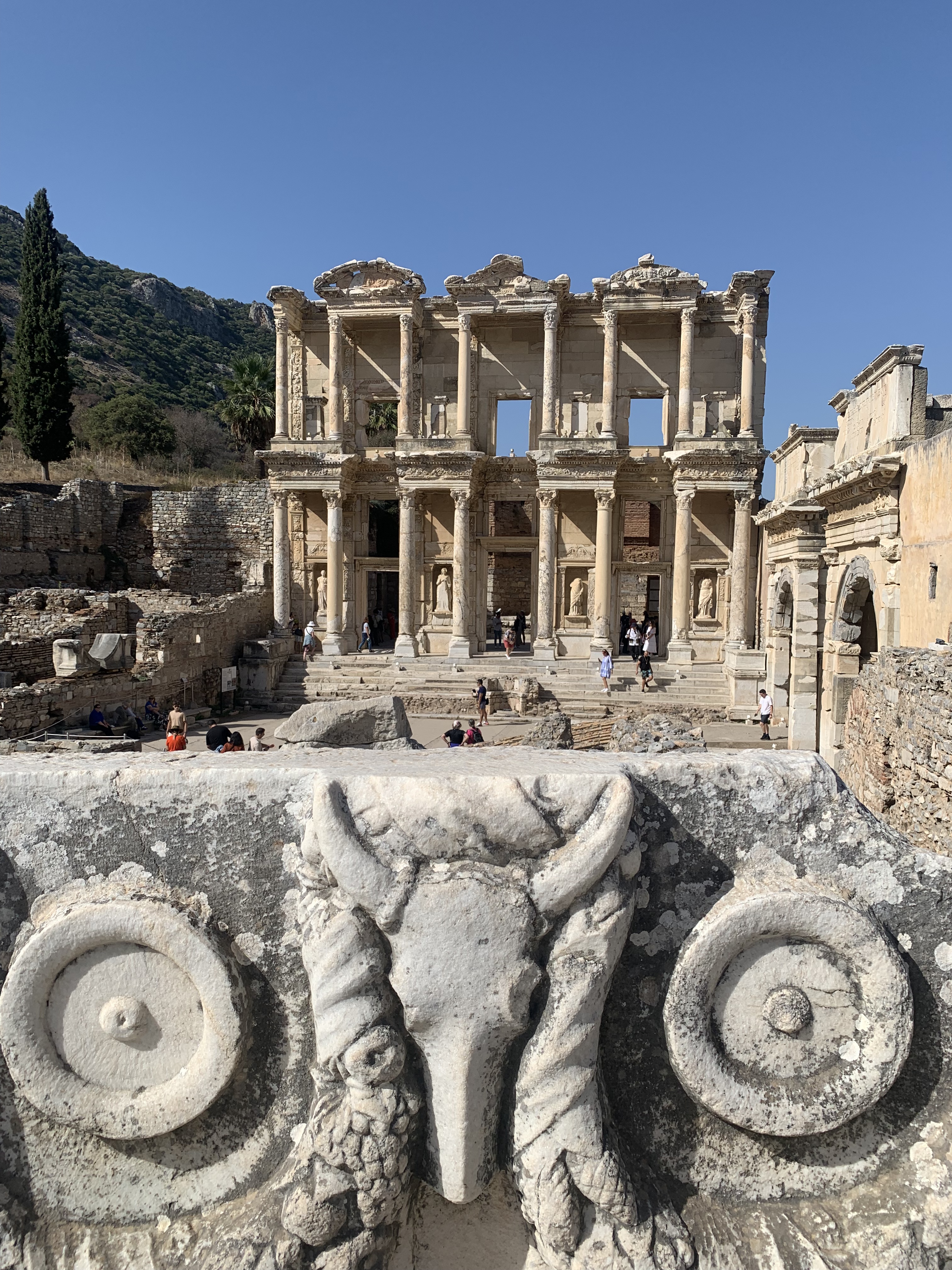
    I knew Turkey was full of antiquities and history lurks everywhere, but Ephesus is truly impressive and overwhelming, as well as sad. A quarter of a million people lived here. The temple of Artemis, one of the Seven Wonders of the Ancient World, was here. (The story of how it got burned down, by a man who wanted to be famous/notorious, has loud echoes today: Herostratus, the arsonist, was condemned to NOT have anyone mention his name (damnatio memoriae), in any way. Obviously, the law didn’t work. Oh, and Artemis was away from home on that day in July 356 BC, helping with the birth of Alexander the Great, which is why the arsonist succeeded.)

    The busy port of Ephesus is no more, the silt has settled and the sea is several miles away.

    The beach at Pamucak, a small seaside resort a few minutes’ ride further on the same Ephesus dolmus, was empty, sandy, the sea comfortable (probably c 25 degrees, though the locals would not dream of swimming at this time of year).

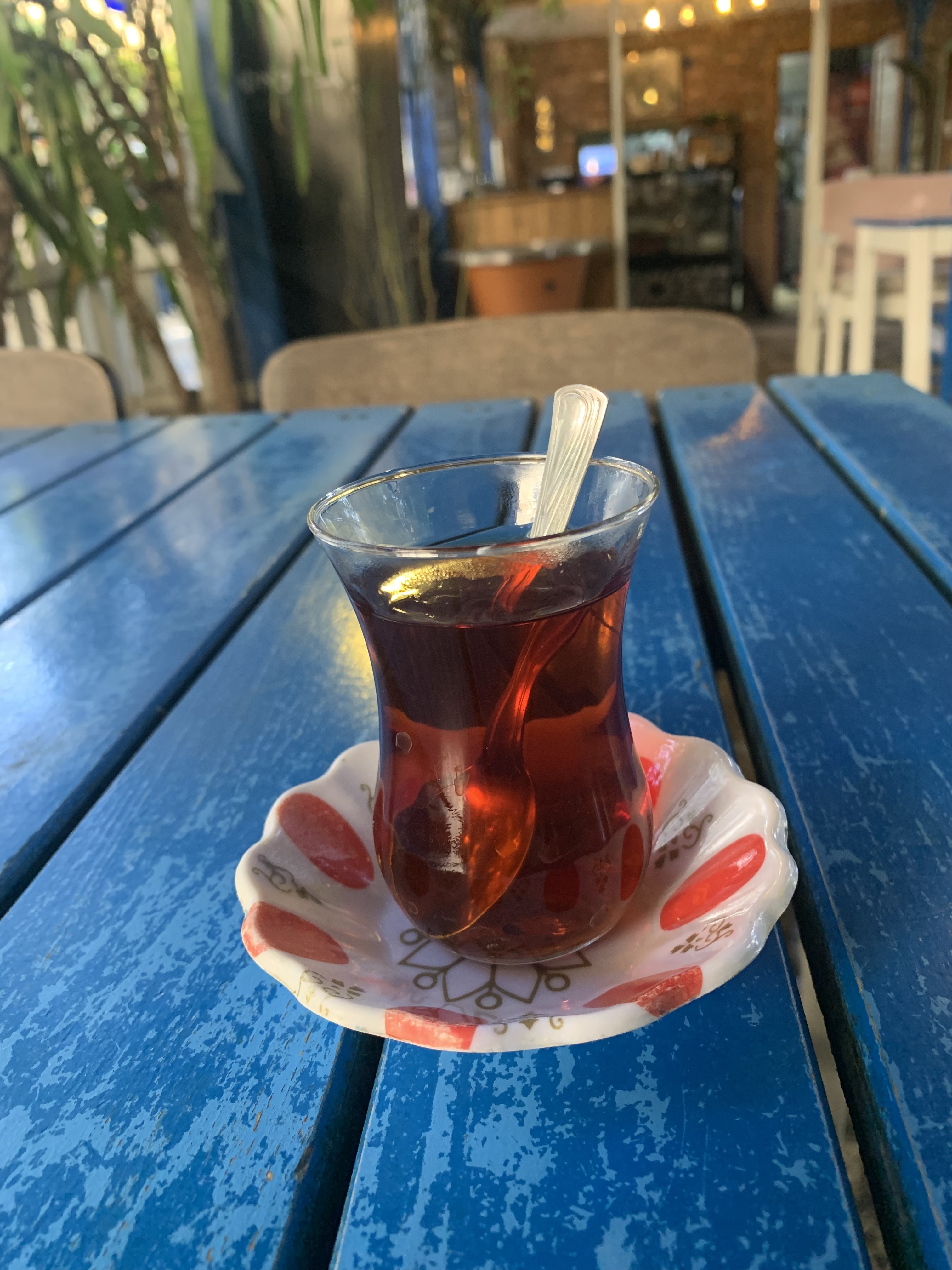
    Chai is the ubiquitous drink. The stewed tea is kept warm in a pot on top of the urn of hot water, the two mixed in a waisted glass and served with sugar. The idea of milk in the tea produces the look of horror. Or you can have coffee – proper Turkish or Nescaffe. Breakfast can be a borek – cheese or minced-meat filled filo roll, your choice of size weighed and chopped up – or a setin, a large bread-roll ring covered in sesame seeds.

    This area, around Izmir, is good farming country, best known for its olive groves, but there are also walnuts, pomegranates, figs, and tomatoes, zucchini, cabbages. My Turkish is non-existent, but the Ottomans in the Balkans left strong traces in the language (a bit bastardised and warped in Bosnian, but still understandable), so I know that zeytin is olive oil, that patlidjan is an aubergine, that turshe is a pickle, that charsi is a market… Baklava, of course, needs no translation.

    Alejandro, who I met on my first evening in Seljuk, is a fellow traveller in more ways than one. A man in his thirties (I’d say), following his dream: he saved for ten years for this voyage from Colombia, South America, to Europe and Asia – India is a goal, where he intends to spend some time in an ashram, before returning home to his job as a mechanical engineer. I was pleasantly surprised with a thoughtful gift of a poem he sent me the day after.

    Rebecca, with a website Oldbirdtravelssolo.com, is in the process of buying a place in the hills nearby, in Tire, where she hopes to “do my ceramics and sculpt in limestone”. There’s a chequered story and history, probably novel material, and I have not learnt a reason for wanting to stop here. Of course, the process of getting a residents’ permit and the bureaucracy of buying property in Turkey is fraught with pitfalls and problems, especially when you don’t speak the language, but she is still optimistic and smiling. Does not look like she wants to go back to Soho…

    I’ll be trying train travel next, rather than bus – though there is little difference in the time it will take to get to Pamukkale.

  • Galipolli, Troy

    Oct 22nd, 2023

    Canakkale, where I stayed to visit the Galipolli Peninsula and the ruins of Troy, is a very lively student town – there is drumming and whooping going on outside right now, , midnight (the hotel is sandwiched between the seaside promenade/port and the main drag). Had a chat with a medical student in the fish restaurant (VERY nice food, and good Suvla wine); spent a couple of hours with a young chap learning English; met an Erasmus student from Germany, taking her mum around the sites; and on the ferry to Eceabat, the Galipolli side of the Dardanelles, a flattering chat (they liked my fair looks – this was the third time someone spontaneously commented on it, which takes getting used to) with a bunch of high school girls on a school trip.

    The only available trip to the killing fields was to the Anzac area, joining a group of 3 Aussies. The guide (from TJ travel, a sort of Aussie outfit) was excellent, and presented what was an enormous amount of facts, data and detail in a clear and engaging way – having just the four of us to talk to made it a lot easier, and he could answer all questions.

    Almost 200.000 men lost their lives here. The poignancy of those small grave stones denoting lost lives, the futility of the war, the arrogance of those sitting in the capitals of Europe carving the Ottoman empire on their maps while sipping port or cognac.

    The Allies were much quicker in honouring their dead here than the Turks, putting up memorials and gravestones – that has been reme. But this was where Mehmet Kemal aka Ataturk (‘the father of Turks’) made his name. His photos and sculptures are everywhere – the Turks truly honour and love him – he created the new, secular, democratic Turkey and one of the keystones of his programme was the change in the Turkish script (which had been a confusing mixture) to a simple 26 letter alphabet, which helped grow literacy (I read this) from 2% in the 30’s, to 98% + now. I’m not going to comment on the current political trend.

    We had such a beautiful, sunny day; so sad thinking of those young men ordered to get over the parapet and die, for a couple of yards which were lost the next day

    Troy is now a site a long way inland, showing 9 layers of various civilisations over some 5000 – 6000 years, from Stone Age to the Romans. Wars, fires, earthquakes, more wars.

    One man is still very much a thorn in the side of the Turkish Ministry of Antiquities: Mr Schliemann, a late 19 ct German treasure hunter (definitely not an archeologist) seems to have been given a permission to dig here and he found gold and jewellery – he thought it was “Priam’s Treasure” (it wasn’t) and took it to Germany (they say he stole it); it disappeared after the WW2, only to reappear in the Pushkin Museum in Moscow some time later… and they are not giving it back.

    Off to Selcuk and Ephesus next.

←Previous Page
1 2 3 4
Next Page→

Blog at WordPress.com.


Loading Comments...
 

    • Subscribe Subscribed
      • Maribibi_travels
      • Already have a WordPress.com account? Log in now.
      • Maribibi_travels
      • Subscribe Subscribed
      • Sign up
      • Log in
      • Report this content
      • View site in Reader
      • Manage subscriptions
      • Collapse this bar